Culture: Yoruba
Date: Vintage, 20th century
Medium: Glass beads, textile base, fiber
Technique: Hand-beaded, textile construction
Dimensions: Height: 57.8 cm (22.75 in), Depth: 33.7 cm (13.25 in), Width: 22.9 cm (9 in)
Condition: Used; wear consistent with age. See photographs for detailed condition.
A vintage Yoruba ceremonial headdress (ade) from Nigeria, featuring polychrome beadwork depicting a central equestrian figure flanked by four smaller attendants, two bearing gourds and two holding wands. The cylindrical base is adorned with beaded crocodiles and a skull design. The headdress remains in used condition with wear consistent with age. Please reference photos for details.
The central equestrian figure likely represents the oba himself or an ancestral warrior king. Horses, introduced to the Yoruba region through trans Saharan trade, became symbols of status, wealth, and military authority. The mounted figure asserts dominion over both territory and people.
The four smaller flanking figures, two bearing gourds and two holding wands, may represent royal attendants, court officials, or ancestral spirits. Gourds (igba) in Yoruba iconography are associated with offerings, ritual containers, and the sustaining power of women . Wands or staffs of office extend the reach of the ruler and signify authority .
The crocodiles along the cylindrical base embody complex meanings. As creatures inhabiting both water and land, crocodiles symbolize the king's ability to mediate between realms. Their power, danger, and predatory nature also evoke the king's capacity to protect his people and punish transgressors.
The skull motif on the front presents a memento mori, reminding viewers of the king's connection to ancestors and the realm of the dead. The coronation process itself implies a ritual death and rebirth in the body of the new king of the founding ancestor . Skull imagery may reference this ancestral transformation and the king's unique position as one who walks between worlds.
This headdress is constructed from a fabric base entirely covered with thousands of imported glass beads. Such seed beads were not manufactured by the Yoruba but rather imported from the British Isles and elsewhere in Europe . Blue beads, like those likely present in this example, were highly prized because sapphire colors did not occur in naturally available substances . The expense and rarity of imported beads made beaded regalia potent symbols of wealth and global connection .
Culture: Yoruba
Date: Vintage, 20th century
Medium: Glass beads, textile base, fiber
Technique: Hand-beaded, textile construction
Dimensions: Height: 57.8 cm (22.75 in), Depth: 33.7 cm (13.25 in), Width: 22.9 cm (9 in)
Condition: Used; wear consistent with age. See photographs for detailed condition.
A vintage Yoruba ceremonial headdress (ade) from Nigeria, featuring polychrome beadwork depicting a central equestrian figure flanked by four smaller attendants, two bearing gourds and two holding wands. The cylindrical base is adorned with beaded crocodiles and a skull design. The headdress remains in used condition with wear consistent with age. Please reference photos for details.
The central equestrian figure likely represents the oba himself or an ancestral warrior king. Horses, introduced to the Yoruba region through trans Saharan trade, became symbols of status, wealth, and military authority. The mounted figure asserts dominion over both territory and people.
The four smaller flanking figures, two bearing gourds and two holding wands, may represent royal attendants, court officials, or ancestral spirits. Gourds (igba) in Yoruba iconography are associated with offerings, ritual containers, and the sustaining power of women . Wands or staffs of office extend the reach of the ruler and signify authority .
The crocodiles along the cylindrical base embody complex meanings. As creatures inhabiting both water and land, crocodiles symbolize the king's ability to mediate between realms. Their power, danger, and predatory nature also evoke the king's capacity to protect his people and punish transgressors.
The skull motif on the front presents a memento mori, reminding viewers of the king's connection to ancestors and the realm of the dead. The coronation process itself implies a ritual death and rebirth in the body of the new king of the founding ancestor . Skull imagery may reference this ancestral transformation and the king's unique position as one who walks between worlds.
This headdress is constructed from a fabric base entirely covered with thousands of imported glass beads. Such seed beads were not manufactured by the Yoruba but rather imported from the British Isles and elsewhere in Europe . Blue beads, like those likely present in this example, were highly prized because sapphire colors did not occur in naturally available substances . The expense and rarity of imported beads made beaded regalia potent symbols of wealth and global connection .

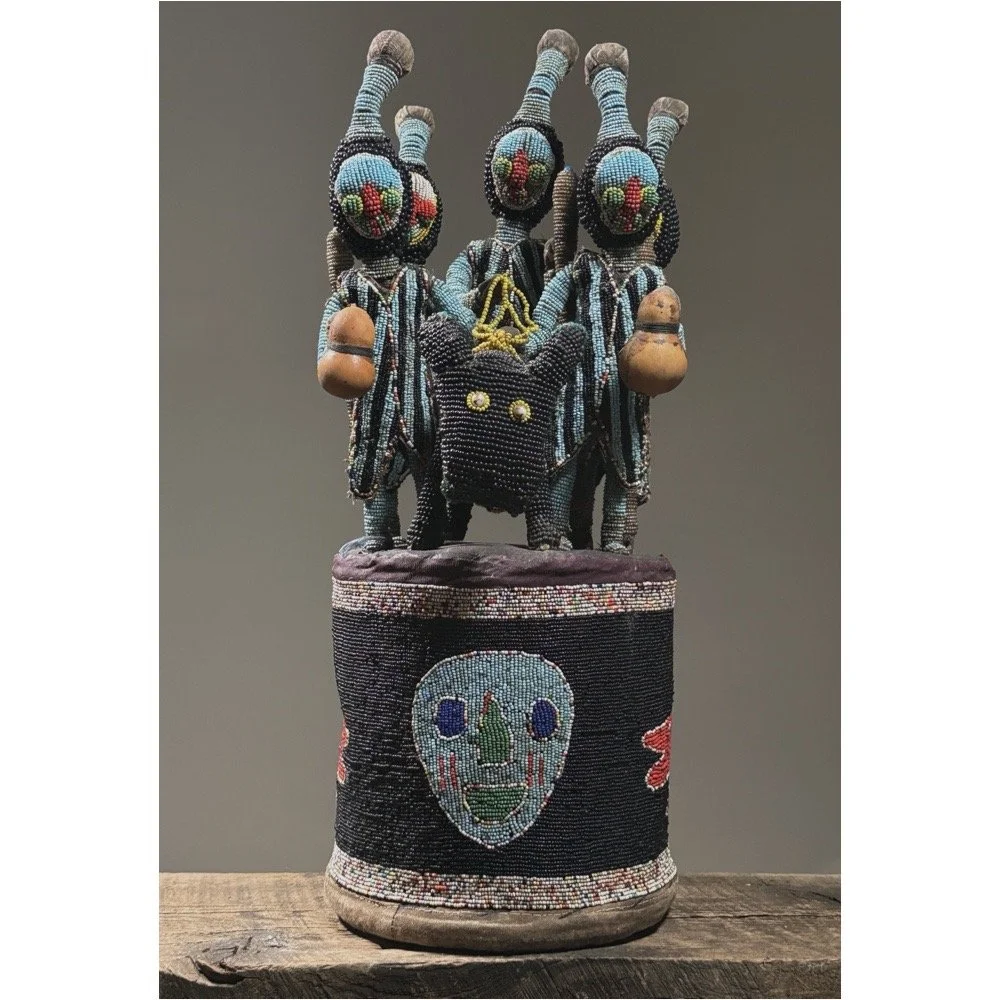 Image 1 of 14
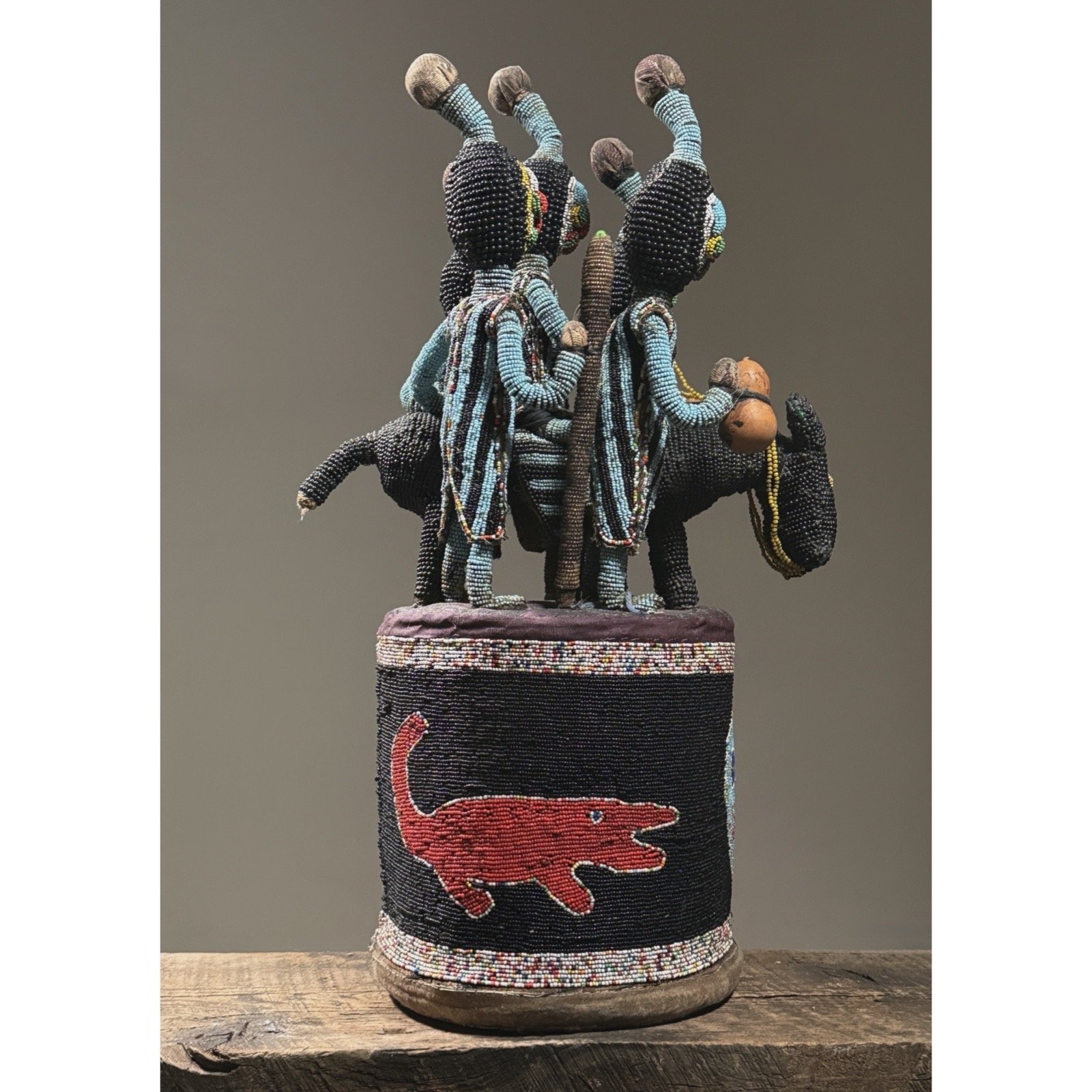 Image 2 of 14
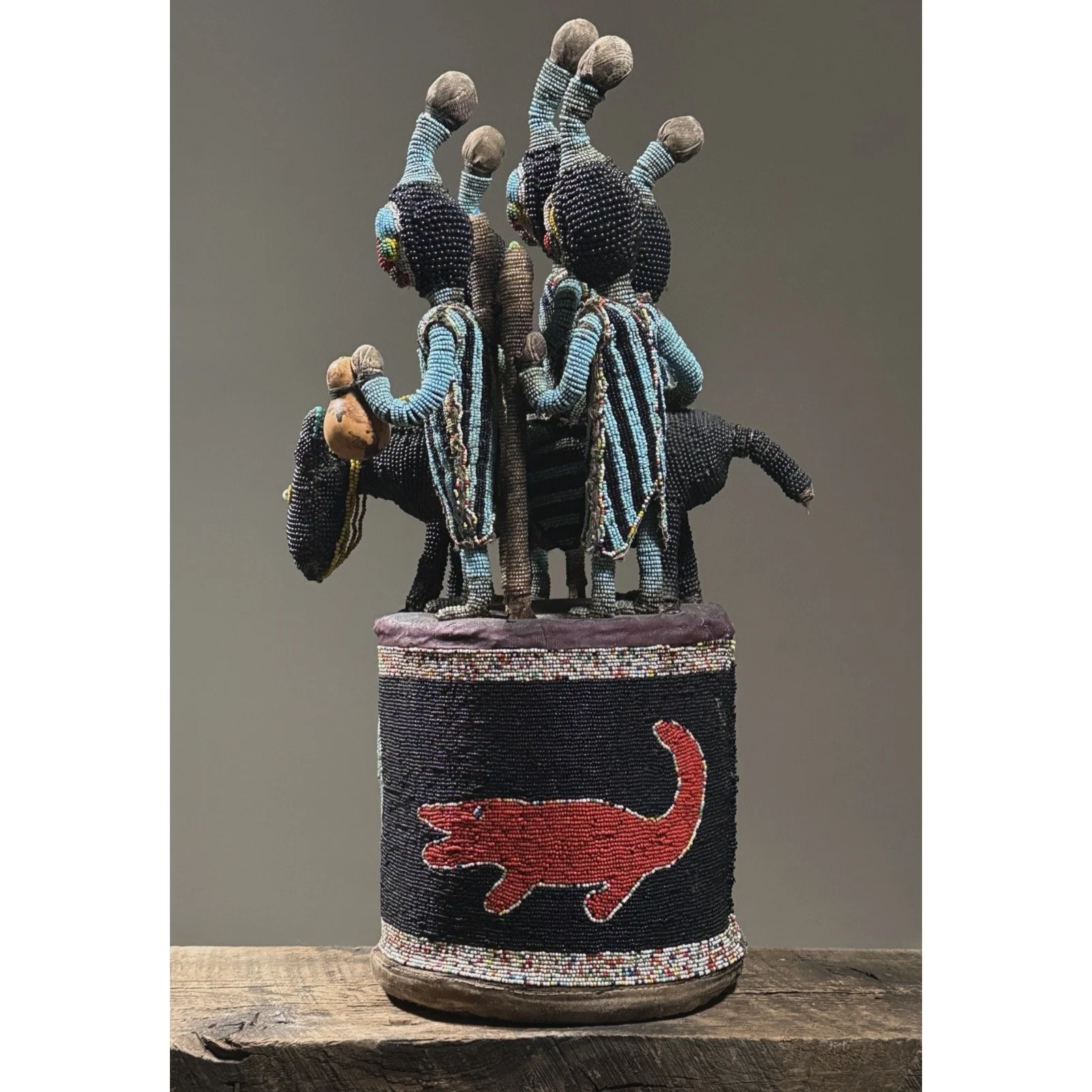 Image 3 of 14
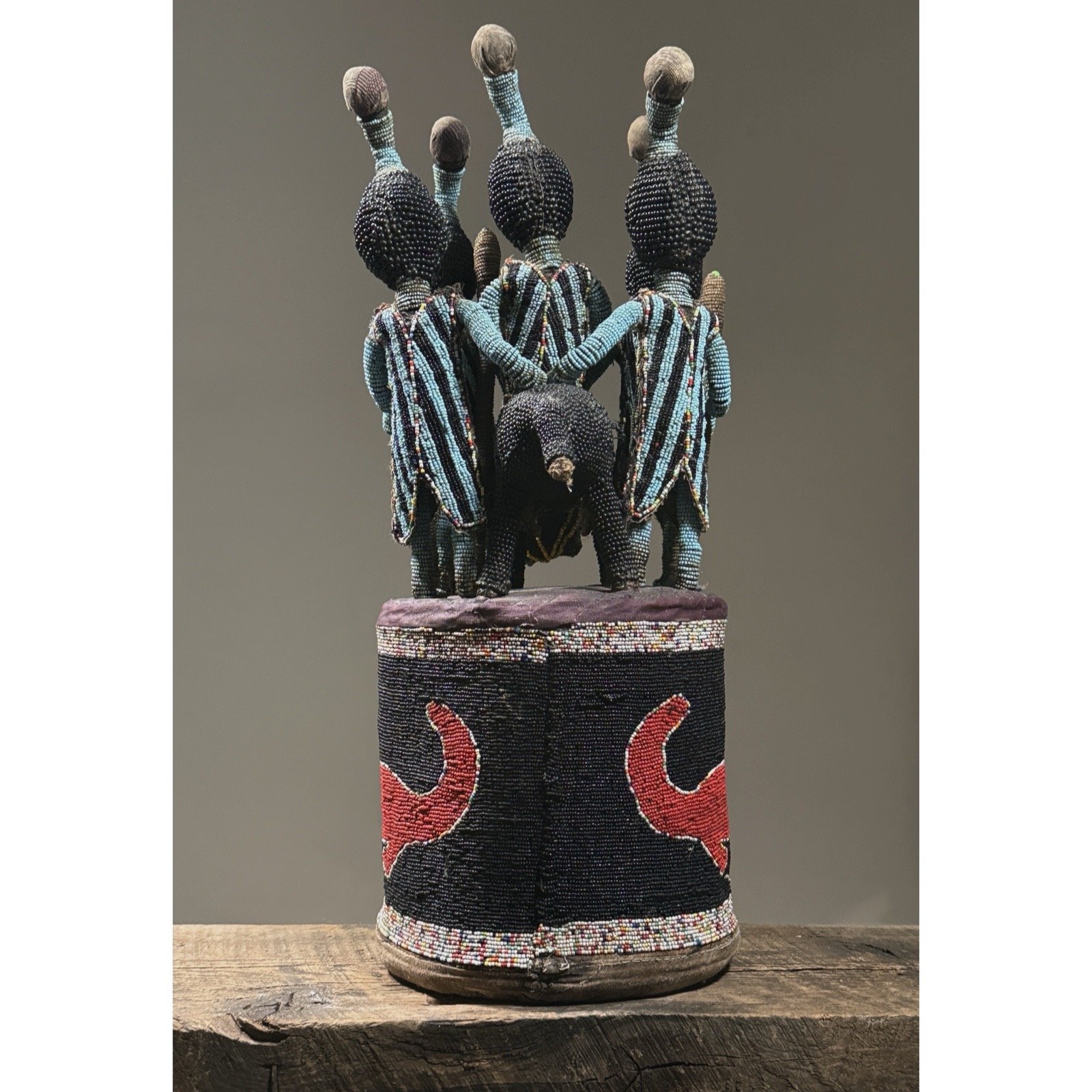 Image 4 of 14
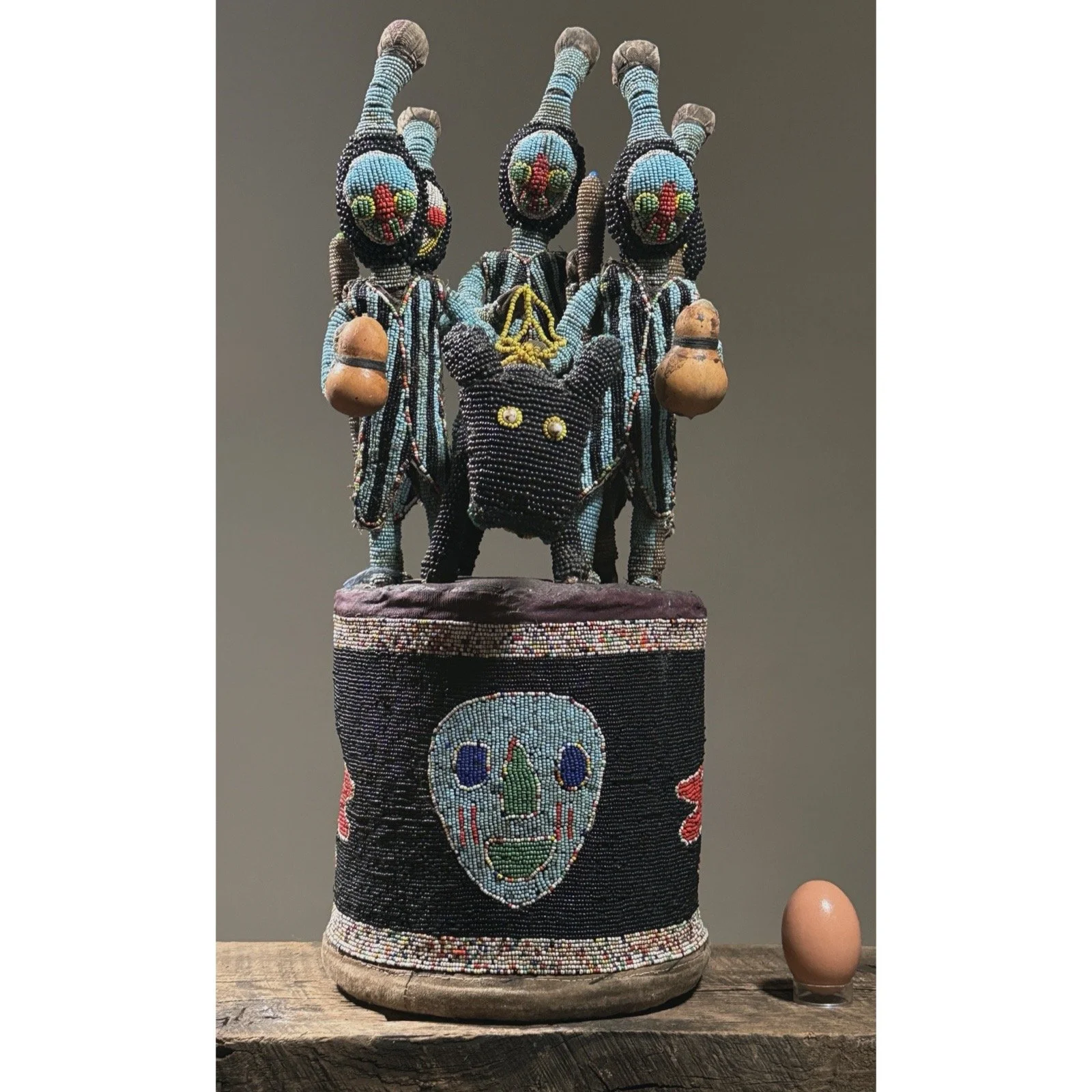 Image 5 of 14
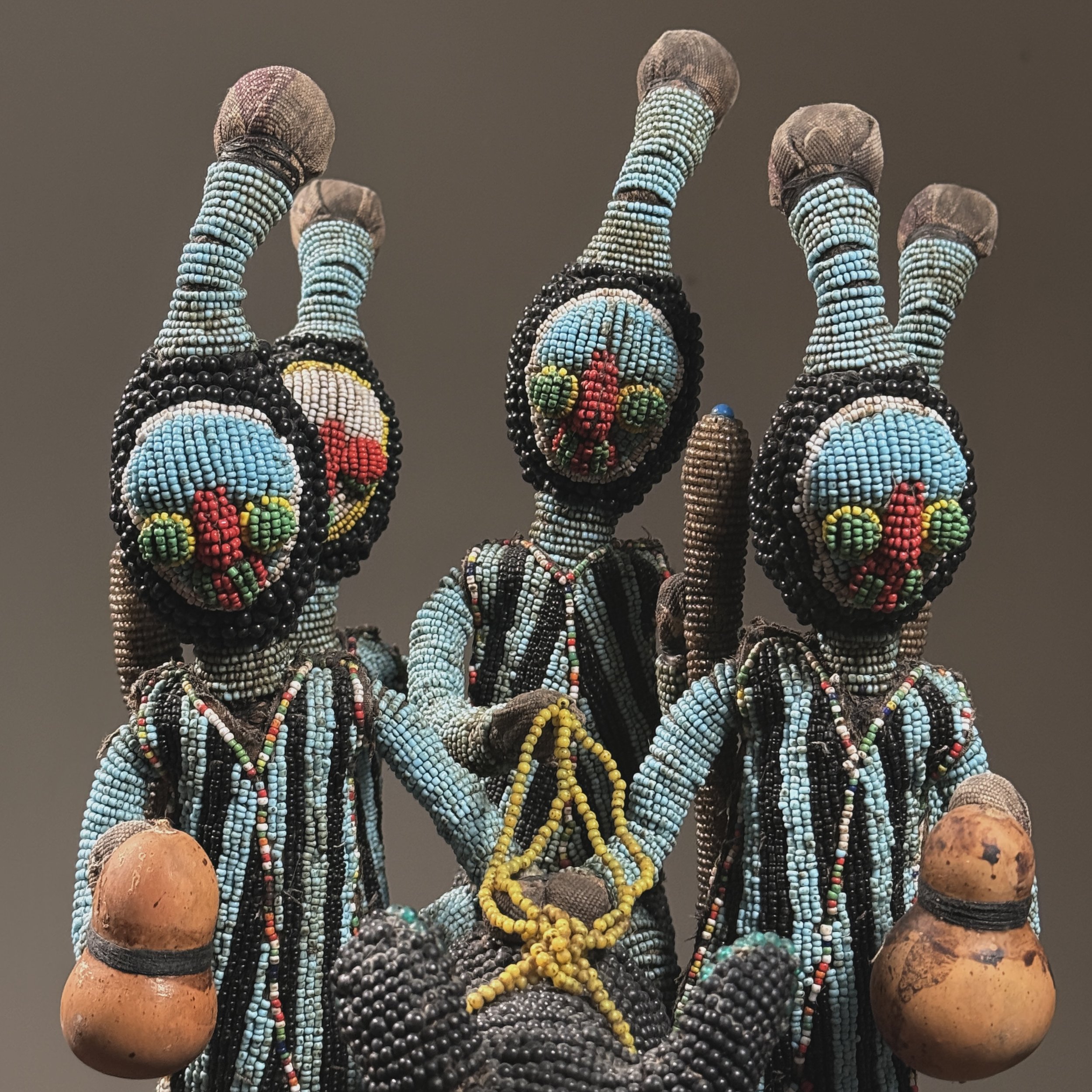 Image 6 of 14
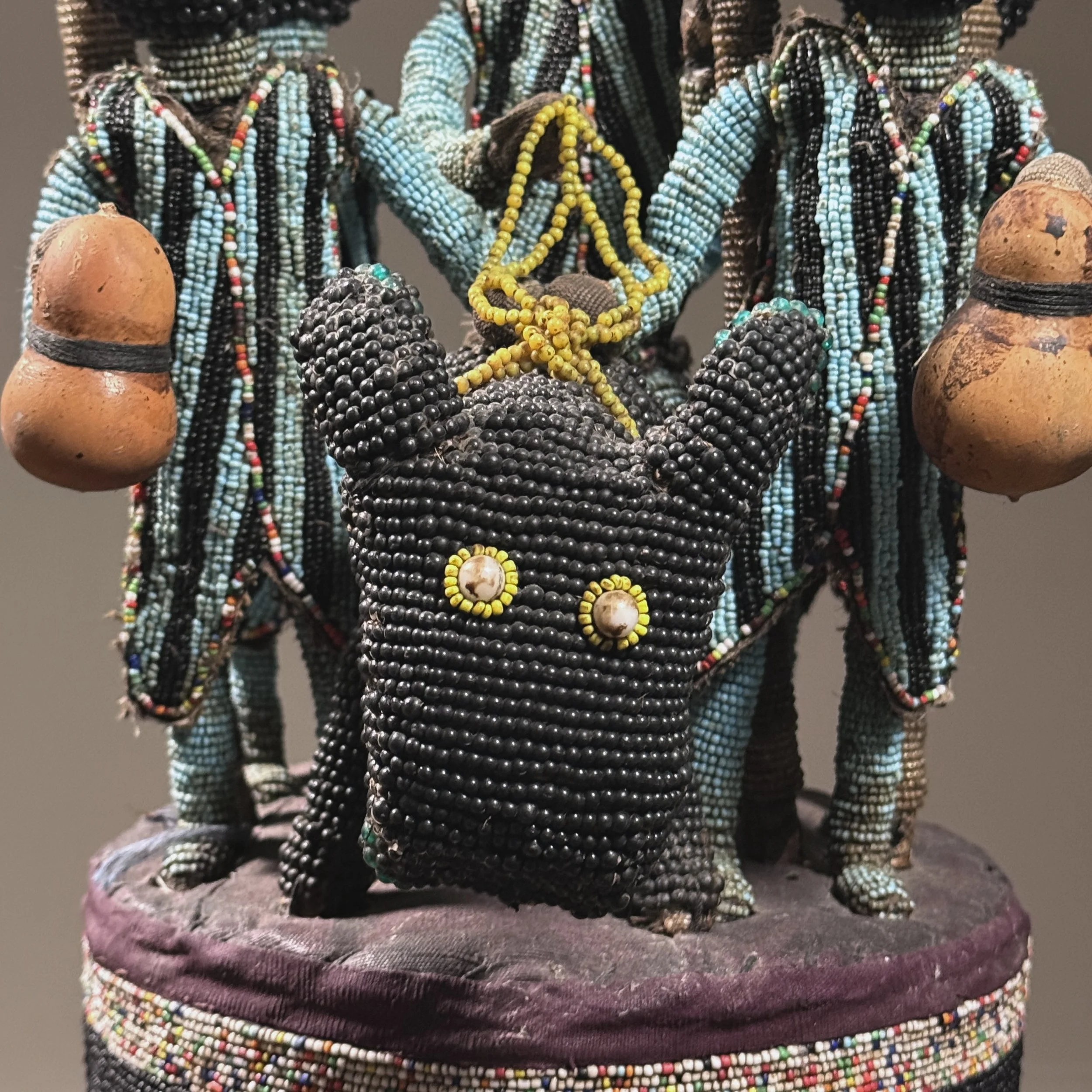 Image 7 of 14
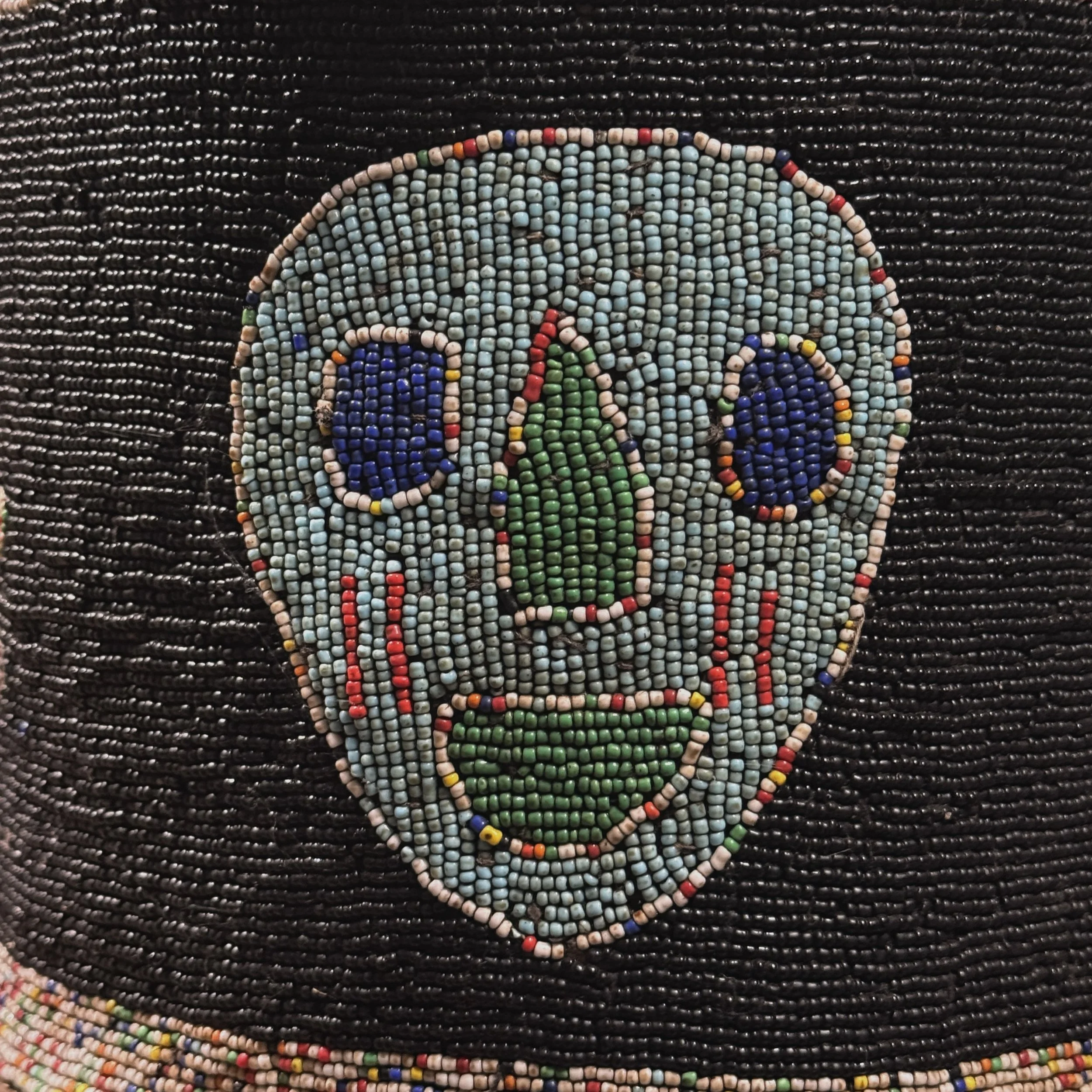 Image 8 of 14
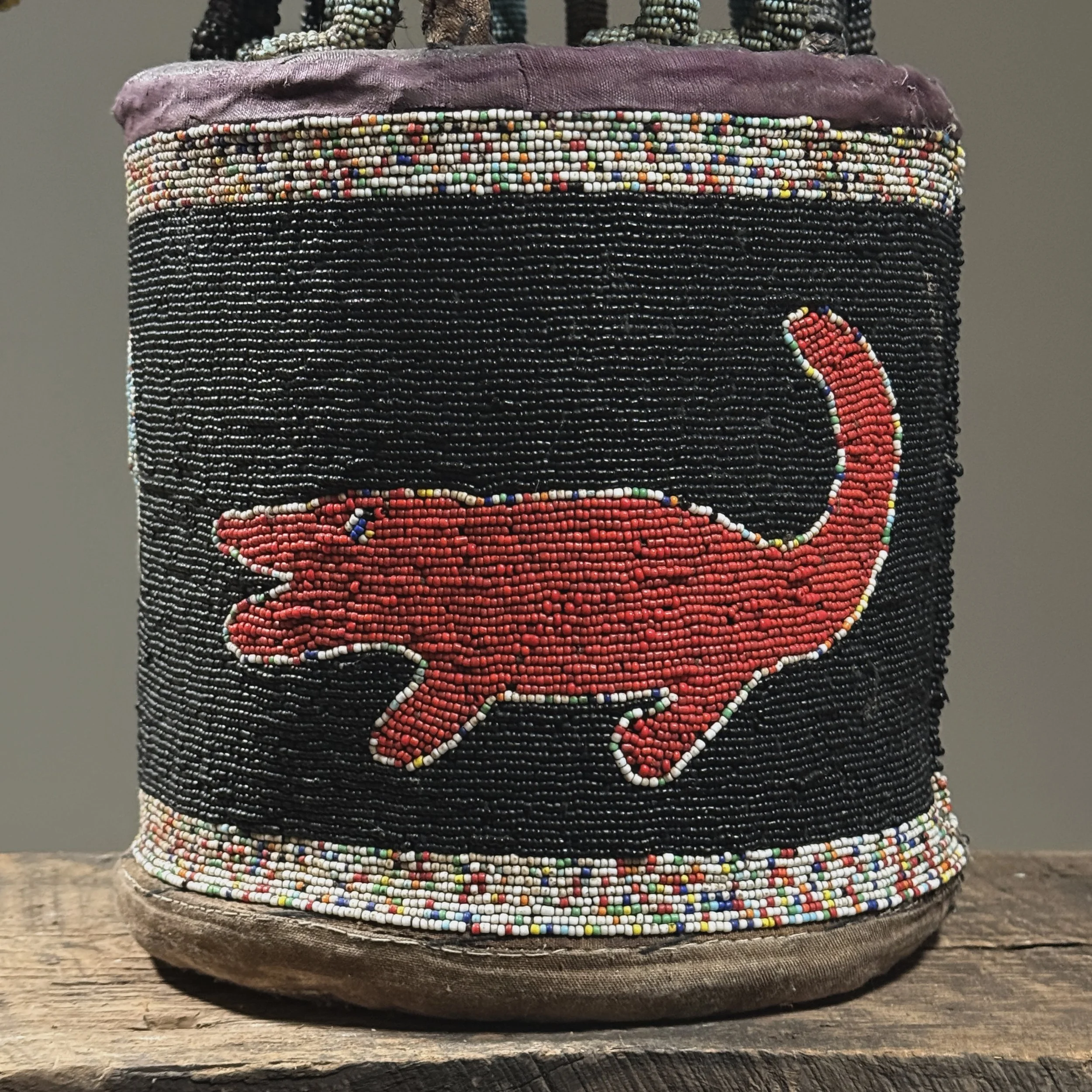 Image 9 of 14
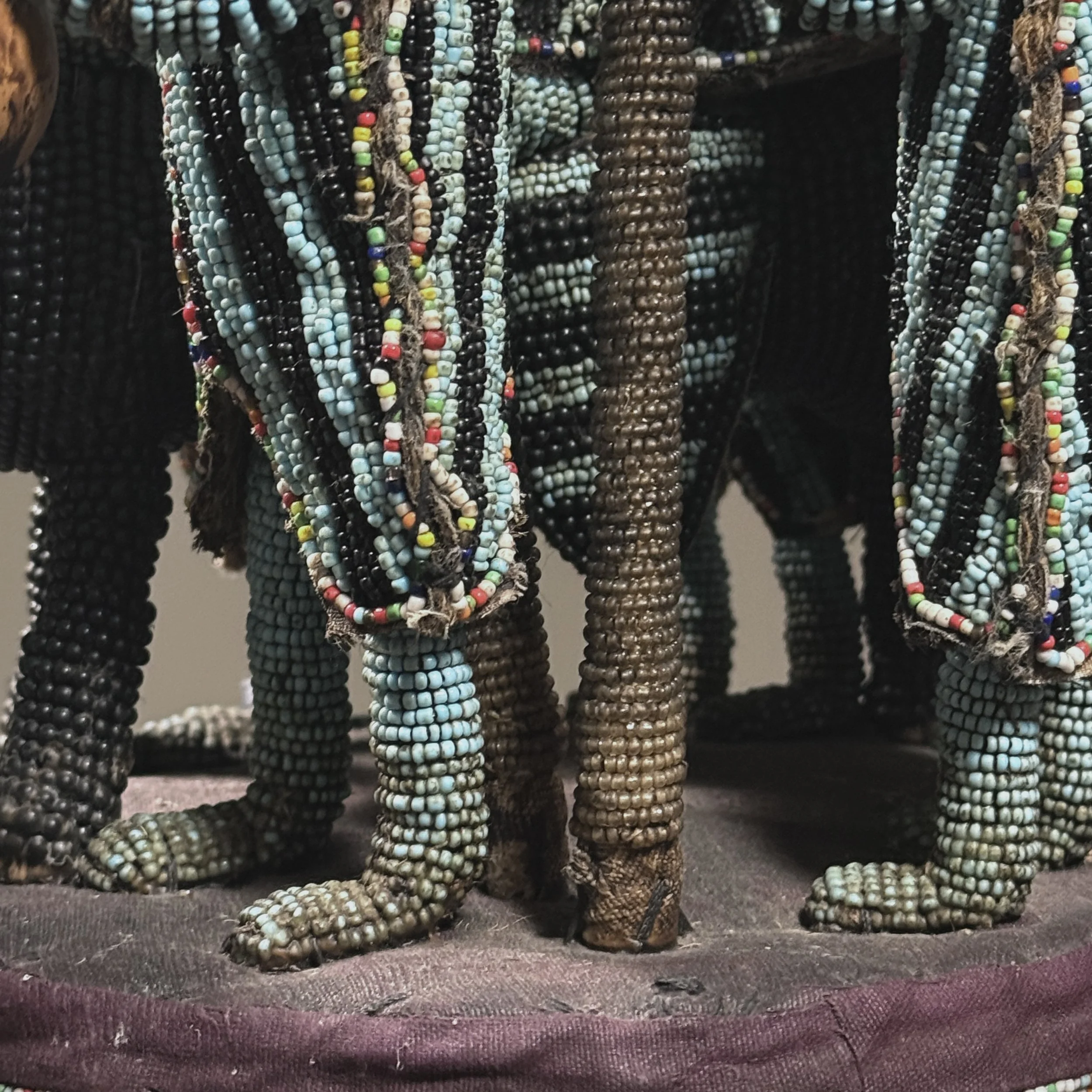 Image 10 of 14
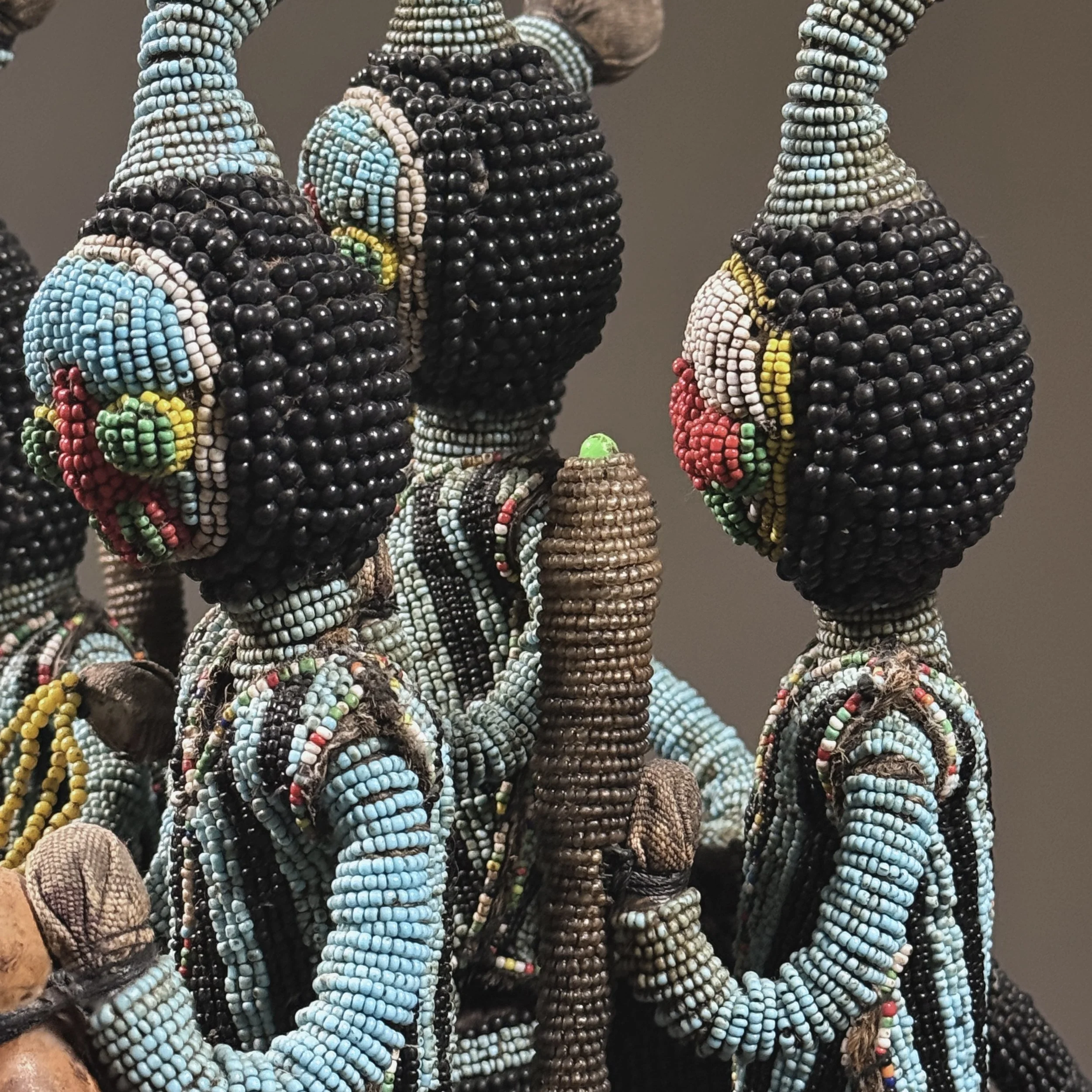 Image 11 of 14
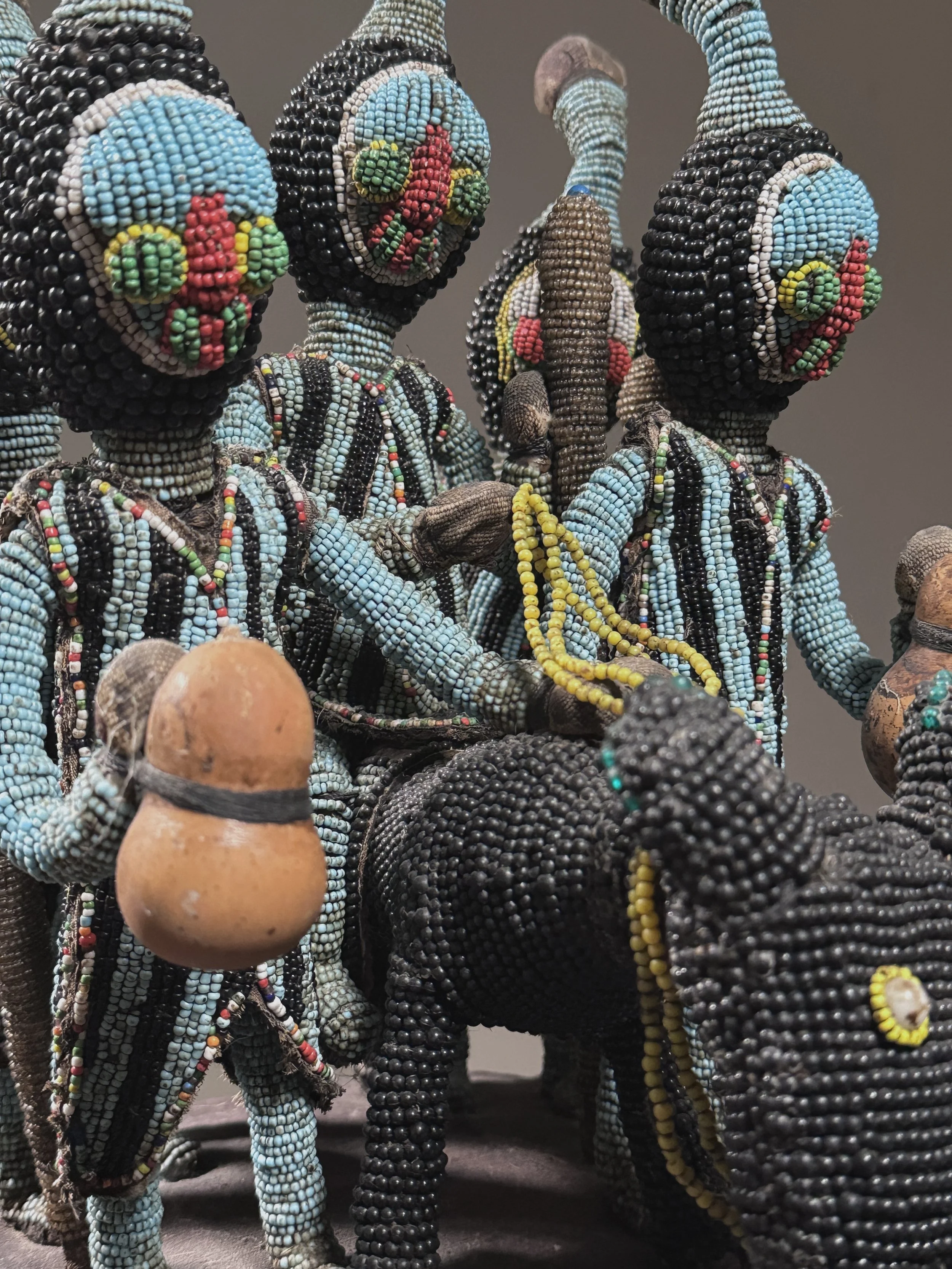 Image 12 of 14
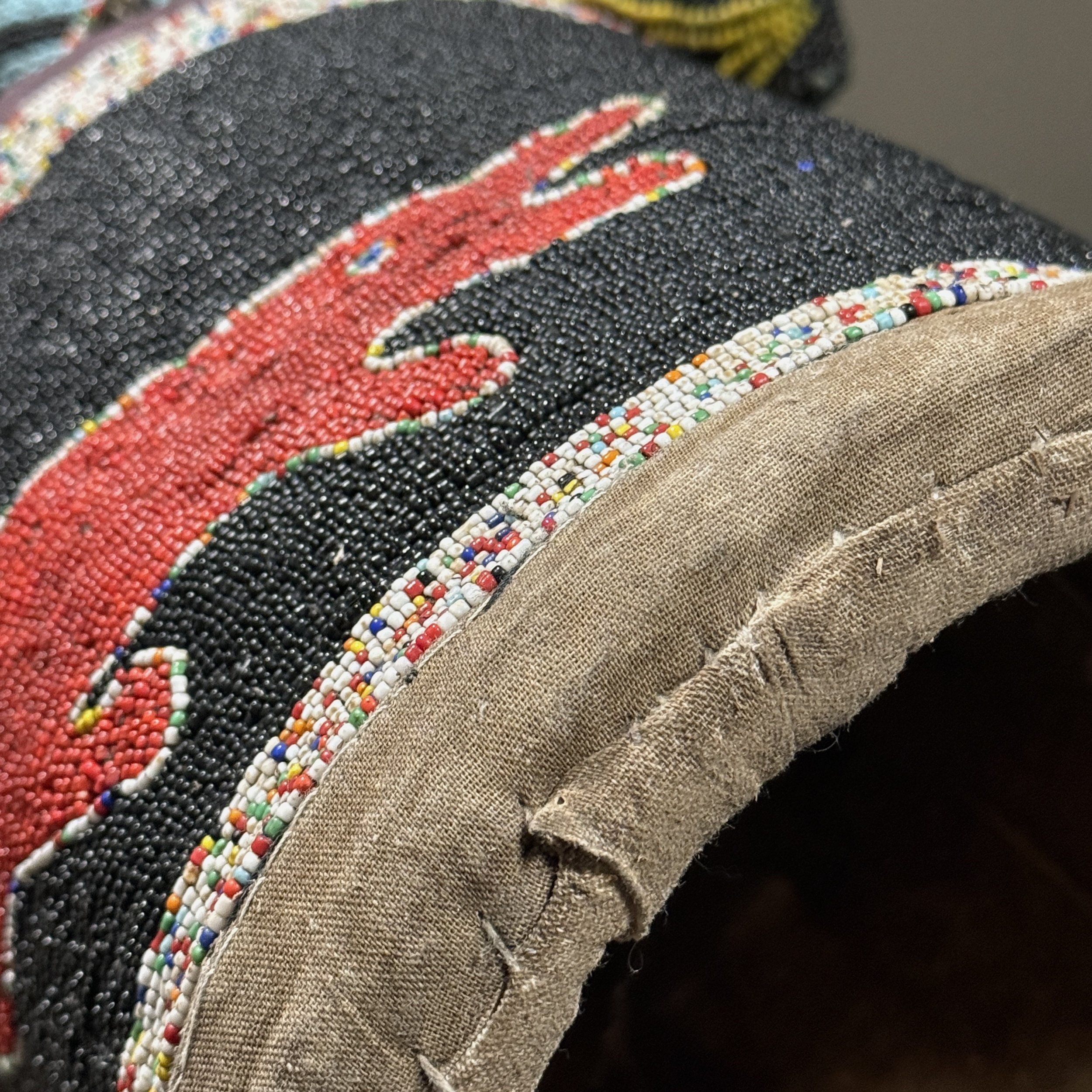 Image 13 of 14
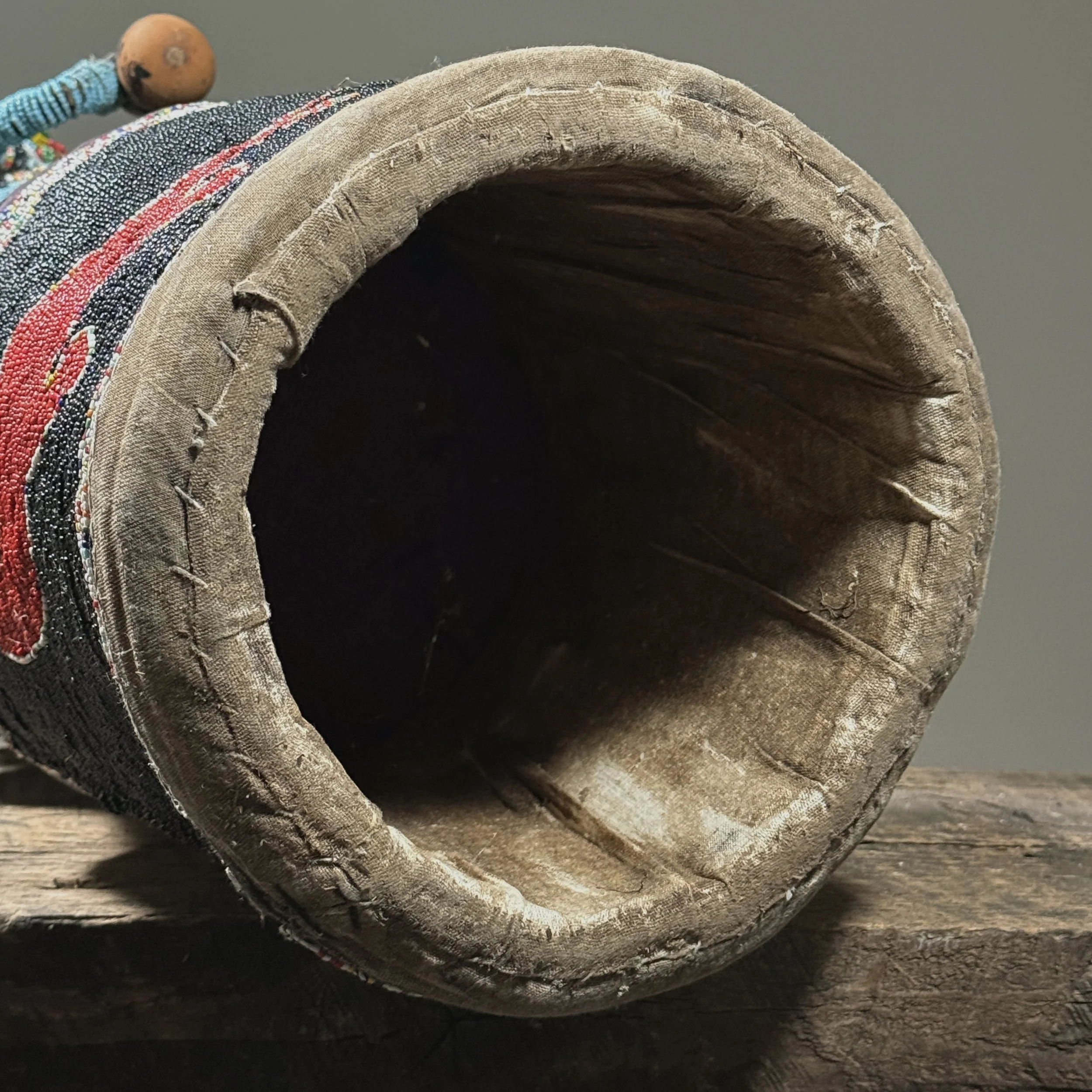 Image 14 of 14