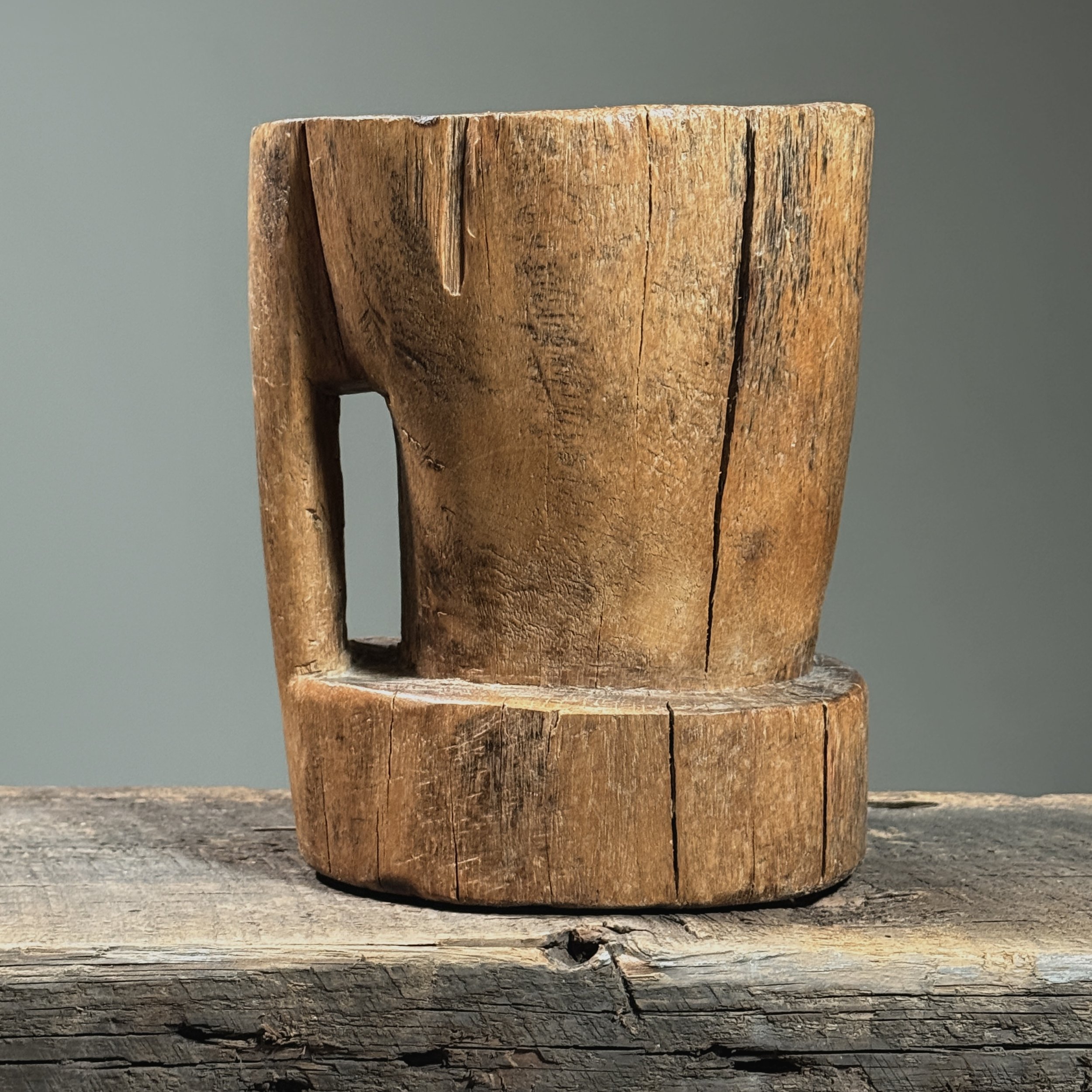
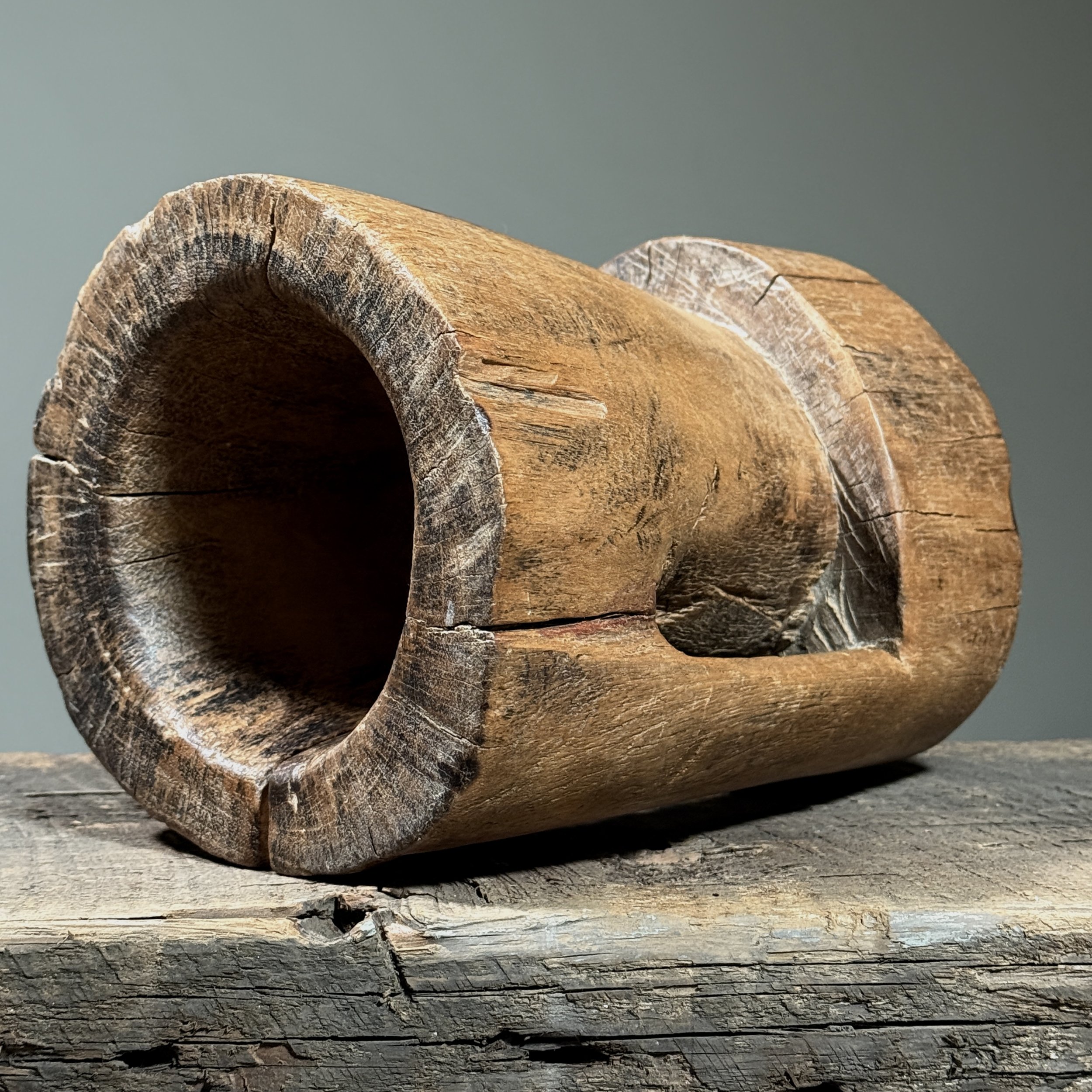
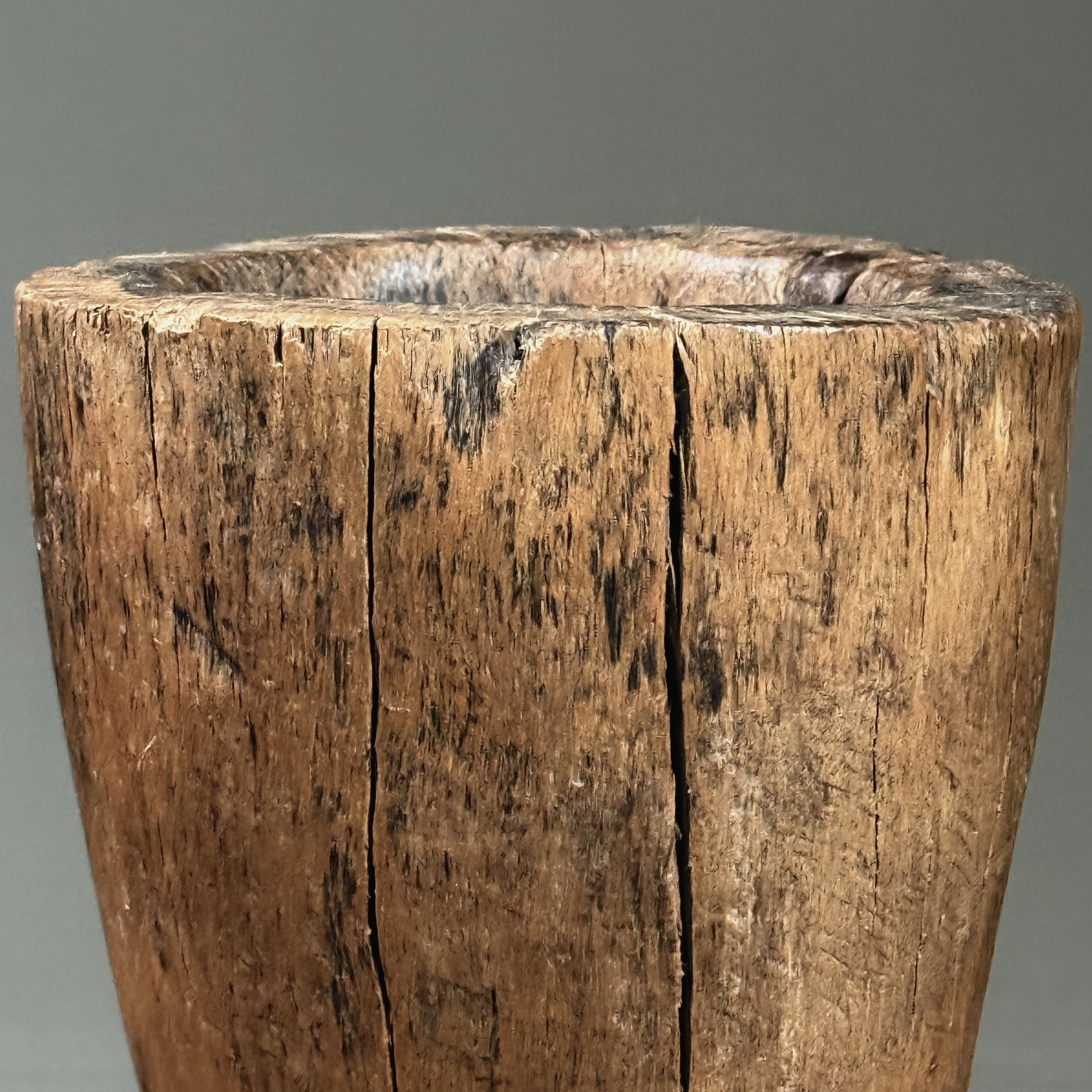
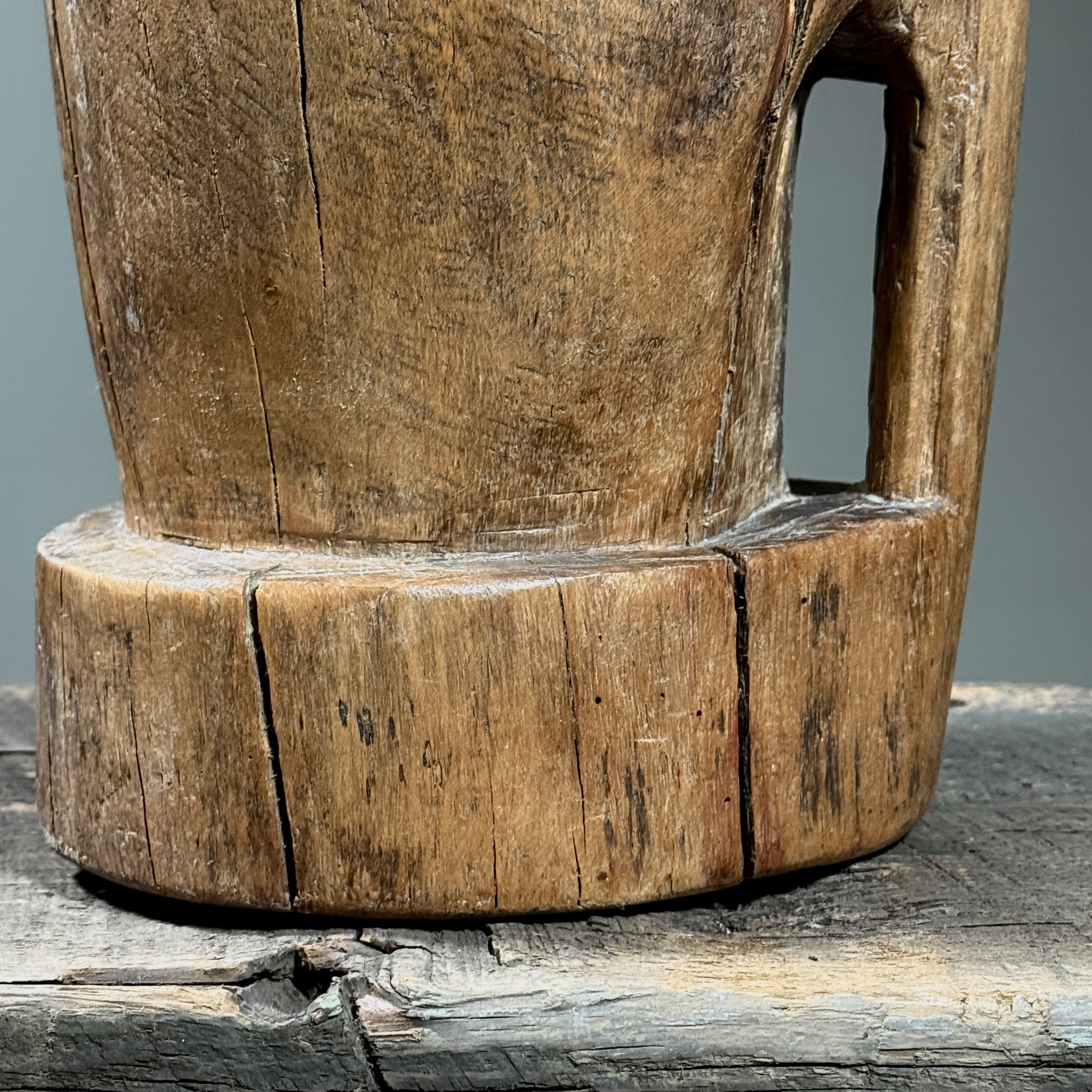
Title: Abstract Figurative Sculpture
Artist: Signed (unidentified Shona sculptor, likely second generation)
Culture/Nationality: Zimbabwean (Shona School)
Date: circa 1970s–1990s (vintage)
Medium: Hand carved puce toned stone (soapstone or serpentine variant)
Dimensions: Height 13.5 in. (34.3 cm) x Width 9.25 in. (23.5 cm) x Depth 4 in. (10.2 cm)
Condition: Used. Chips, scratches, and surface abrasions consistent with age, material friability, and handling. The piece remains structurally sound with stable patina. Please reference accompanying detail photography for full condition documentation.
Description:
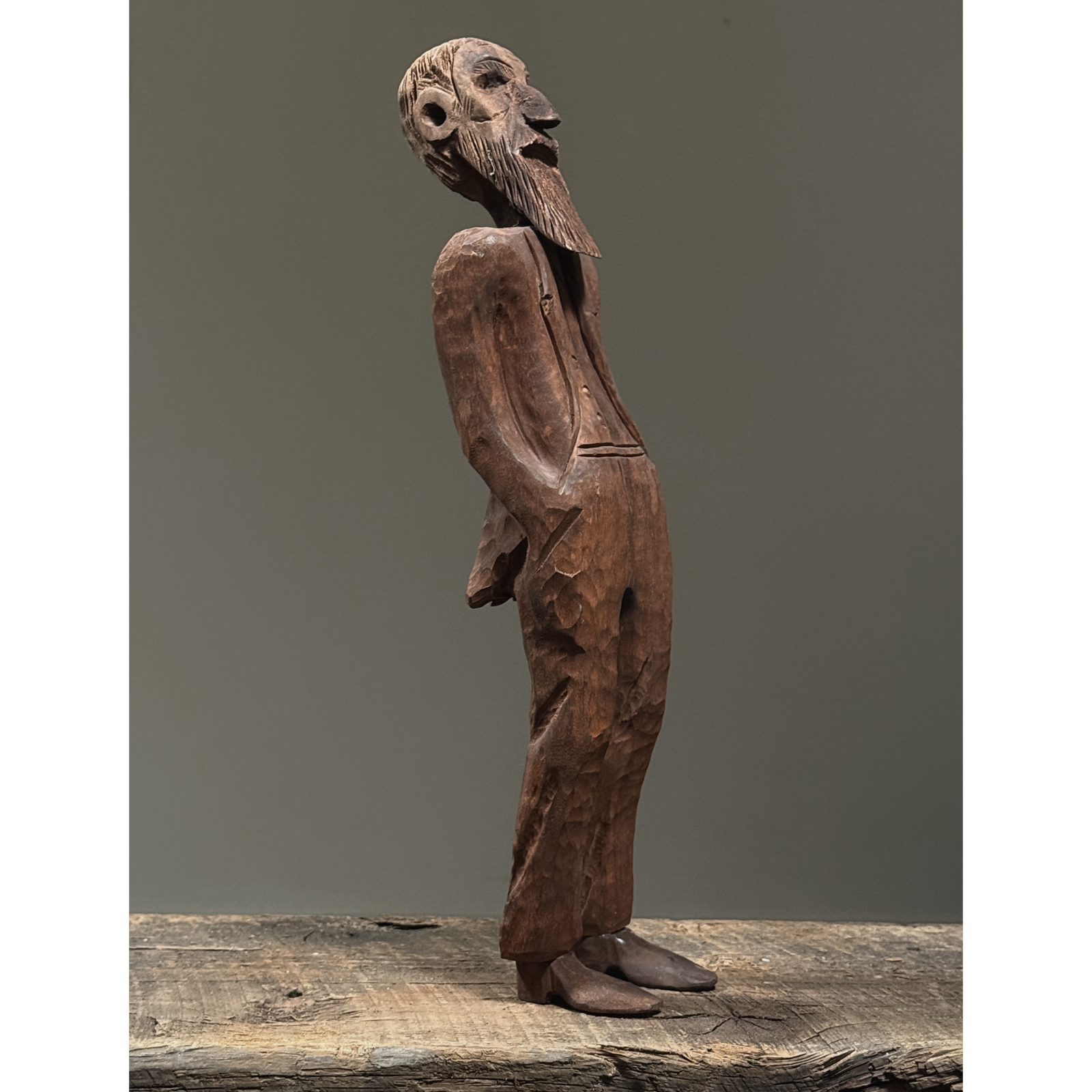
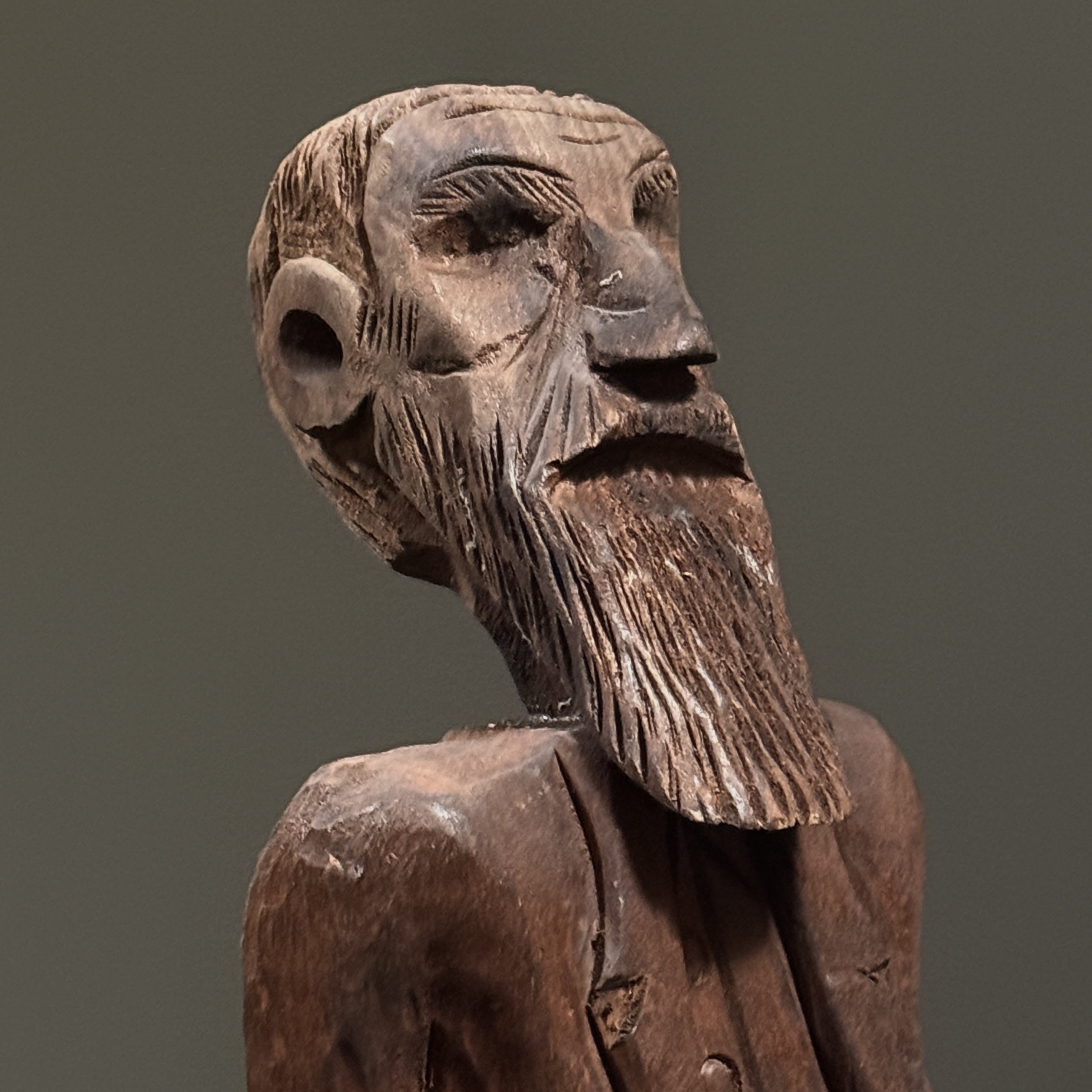
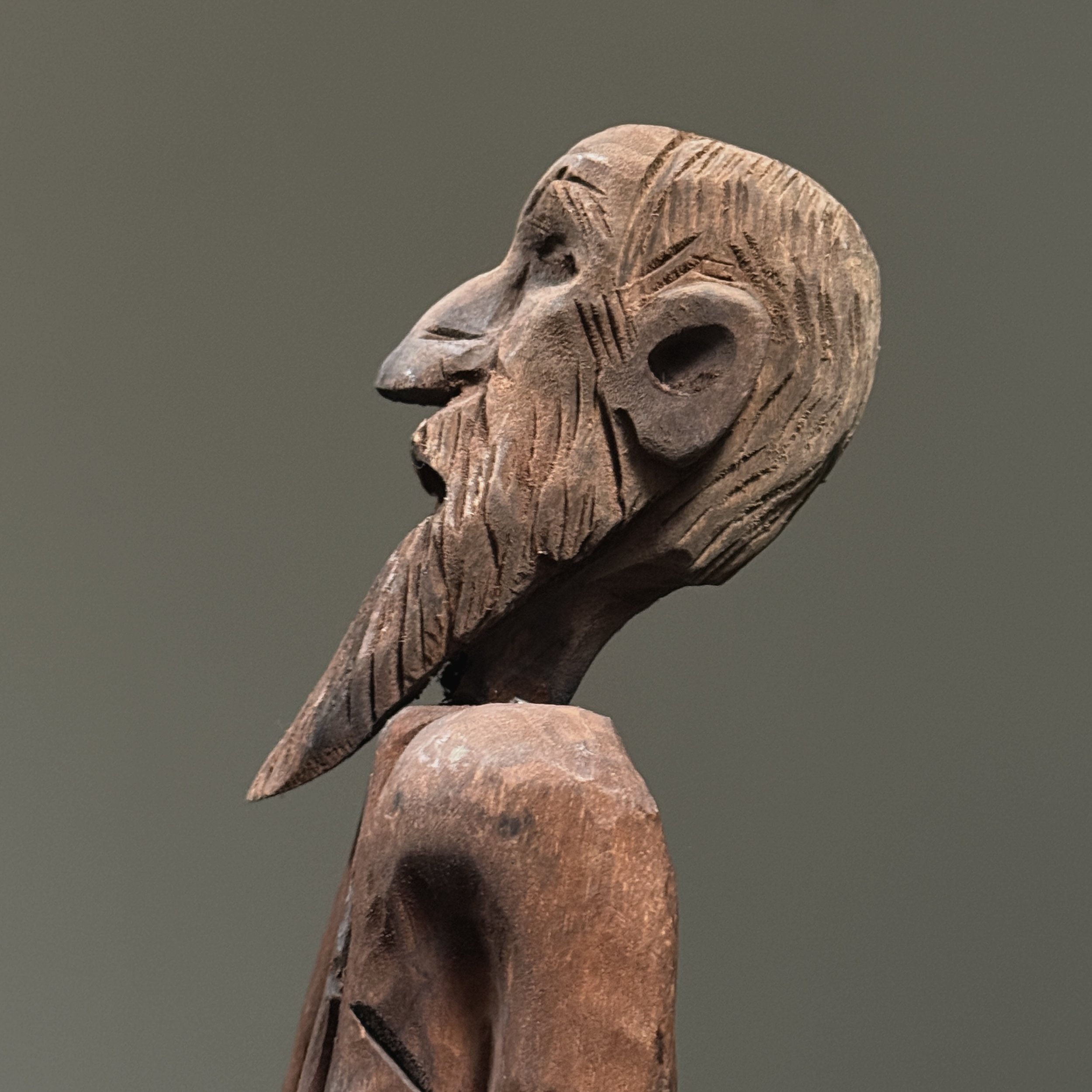
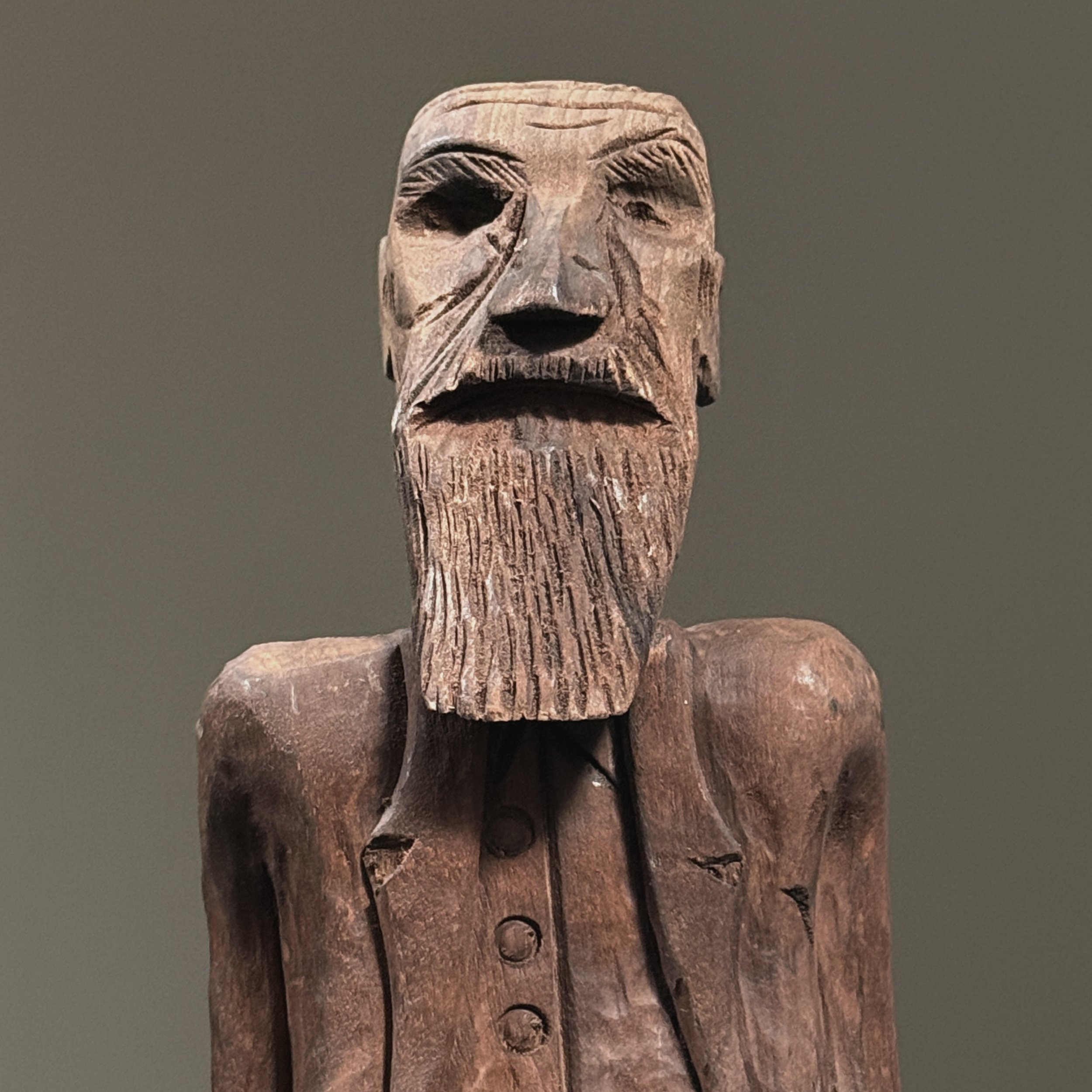
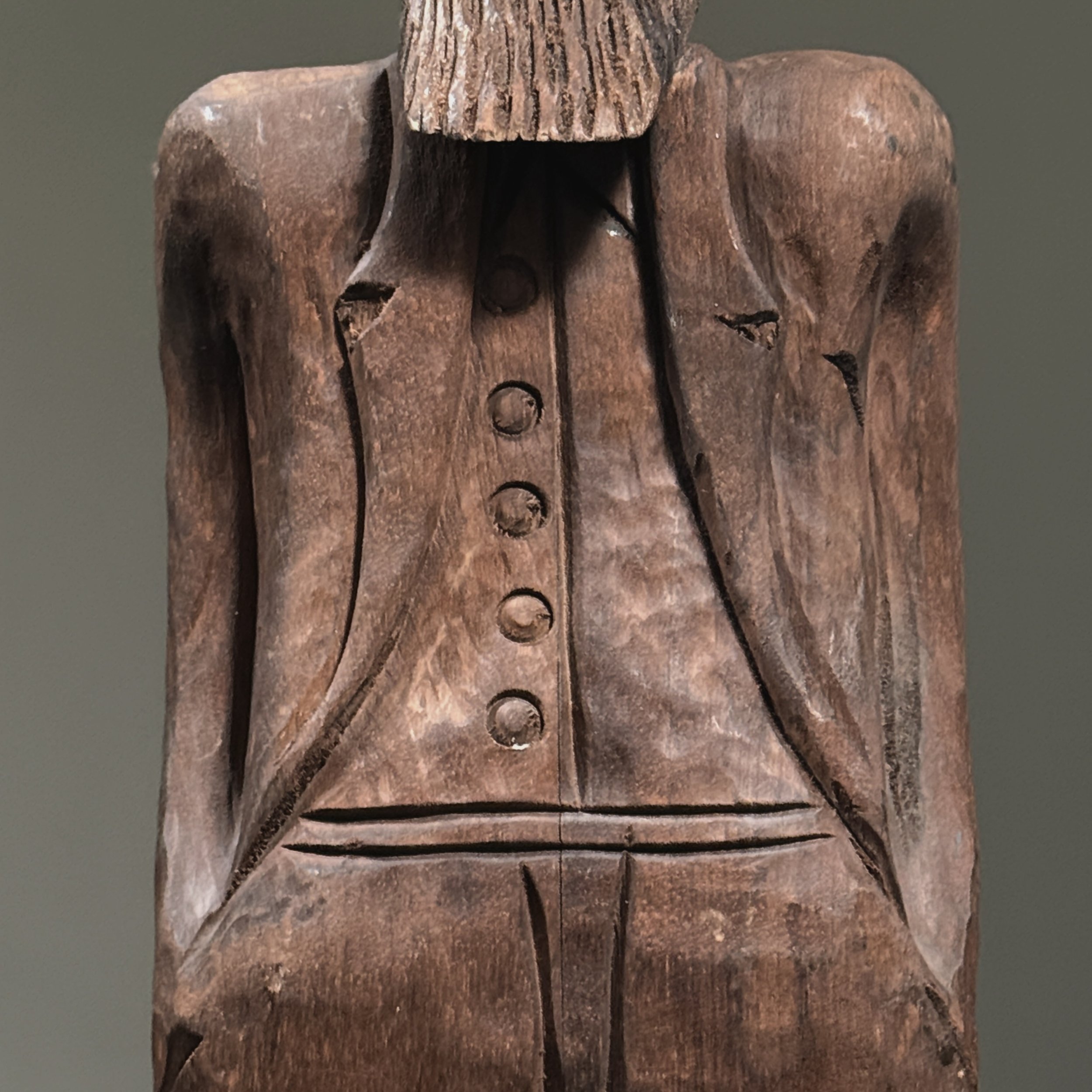
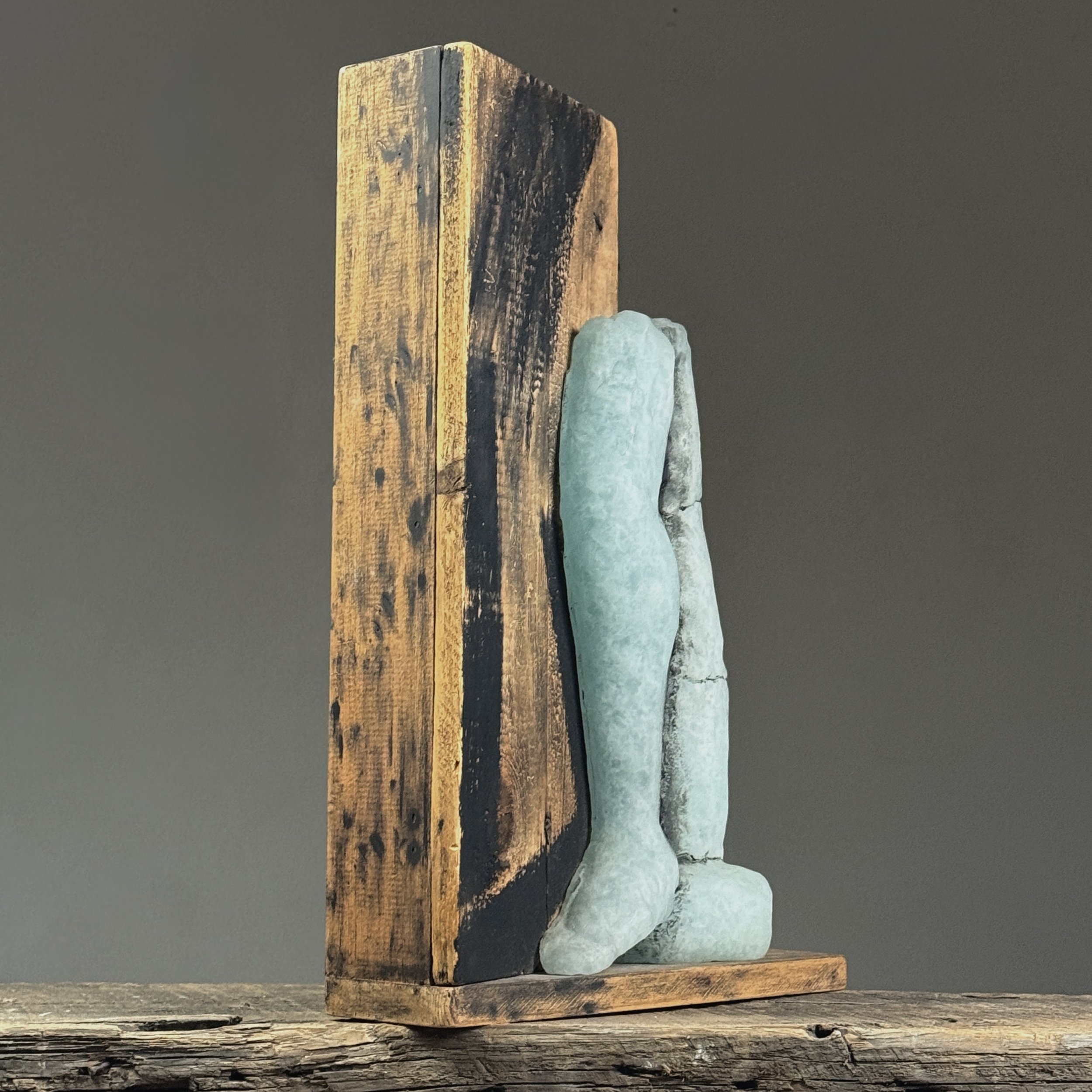
This hand carved stone sculpture exemplifies the figurative abstraction central to the Shona sculptural tradition. The artist has reduced the human form to essential volumetric masses, emphasizing verticality and rhythmic contour. The most distinctive feature is the elongated head, which creates a totemic silhouette.
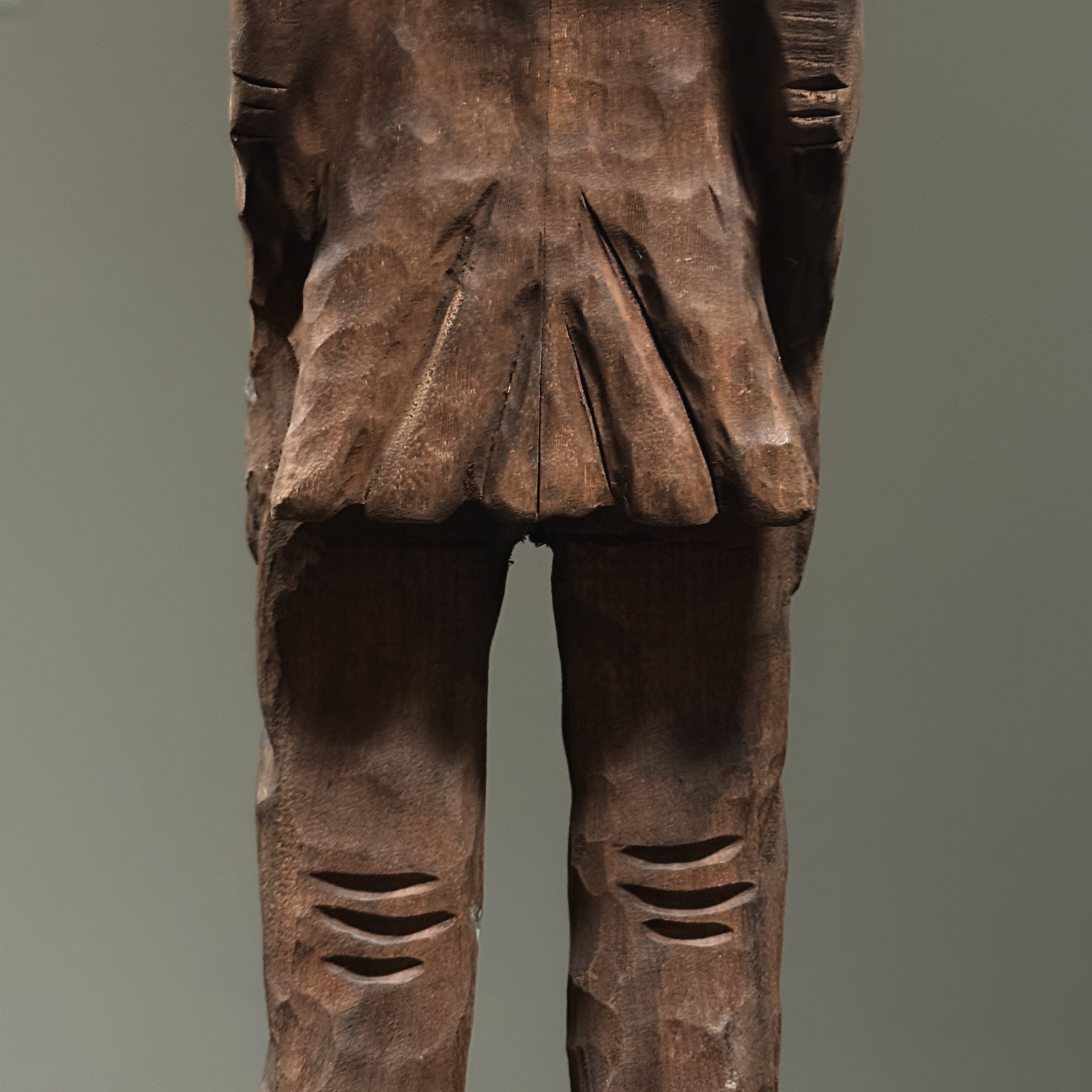
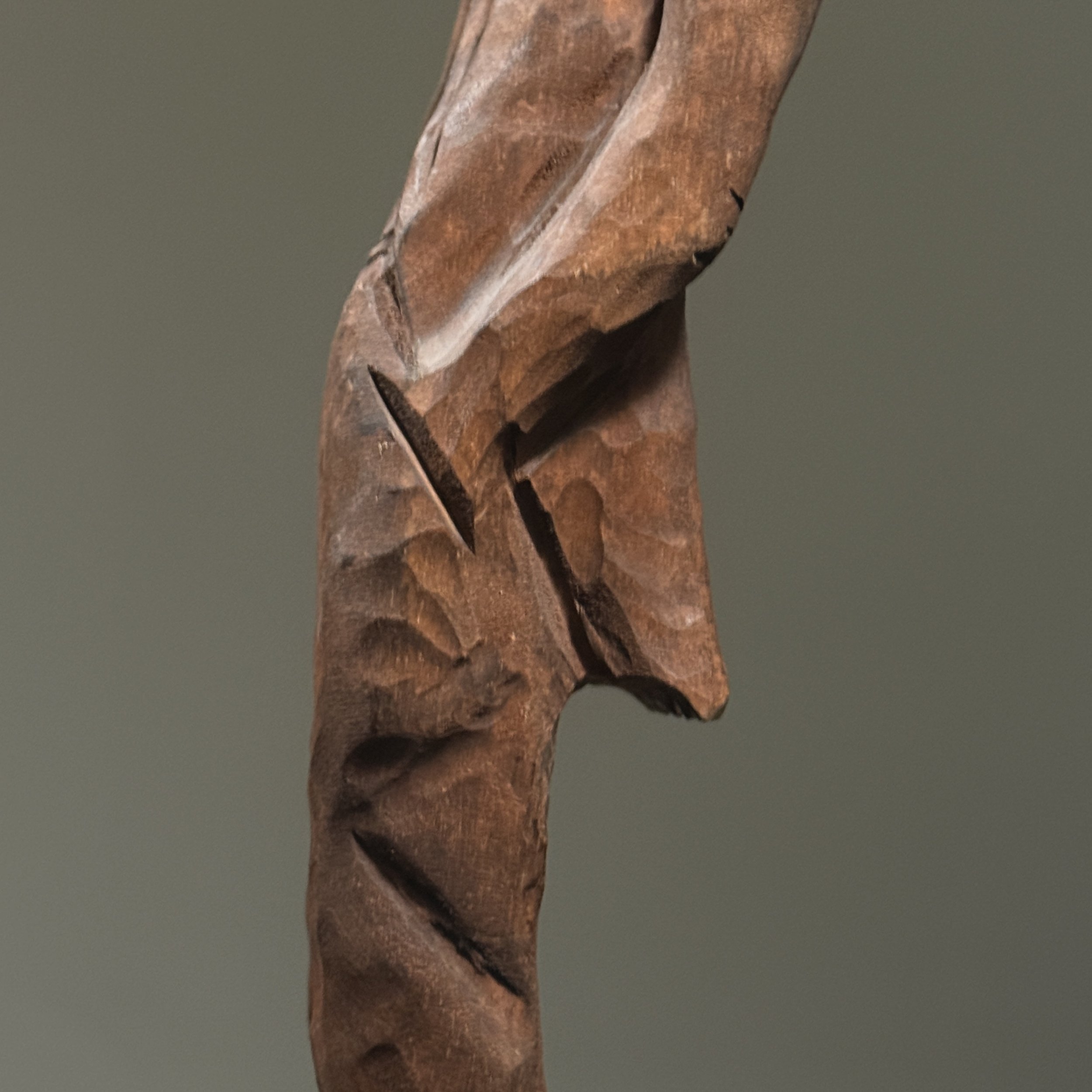
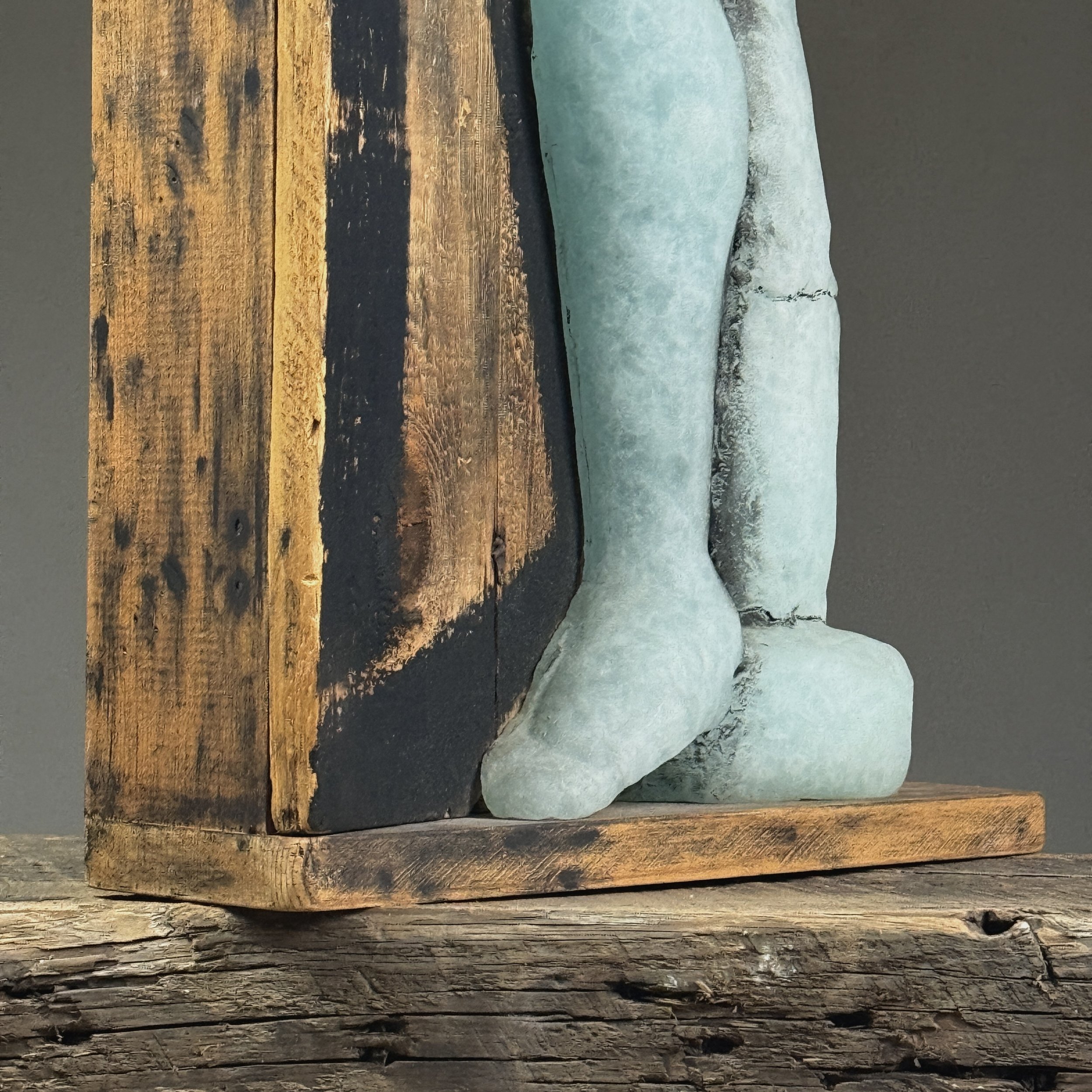
The puce colored stone, a muted red-violet to brownish-purple hue, possesses fine grain and moderate hardness, allowing for both smooth polished planes and deliberately textured carved areas. The surface shows evidence of hand carving, including tool marks and subtle asymmetries. The lower body is condensed into a bulbous shaped base, while implied arms are reduced to low-relief ridges.
Signature:
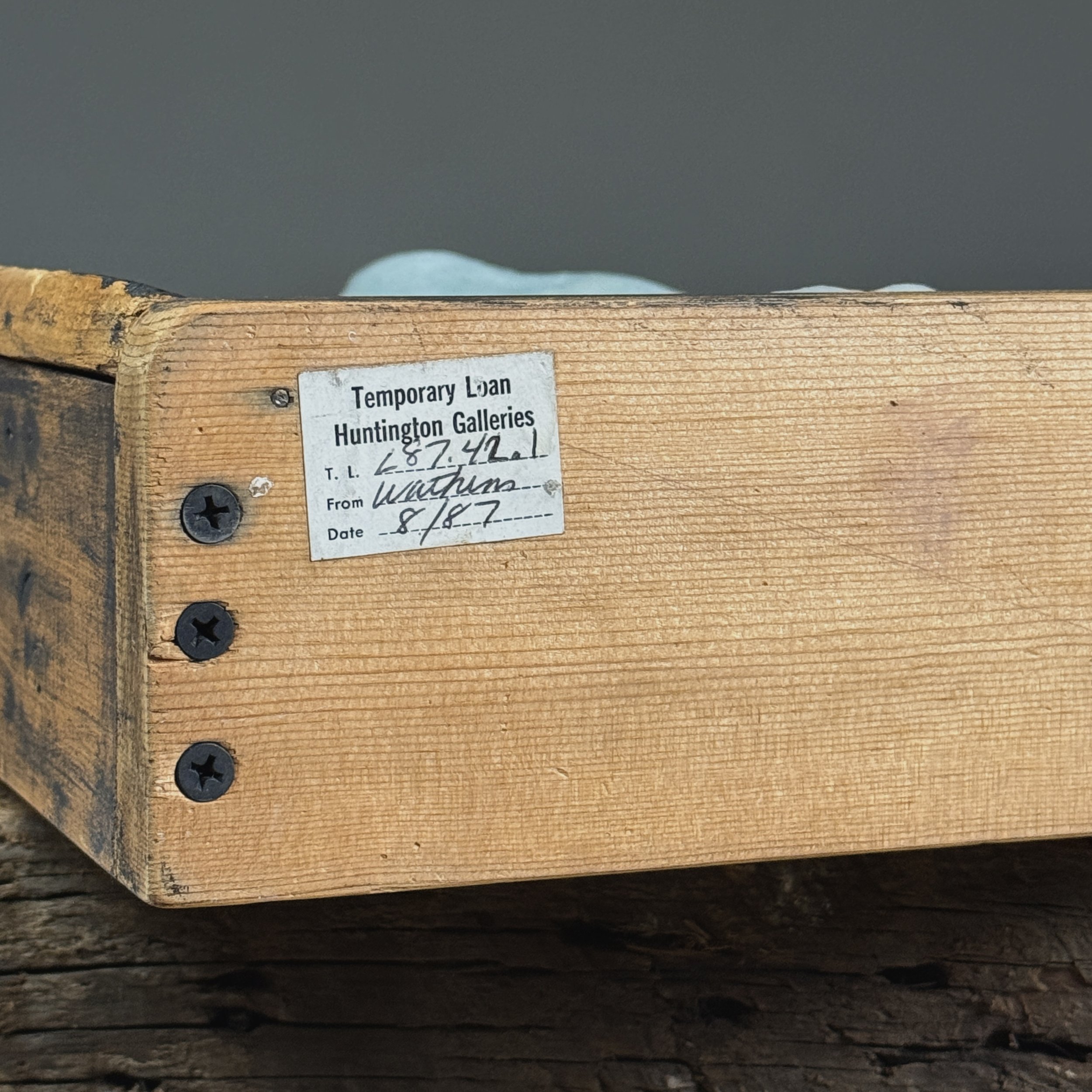
An inscription or marking is present at the bottom along the side.
Attributed to the Shona School of Sculpture (Zimbabwe, mid-to-late 20th century)
This work belongs to the Shona sculpture movement, a modern art tradition originating in Zimbabwe (formerly Rhodesia) following the country's independence in 1980, though its roots trace to workshop initiatives begun in the late 1950s and 1960s. The movement was pioneered by artists such as Joram Mariga (often called the "father of Shona sculpture"), Henry Munyaradzi, Nicholas Mukomberanwa, and Bernard Matemera. Shona sculpture is characterized by direct carving in indigenous stones, serpentine, springstone, verdite, opal stone, and soapstone, without preparatory maquettes, resulting in abstracted figurative forms that draw upon ancestral spirits (mhondoro), Shona mythology, and the human condition.
The present work, executed in a puce-toned stone (likely a variety of soapstone or a serpentine derivative), exhibits the hallmarks of the second generation of Shona sculptors (c. 1970s–1990s), who refined the movement's early expressive primitivism into a more polished, formally reductive modernist idiom. The elongated head and simplified limbs reflect the influence of both Shona ancestral carving traditions and international modernists such as Henry Moore and Constantin Brâncuși, whose works were known to Zimbabwean artists through publications and touring exhibitions.
The signature along the bottom side, while not yet matched to a specific listed artist, is consistent with the practice of Shona sculptors signing their works in pen, paint, or light incision on the stone's underside after finishing.
Museum Holdings & Comparable Objects:
Shona sculpture is held in major international collections, including the National Gallery of Zimbabwe (Harare) , the British Museum (London) , the Museum of Modern Art (New York) , the Musée du Quai Branly - Jacques Chirac (Paris) , the Smithsonian National Museum of African Art (Washington, D.C.) , and the Chapungu Sculpture Park (Zimbabwe and UK) .
Title: Abstract Figurative Sculpture
Artist: Signed (unidentified Shona sculptor, likely second generation)
Culture/Nationality: Zimbabwean (Shona School)
Date: circa 1970s–1990s (vintage)
Medium: Hand carved puce toned stone (soapstone or serpentine variant)
Dimensions: Height 13.5 in. (34.3 cm) x Width 9.25 in. (23.5 cm) x Depth 4 in. (10.2 cm)
Condition: Used. Chips, scratches, and surface abrasions consistent with age, material friability, and handling. The piece remains structurally sound with stable patina. Please reference accompanying detail photography for full condition documentation.
Description:
This hand carved stone sculpture exemplifies the figurative abstraction central to the Shona sculptural tradition. The artist has reduced the human form to essential volumetric masses, emphasizing verticality and rhythmic contour. The most distinctive feature is the elongated head, which creates a totemic silhouette.
The puce colored stone, a muted red-violet to brownish-purple hue, possesses fine grain and moderate hardness, allowing for both smooth polished planes and deliberately textured carved areas. The surface shows evidence of hand carving, including tool marks and subtle asymmetries. The lower body is condensed into a bulbous shaped base, while implied arms are reduced to low-relief ridges.
Signature:
An inscription or marking is present at the bottom along the side.
Attributed to the Shona School of Sculpture (Zimbabwe, mid-to-late 20th century)
This work belongs to the Shona sculpture movement, a modern art tradition originating in Zimbabwe (formerly Rhodesia) following the country's independence in 1980, though its roots trace to workshop initiatives begun in the late 1950s and 1960s. The movement was pioneered by artists such as Joram Mariga (often called the "father of Shona sculpture"), Henry Munyaradzi, Nicholas Mukomberanwa, and Bernard Matemera. Shona sculpture is characterized by direct carving in indigenous stones, serpentine, springstone, verdite, opal stone, and soapstone, without preparatory maquettes, resulting in abstracted figurative forms that draw upon ancestral spirits (mhondoro), Shona mythology, and the human condition.
The present work, executed in a puce-toned stone (likely a variety of soapstone or a serpentine derivative), exhibits the hallmarks of the second generation of Shona sculptors (c. 1970s–1990s), who refined the movement's early expressive primitivism into a more polished, formally reductive modernist idiom. The elongated head and simplified limbs reflect the influence of both Shona ancestral carving traditions and international modernists such as Henry Moore and Constantin Brâncuși, whose works were known to Zimbabwean artists through publications and touring exhibitions.
The signature along the bottom side, while not yet matched to a specific listed artist, is consistent with the practice of Shona sculptors signing their works in pen, paint, or light incision on the stone's underside after finishing.
Museum Holdings & Comparable Objects:
Shona sculpture is held in major international collections, including the National Gallery of Zimbabwe (Harare) , the British Museum (London) , the Museum of Modern Art (New York) , the Musée du Quai Branly - Jacques Chirac (Paris) , the Smithsonian National Museum of African Art (Washington, D.C.) , and the Chapungu Sculpture Park (Zimbabwe and UK) .

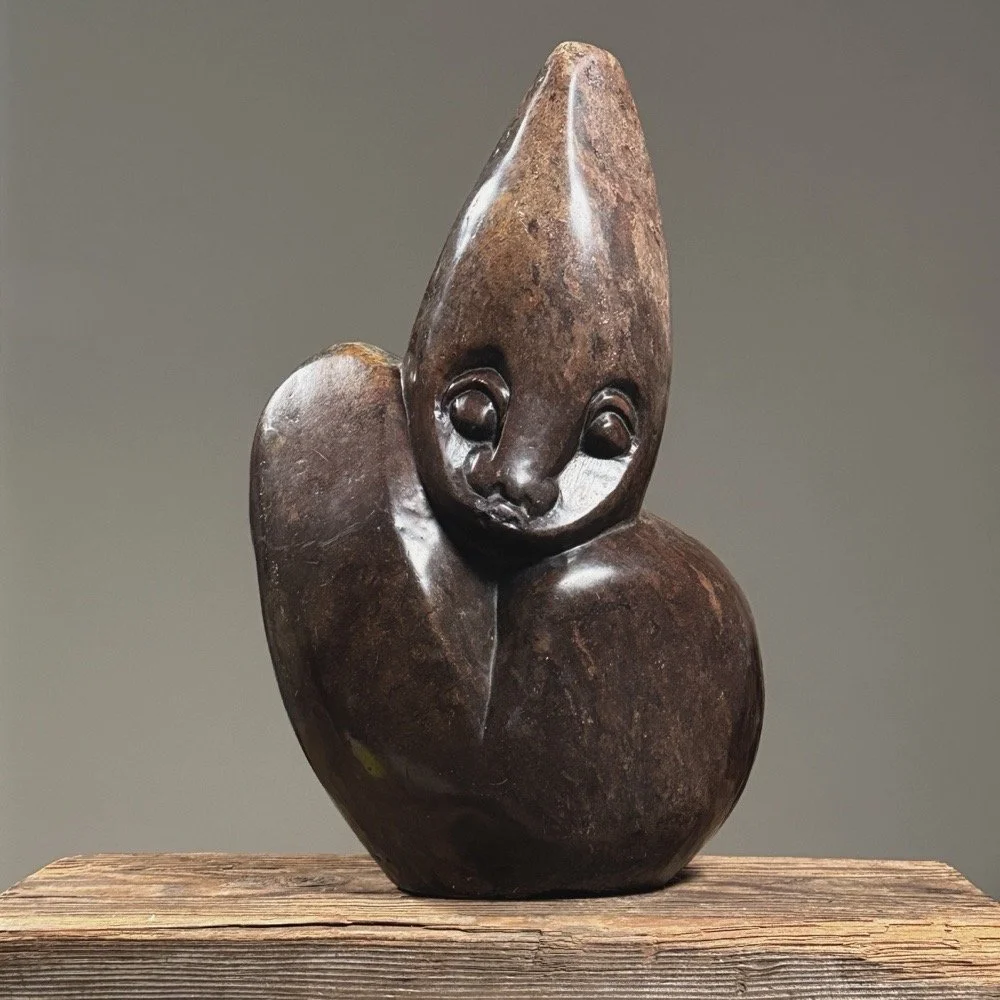 Image 1 of 10
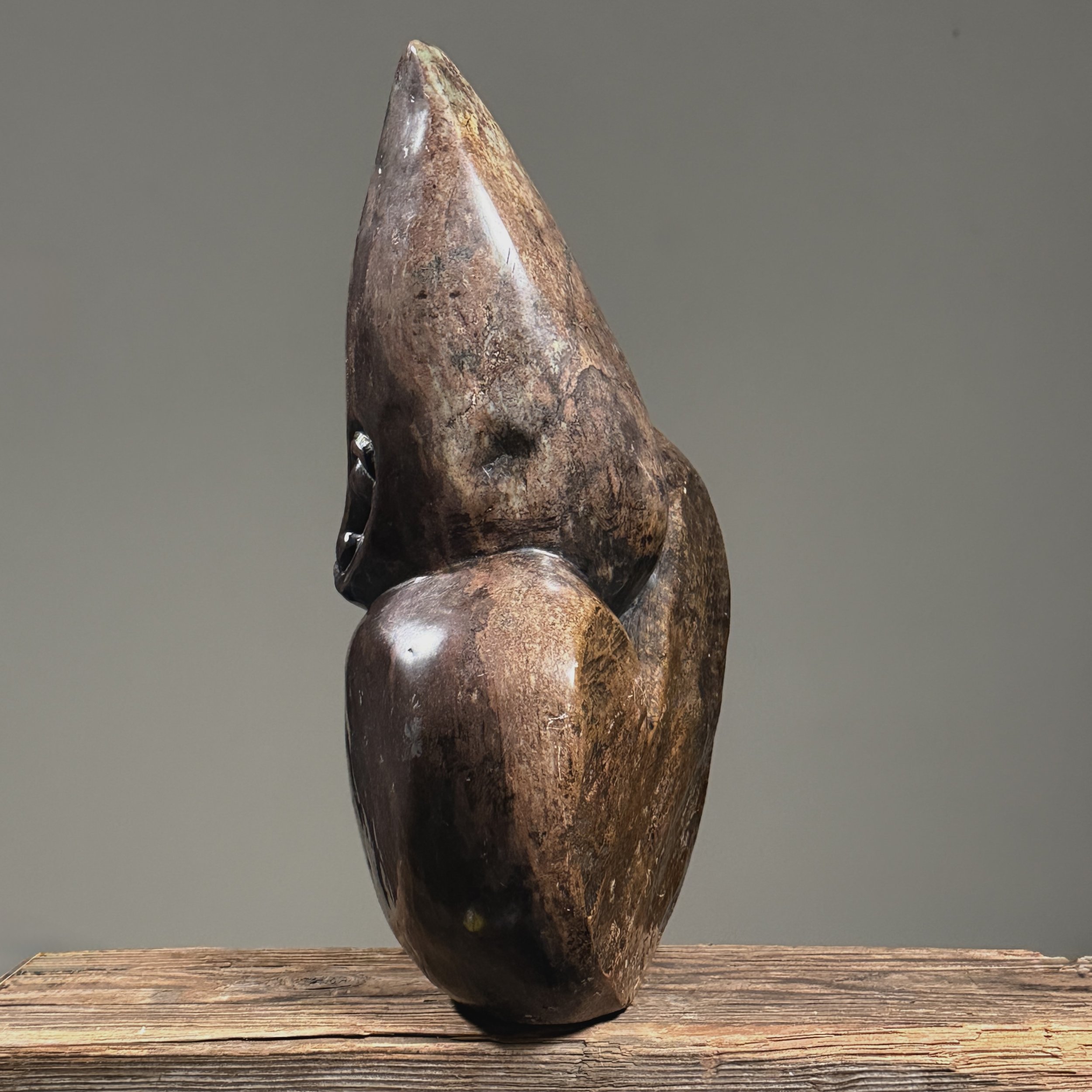 Image 2 of 10
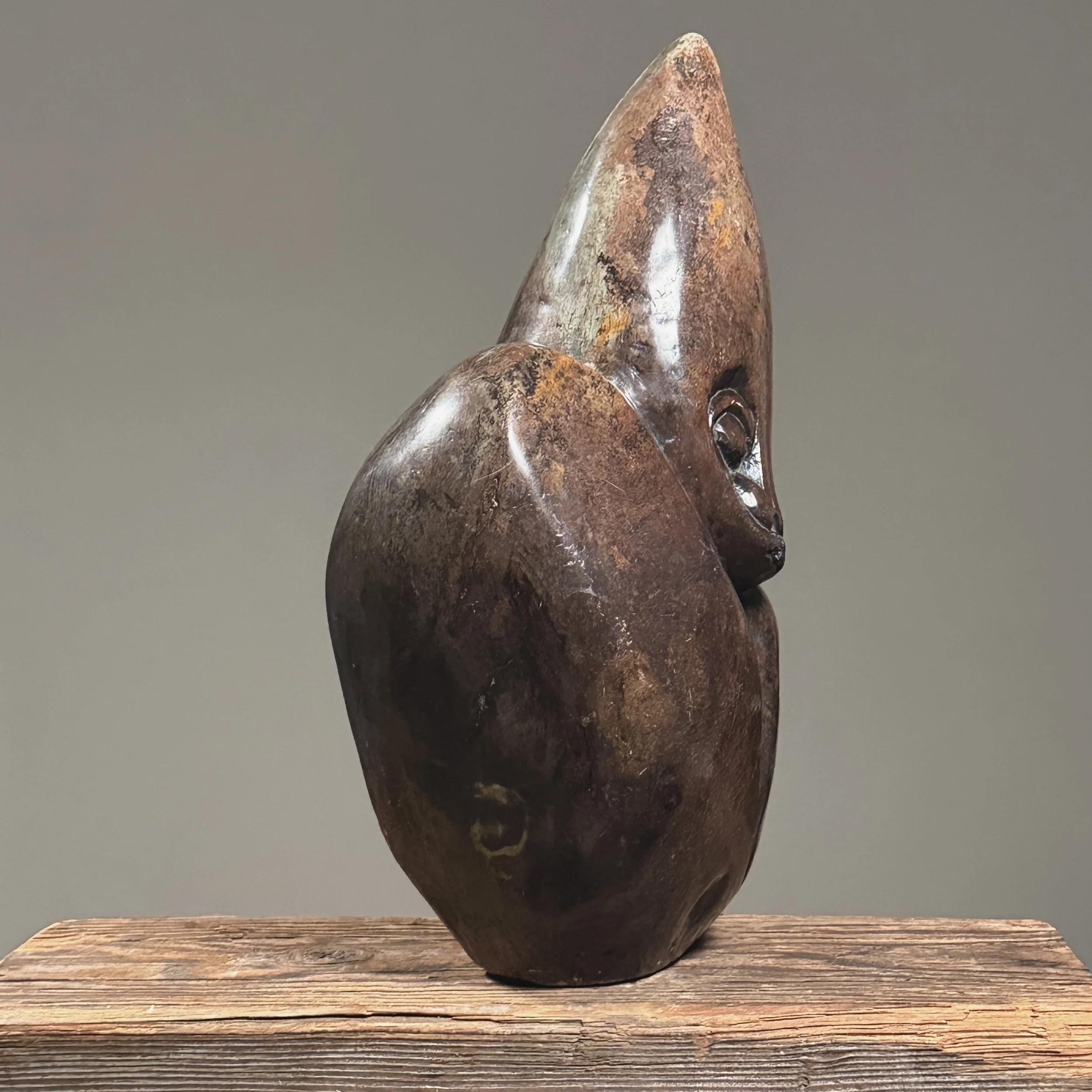 Image 3 of 10
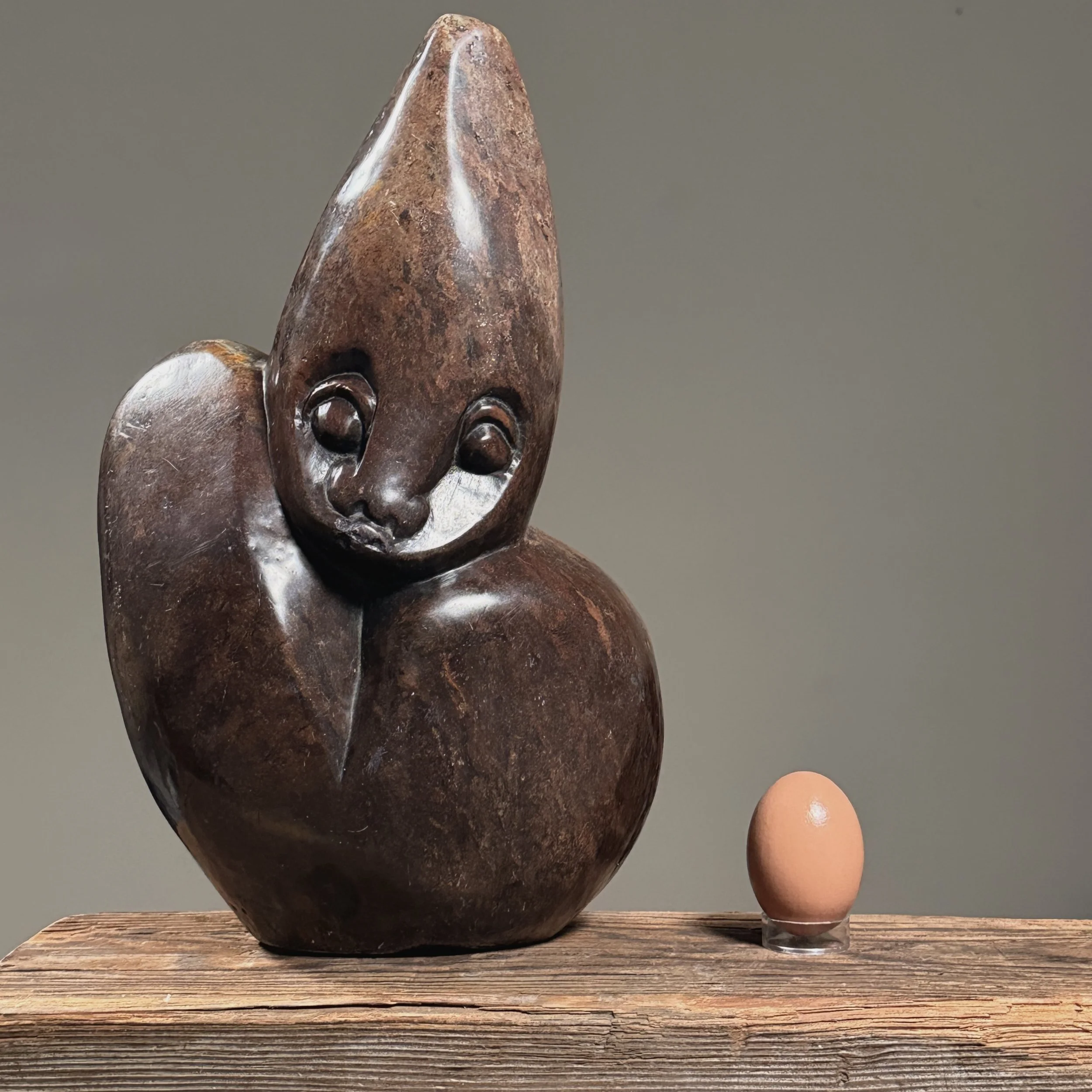 Image 4 of 10
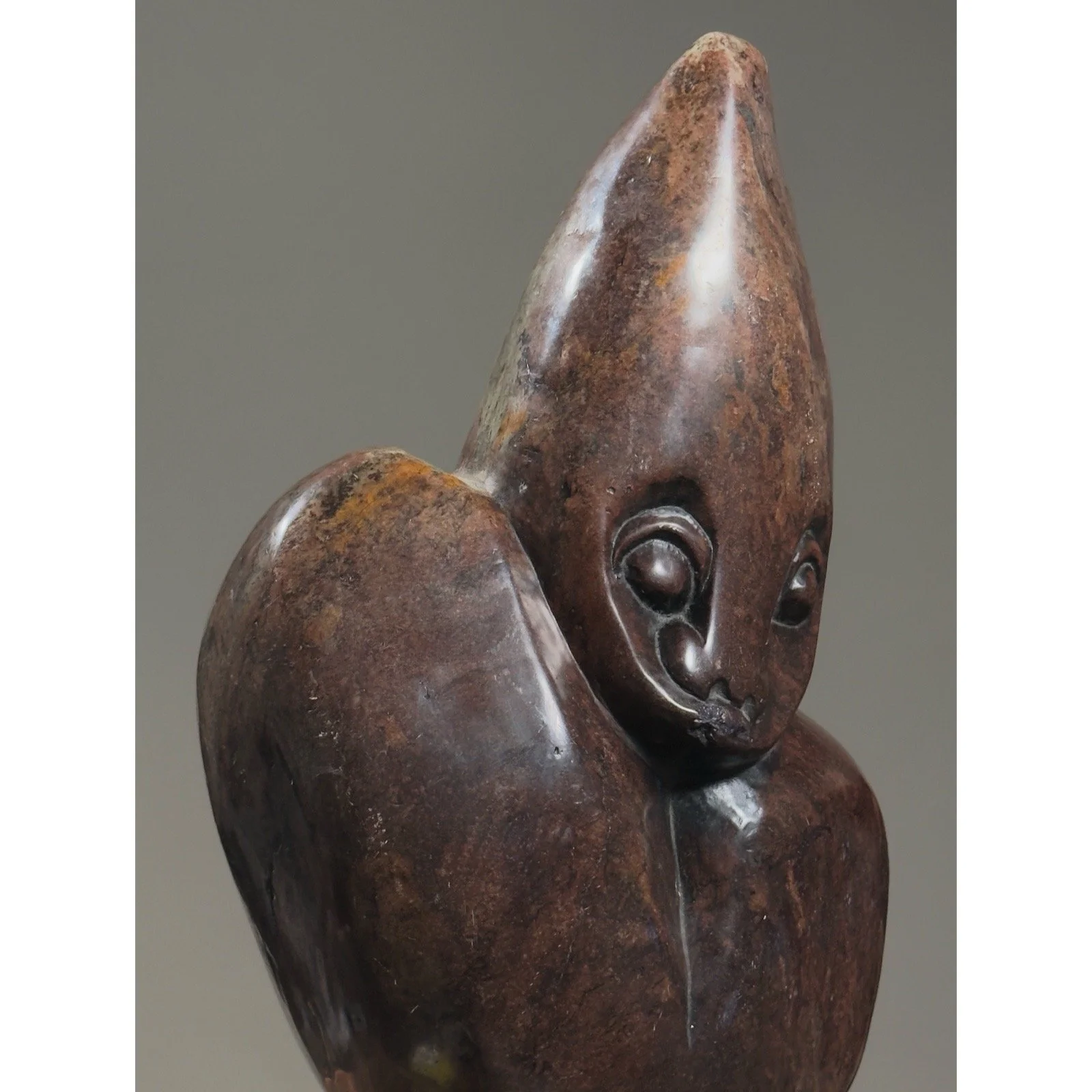 Image 5 of 10
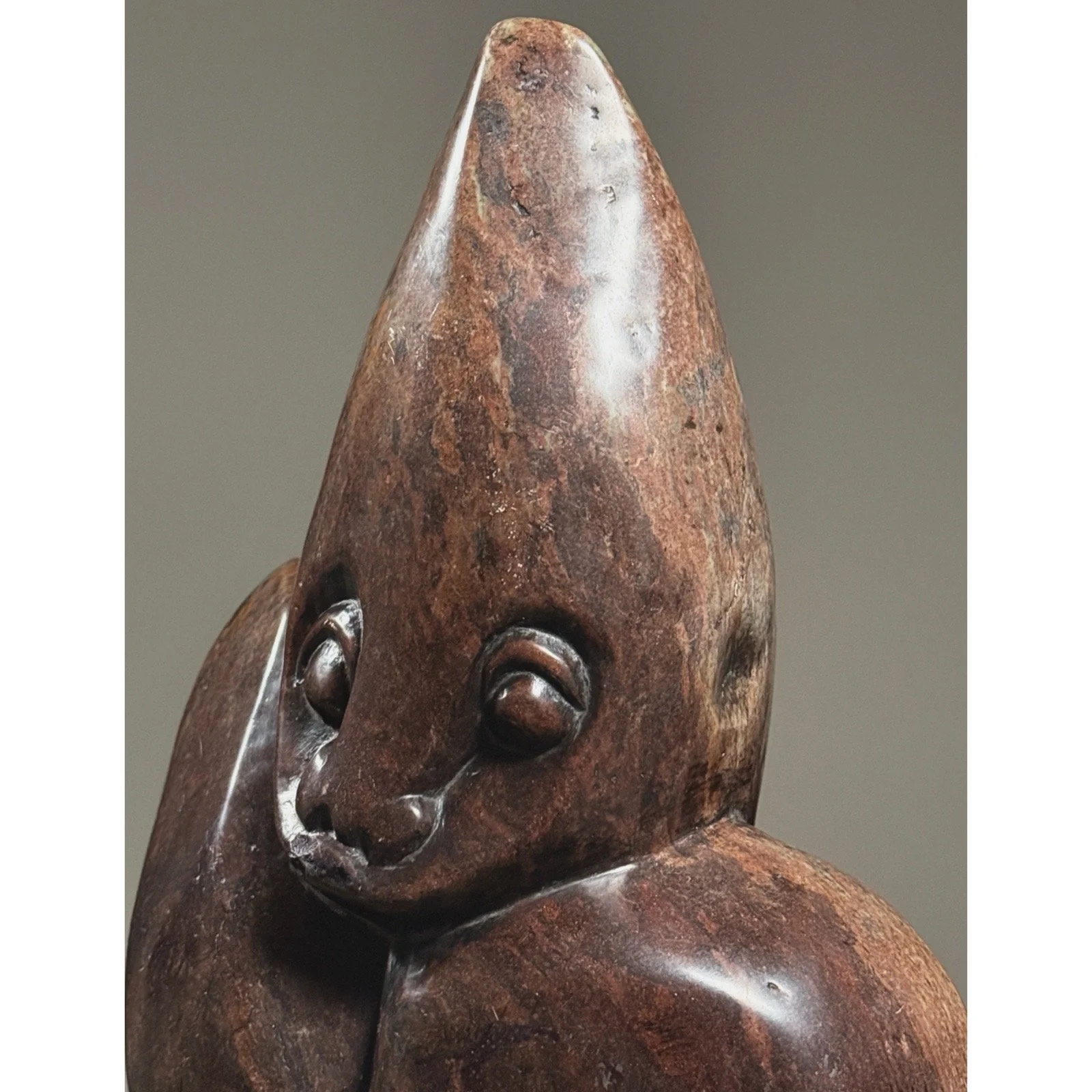 Image 6 of 10
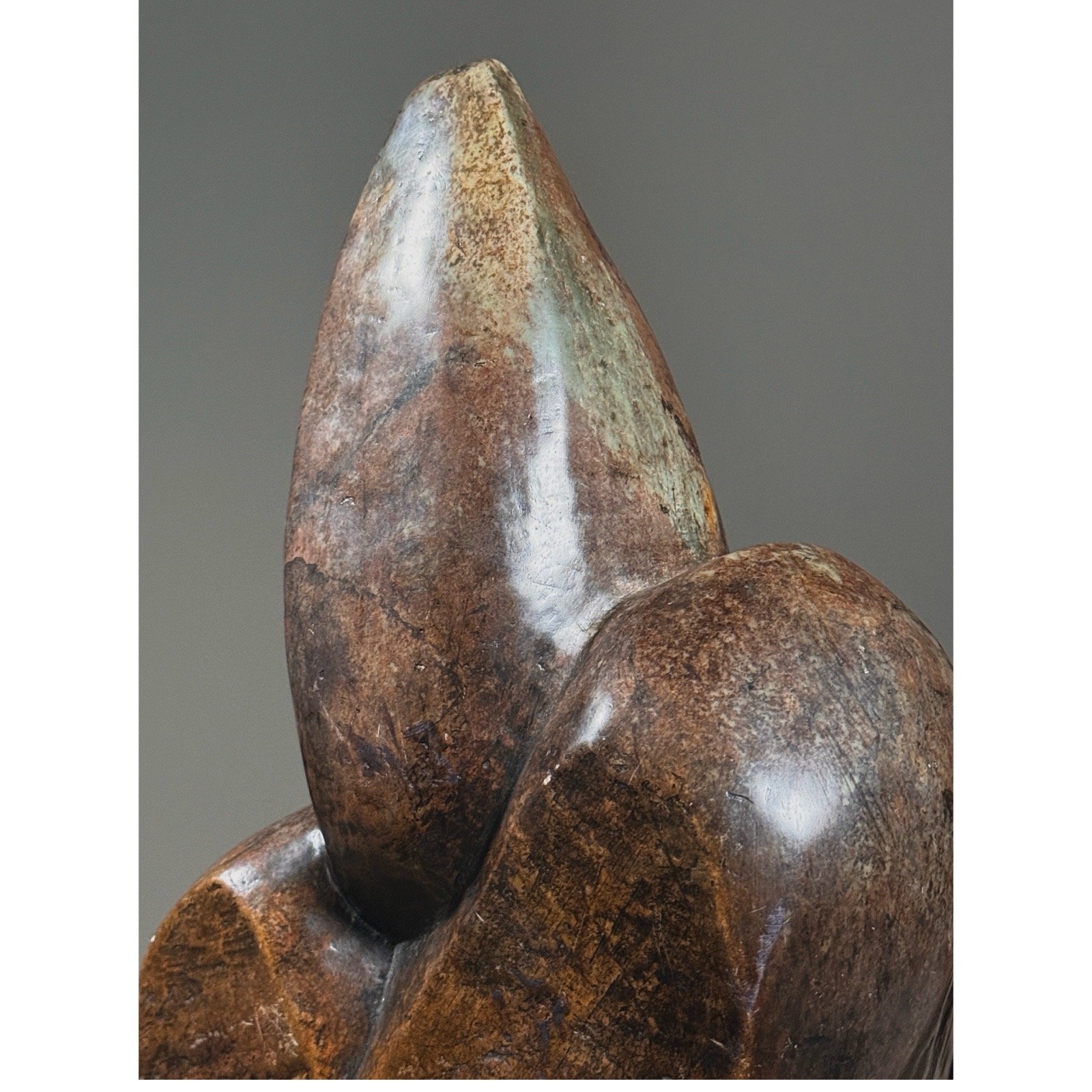 Image 7 of 10
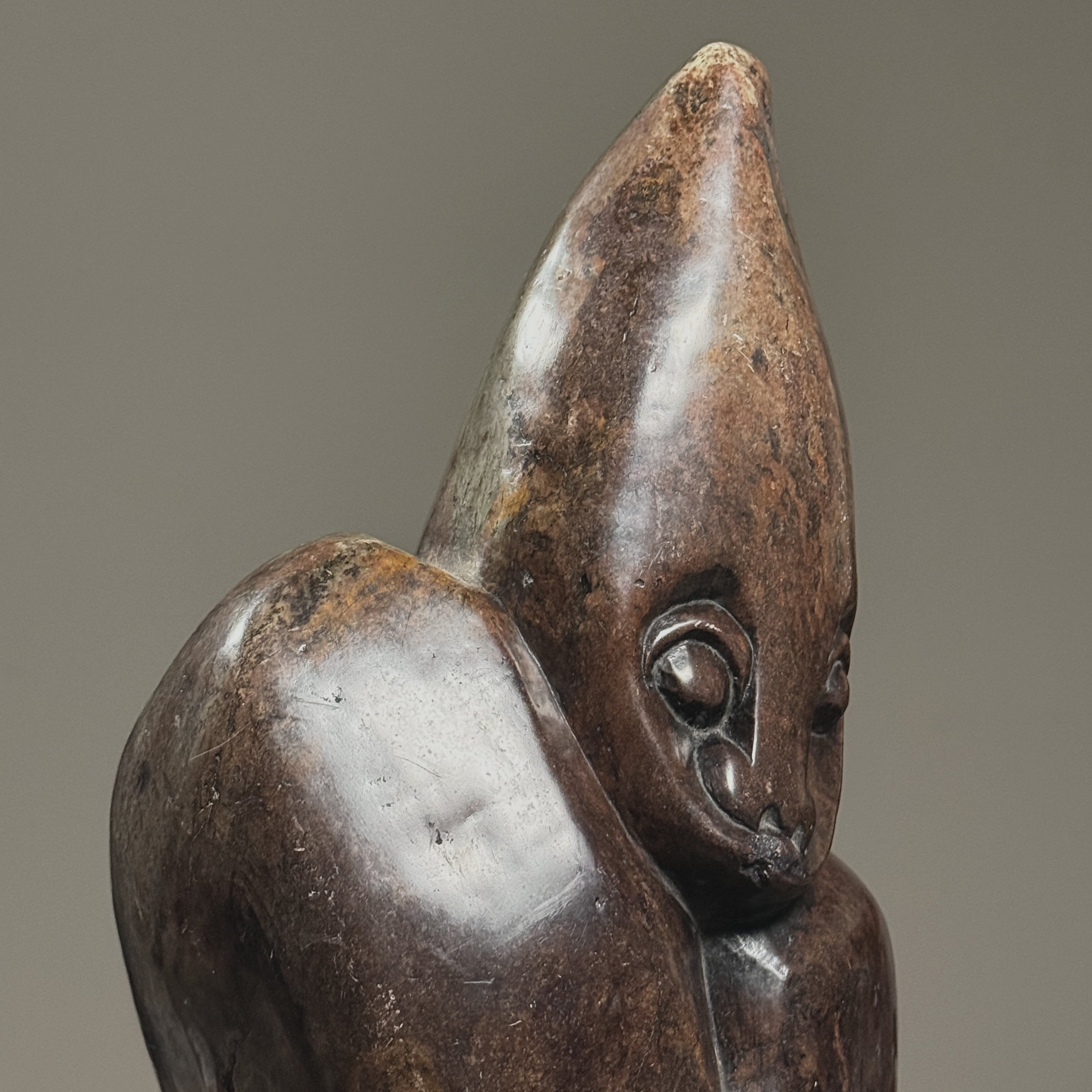 Image 8 of 10
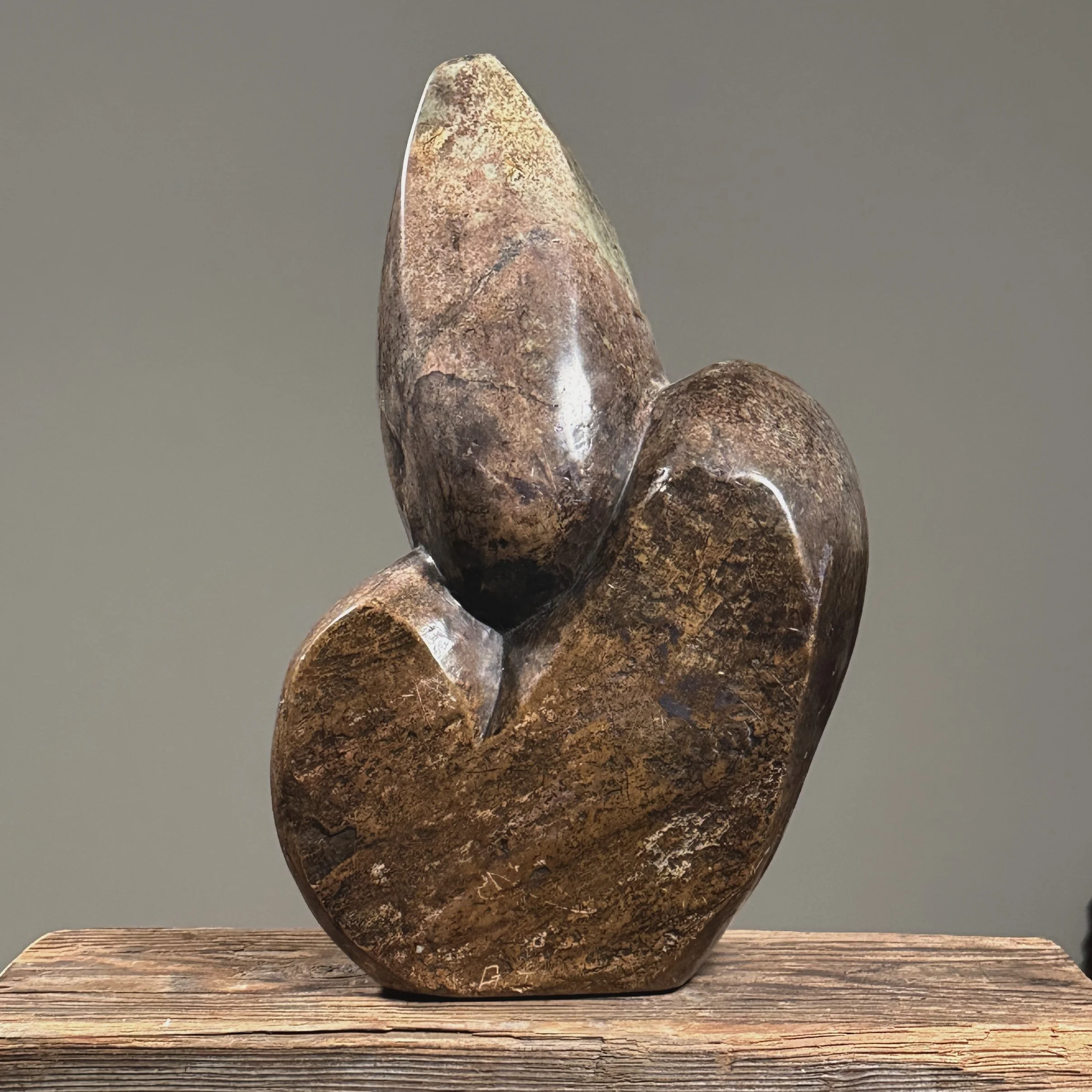 Image 9 of 10
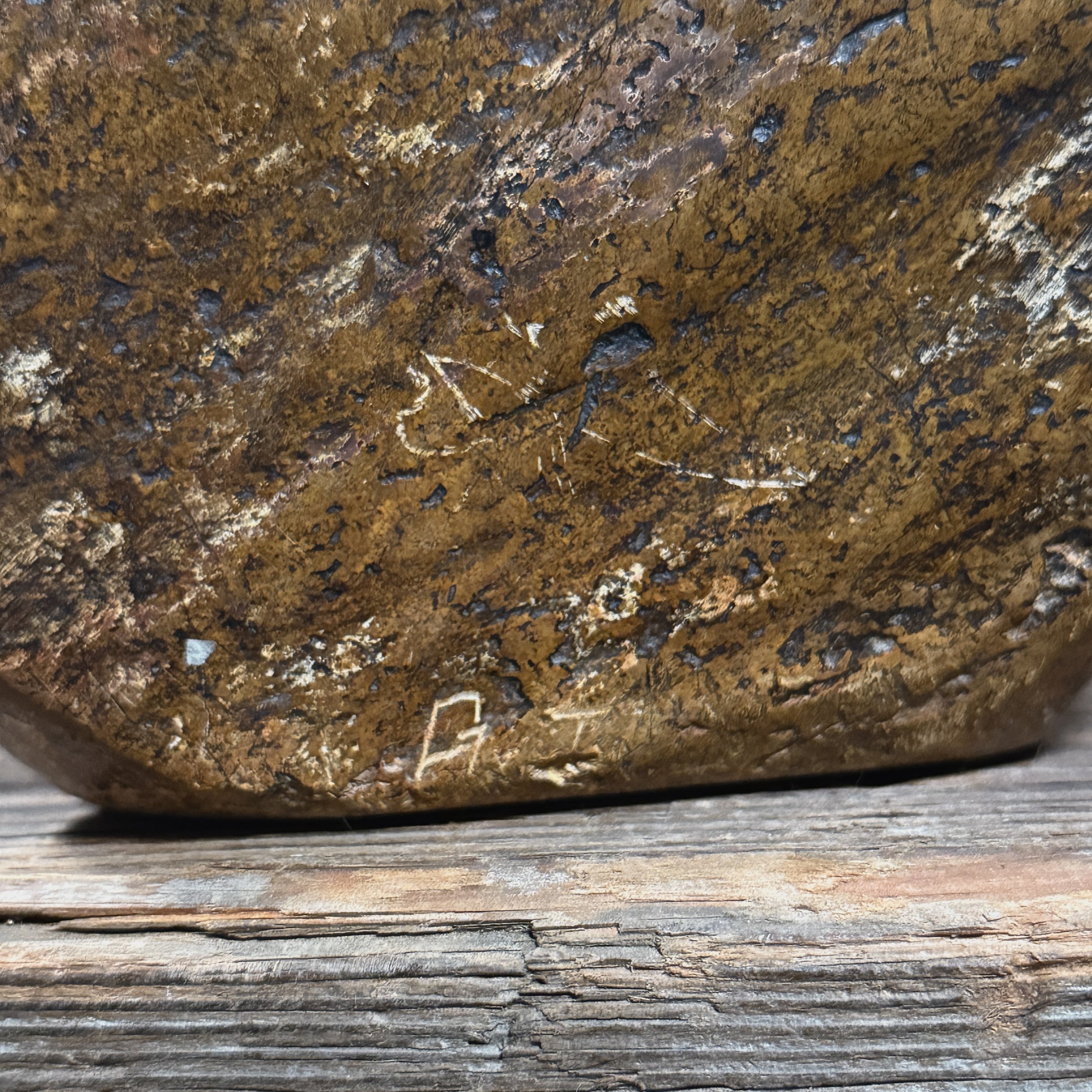 Image 10 of 10