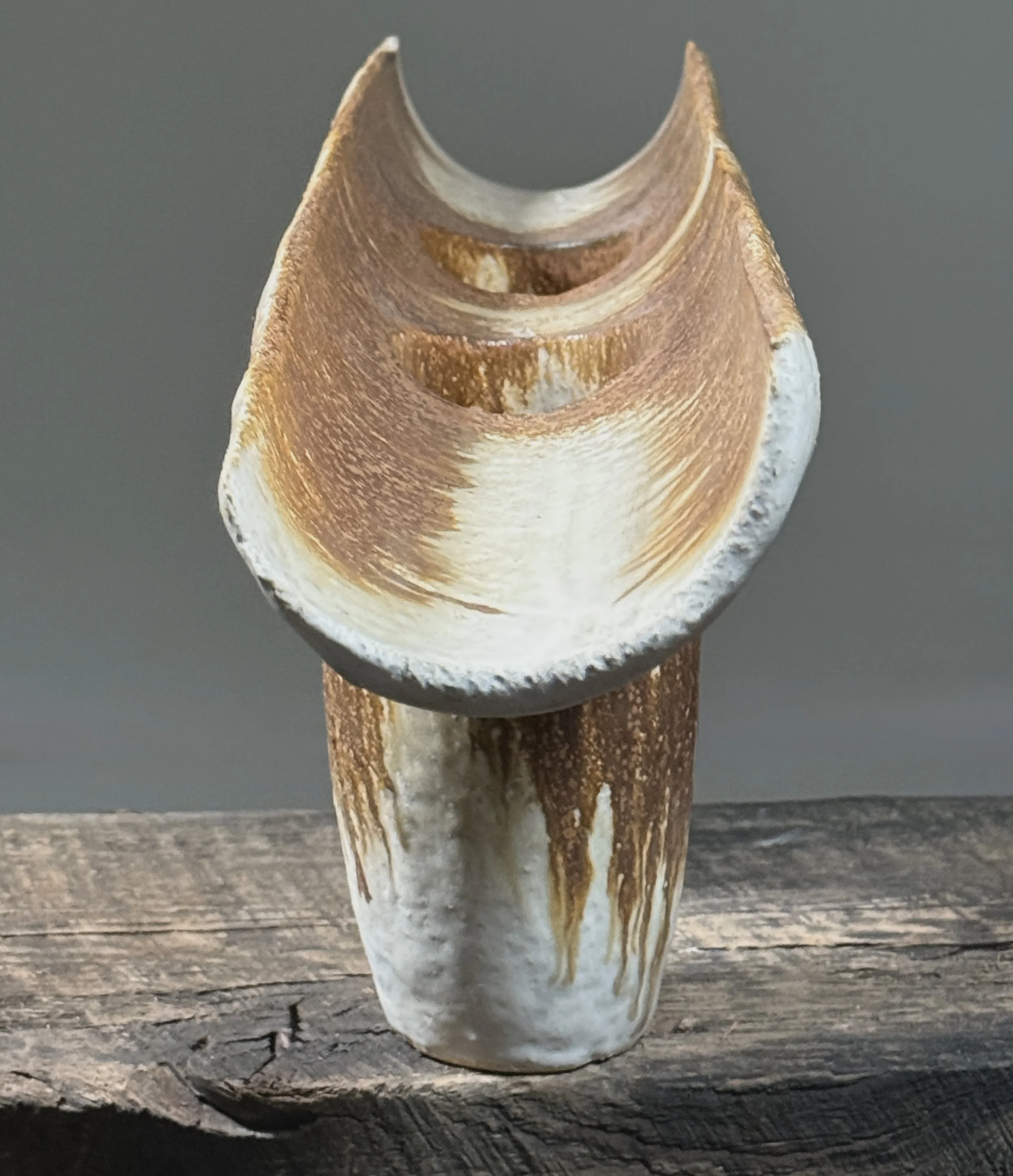
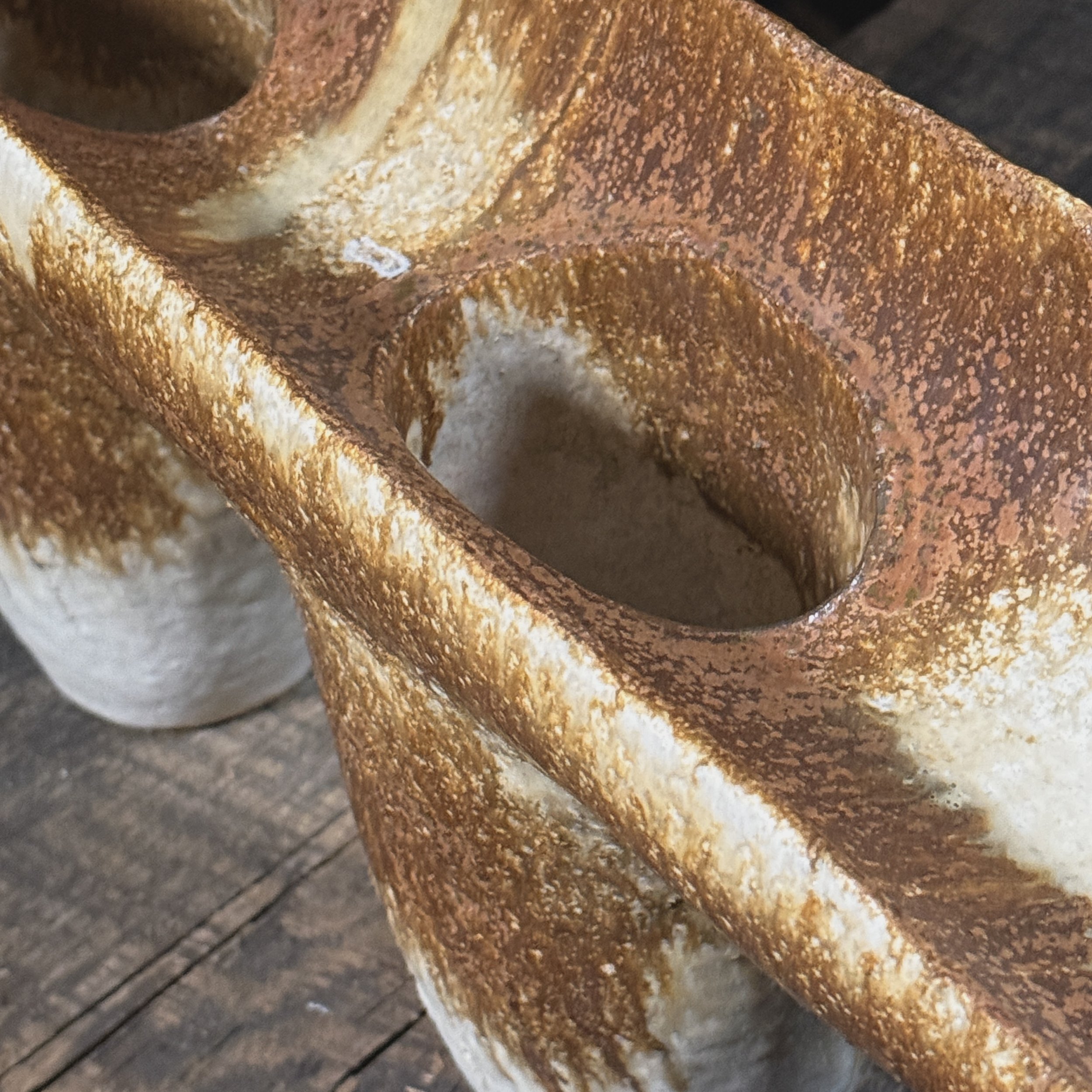
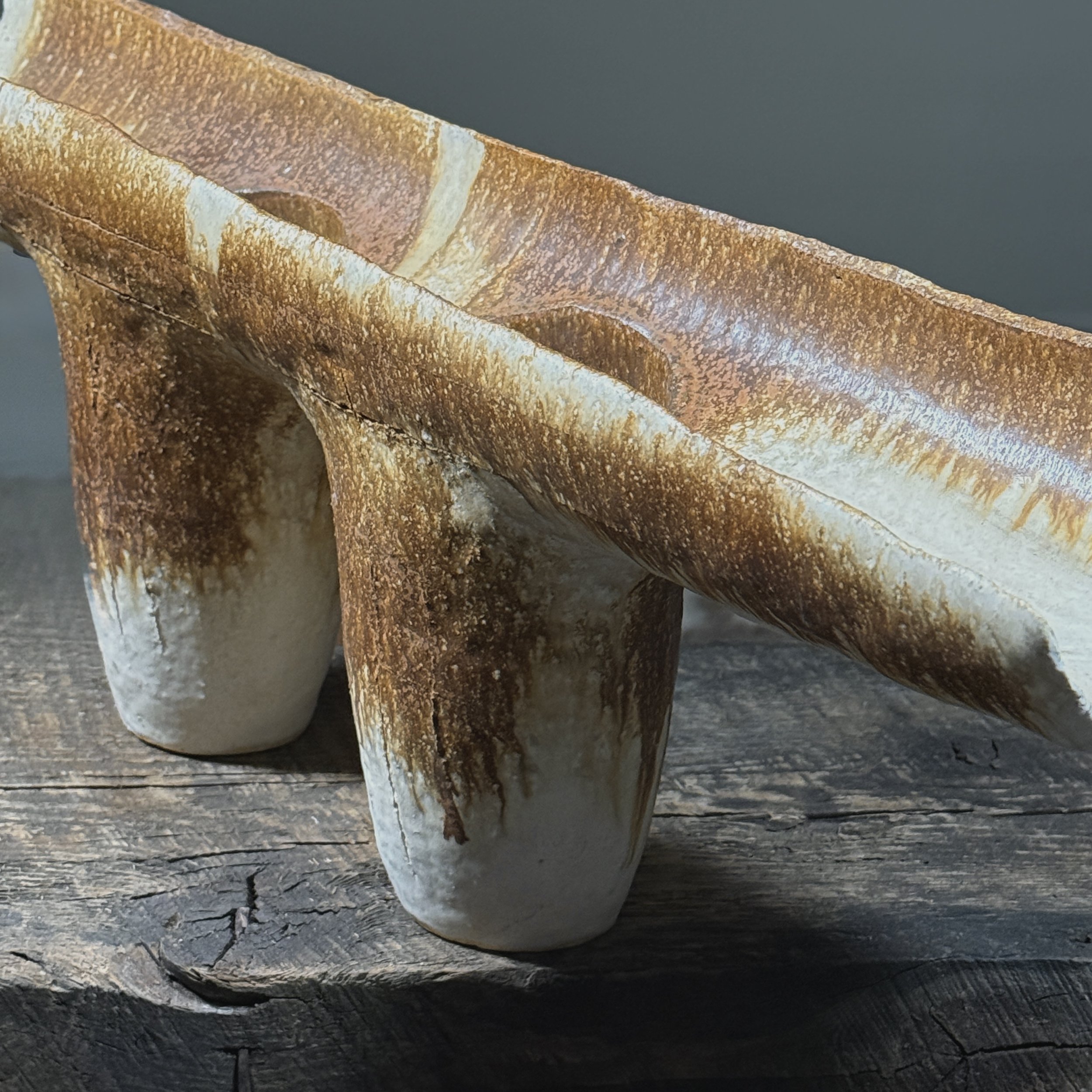
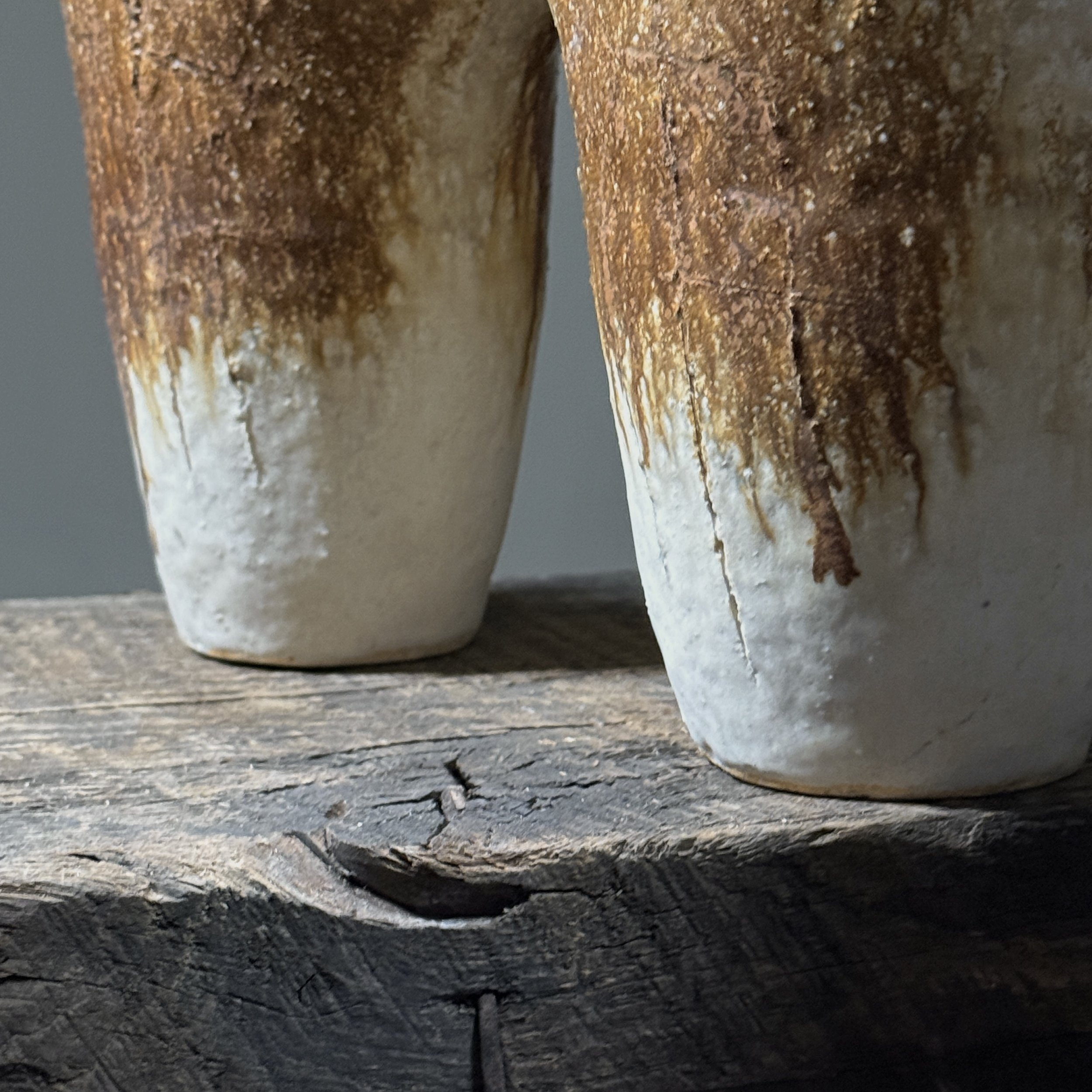
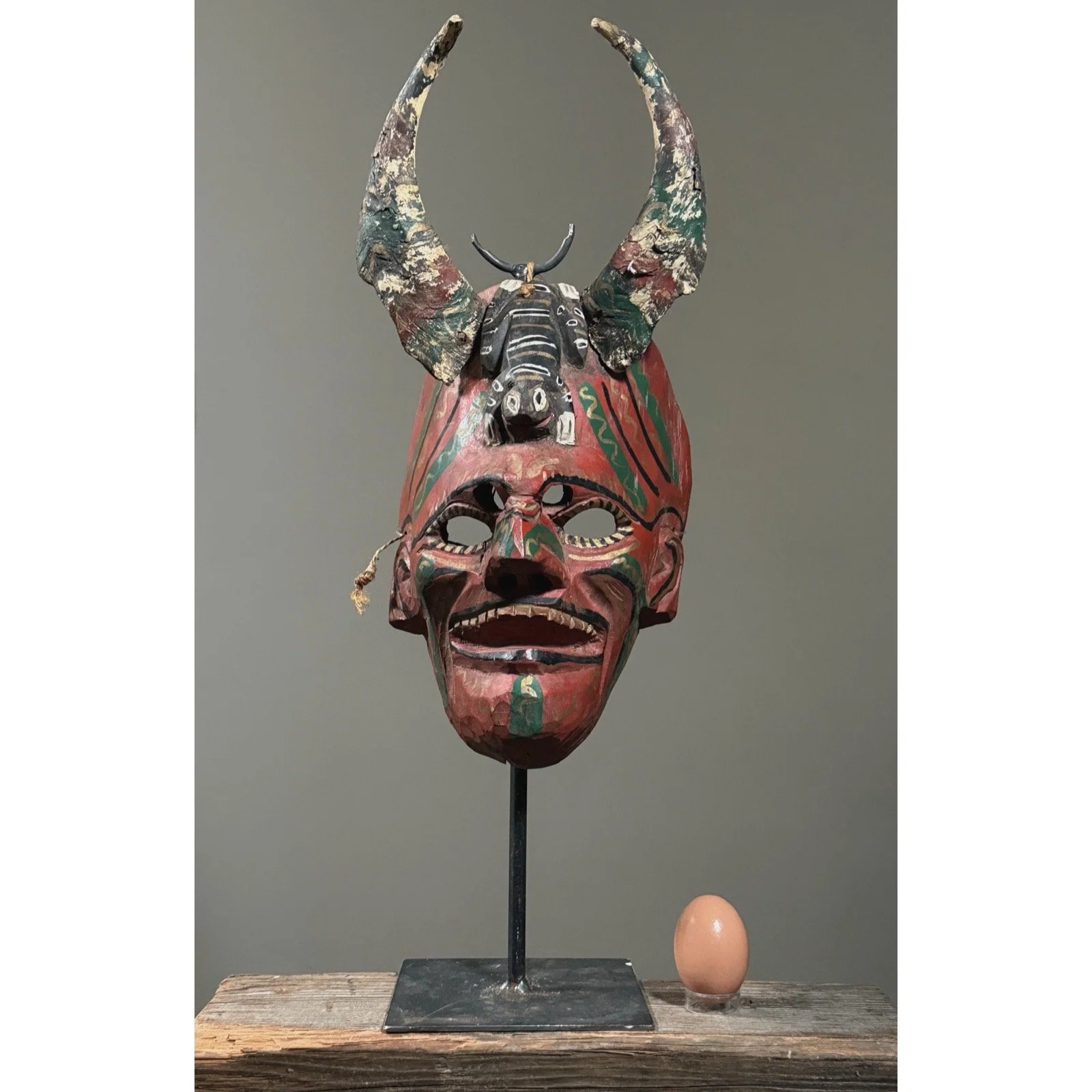
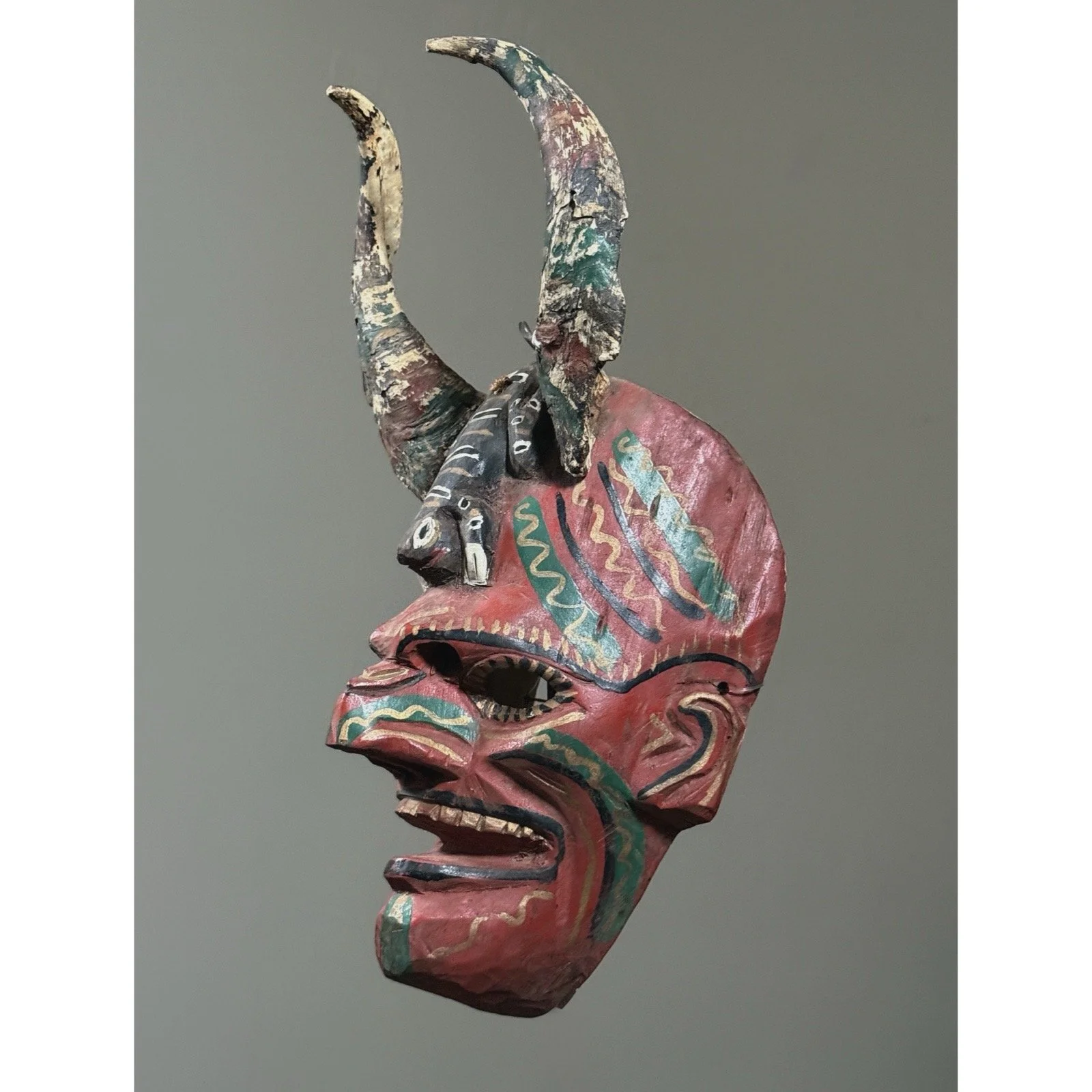
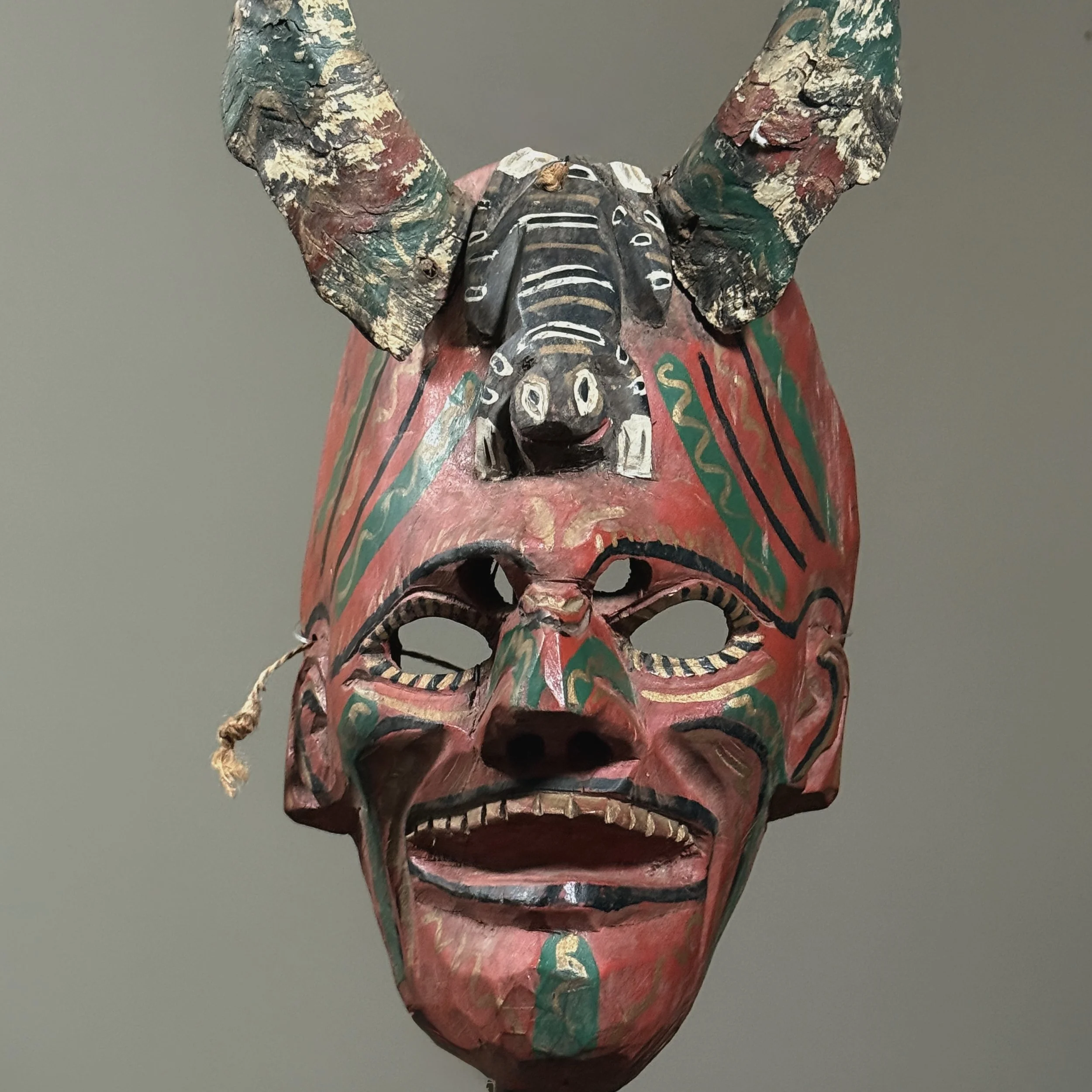
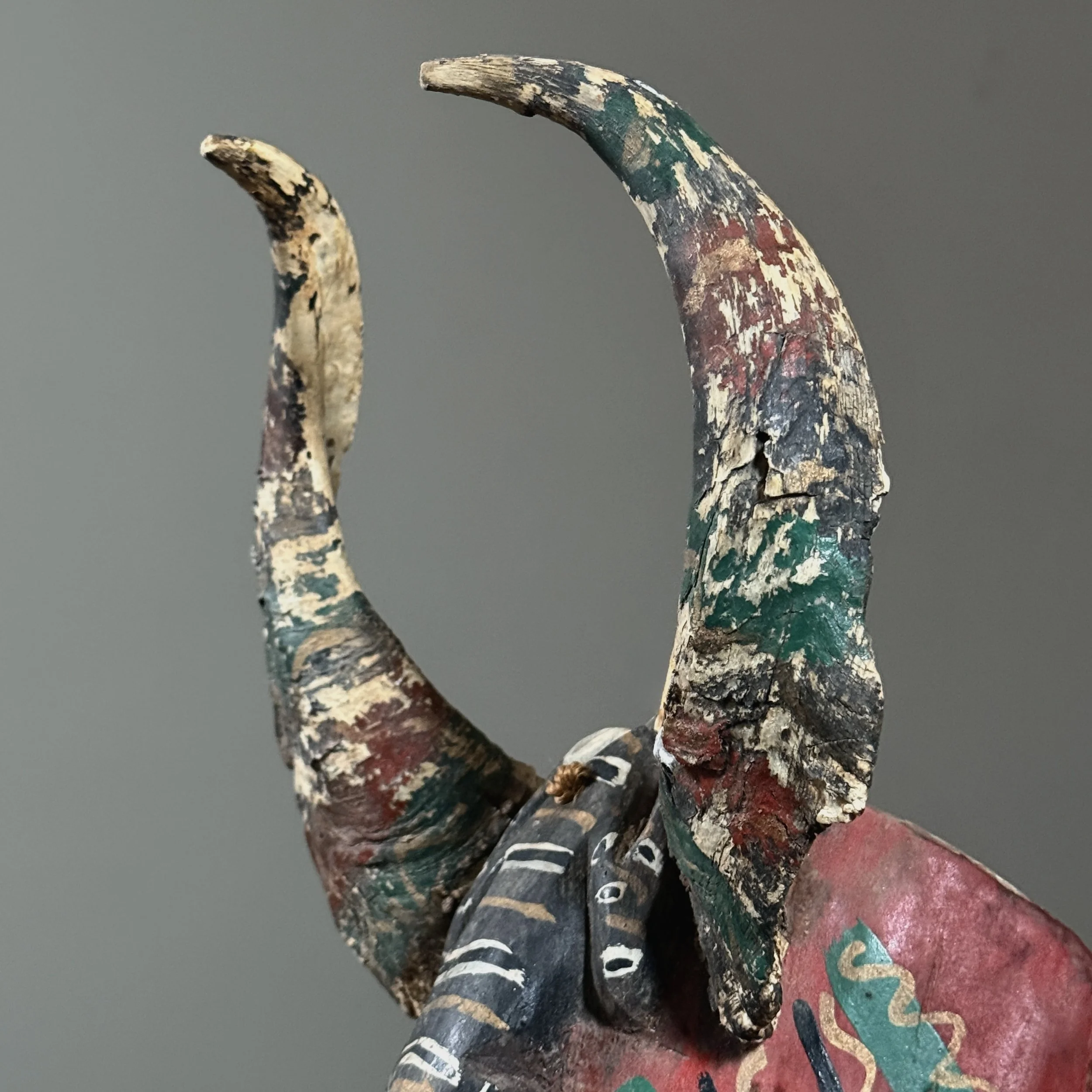
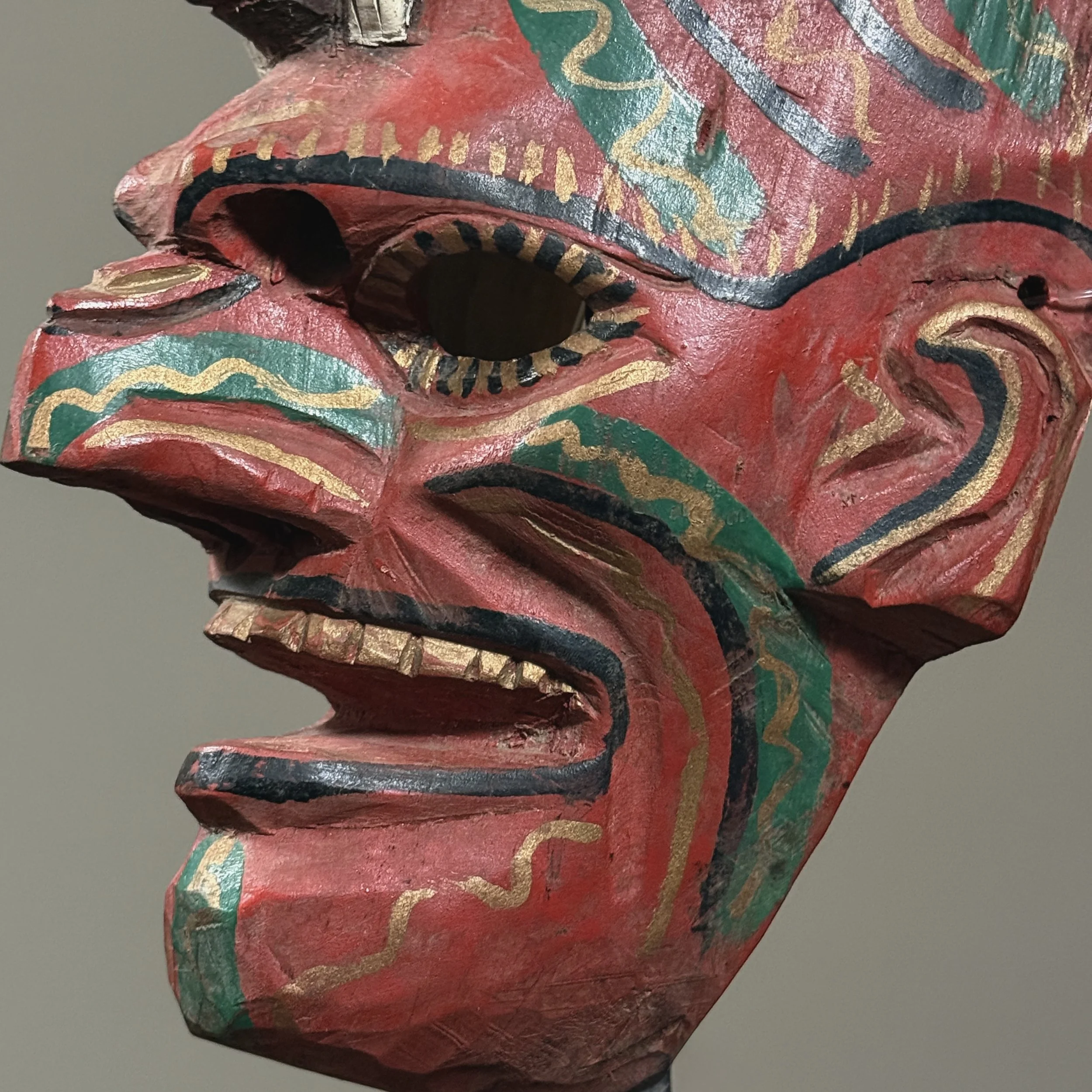
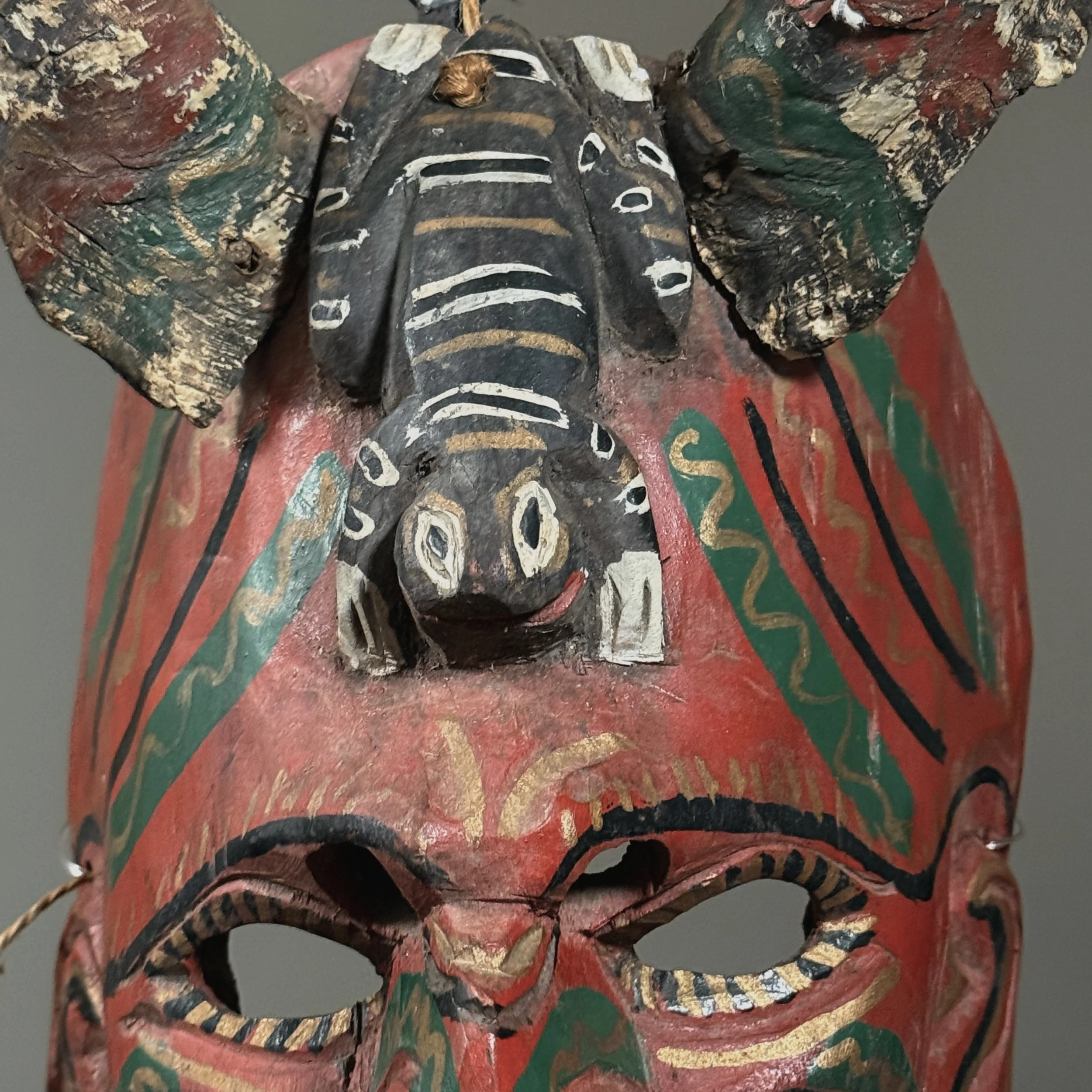
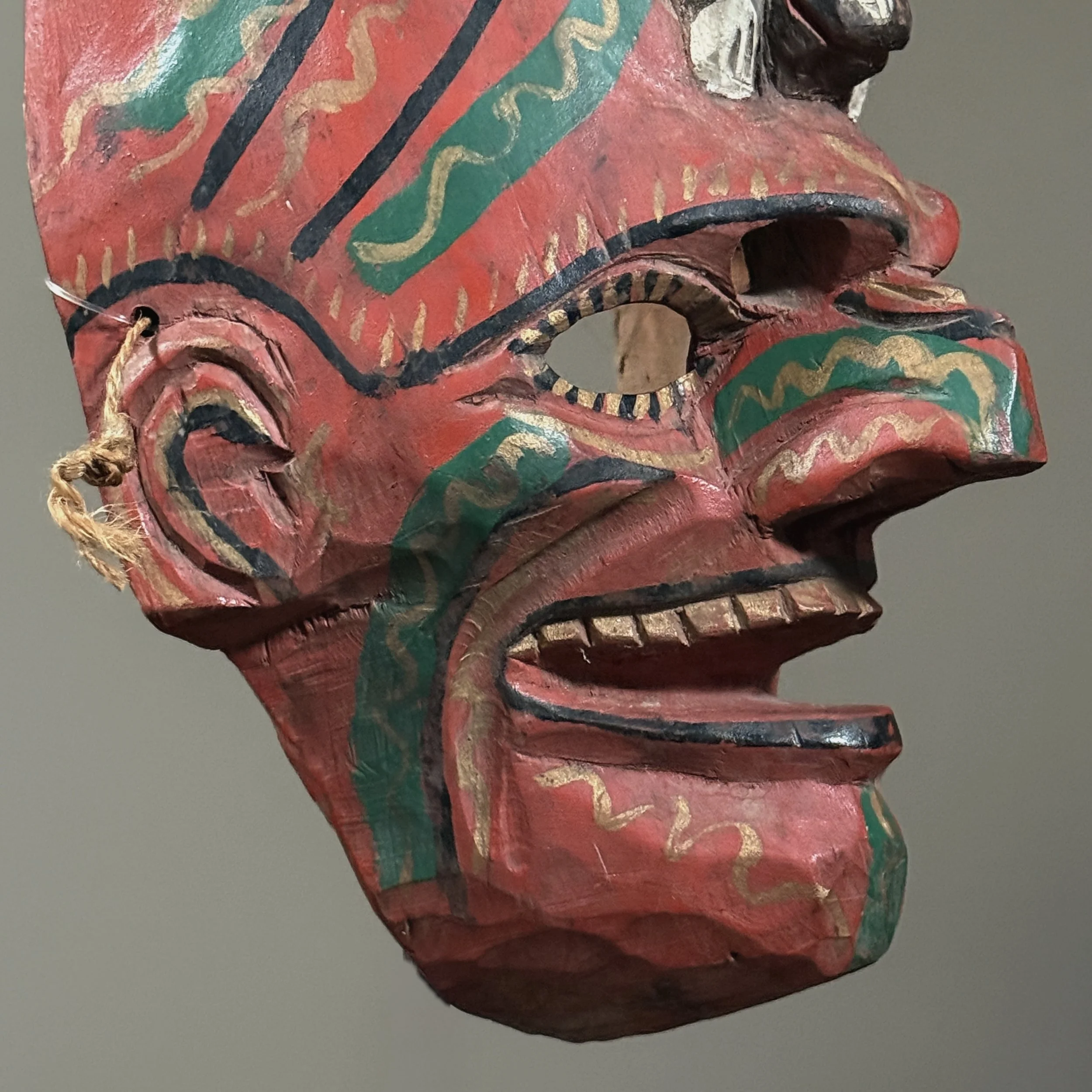
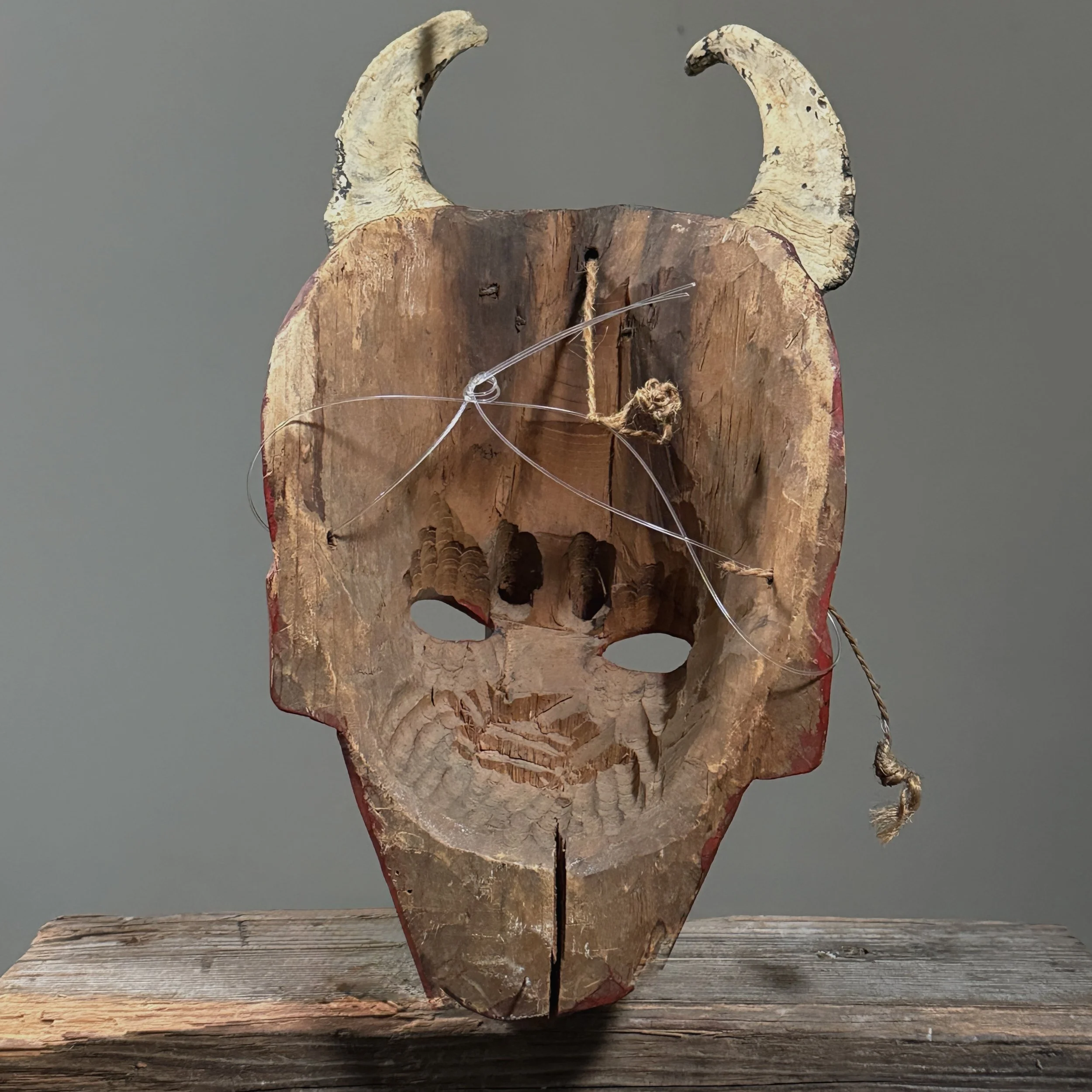
Object type: Askos (vessel / pouring vessel)
Period: Vintage
Style: Persian Folk Art
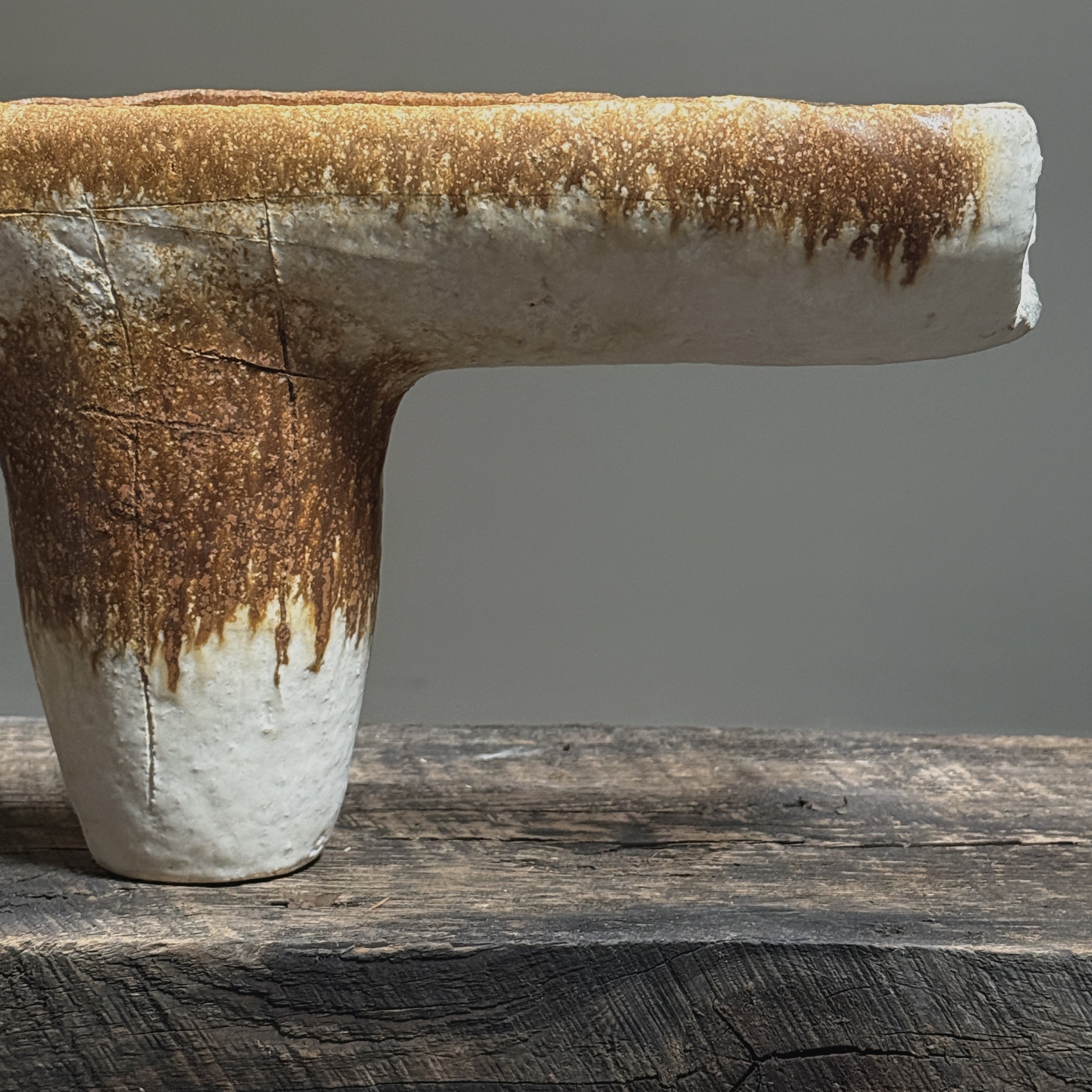
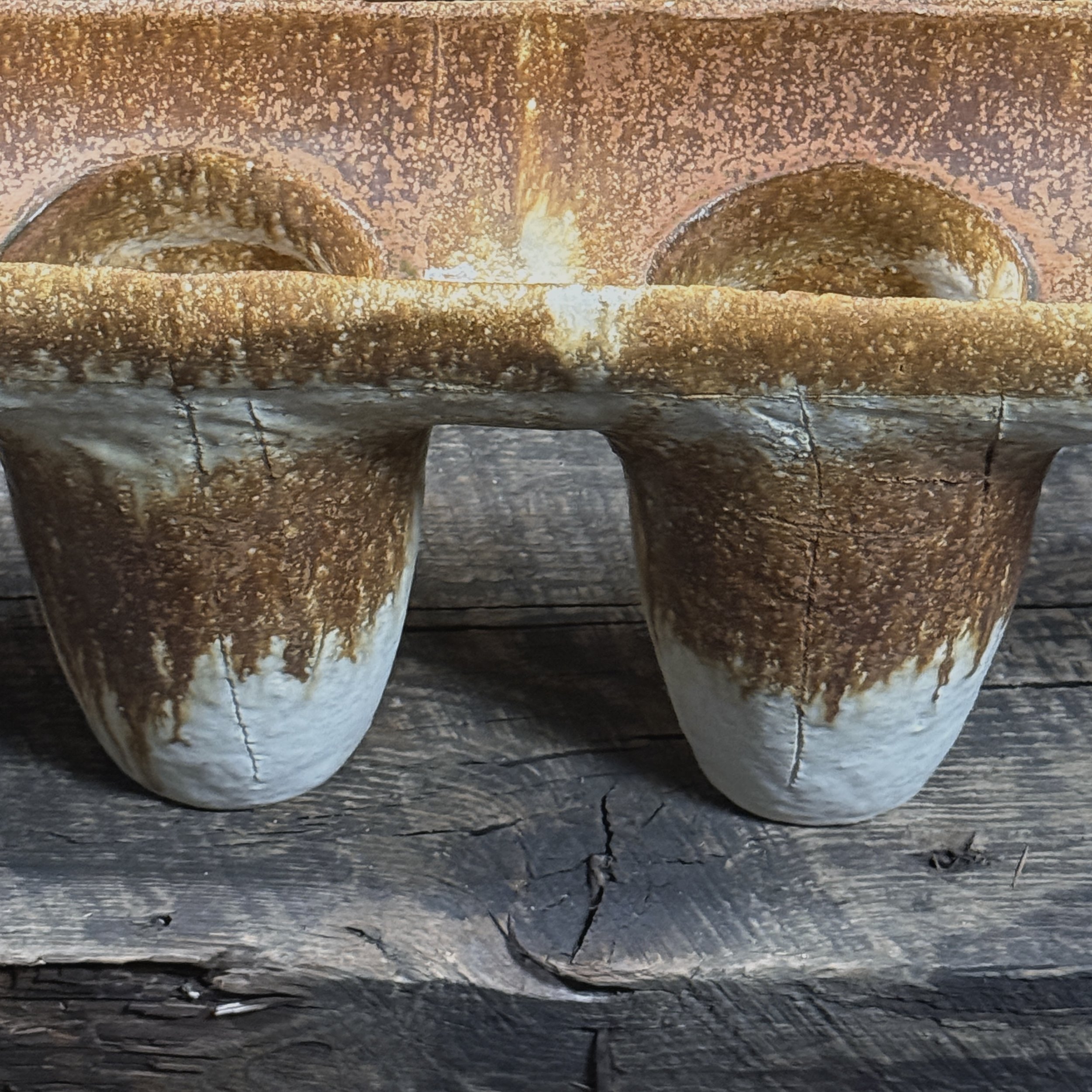
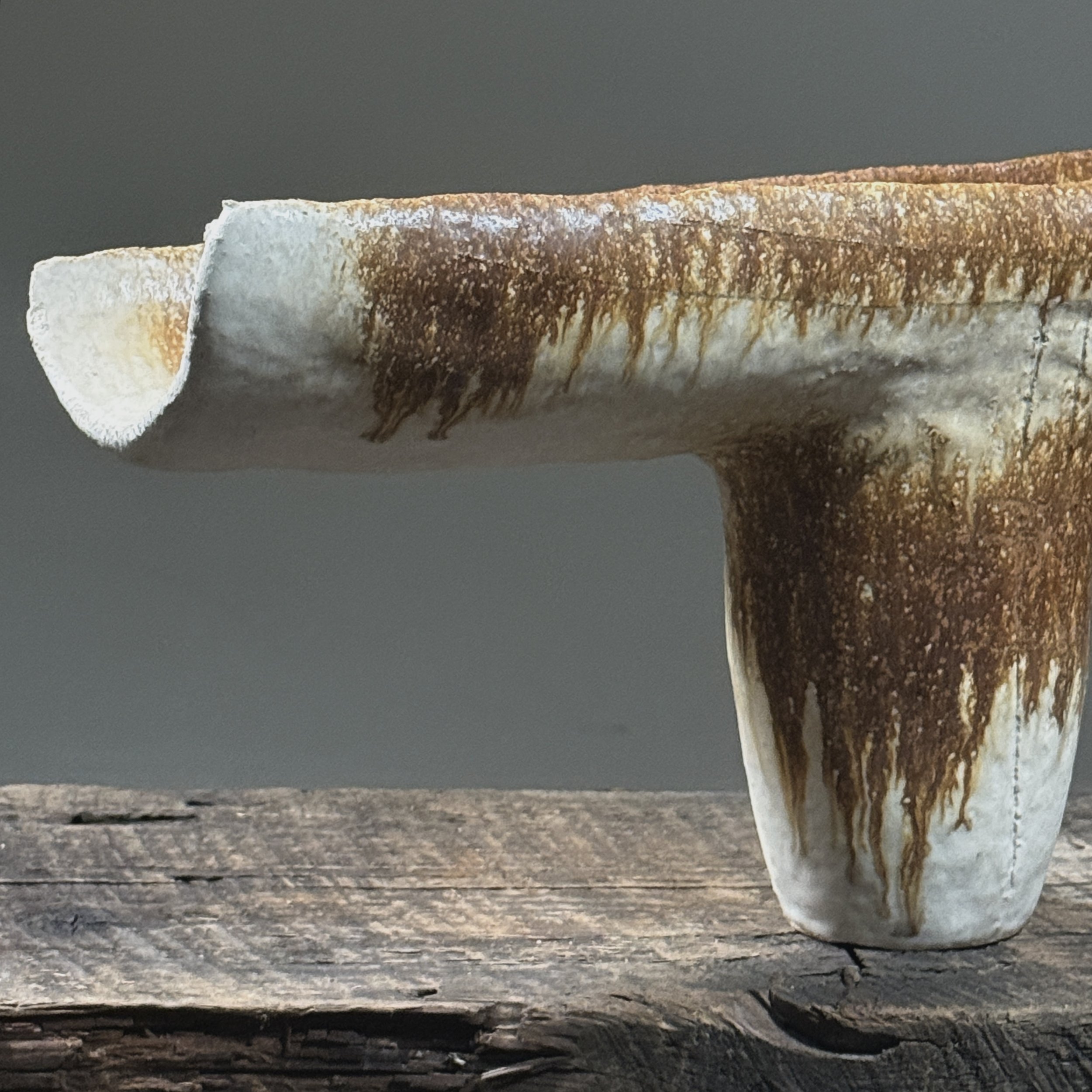
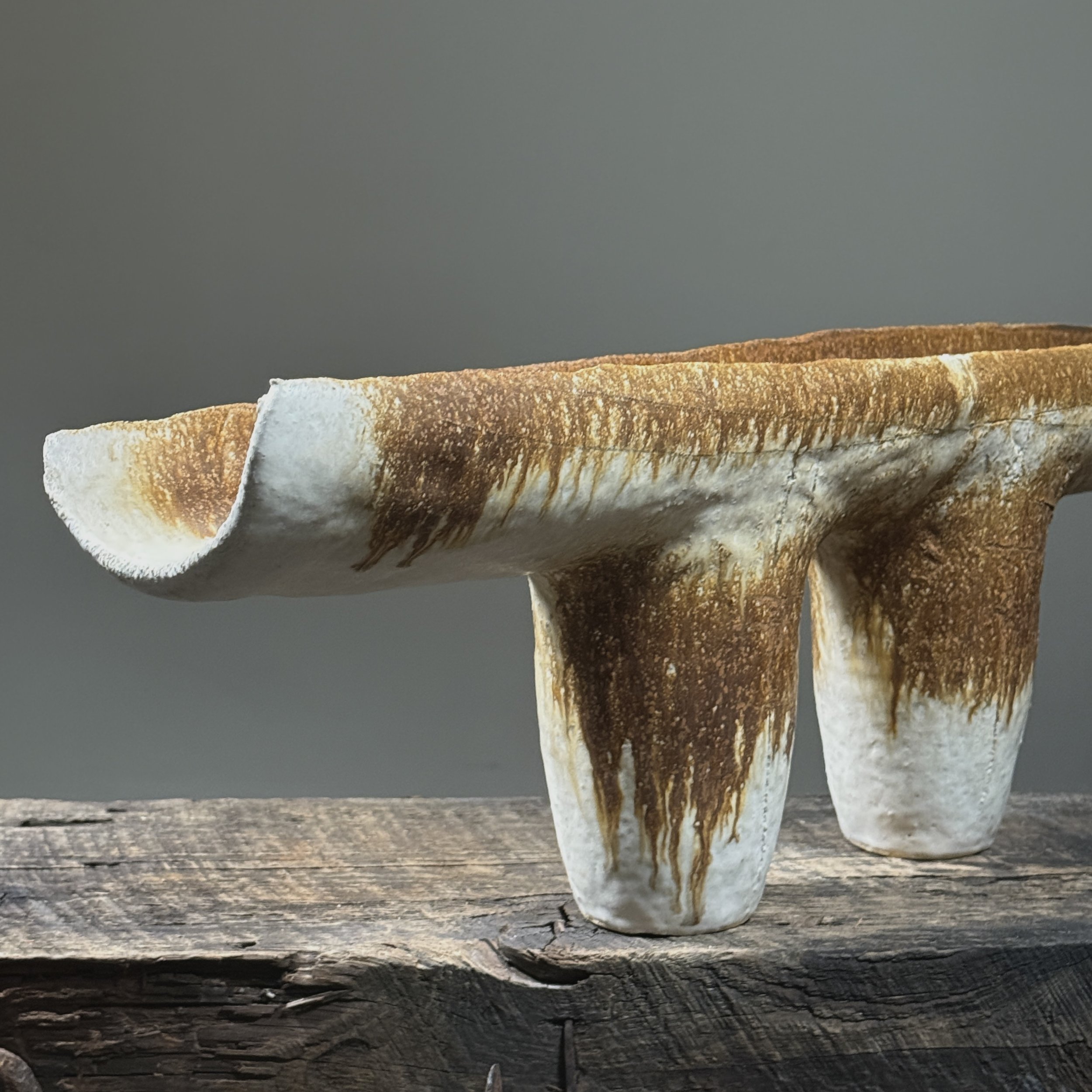
Medium: Terracotta
Decoration: Polychrome (multi-colored) painted
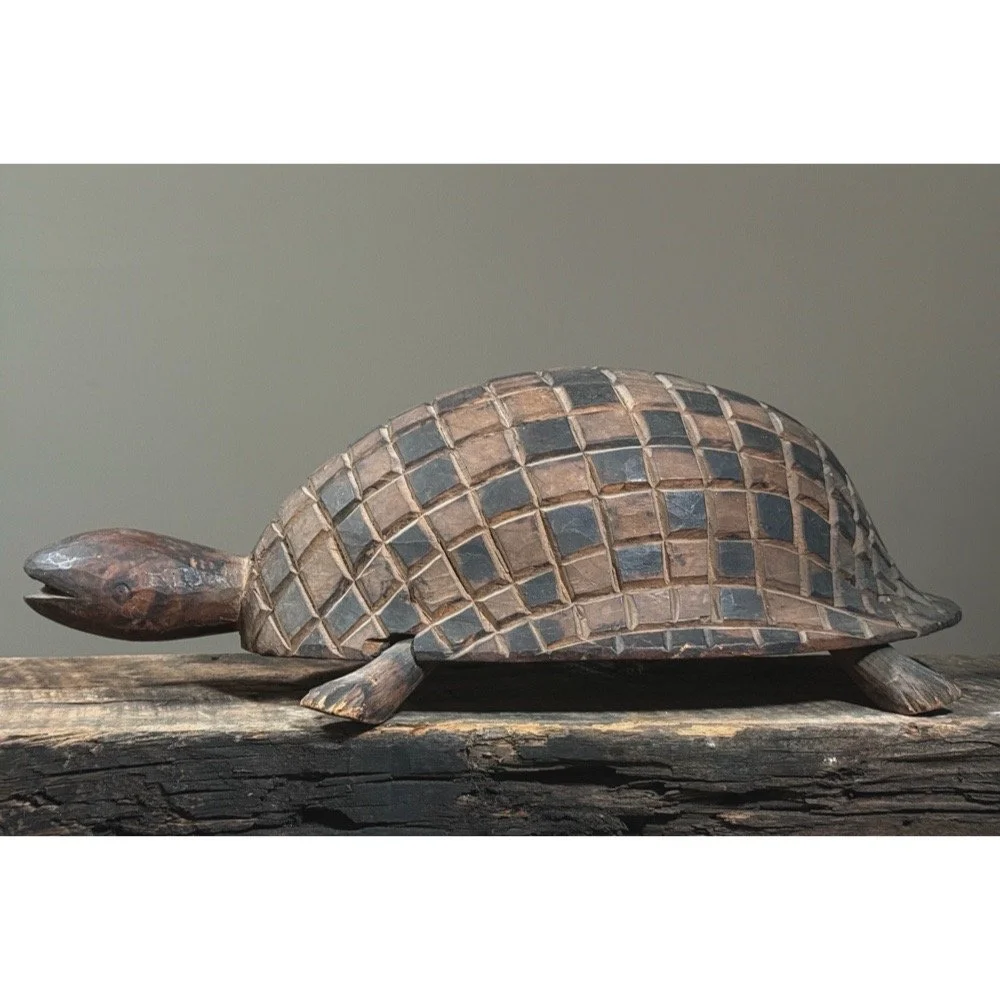
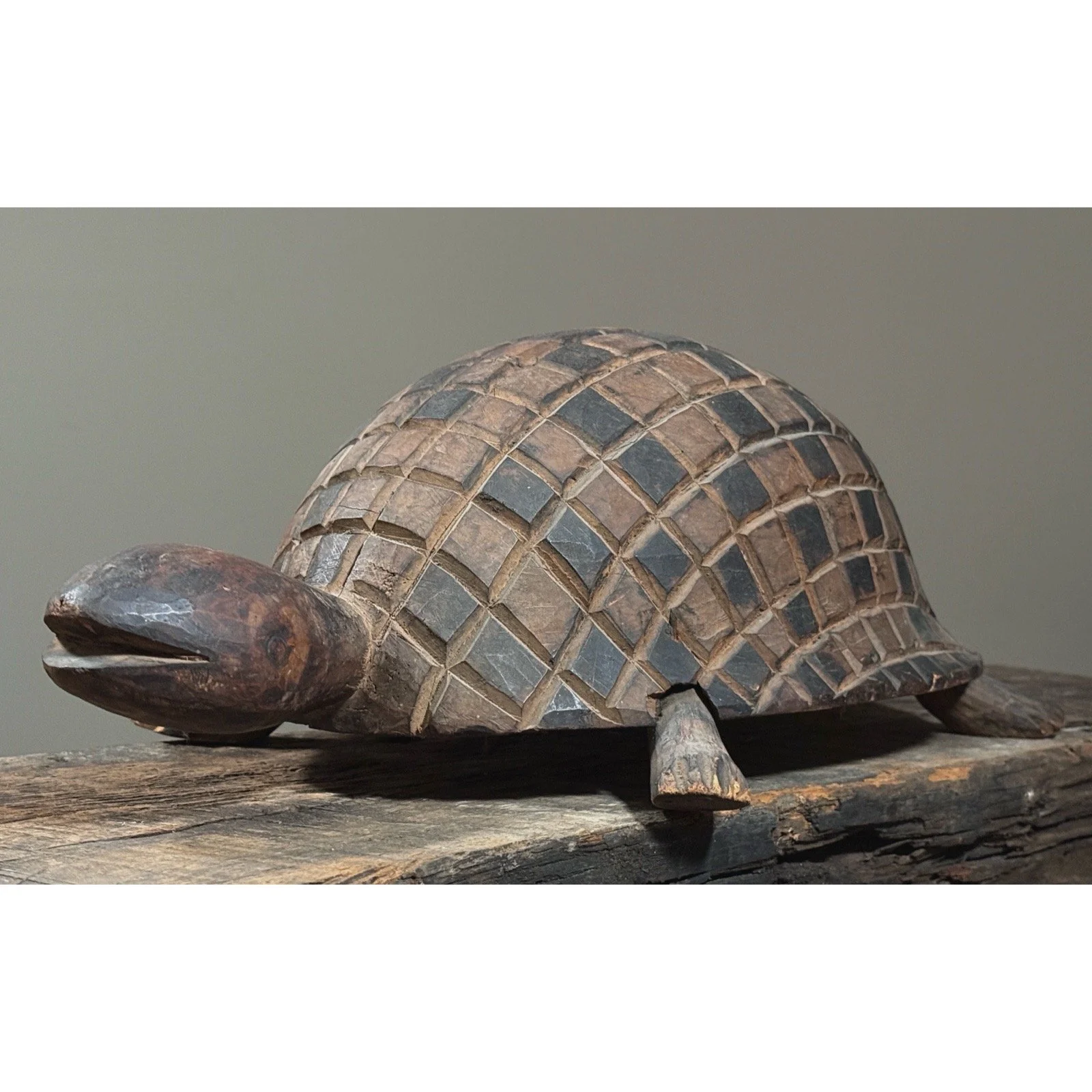
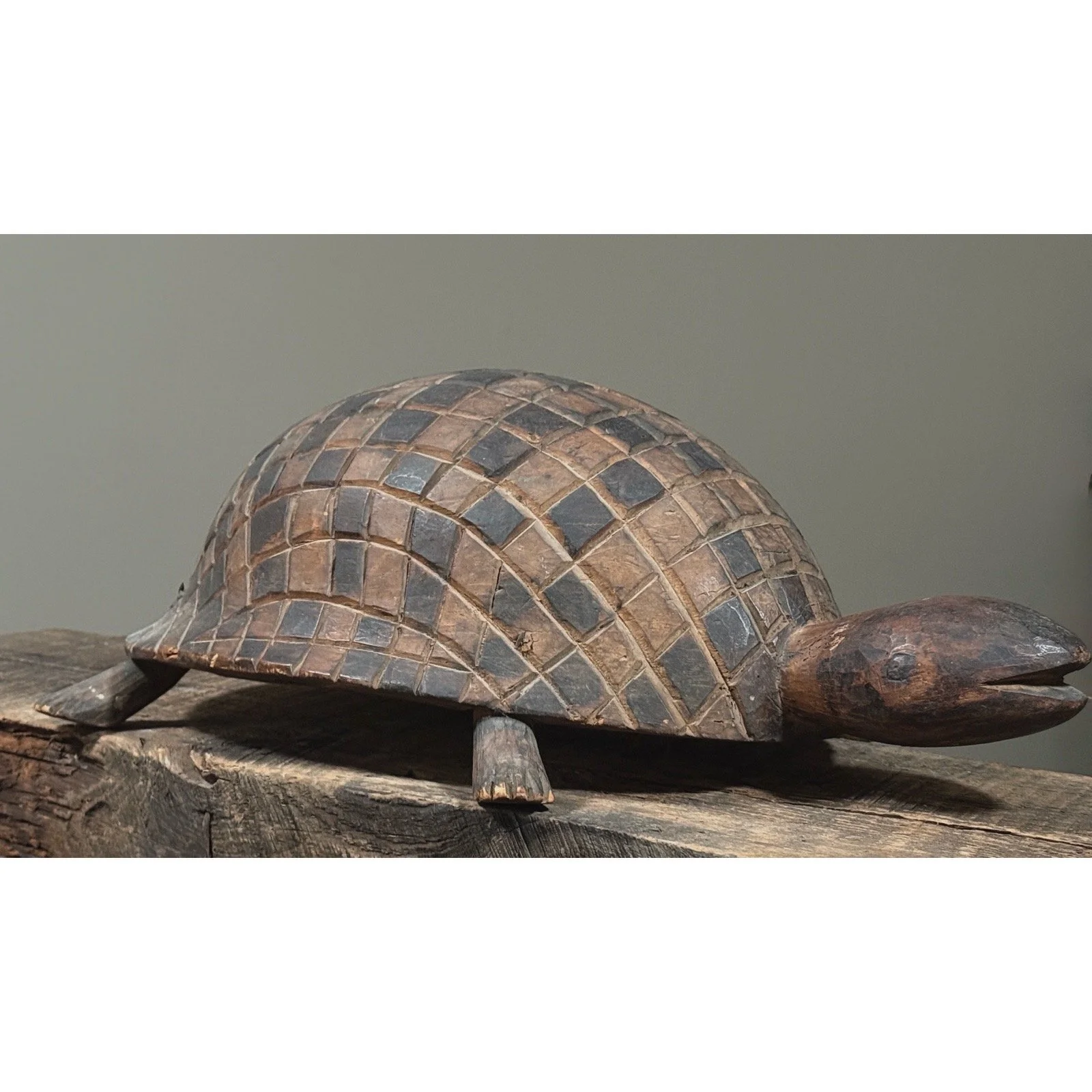
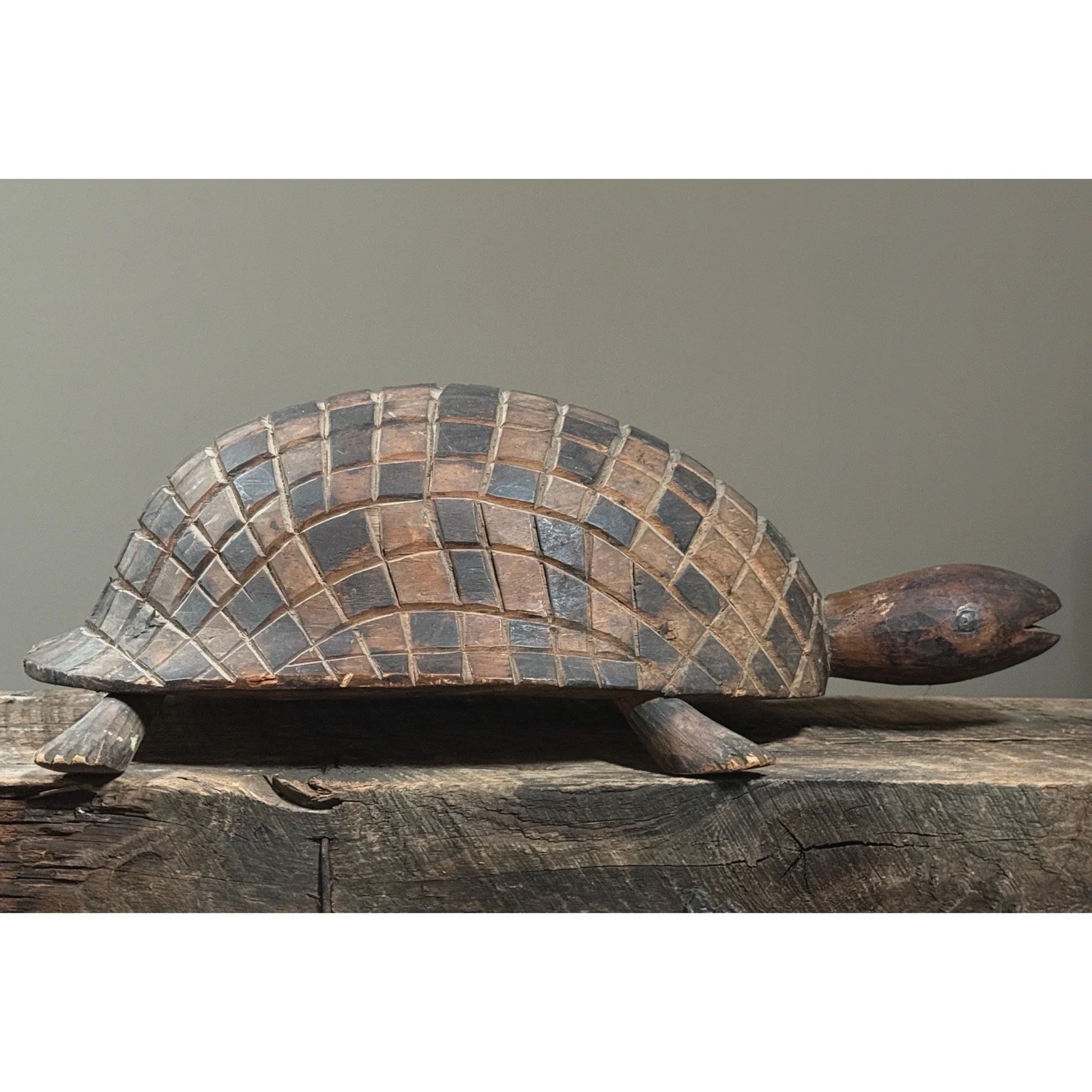
Form: Zoomorphic (animal-shaped)
Dimensions: 9 inches width × 5.5 inches height × 2.25 inches depth
Condition: Good vintage condition. Wear consistent with age.
Description:
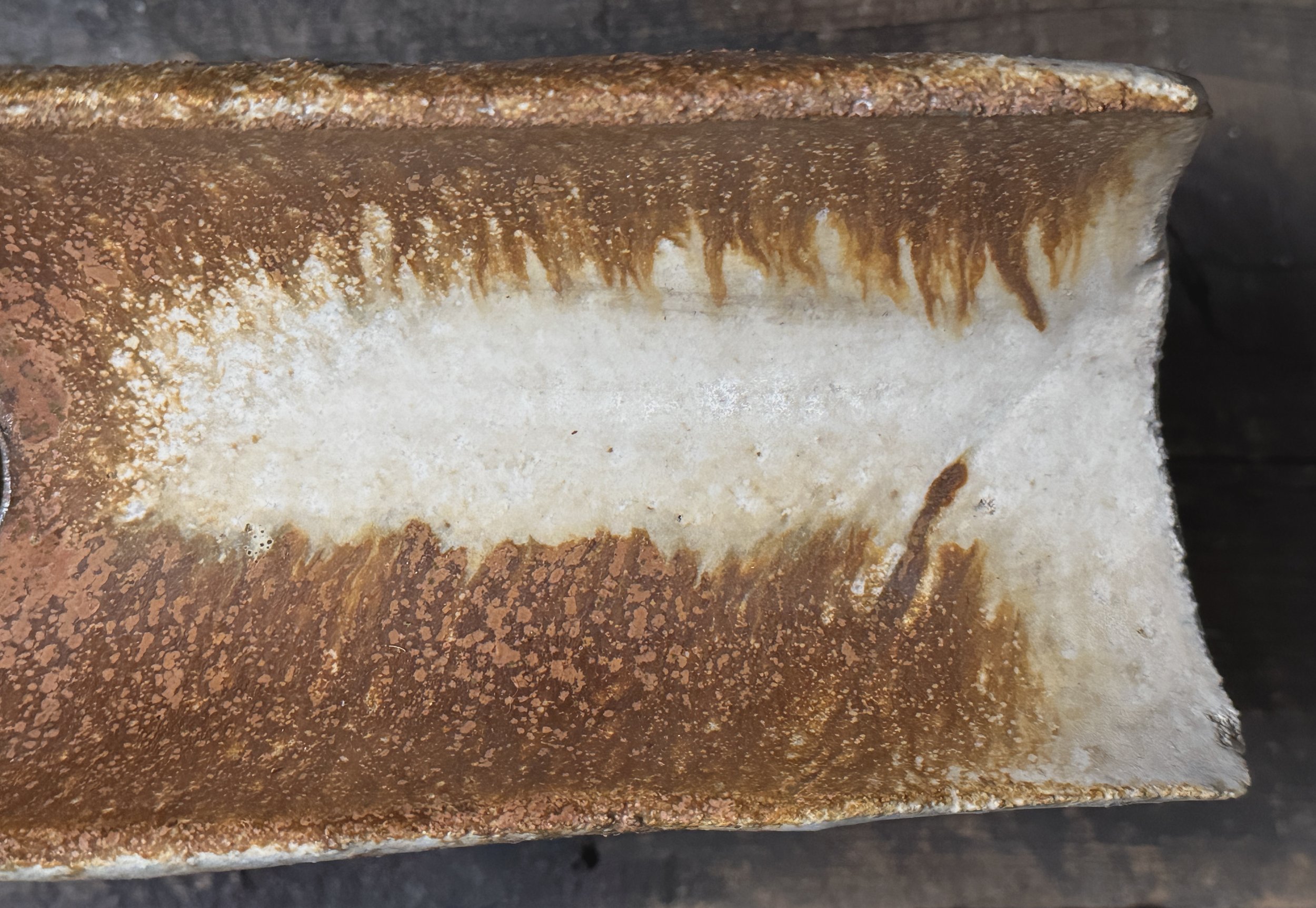
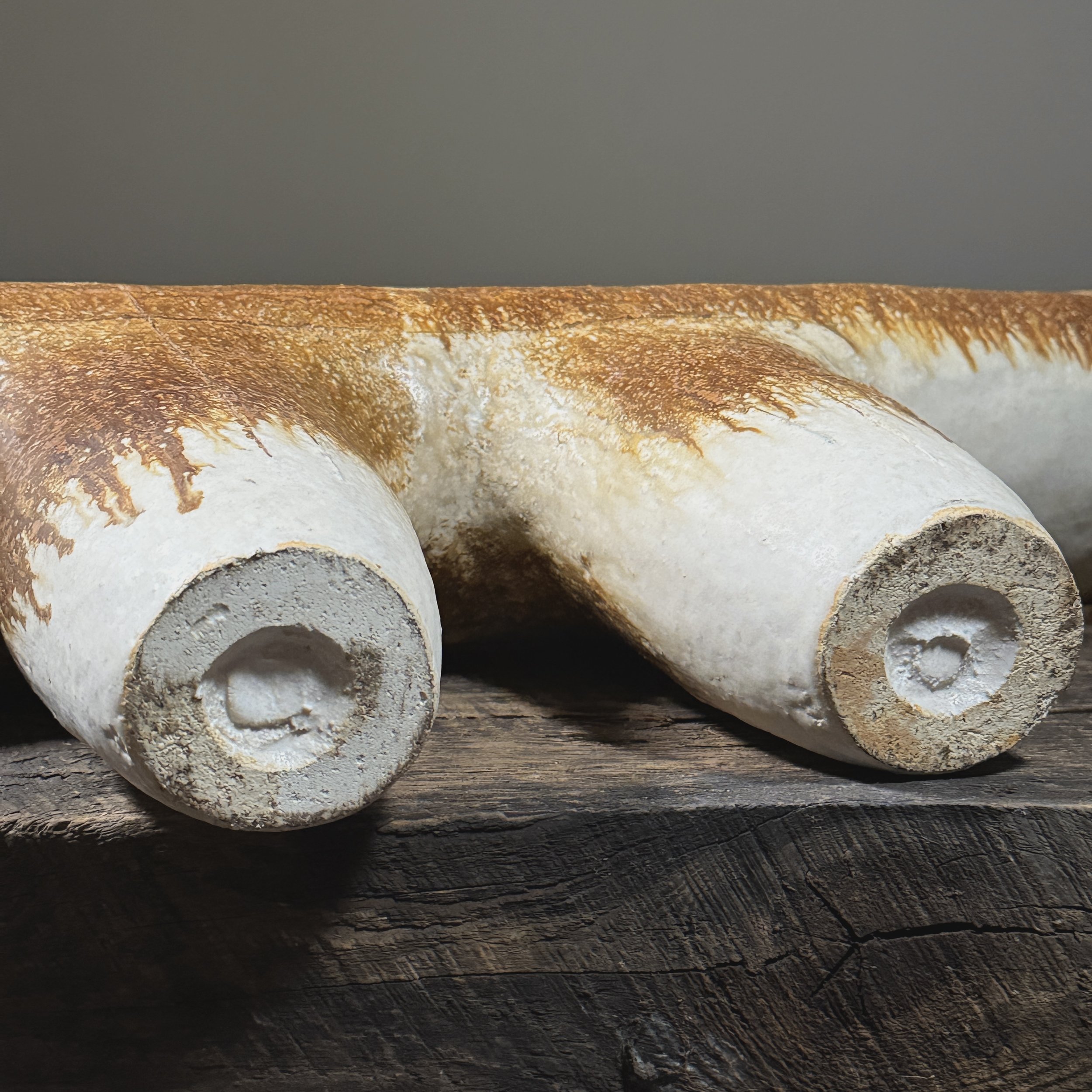
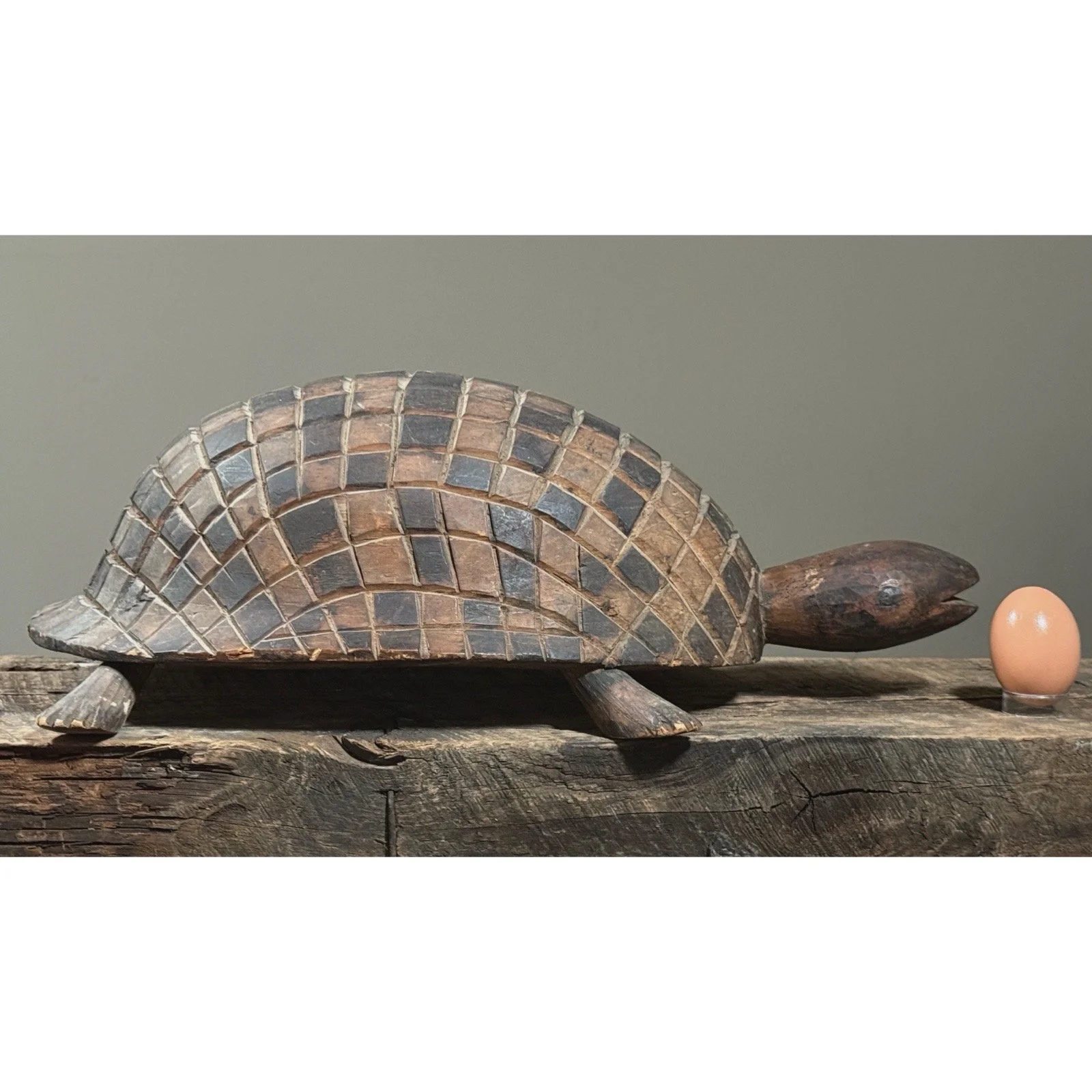
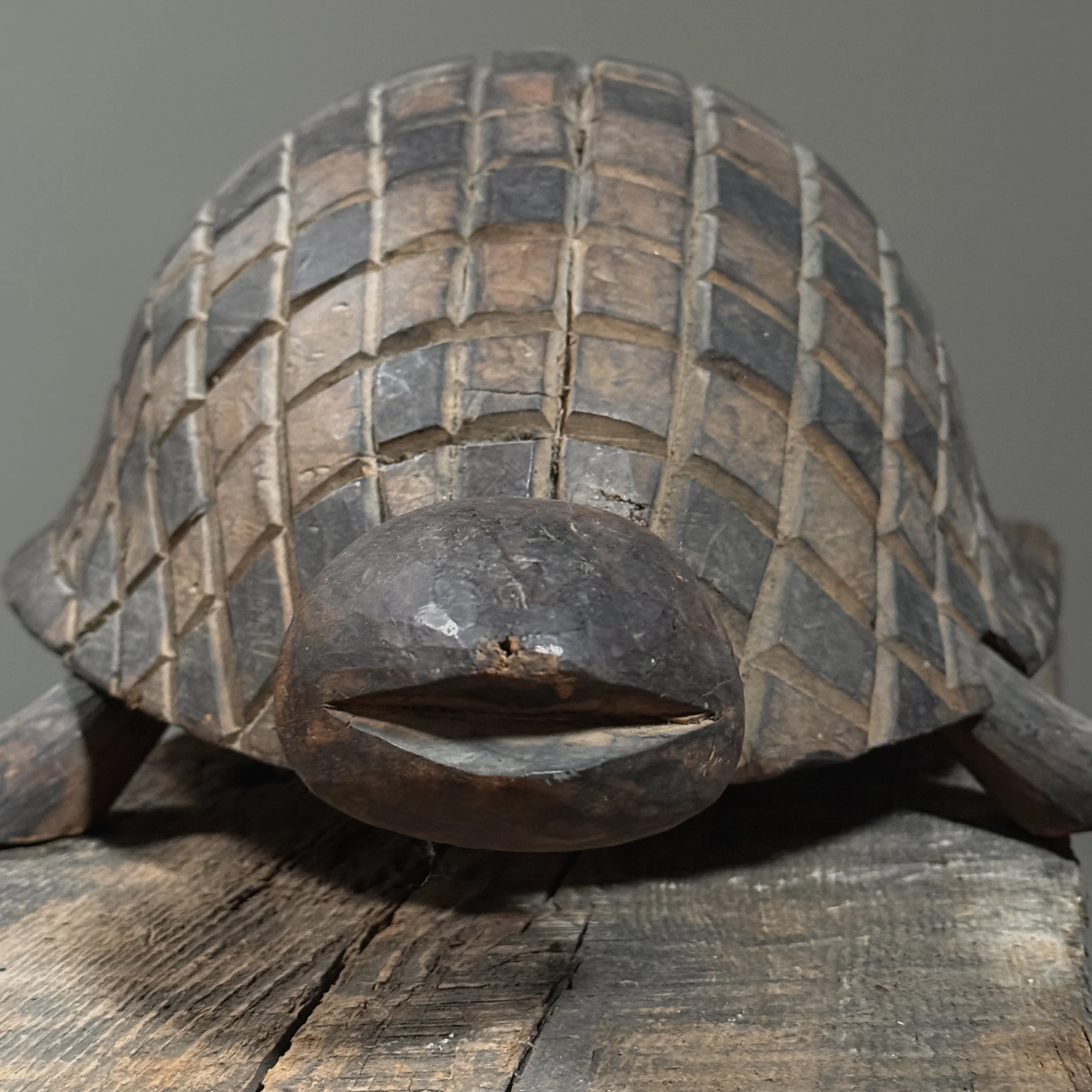
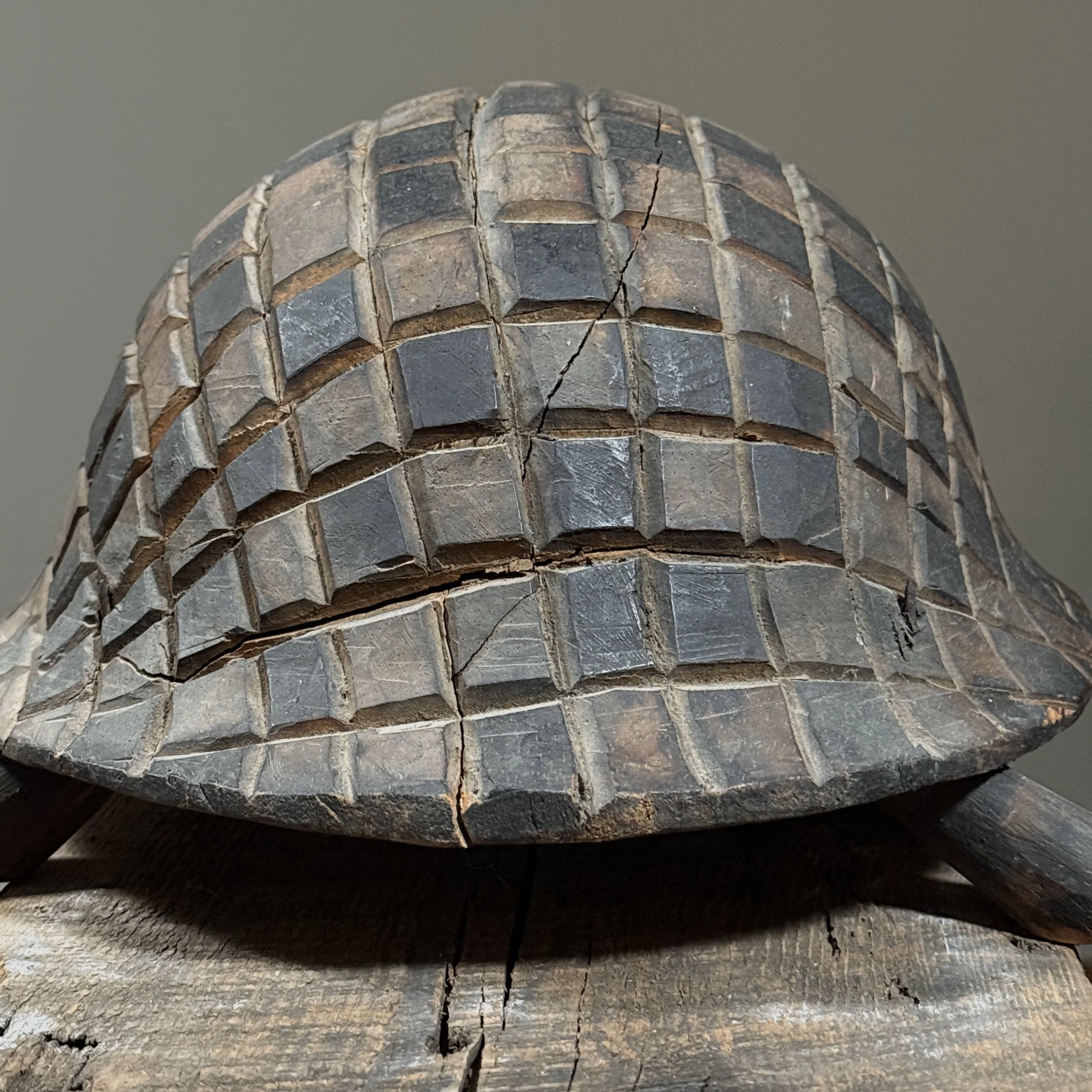
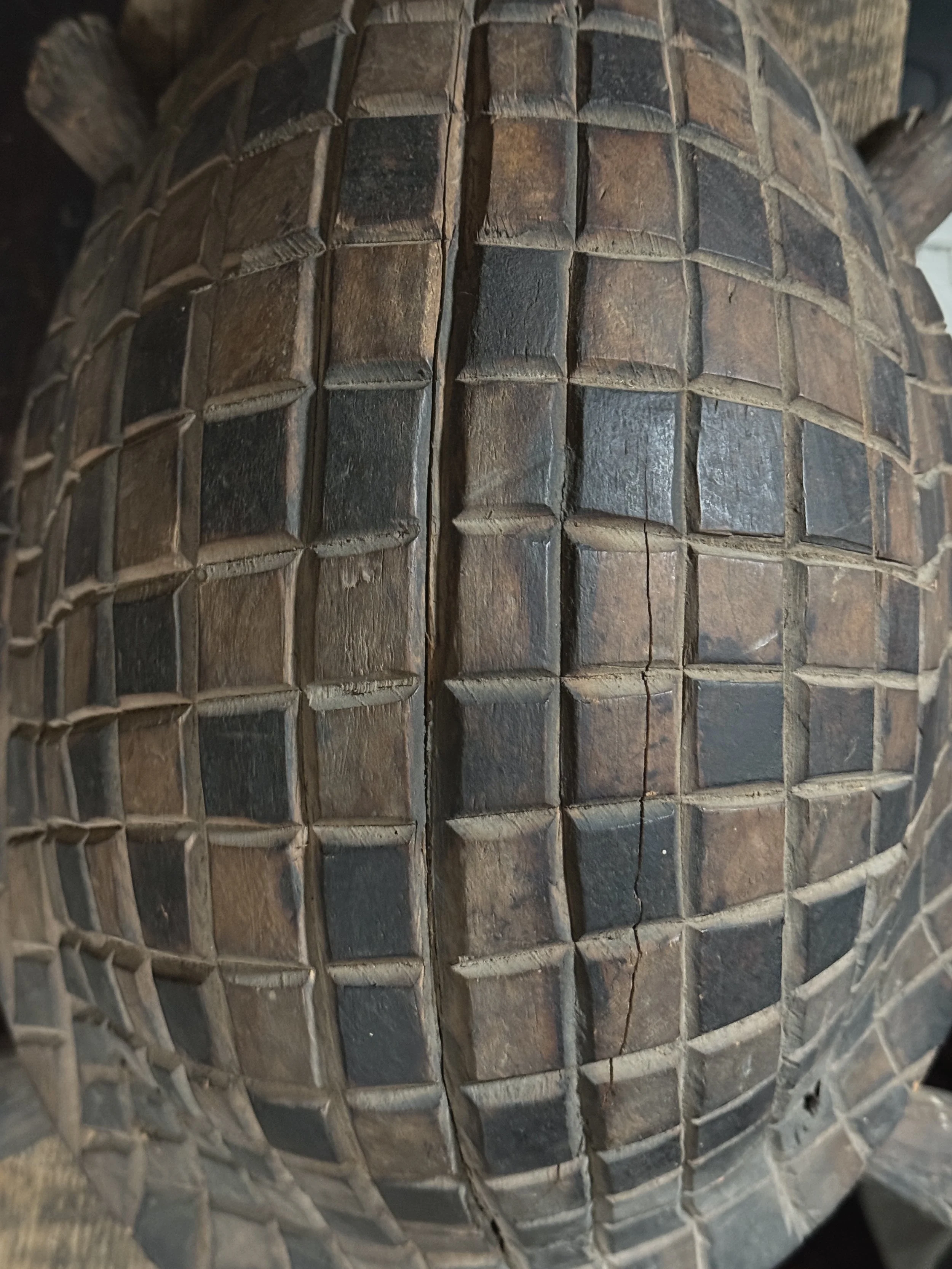
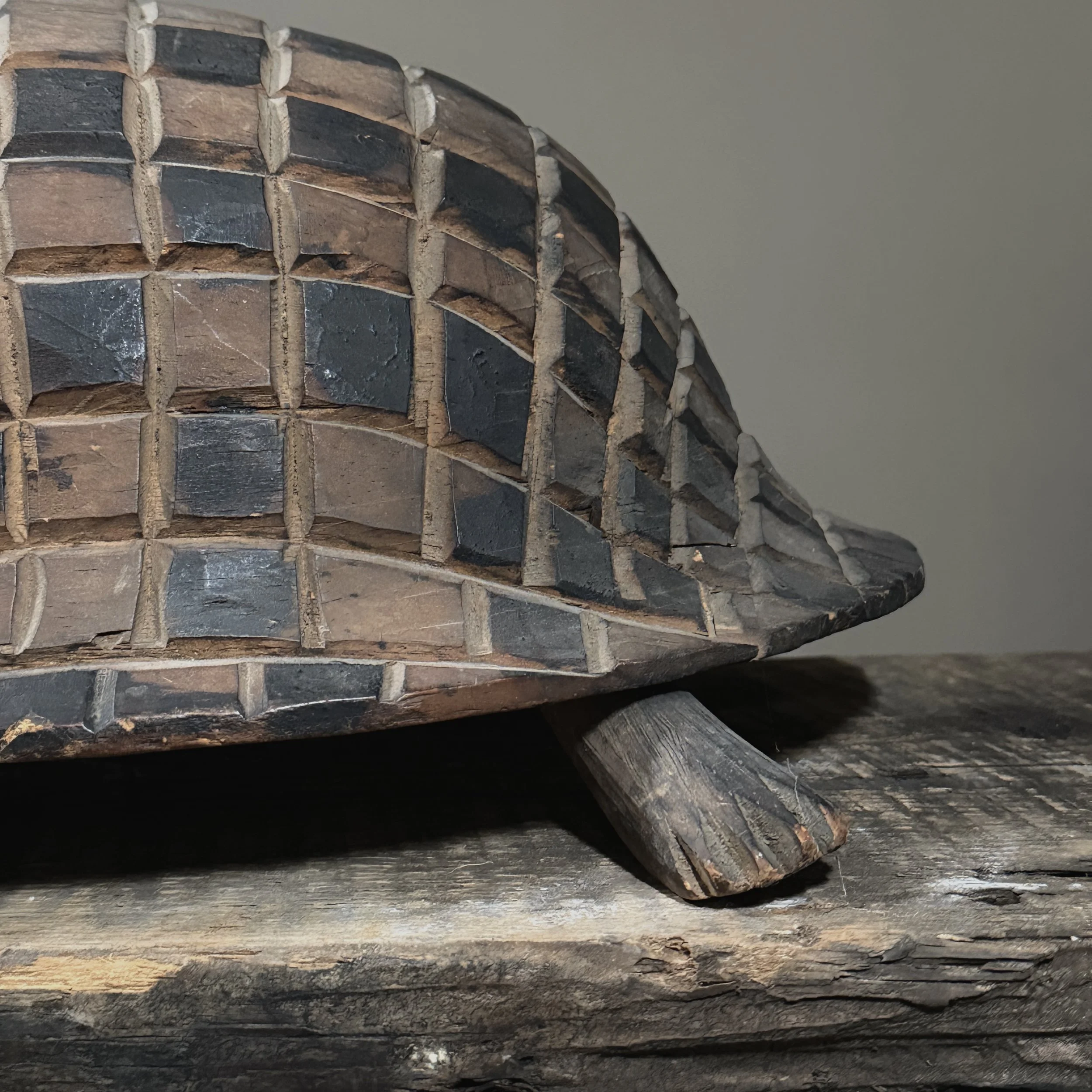
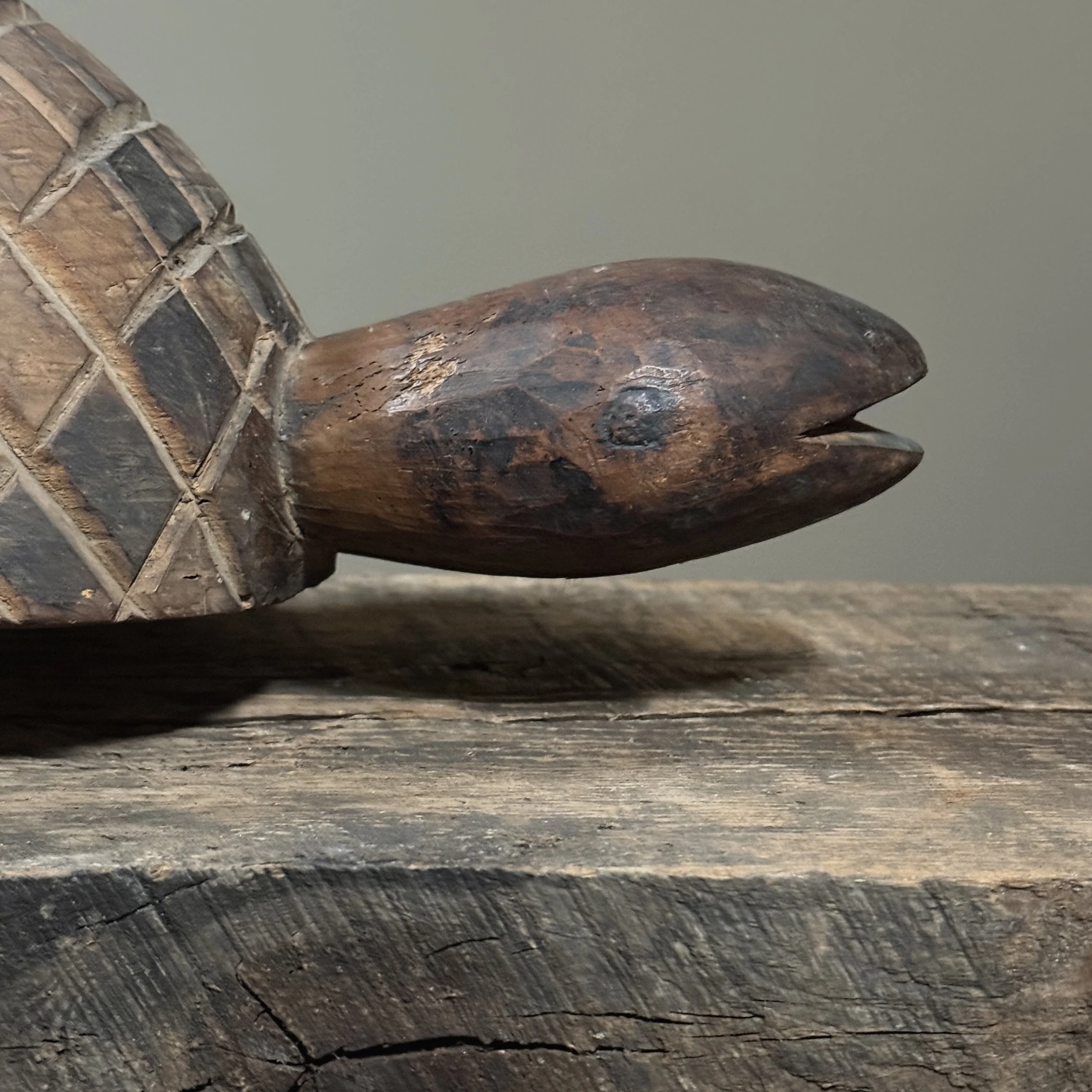
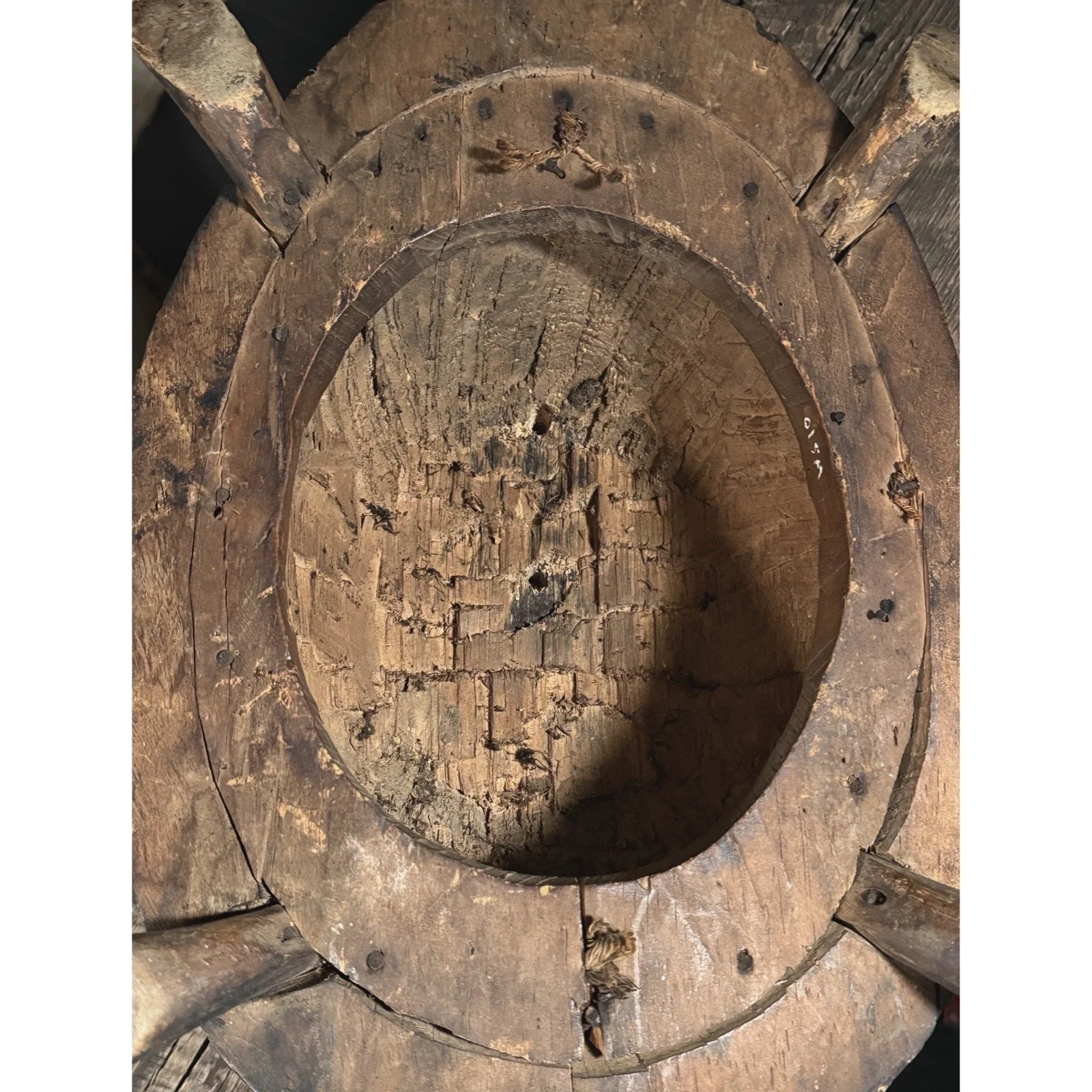
This vintage Persian folk art vessel is an askos, a type of pouring vessel. The askos is made of terracotta with polychrome painted decoration and takes a zoomorphic form. The piece is in good vintage condition, with wear consistent with age. No chips, cracks, or significant restoration are noted.
About the Askos Form
An askos is a type of ancient vessel characterized by a flattened, bulbous body with a handle and a spout. The name derives from the Greek word for "wineskin," reflecting the vessel's shape. While the form originated in ancient Greece, variations of the askos have been produced across many cultures and periods, including Persian folk art traditions, often as animal-shaped or zoomorphic vessels used for pouring liquids such as oil or wine.
Object type: Askos (vessel / pouring vessel)
Period: Vintage
Style: Persian Folk Art
Medium: Terracotta
Decoration: Polychrome (multi-colored) painted
Form: Zoomorphic (animal-shaped)
Dimensions: 9 inches width × 5.5 inches height × 2.25 inches depth
Condition: Good vintage condition. Wear consistent with age.
Description:
This vintage Persian folk art vessel is an askos, a type of pouring vessel. The askos is made of terracotta with polychrome painted decoration and takes a zoomorphic form. The piece is in good vintage condition, with wear consistent with age. No chips, cracks, or significant restoration are noted.
About the Askos Form
An askos is a type of ancient vessel characterized by a flattened, bulbous body with a handle and a spout. The name derives from the Greek word for "wineskin," reflecting the vessel's shape. While the form originated in ancient Greece, variations of the askos have been produced across many cultures and periods, including Persian folk art traditions, often as animal-shaped or zoomorphic vessels used for pouring liquids such as oil or wine.

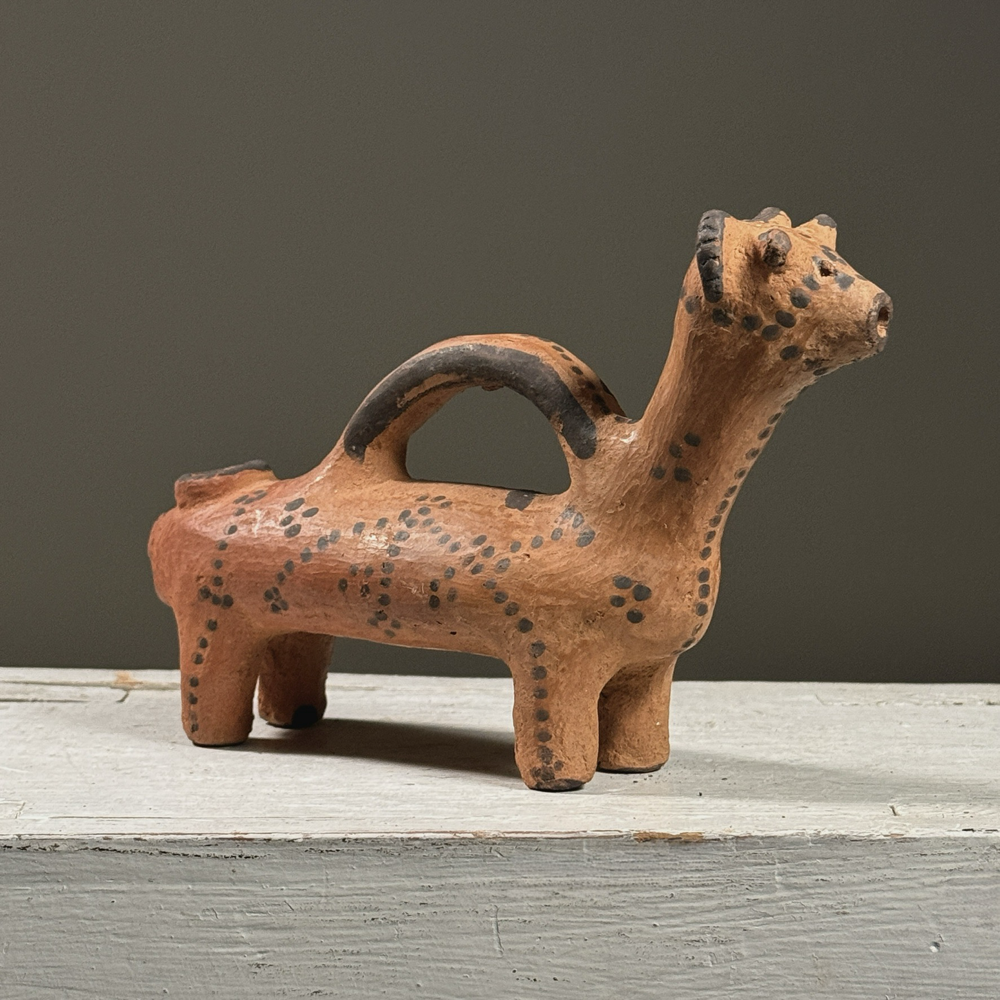 Image 1 of 7
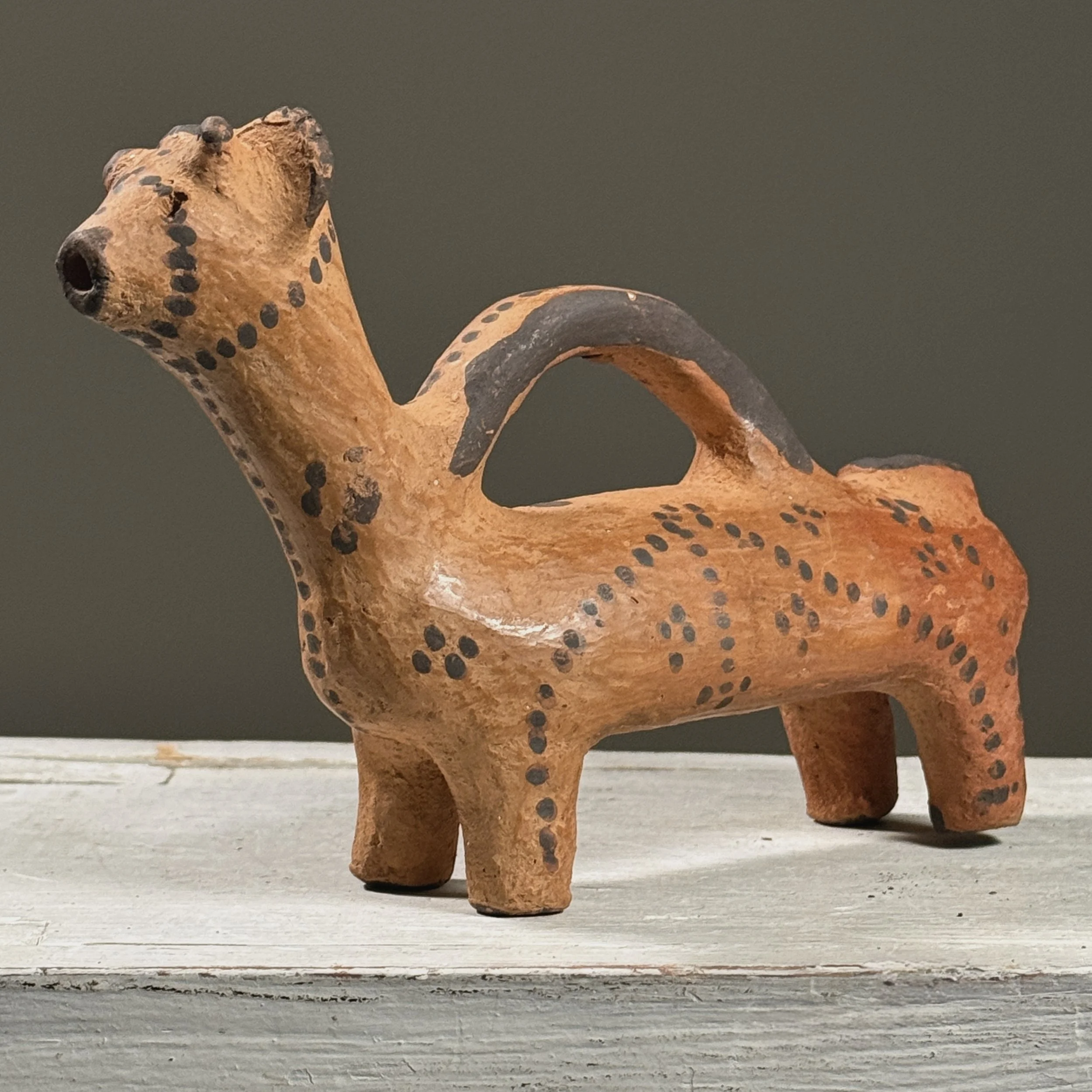 Image 2 of 7
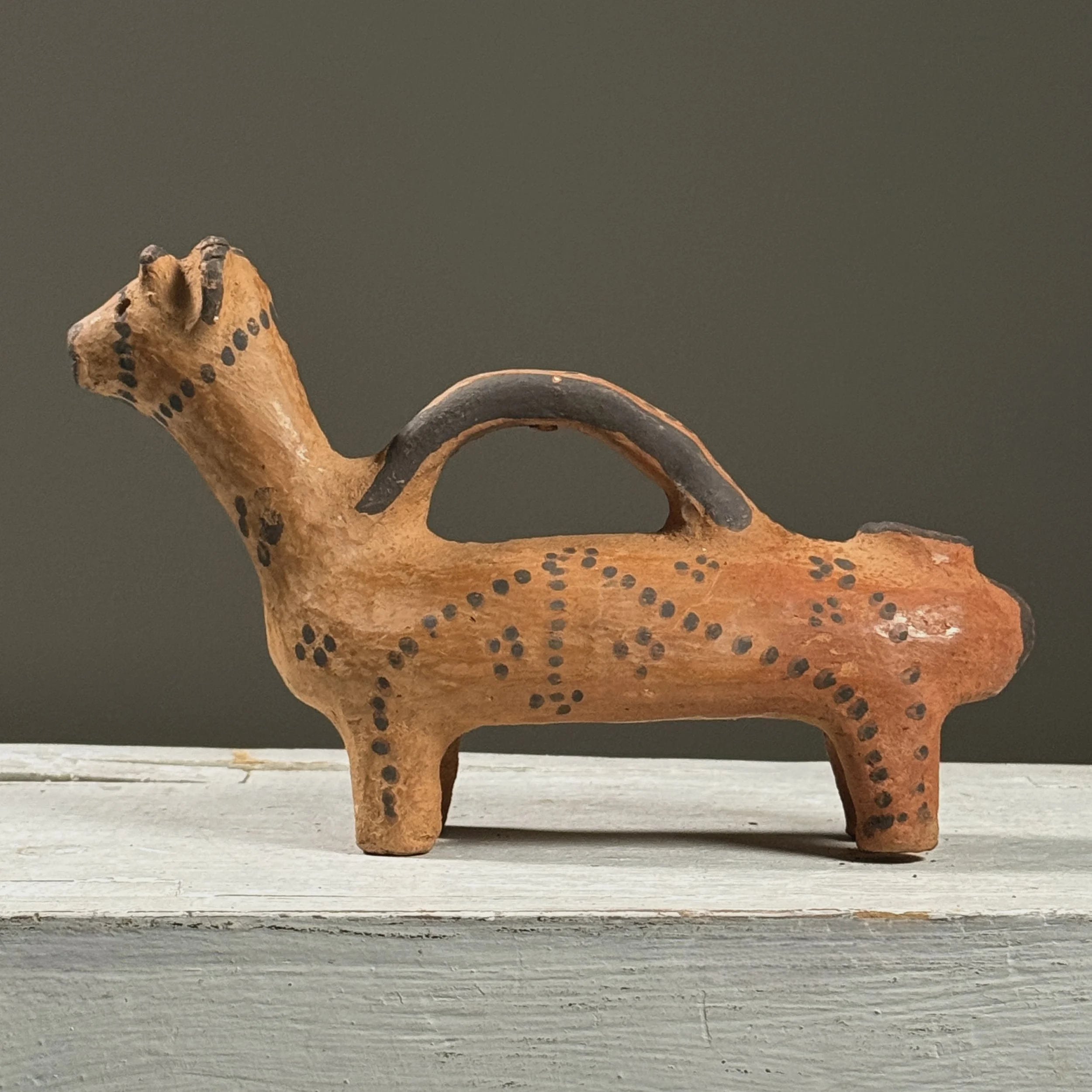 Image 3 of 7
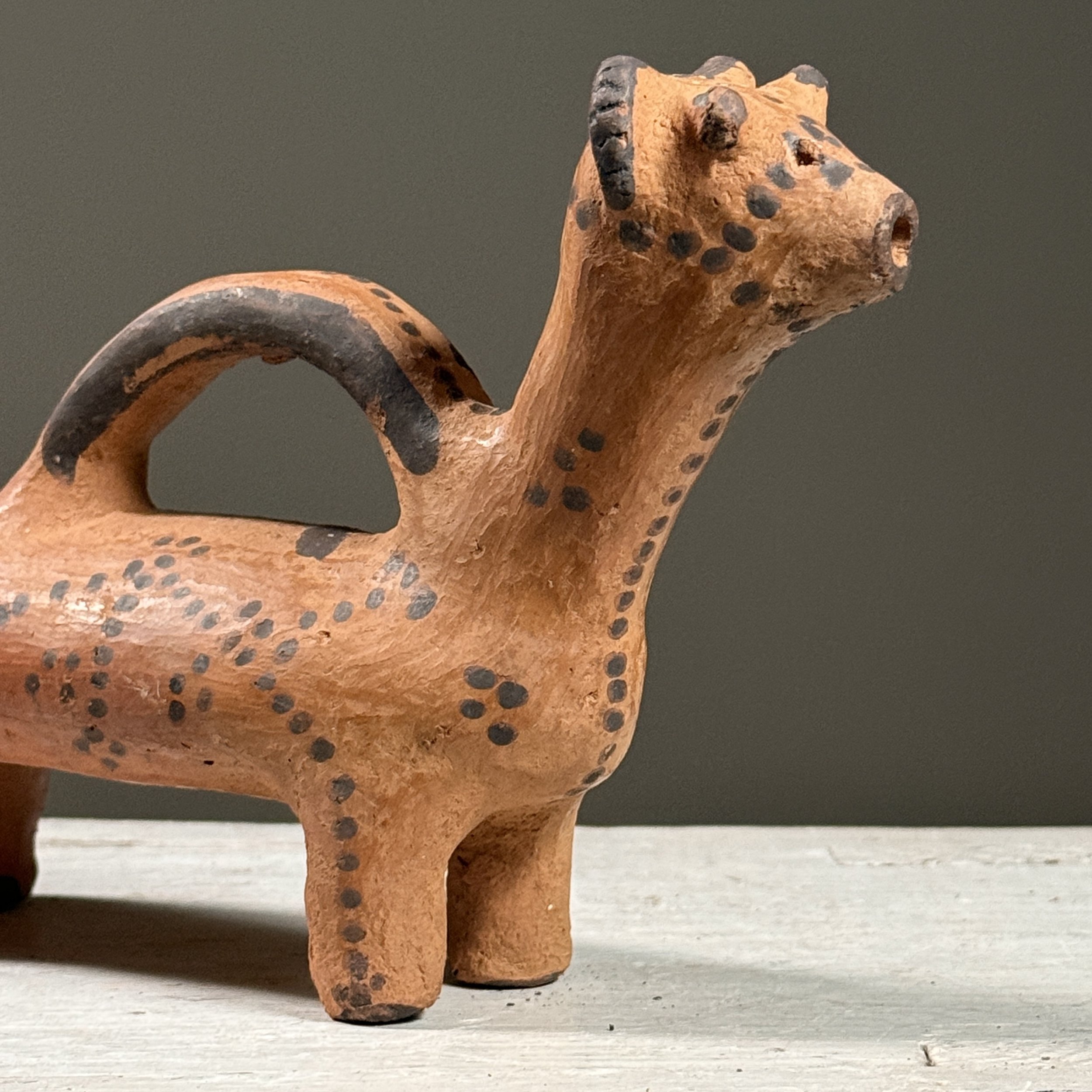 Image 4 of 7
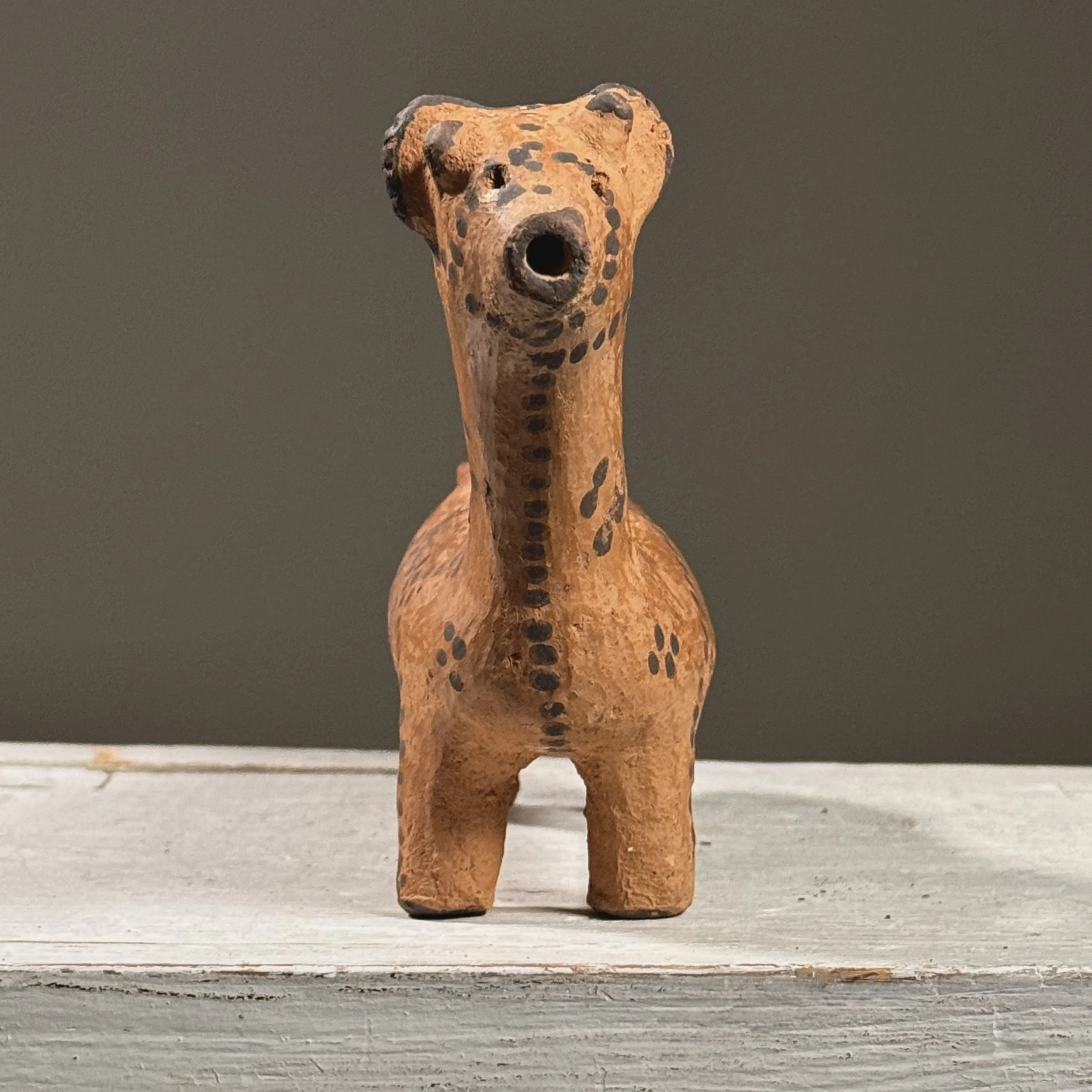 Image 5 of 7
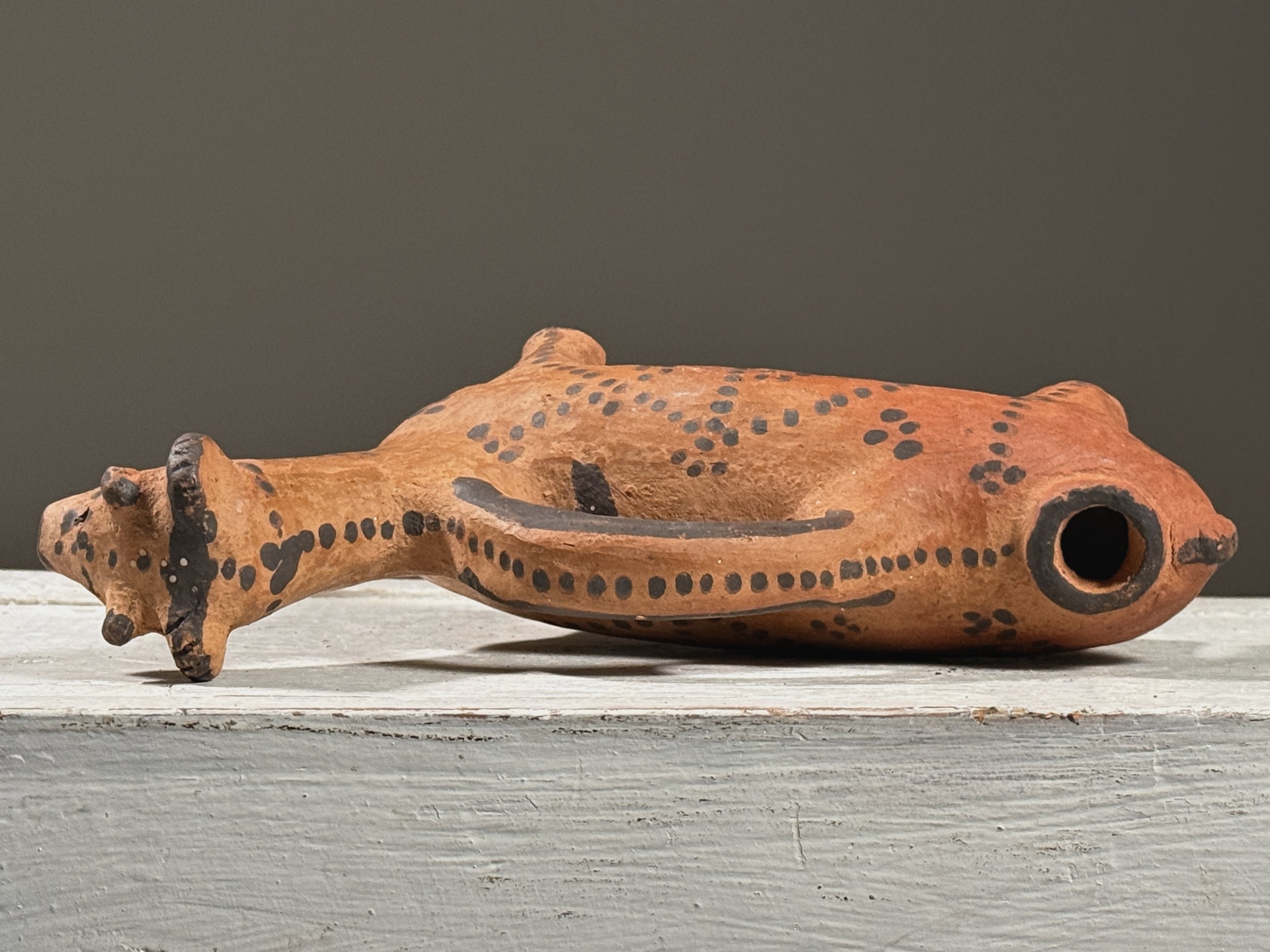 Image 6 of 7
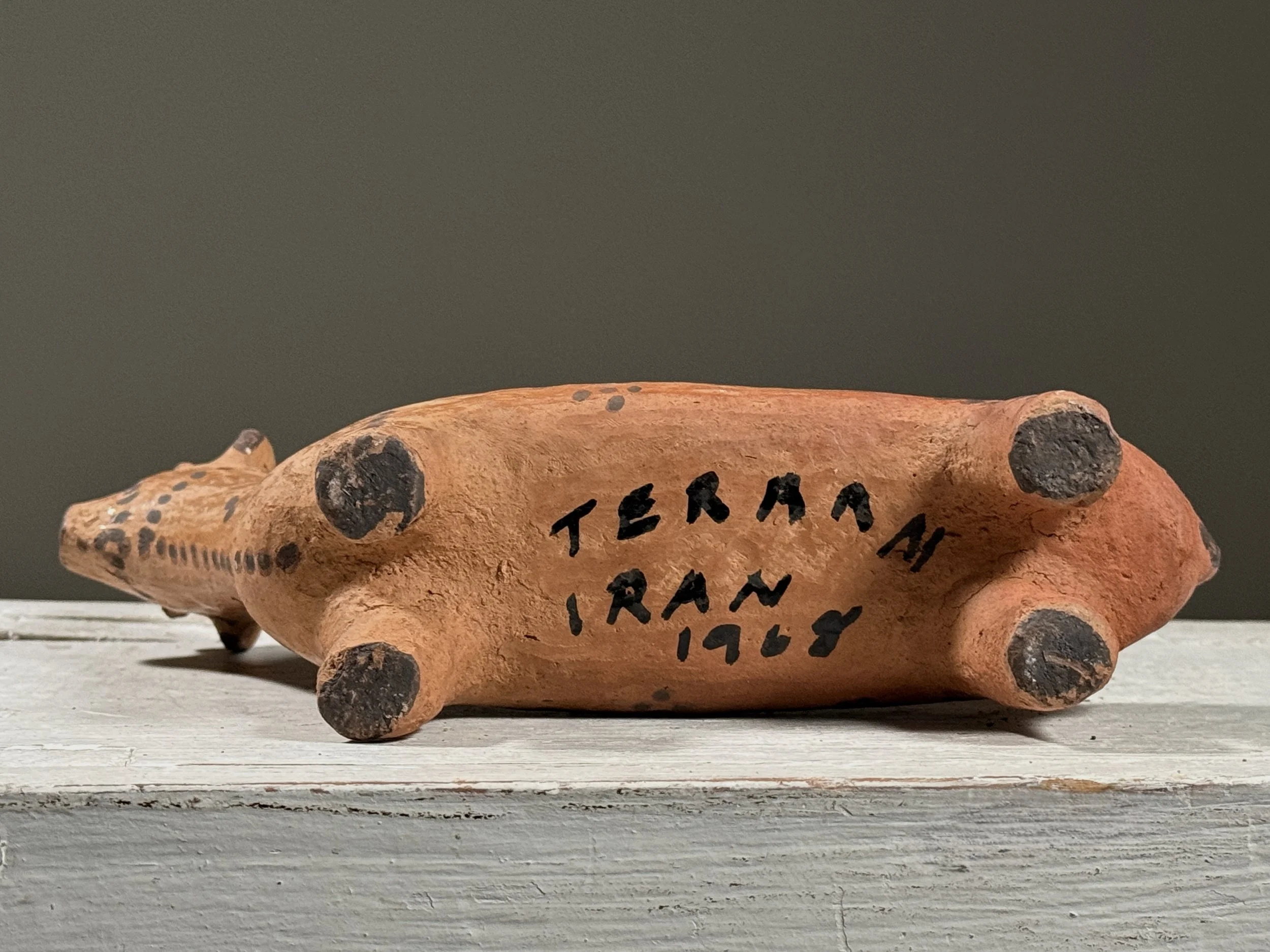 Image 7 of 7