Medium: Oil on board
Nationality/Style: Danish Modernist, circa mid-20th century
Dimensions: 16.6" W x 15.75" H (sight)
Frame: Cream colored frame
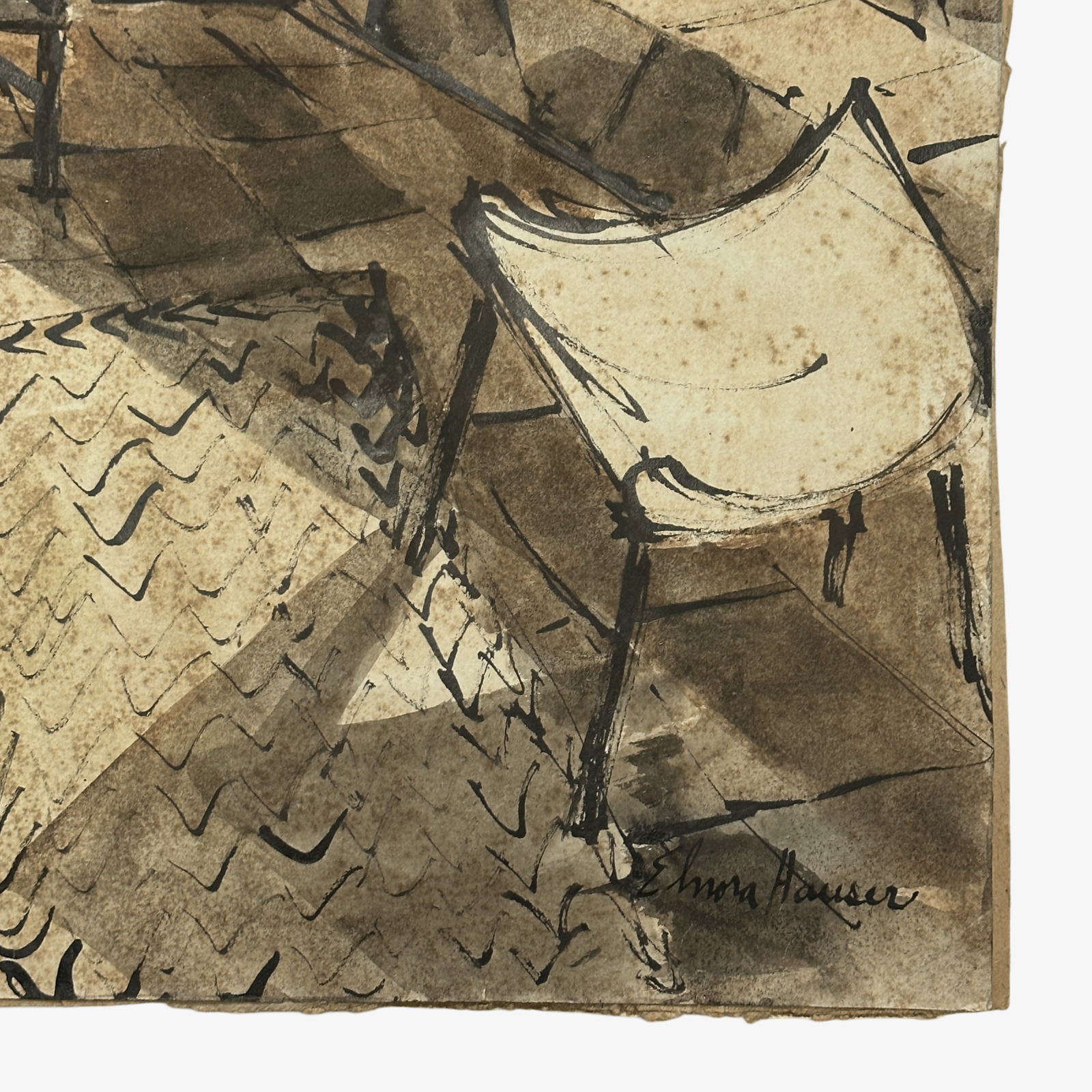
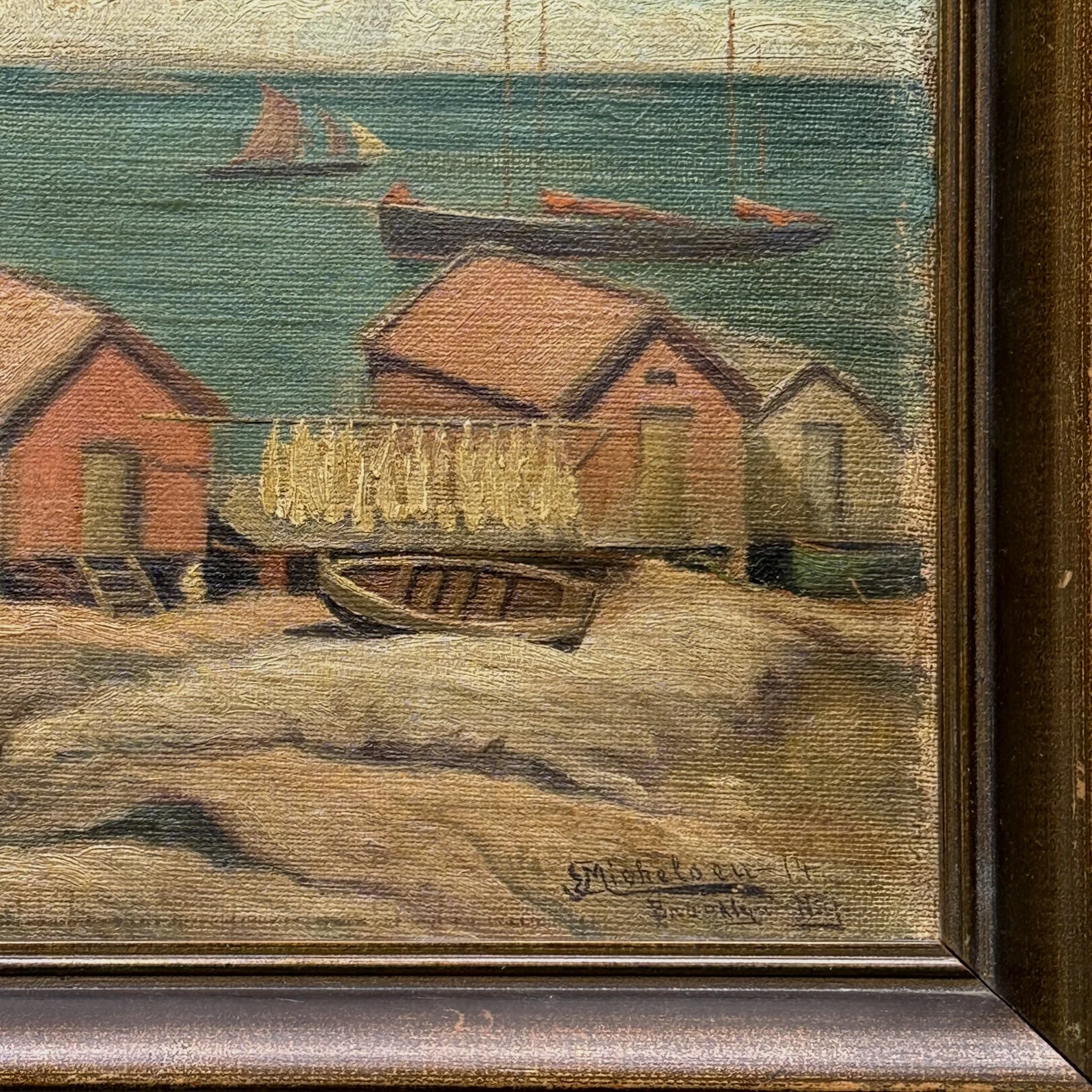
Signature: Signed lower right
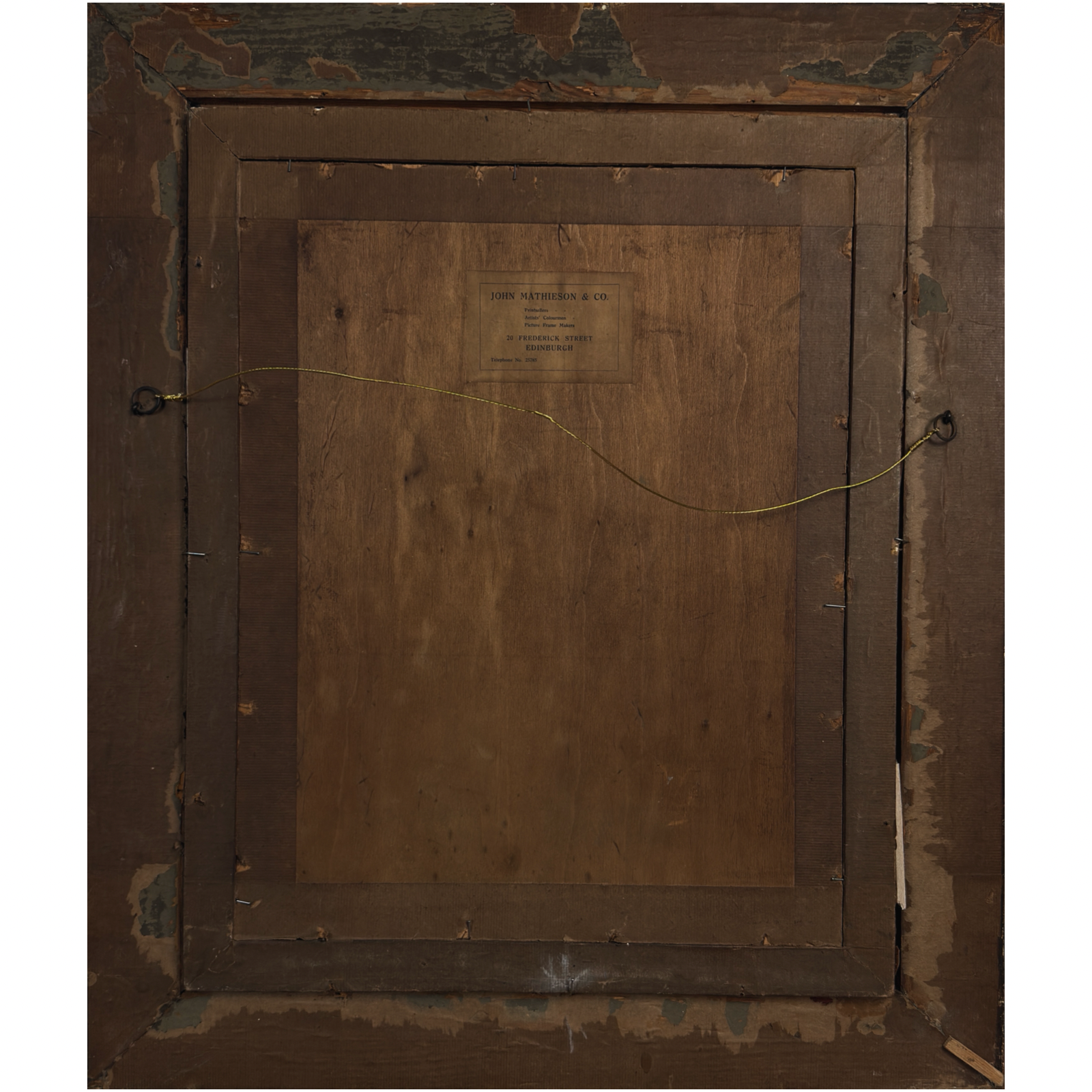
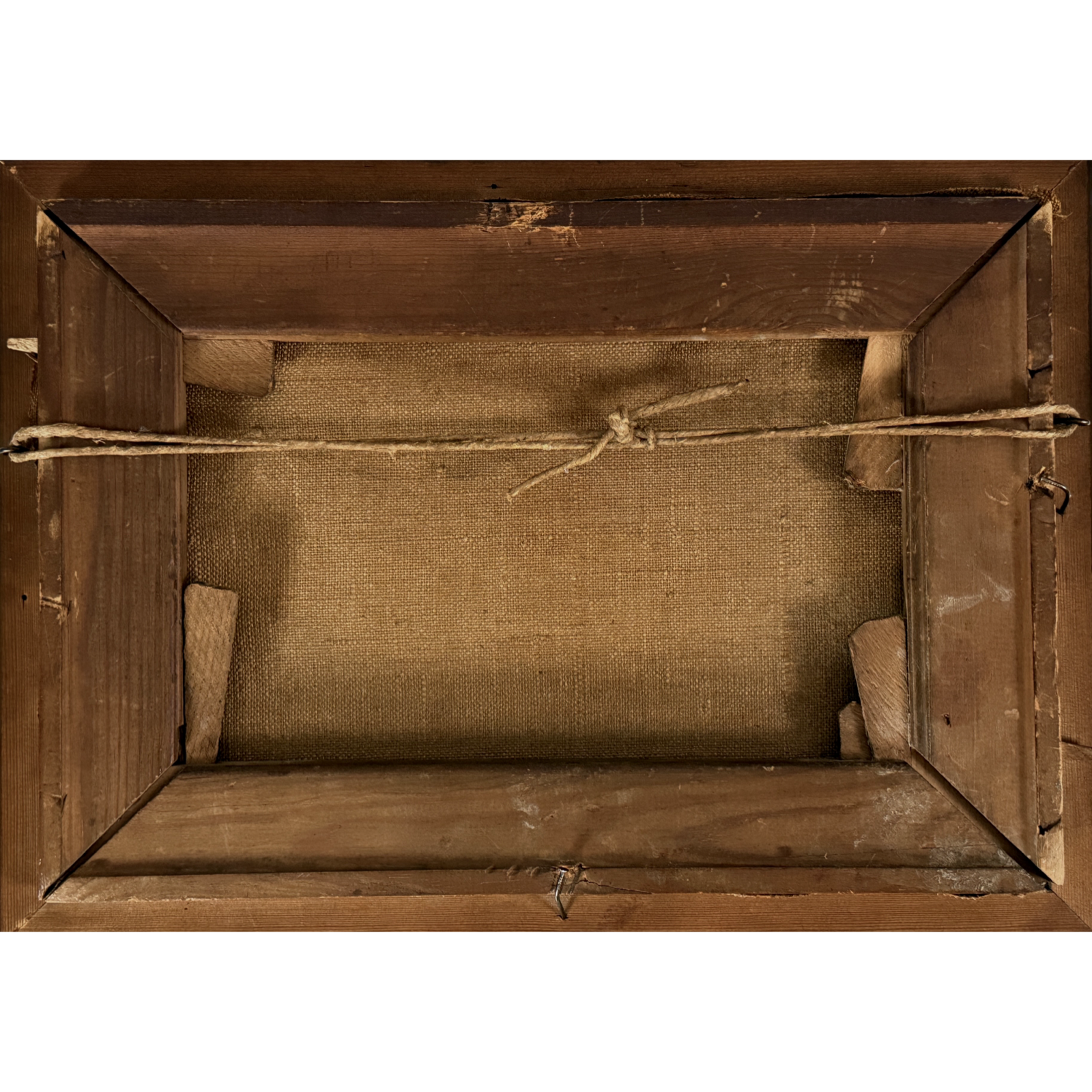
Condition: Good; wear consistent with age. Stains and scratches present on frame.
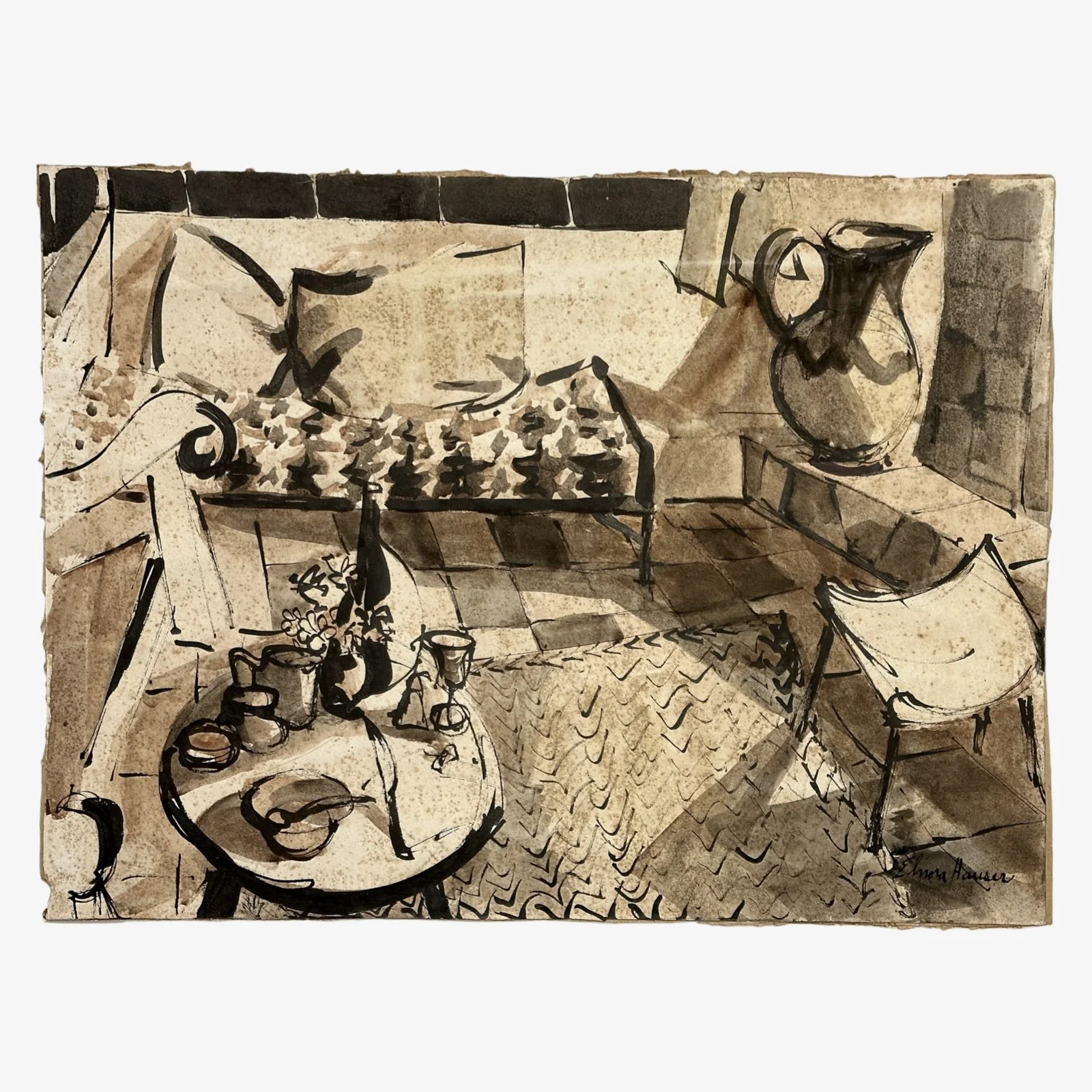
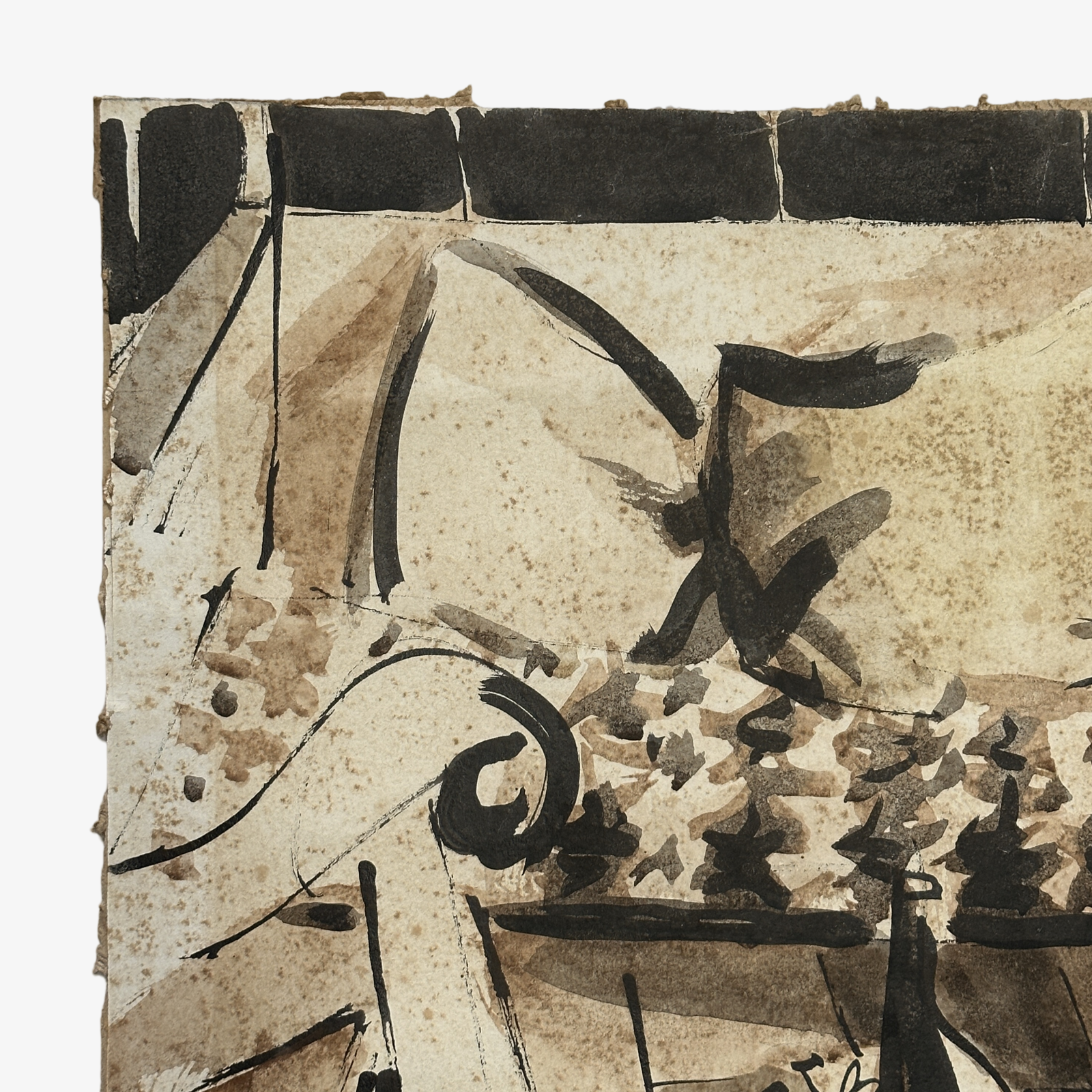
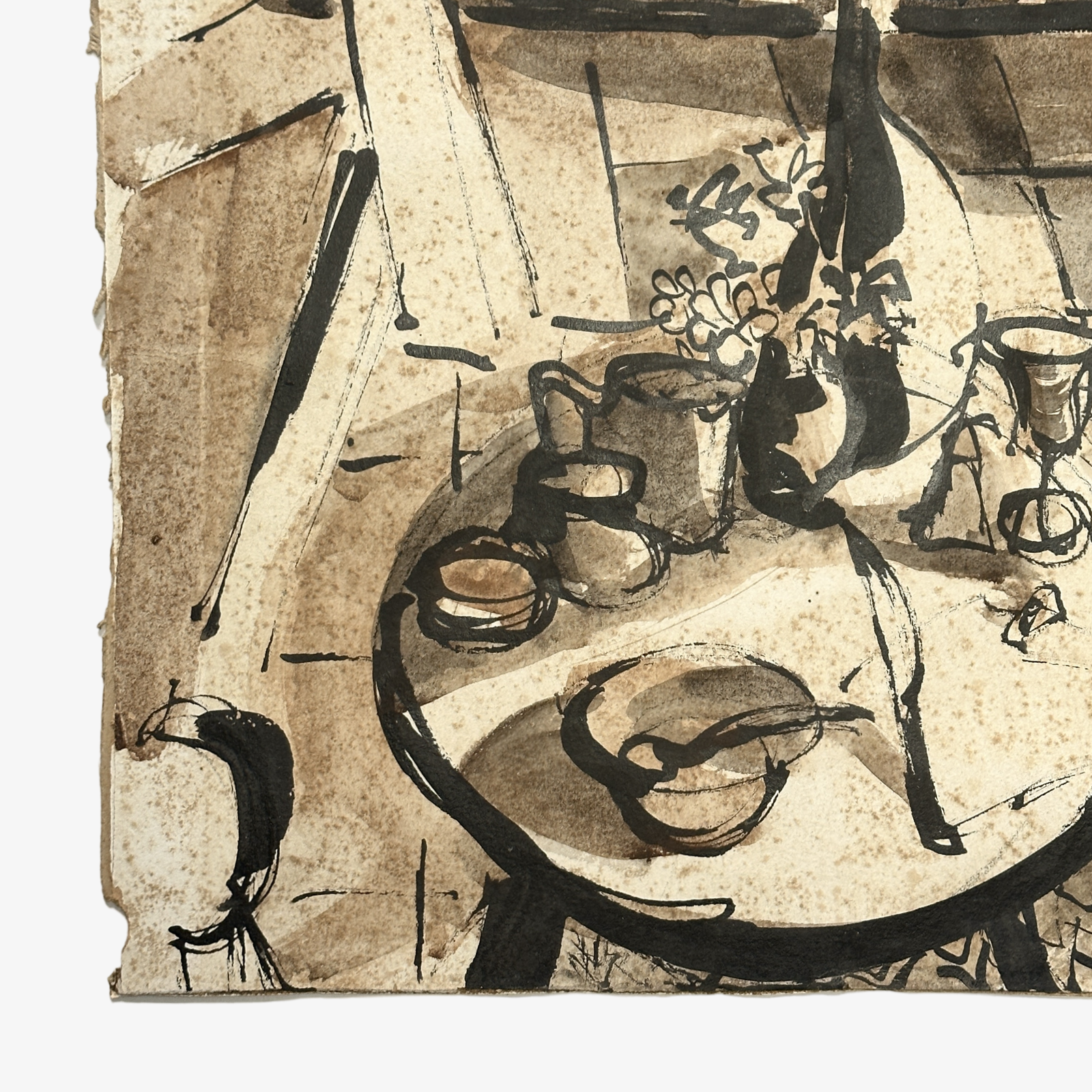
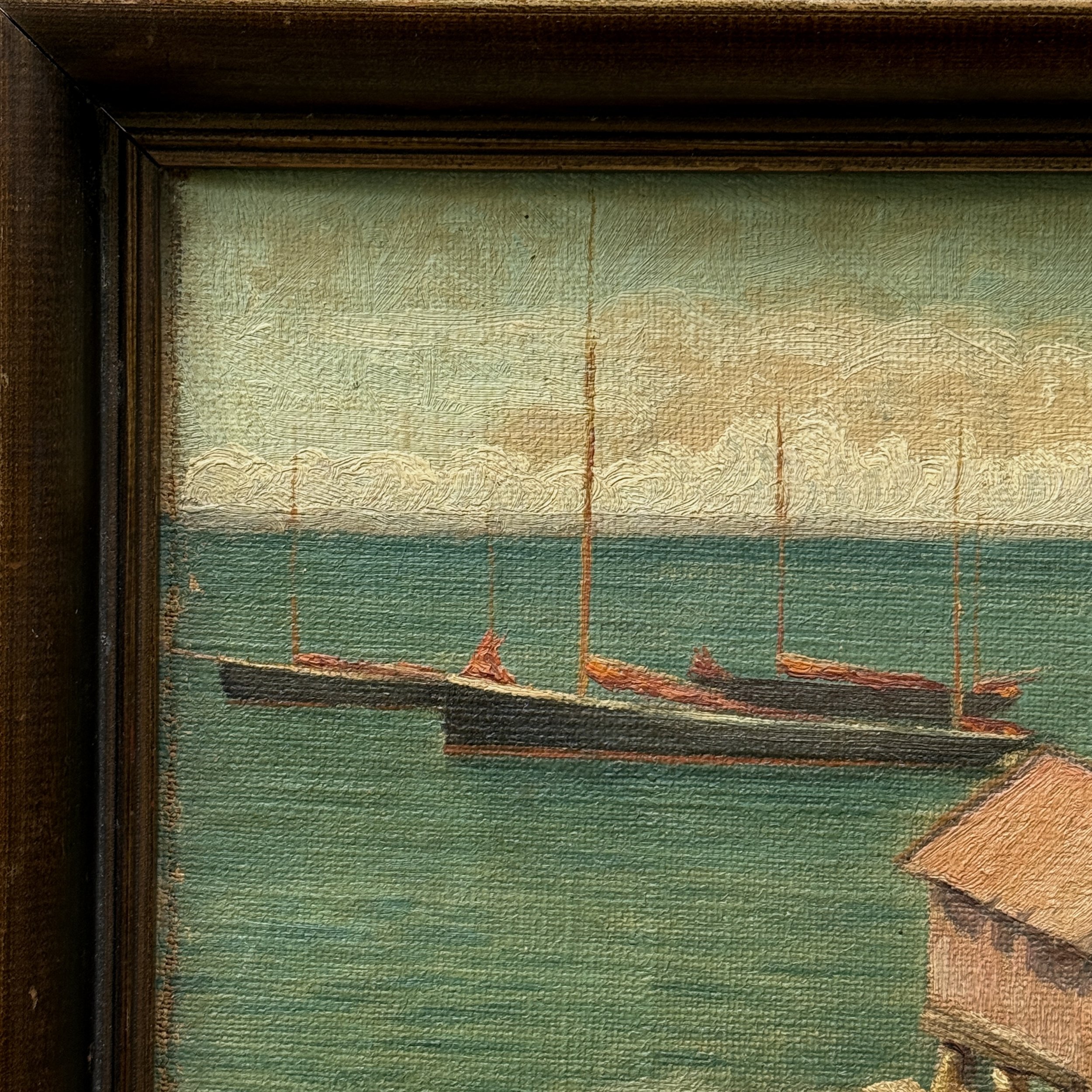
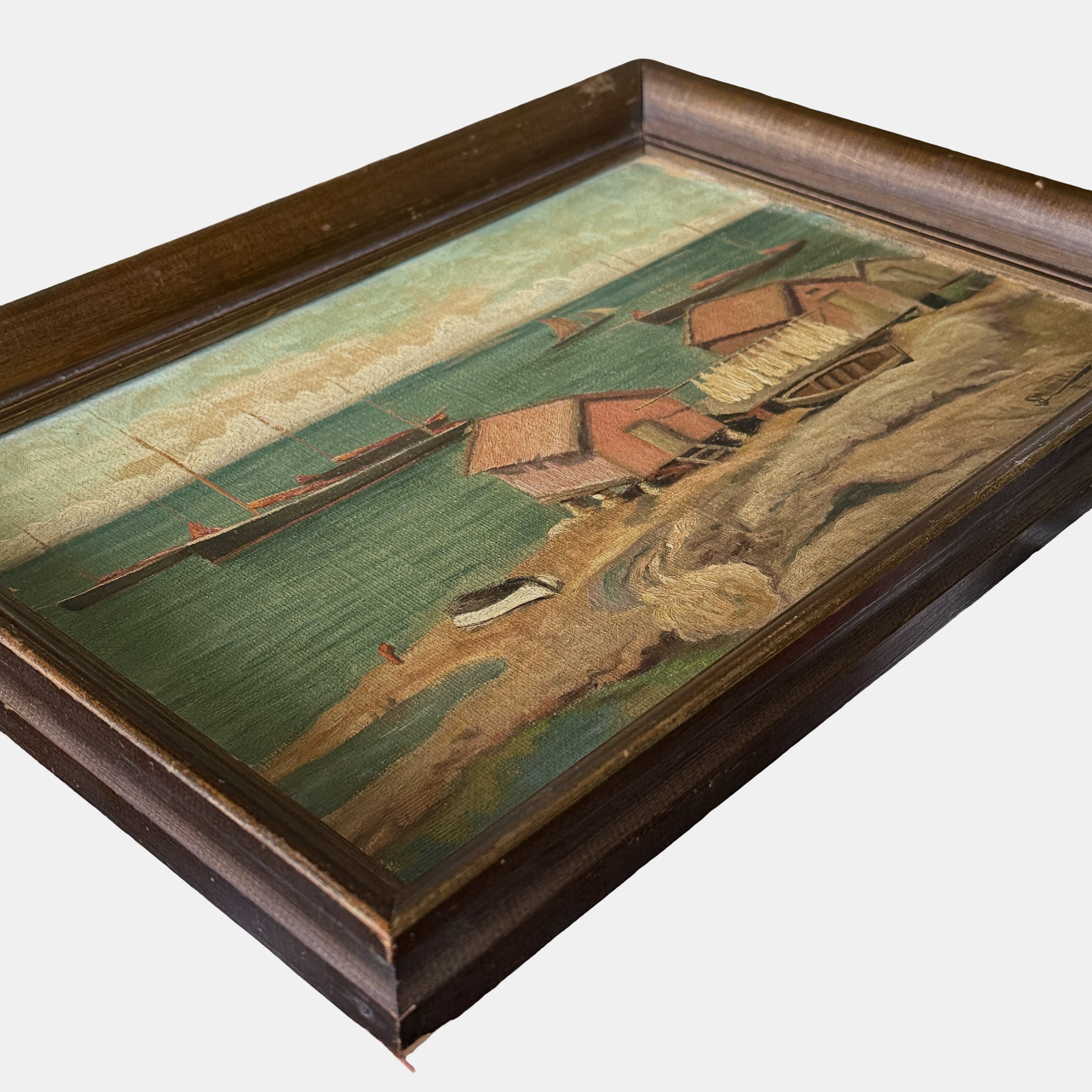
Modernist Danish landscape depicting thatched cottages (stråtækte huse) along the horizon. The composition is rendered with thick, expressive brushstrokes characteristic of the Expressionist idiom. The thatched cottage—a traditional Danish rural architectural form—serves as a recurring motif in Scandinavian landscape painting. Housed in a cream colored frame. Signed in the lower right corner. In good condition with wear consistent with age. Stains and scratches are present on the frame.
A Note on Danish Modernist Landscape Painting
Danish Modernism emerged in the early twentieth century. The movement was shaped by French Post-Impressionism and German Expressionism, as well as a deep connection to the particular qualities of Nordic light and landscape.
Harald Giersing (1881–1927) was a leading figure in the beginning of Danish modernist, producing landscapes characterized by bold color and expressive brushwork that captured the rural Danish countryside. His works, including Landscape near Bistrup (1918), are held in the permanent collection of the National Gallery of Denmark. Oluf Høst (1884–1966), a native of the island of Bornholm, was deeply influenced by Cézanne and Van Gogh and became known for his repeated depictions of local farmhouses and landscapes under changing light and seasonal conditions.
The thatched cottage, or stråtækt hus, is a traditional Danish rural building type that became a favored subject among modernist painters. Its organic form, textured roof, and integration into the landscape offered artists a subject that bridged tradition and modernity. Other Danish modernist artists who explored landscape themes include Sigurd Swane (1879–1973), Thorvald Hagedorn-Olsen (active mid-20th century), and Svend Nielsen (1908–1993)
Medium: Oil on board
Nationality/Style: Danish Modernist, circa mid-20th century
Dimensions: 16.6" W x 15.75" H (sight)
Frame: Cream colored frame
Signature: Signed lower right
Condition: Good; wear consistent with age. Stains and scratches present on frame.
Modernist Danish landscape depicting thatched cottages (stråtækte huse) along the horizon. The composition is rendered with thick, expressive brushstrokes characteristic of the Expressionist idiom. The thatched cottage—a traditional Danish rural architectural form—serves as a recurring motif in Scandinavian landscape painting. Housed in a cream colored frame. Signed in the lower right corner. In good condition with wear consistent with age. Stains and scratches are present on the frame.
A Note on Danish Modernist Landscape Painting
Danish Modernism emerged in the early twentieth century. The movement was shaped by French Post-Impressionism and German Expressionism, as well as a deep connection to the particular qualities of Nordic light and landscape.
Harald Giersing (1881–1927) was a leading figure in the beginning of Danish modernist, producing landscapes characterized by bold color and expressive brushwork that captured the rural Danish countryside. His works, including Landscape near Bistrup (1918), are held in the permanent collection of the National Gallery of Denmark. Oluf Høst (1884–1966), a native of the island of Bornholm, was deeply influenced by Cézanne and Van Gogh and became known for his repeated depictions of local farmhouses and landscapes under changing light and seasonal conditions.
The thatched cottage, or stråtækt hus, is a traditional Danish rural building type that became a favored subject among modernist painters. Its organic form, textured roof, and integration into the landscape offered artists a subject that bridged tradition and modernity. Other Danish modernist artists who explored landscape themes include Sigurd Swane (1879–1973), Thorvald Hagedorn-Olsen (active mid-20th century), and Svend Nielsen (1908–1993)

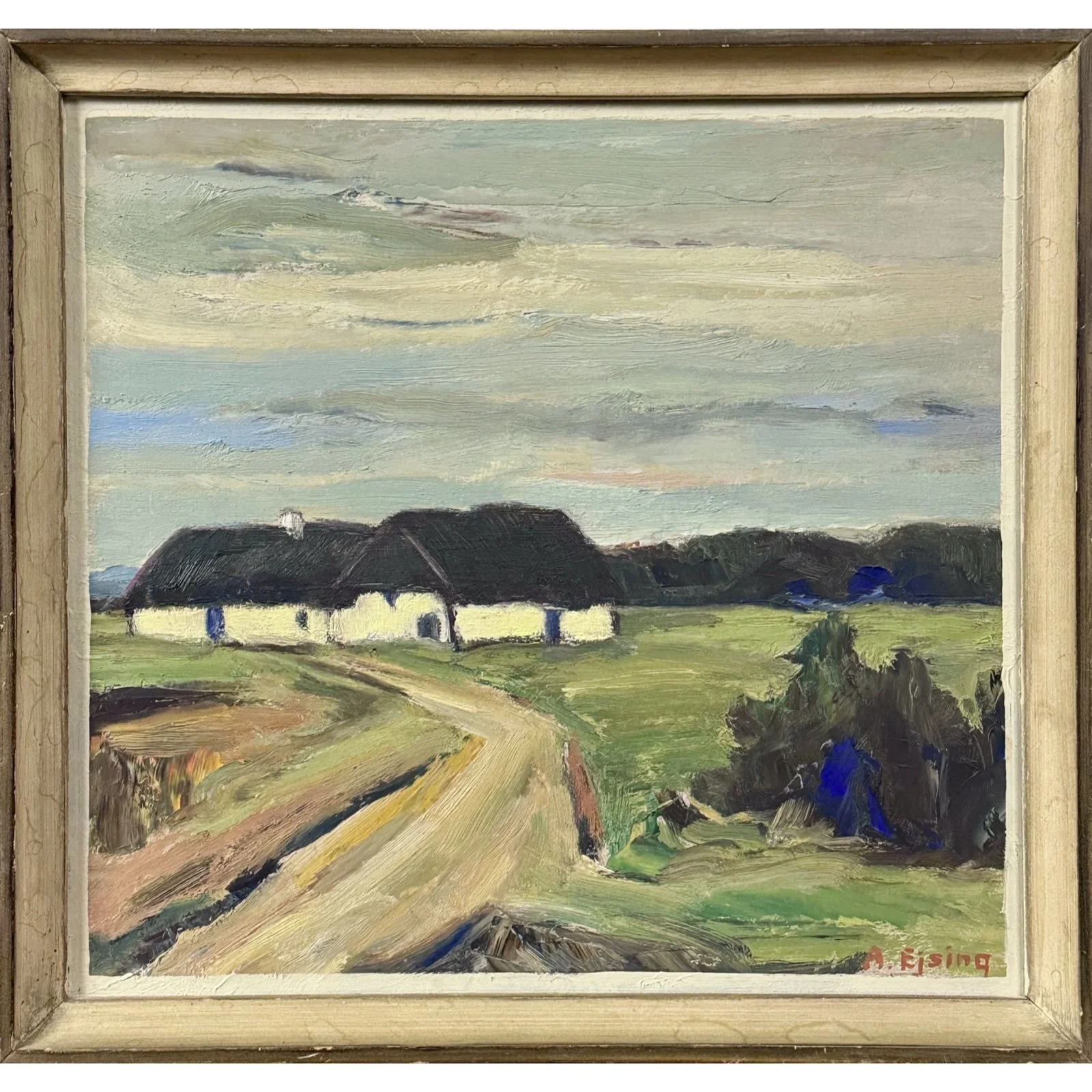 Image 1 of 7
 Image 2 of 7
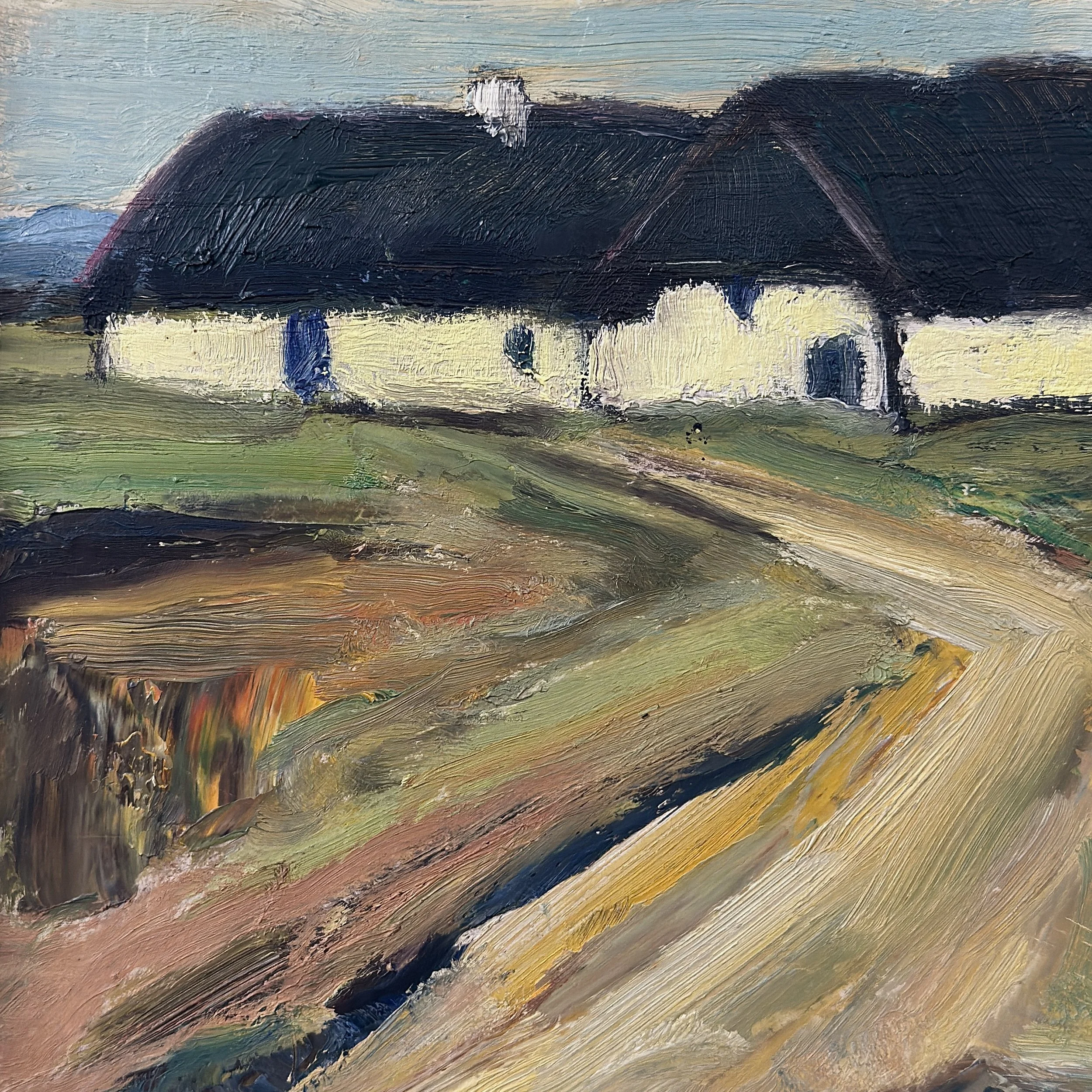 Image 3 of 7
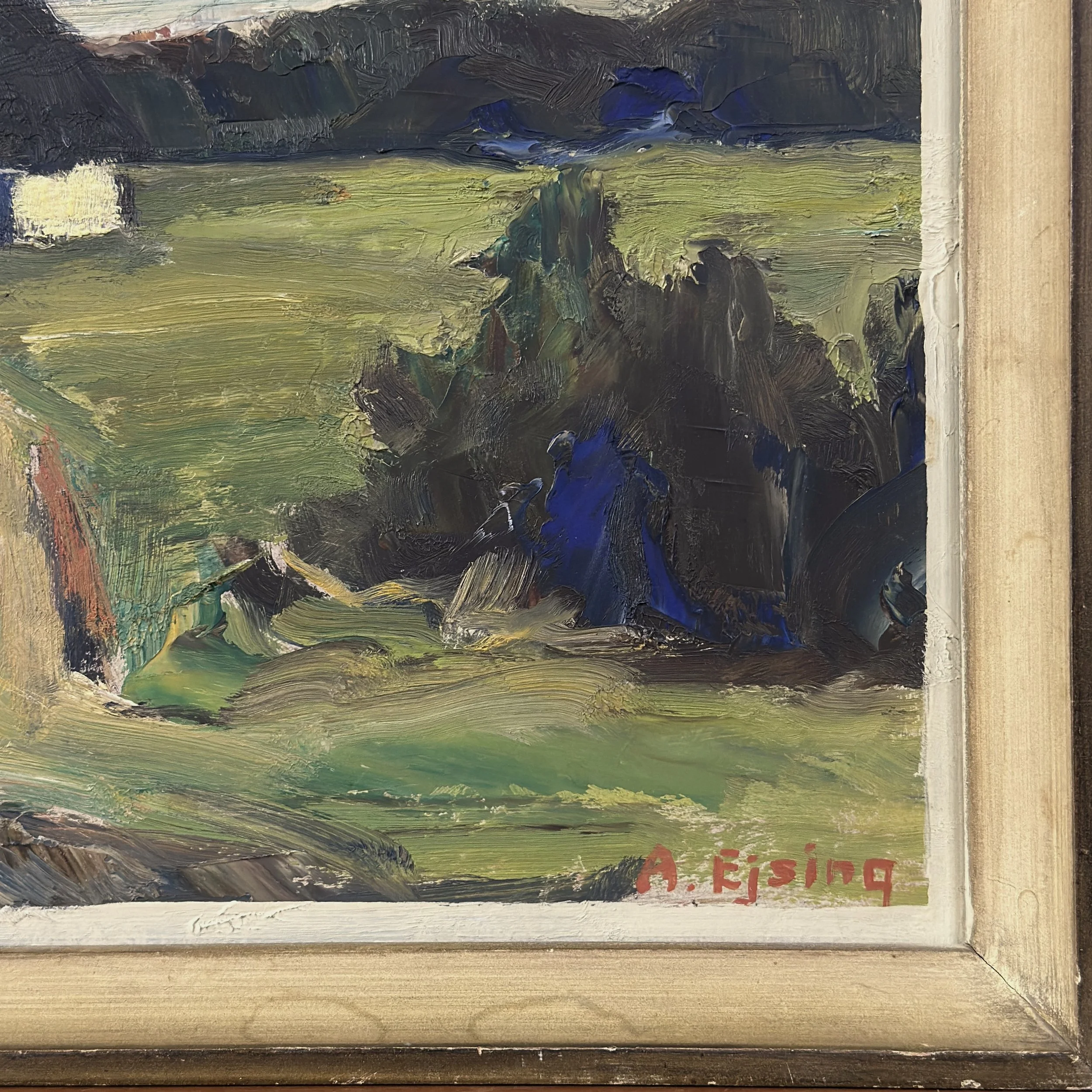 Image 4 of 7
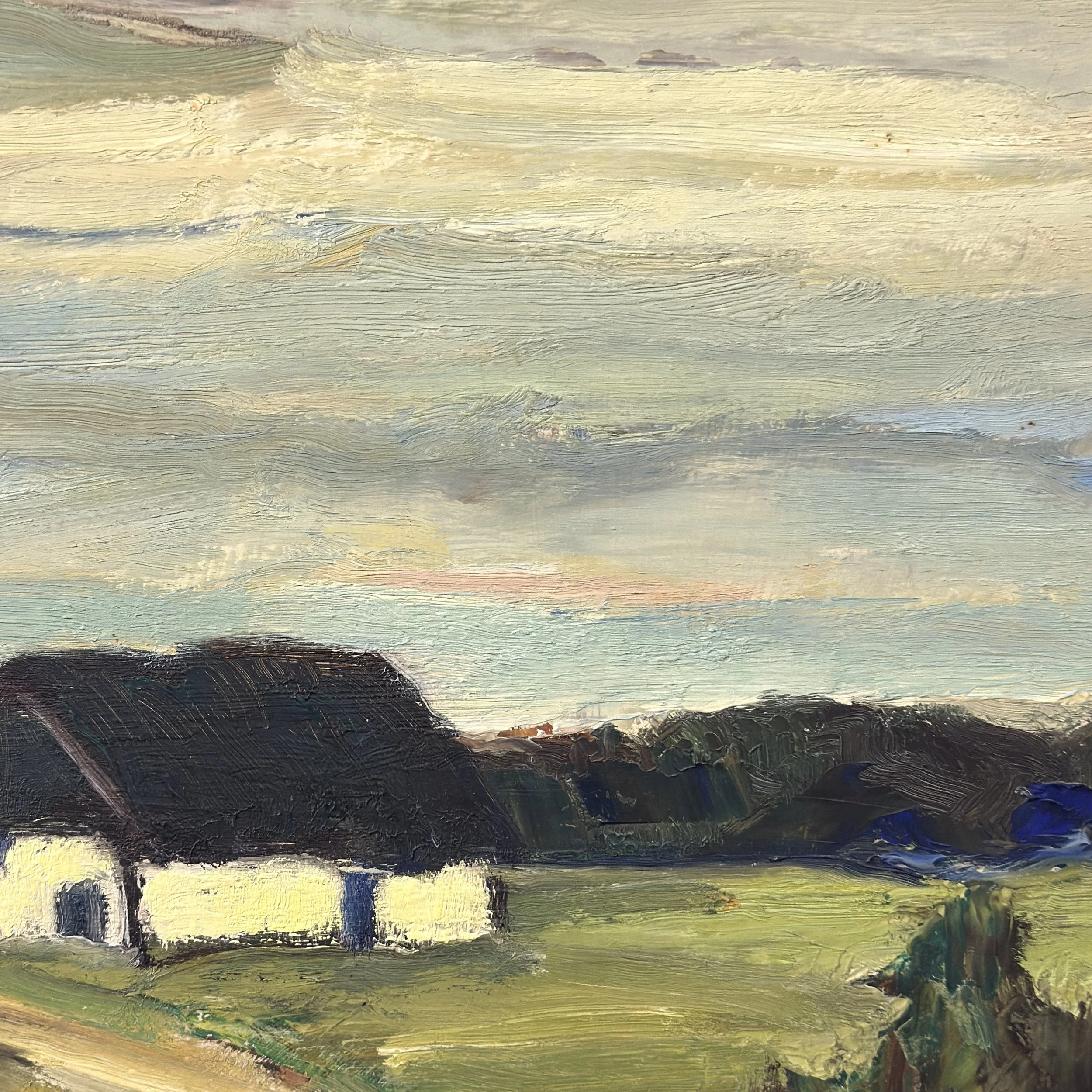 Image 5 of 7
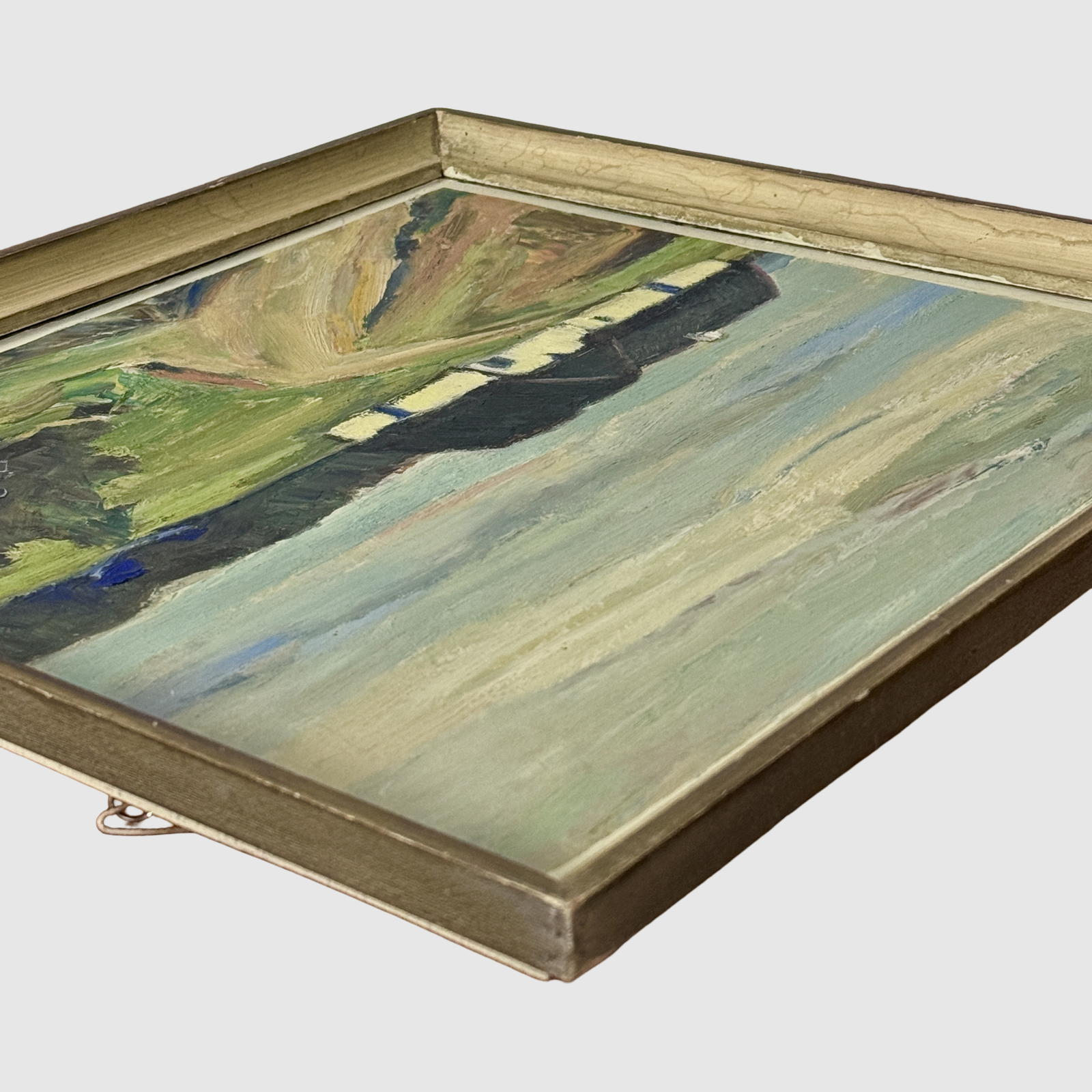 Image 6 of 7
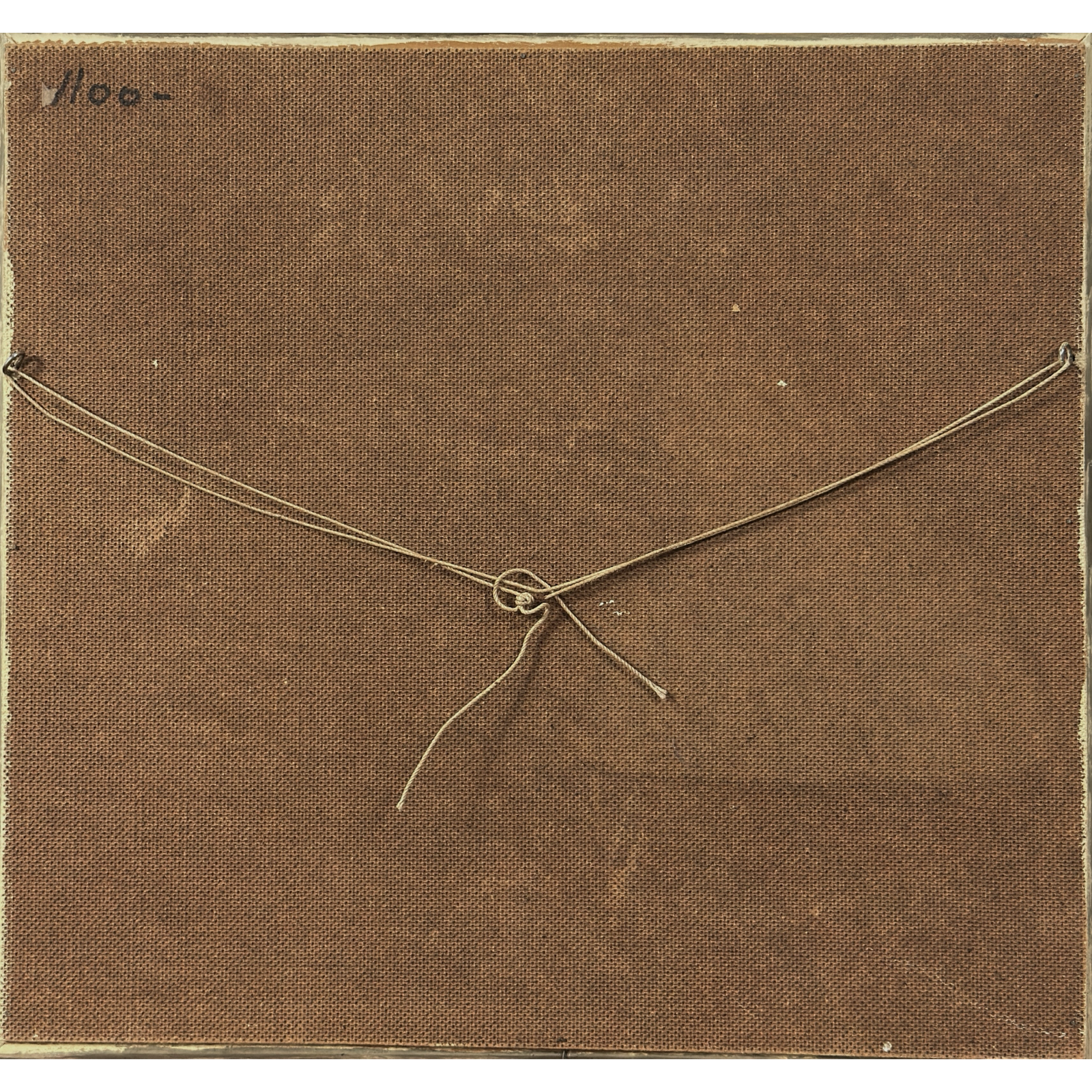 Image 7 of 7