Artist: Toshiko Takaezu (American, born Pepeekeo, Hawaii, 1922–2011)
Object type: Slab plate
Period: Mid-20th century
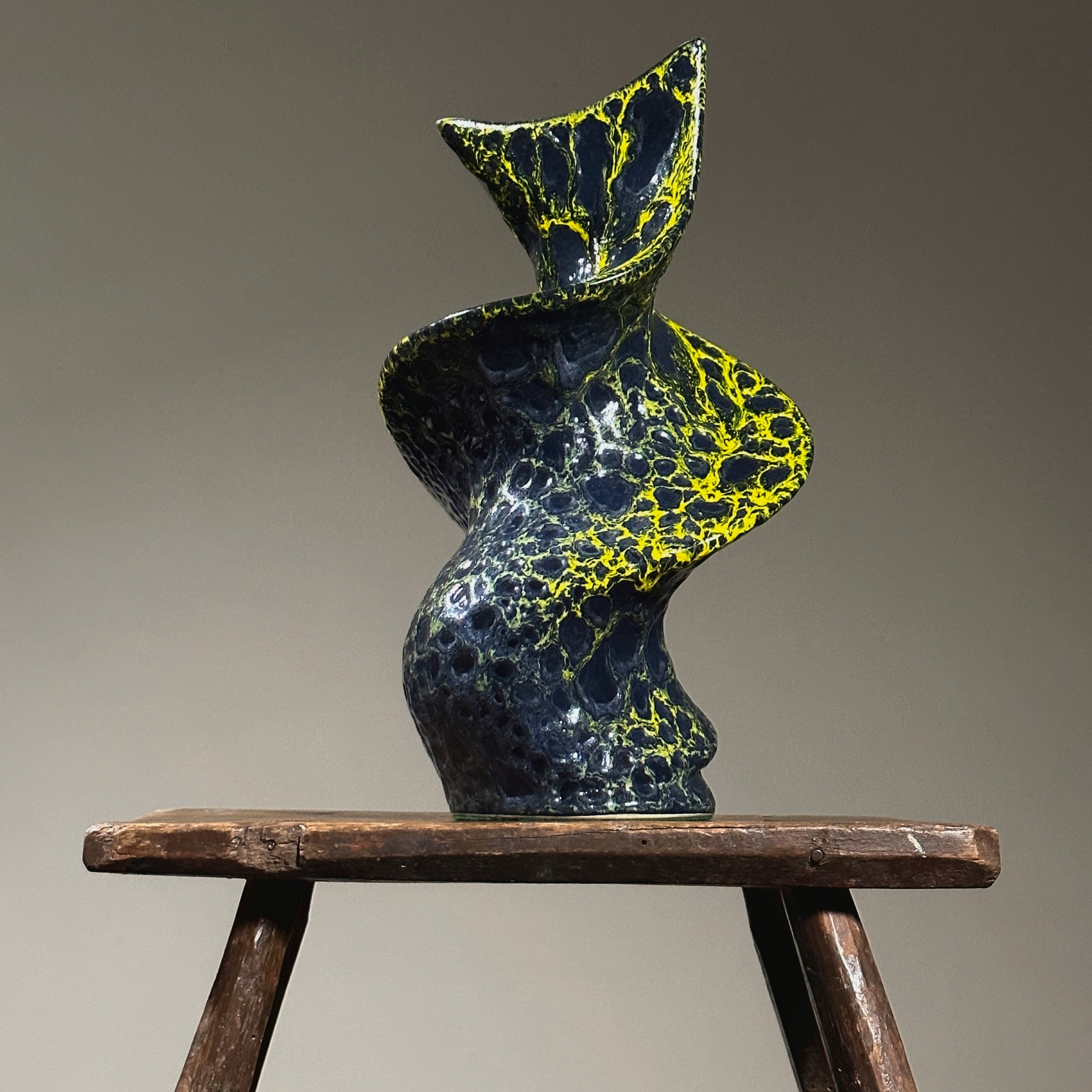
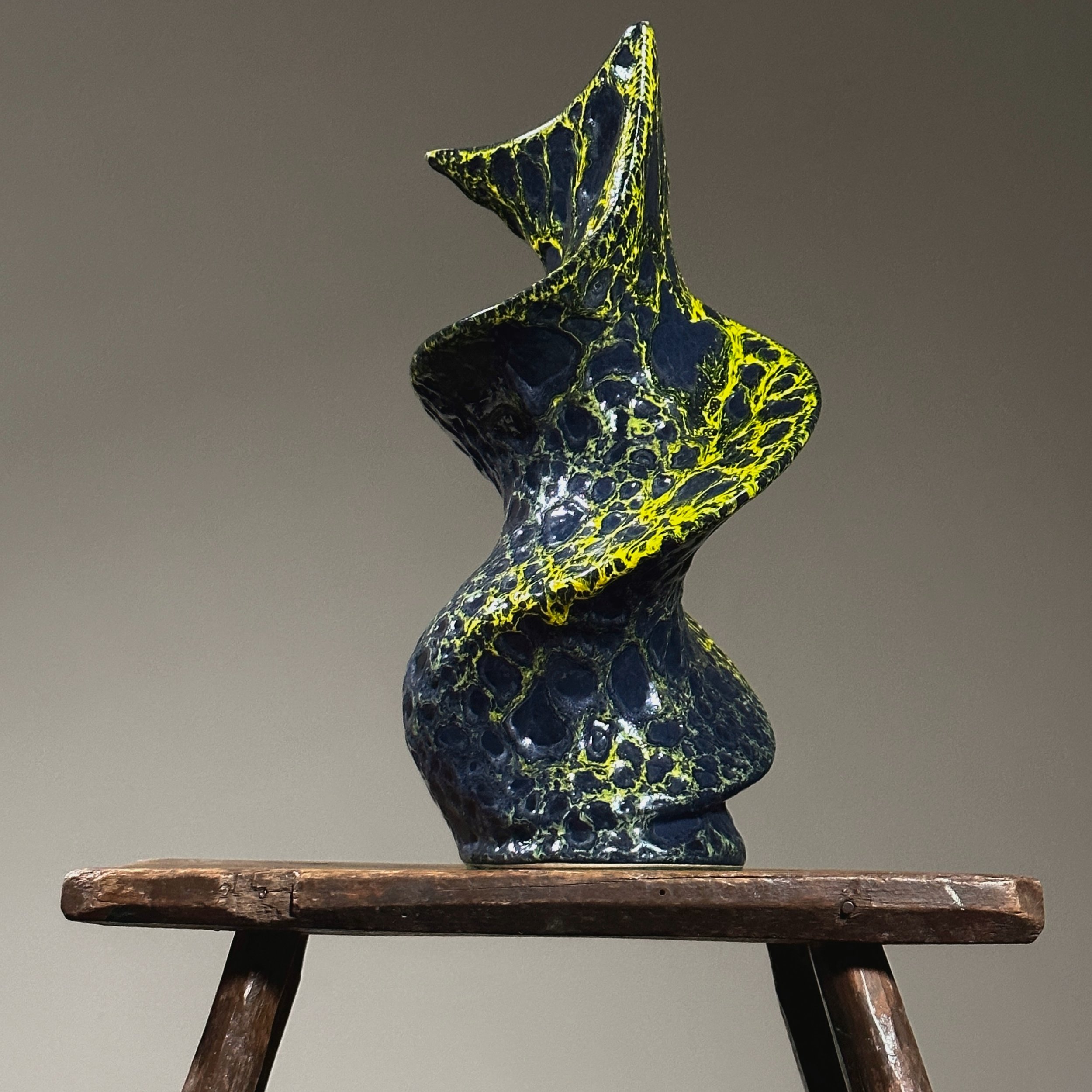
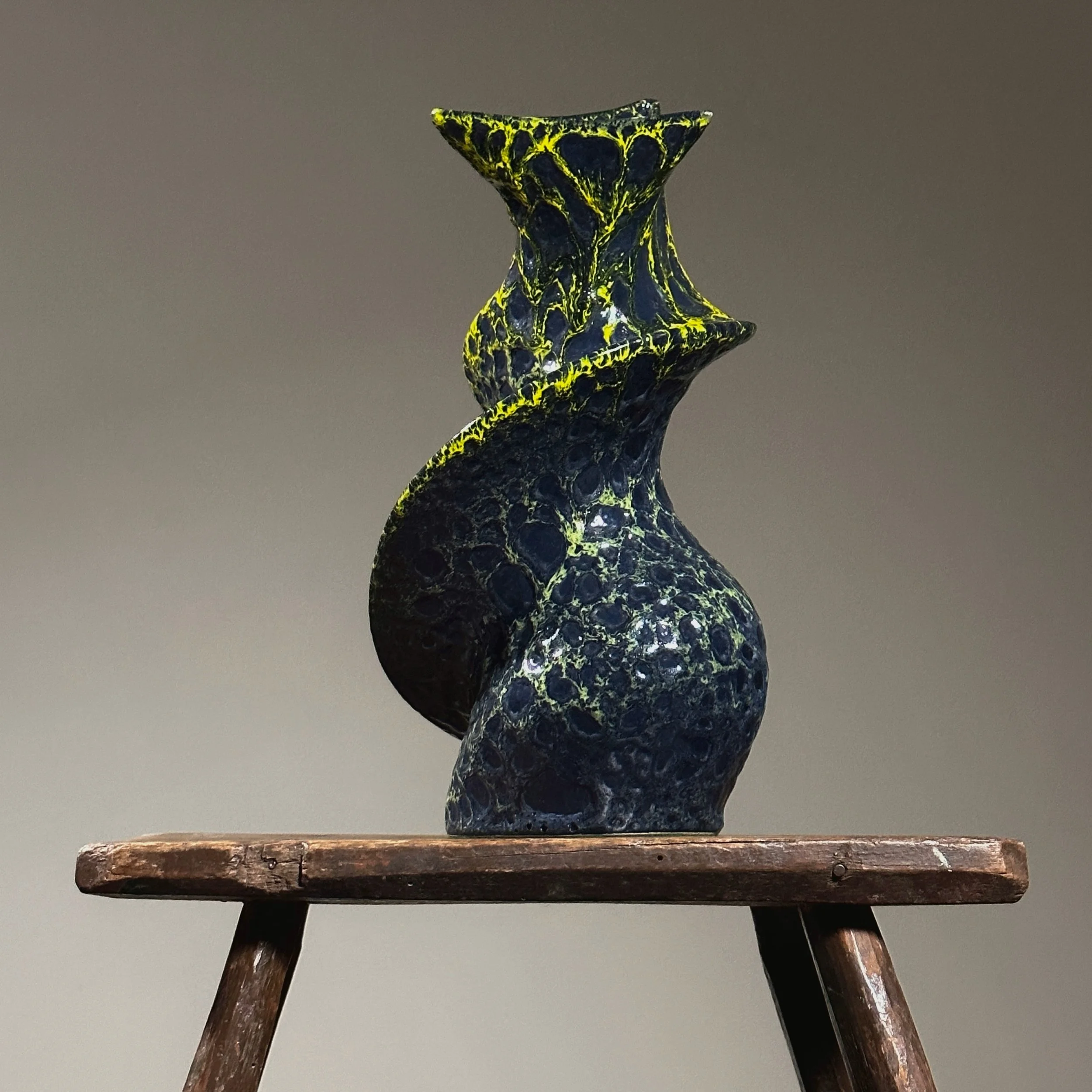
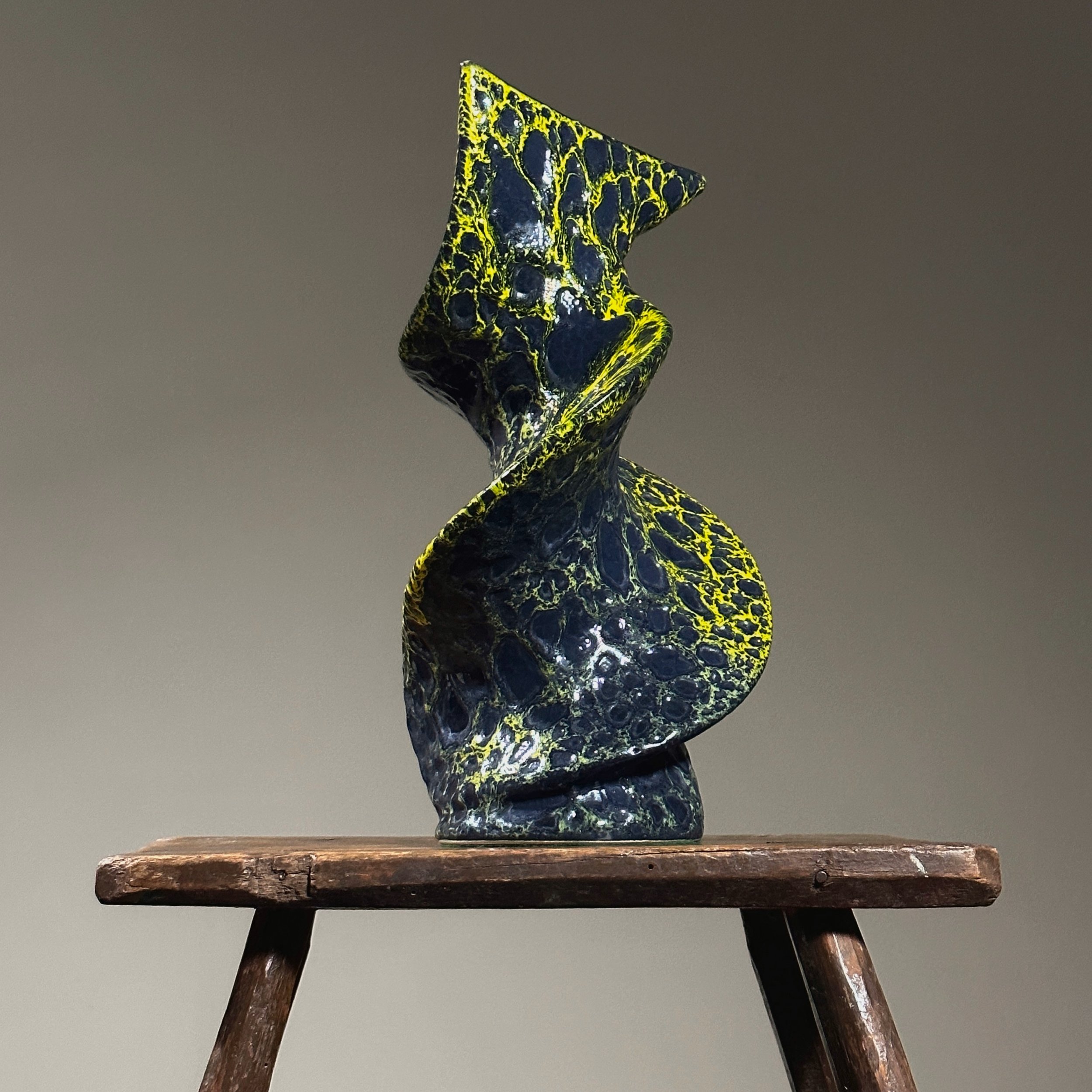
Medium: Stoneware with polychrome splatter glaze
Technique: Hand-built slab construction; multiple glaze application; Raku or high-fire reduction
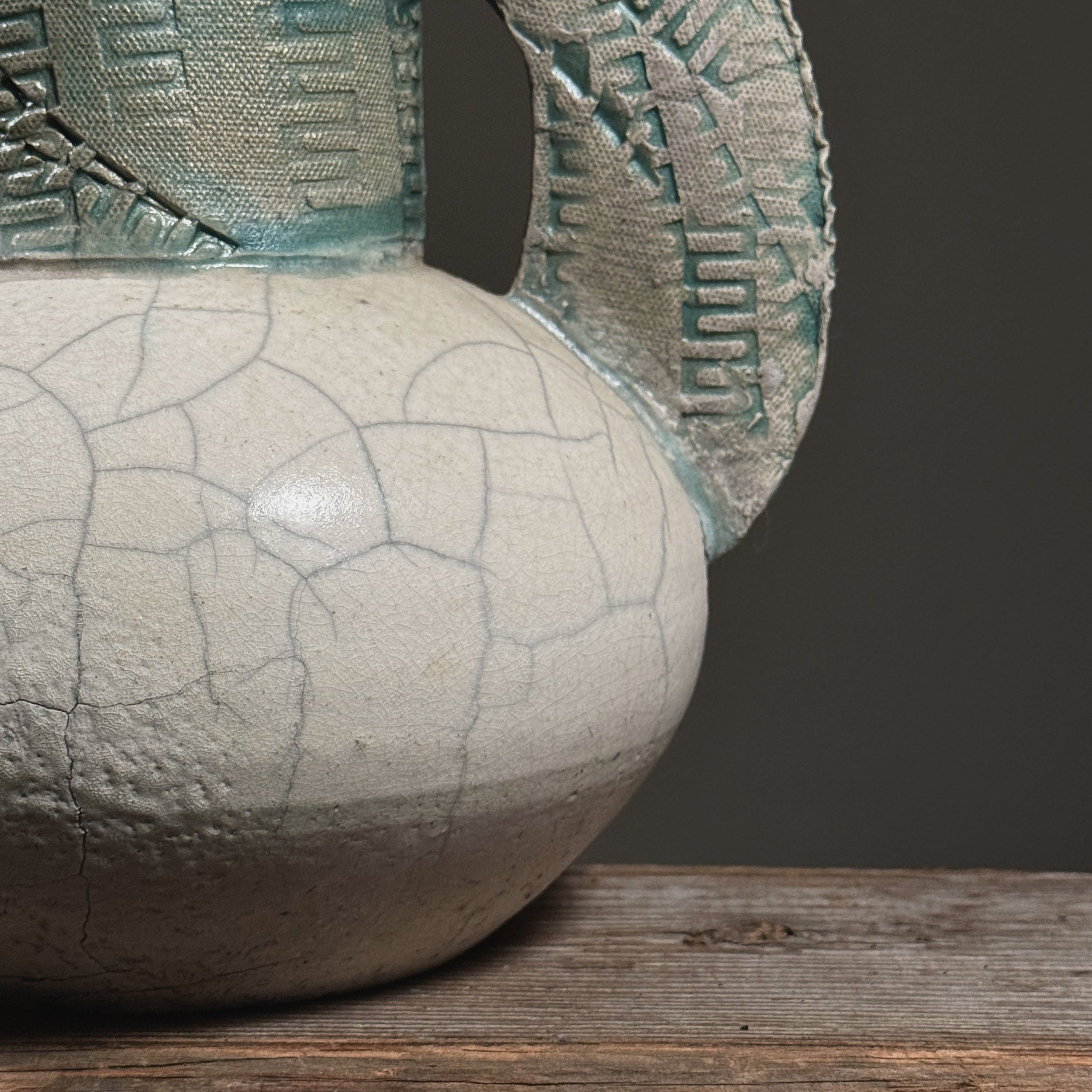
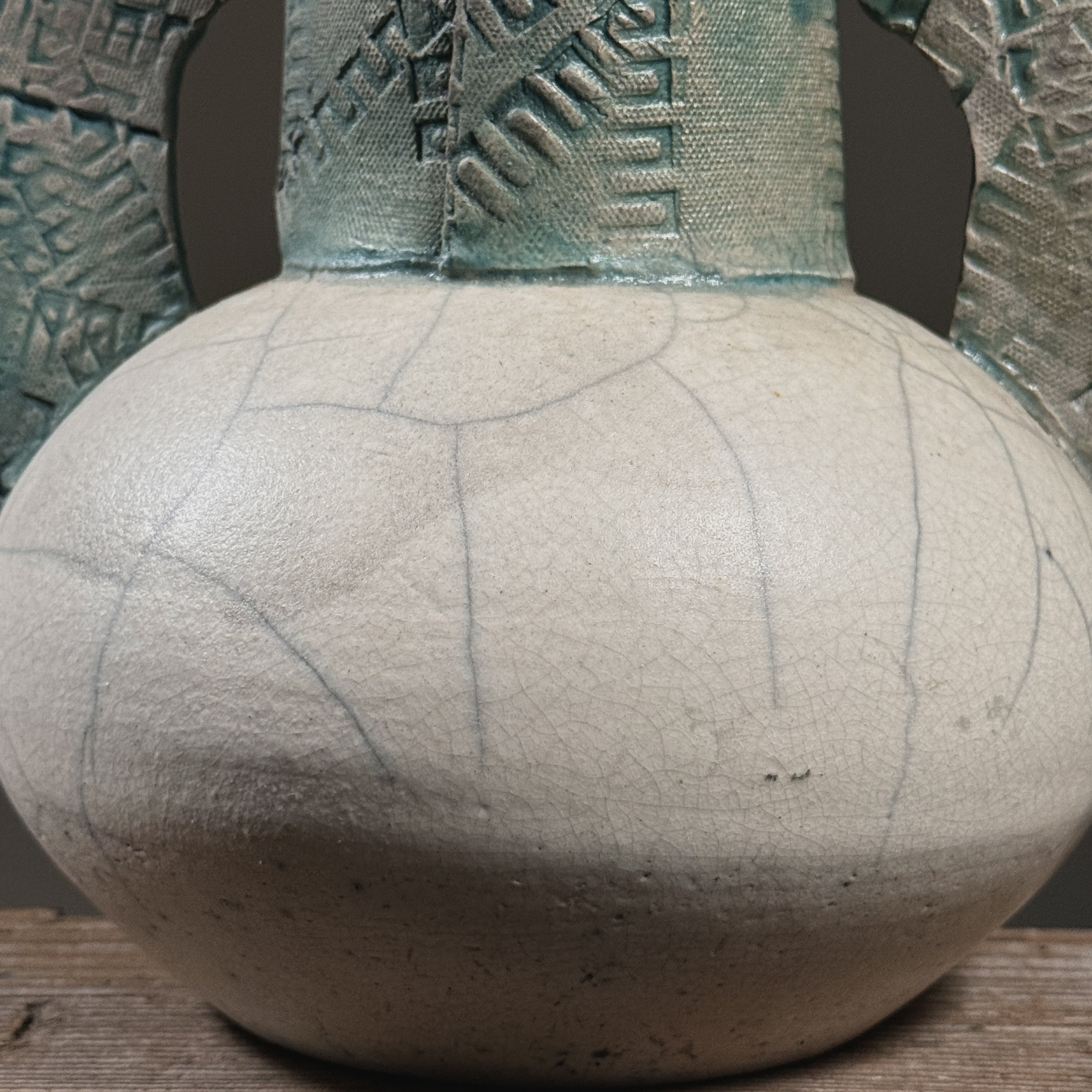
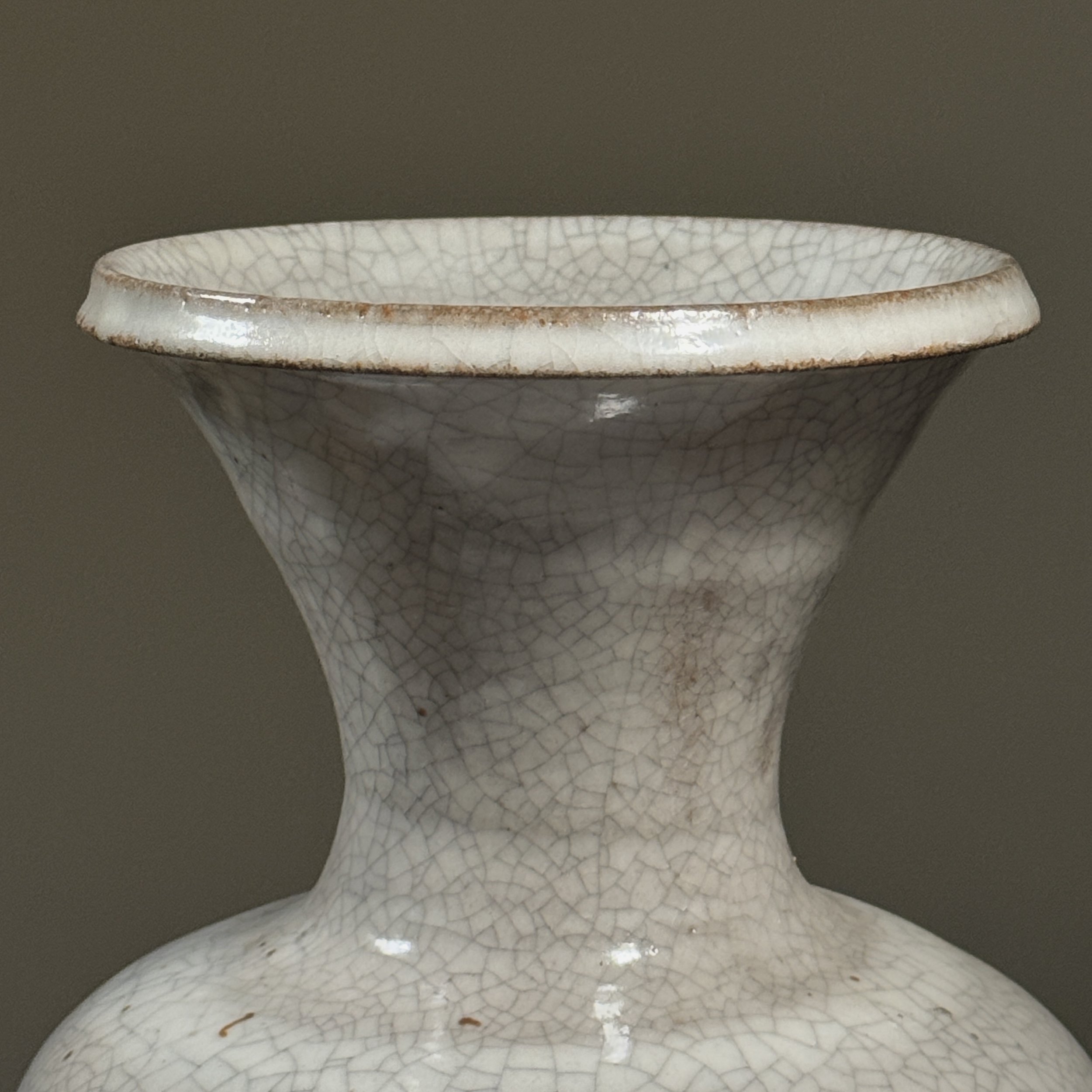
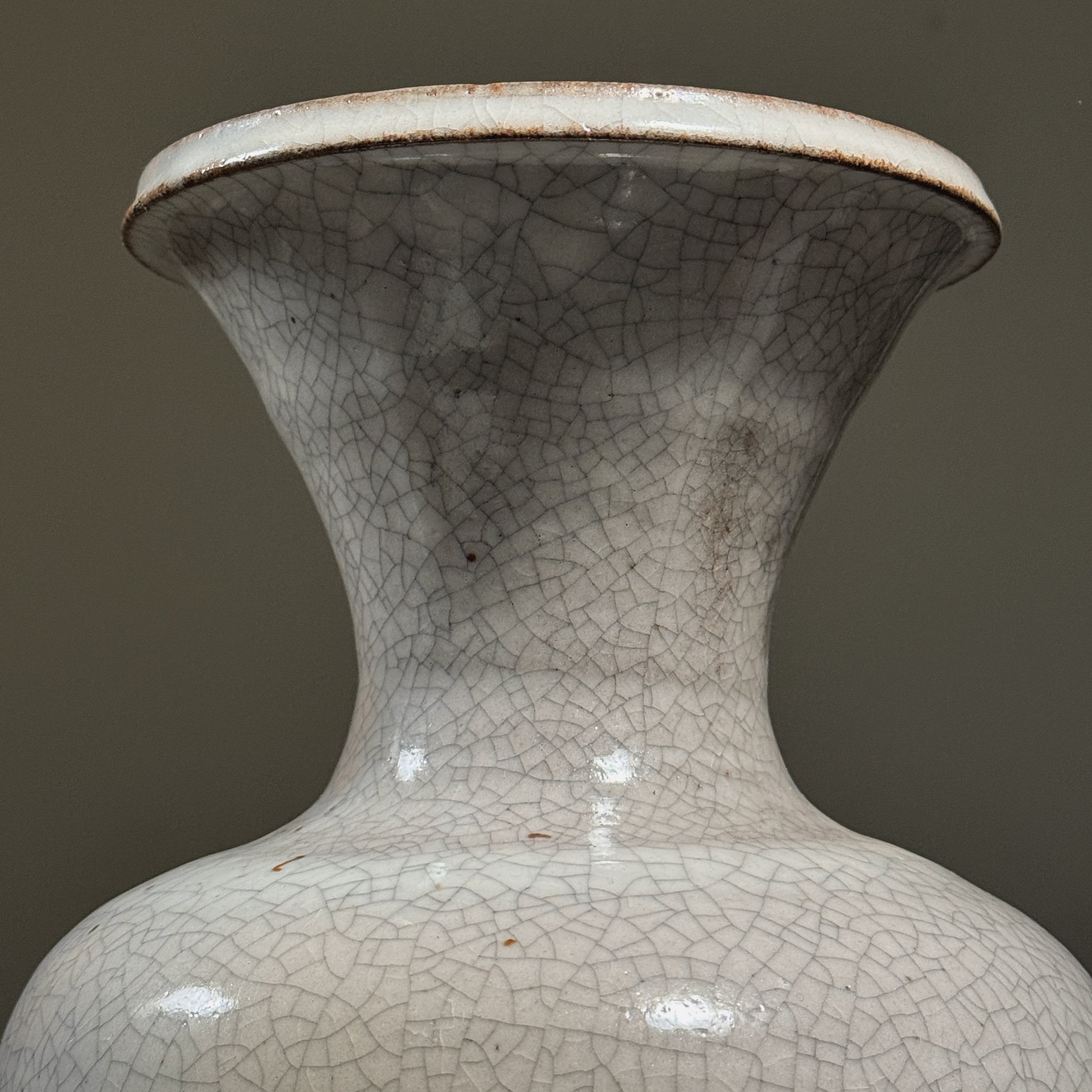
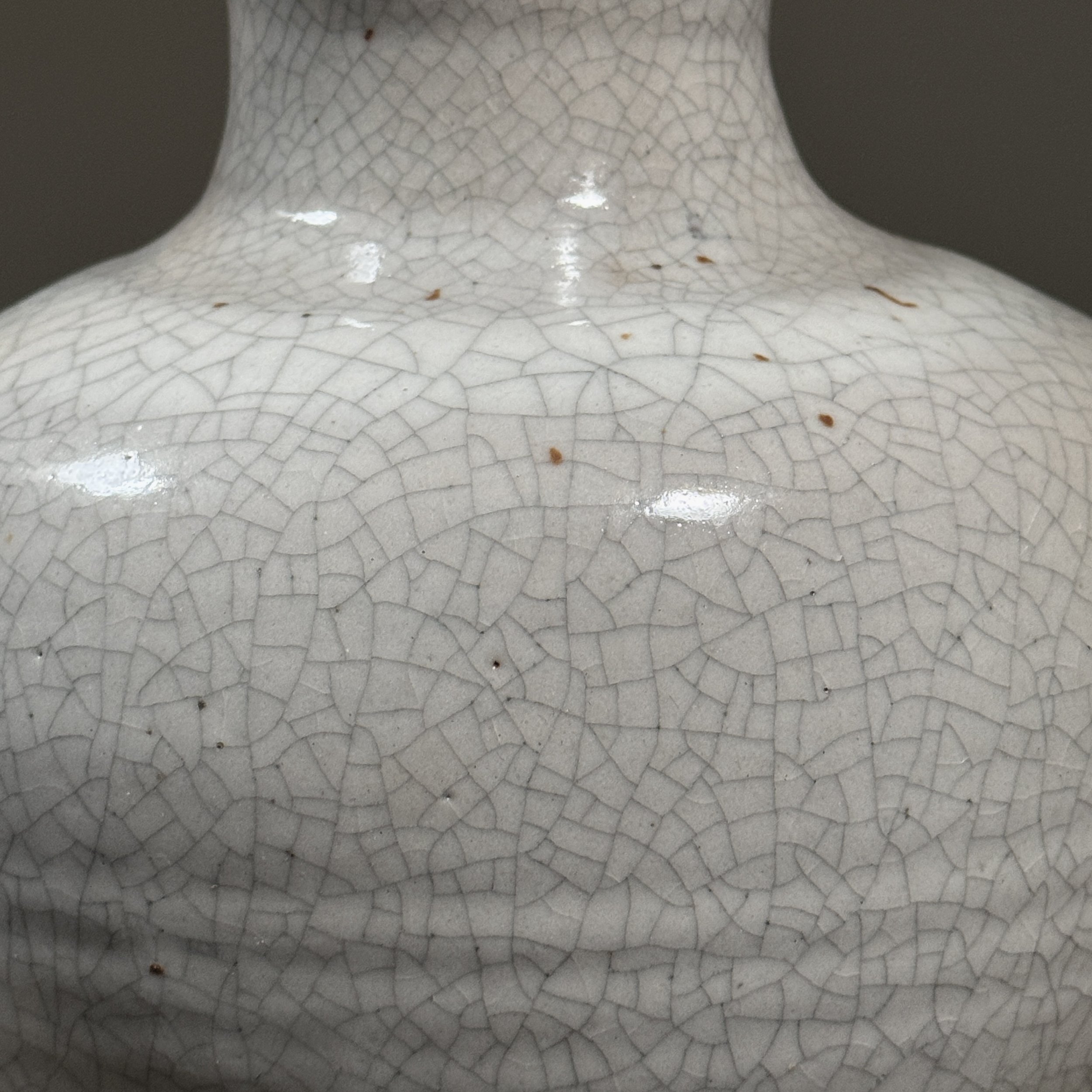
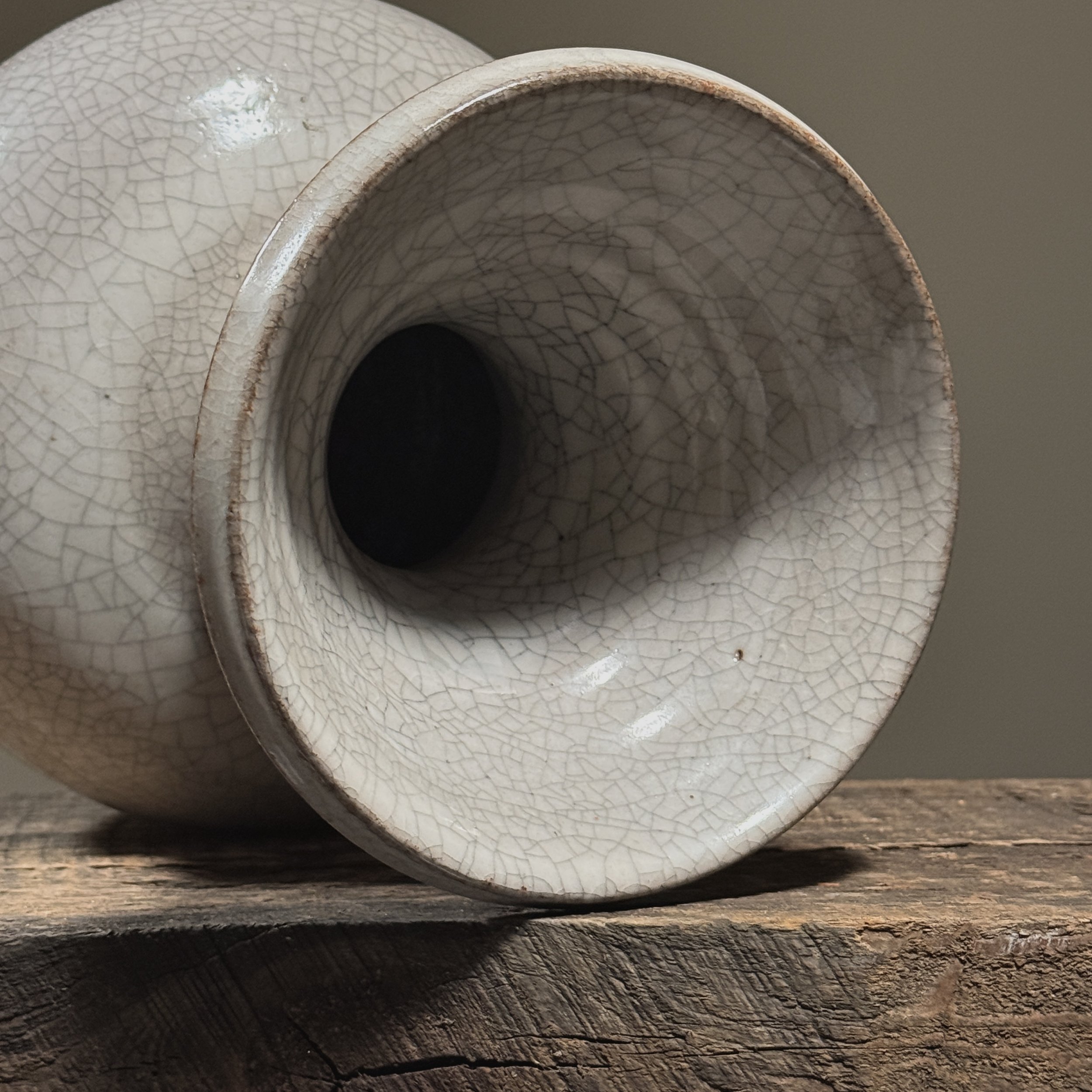
Glaze: Intricate splatter decoration in deep blue, crimson red, and cool grey; craquelure (crackle) throughout
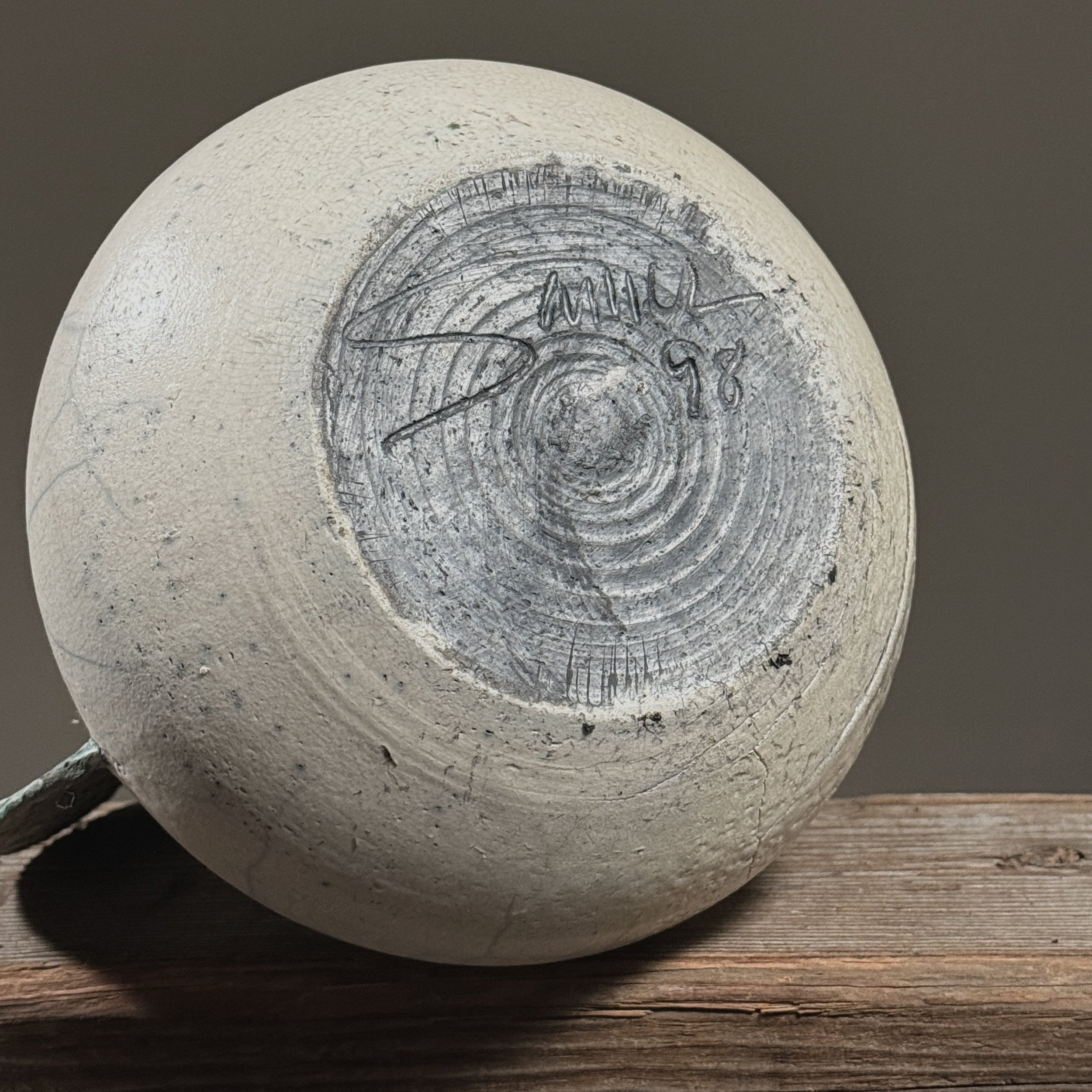
Signature: inscribed en verso
Provenance: Private Cape Cod Collection
Condition: Good; surface wear consistent with age
Description:
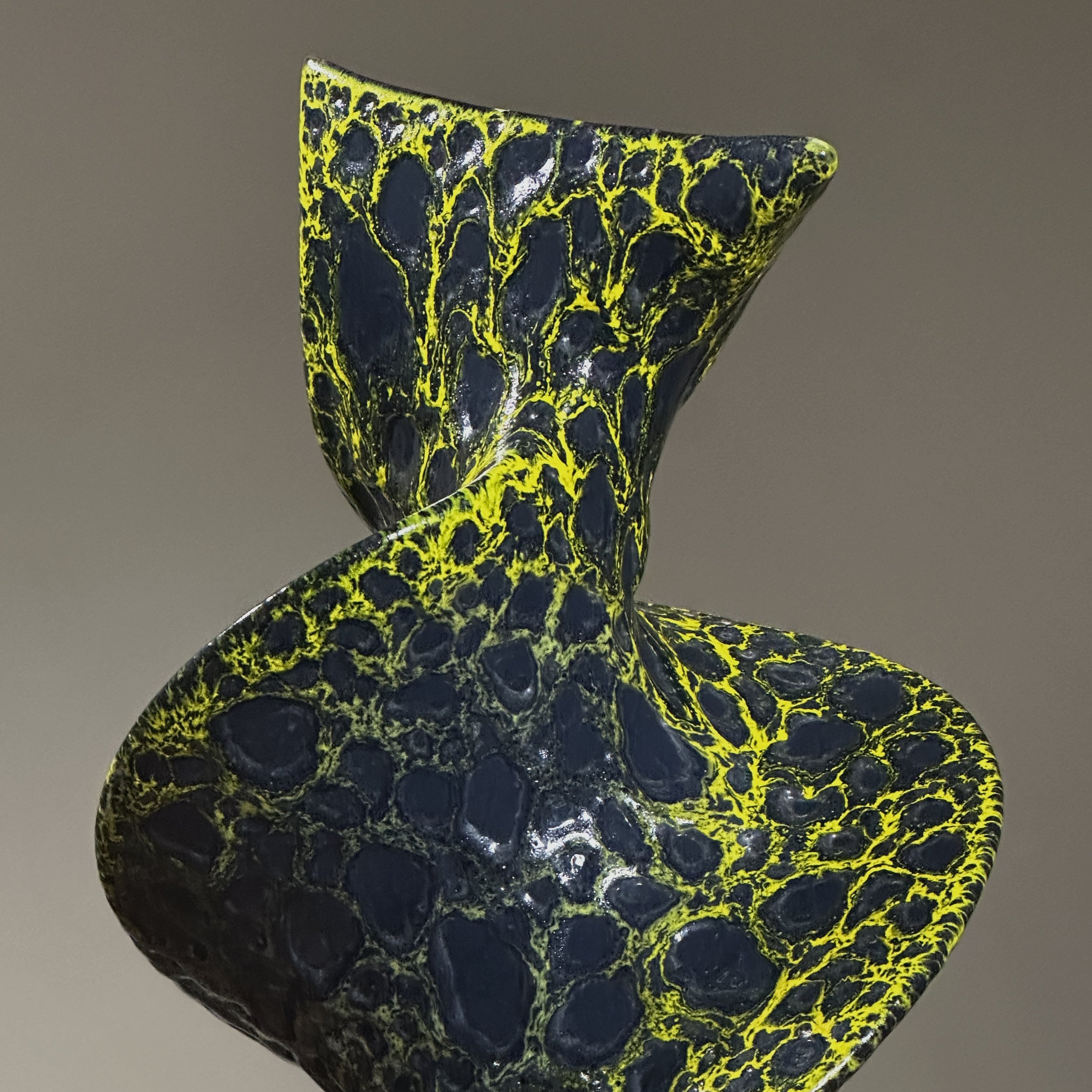
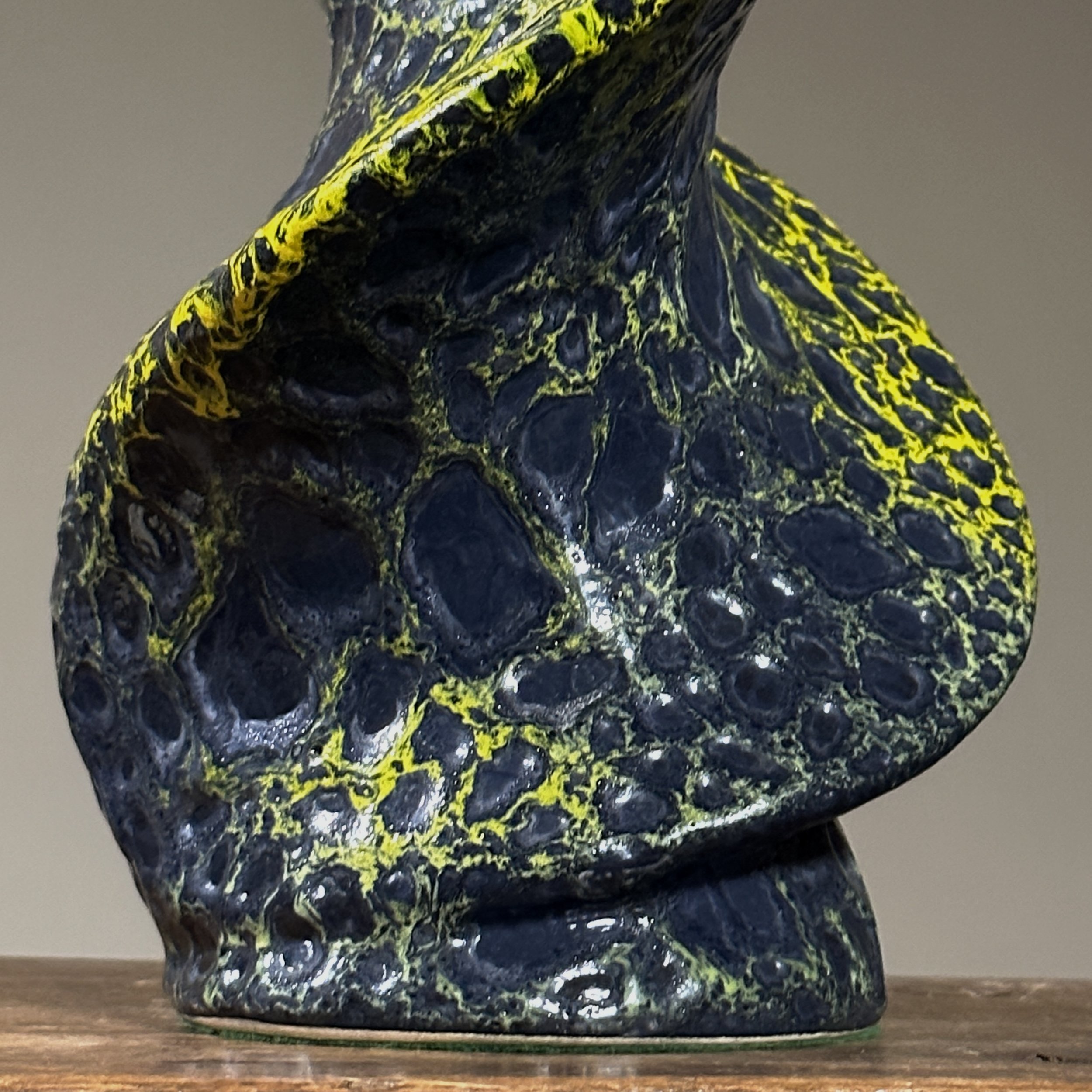
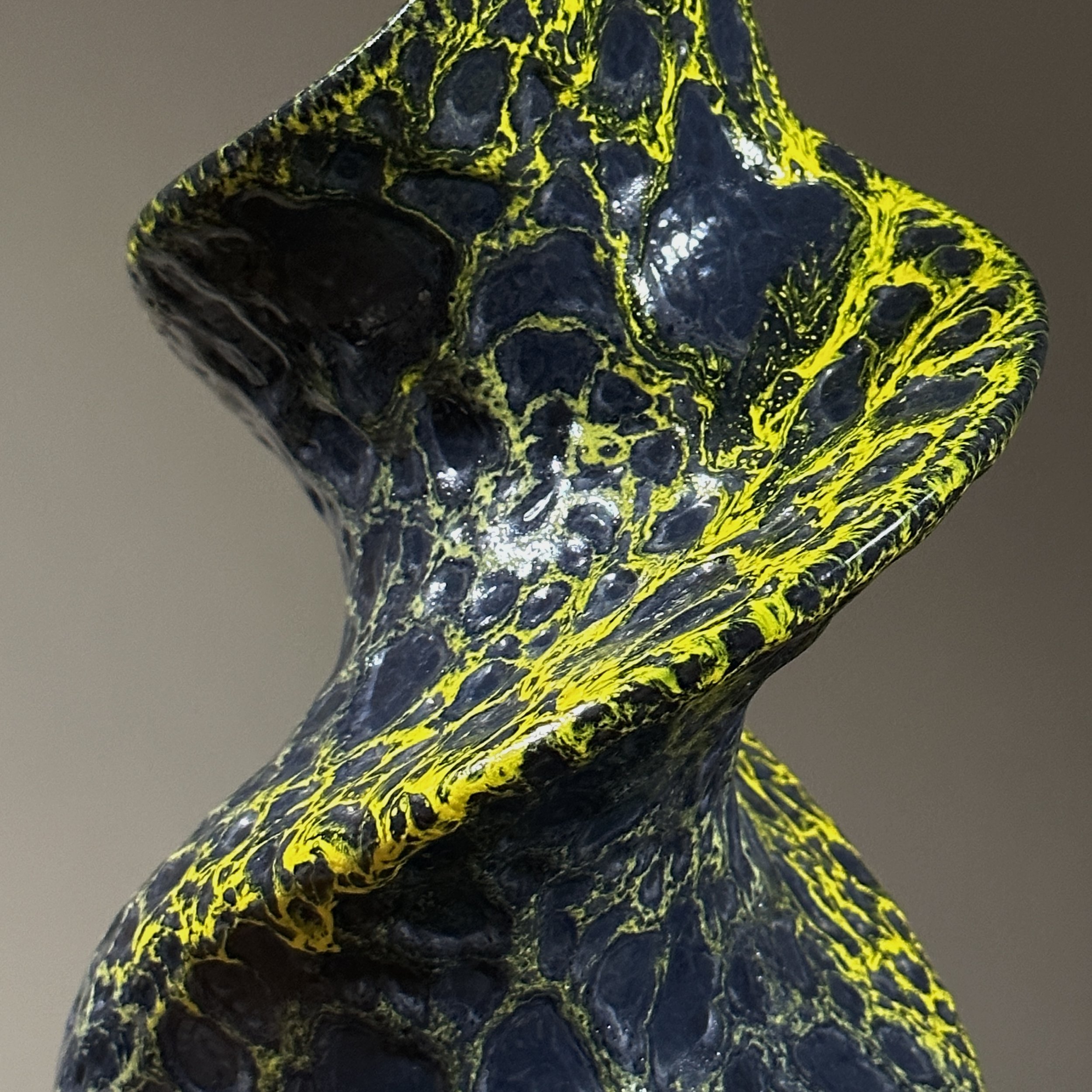
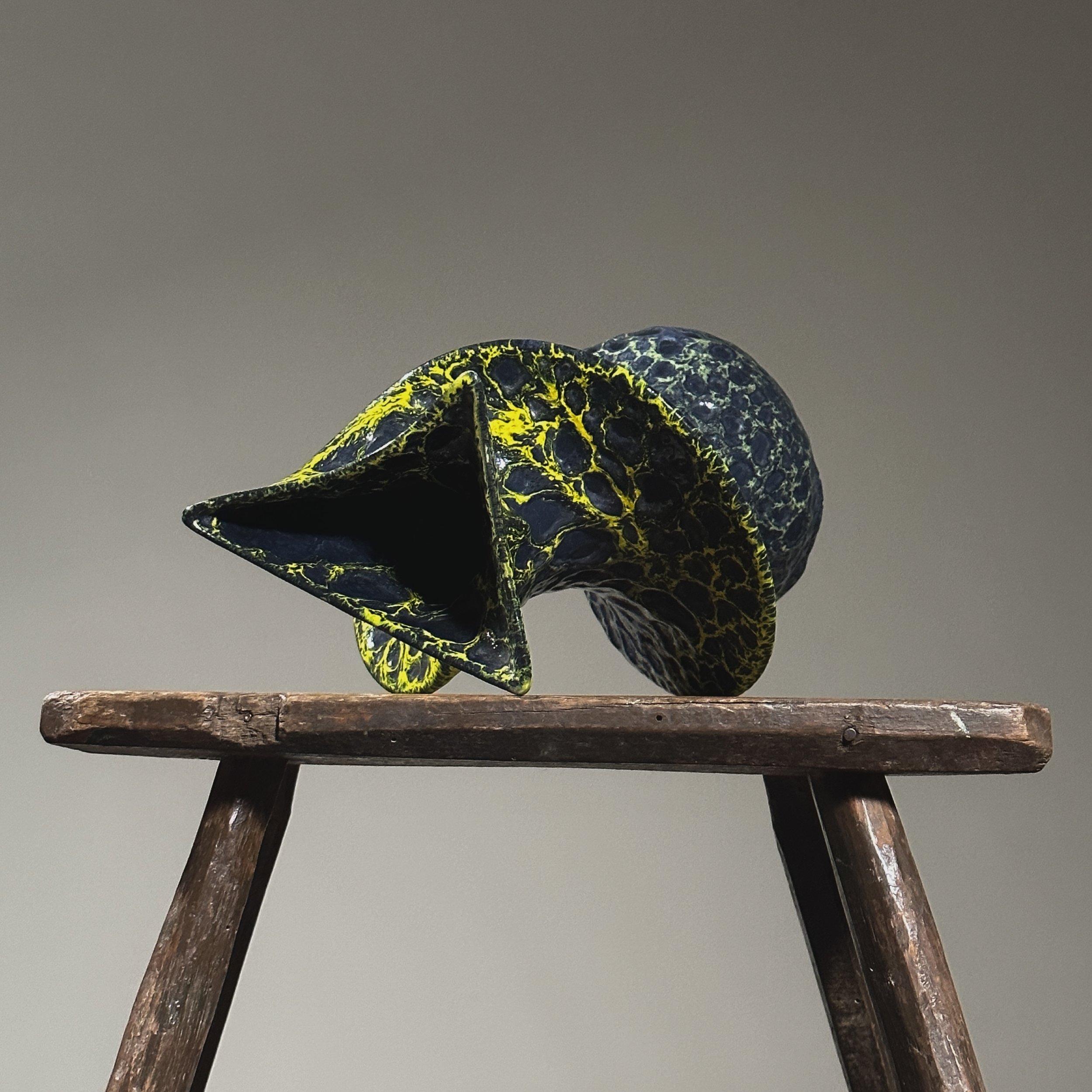
This large slab plate by Toshiko Takaezu demonstrates the artist's mastery of glaze experimentation and her distinctive fusion of Abstract Expressionist gesture with Japanese ceramic tradition. The plate features an intricate splatter glaze in deep blue, crimson red, and cool grey. A pronounced craquelure network throughout the glaze surface. Signed on the verso.
Artist Biography: Toshiko Takaezu (1922–2011)
Toshiko Takaezu stands as one of the most significant American ceramic artists of the twentieth century. Born in Pepeekeo, Hawaii, to Japanese immigrant parents, she studied at the University of Hawaii before earning a scholarship to the Cranbrook Academy of Art in Michigan, where she studied under Finnish ceramist Maija Grotell, a pivotal influence on her development.
Takaezu taught at the Cleveland Institute of Art (1955–1965) and later at Princeton University (1967–1992), where she profoundly influenced generations of artists. She is best known for her closed-form vessels—spherical, sealed forms that often contain hidden rattles—which she began producing in the 1970s. Her work synthesizes Abstract Expressionist painting's gestural energy with the meditative discipline of Japanese pottery, particularly the aesthetics of wabi-sabi and Raku firing.
Takaezu's innovative glaze techniques, including poured, dripped, and splattered applications, parallel the innovations of her contemporaries in the New York School. Her ceramics are held in major museum collections worldwide, including the Smithsonian American Art Museum, the Metropolitan Museum of Art, the Museum of Modern Art (MoMA), the Philadelphia Museum of Art, the Los Angeles County Museum of Art, and the Victoria and Albert Museum, London. Takaezu died in Honolulu in 2011.
Artist: Toshiko Takaezu (American, born Pepeekeo, Hawaii, 1922–2011)
Object type: Slab plate
Period: Mid-20th century
Medium: Stoneware with polychrome splatter glaze
Technique: Hand-built slab construction; multiple glaze application; Raku or high-fire reduction
Glaze: Intricate splatter decoration in deep blue, crimson red, and cool grey; craquelure (crackle) throughout
Signature: inscribed en verso
Provenance: Private Cape Cod Collection
Condition: Good; surface wear consistent with age
Description:
This large slab plate by Toshiko Takaezu demonstrates the artist's mastery of glaze experimentation and her distinctive fusion of Abstract Expressionist gesture with Japanese ceramic tradition. The plate features an intricate splatter glaze in deep blue, crimson red, and cool grey. A pronounced craquelure network throughout the glaze surface. Signed on the verso.
Artist Biography: Toshiko Takaezu (1922–2011)
Toshiko Takaezu stands as one of the most significant American ceramic artists of the twentieth century. Born in Pepeekeo, Hawaii, to Japanese immigrant parents, she studied at the University of Hawaii before earning a scholarship to the Cranbrook Academy of Art in Michigan, where she studied under Finnish ceramist Maija Grotell, a pivotal influence on her development.
Takaezu taught at the Cleveland Institute of Art (1955–1965) and later at Princeton University (1967–1992), where she profoundly influenced generations of artists. She is best known for her closed-form vessels—spherical, sealed forms that often contain hidden rattles—which she began producing in the 1970s. Her work synthesizes Abstract Expressionist painting's gestural energy with the meditative discipline of Japanese pottery, particularly the aesthetics of wabi-sabi and Raku firing.
Takaezu's innovative glaze techniques, including poured, dripped, and splattered applications, parallel the innovations of her contemporaries in the New York School. Her ceramics are held in major museum collections worldwide, including the Smithsonian American Art Museum, the Metropolitan Museum of Art, the Museum of Modern Art (MoMA), the Philadelphia Museum of Art, the Los Angeles County Museum of Art, and the Victoria and Albert Museum, London. Takaezu died in Honolulu in 2011.

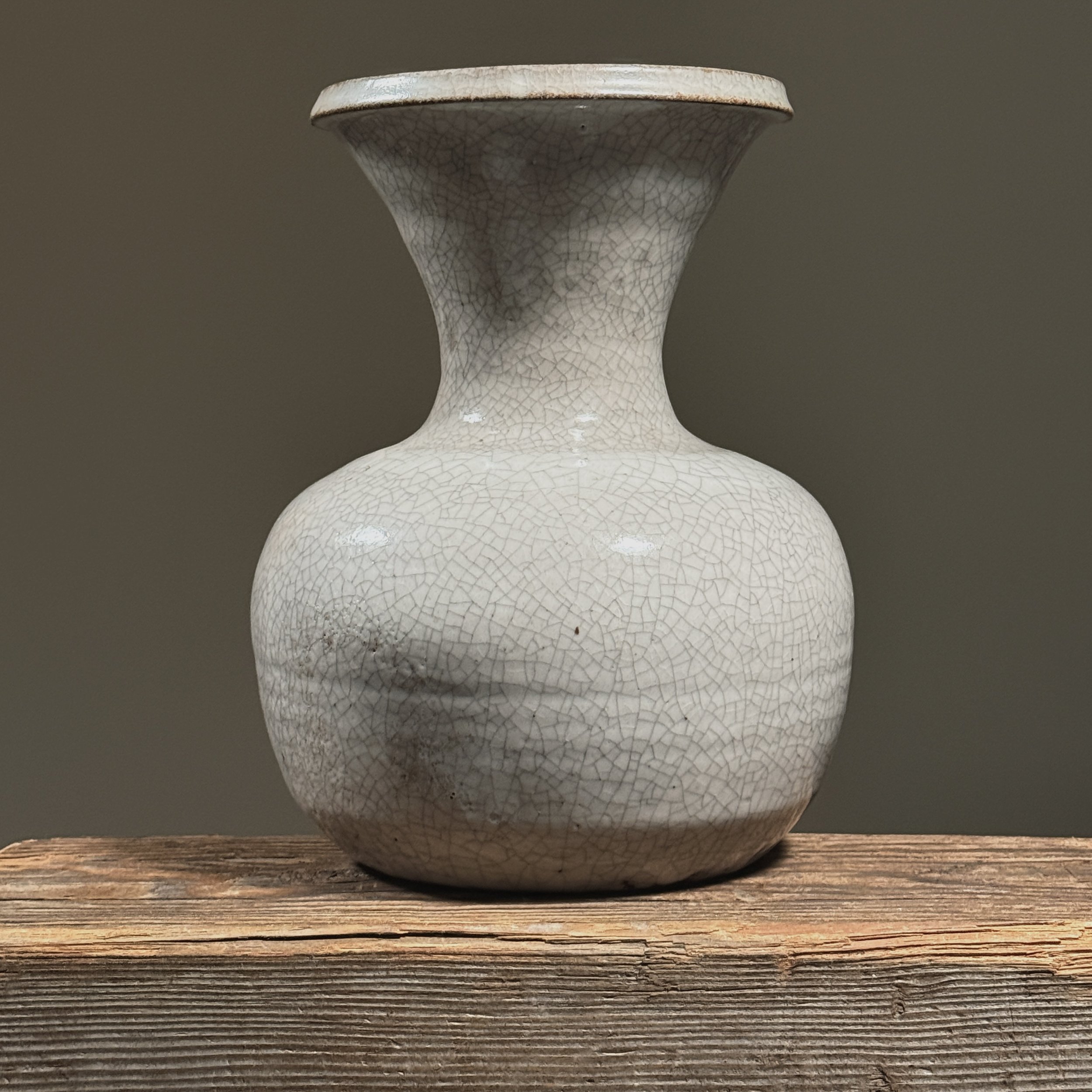
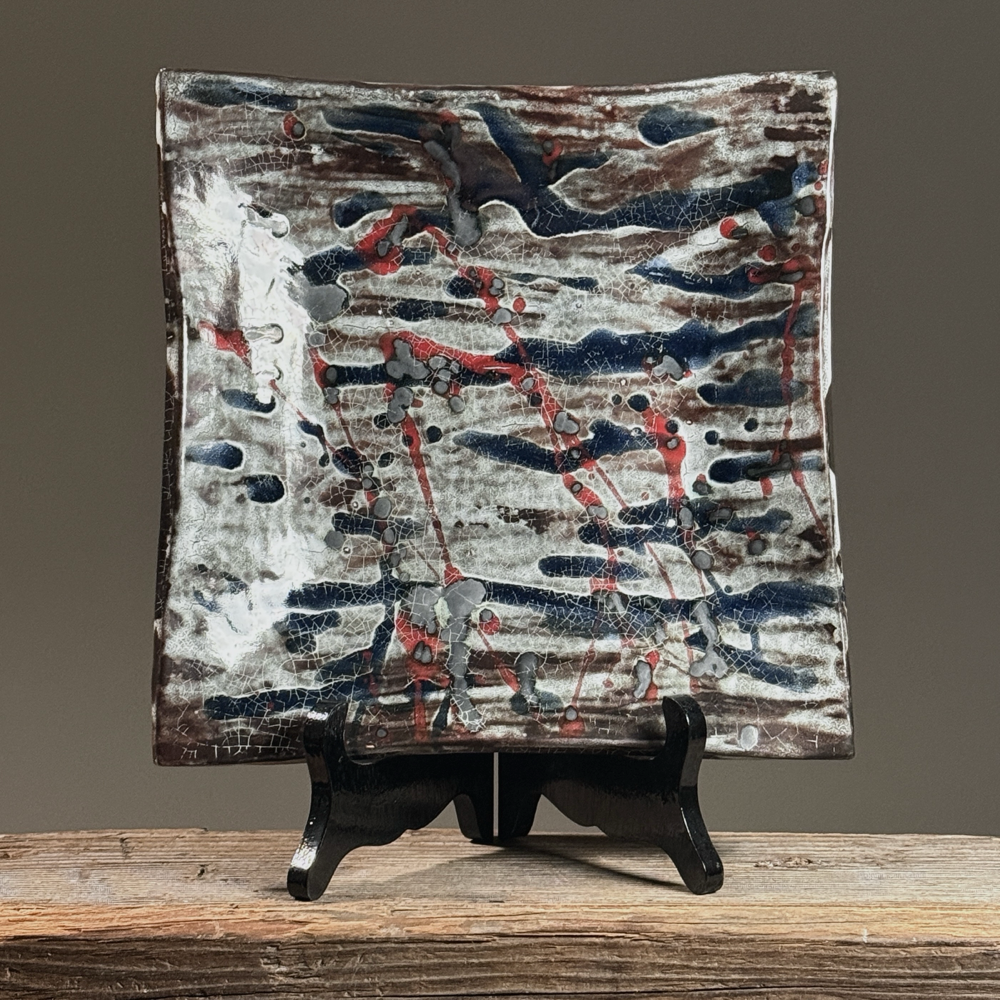 Image 1 of 8
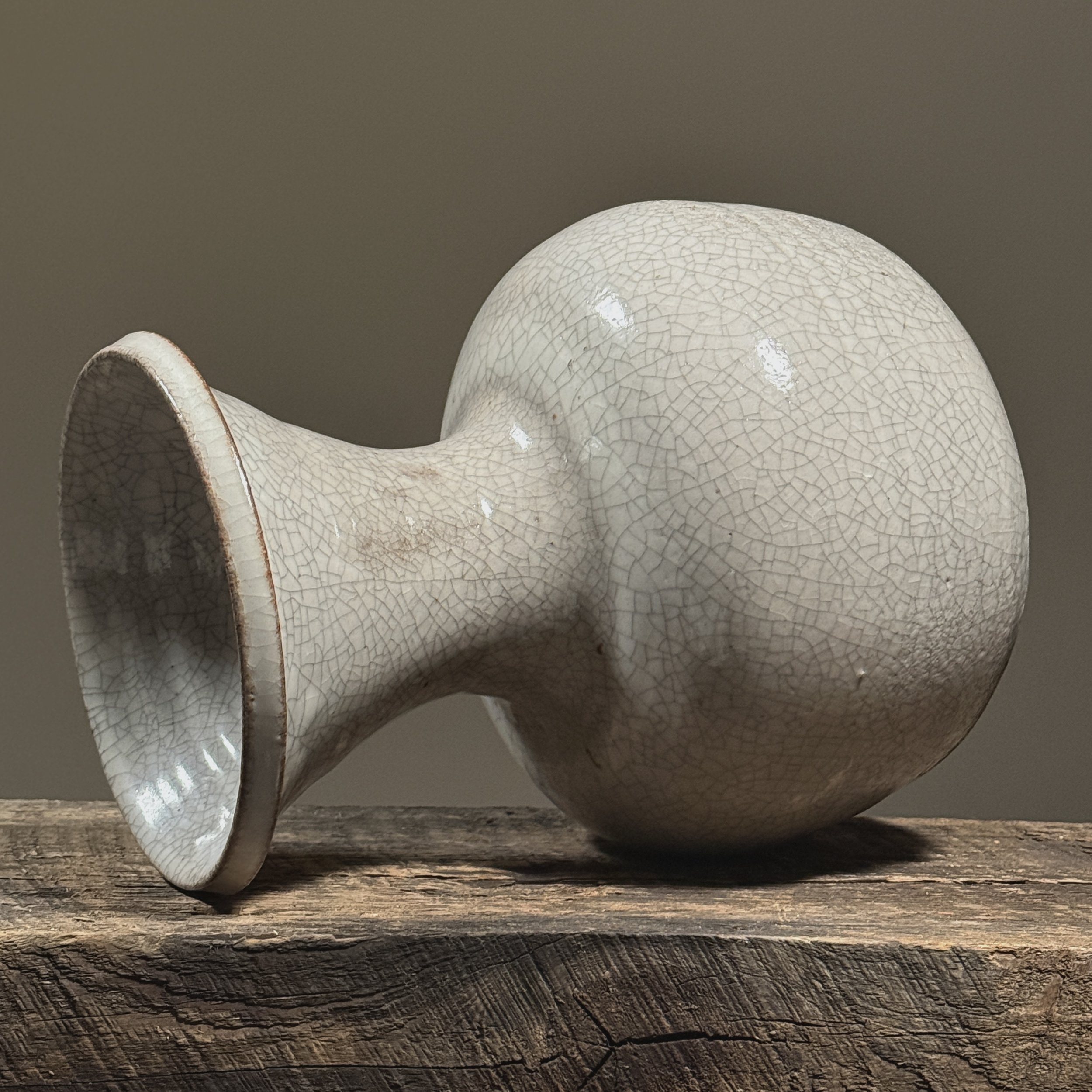
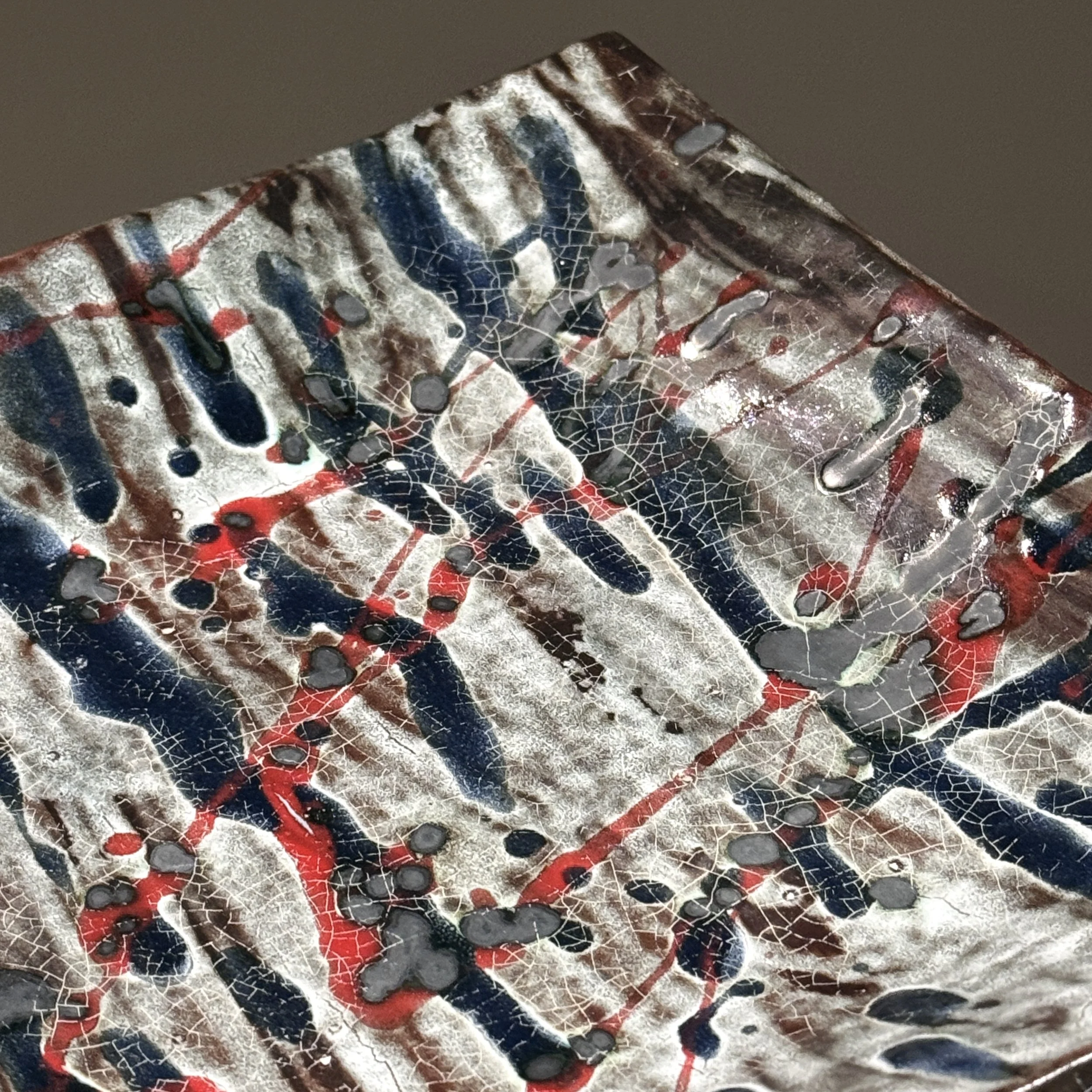 Image 2 of 8
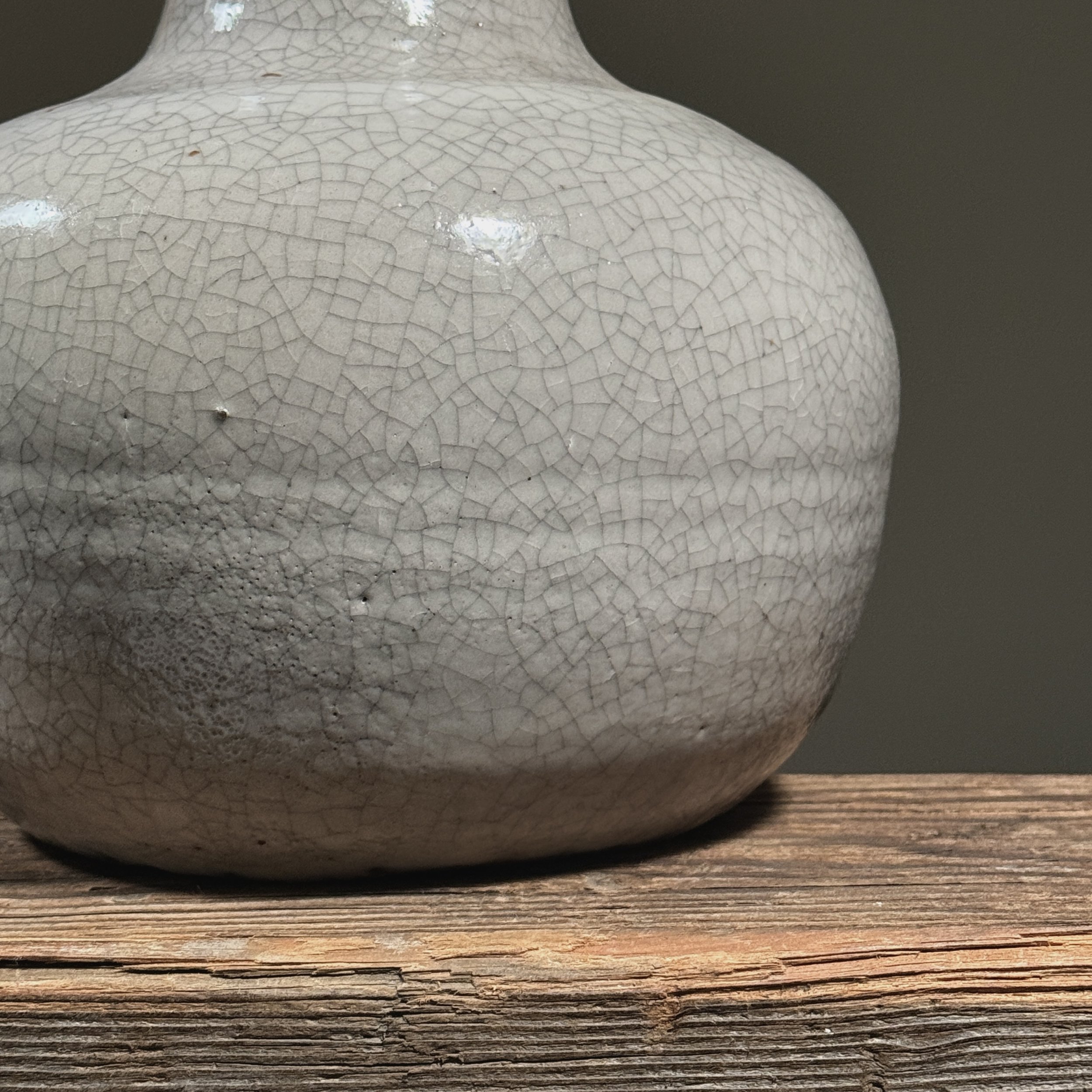
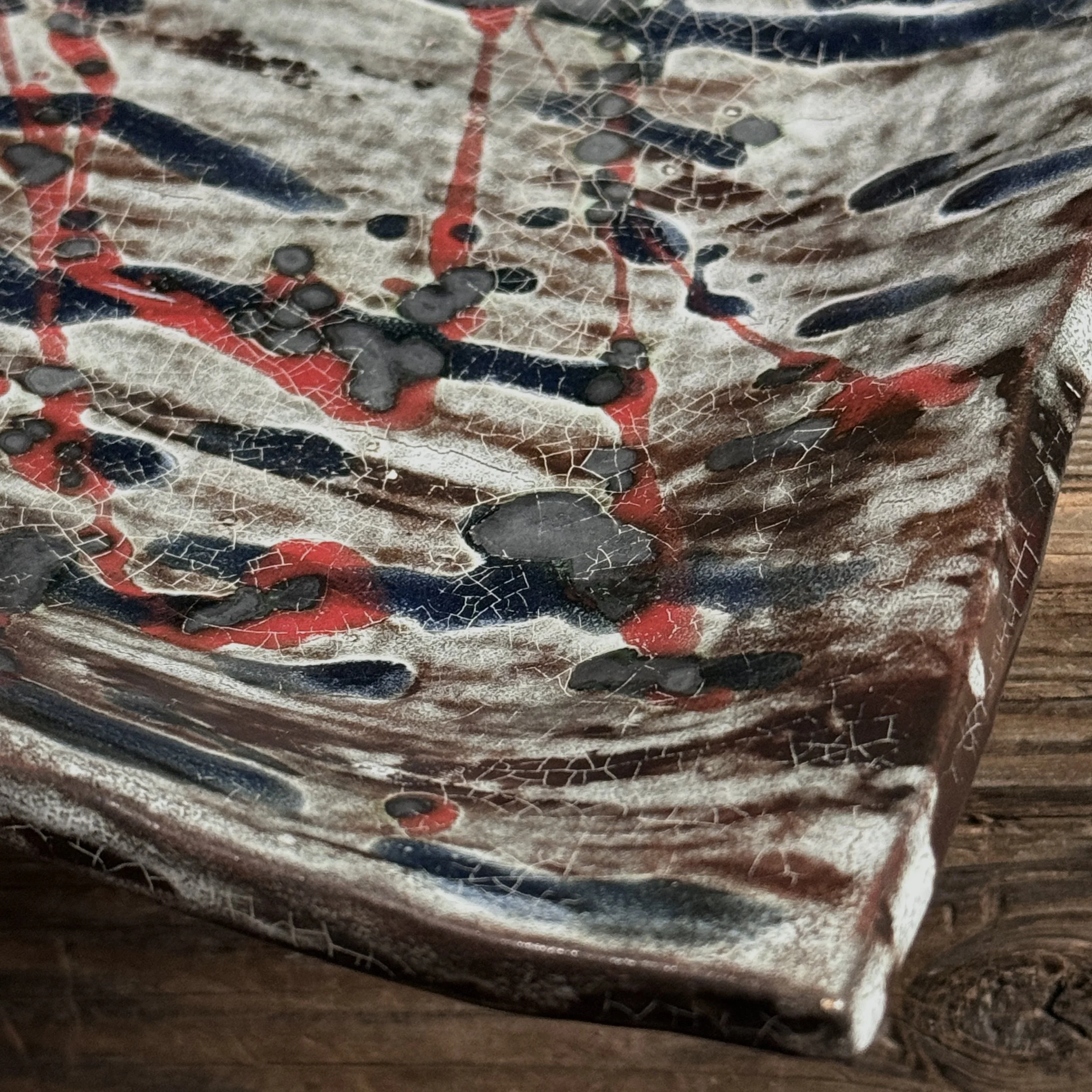 Image 3 of 8
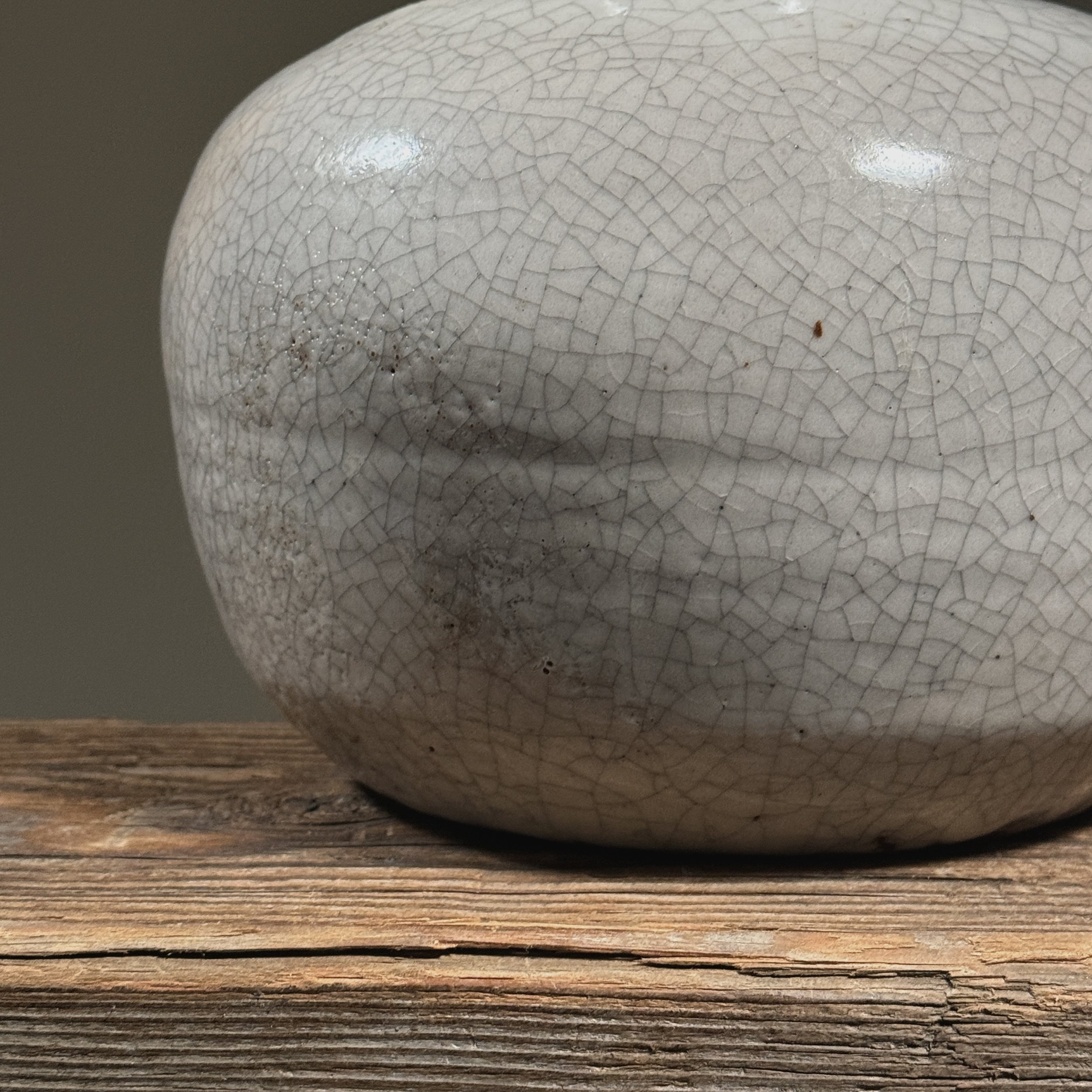
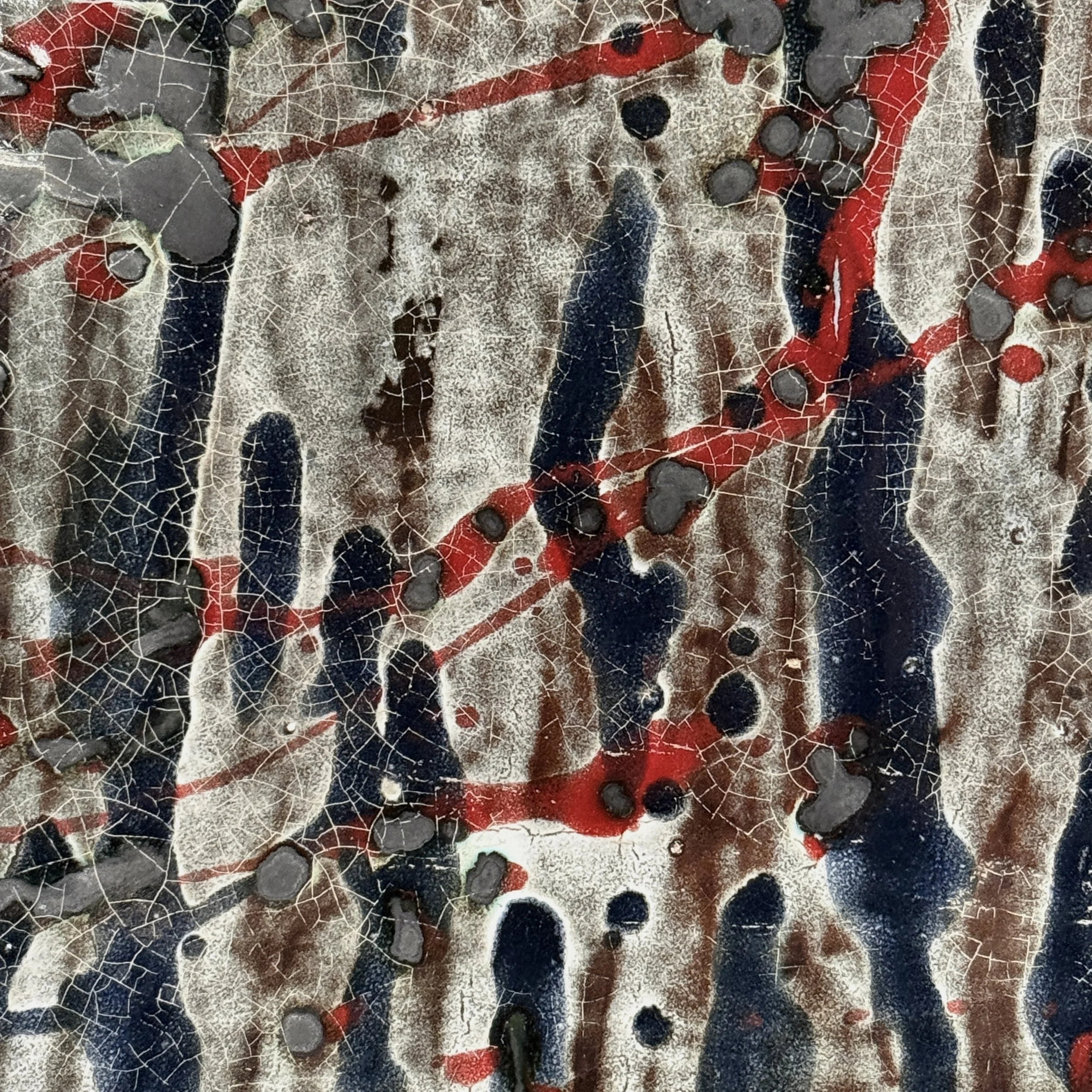 Image 4 of 8
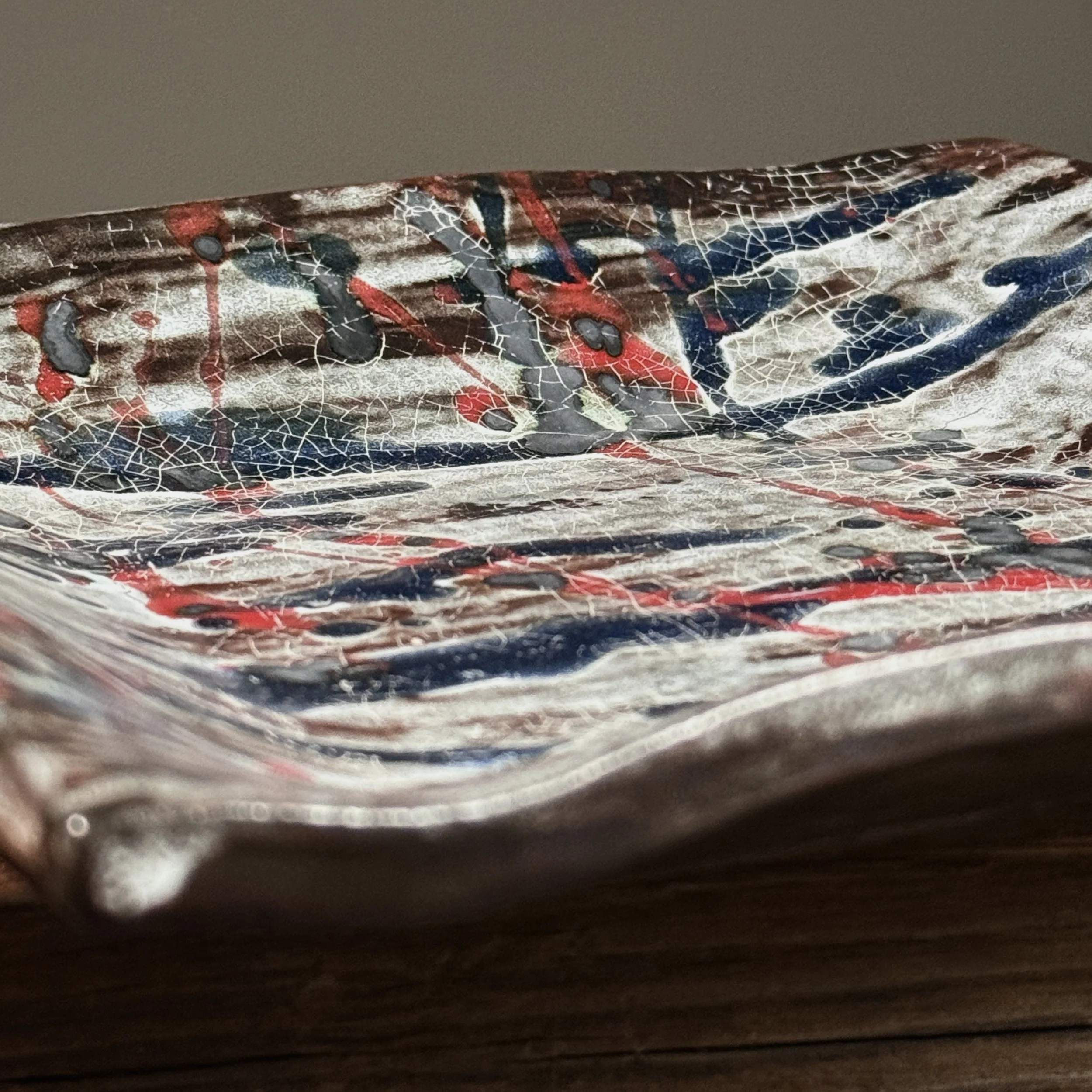 Image 5 of 8
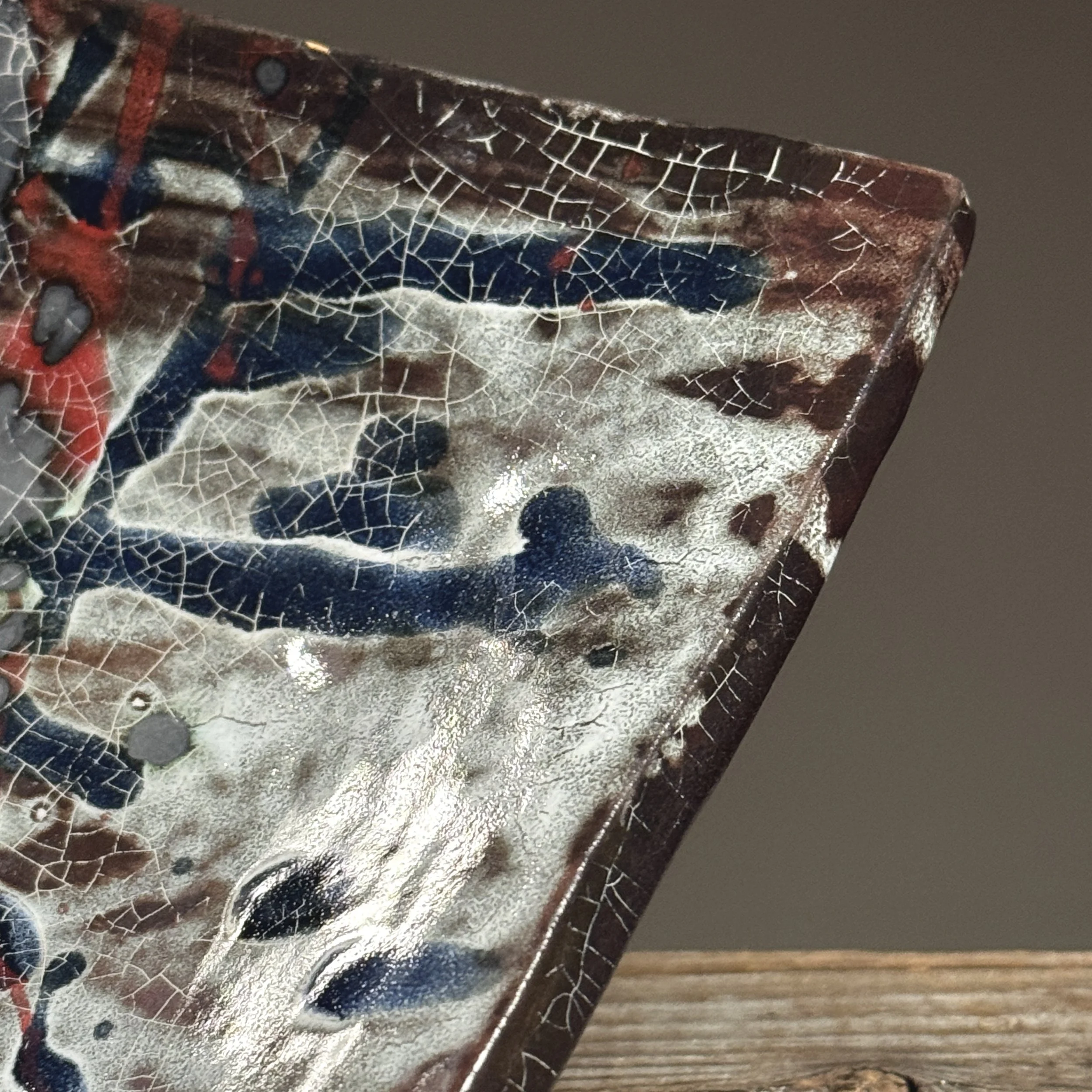 Image 6 of 8
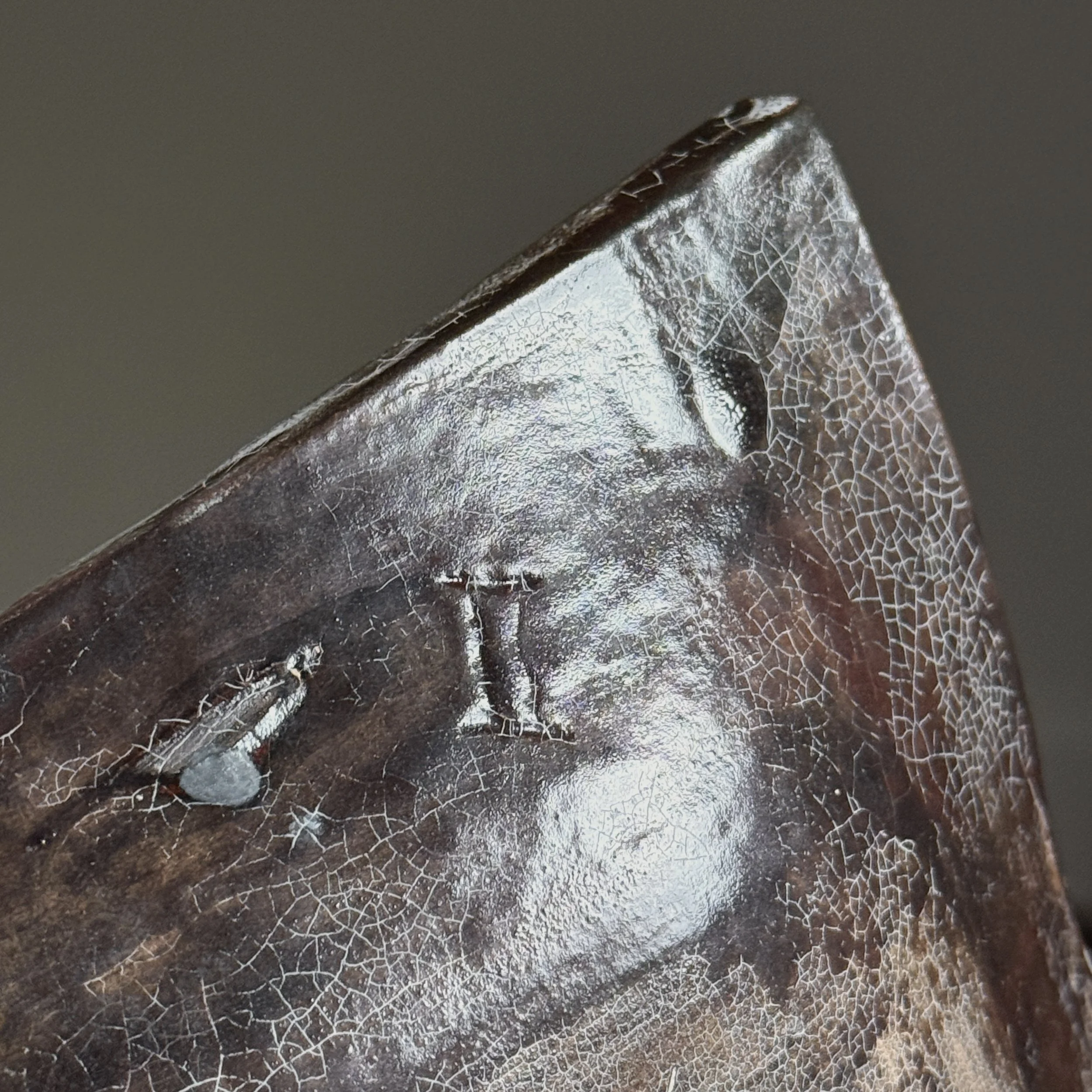 Image 7 of 8
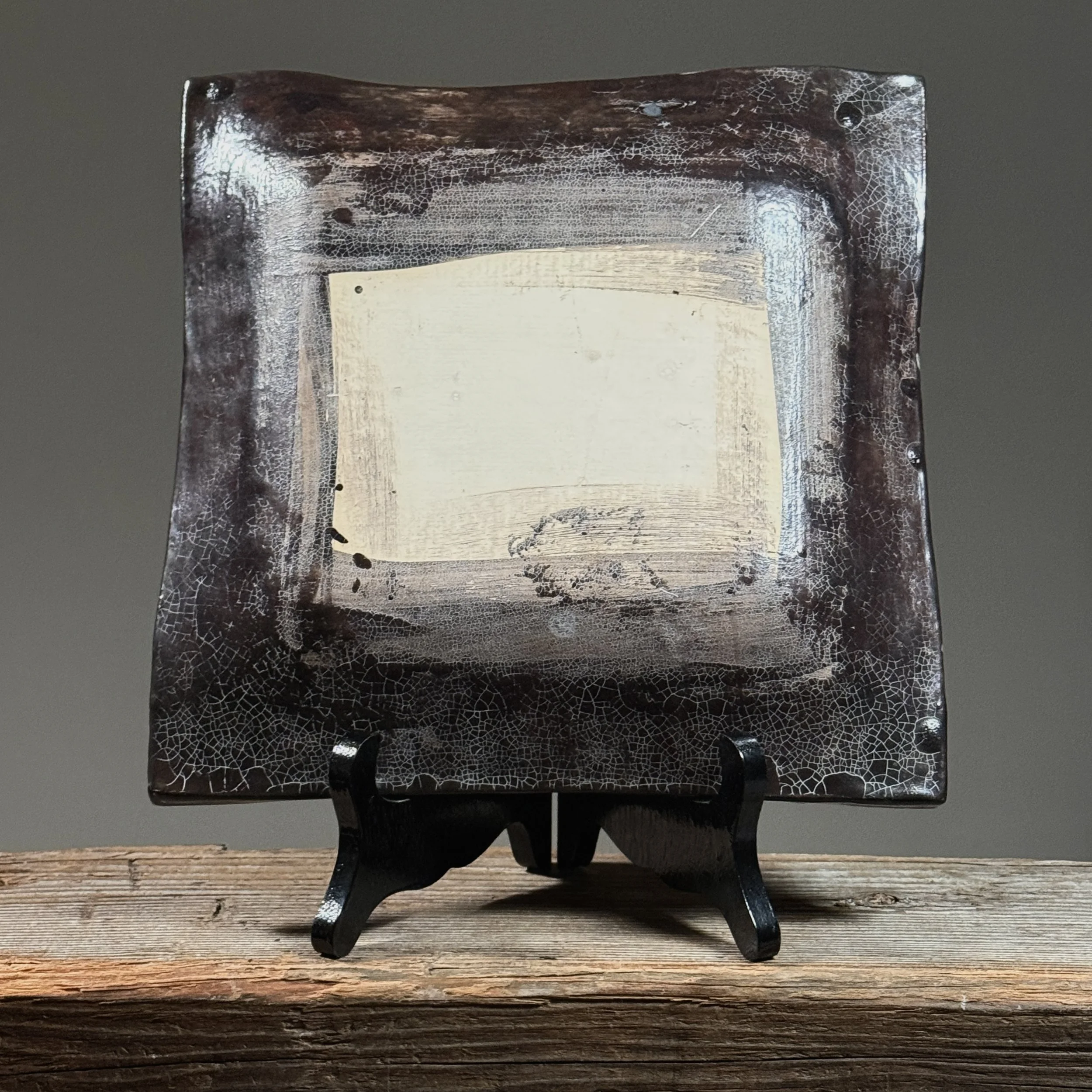 Image 8 of 8