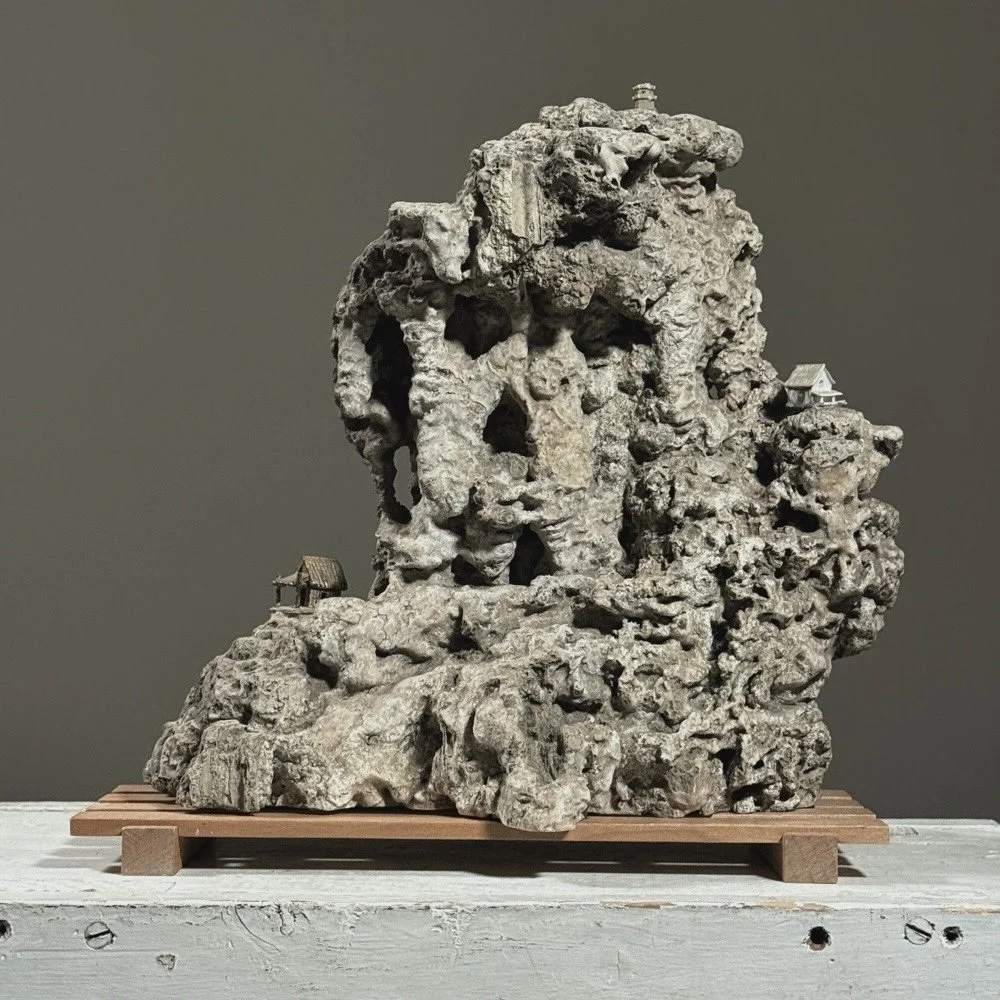
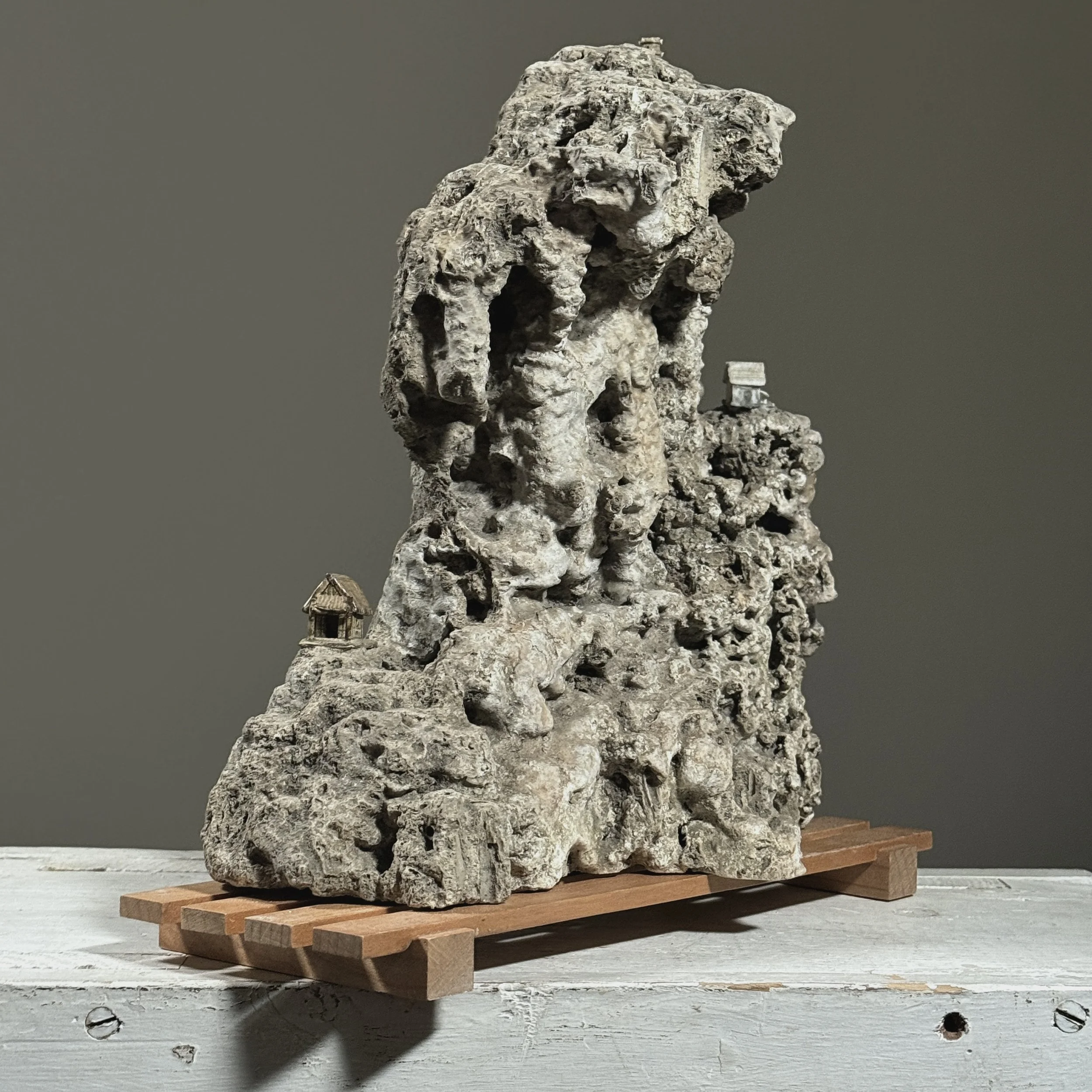
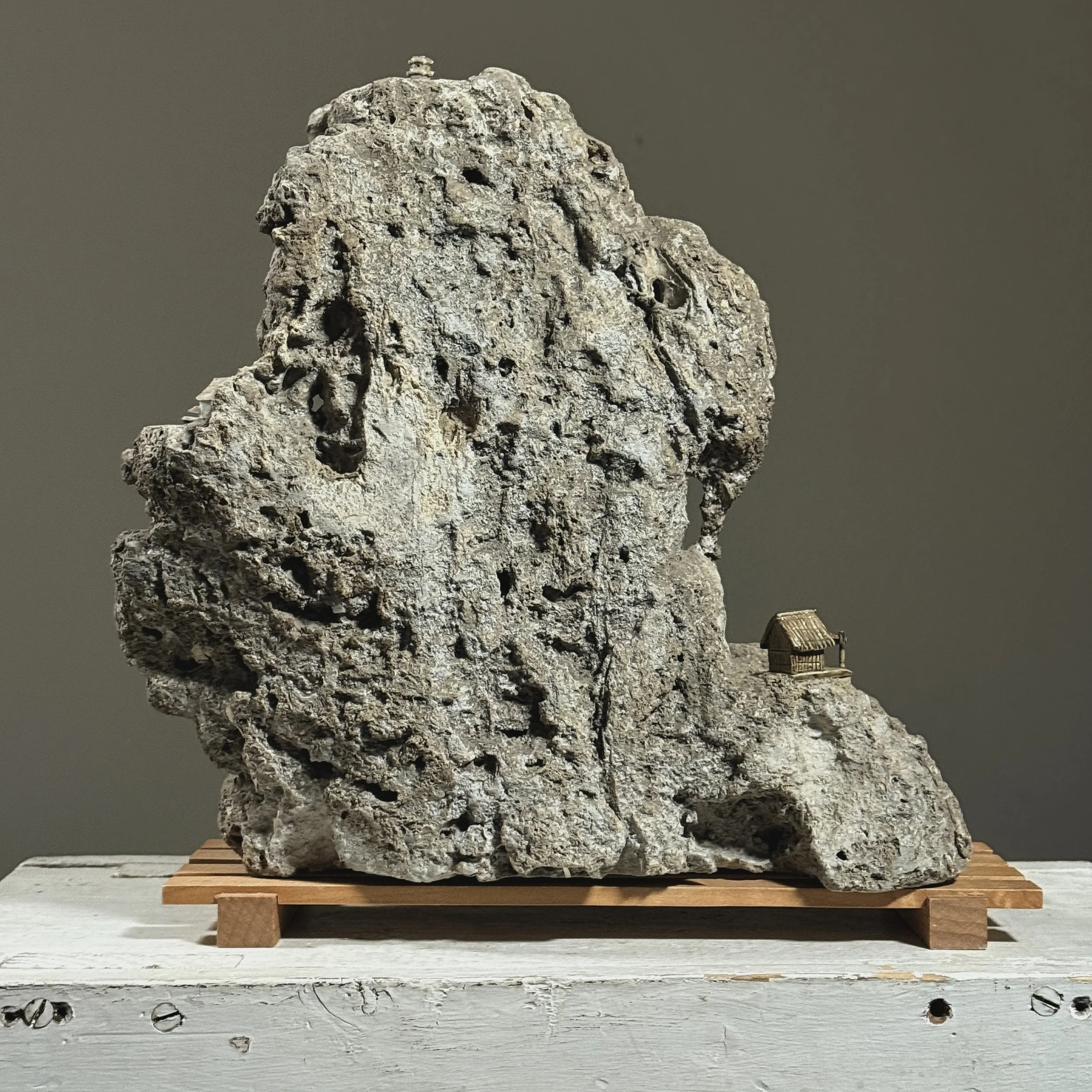
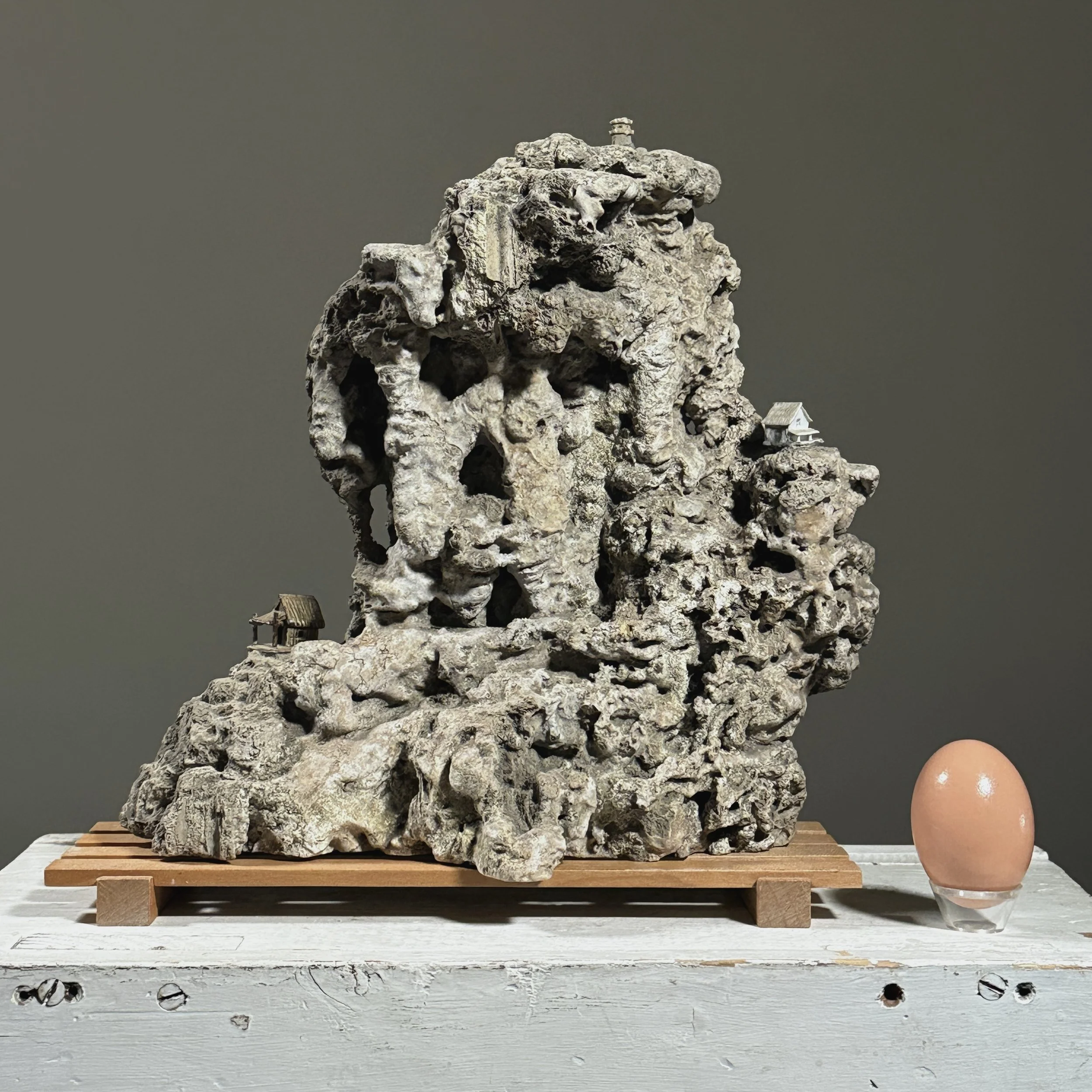
Medium: Wood fired ceramic clay
Nationality/Style: Olmec style, Mesoamerican tradition
Subject: Two baby figures-central larger figure with two seated infants
Dimensions: 13.5" H x 12" W x 7.5" D
Signature: Unsigned
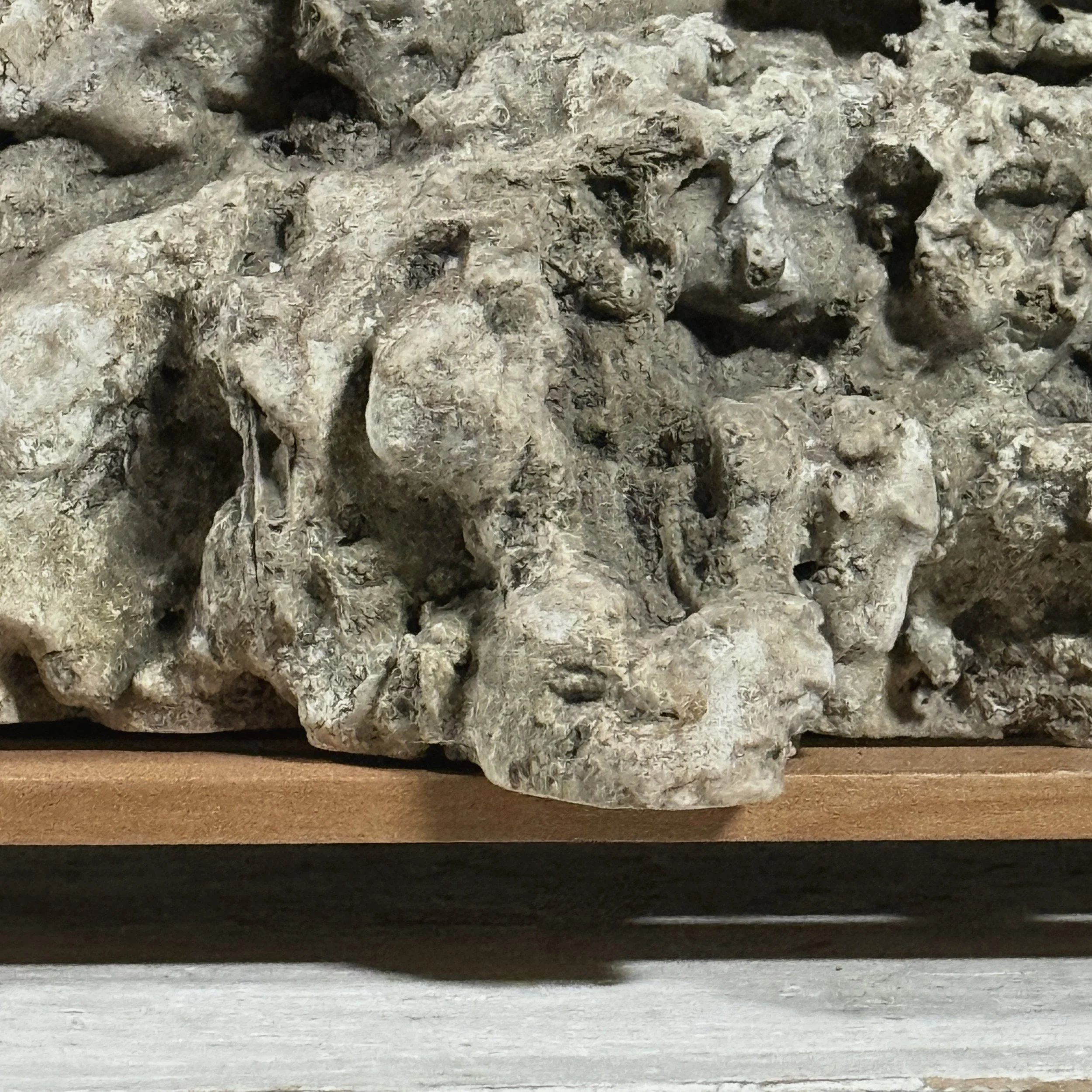
Condition: Wear consistent with age. Repair to the right foot of the baby on the right and the left foot of the baby on the left. Superficial cracks to the arms of the larger baby on each side. Mineral deposits is present throughout.
Three figure Olmec style sculpture, wood fired. The composition presents a central larger figure flanked by two smaller seated figures, holding positions with distinct facial features, ear spools, and open mouths. Weathered and aged terracotta with natural earthy patina and surface texture. In good condition with wear consistent with age. Repairs are present to the outer feet, and superficial cracks appear to the arms of the larger central figure.
A Note on Olmec "Baby" Figures
The Olmec culture, which was present on the Gulf Coast of Mexico from roughly 1400 to 500 BCE, produced some of the most distinctive ceramic figures in Mesoamerican art. Among these, the so-called "babies" are among the most famous: hollow or solid figures with large heads, plump bodies, and fleshy limbs, often seated with legs splayed and hands resting on the thighs. Their faces are characterized by heavy eyelids, thick lips with down-turned corners, and sometimes jaguar-like features, leading scholars to associate them with the "were-jaguar" theme and shamanic transformation beliefs.
The purpose of these figures remains unresolved. They may represent elite infants, deities, memorials to children who died young, or ritual substitutes for actual infants in sacrifices. The finest examples were made from white kaolin clay and decorated with white slip and red pigment, often found in burials in the central Mexican highlands rather than the Olmec region itself.

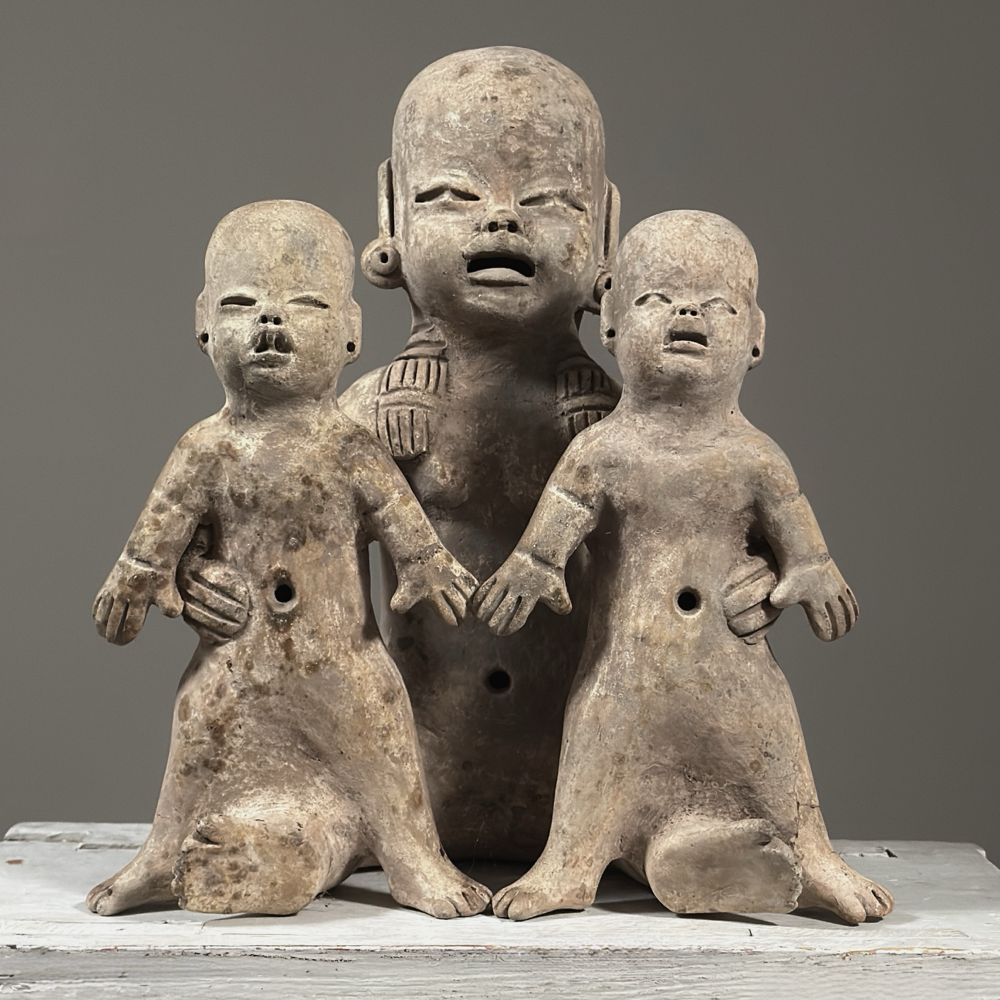 Image 1 of 11
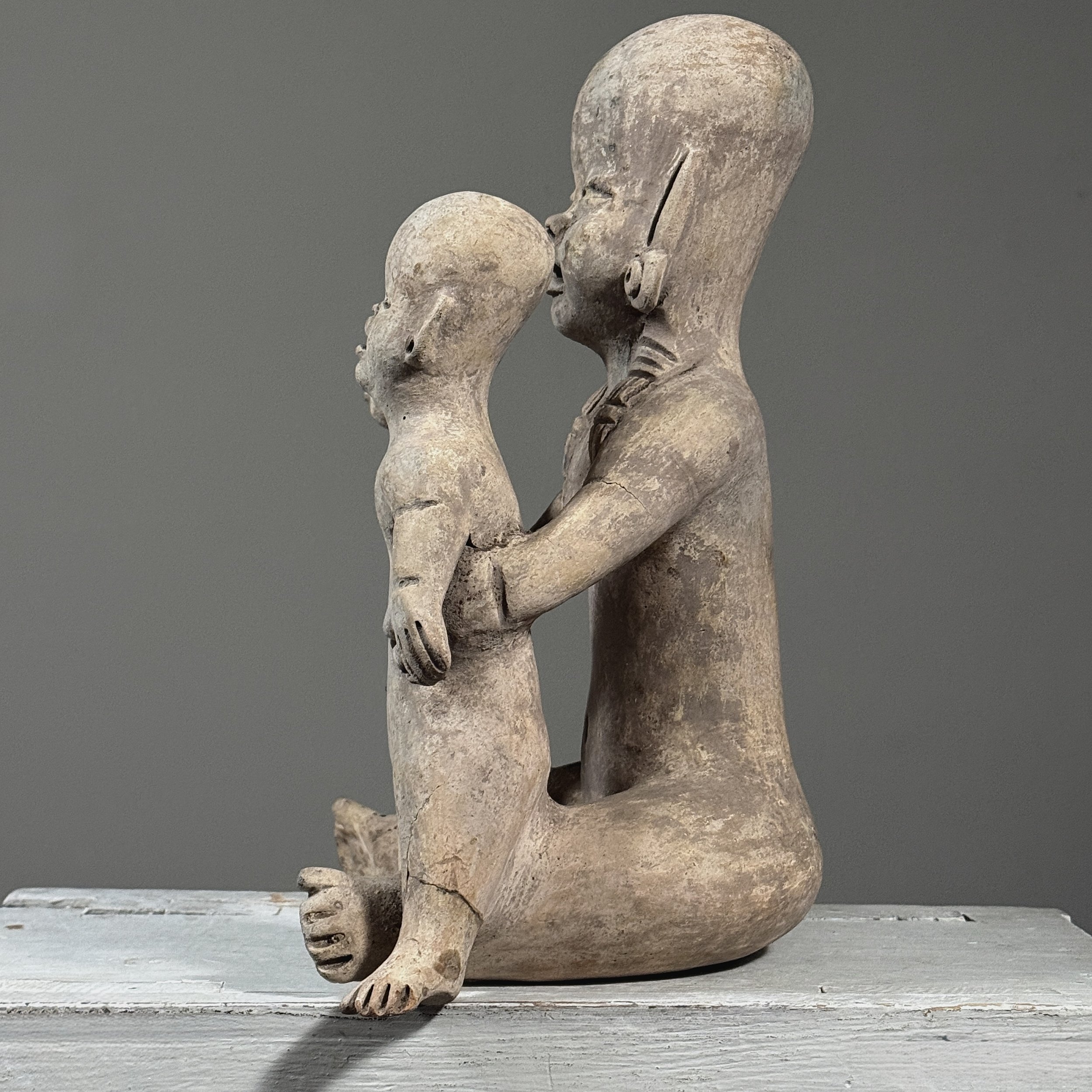 Image 2 of 11
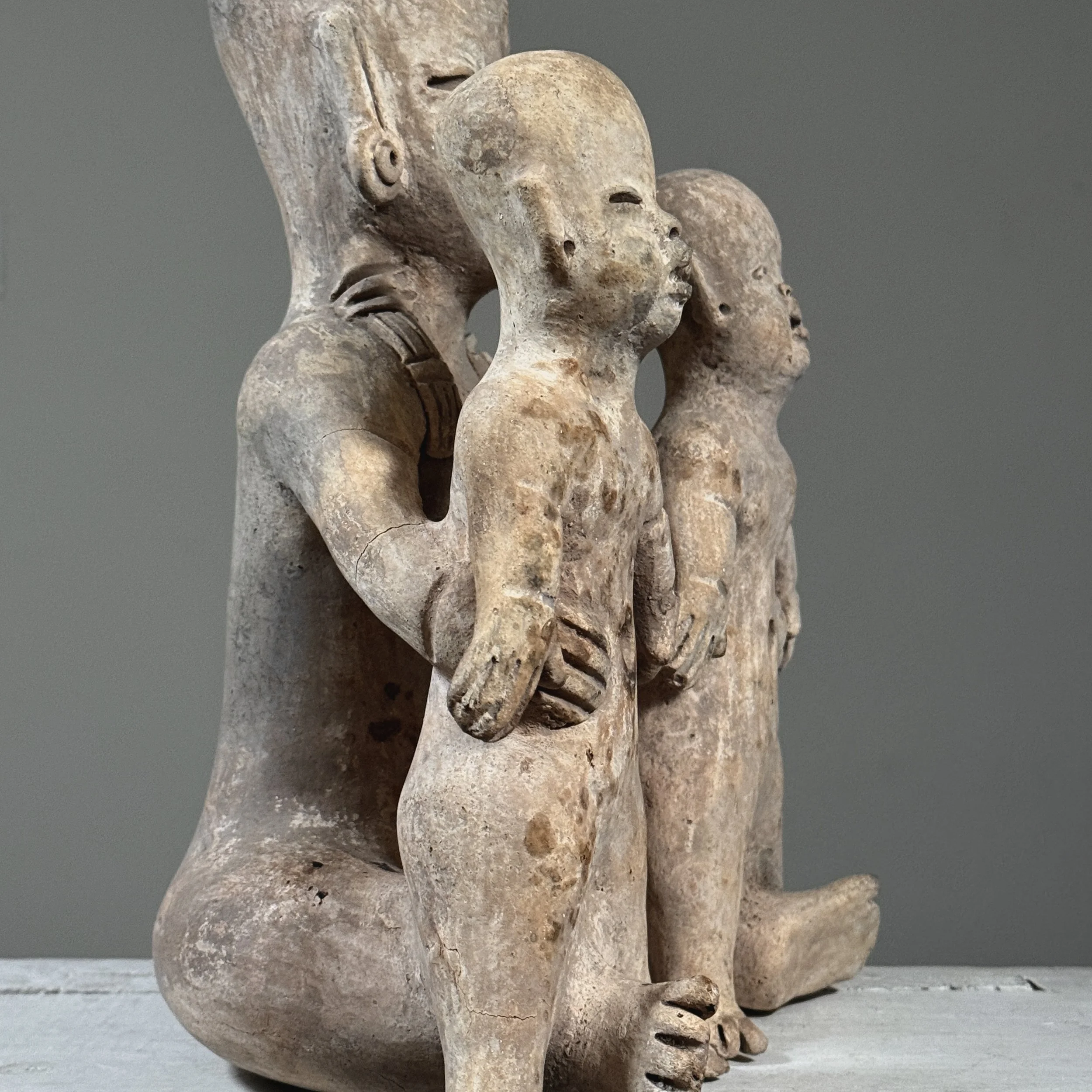 Image 3 of 11
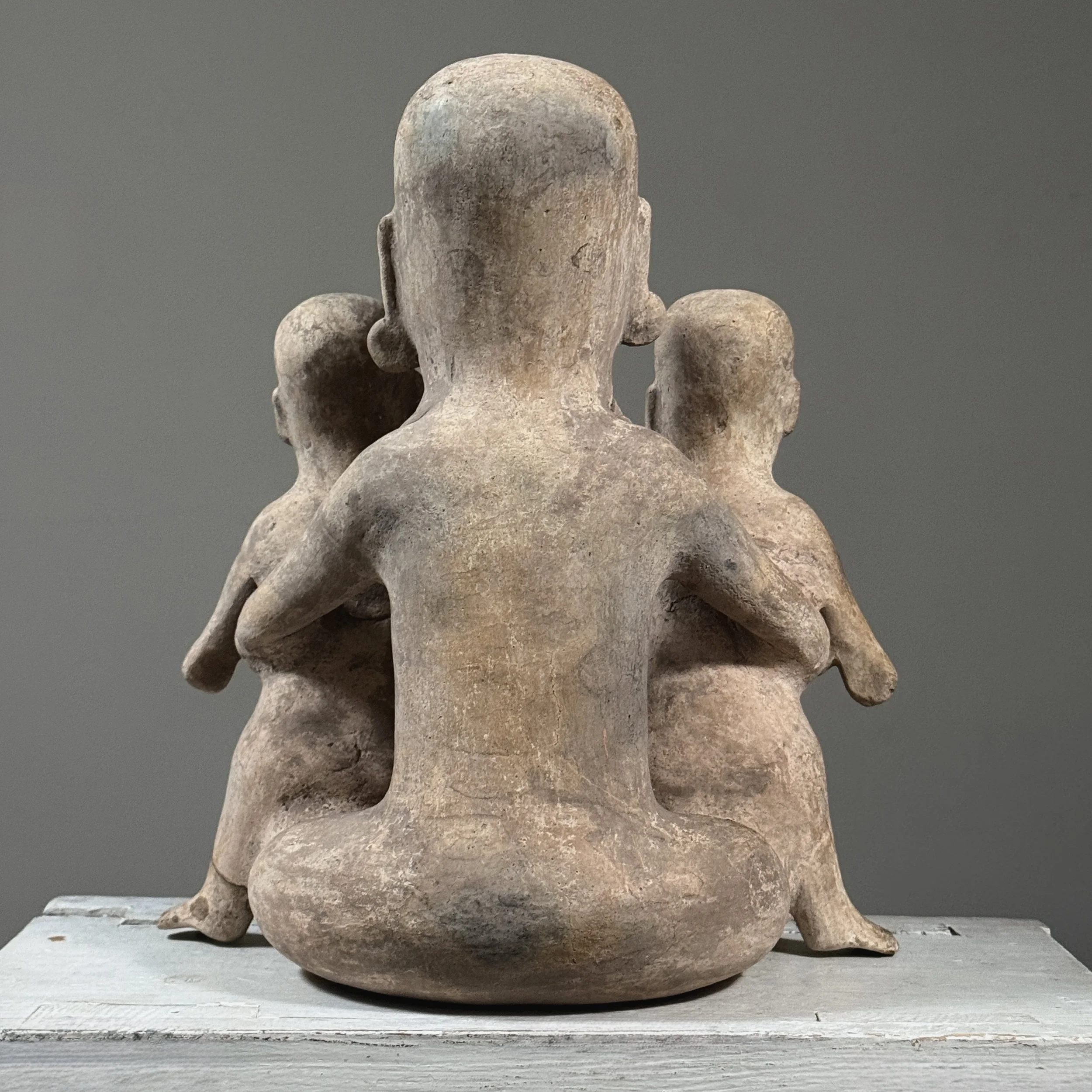 Image 4 of 11
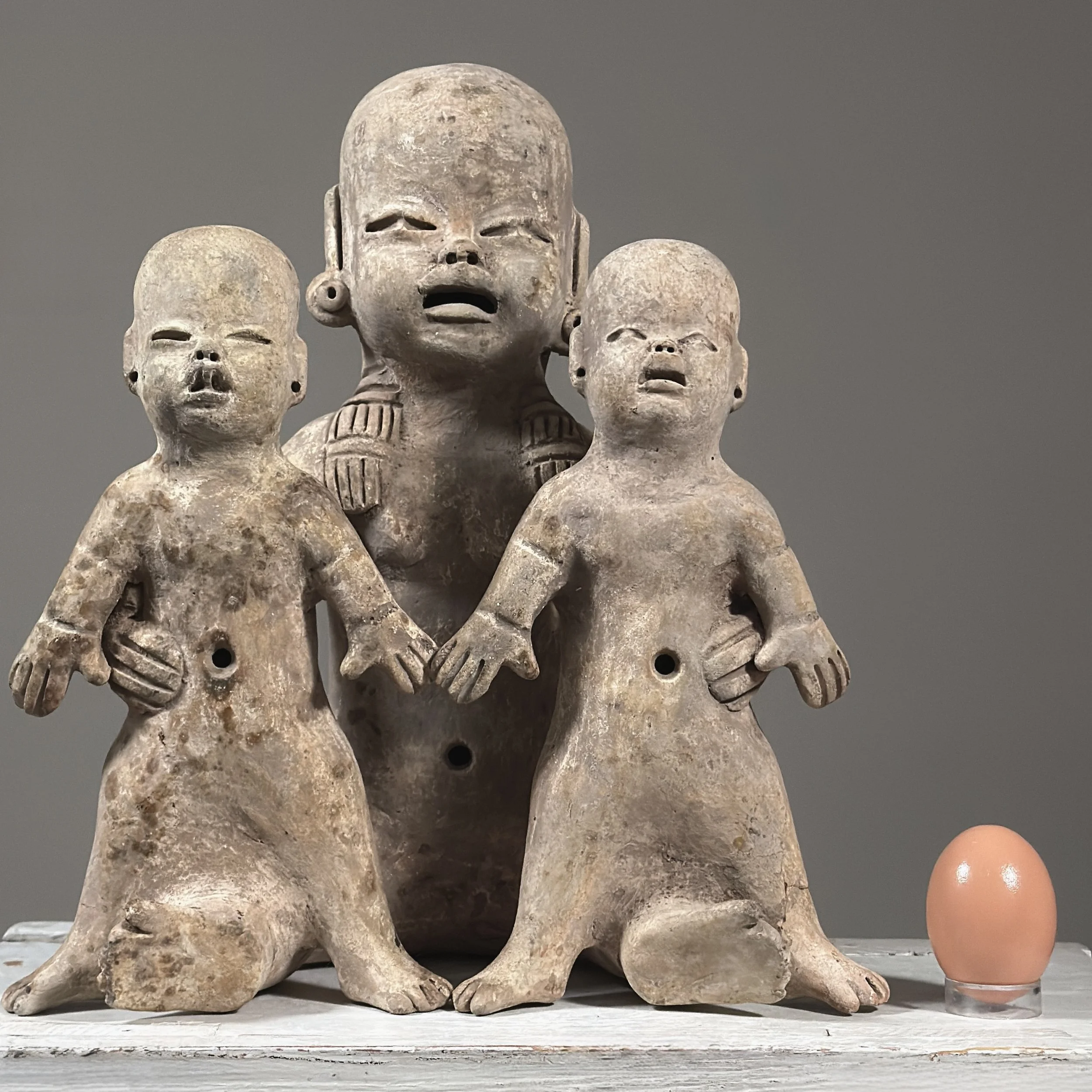 Image 5 of 11
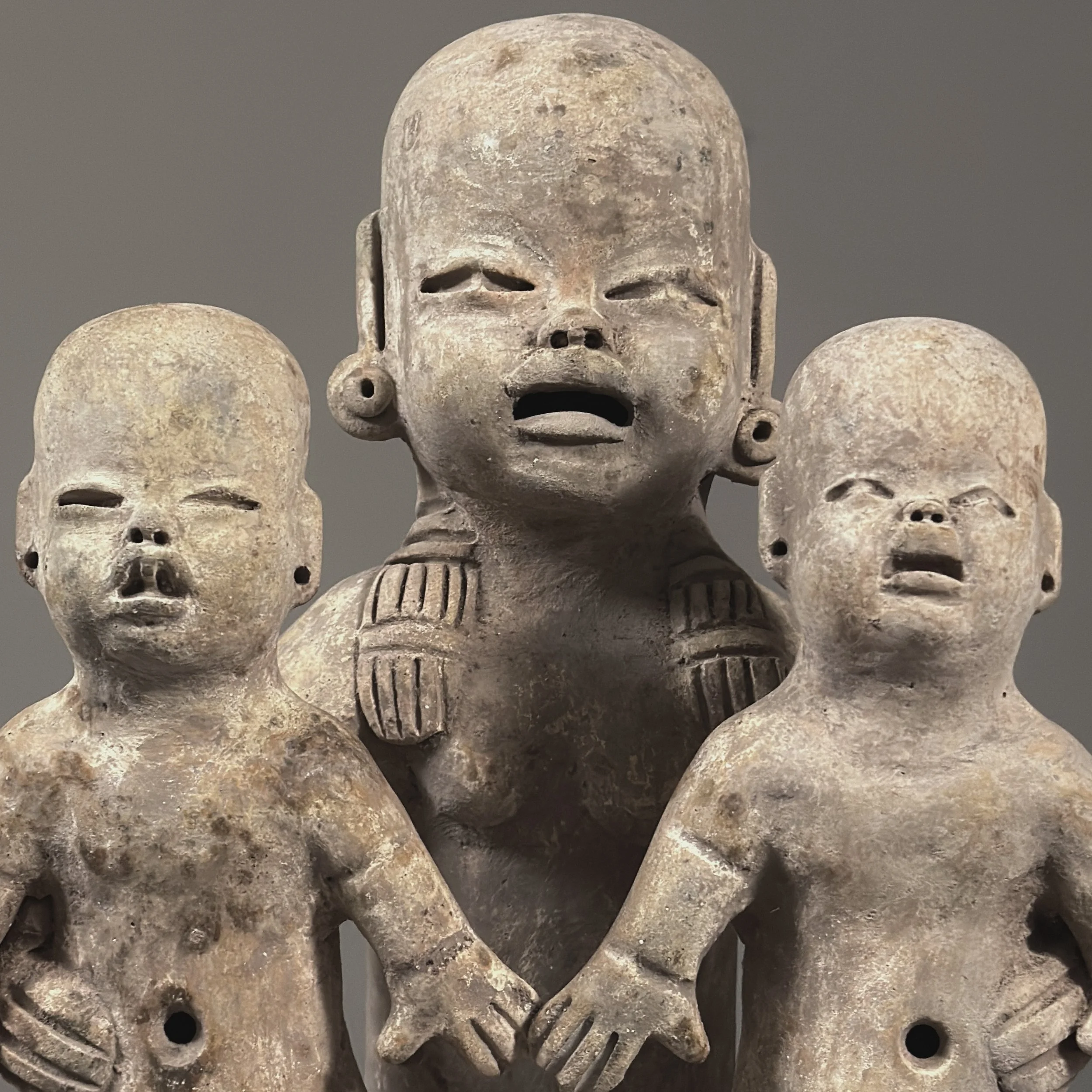 Image 6 of 11
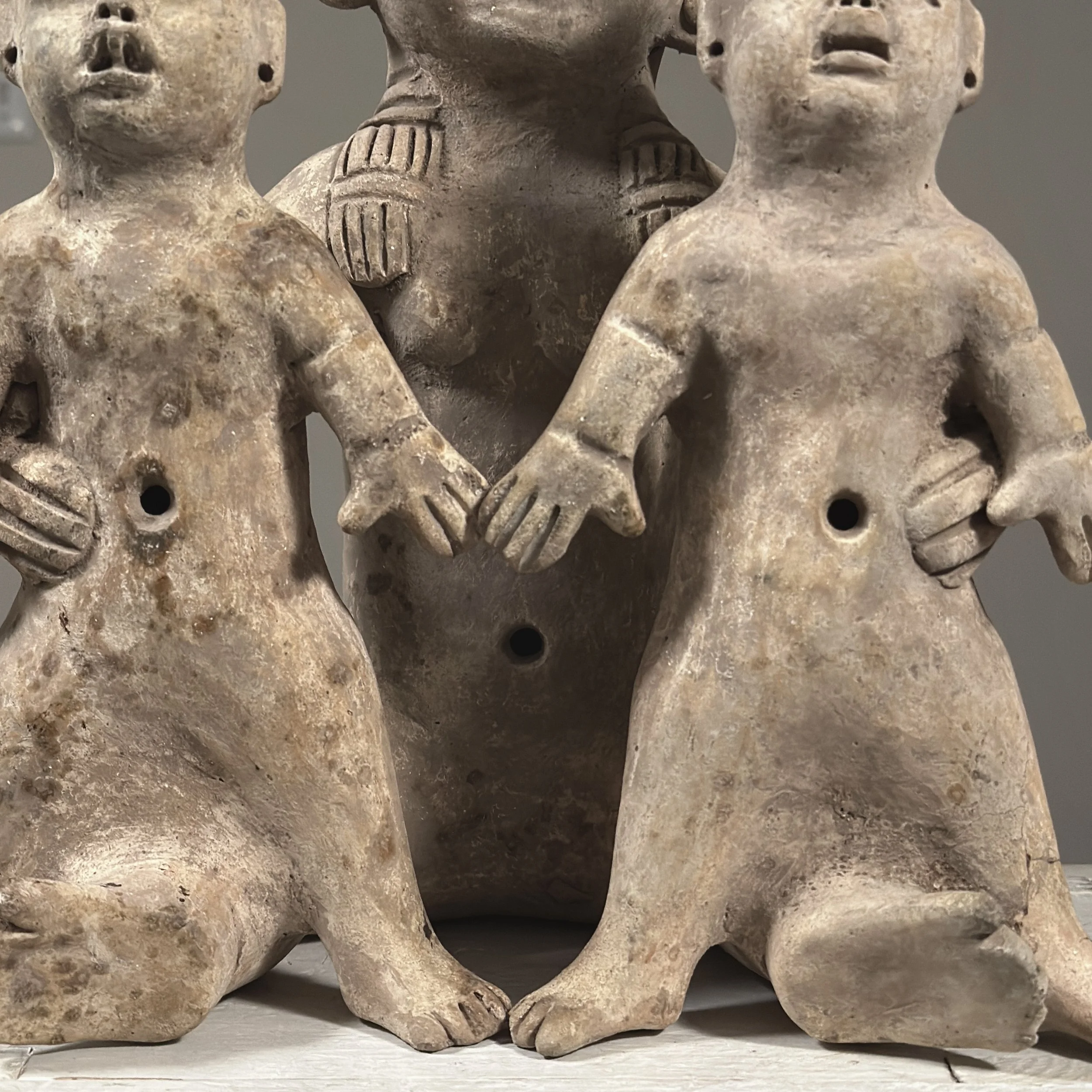 Image 7 of 11
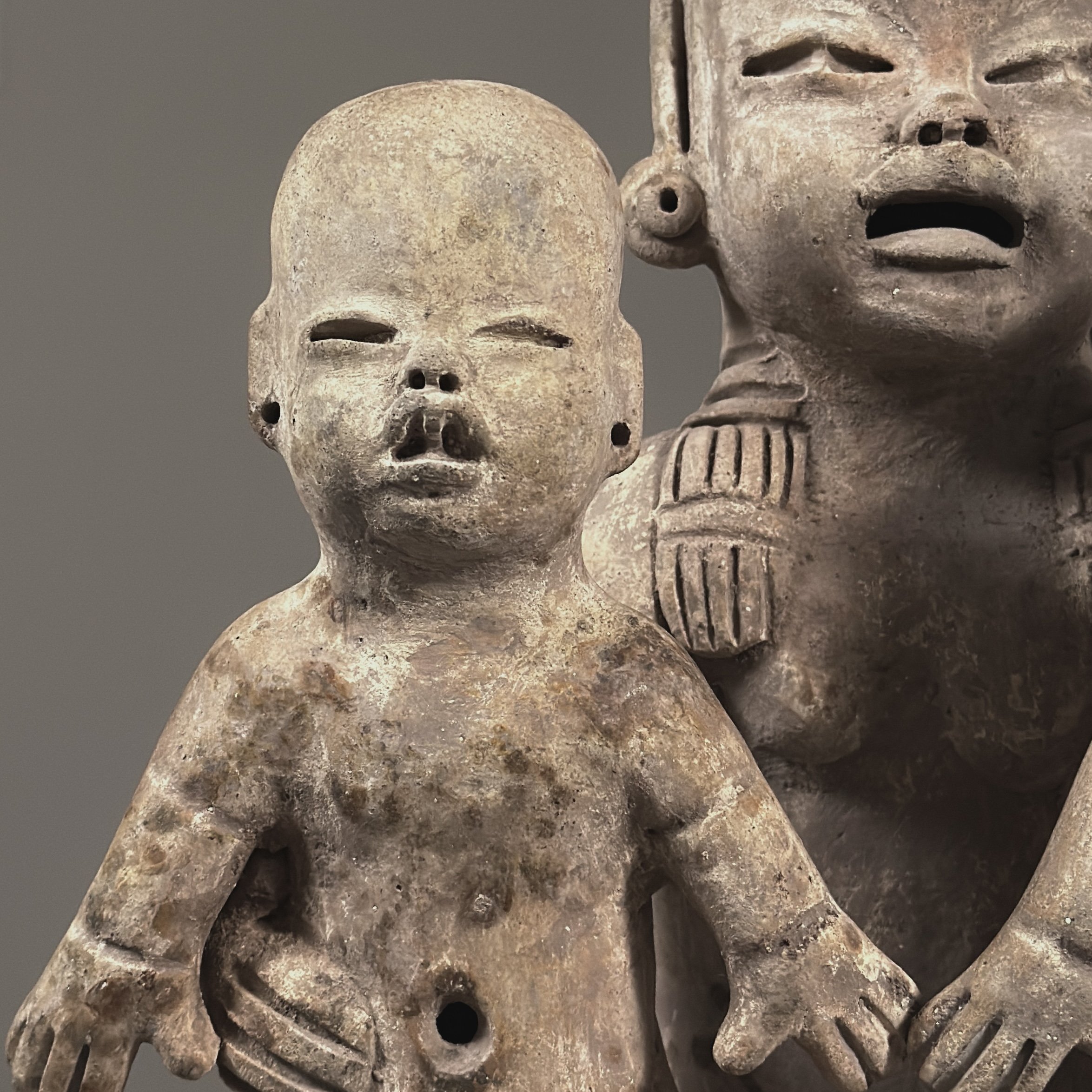 Image 8 of 11
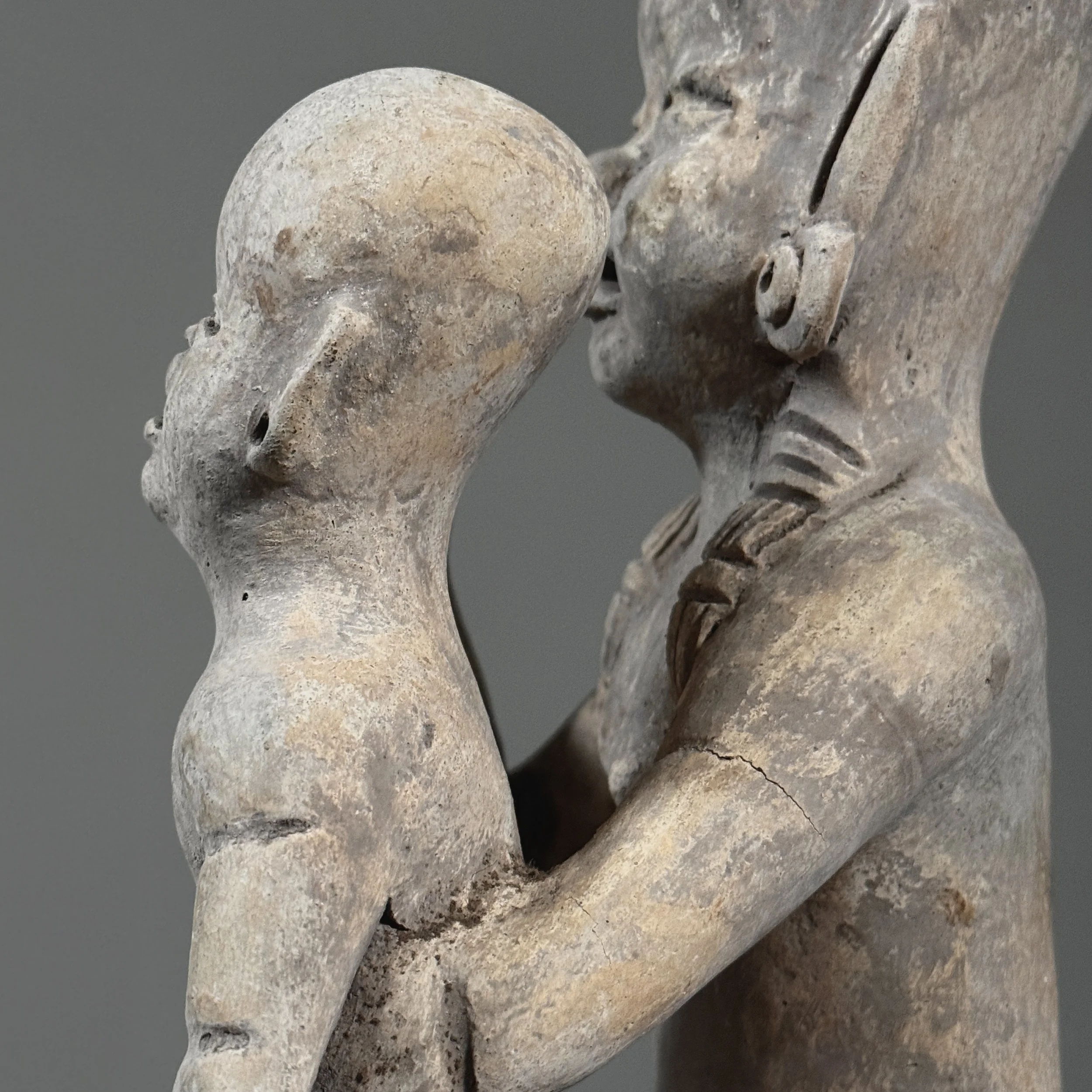 Image 9 of 11
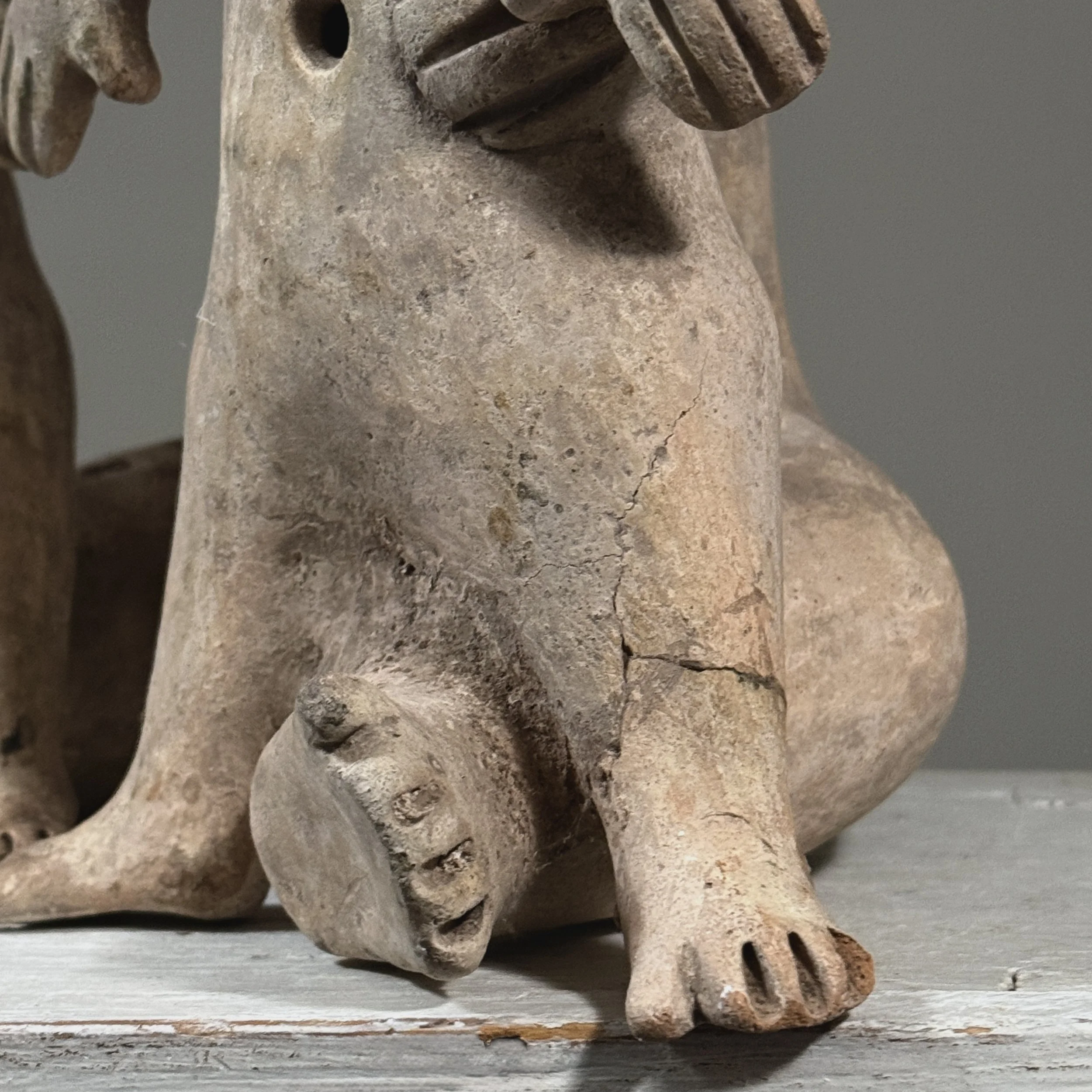 Image 10 of 11
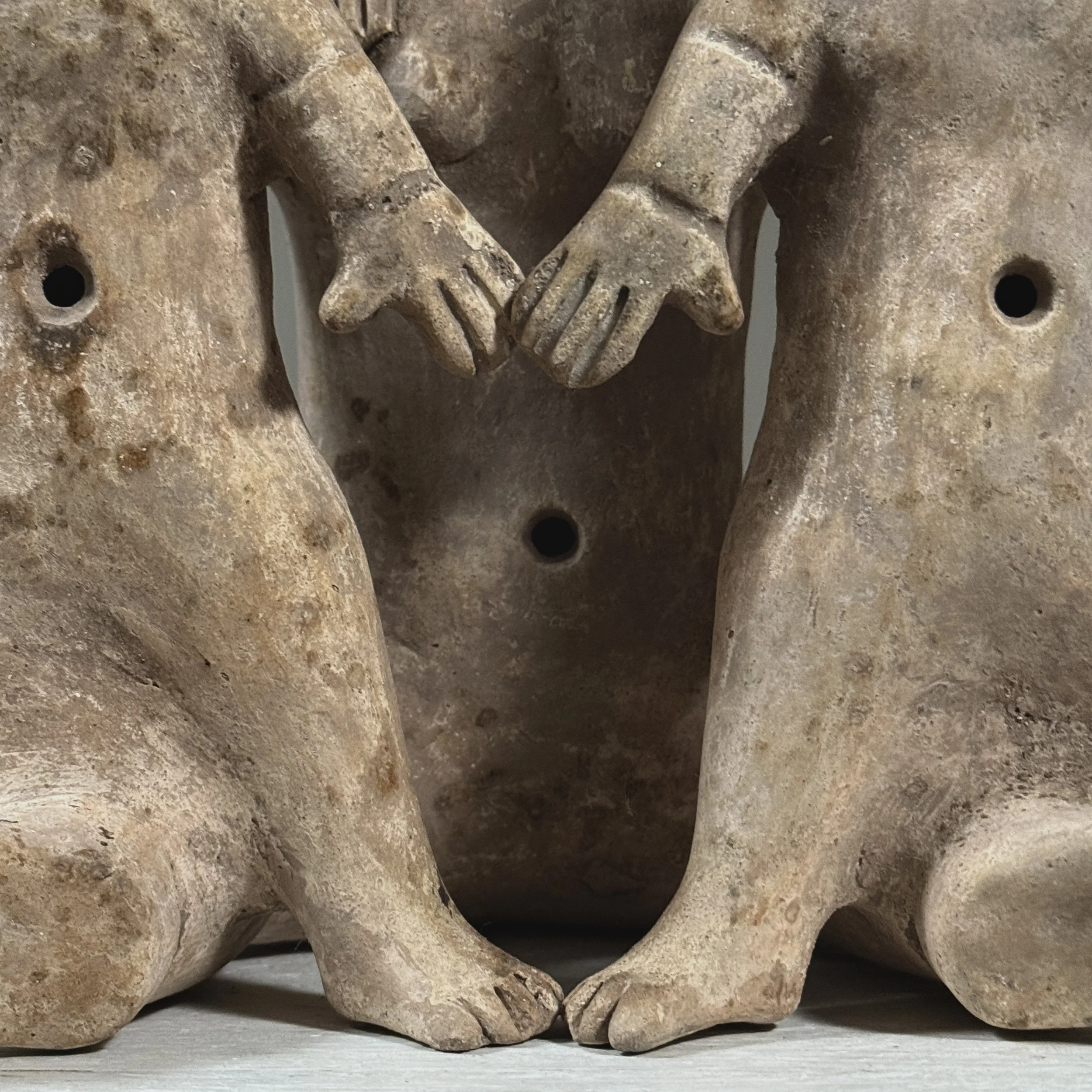 Image 11 of 11