Medium: Solid brass
Nationality/Style: French Empire, Neoclassical, 19th century
Subject: Melusine
Dimensions: 12.25" H x 8.5" W x 5.5" D (each)
Bases: Handmade two-tiered bases with four ball feet
Condition: Good; wear consistent with age. Verdigris present on the top of both serpent tails with areas of verdigris throughout. Two small holes in the sculptures on one side of each. Please refer to photos for details.
A pair of antique 19th century Melusine sculptures in solid brass. Each female figure is complete with upright wings and a curled serpent body. Verdigris is present on the top of both serpent tails, with areas of verdigris throughout. Two small holes appear in the sculptures on one side of each, suggesting the figures may have served another purpose at one point. The two-tiered handmade bases are footed with a ball foot in each corner. Each sculpture is on the heavier solid side. Can be used as standalone sculptures or as bookends. In good condition with wear consistent with age.
A Note on Melusine
Melusine is a figure from European folklore, associated with the medieval legend of the House of Lusignan. According to the tale, she was a fairy who married Raymondin, a mortal nobleman, on the condition that he never seek her out on Saturdays. When he broke this taboo and discovered her bathing, he saw that she was a woman from the waist up and a serpent from the waist down. Upon his betrayal, she transformed into a dragon and flew from the window, though she was said to return and wail whenever the castle of Lusignan changed hands.
The legend of Melusine became widely circulated across medieval Europe, with versions appearing in French, German, Castilian, Dutch, and English traditions. She is often depicted as a mermaid or serpent-woman, and her image was adopted as a heraldic device by several noble families. In later centuries, the motif of the winged, serpent-tailed Melusine appeared in a wide range of decorative arts, including Renaissance Revival jewelry, cast iron fountains, and bronze sculpture.
Medium: Solid brass
Nationality/Style: French Empire, Neoclassical, 19th century
Subject: Melusine
Dimensions: 12.25" H x 8.5" W x 5.5" D (each)
Bases: Handmade two-tiered bases with four ball feet
Condition: Good; wear consistent with age. Verdigris present on the top of both serpent tails with areas of verdigris throughout. Two small holes in the sculptures on one side of each. Please refer to photos for details.
A pair of antique 19th century Melusine sculptures in solid brass. Each female figure is complete with upright wings and a curled serpent body. Verdigris is present on the top of both serpent tails, with areas of verdigris throughout. Two small holes appear in the sculptures on one side of each, suggesting the figures may have served another purpose at one point. The two-tiered handmade bases are footed with a ball foot in each corner. Each sculpture is on the heavier solid side. Can be used as standalone sculptures or as bookends. In good condition with wear consistent with age.
A Note on Melusine
Melusine is a figure from European folklore, associated with the medieval legend of the House of Lusignan. According to the tale, she was a fairy who married Raymondin, a mortal nobleman, on the condition that he never seek her out on Saturdays. When he broke this taboo and discovered her bathing, he saw that she was a woman from the waist up and a serpent from the waist down. Upon his betrayal, she transformed into a dragon and flew from the window, though she was said to return and wail whenever the castle of Lusignan changed hands.
The legend of Melusine became widely circulated across medieval Europe, with versions appearing in French, German, Castilian, Dutch, and English traditions. She is often depicted as a mermaid or serpent-woman, and her image was adopted as a heraldic device by several noble families. In later centuries, the motif of the winged, serpent-tailed Melusine appeared in a wide range of decorative arts, including Renaissance Revival jewelry, cast iron fountains, and bronze sculpture.

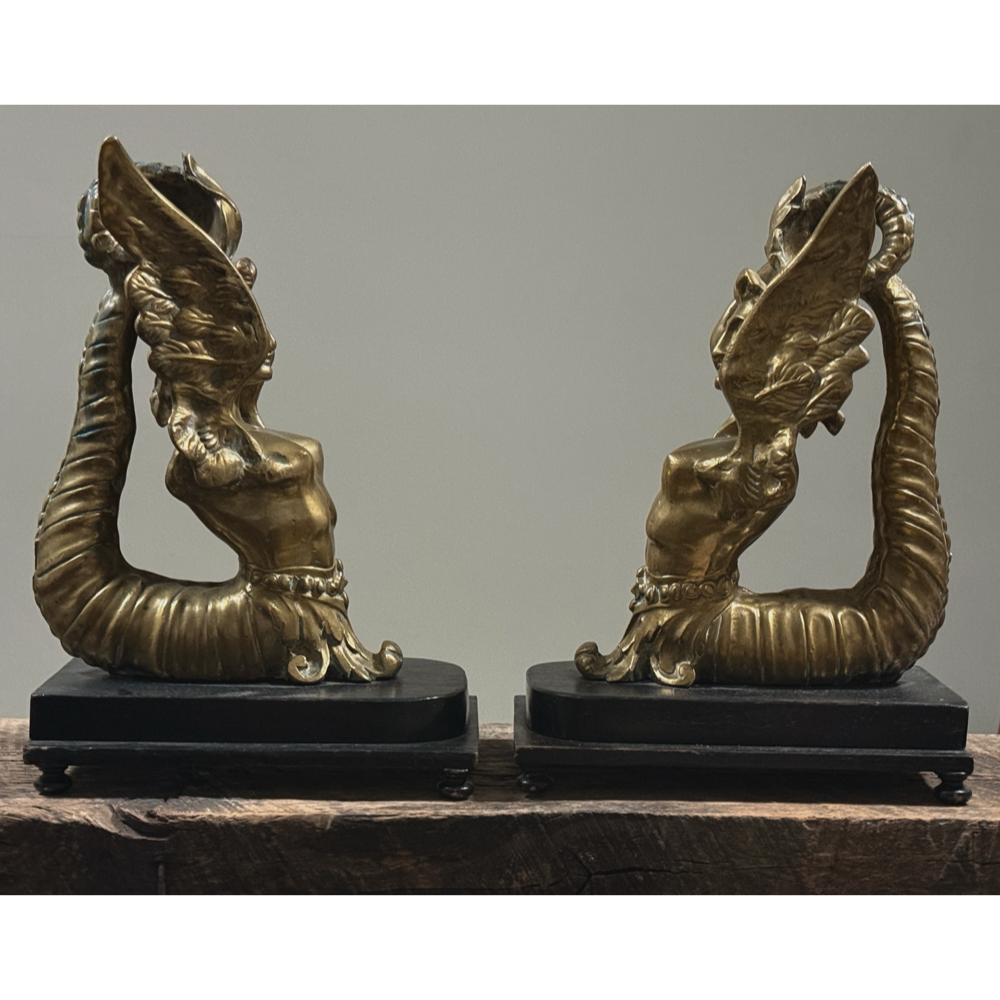 Image 1 of 17
 Image 2 of 17
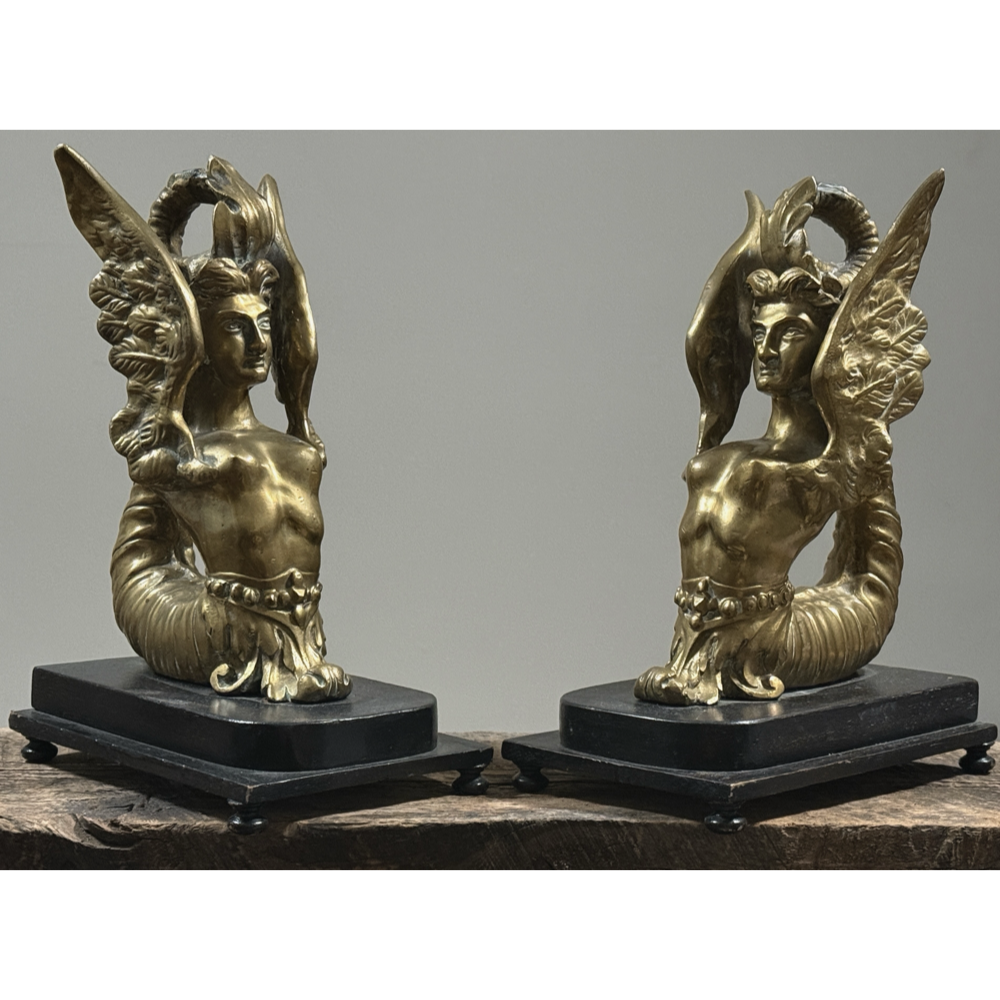 Image 3 of 17
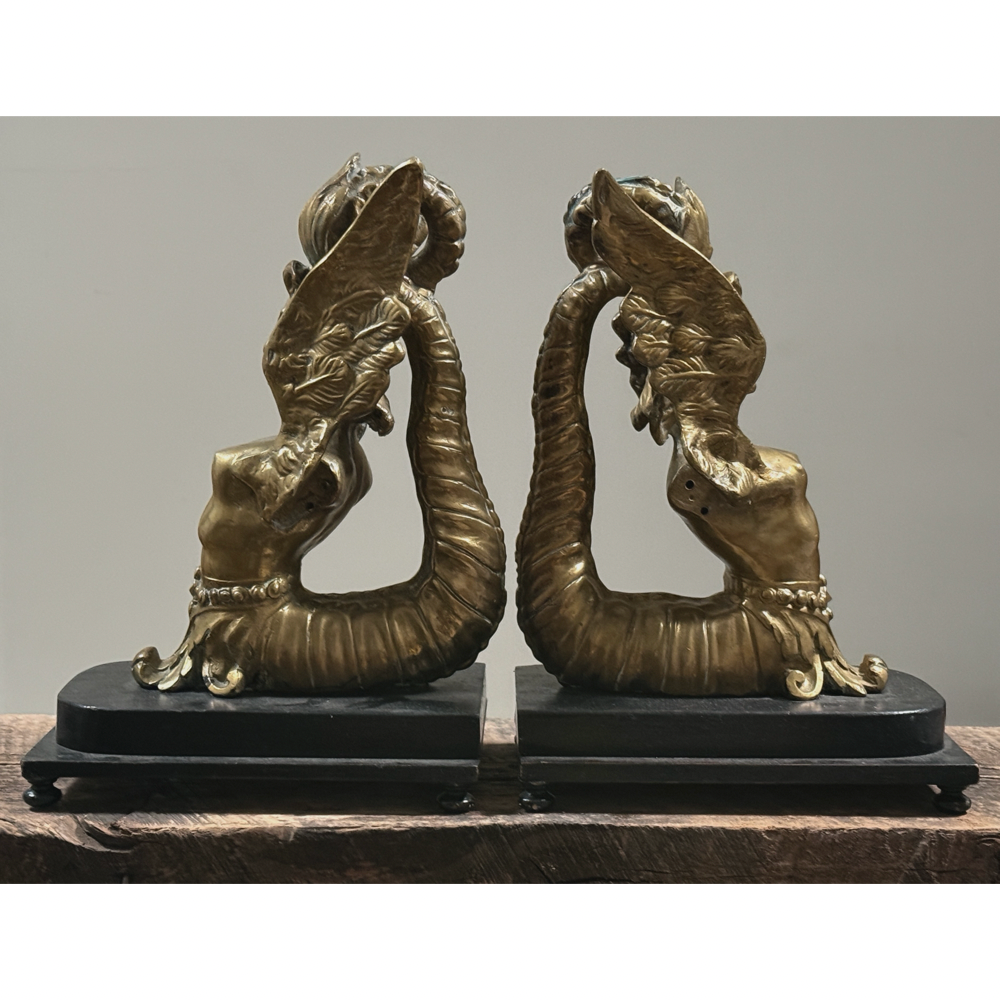 Image 4 of 17
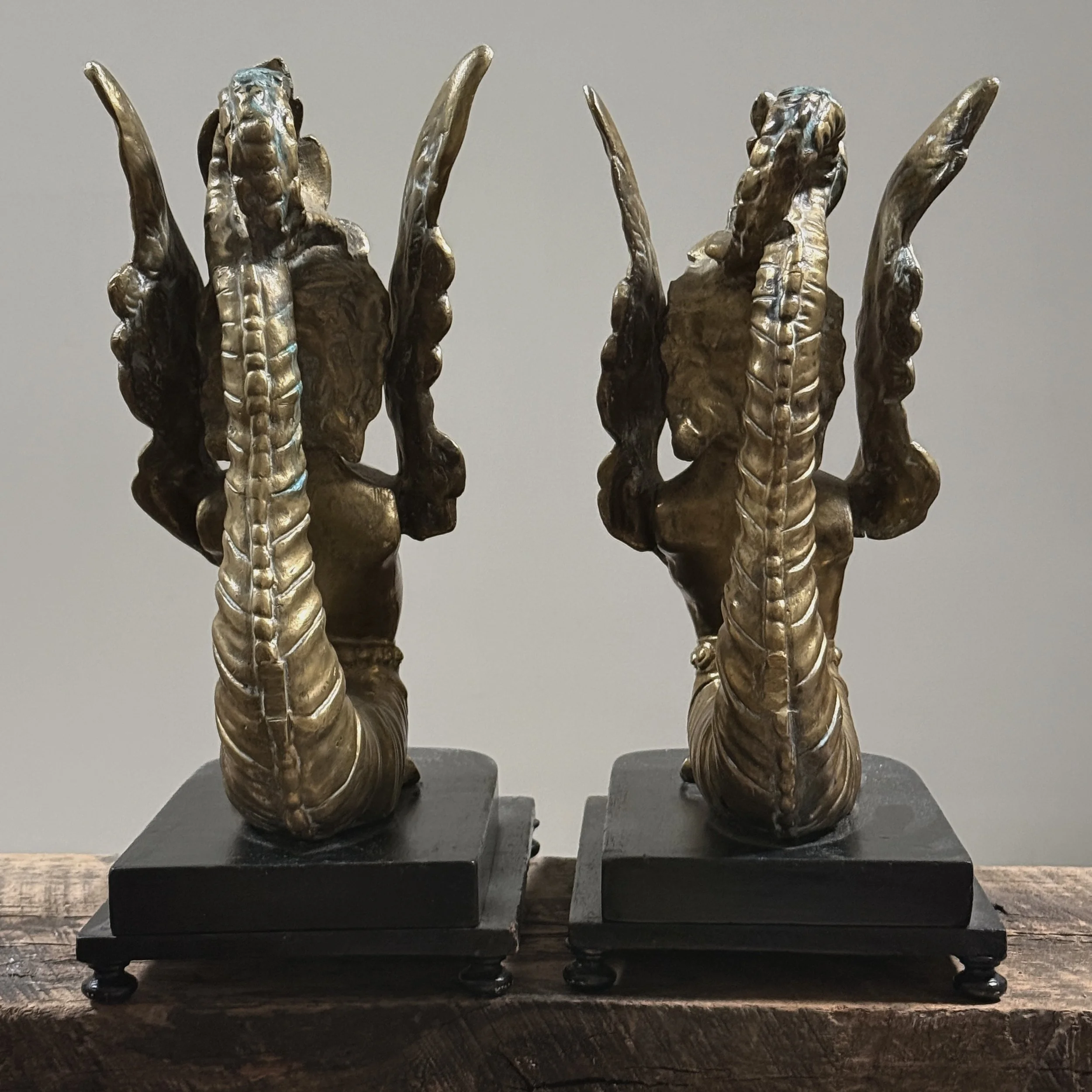 Image 5 of 17
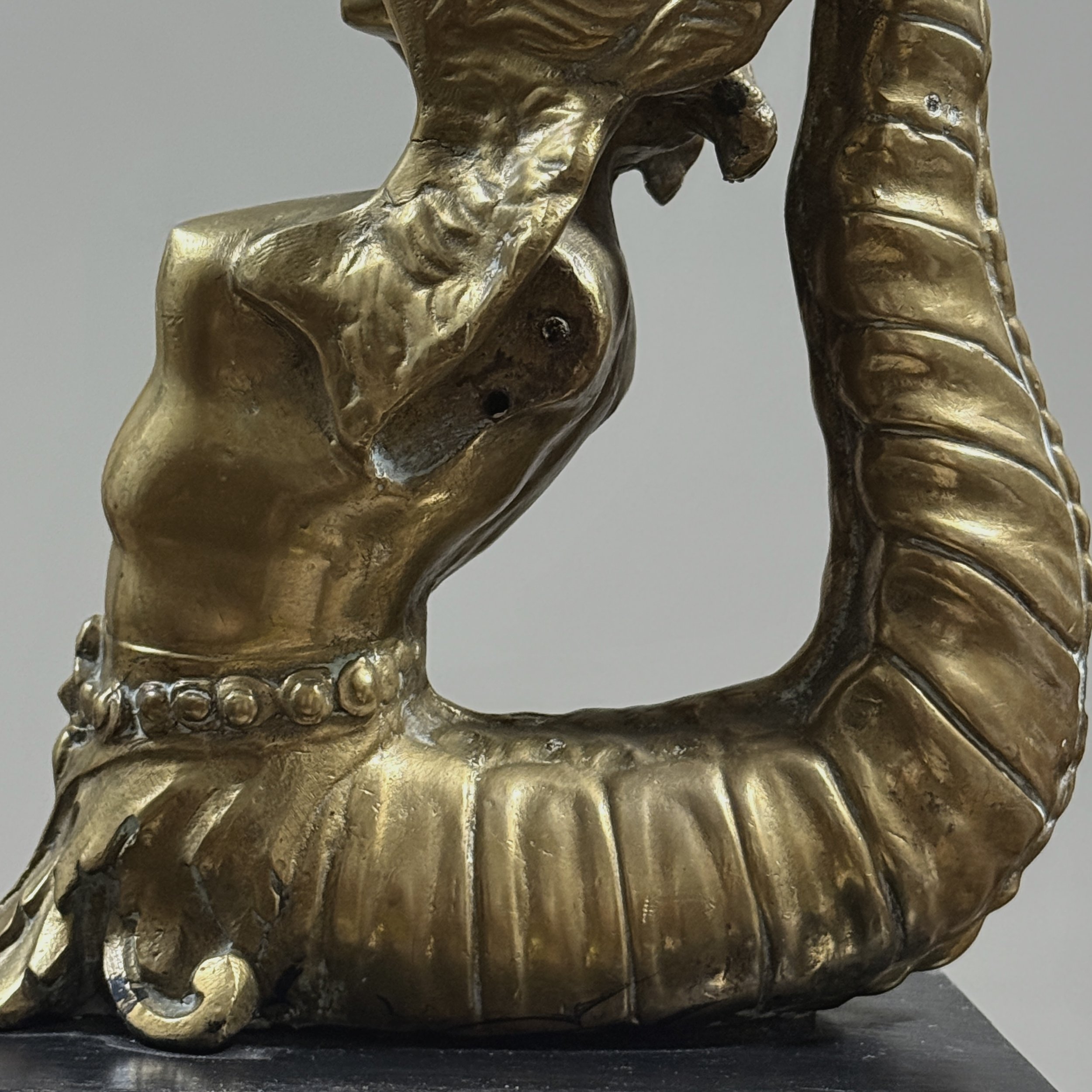 Image 6 of 17
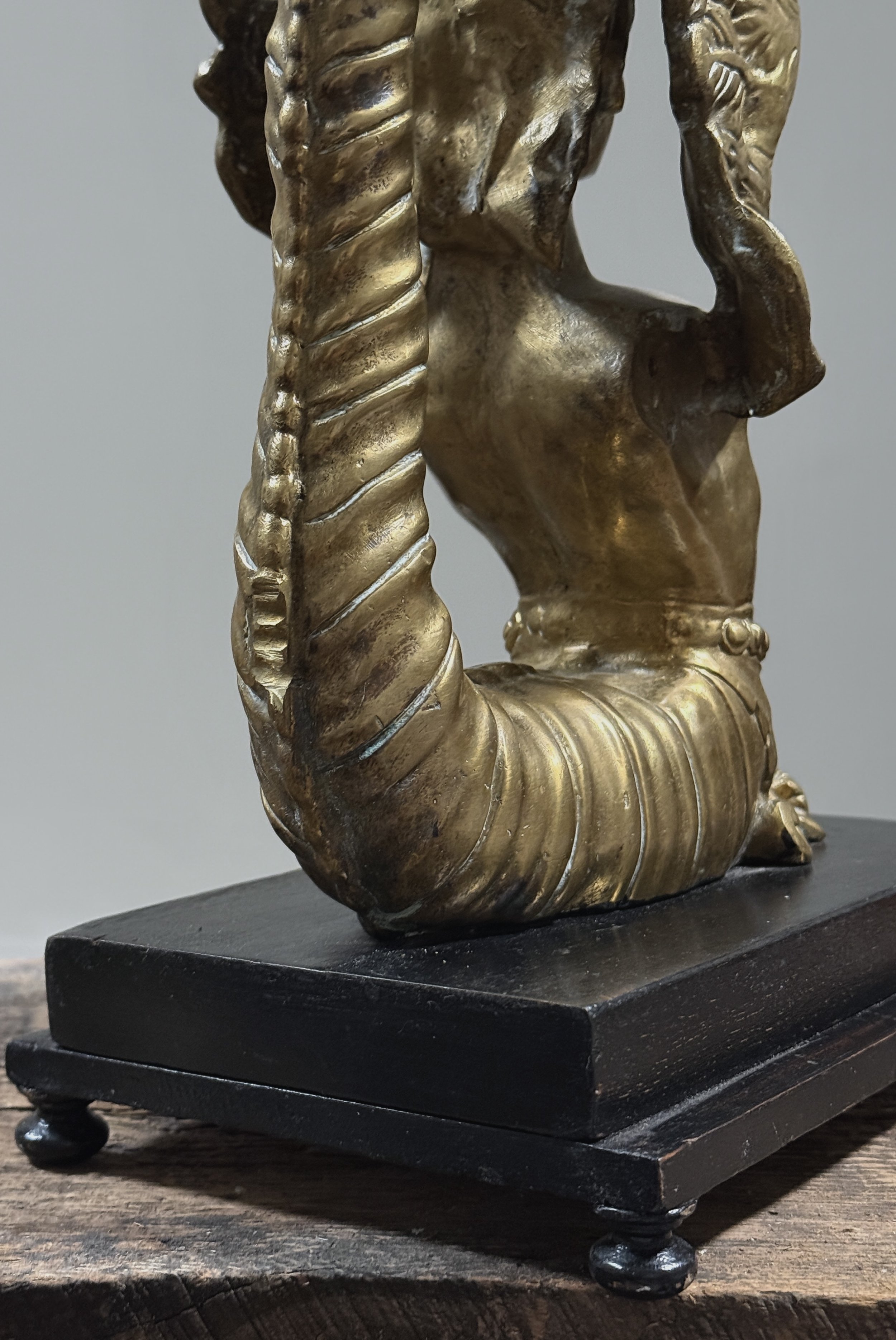 Image 7 of 17
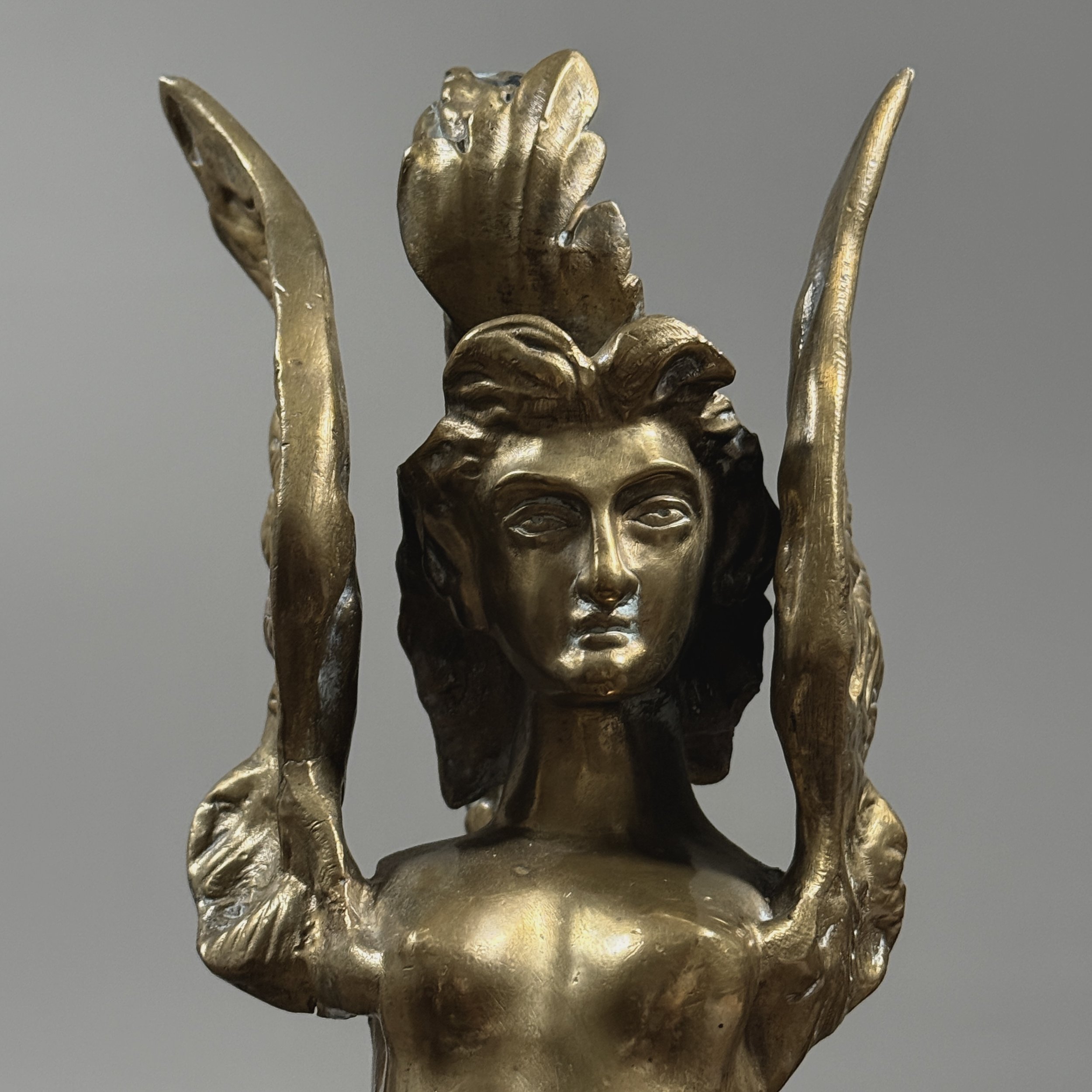 Image 8 of 17
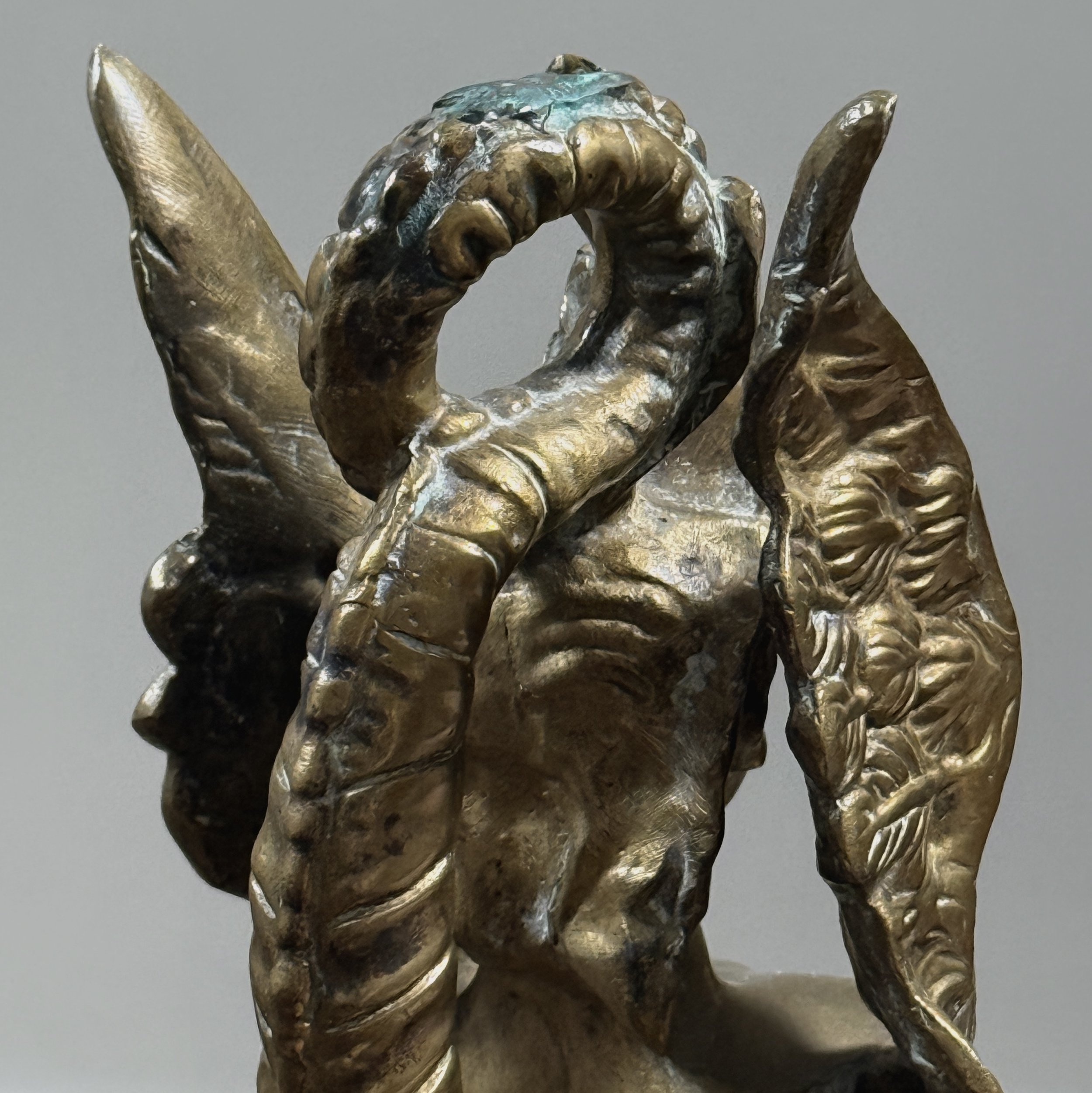 Image 9 of 17
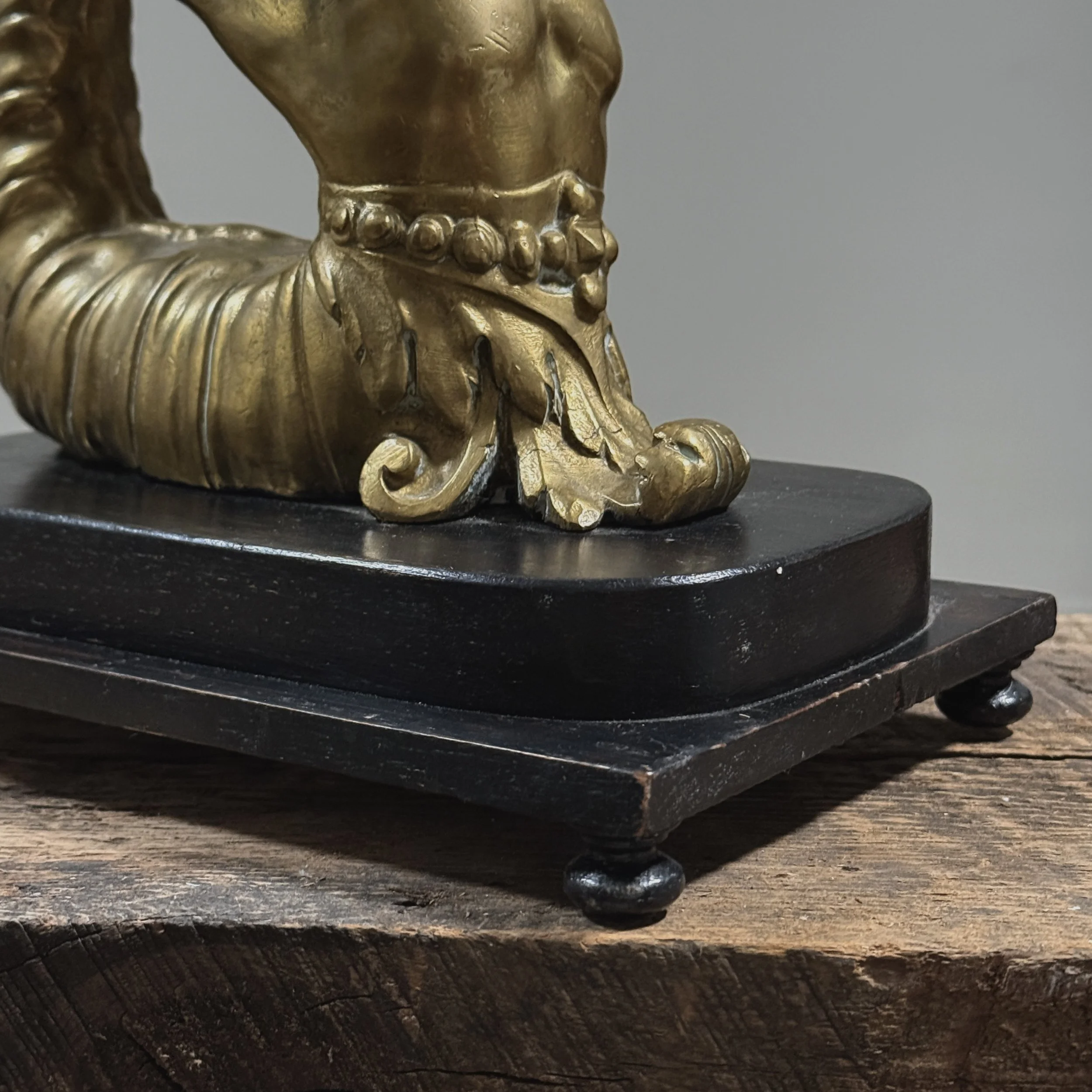 Image 10 of 17
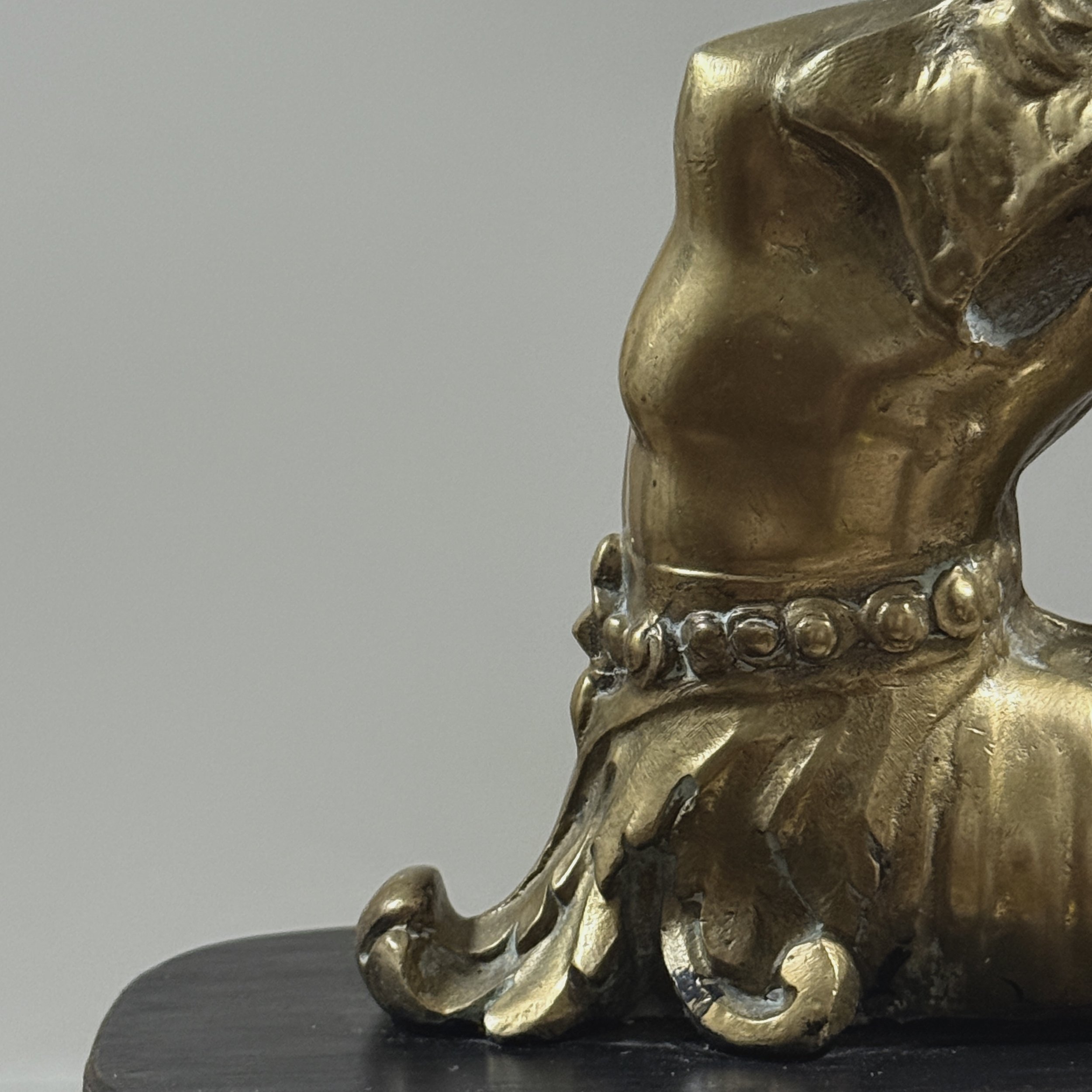 Image 11 of 17
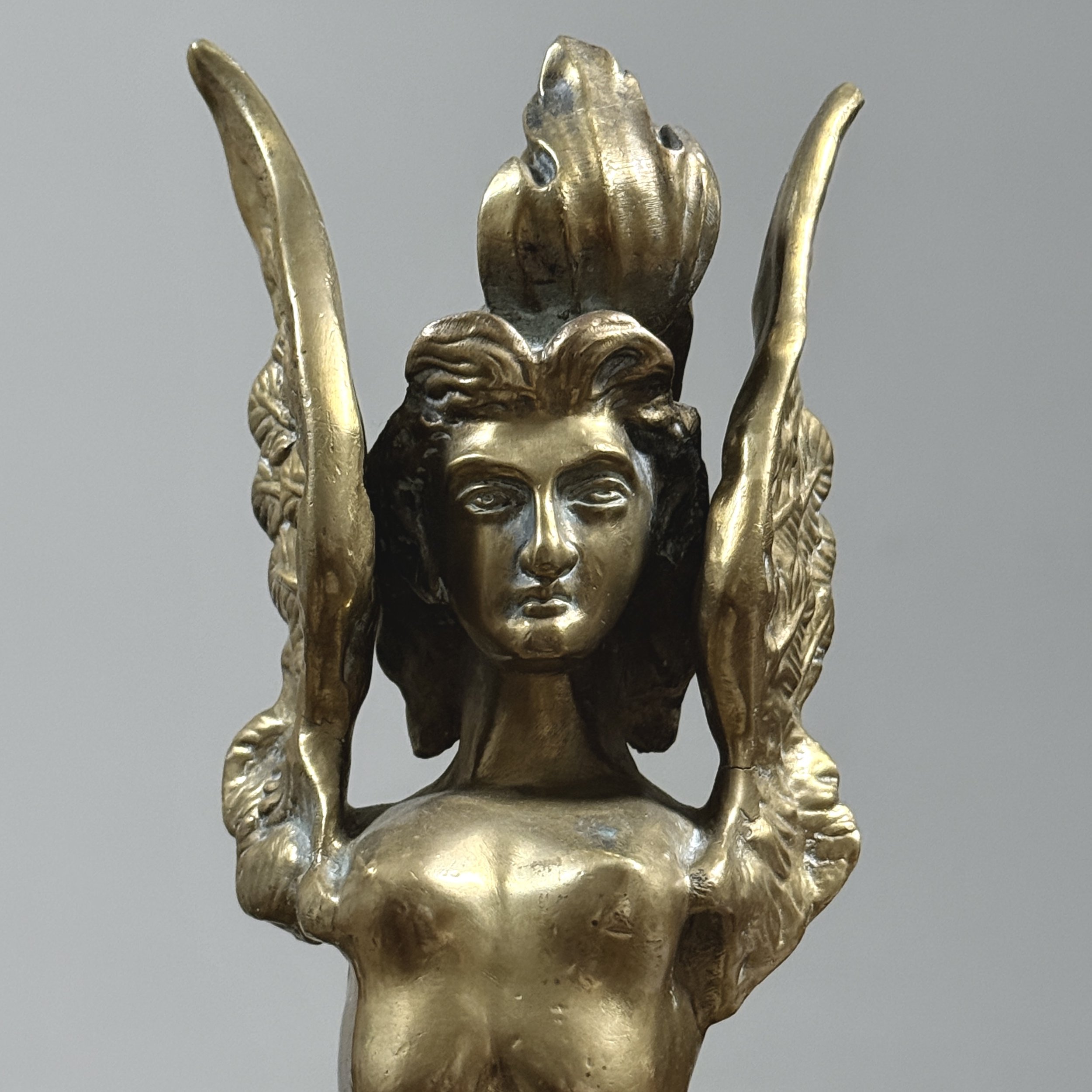 Image 12 of 17
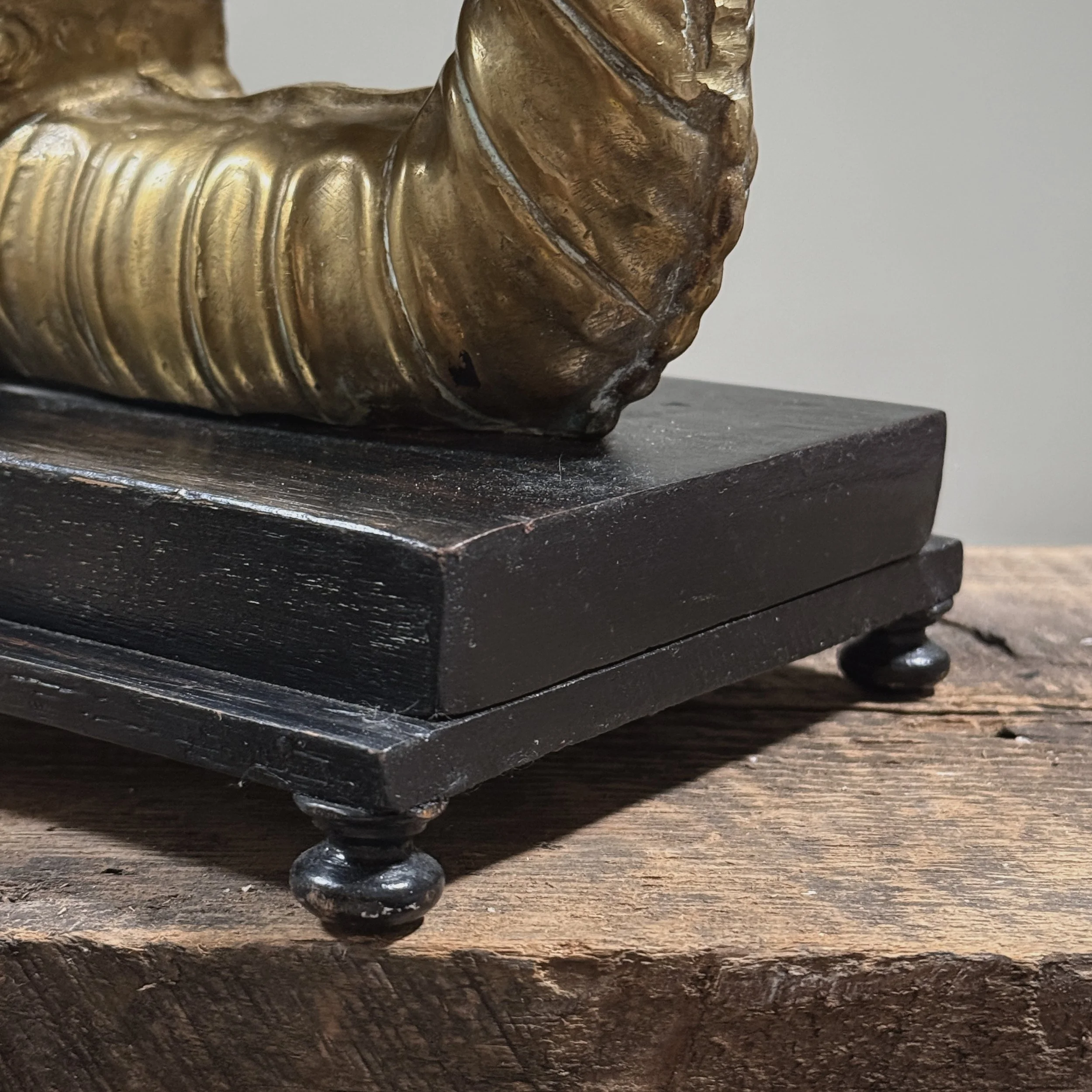 Image 13 of 17
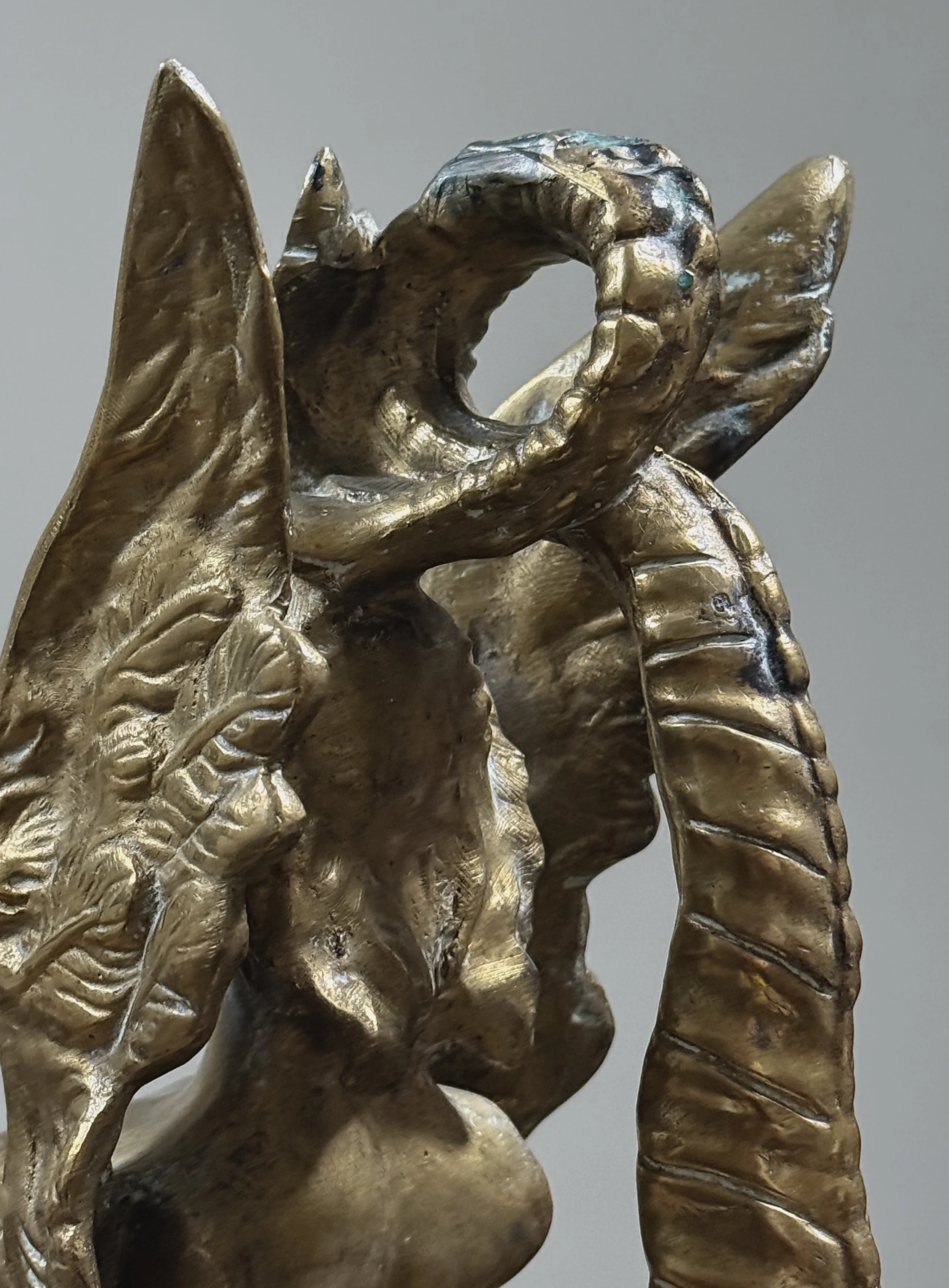 Image 14 of 17
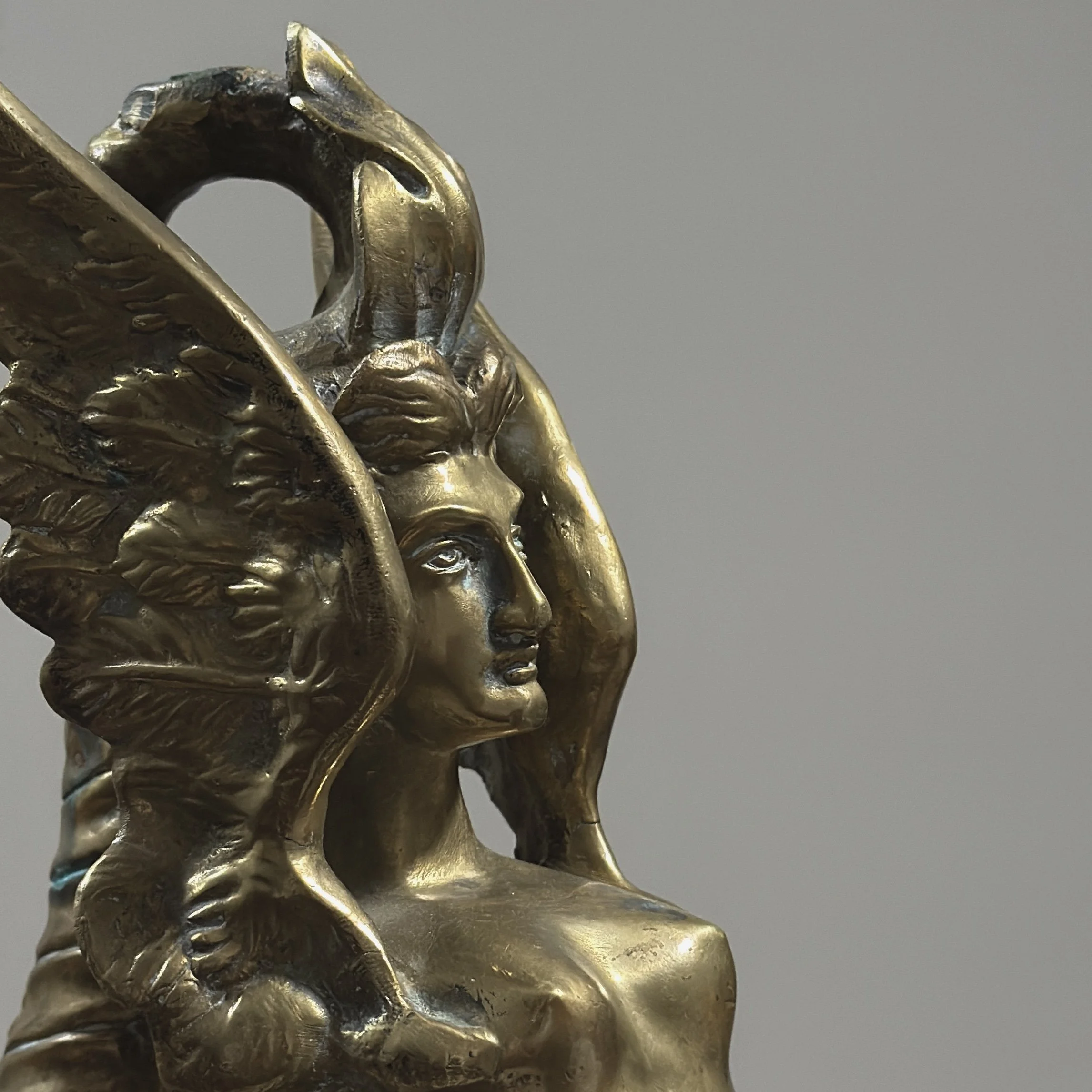 Image 15 of 17
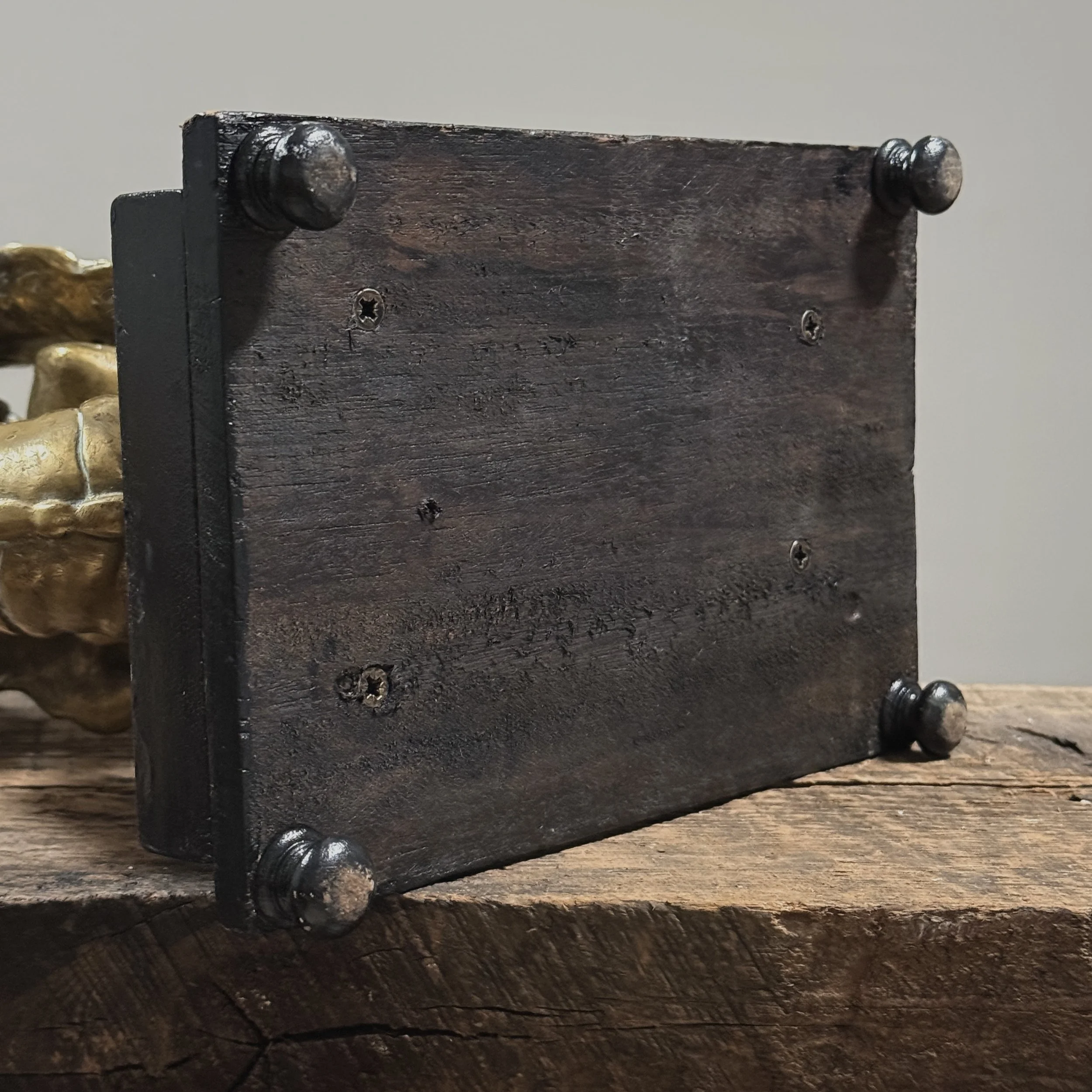 Image 16 of 17
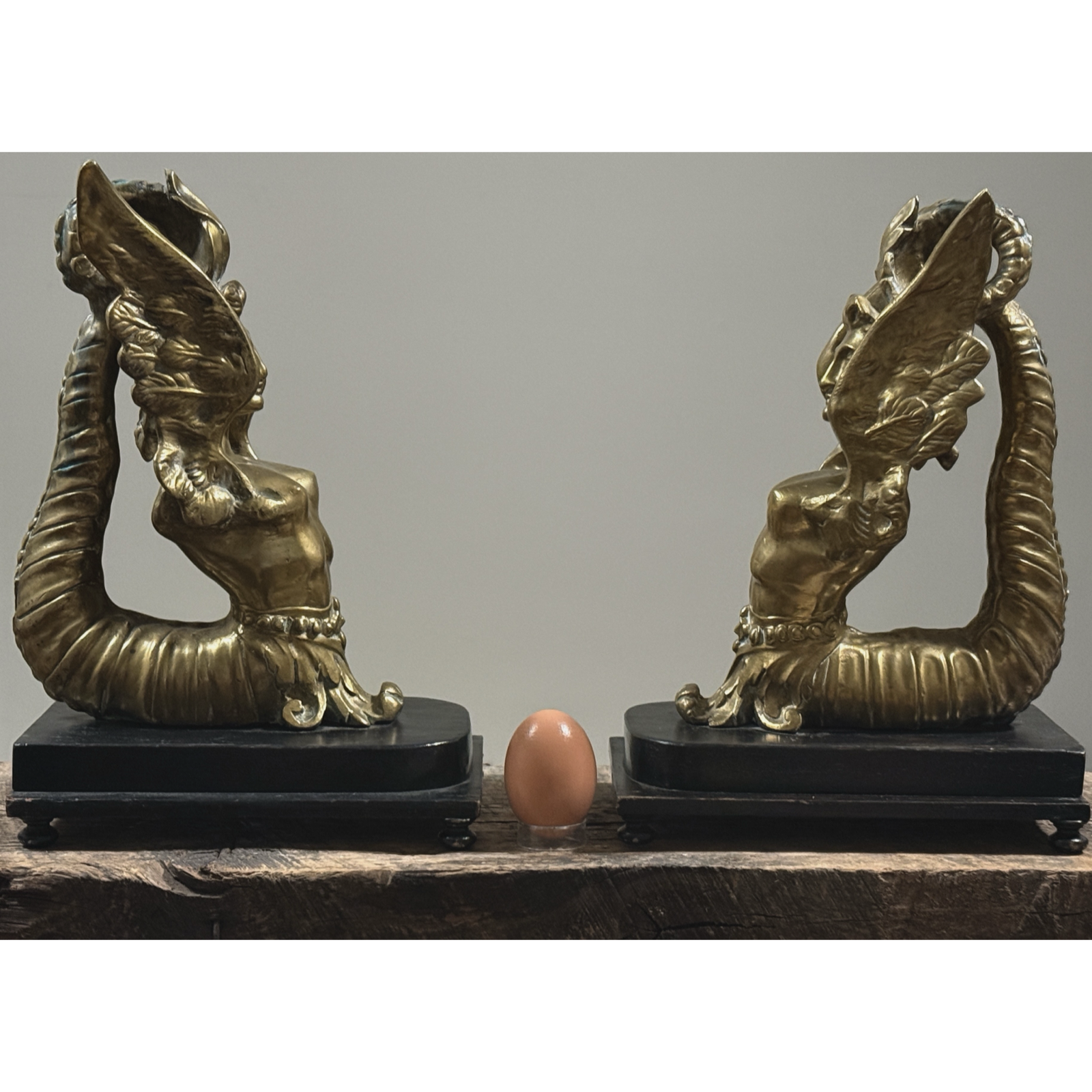 Image 17 of 17