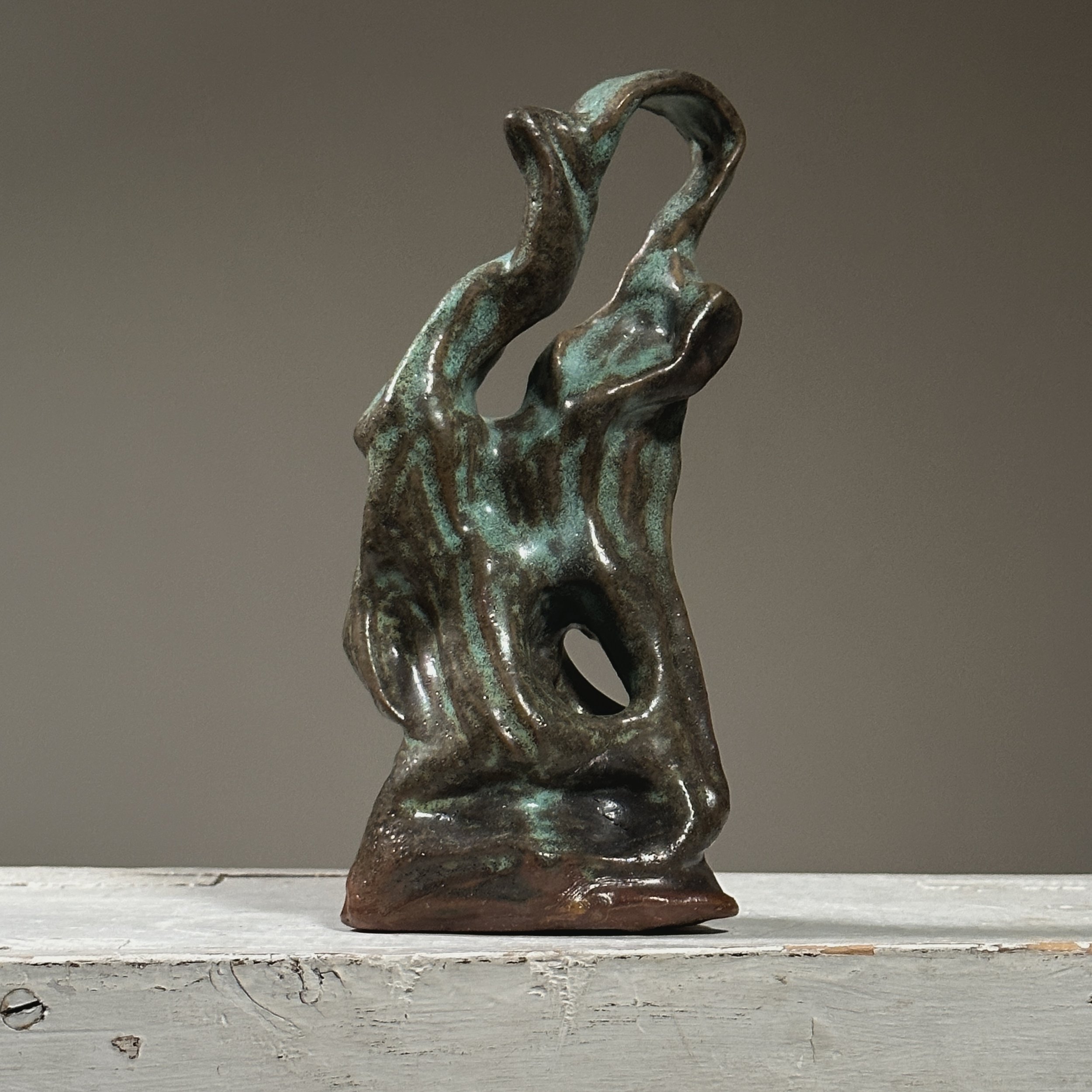
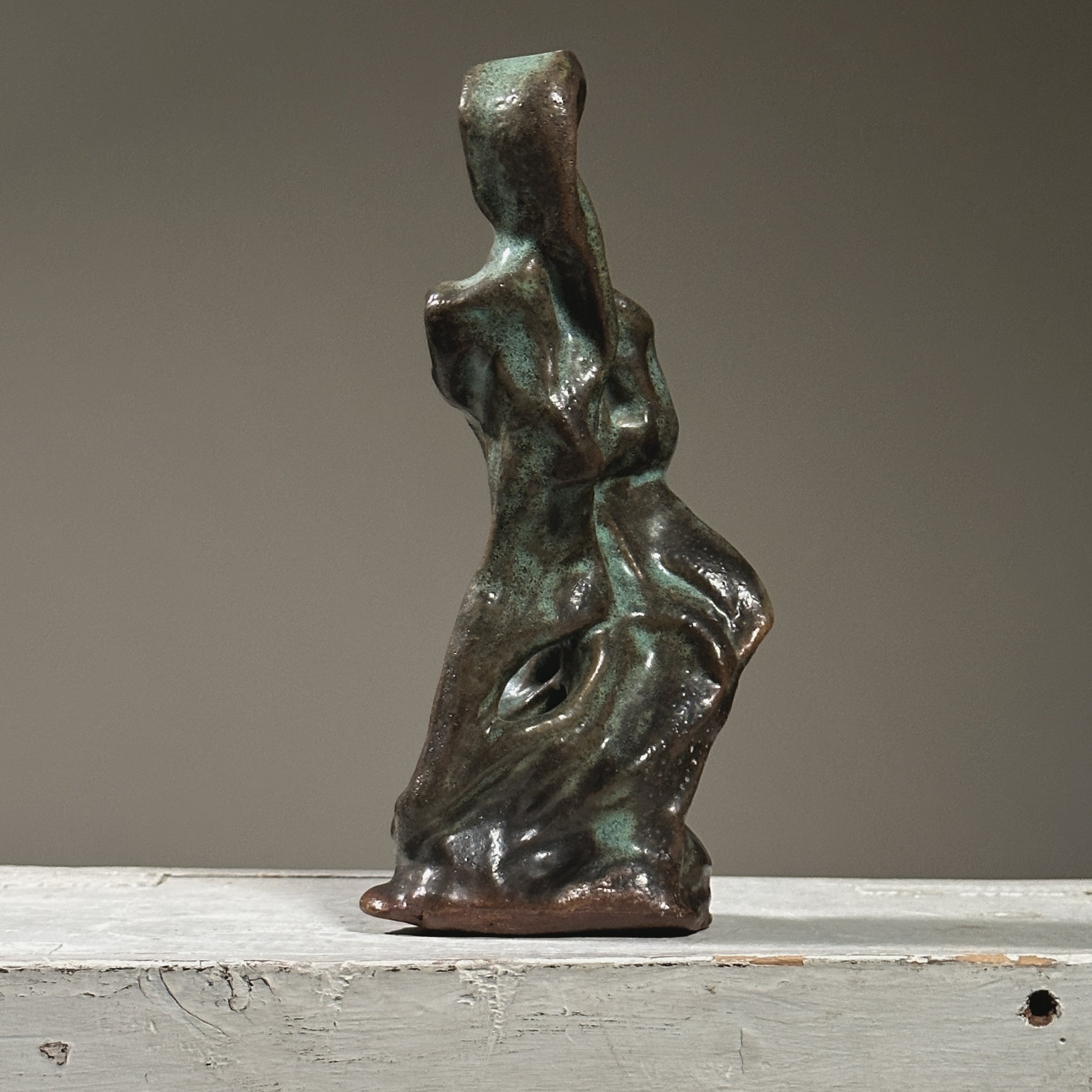
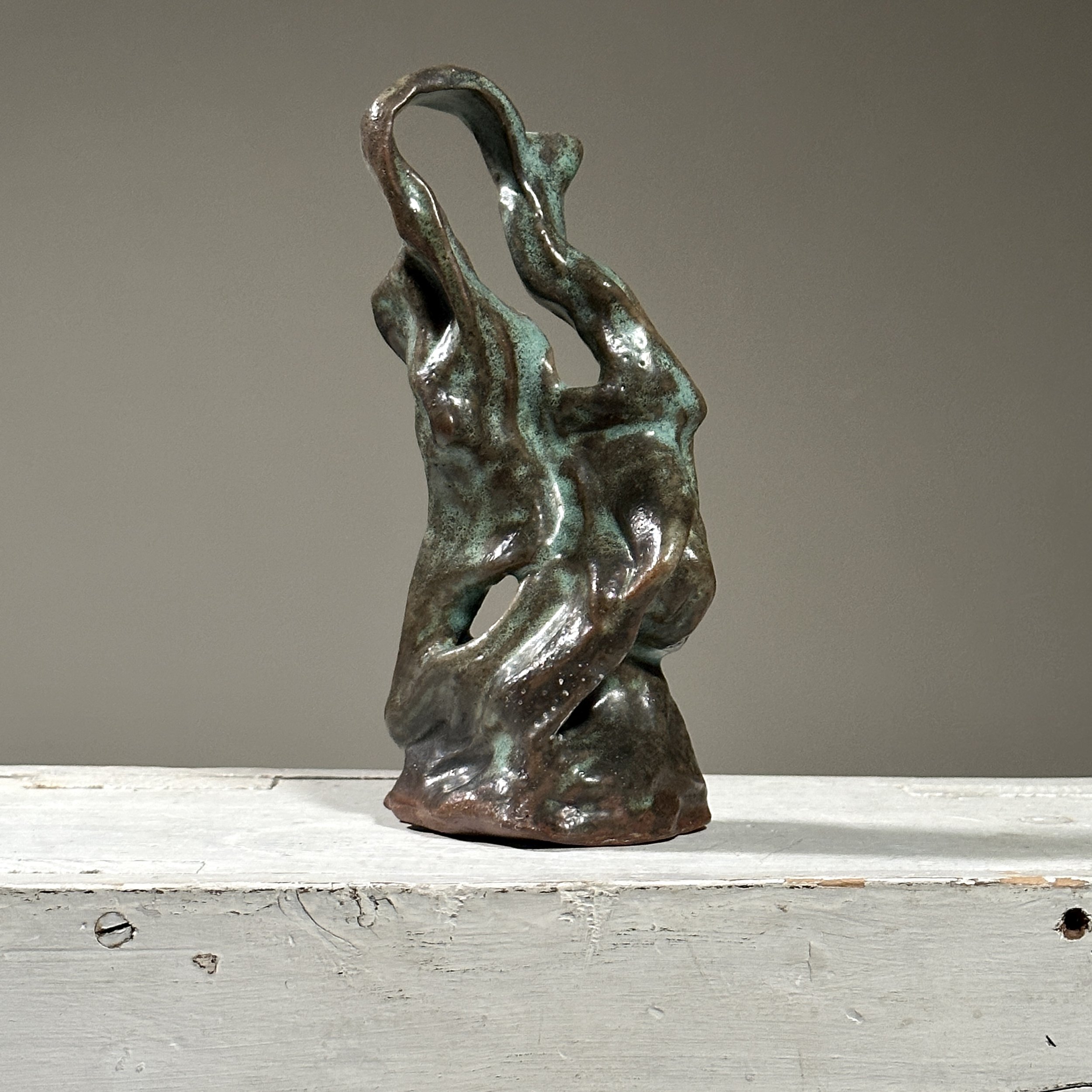
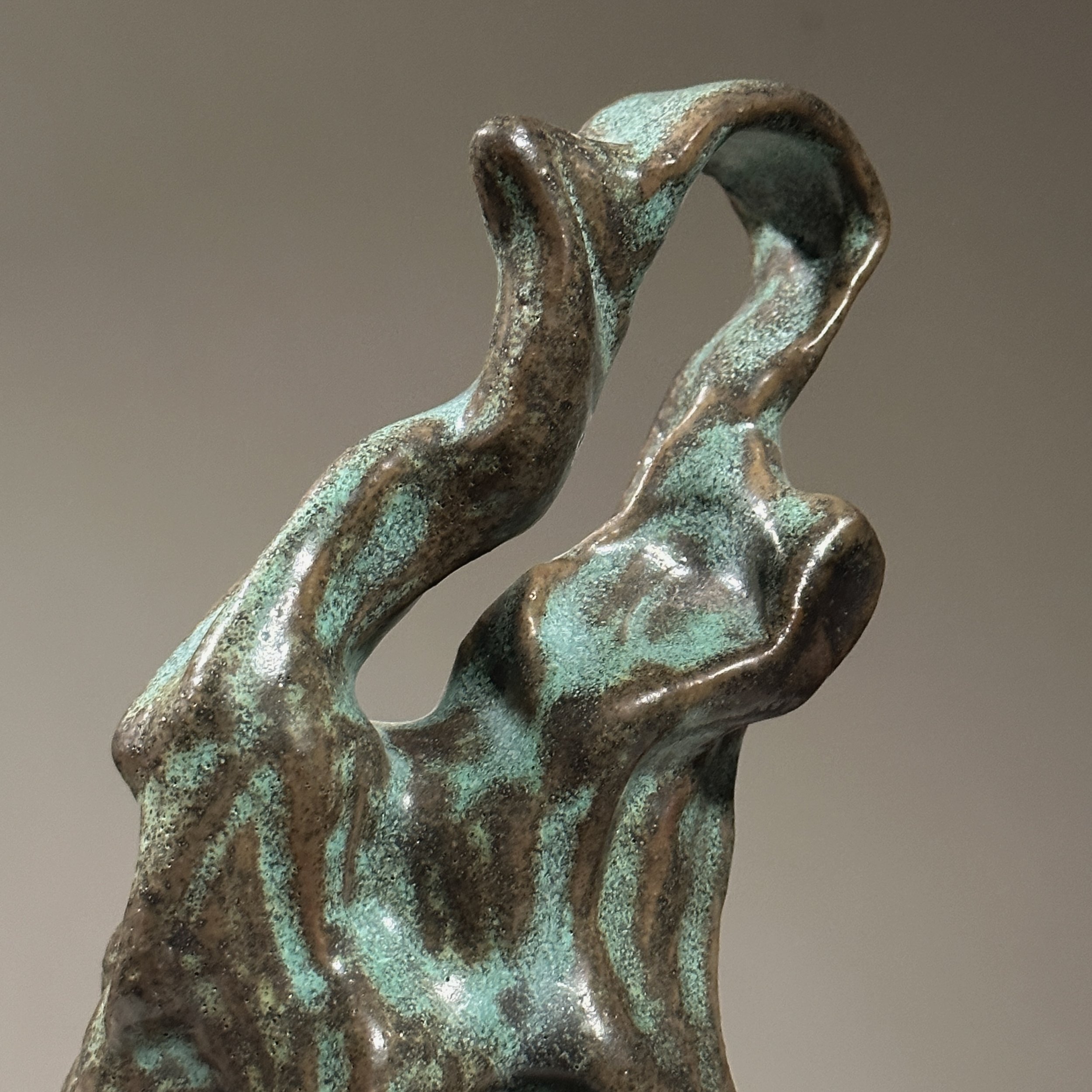
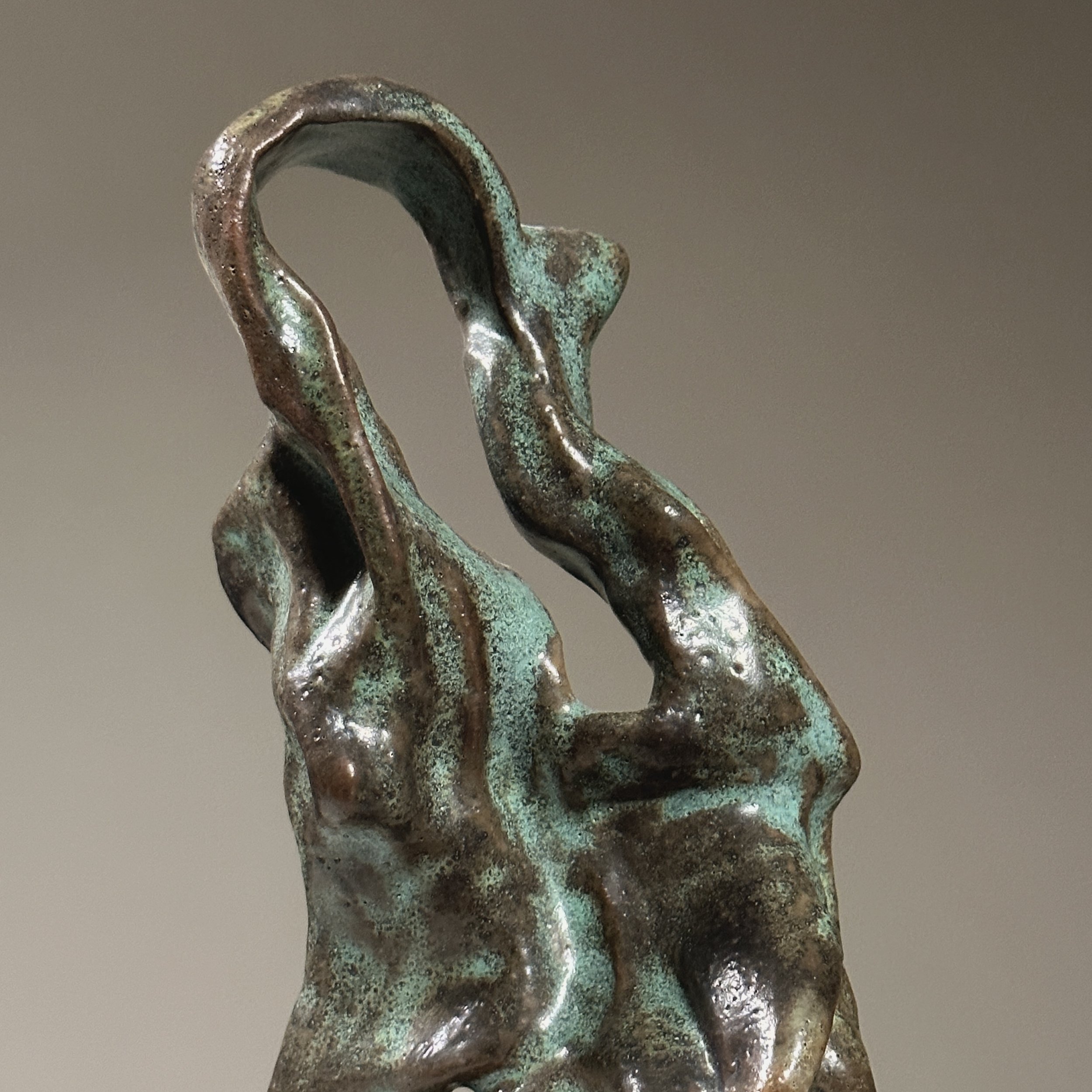
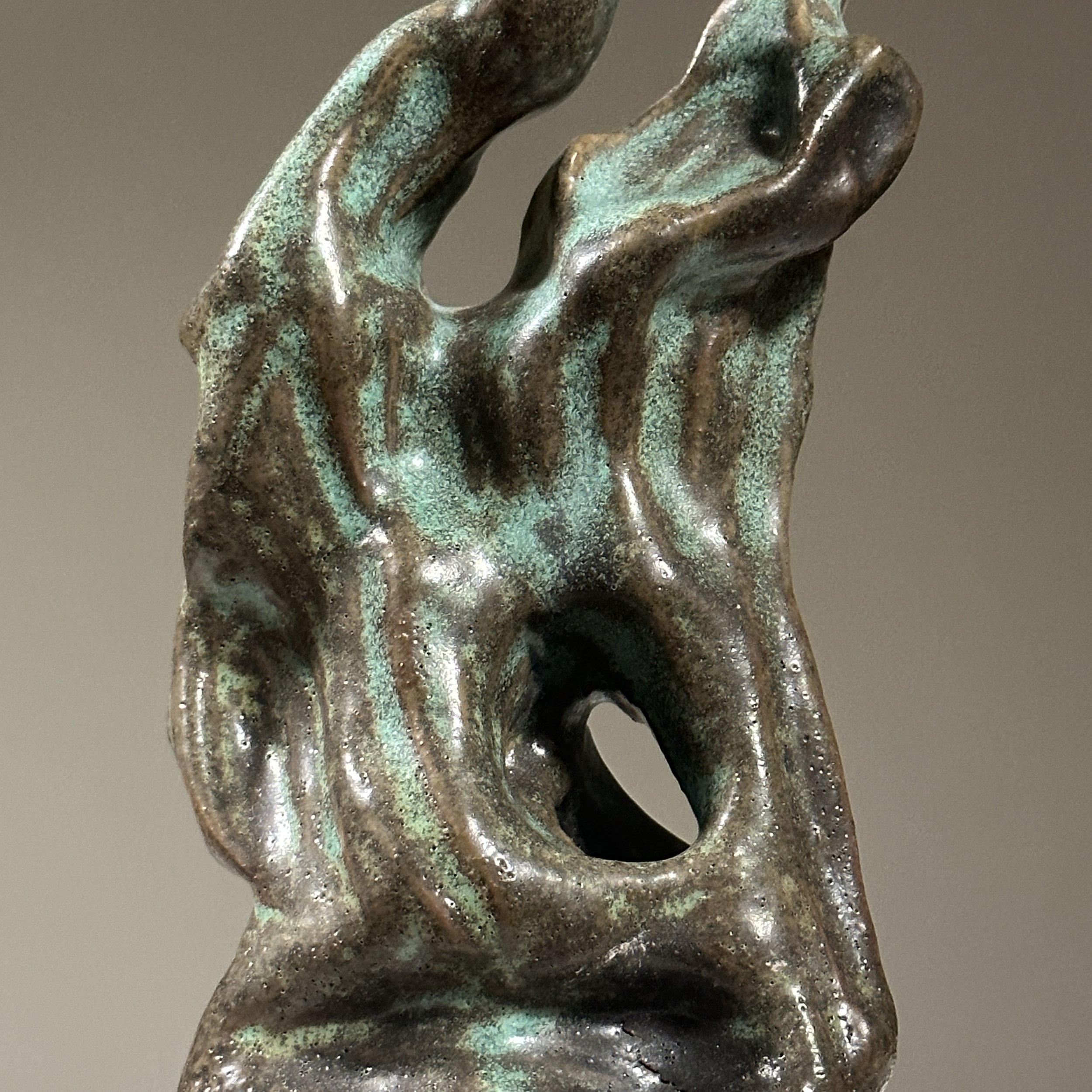
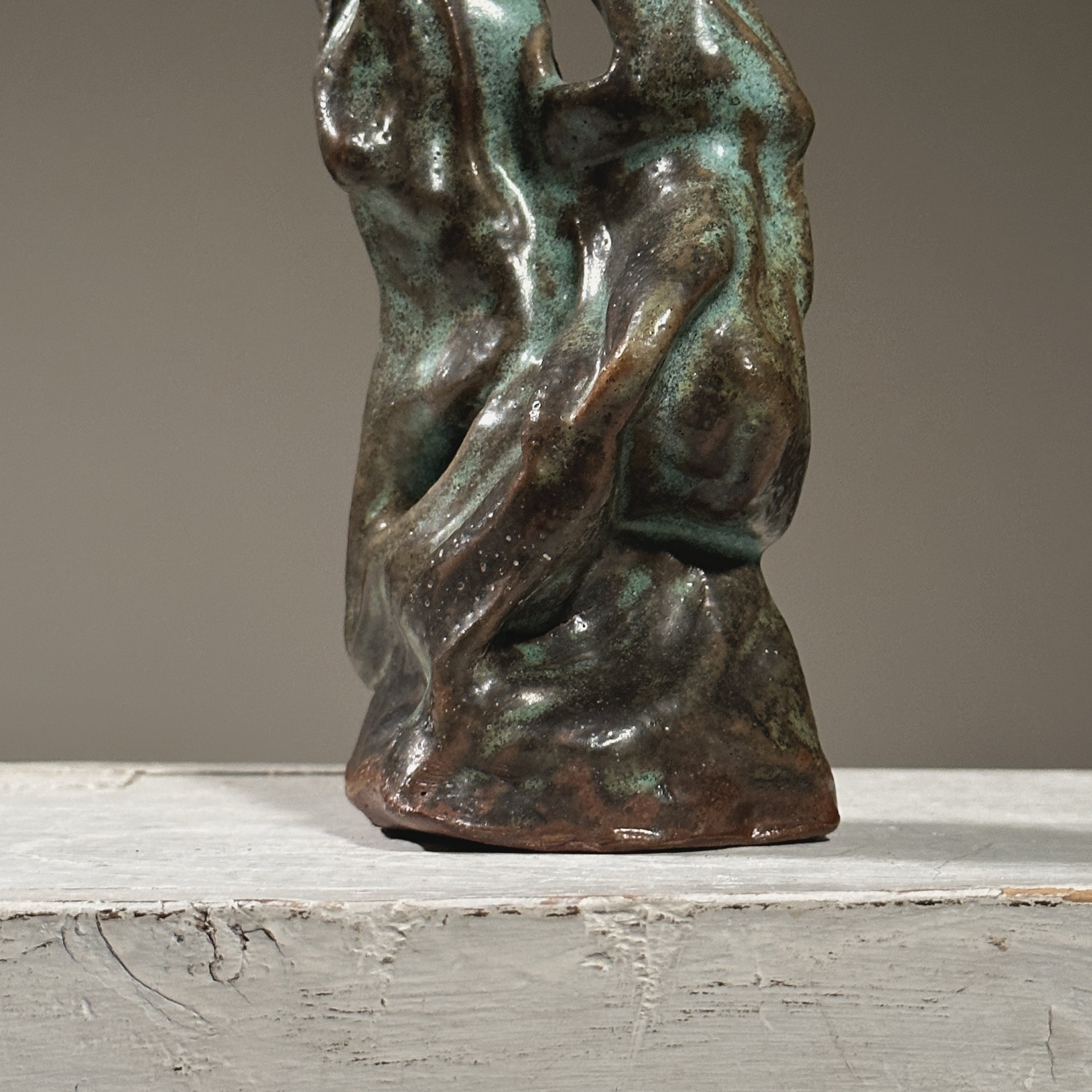
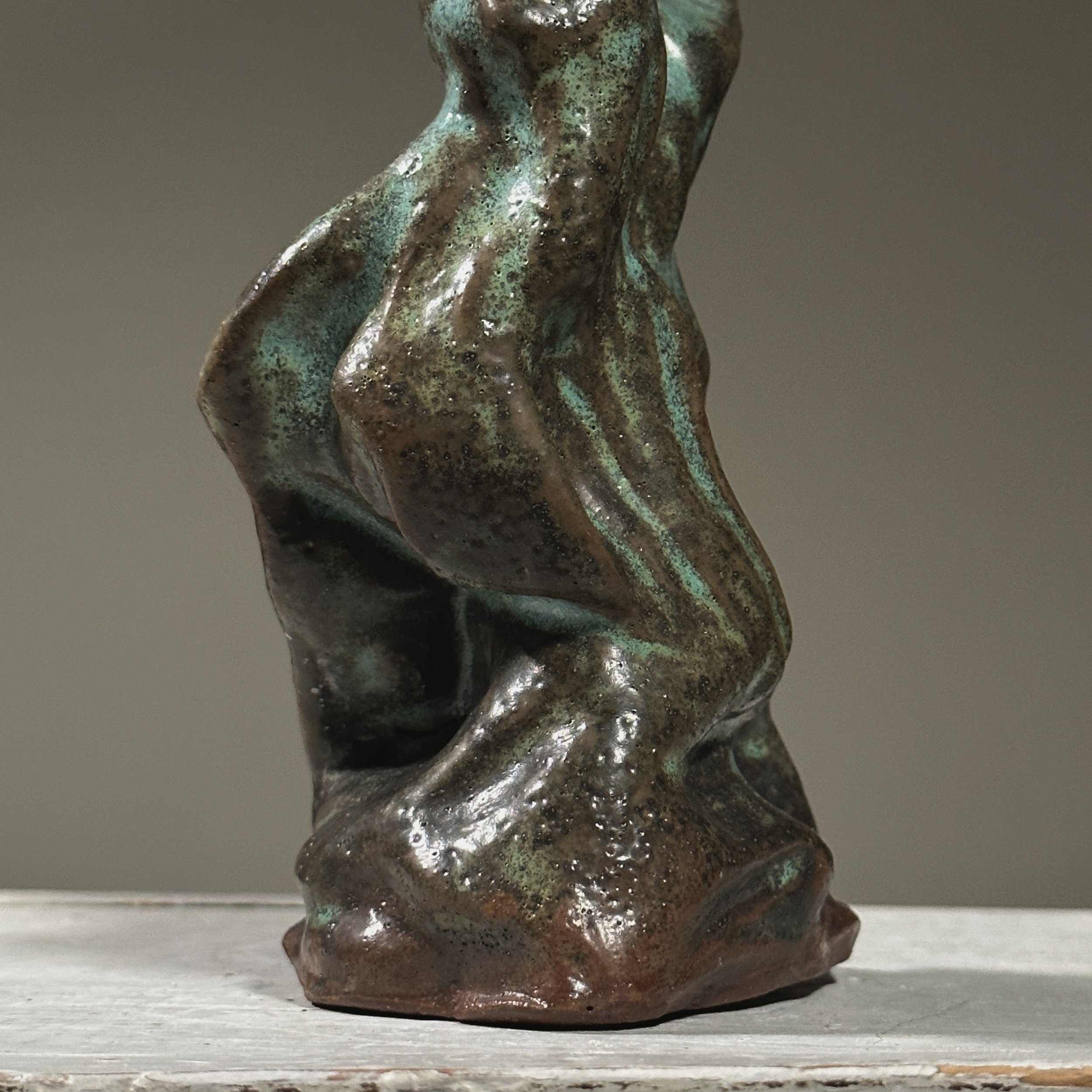
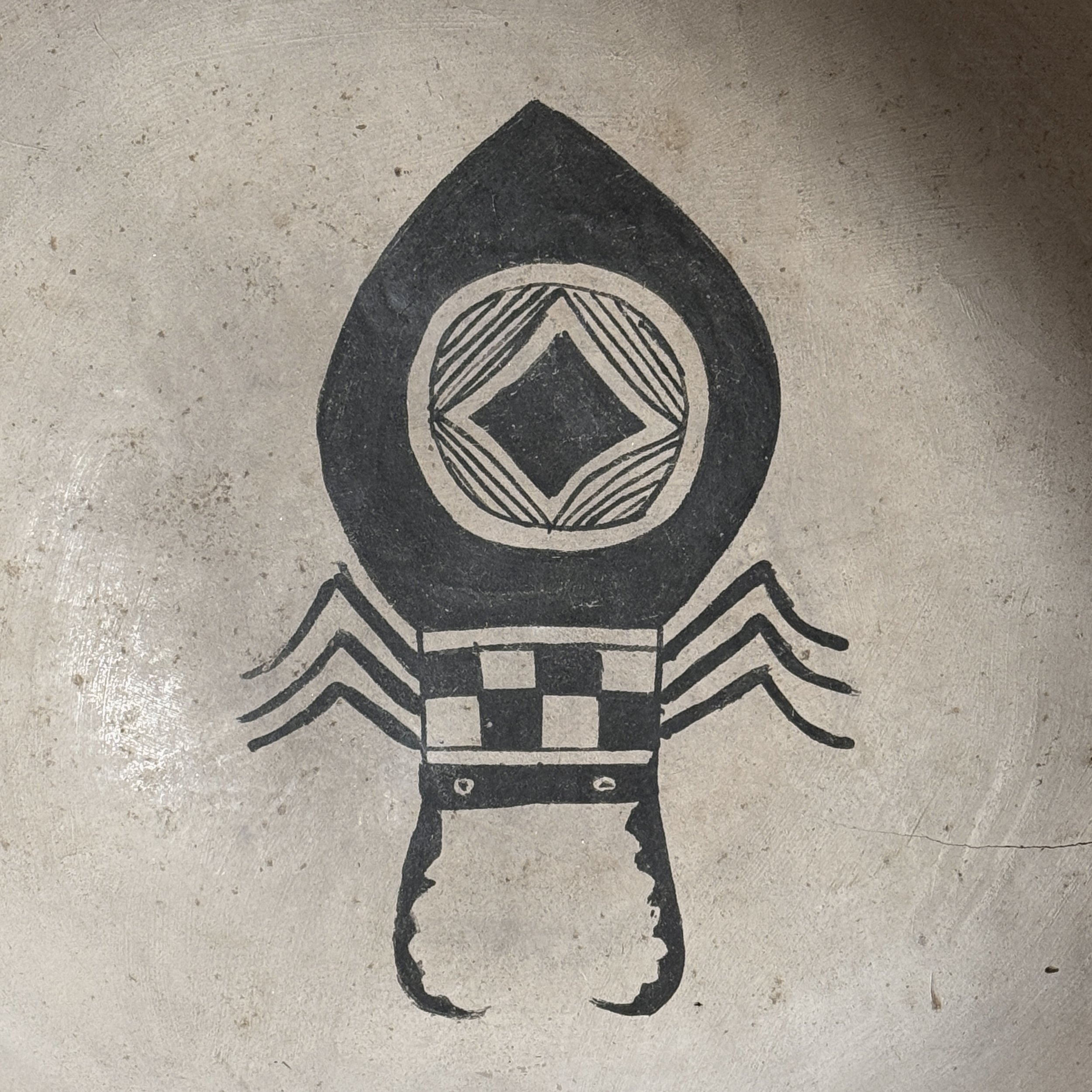
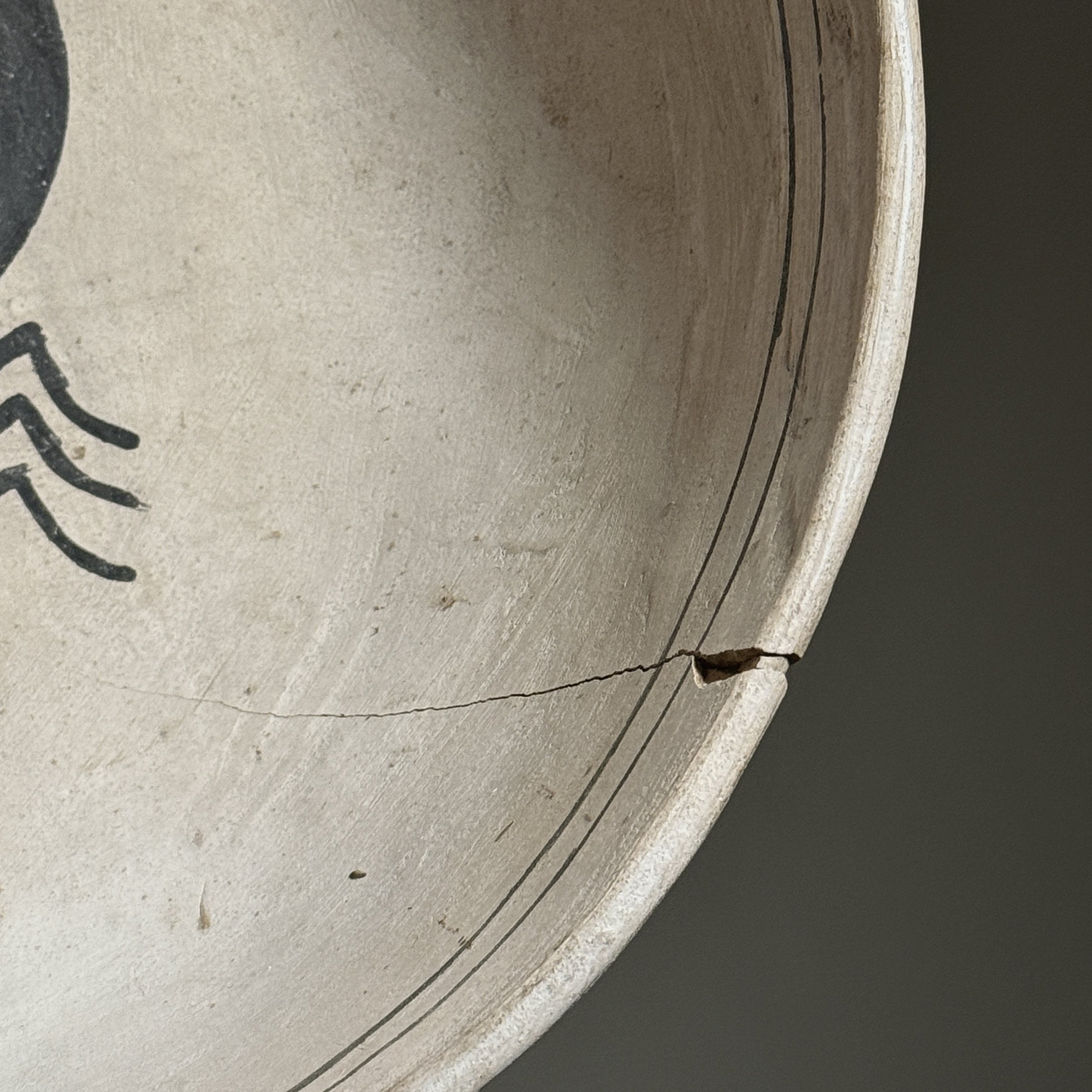
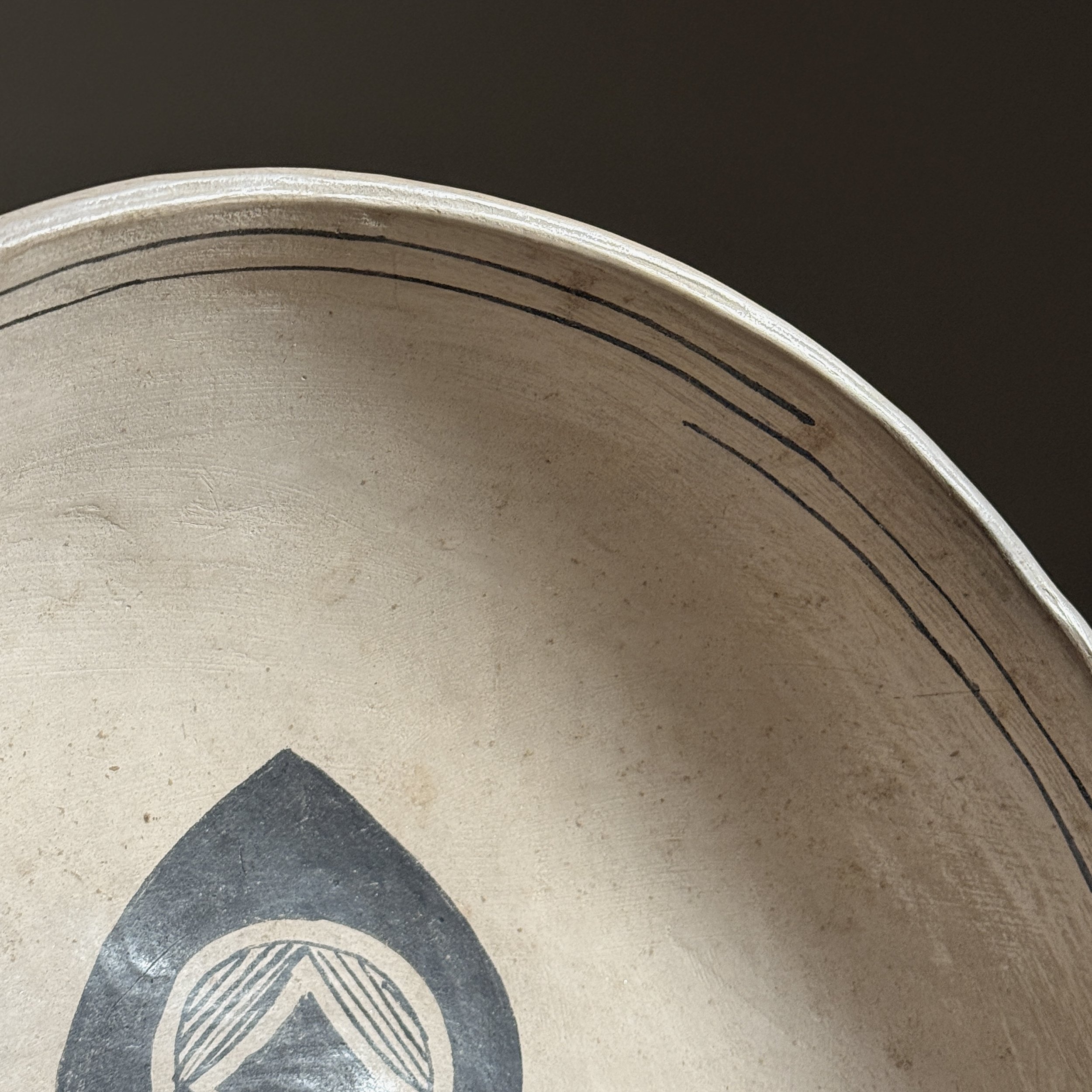
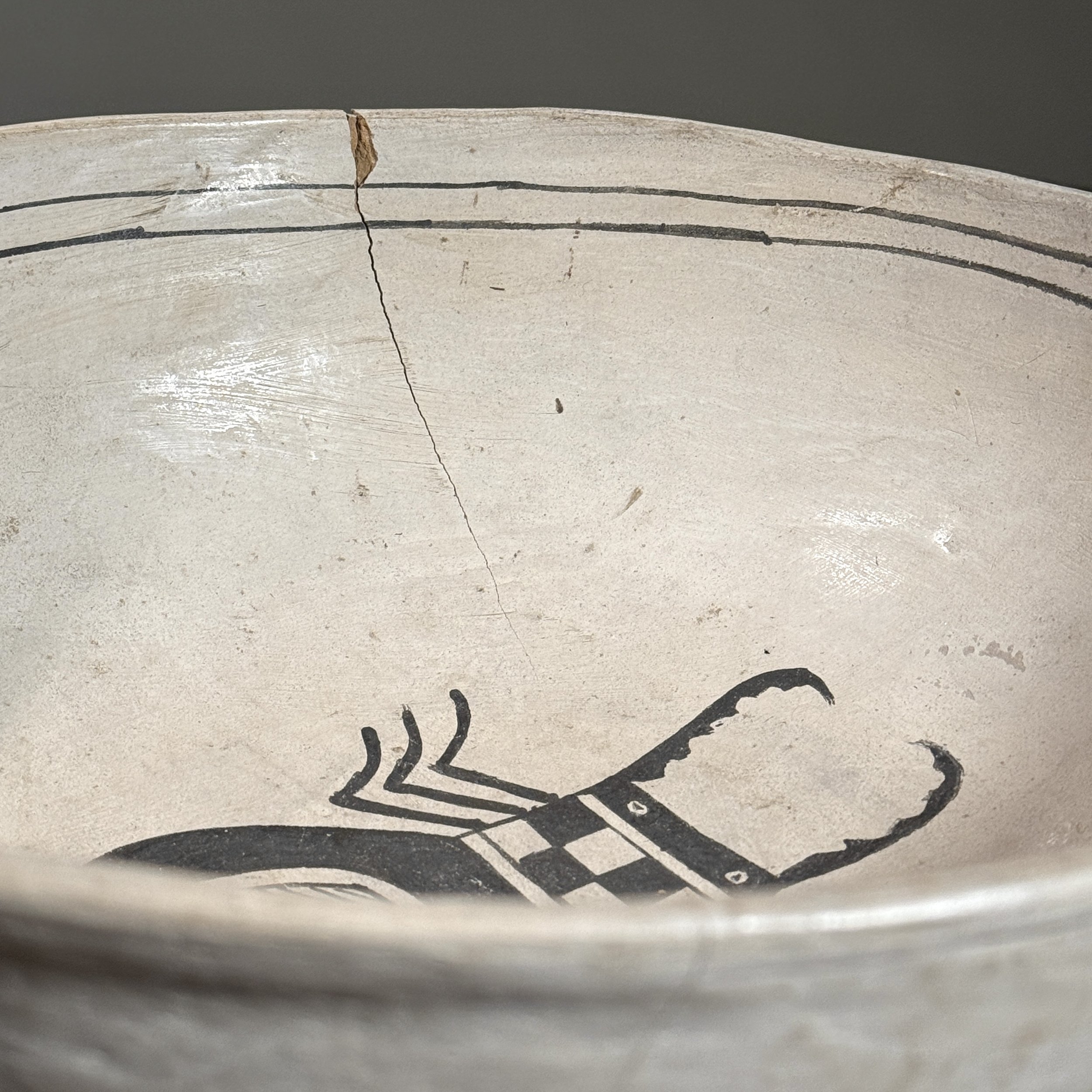
Medium: Faience
Designer: Nils Thorsson (Swedish/Danish, 1898–1975)
Maker: Royal Copenhagen / Aluminia, Denmark
Series: Baca
Motif: "Sunflower" and geometric pattern
Date: 1960
Form: Square vase
Dimensions: 7.5" H x 2.4" W x 2.4" D
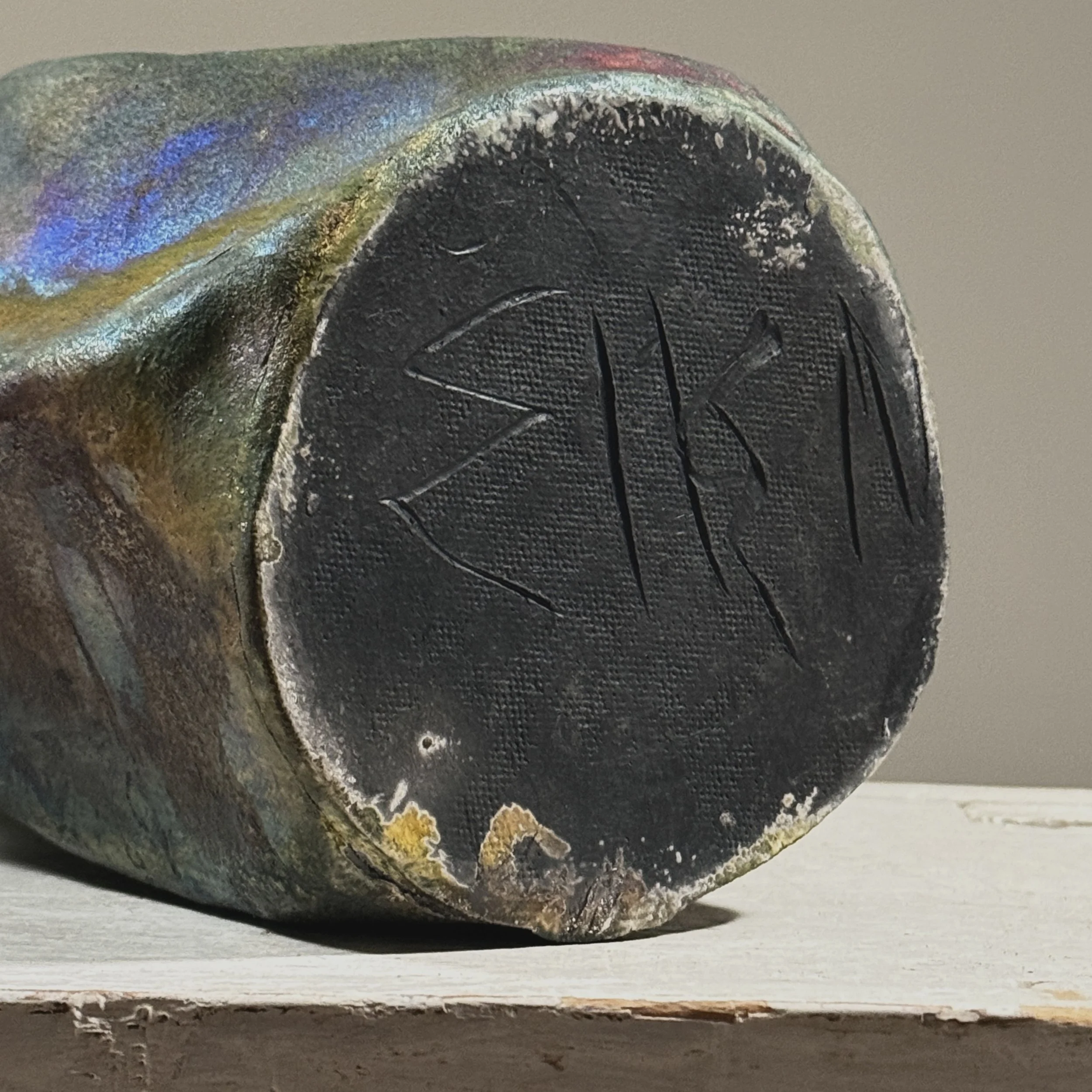
Signature: Marked on the underside
Condition: Good; wear consistent with age
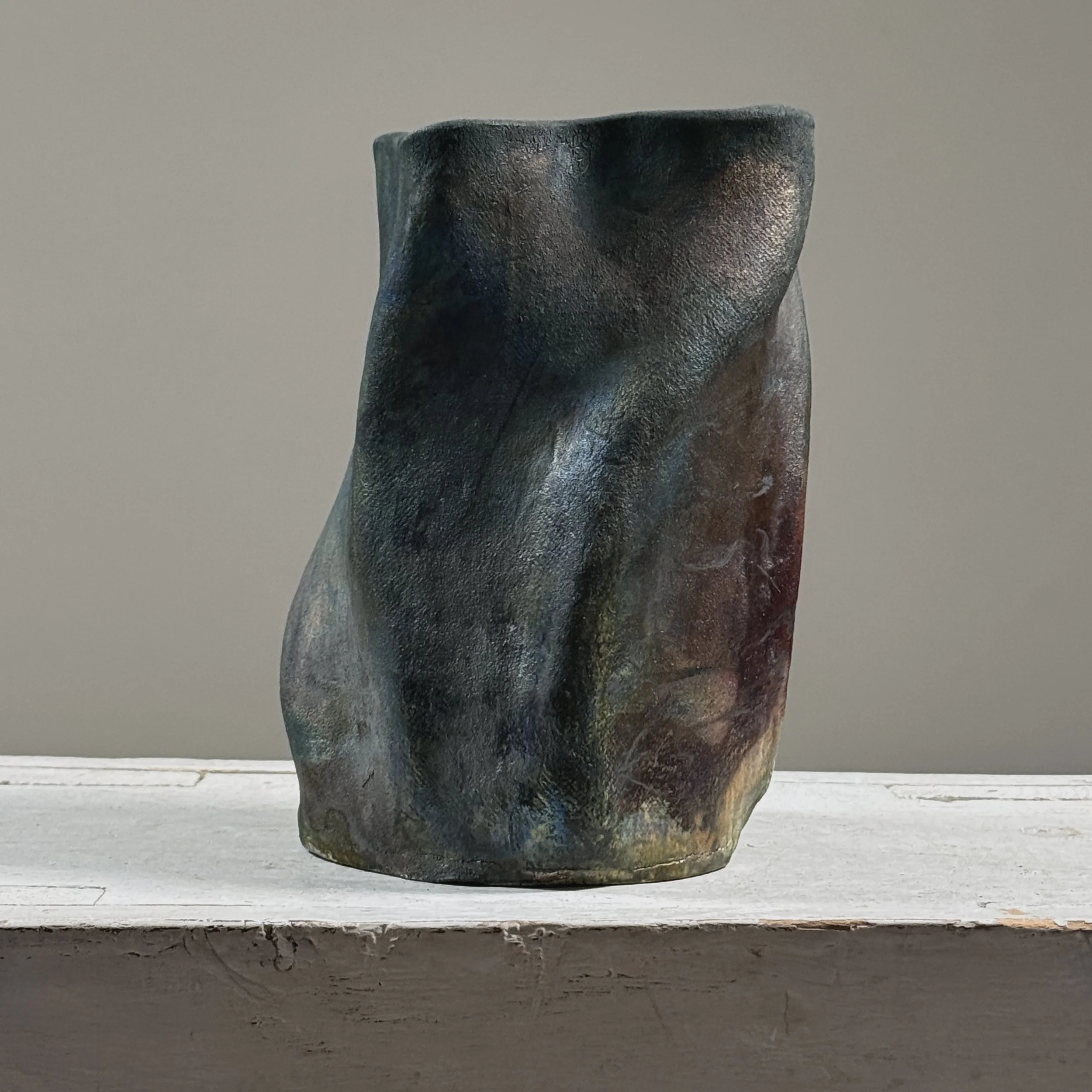
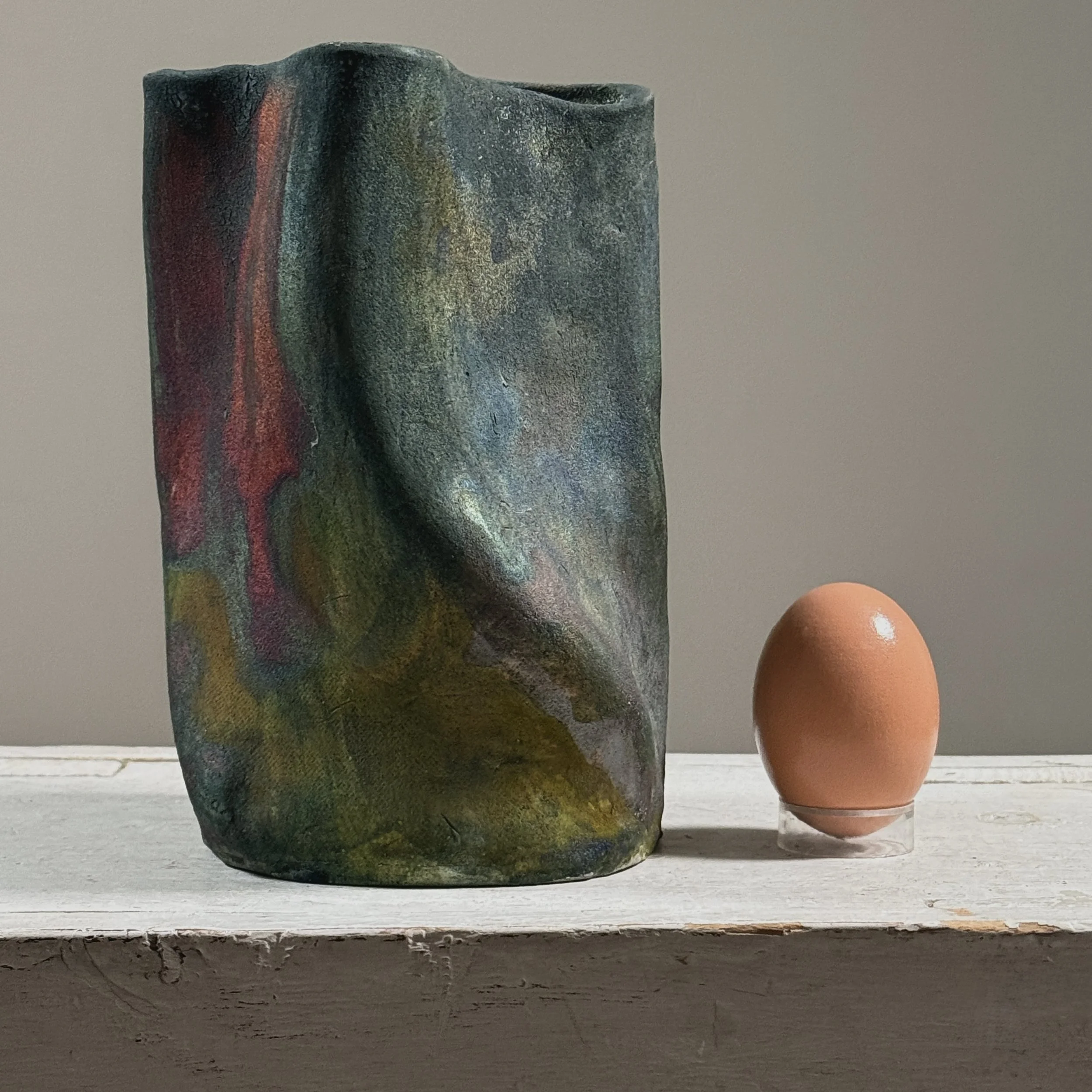
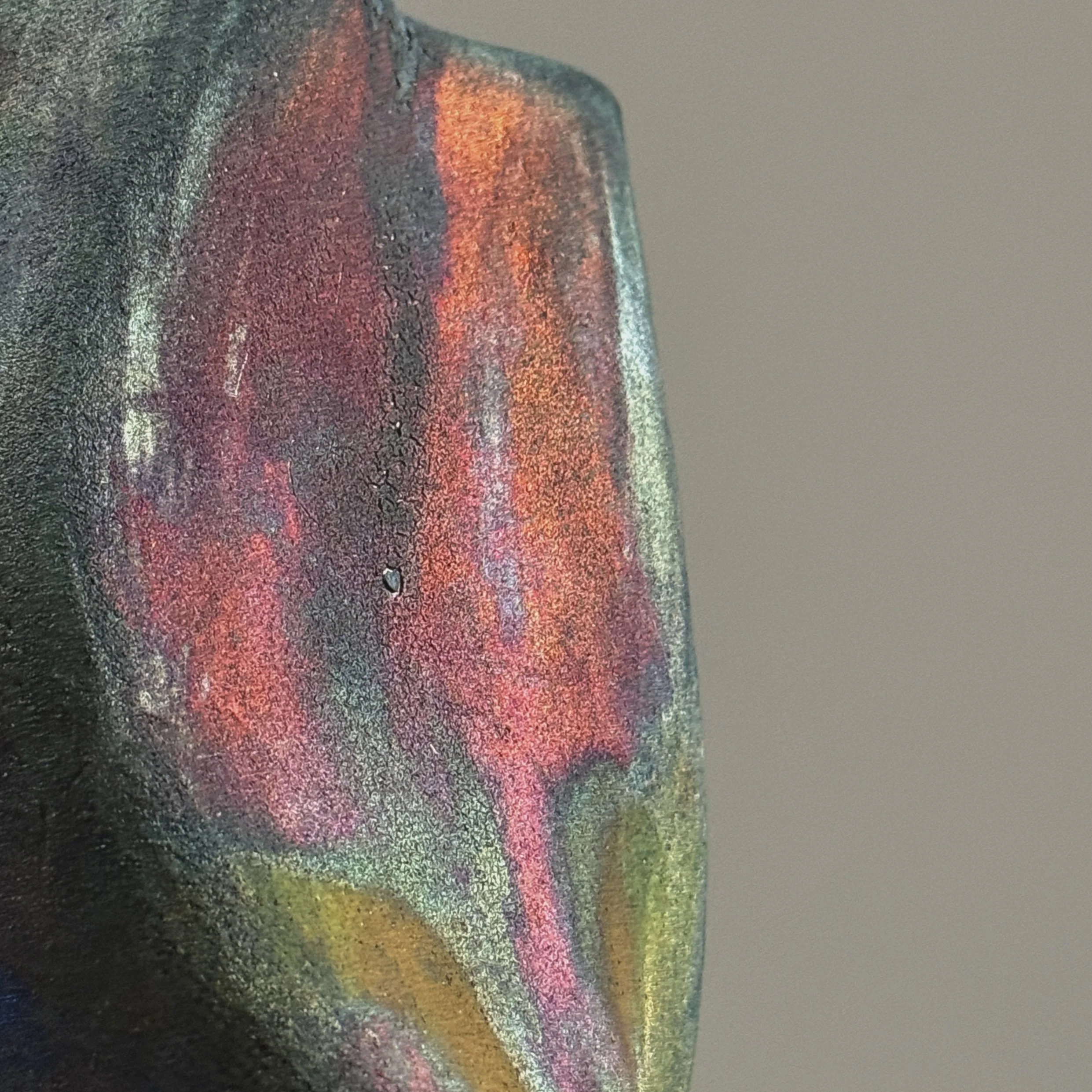
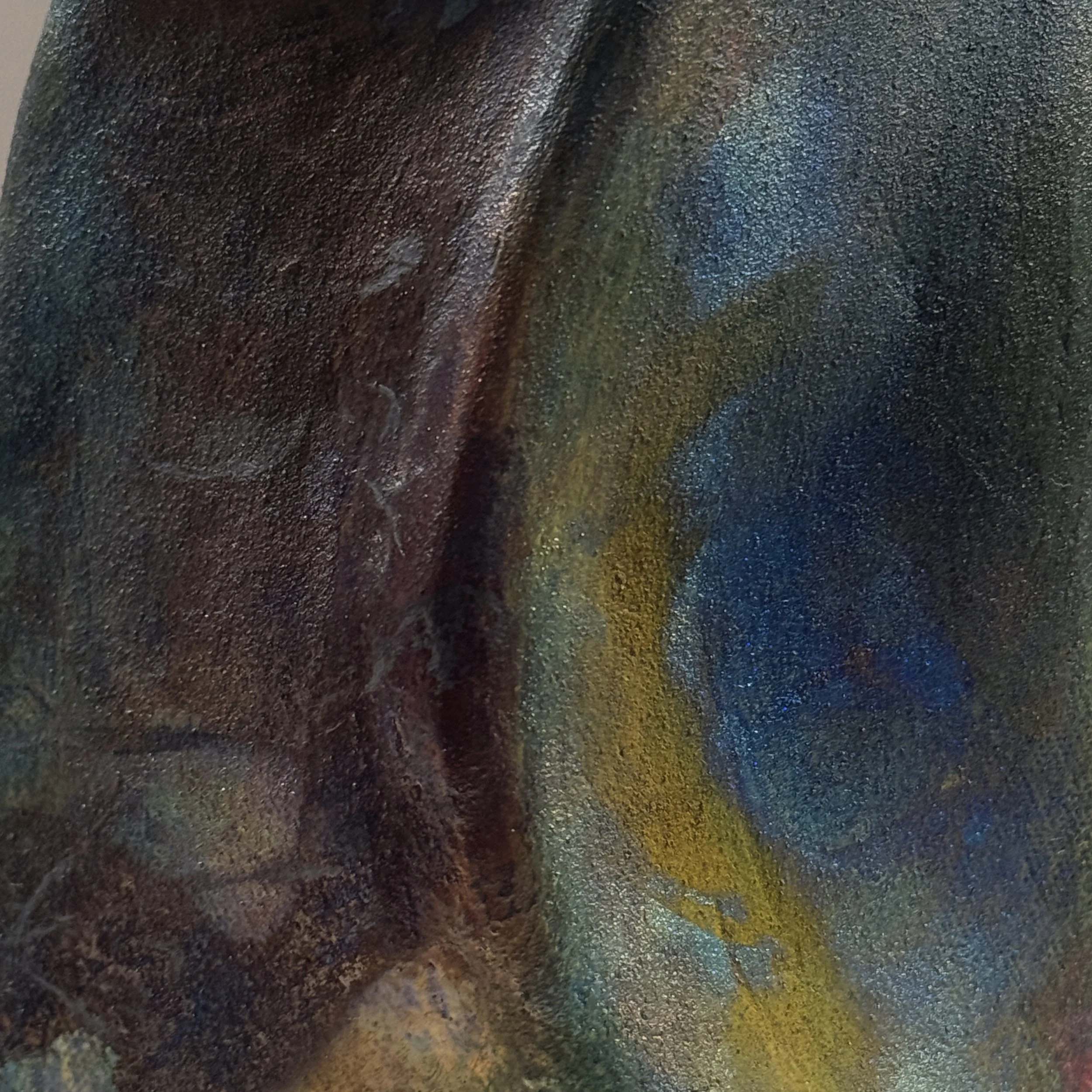
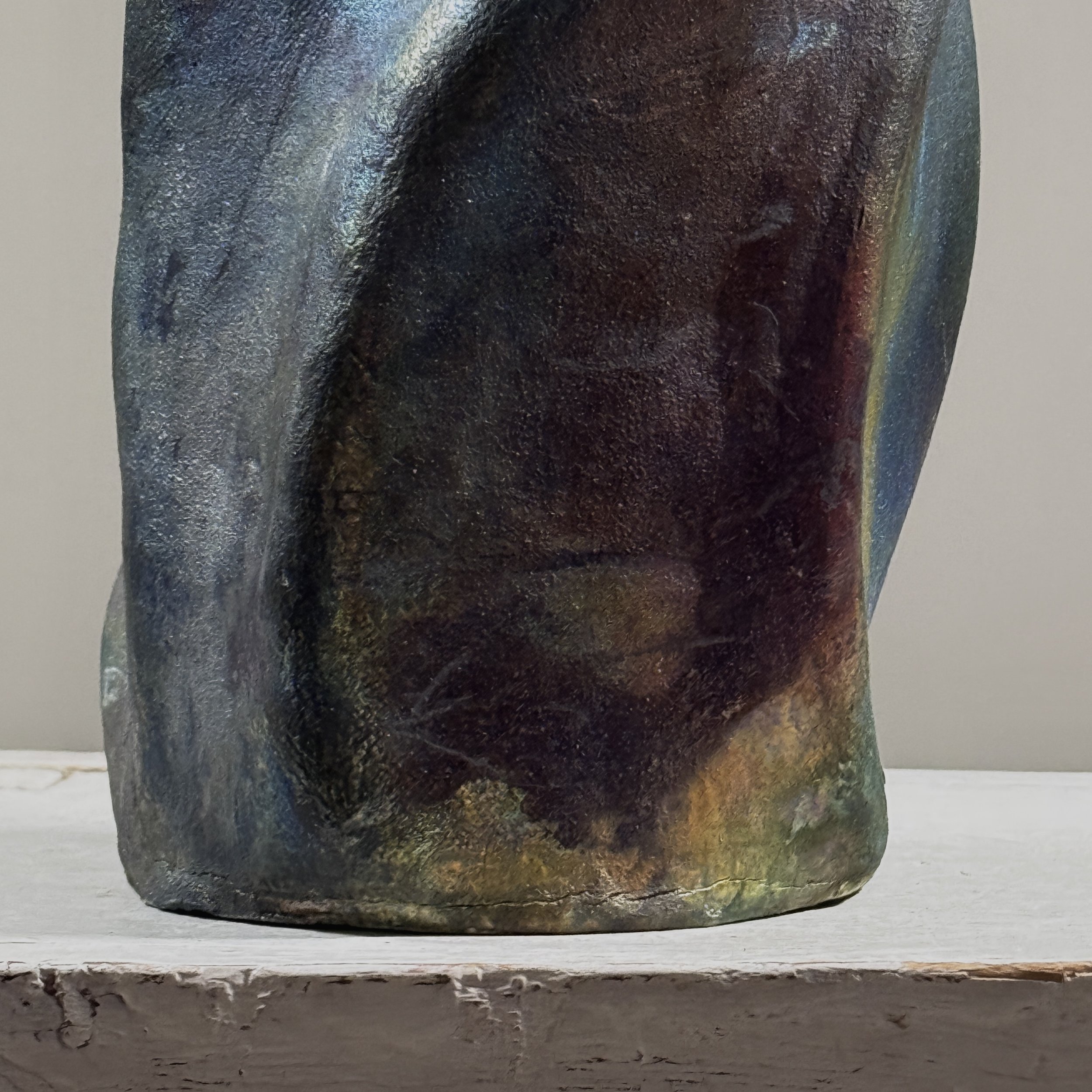
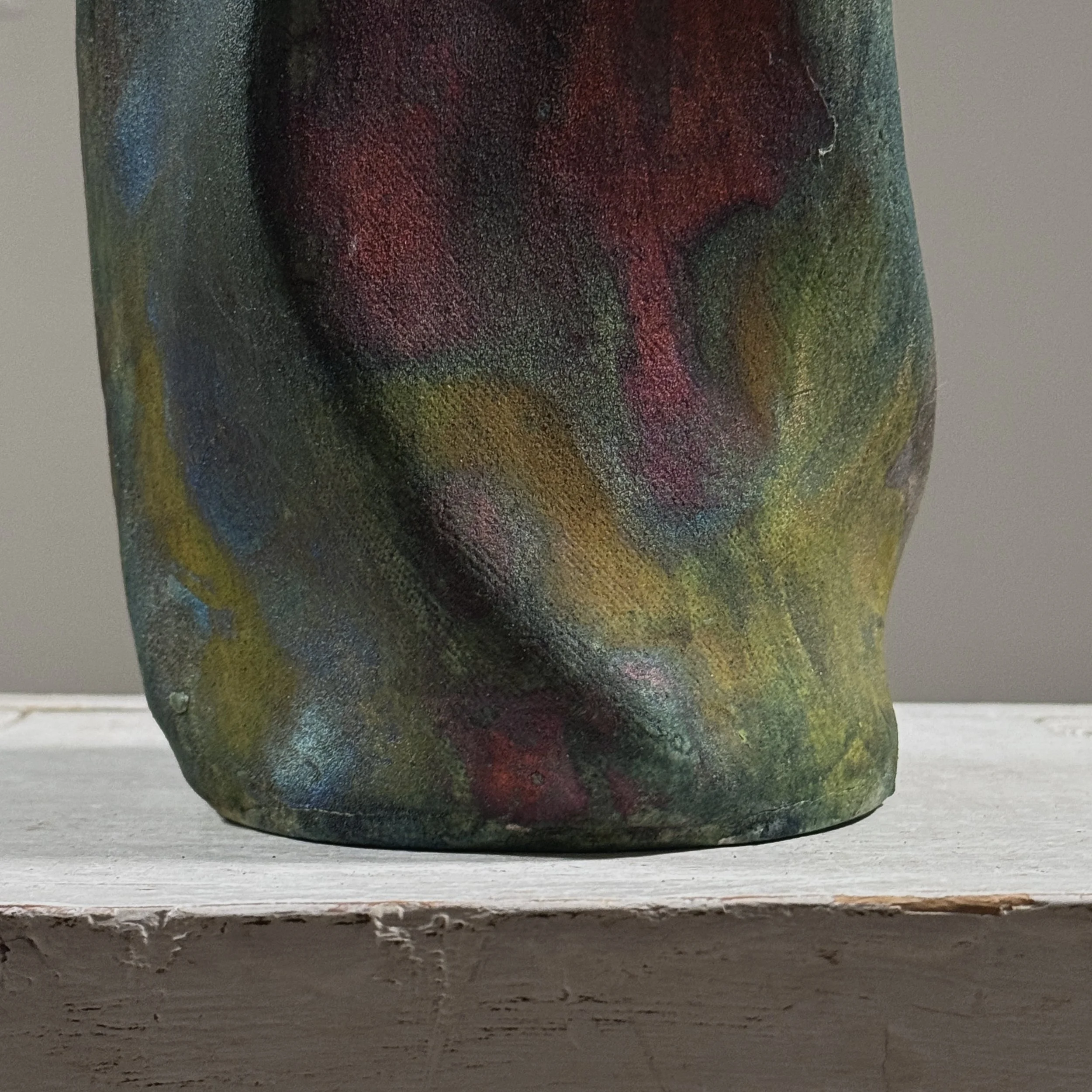
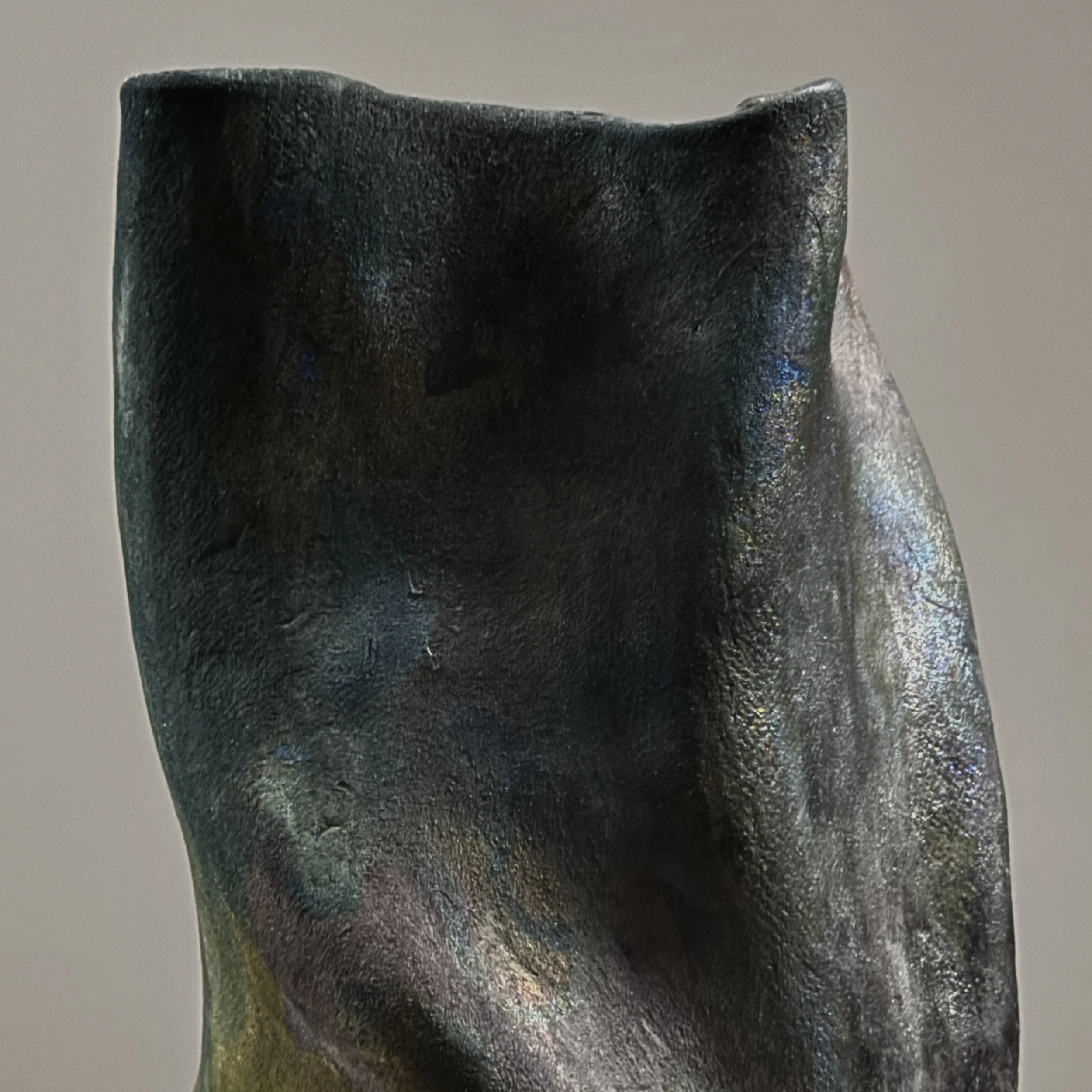
Square faience vase from the Baca series, designed by Nils Thorsson for Royal Copenhagen (Aluminia) in Denmark, 1960. The body carries the series' iconic blue-and-brown "Sunflower" and geometric motif. In good condition with wear consistent with age.
Artist Biography
Nils Thorsson (1898–1975) was a Swedish-Danish ceramic designer and one of the most prolific figures in twentieth-century Danish applied arts. Born in Eslöv, Sweden, he trained at the Royal Danish Academy of Fine Arts and joined Aluminia in 1917, becoming its artistic director in 1928. Following Royal Copenhagen's acquisition of Aluminia in 1923, he also took charge of Royal Copenhagen's faience production, a position he held until 1969.
Thorsson's design aesthetic went through several phases, from early Art Deco works to the organic, textural stoneware of the 1940s and 1950s. He is best known for the Baca and Tenera series, produced from the late 1950s onward, in which stoneware and faience bodies were decorated with abstract geometric and botanical motifs in a palette of blue, brown, and earth tones. These series brought Danish industrial ceramics into international prominence and remain among the most collected of his designs.
Thorsson's work is represented in major institutional collections.
Museum Holdings:
Works by Nils Thorsson are held in the collections of the Designmuseum Danmark (Copenhagen); the Victoria and Albert Museum (London); the Nationalmuseum (Stockholm); the Röhsska Museum (Gothenburg); the Metropolitan Museum of Art (New York); the Cooper Hewitt, Smithsonian Design Museum (New York); the Museum of Modern Art (New York); the Art Institute of Chicago; and the Musée des Arts Décoratifs (Paris).

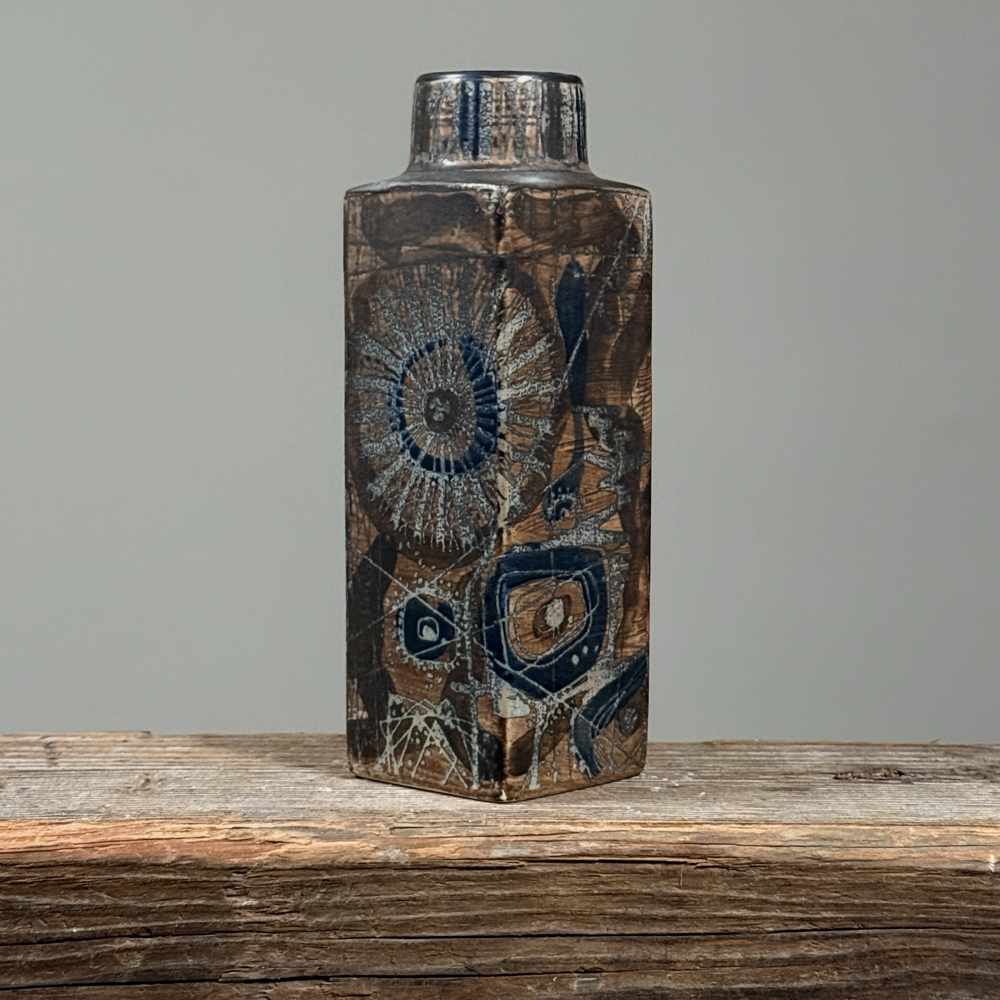 Image 1 of 6
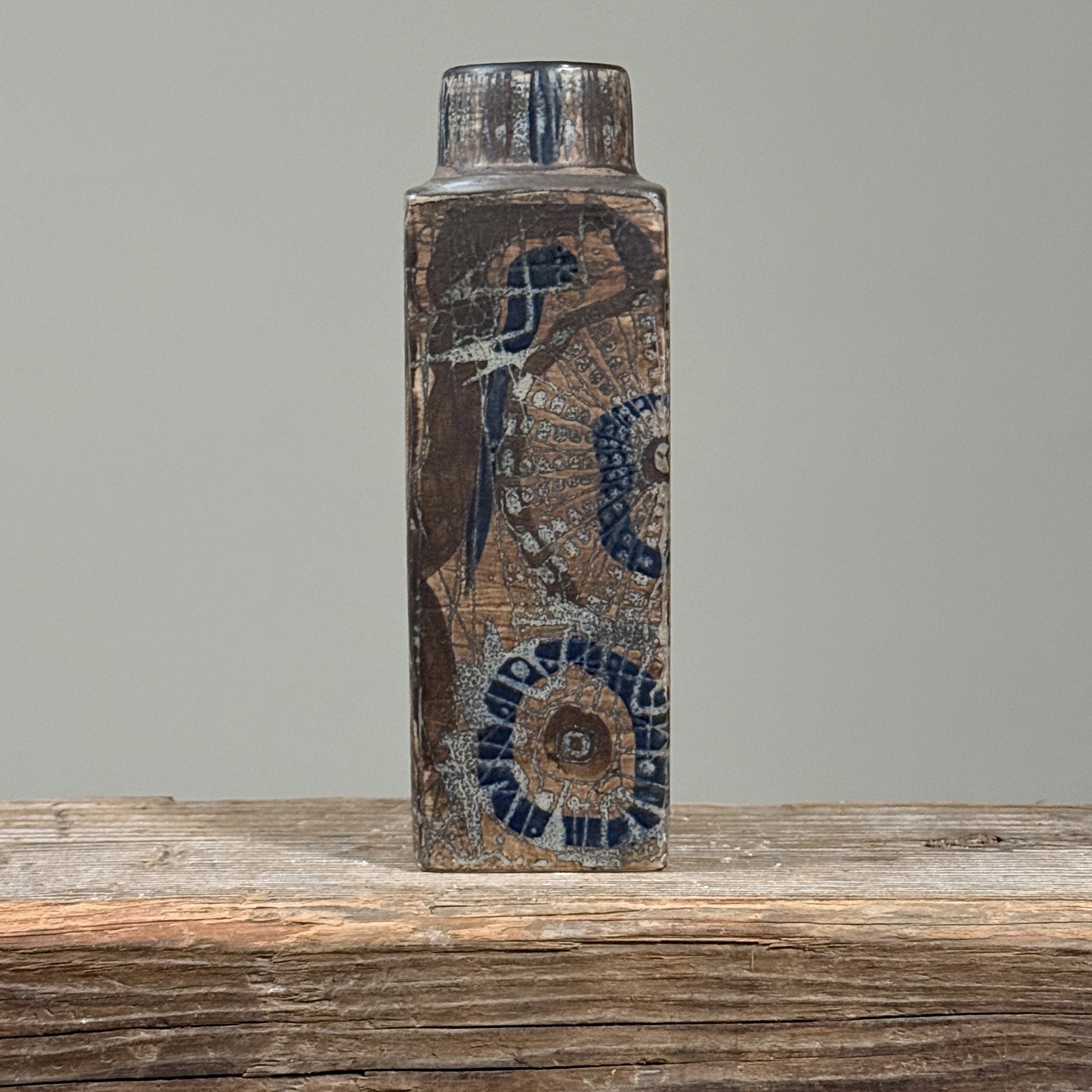 Image 2 of 6
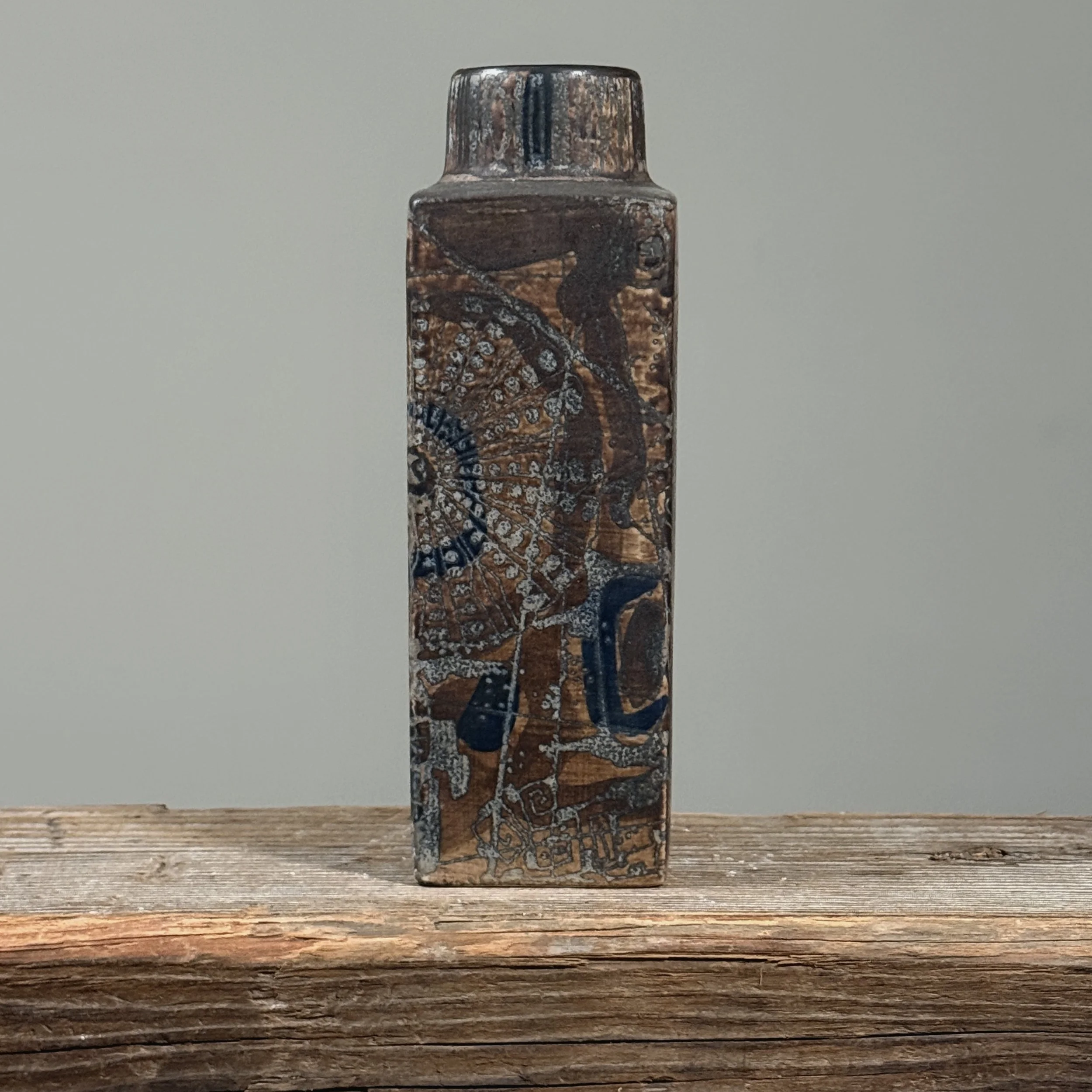 Image 3 of 6
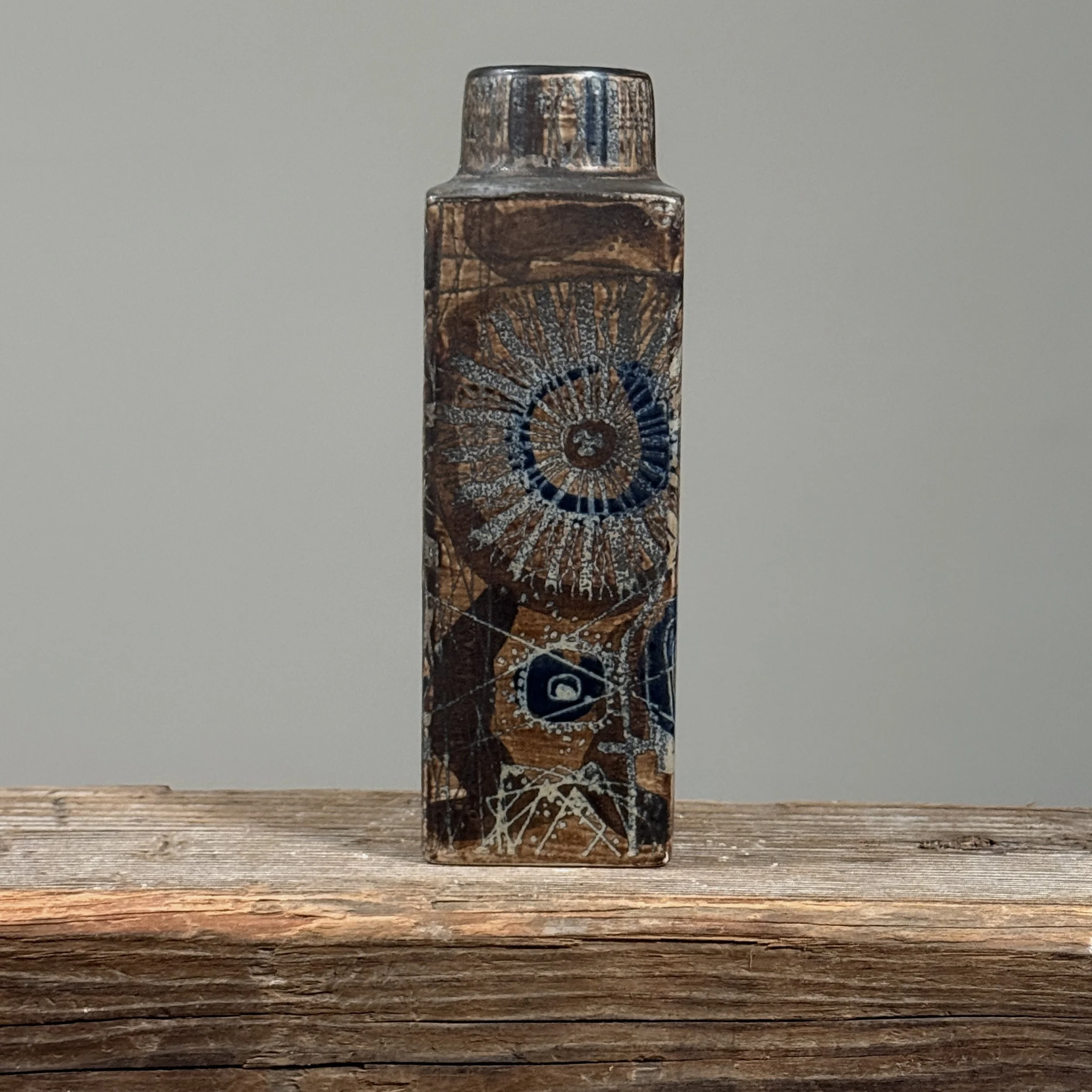 Image 4 of 6
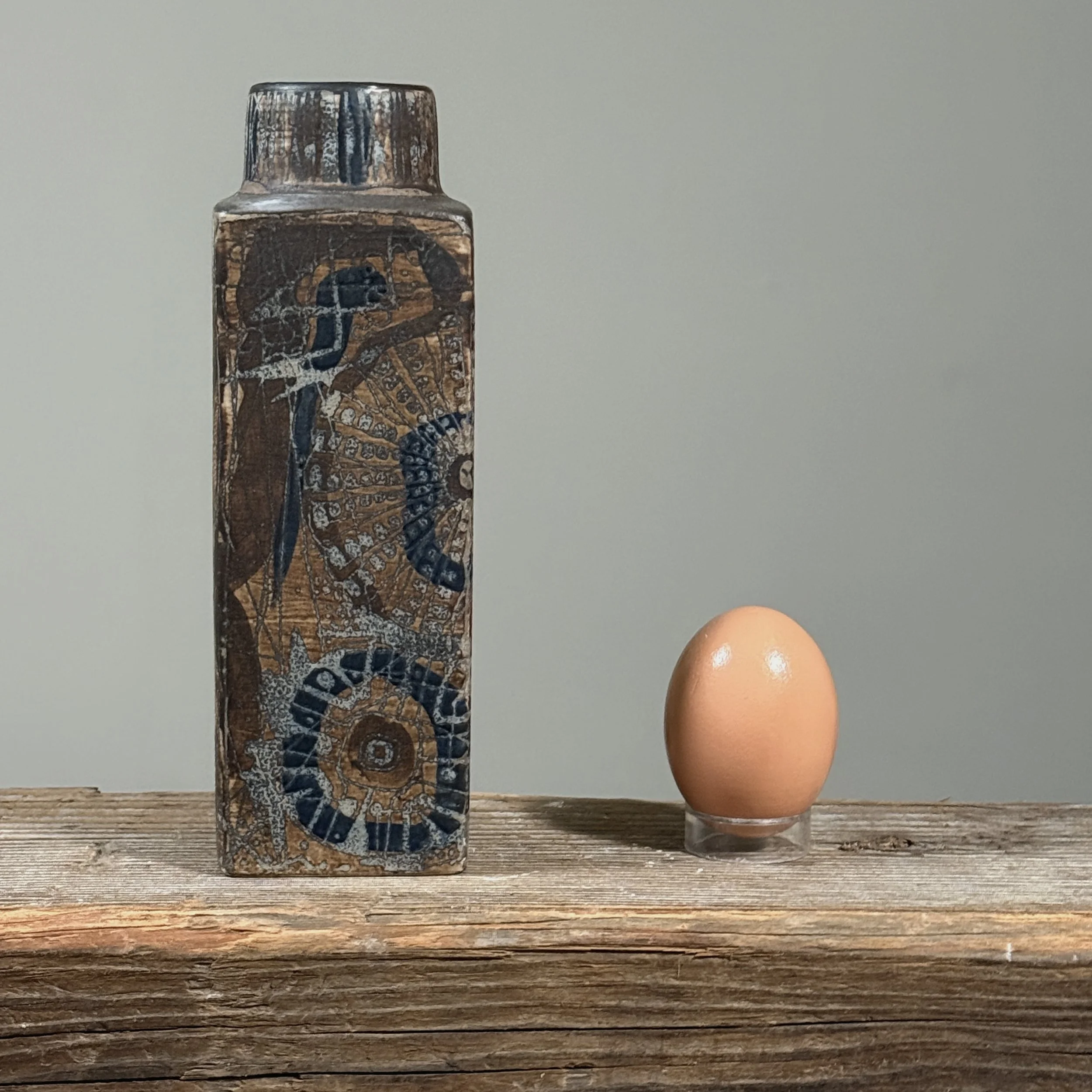 Image 5 of 6
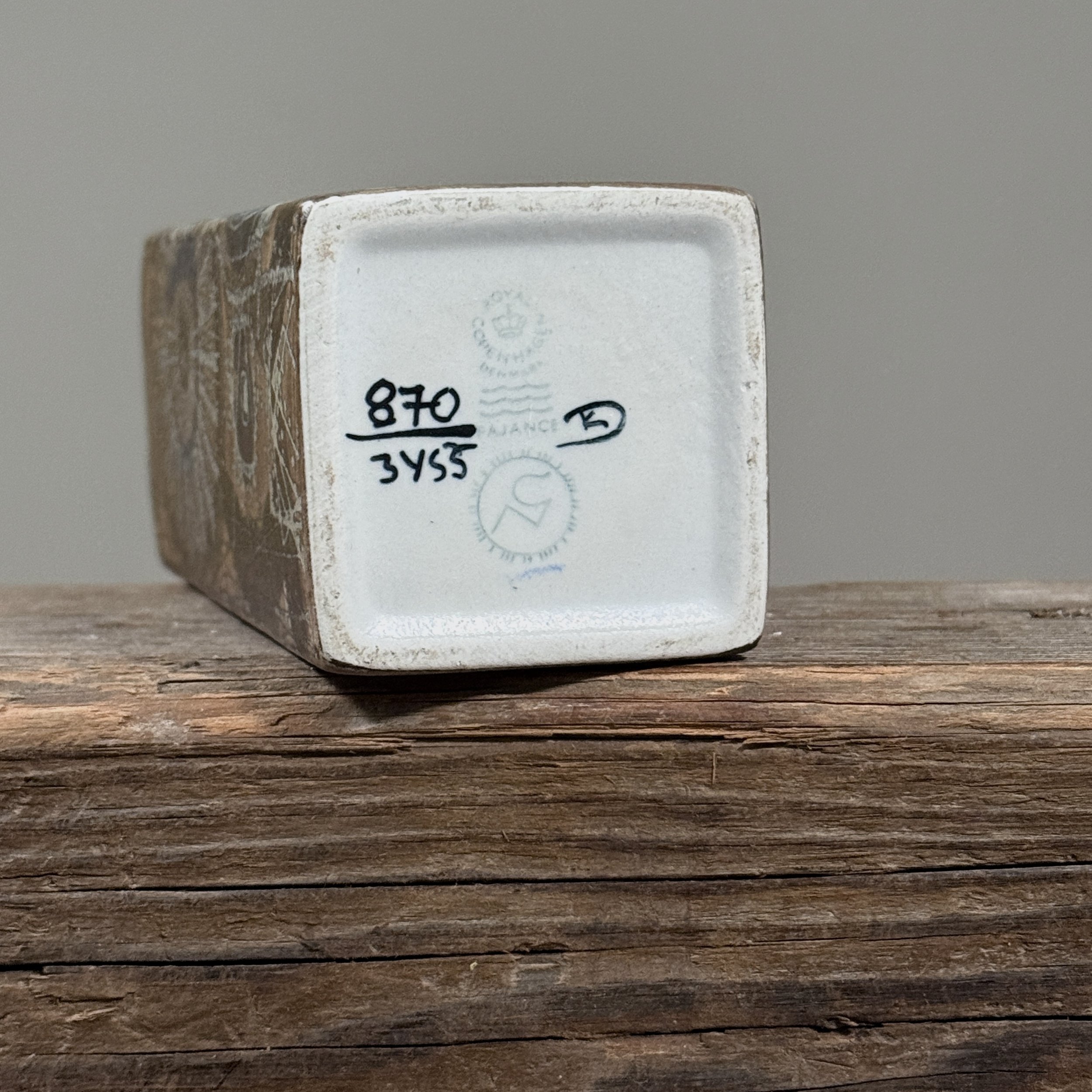 Image 6 of 6