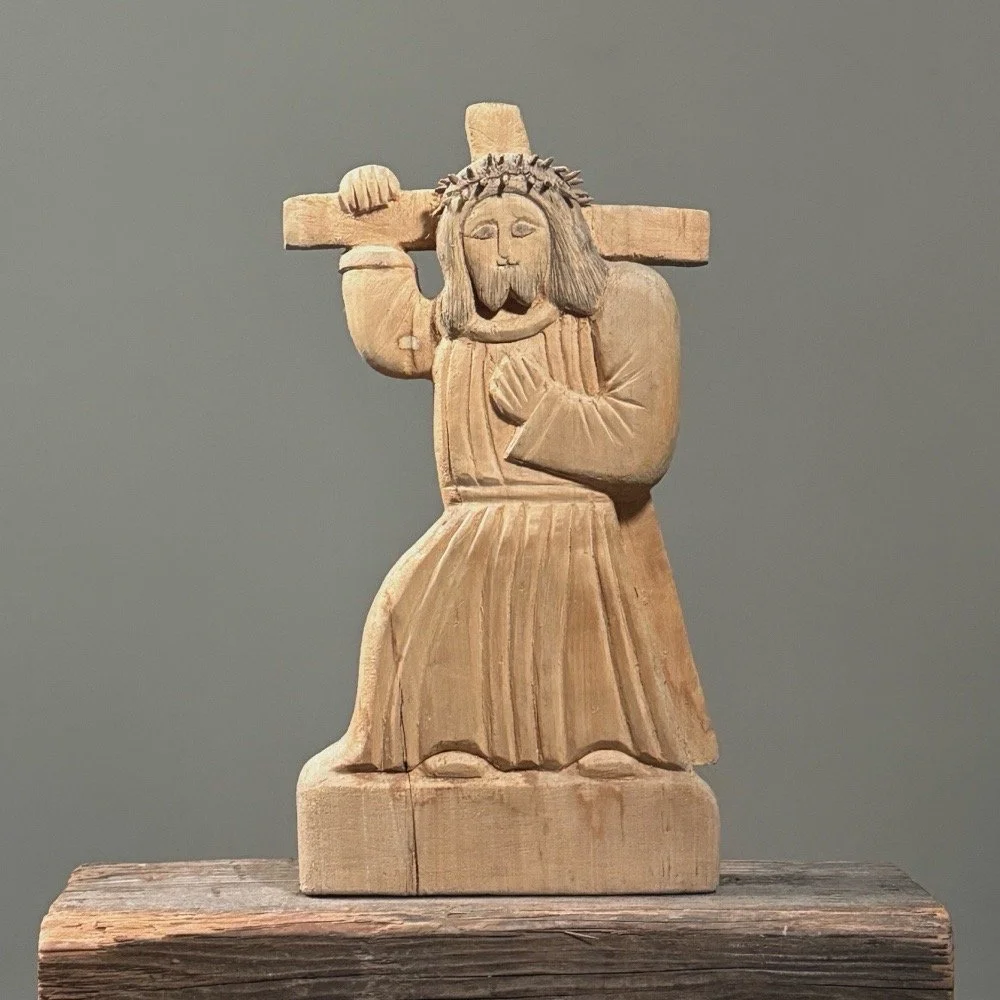
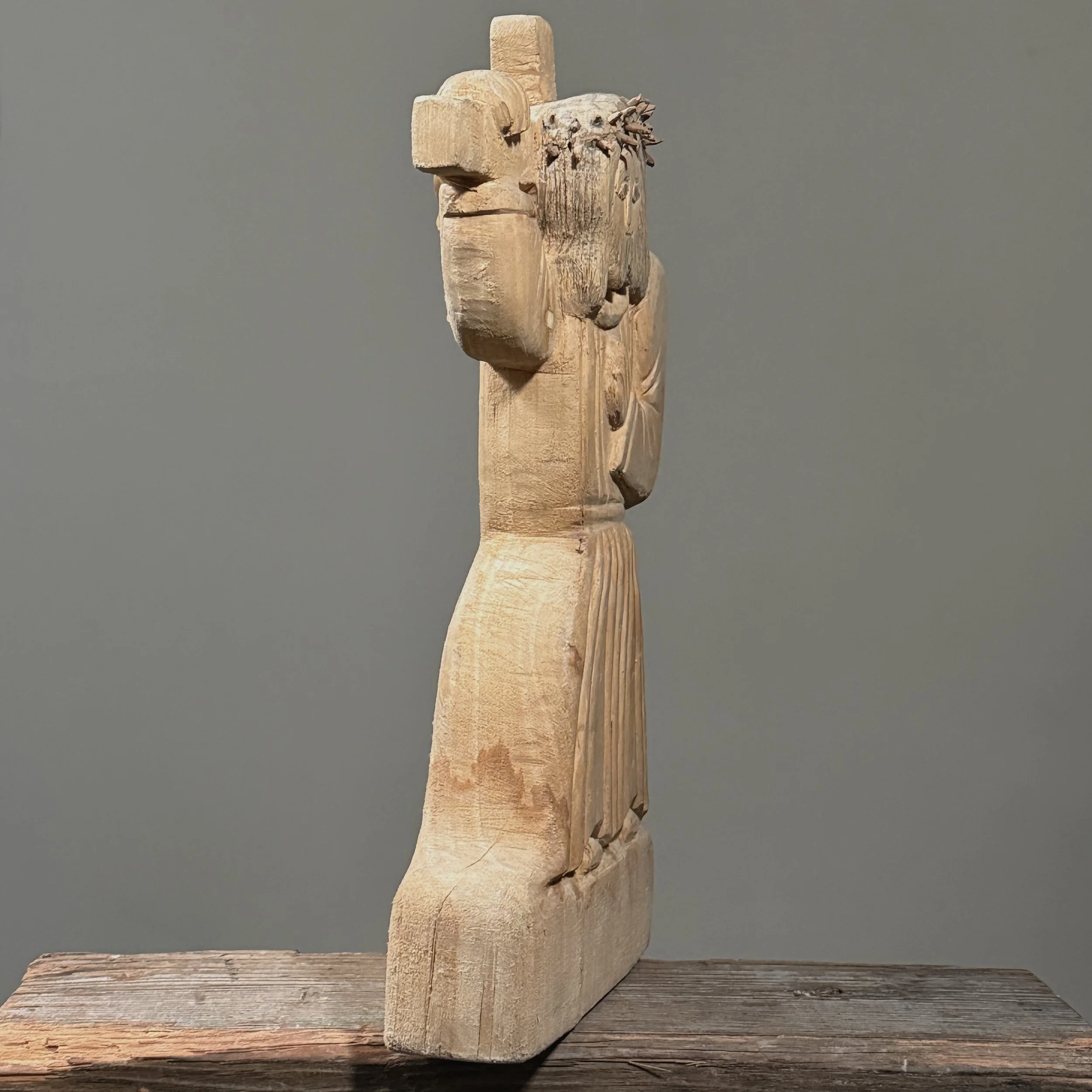
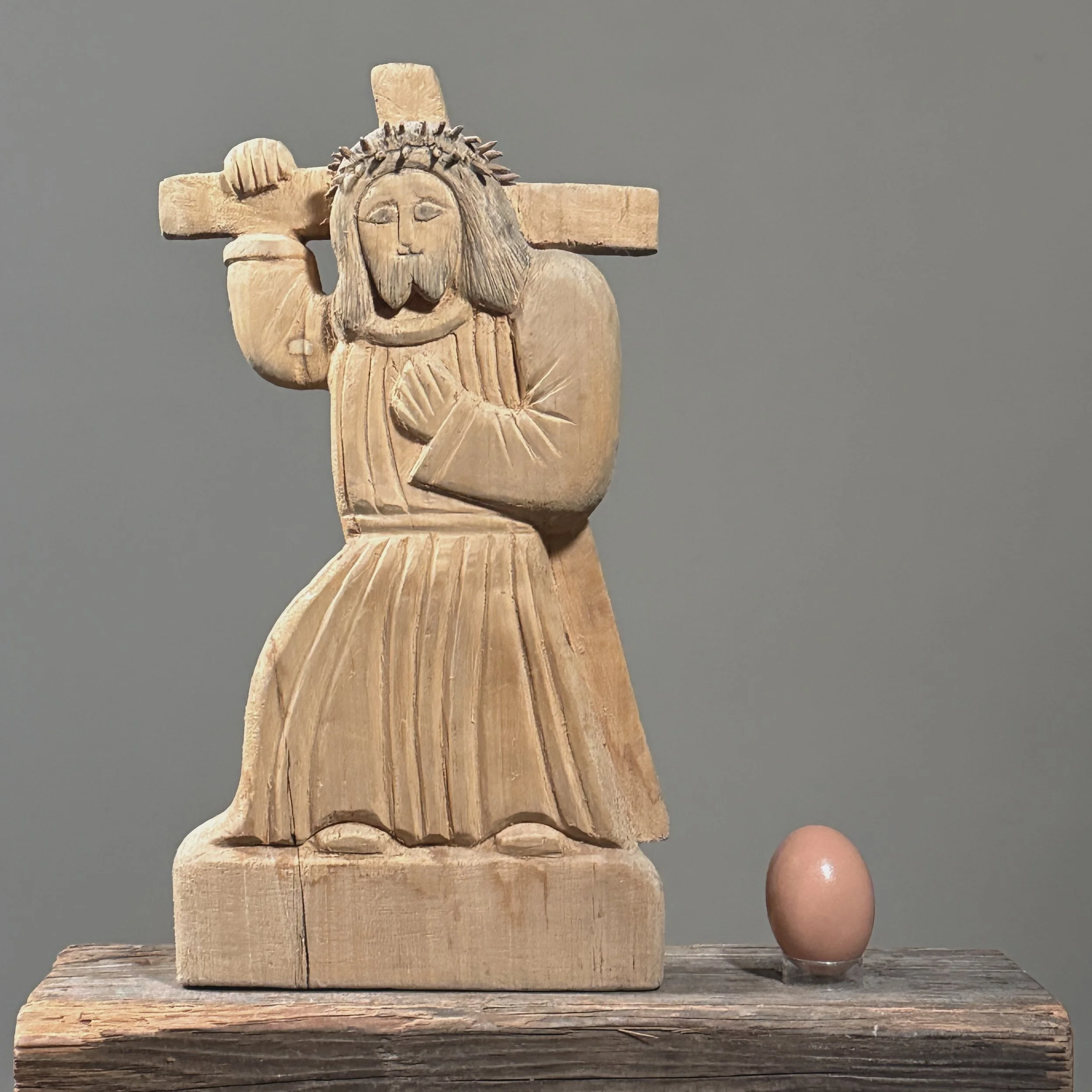
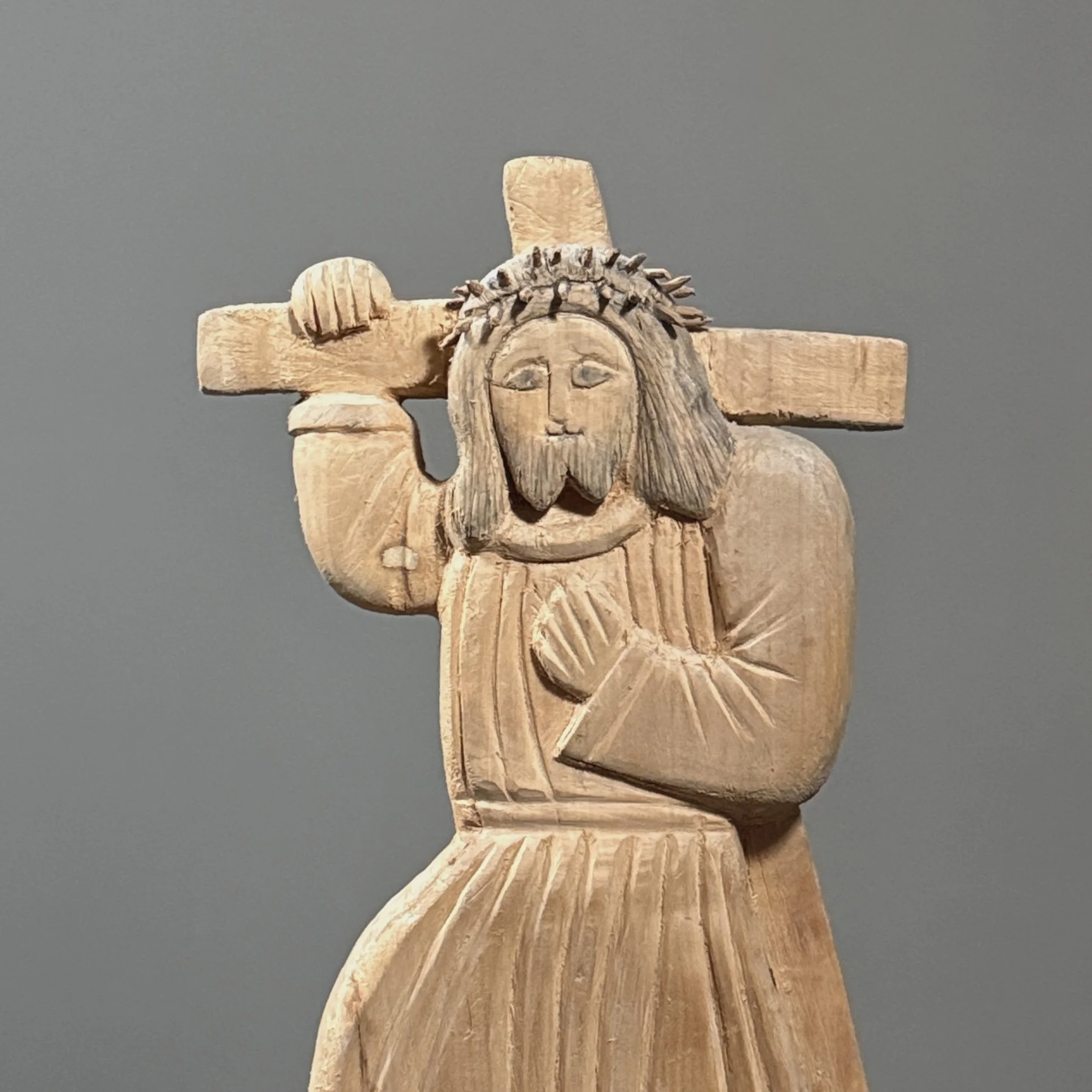
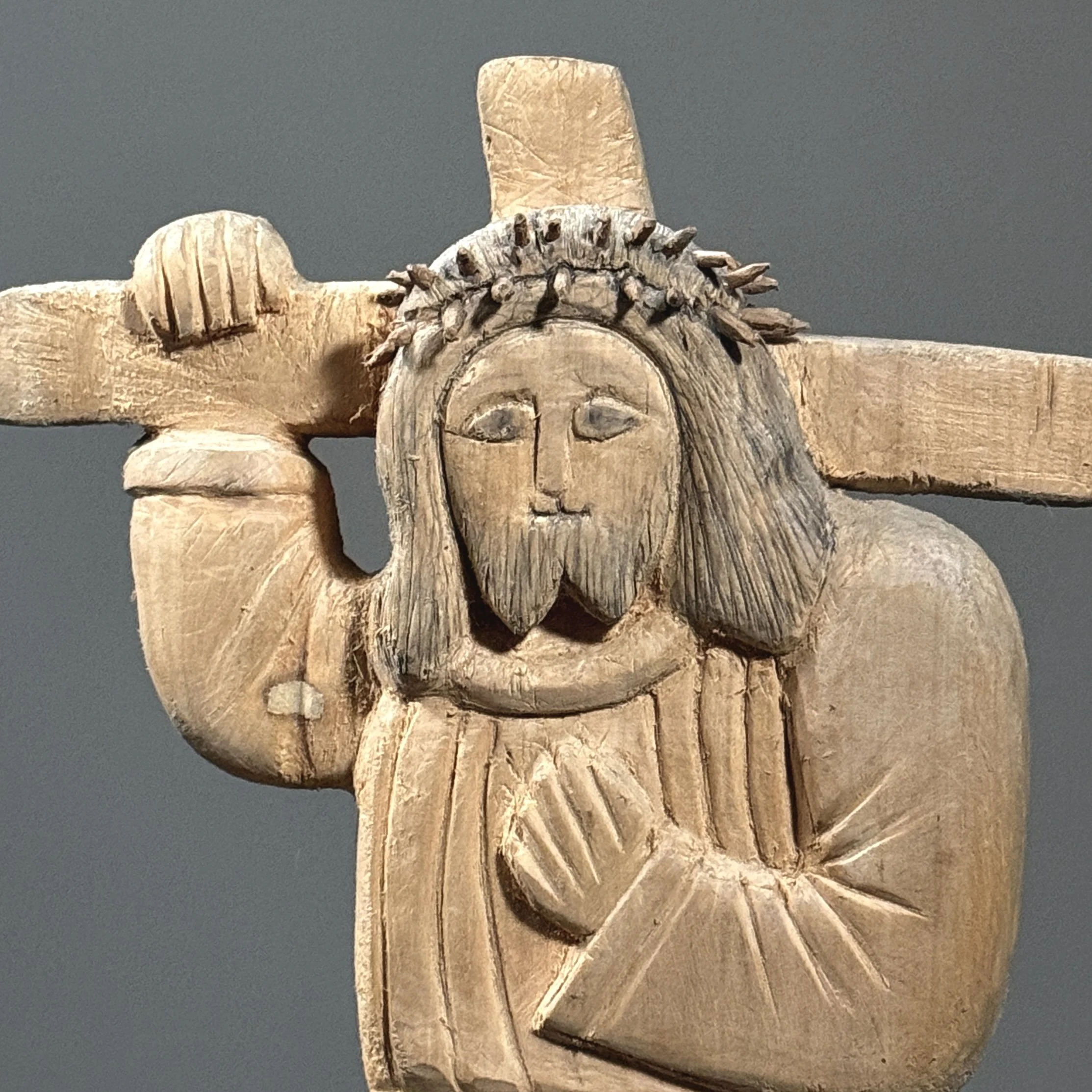
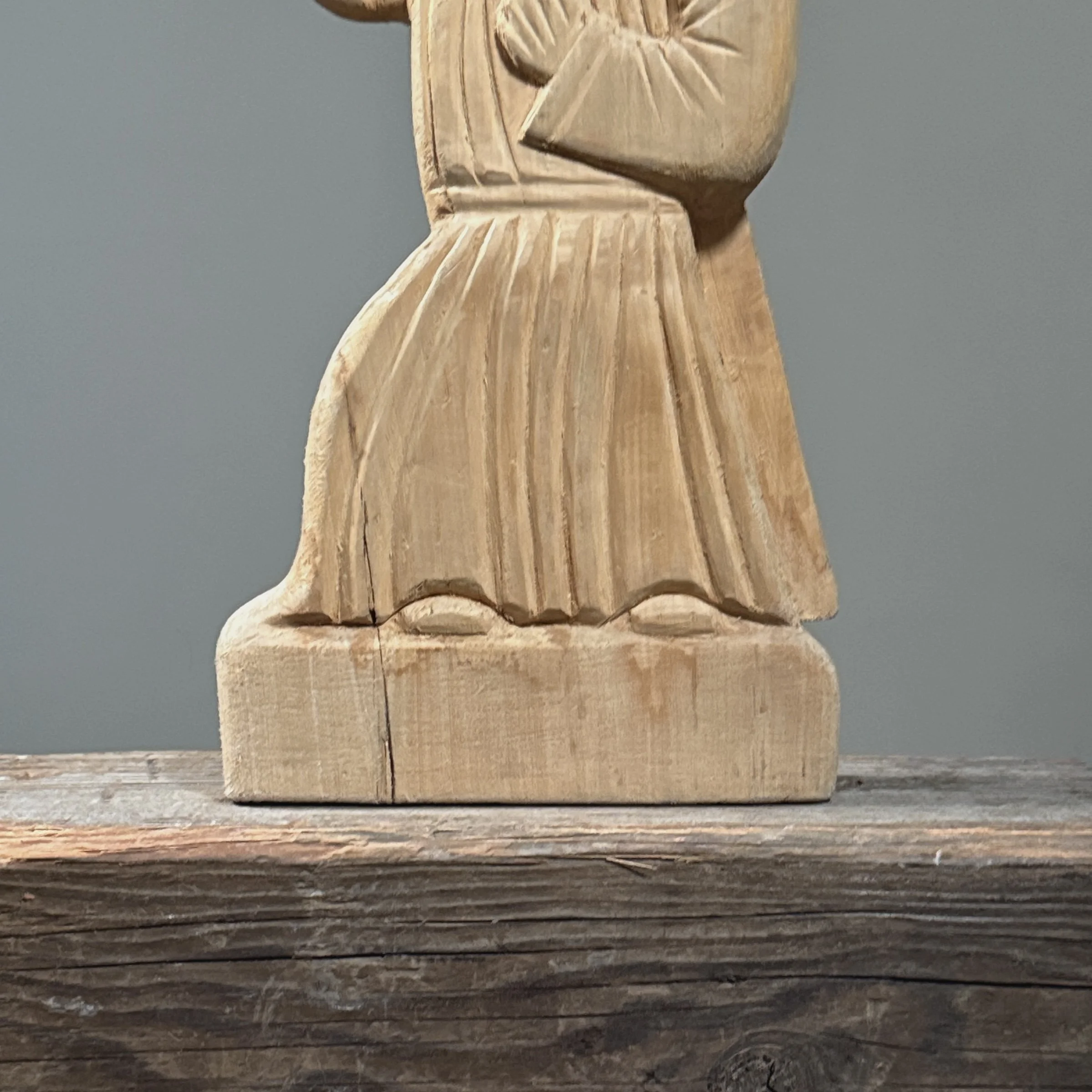
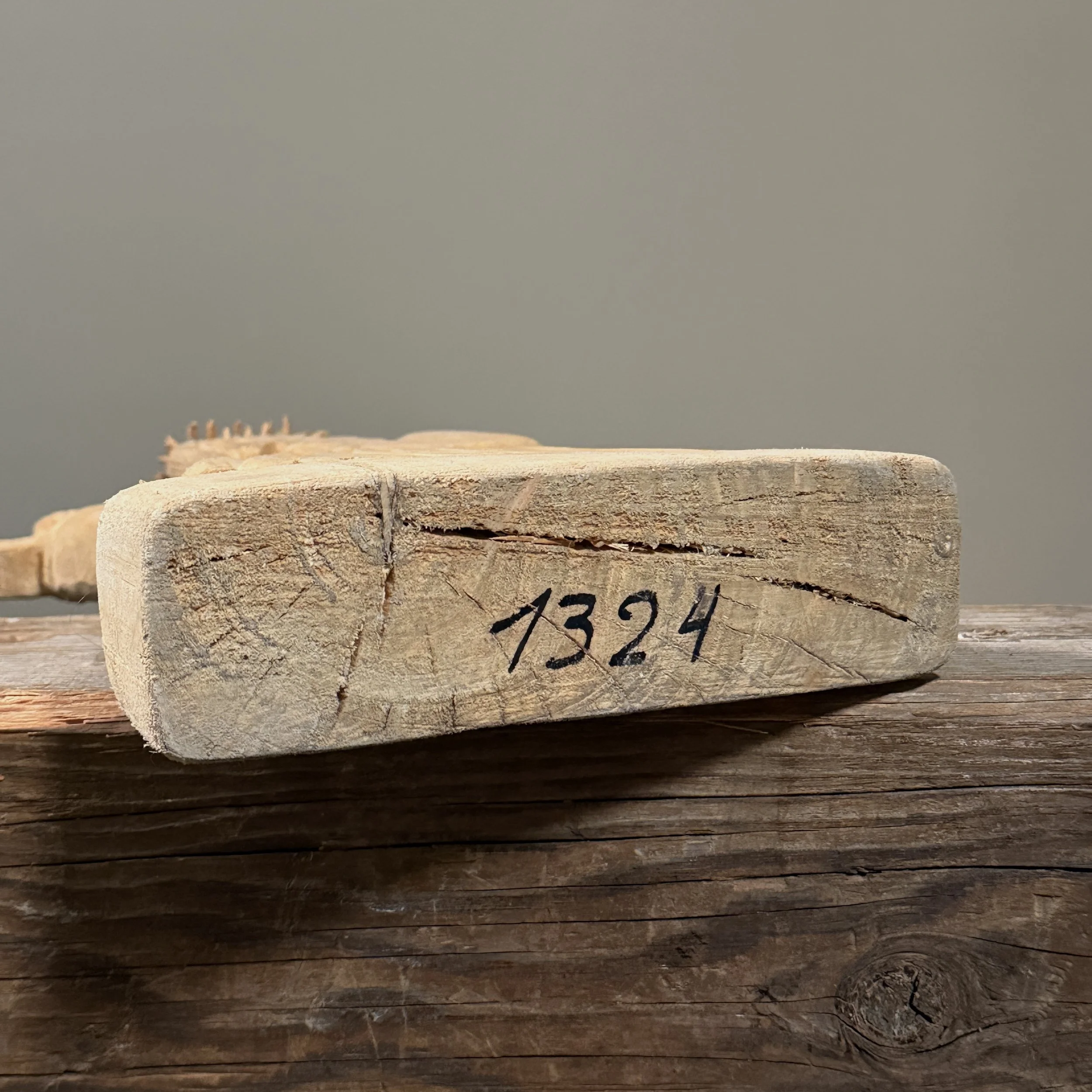
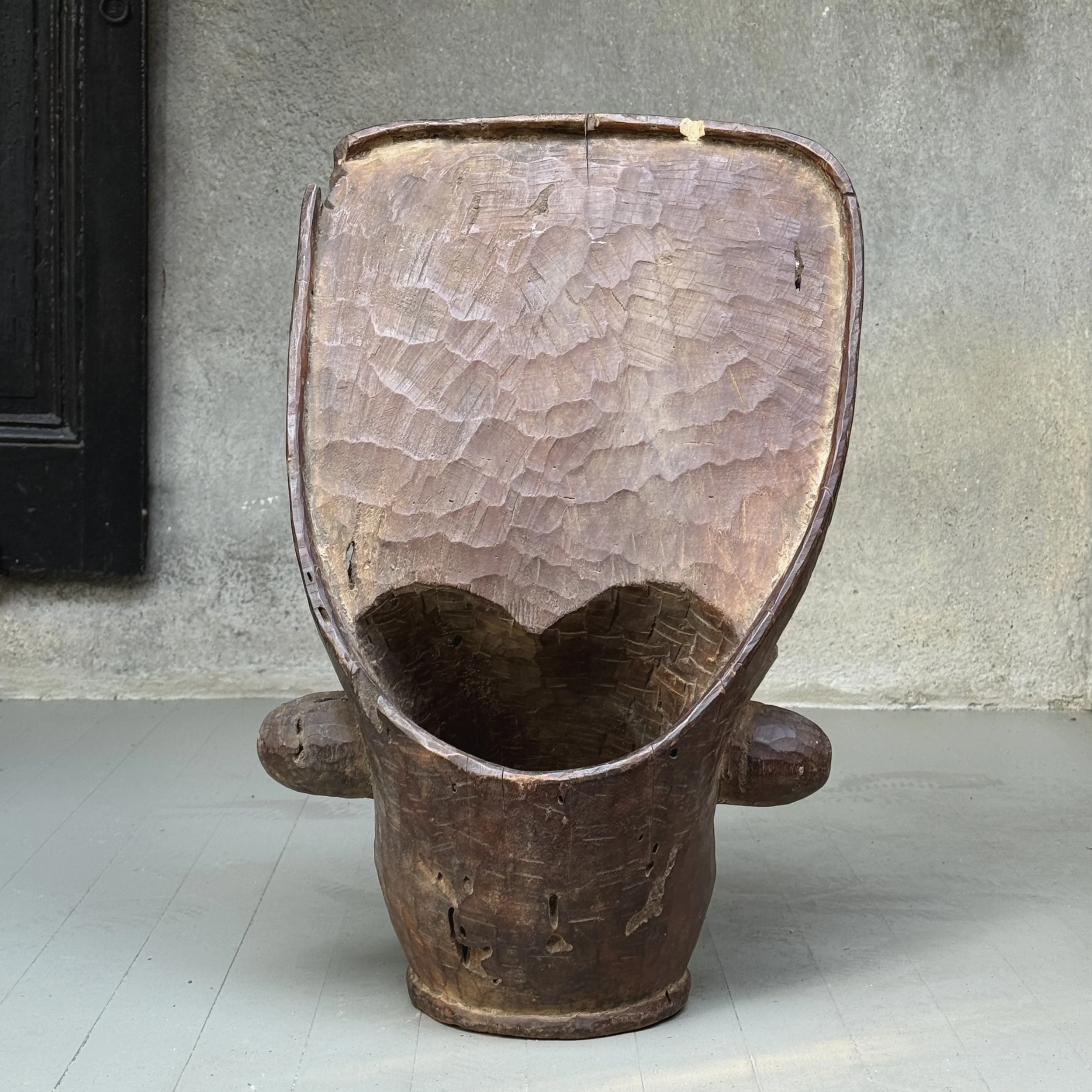
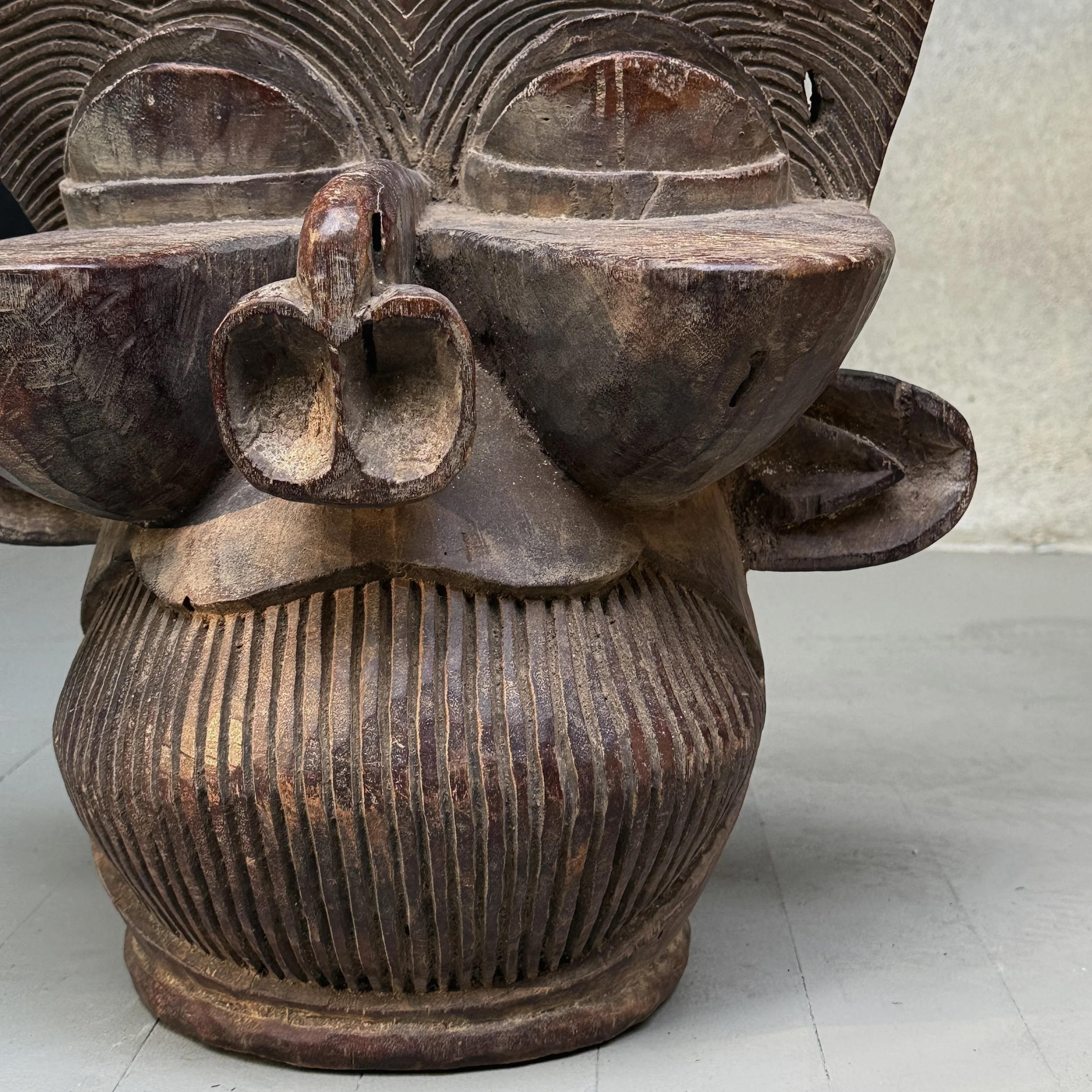
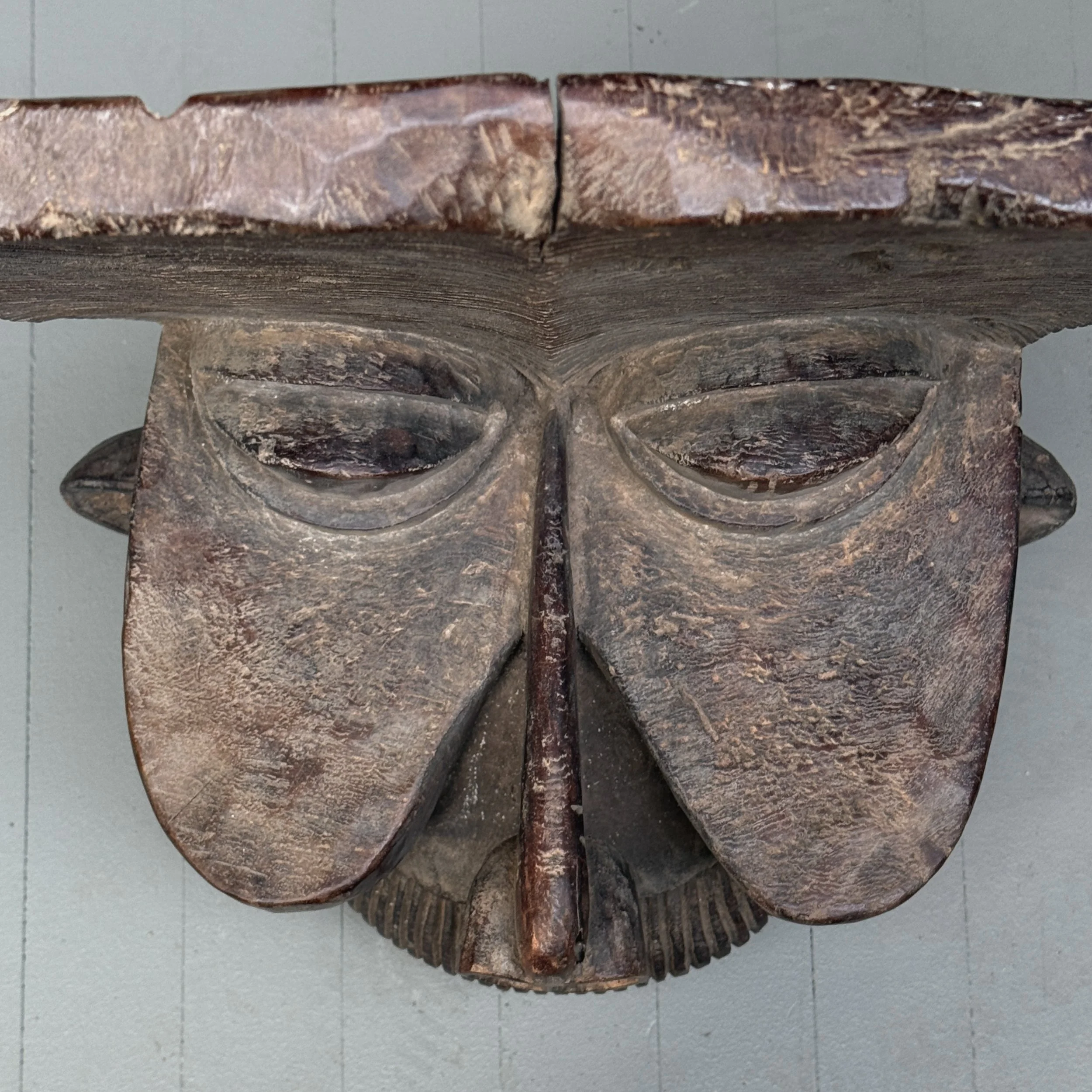
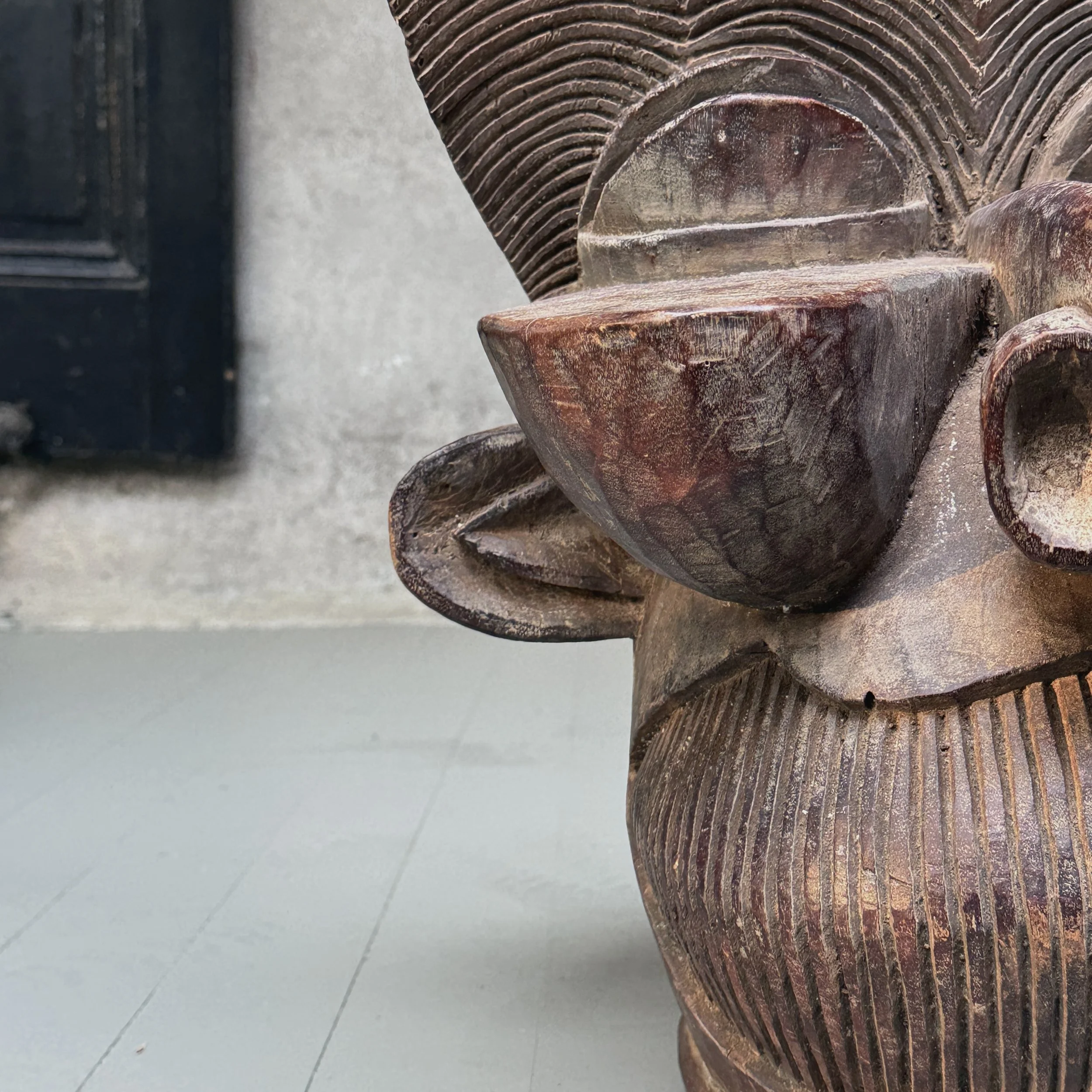
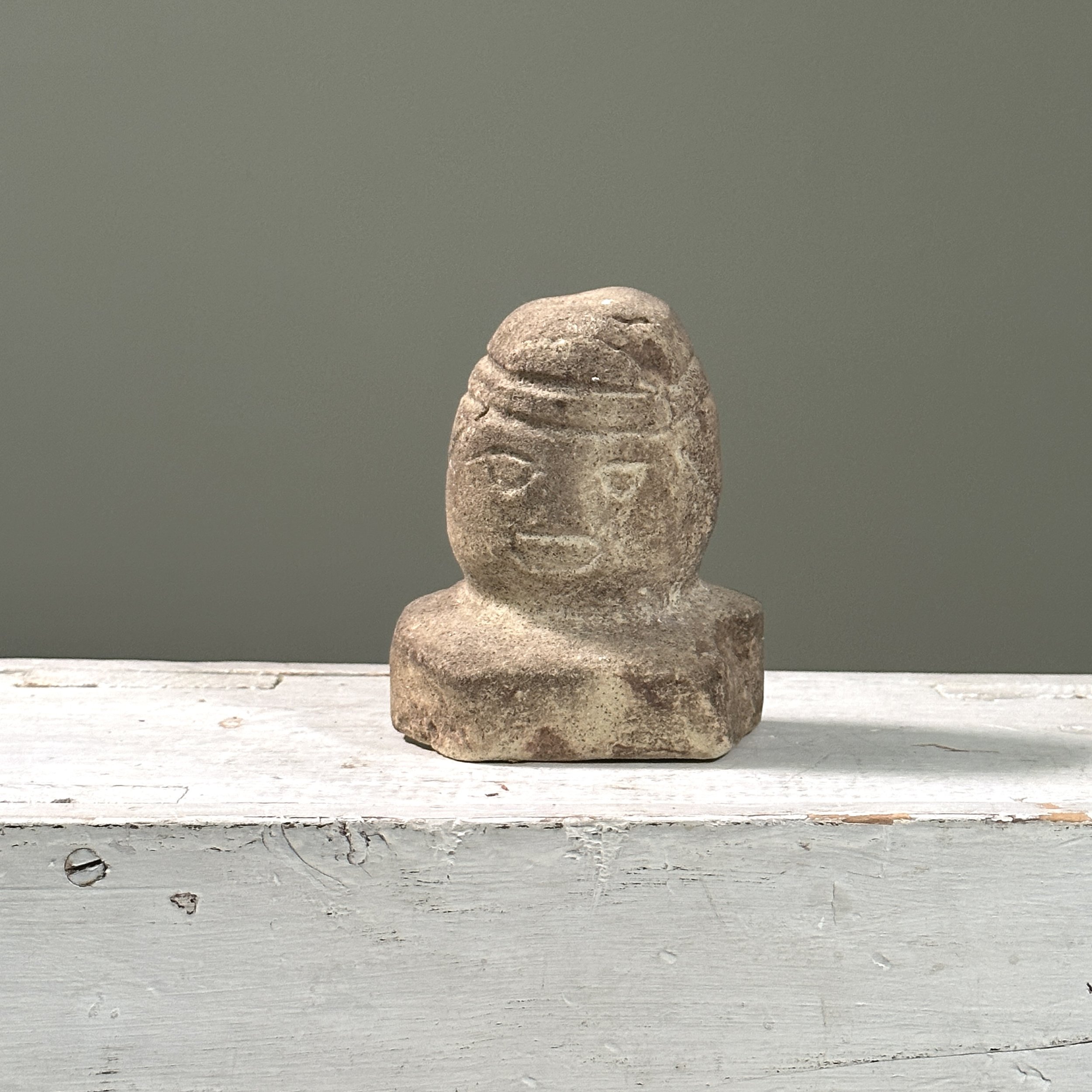
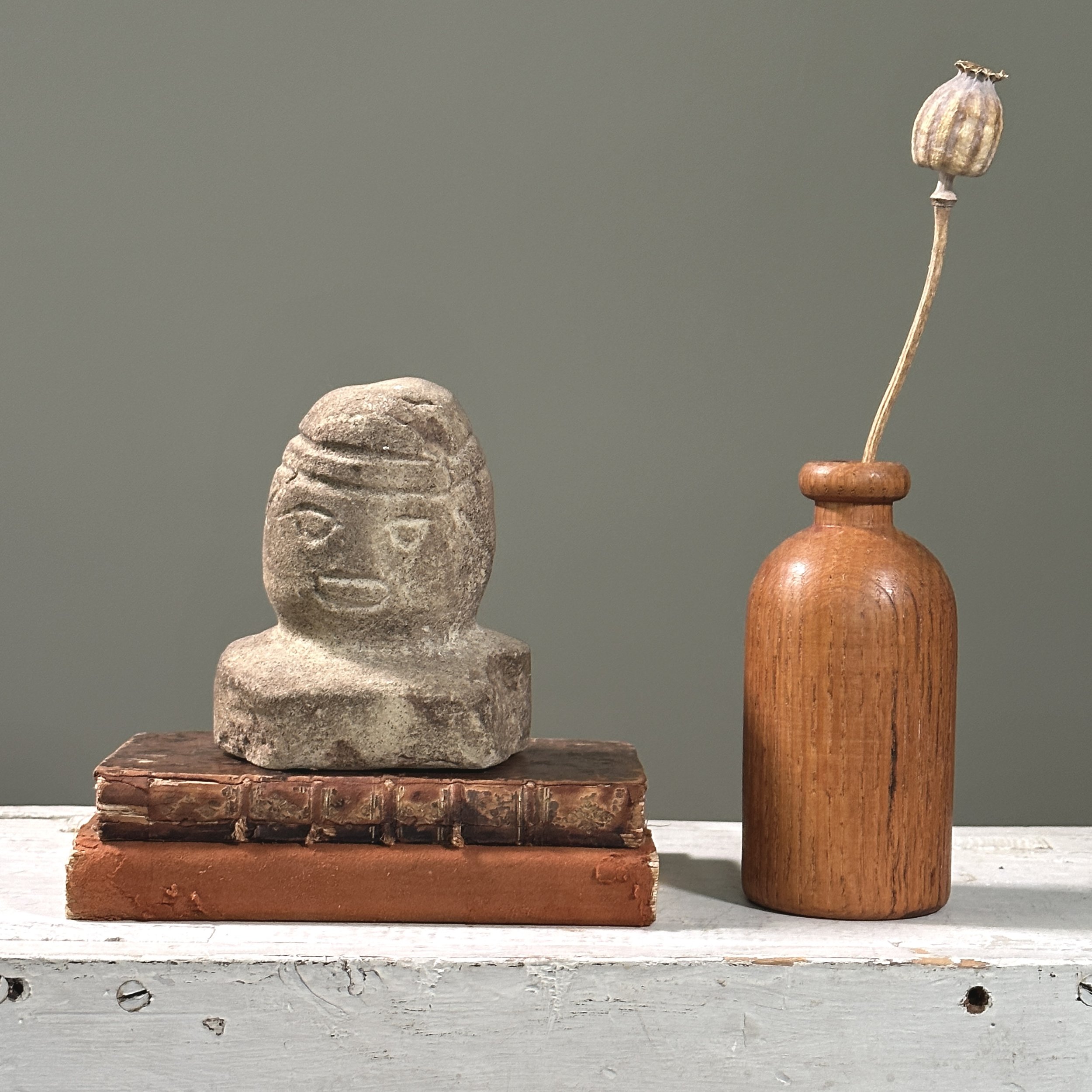
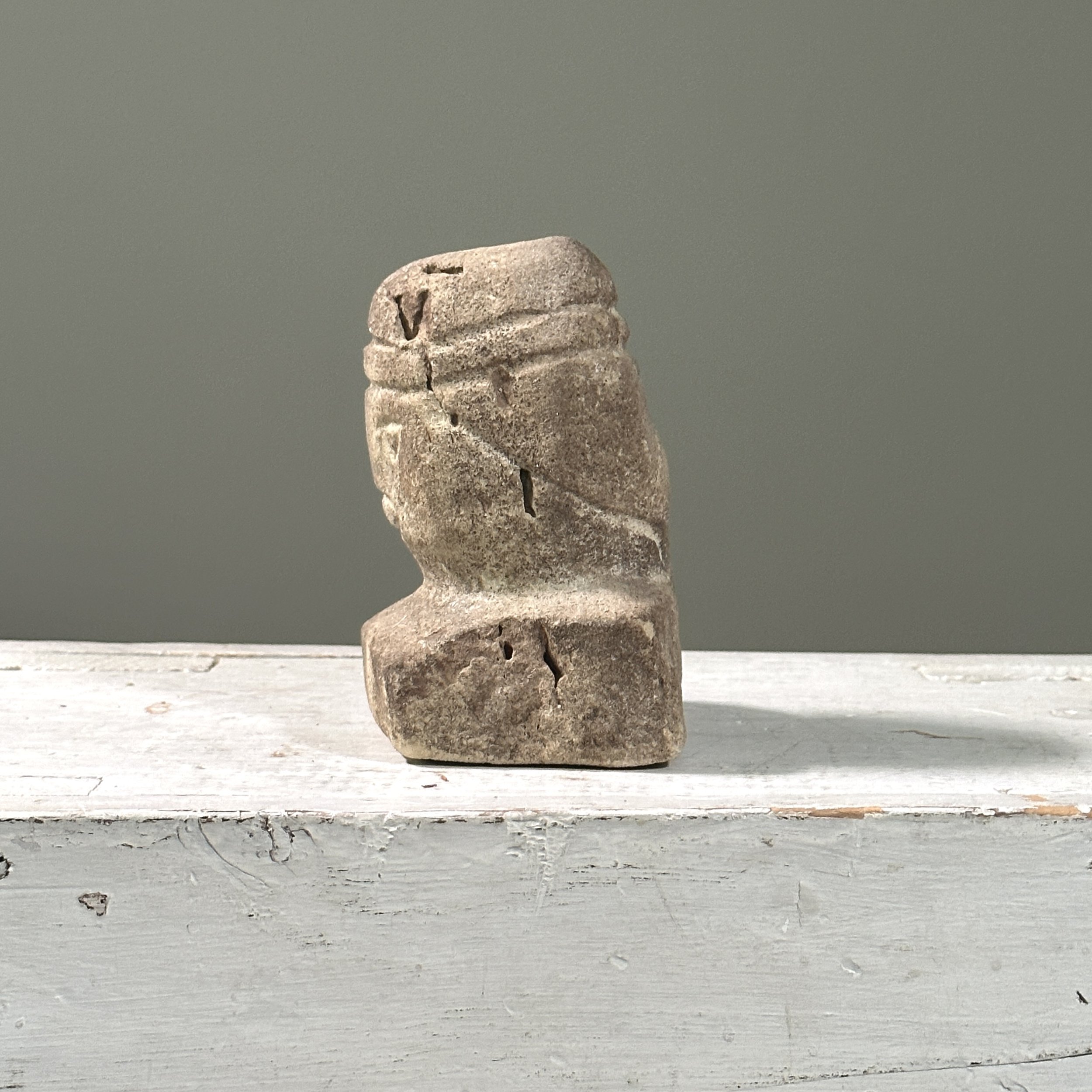
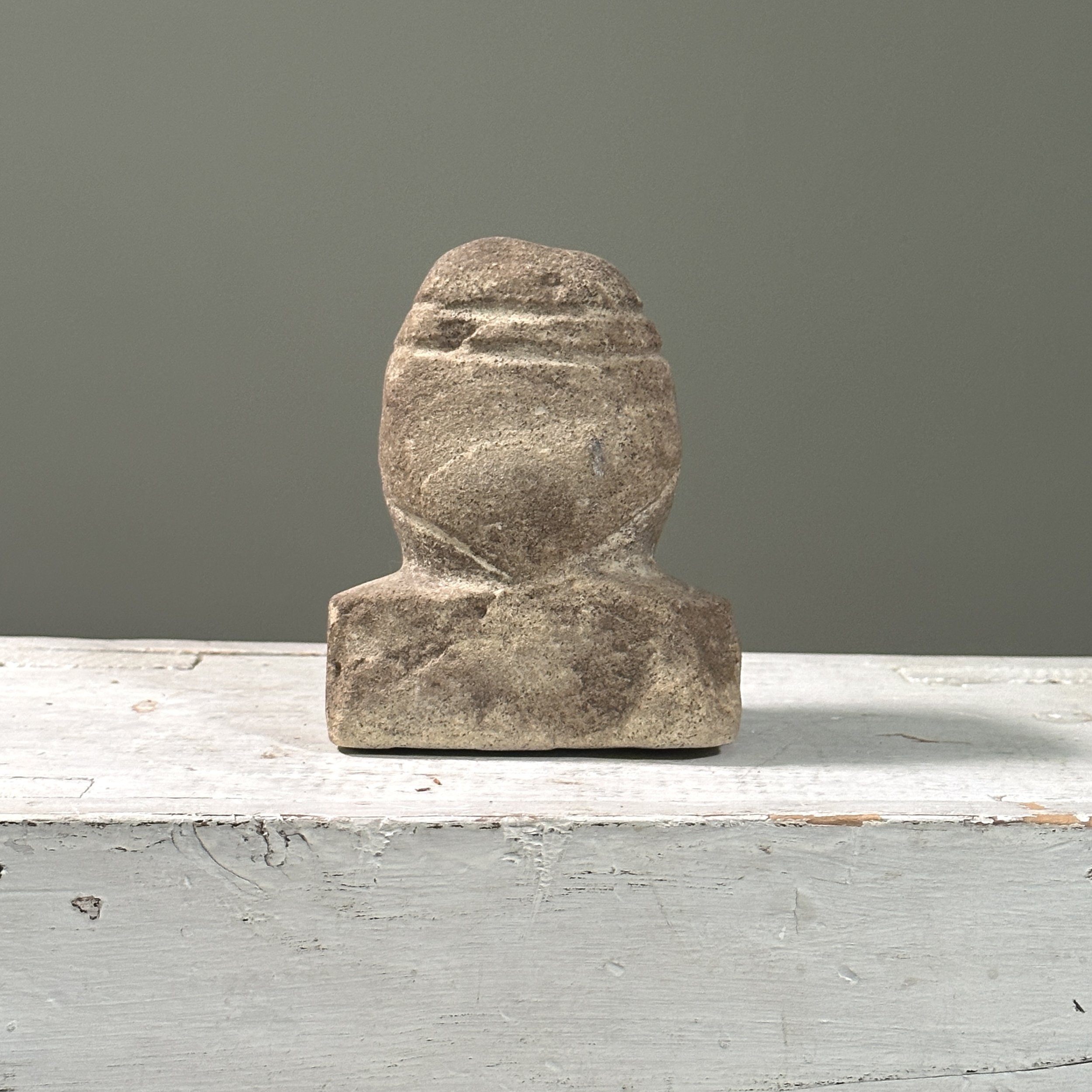
Object: Seated Deity Figure, Likely Guanyin (Avalokiteśvara)
Origin: China
Period: Late Ming Dynasty (1368–1644), circa 16th–17th century
Medium: Carved wood with polychrome pigments and gilt
Dimensions: Height 6.25 in. (15.9 cm); Width 3 in. (7.6 cm)
Condition: Surface wear, pigment loss, and stable age cracks. Extensive remnants of original gilt throughout. Traces of polychrome remain on crown and chest emblem.
Description:
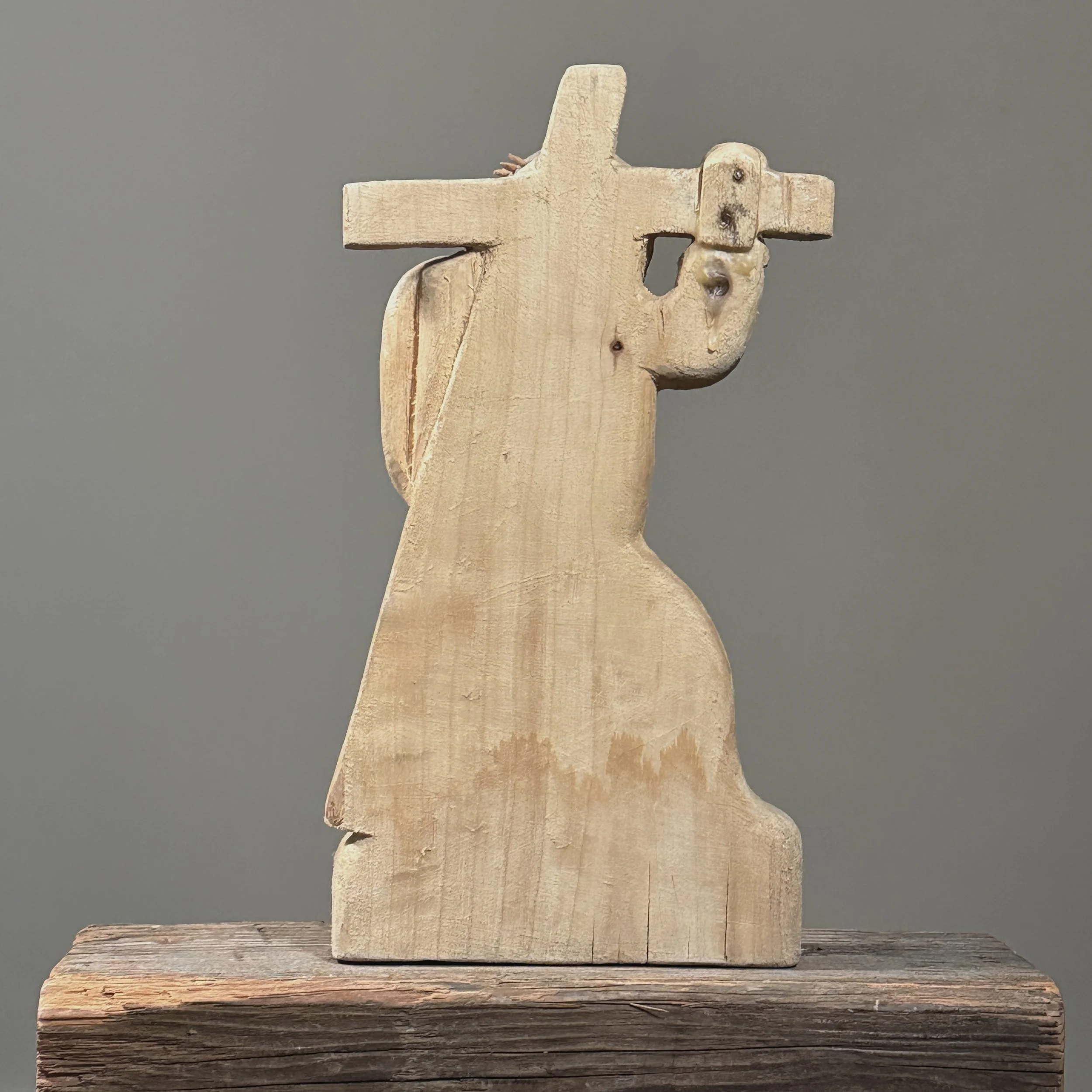
A small scale carved wooden figure of a seated deity, consistent with Guanyin, the bodhisattva of compassion. The figure wears a crown and bears a red emblem centered on the chest. Extensive remnants of gilt across the surface indicate the figure was originally heavily gilded, with traces of the original gold leaf now remaining. Additional polychrome details are present on the crown. A rectangular cavity on the reverse, a prayer slot for the insertion of consecratory materials, confirms the figure was intended for ritual use.
Context:
Figures of Guanyin were widely venerated in both Buddhist and popular religious contexts during the Ming Dynasty. The small scale and presence of a consecration cavity suggest this figure was designed for a household altar or personal shrine. The original heavy gilding would have signified the figure's sacred status and served as an act of merit by the patron.
Dating Note:
While Qing Dynasty examples of this type are more common, the stylistic treatment and carving technique of this piece suggest a possible late Ming attribution. The figure is presented here with this dating based on visual assessment.
Condition Notes:
The figure exhibits significant loss of the original gilt and polychrome surfaces, revealing the carved wood beneath. This wear pattern is consistent with age, handling, and prolonged exposure in a ritual setting. The structure remains stable.
Object: Seated Deity Figure, Likely Guanyin (Avalokiteśvara)
Origin: China
Period: Late Ming Dynasty (1368–1644), circa 16th–17th century
Medium: Carved wood with polychrome pigments and gilt
Dimensions: Height 6.25 in. (15.9 cm); Width 3 in. (7.6 cm)
Condition: Surface wear, pigment loss, and stable age cracks. Extensive remnants of original gilt throughout. Traces of polychrome remain on crown and chest emblem.
Description:
A small scale carved wooden figure of a seated deity, consistent with Guanyin, the bodhisattva of compassion. The figure wears a crown and bears a red emblem centered on the chest. Extensive remnants of gilt across the surface indicate the figure was originally heavily gilded, with traces of the original gold leaf now remaining. Additional polychrome details are present on the crown. A rectangular cavity on the reverse, a prayer slot for the insertion of consecratory materials, confirms the figure was intended for ritual use.
Context:
Figures of Guanyin were widely venerated in both Buddhist and popular religious contexts during the Ming Dynasty. The small scale and presence of a consecration cavity suggest this figure was designed for a household altar or personal shrine. The original heavy gilding would have signified the figure's sacred status and served as an act of merit by the patron.
Dating Note:
While Qing Dynasty examples of this type are more common, the stylistic treatment and carving technique of this piece suggest a possible late Ming attribution. The figure is presented here with this dating based on visual assessment.
Condition Notes:
The figure exhibits significant loss of the original gilt and polychrome surfaces, revealing the carved wood beneath. This wear pattern is consistent with age, handling, and prolonged exposure in a ritual setting. The structure remains stable.

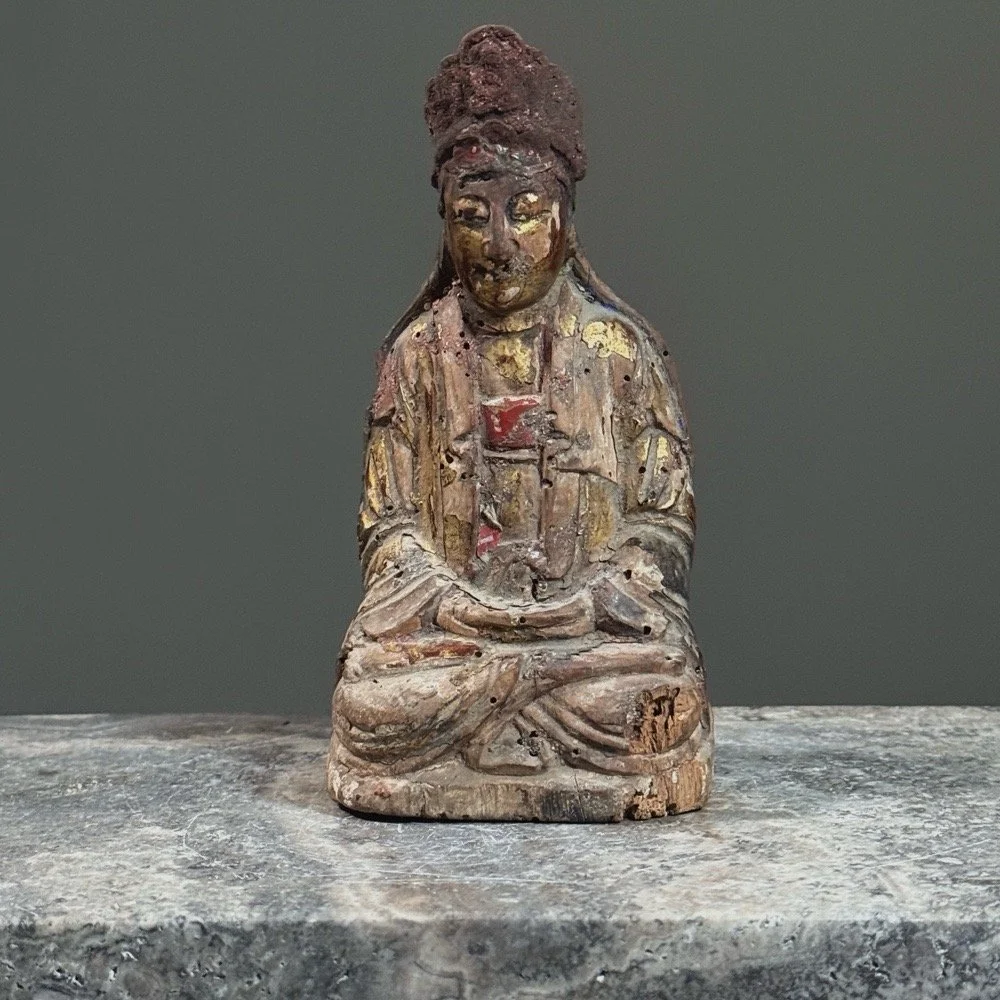 Image 1 of 8
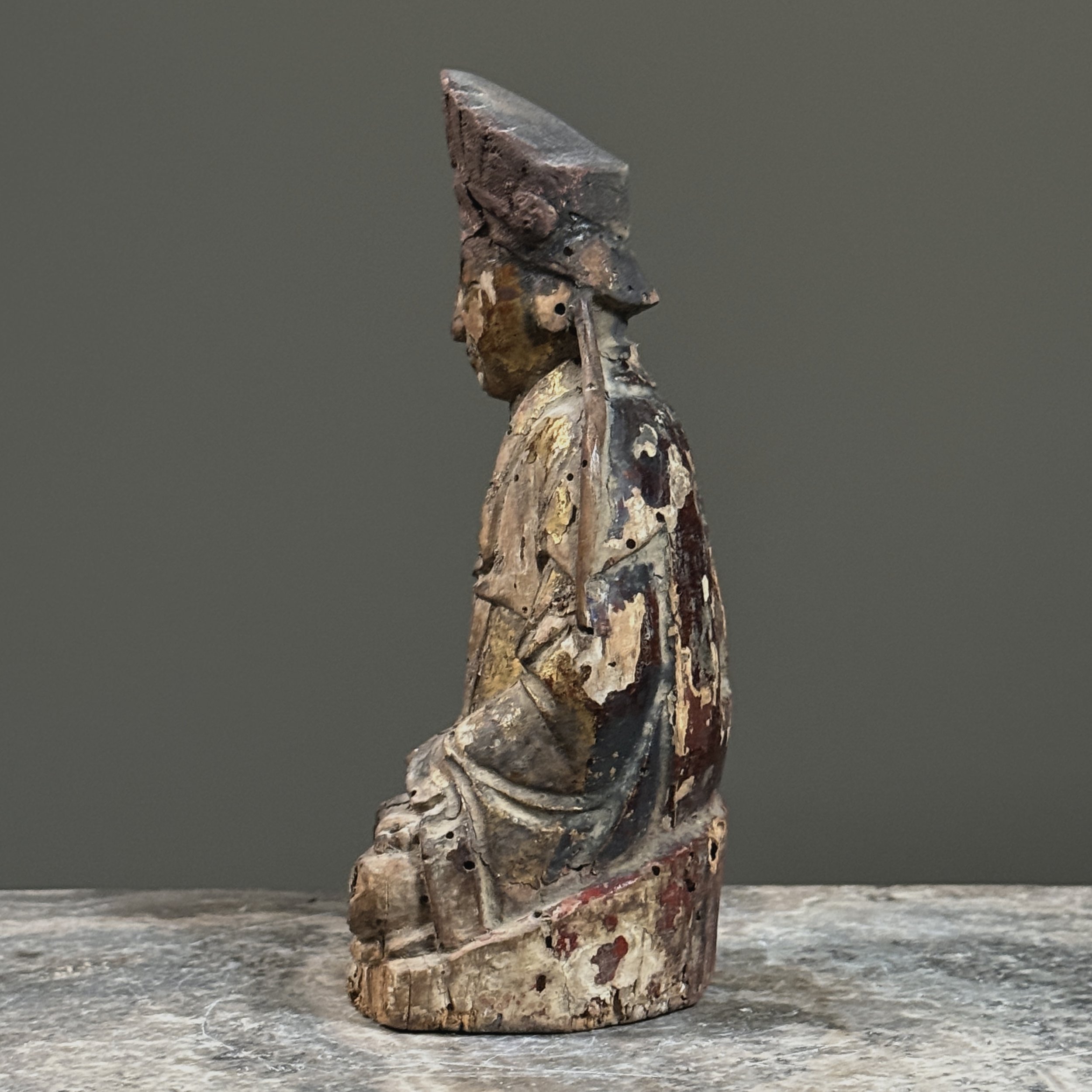 Image 2 of 8
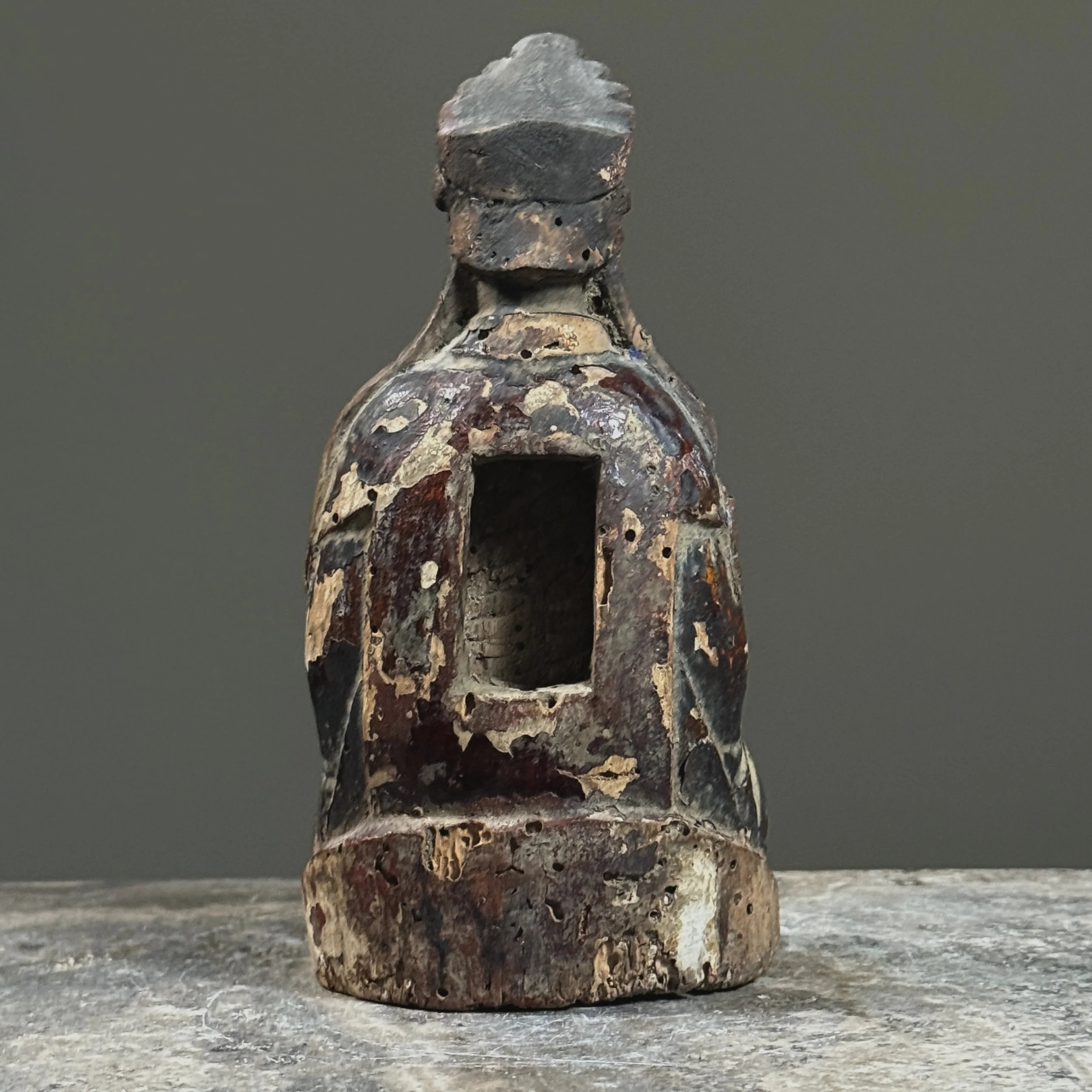 Image 3 of 8
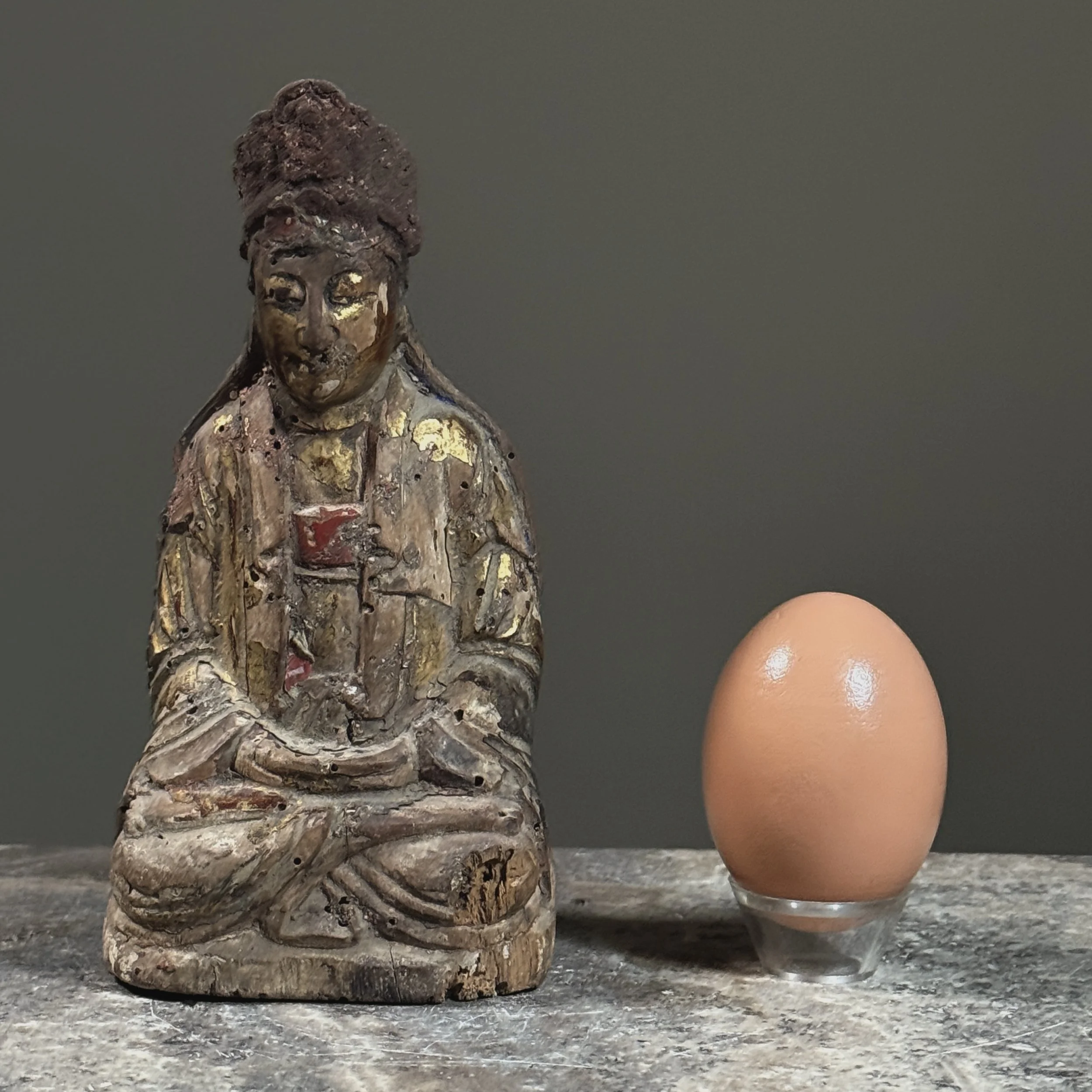 Image 4 of 8
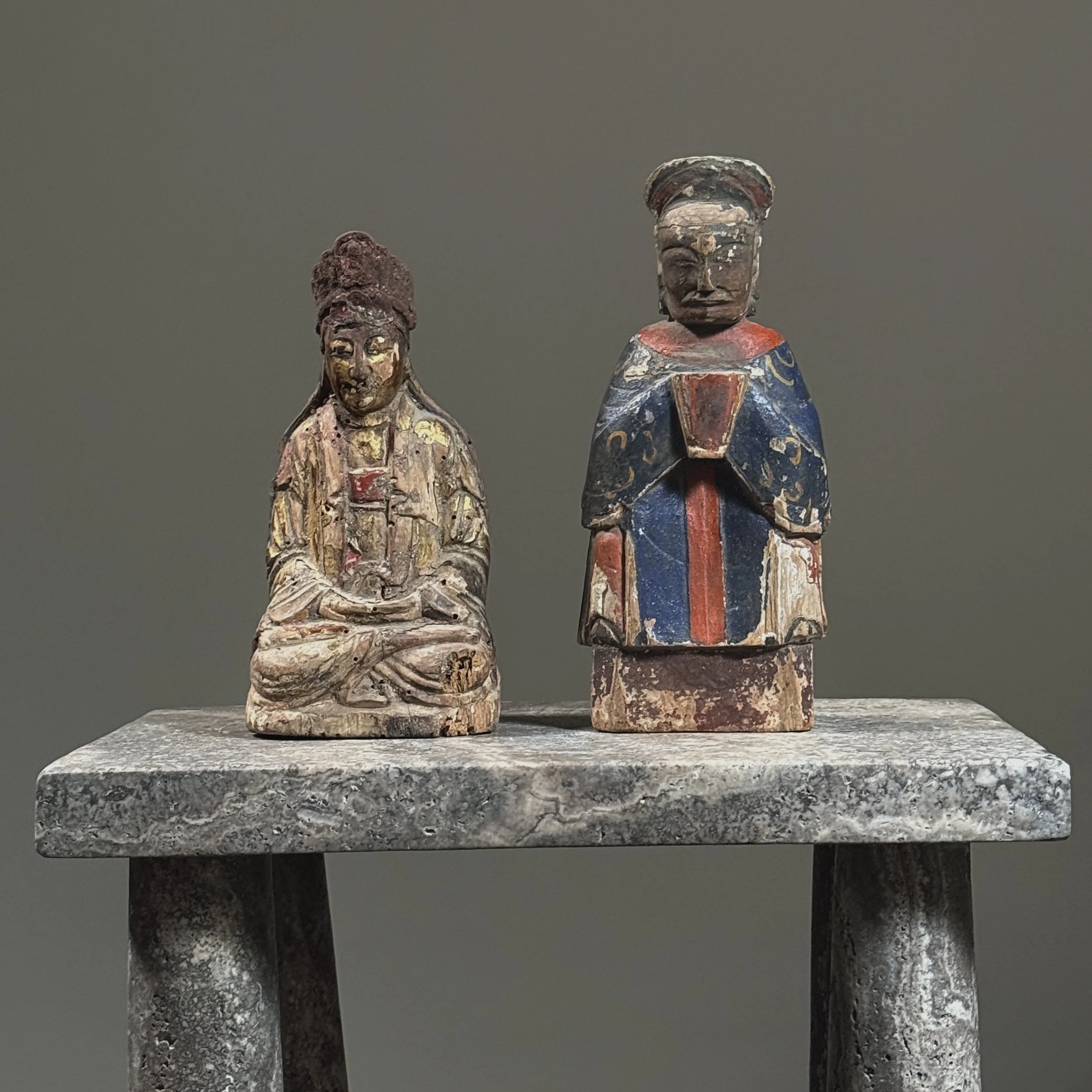 Image 5 of 8
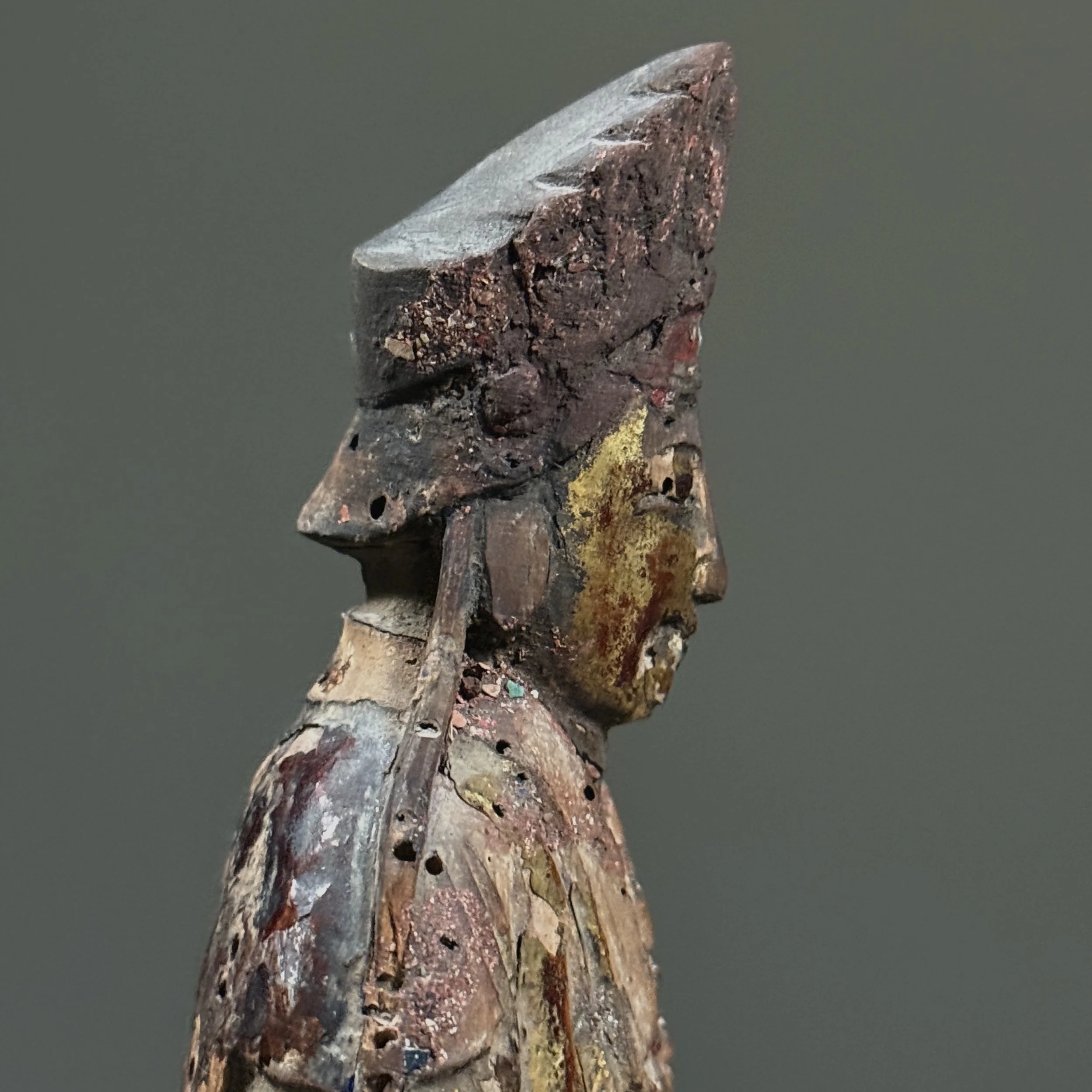 Image 6 of 8
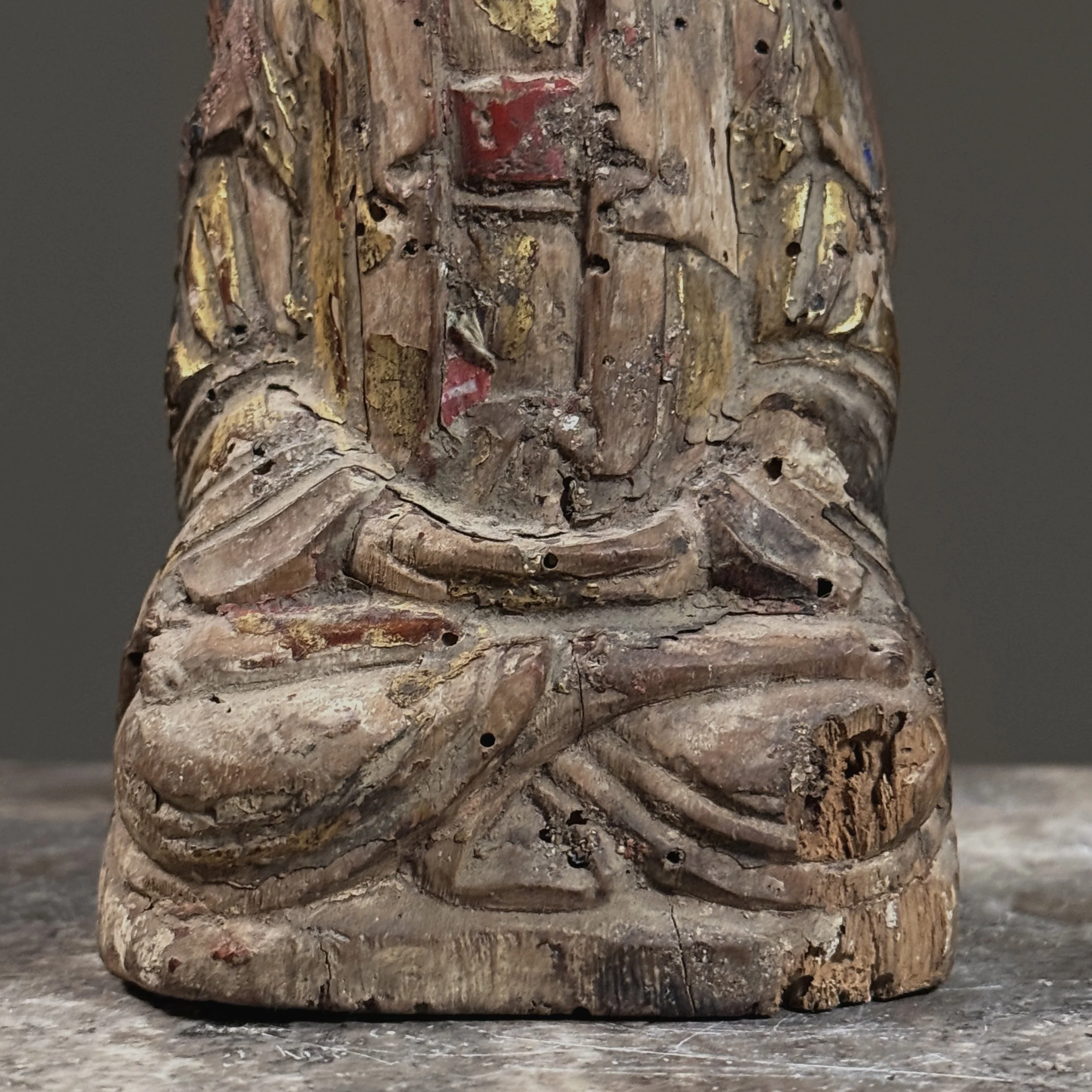 Image 7 of 8
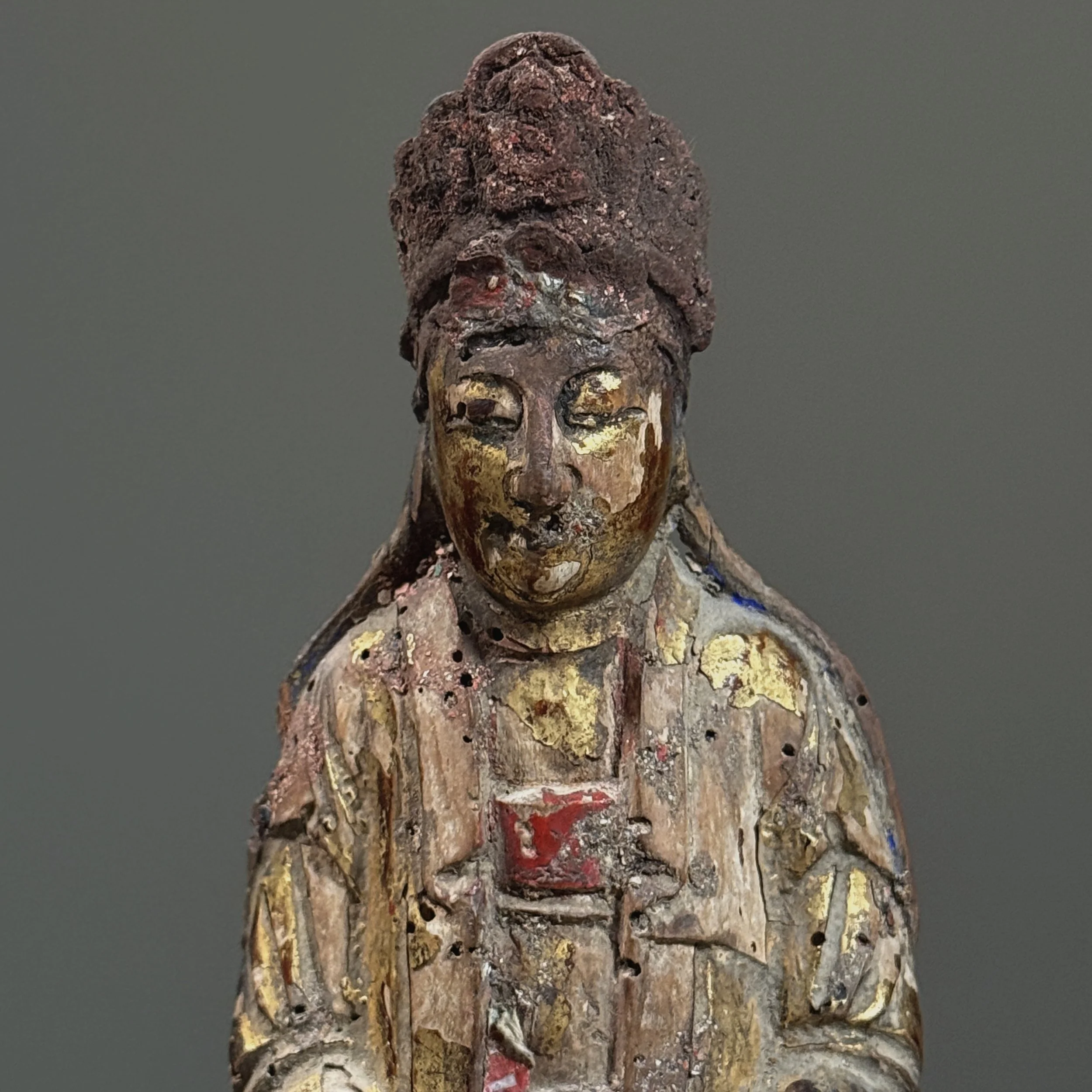 Image 8 of 8