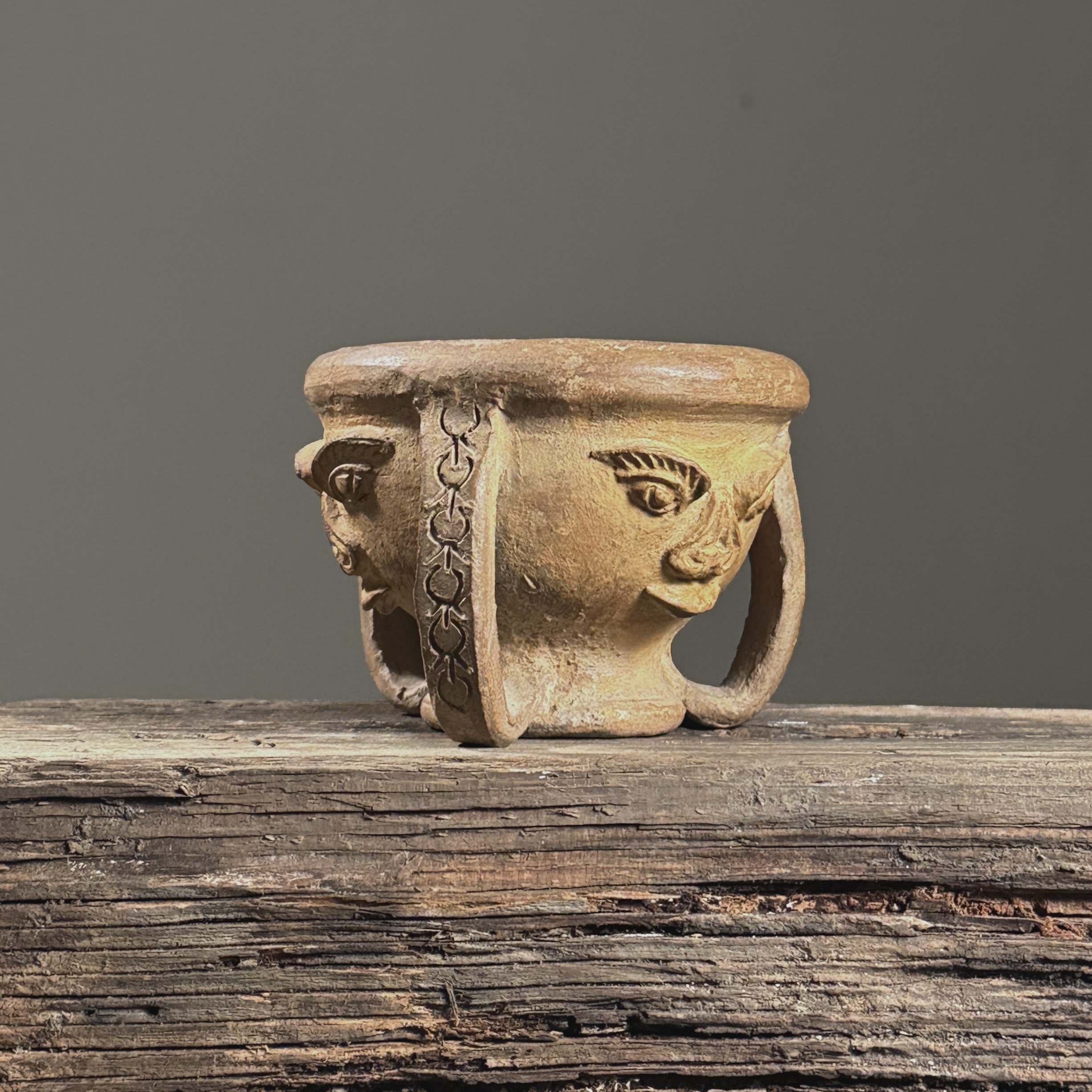
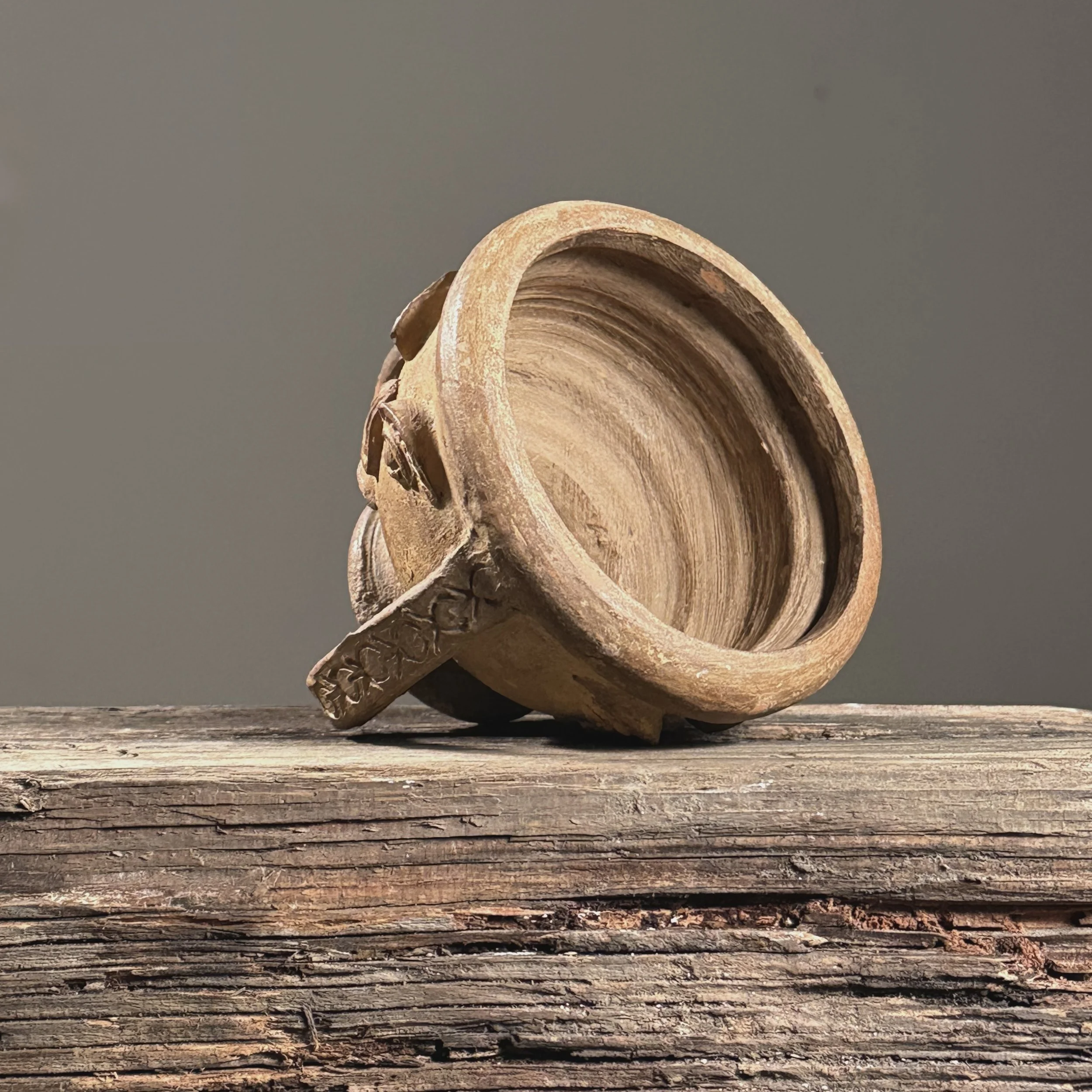
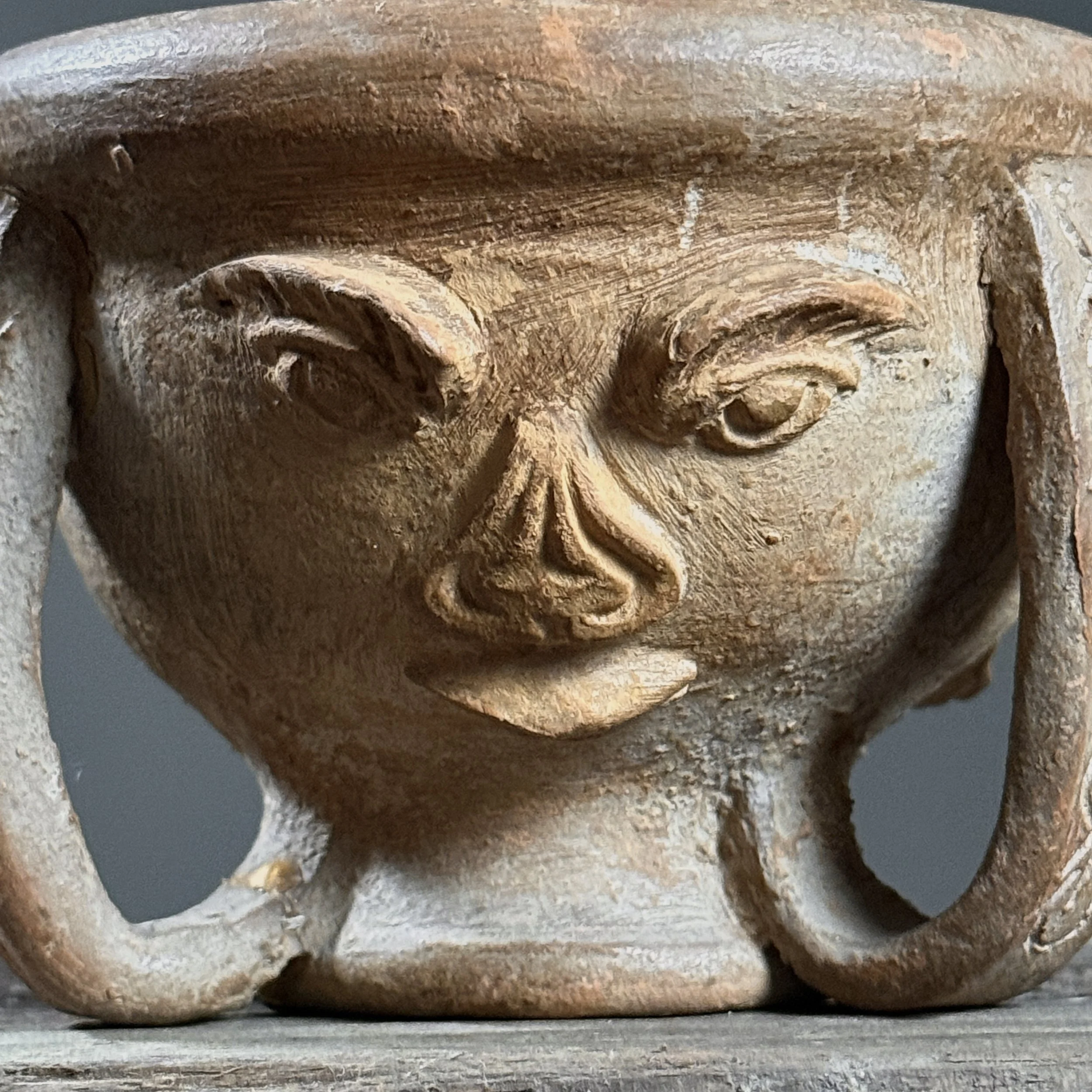
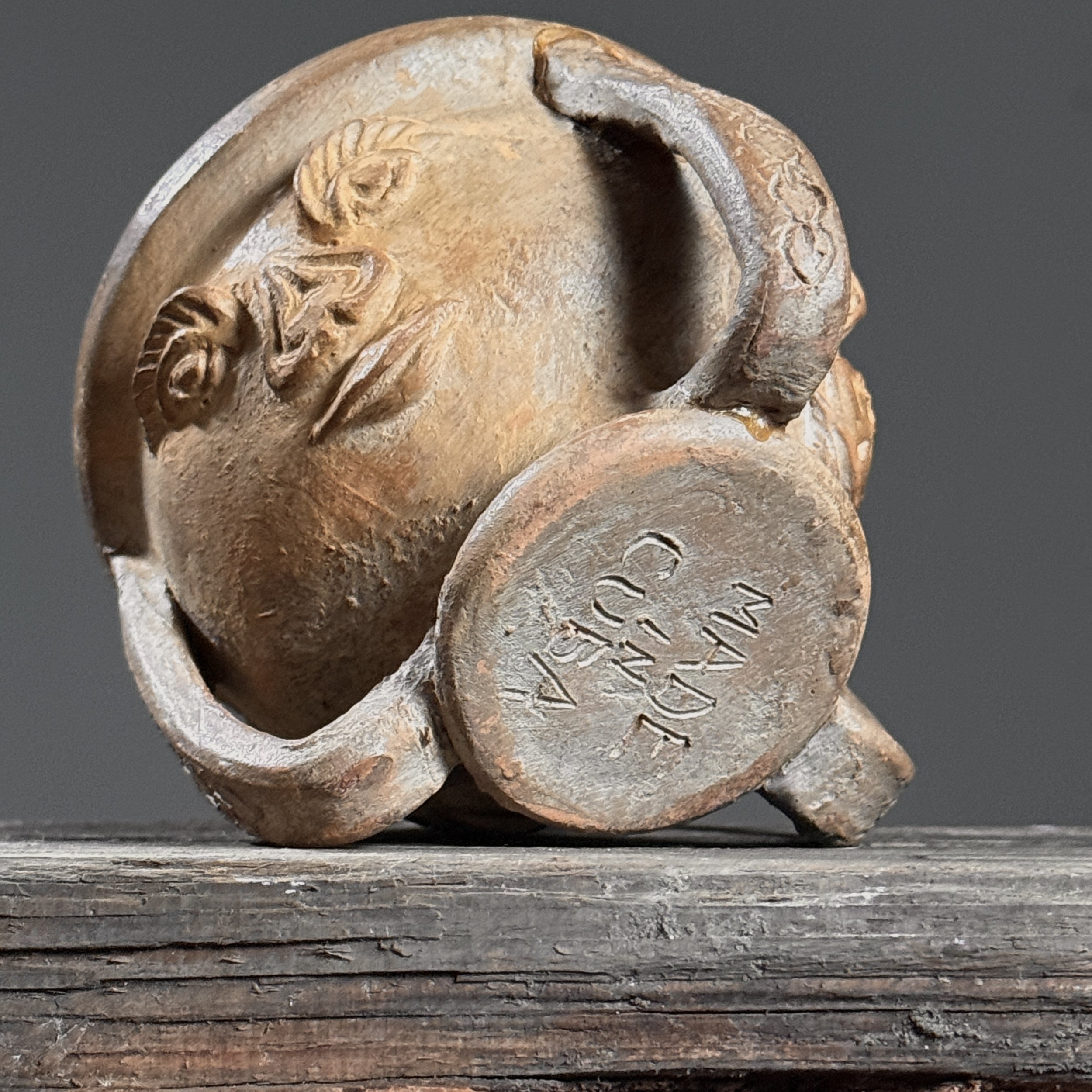
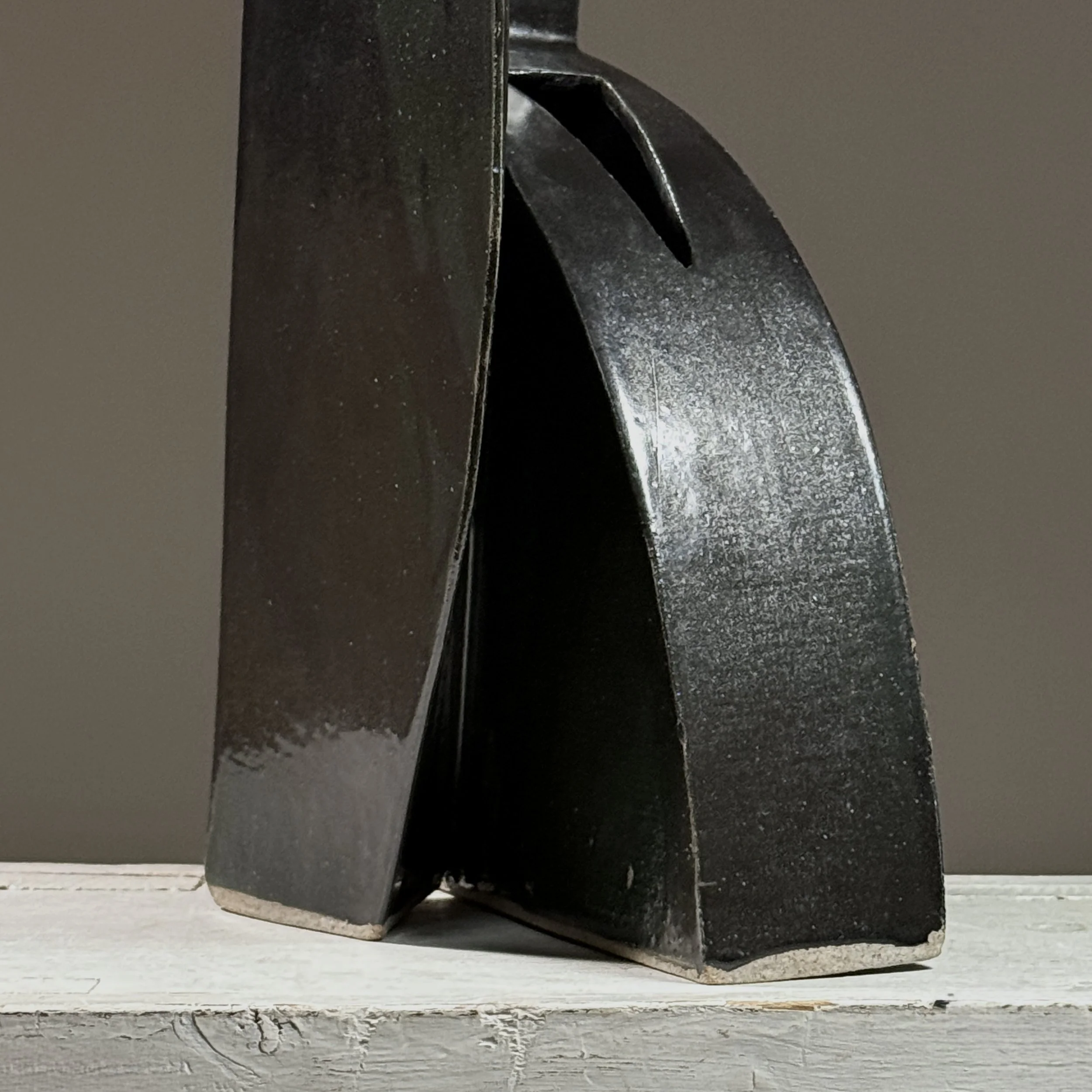
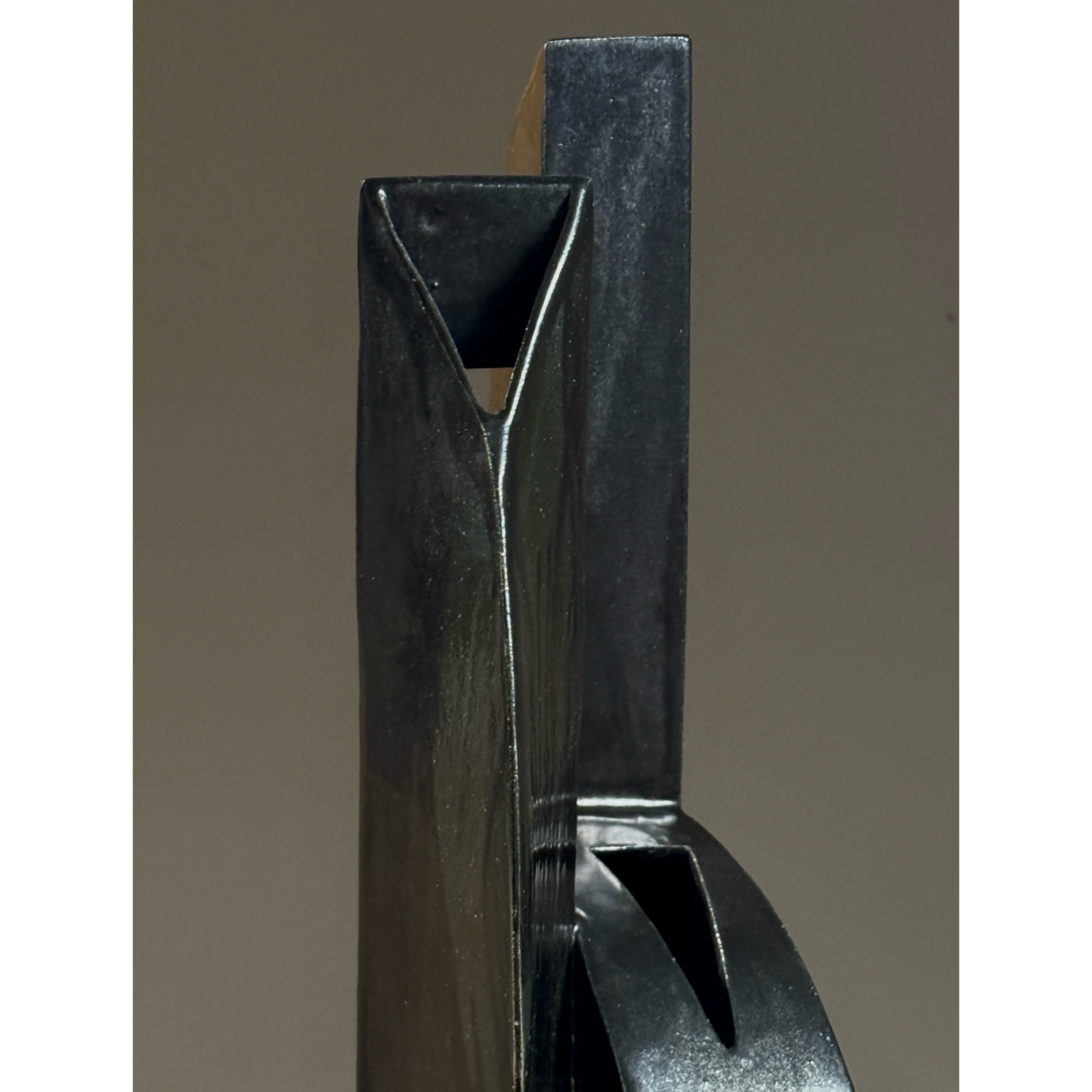
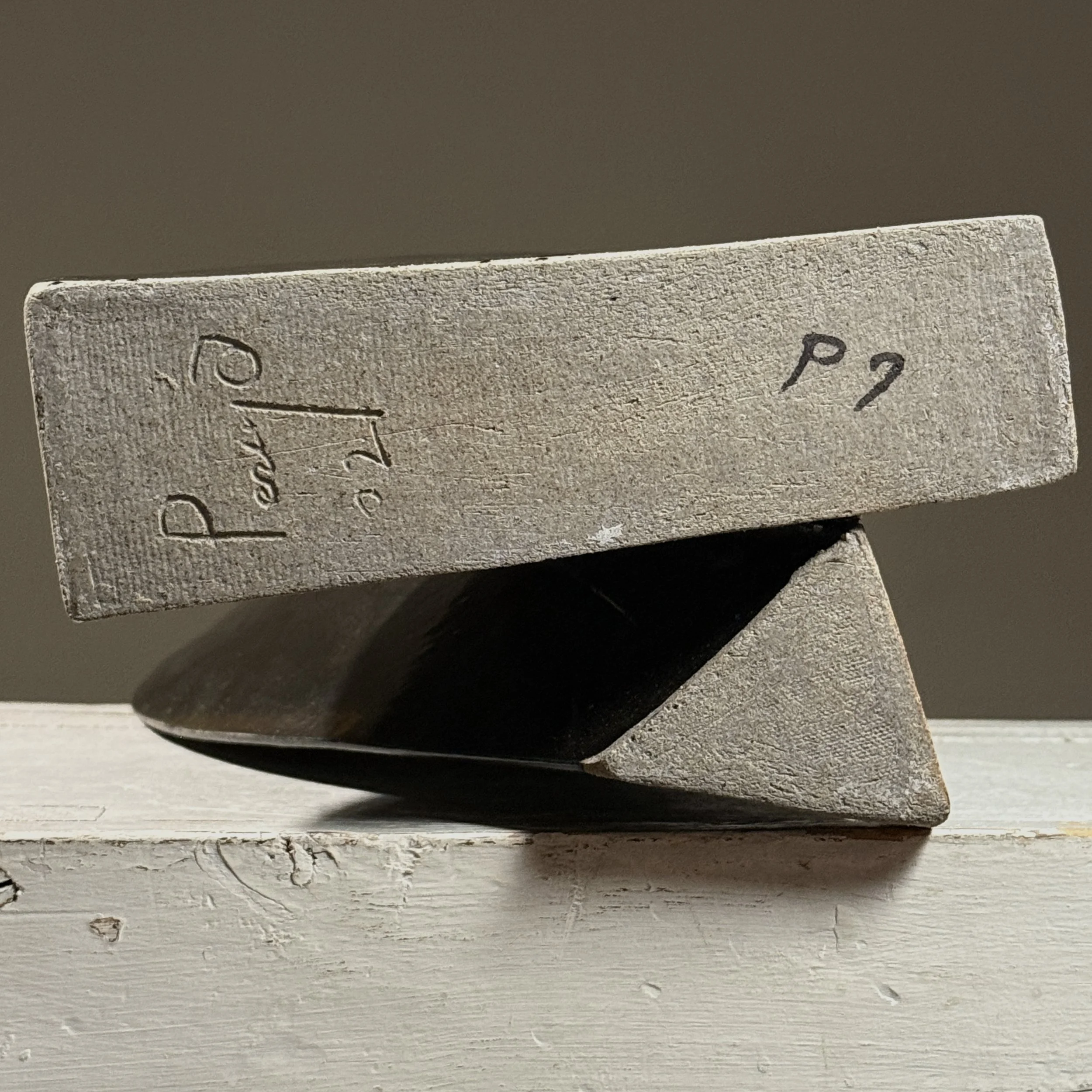
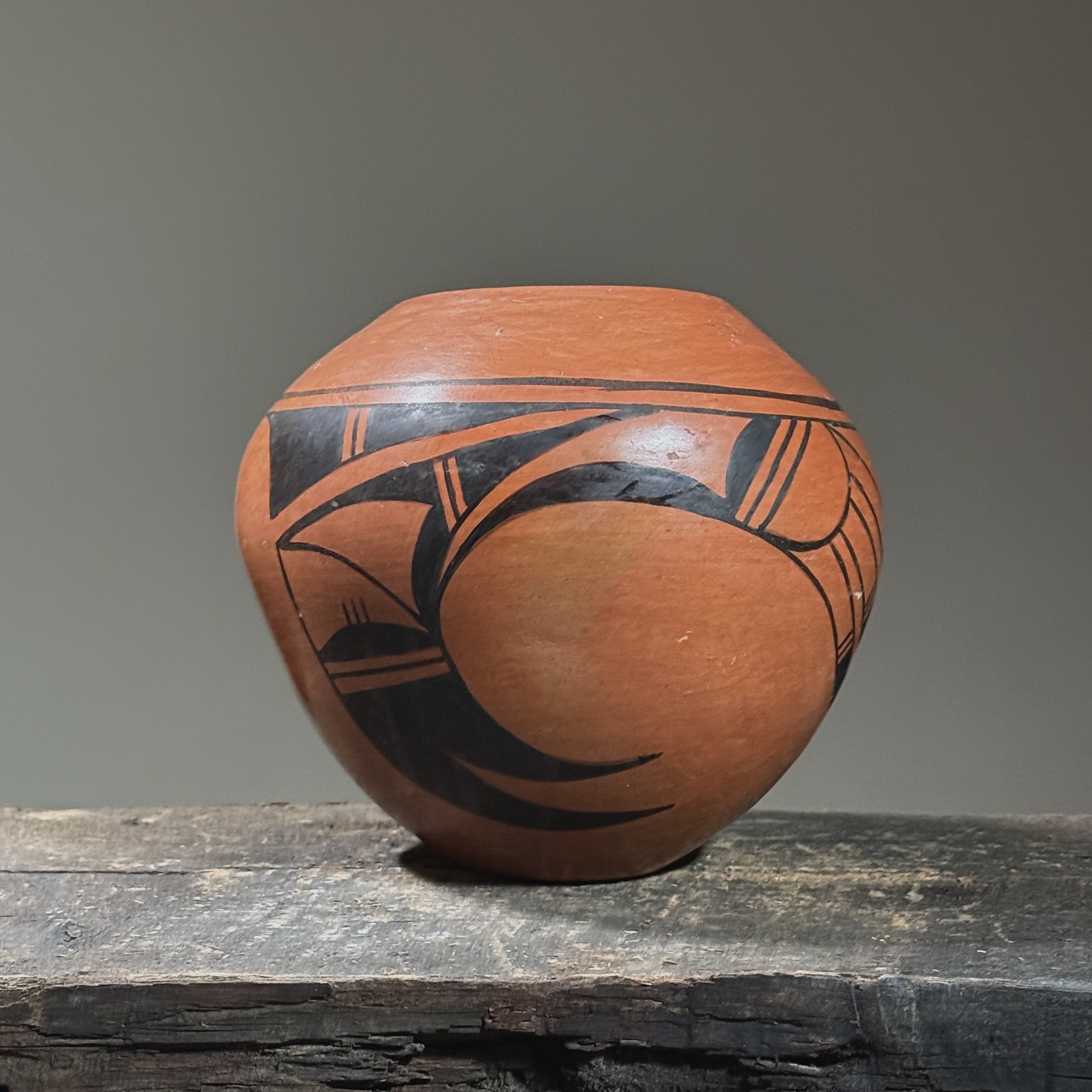
Object Title: Ash-Glazed Tokkuri(Sake Bottle)
Culture: Japanese
Date: Edo period (1603–1868)
Medium: Stoneware with natural ash glaze
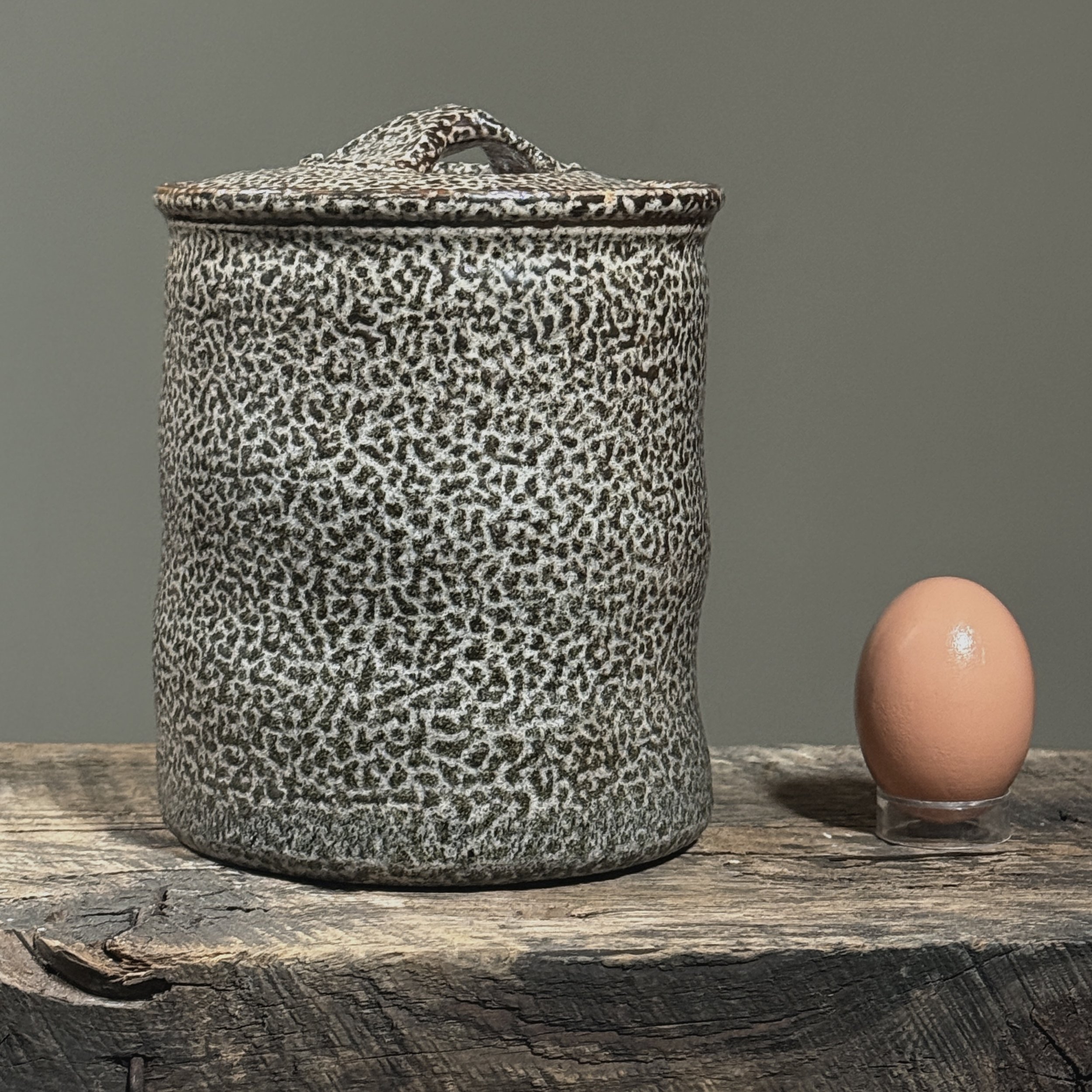
Dimensions: Height: 19.7 cm (7.75 in); Diameter: 8.9 cm (3.5 in)
Condition: Good. Surface wear and minor abrasions consistent with age and use. No cracks, chips, or restoration noted.
Object Description
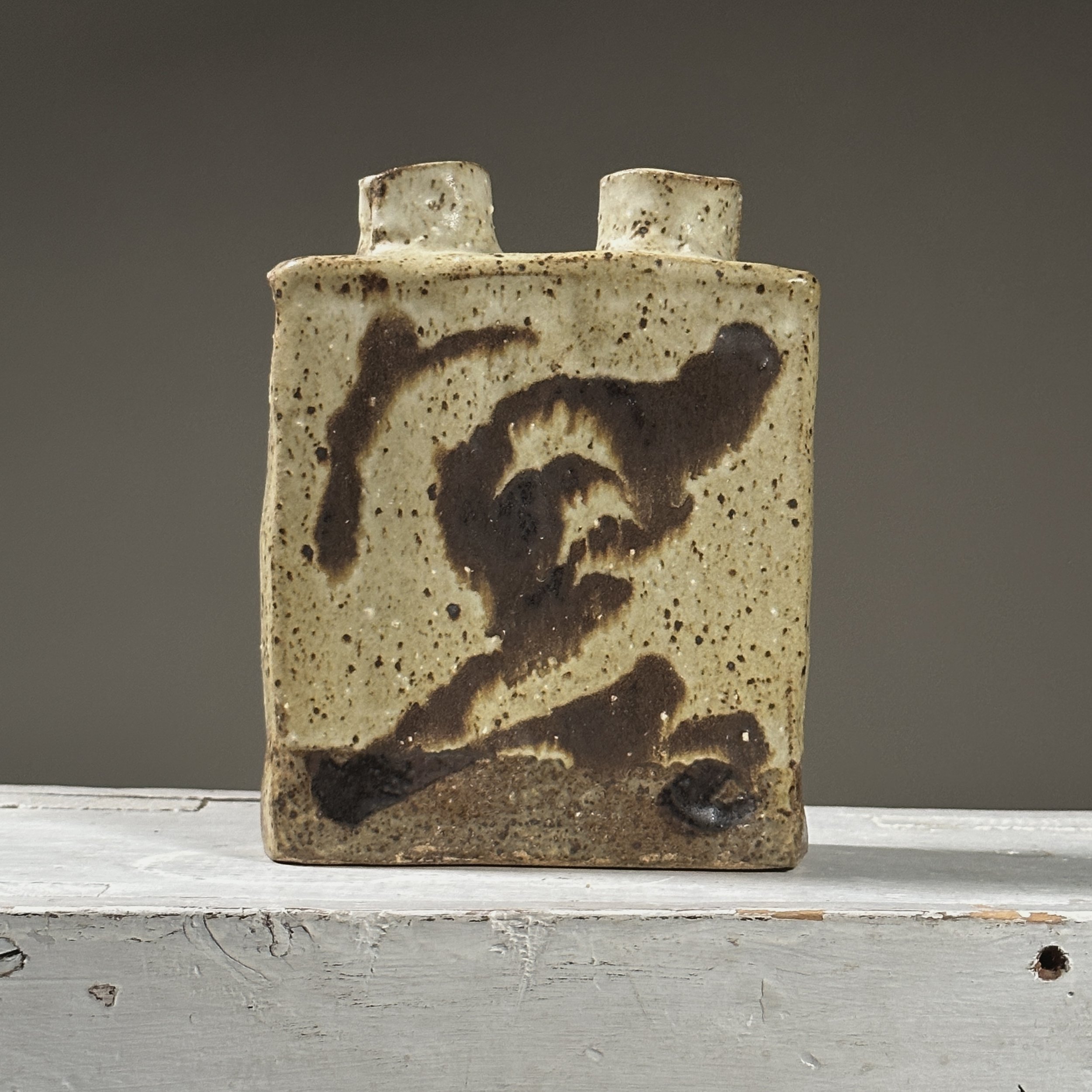
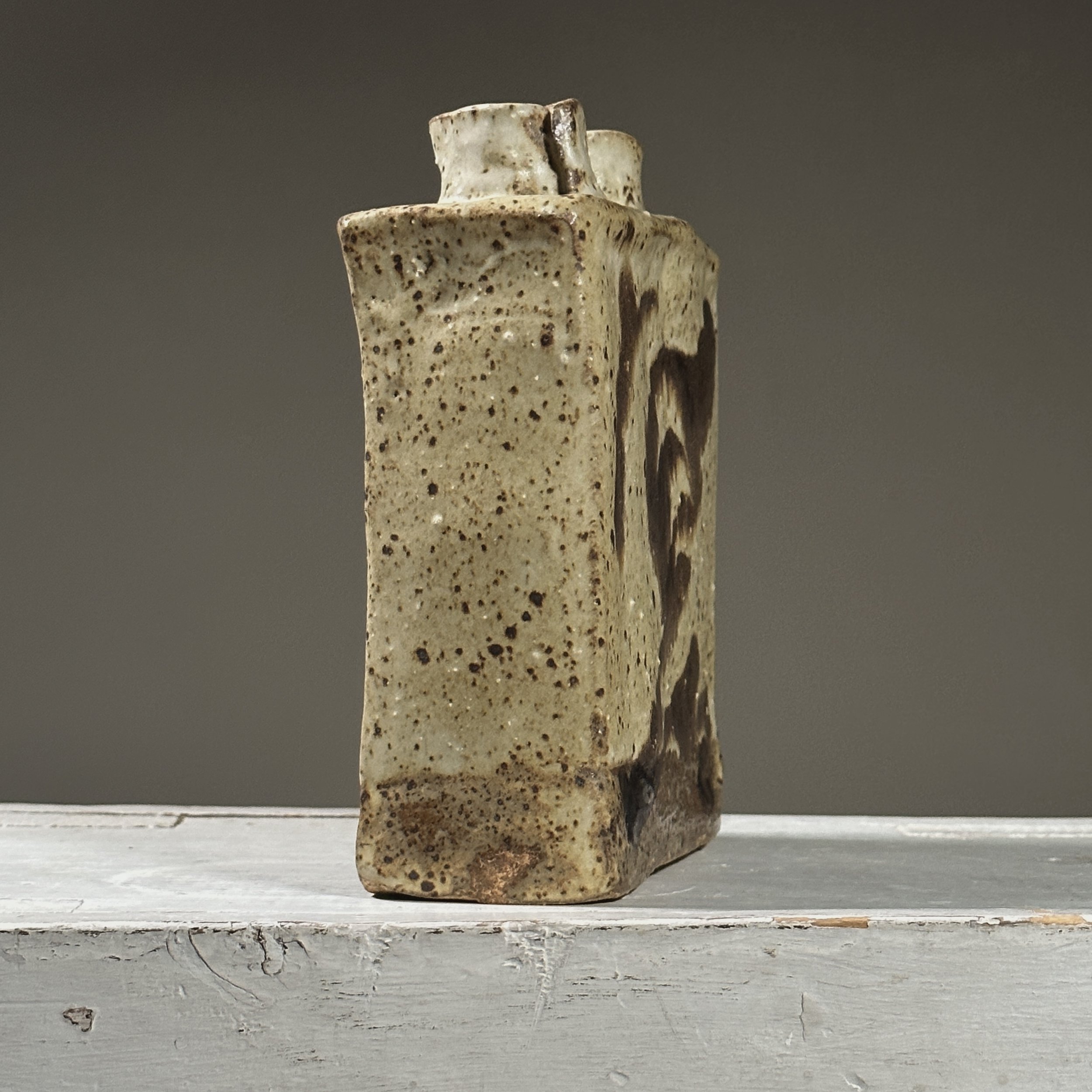
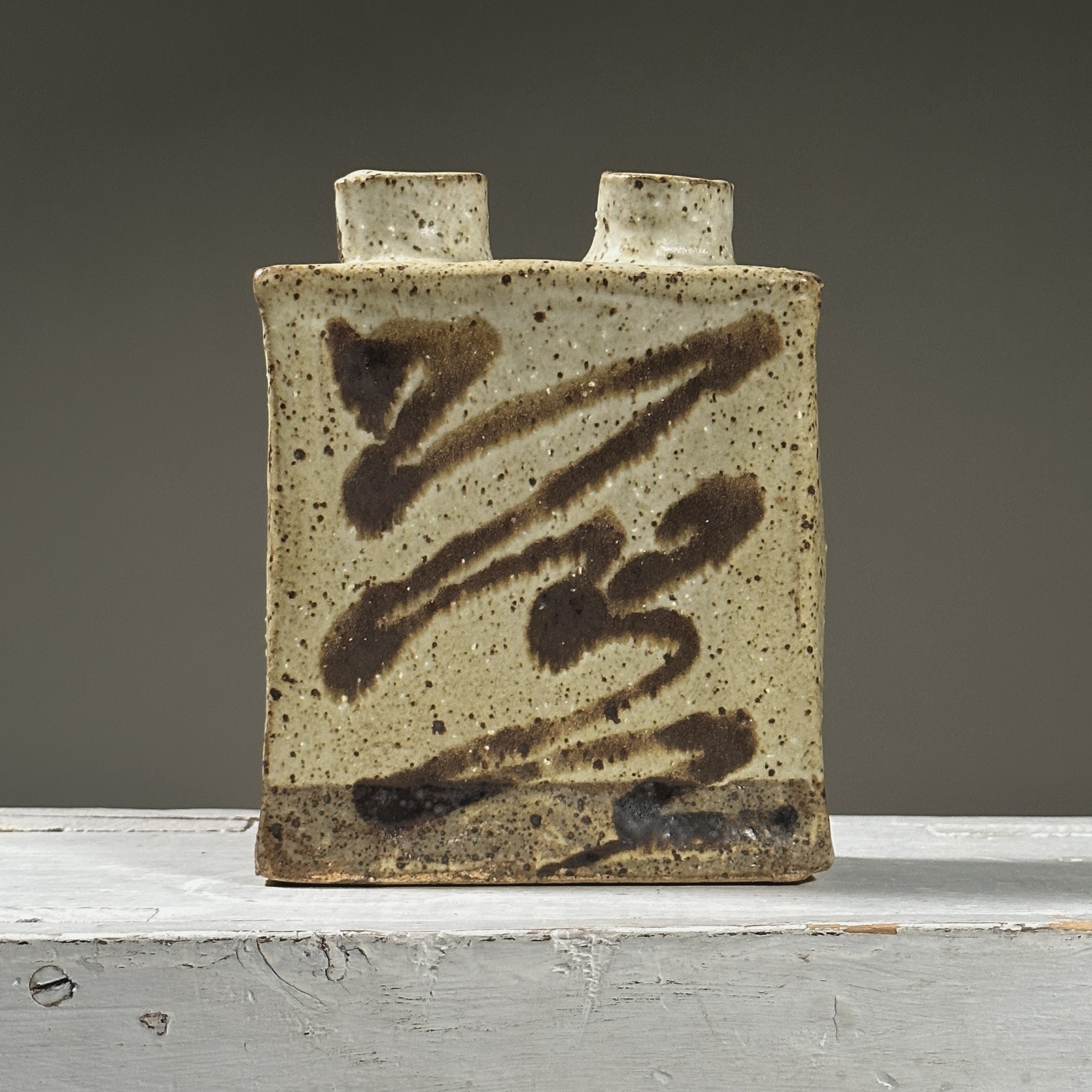
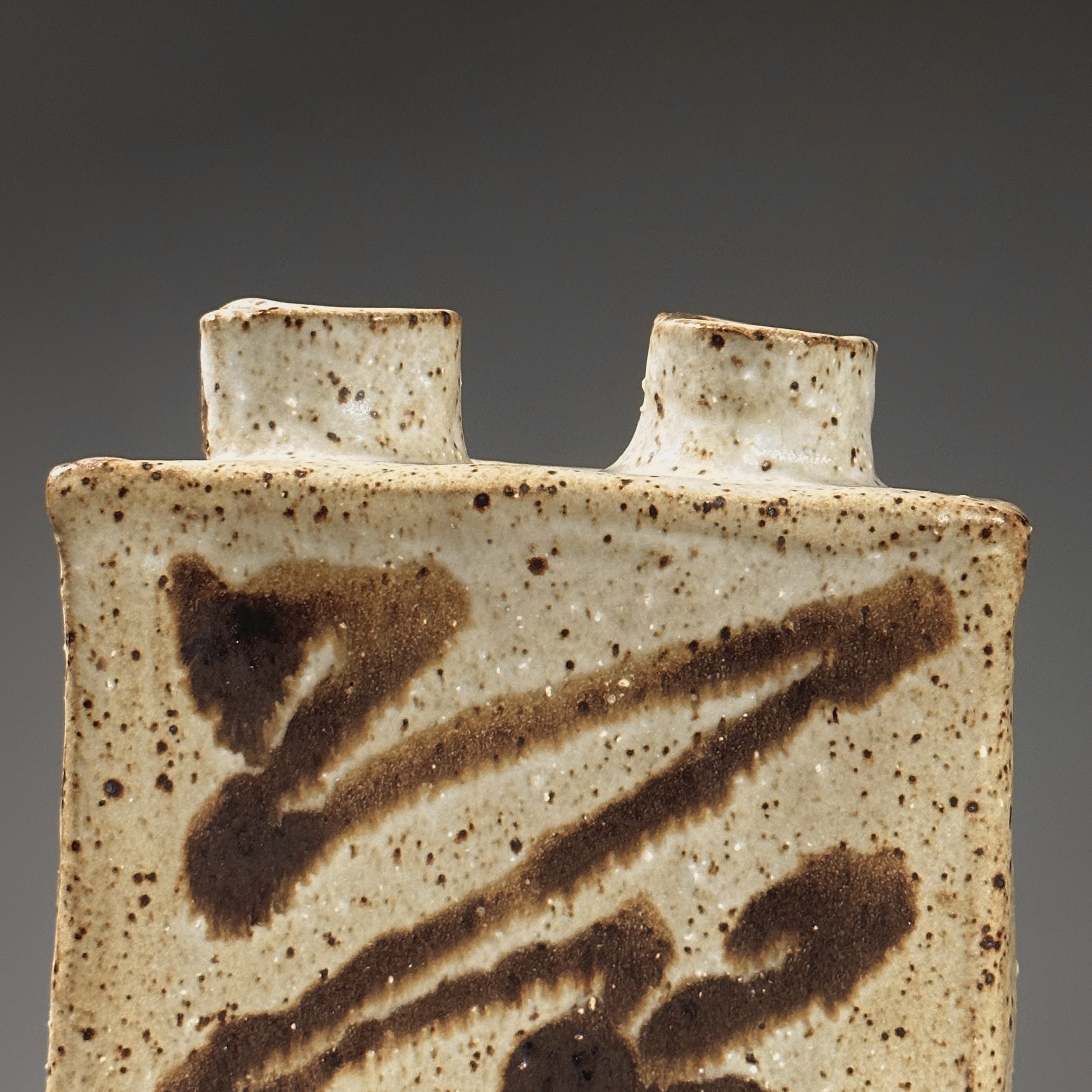
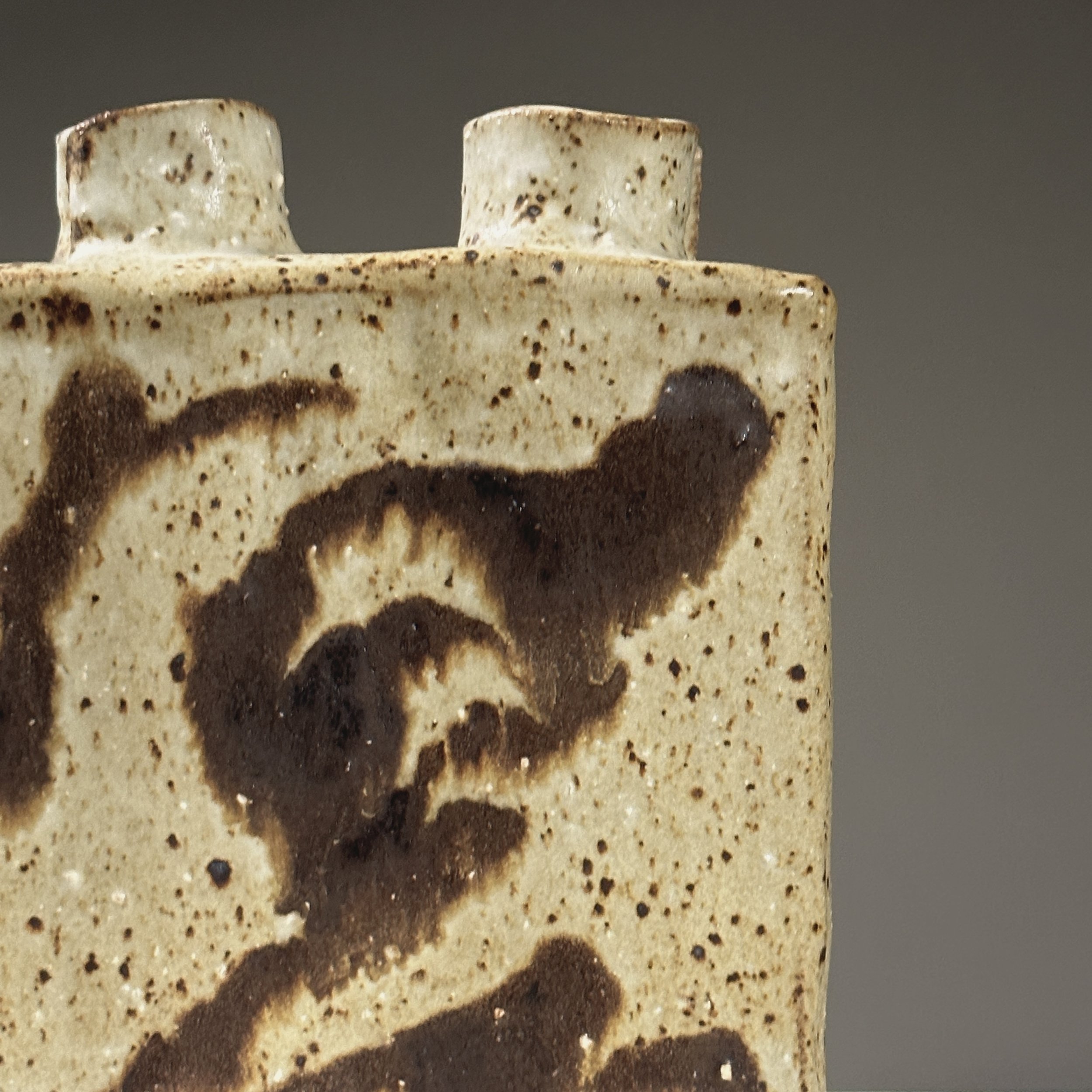
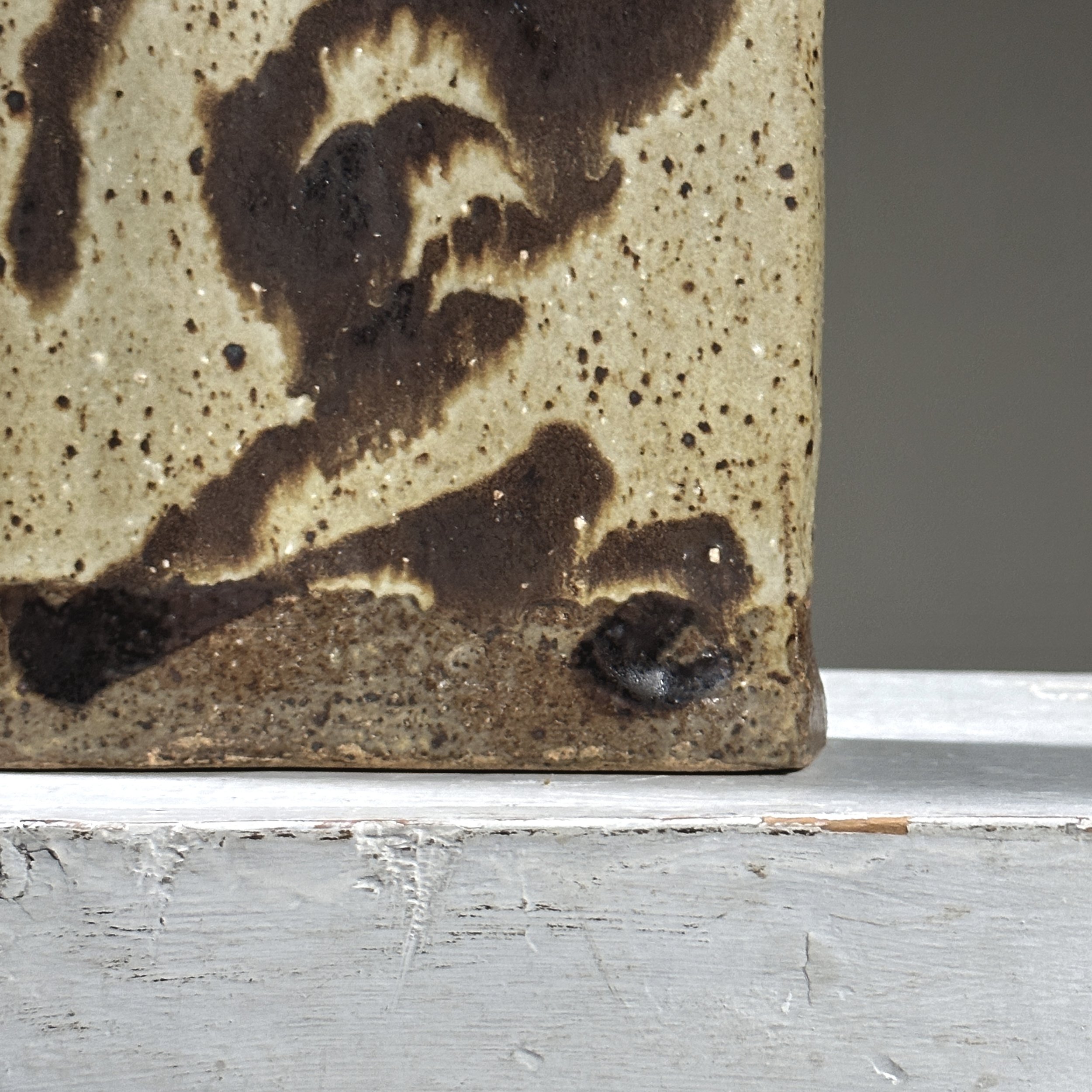
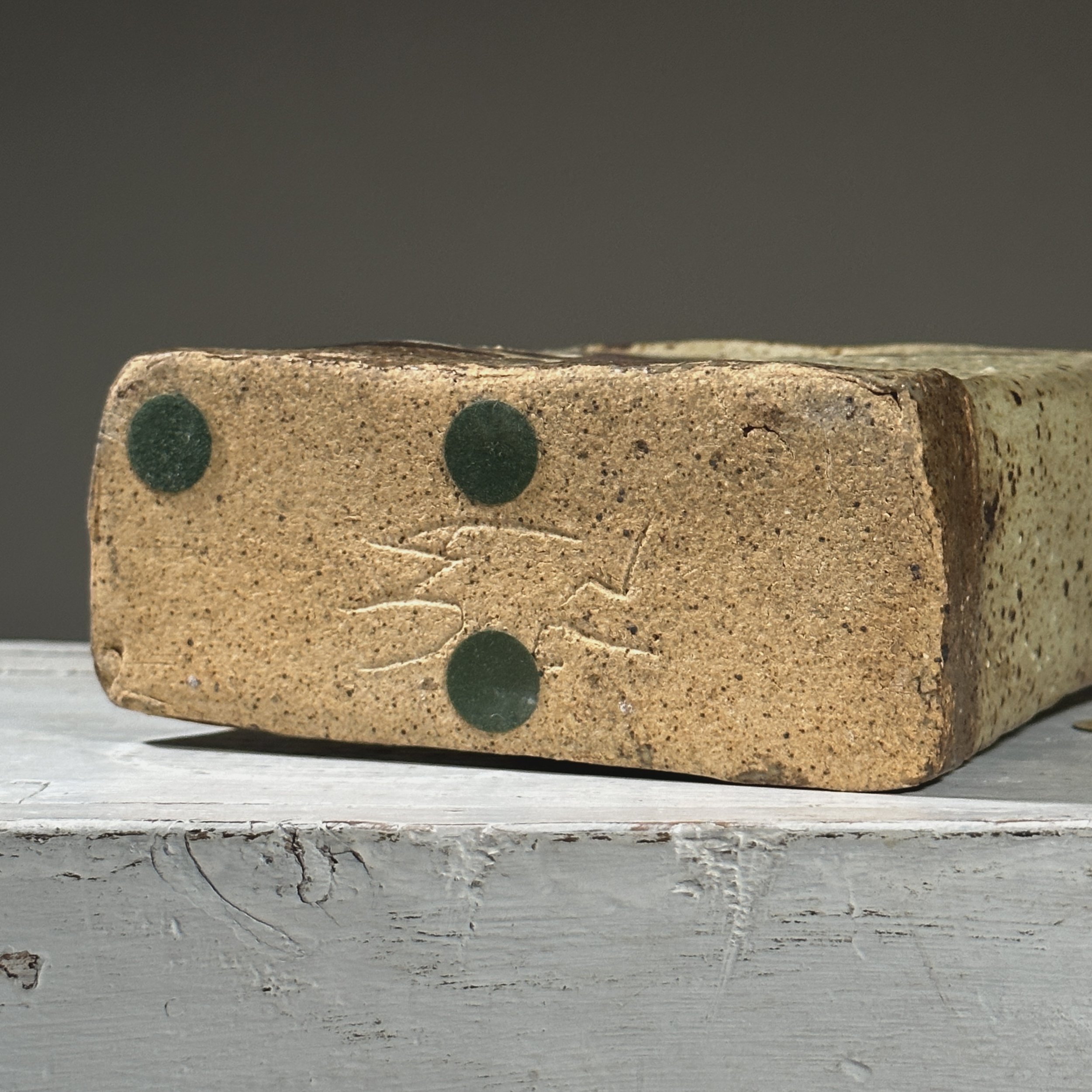
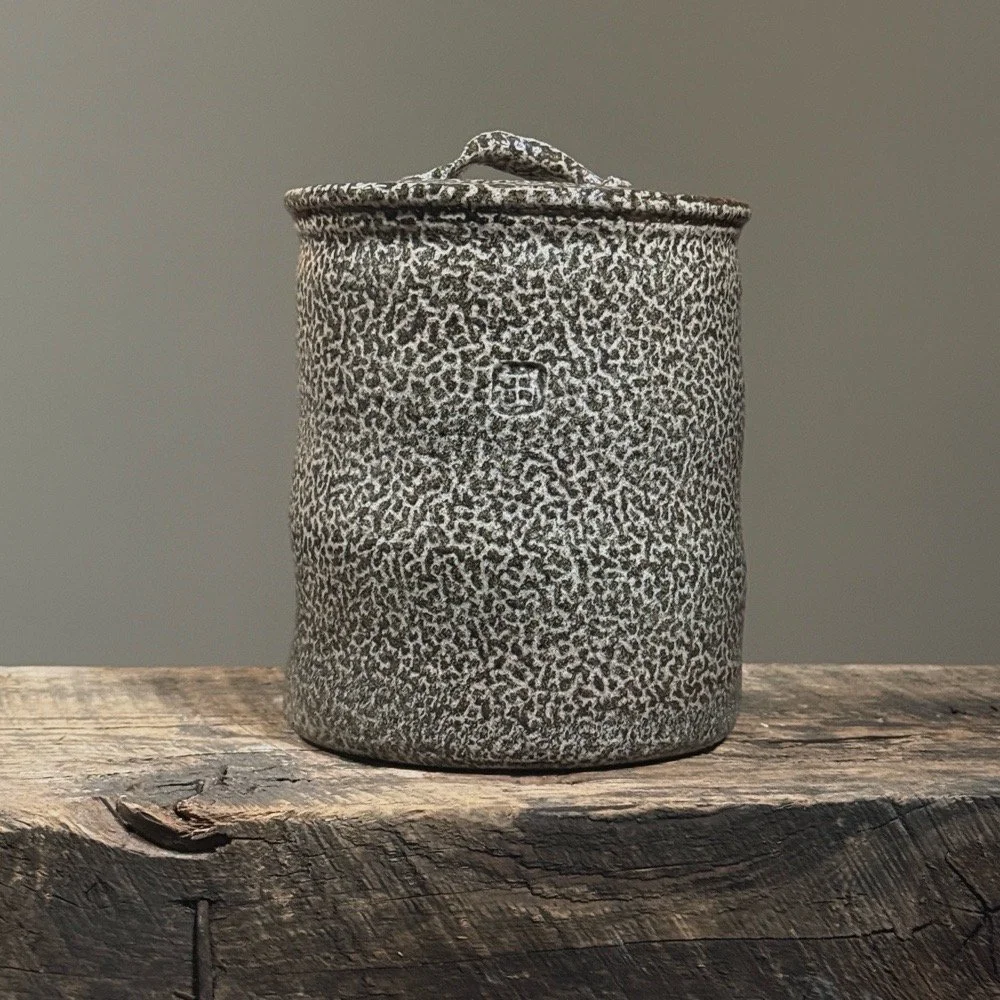
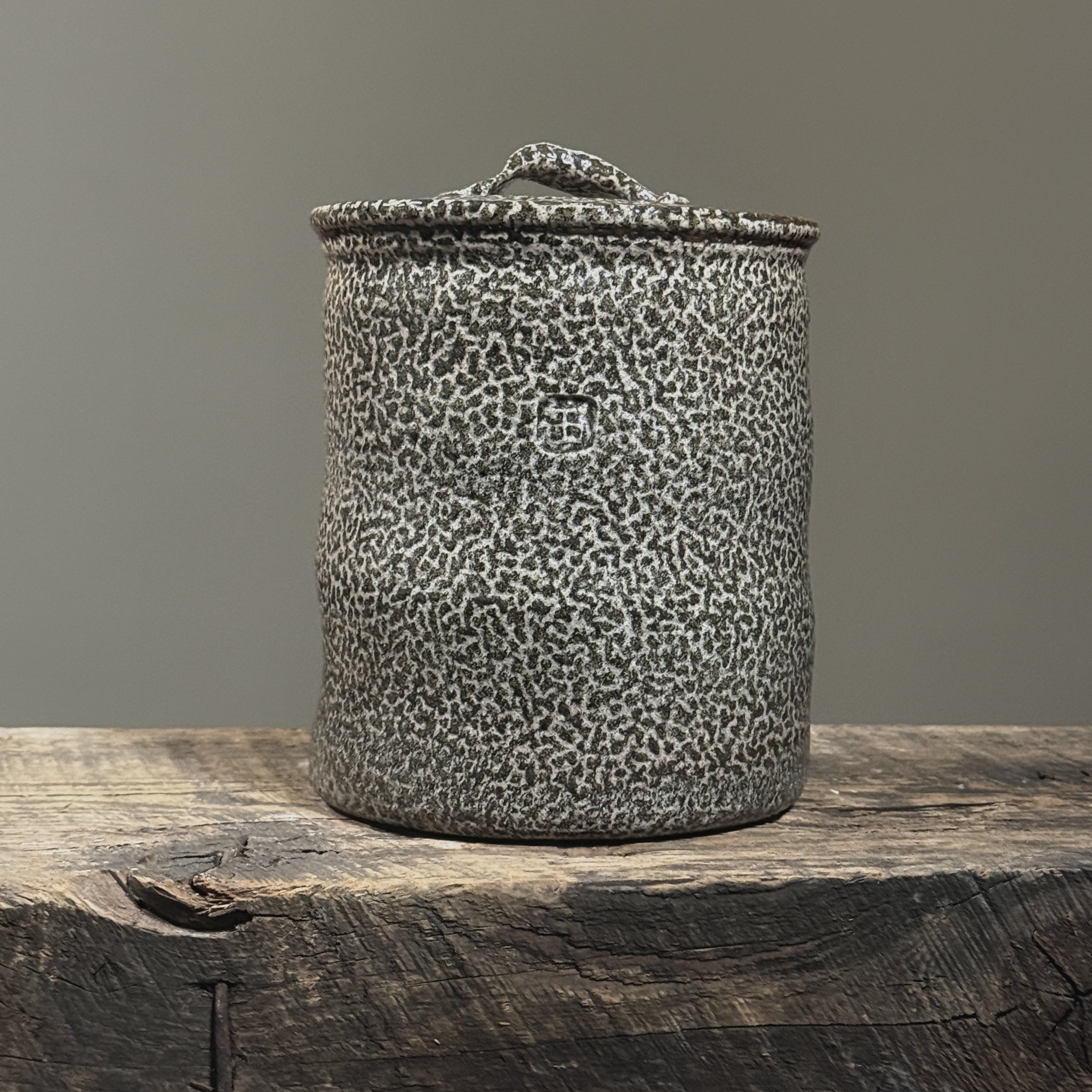
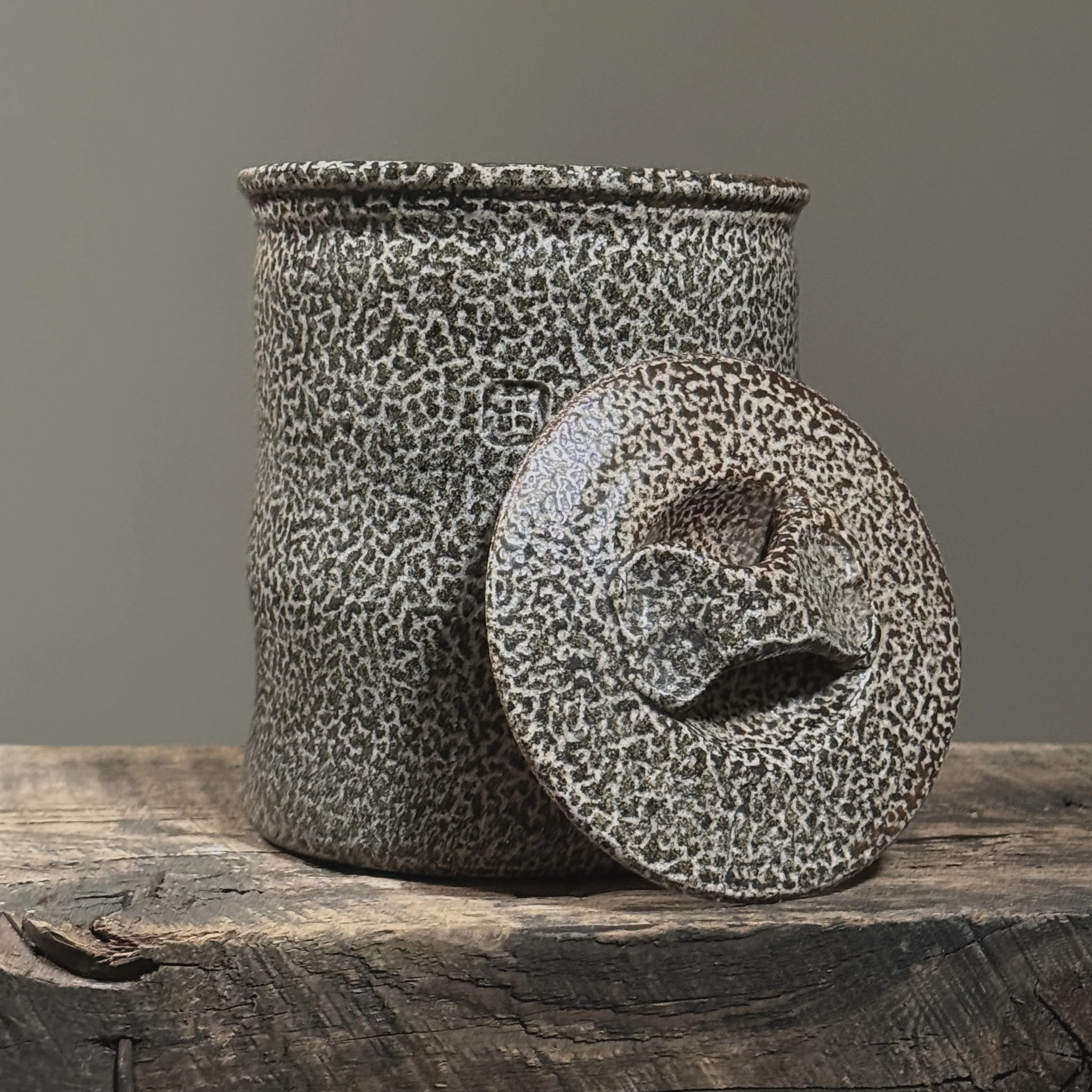
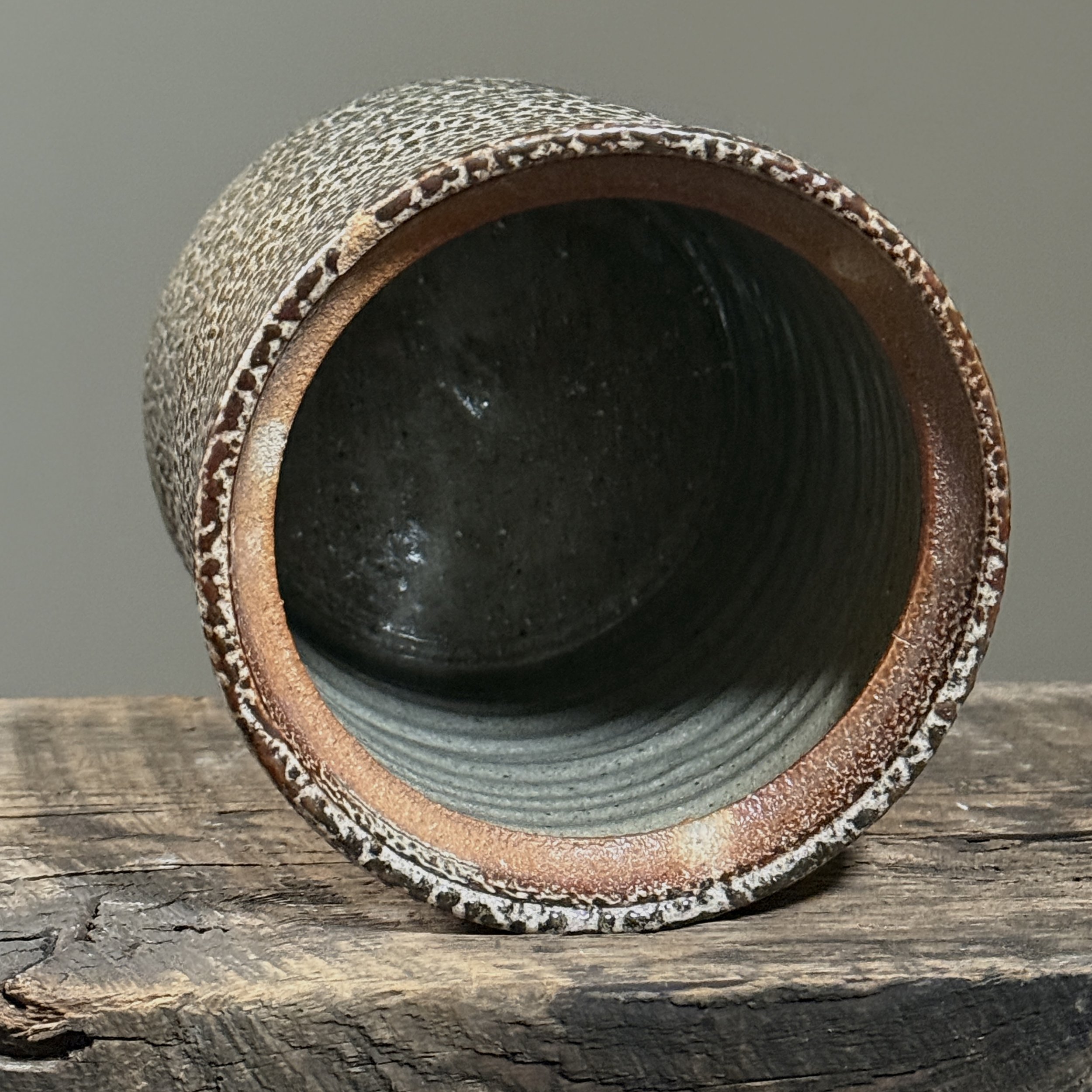
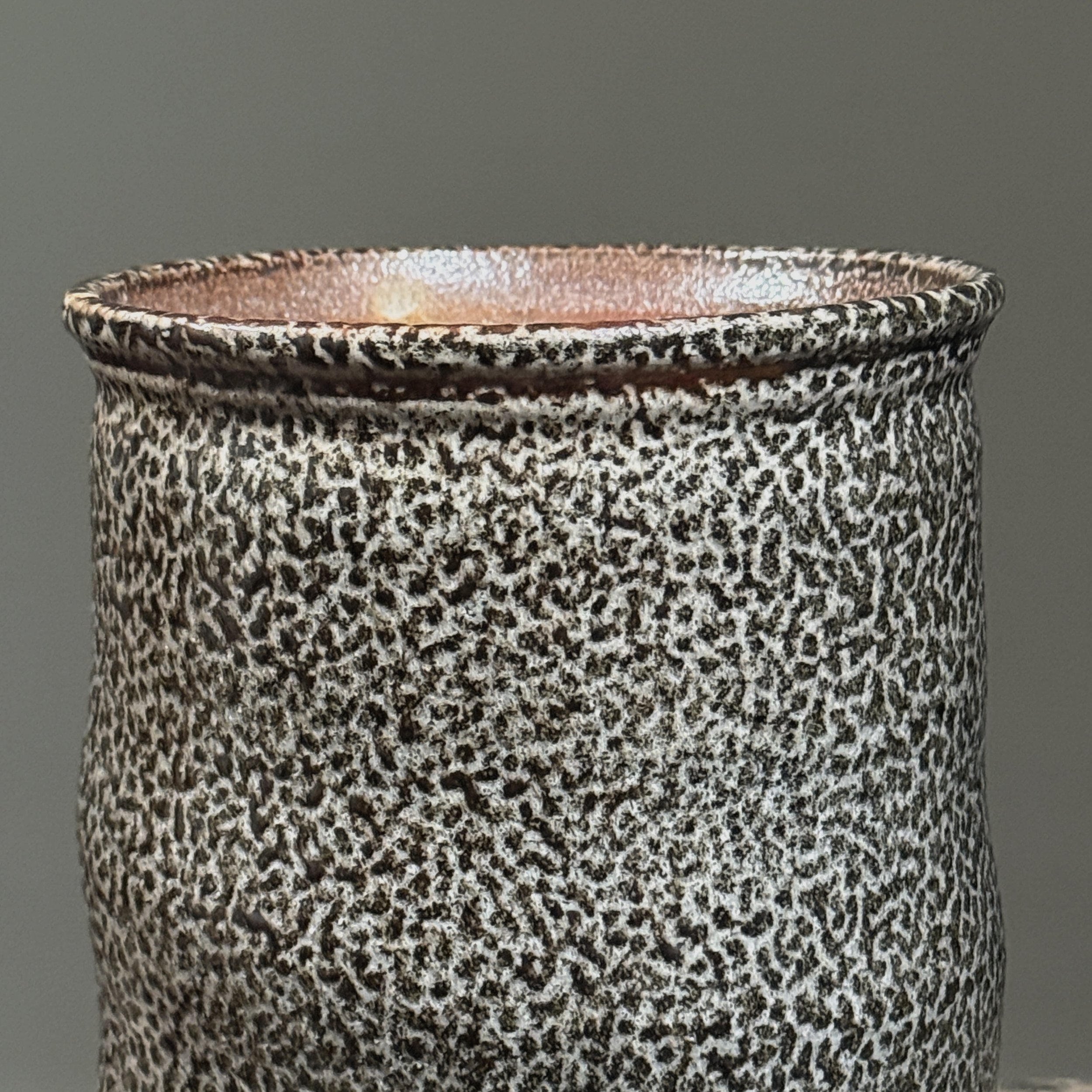
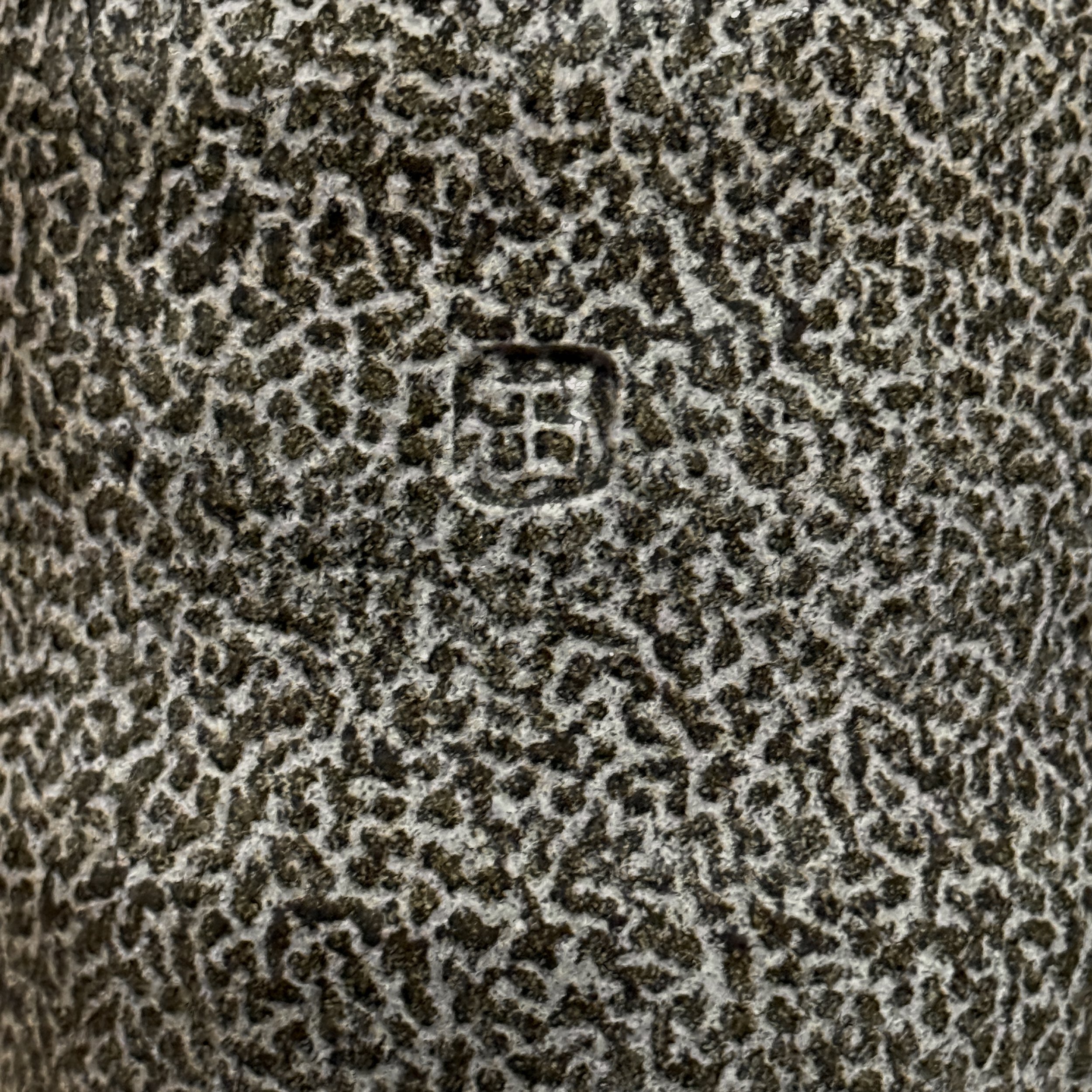
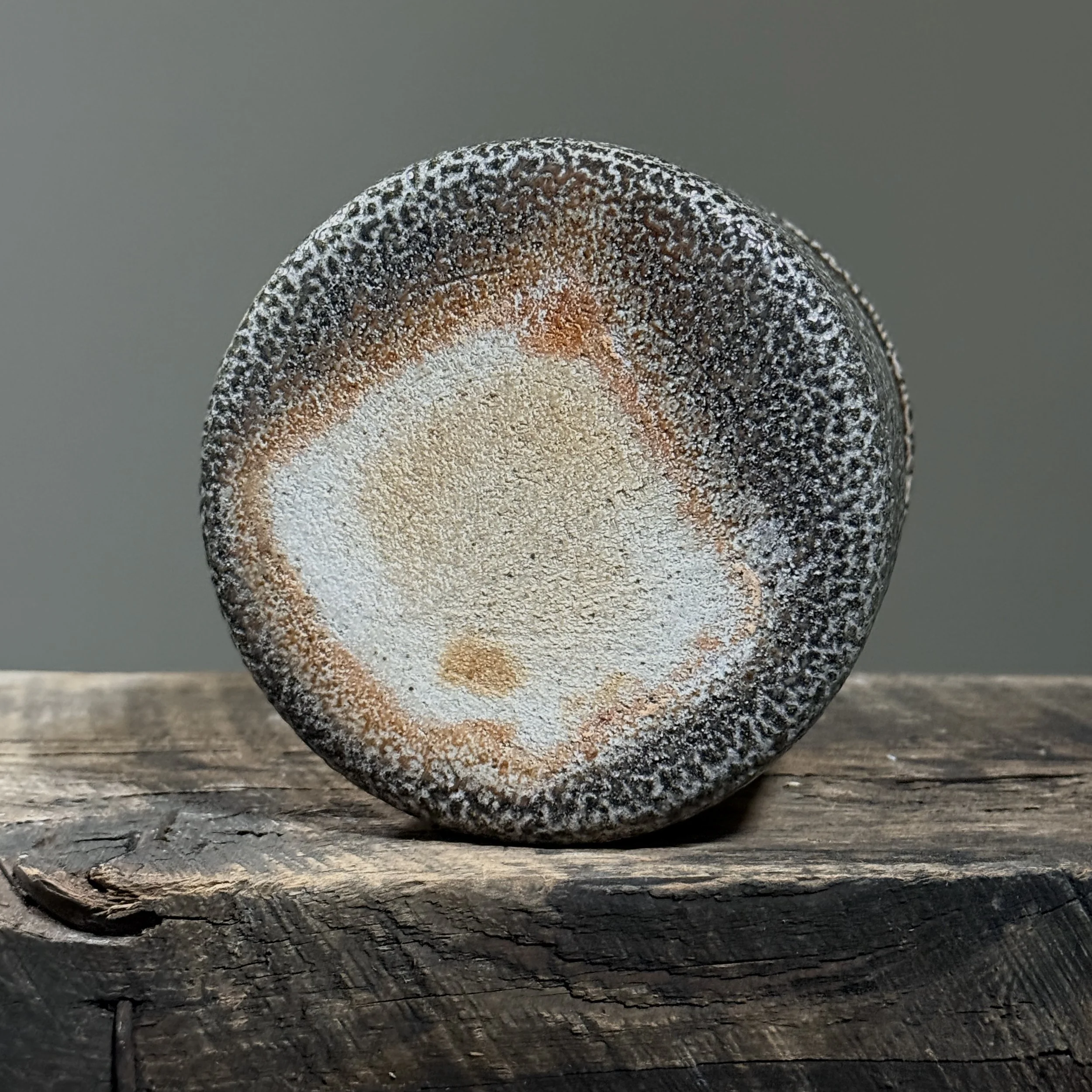
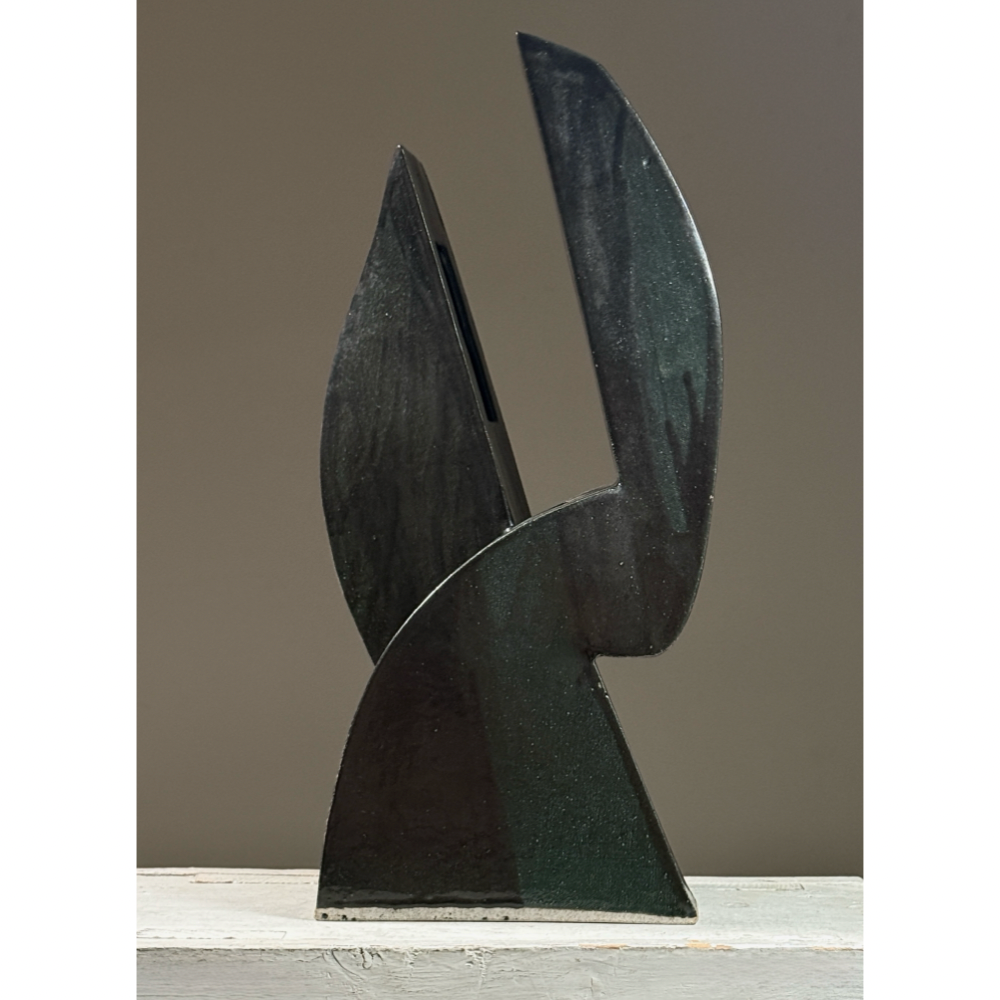
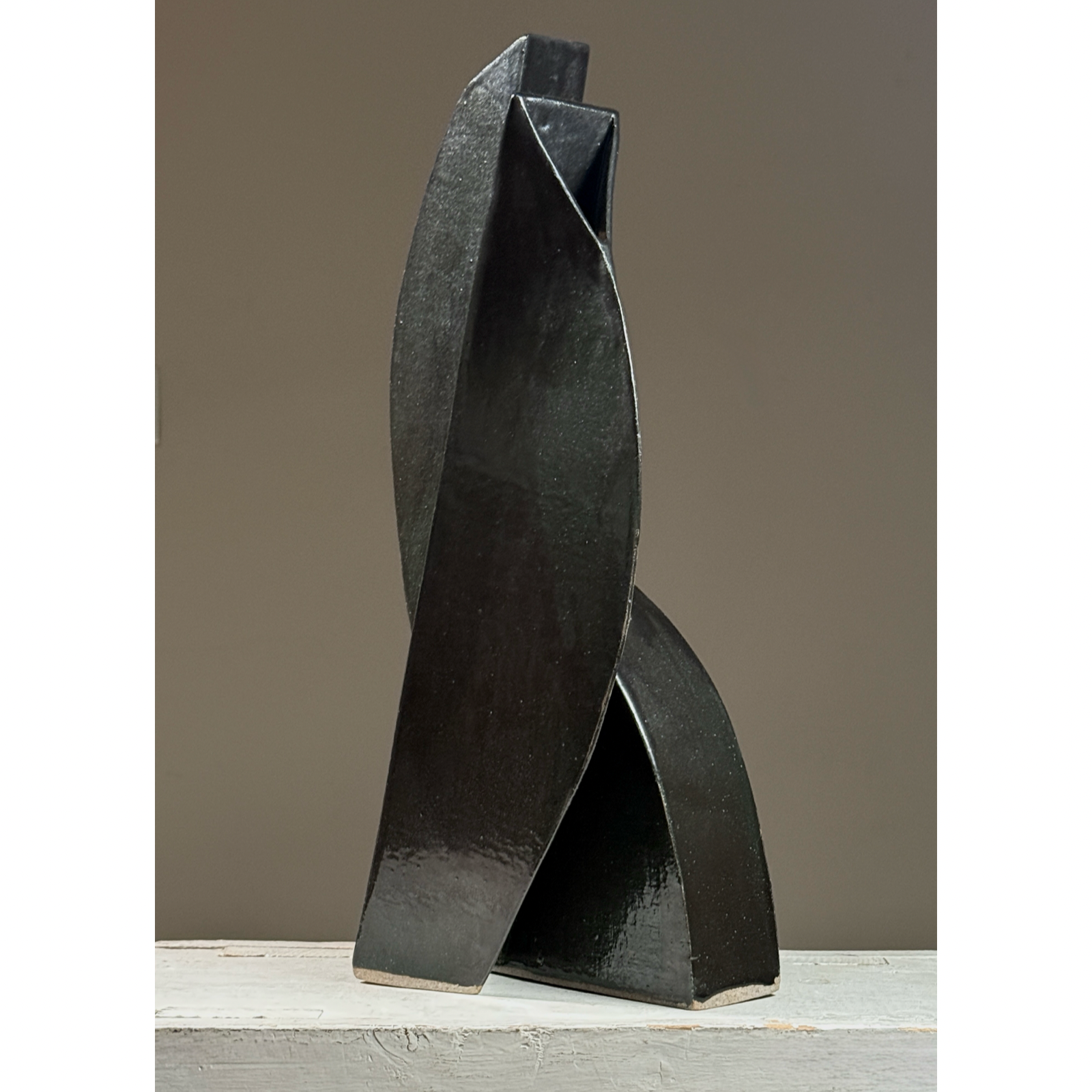
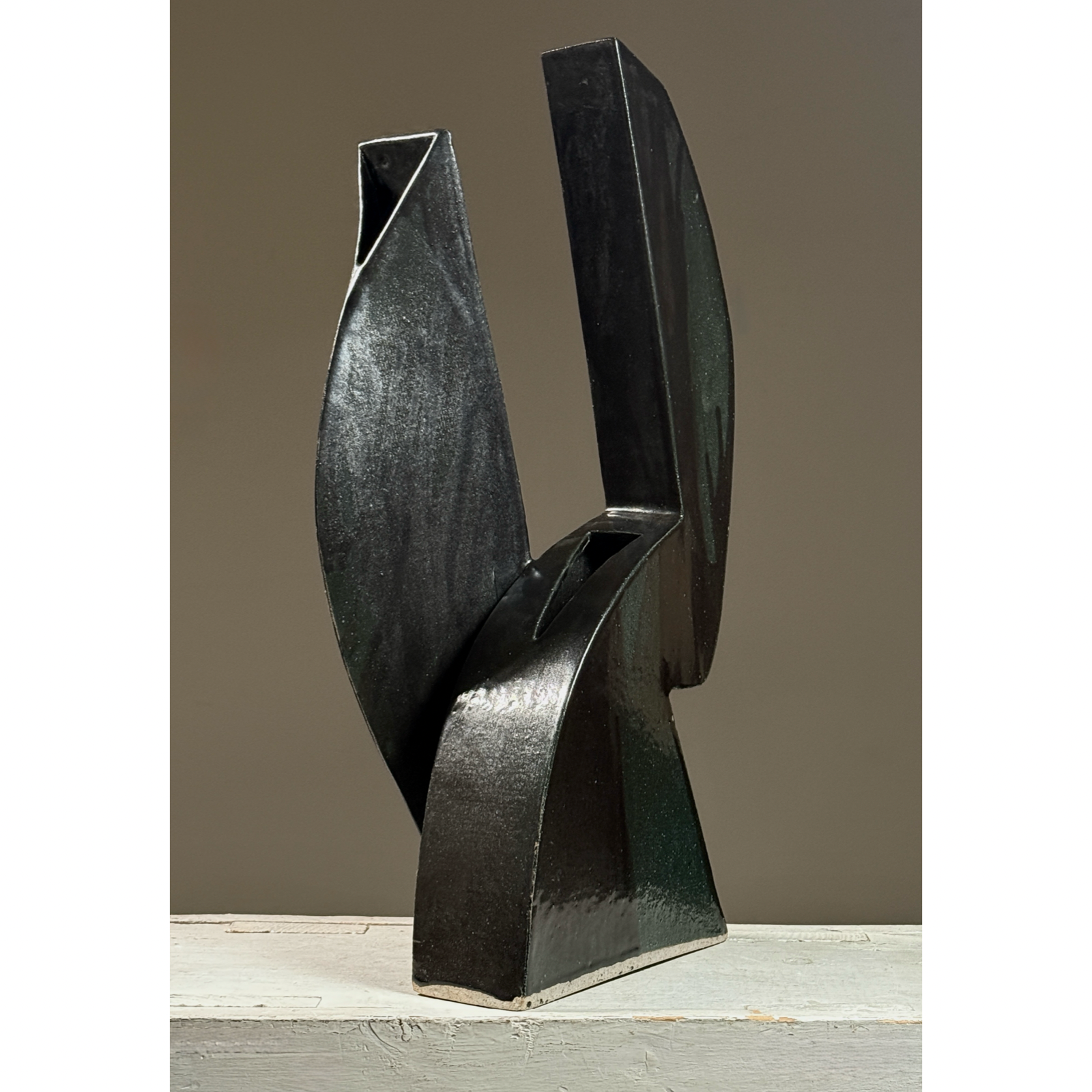
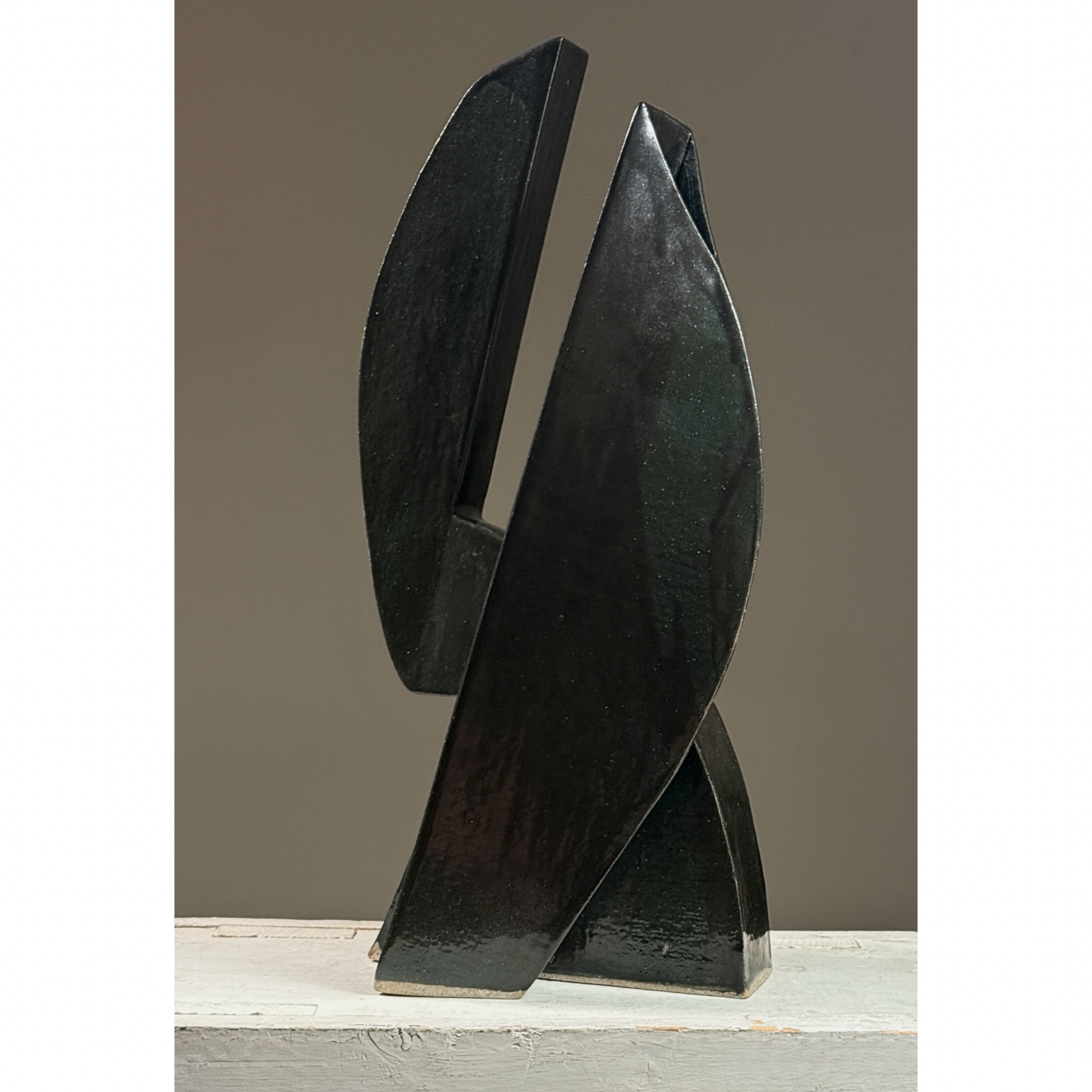
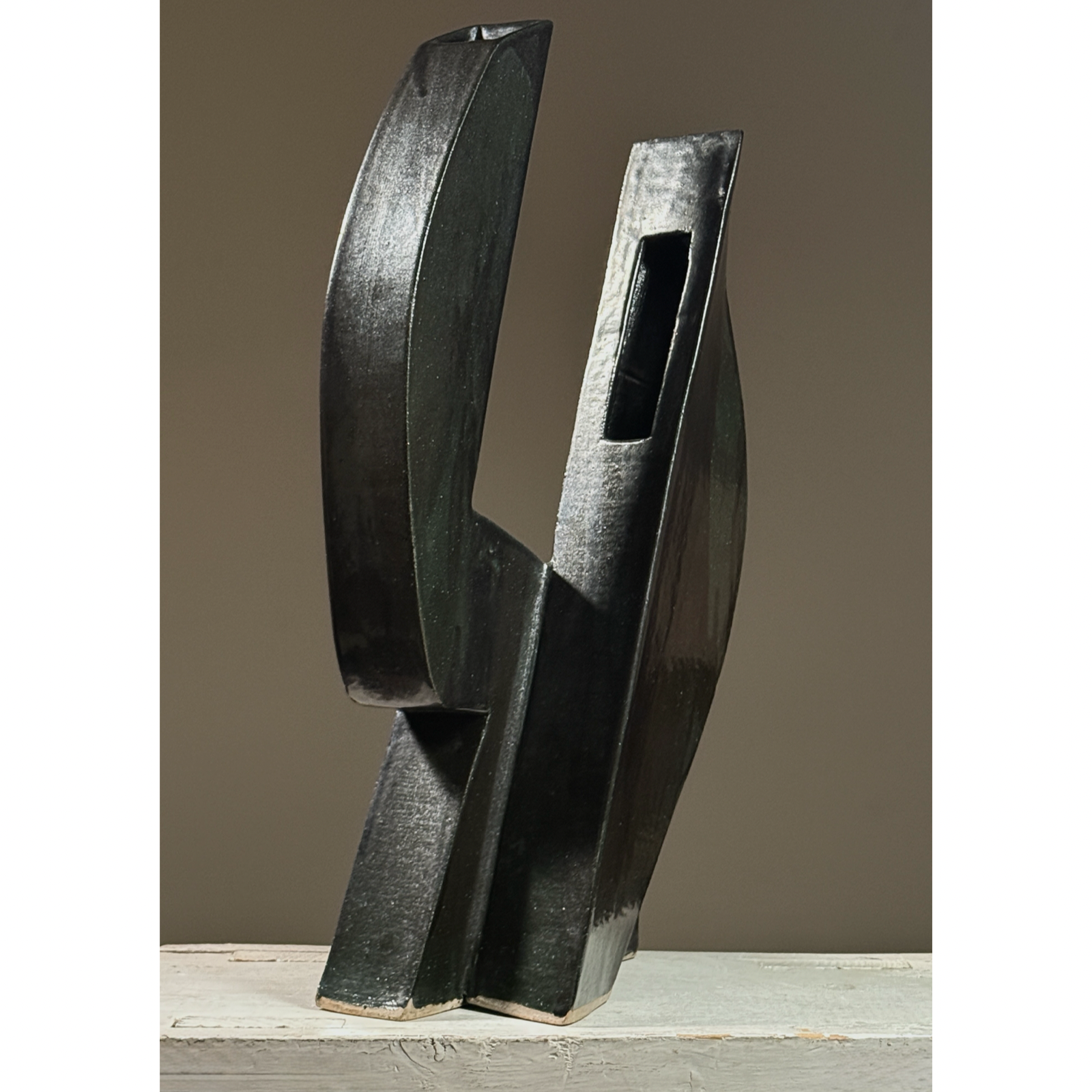
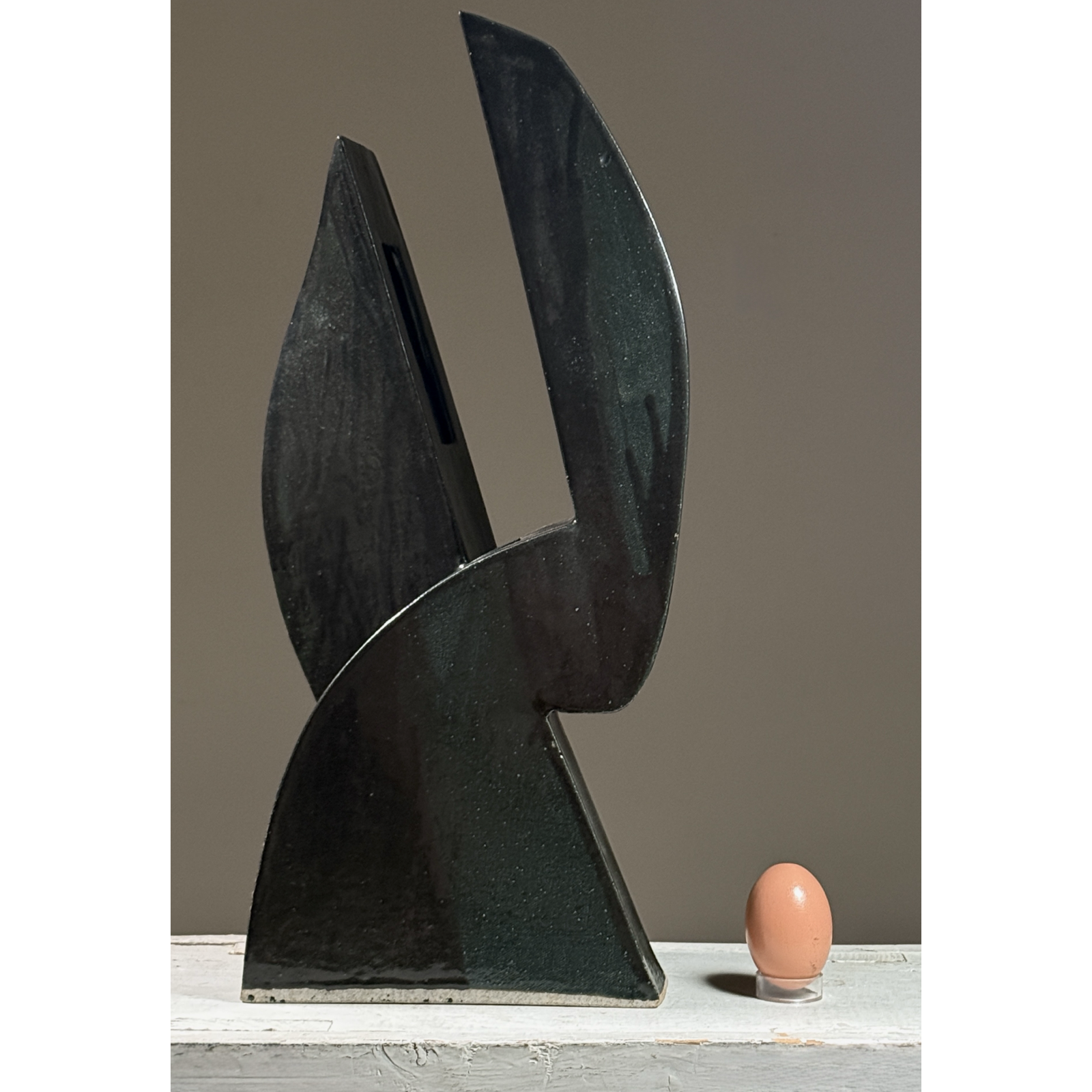
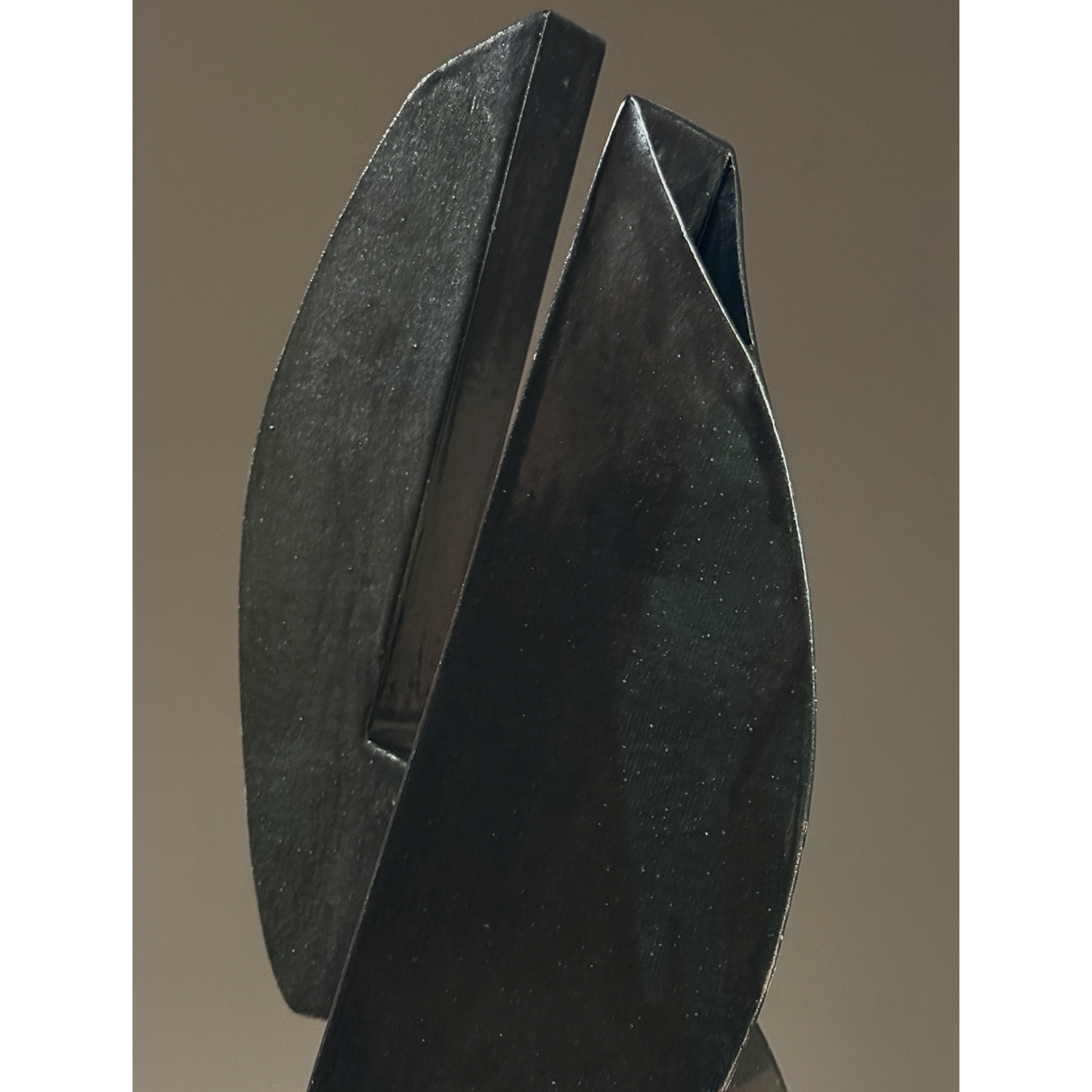
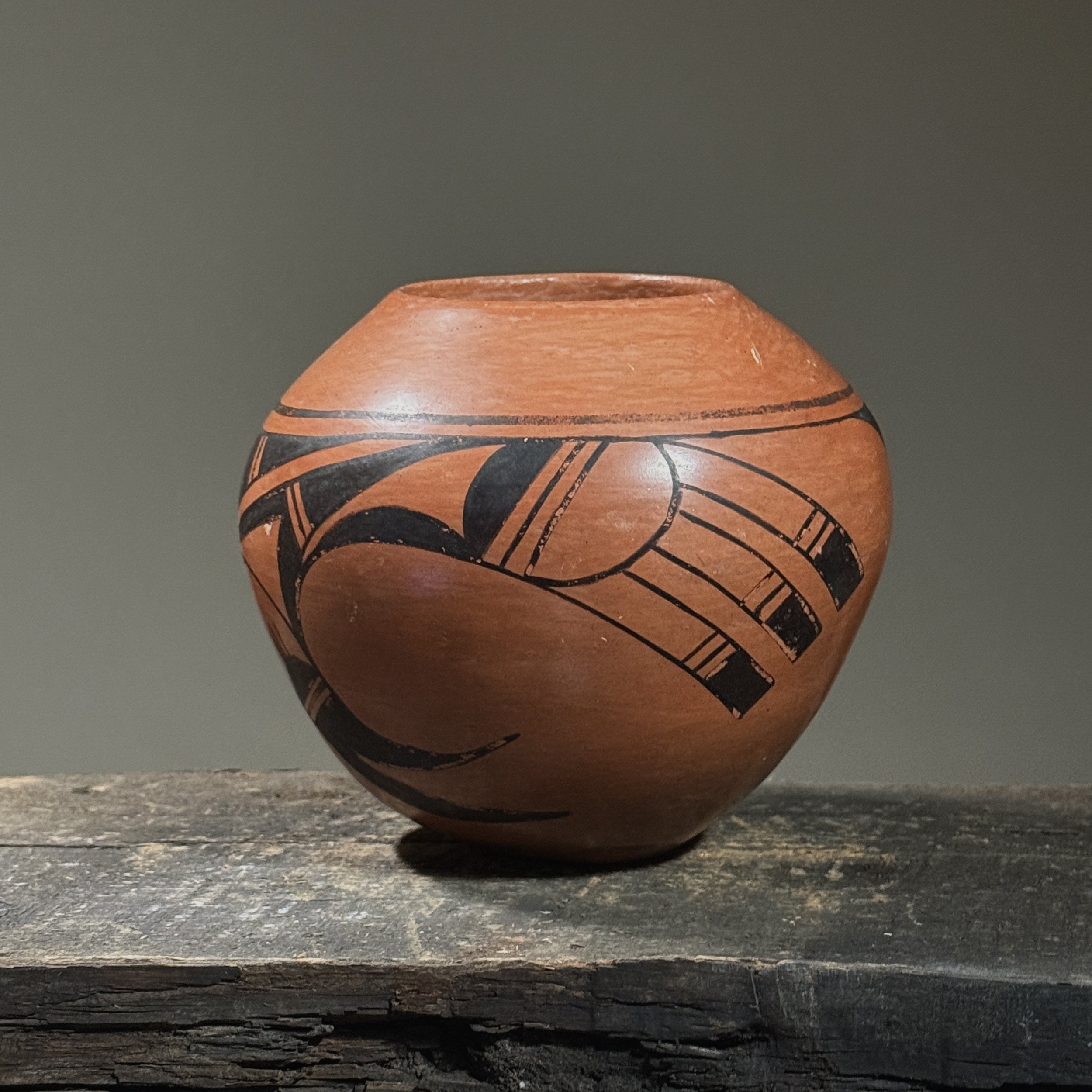
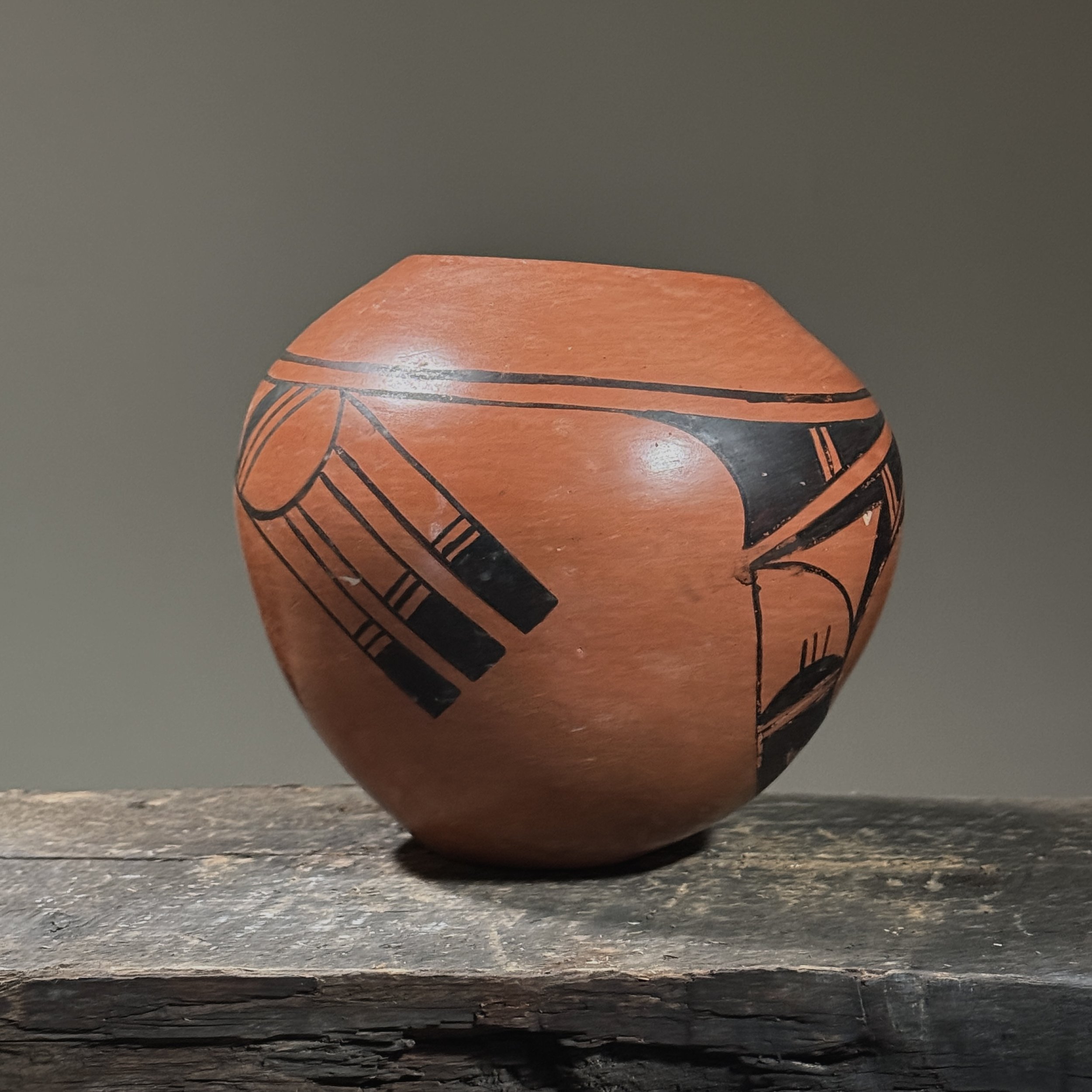
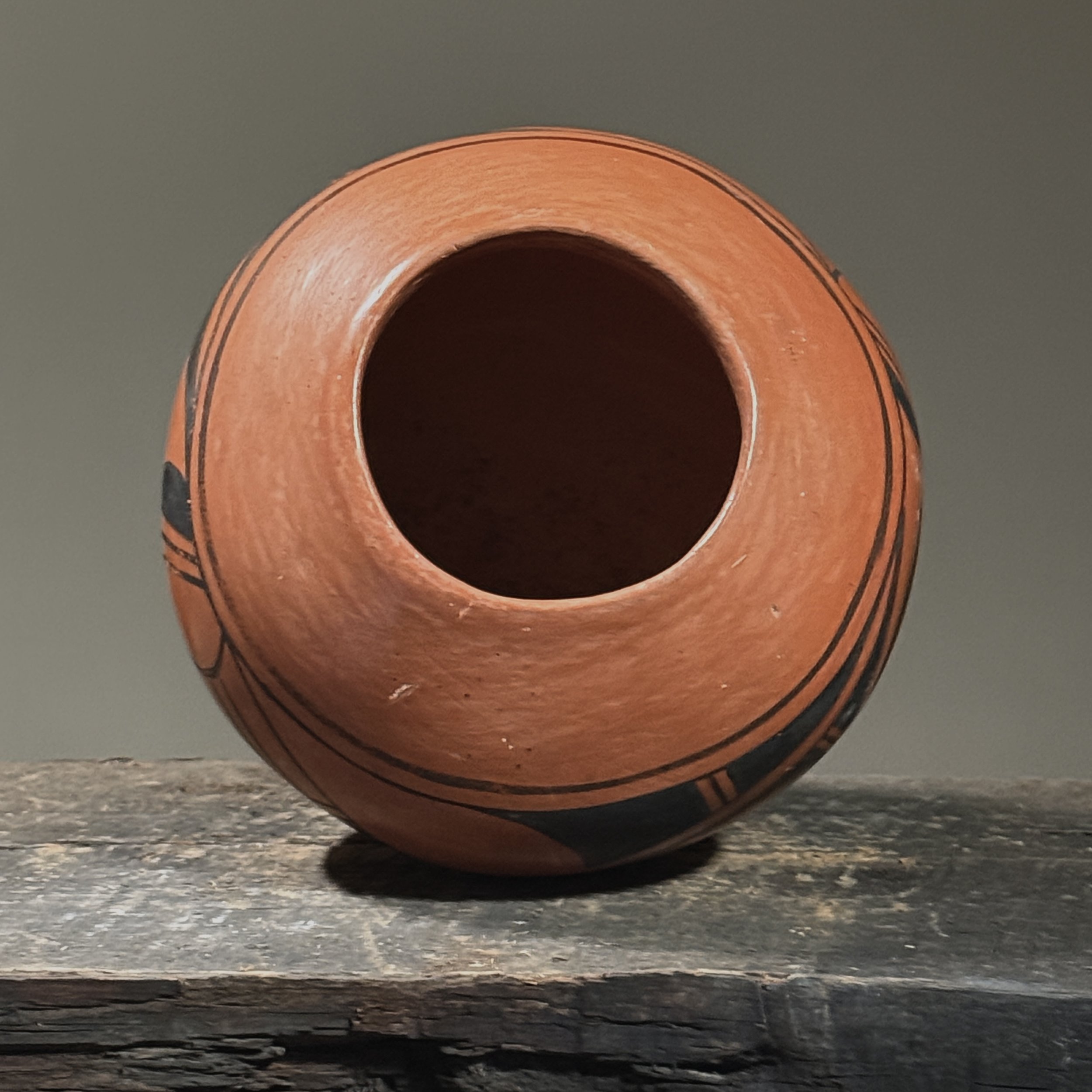
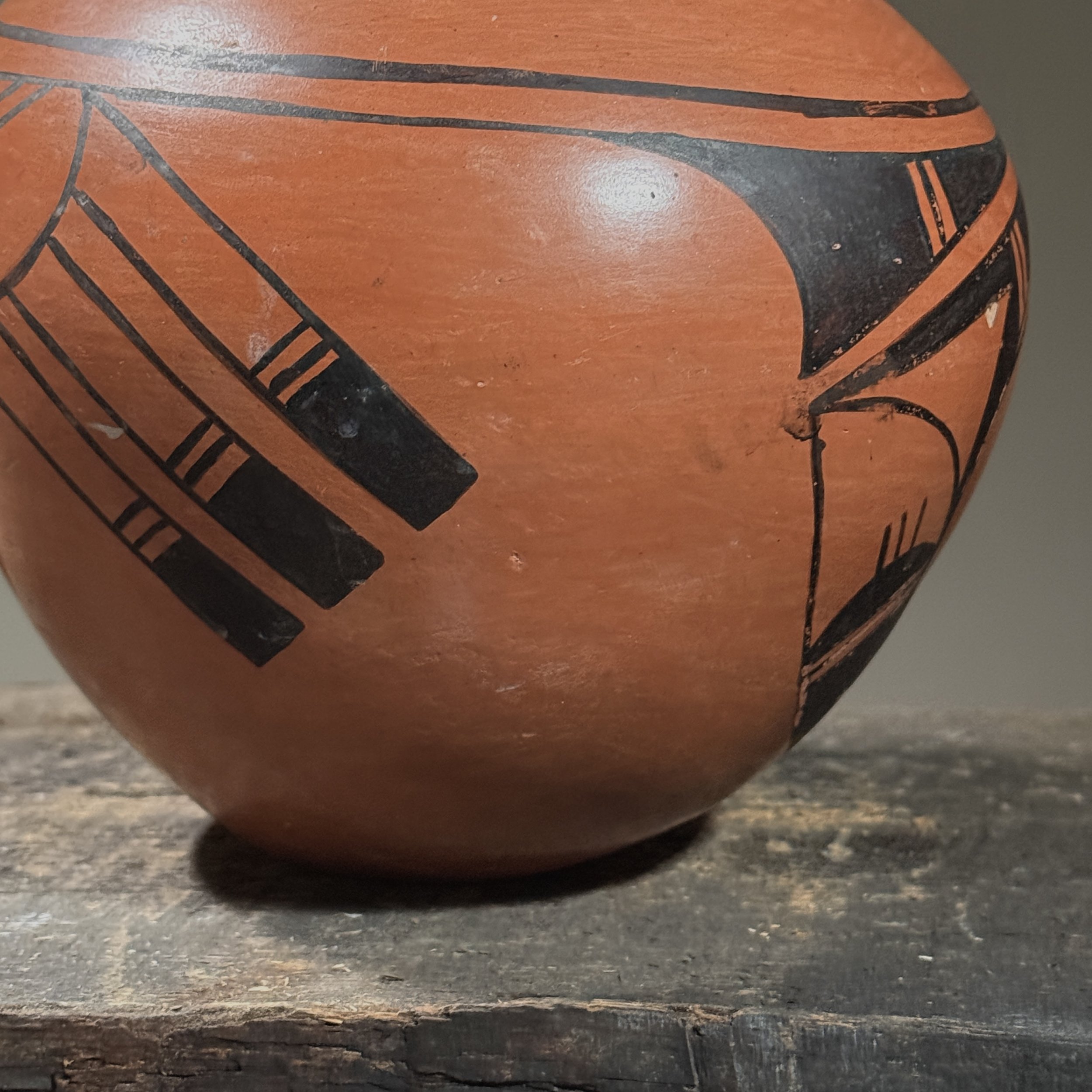
This is a hand-built Japanese stoneware tokkuri, a vessel for serving sake. The bottle has a globular body, a narrow neck, and a flared lip. The surface is covered in a natural ash glaze, a result of wood-firing where ash settles on the clay body and vitrifies in the kiln. This process created a mottled, variegated surface of olive-green and brown tones with areas of unglazed, exposed clay showing the fired texture.
The form and finish are characteristic of utilitarian folk ceramics (mingei) produced in regional kilns during the Edo period.
Historical & Technical Context
The tokkuri is a standard form in Japanese ceramics for serving warmed sake. This example reflects the shizen-yū (natural glaze) aesthetic, prized in Japanese pottery, where the effects of fire, ash, and clay interaction are embraced rather than controlled. Such wares were produced in climbing kilns (noborigama) or ground kilns (anagama) used by rural potteries. The resulting glaze is not applied but is a direct record of the firing process, making each piece unique.
These bottles were commonplace domestic objects, yet their aesthetic embodies the wabi-sabi principles of asymmetry, simplicity, and the beauty of natural processes.
Object Title: Ash-Glazed Tokkuri(Sake Bottle)
Culture: Japanese
Date: Edo period (1603–1868)
Medium: Stoneware with natural ash glaze
Dimensions: Height: 19.7 cm (7.75 in); Diameter: 8.9 cm (3.5 in)
Condition: Good. Surface wear and minor abrasions consistent with age and use. No cracks, chips, or restoration noted.
Object Description
This is a hand-built Japanese stoneware tokkuri, a vessel for serving sake. The bottle has a globular body, a narrow neck, and a flared lip. The surface is covered in a natural ash glaze, a result of wood-firing where ash settles on the clay body and vitrifies in the kiln. This process created a mottled, variegated surface of olive-green and brown tones with areas of unglazed, exposed clay showing the fired texture.
The form and finish are characteristic of utilitarian folk ceramics (mingei) produced in regional kilns during the Edo period.
Historical & Technical Context
The tokkuri is a standard form in Japanese ceramics for serving warmed sake. This example reflects the shizen-yū (natural glaze) aesthetic, prized in Japanese pottery, where the effects of fire, ash, and clay interaction are embraced rather than controlled. Such wares were produced in climbing kilns (noborigama) or ground kilns (anagama) used by rural potteries. The resulting glaze is not applied but is a direct record of the firing process, making each piece unique.
These bottles were commonplace domestic objects, yet their aesthetic embodies the wabi-sabi principles of asymmetry, simplicity, and the beauty of natural processes.

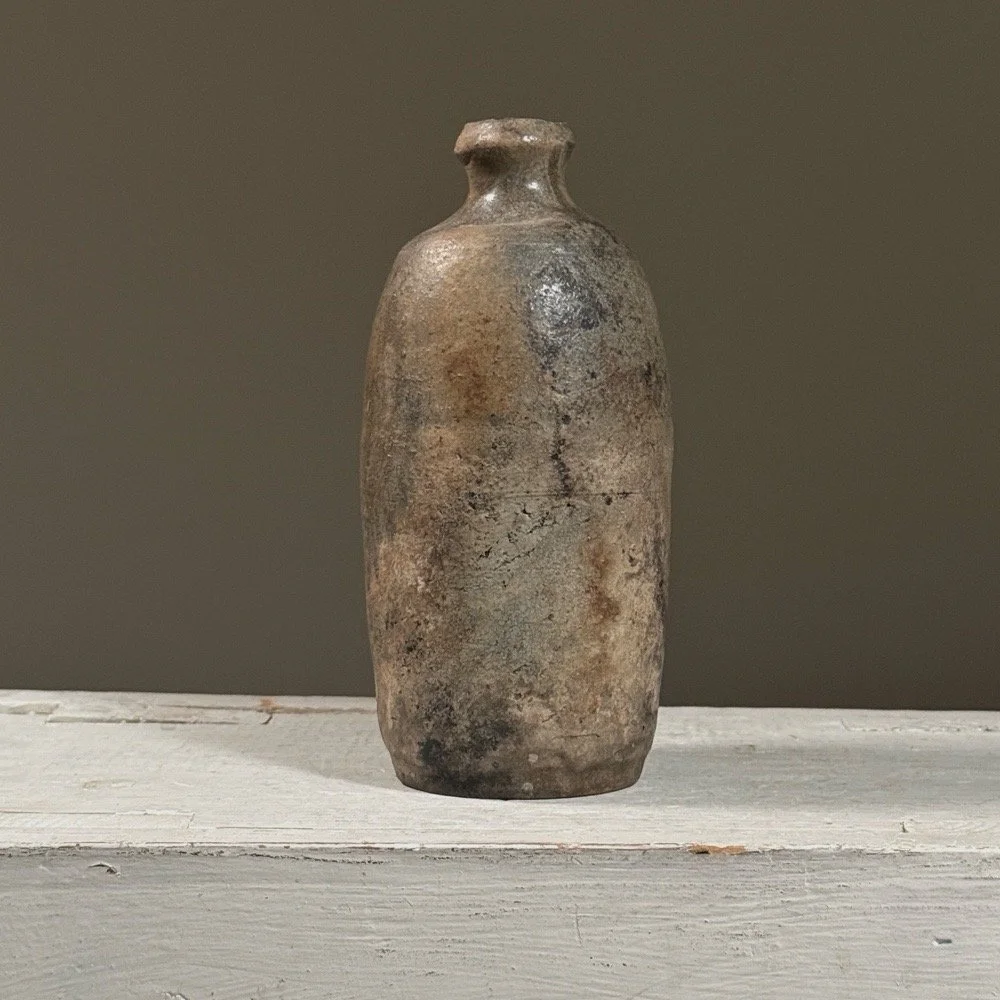 Image 1 of 7
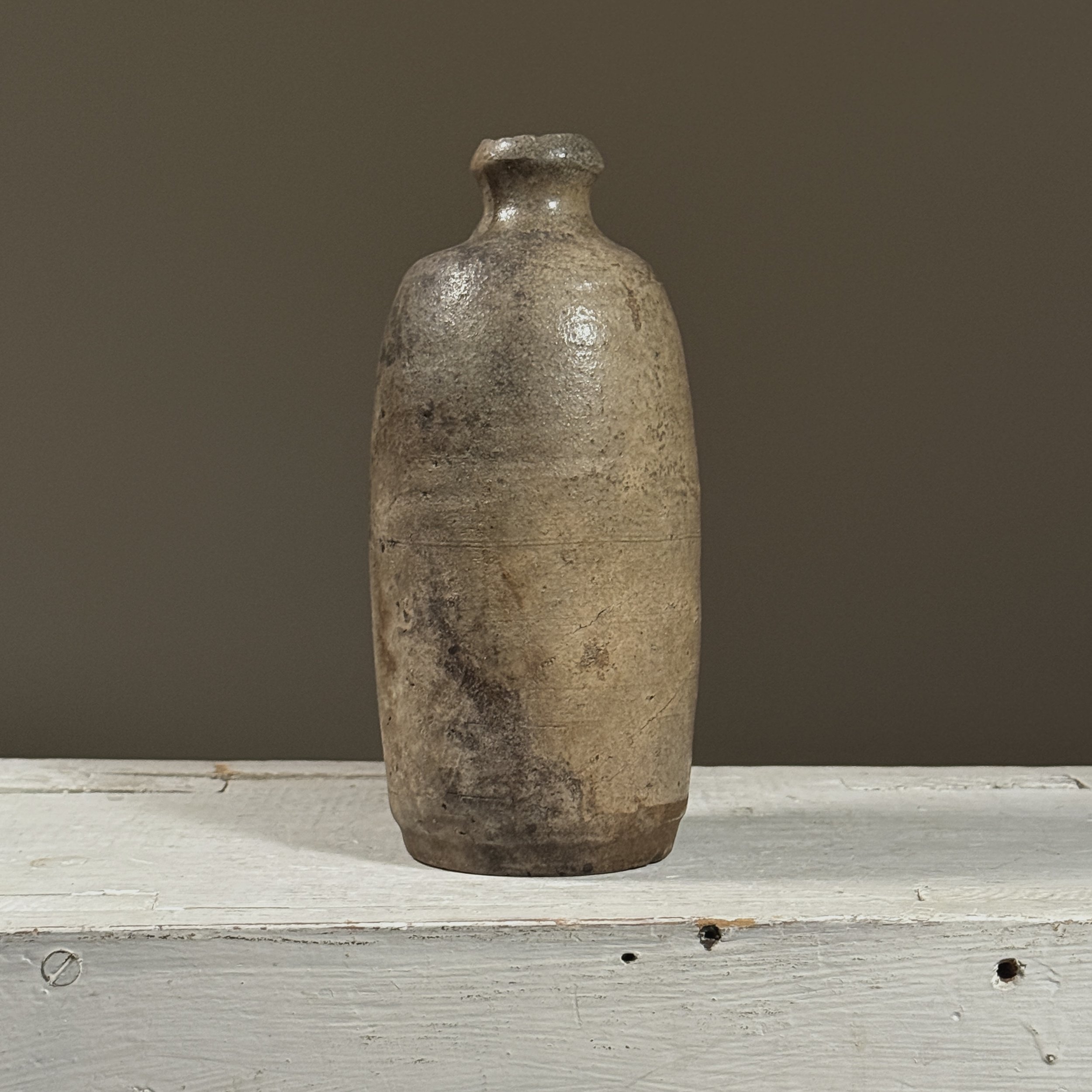 Image 2 of 7
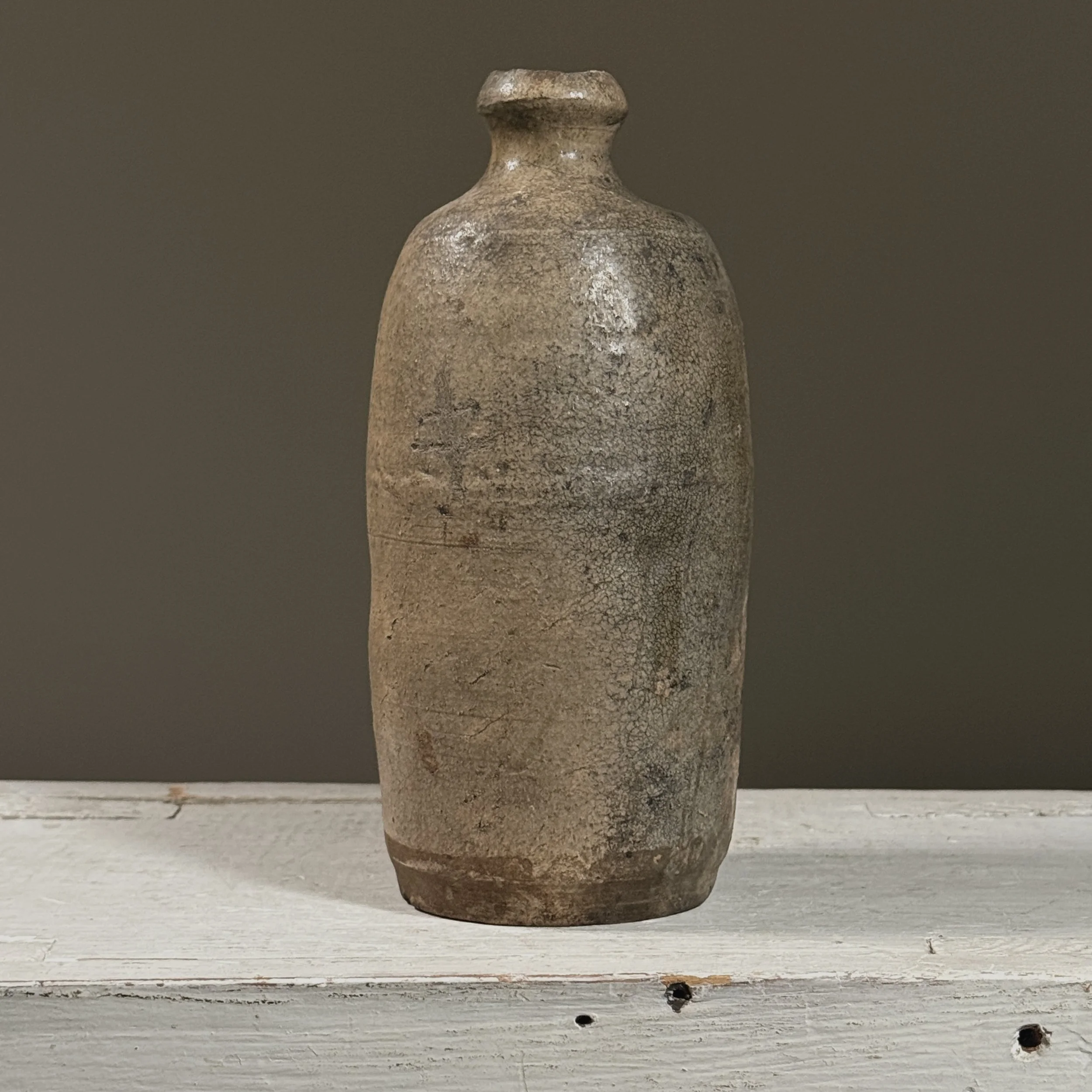 Image 3 of 7
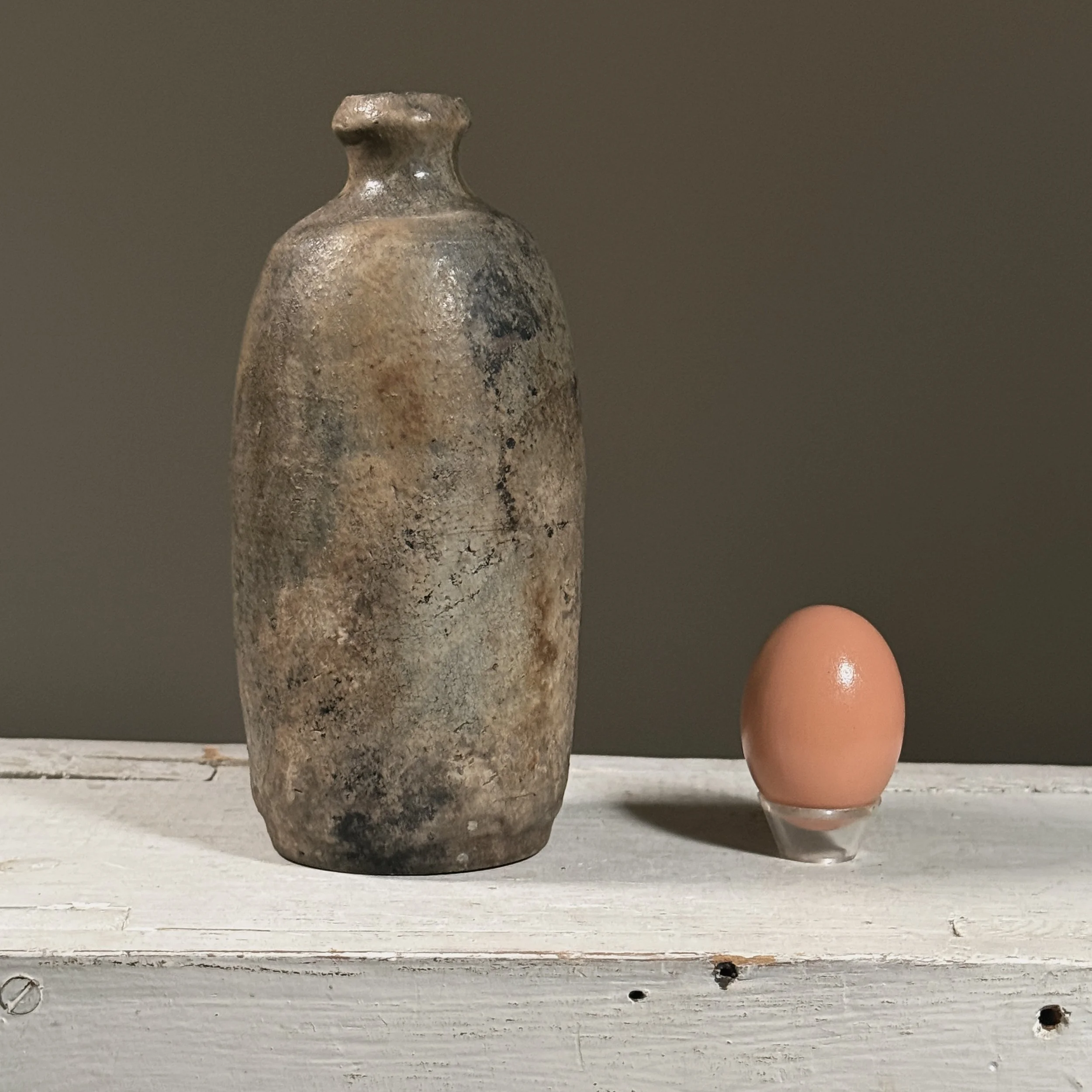 Image 4 of 7
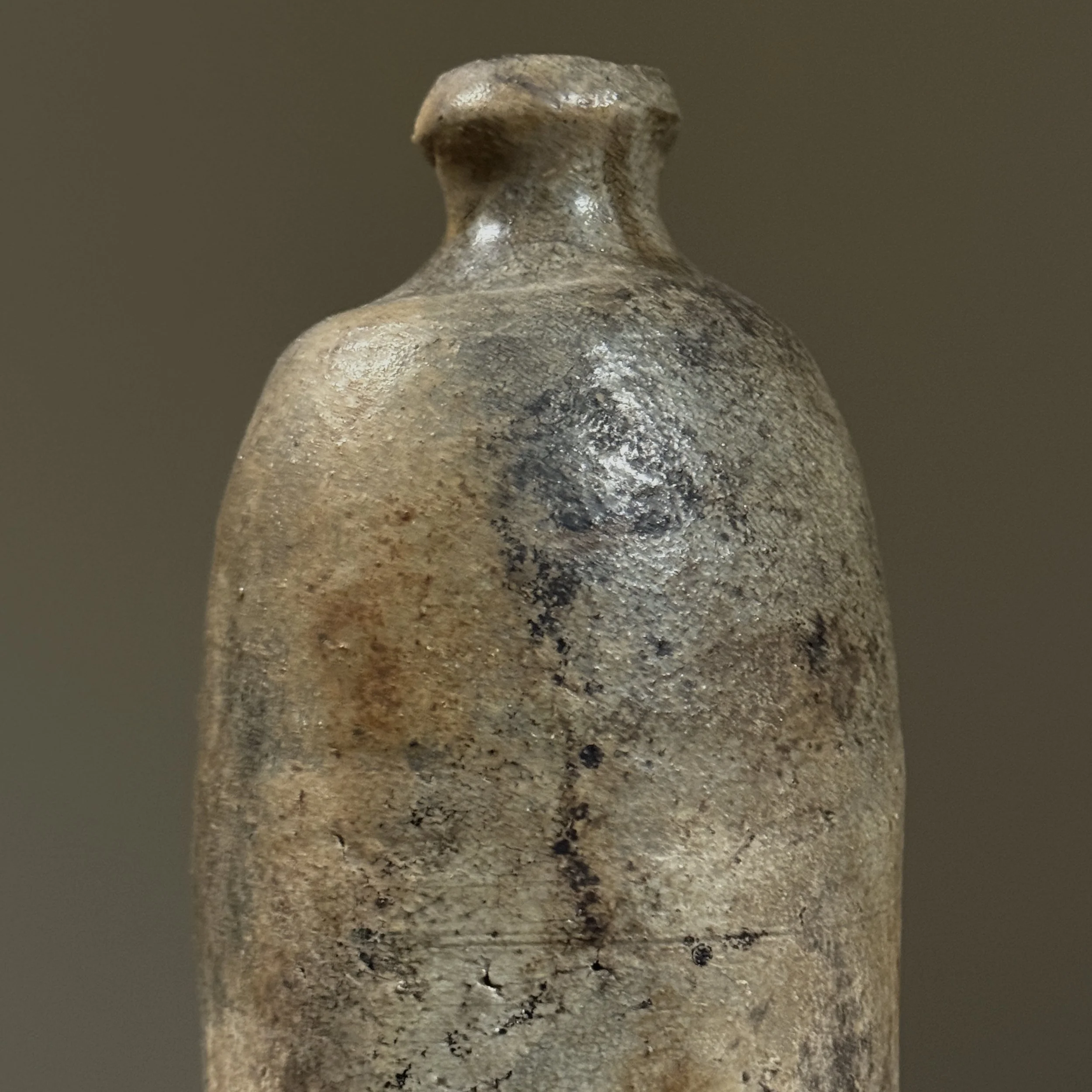 Image 5 of 7
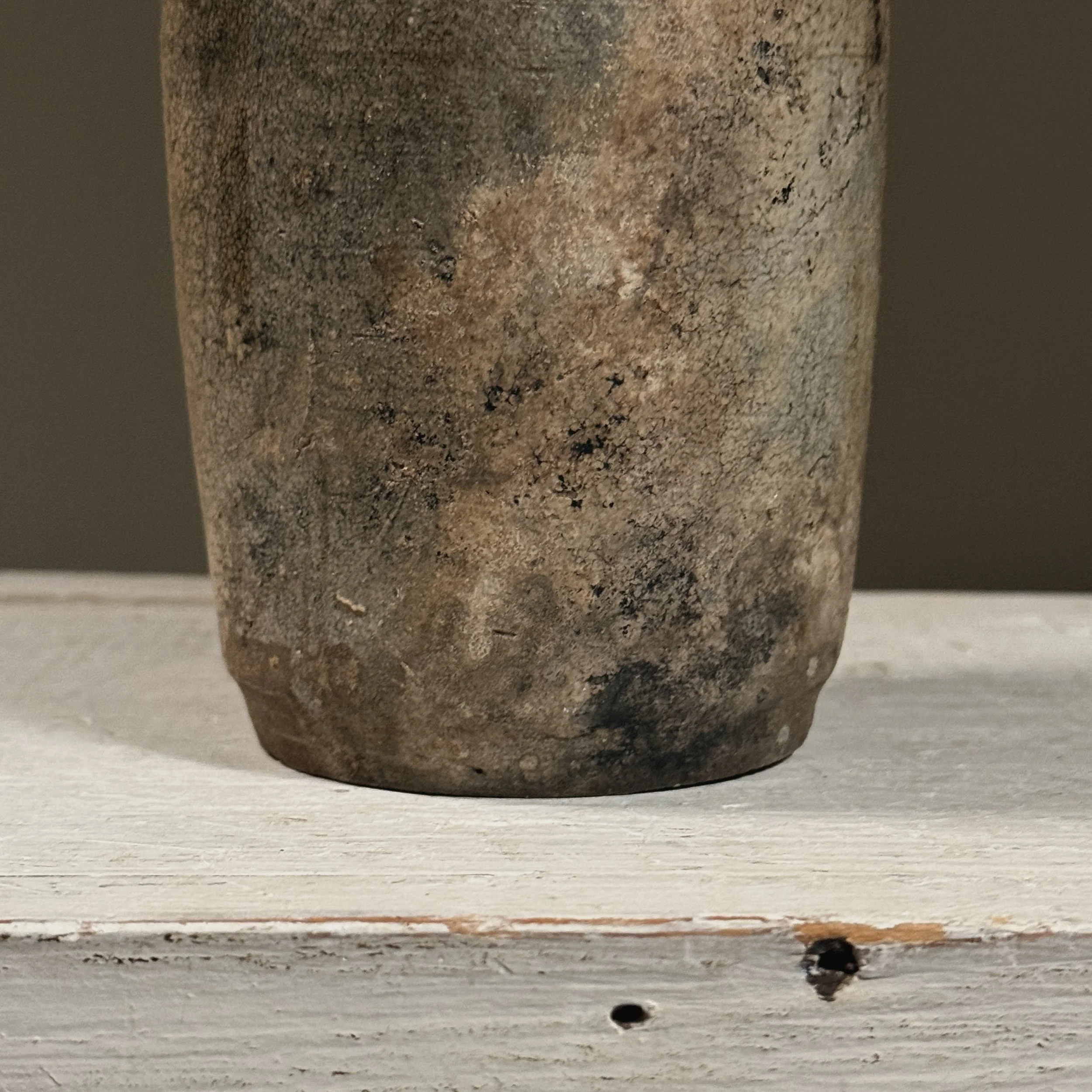 Image 6 of 7
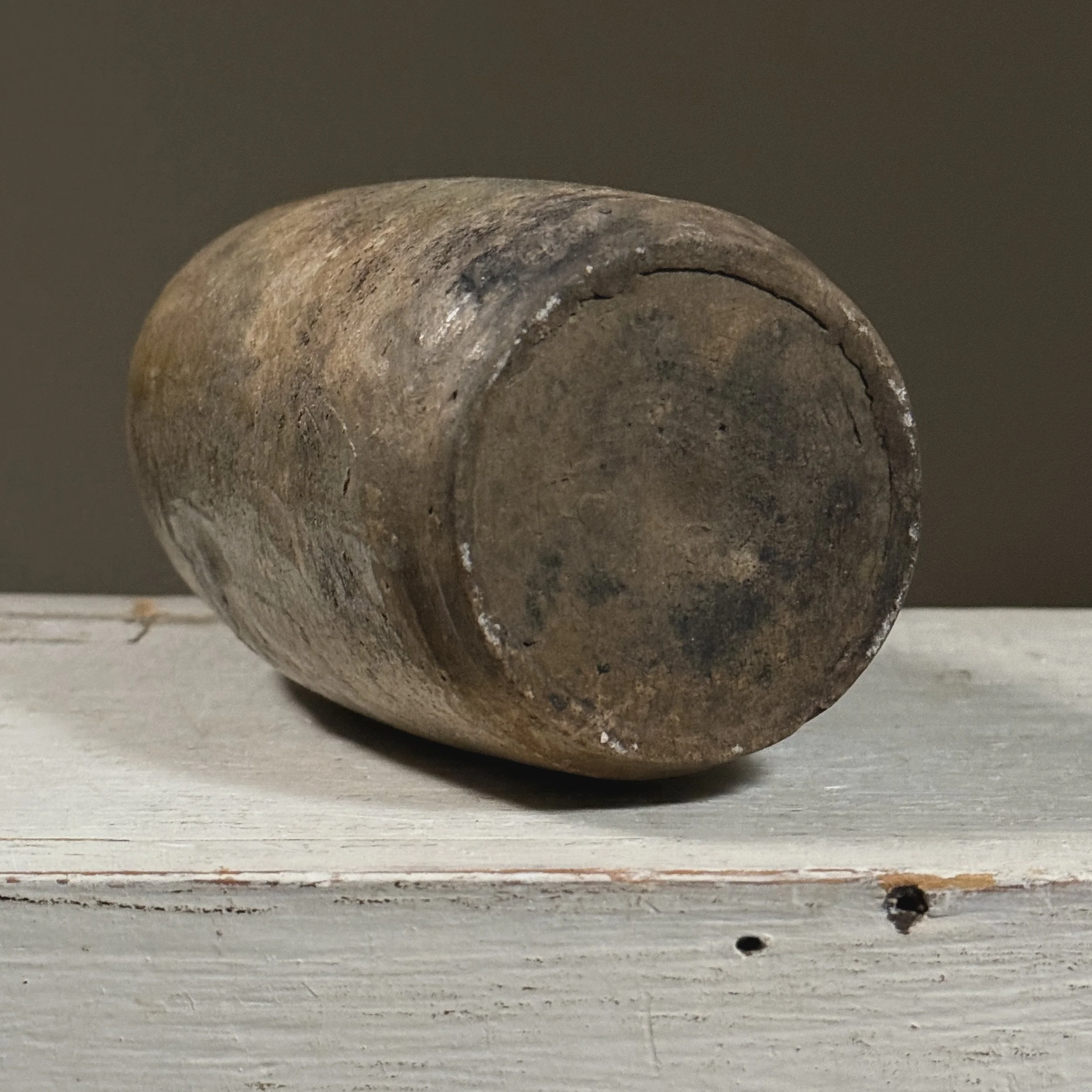 Image 7 of 7