Medium: Wood, black and red lacquer, abalone (mother-of-pearl) inlay, metal hardware
Nationality/Style: Japanese, Meiji period, 19th century
Form: Table-top cabinet (kodansu) or jewellery chest
Dimensions: 12.75" H x 11.5" W x 5.9" D
Signature: Unsigned
Condition: Fair; wear consistent with age. Missing mother-of-pearl inlay pieces on the front doors. Split in the wood on the back with scratches along the sides. Repaired split on the top lid. Please review pictures for details.
Antique 19th Century Japanese Meiji period table-top cabinet (kodansu). The exterior features intricate geometric wood parquetry (yosegi-zaiku), black lacquered panels inlaid with iridescent mother-of-pearl (abalone) floral motifs, and decorative metal strapwork. The mother-of-pearl floral inlay on the front doors is in fair condition with missing inlay pieces. A bottom drawer with geometric inlay designs is fitted with two metal pulls. The doors open to reveal six drawers with geometric design on the wood fronts and black lacquered interiors. The top opens to reveal jewellery slots and two red lacquered lids with metal pulls.
A Note on Yosegi-zaiku Parquetry
Yosegi-zaiku is a traditional Japanese marquetry technique, most closely associated with the Hakone region of Kanagawa Prefecture, where it is said to have developed over two hundred years ago during the late Edo period. The craft exploits the natural colors of different wood species, without artificial staining or painting, to produce intricate geometric patterns. Woods including spindle tree, Japanese cypress, keyaki, and black persimmon.

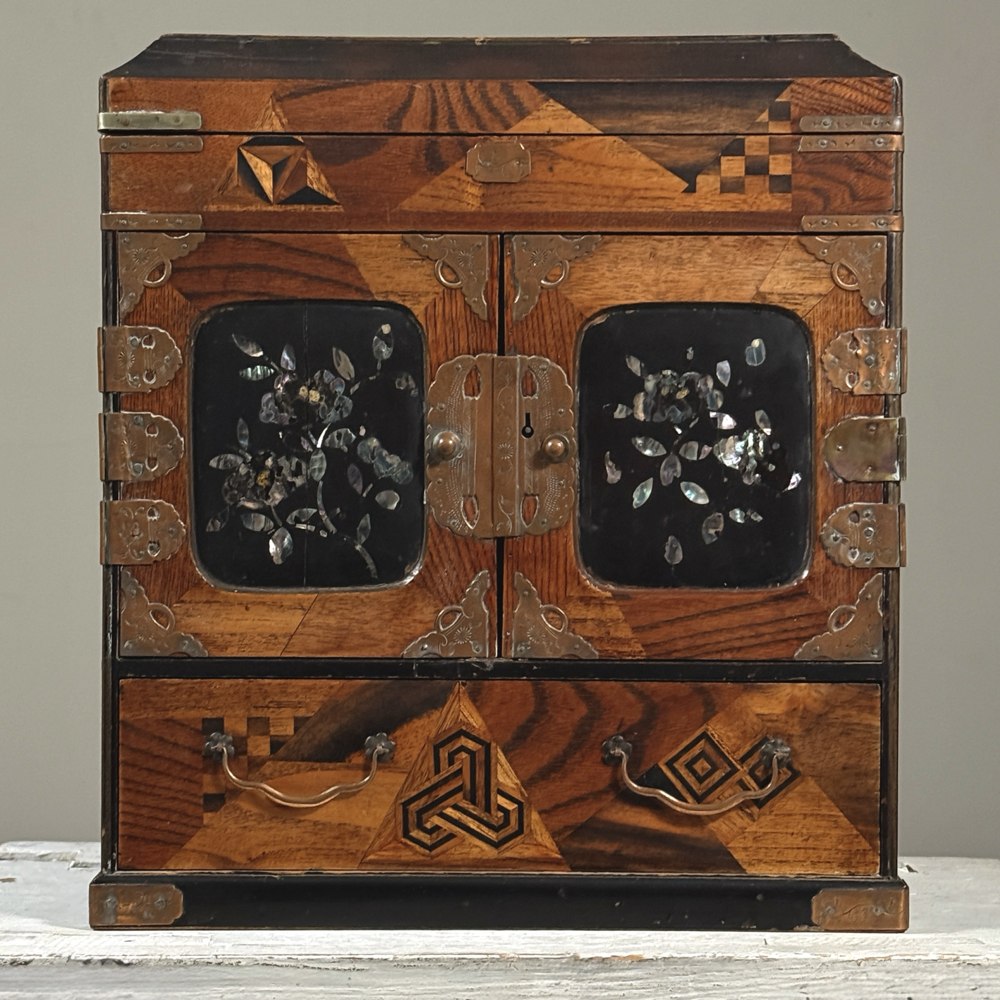 Image 1 of 26
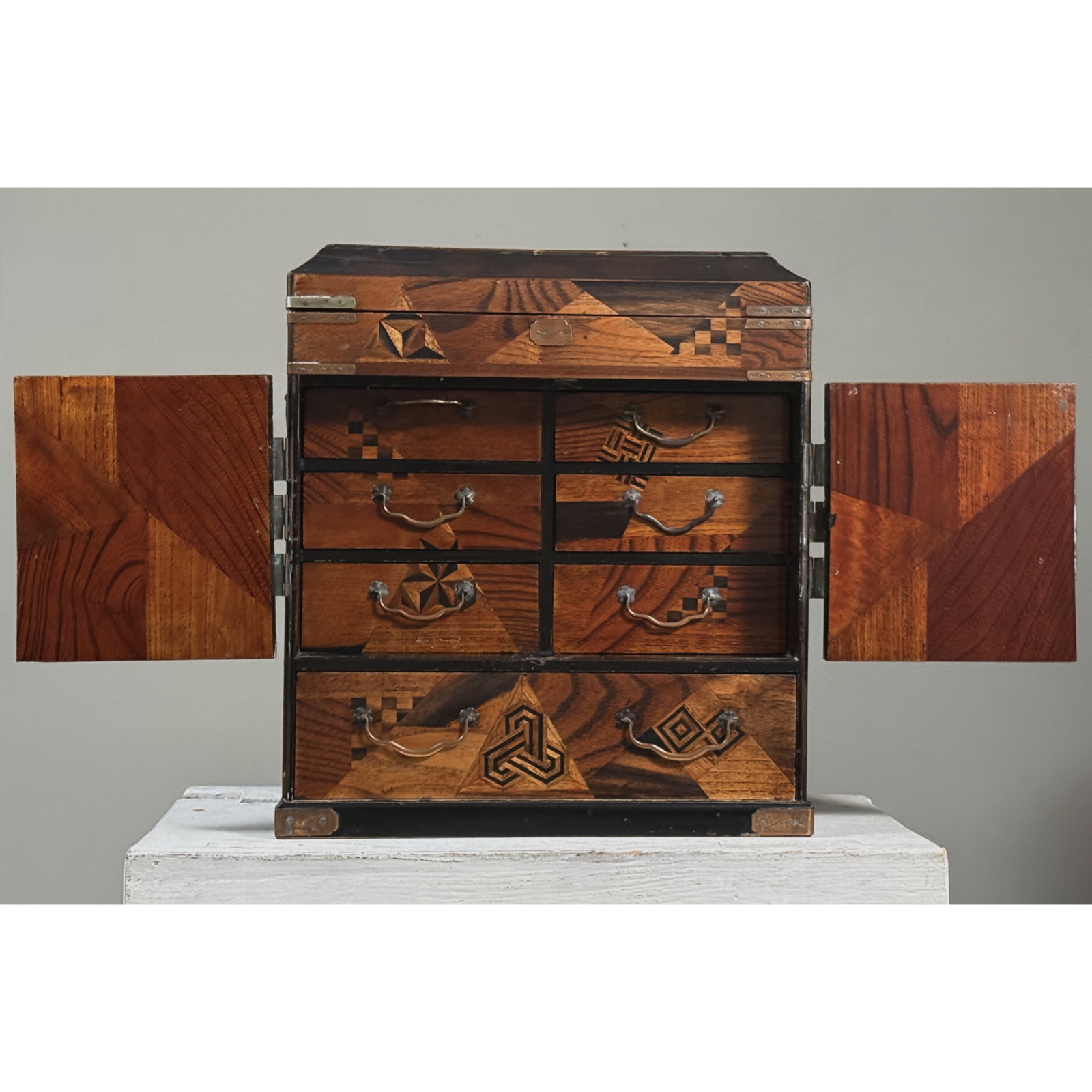 Image 2 of 26
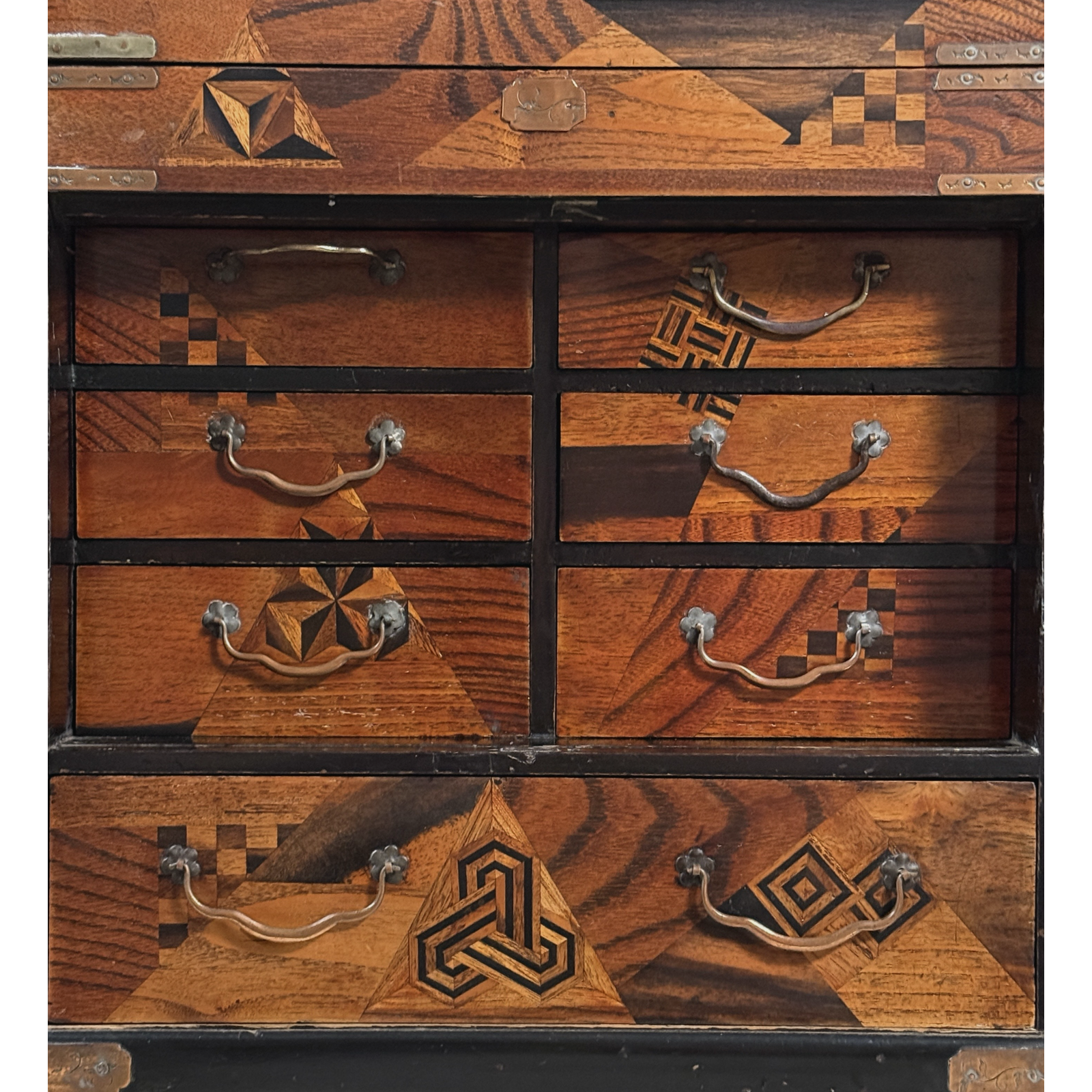 Image 3 of 26
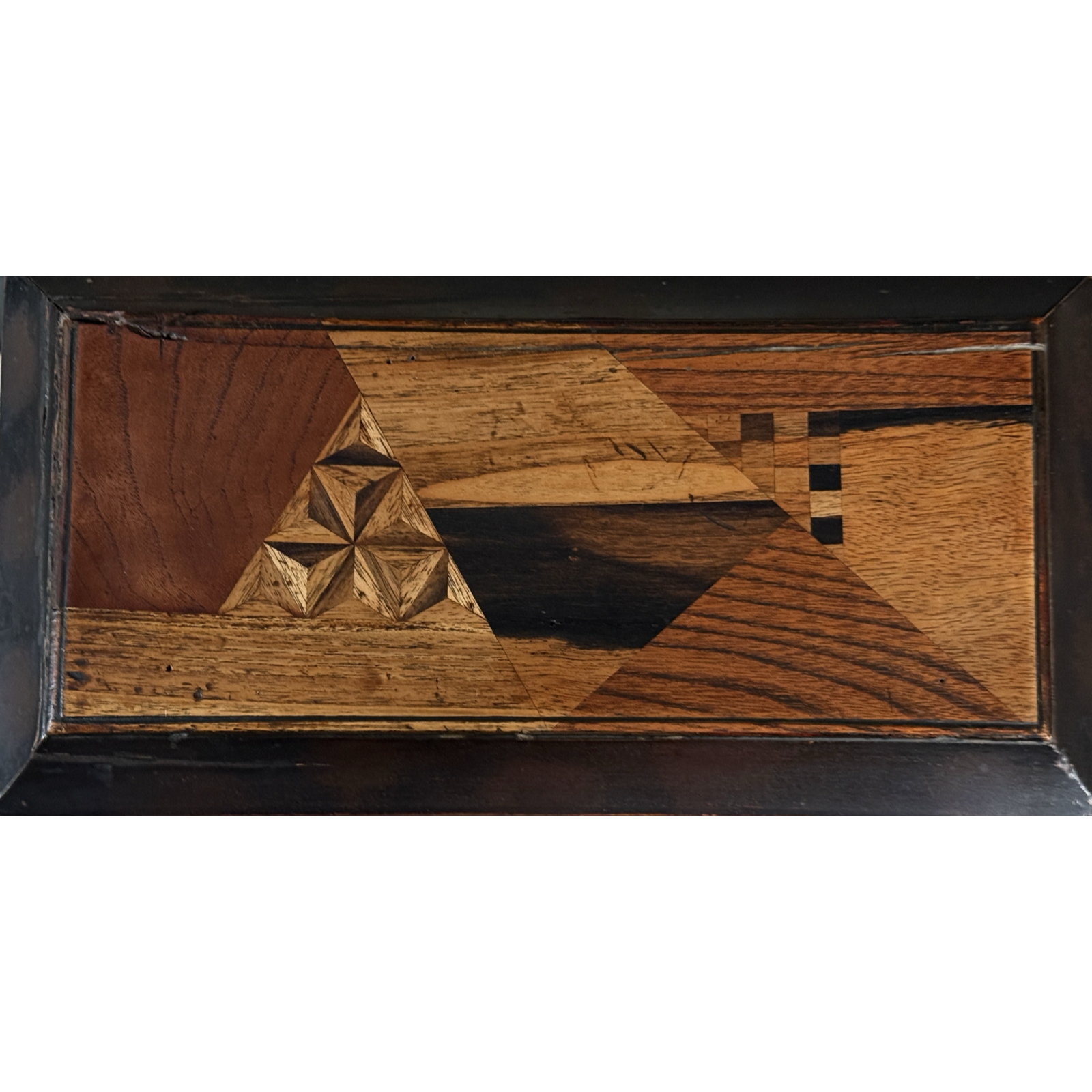 Image 4 of 26
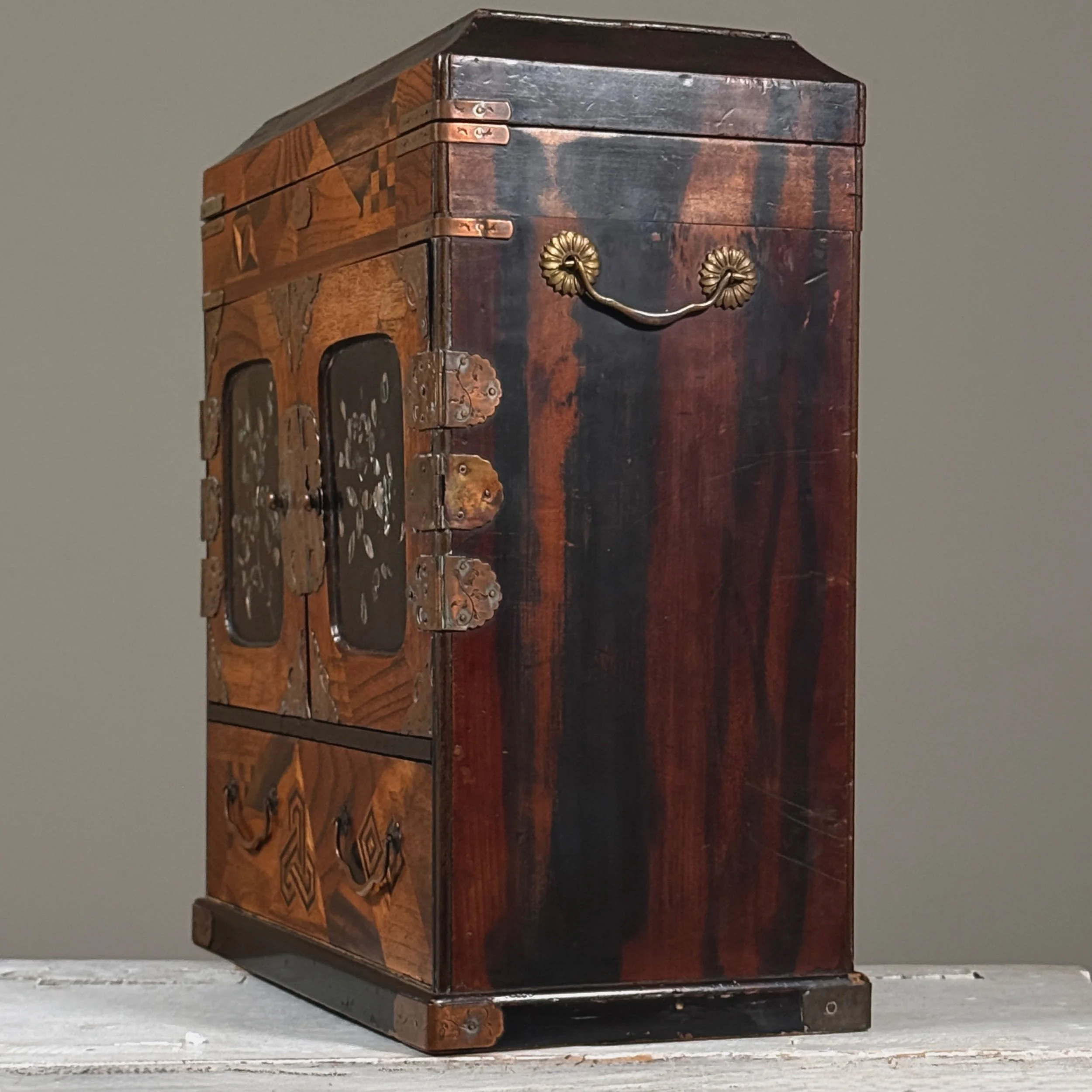 Image 5 of 26
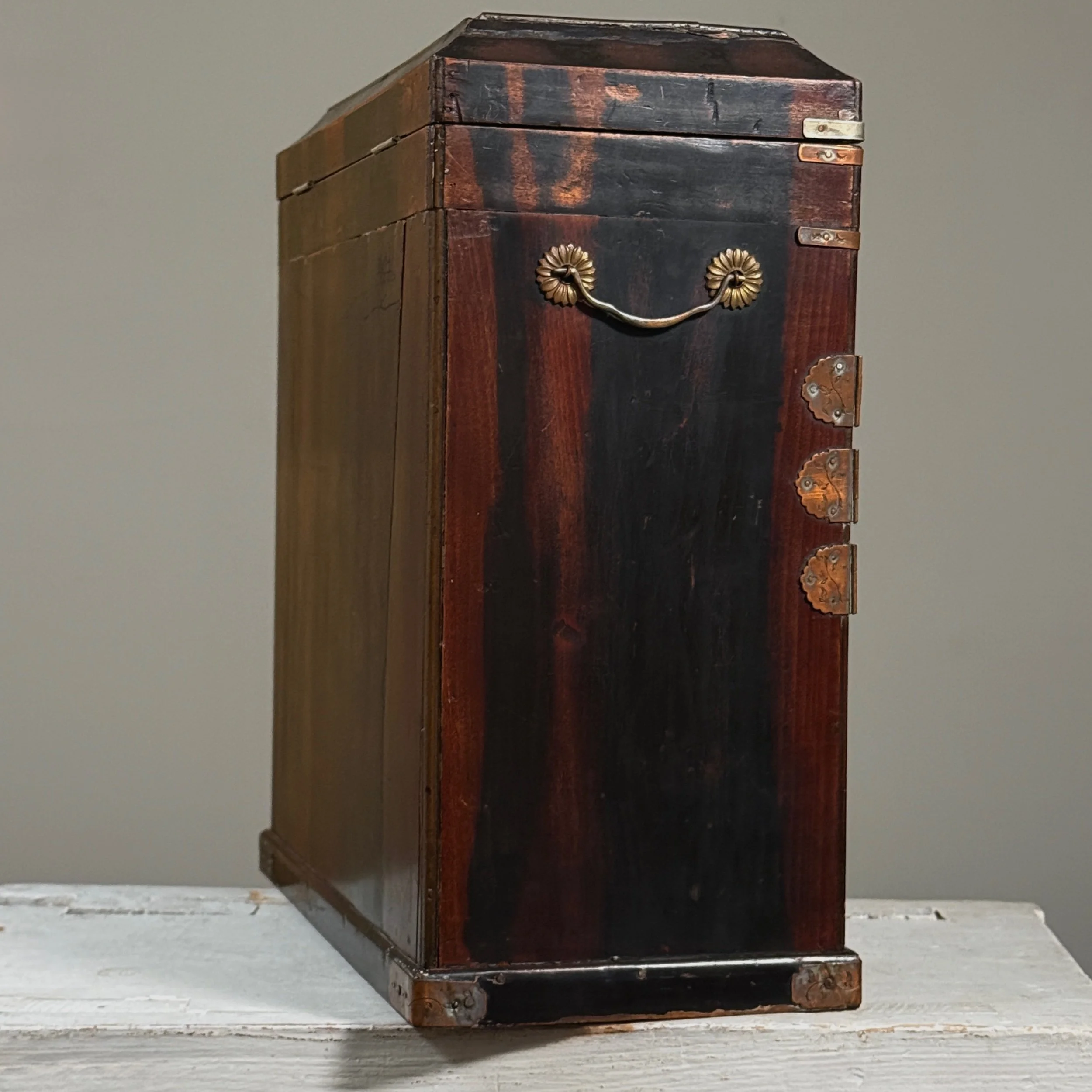 Image 6 of 26
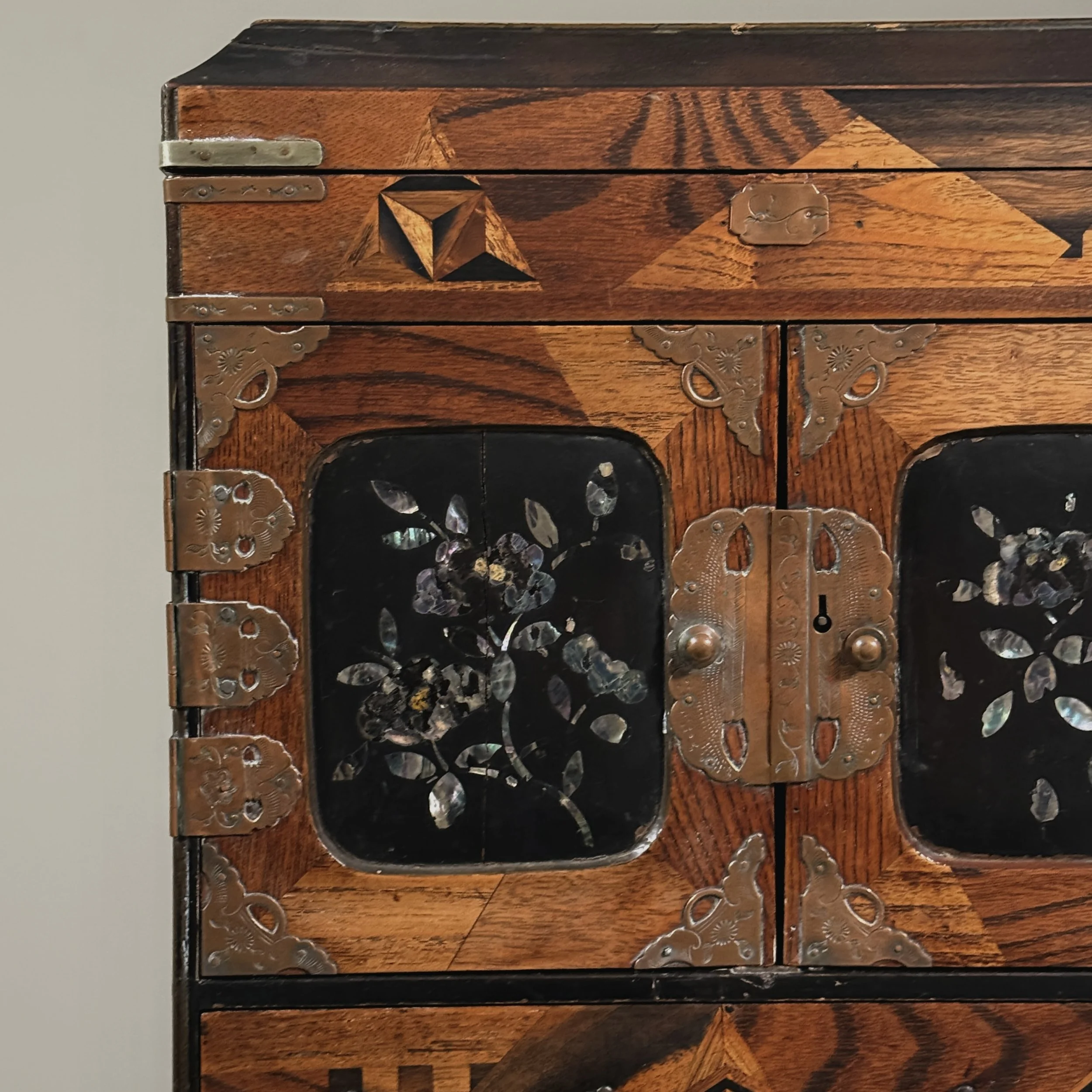 Image 7 of 26
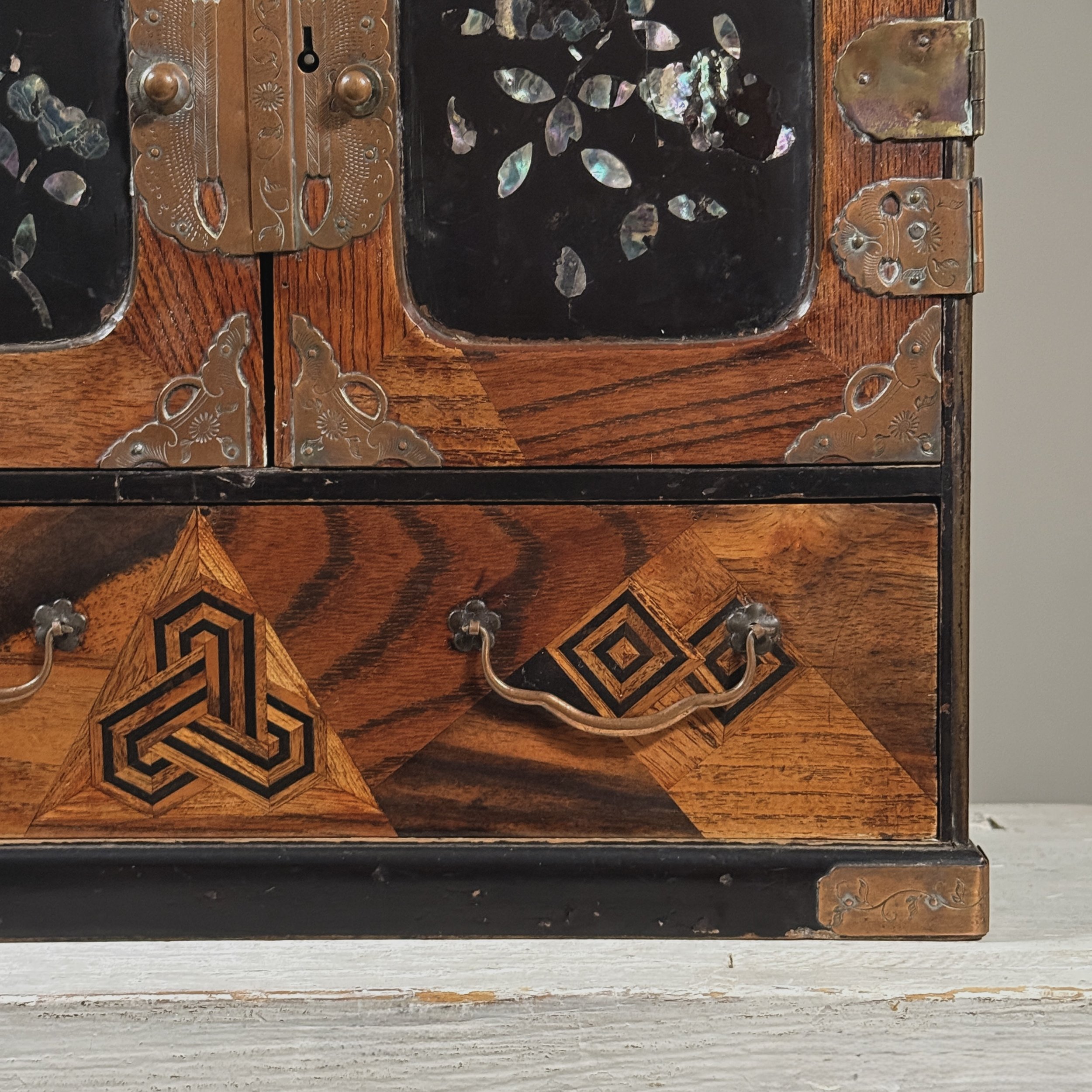 Image 8 of 26
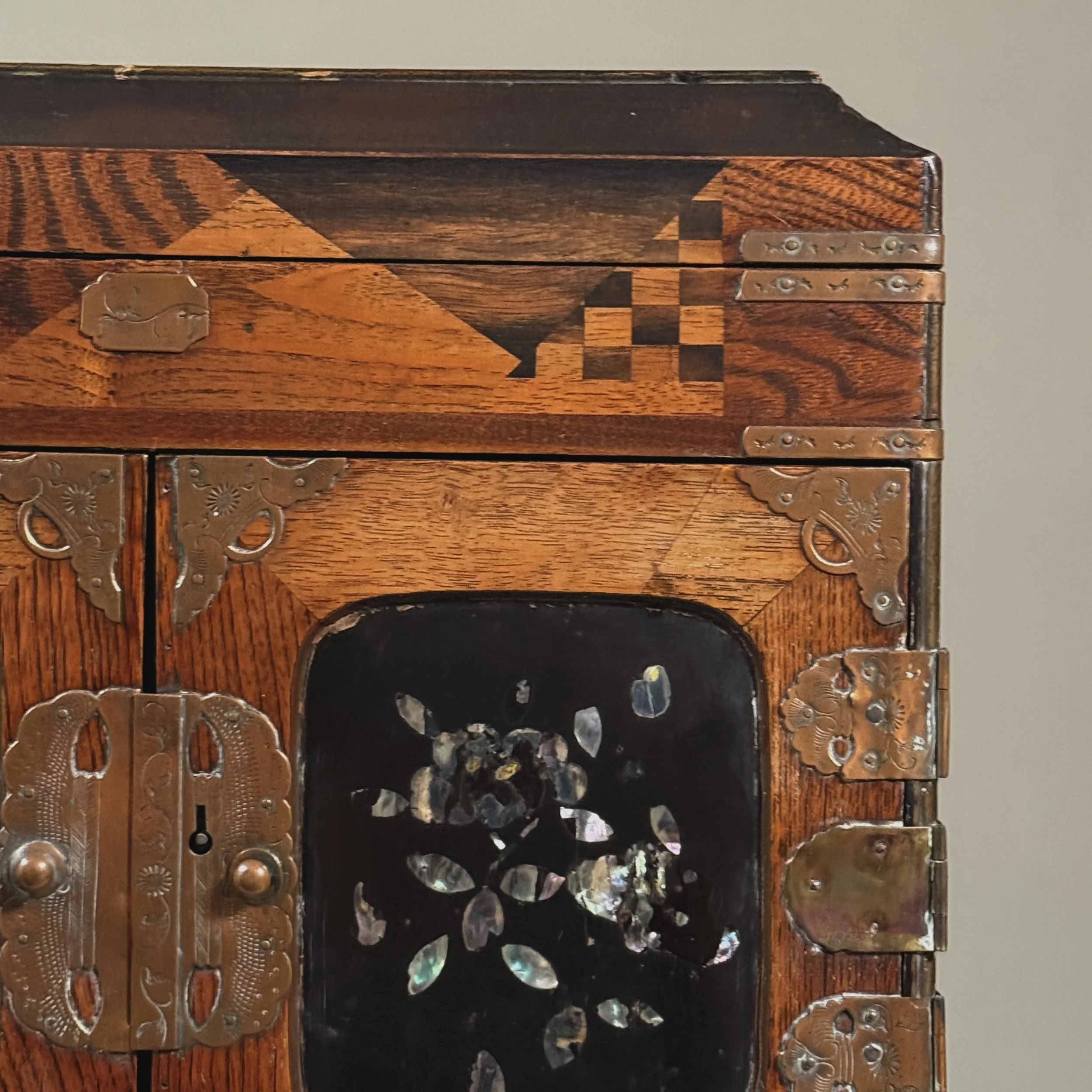 Image 9 of 26
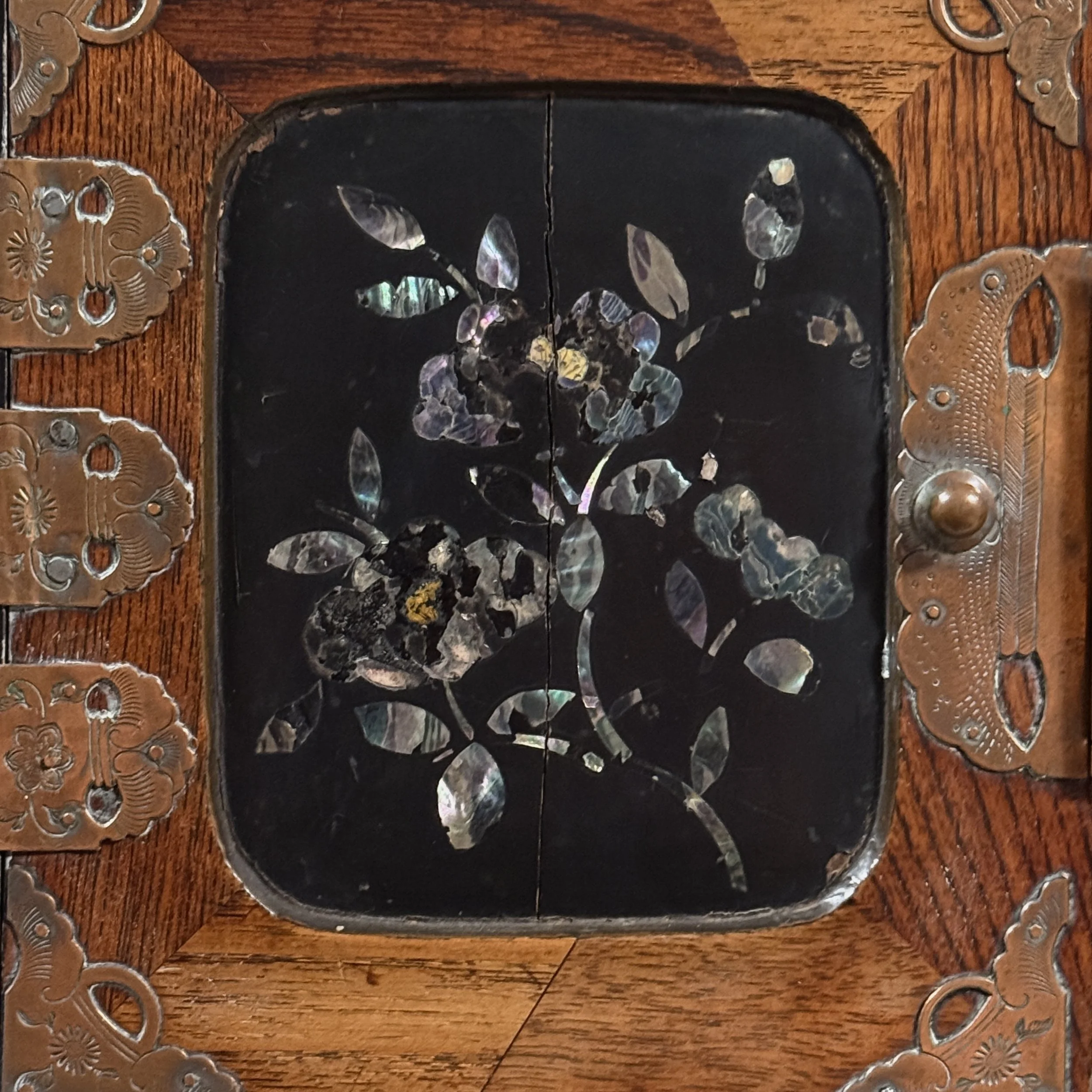 Image 10 of 26
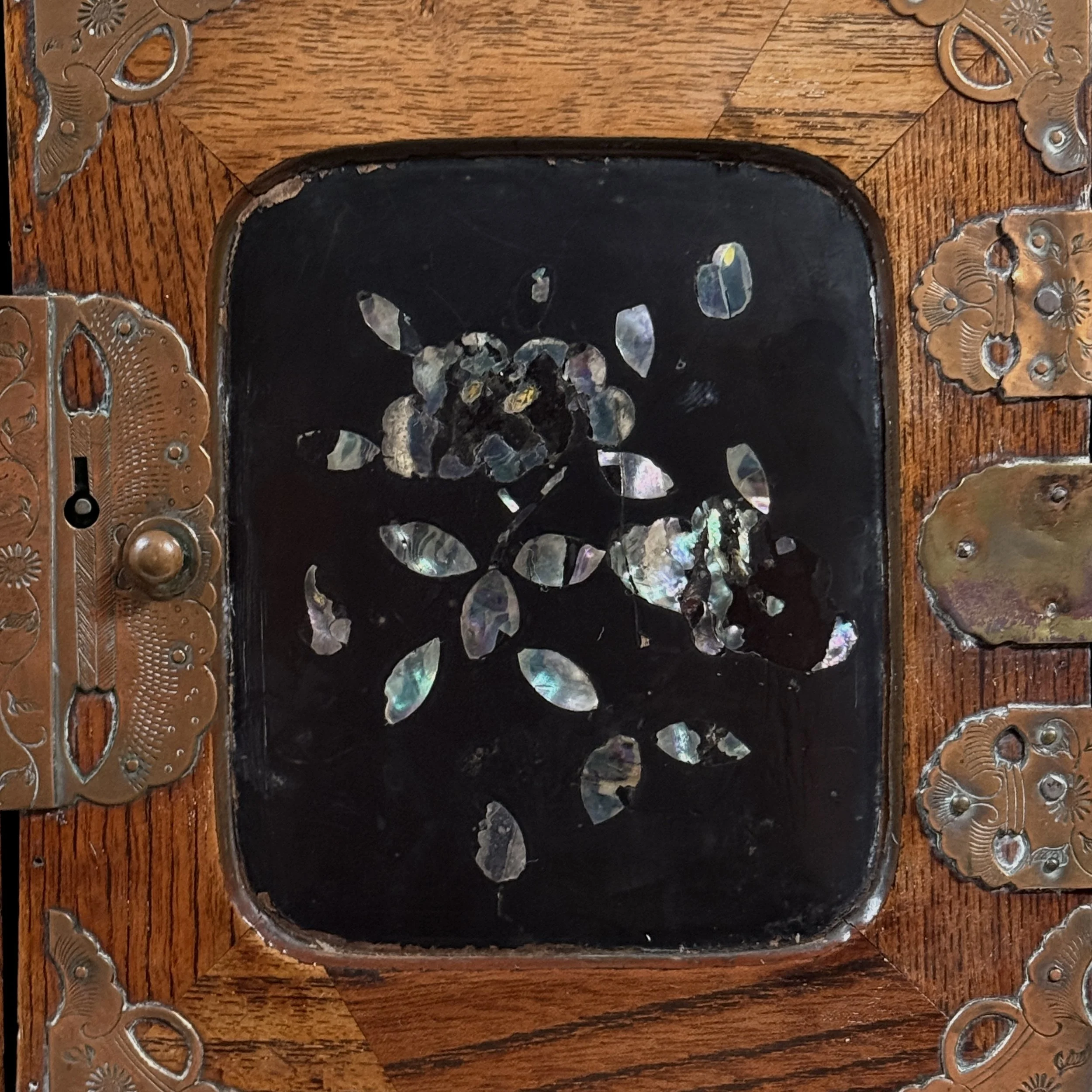 Image 11 of 26
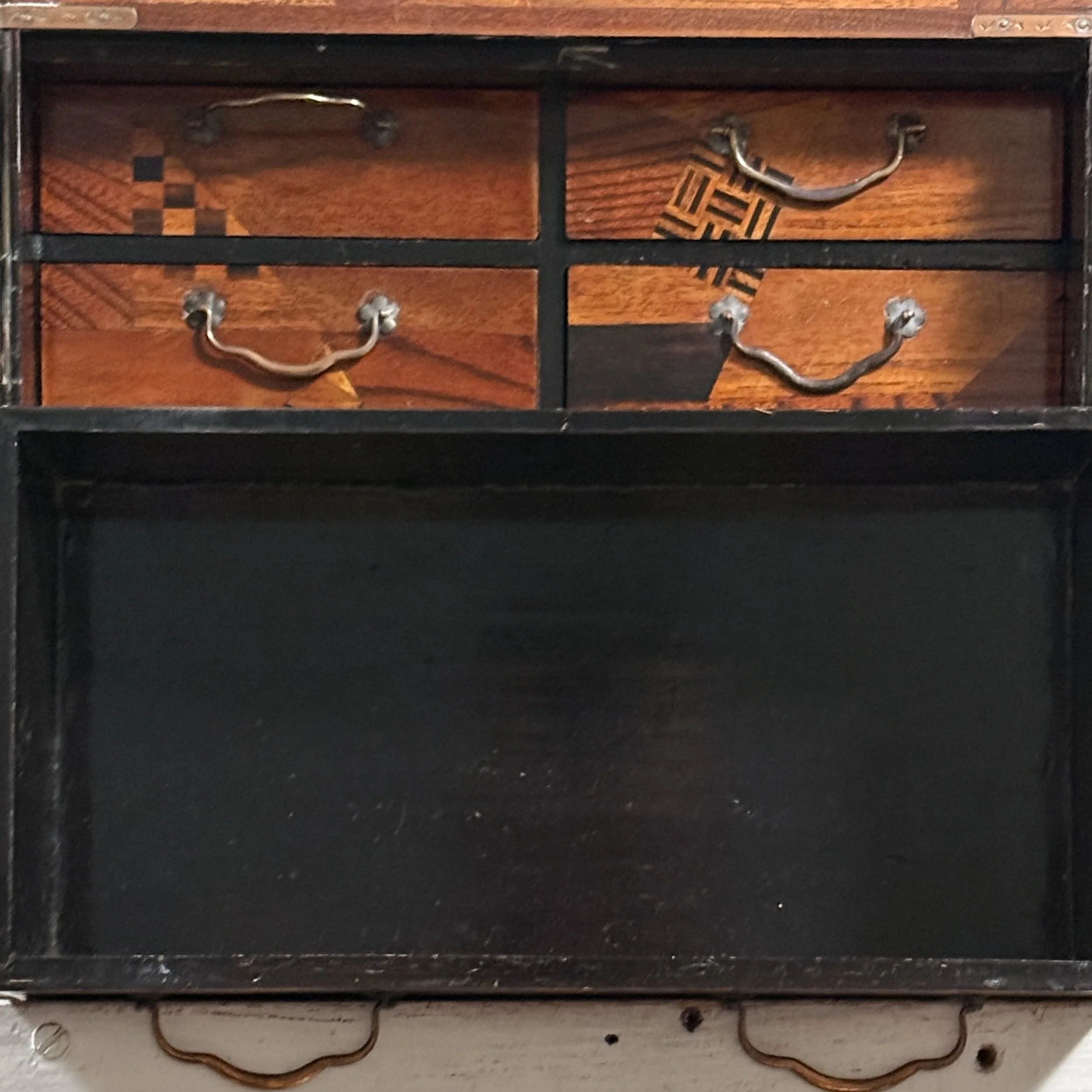 Image 12 of 26
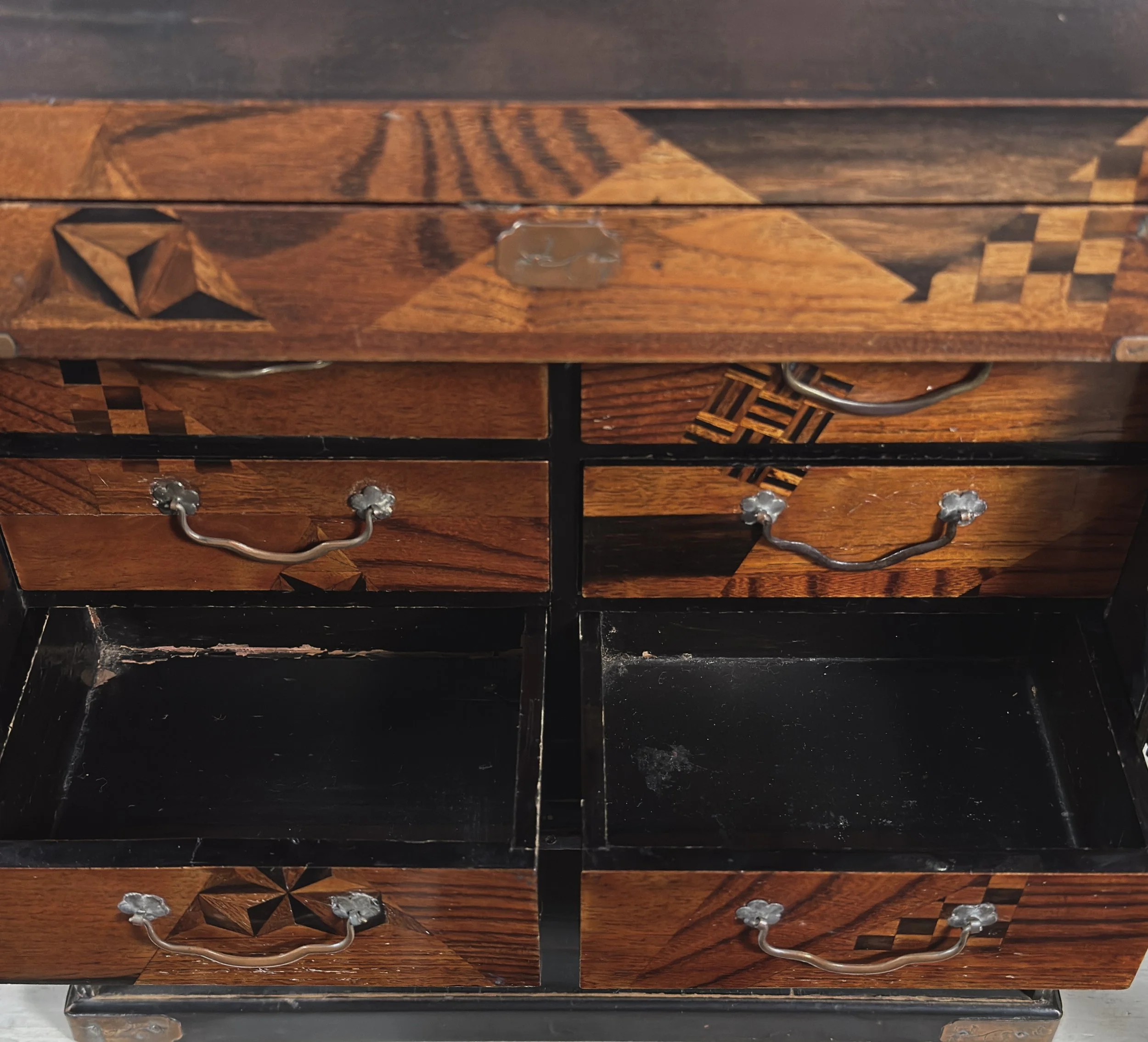 Image 13 of 26
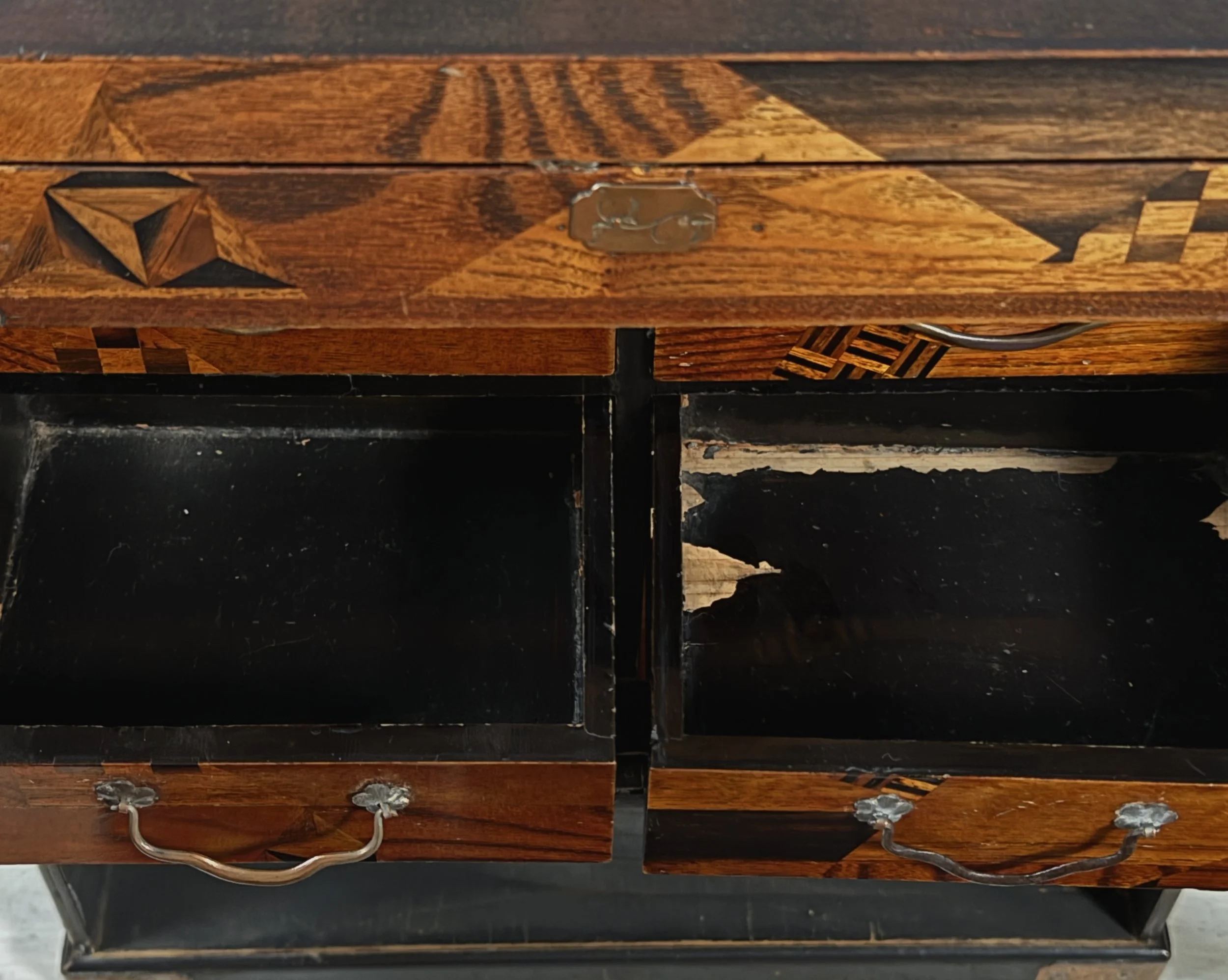 Image 14 of 26
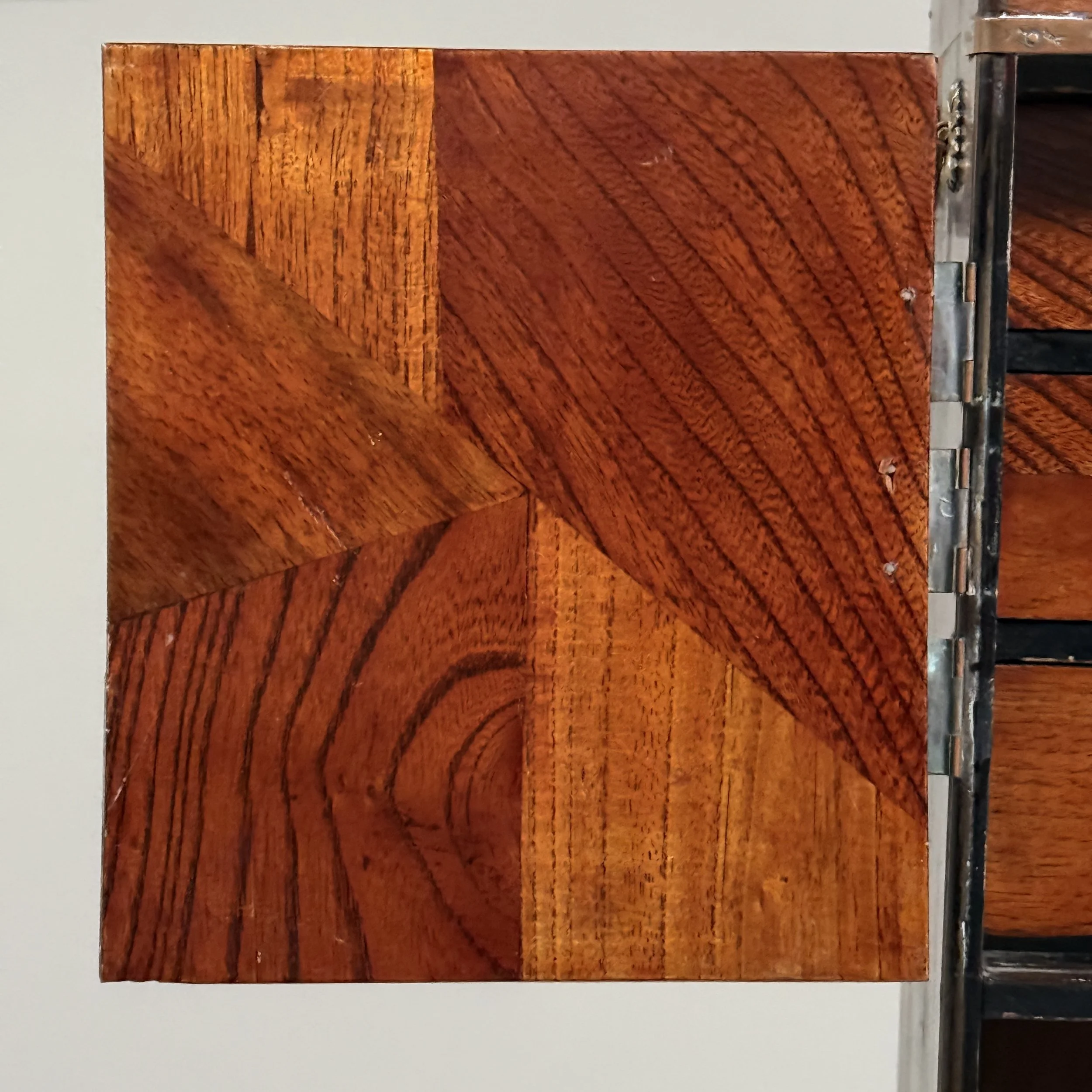 Image 15 of 26
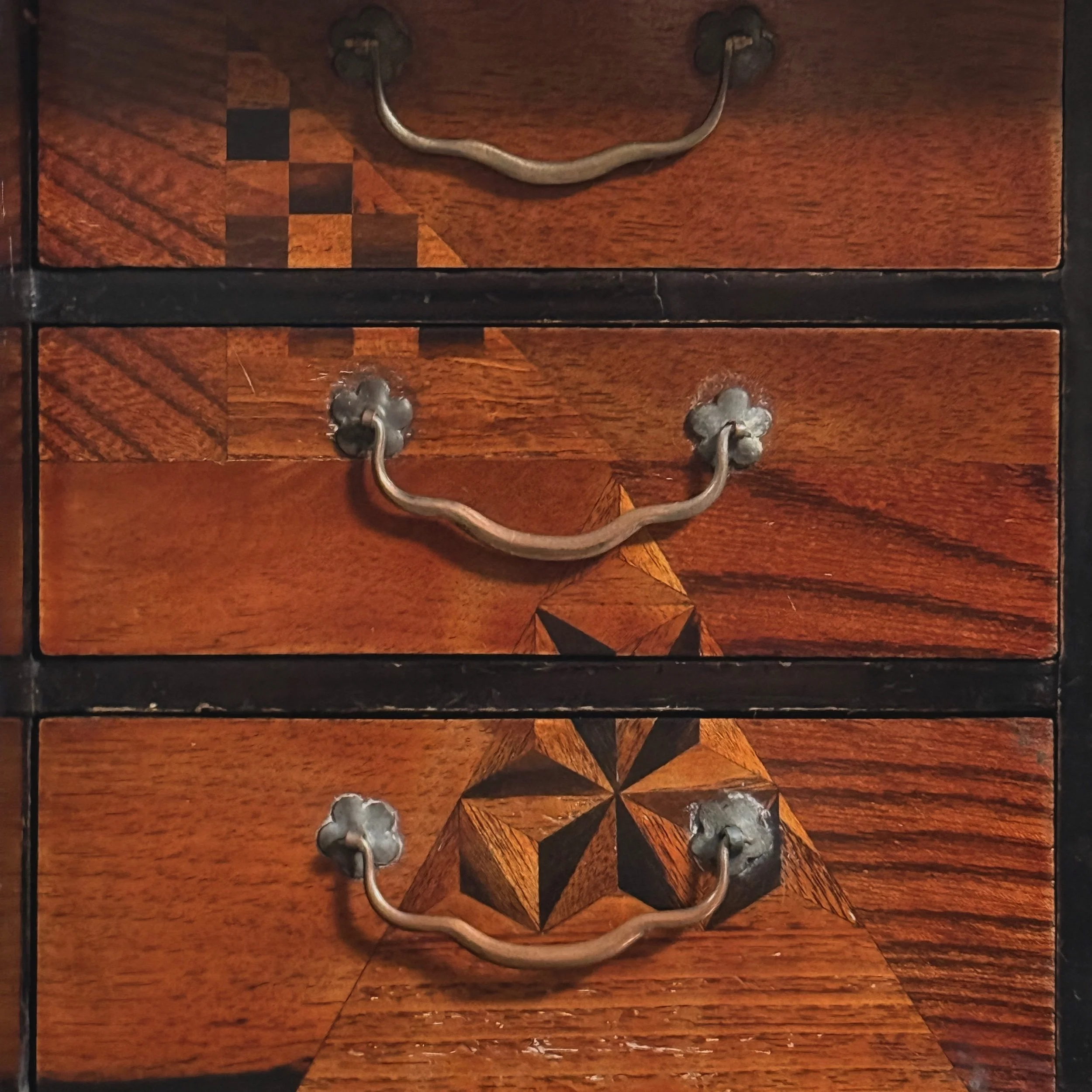 Image 16 of 26
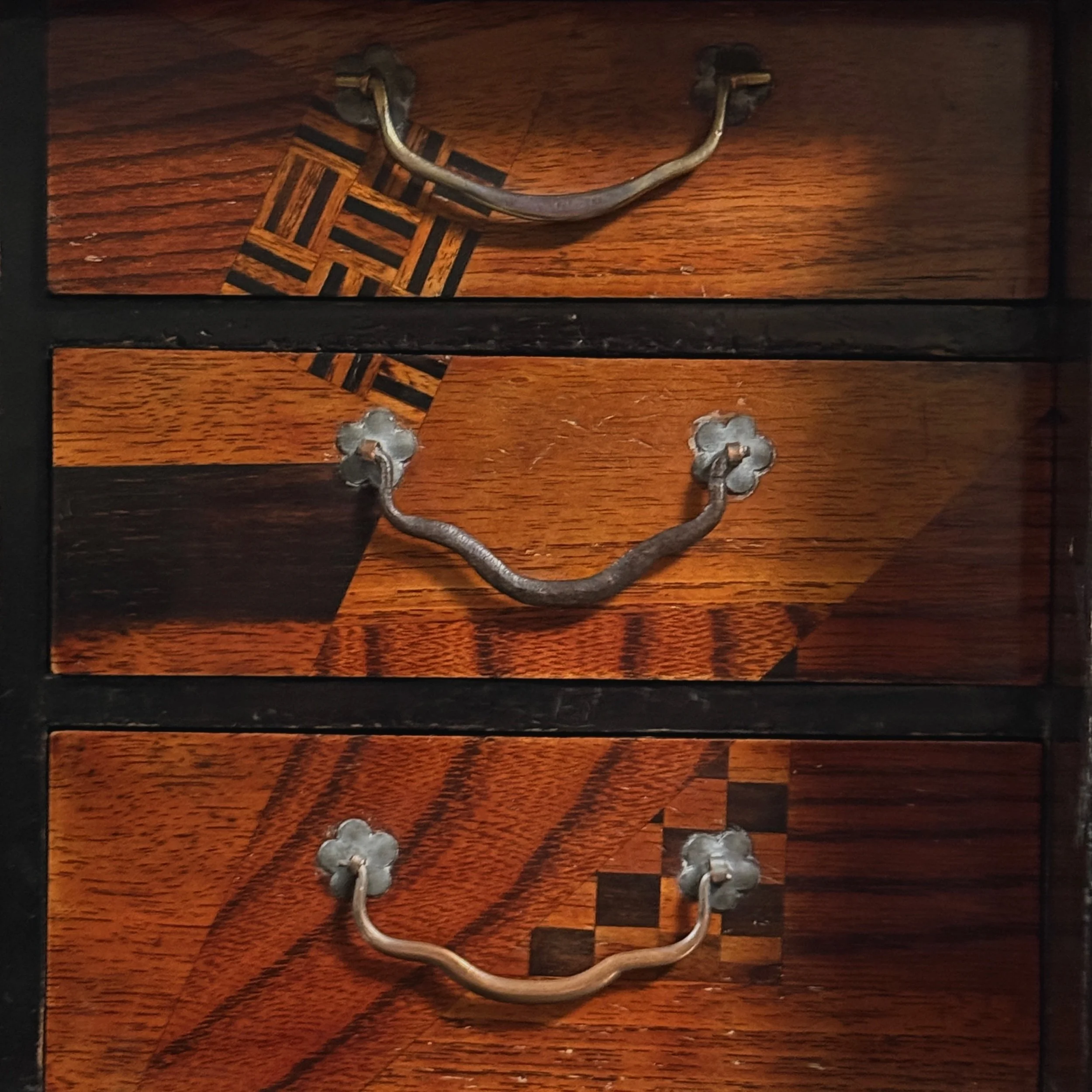 Image 17 of 26
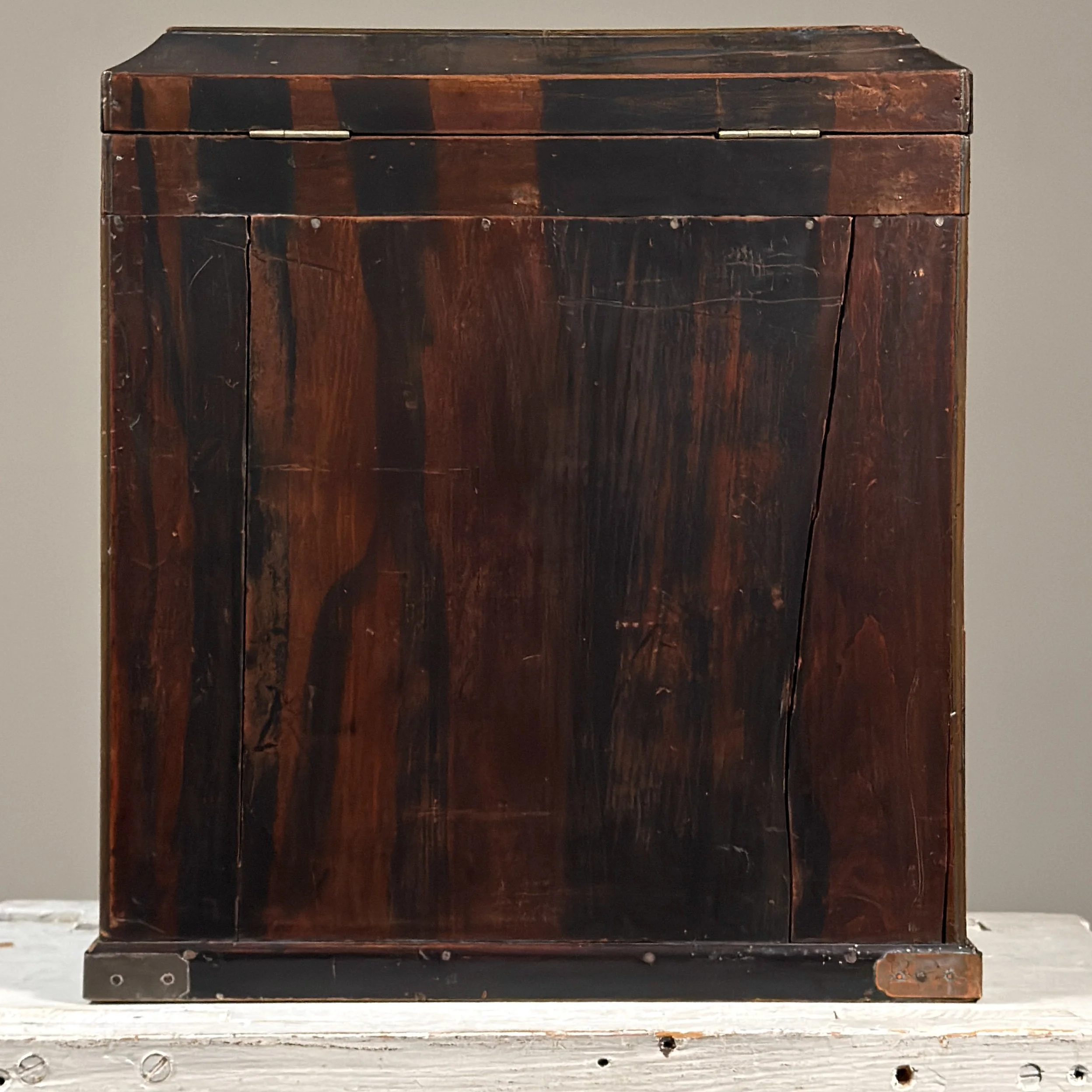 Image 18 of 26
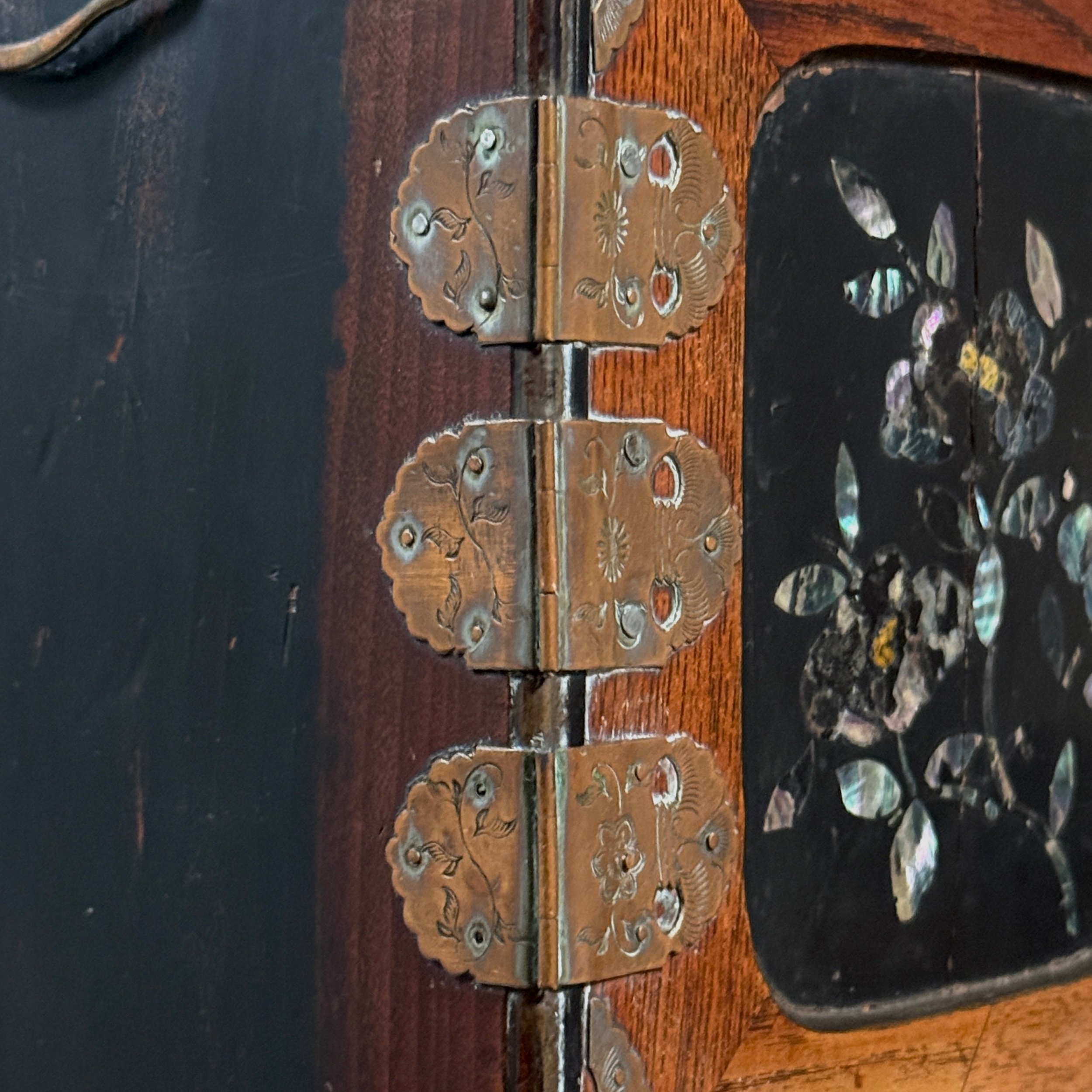 Image 19 of 26
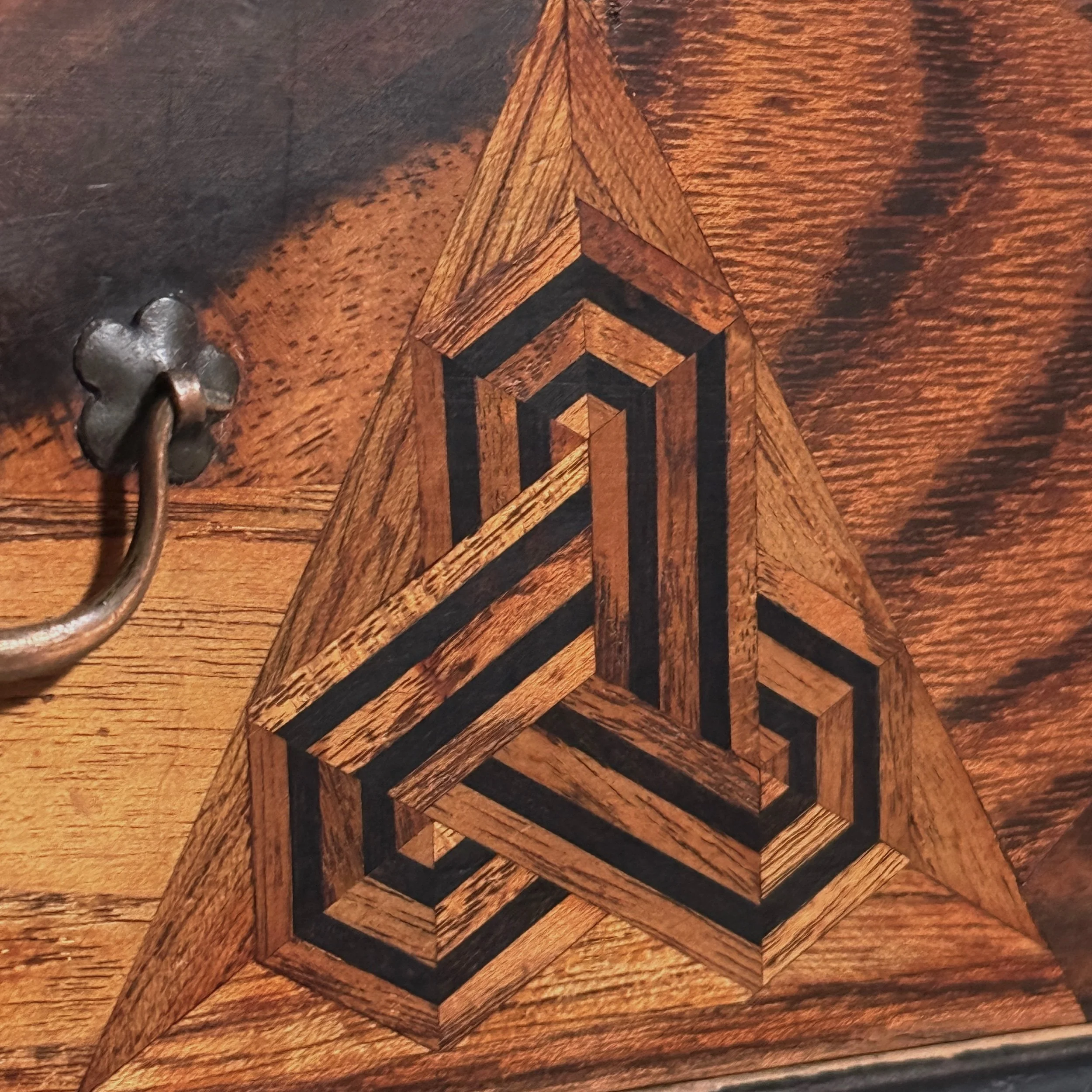 Image 20 of 26
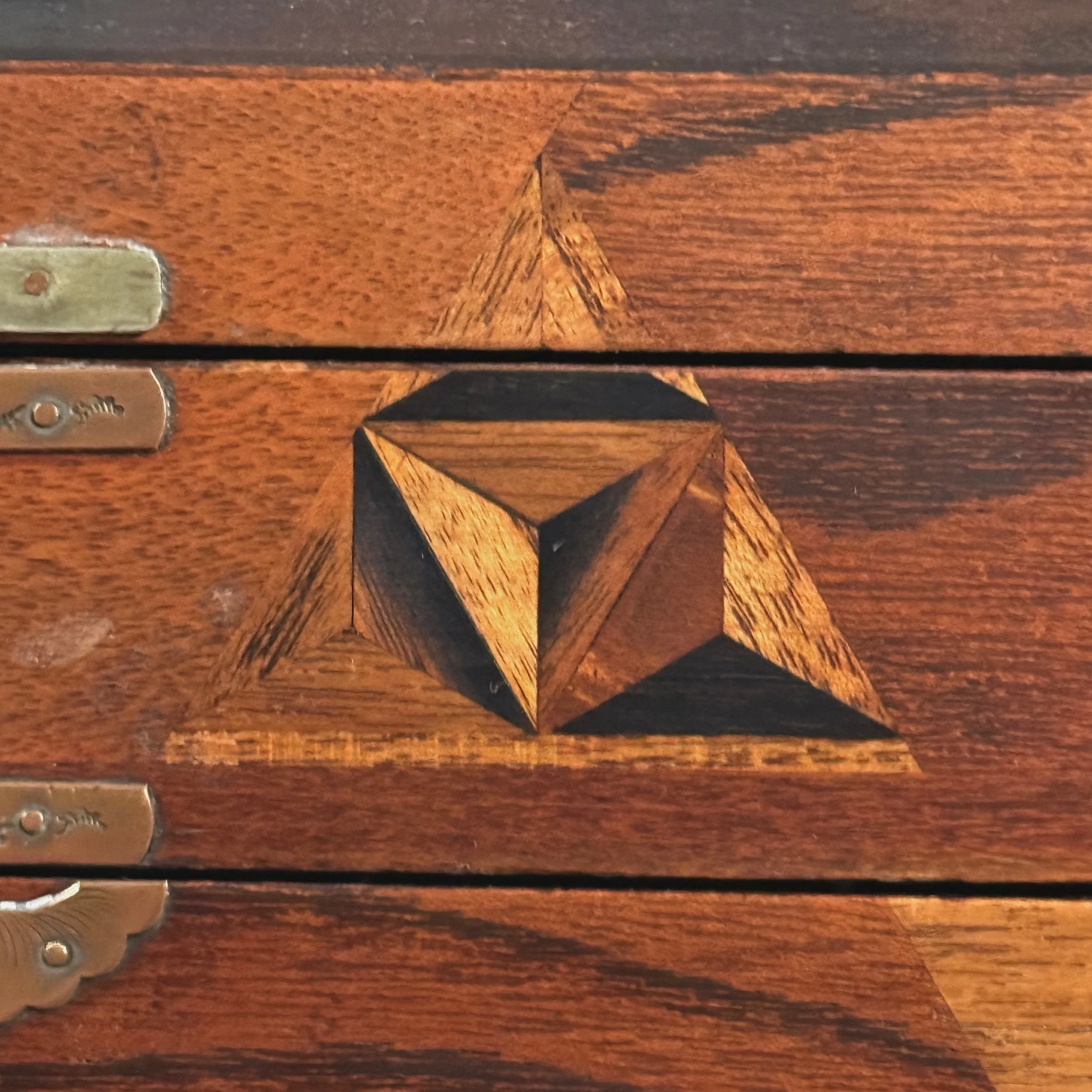 Image 21 of 26
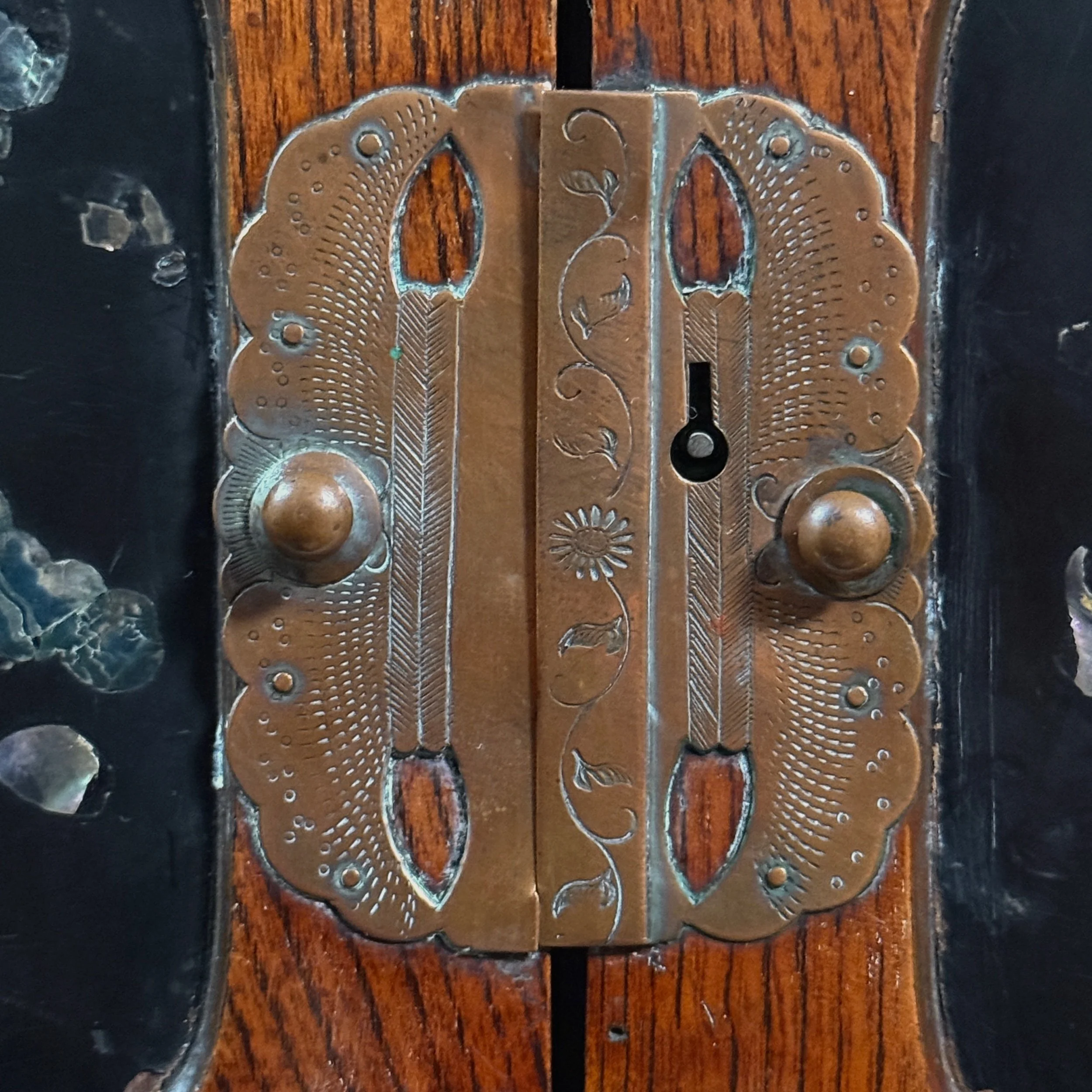 Image 22 of 26
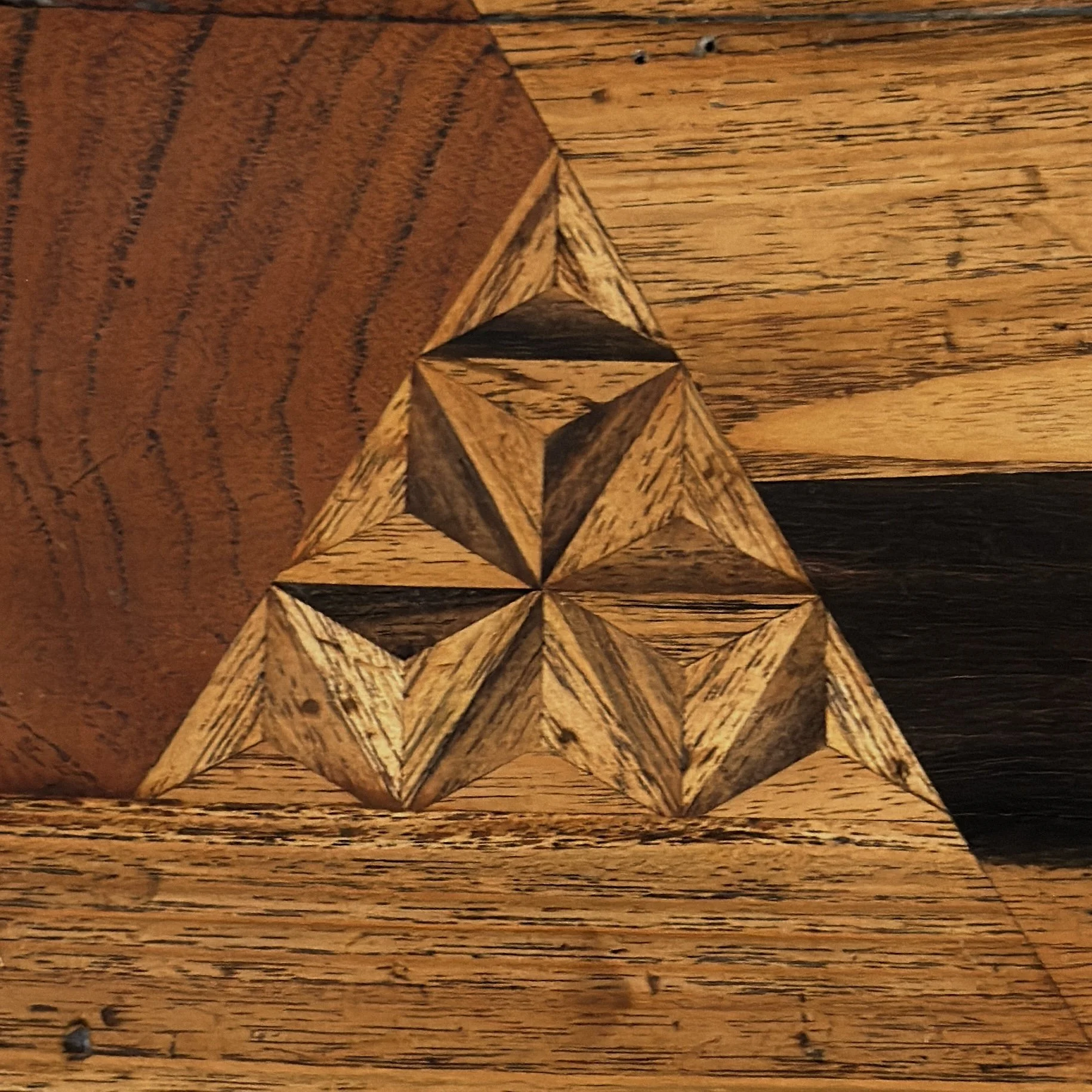 Image 23 of 26
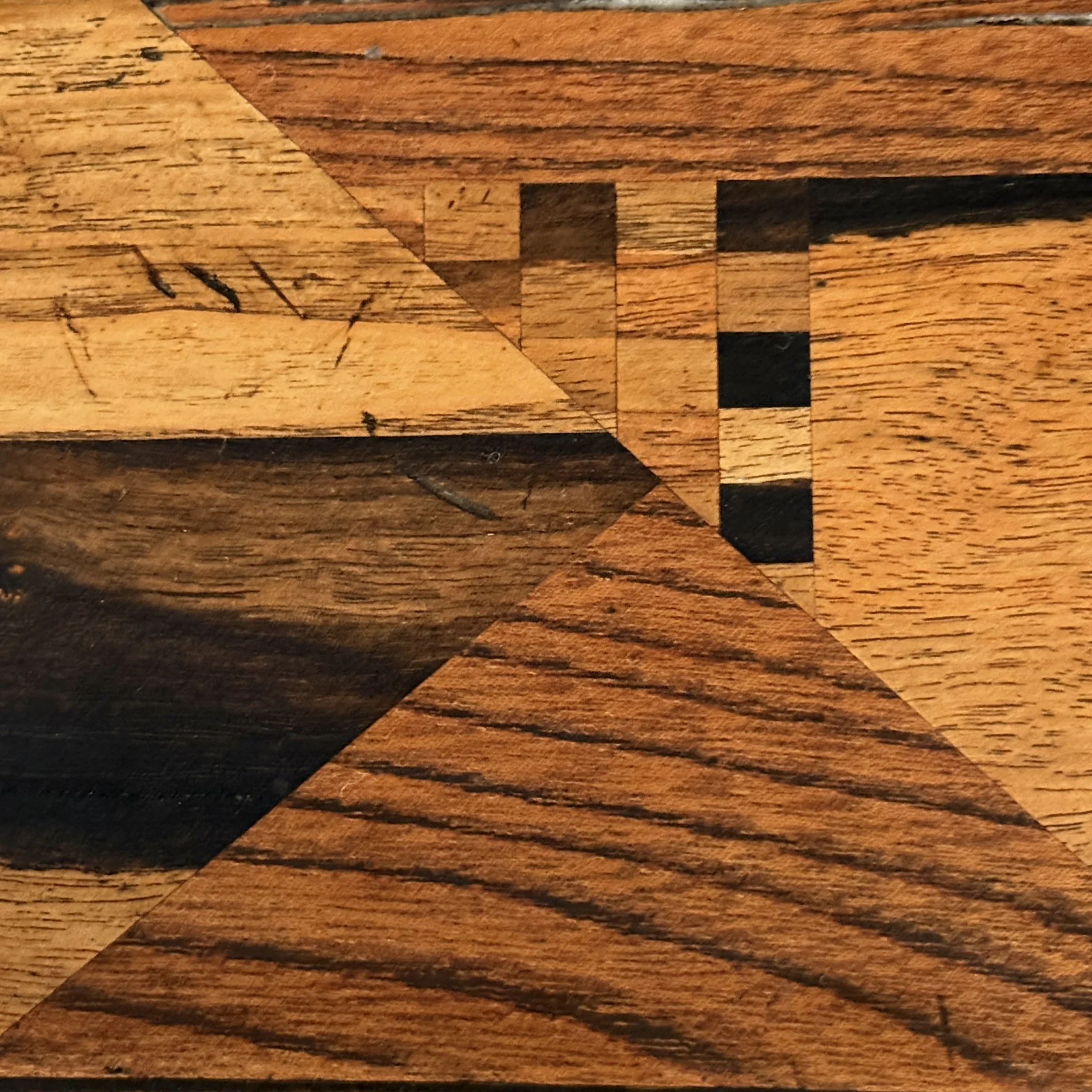 Image 24 of 26
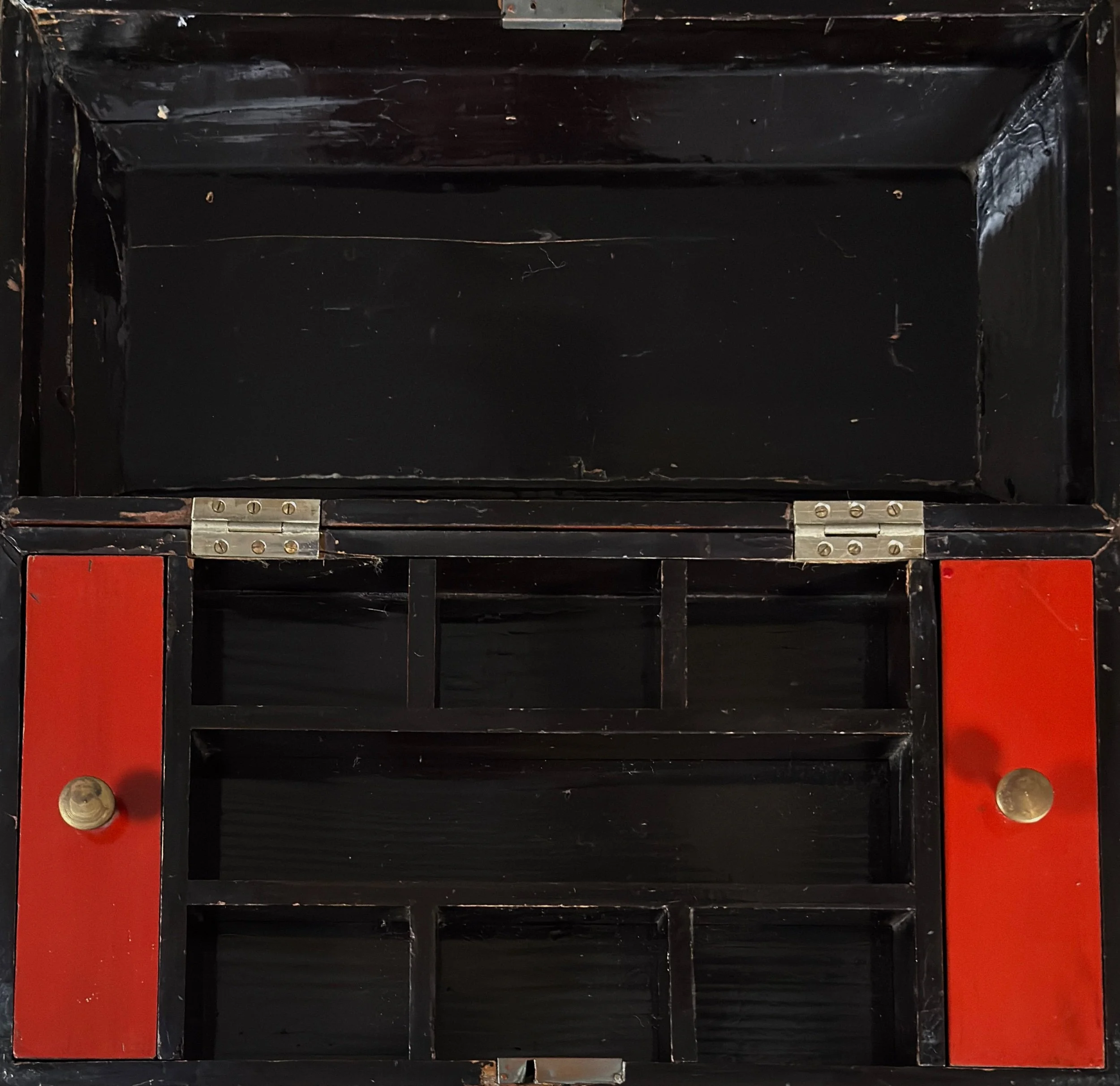 Image 25 of 26
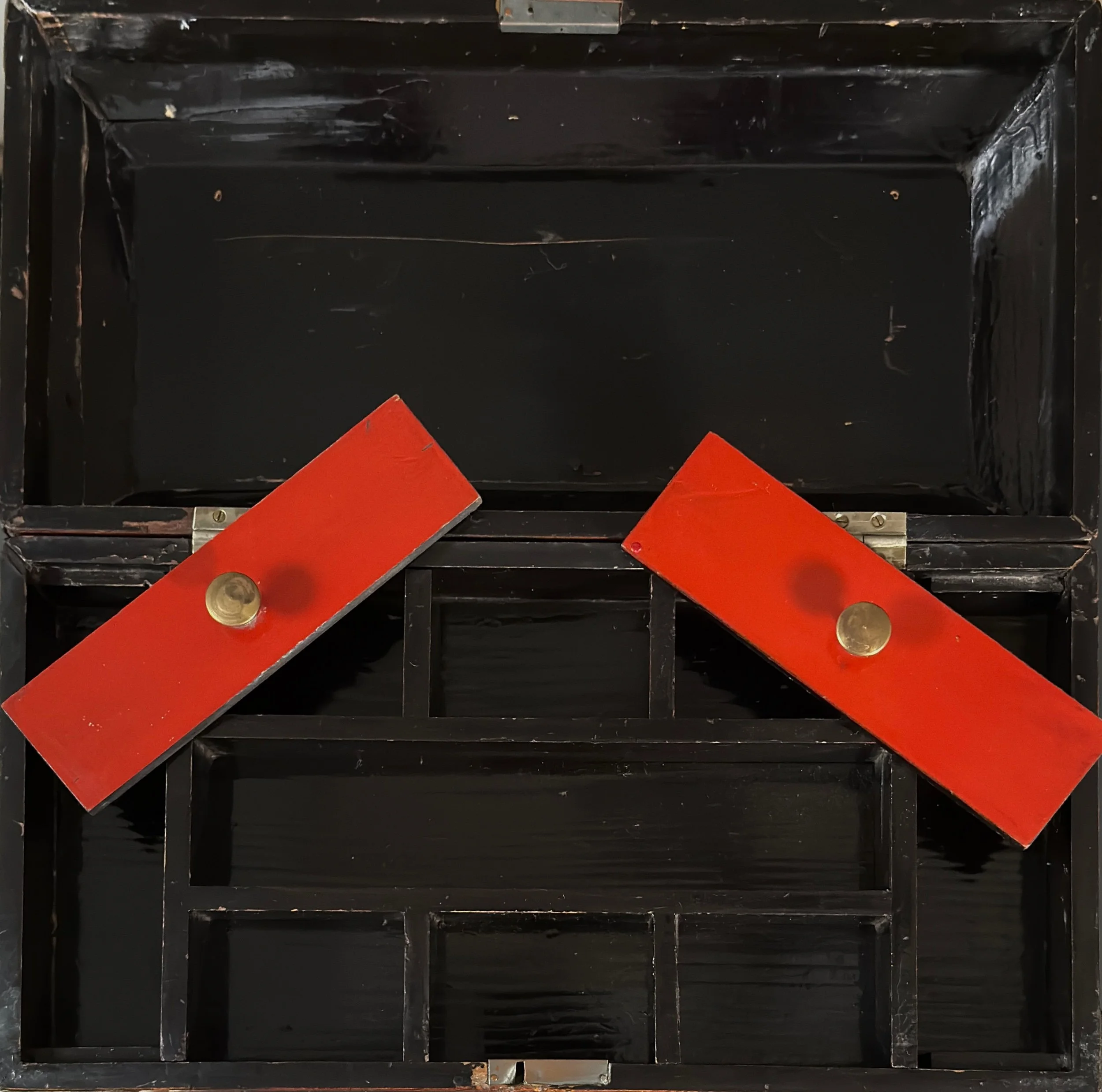 Image 26 of 26