Medium: Cut and repoussé recycled steel drum
Nationality/Style: Haitian folk art, Croix-des-Bouquets, circa mid-to-late 20th century
Subject: Two figures entwined in a tree with two birds
Dimensions: 23" W x 36" H
Signature: Signed "Gelot" on the bottom of the tree trunk
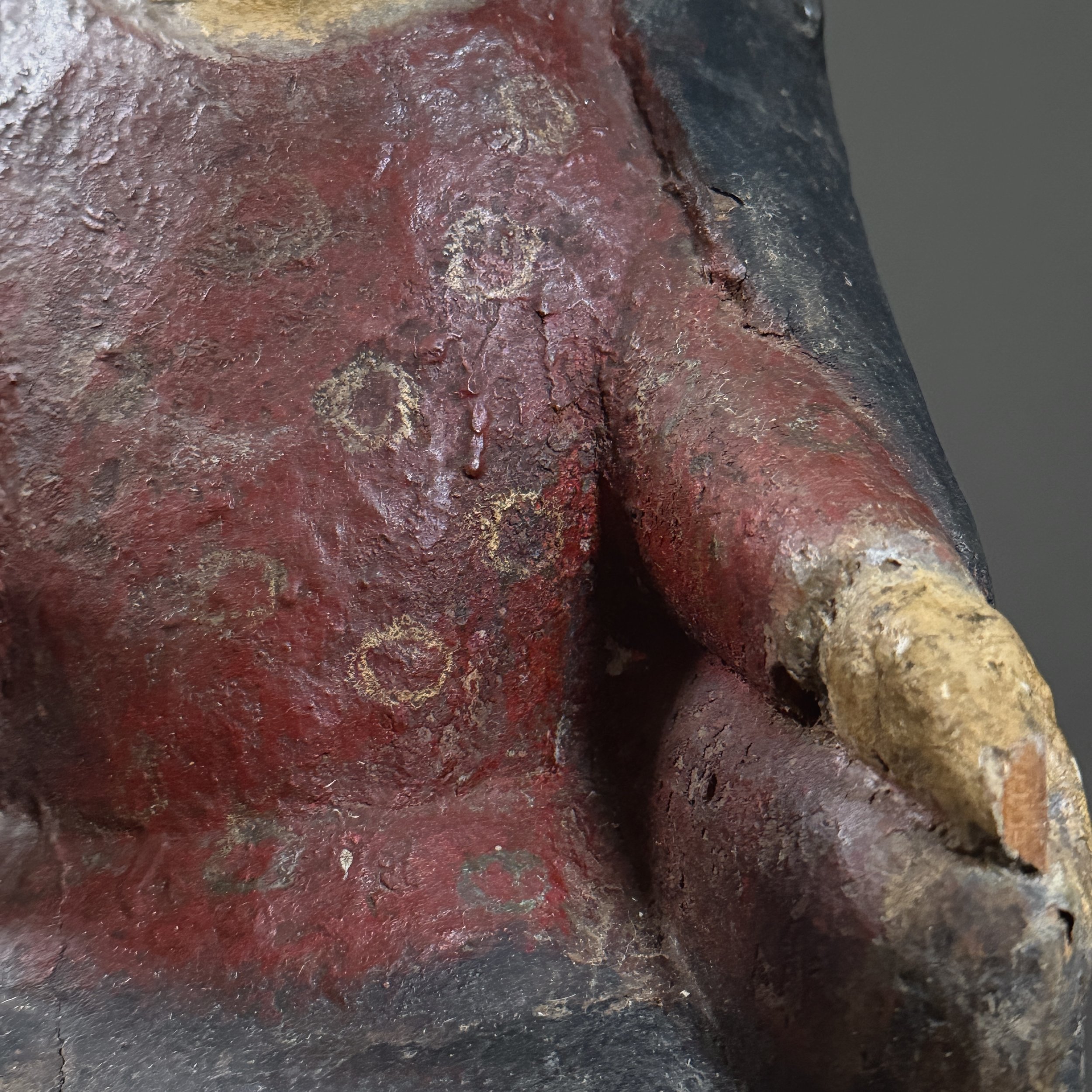
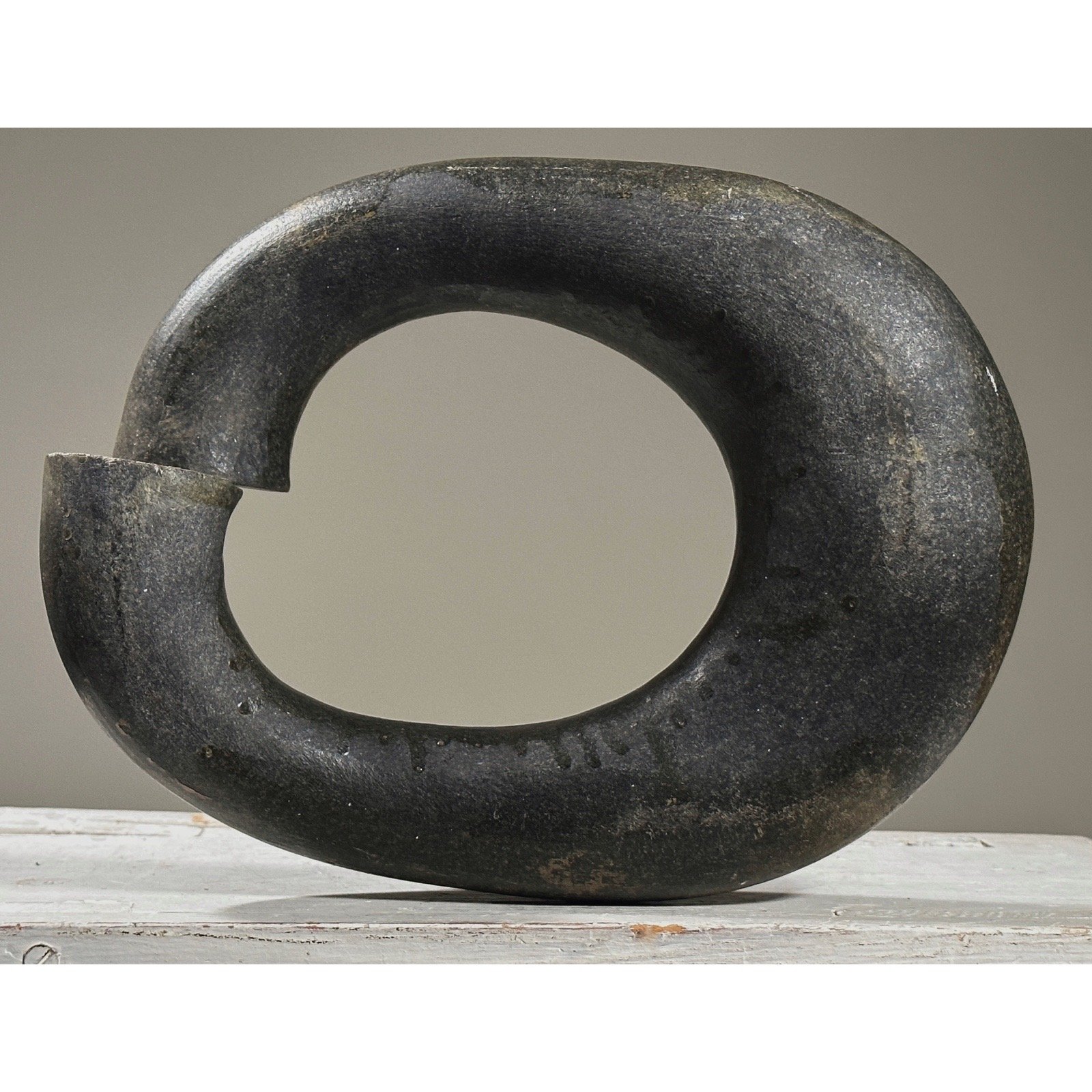
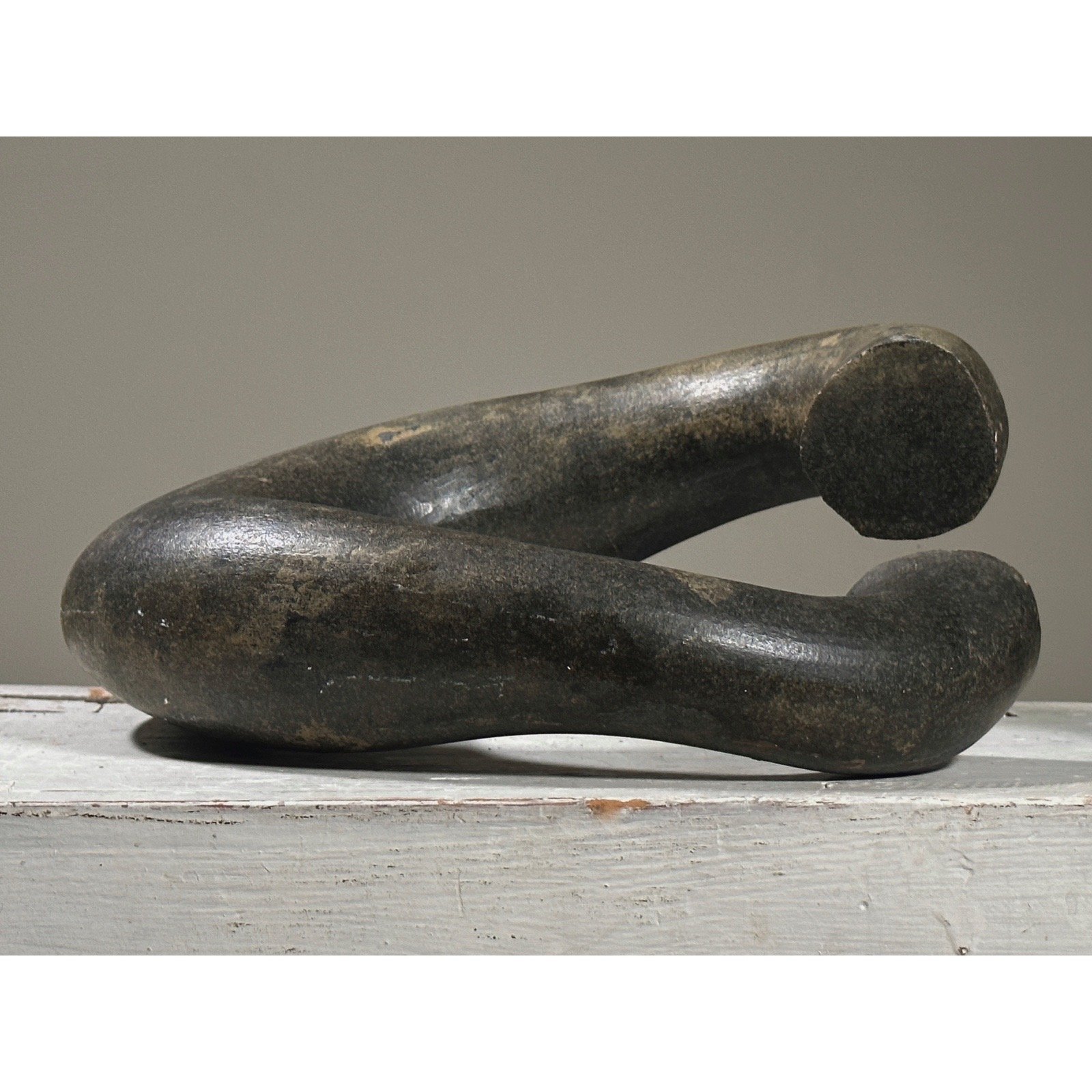
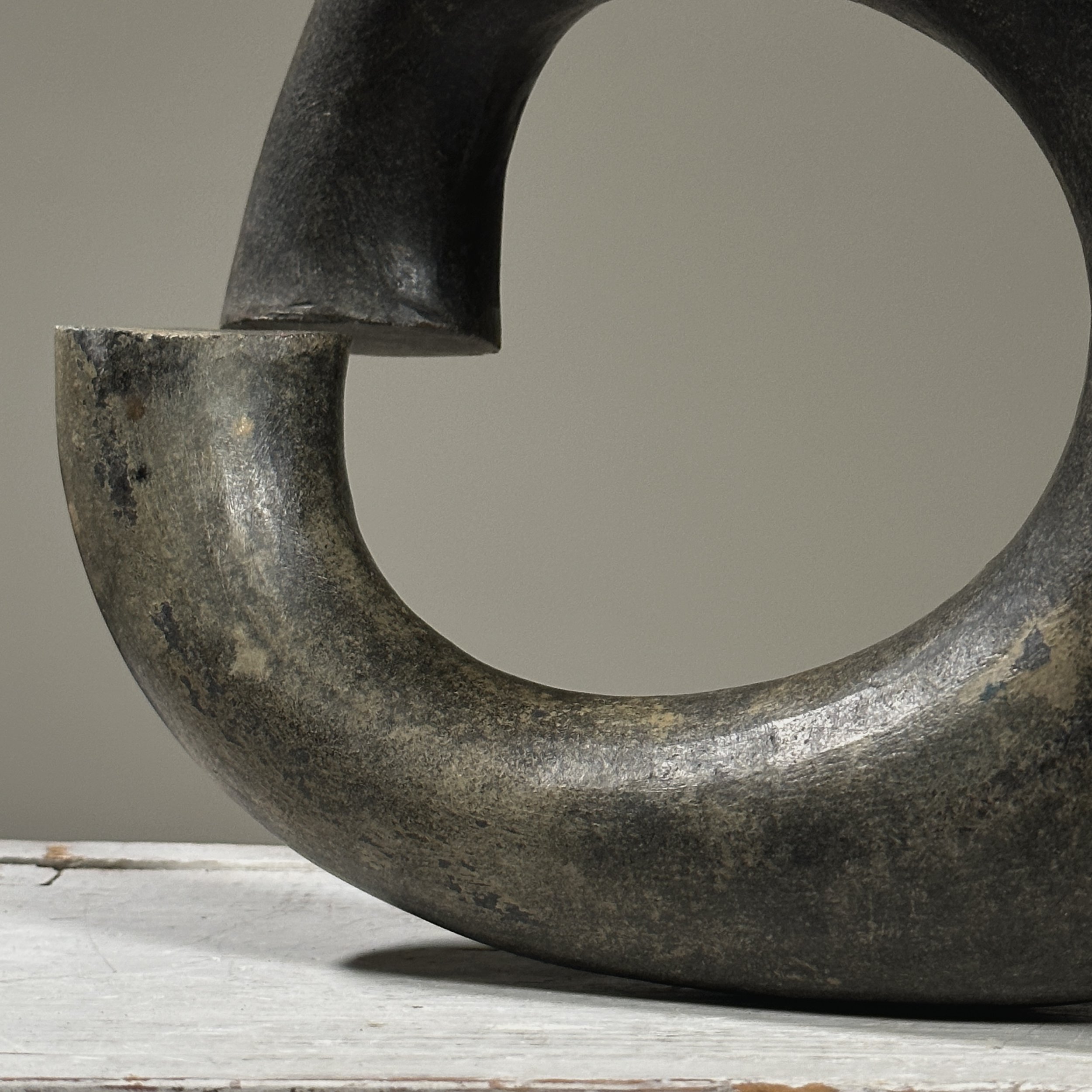
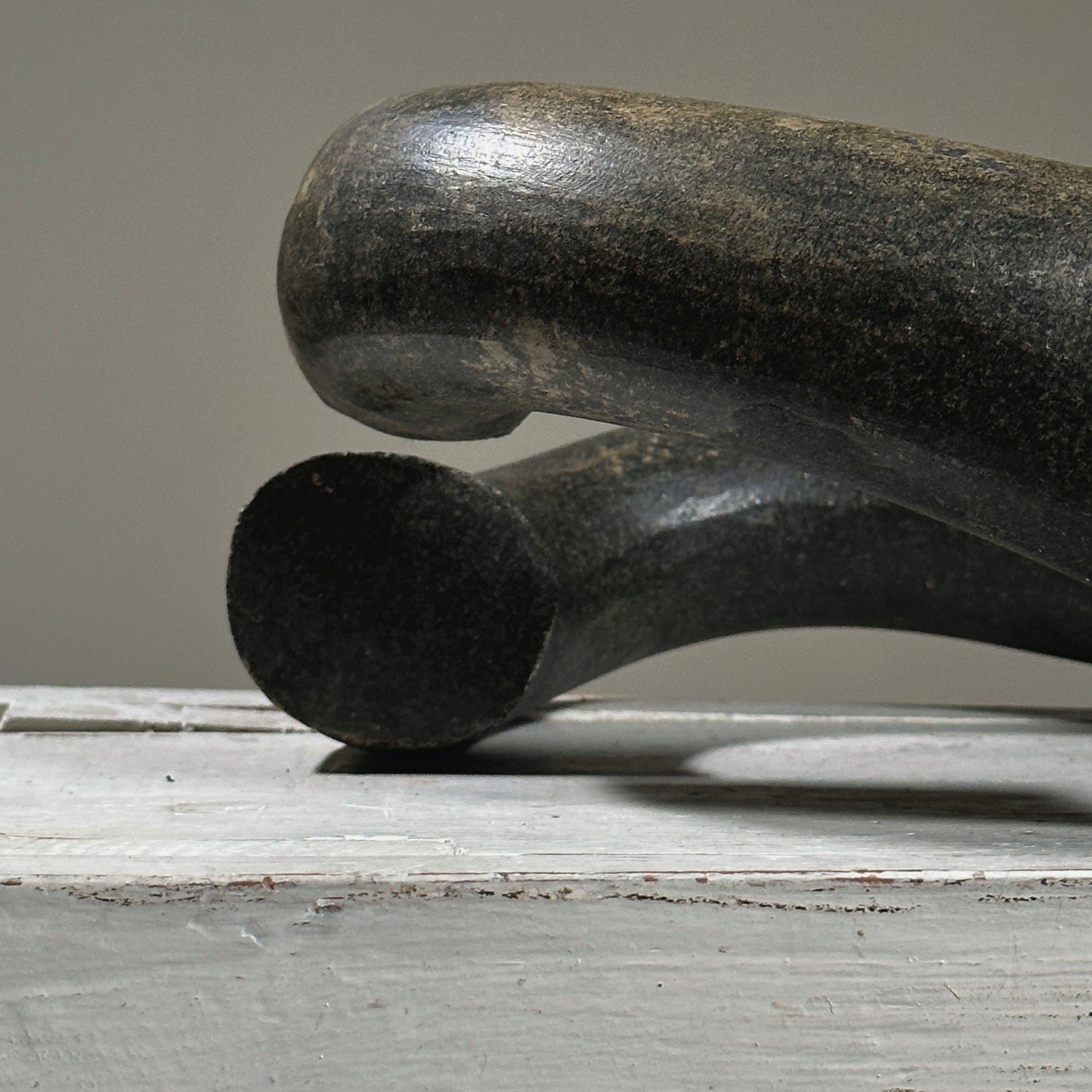
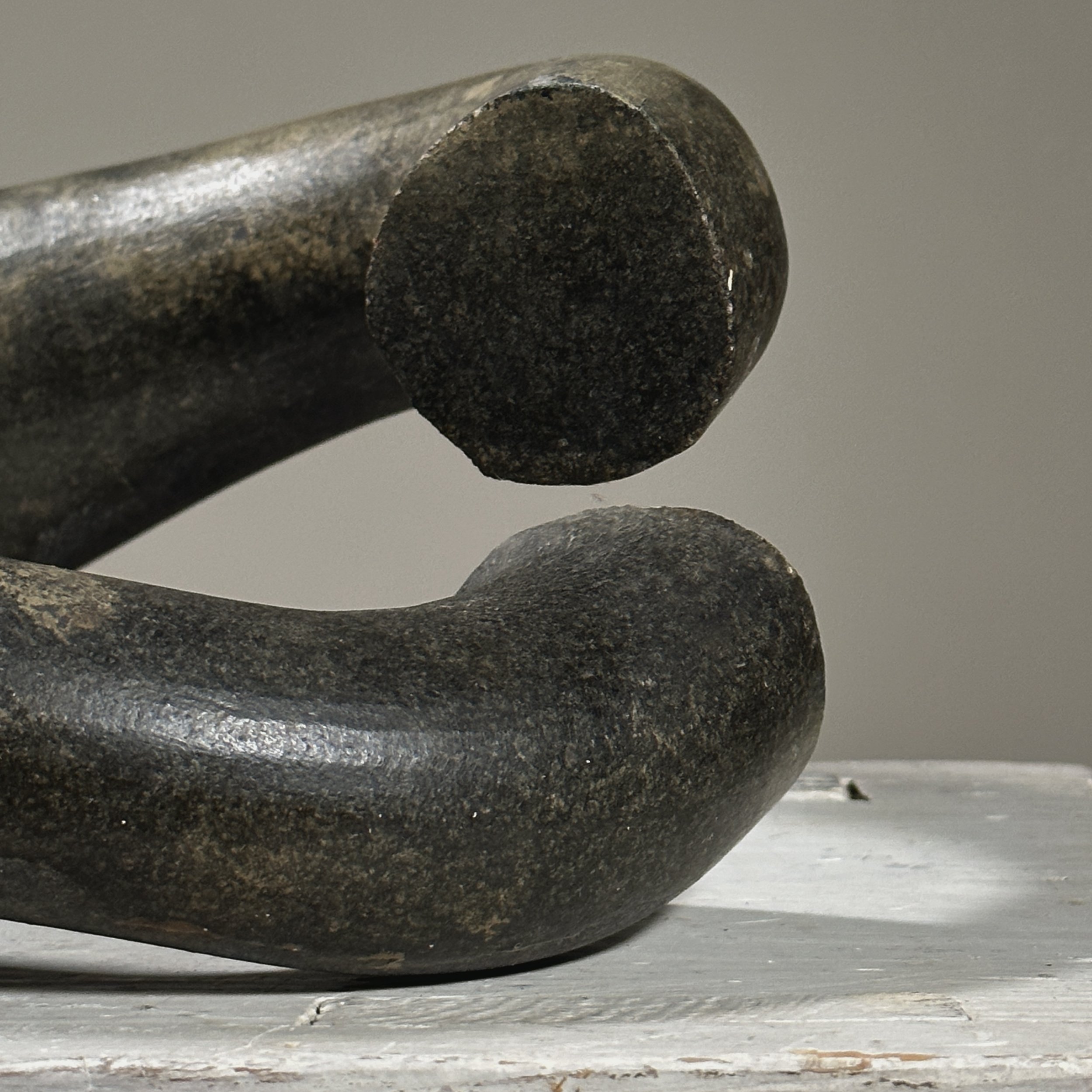
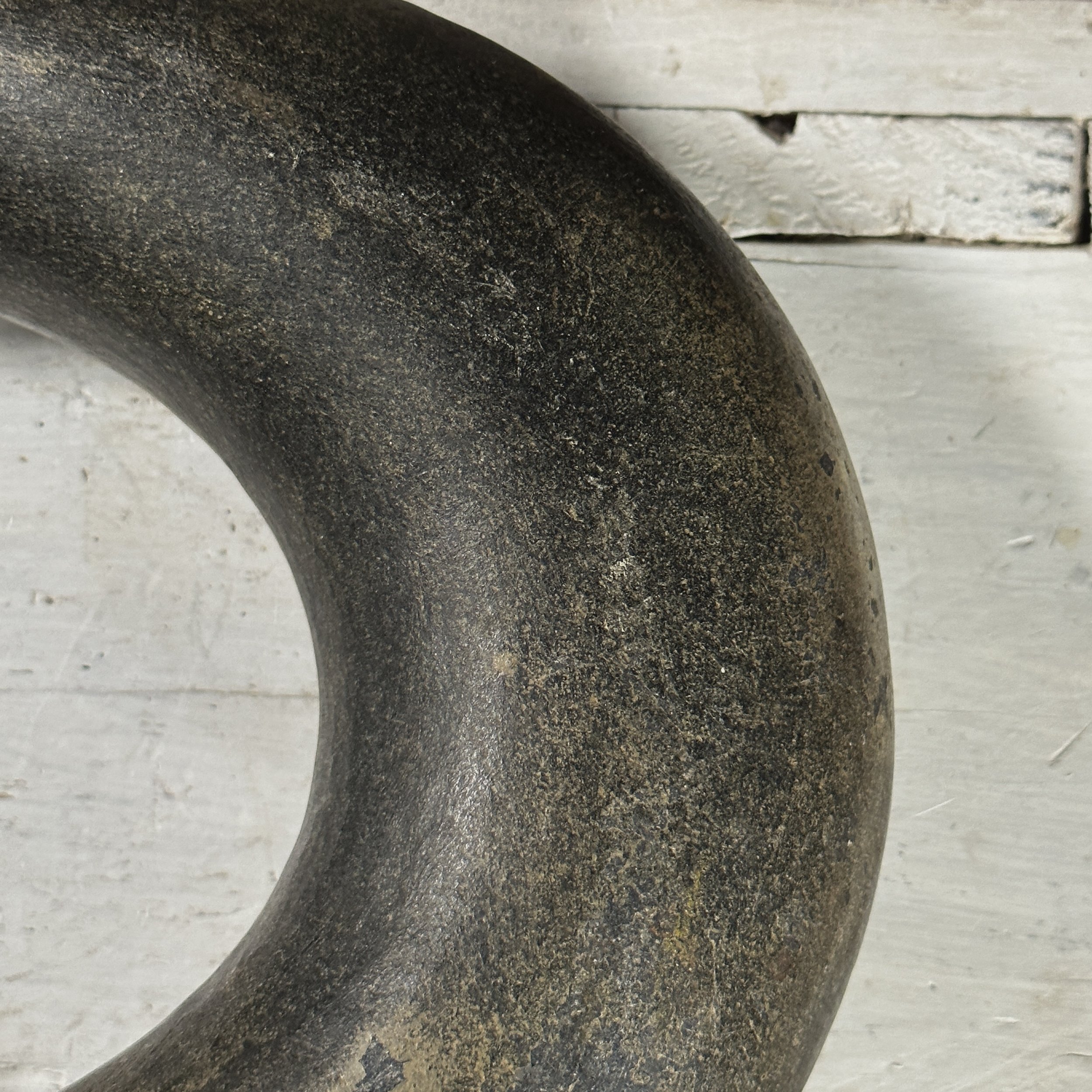
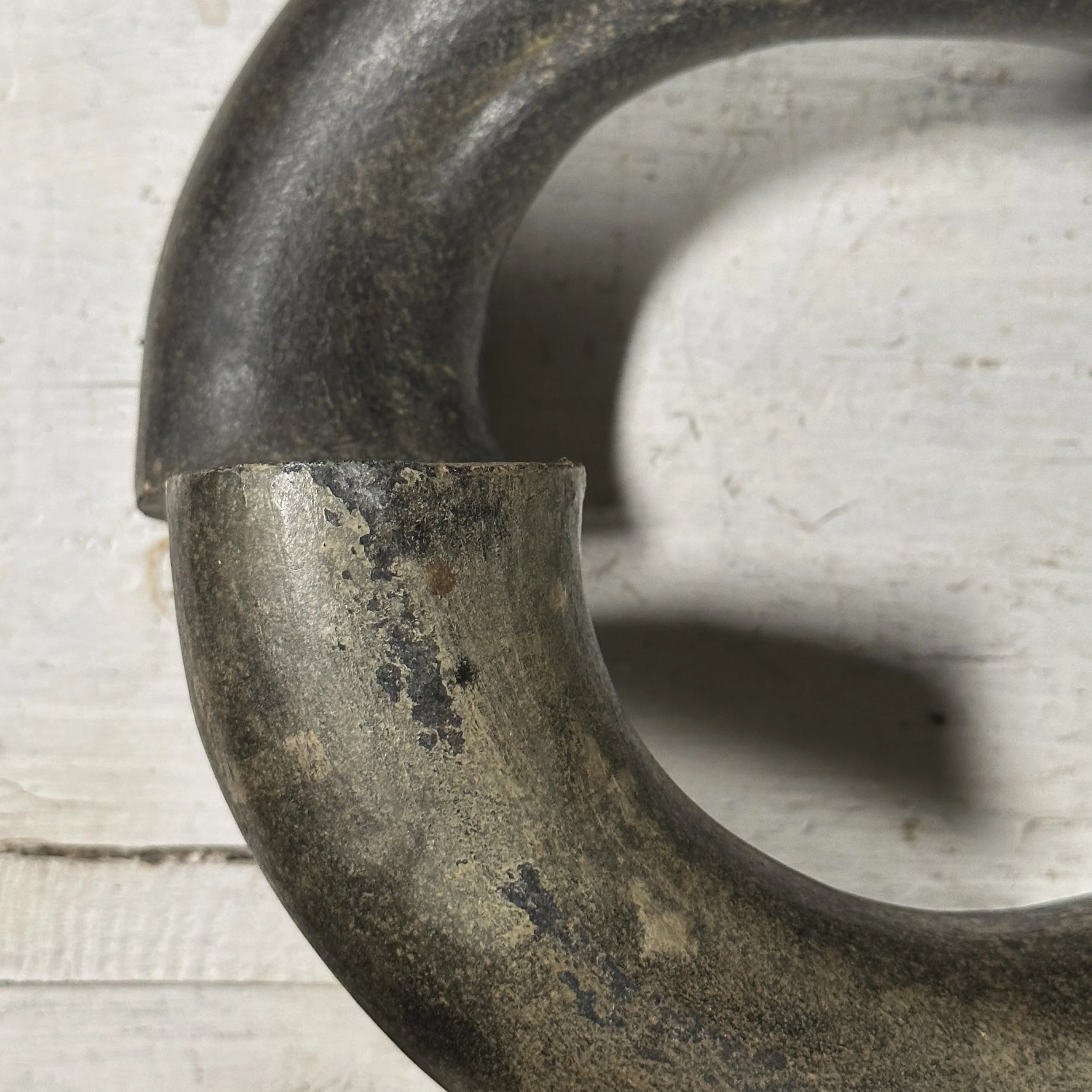
Condition: Used condition; wear consistent with age. Please refer to photos for details.
Vintage Haitian folk art cut metal sculpture depicting two figures entwined in a tree, with two birds at the top. One figure is a market seller carrying a basket on her head; the other is a nude man holding a knife. The metal itself has beautiful etching details on the surface. Signed "Gelot" on the bottom of the tree trunk. In used condition with wear consistent with age. Please refer to the photos for details.
A Note on Haitian Cut Metal Sculpture
Haitian cut metal sculpture, known in Haitian Kreyòl as fè koupé (cut iron), originated in the village of Croix-des-Bouquets northeast of Port-au-Prince. The form was developed in the 1950s by Georges Liautaud (1899–1991), a blacksmith who made iron crosses for the local cemetery before being encouraged by DeWitt Peters, founder of Le Centre d'Art, to expand into freestanding figural work.
The medium is recycled steel oil drums. The drums are cut open, filled with dried sugarcane and/ or grass, and burned to remove paint and residue. Once cooled, the metal is hammered flat into sheets. The artist then draws a design in chalk and cuts it out using hand tools, hammer, chisel, and awl, before finishing the surface through embossing, punching, and bending. Each piece is made by hand, one at a time.
The imagery of Haitian metal sculpture draws on Vodou, folklore, and daily life. Figures of mermaids, angels, winged creatures, and animals appear frequently, alongside scenes of market life and folklore. The loa(Vodou spirits) are connected to nature and are believed to live in the springs, rivers, and trees, which may be a clue to the forest setting of this work.
Medium: Cut and repoussé recycled steel drum
Nationality/Style: Haitian folk art, Croix-des-Bouquets, circa mid-to-late 20th century
Subject: Two figures entwined in a tree with two birds
Dimensions: 23" W x 36" H
Signature: Signed "Gelot" on the bottom of the tree trunk
Condition: Used condition; wear consistent with age. Please refer to photos for details.
Vintage Haitian folk art cut metal sculpture depicting two figures entwined in a tree, with two birds at the top. One figure is a market seller carrying a basket on her head; the other is a nude man holding a knife. The metal itself has beautiful etching details on the surface. Signed "Gelot" on the bottom of the tree trunk. In used condition with wear consistent with age. Please refer to the photos for details.
A Note on Haitian Cut Metal Sculpture
Haitian cut metal sculpture, known in Haitian Kreyòl as fè koupé (cut iron), originated in the village of Croix-des-Bouquets northeast of Port-au-Prince. The form was developed in the 1950s by Georges Liautaud (1899–1991), a blacksmith who made iron crosses for the local cemetery before being encouraged by DeWitt Peters, founder of Le Centre d'Art, to expand into freestanding figural work.
The medium is recycled steel oil drums. The drums are cut open, filled with dried sugarcane and/ or grass, and burned to remove paint and residue. Once cooled, the metal is hammered flat into sheets. The artist then draws a design in chalk and cuts it out using hand tools, hammer, chisel, and awl, before finishing the surface through embossing, punching, and bending. Each piece is made by hand, one at a time.
The imagery of Haitian metal sculpture draws on Vodou, folklore, and daily life. Figures of mermaids, angels, winged creatures, and animals appear frequently, alongside scenes of market life and folklore. The loa(Vodou spirits) are connected to nature and are believed to live in the springs, rivers, and trees, which may be a clue to the forest setting of this work.

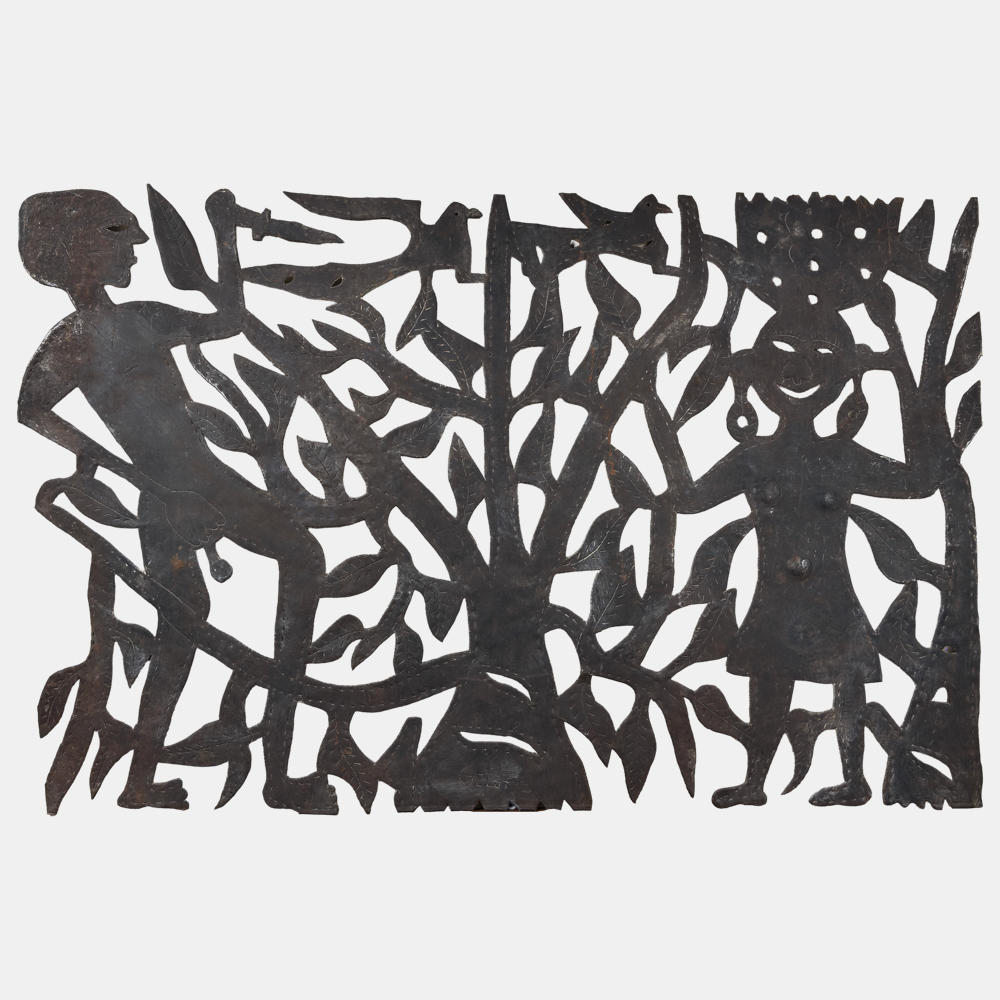 Image 1 of 11
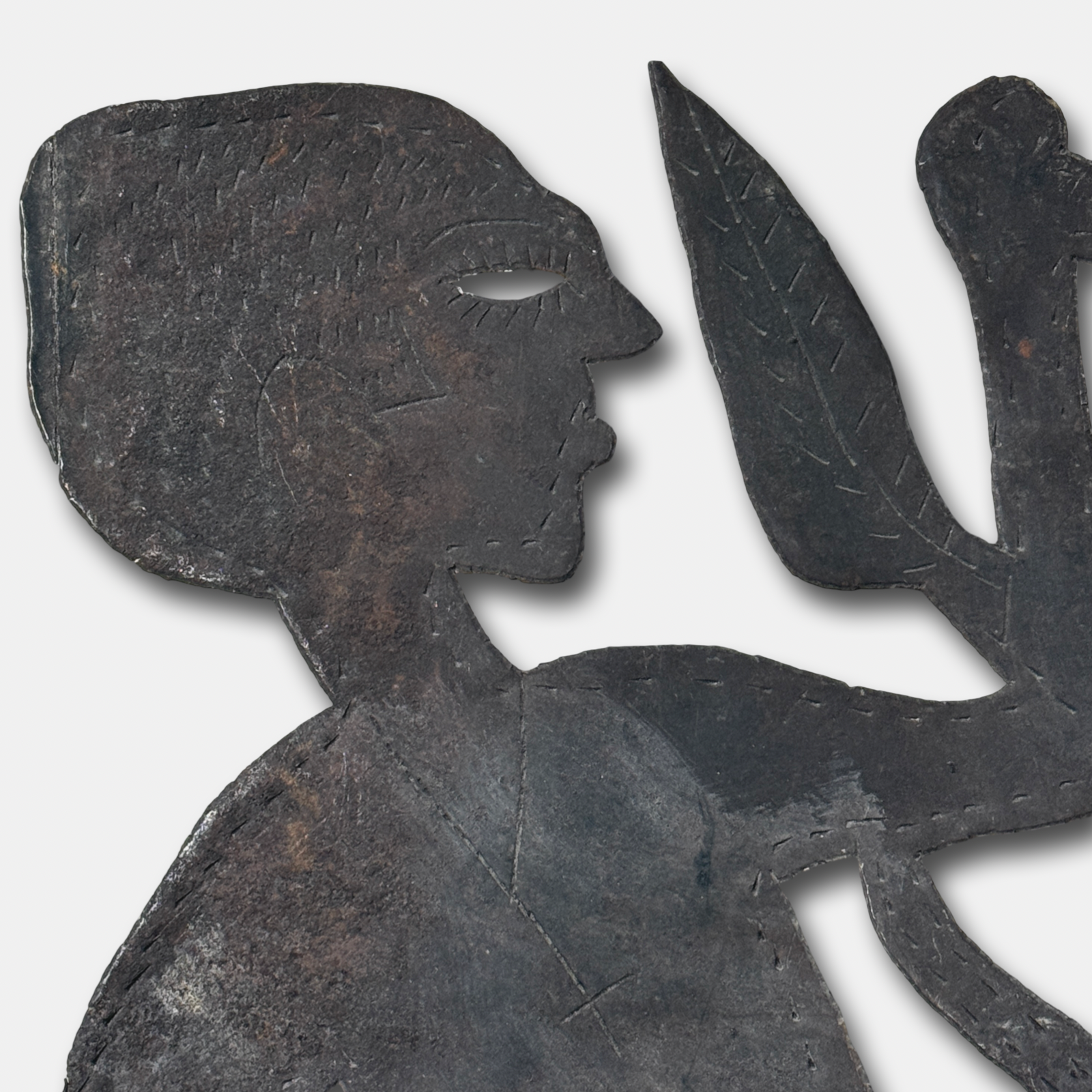 Image 2 of 11
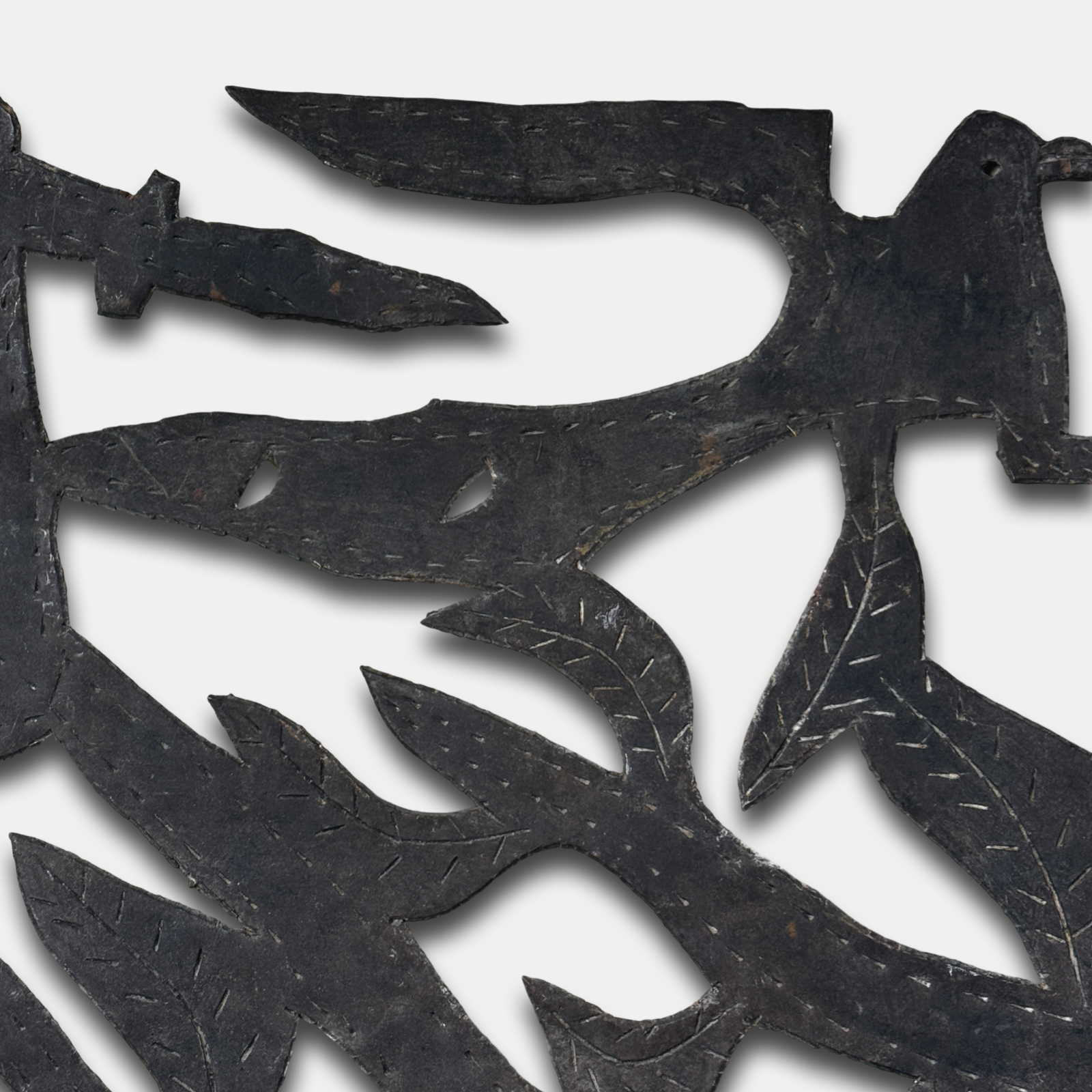 Image 3 of 11
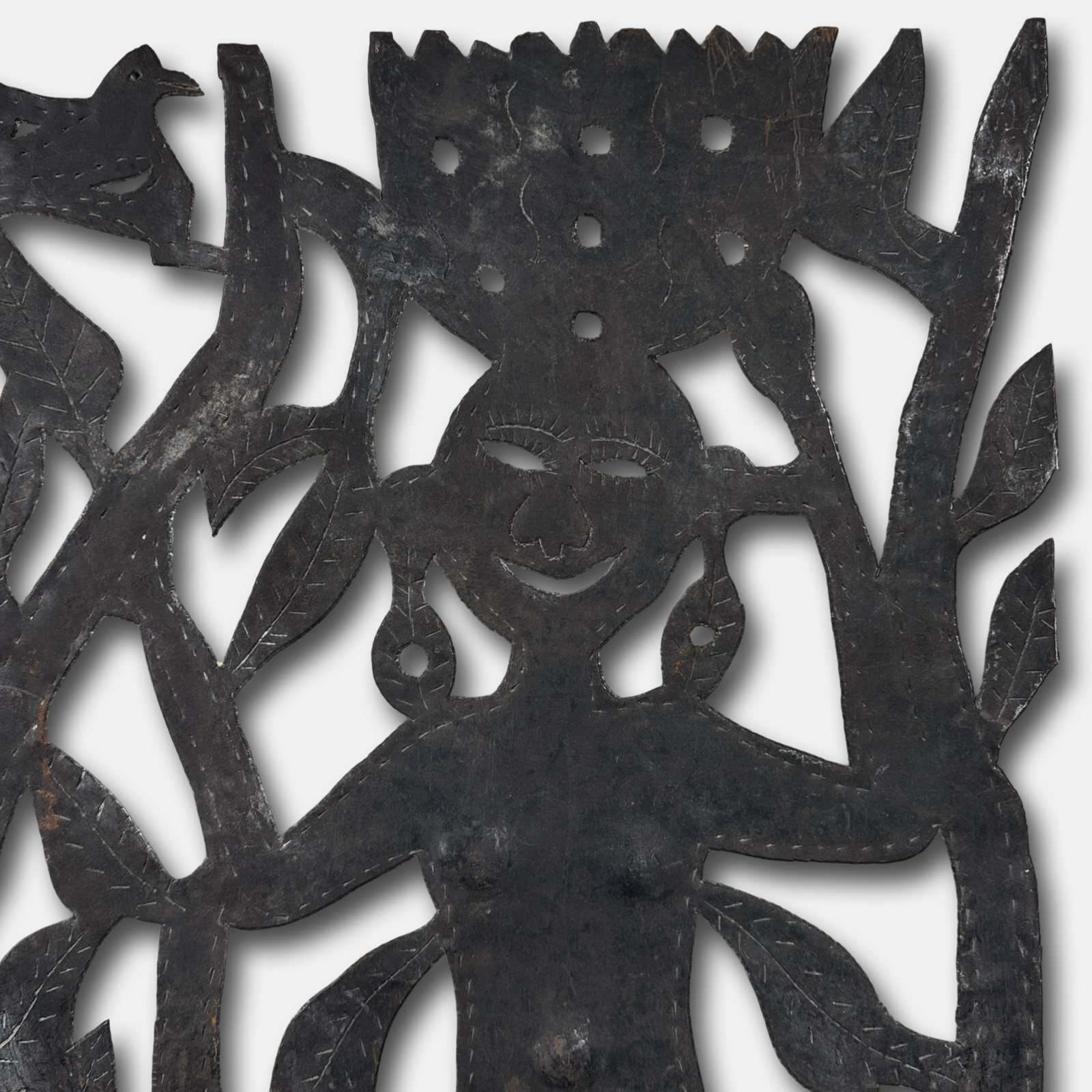 Image 4 of 11
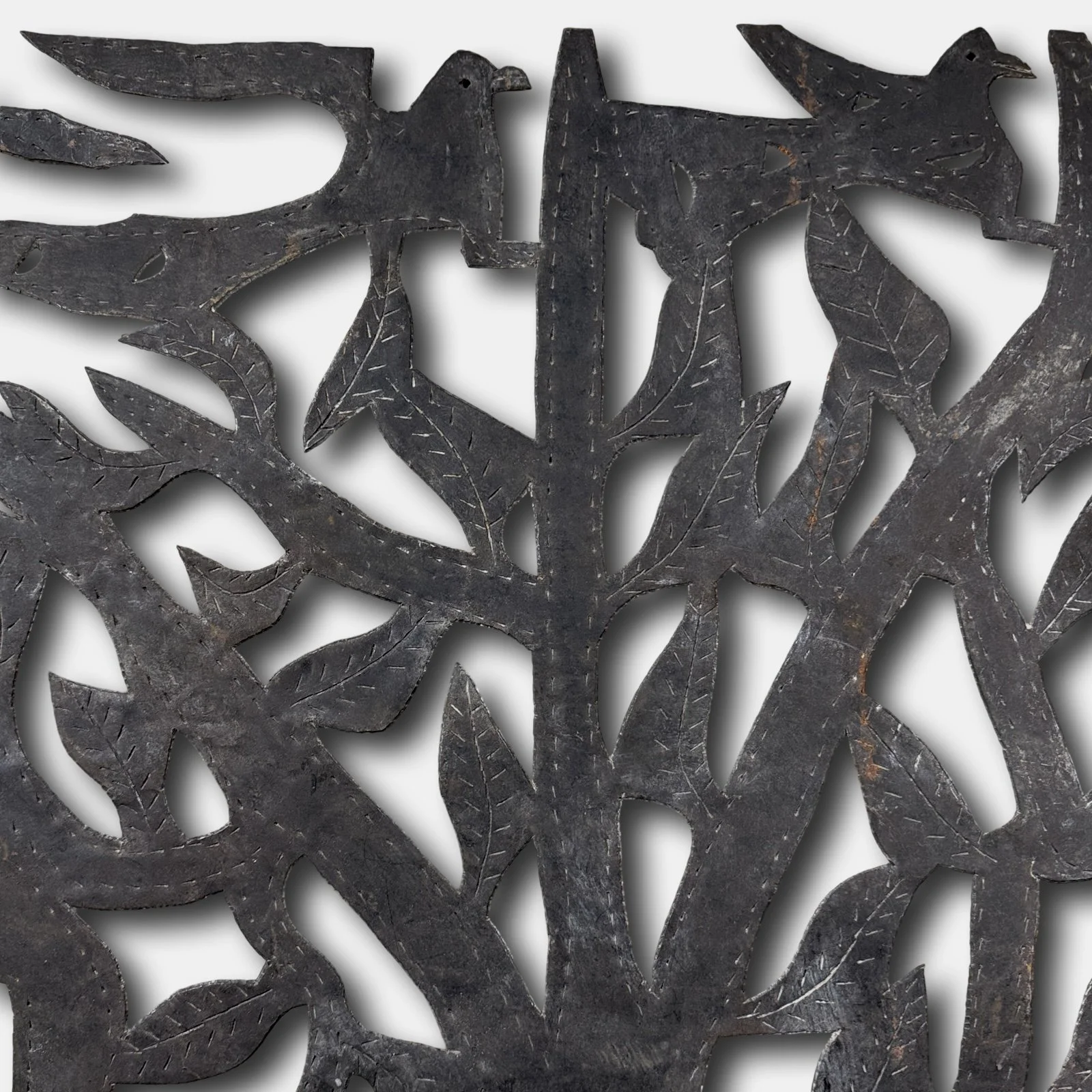 Image 5 of 11
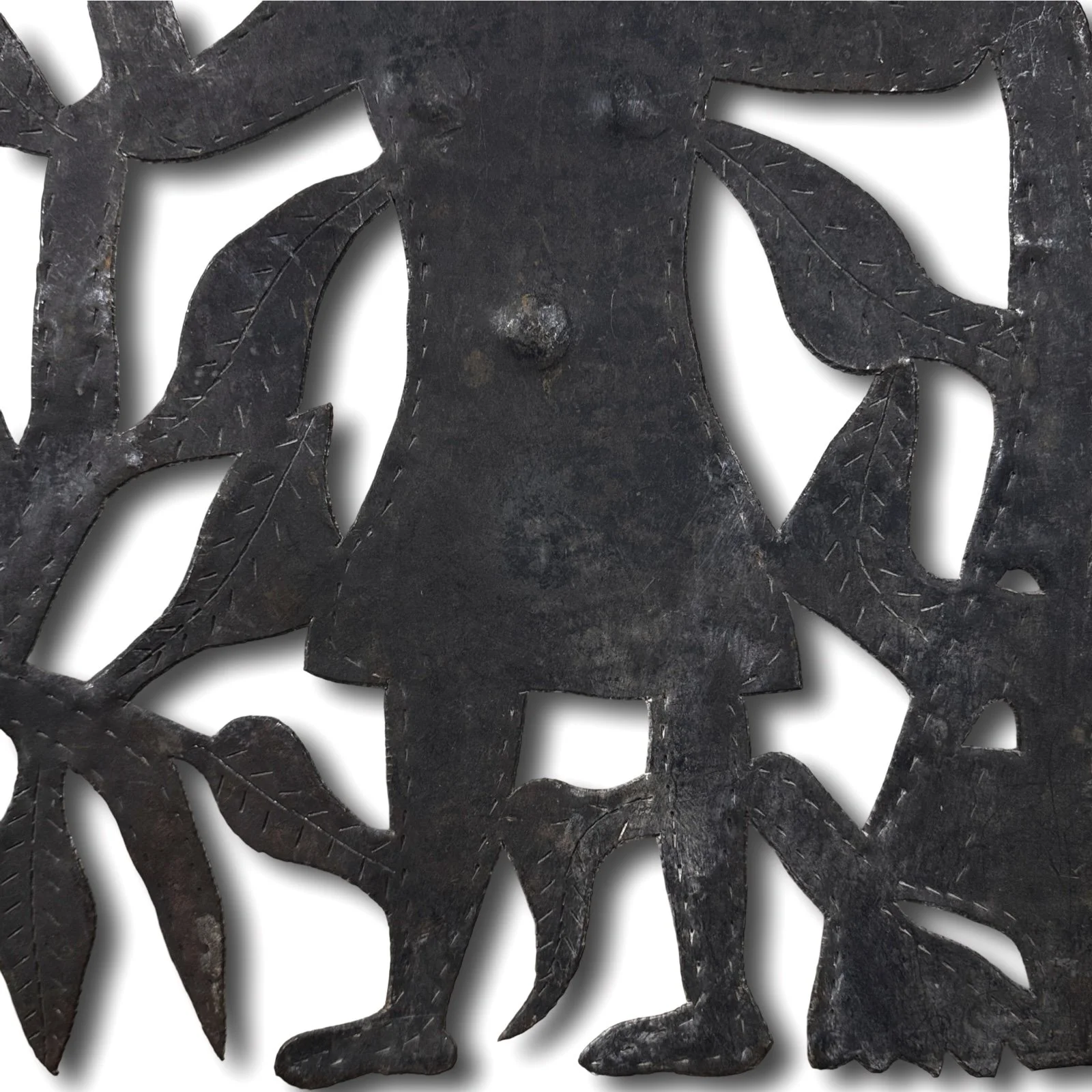 Image 6 of 11
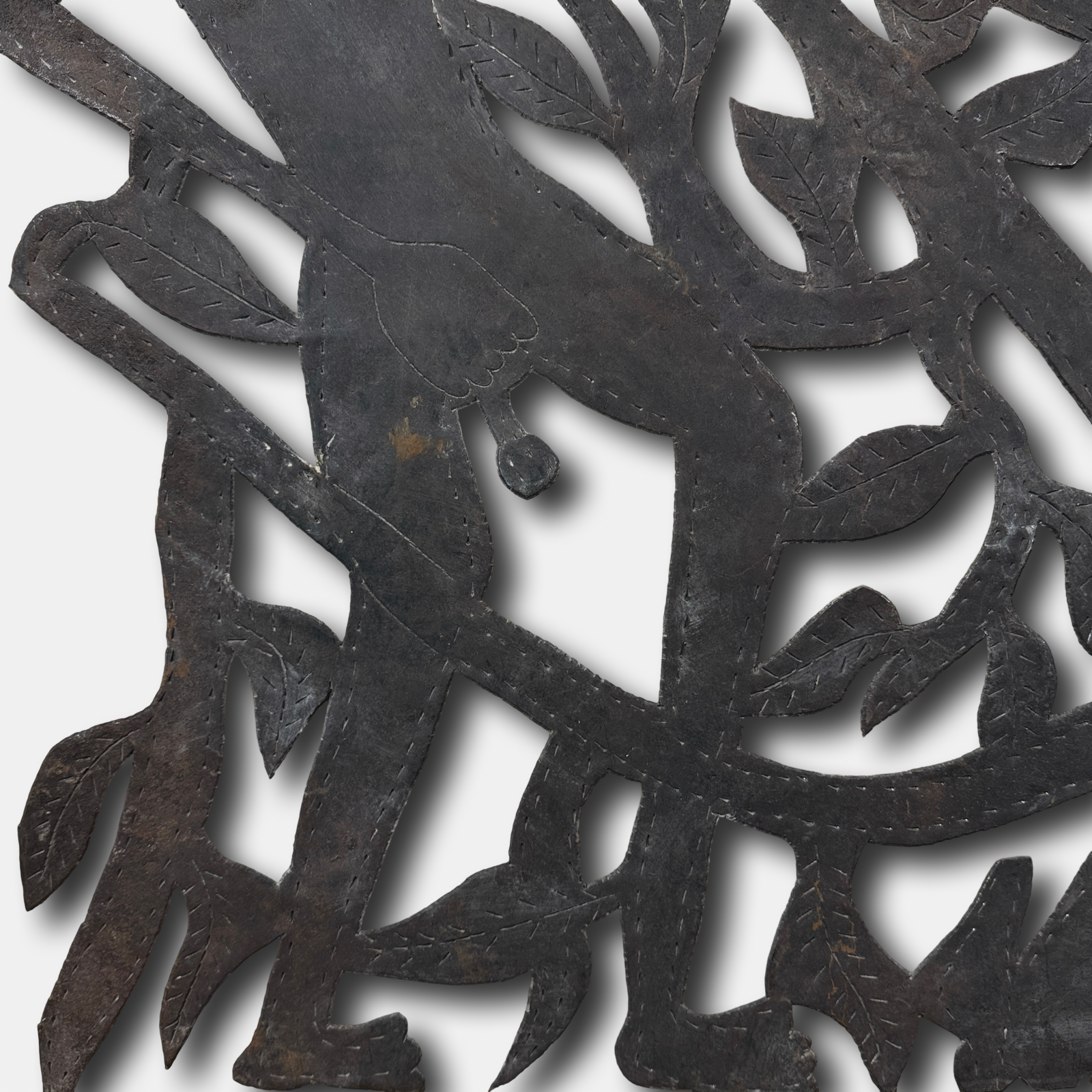 Image 7 of 11
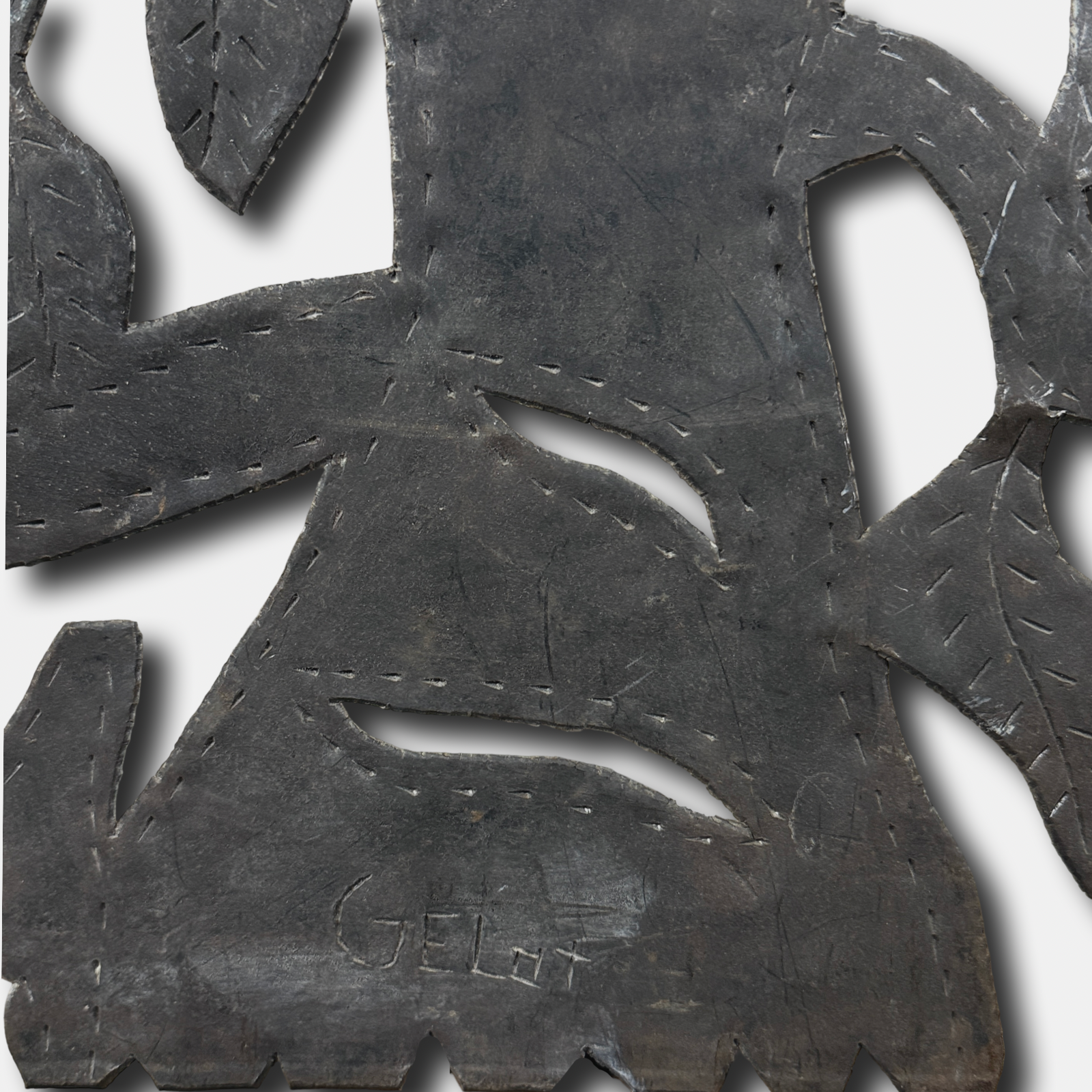 Image 8 of 11
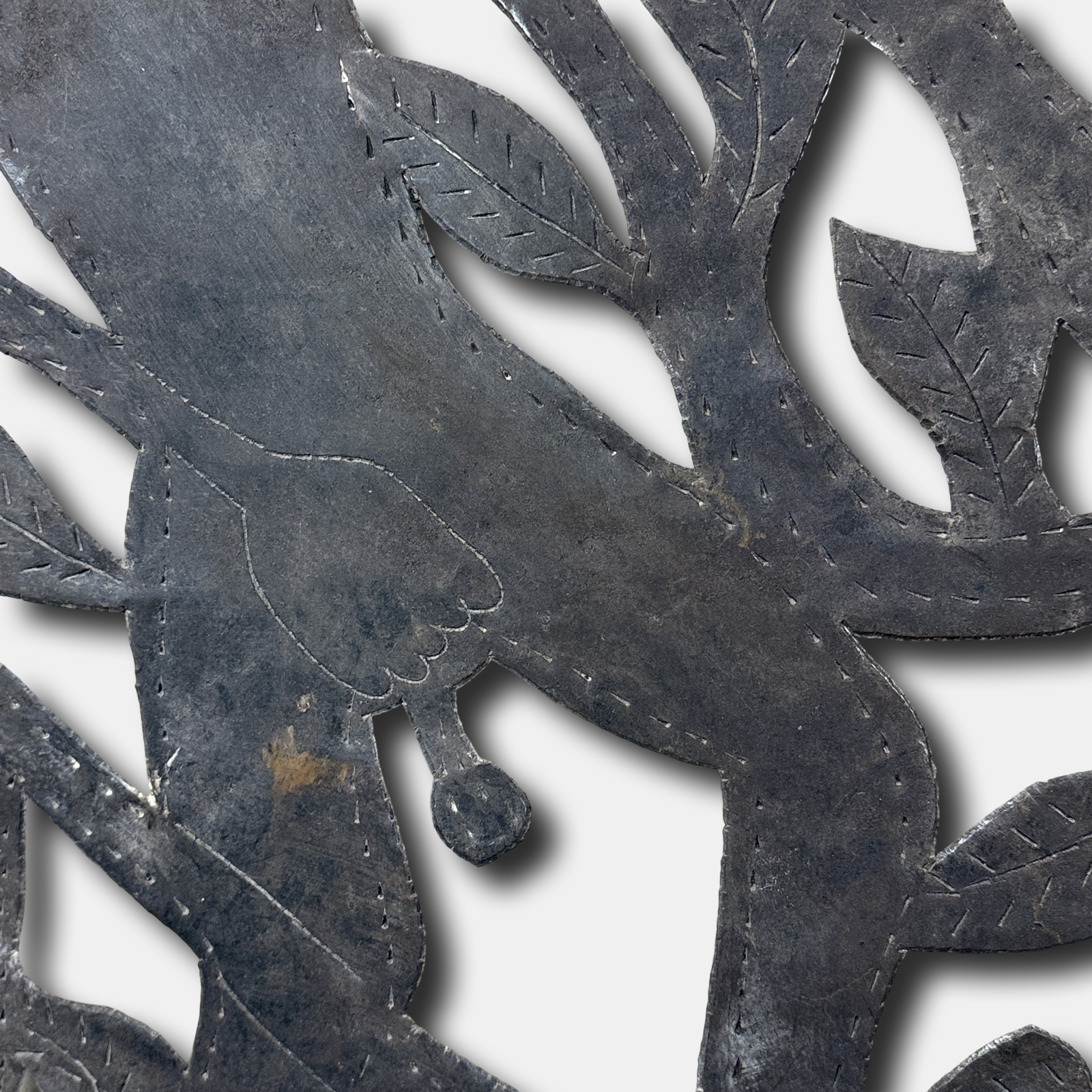 Image 9 of 11
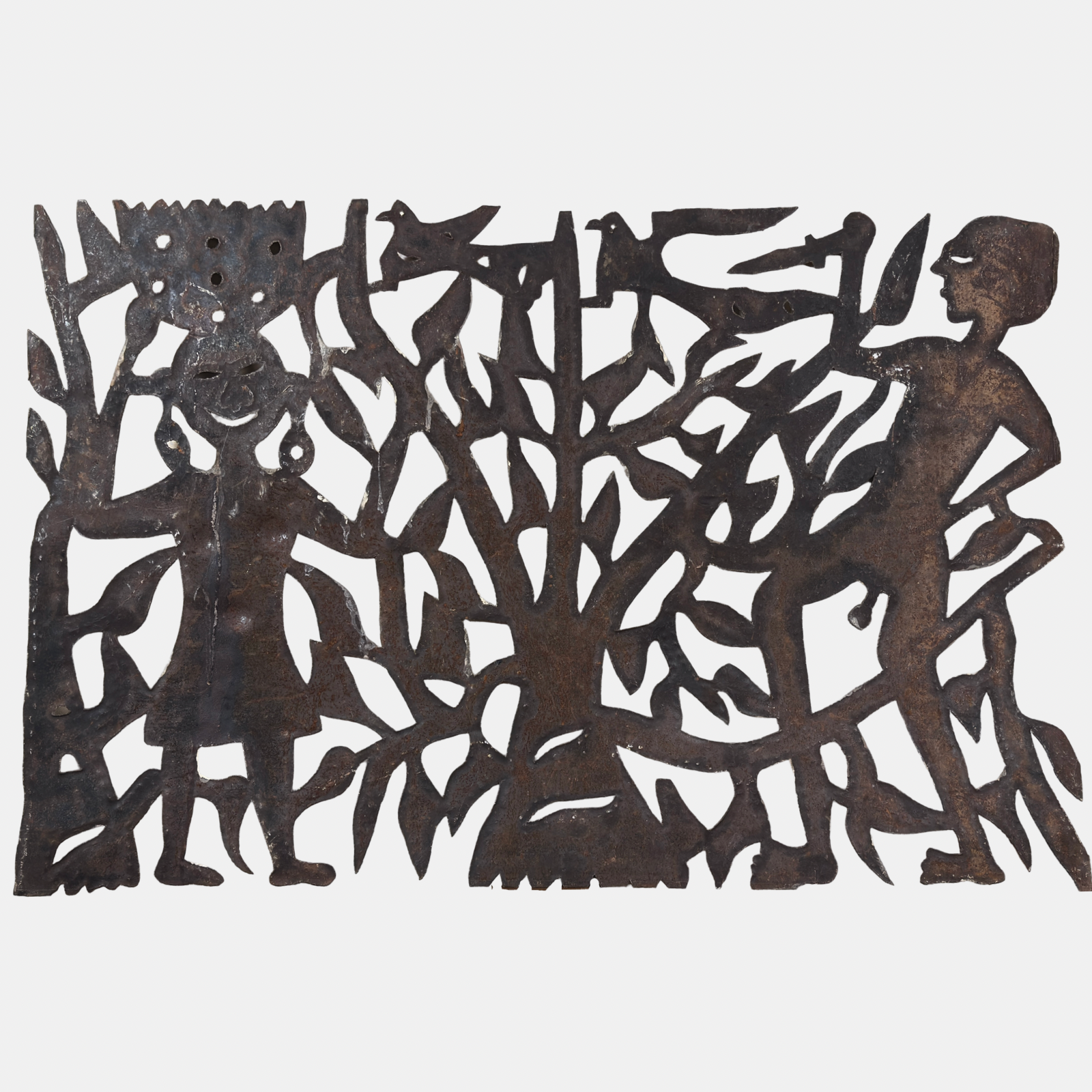 Image 10 of 11
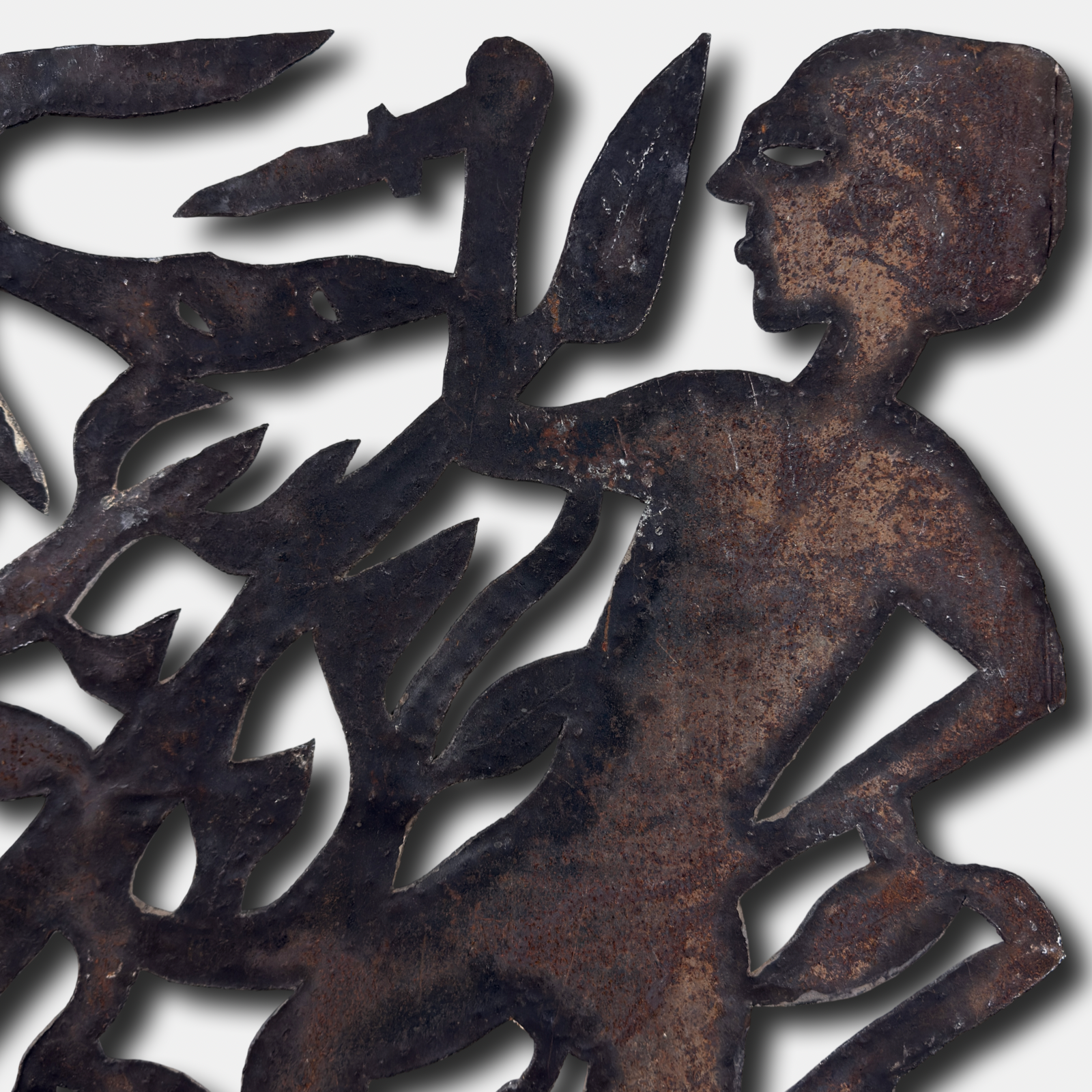 Image 11 of 11