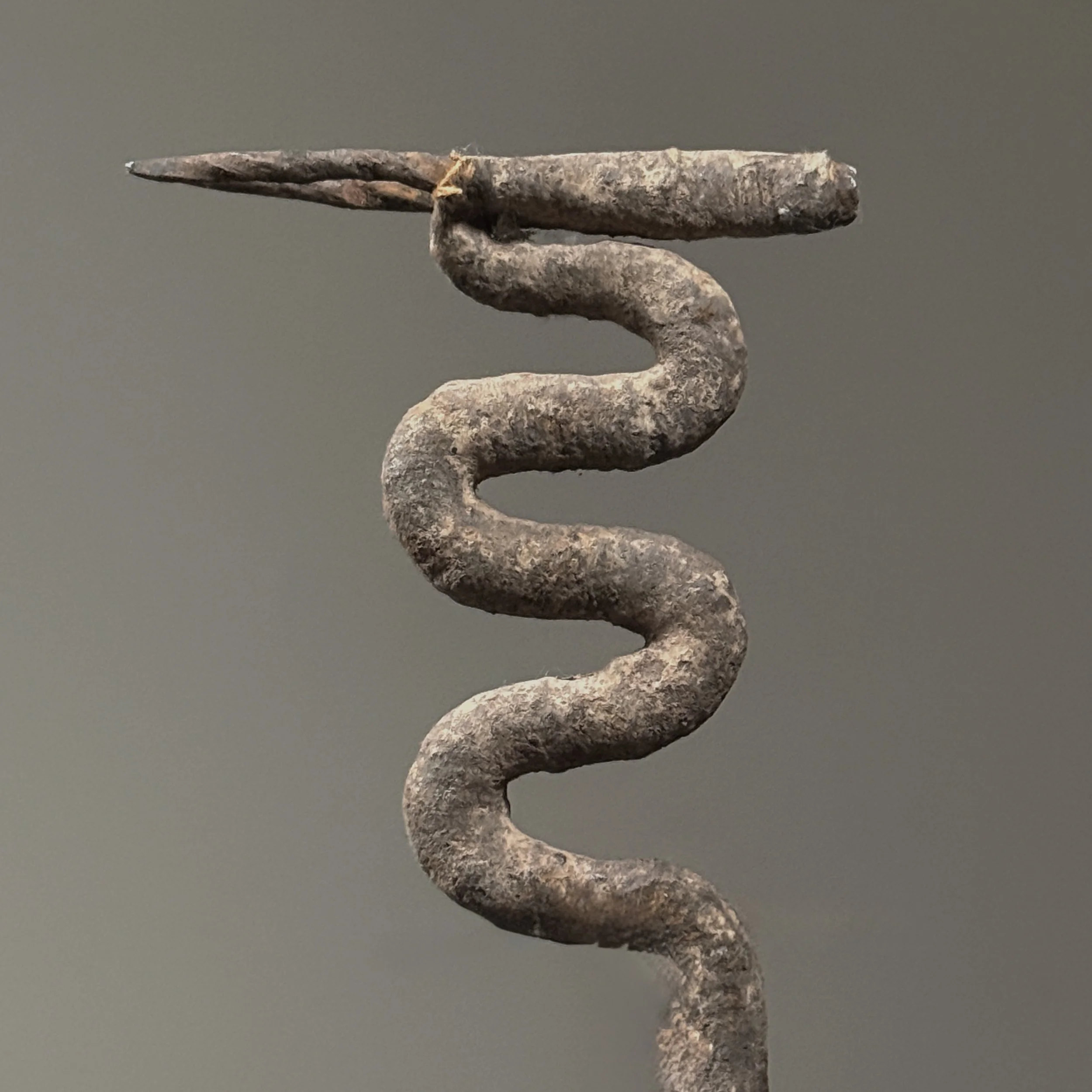
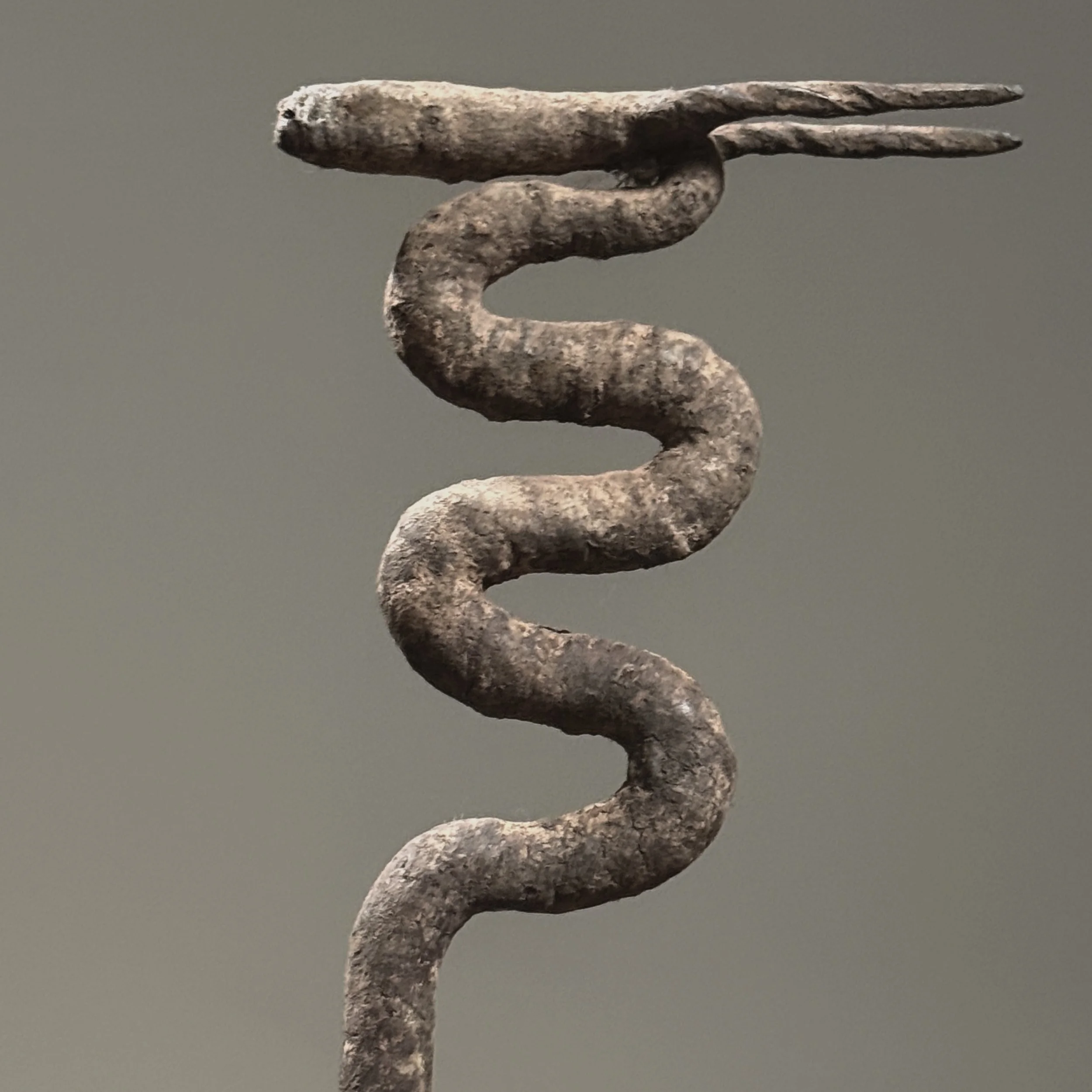
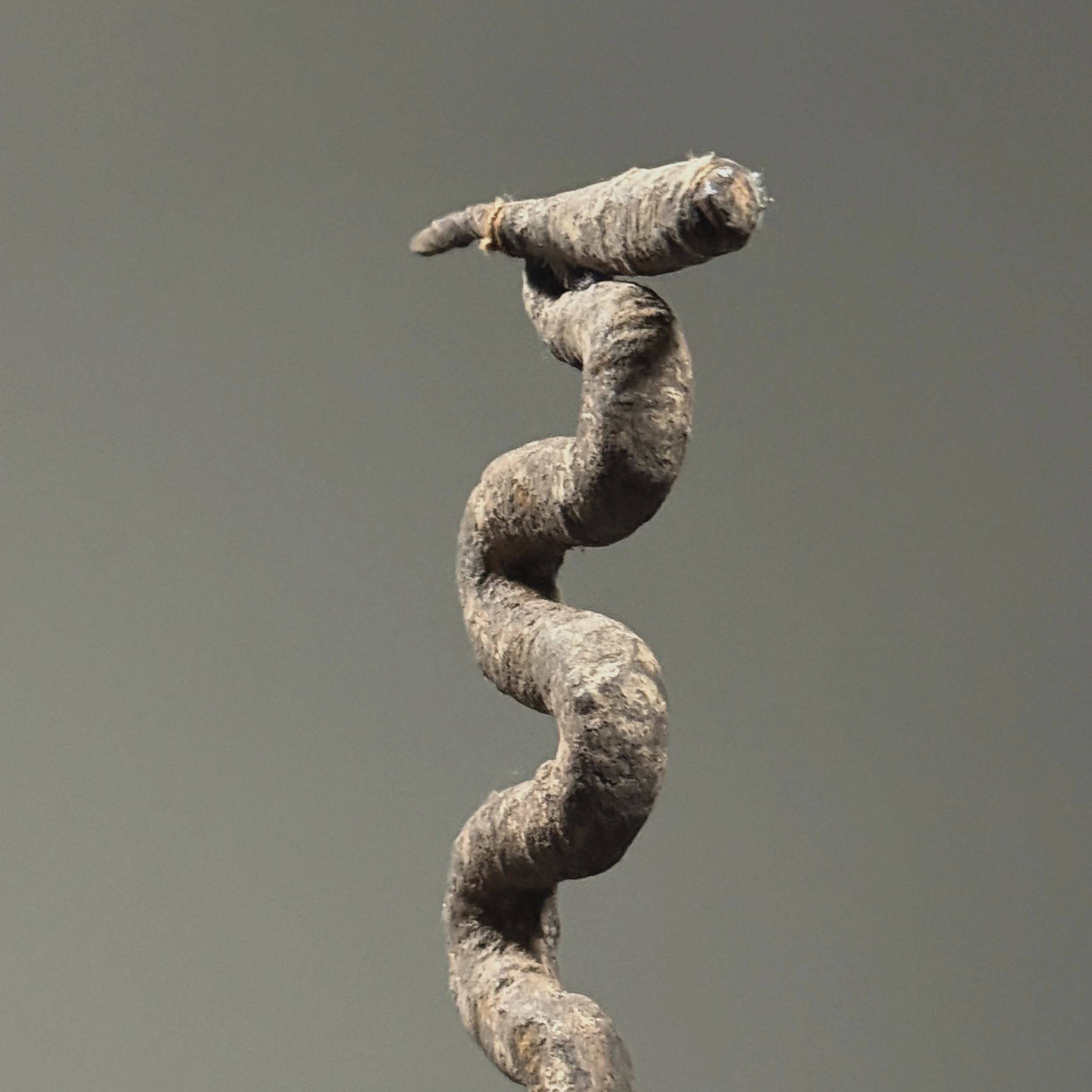
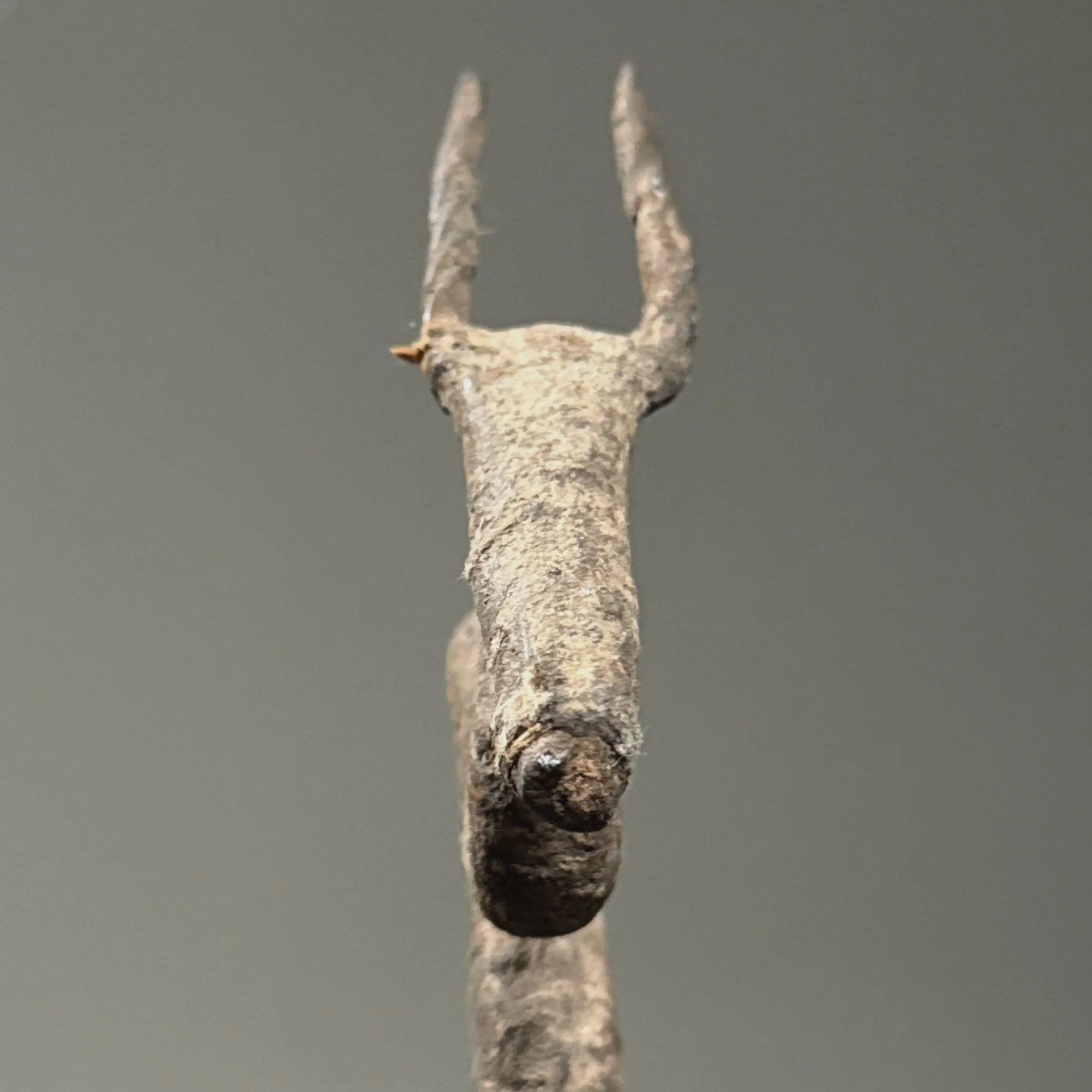
Medium: Hand-carved wood (balsa)
Culture: Guna (Kuna), Guna Yala, Panama
Date: Circa 1950
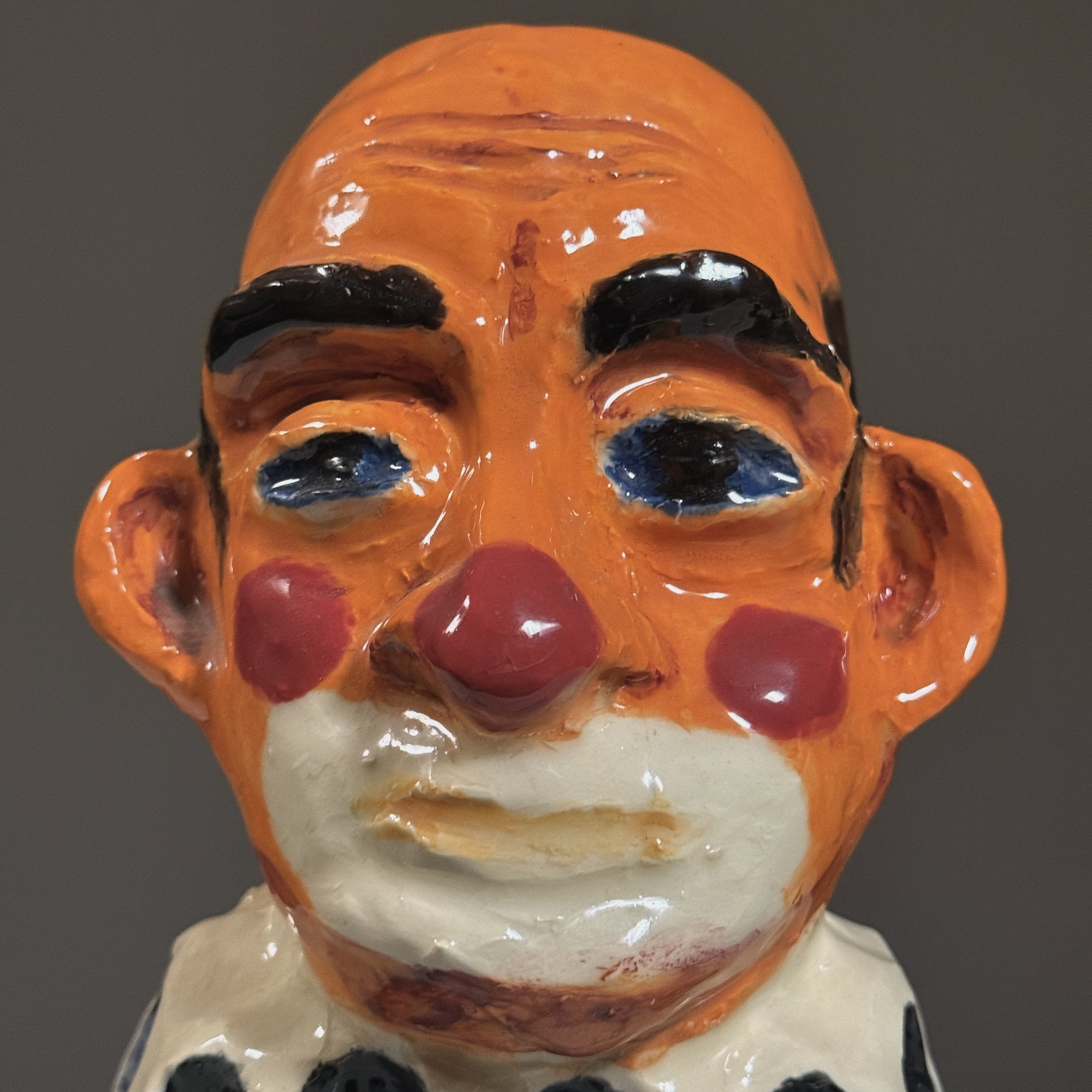
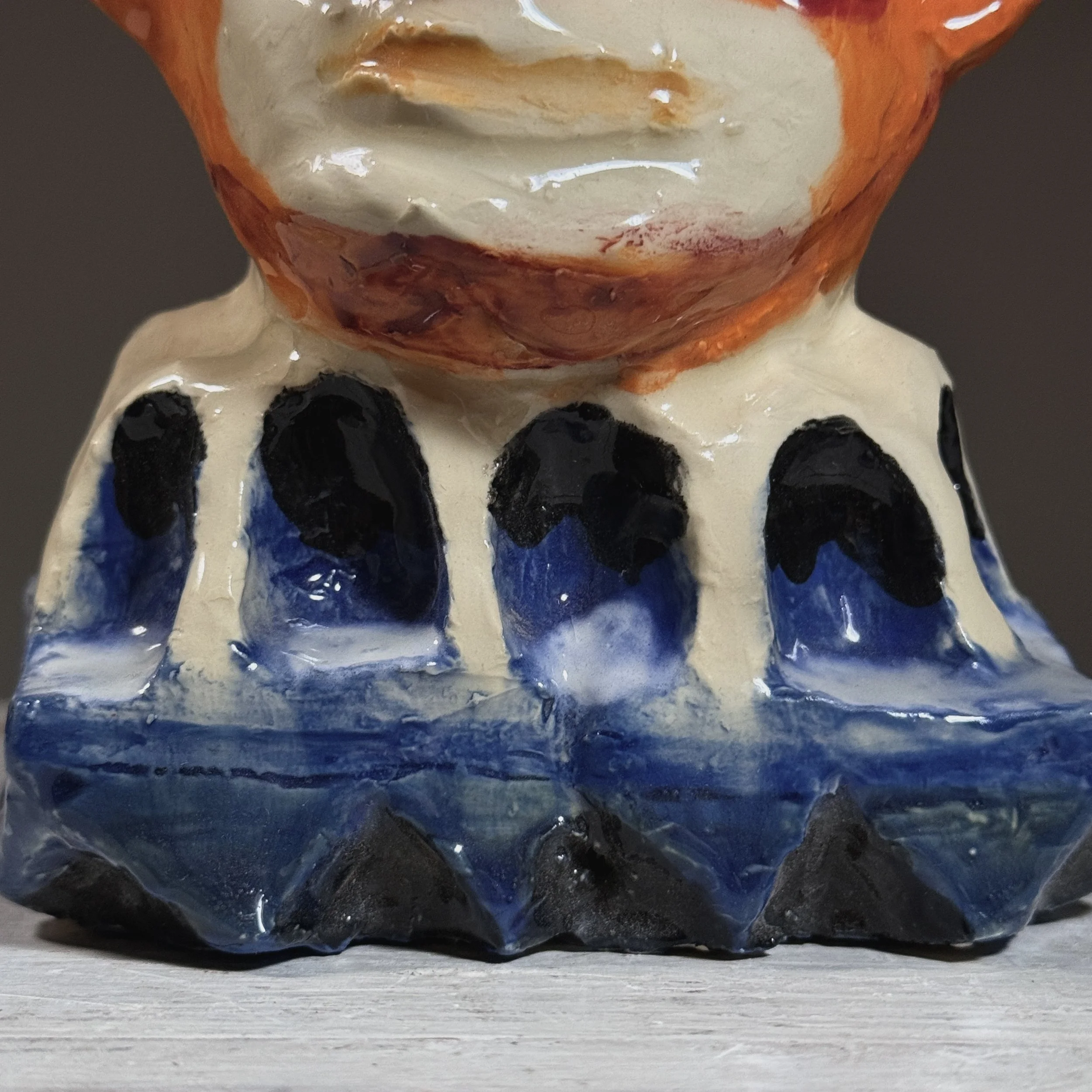
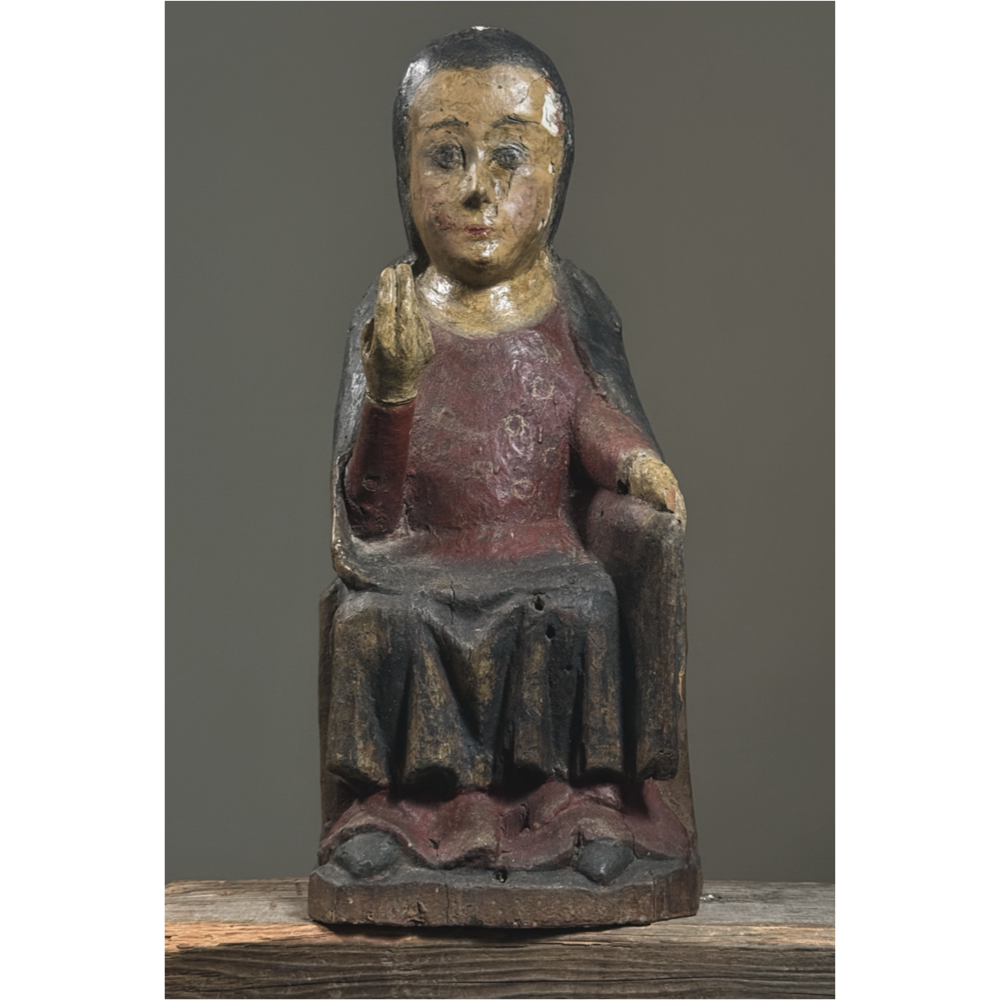
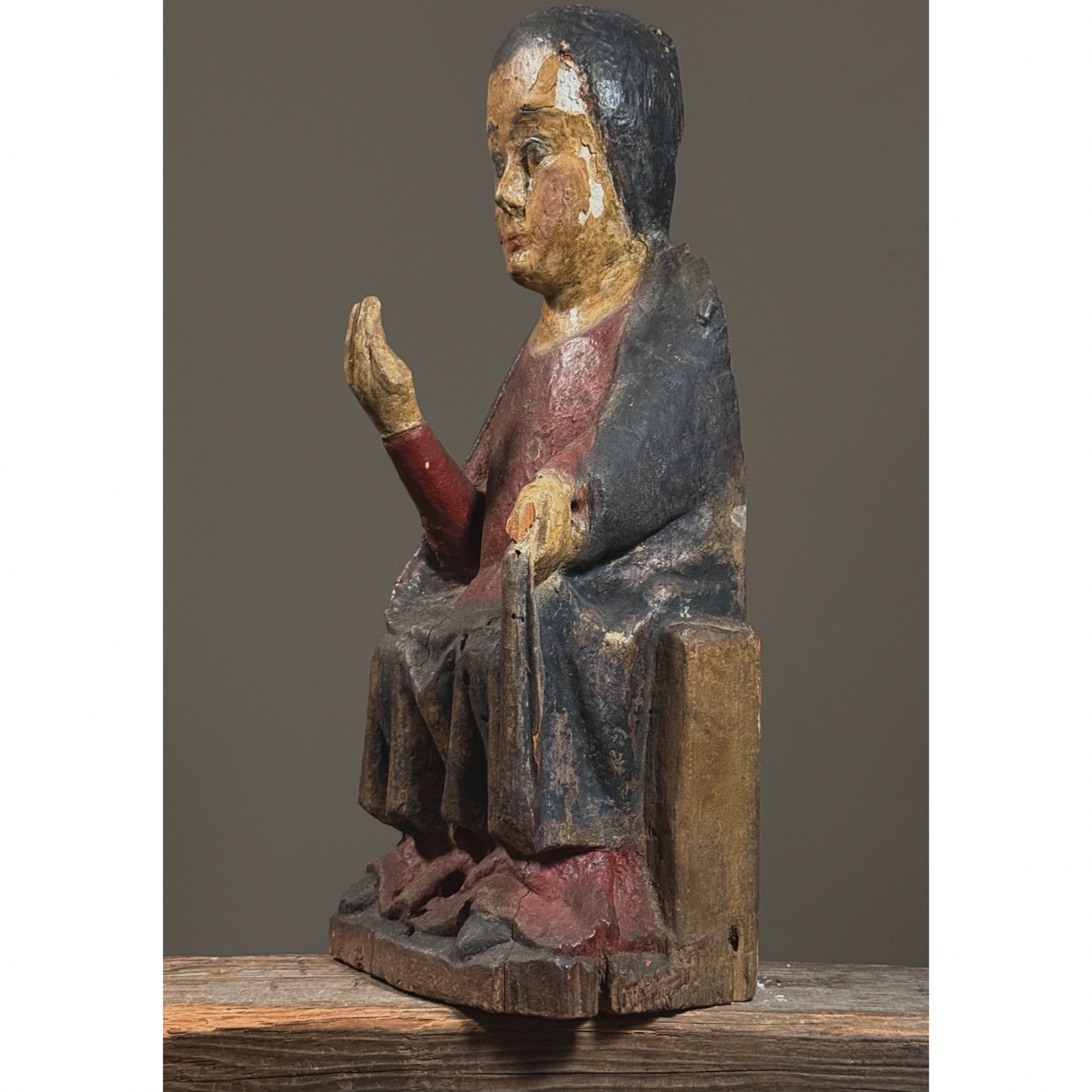
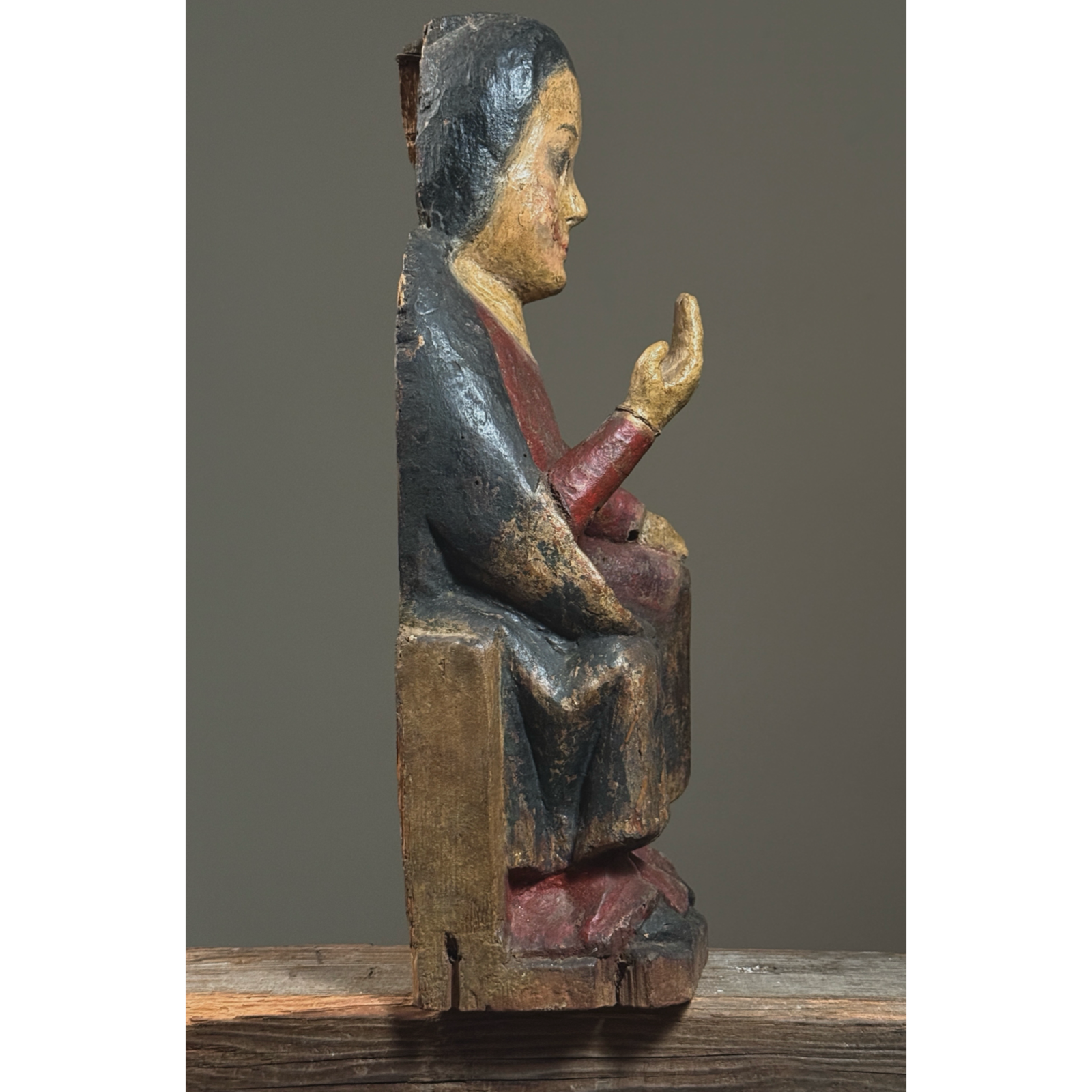
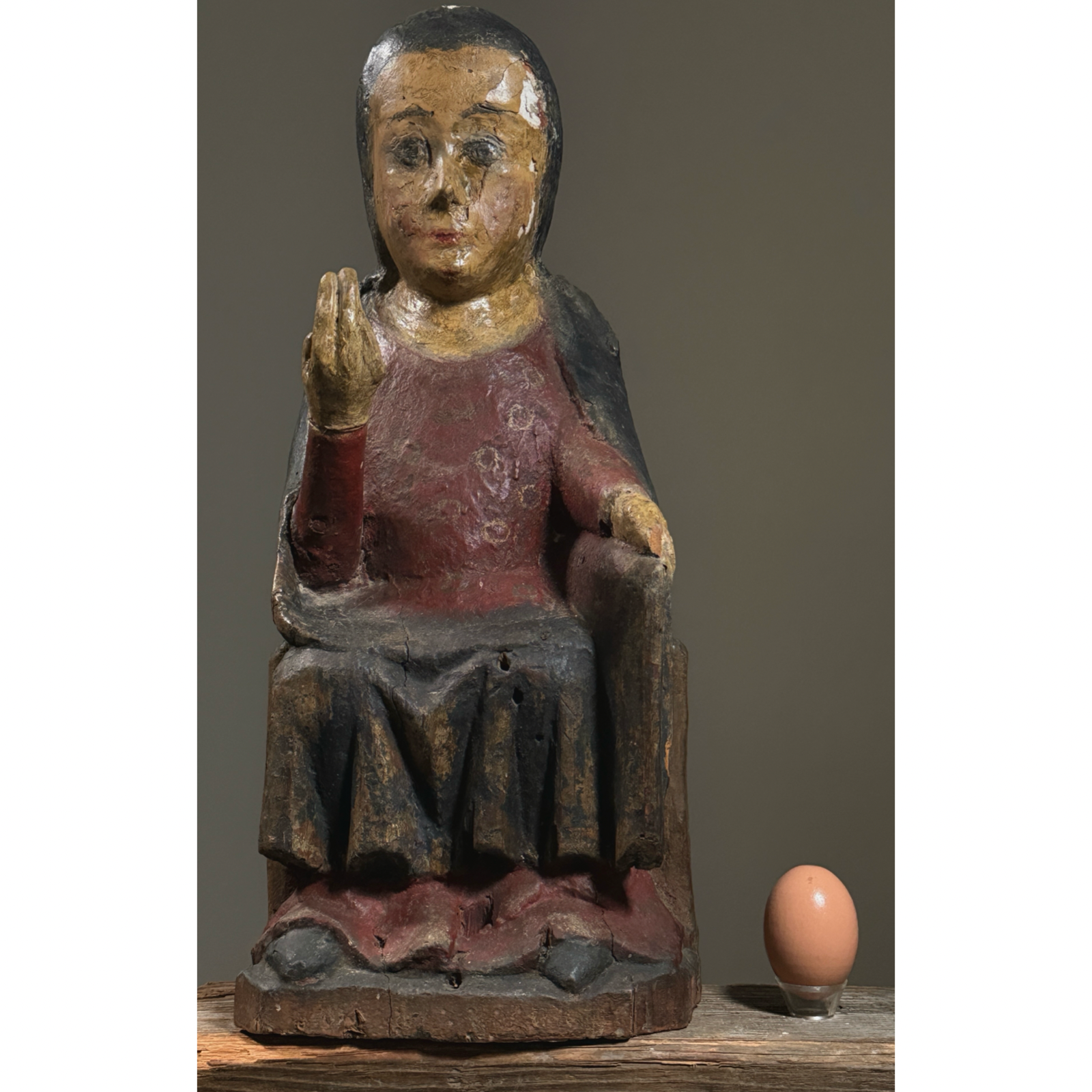
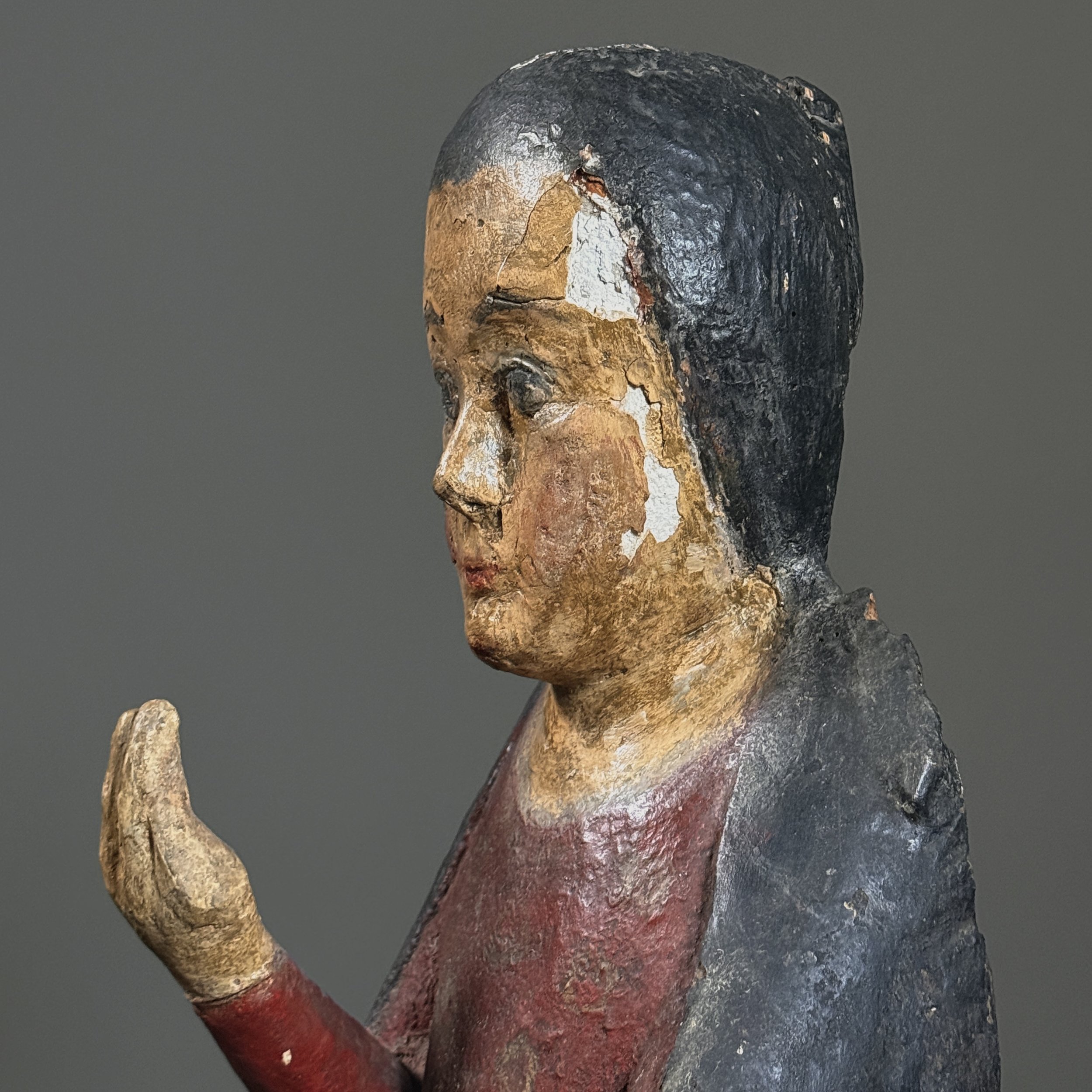
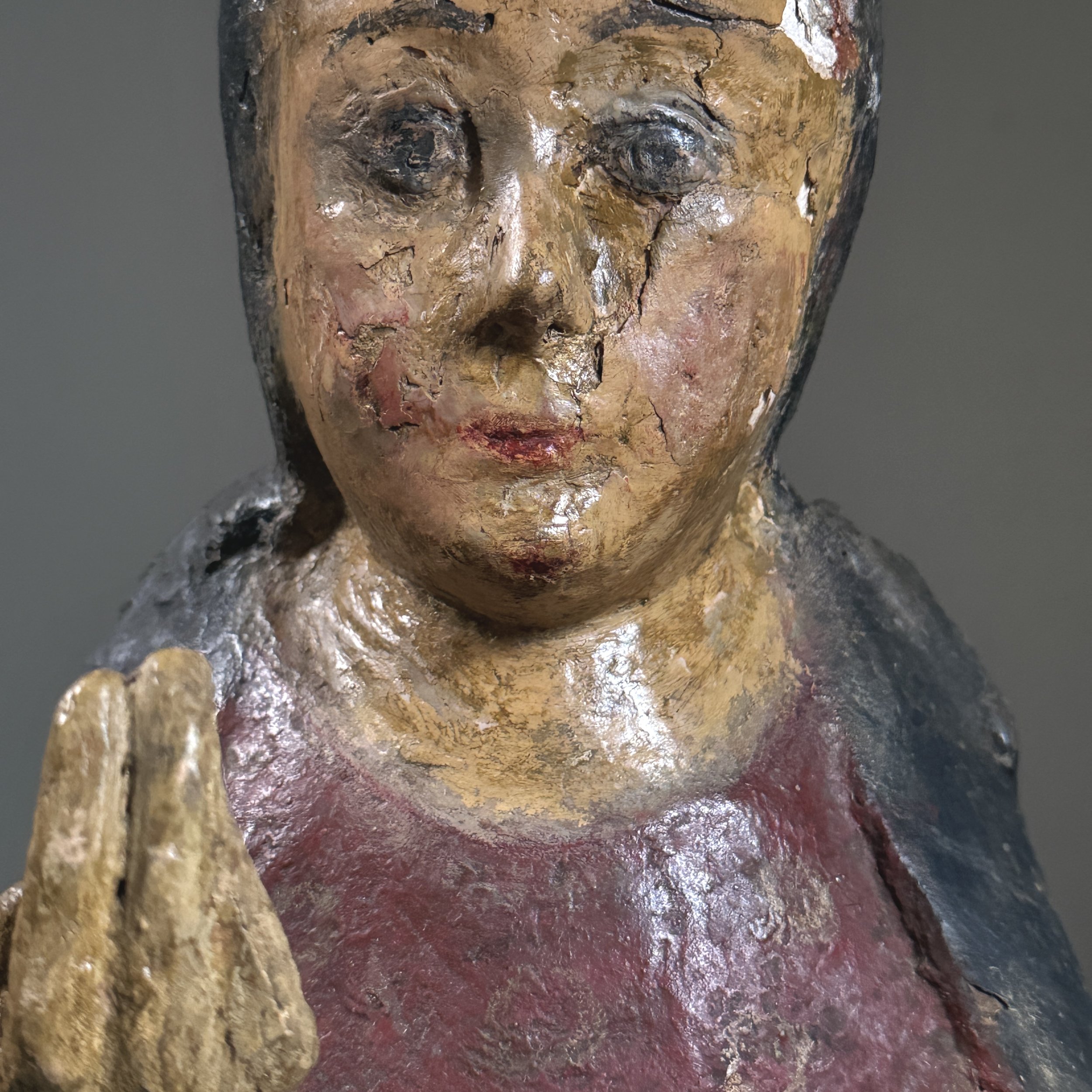
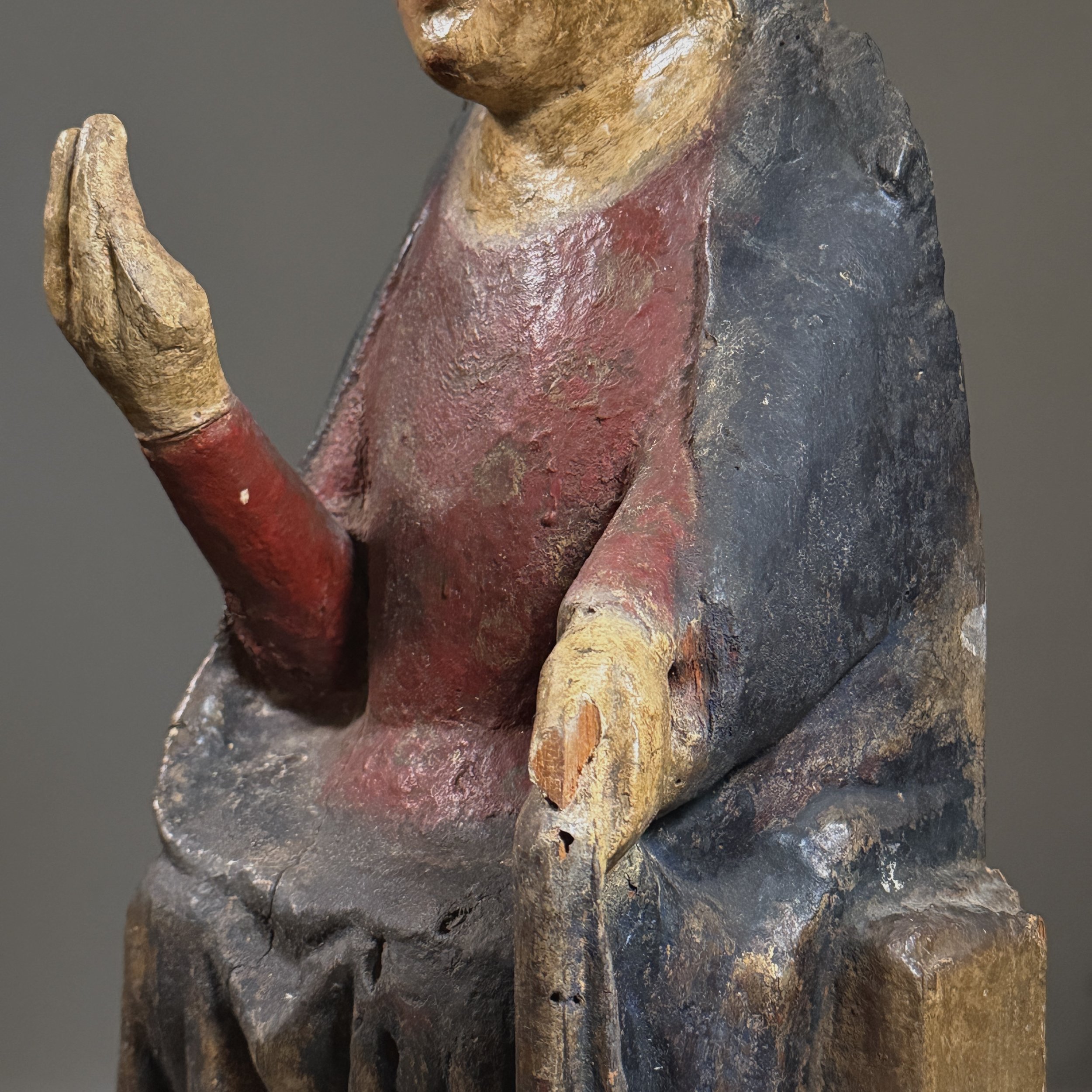
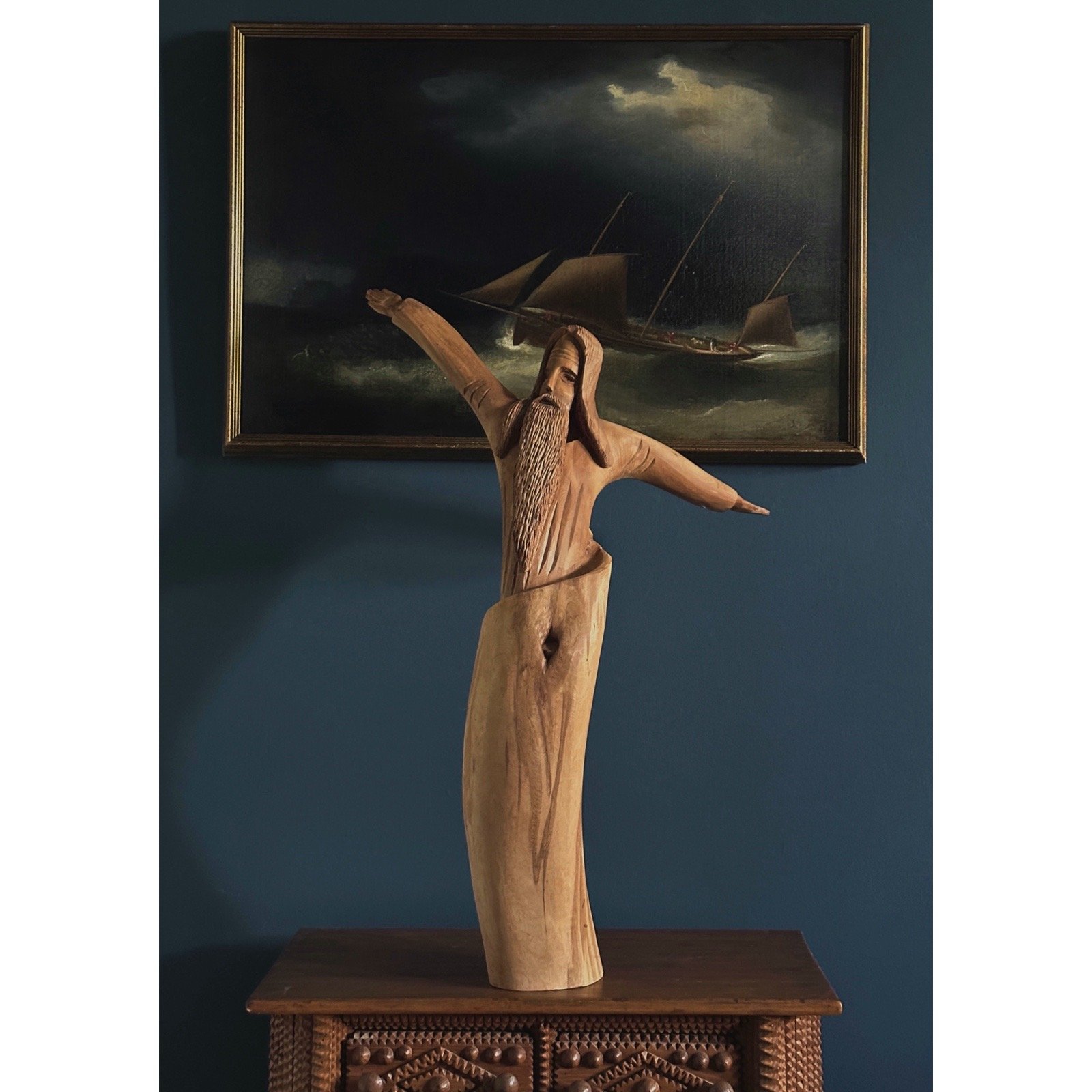
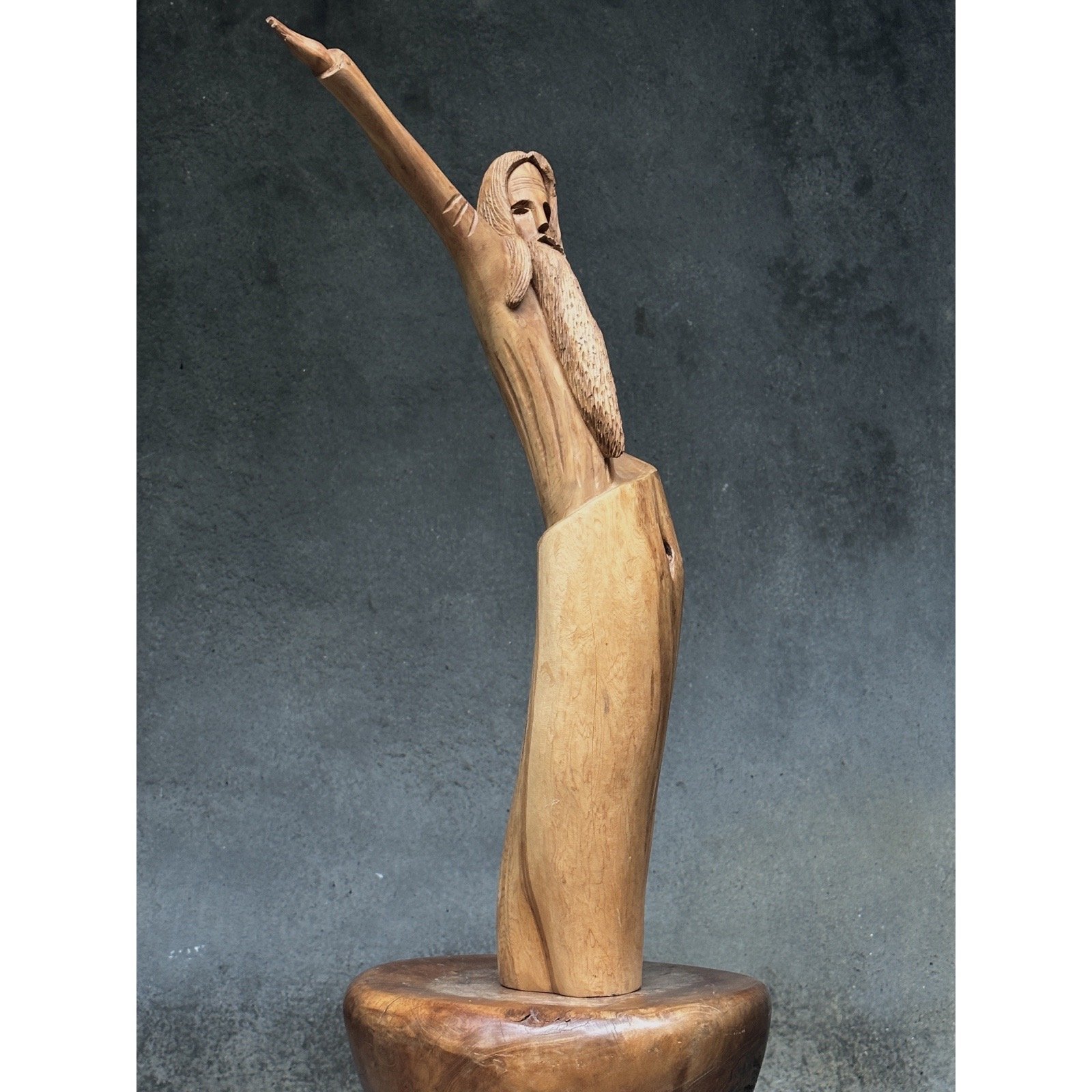
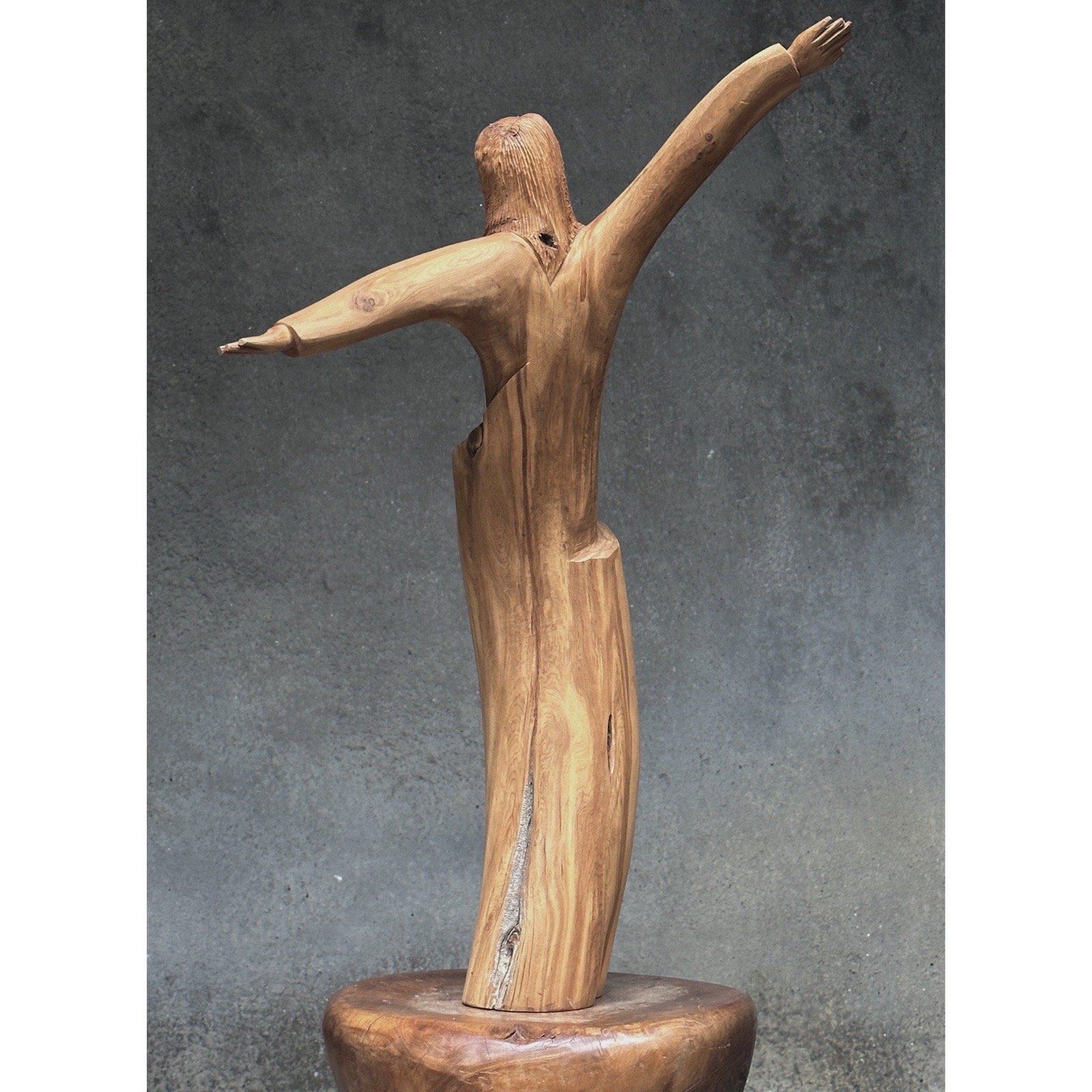
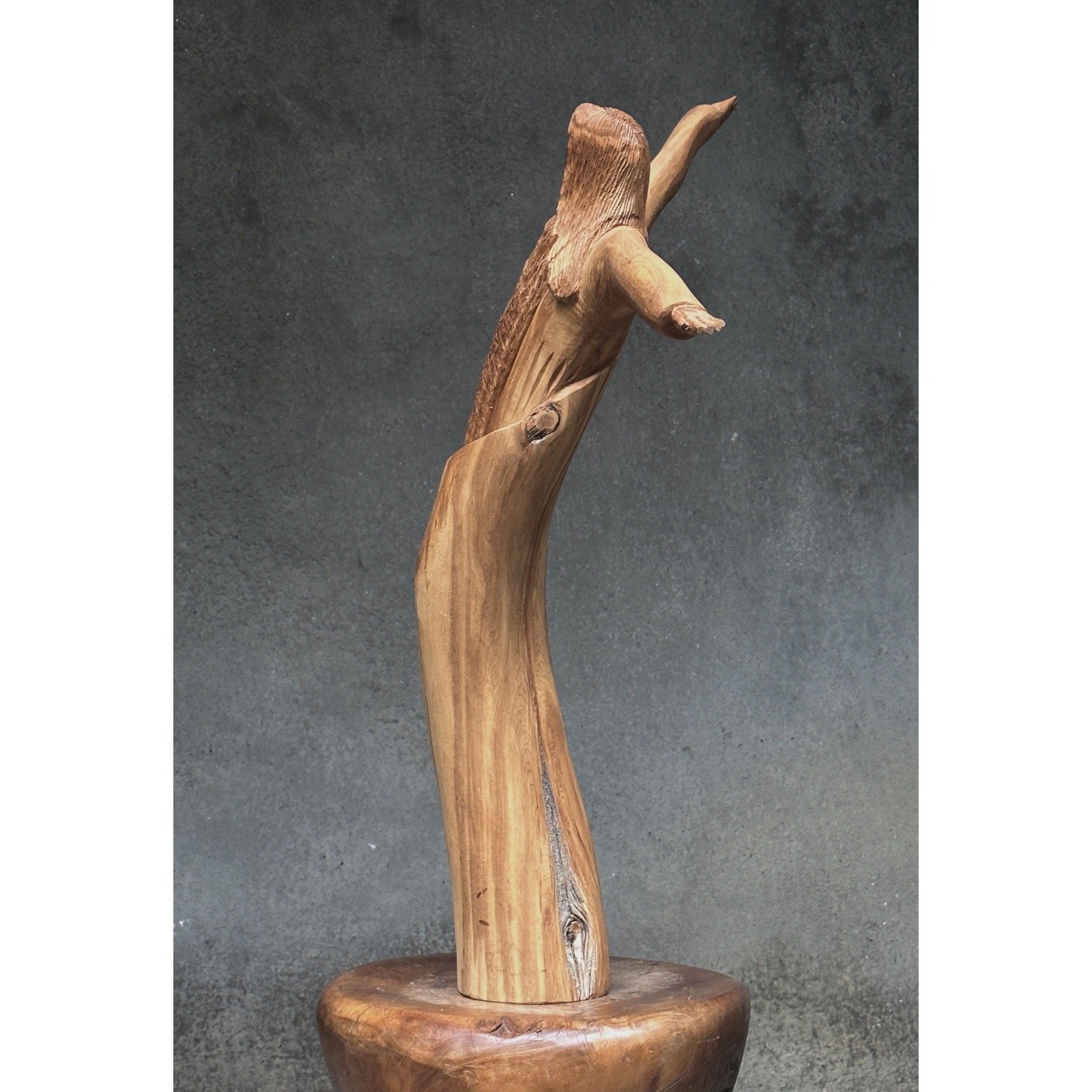
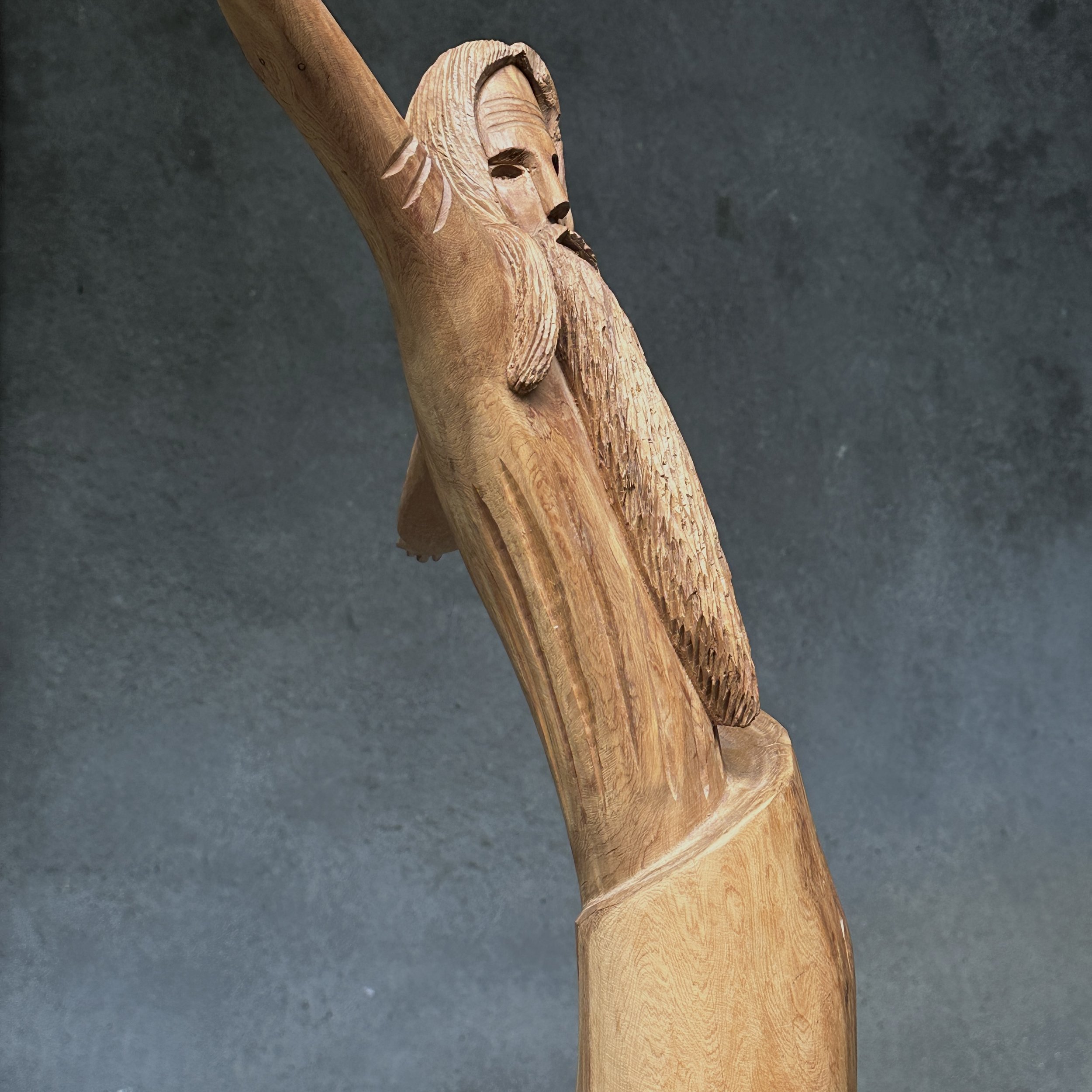
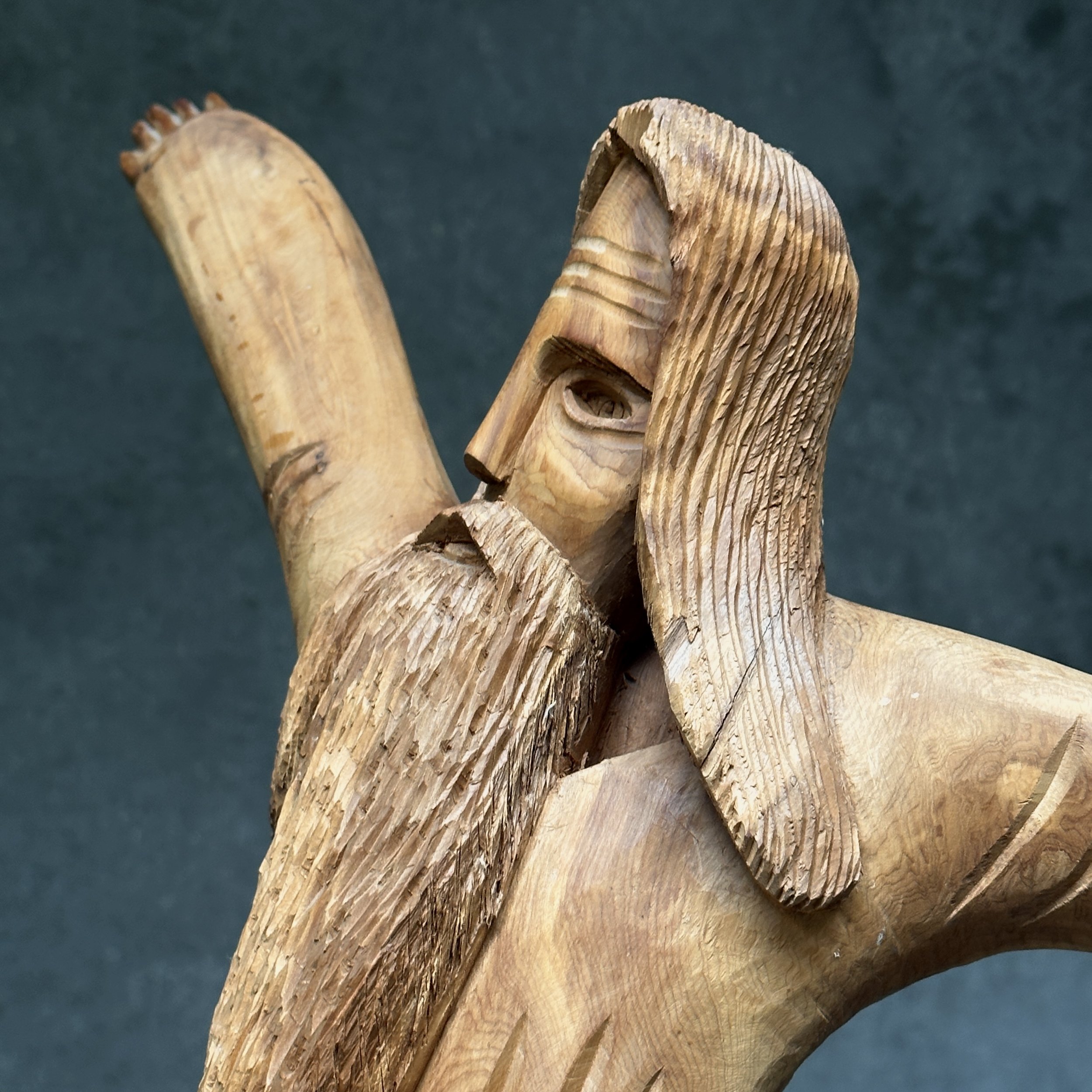
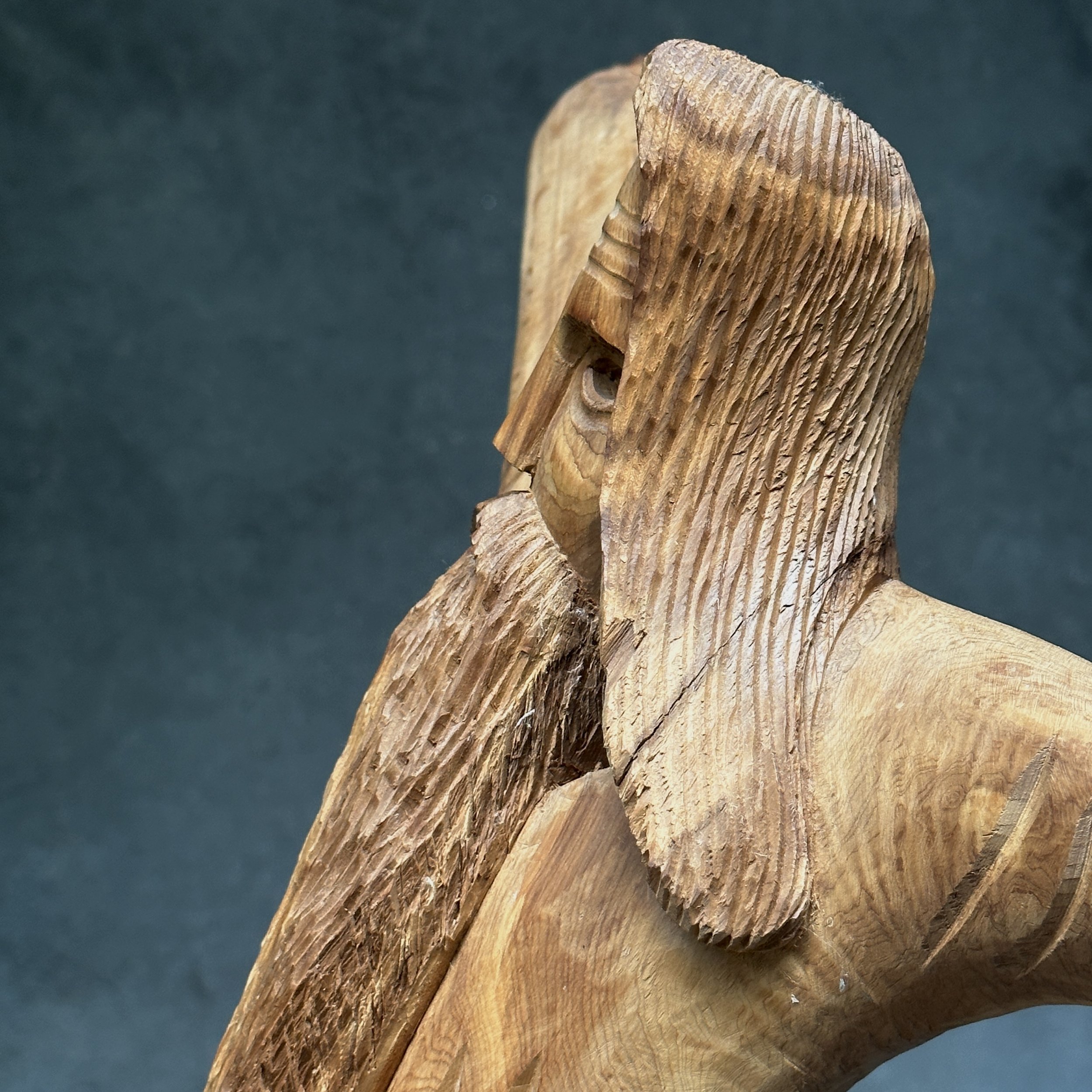
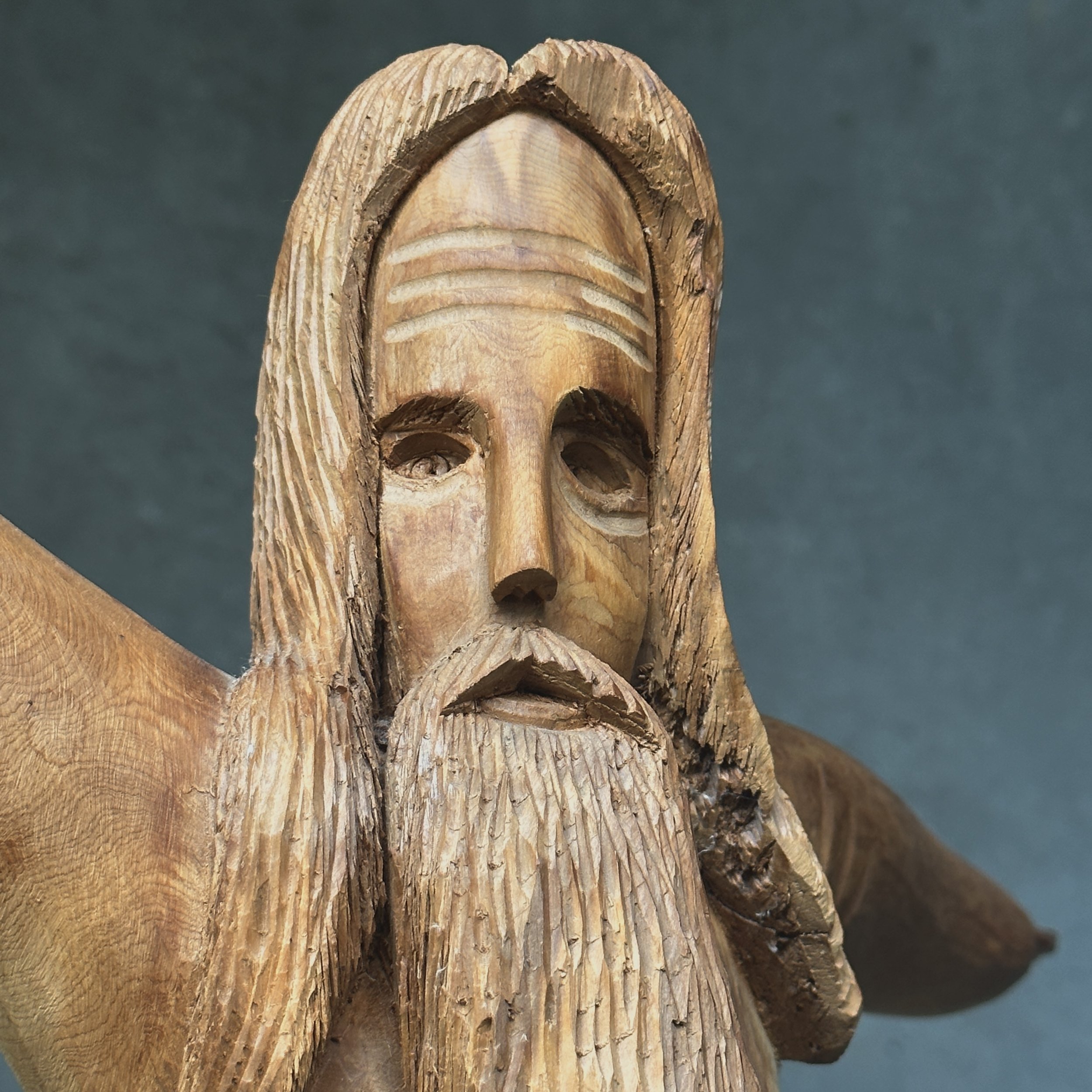
Subject: Seated medicine man with hat
Dimensions: 13" H (overall)
Provenance: Ann Parker and Avon Neal Collection
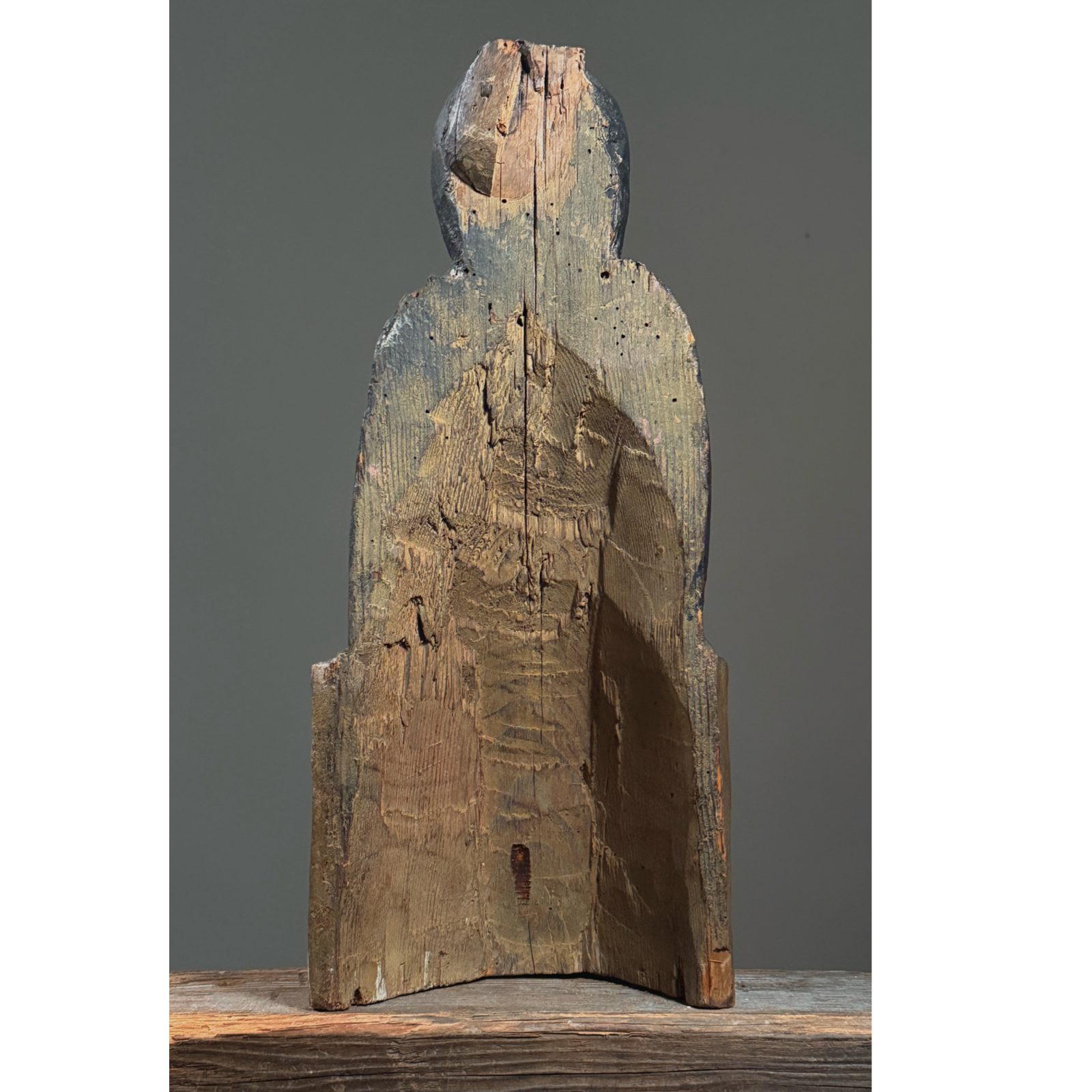
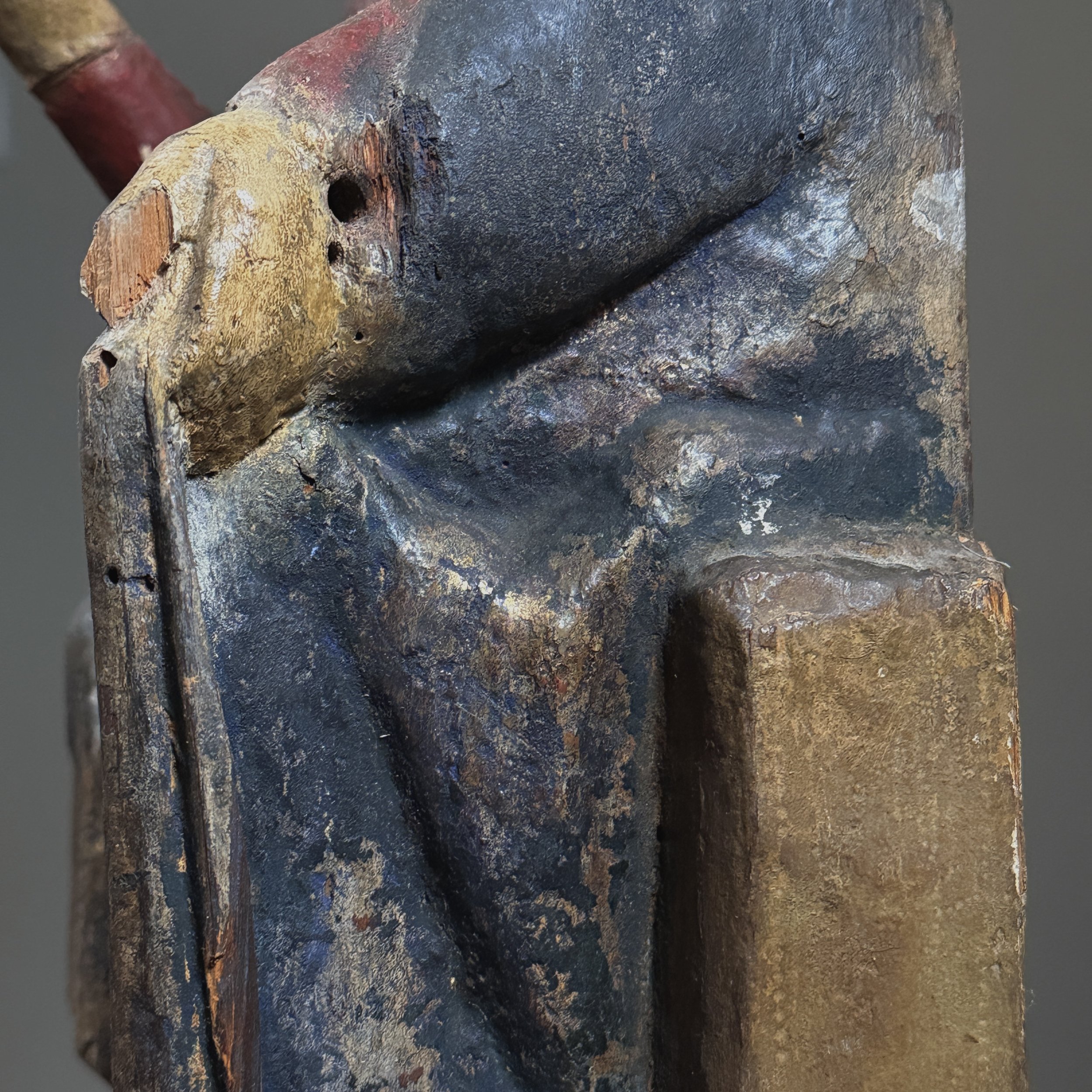
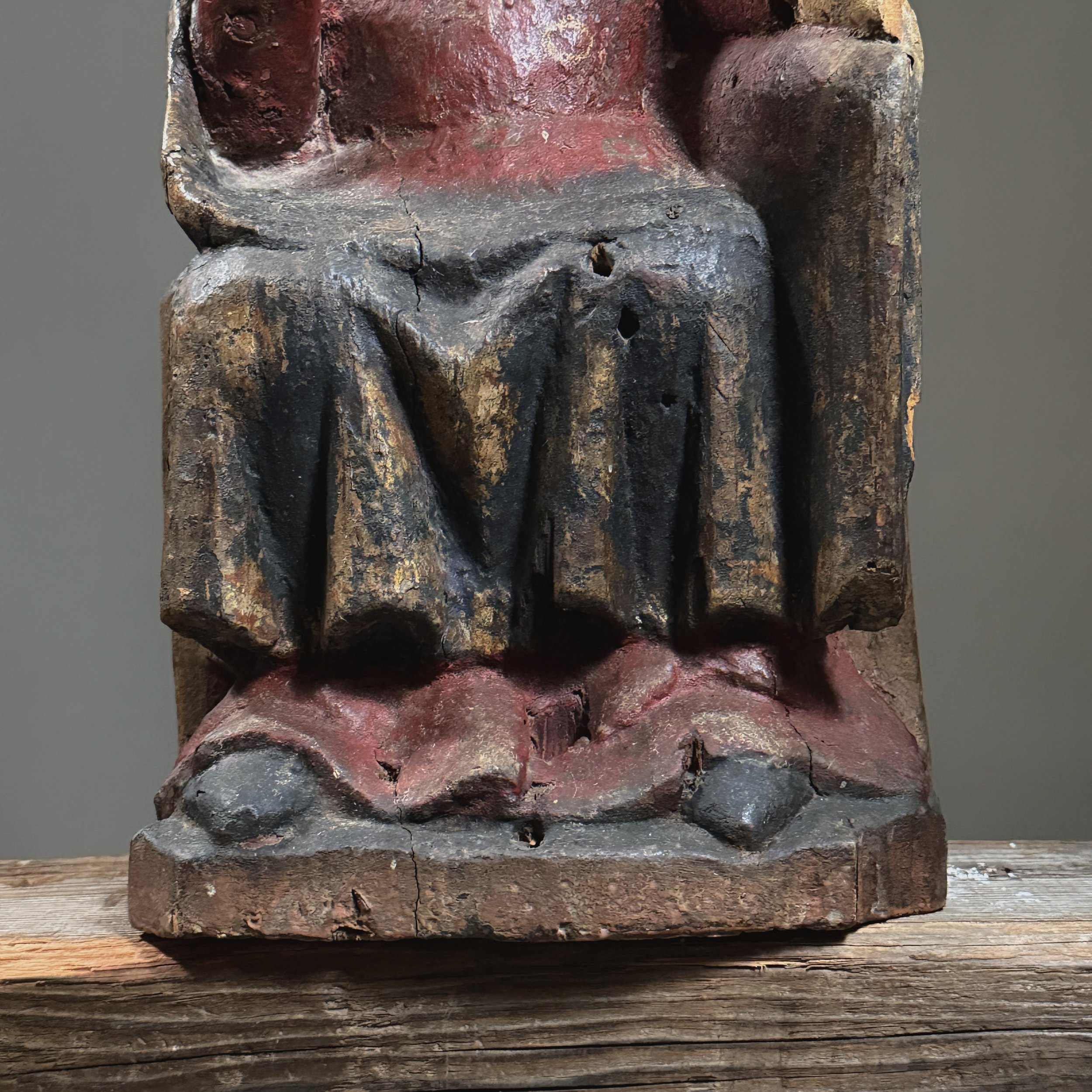
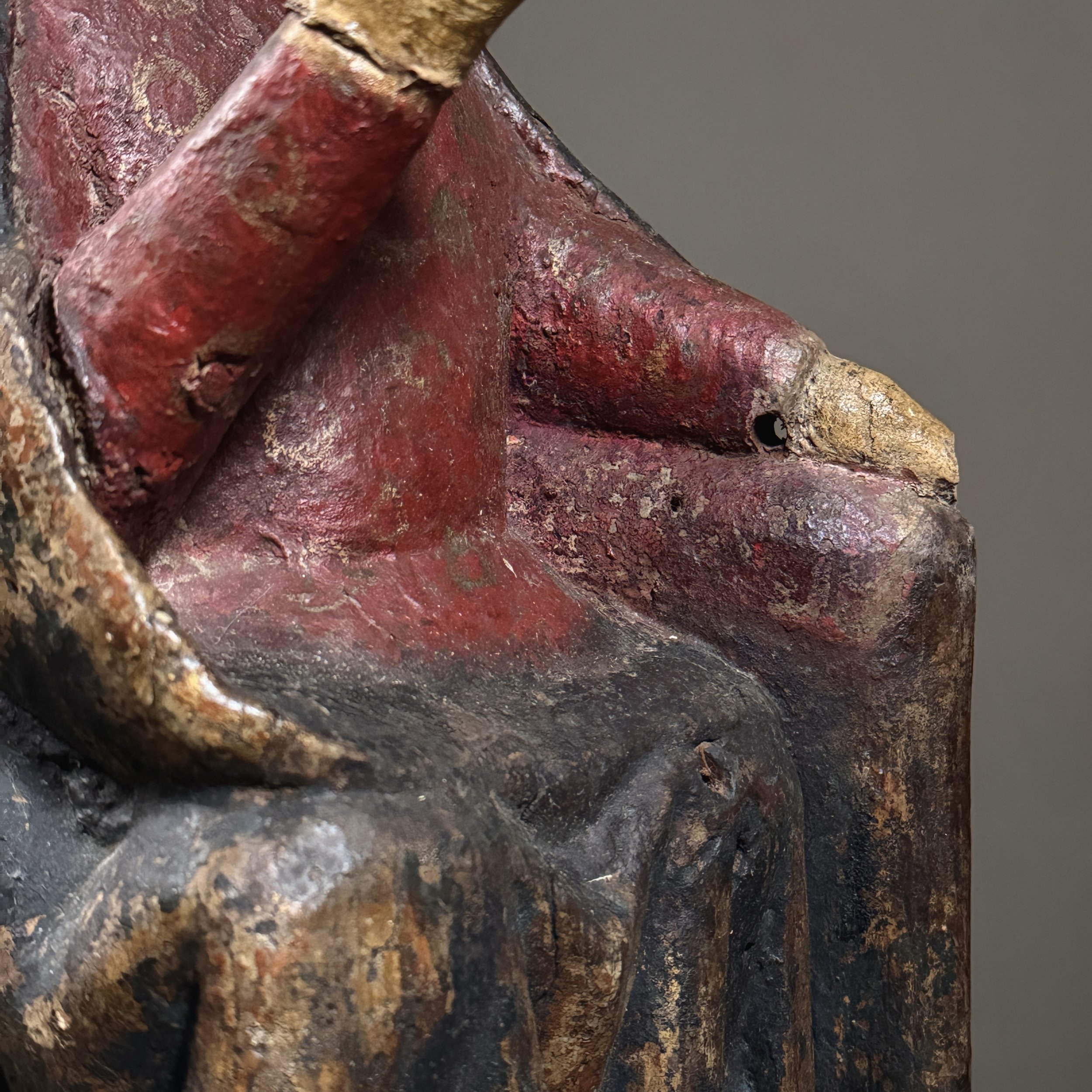
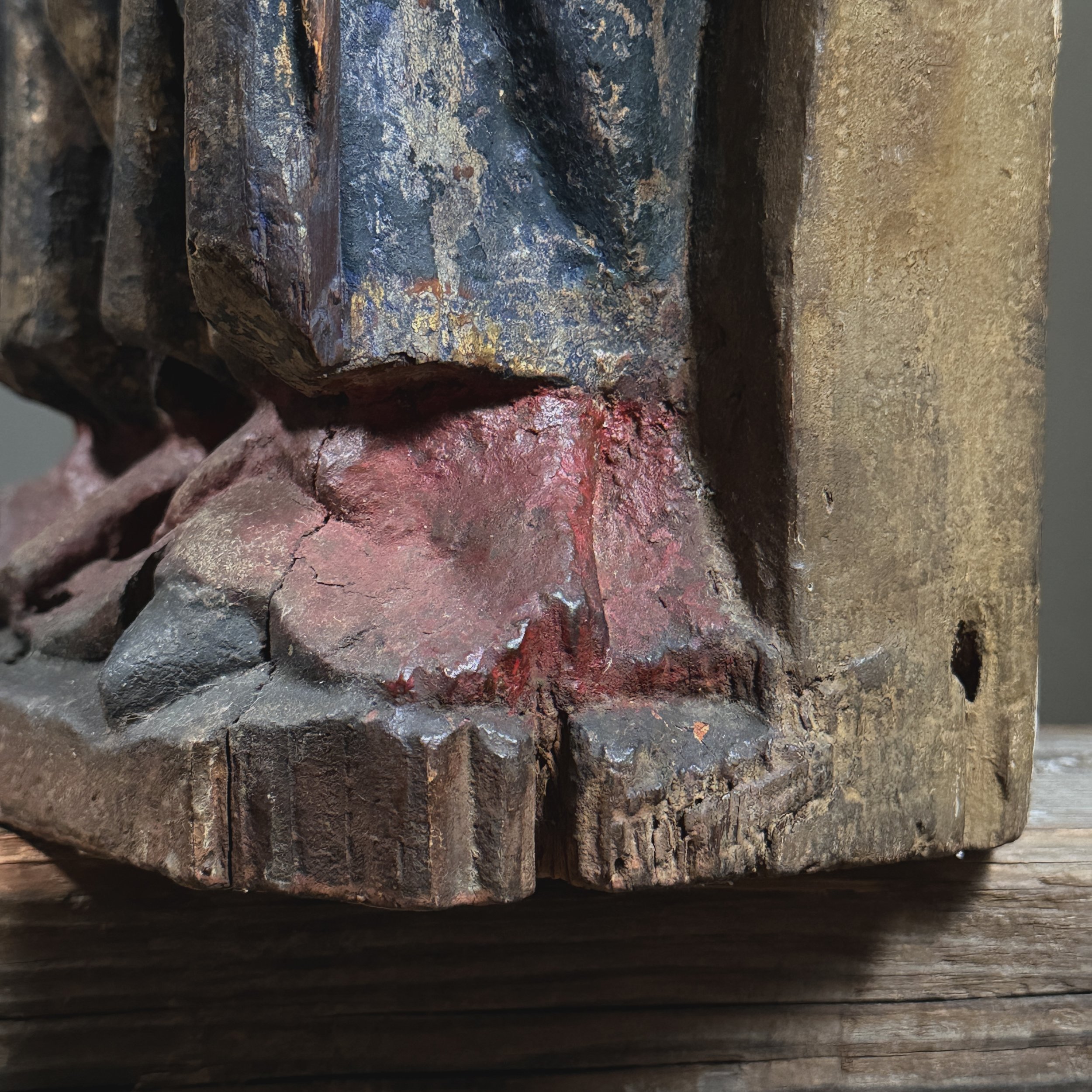
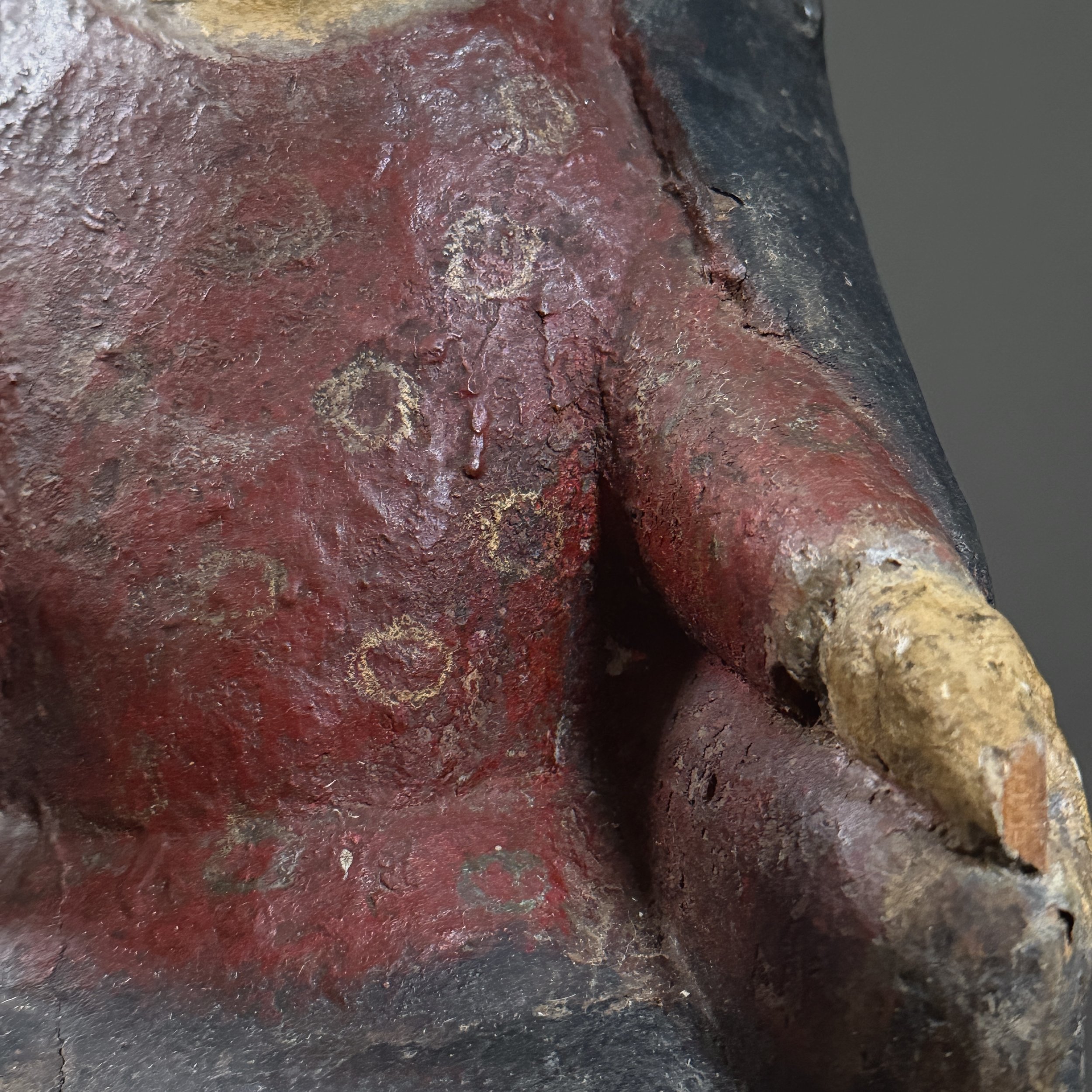
Condition: Good; wear consistent with age. Splits in the wood most likely present when carved.
Hand-carved medicine man figure with a hat, seated in a chair. Carved from lightweight balsa wood. In good condition with wear consistent with age. Splits in the wood were most likely already present when the figure was carved. Provenance: Ann Parker and Avon Neal Collection.
Collector Biography: Ann Parker and Avon Neal
Ann Parker (British, b. 1934) and Avon Neal (American, 1922–2003) were artists, authors, and collectors whose work contributed to the appreciation of folk art traditions in the Americas. The couple began their careers creating gravestone rubbings in New England during the early 1960s, documenting 17th- and 18th-century carved imagery before many stones were lost to age and development. Their rubbings, executed on Japanese rice paper with silk pads and black ink, are held in the collections of the Brooklyn Museum, the Whitney Museum of American Art, and the American Folk Art Museum.
Parker and Neal's most important contribution came through their study and collection of Guna material culture. Beginning in 1965, they made many trips to the San Blas Islands (Guna Yala) of Panama, assembling a vast collection.
A Note on Guna Nuchu
Nuchukana (singular: nuchu) are small wooden human figures carved by the Guna people of northeast coastal Panama. In Guna thought, illness and misfortune are caused by evil spirits known as poni, which enter the body and capture the soul. The nuchu serves as a barrier between the physical and spiritual worlds, used by ritual specialists, nele (seers) and inaduled (healers), in ceremonies.
The power of a nuchu derives from the tree from which it is carved. Among the Guna, trees are understood as ancient beings possessing great knowledge, and the carver must know the properties of different wood species. Balsa wood is commonly used for its lightness and workability.
Nuchukana take many forms, male and female. Some wear ordinary dress, others resemble foreign missionaries or soldiers. When not in ceremonial use, the figures reside in the home, where they protect the household and are treated as members of the family. They are typically kept in groups of four or more, sometimes up to twenty, in a wooden box or plastic bins.
When a nuchu is damaged it is usually sold or thrown away. The damage represents a release of spirit and therefore no longer viable.
Medium: Hand-carved wood (balsa)
Culture: Guna (Kuna), Guna Yala, Panama
Date: Circa 1950
Subject: Seated medicine man with hat
Dimensions: 13" H (overall)
Provenance: Ann Parker and Avon Neal Collection
Condition: Good; wear consistent with age. Splits in the wood most likely present when carved.
Hand-carved medicine man figure with a hat, seated in a chair. Carved from lightweight balsa wood. In good condition with wear consistent with age. Splits in the wood were most likely already present when the figure was carved. Provenance: Ann Parker and Avon Neal Collection.
Collector Biography: Ann Parker and Avon Neal
Ann Parker (British, b. 1934) and Avon Neal (American, 1922–2003) were artists, authors, and collectors whose work contributed to the appreciation of folk art traditions in the Americas. The couple began their careers creating gravestone rubbings in New England during the early 1960s, documenting 17th- and 18th-century carved imagery before many stones were lost to age and development. Their rubbings, executed on Japanese rice paper with silk pads and black ink, are held in the collections of the Brooklyn Museum, the Whitney Museum of American Art, and the American Folk Art Museum.
Parker and Neal's most important contribution came through their study and collection of Guna material culture. Beginning in 1965, they made many trips to the San Blas Islands (Guna Yala) of Panama, assembling a vast collection.
A Note on Guna Nuchu
Nuchukana (singular: nuchu) are small wooden human figures carved by the Guna people of northeast coastal Panama. In Guna thought, illness and misfortune are caused by evil spirits known as poni, which enter the body and capture the soul. The nuchu serves as a barrier between the physical and spiritual worlds, used by ritual specialists, nele (seers) and inaduled (healers), in ceremonies.
The power of a nuchu derives from the tree from which it is carved. Among the Guna, trees are understood as ancient beings possessing great knowledge, and the carver must know the properties of different wood species. Balsa wood is commonly used for its lightness and workability.
Nuchukana take many forms, male and female. Some wear ordinary dress, others resemble foreign missionaries or soldiers. When not in ceremonial use, the figures reside in the home, where they protect the household and are treated as members of the family. They are typically kept in groups of four or more, sometimes up to twenty, in a wooden box or plastic bins.
When a nuchu is damaged it is usually sold or thrown away. The damage represents a release of spirit and therefore no longer viable.

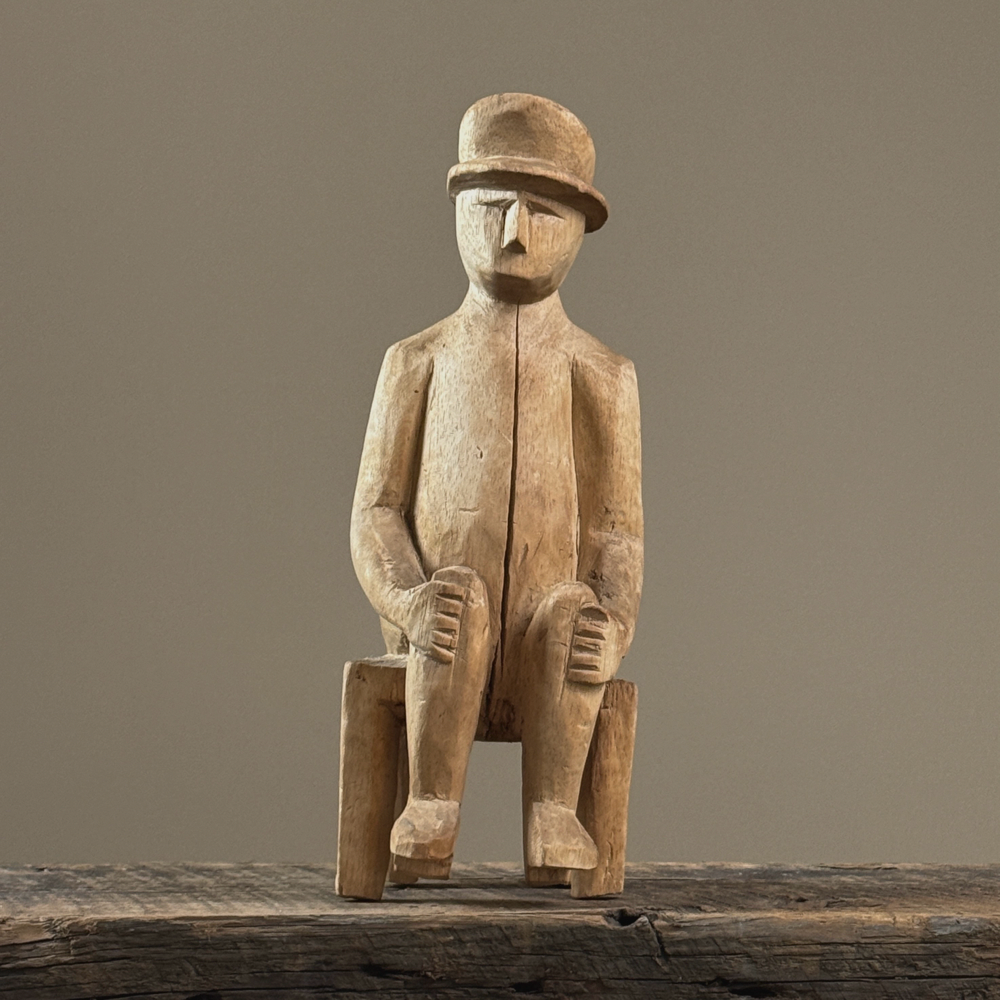 Image 1 of 10
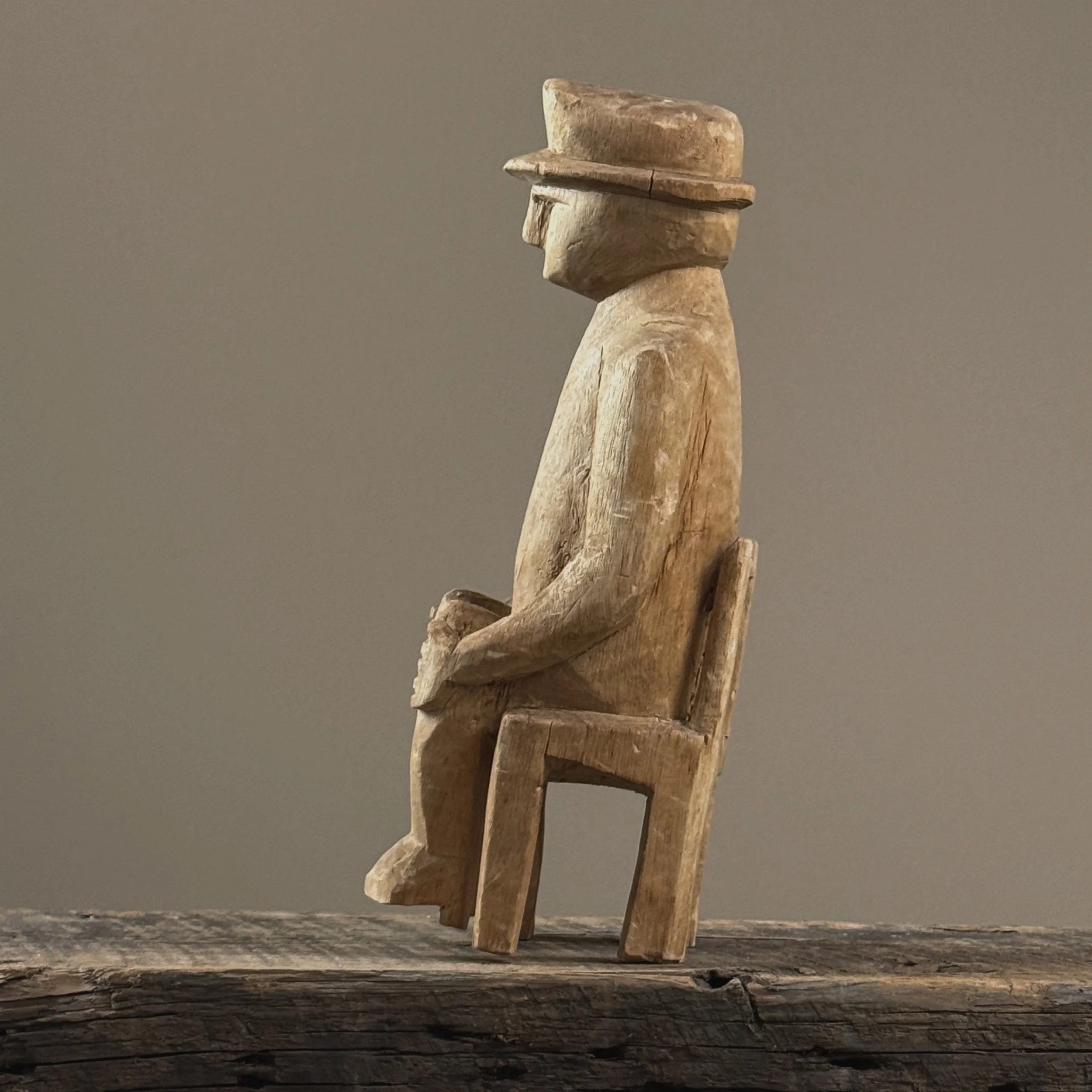 Image 2 of 10
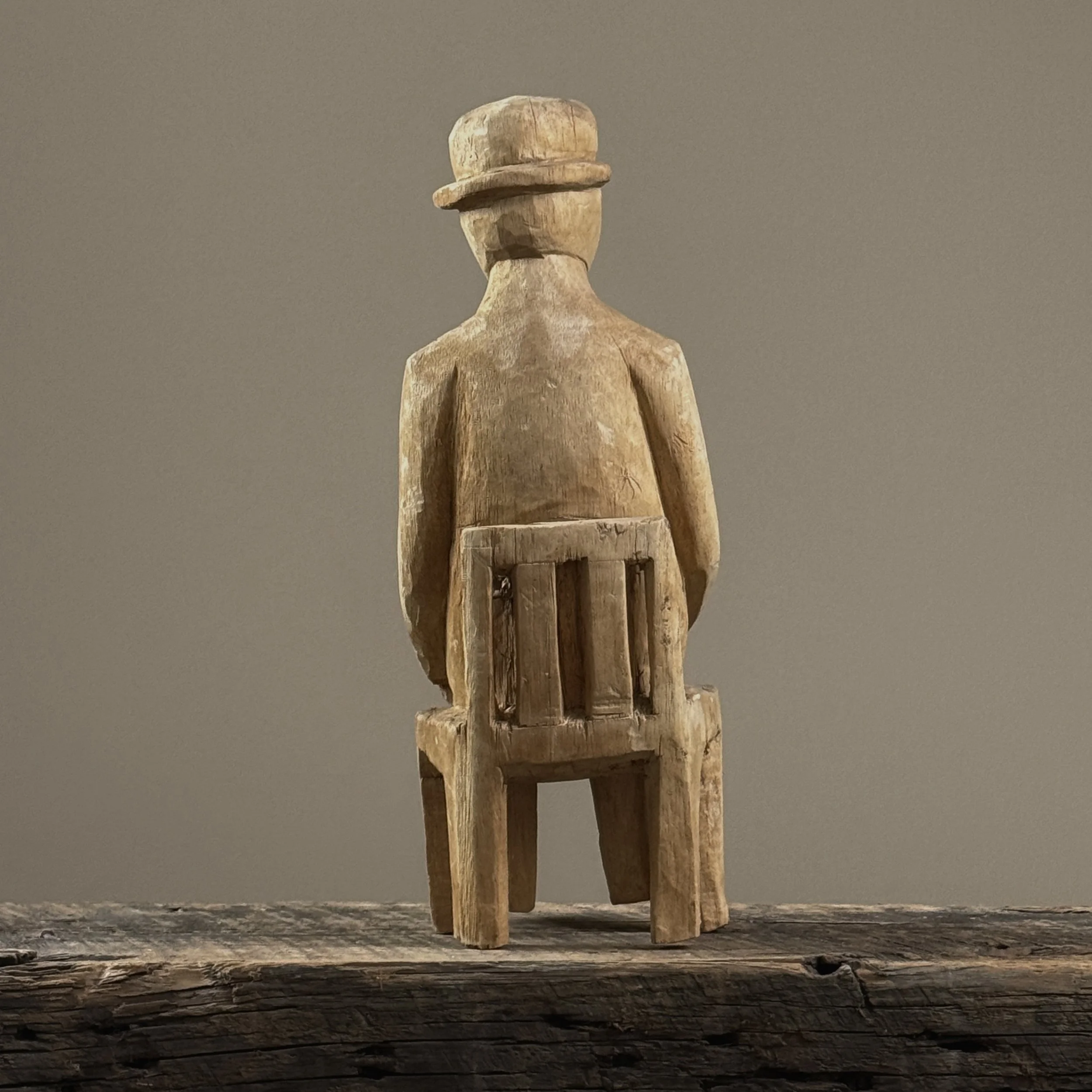 Image 3 of 10
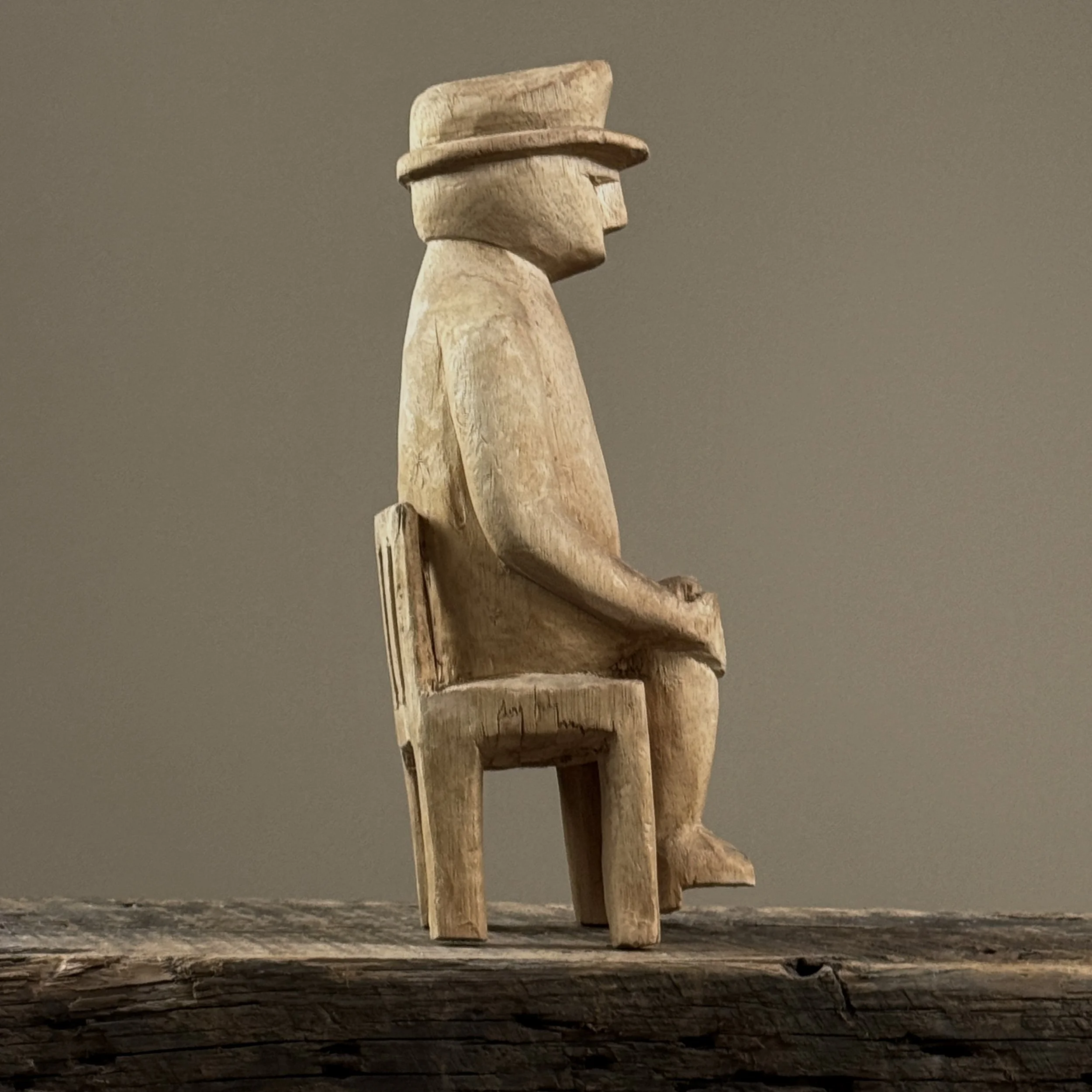 Image 4 of 10
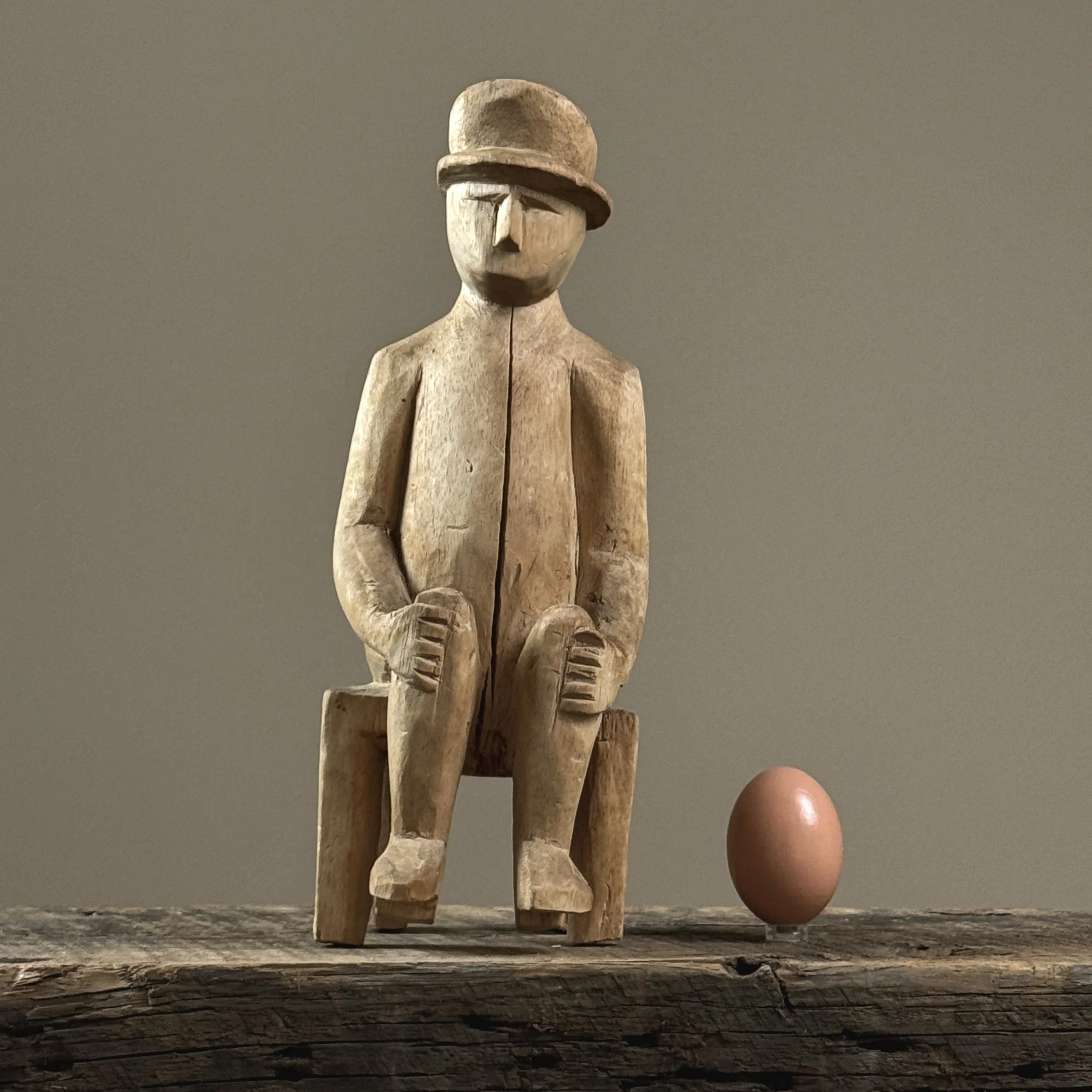 Image 5 of 10
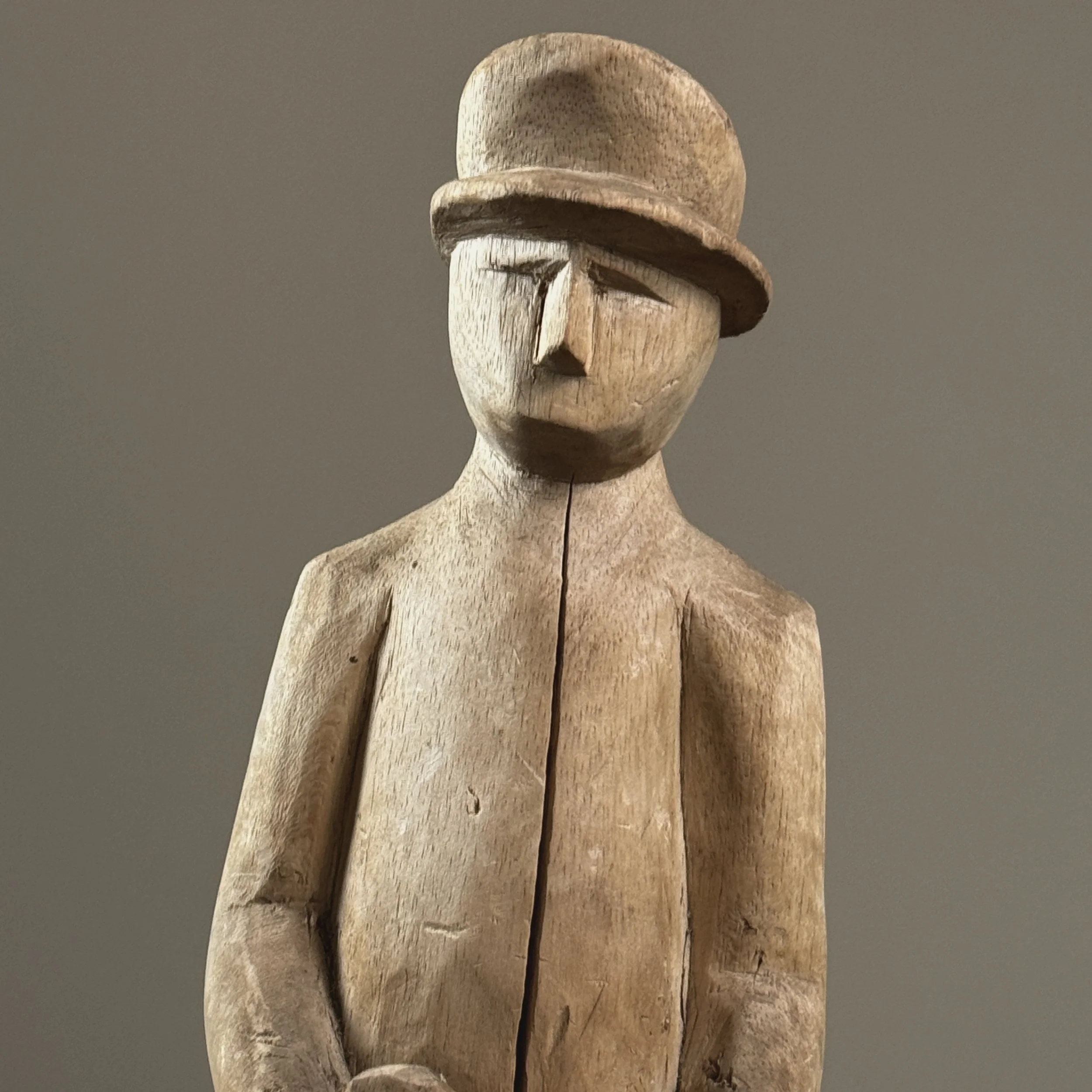 Image 6 of 10
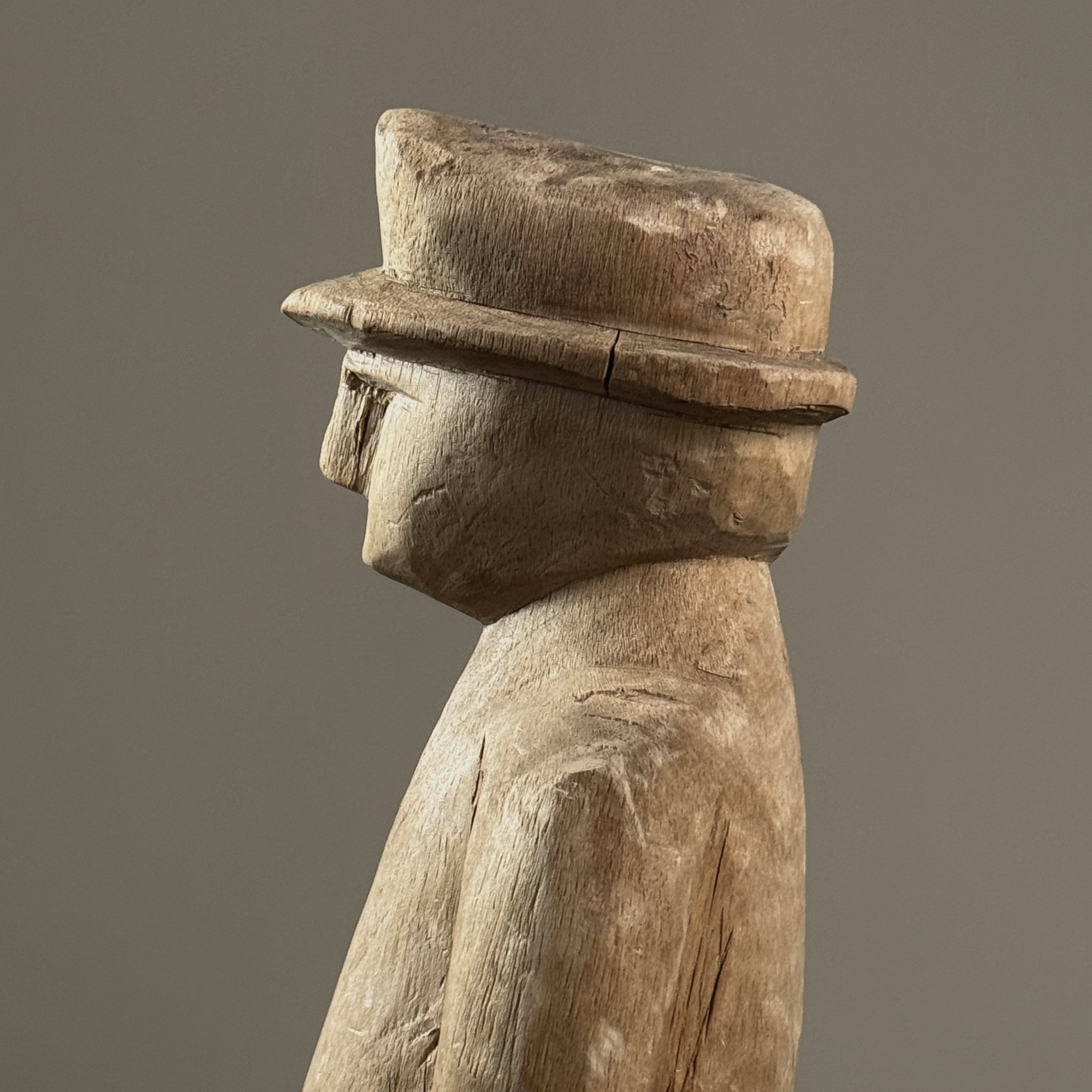 Image 7 of 10
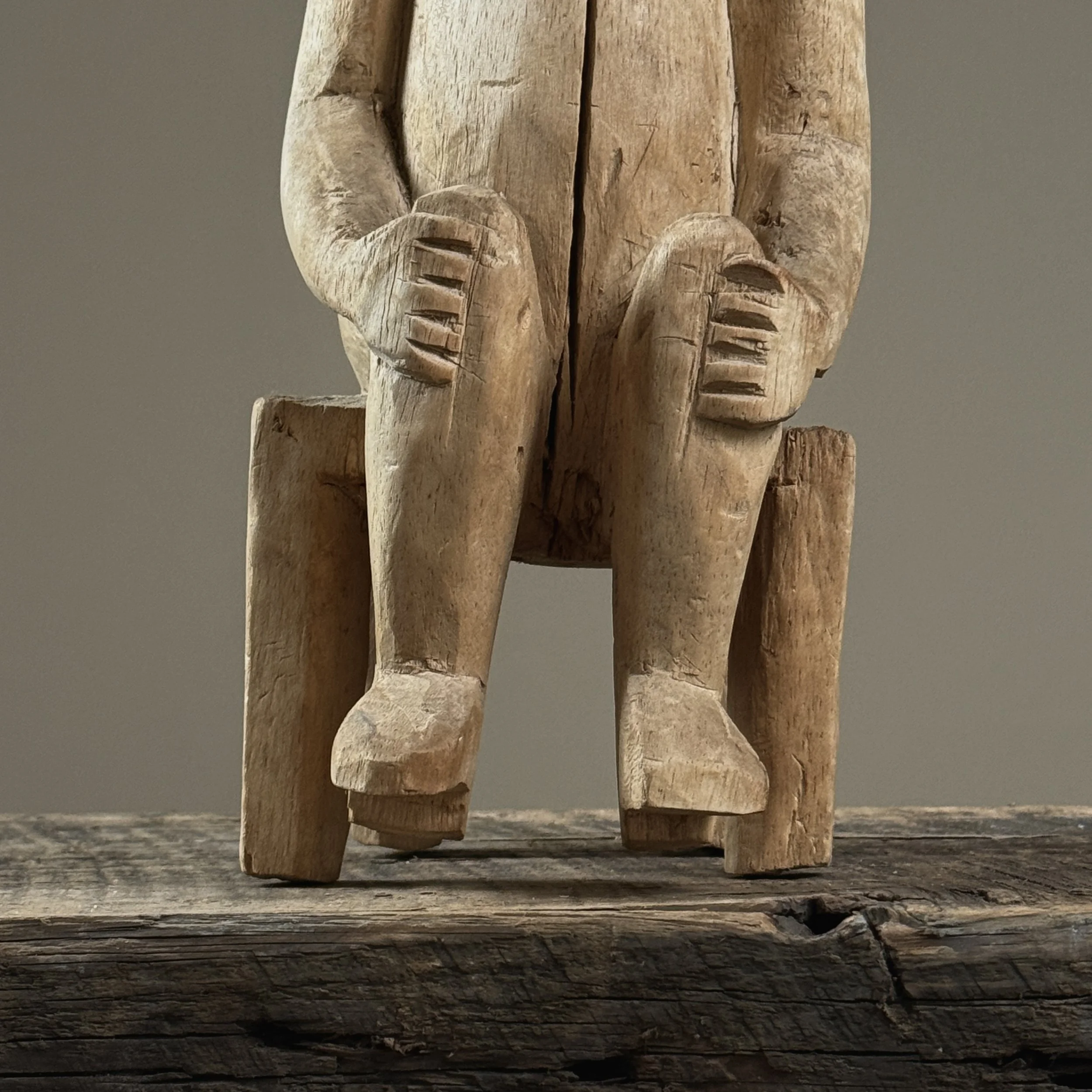 Image 8 of 10
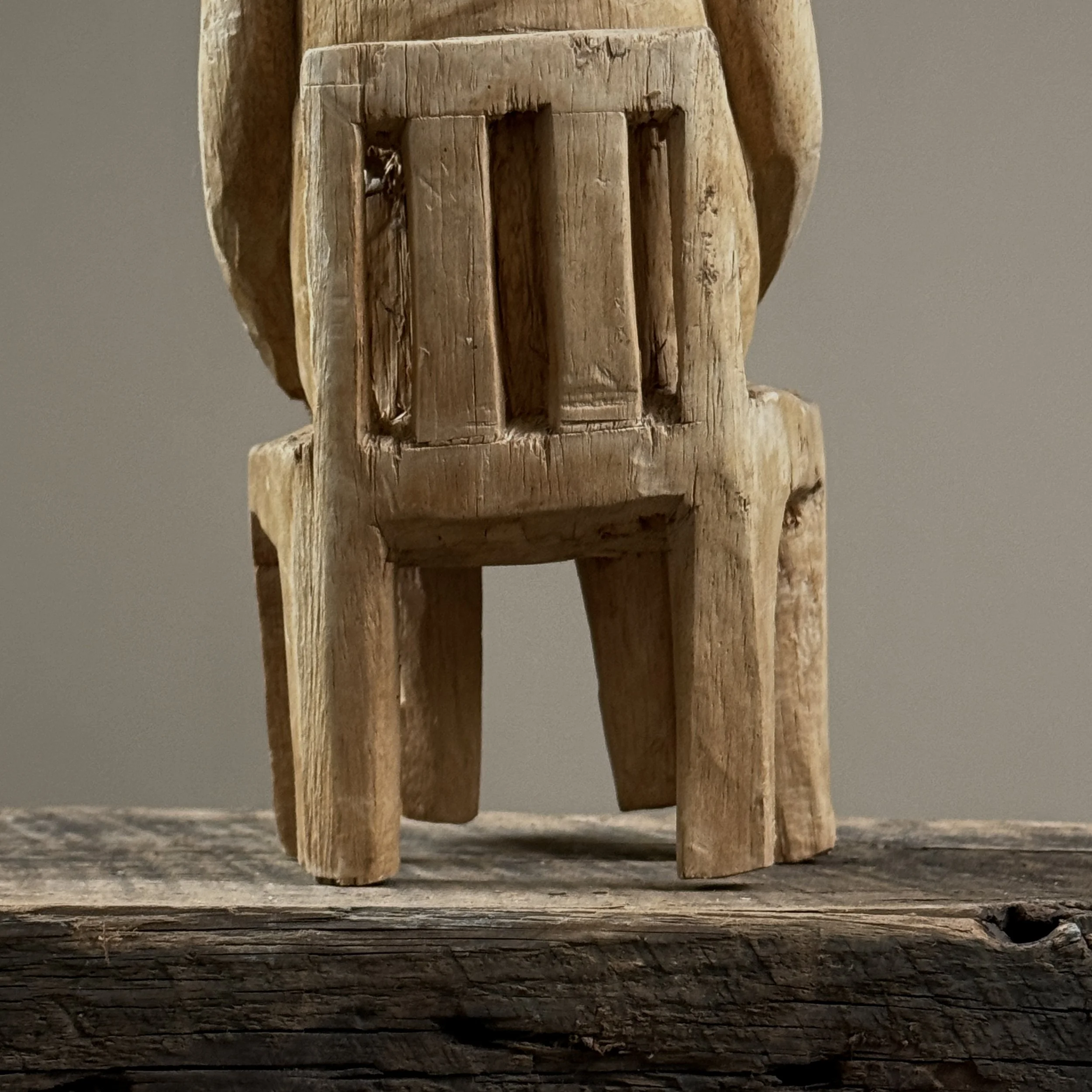 Image 9 of 10
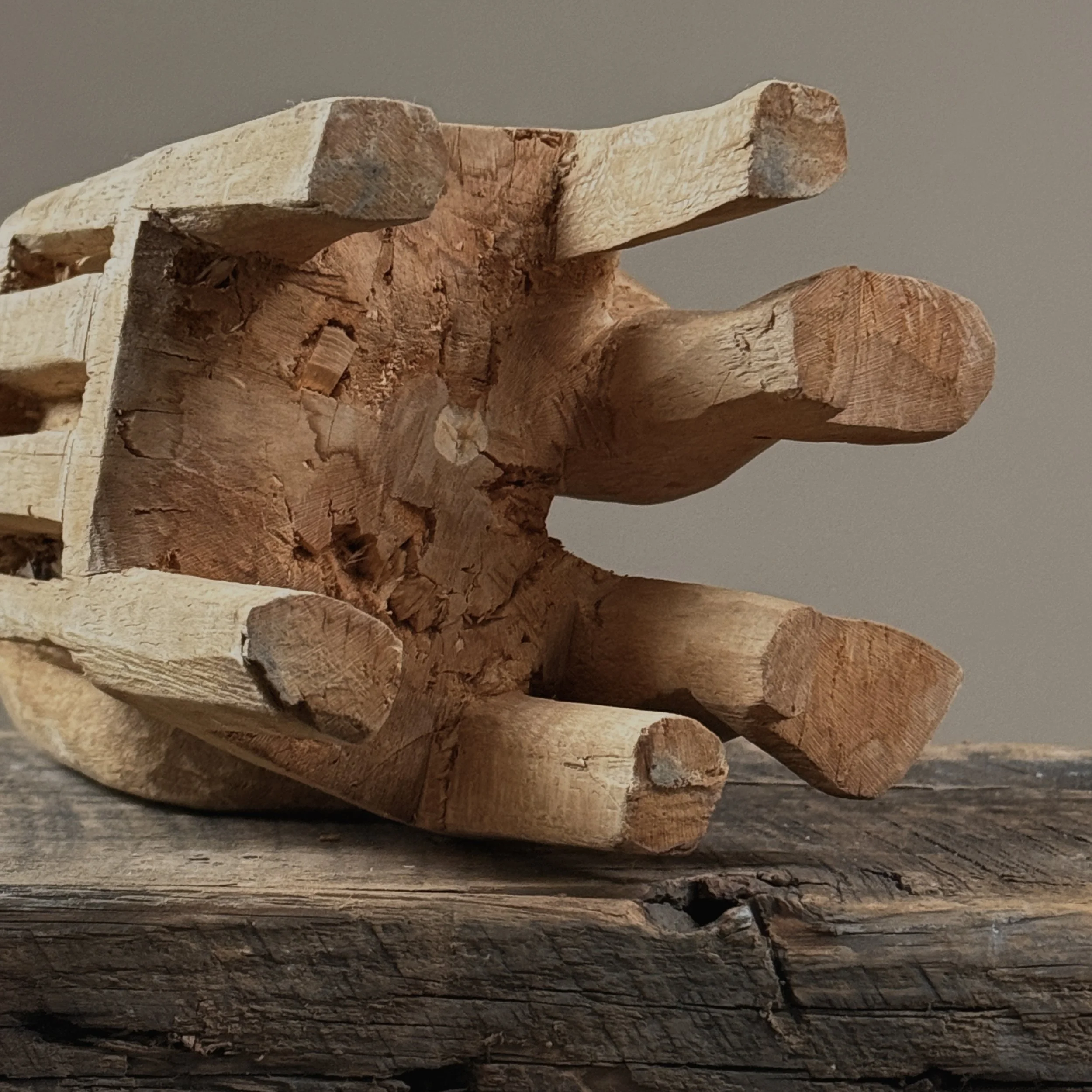 Image 10 of 10