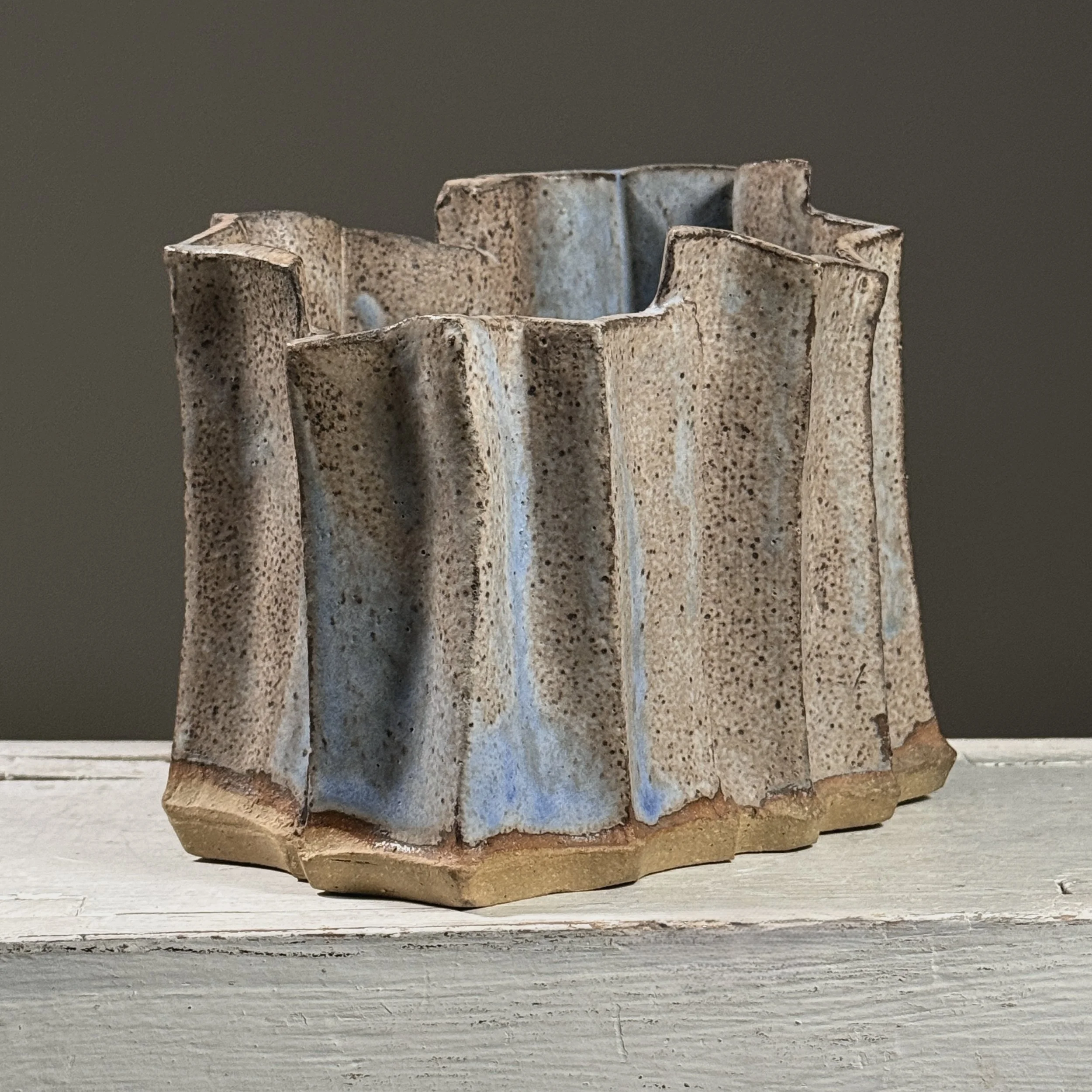
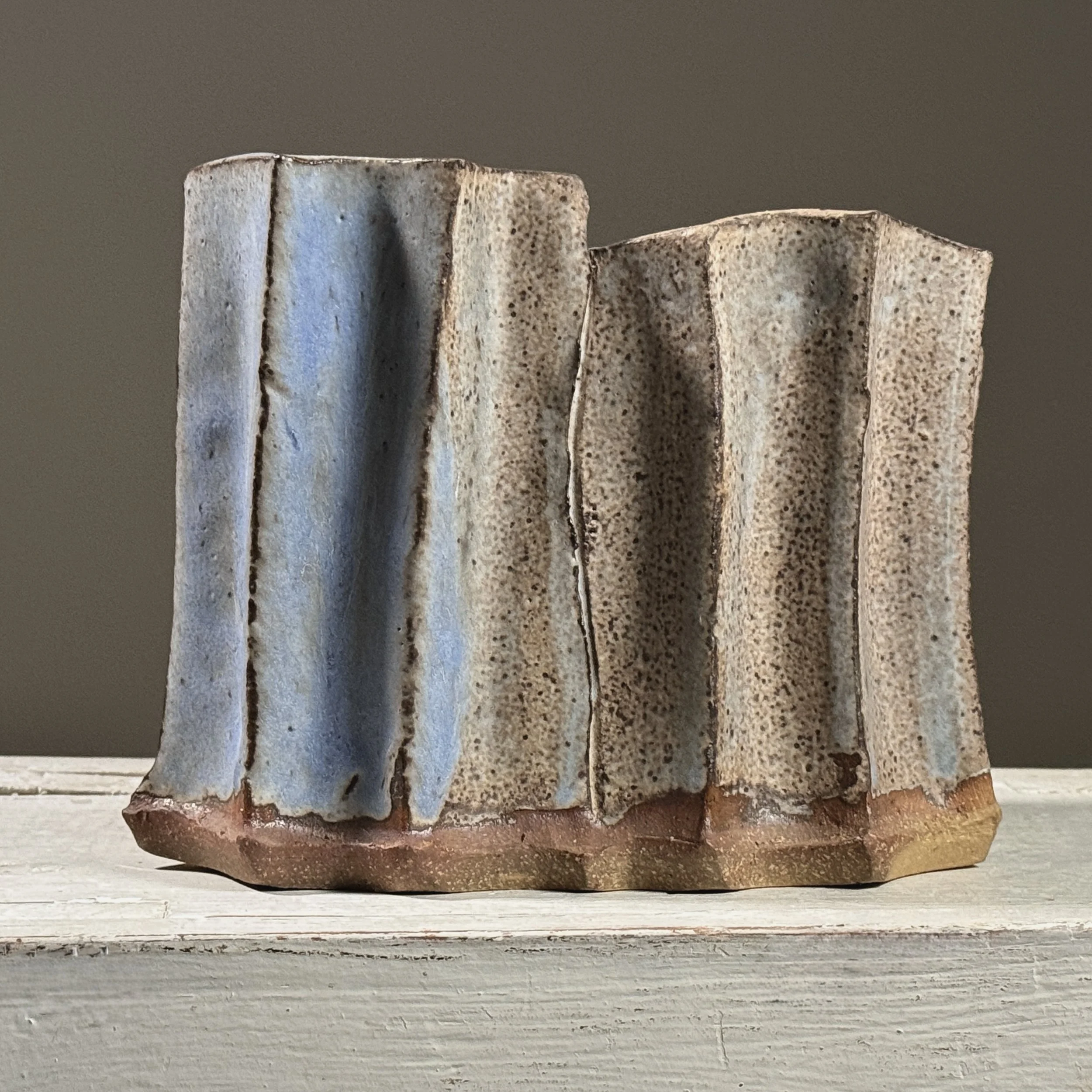
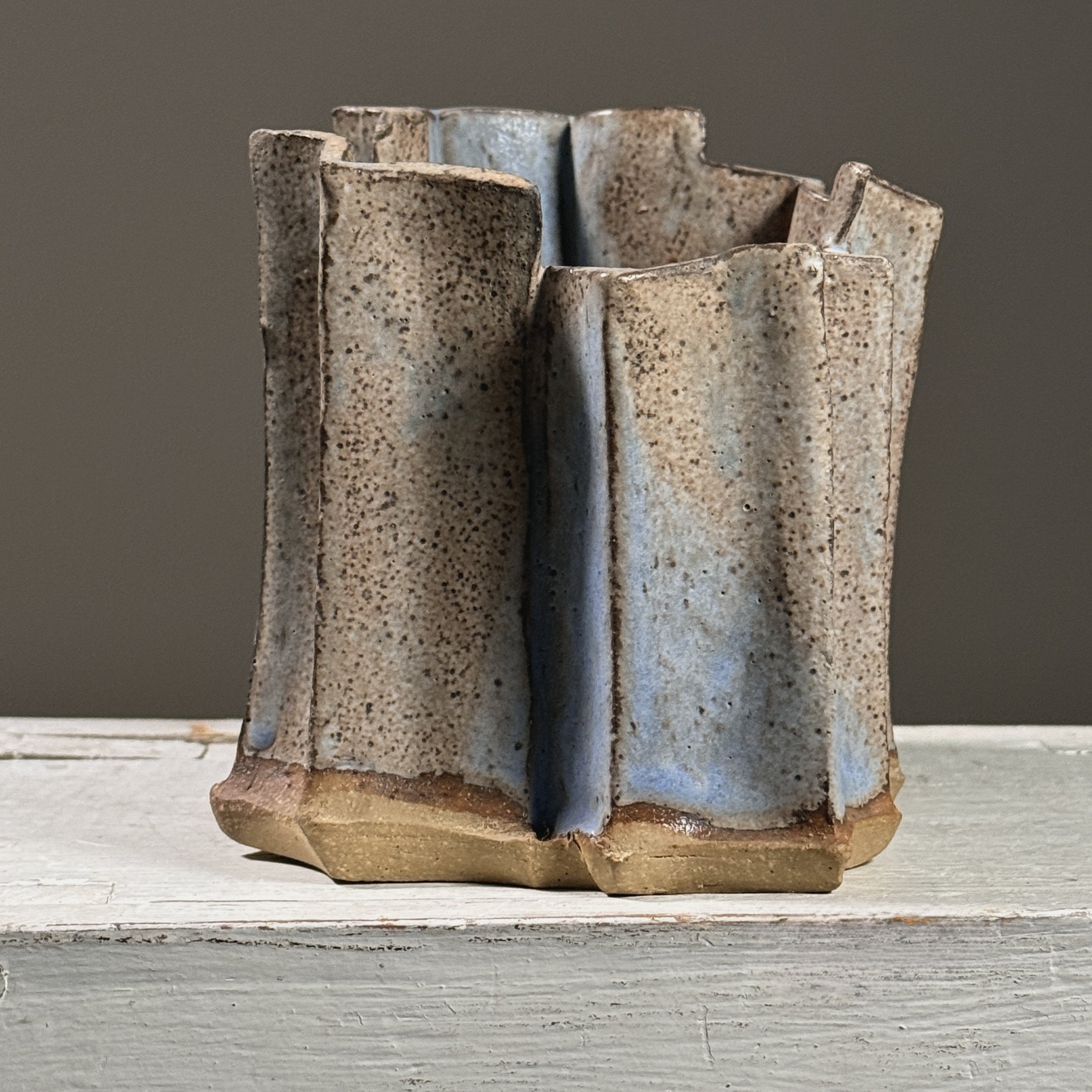
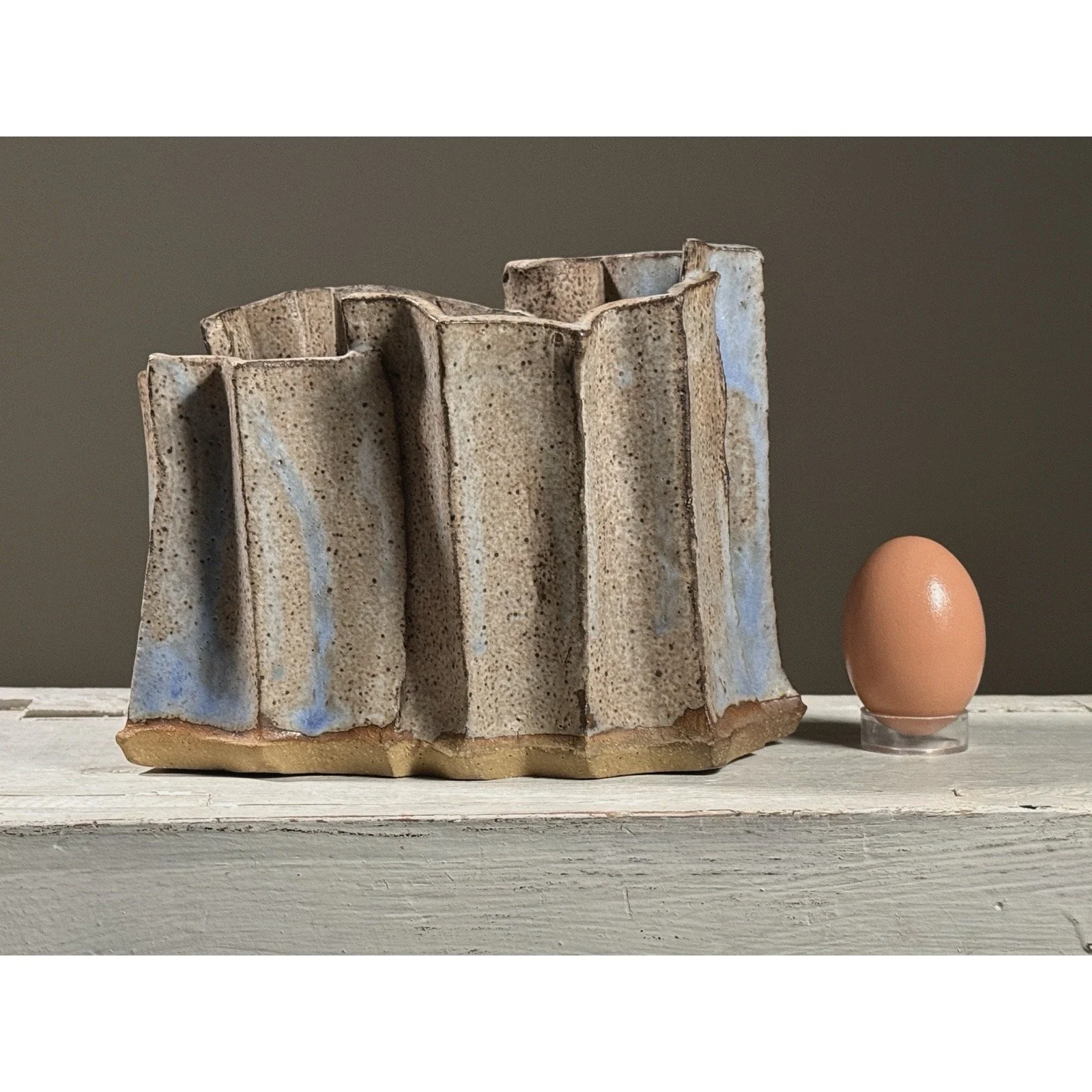
Title: Painted Pottery Jar
Culture: Chinese (Neolithic style)
Date: Antique
Medium: Earthenware
Technique: Hand-built, painted with red and black mineral pigments
Dimensions: Height: 15.2 cm (6 in), Diameter: 17.8 cm (7 in)
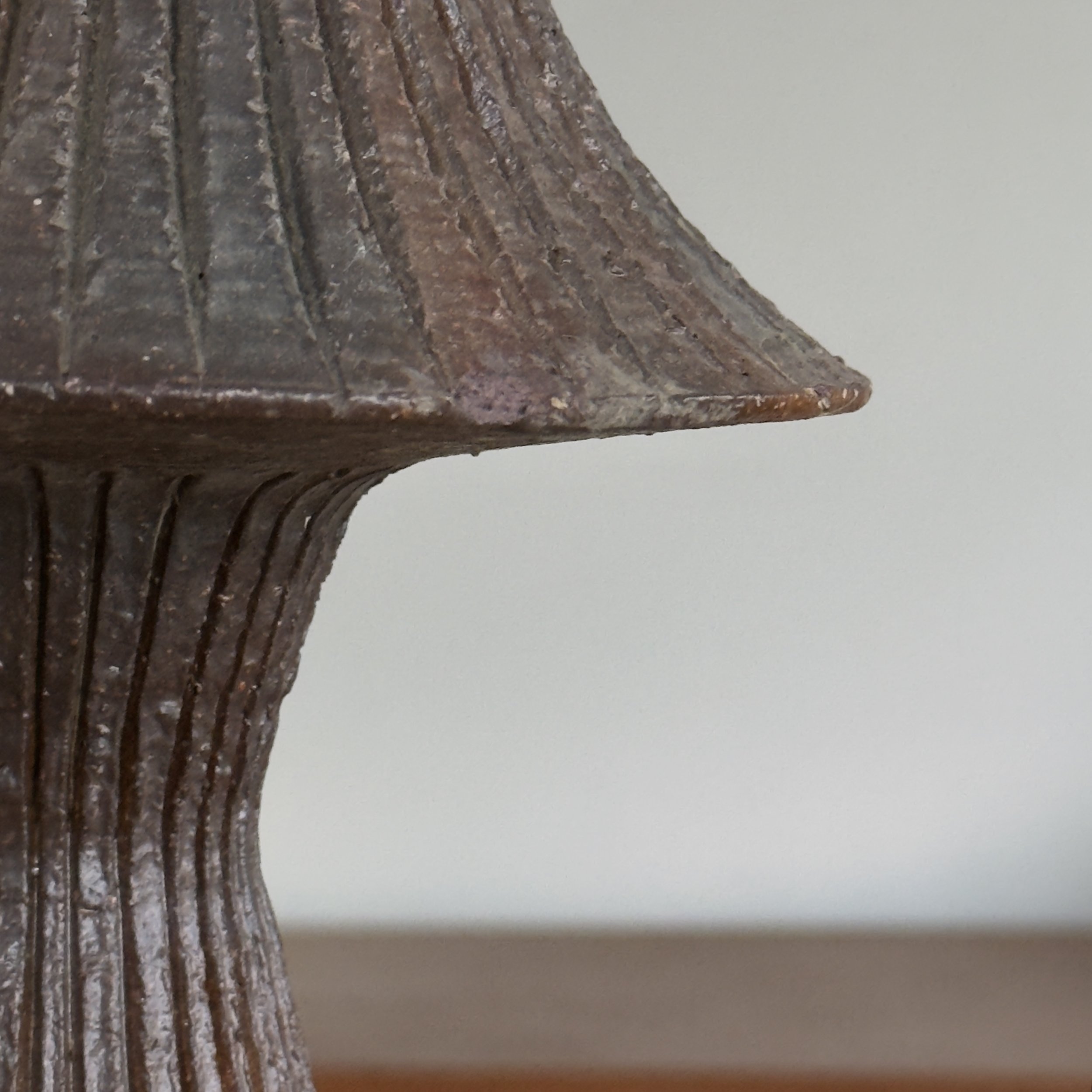
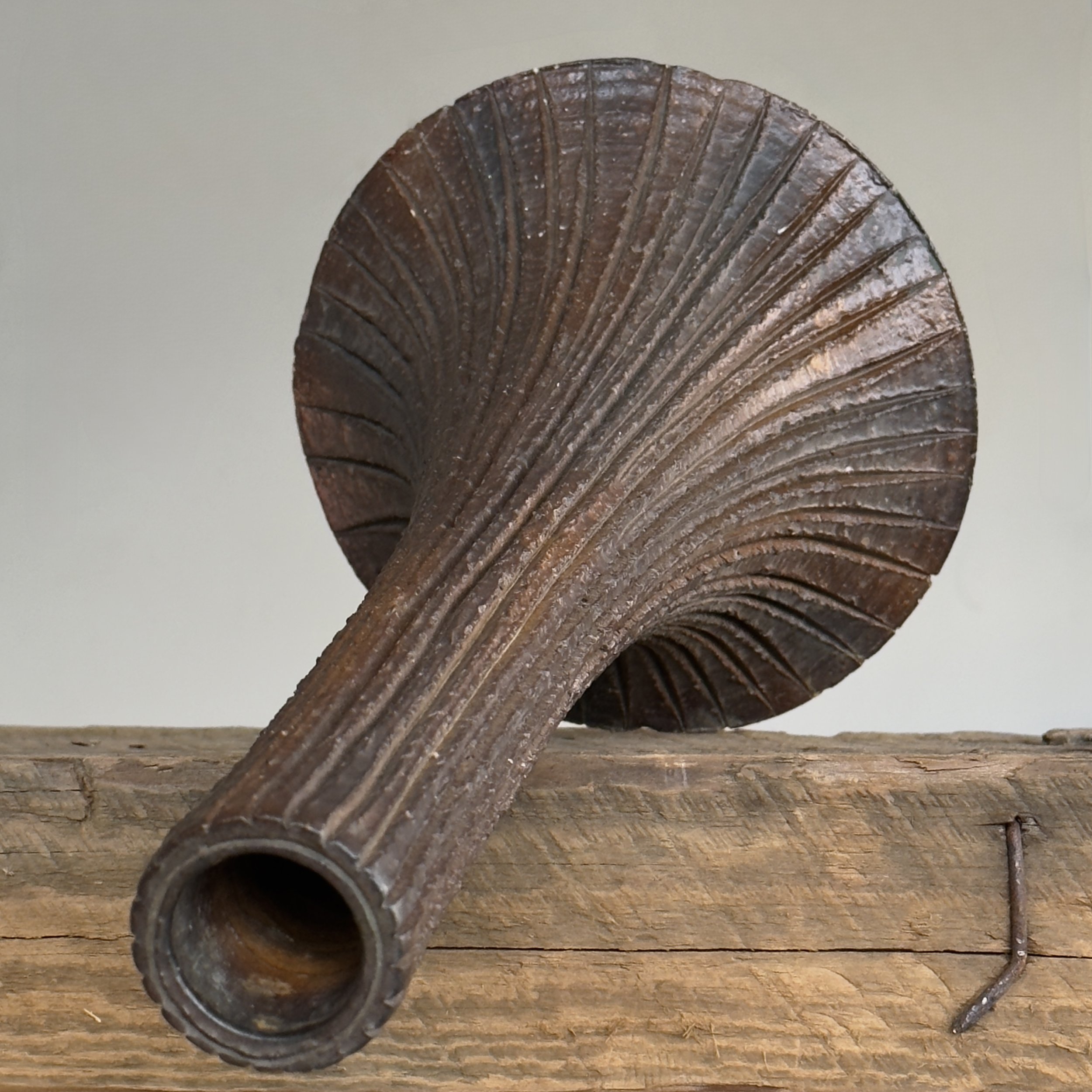
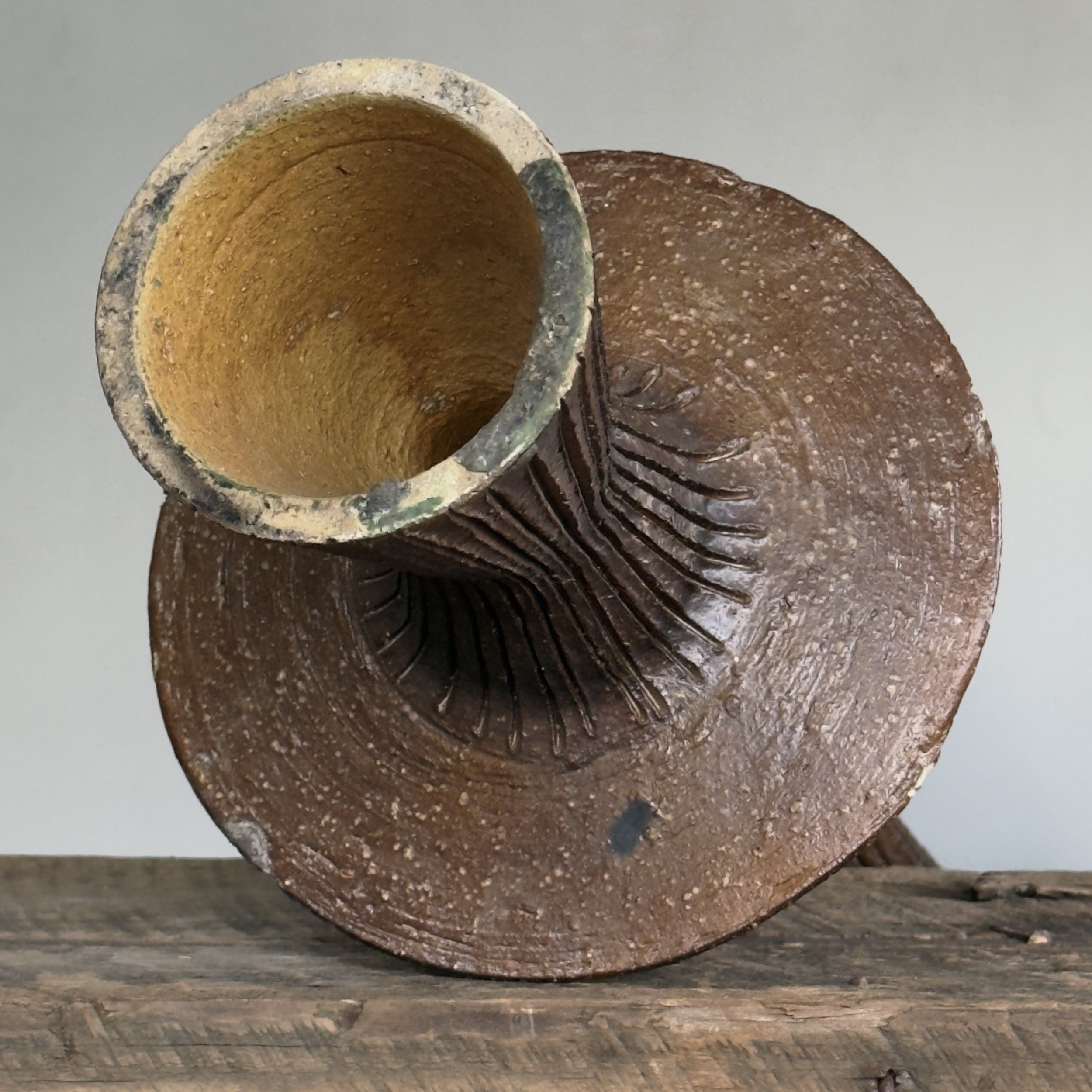
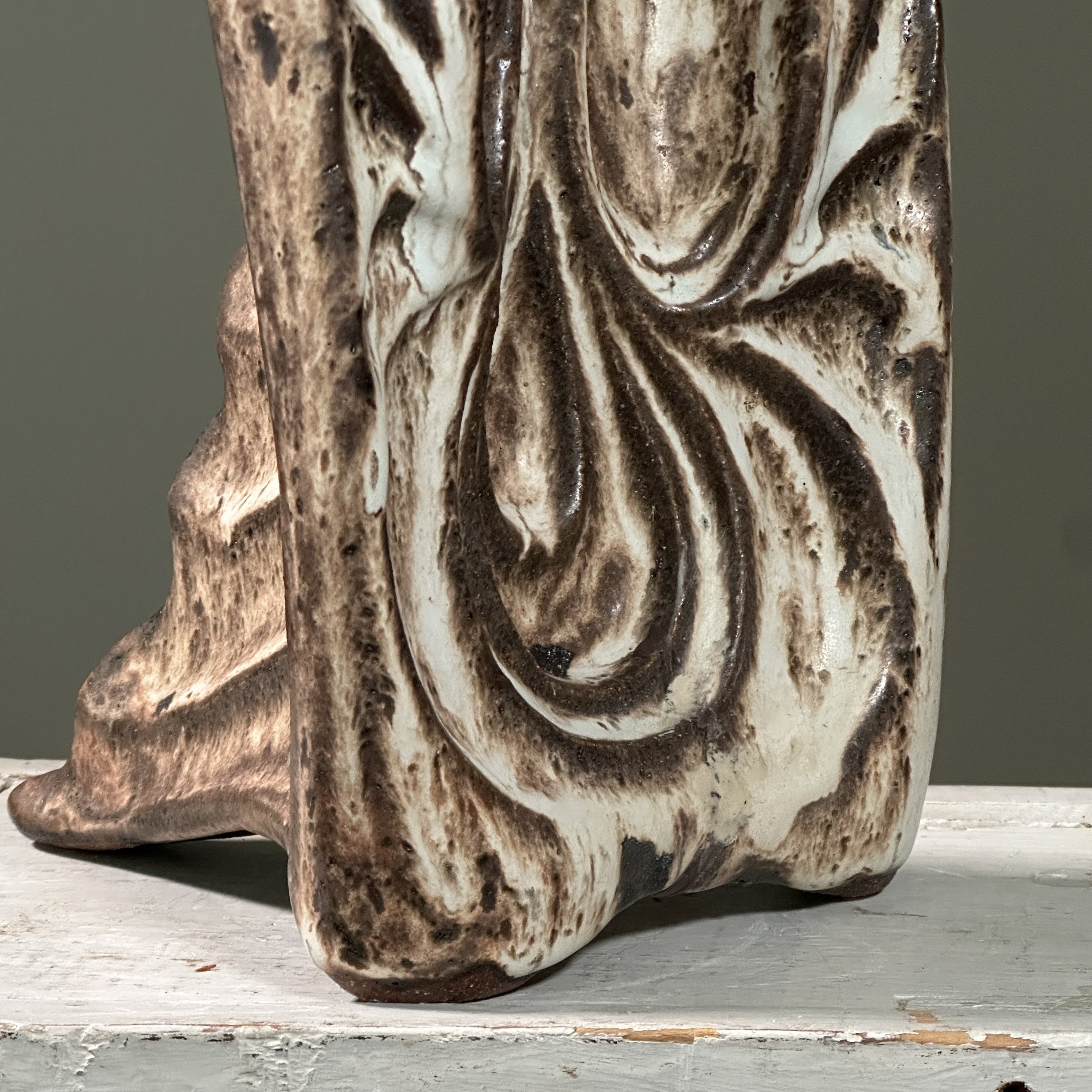
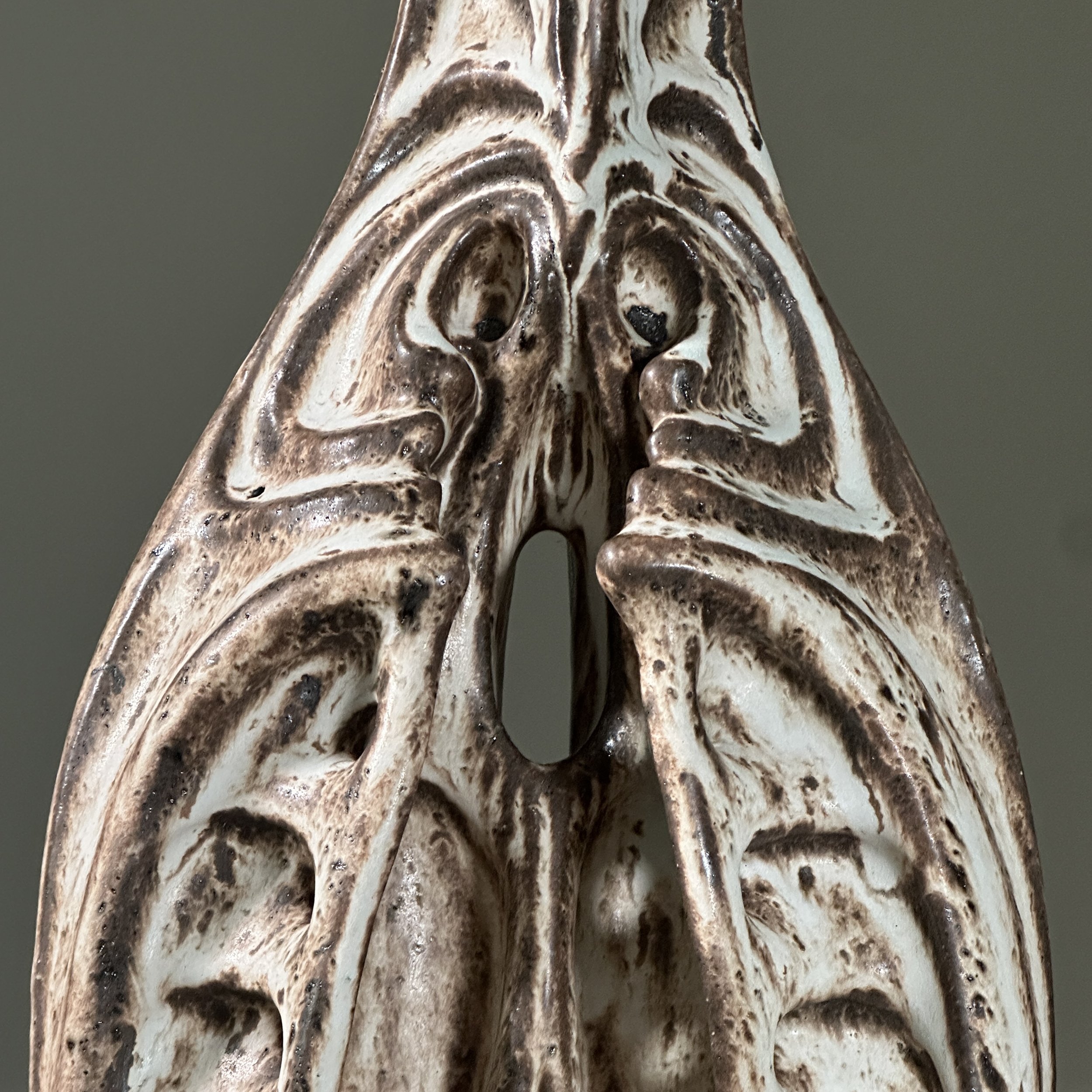
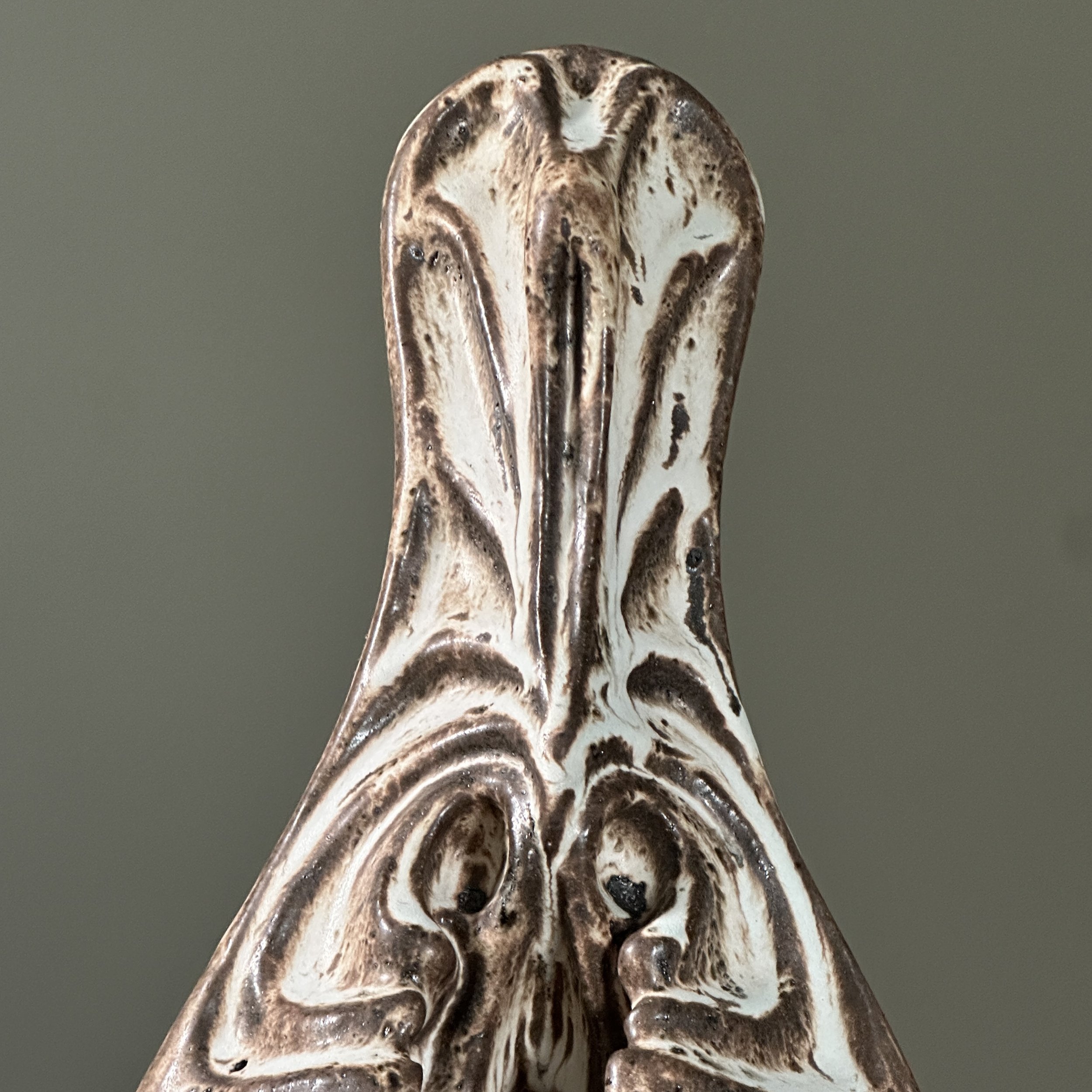
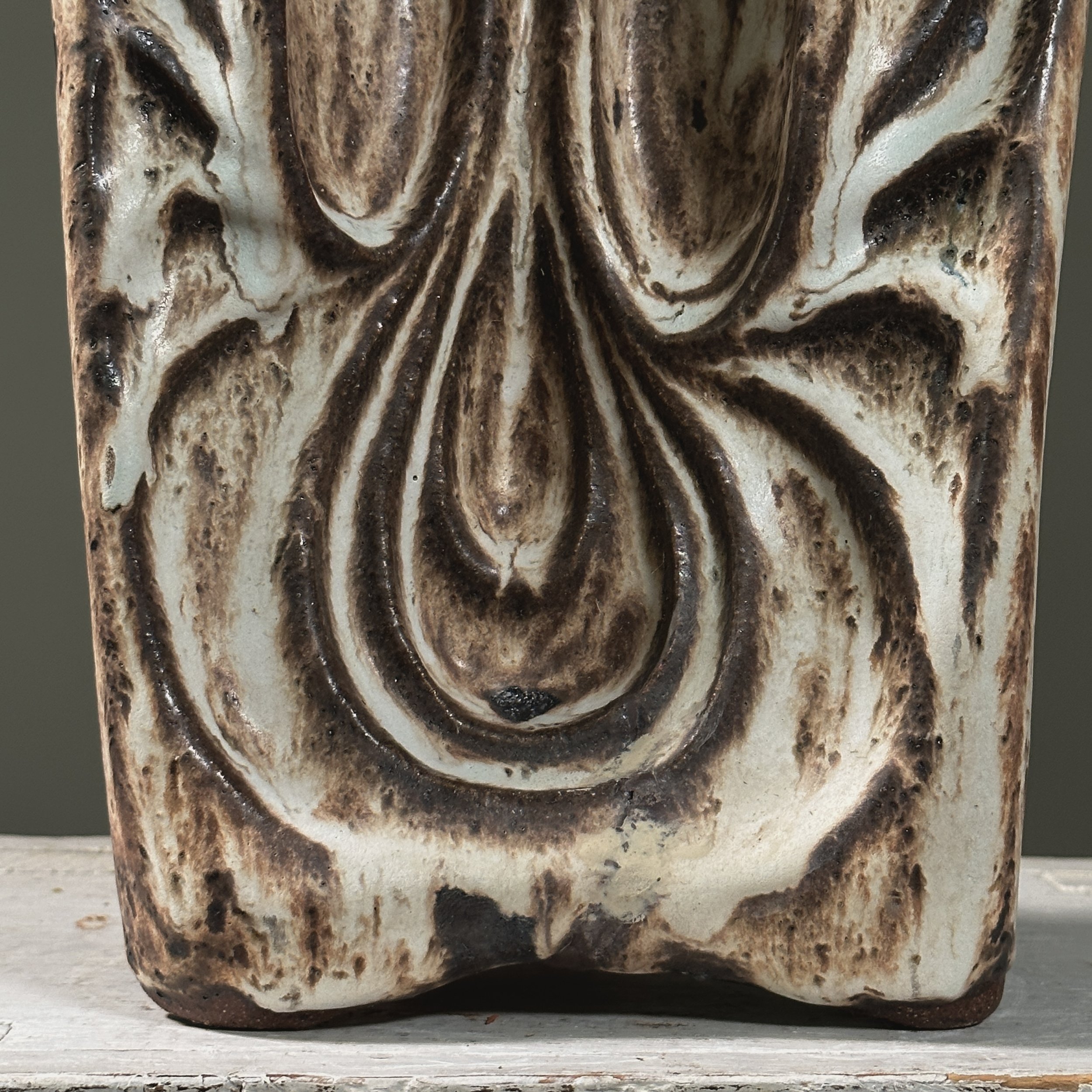
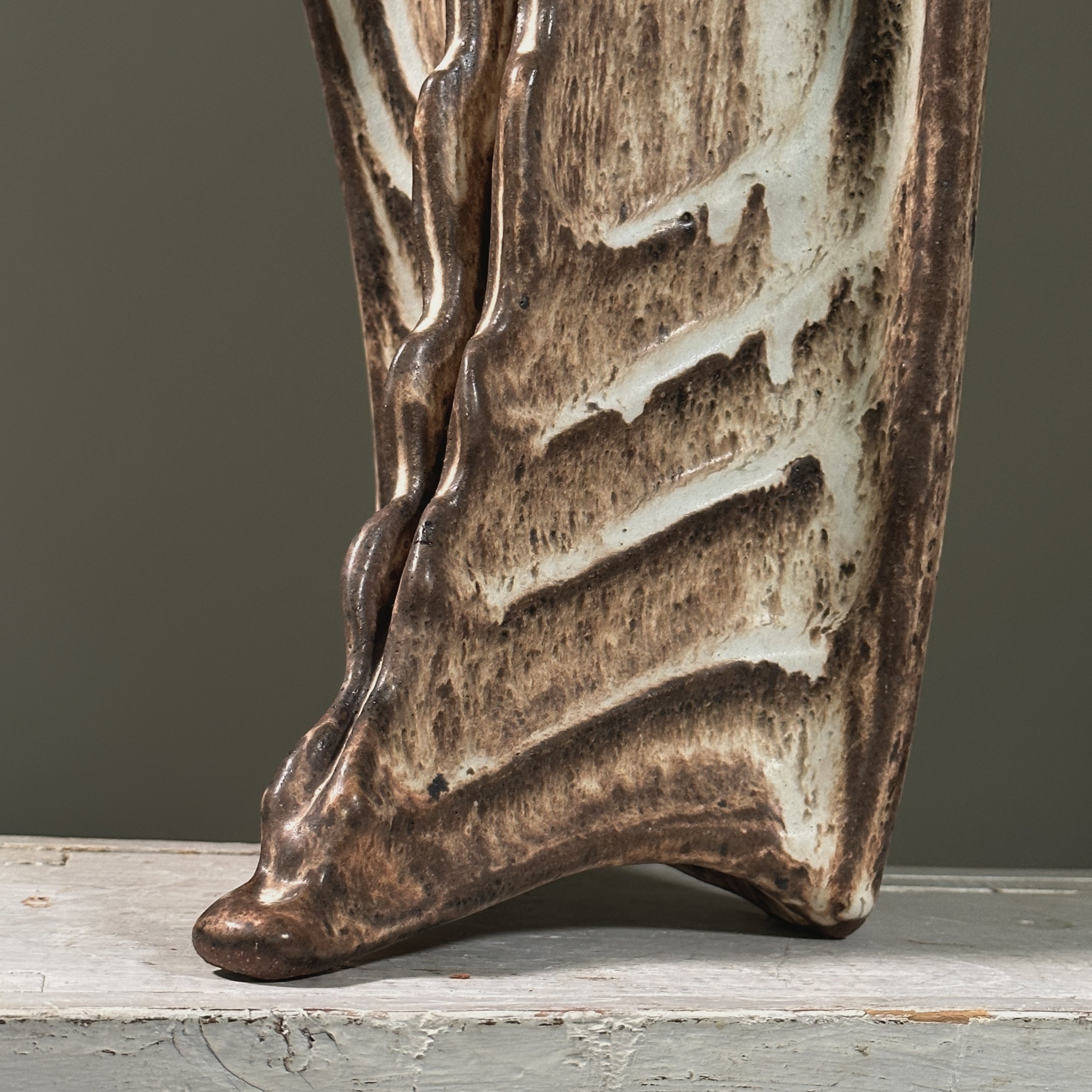
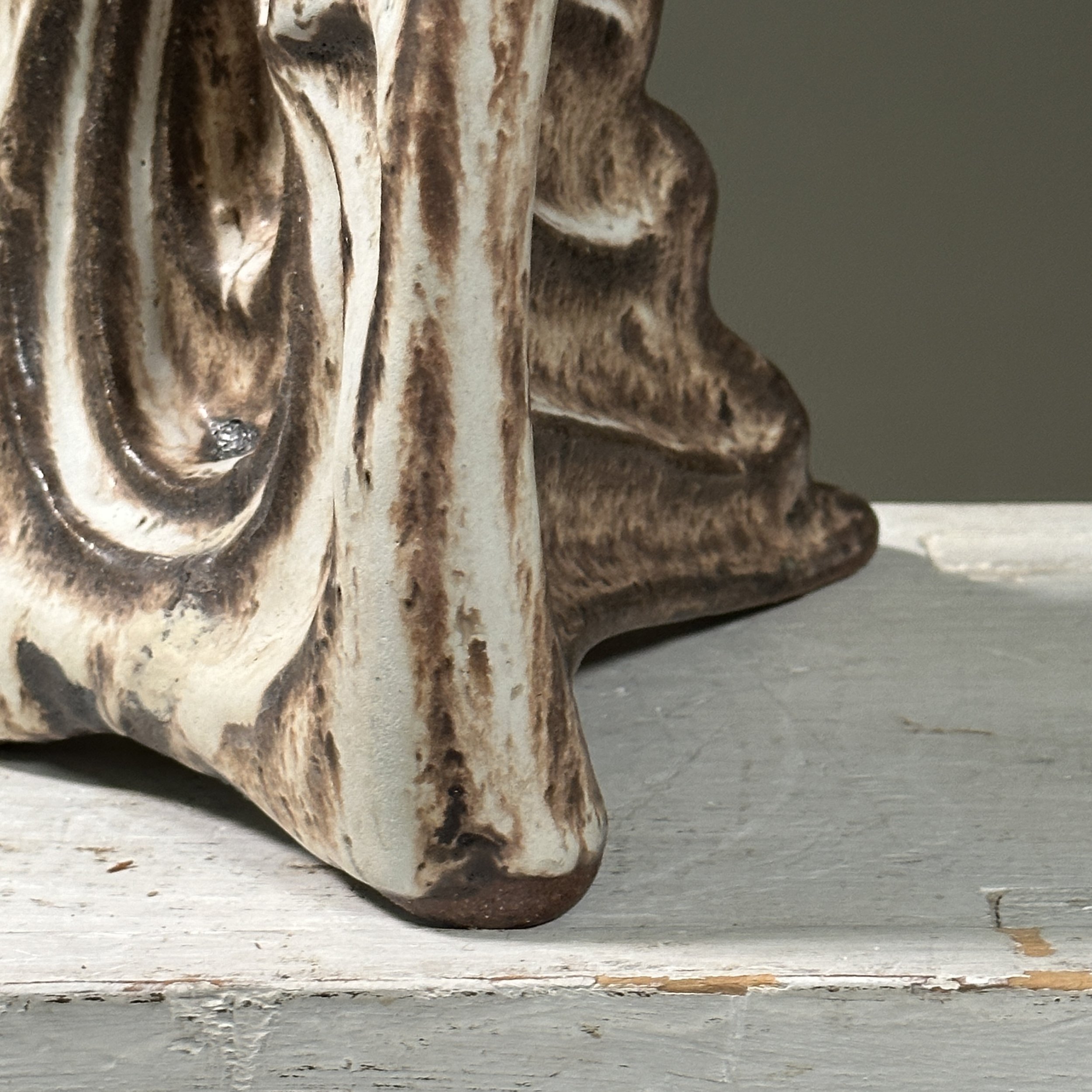
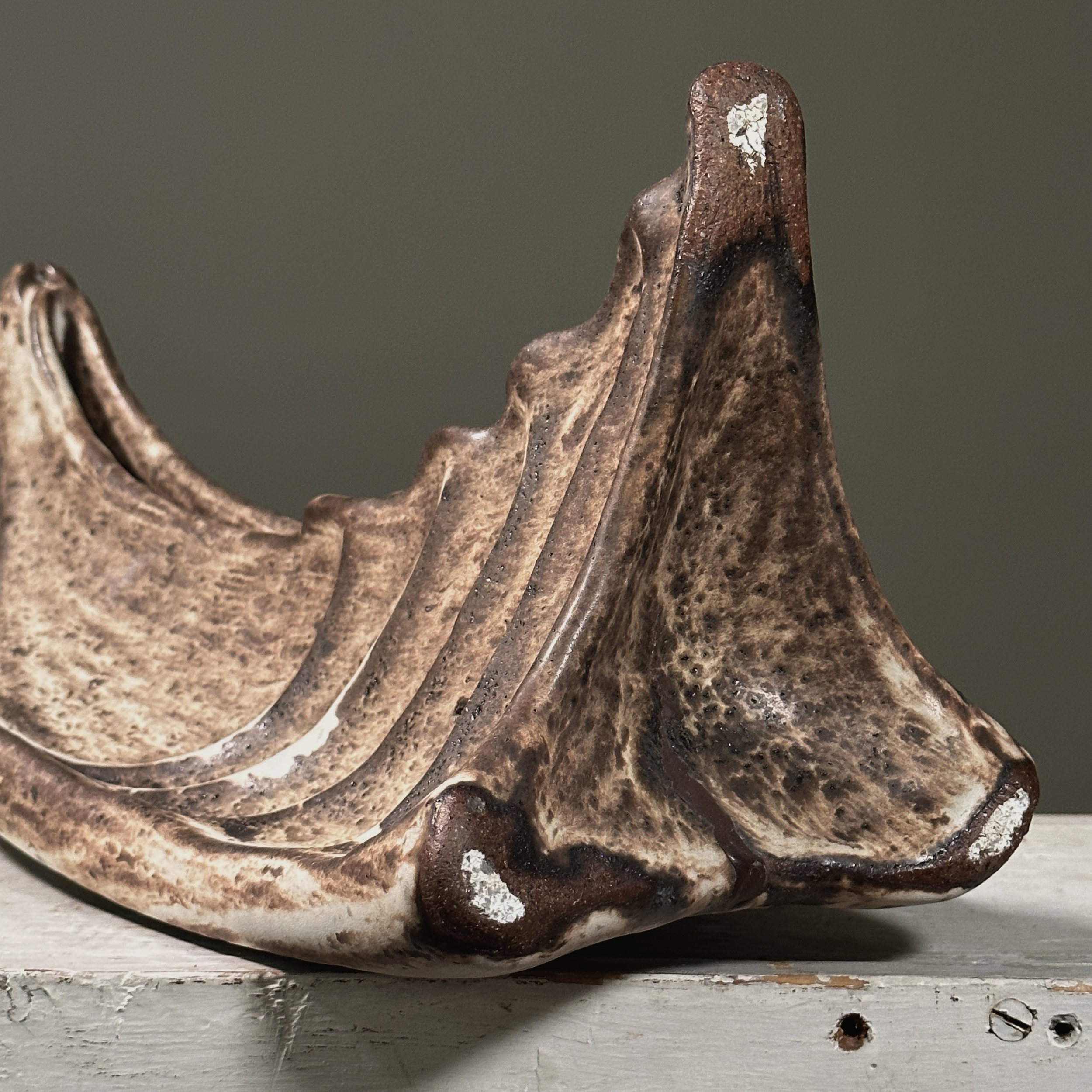
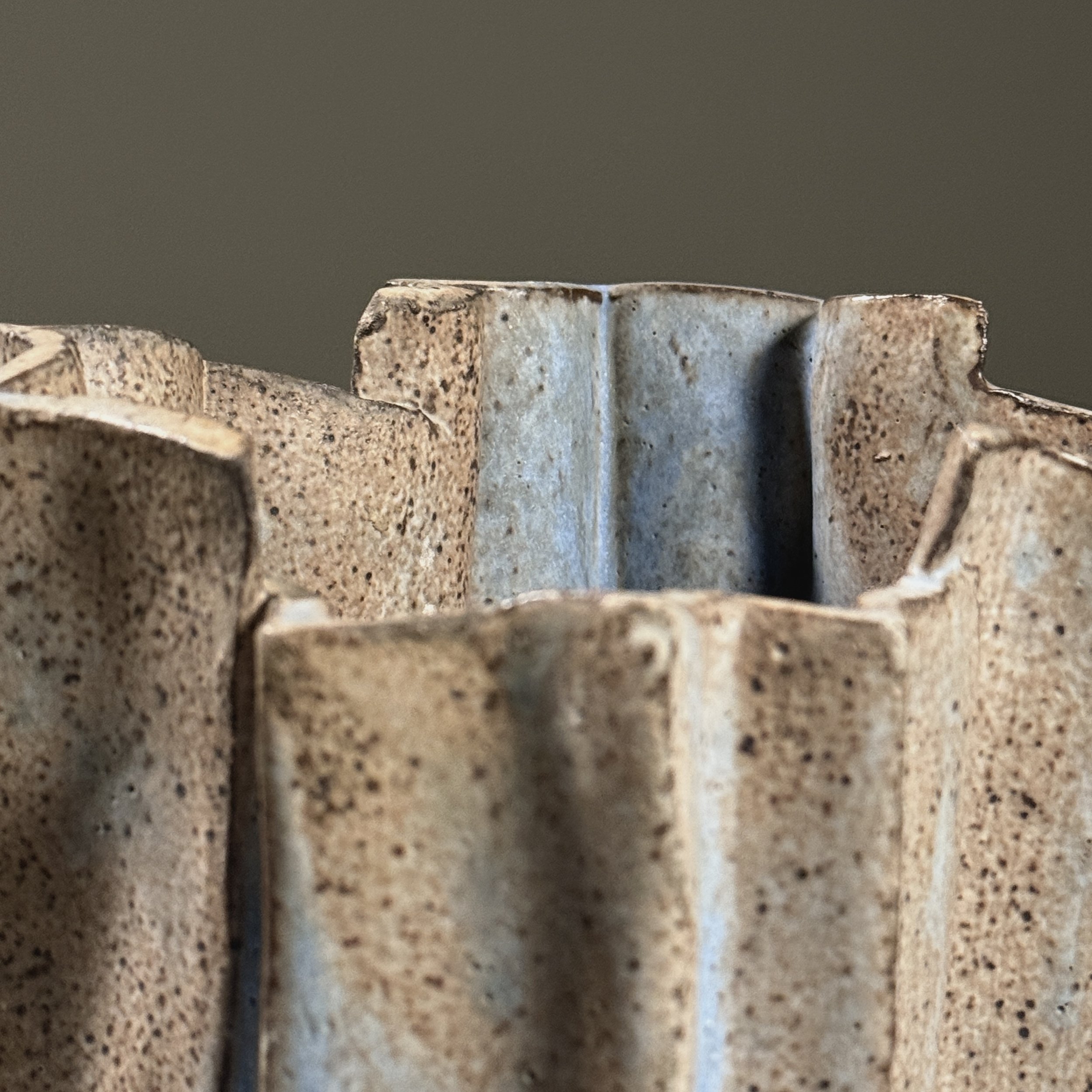
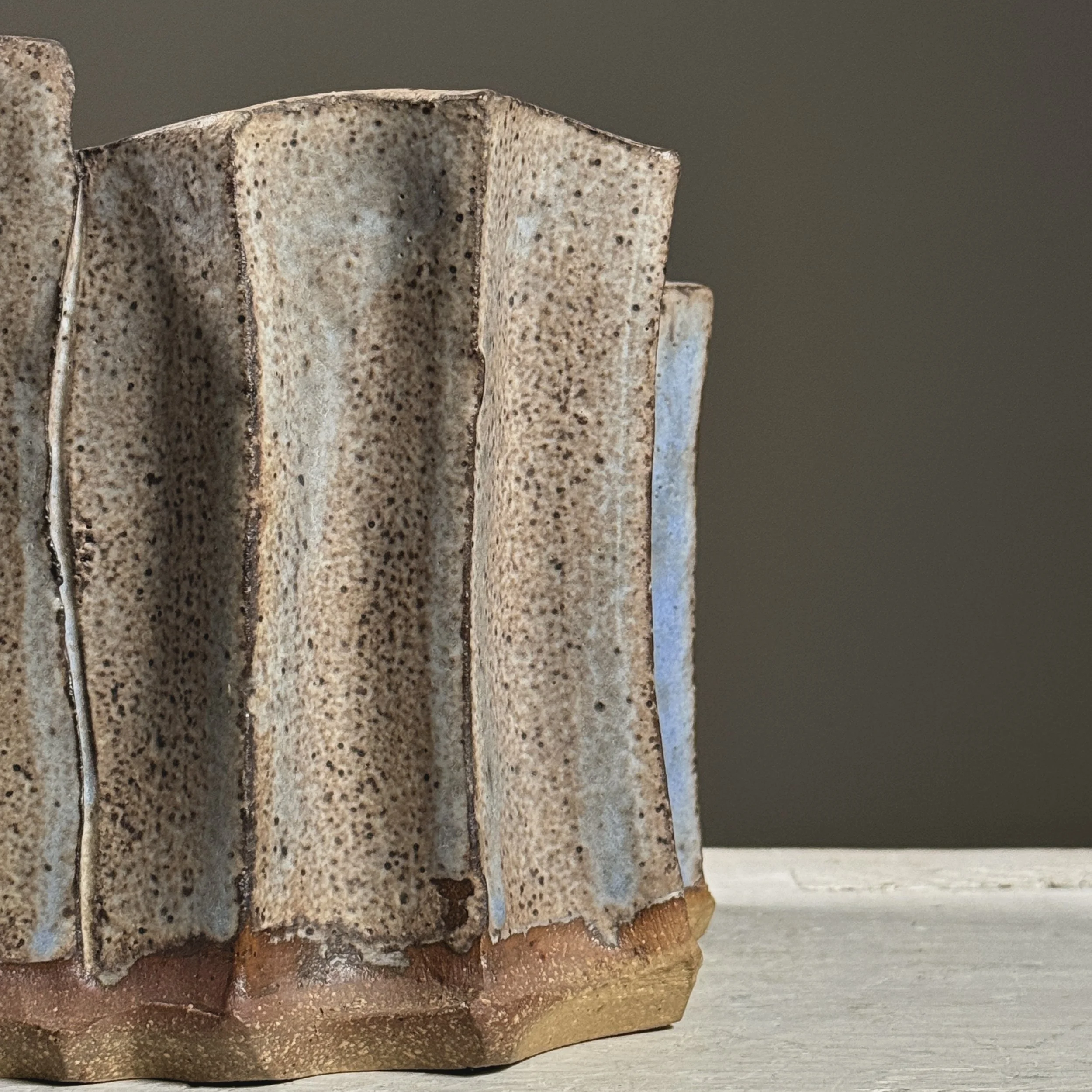
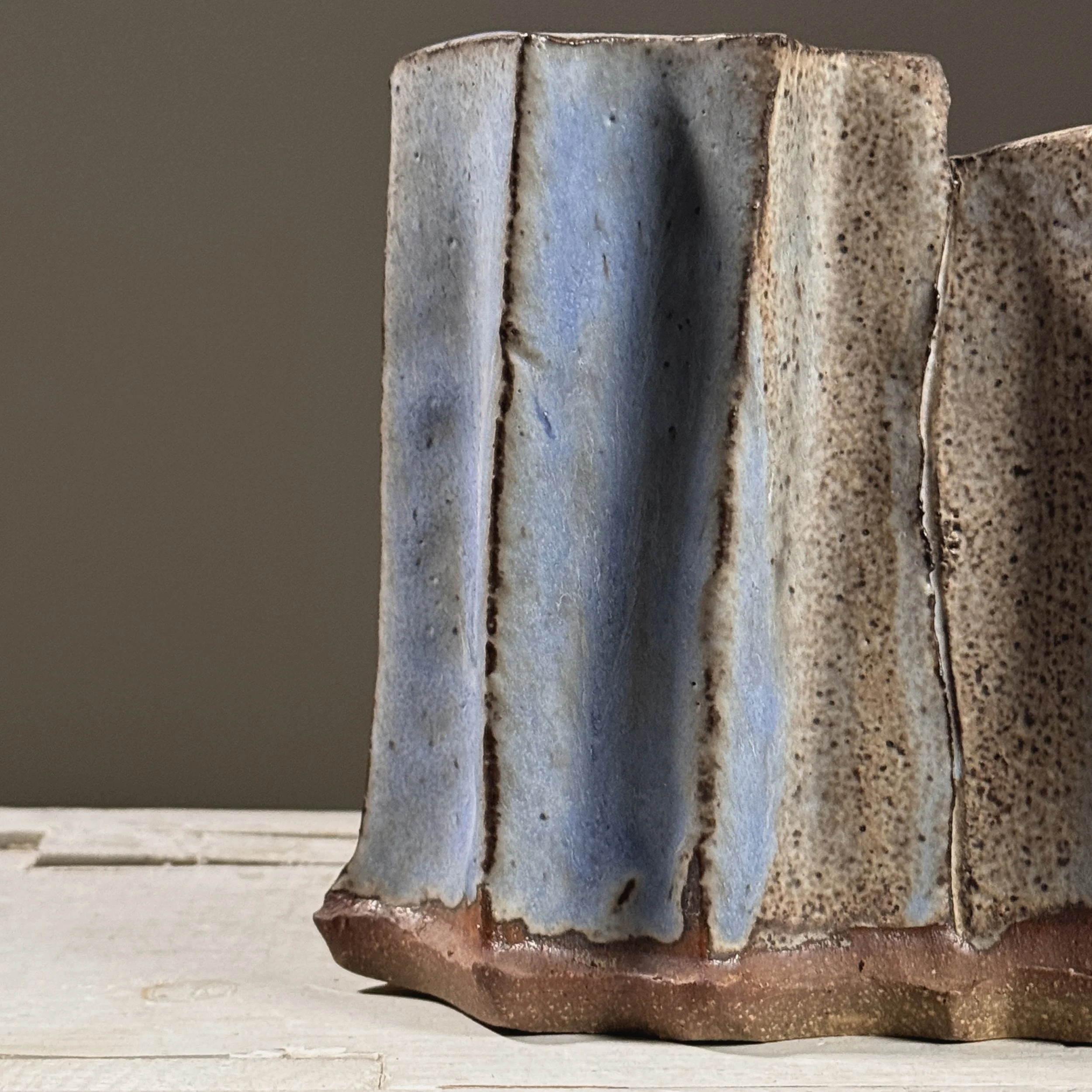
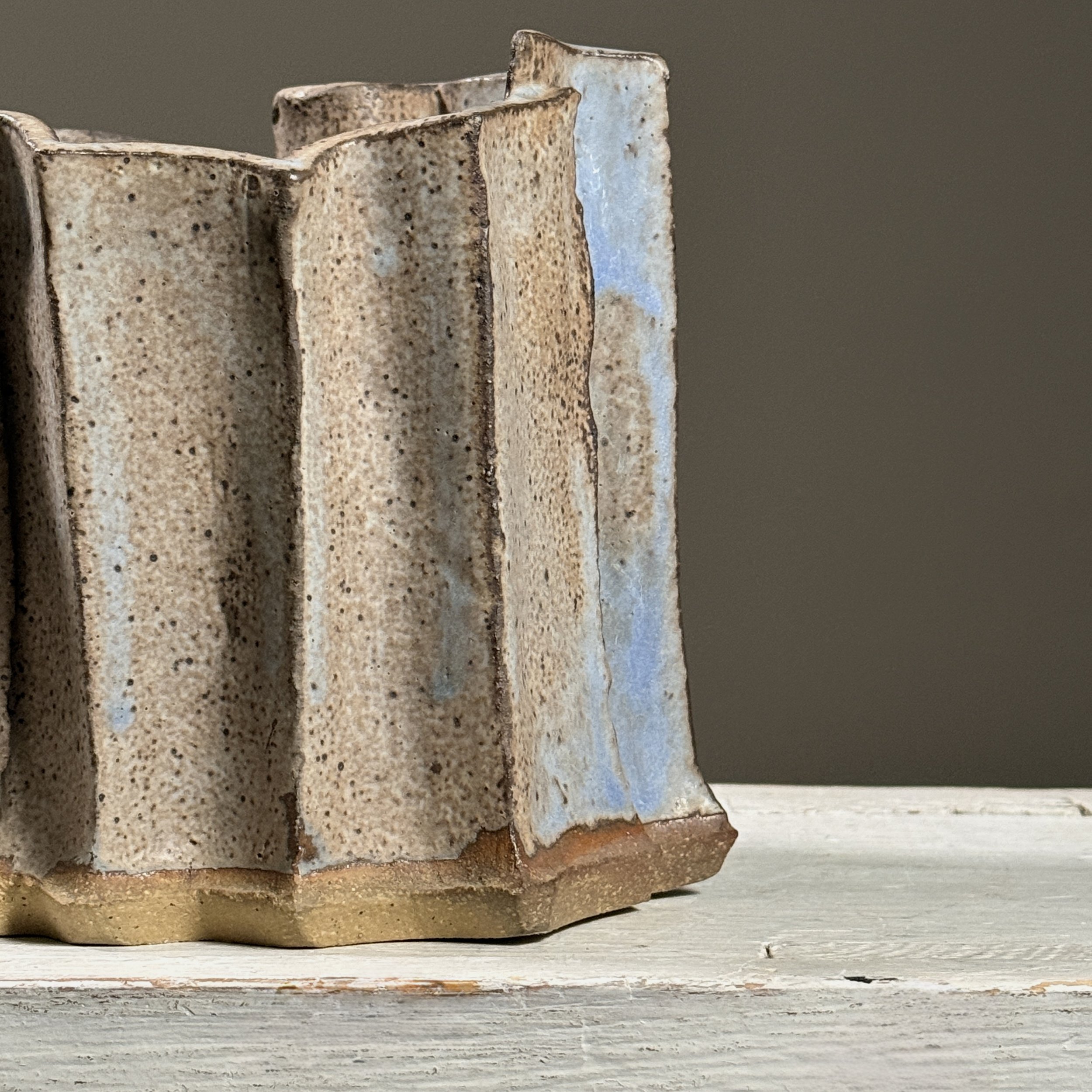
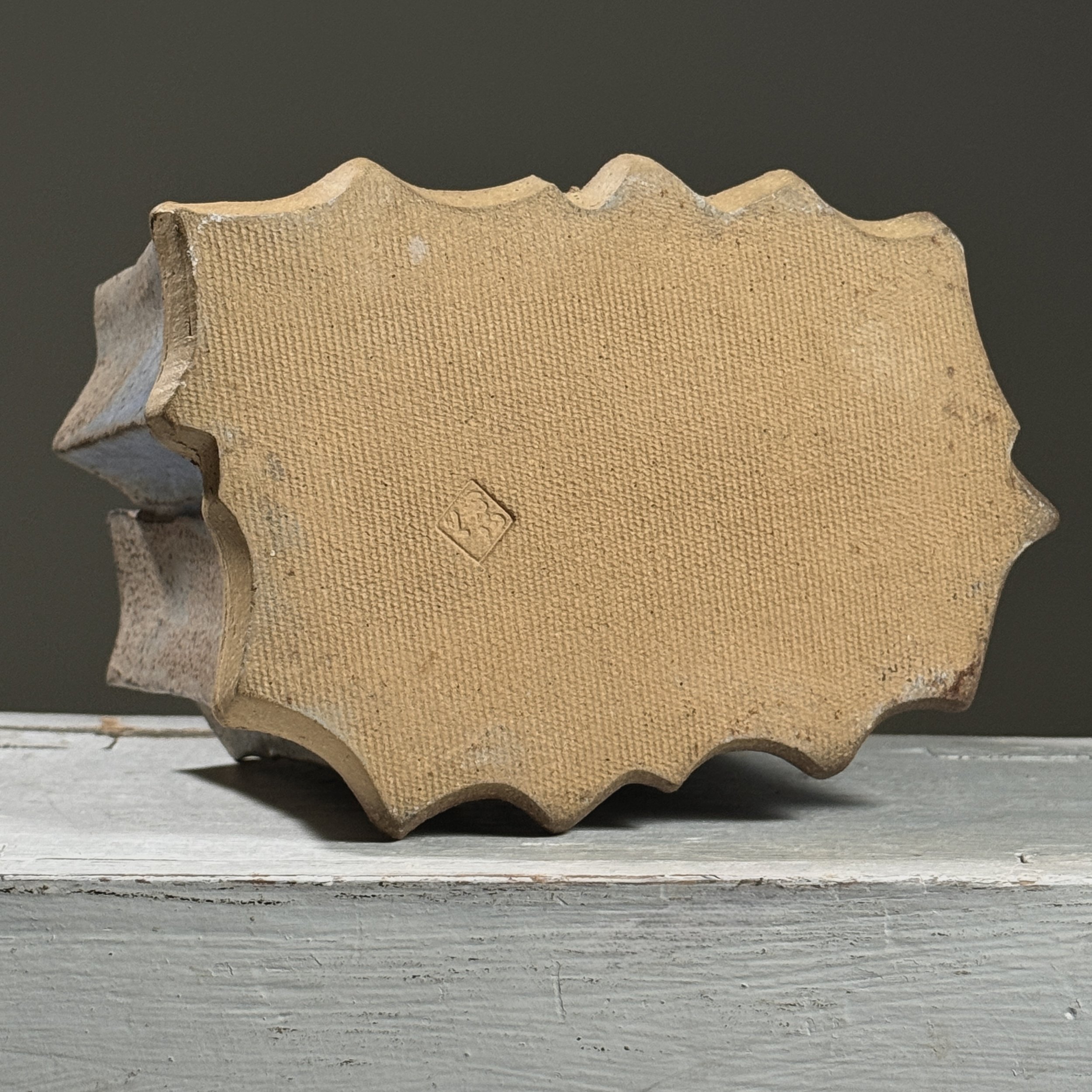
Condition: Used; small chips to rim; wear consistent with age; no cracks or repairs. See photographs for detailed condition.
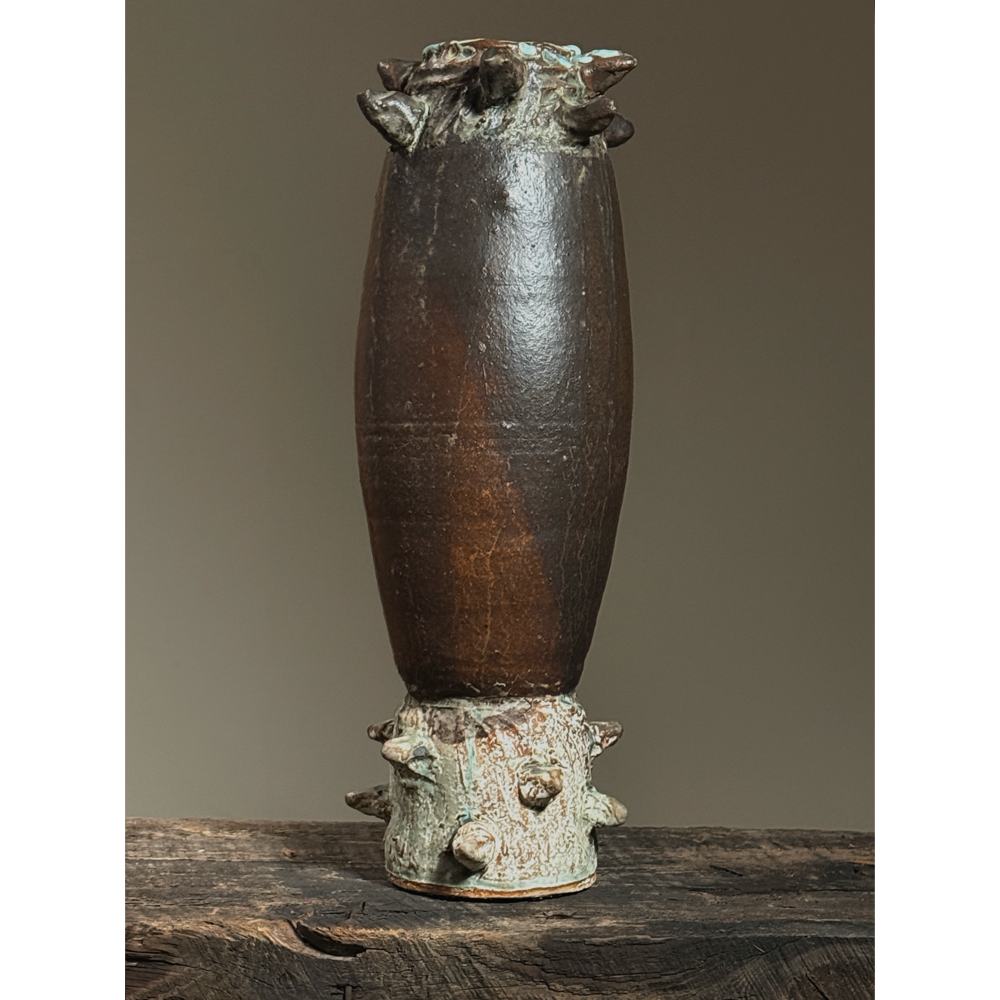
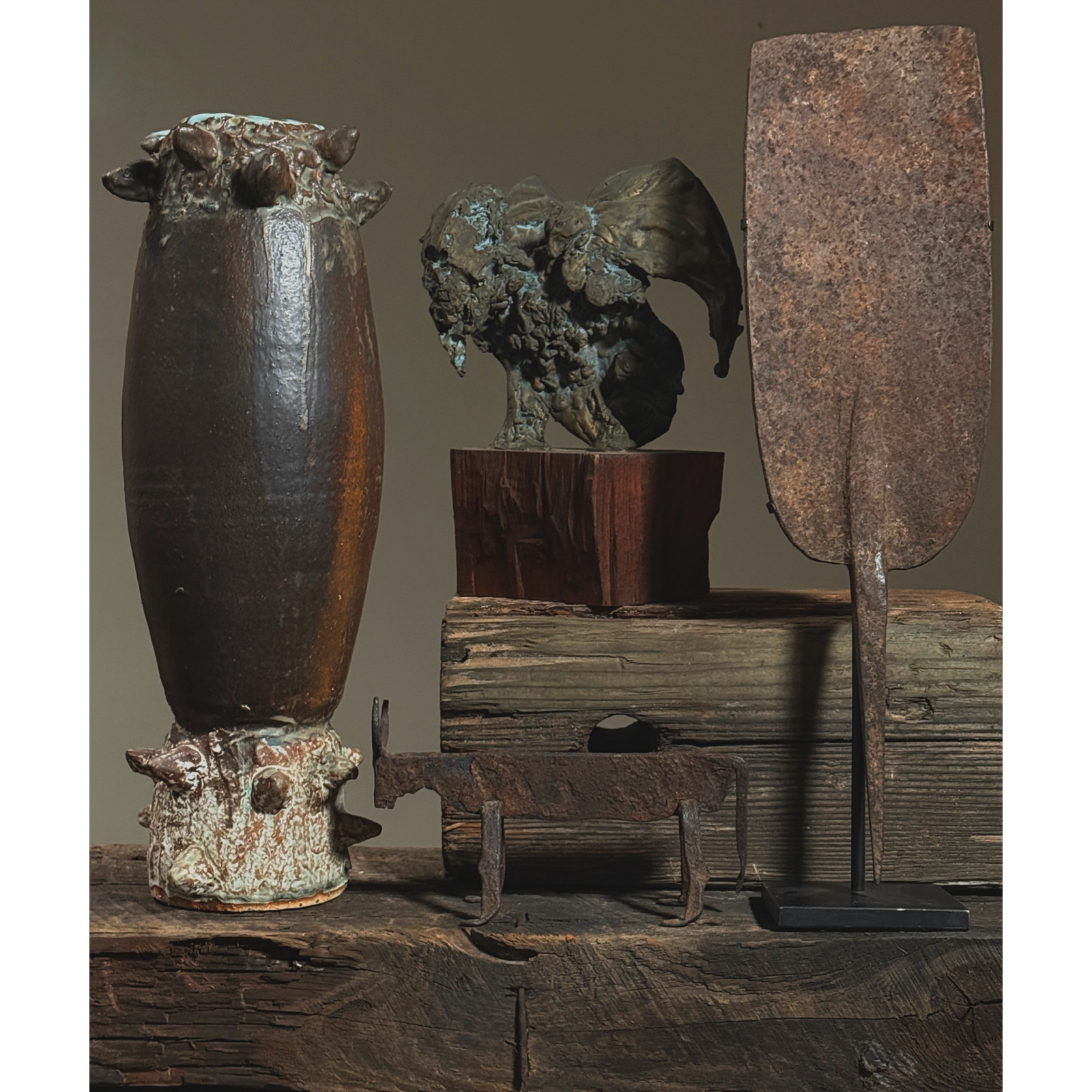
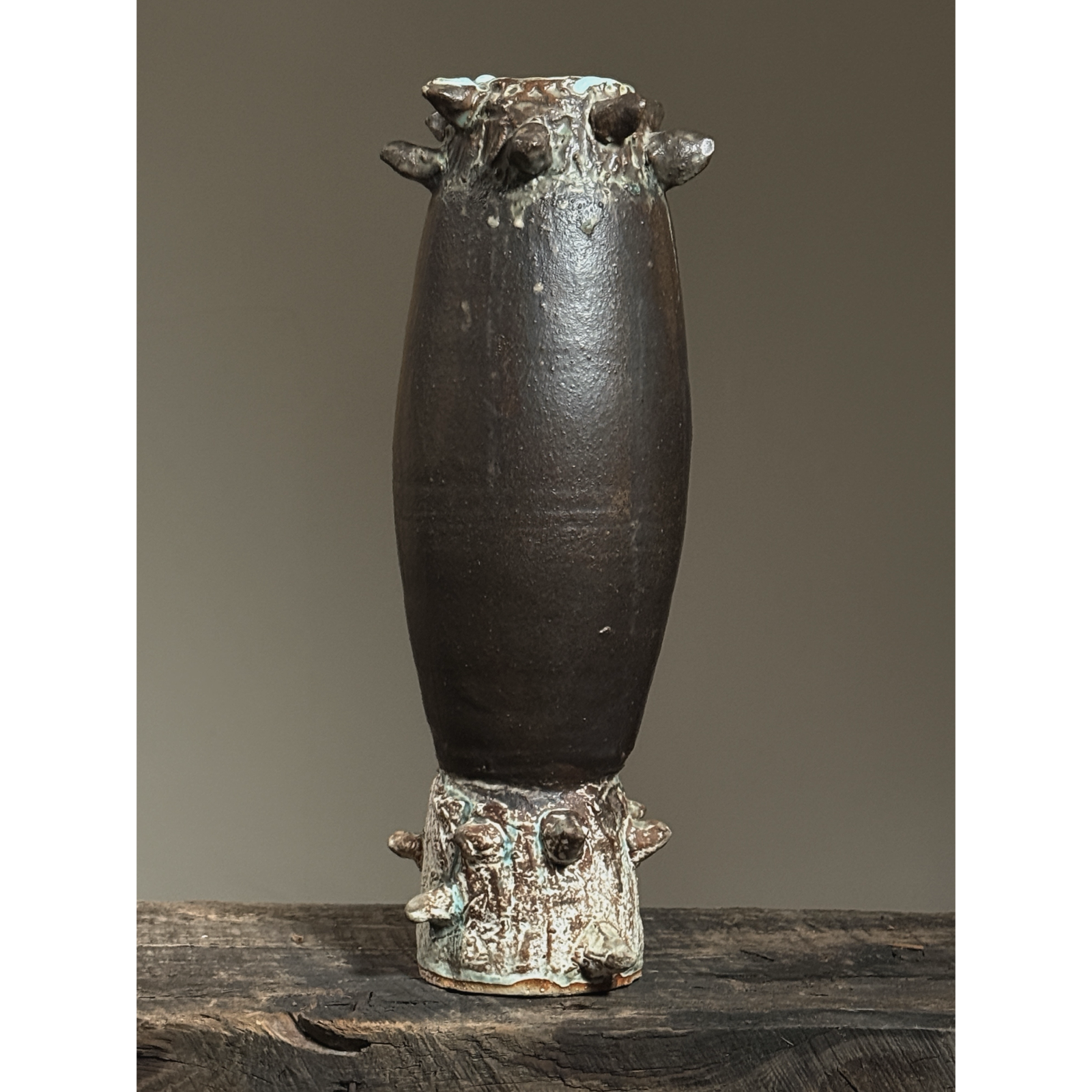
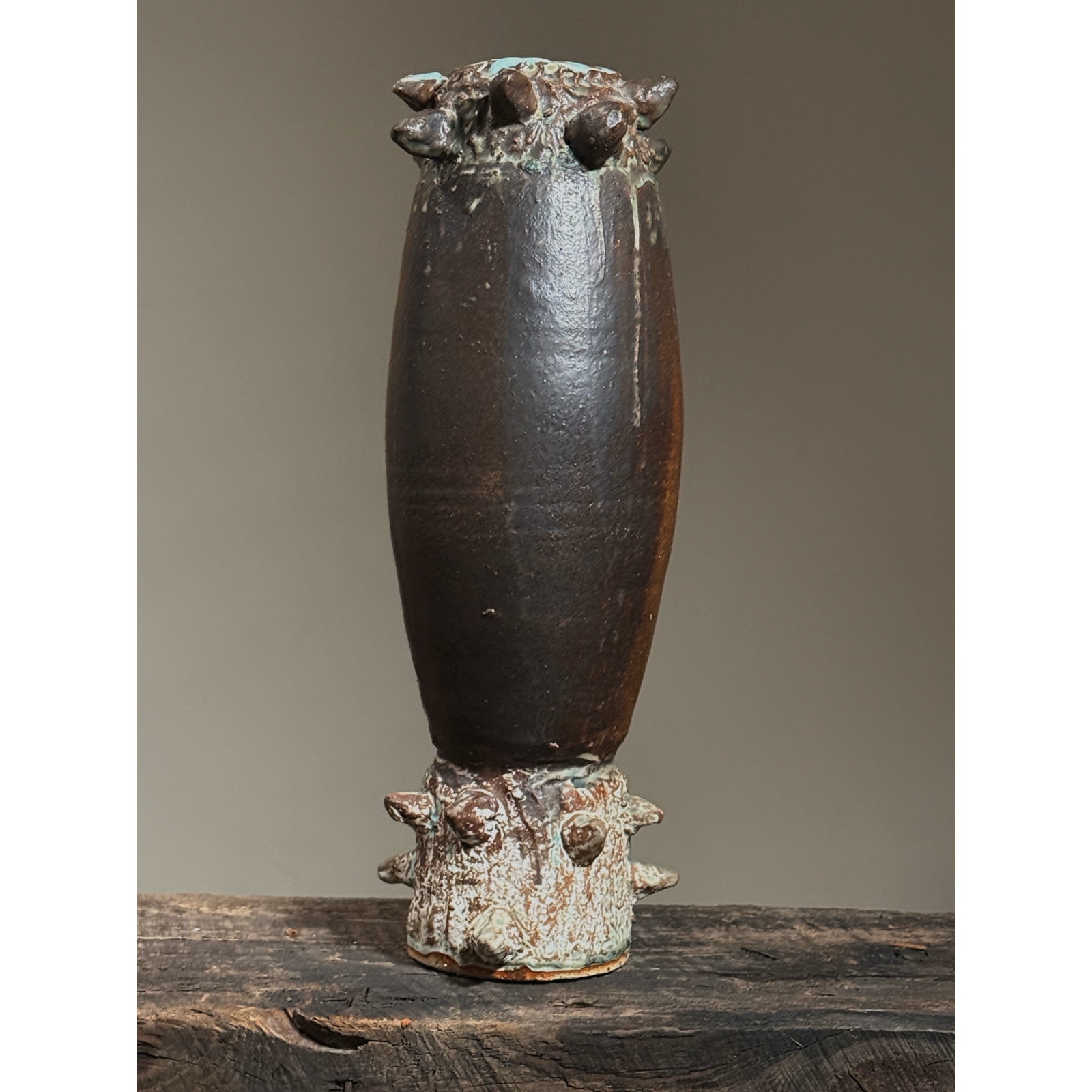
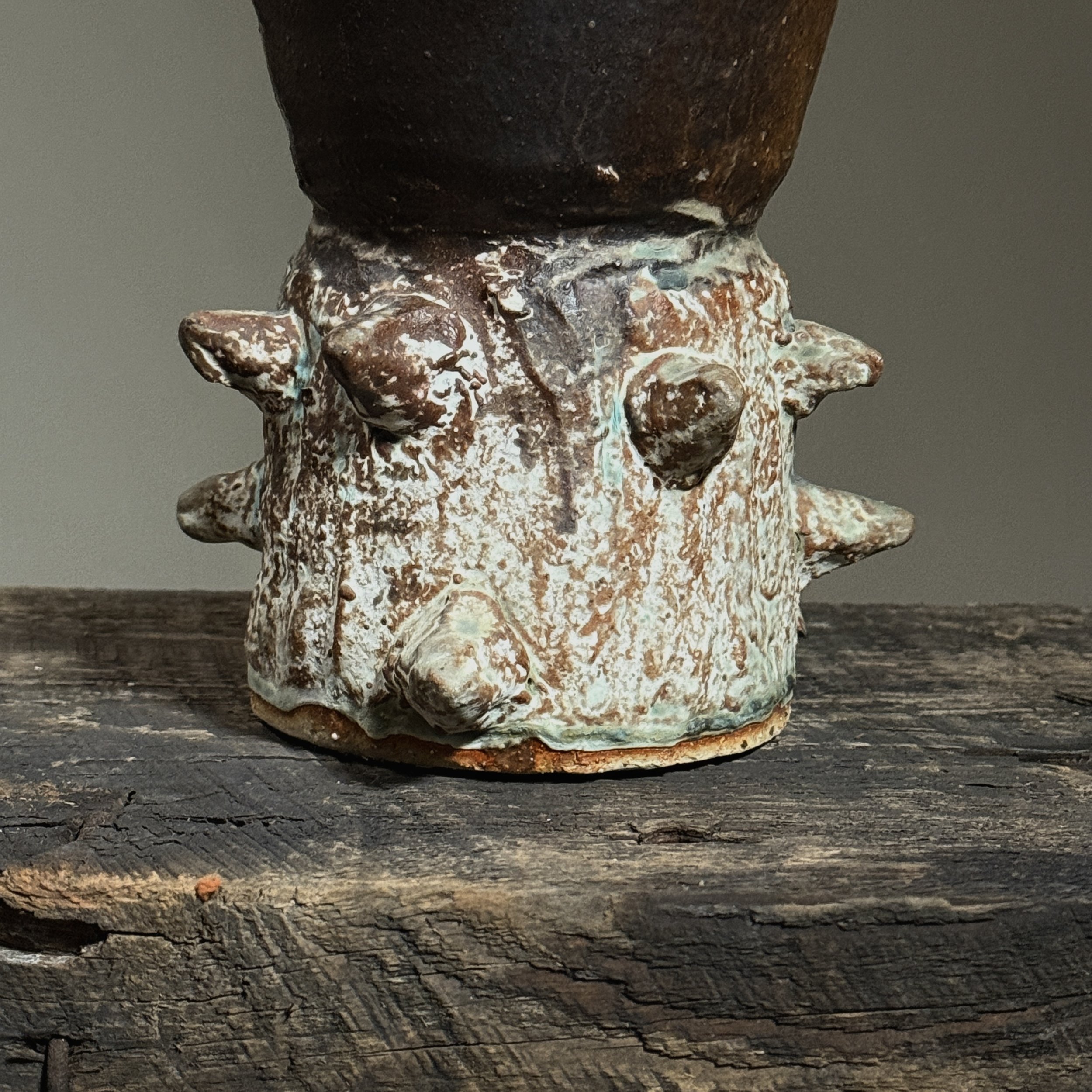
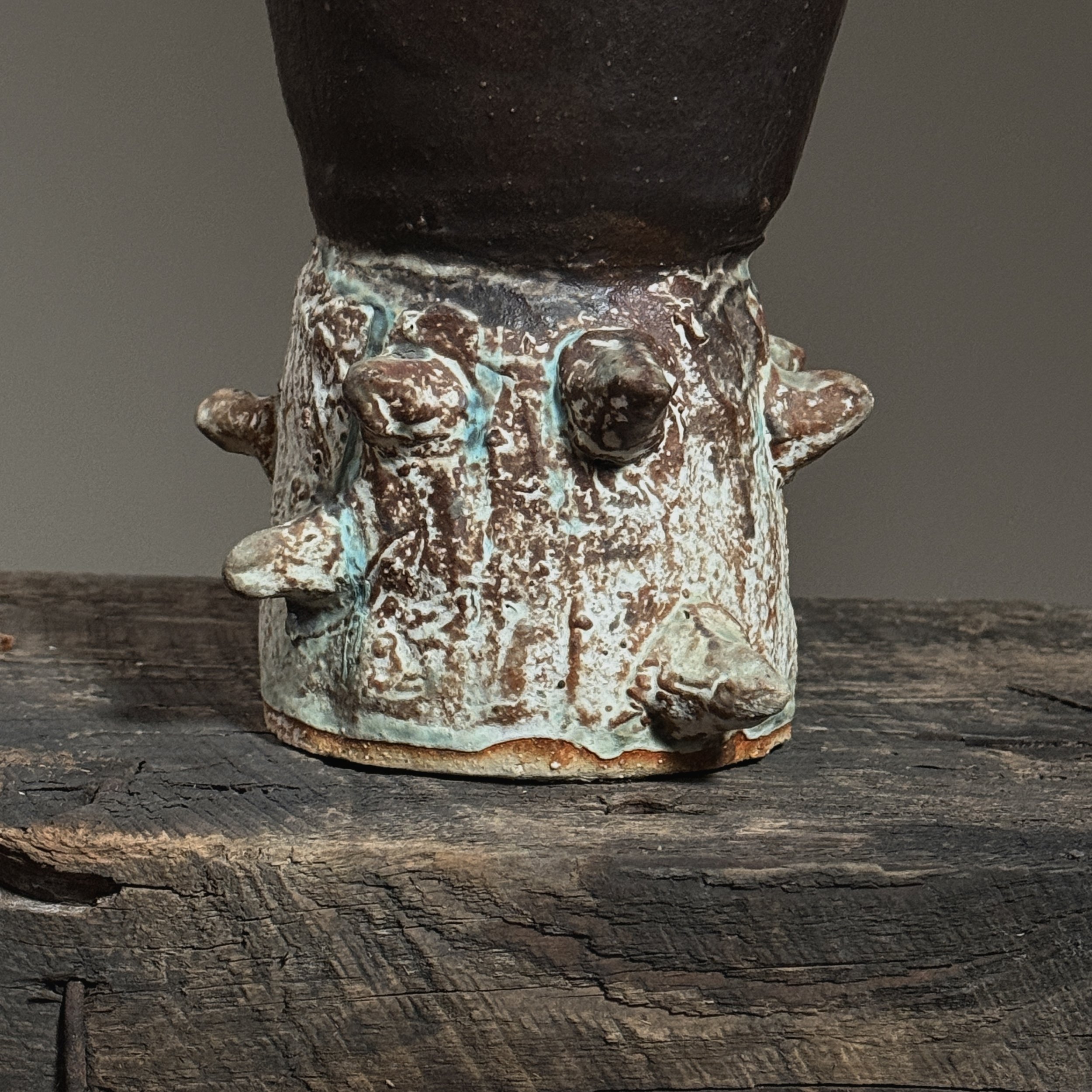
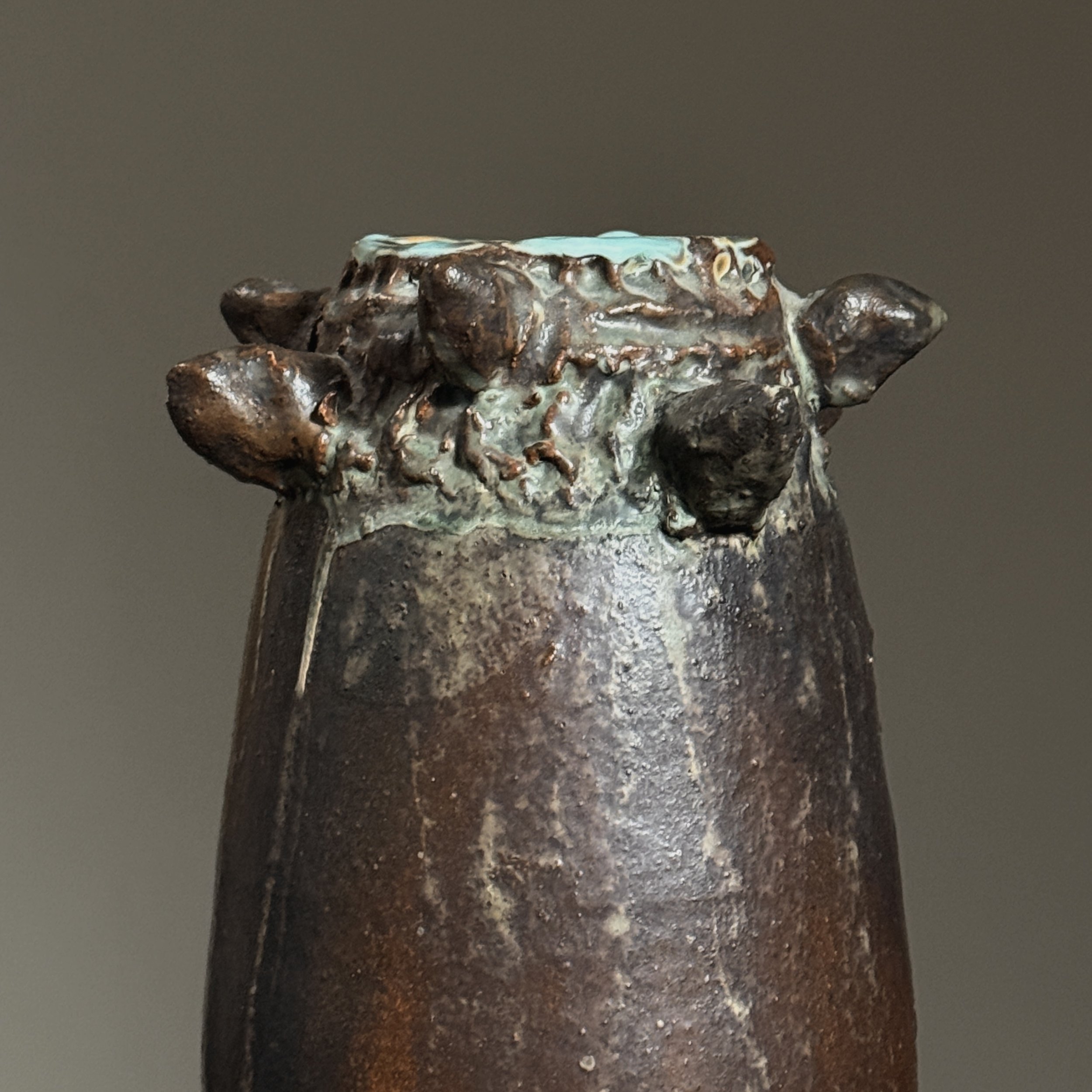
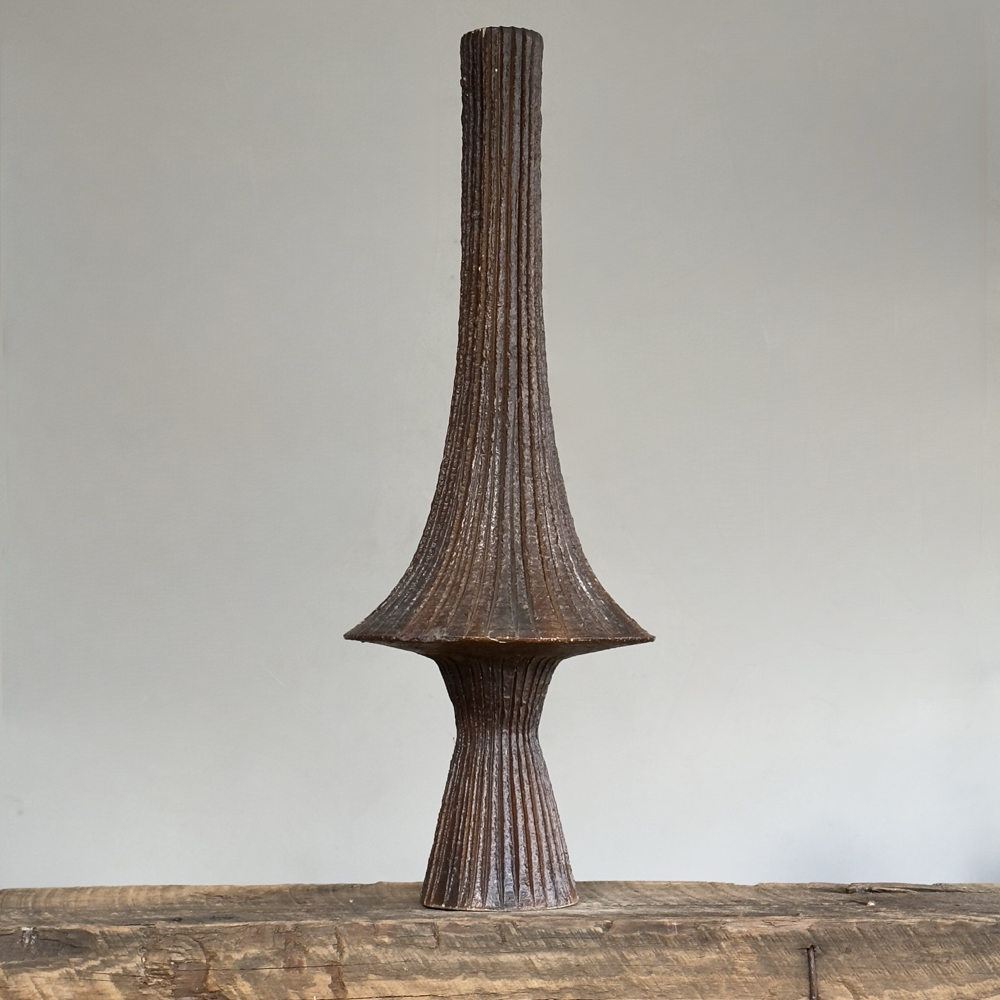
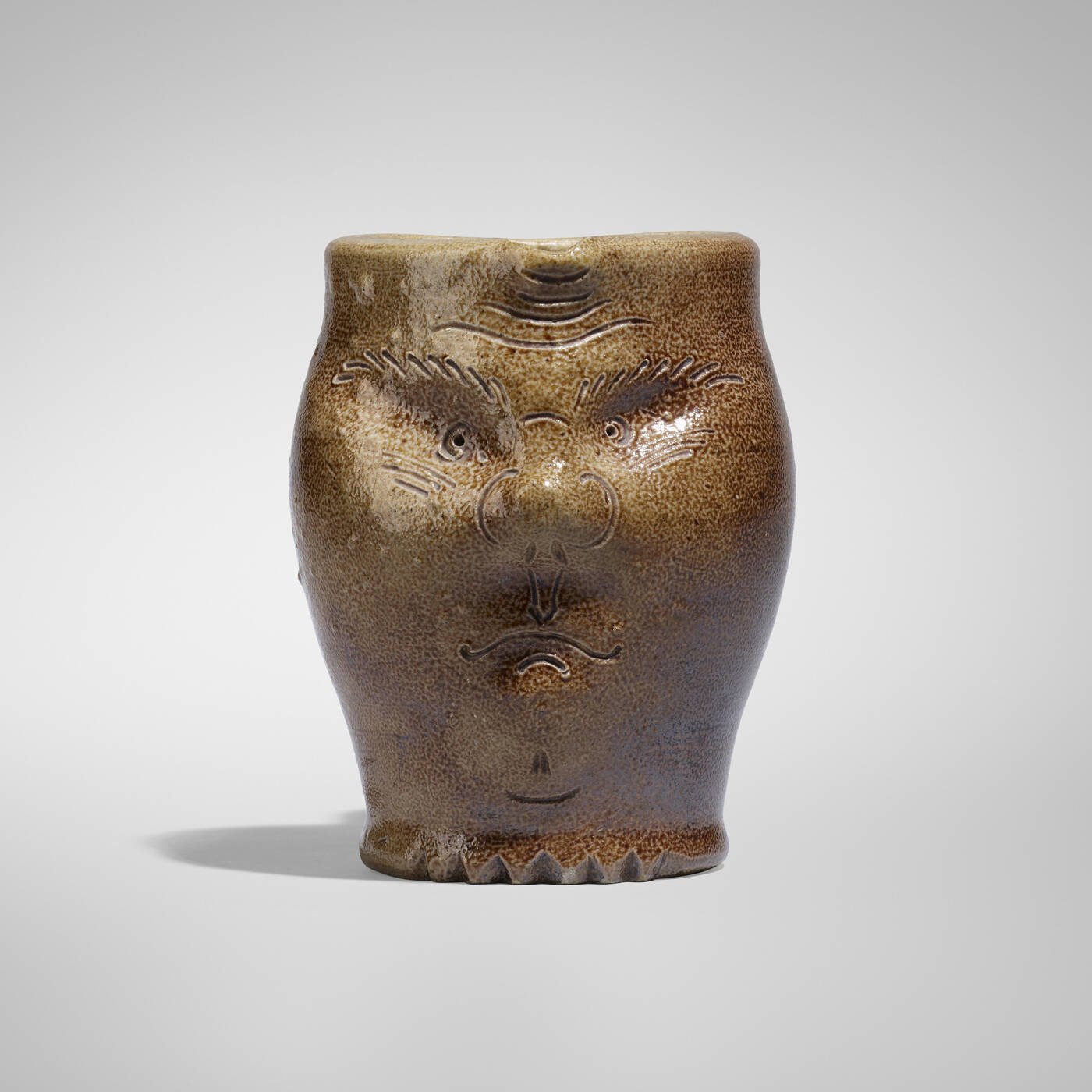
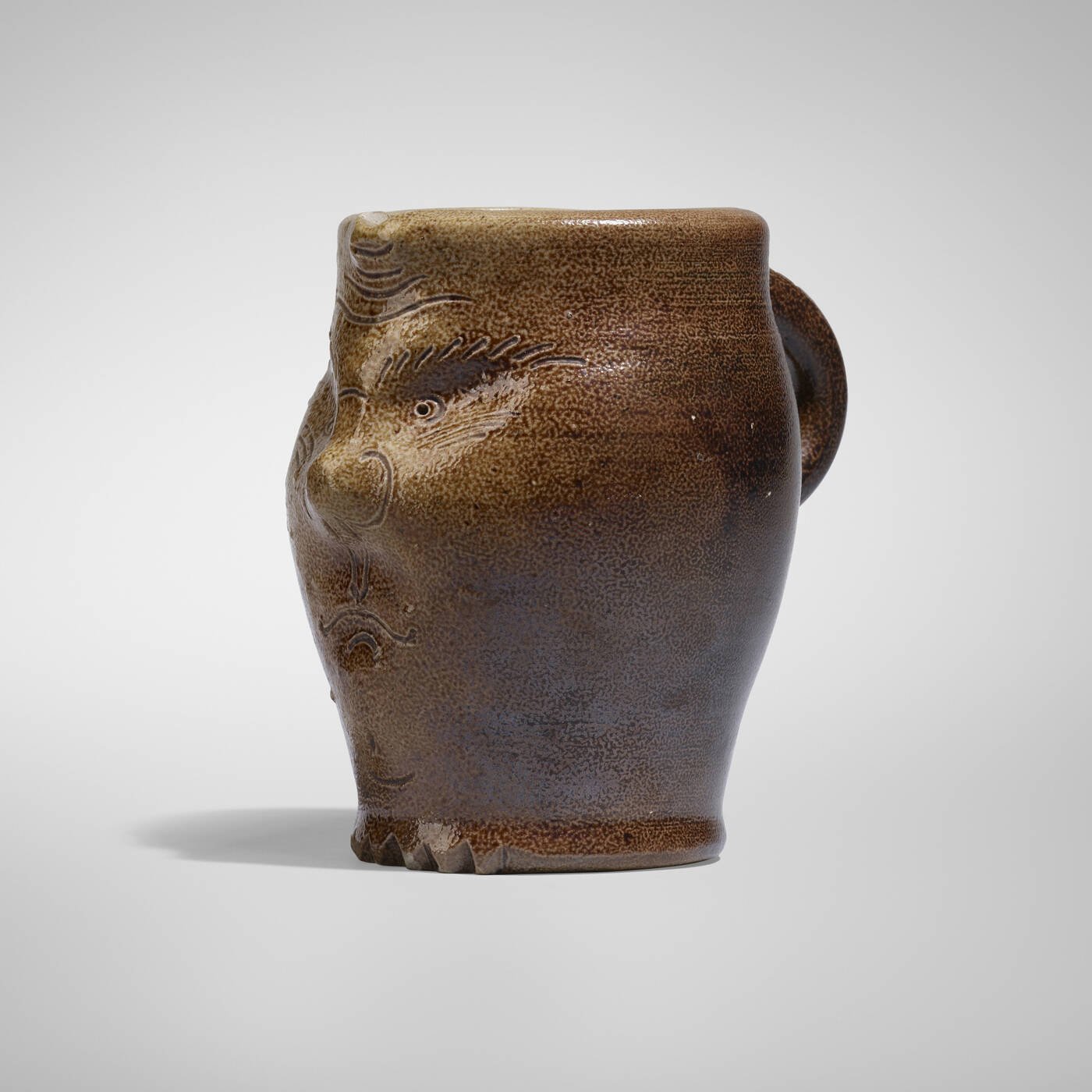
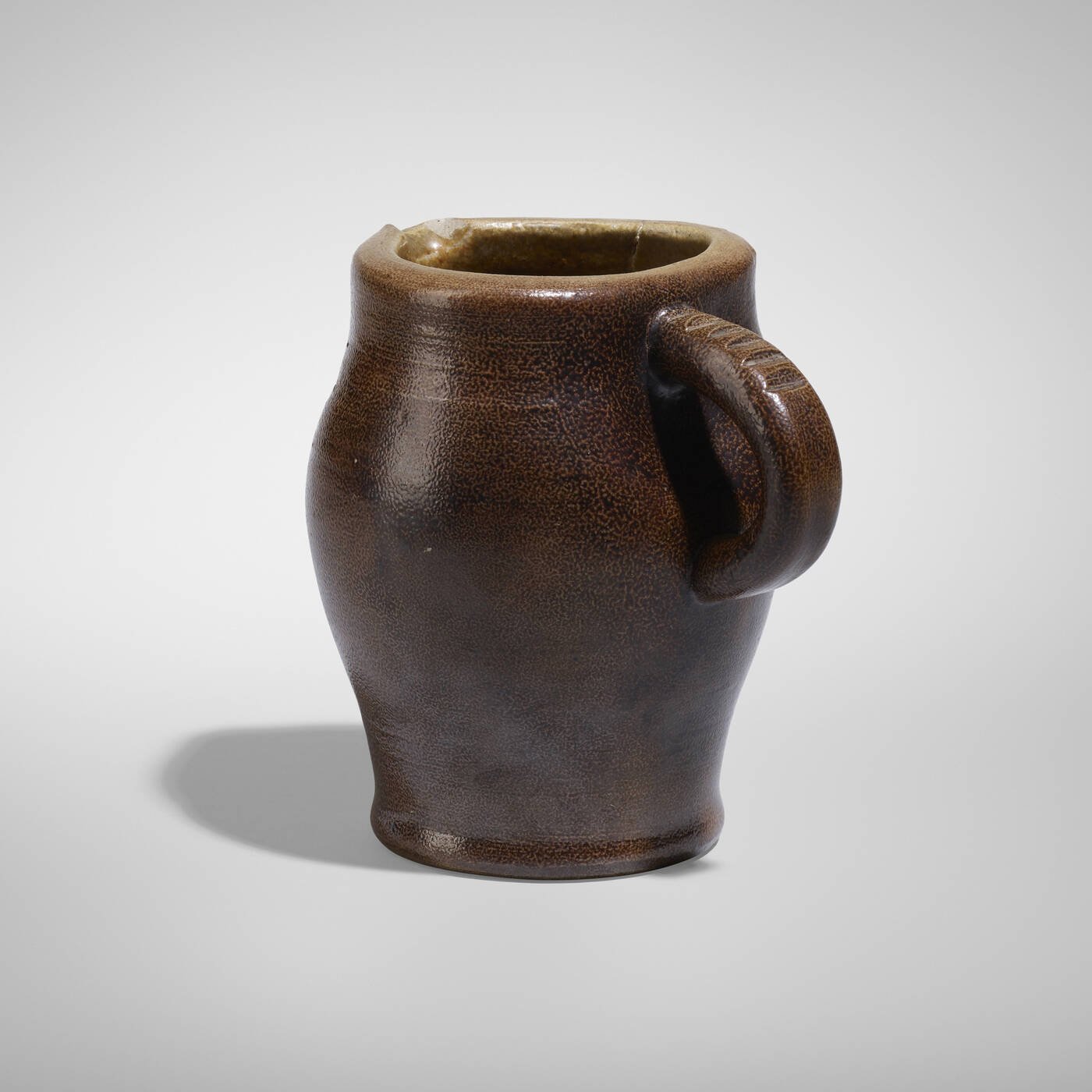
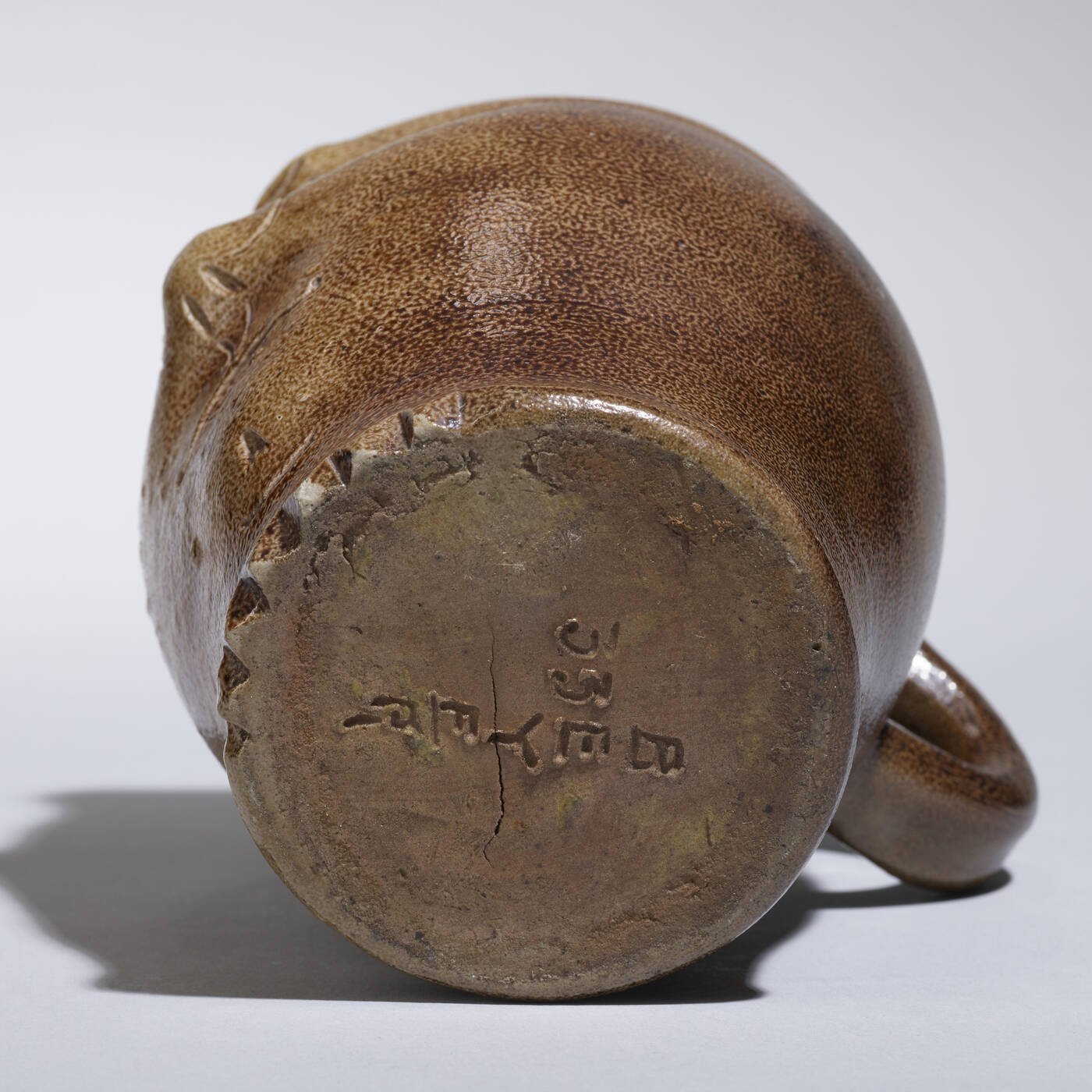
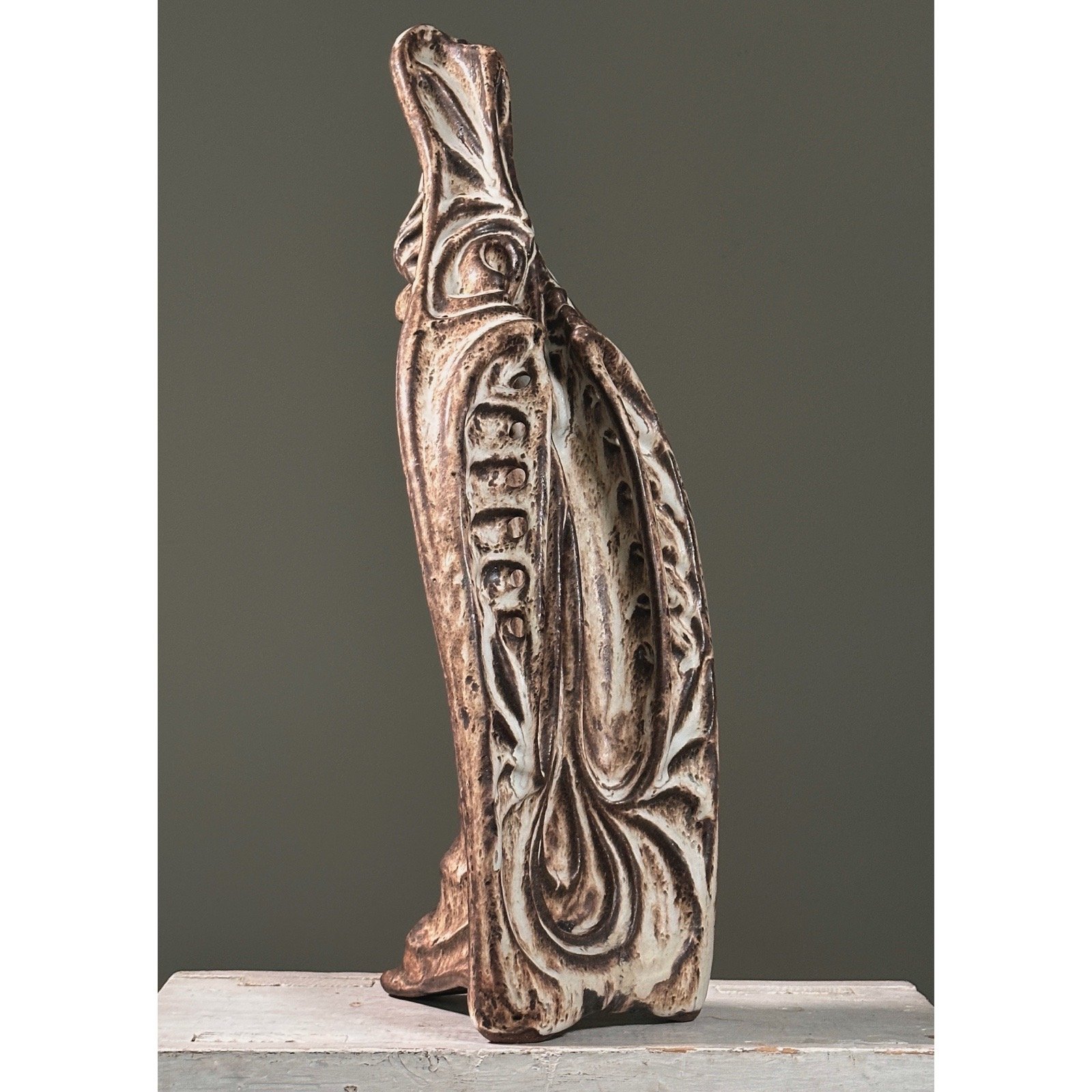
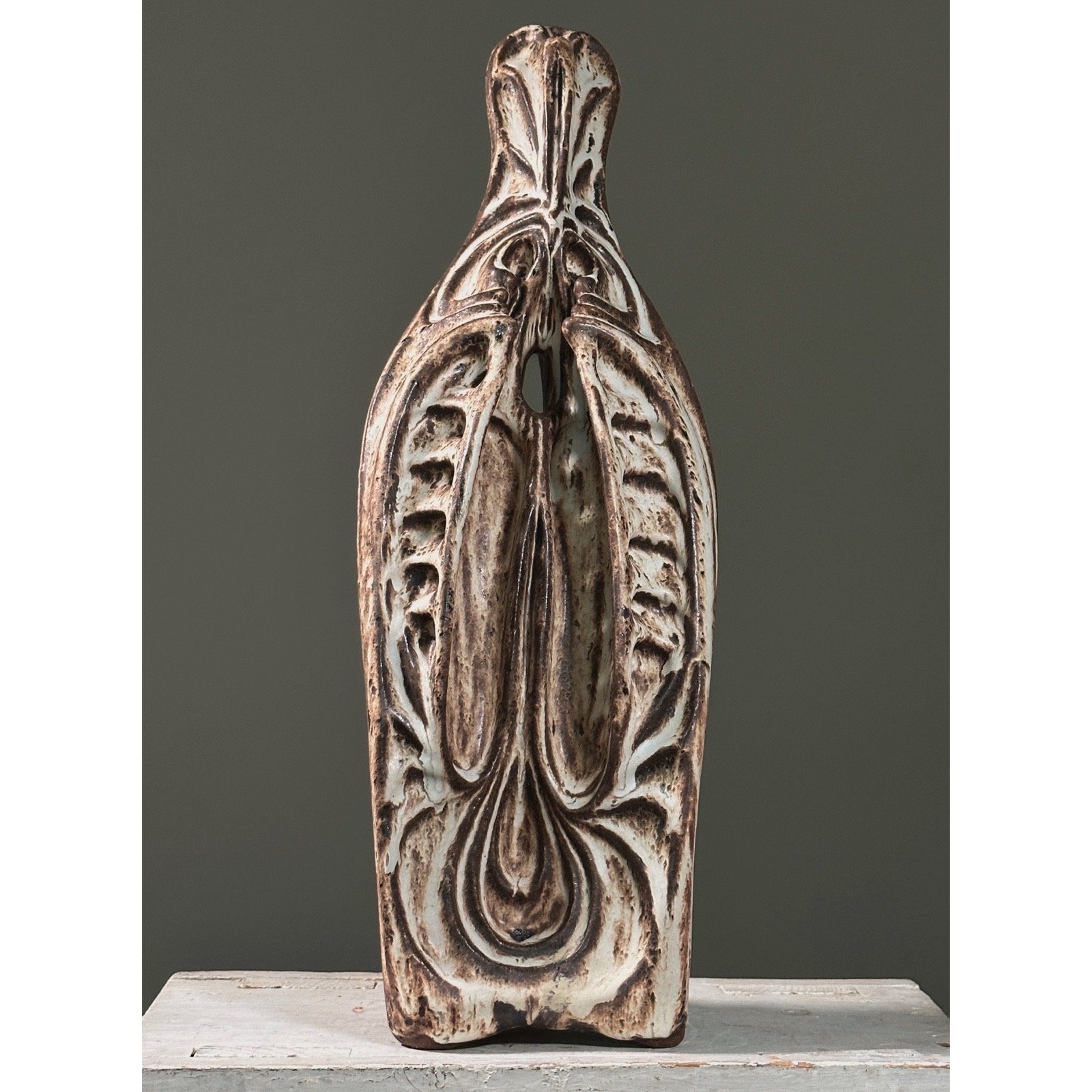
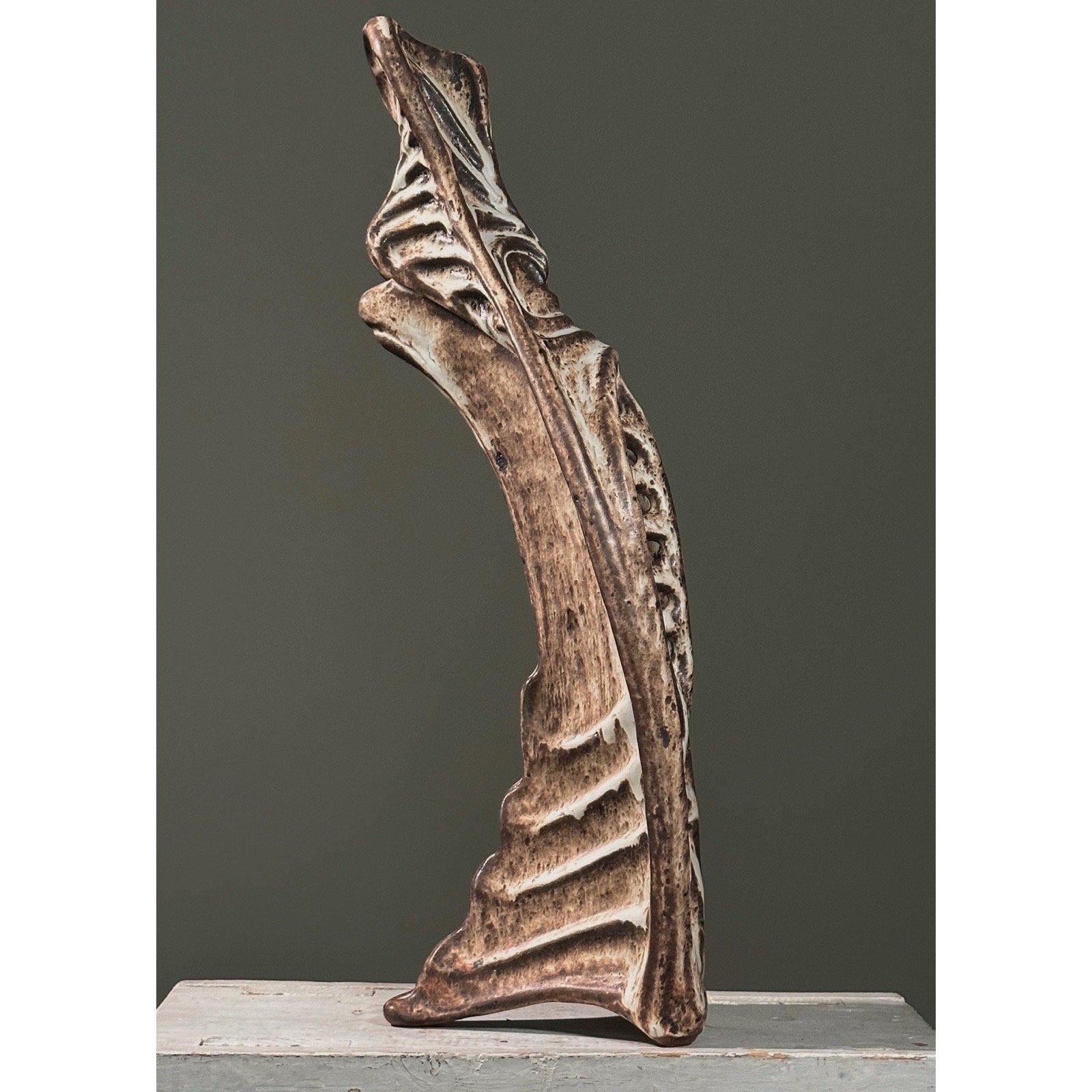
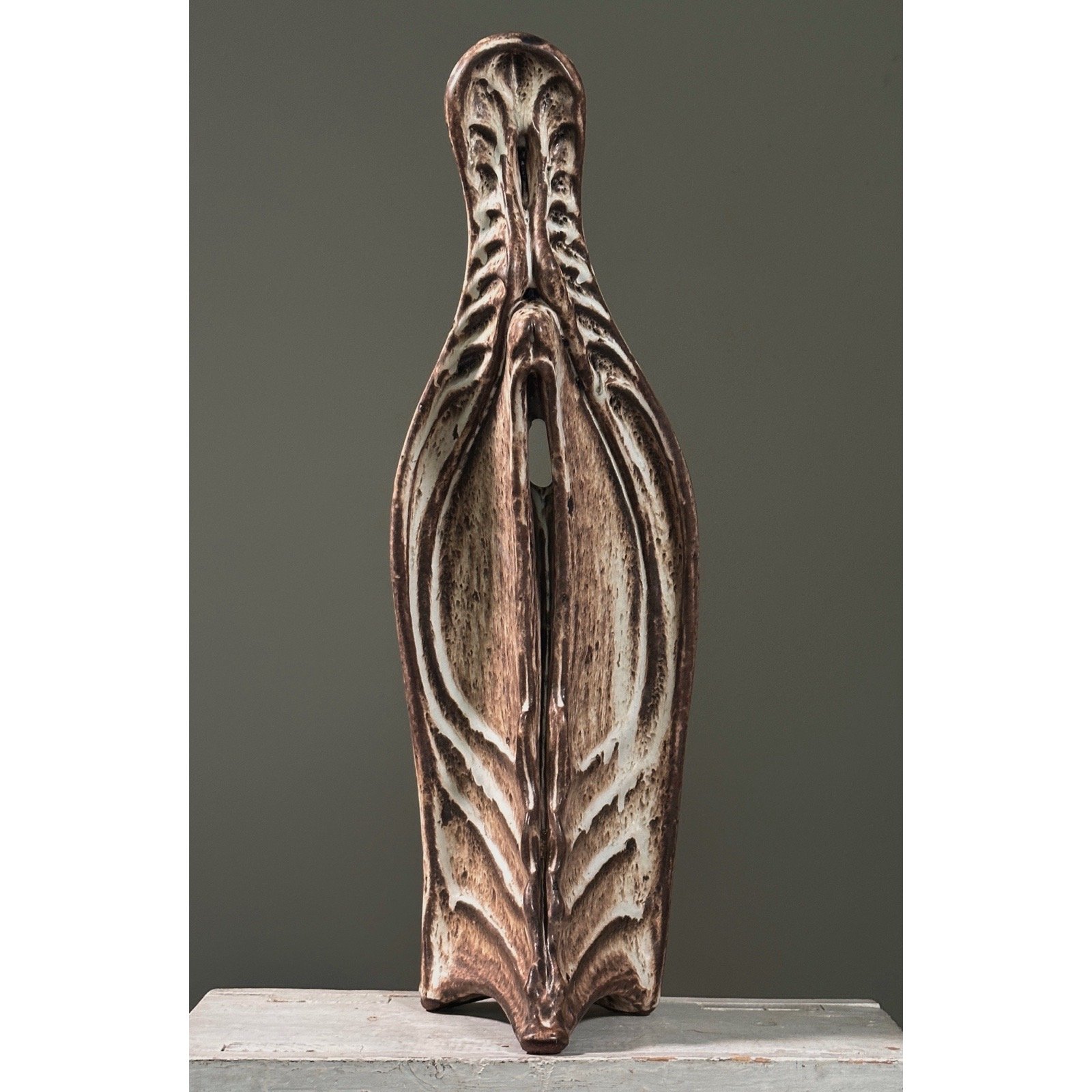
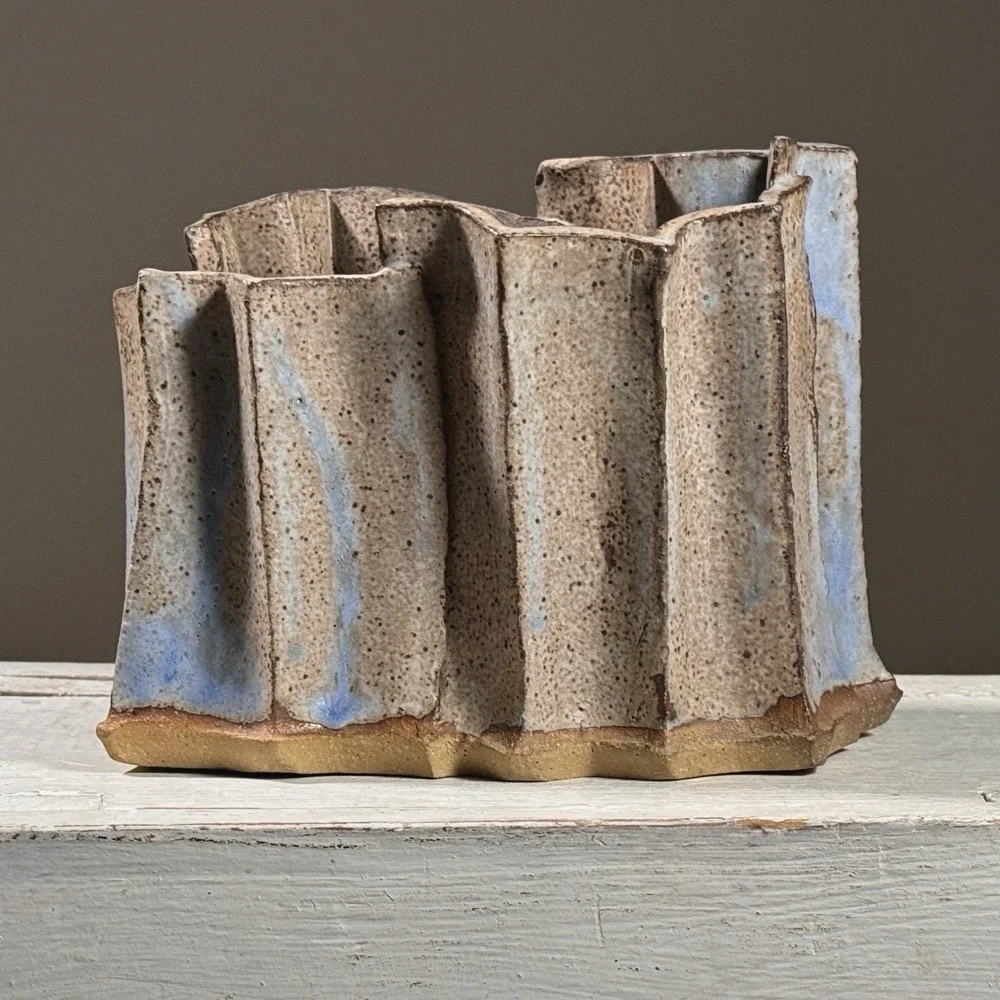
A Chinese ceramic jar executed in the style of Neolithic funerary wares from the Yellow River Valley. The clay has not been tested for age so we are not able to state its from a specific period. It is constructed from hand-built earthenware with painted decoration. The form comprises a bulbous body and flaring neck, painted with dark brown and black pigments forming geometric patterns including zigzags and concentric bands. The object is in used condition with wear consistent with age. Small chips are present on the rim. There are no cracks or repairs. Please refer to photos for details.
The painted pottery traditions of Neolithic China emerged along the Yellow River in the northwestern provinces of Gansu and Qinghai . The Majiayao culture (c. 3300–2000 BCE) is renowned for its potted earthenwares decorated with geometric patterns in mineral based pigments.
Neolithic jars of this type were constructed using the coiling method. Clay coils were stacked and joined, then paddled and scraped thin to achieve lightweight, thin-walled vessels . A fine slip was applied to the surface before decoration. Mineral pigments,iron and manganese oxides, were painted onto the leather hard clay using brushes. These pigments fire to red, brown, and black hues. The vessels were then fired in small, simple kilns at temperatures between 800 and 1,000 degrees Celsius.
The present jar exhibits the characteristic form and decorative program of Neolithic painted pottery while dating to the vintage period. The small chips to the rim represent minor damage consistent with age and handling. The absence of cracks or repairs indicates structural integrity.
Title: Painted Pottery Jar
Culture: Chinese (Neolithic style)
Date: Antique
Medium: Earthenware
Technique: Hand-built, painted with red and black mineral pigments
Dimensions: Height: 15.2 cm (6 in), Diameter: 17.8 cm (7 in)
Condition: Used; small chips to rim; wear consistent with age; no cracks or repairs. See photographs for detailed condition.
A Chinese ceramic jar executed in the style of Neolithic funerary wares from the Yellow River Valley. The clay has not been tested for age so we are not able to state its from a specific period. It is constructed from hand-built earthenware with painted decoration. The form comprises a bulbous body and flaring neck, painted with dark brown and black pigments forming geometric patterns including zigzags and concentric bands. The object is in used condition with wear consistent with age. Small chips are present on the rim. There are no cracks or repairs. Please refer to photos for details.
The painted pottery traditions of Neolithic China emerged along the Yellow River in the northwestern provinces of Gansu and Qinghai . The Majiayao culture (c. 3300–2000 BCE) is renowned for its potted earthenwares decorated with geometric patterns in mineral based pigments.
Neolithic jars of this type were constructed using the coiling method. Clay coils were stacked and joined, then paddled and scraped thin to achieve lightweight, thin-walled vessels . A fine slip was applied to the surface before decoration. Mineral pigments,iron and manganese oxides, were painted onto the leather hard clay using brushes. These pigments fire to red, brown, and black hues. The vessels were then fired in small, simple kilns at temperatures between 800 and 1,000 degrees Celsius.
The present jar exhibits the characteristic form and decorative program of Neolithic painted pottery while dating to the vintage period. The small chips to the rim represent minor damage consistent with age and handling. The absence of cracks or repairs indicates structural integrity.

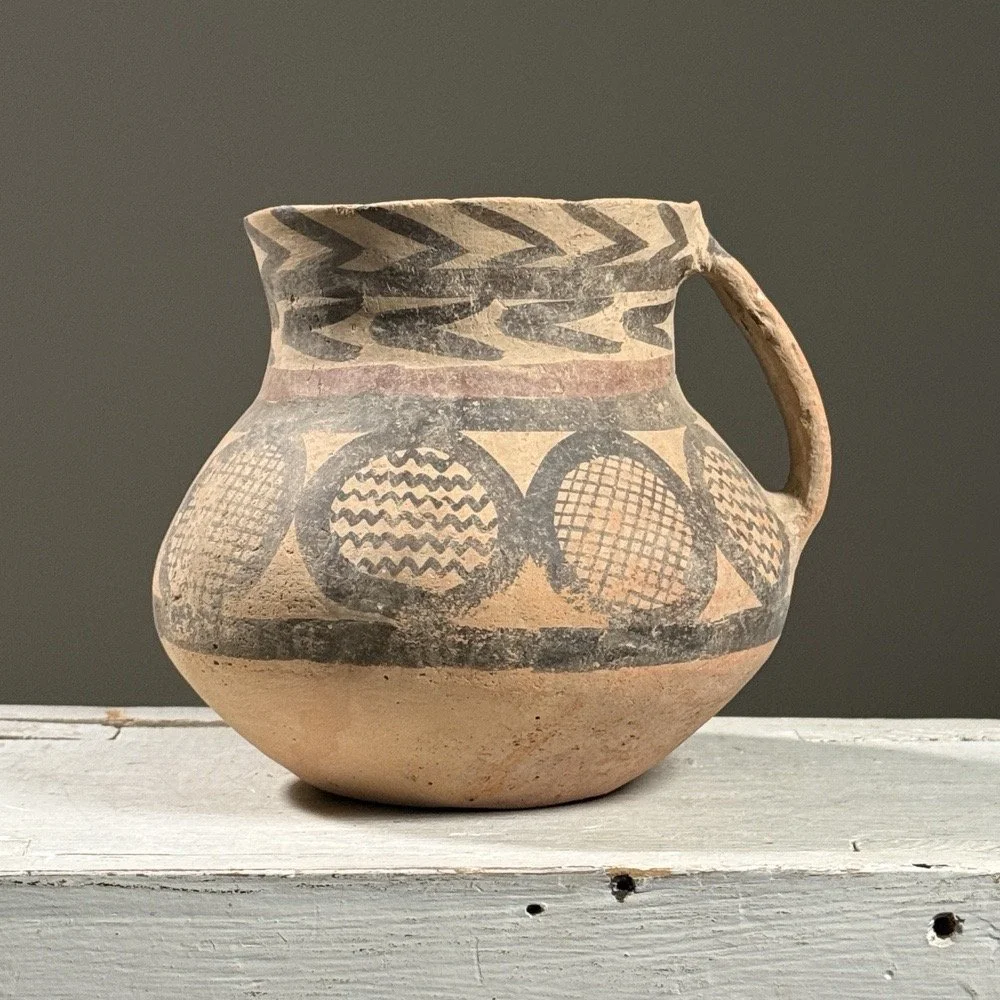 Image 1 of 8
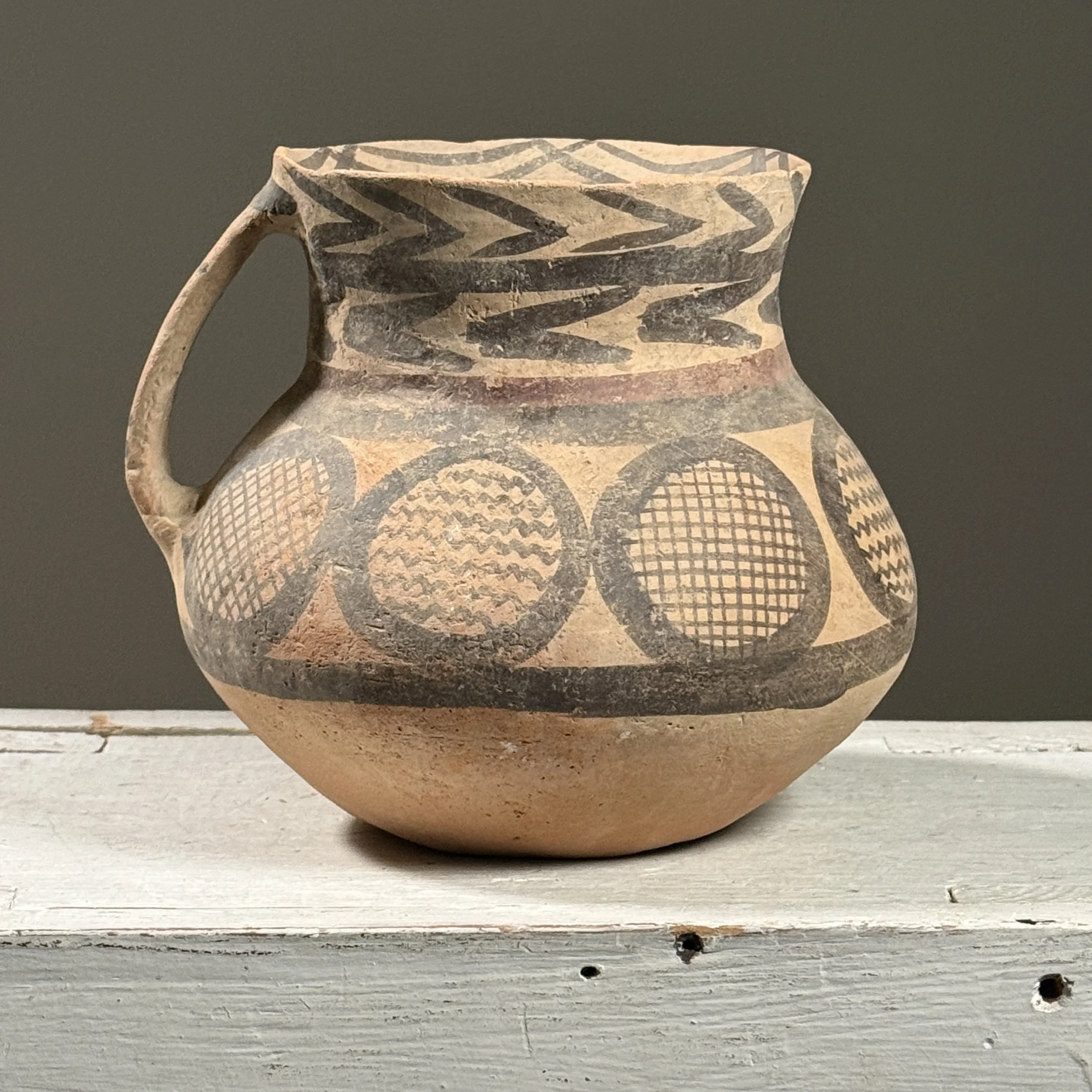 Image 2 of 8
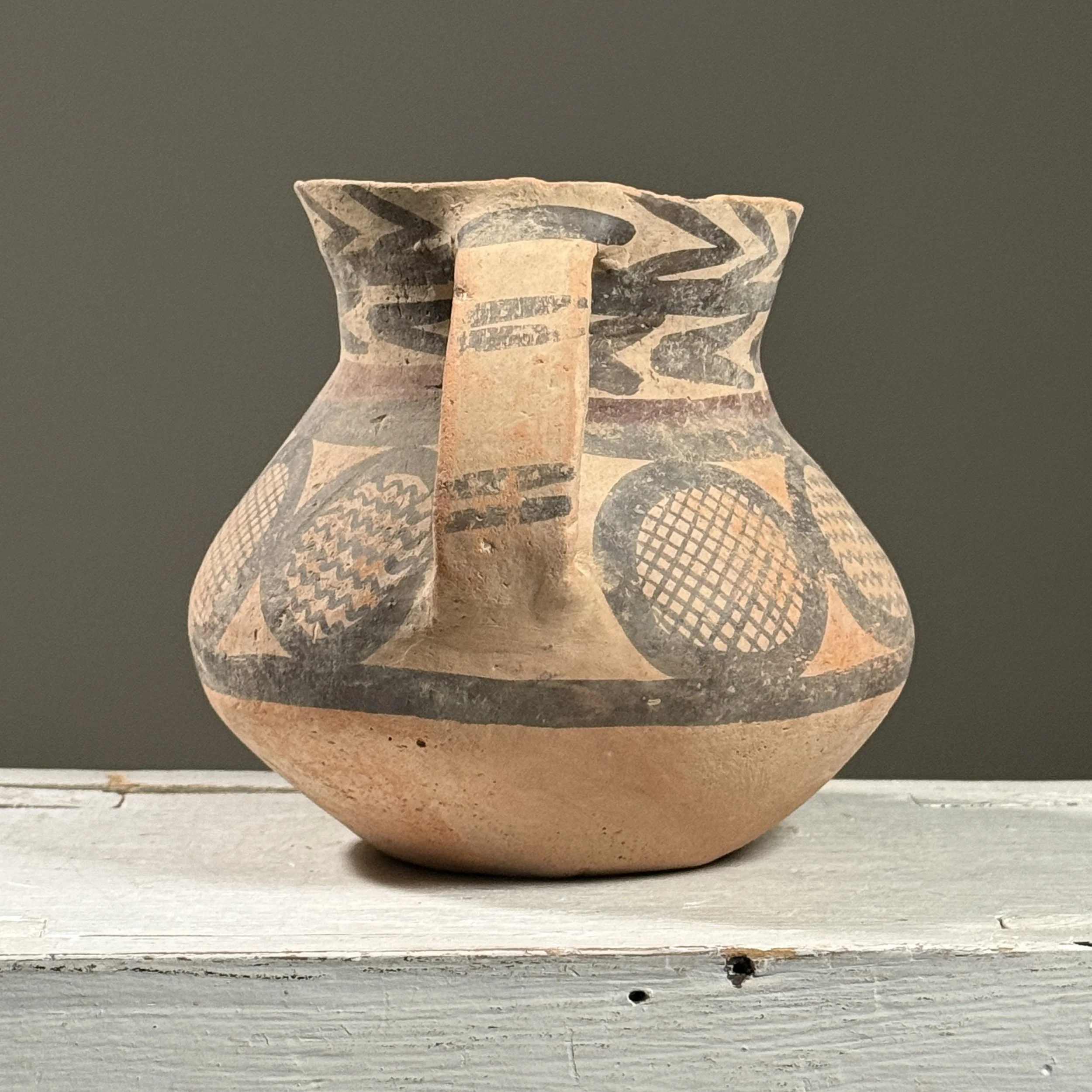 Image 3 of 8
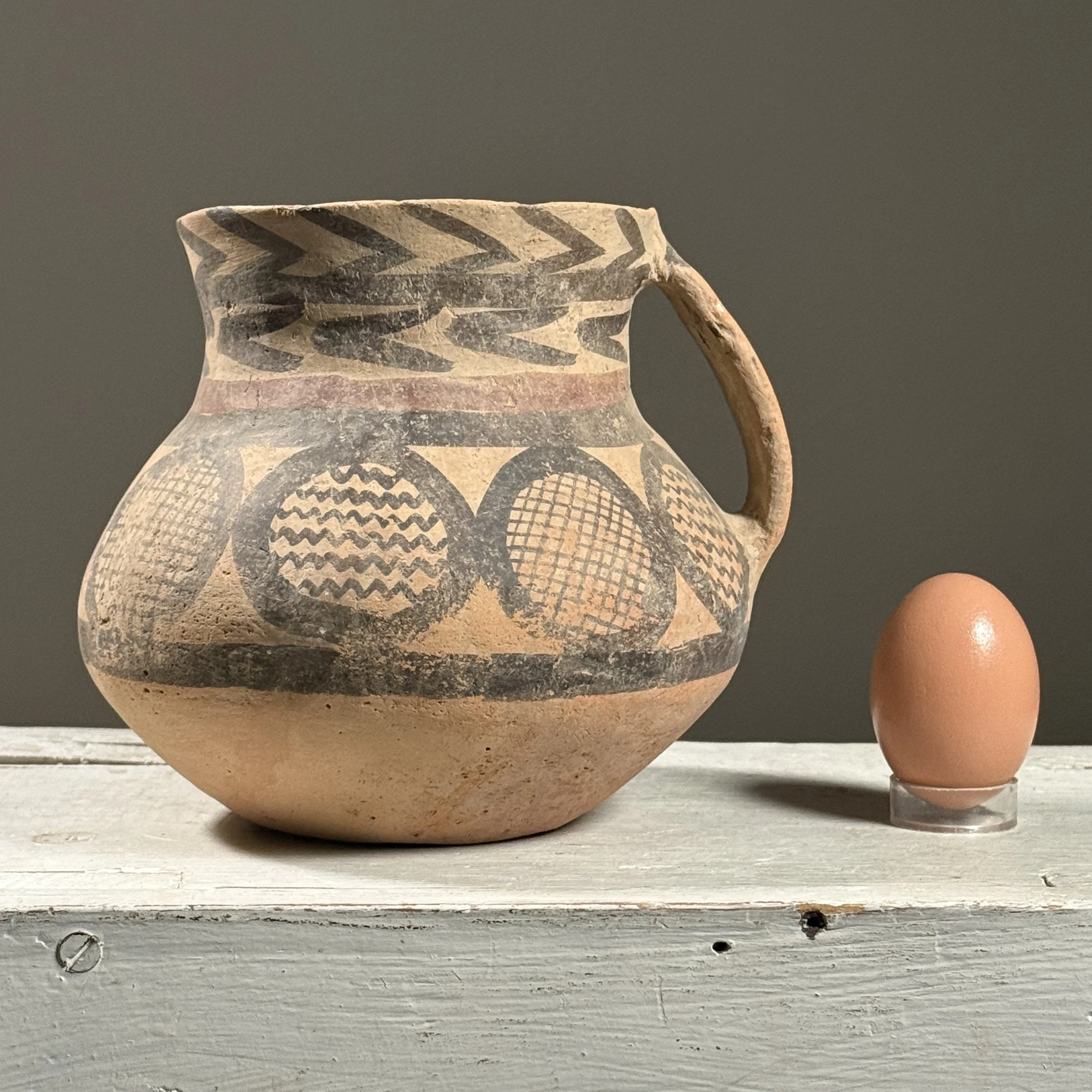 Image 4 of 8
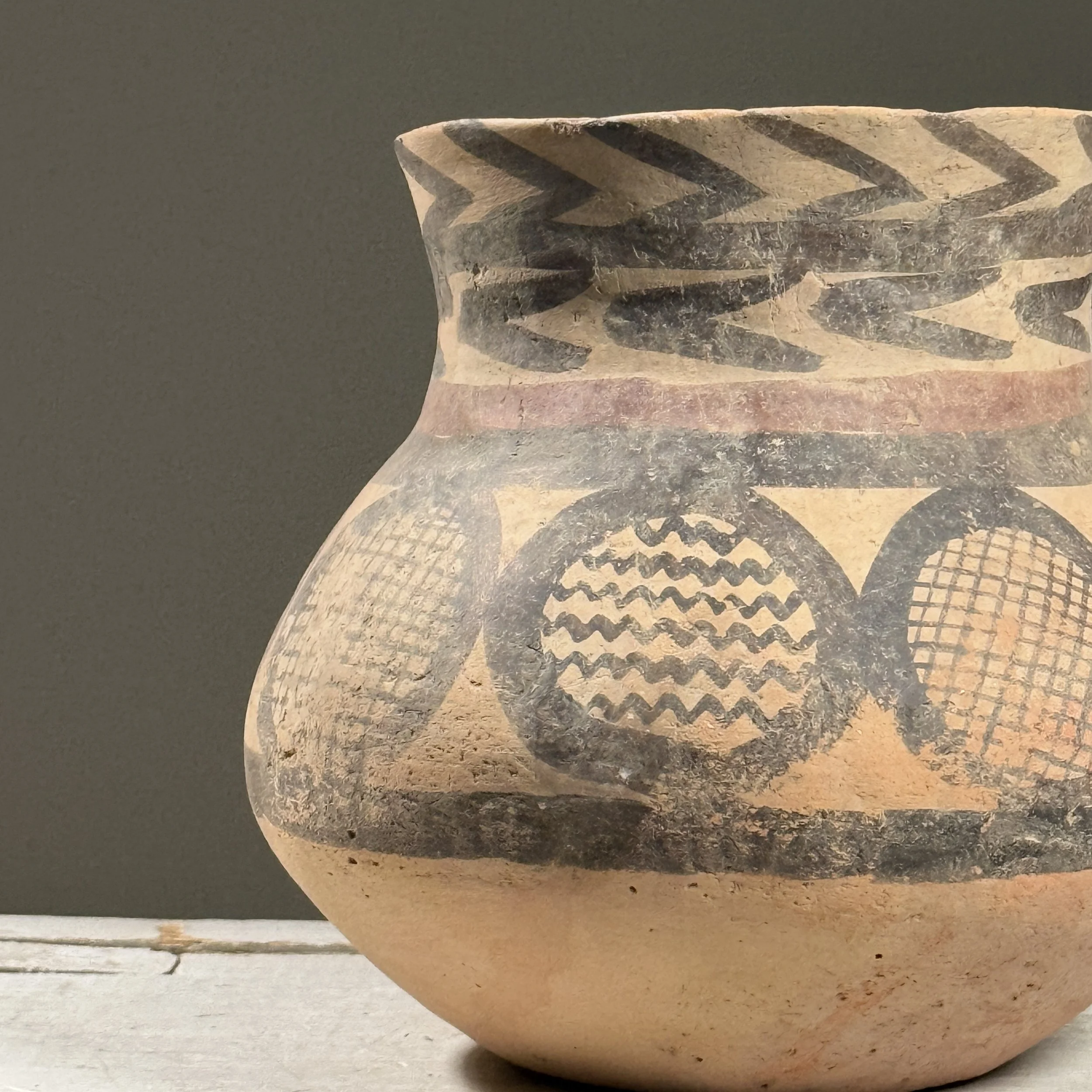 Image 5 of 8
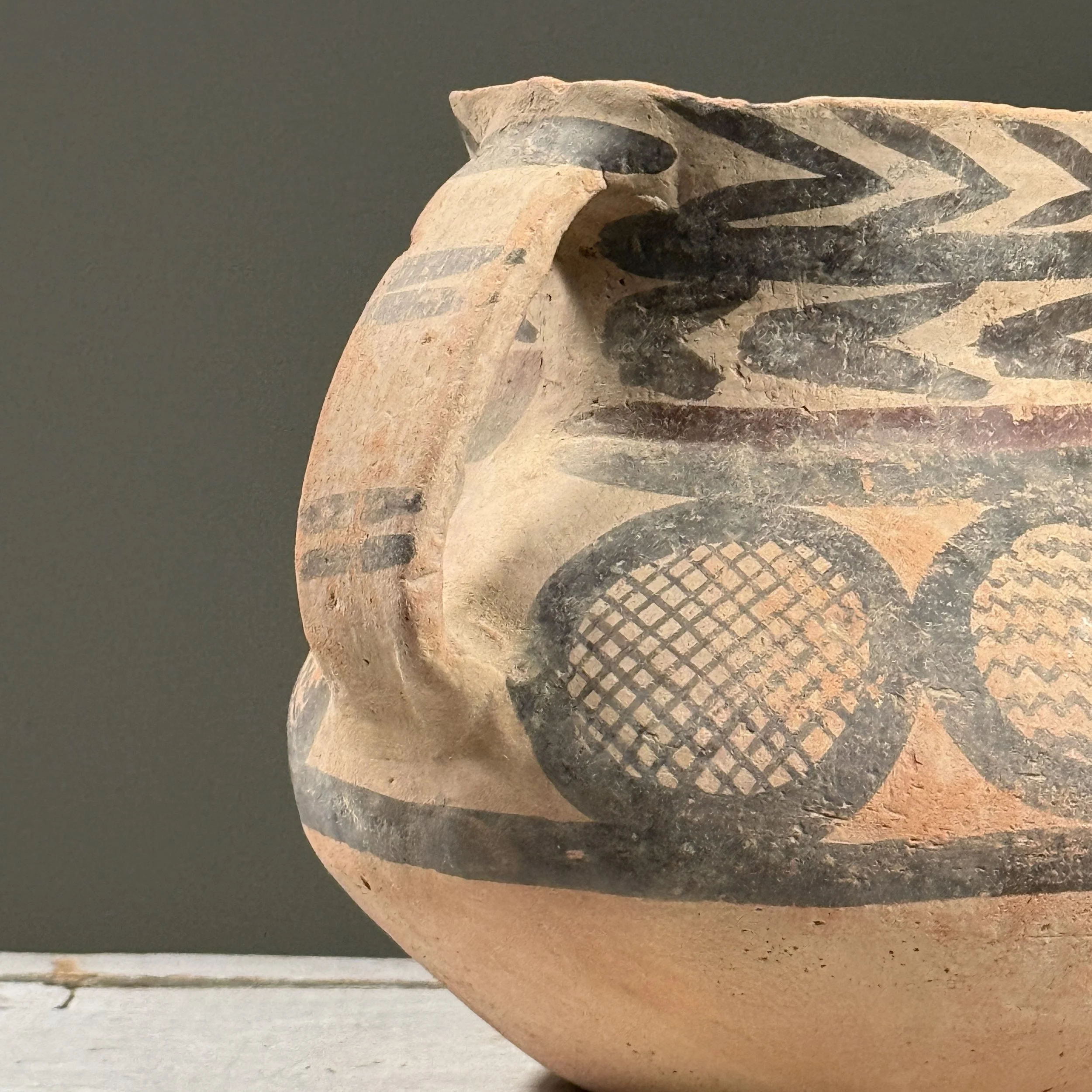 Image 6 of 8
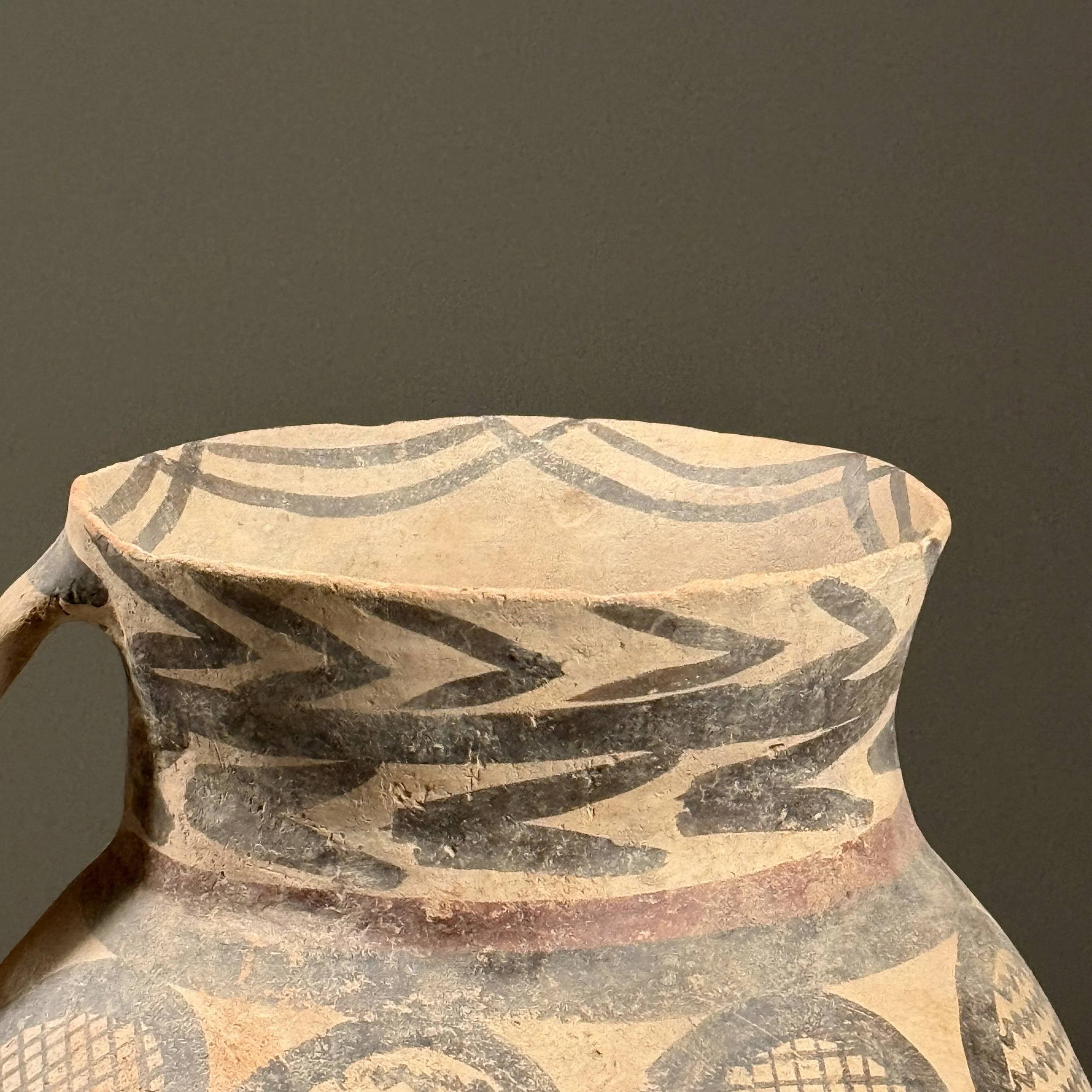 Image 7 of 8
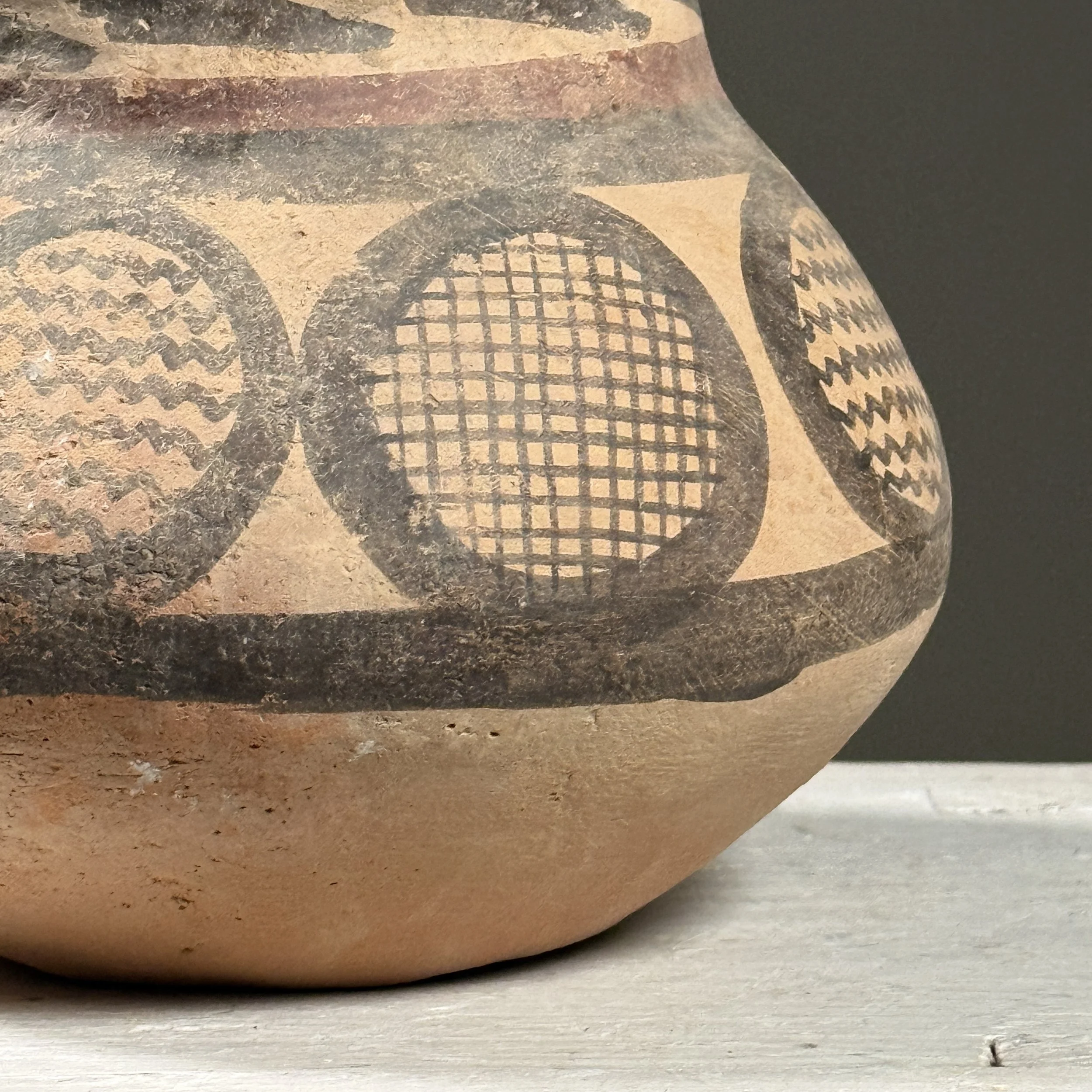 Image 8 of 8