Medium: Porcelain, cobalt ground with raised gold decoration
Maker: William Brownfield & Son, Cobridge, Staffordshire, England
Nationality/Style: English, Aesthetic Movement, 19th century
Dimensions: 9" diameter (each)
Marks: B5120 written in red on the reverse
Condition: Good; wear consistent with age. No cracks or chips. Please refer to photos for details.
Pair of 19th century Brownfield English porcelain plates from the Aesthetic period. Both are executed in deep cobalt blue and gold, meticulously hand-painted with designs featuring fruits, insects, and birds. One plate illustrates a chestnut branch with a butterfly in flight; the other depicts a peach branch with a bee resting on the fruit. The number B5120 is written on the back in red. In good condition with wear consistent with age. No cracks or chips.
Maker Biography: William Brownfield & Son
William Brownfield (died 1873) was a prominent English porcelain and earthenware manufacturer based in Cobridge, Staffordshire. He entered partnership as Wood & Brownfield in 1836, became sole owner in 1850, and was joined by his son William Eccles Brownfield in 1871. The firm operated as William Brownfield & Son until 1890, when it was converted into a co-operative, the Brownfield Guild Pottery Society Ltd., which closed in 1900.
The firm is particularly associated with the Aesthetic Movement. Brownfield dessert services of the 1870s and 1880s are characterized by cobalt blue borders, raised paste gilding, and hand-painted botanical subjects, orchids, fruit branches, and insects.
Museum Holdings:
Works by William Brownfield are held in the Victoria and Albert Museum, London, which holds a teapot (c. 1868) and a porcelain figure (c. 1877). The British Museum holds a Brownfield & Sons plate made for the American market (c. 1880). Additional holdings are documented at the Bowdoin College Museum of Art and Iowa State University.

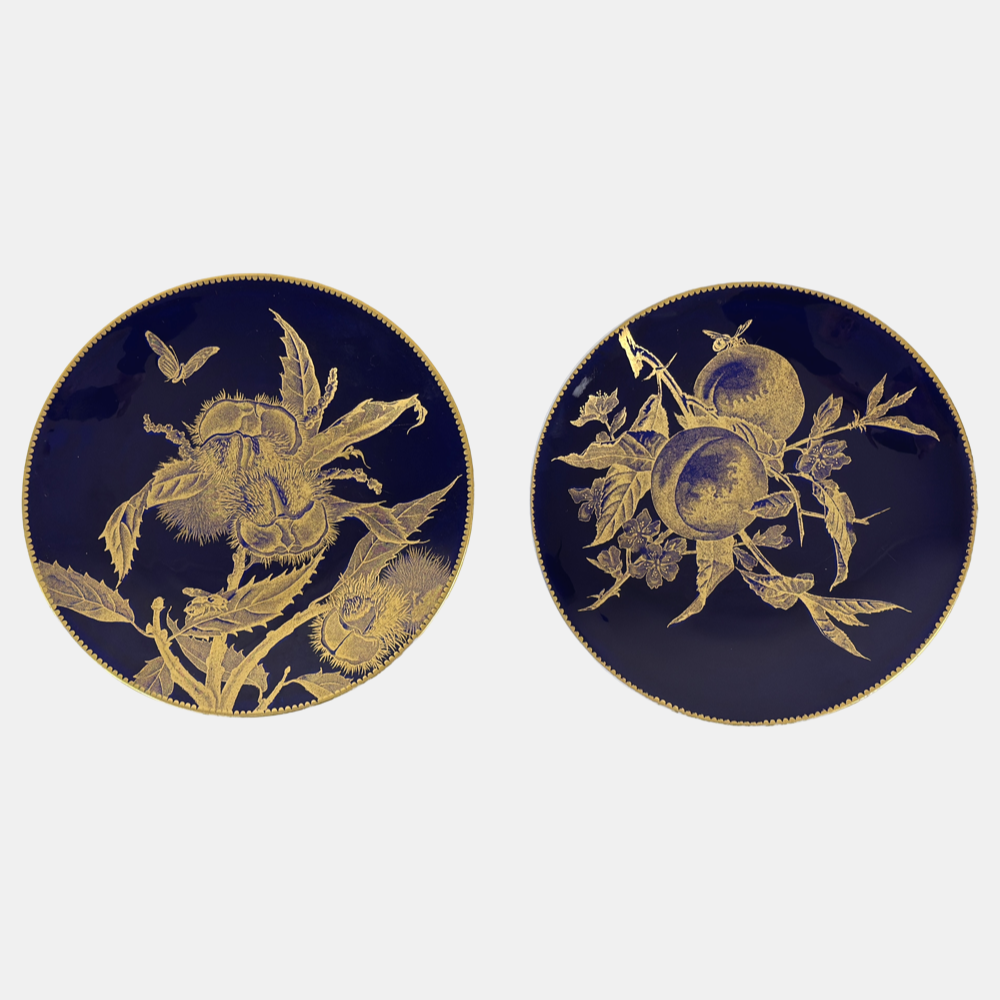 Image 1 of 12
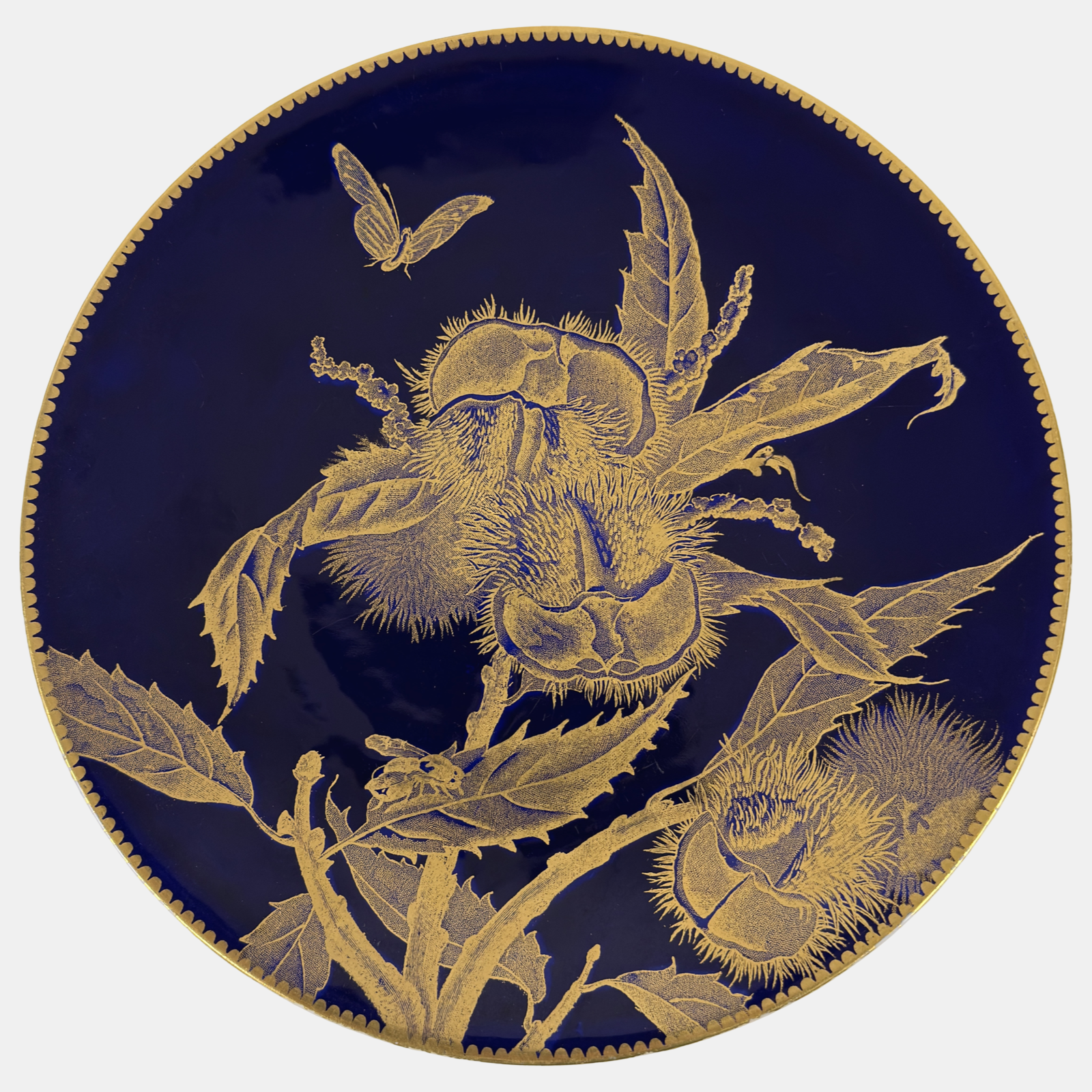 Image 2 of 12
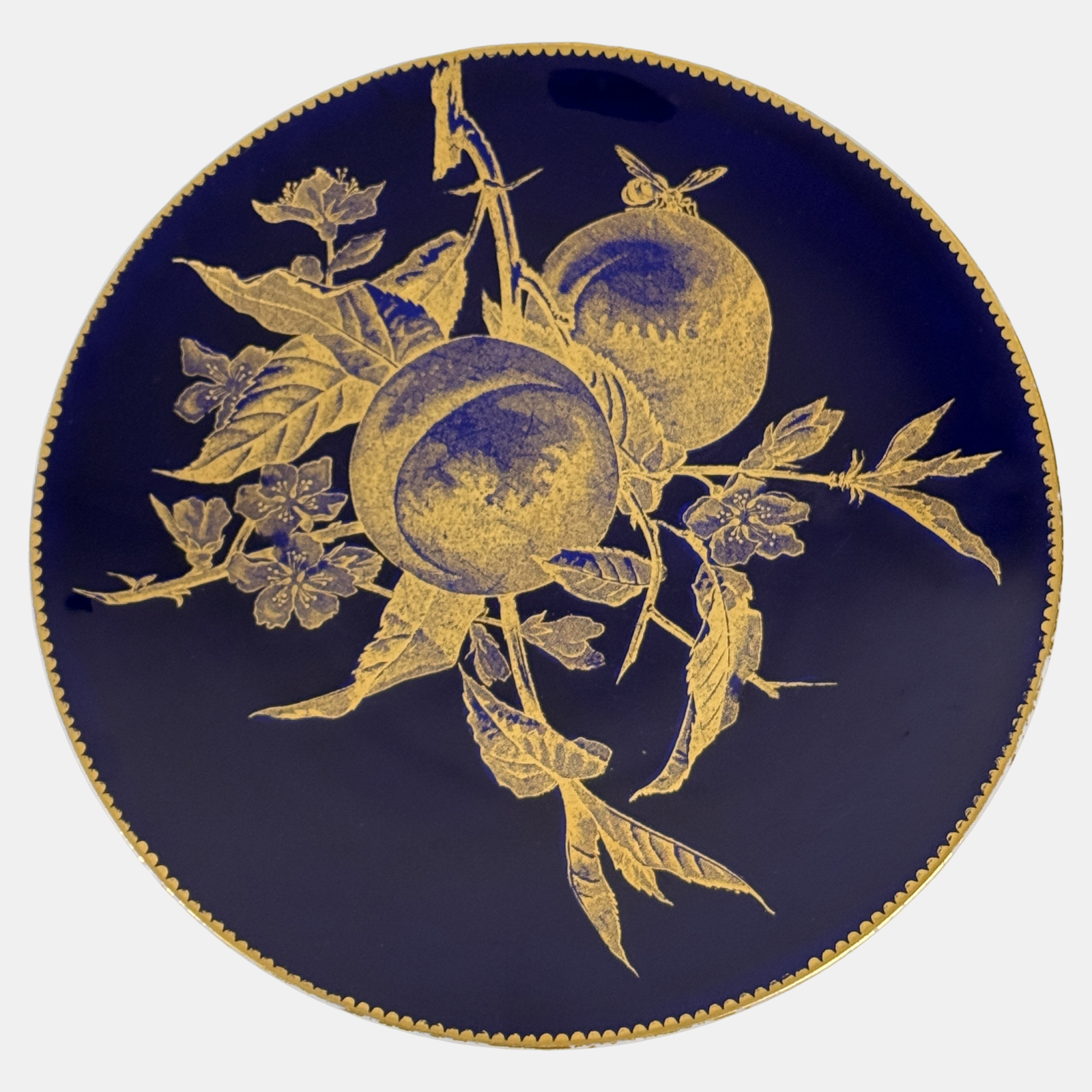 Image 3 of 12
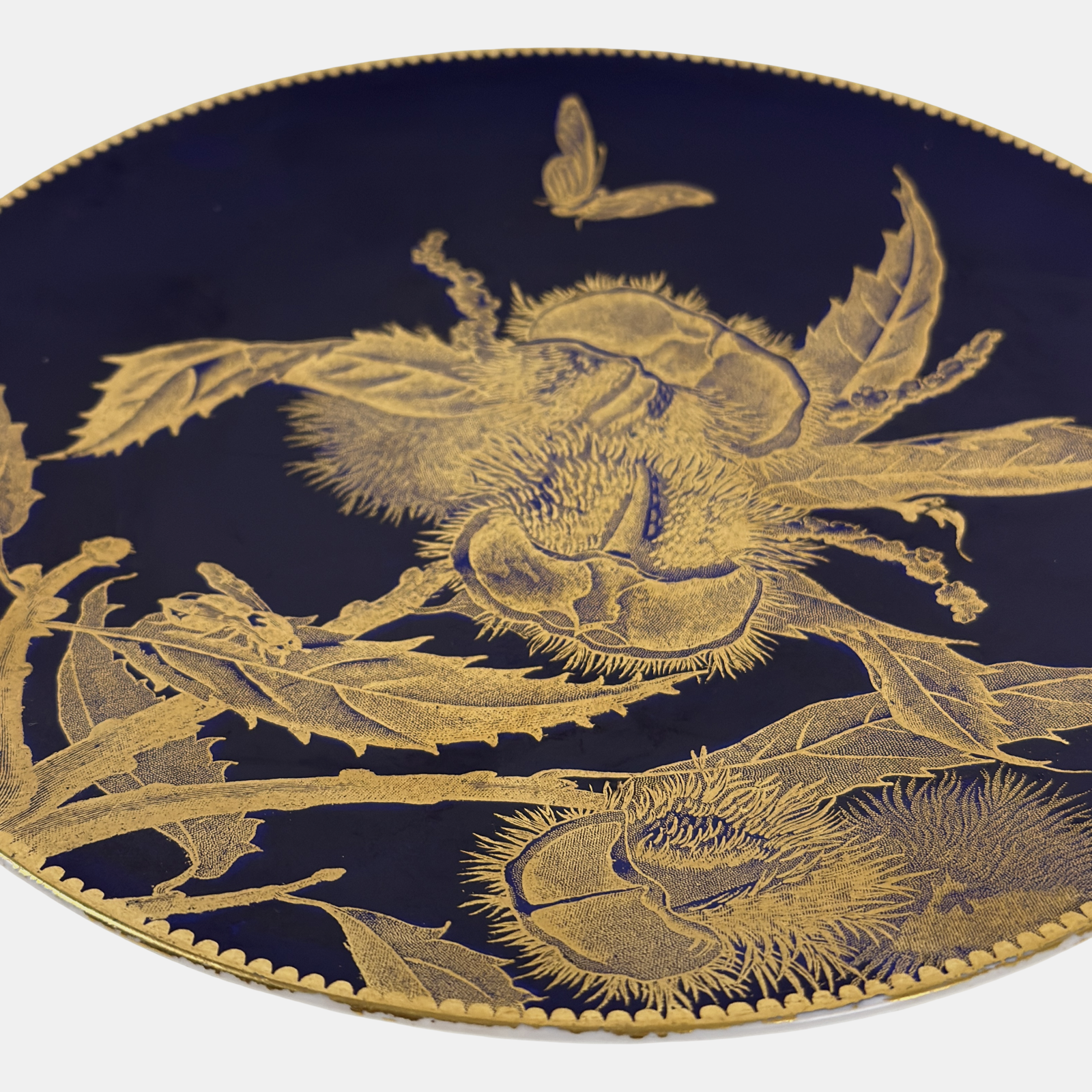 Image 4 of 12
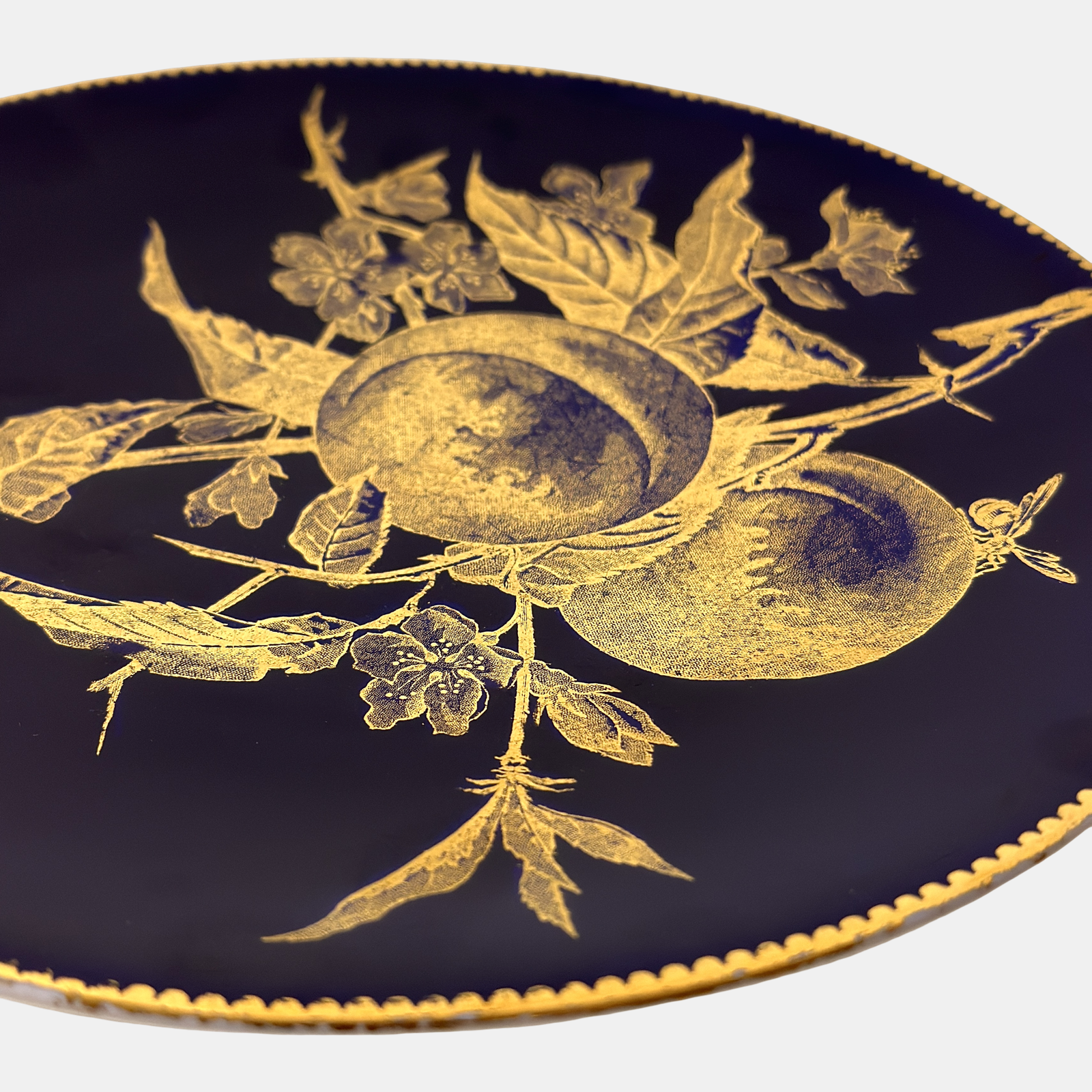 Image 5 of 12
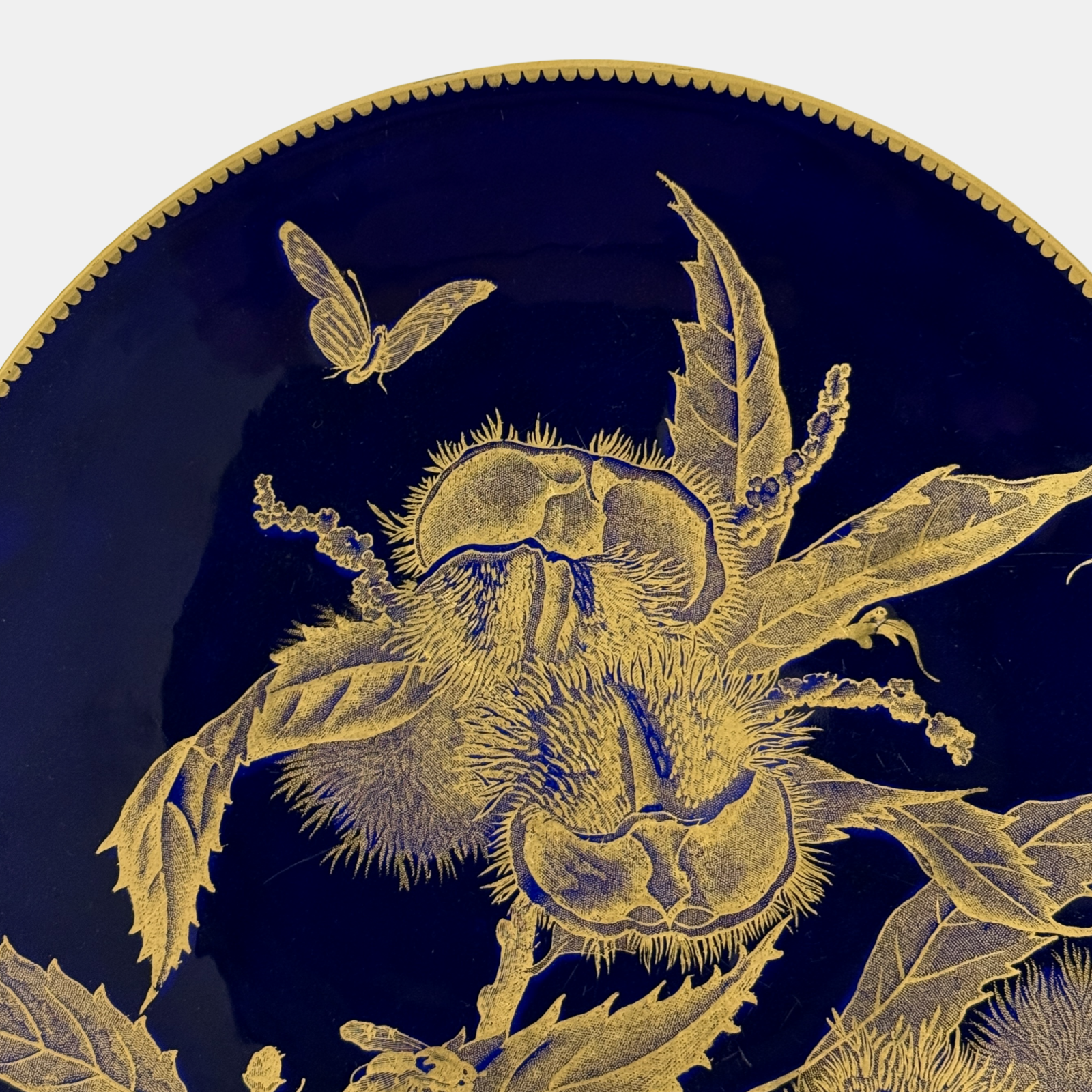 Image 6 of 12
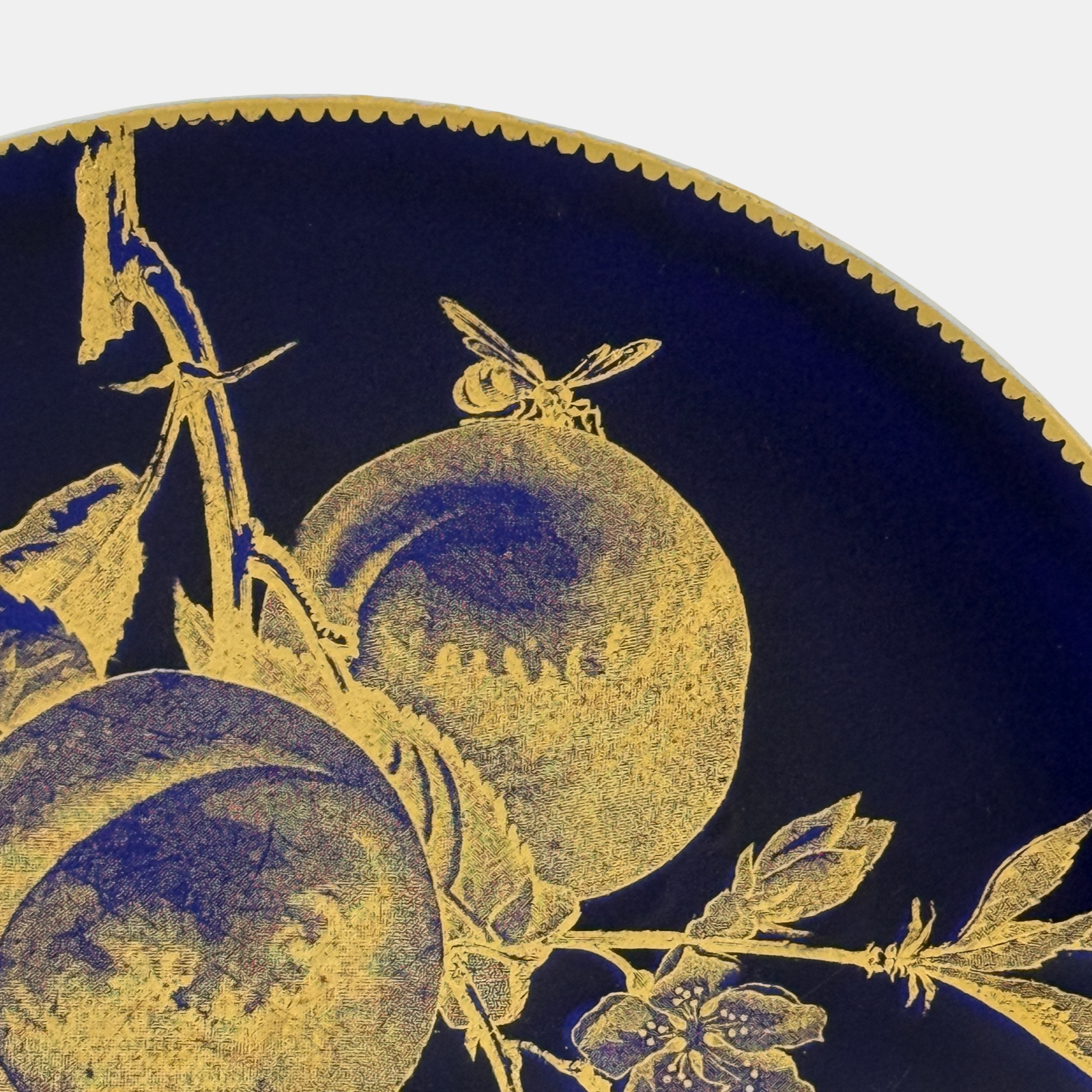 Image 7 of 12
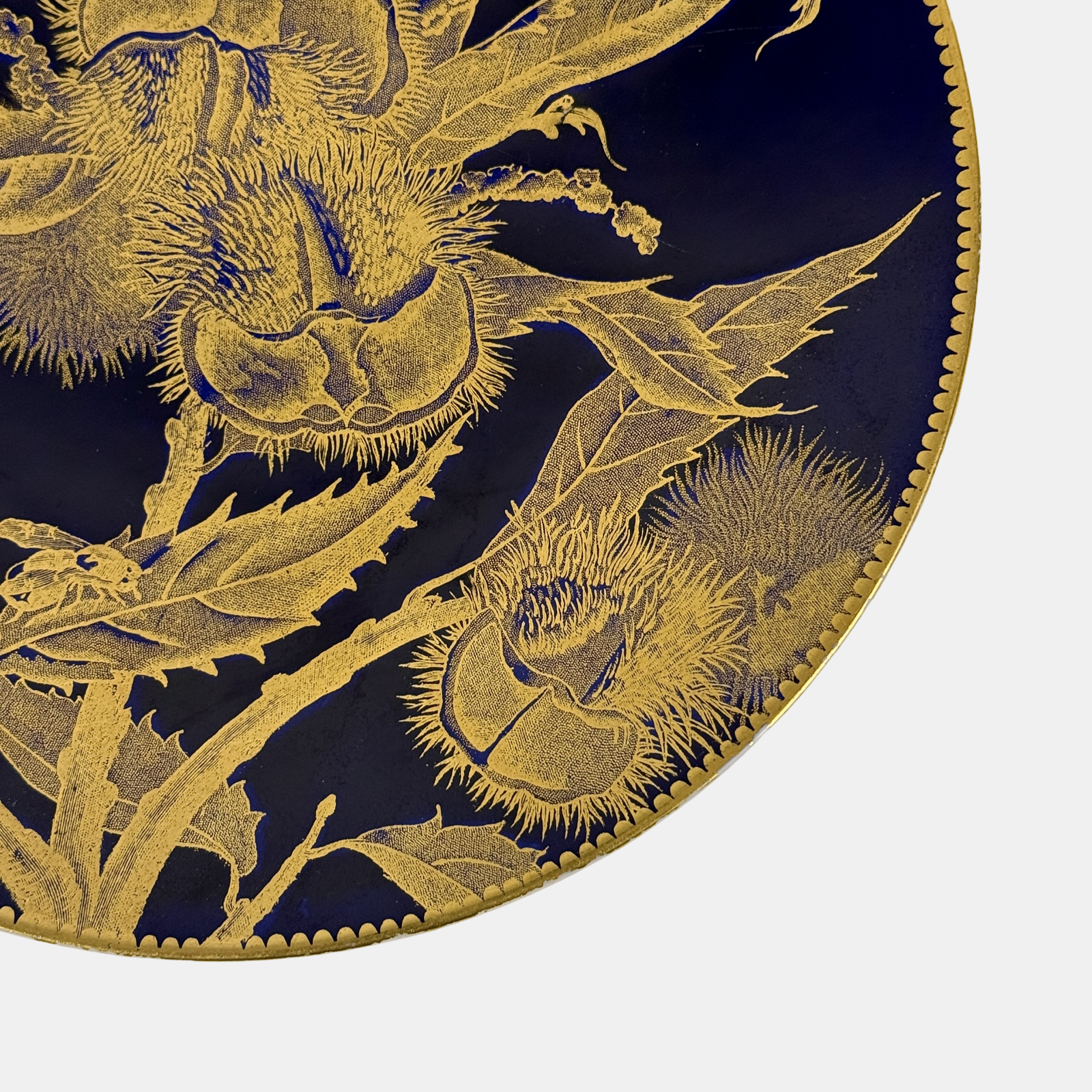 Image 8 of 12
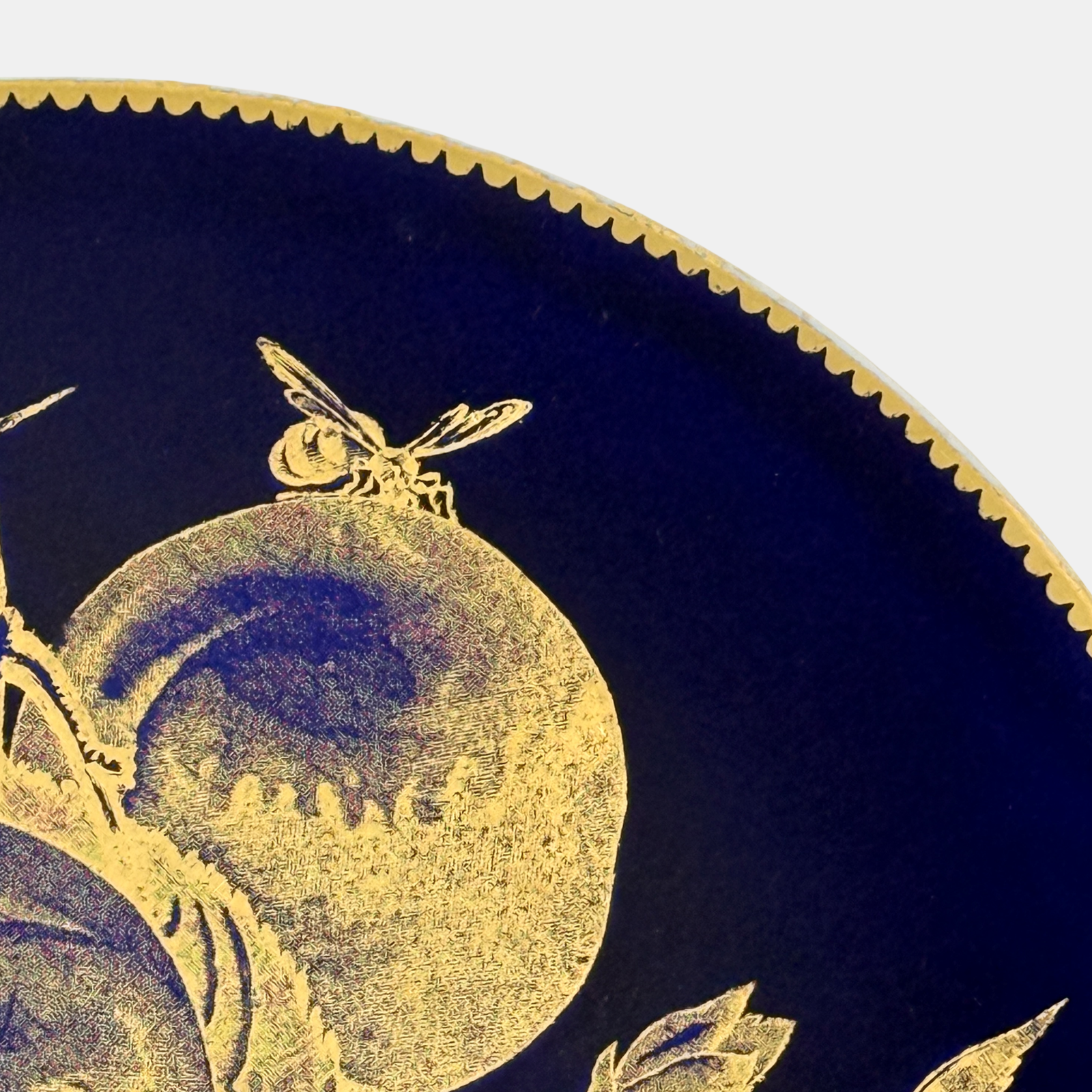 Image 9 of 12
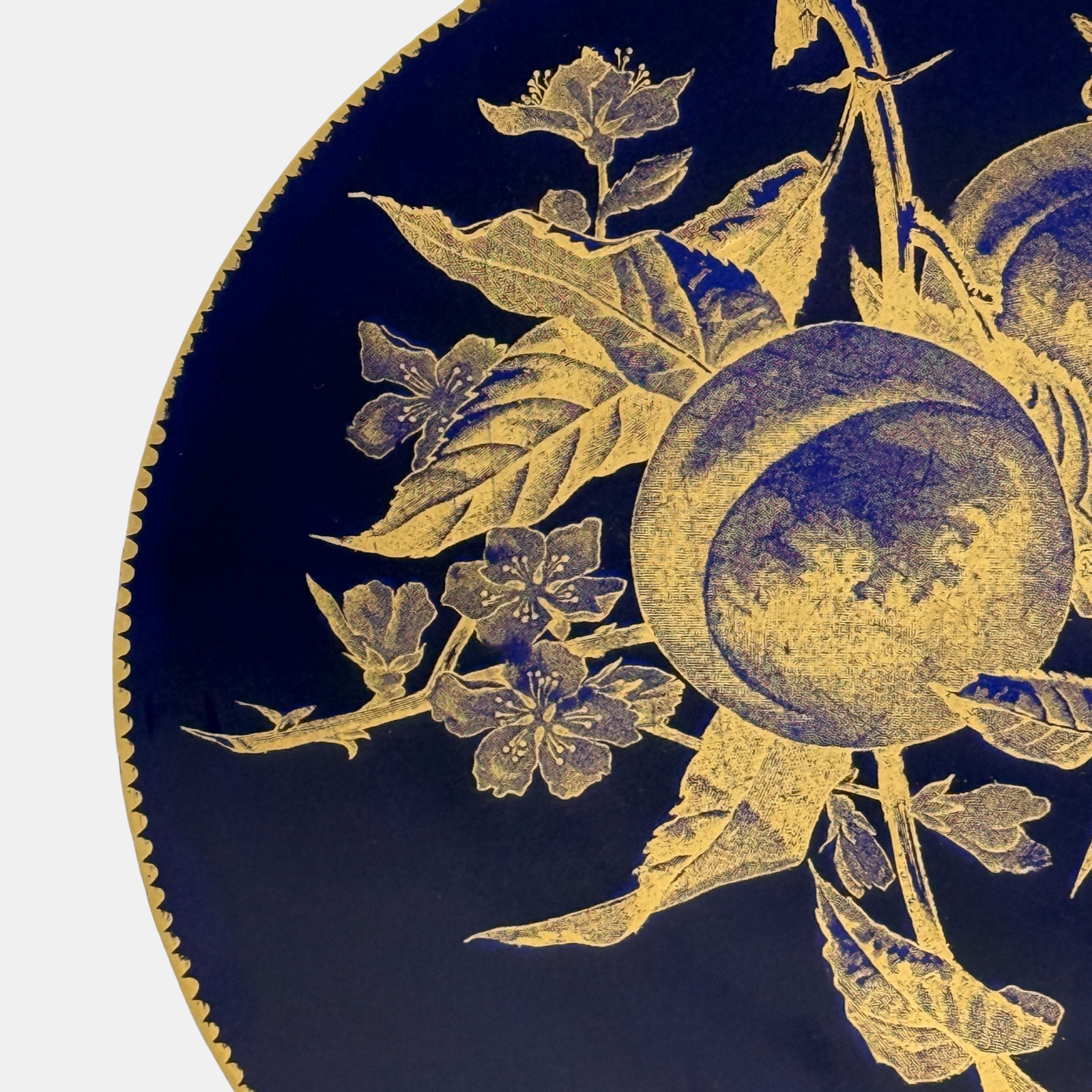 Image 10 of 12
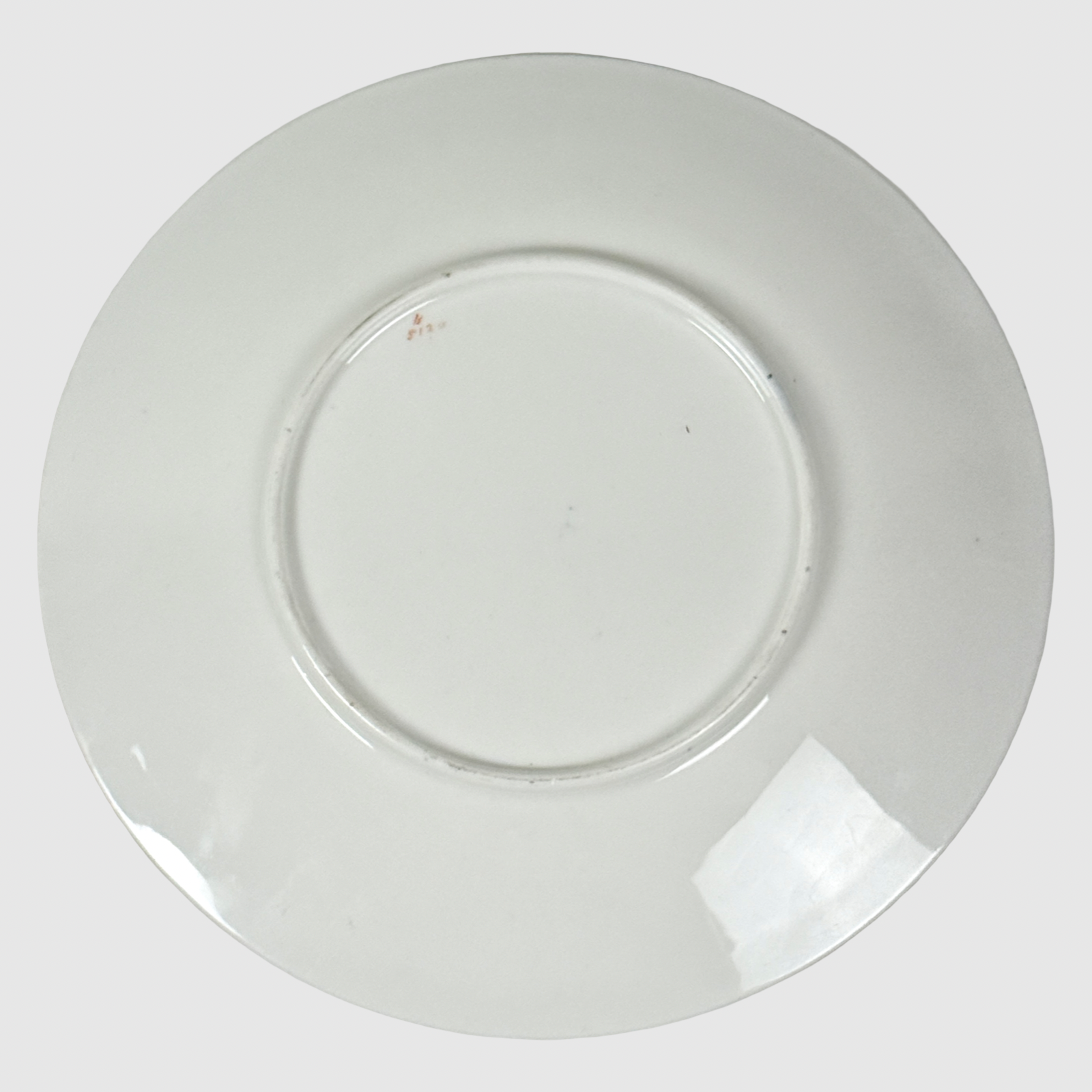 Image 11 of 12
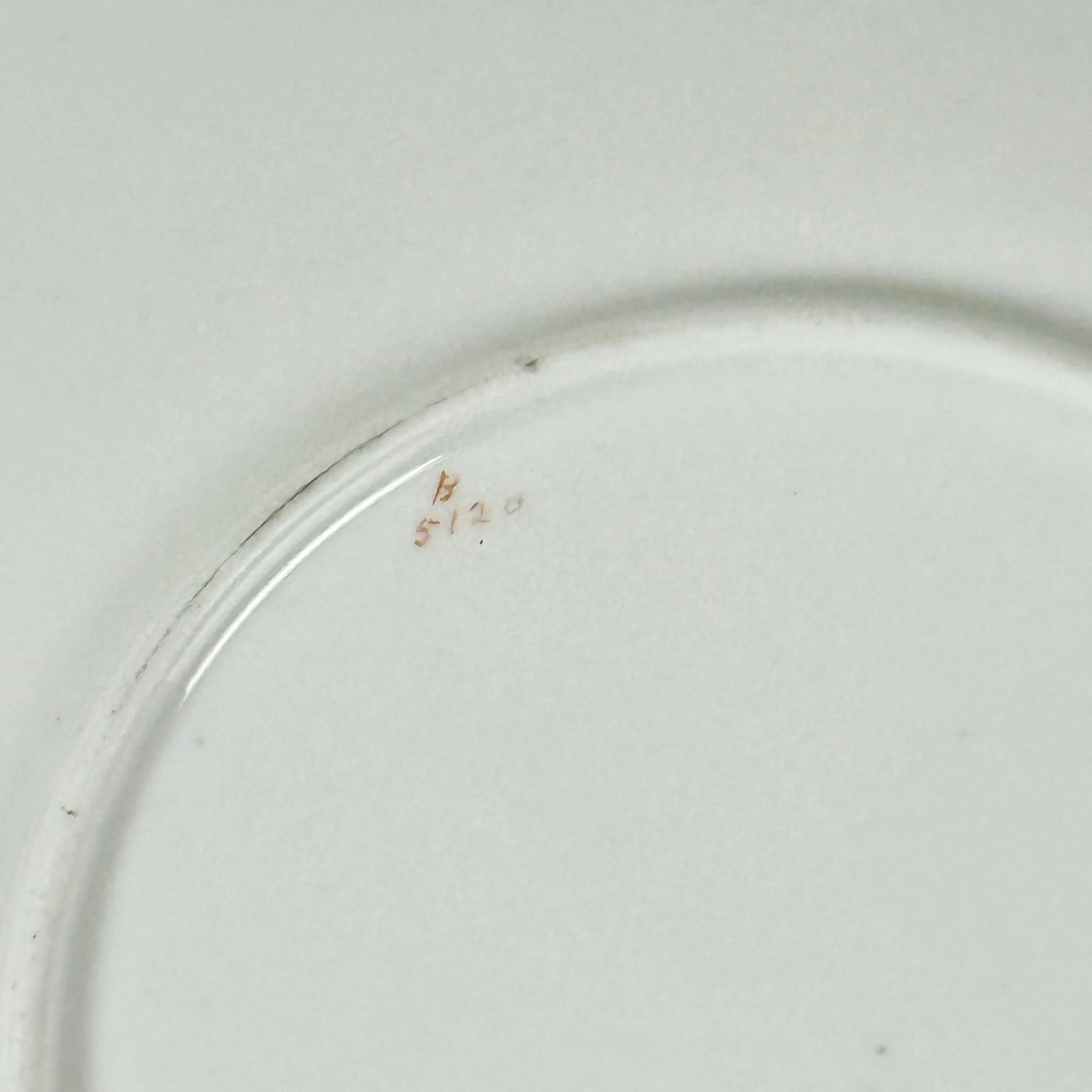 Image 12 of 12