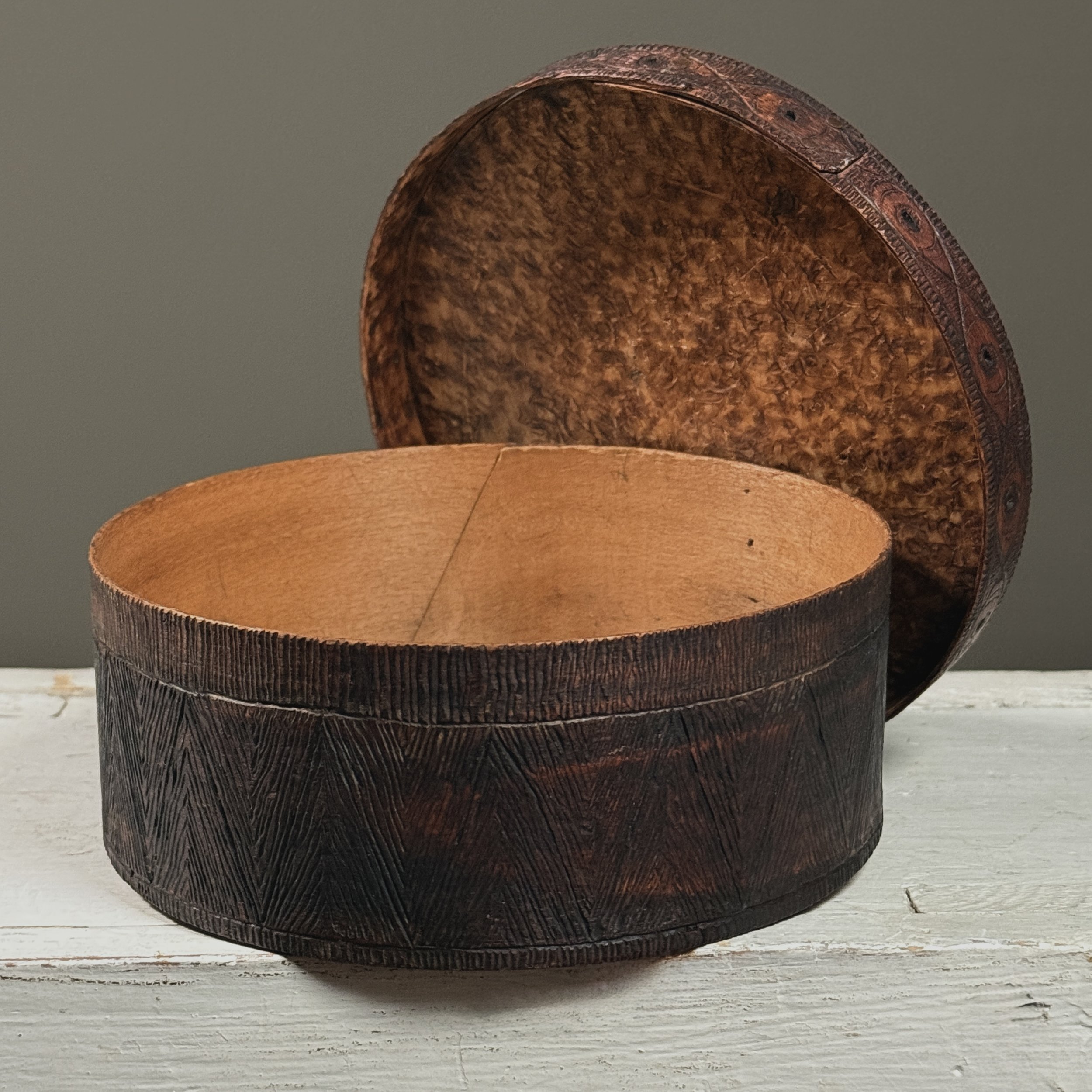
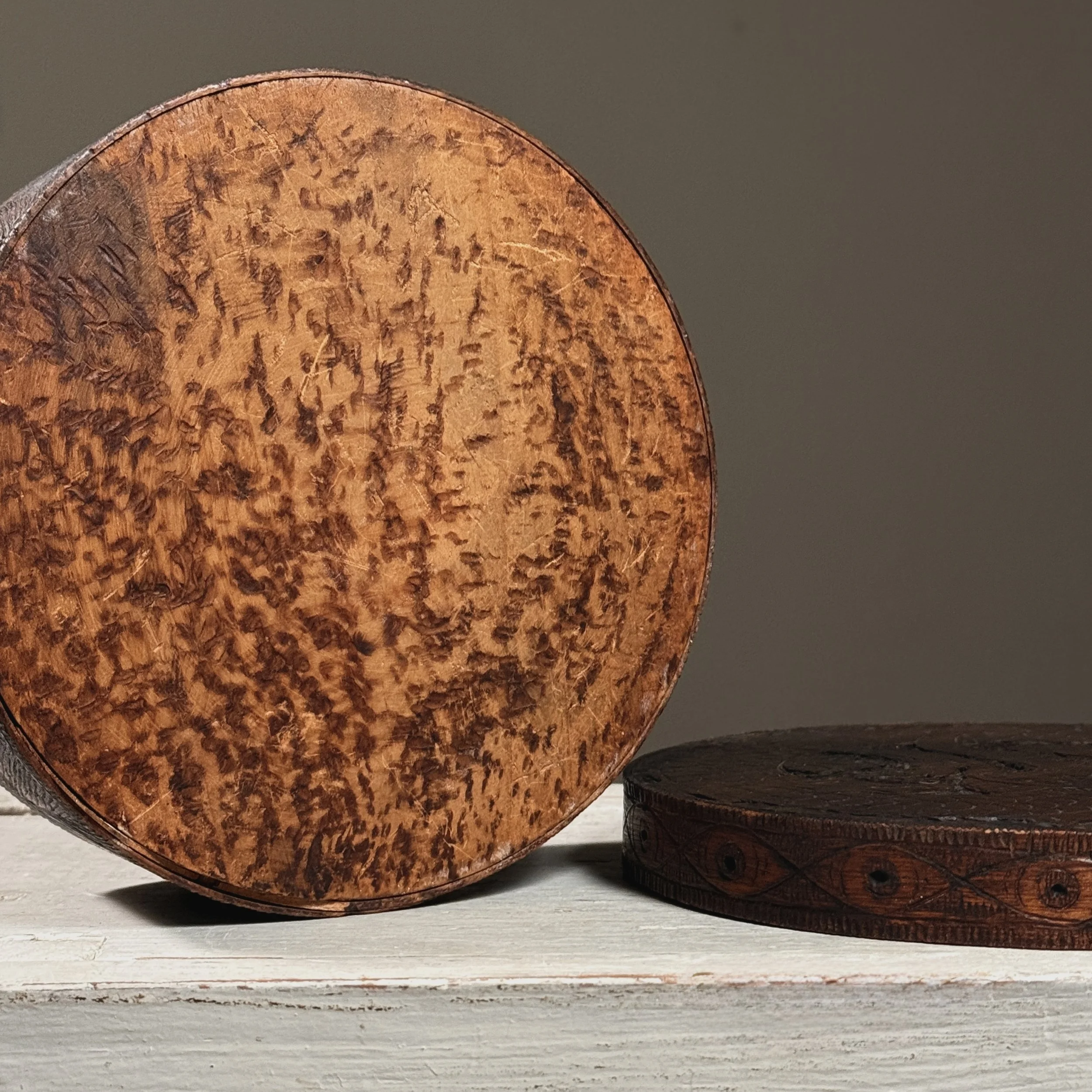
Object: Coiled Basket
Culture: Pima (Akimel O'odham)
Origin: Gila River and Salt River areas, Arizona
Period: Early-to-Mid 20th Century
Medium: Plant fibers (willow, bear grass, devil's claw)
Dimensions: Diameter 10.25 in. (26 cm); Height 5 in. (12.7 cm)
Condition: Good. Obvious fading of fibers and wear consistent with age.
Description:
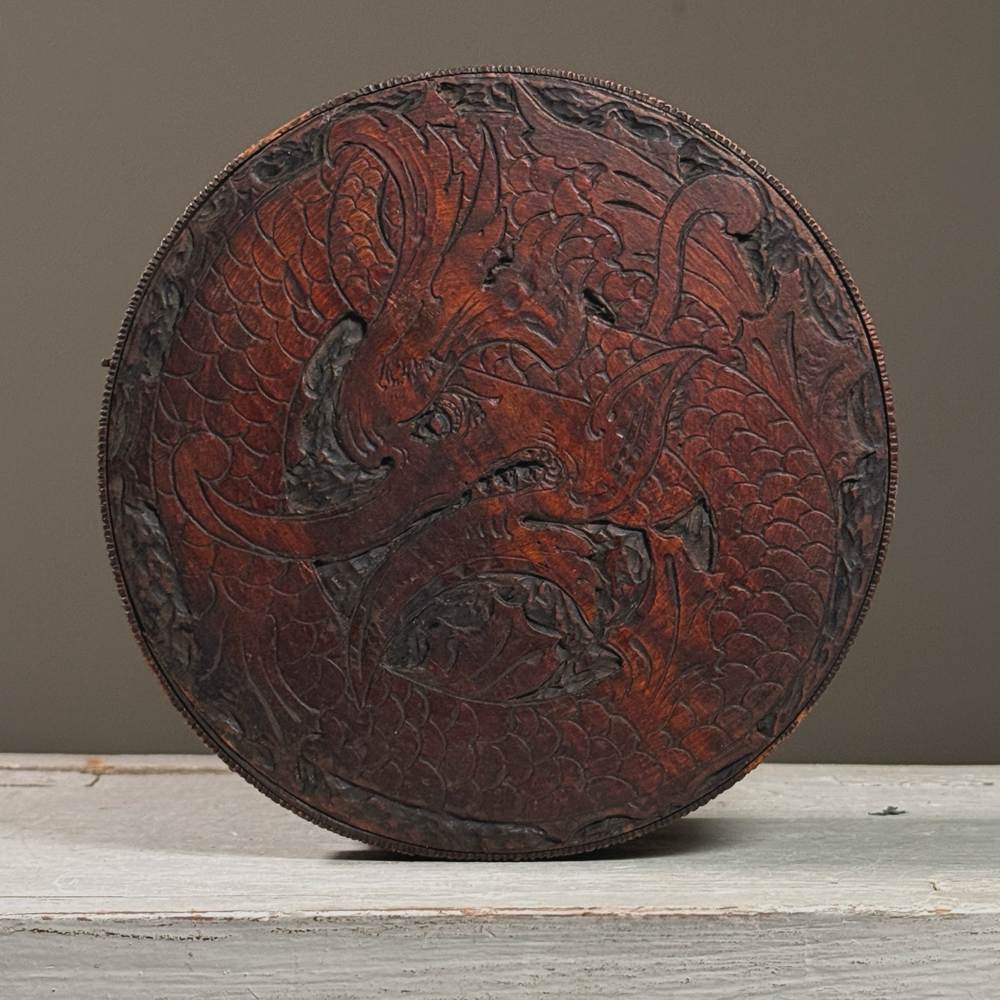
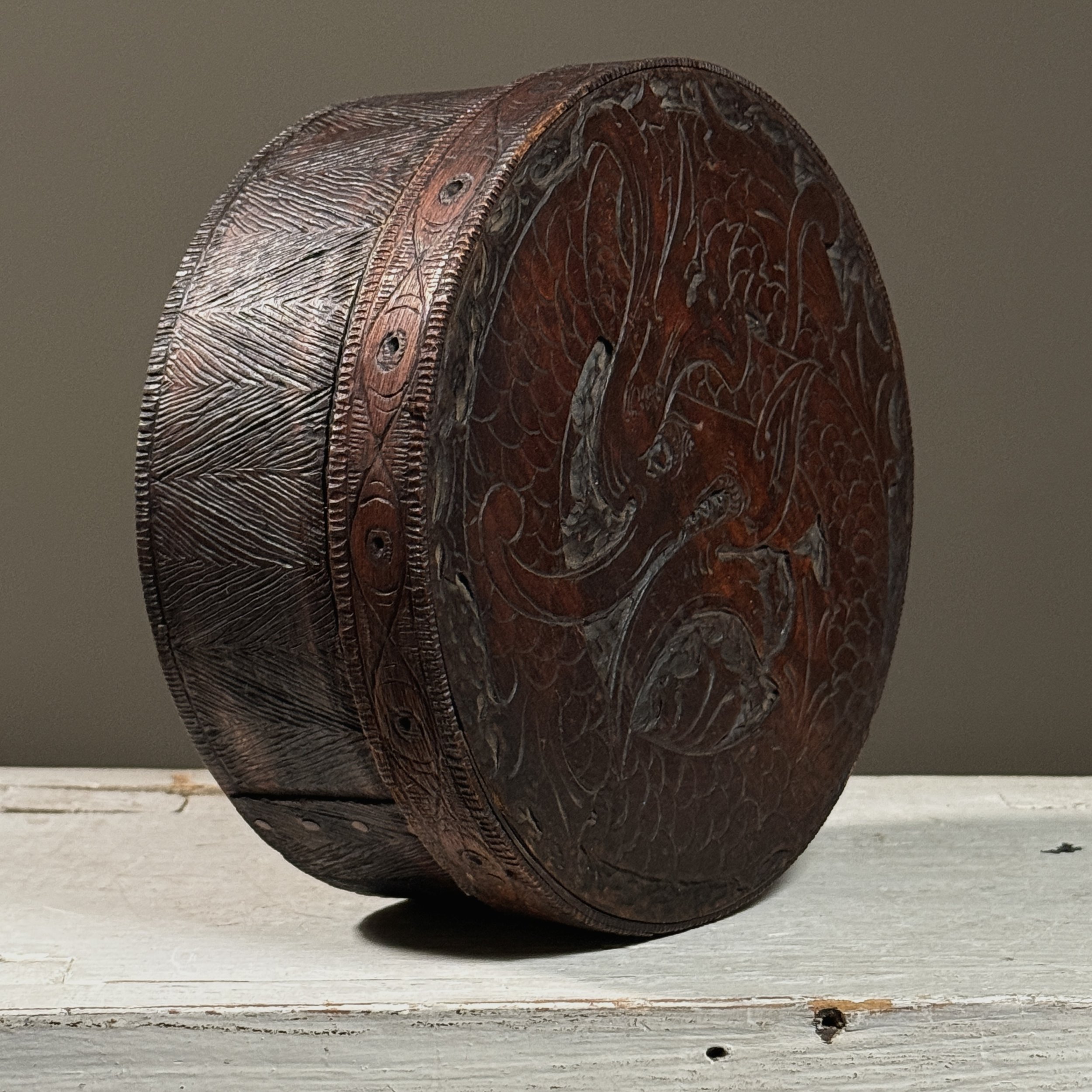
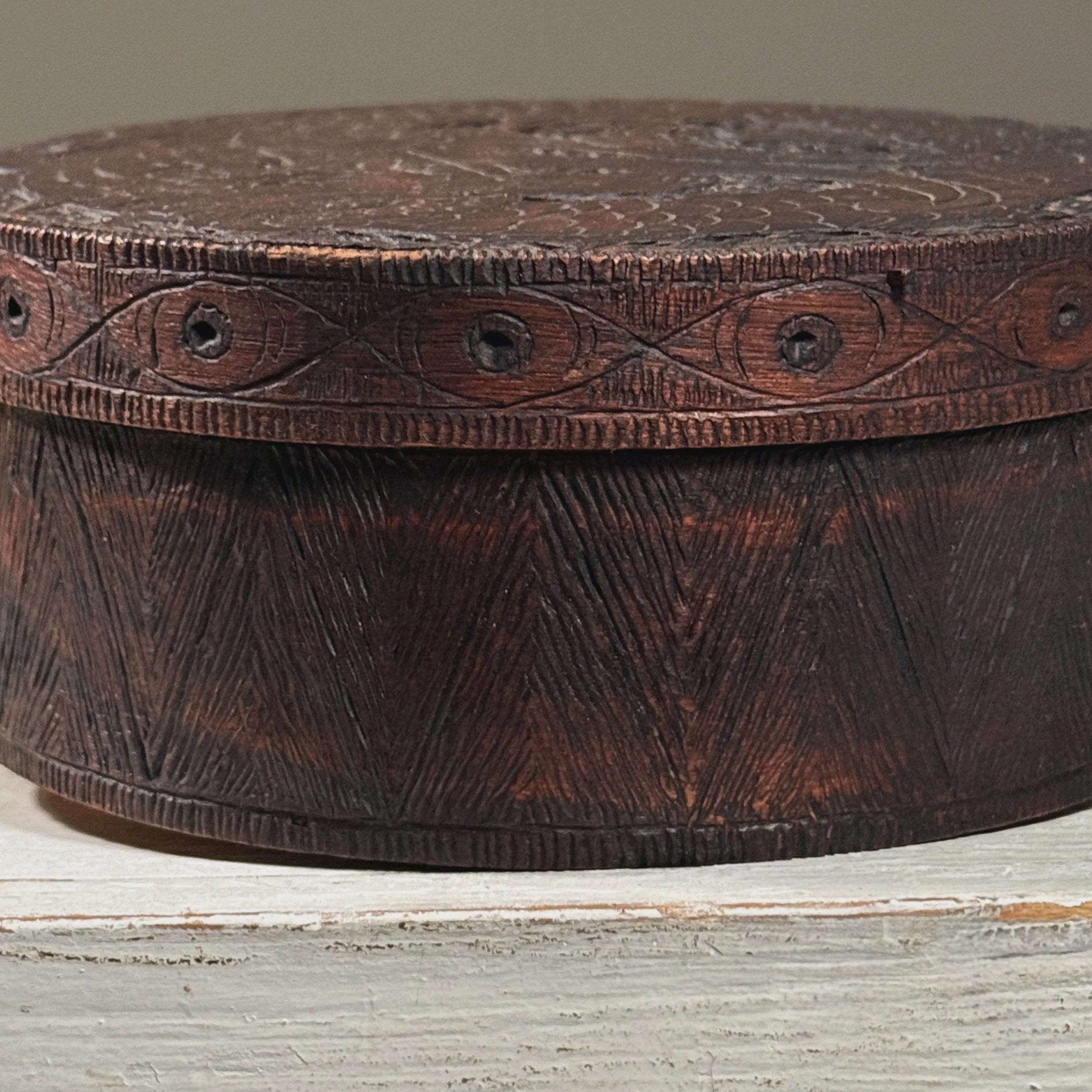
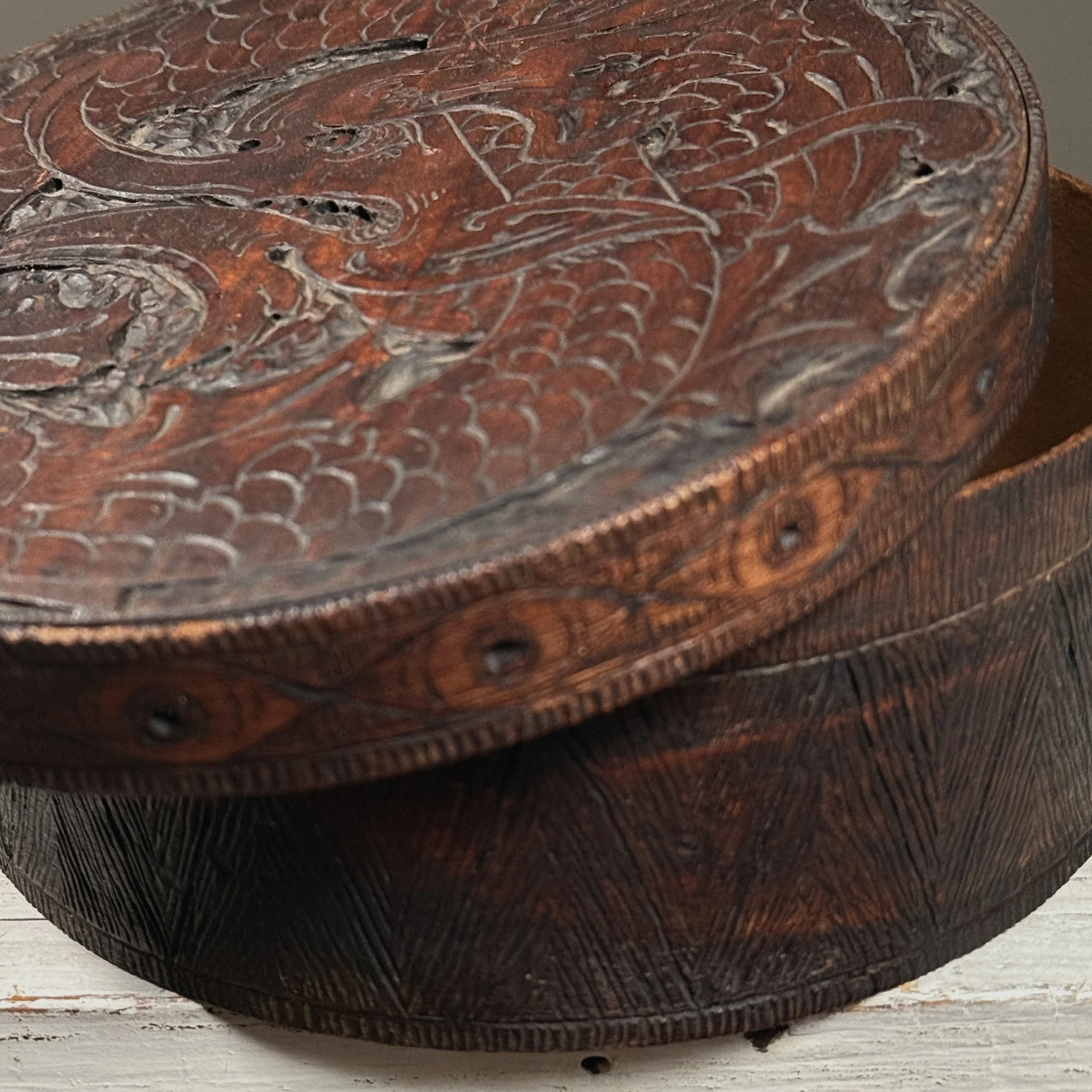
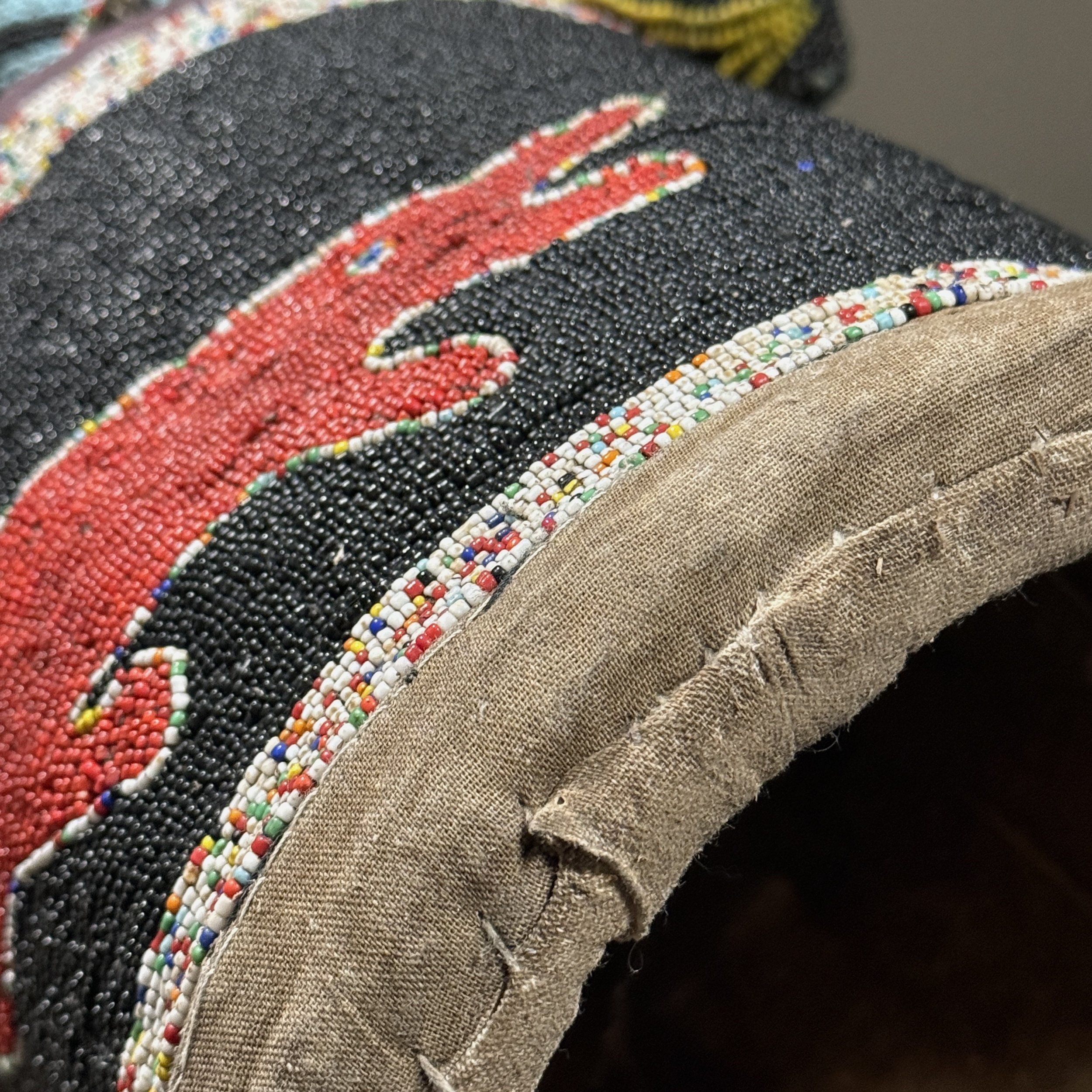
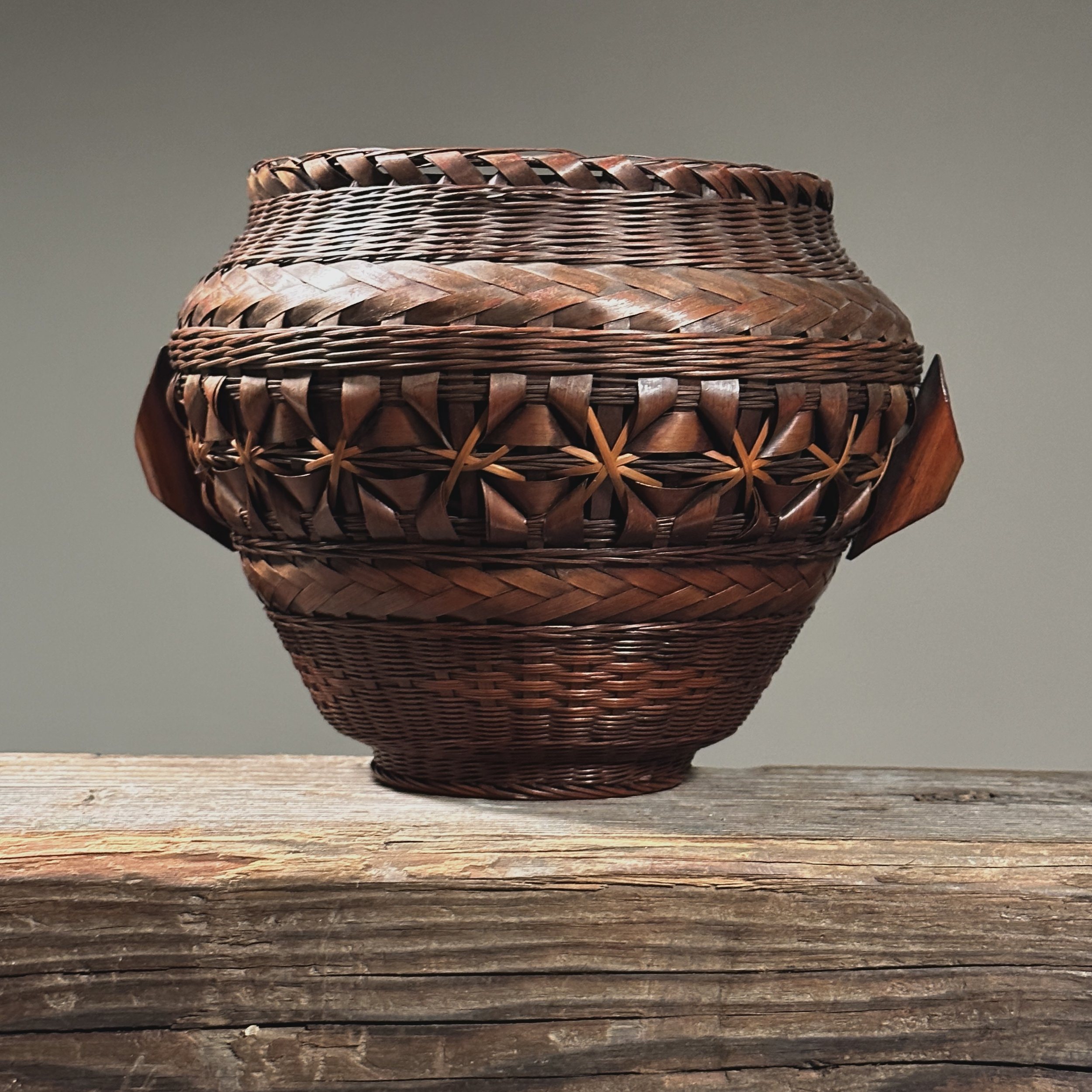
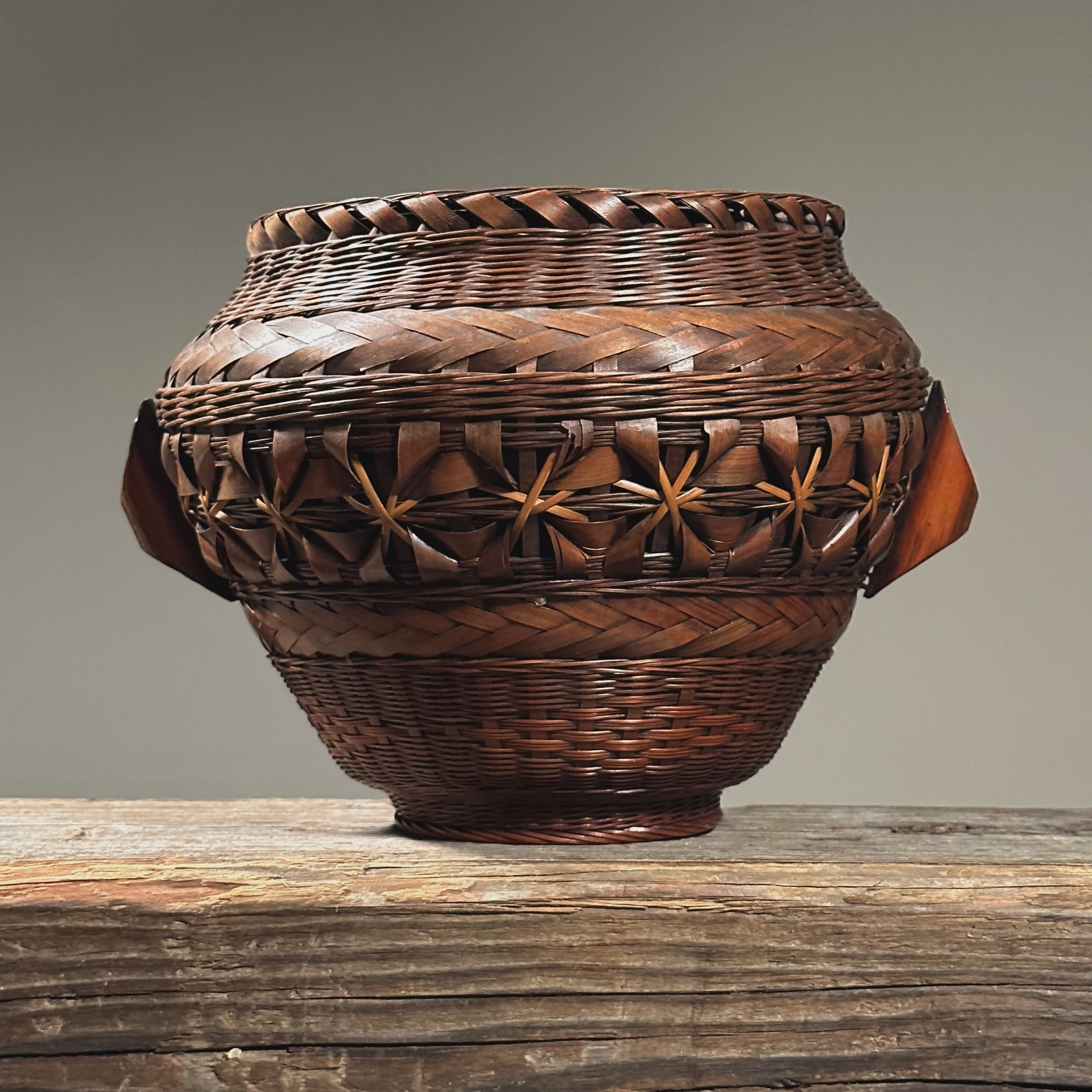
An antique coiled basket with high, straight walls, attributed to the Pima (Akimel O'odham) people. The exterior features a faded whirling log design executed in contrasting fibers against a natural ground. The basket exhibits a two tone hue overall, with variations in fiber coloration resulting from age and fading. The rim is finished with a two tone coil treatment. The piece is constructed using traditional coiling techniques.
History and Cultural Context:
The Pima (Akimel O'odham, or "River People") are Indigenous peoples of the Gila and Salt River valleys in Arizona. Historically, they practiced agriculture along the rivers and developed a distinctive basketry tradition closely related to that of their neighbors, the Tohono O'odham (Papago). Pima baskets are known for their fine coiling, tight weave, and geometric designs.
Traditional Pima basketry utilizes native desert plants. Willow provides the white or cream-colored fibers, bear grass is used for the foundation, and devil's claw (martynia) supplies the black decorative elements. The preparation of materials—harvesting, splitting, and drying—is a labor-intensive process requiring specialized knowledge.
Object: Coiled Basket
Culture: Pima (Akimel O'odham)
Origin: Gila River and Salt River areas, Arizona
Period: Early-to-Mid 20th Century
Medium: Plant fibers (willow, bear grass, devil's claw)
Dimensions: Diameter 10.25 in. (26 cm); Height 5 in. (12.7 cm)
Condition: Good. Obvious fading of fibers and wear consistent with age.
Description:
An antique coiled basket with high, straight walls, attributed to the Pima (Akimel O'odham) people. The exterior features a faded whirling log design executed in contrasting fibers against a natural ground. The basket exhibits a two tone hue overall, with variations in fiber coloration resulting from age and fading. The rim is finished with a two tone coil treatment. The piece is constructed using traditional coiling techniques.
History and Cultural Context:
The Pima (Akimel O'odham, or "River People") are Indigenous peoples of the Gila and Salt River valleys in Arizona. Historically, they practiced agriculture along the rivers and developed a distinctive basketry tradition closely related to that of their neighbors, the Tohono O'odham (Papago). Pima baskets are known for their fine coiling, tight weave, and geometric designs.
Traditional Pima basketry utilizes native desert plants. Willow provides the white or cream-colored fibers, bear grass is used for the foundation, and devil's claw (martynia) supplies the black decorative elements. The preparation of materials—harvesting, splitting, and drying—is a labor-intensive process requiring specialized knowledge.

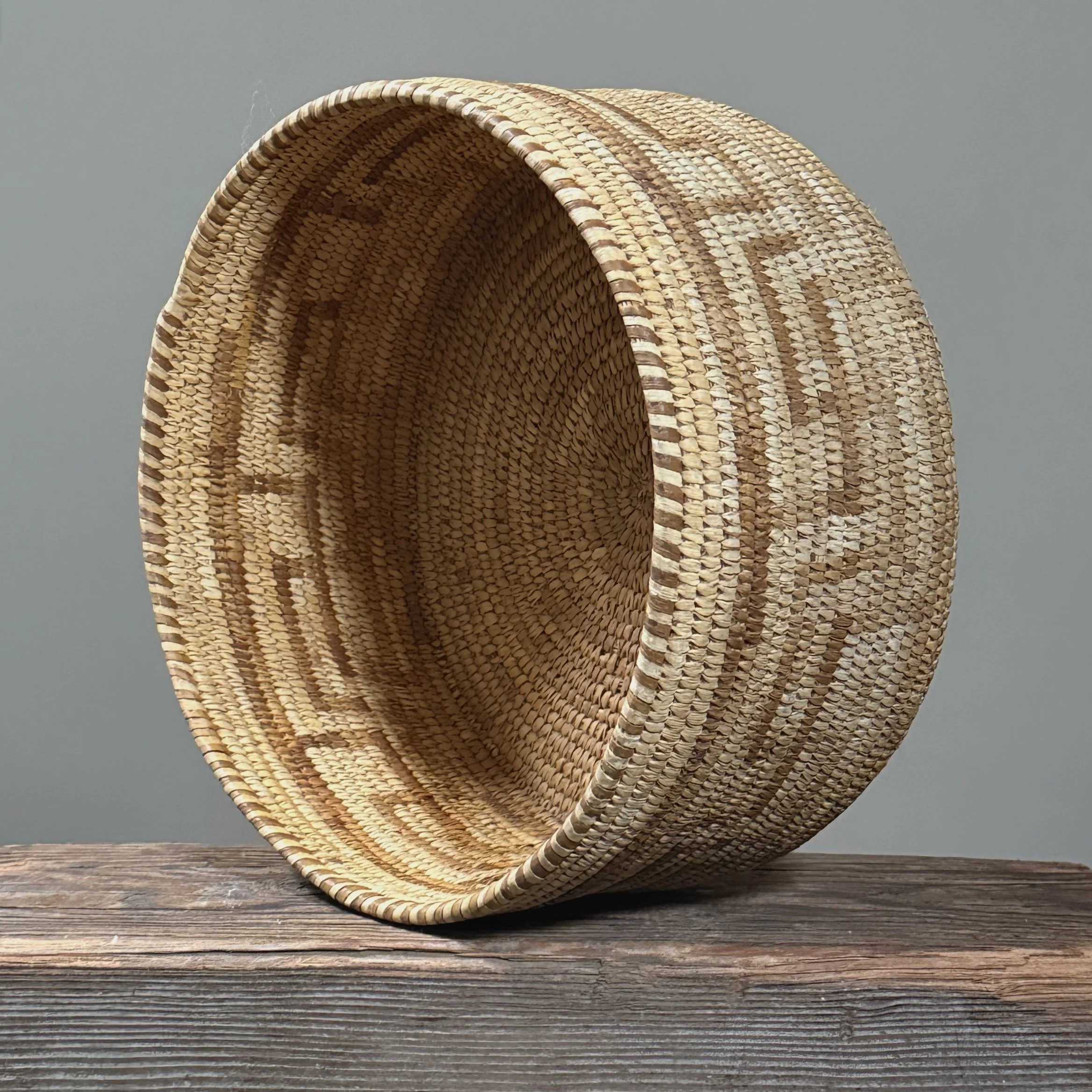 Image 1 of 11
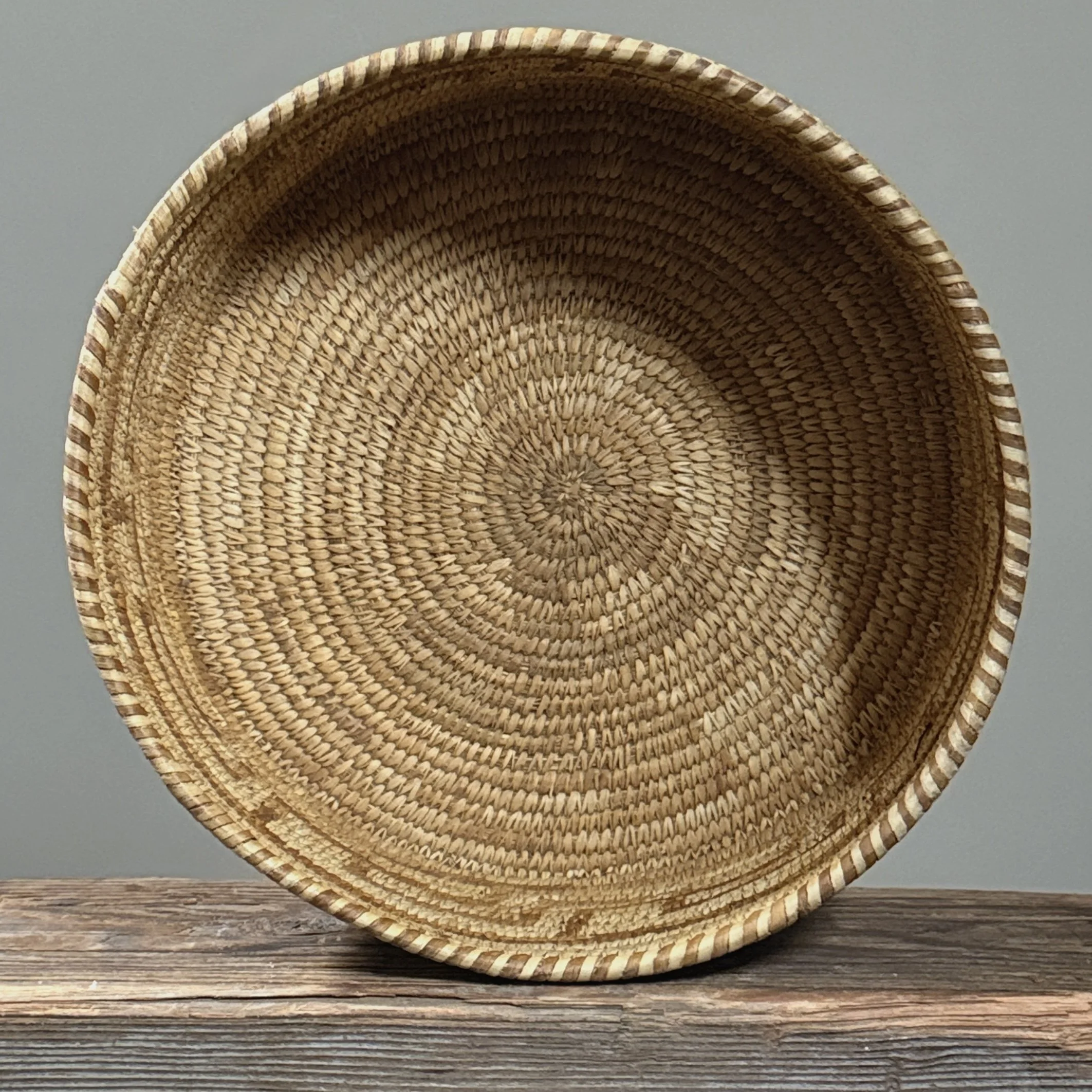 Image 2 of 11
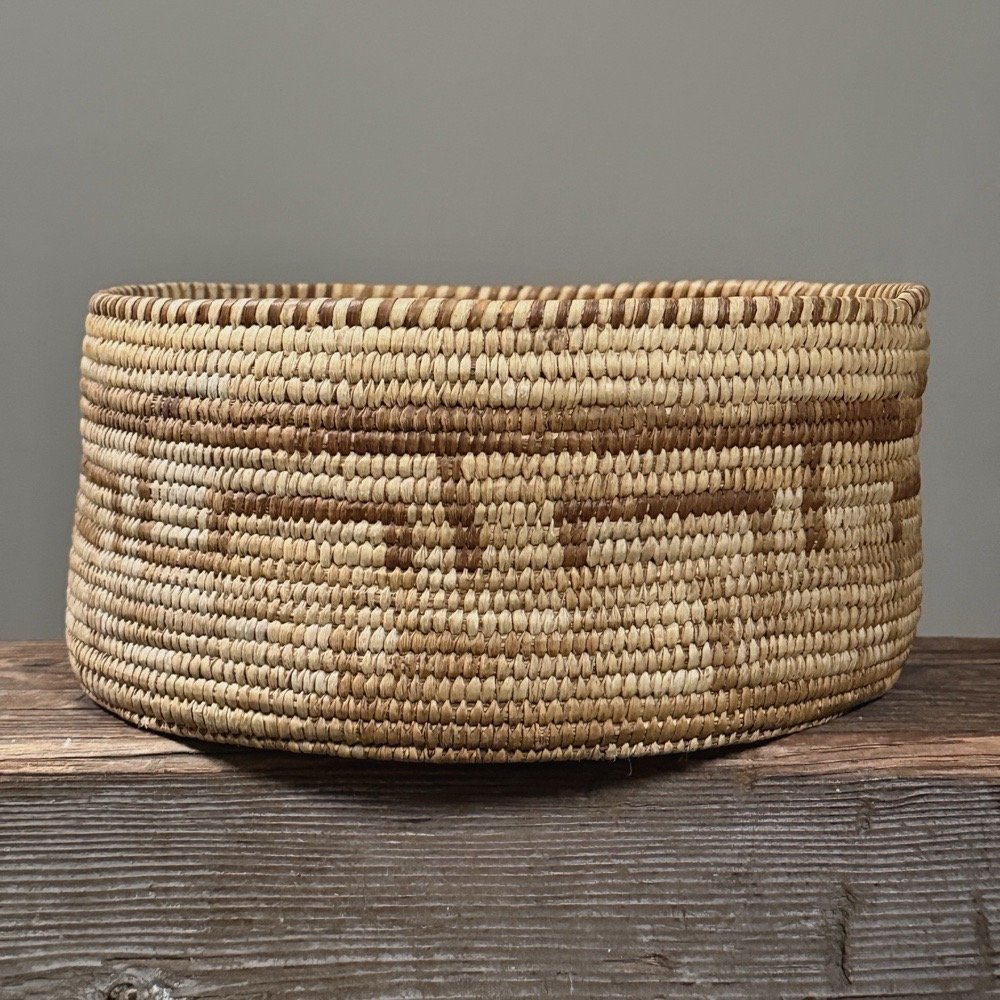 Image 3 of 11
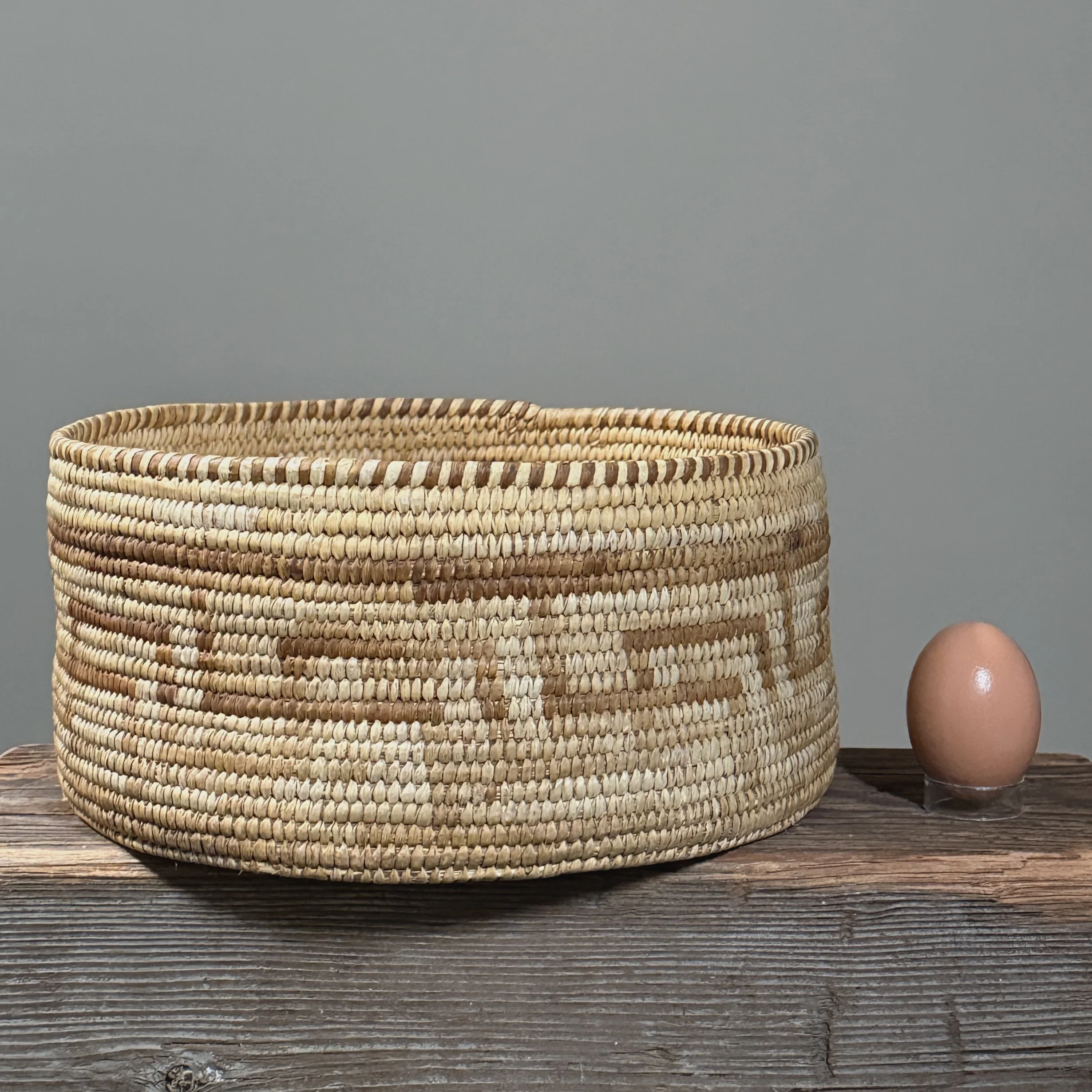 Image 4 of 11
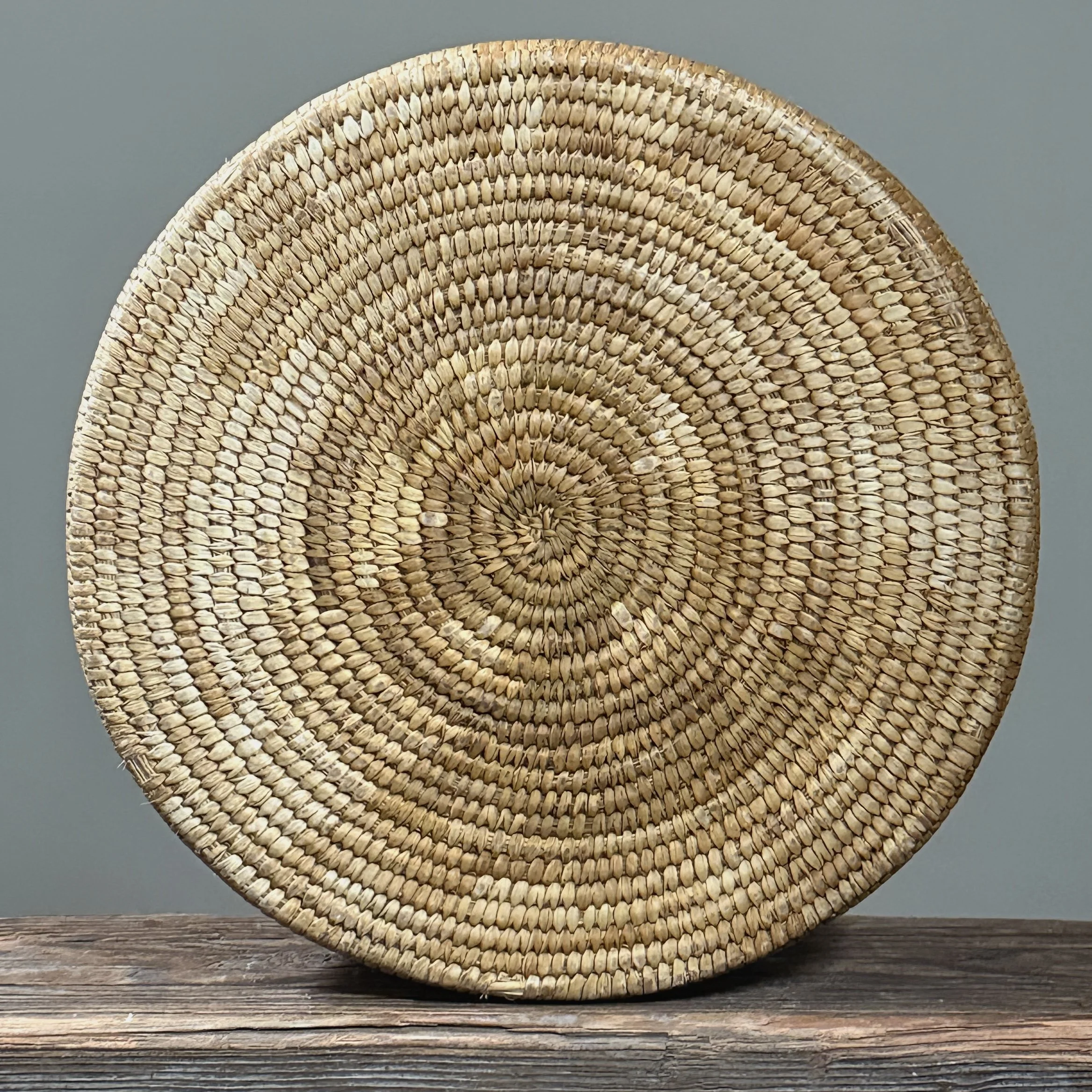 Image 5 of 11
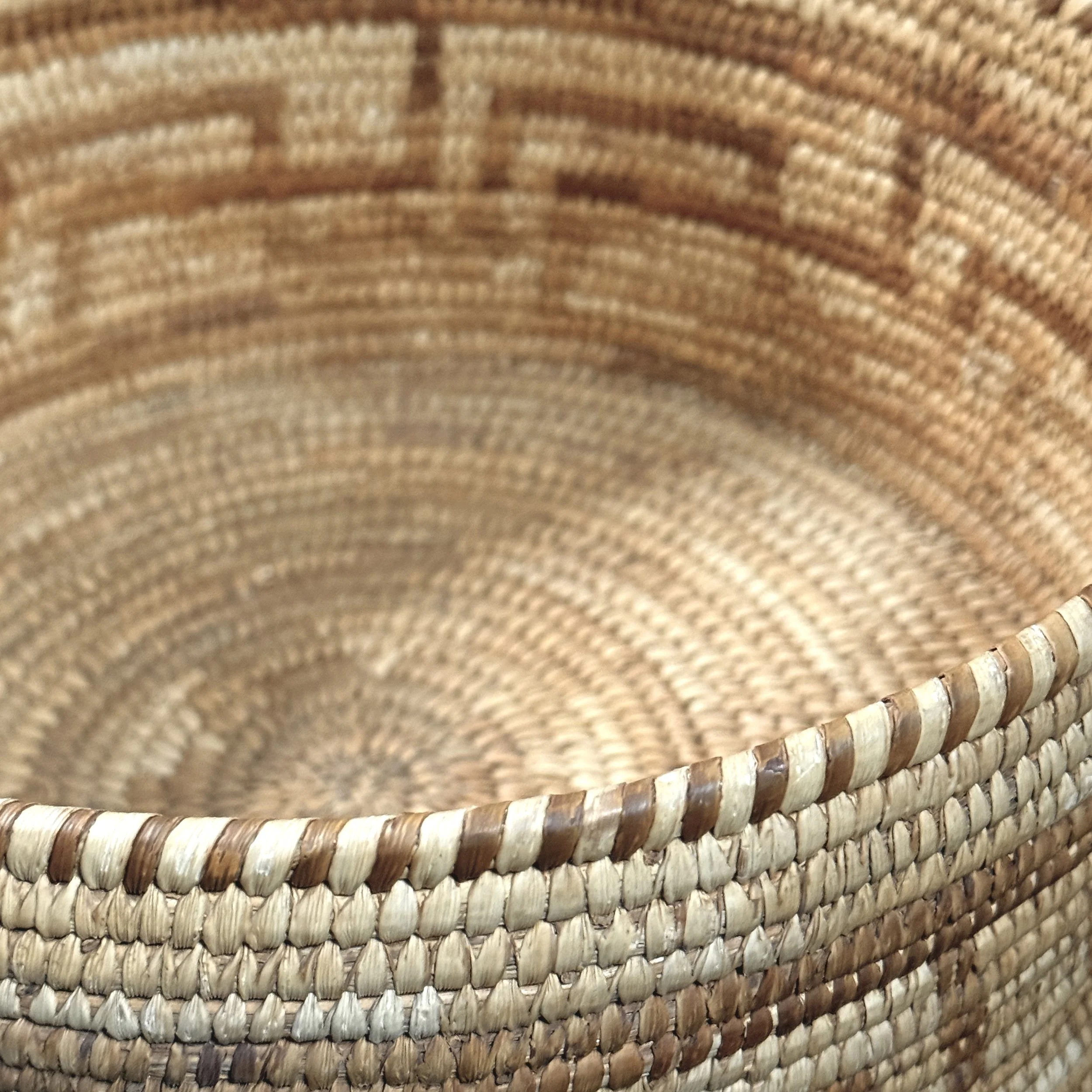 Image 6 of 11
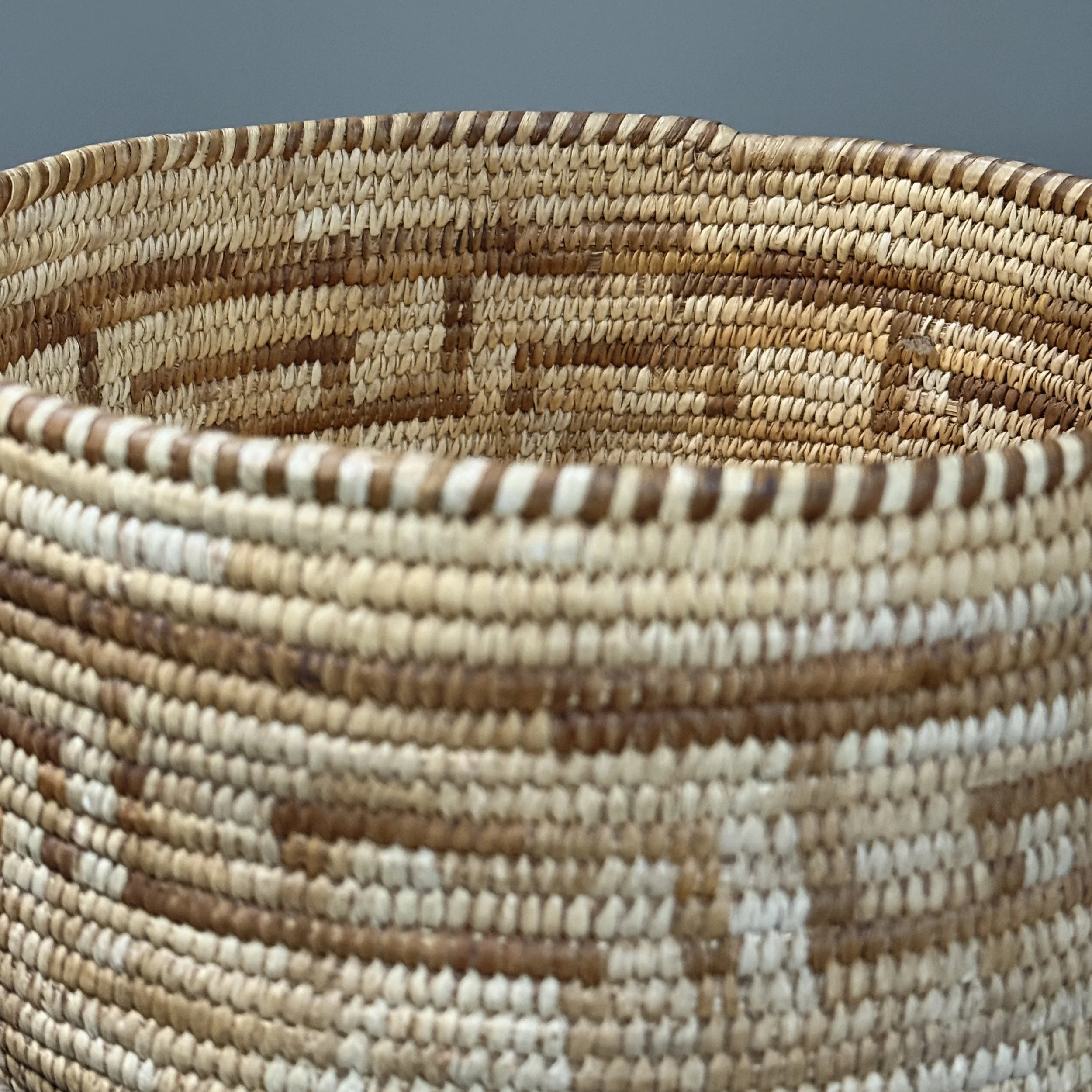 Image 7 of 11
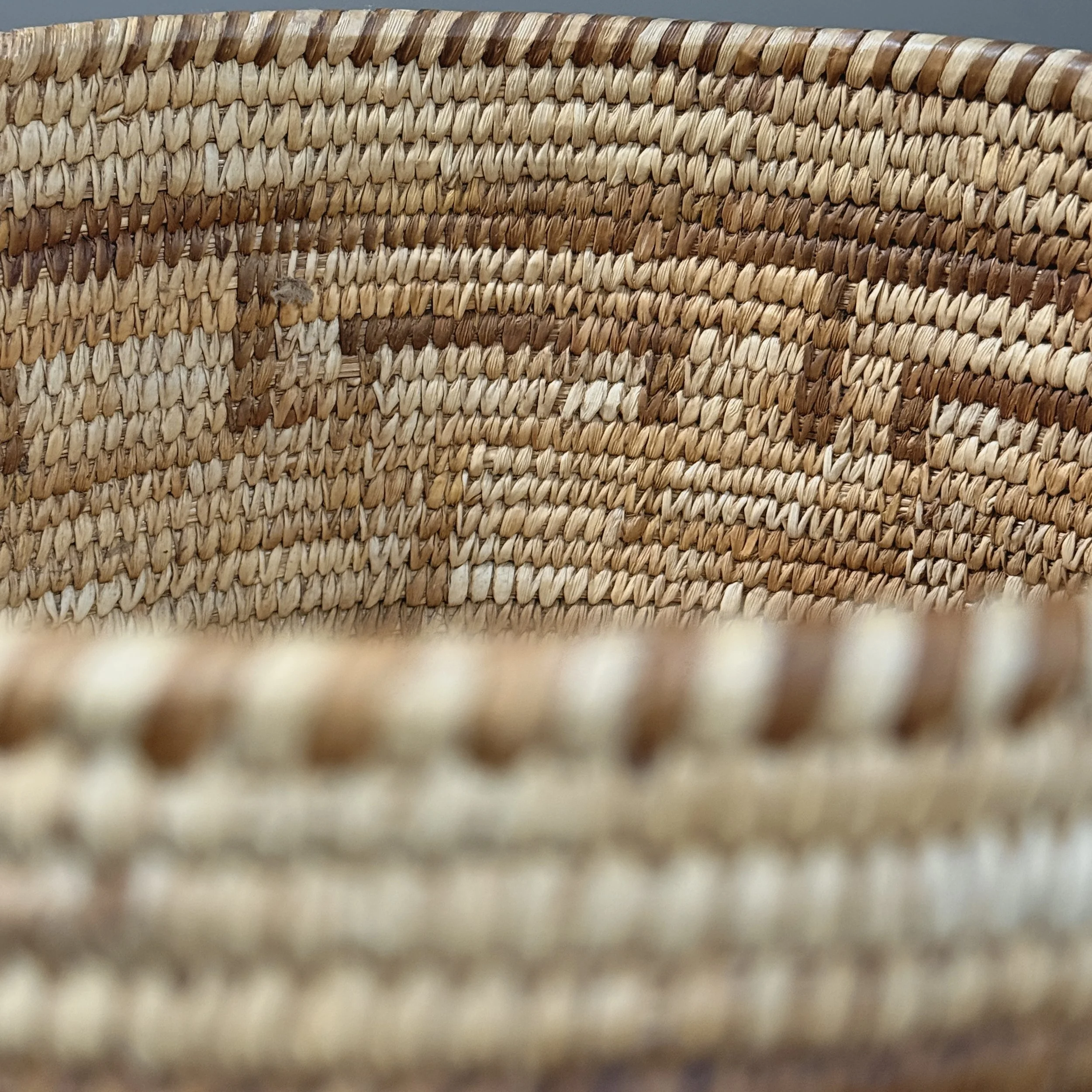 Image 8 of 11
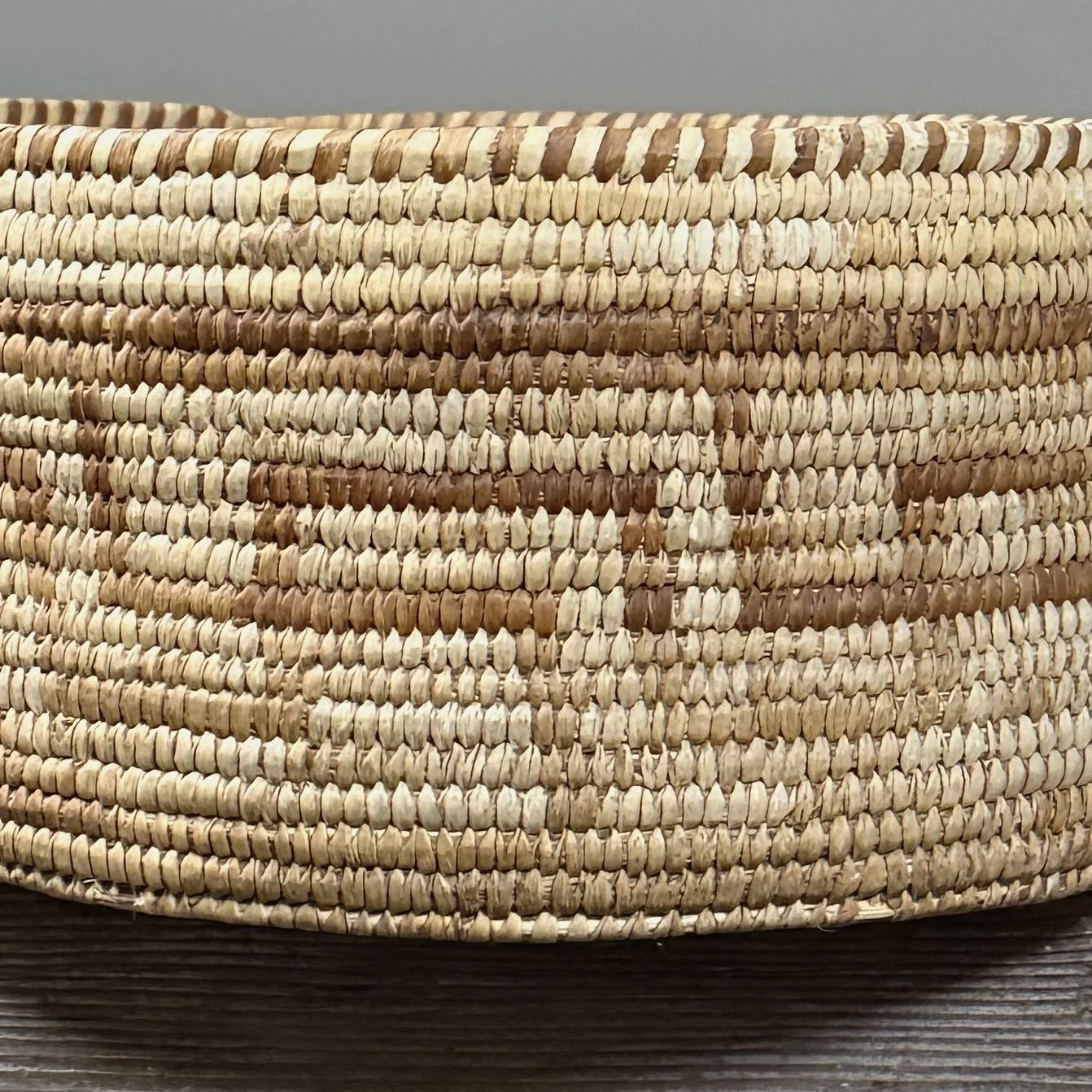 Image 9 of 11
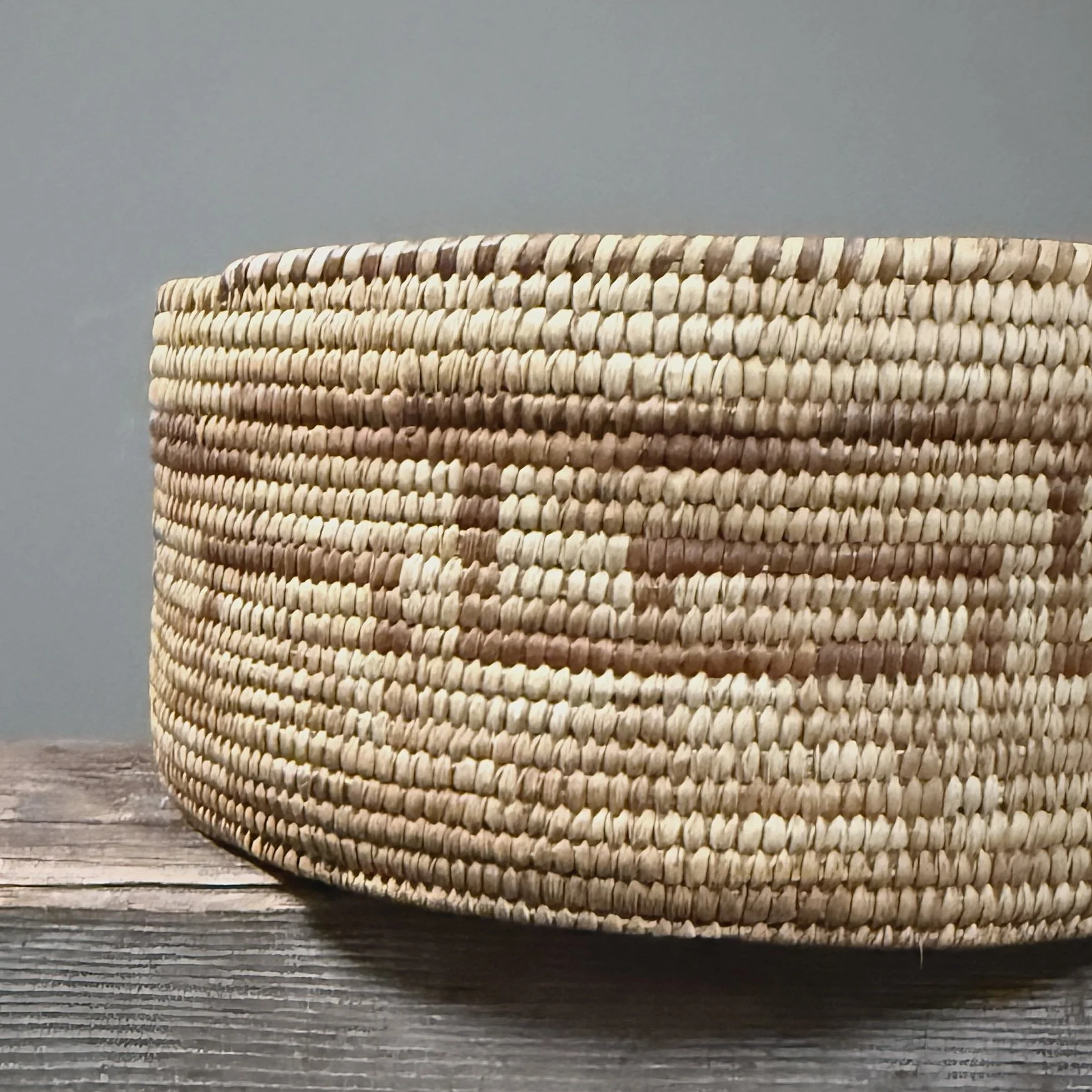 Image 10 of 11
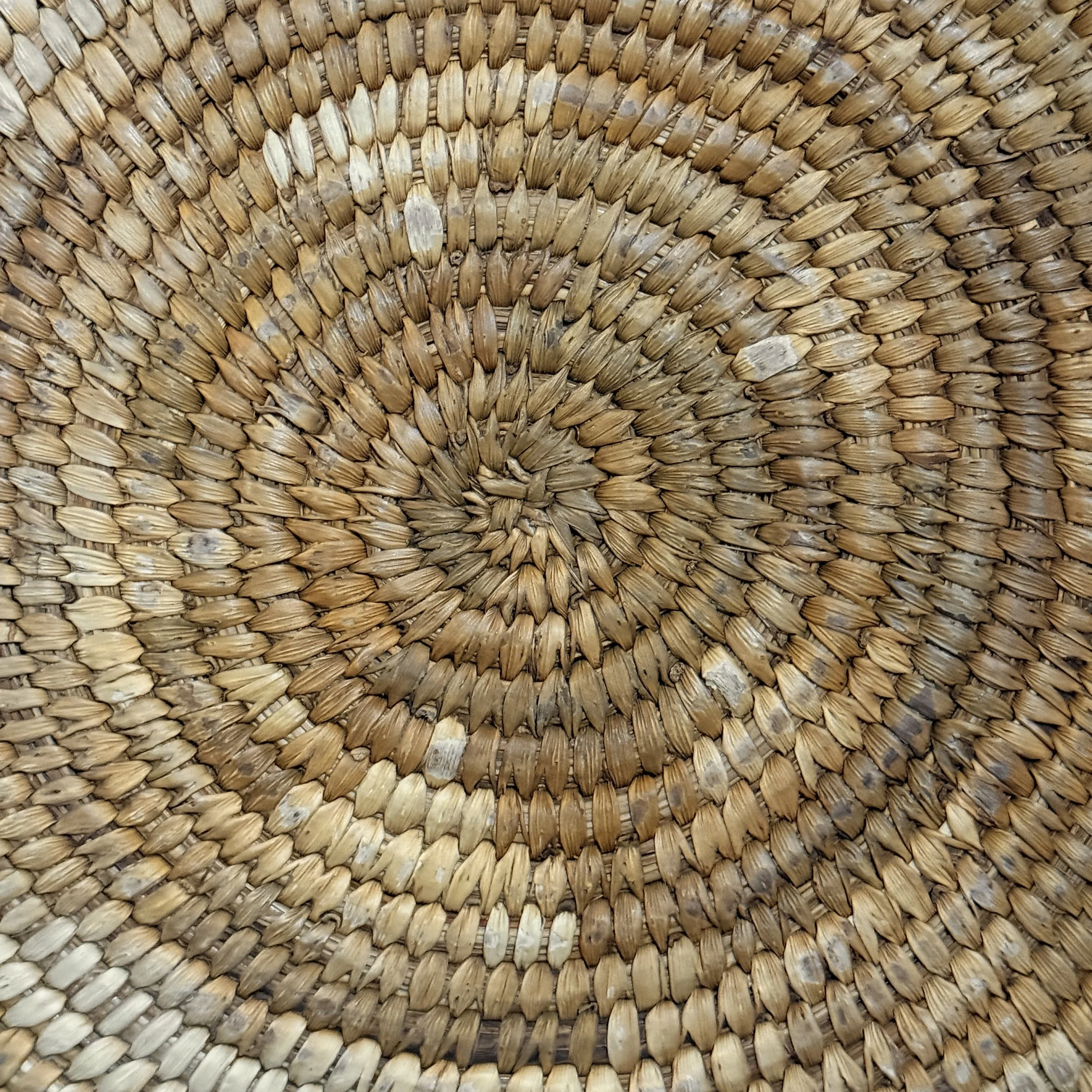 Image 11 of 11