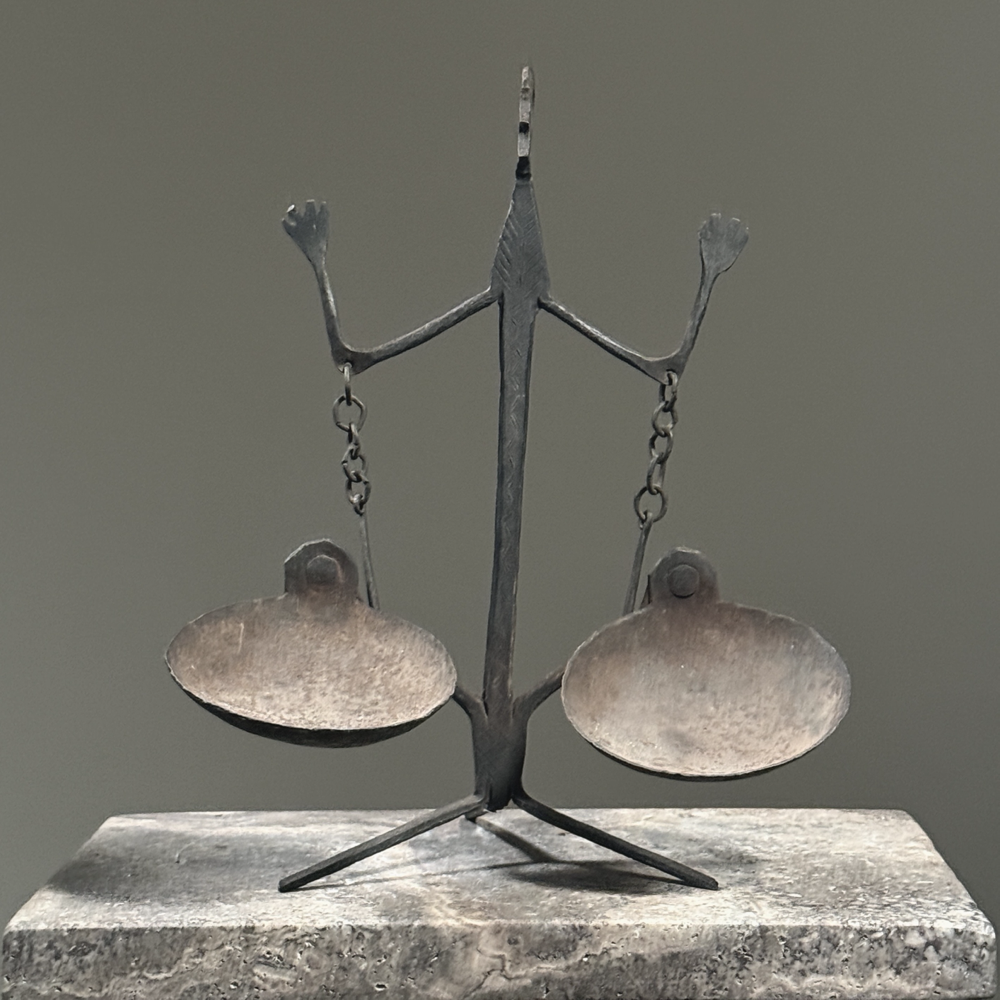
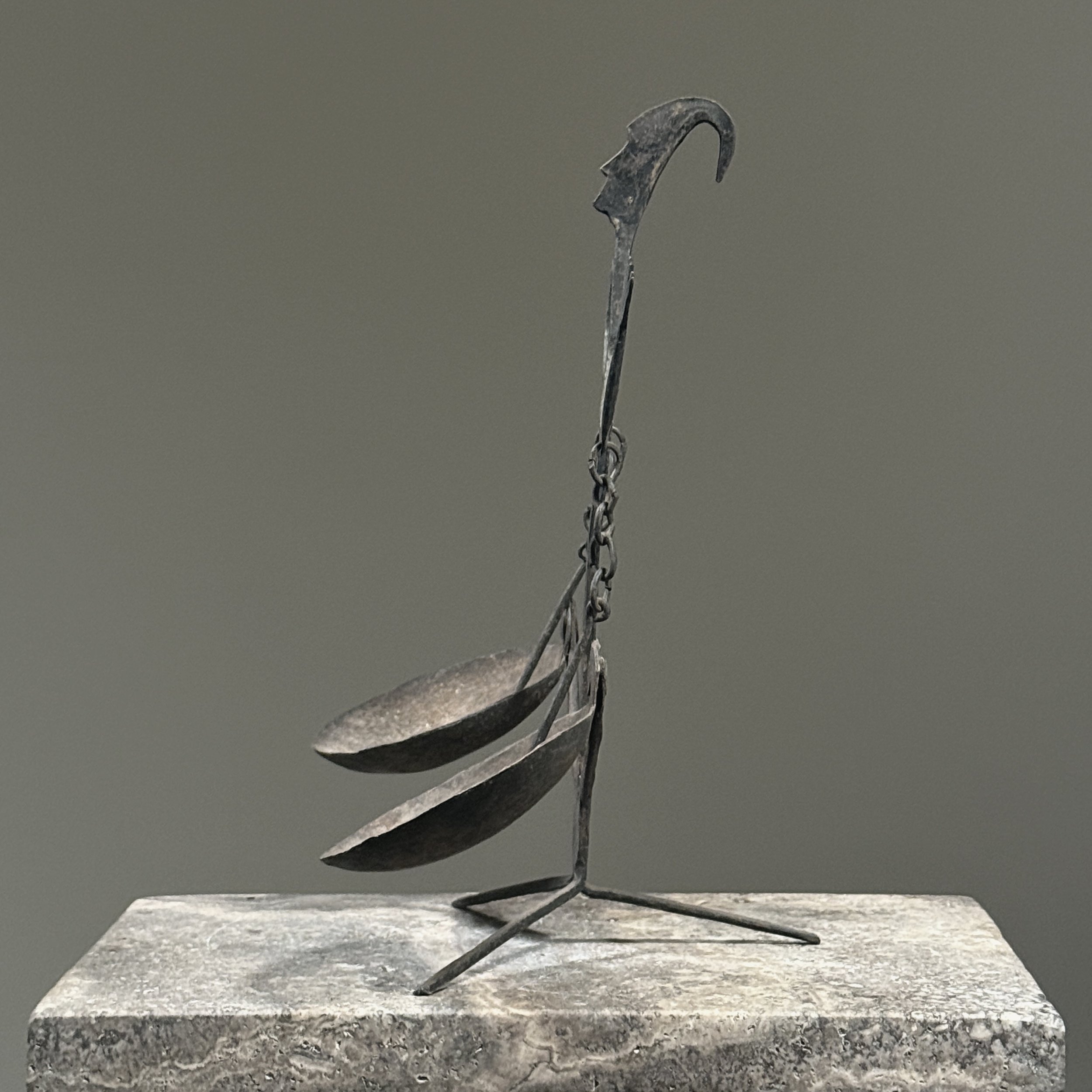
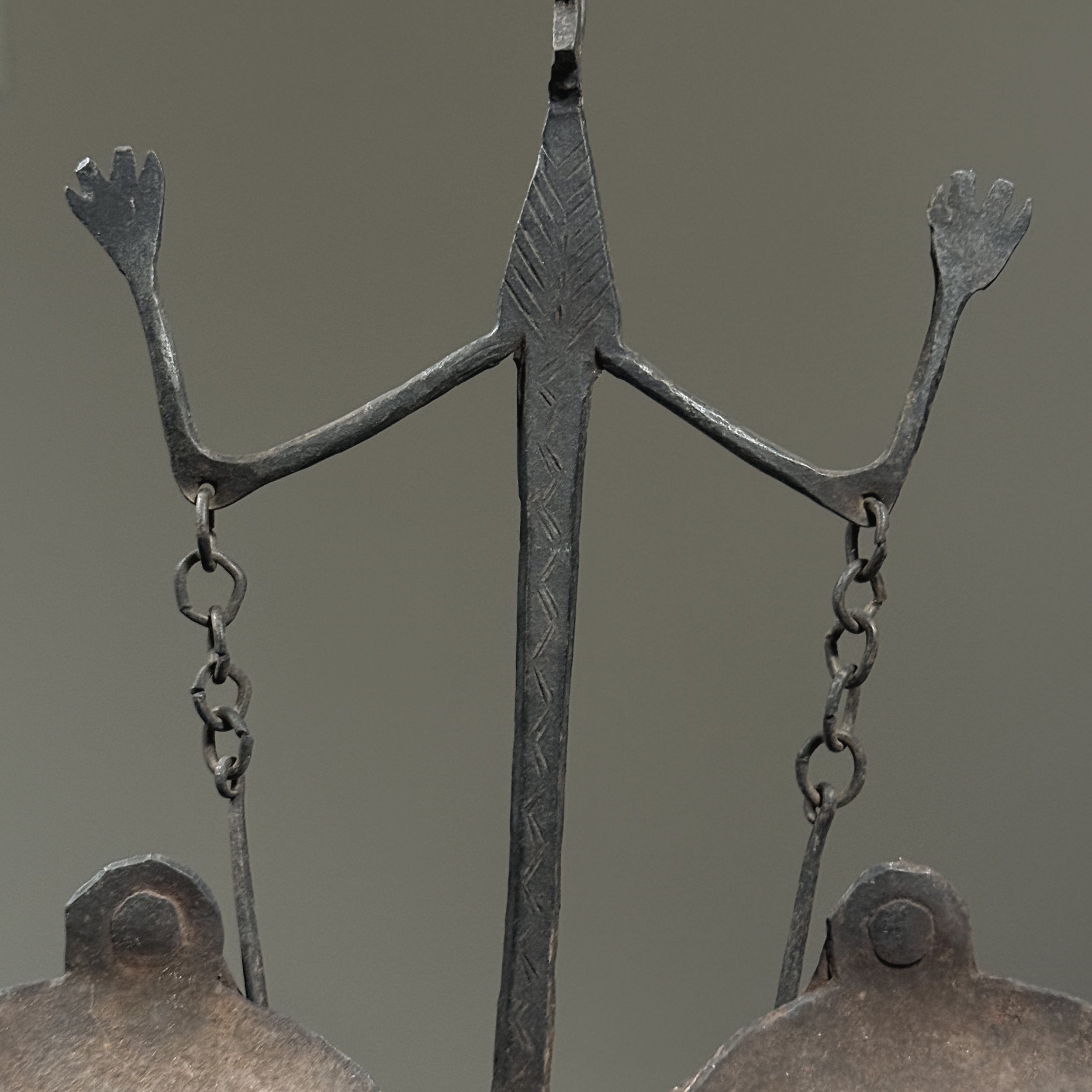
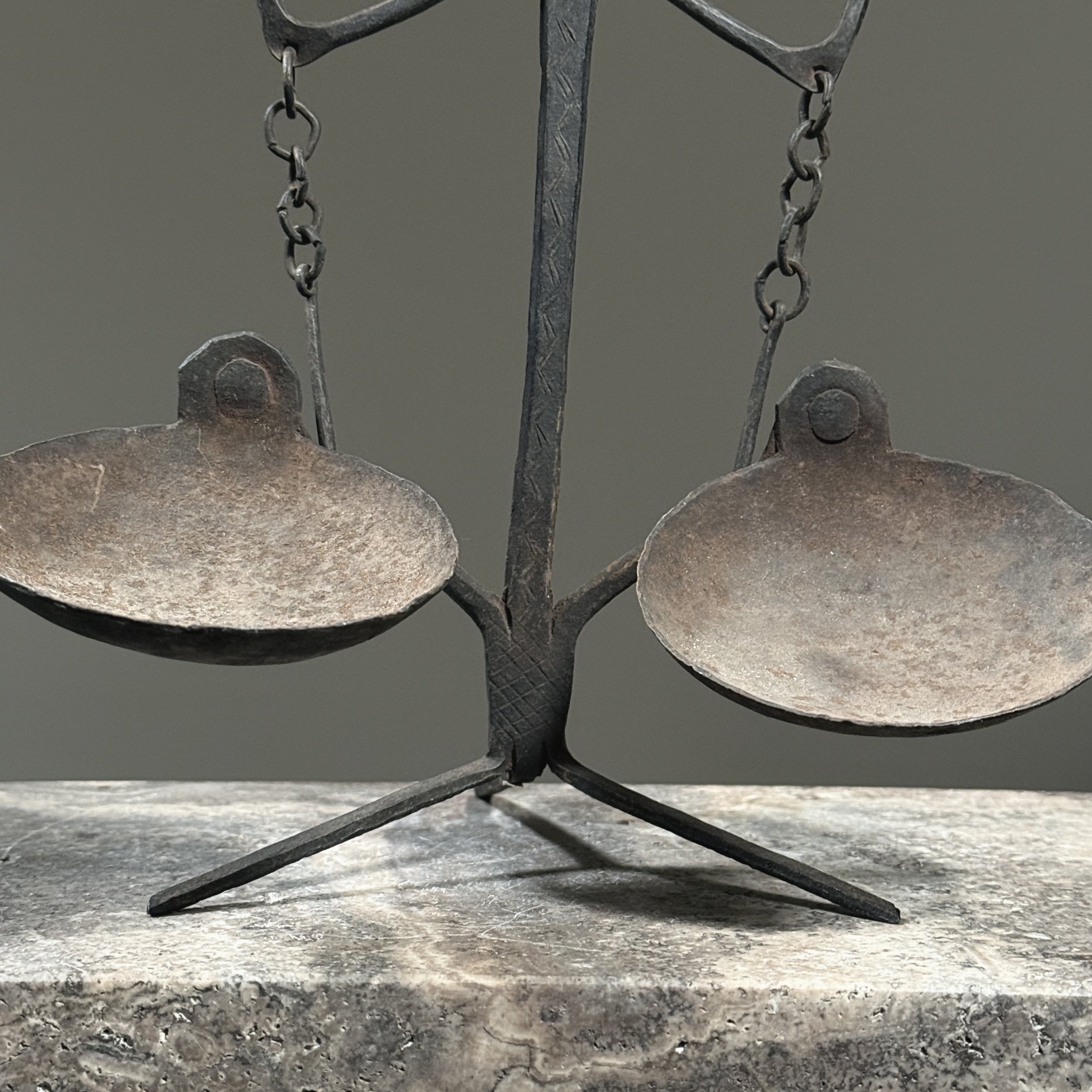
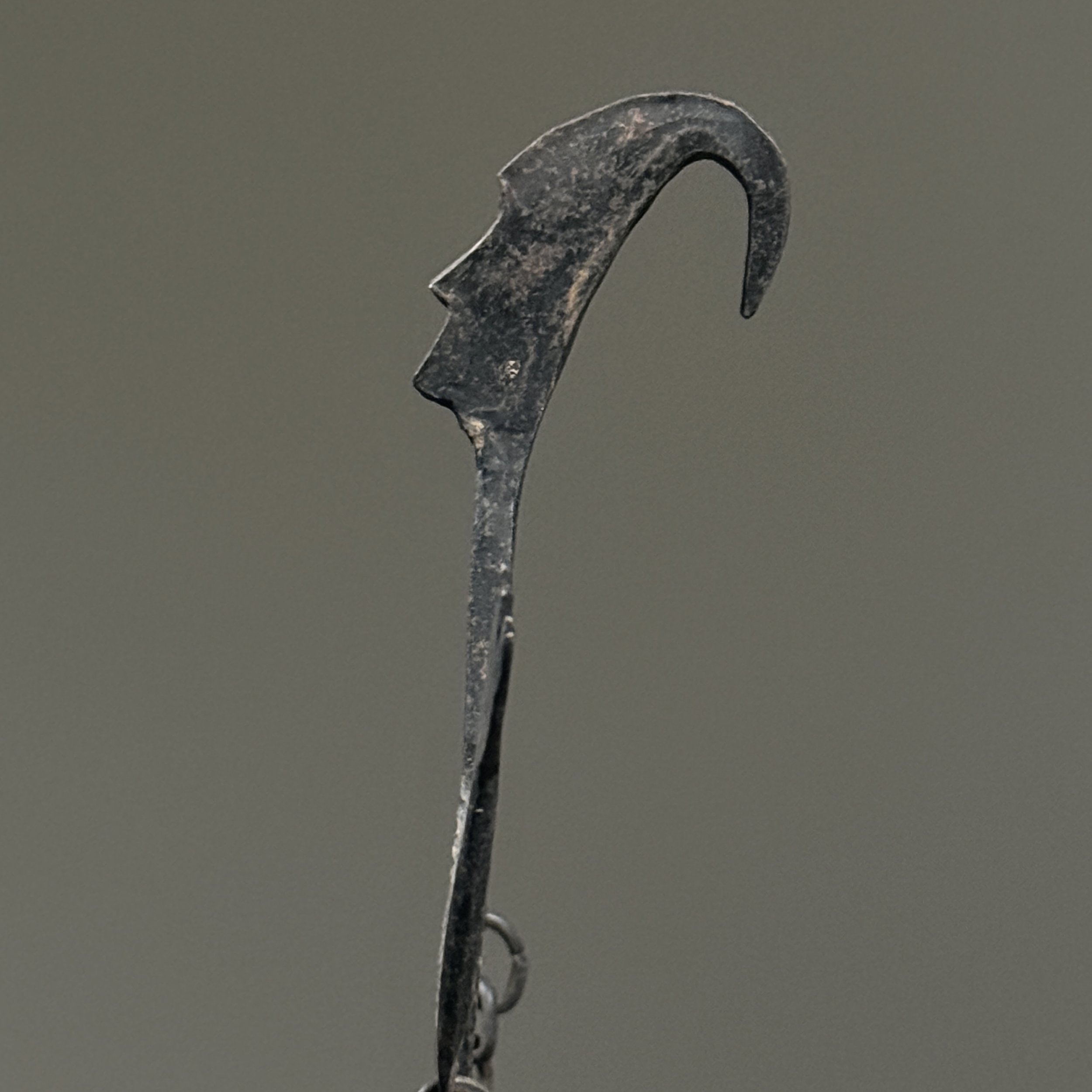
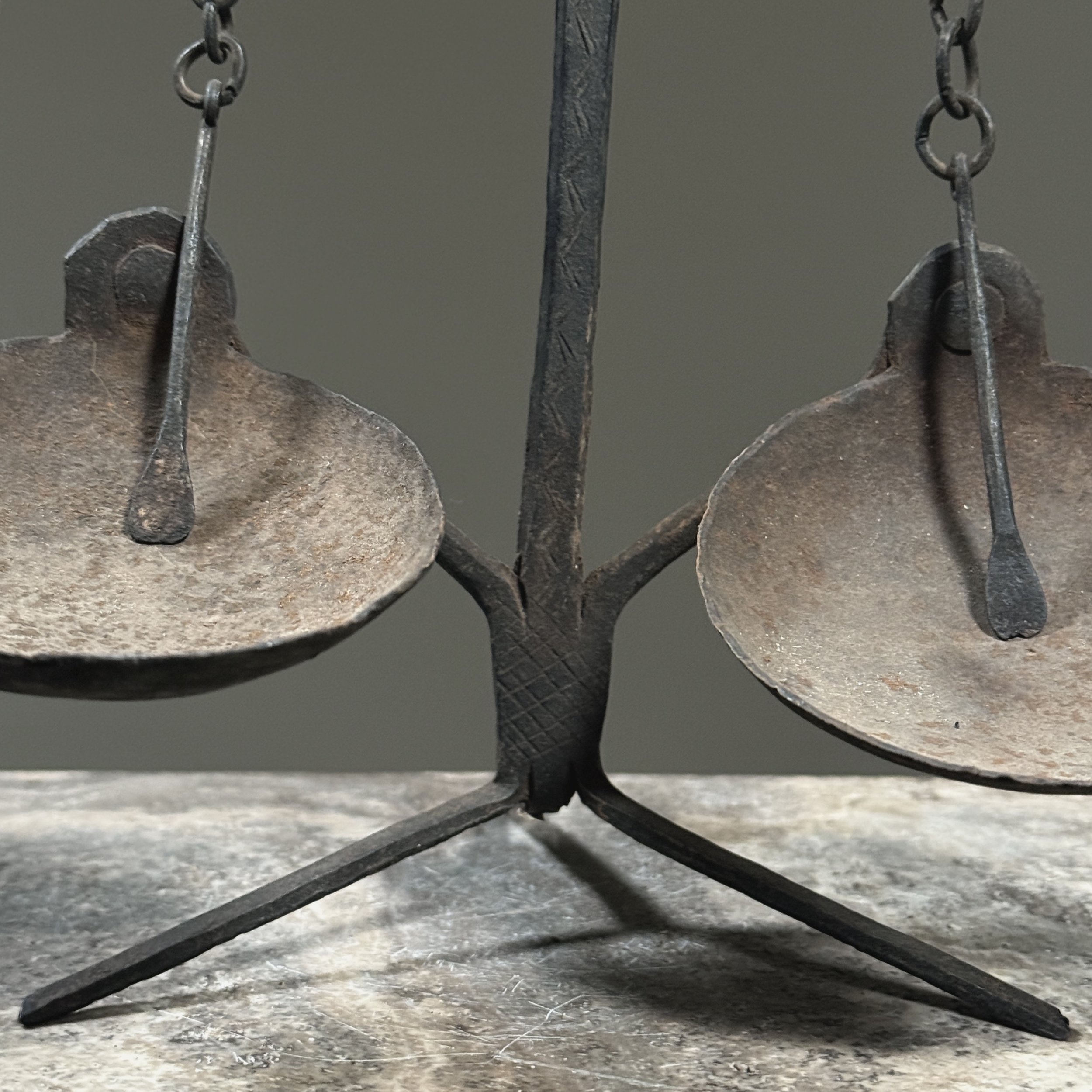
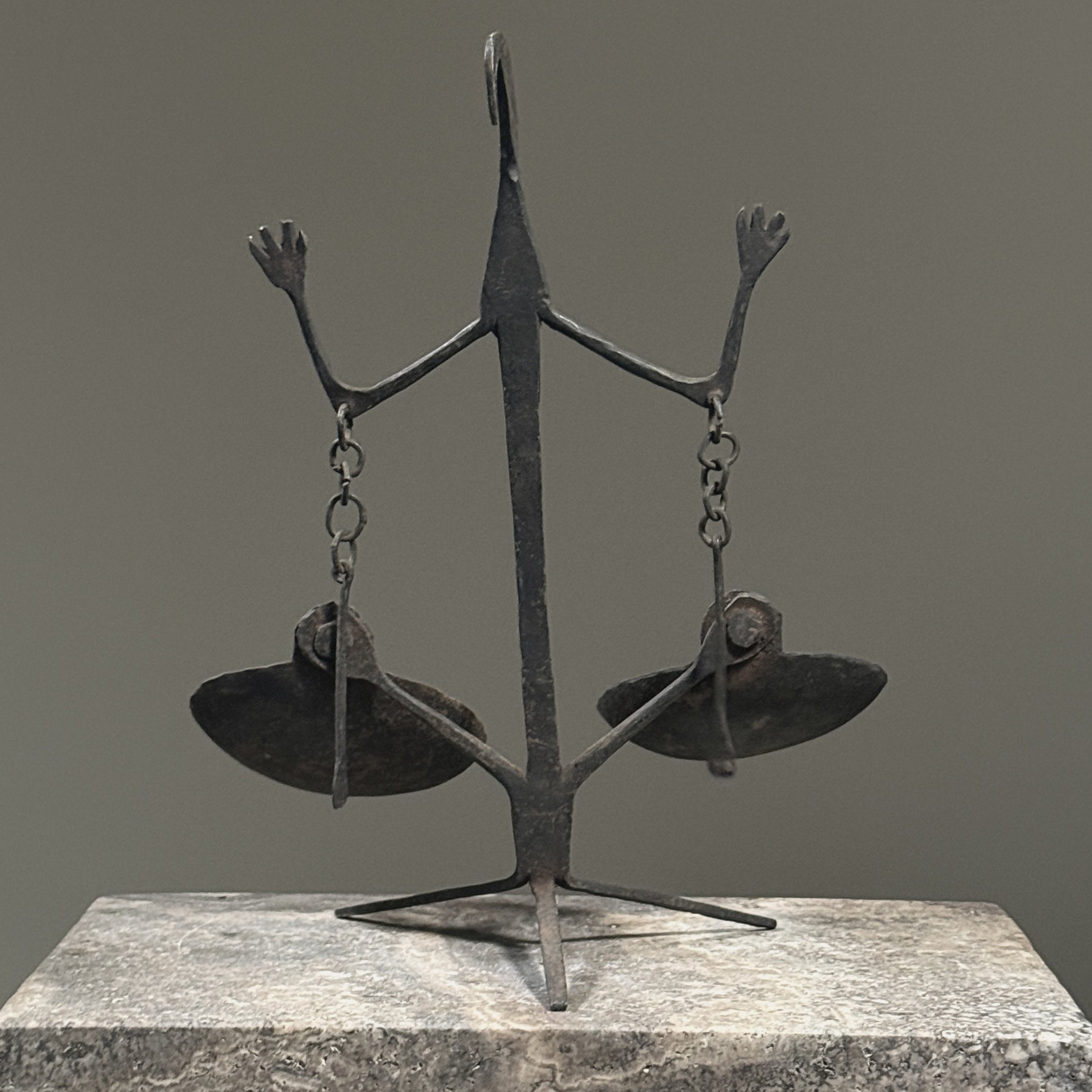
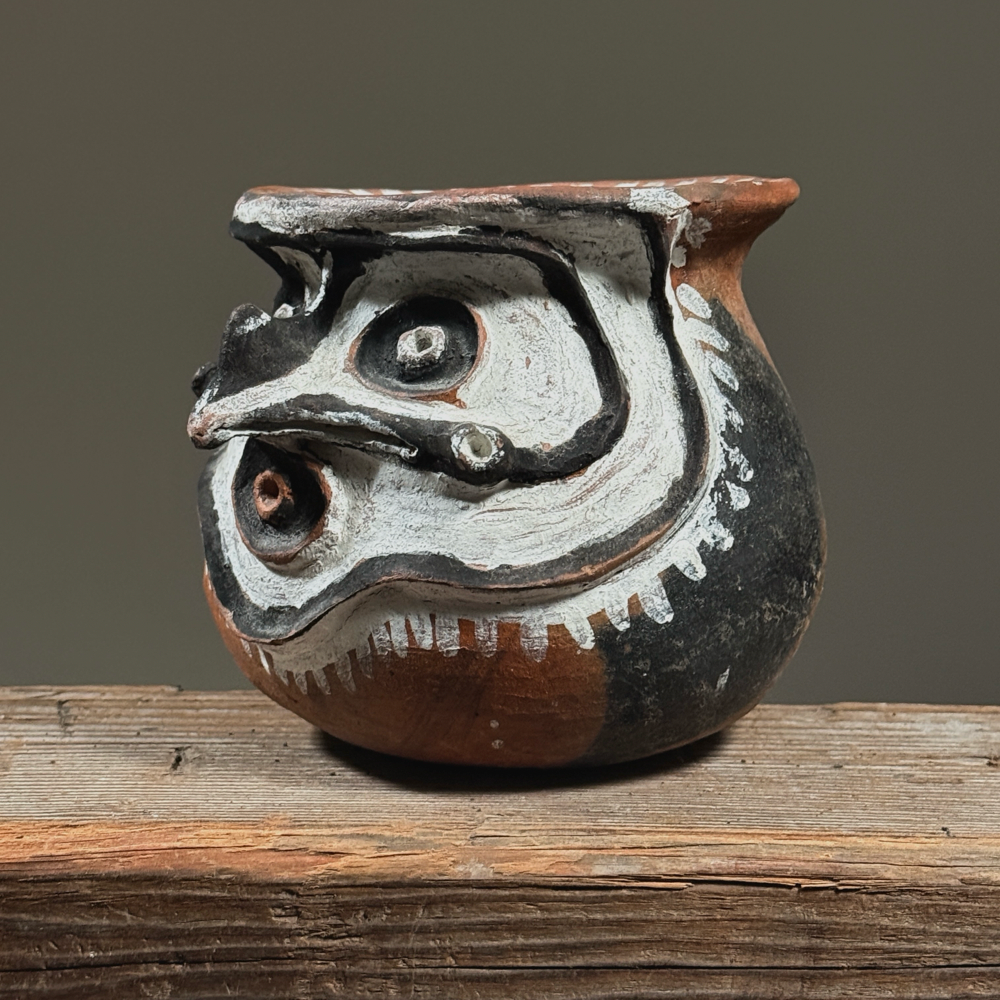
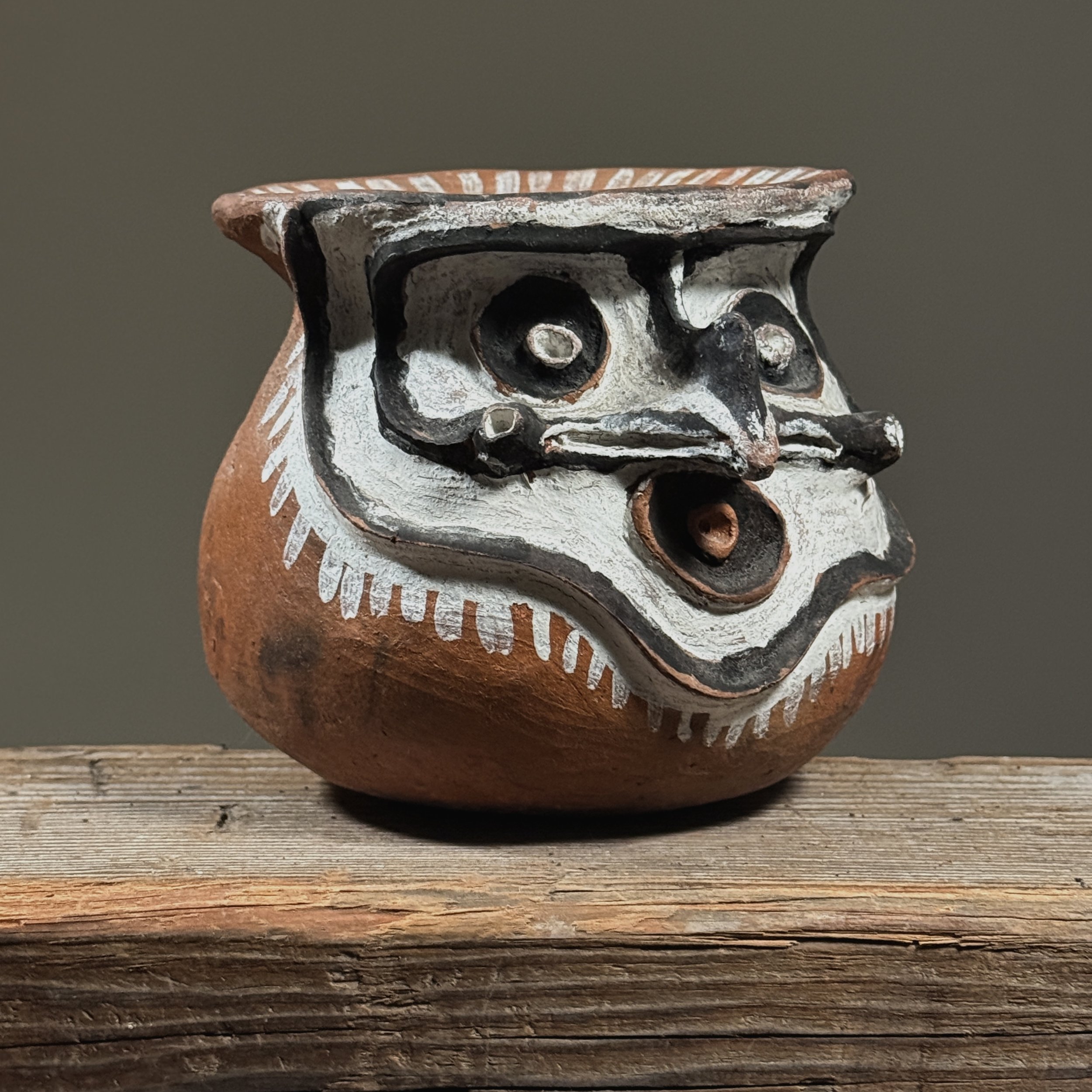
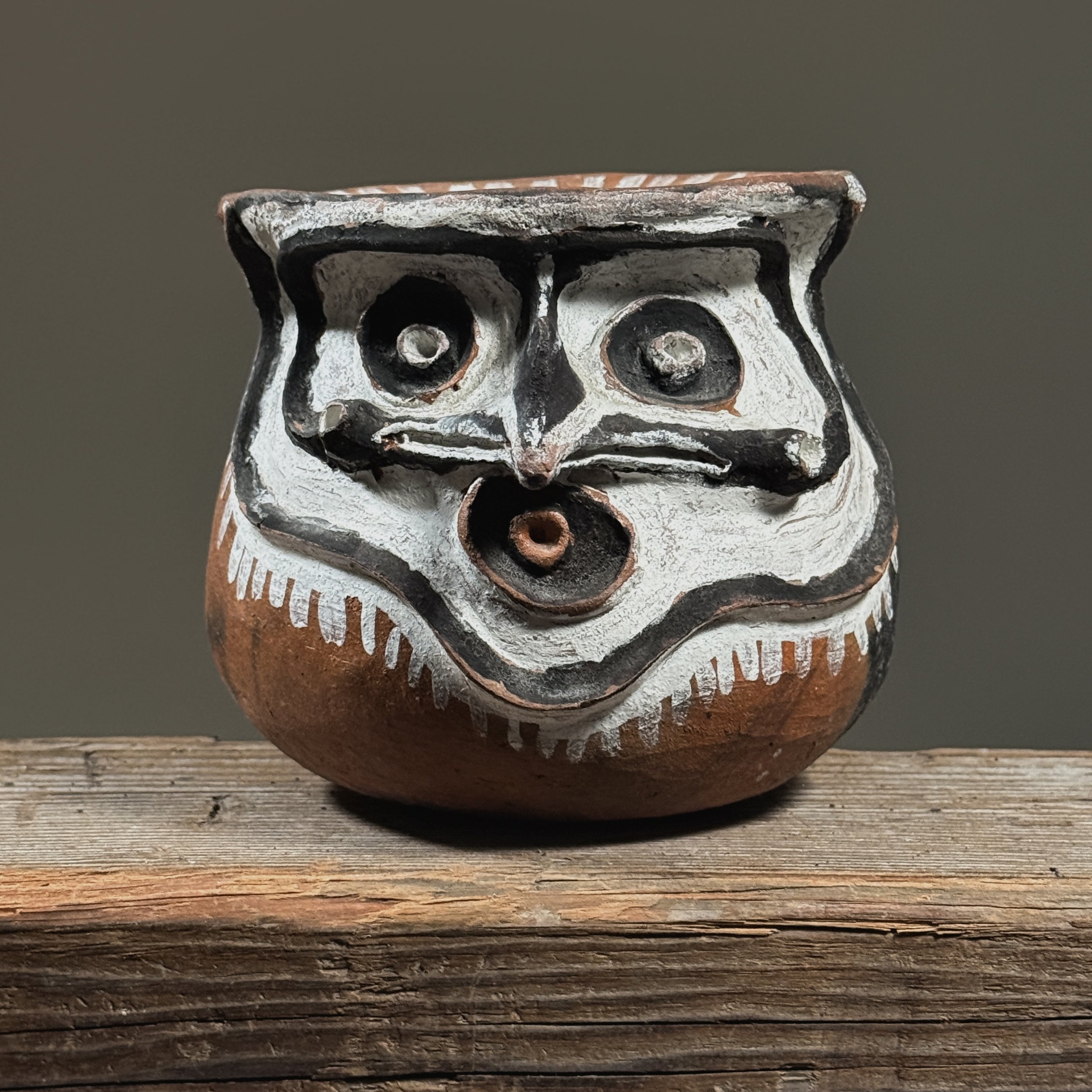
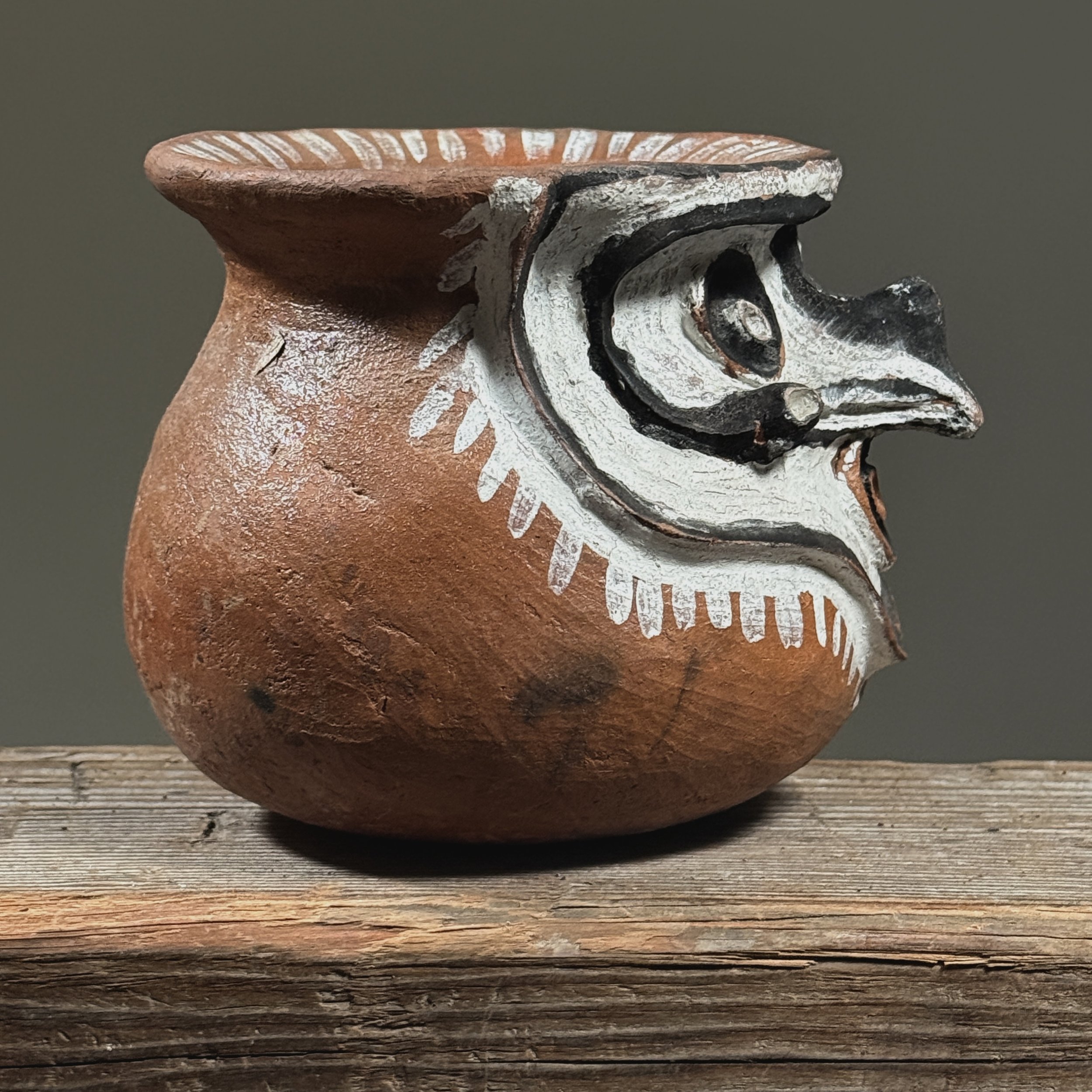
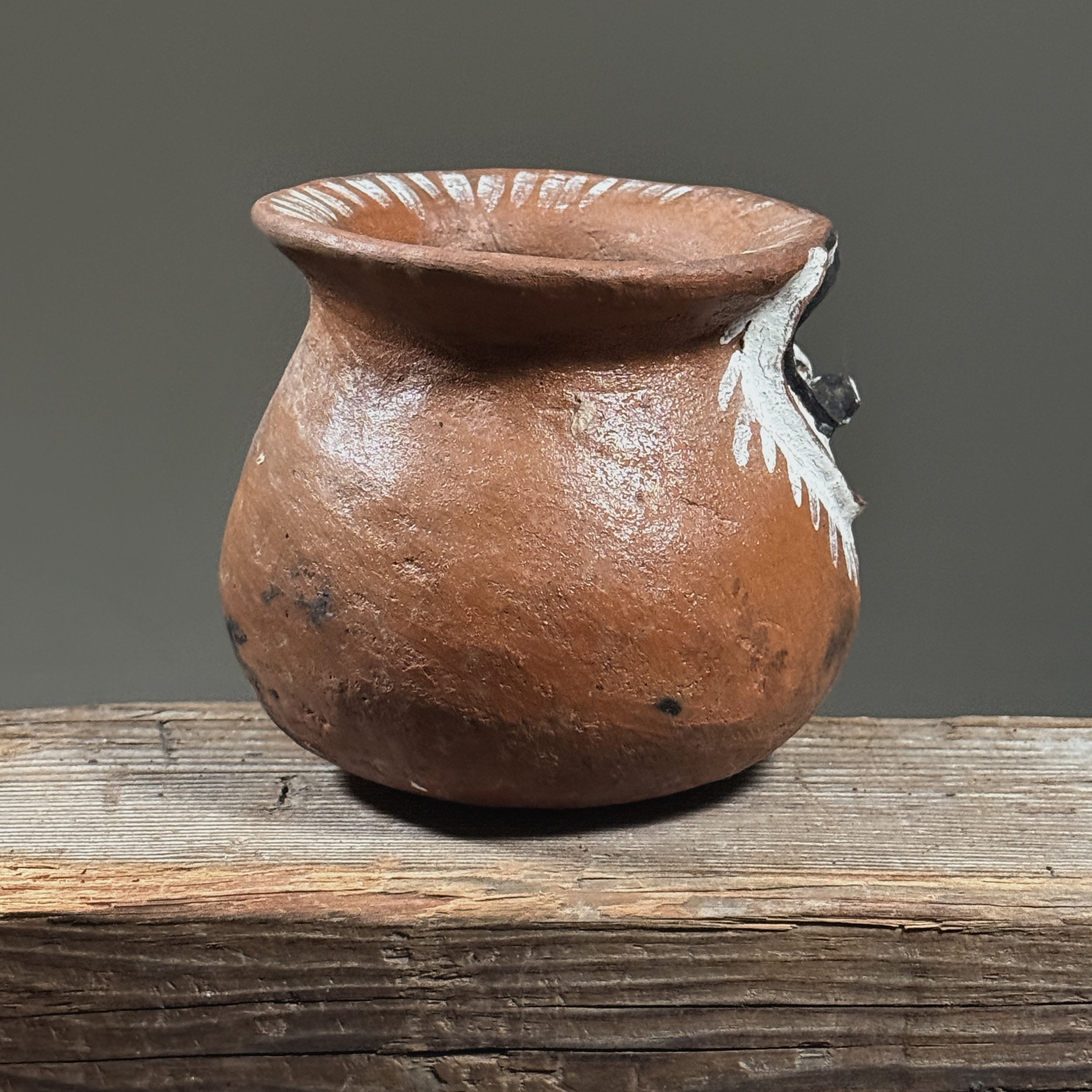
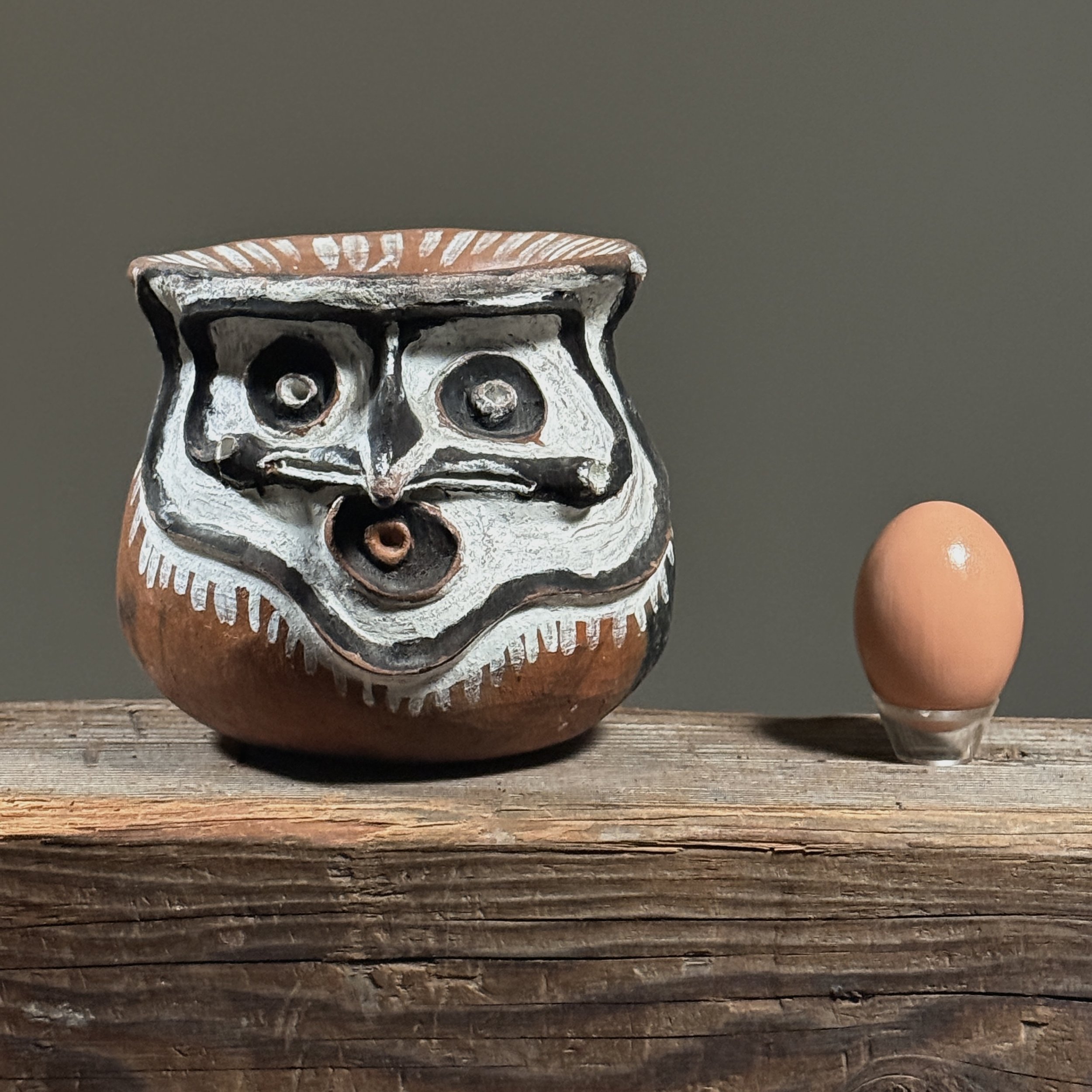
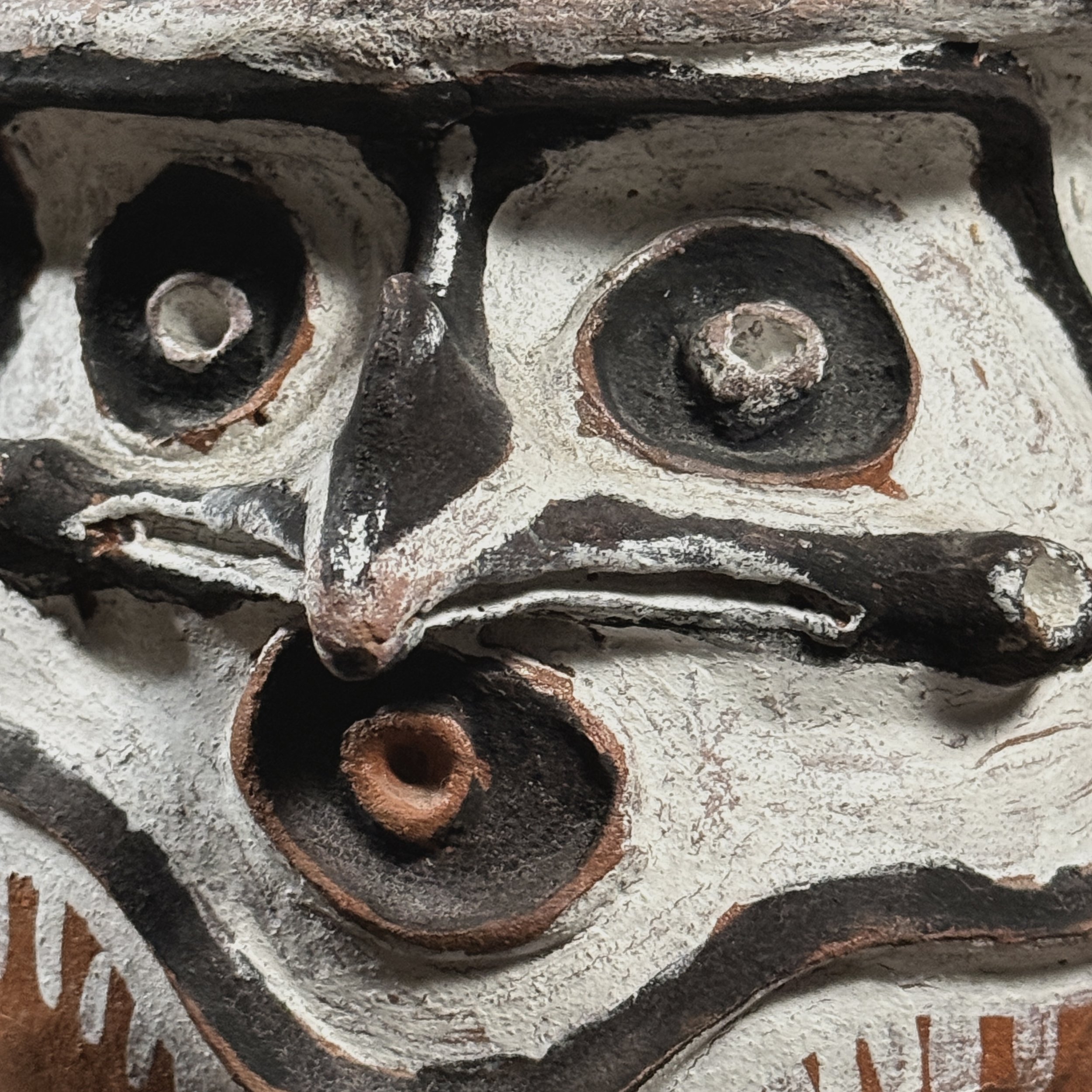
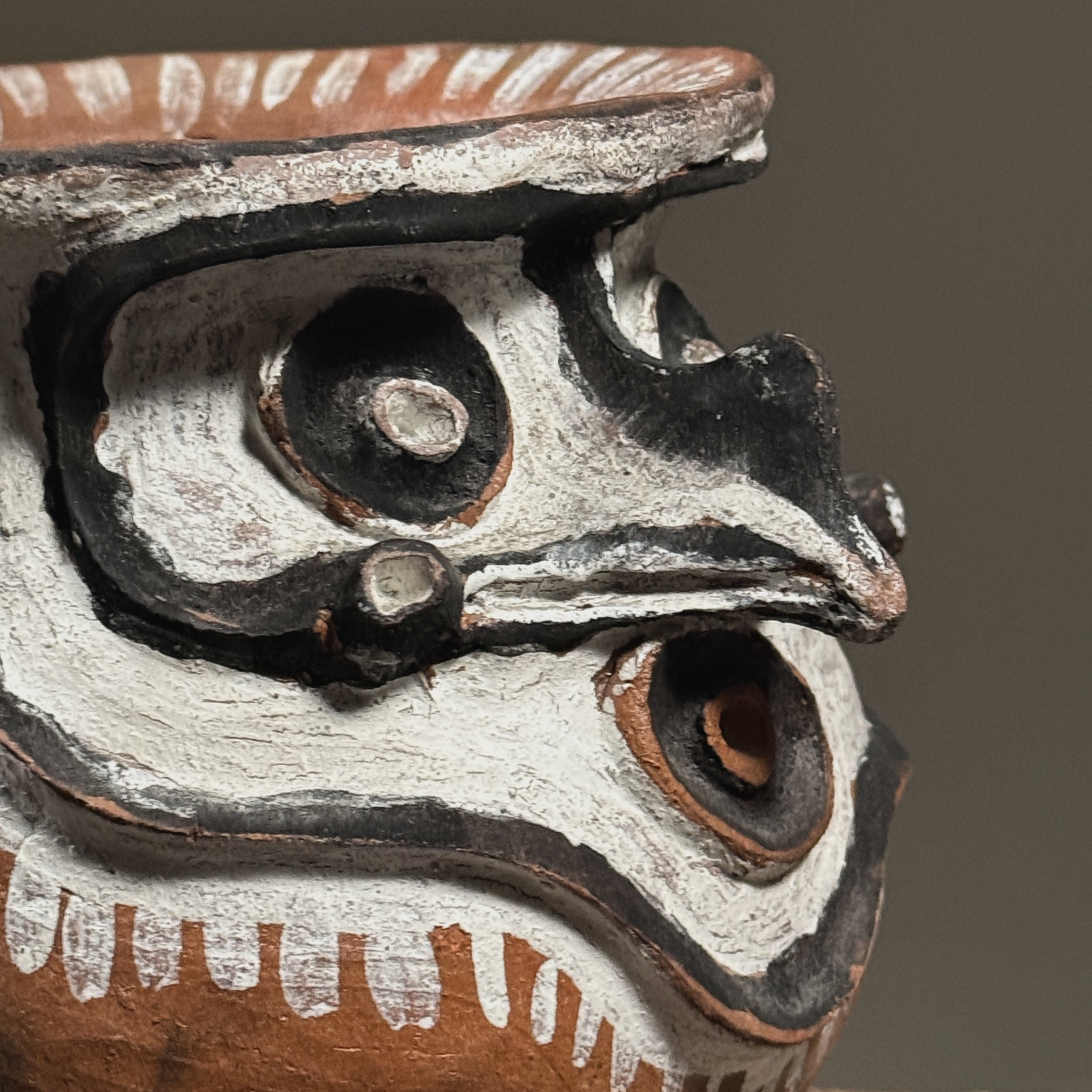
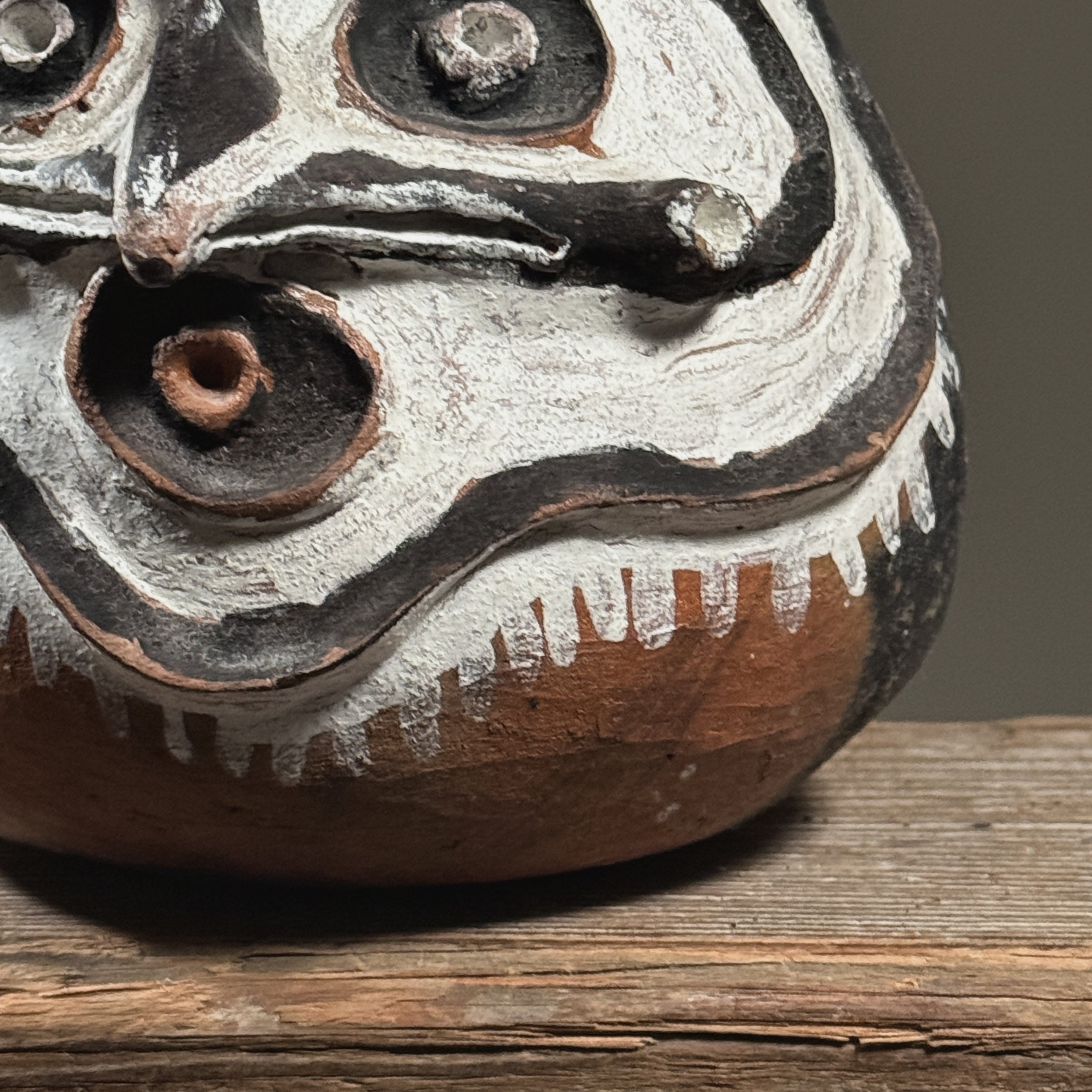
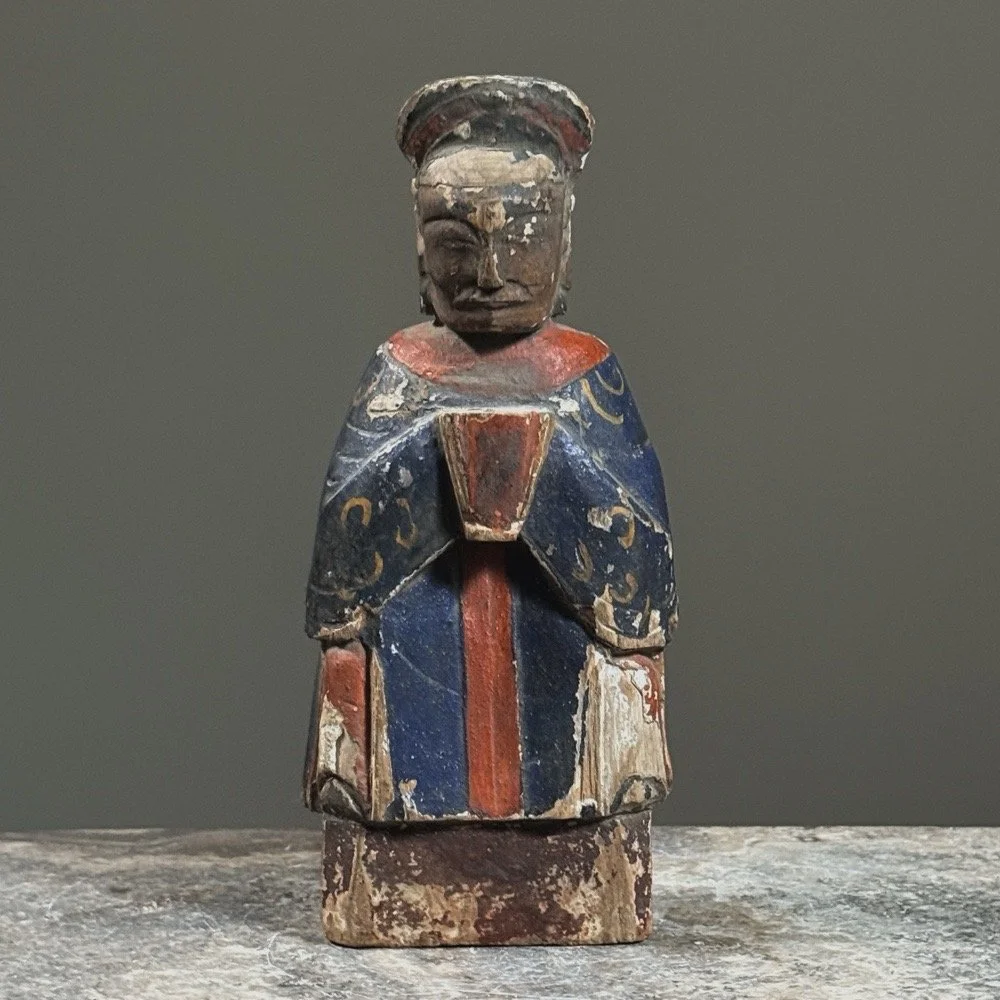
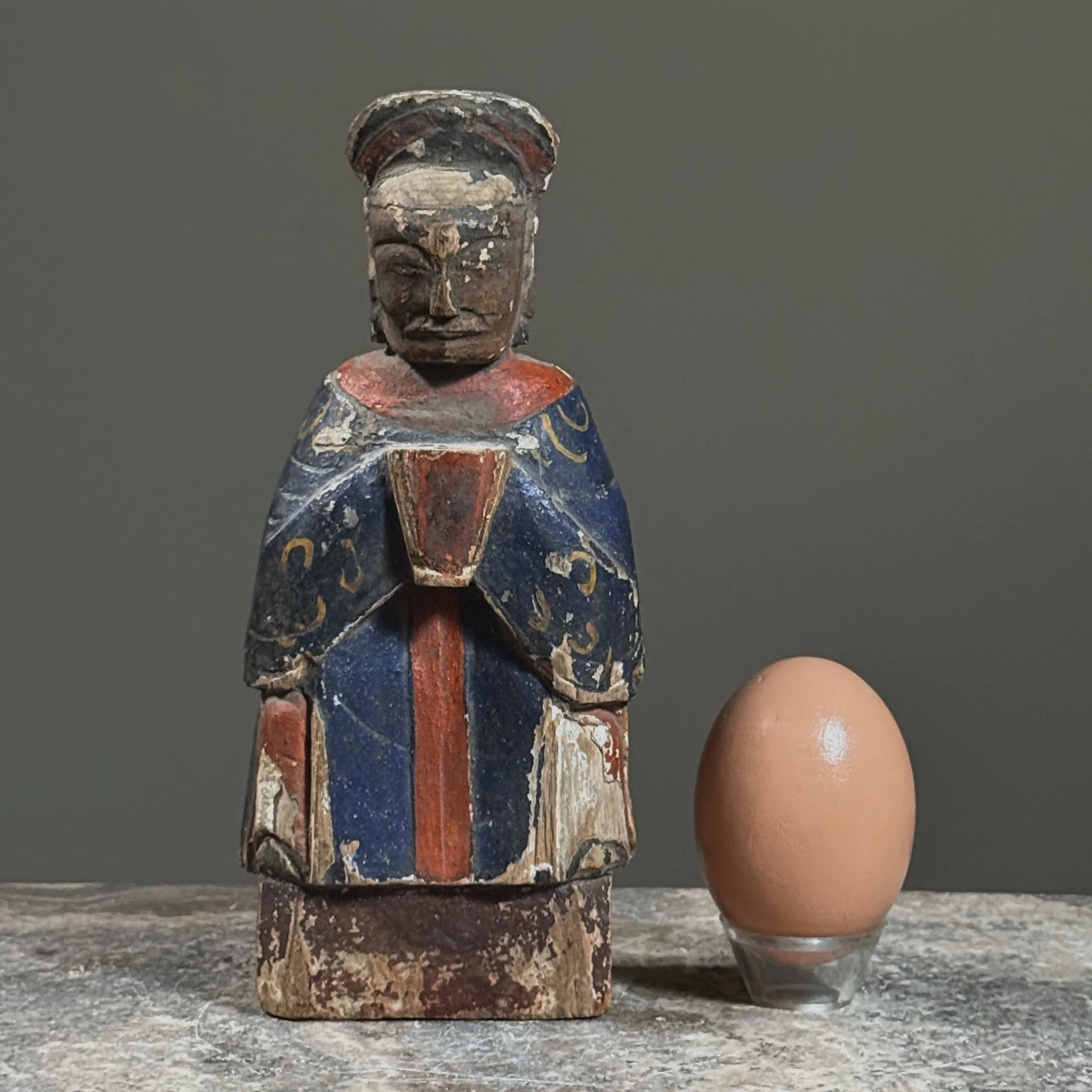
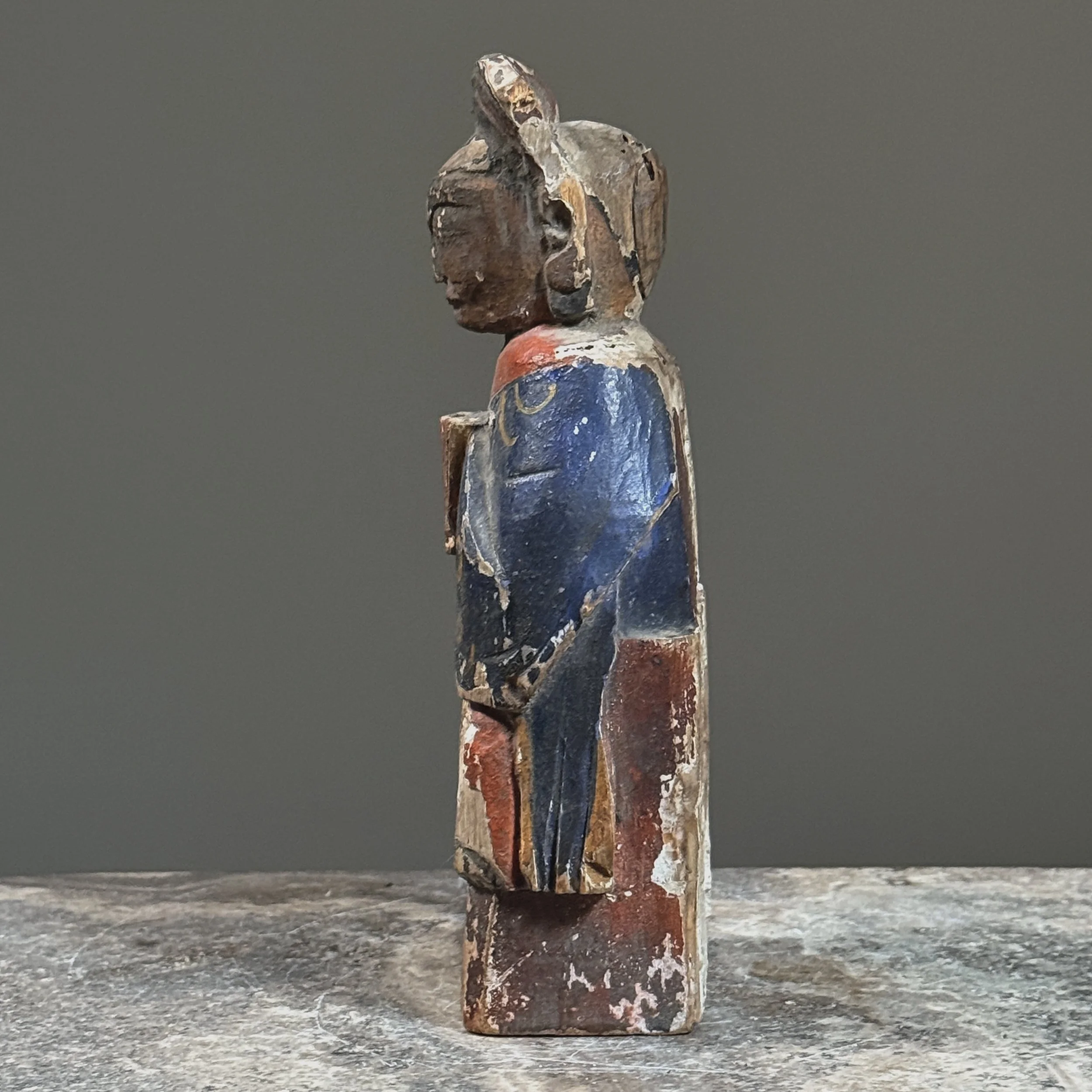
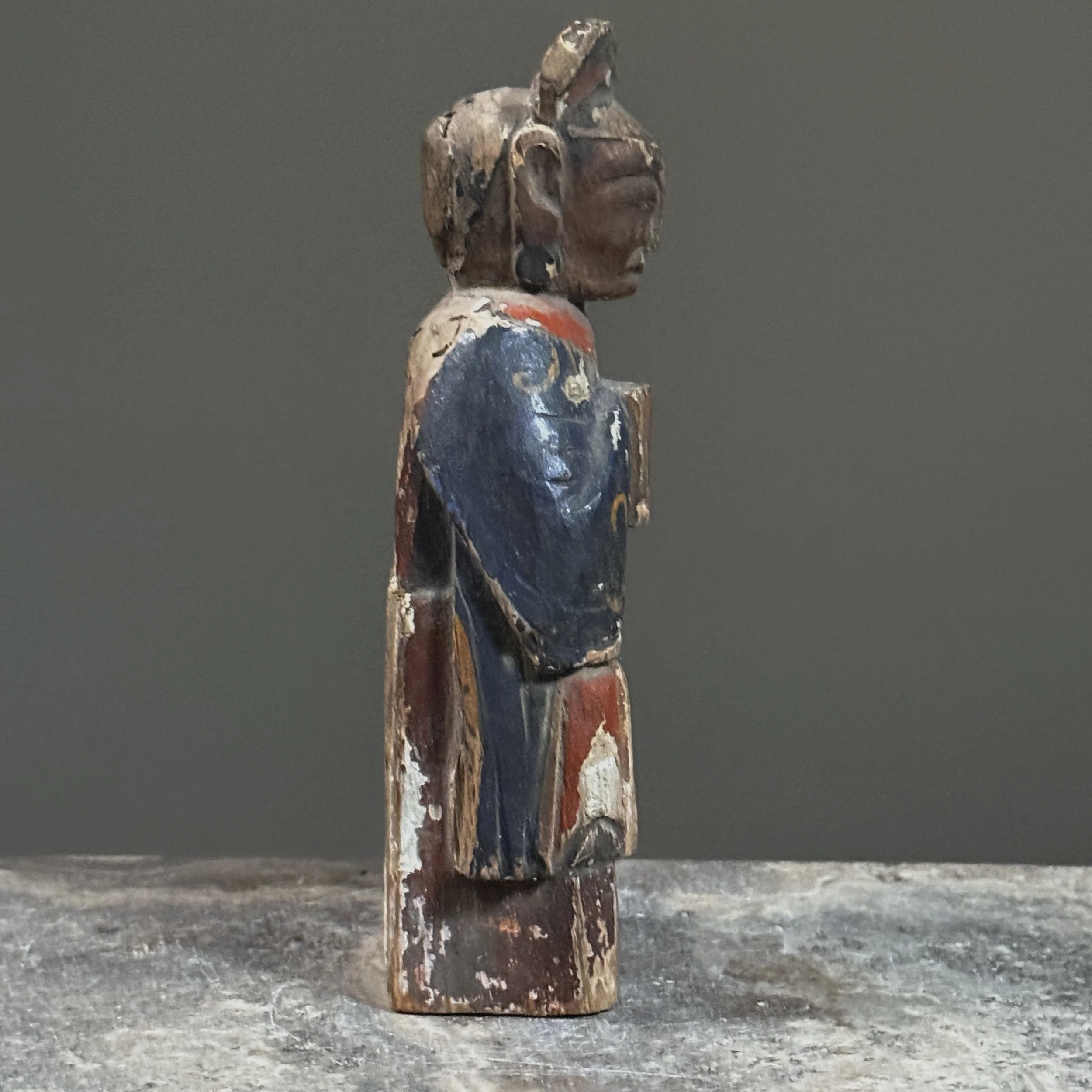
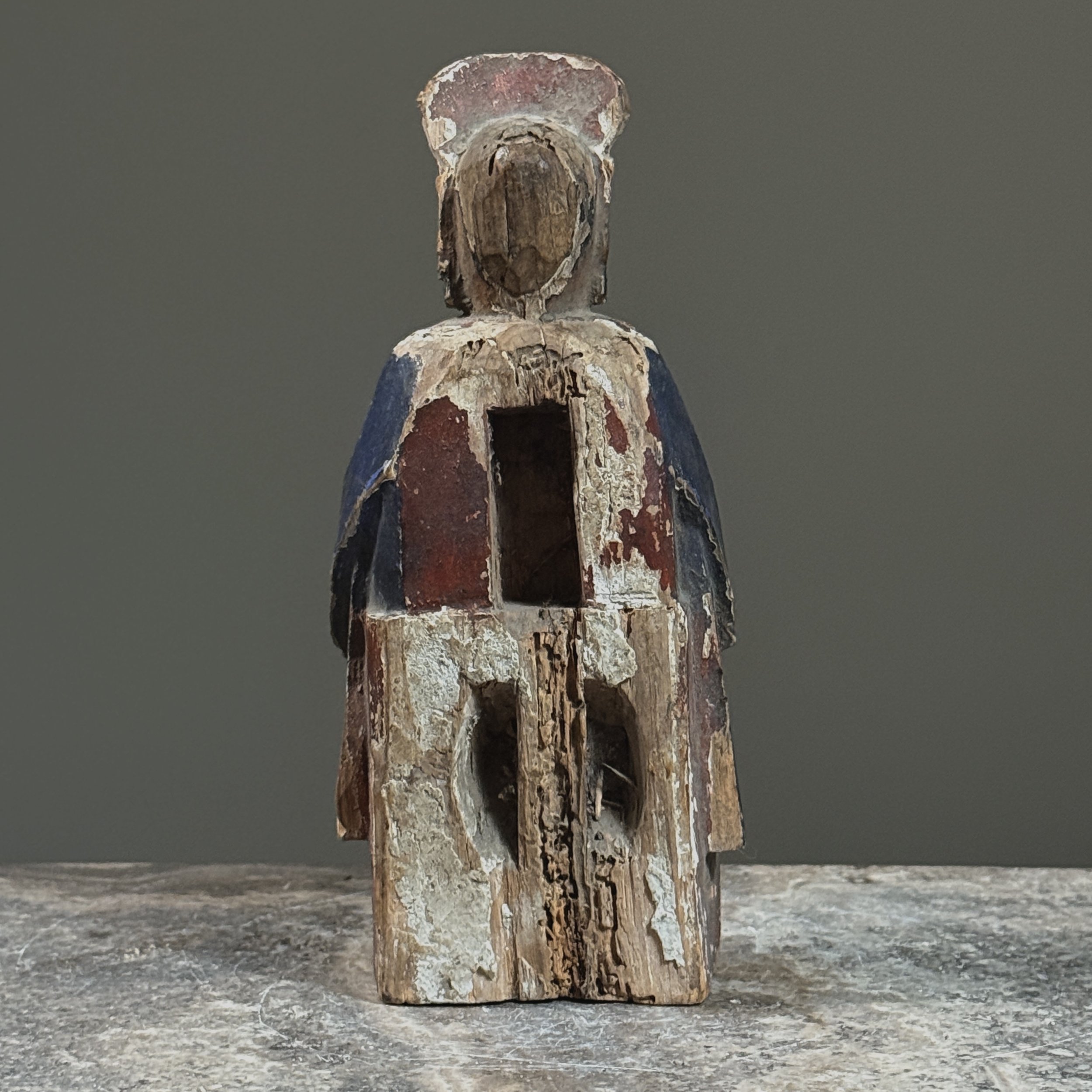
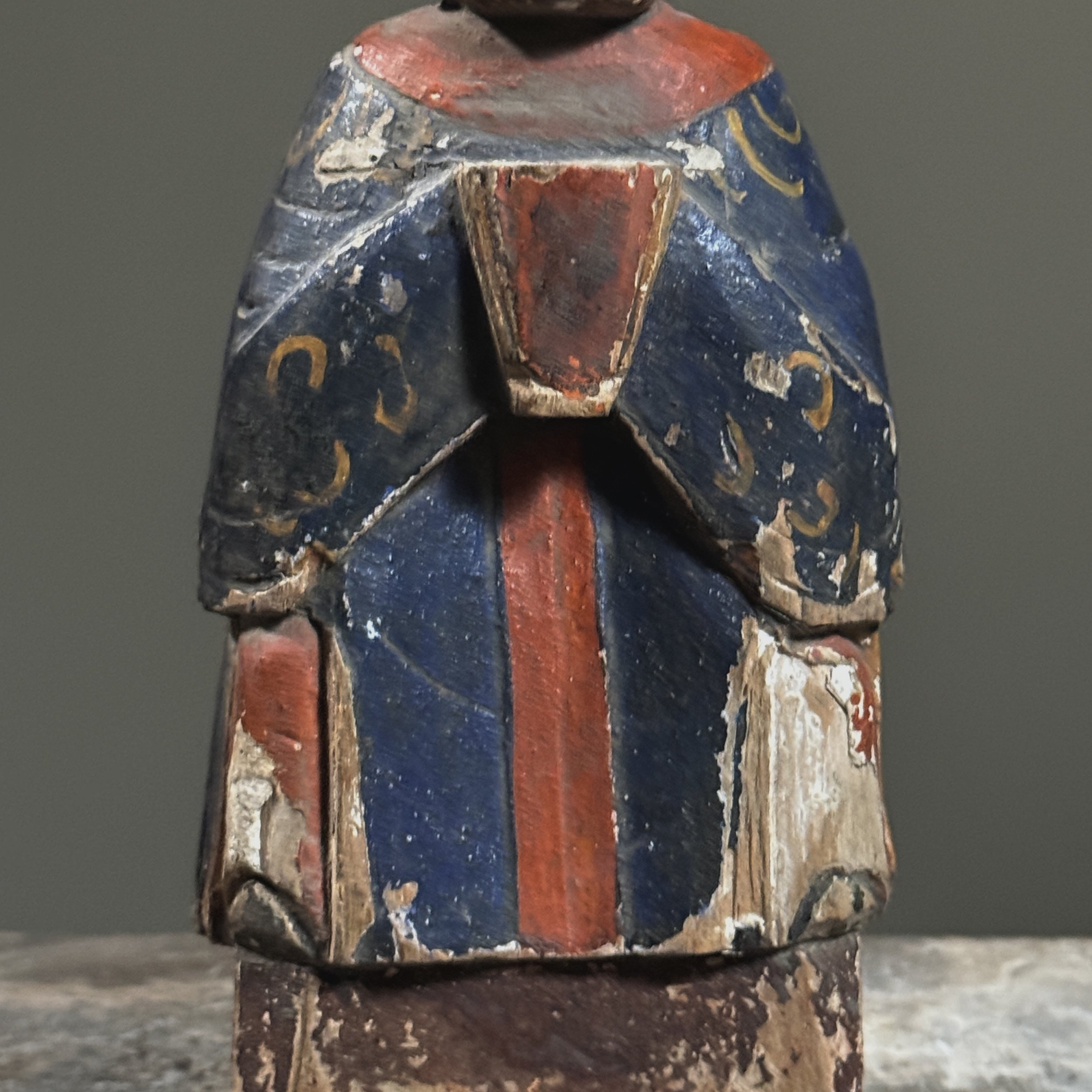
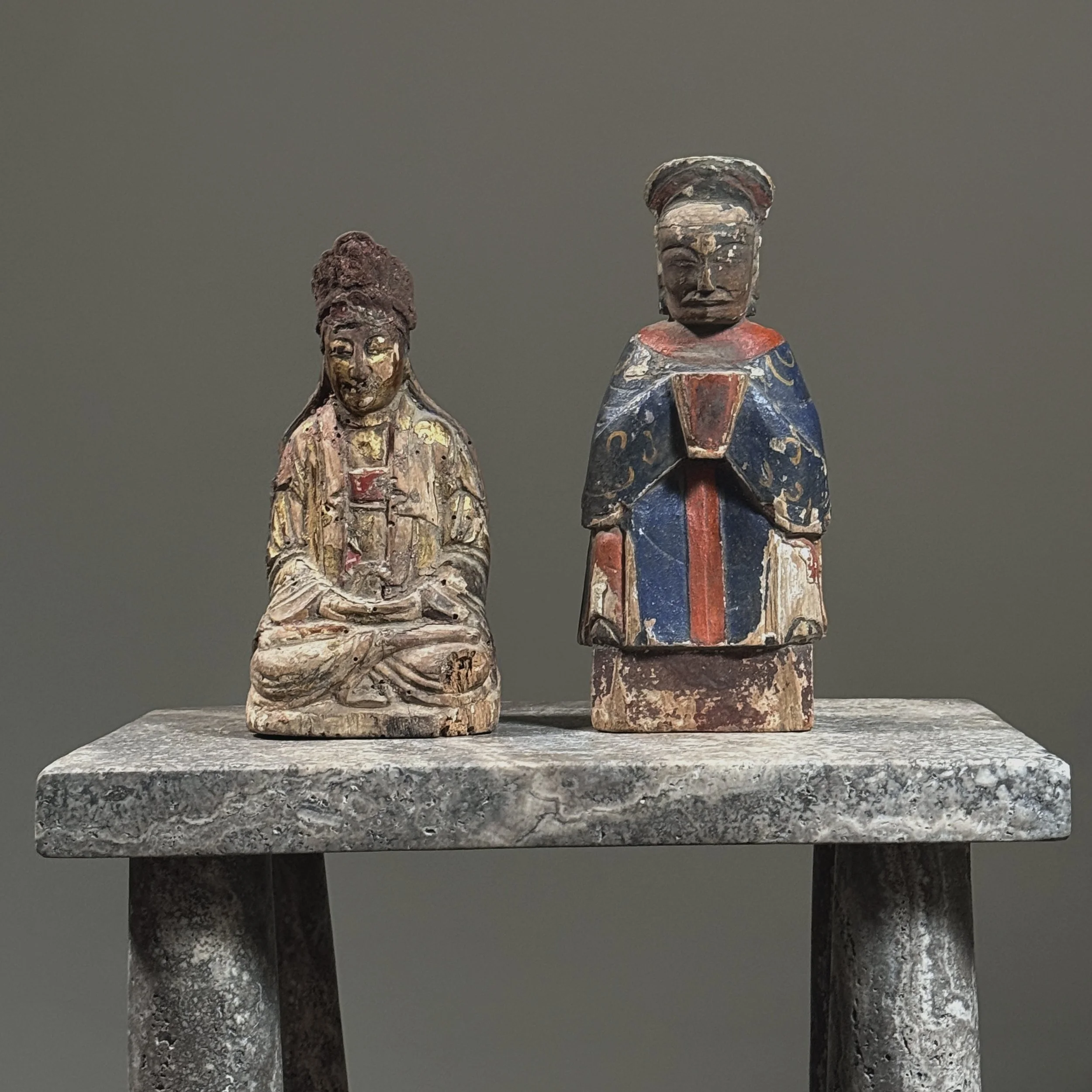
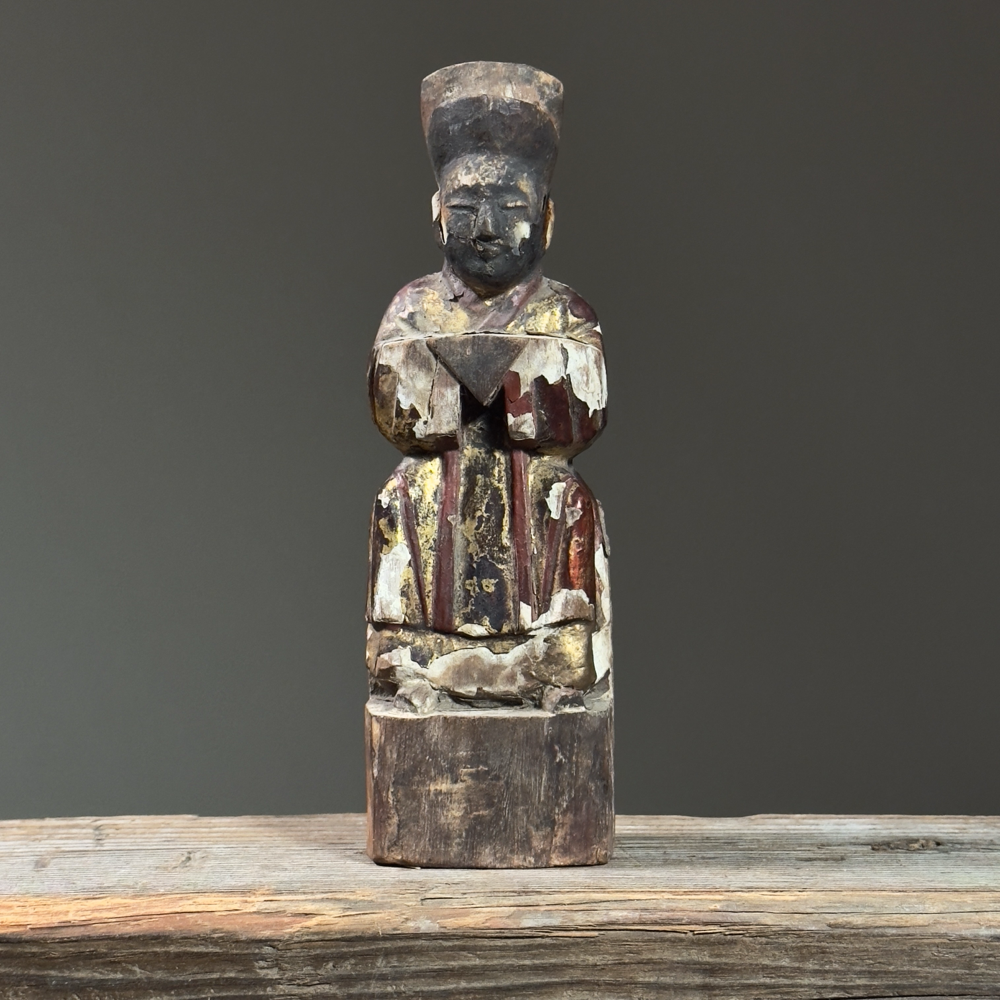
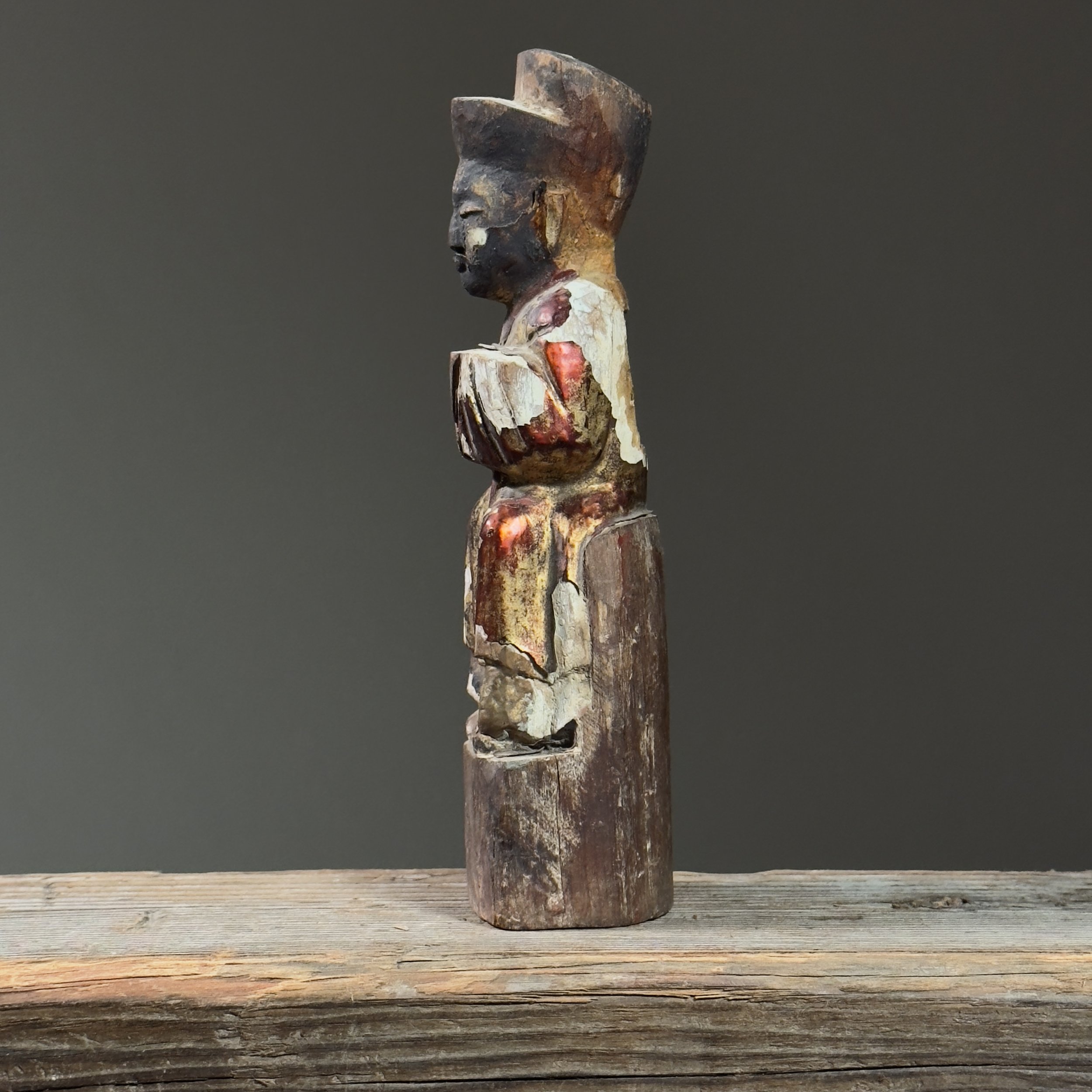
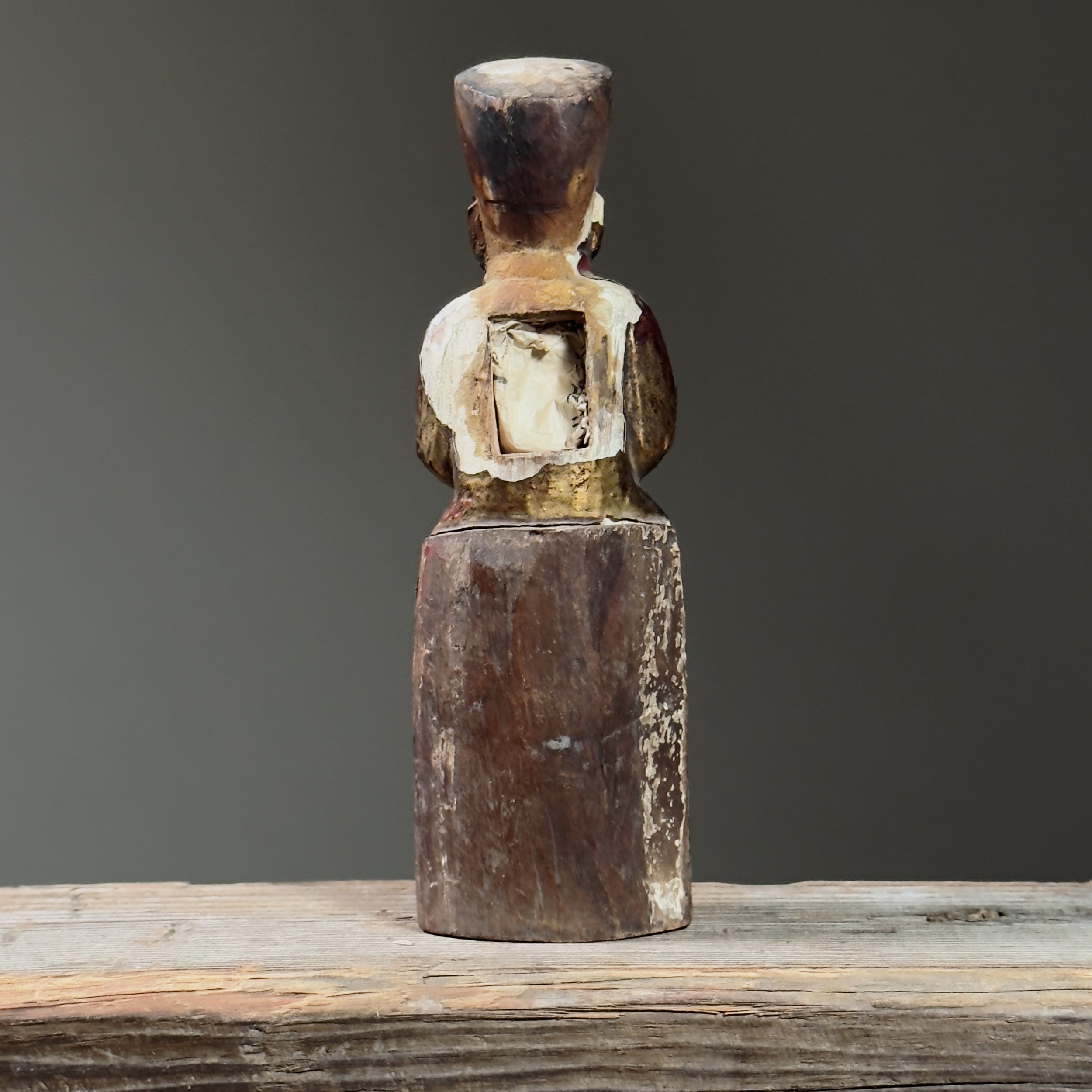
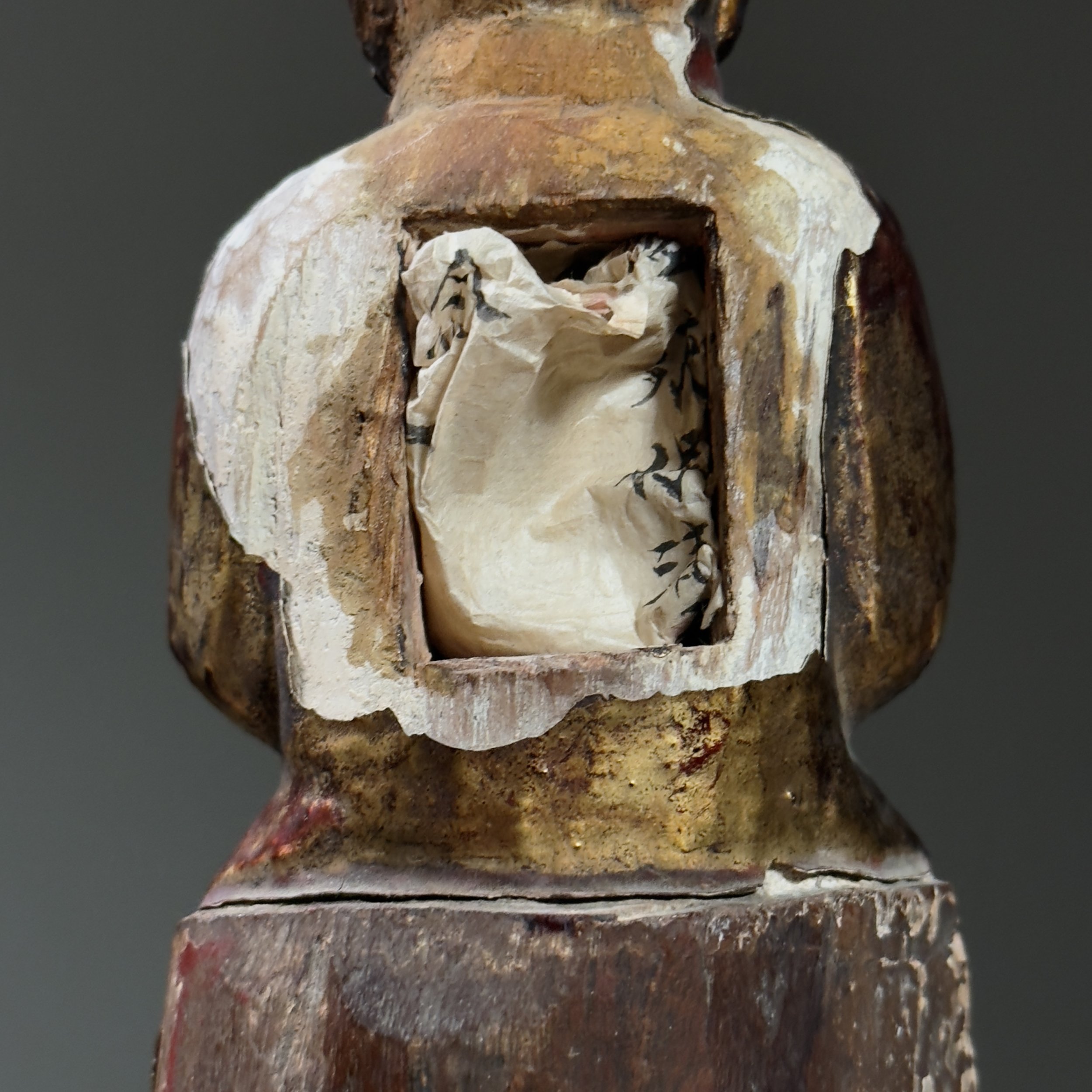
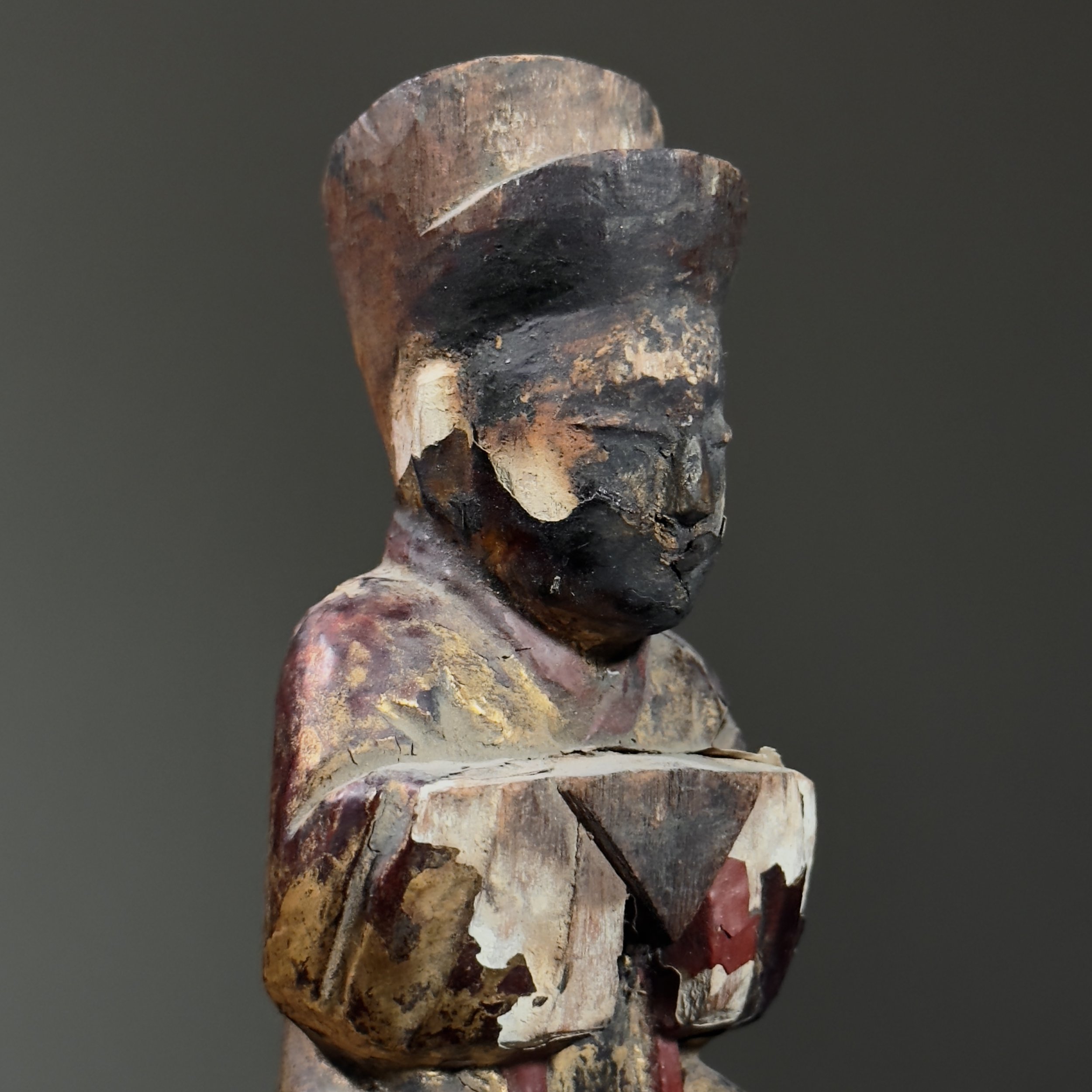
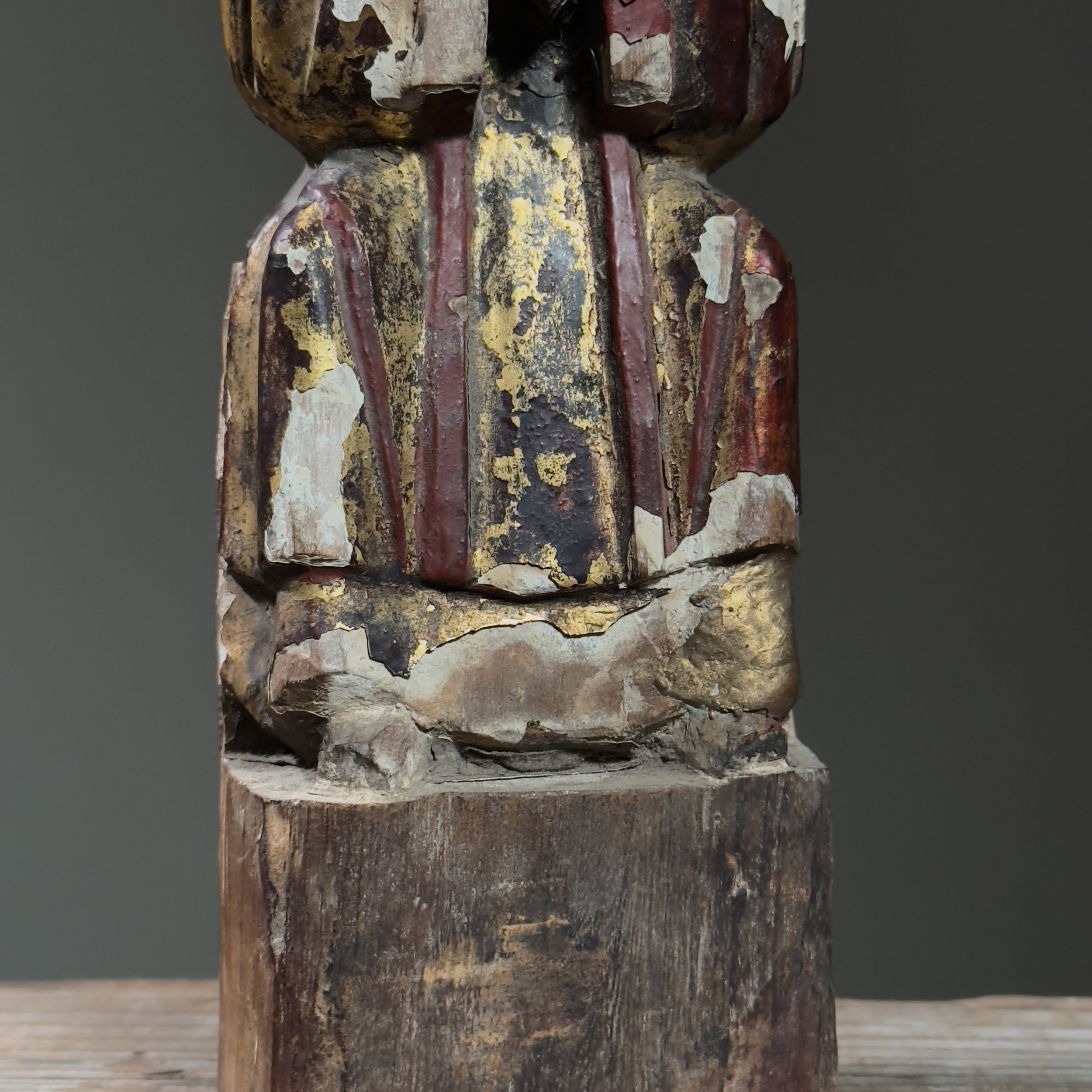
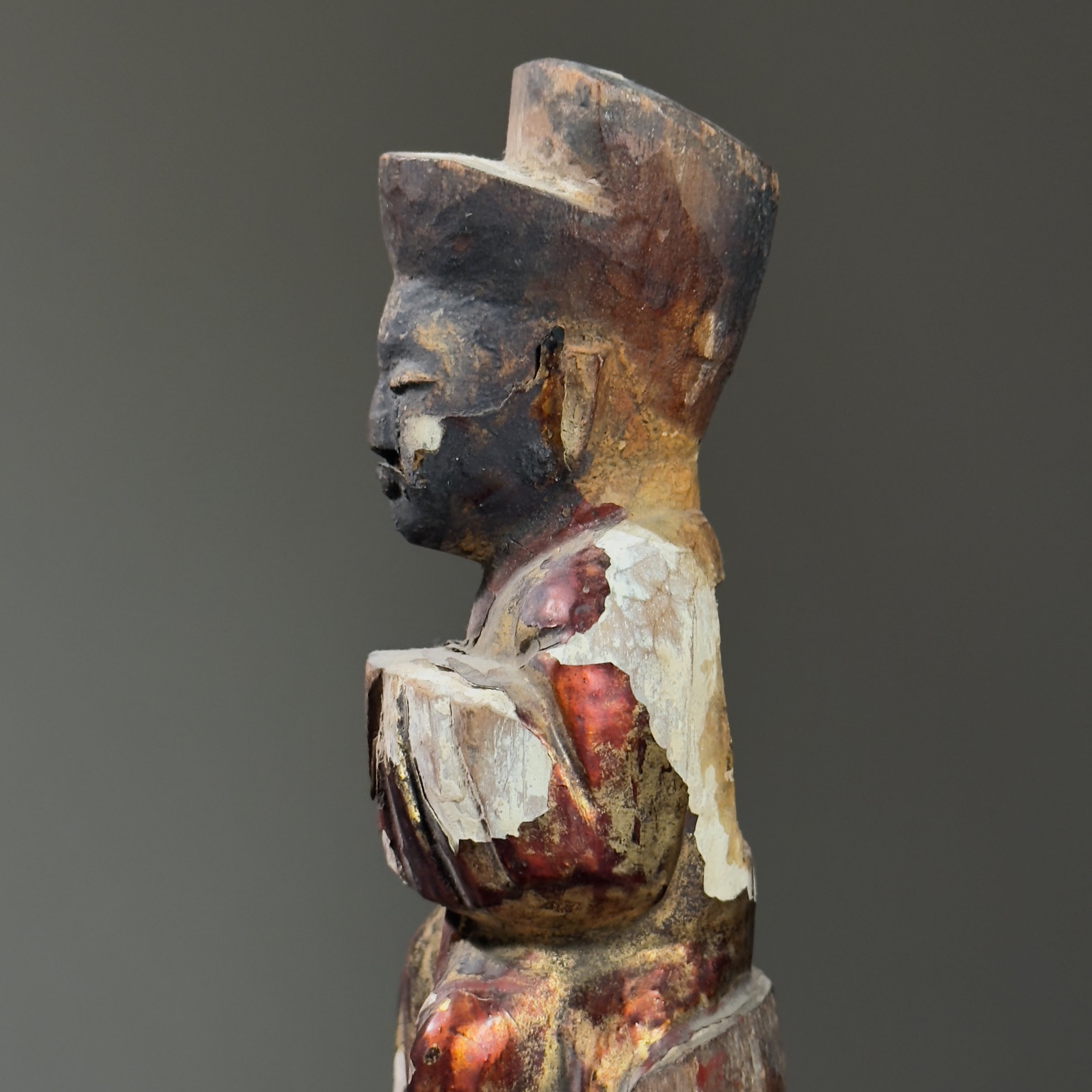
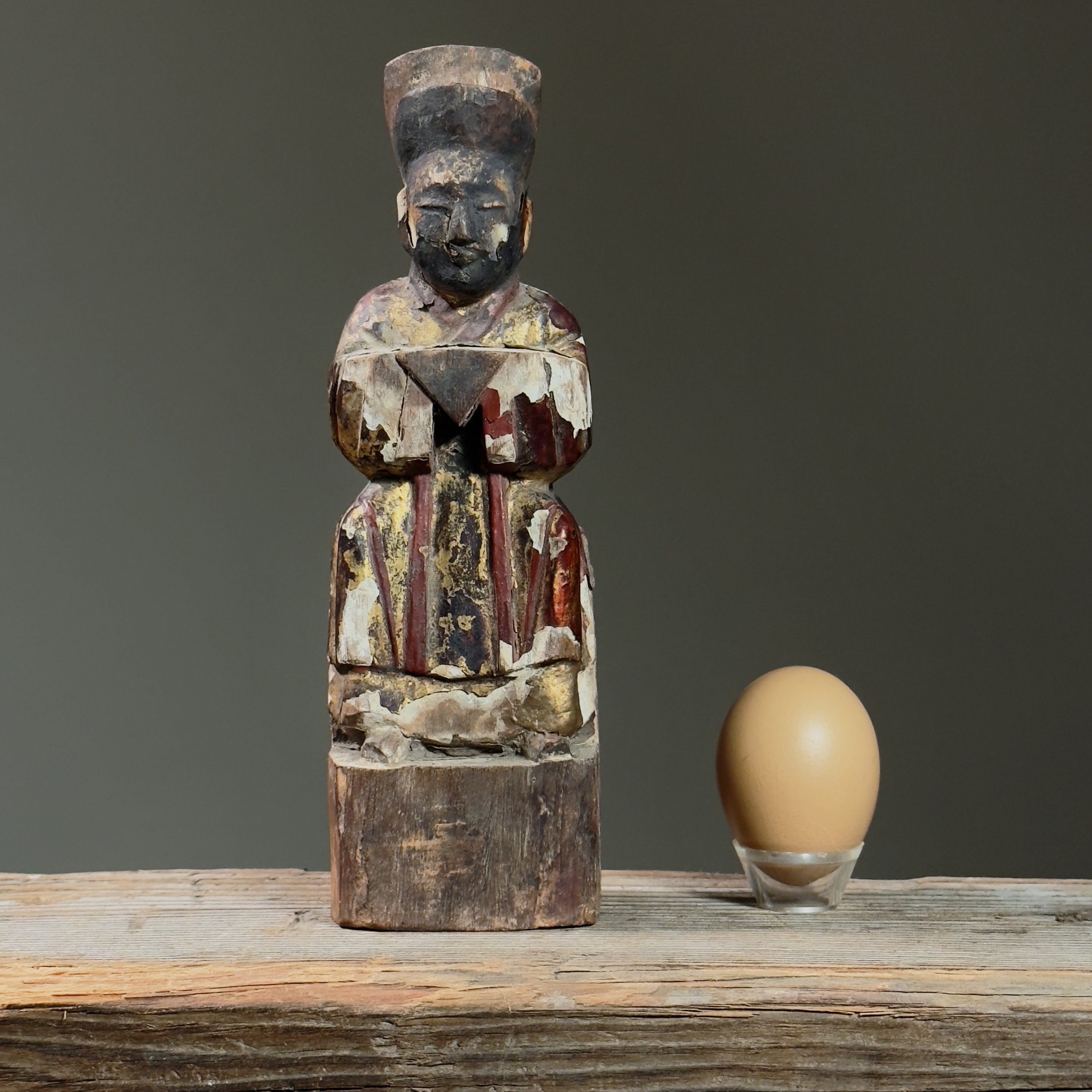
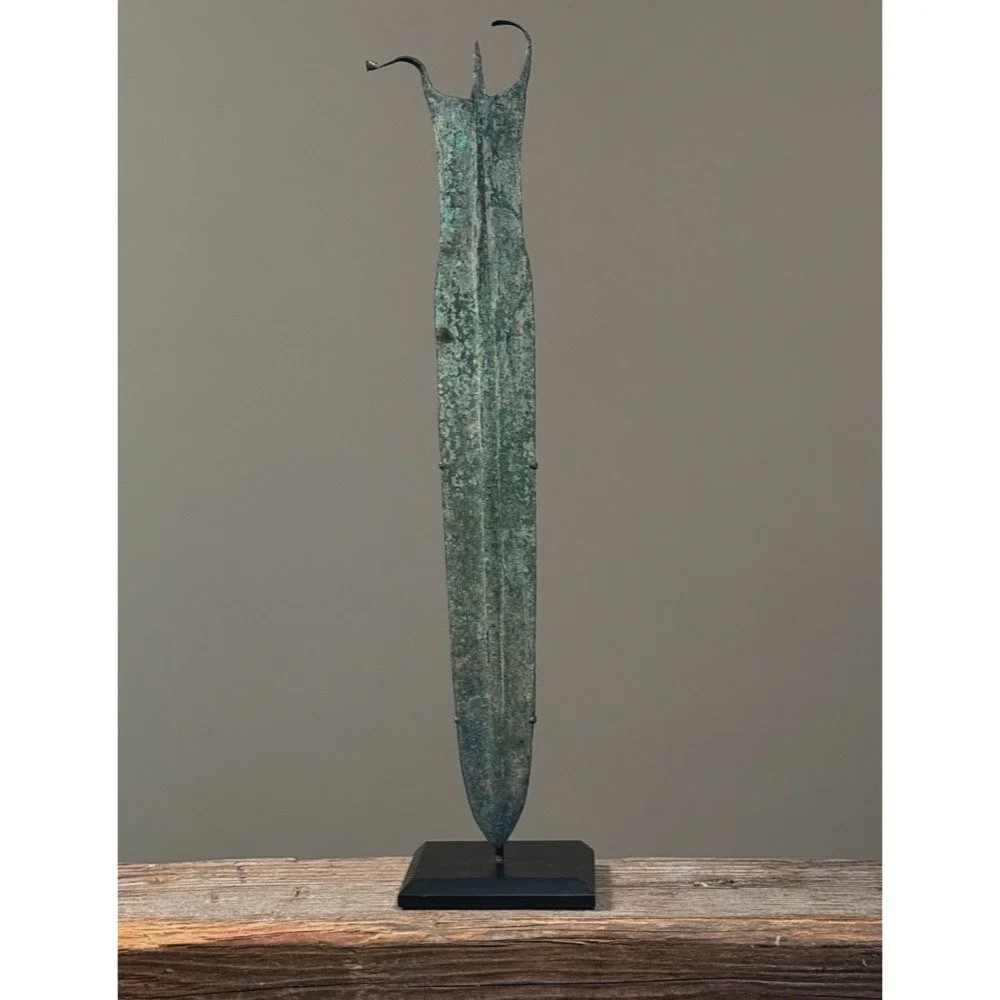
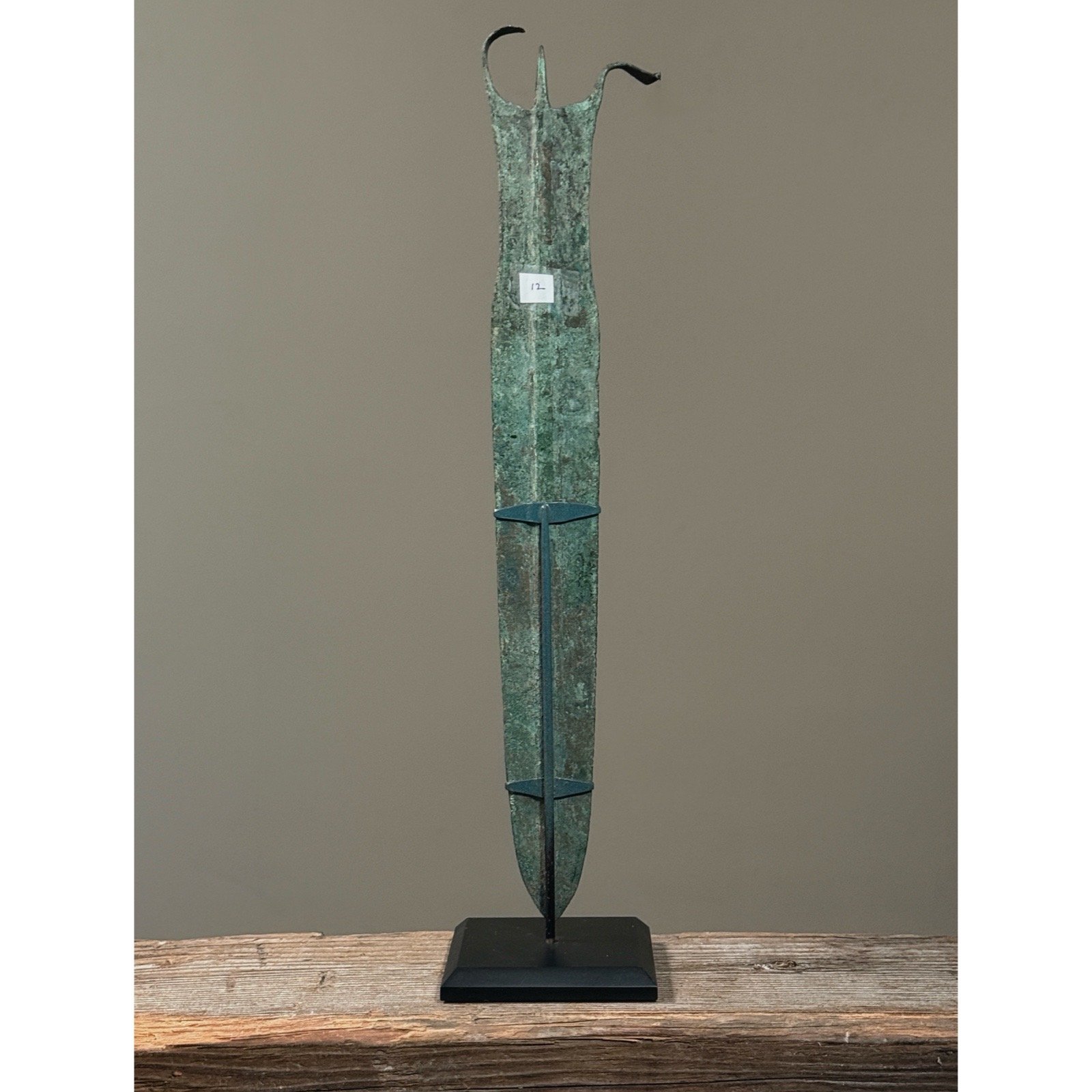
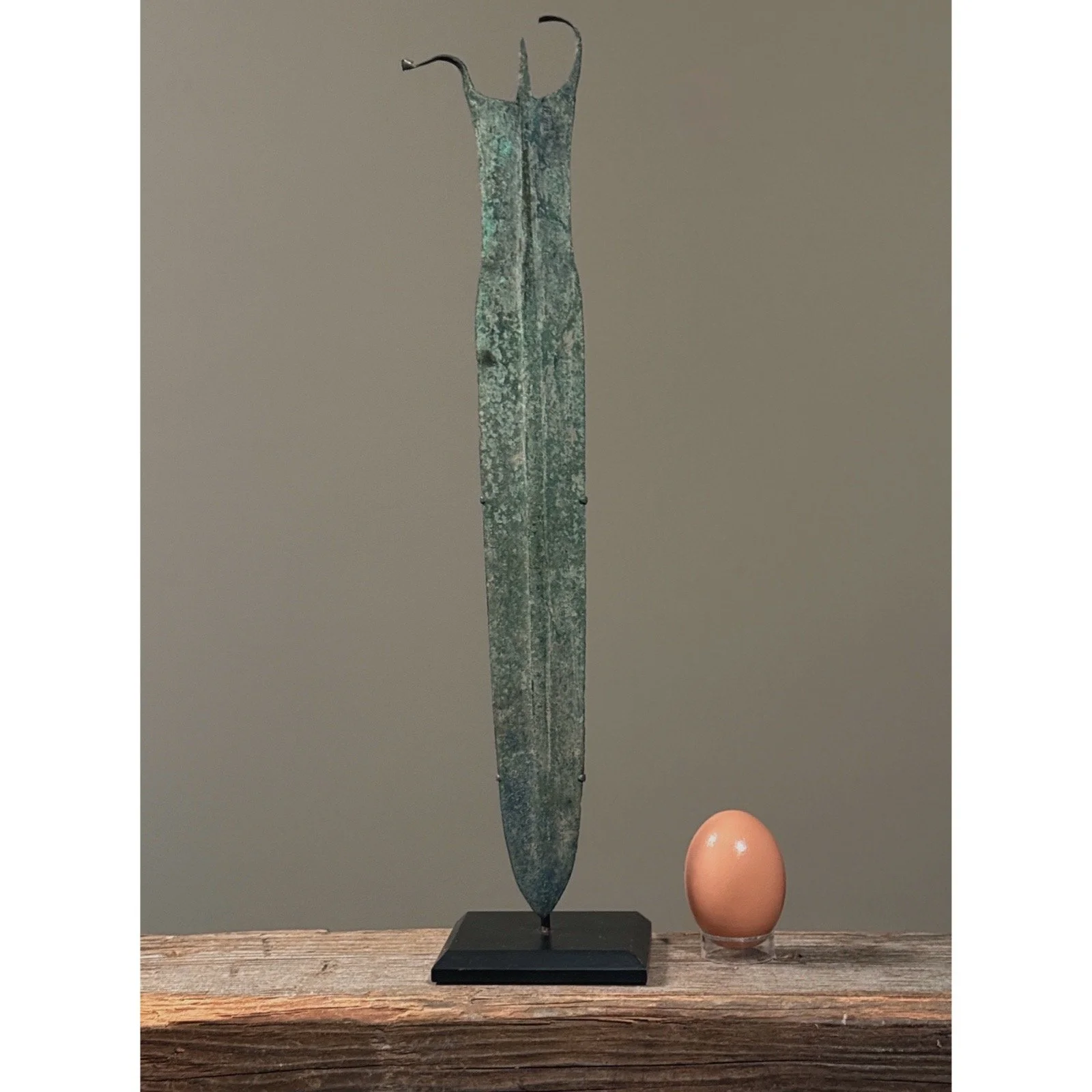
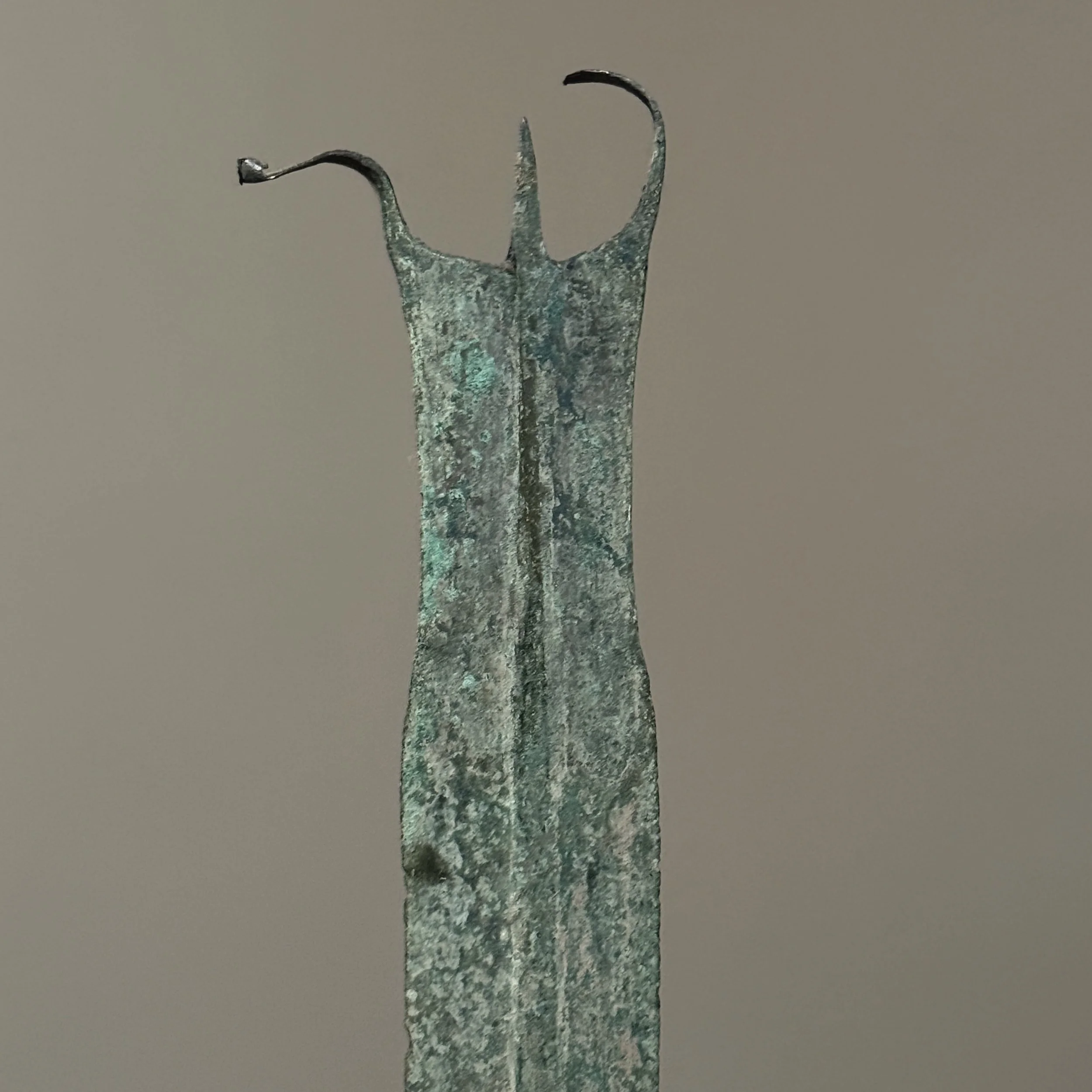
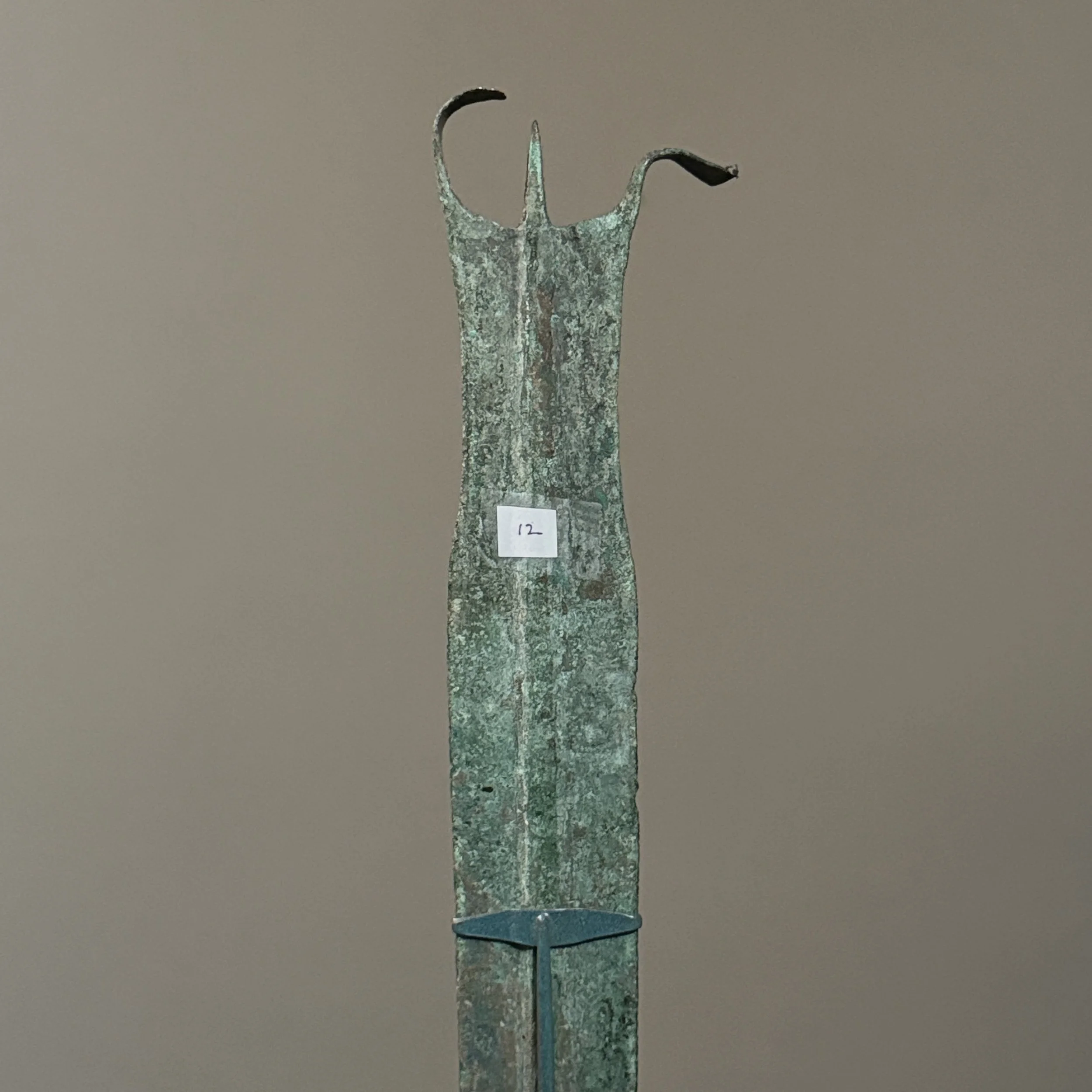
Antique hand carved Duala (or Douala) cow mask. In good condition with wear consistent with age. Please refer to pictures for details. The stand is not included.
Size: 14.25”H x 10.5”W x 11'“D
The Duala (also referred to as Douala) are a Bantu-speaking ethnic group predominantly inhabiting the coastal littoral region of Cameroon, where they constitute a significant portion of the country's coastal populations. Historically, the Duala have exercised considerable socioeconomic and political influence, derived from their roles as intermediaries in regional and transatlantic trade and as custodians of strategically valuable land.
Contemporary Duala society is marked by a distinction between urban and rural communities. Urban Duala, particularly those residing in the city of Douala, engage in a diverse range of skilled and unskilled professions. Many maintain inherited rights to urban landholdings, providing income through rental and property development. In contrast, rural Duala primarily sustain themselves through subsistence agriculture and, most prominently, artisanal fishing, which remains the principal economic activity in coastal villages.
Traditionally, Duala social organization was hierarchically stratified into three main strata. The highest tier consisted of the Wonja, or native Duala lineages, who held exclusive rights to land ownership and political authority. Below them were the Wajili, a class comprising assimilated non-Duala groups and descendants of former slaves. The lowest stratum was the Wakomi, or enslaved individuals. While the formal political authority of traditional chiefs has diminished in the modern state, these figures often retain socioeconomic influence through property ownership and inherited wealth. Community governance is frequently conducted through councils of elders and secret societies, which continue to play a role in decision-making and dispute resolution.
Religious practice among the Duala is characterized by syncretism. Although the majority now identify as Christian, traditional spiritual beliefs remain significant. Central to this indigenous cosmology is ancestor veneration, with ancestors believed to reside in the sea. Also integral are the Miengu (singular: Jengu), aquatic spirits understood to mediate between practitioners and the supreme deity. Malevolent spirits are believed to inhabit forests and certain waters. Annual public festivals, such as the Ngondo, serve as key contemporary manifestations of this belief system, maintaining its visibility and cultural relevance.
Antique hand carved Duala (or Douala) cow mask. In good condition with wear consistent with age. Please refer to pictures for details. The stand is not included.
Size: 14.25”H x 10.5”W x 11'“D
The Duala (also referred to as Douala) are a Bantu-speaking ethnic group predominantly inhabiting the coastal littoral region of Cameroon, where they constitute a significant portion of the country's coastal populations. Historically, the Duala have exercised considerable socioeconomic and political influence, derived from their roles as intermediaries in regional and transatlantic trade and as custodians of strategically valuable land.
Contemporary Duala society is marked by a distinction between urban and rural communities. Urban Duala, particularly those residing in the city of Douala, engage in a diverse range of skilled and unskilled professions. Many maintain inherited rights to urban landholdings, providing income through rental and property development. In contrast, rural Duala primarily sustain themselves through subsistence agriculture and, most prominently, artisanal fishing, which remains the principal economic activity in coastal villages.
Traditionally, Duala social organization was hierarchically stratified into three main strata. The highest tier consisted of the Wonja, or native Duala lineages, who held exclusive rights to land ownership and political authority. Below them were the Wajili, a class comprising assimilated non-Duala groups and descendants of former slaves. The lowest stratum was the Wakomi, or enslaved individuals. While the formal political authority of traditional chiefs has diminished in the modern state, these figures often retain socioeconomic influence through property ownership and inherited wealth. Community governance is frequently conducted through councils of elders and secret societies, which continue to play a role in decision-making and dispute resolution.
Religious practice among the Duala is characterized by syncretism. Although the majority now identify as Christian, traditional spiritual beliefs remain significant. Central to this indigenous cosmology is ancestor veneration, with ancestors believed to reside in the sea. Also integral are the Miengu (singular: Jengu), aquatic spirits understood to mediate between practitioners and the supreme deity. Malevolent spirits are believed to inhabit forests and certain waters. Annual public festivals, such as the Ngondo, serve as key contemporary manifestations of this belief system, maintaining its visibility and cultural relevance.

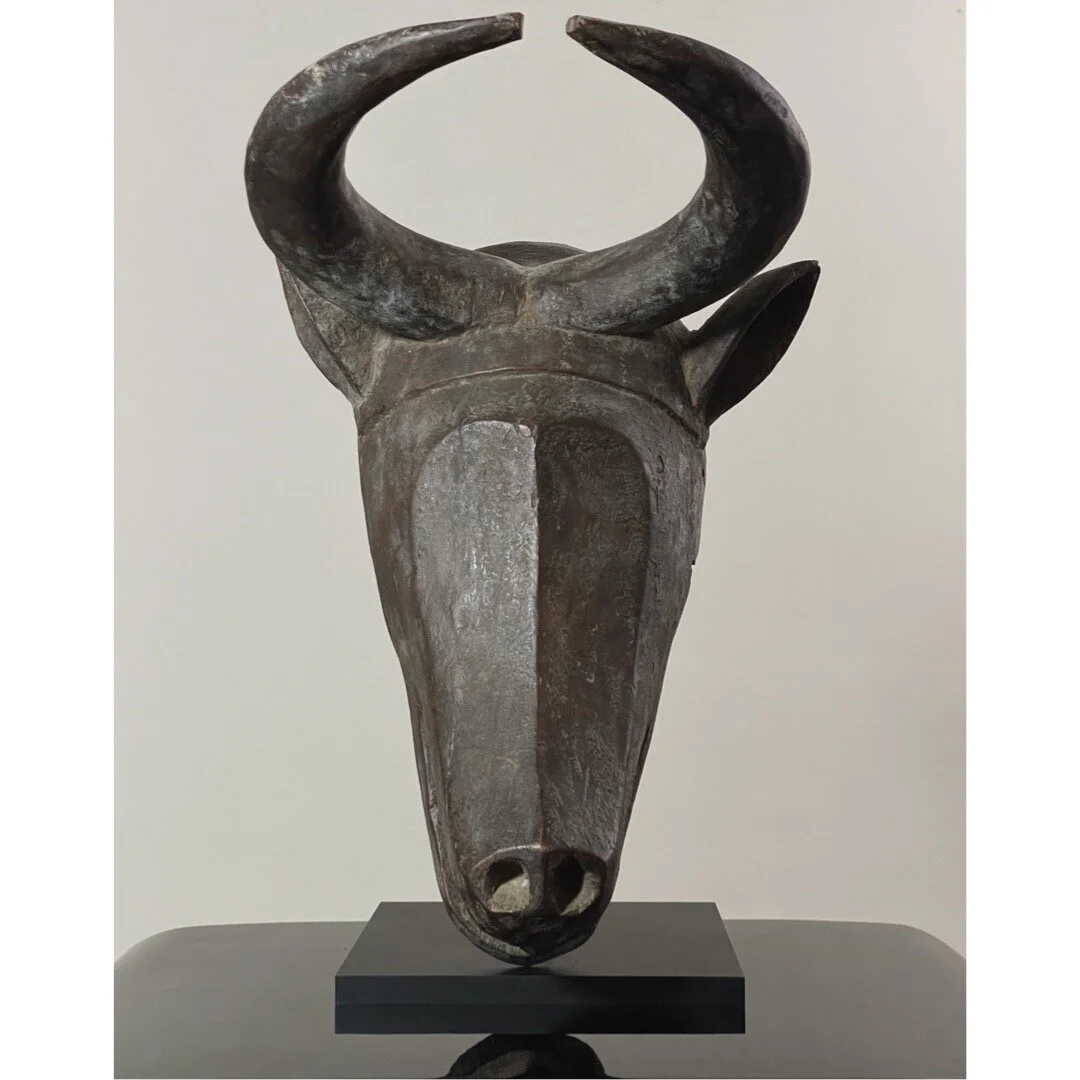 Image 1 of 11
 Image 2 of 11
 Image 3 of 11
 Image 4 of 11
 Image 5 of 11
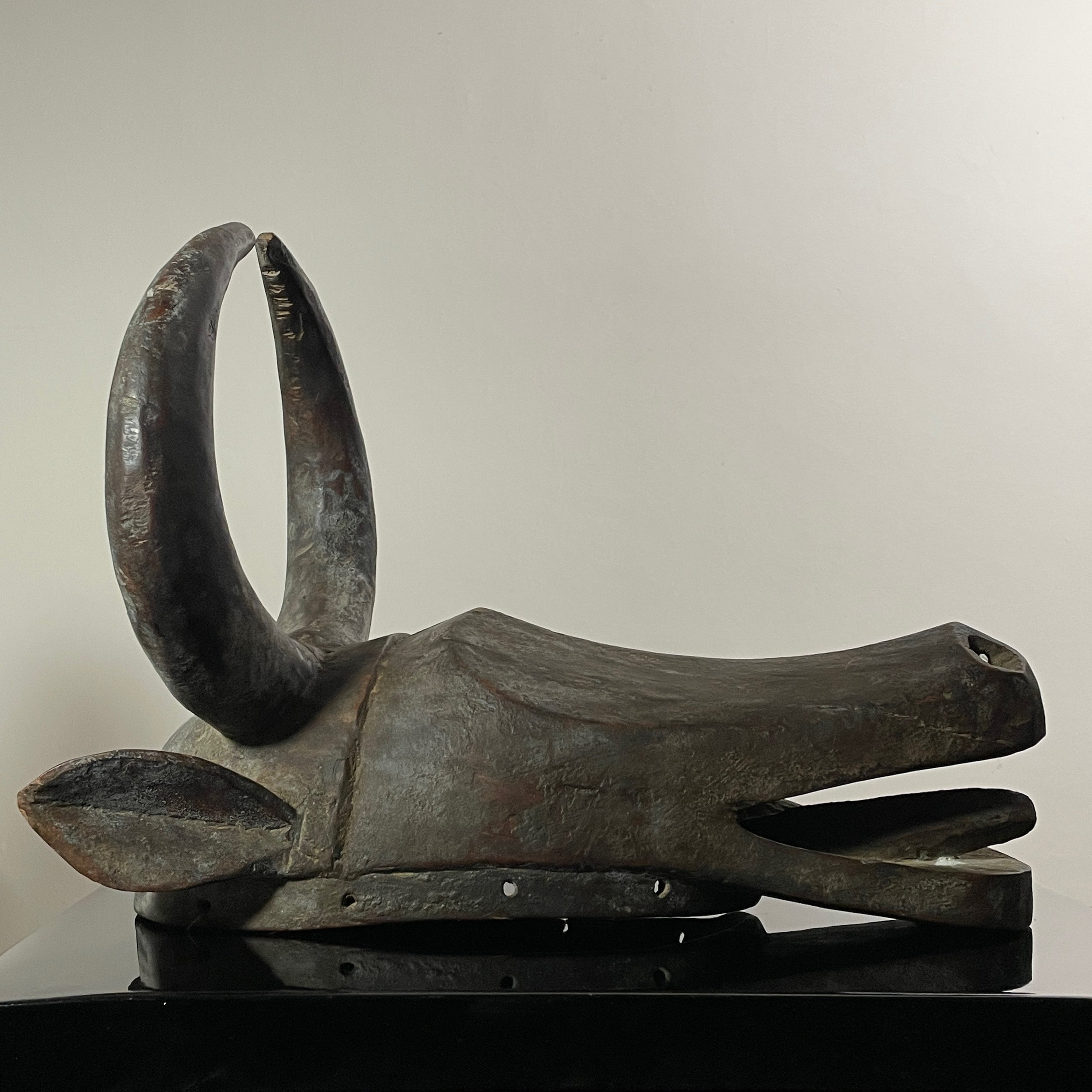 Image 6 of 11
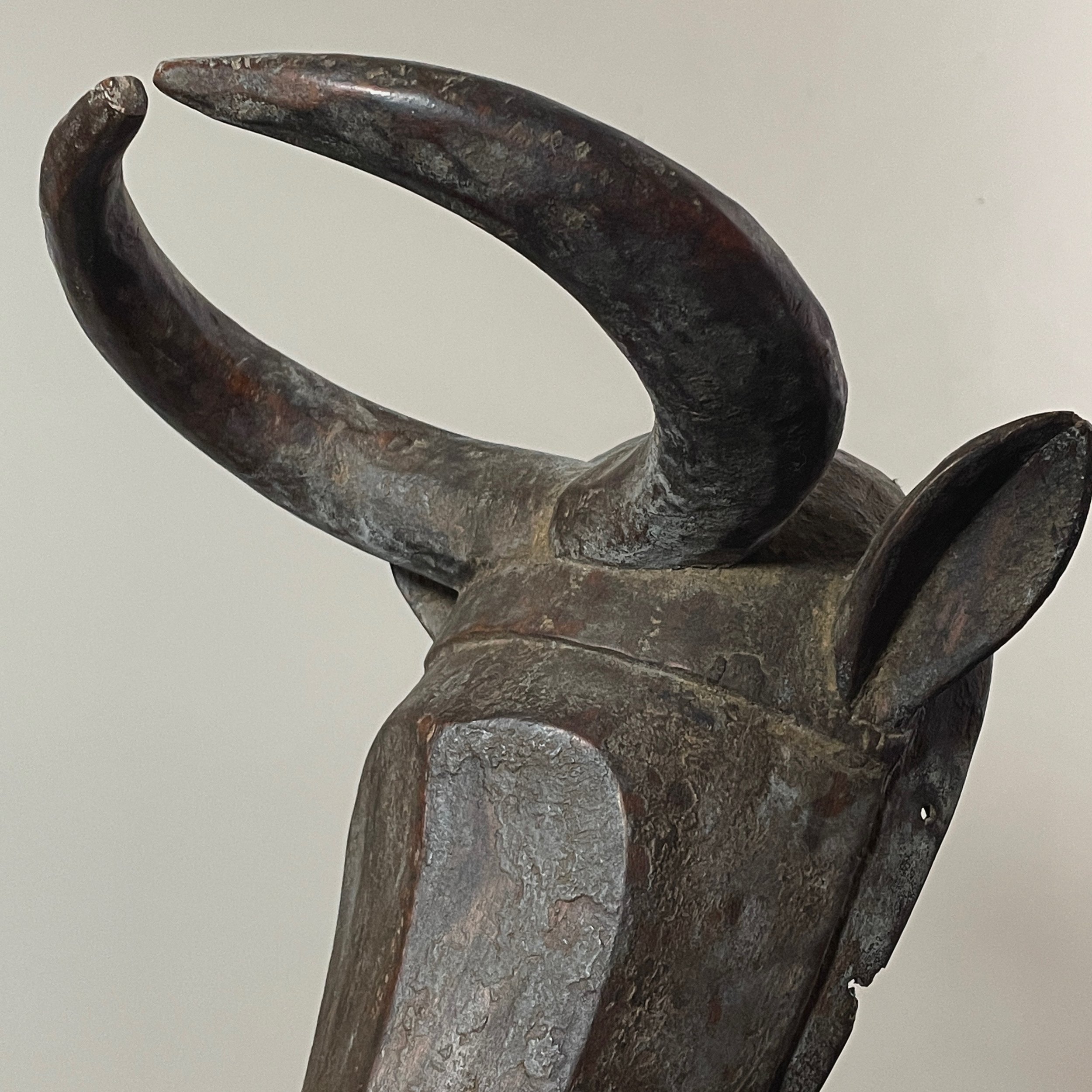 Image 7 of 11
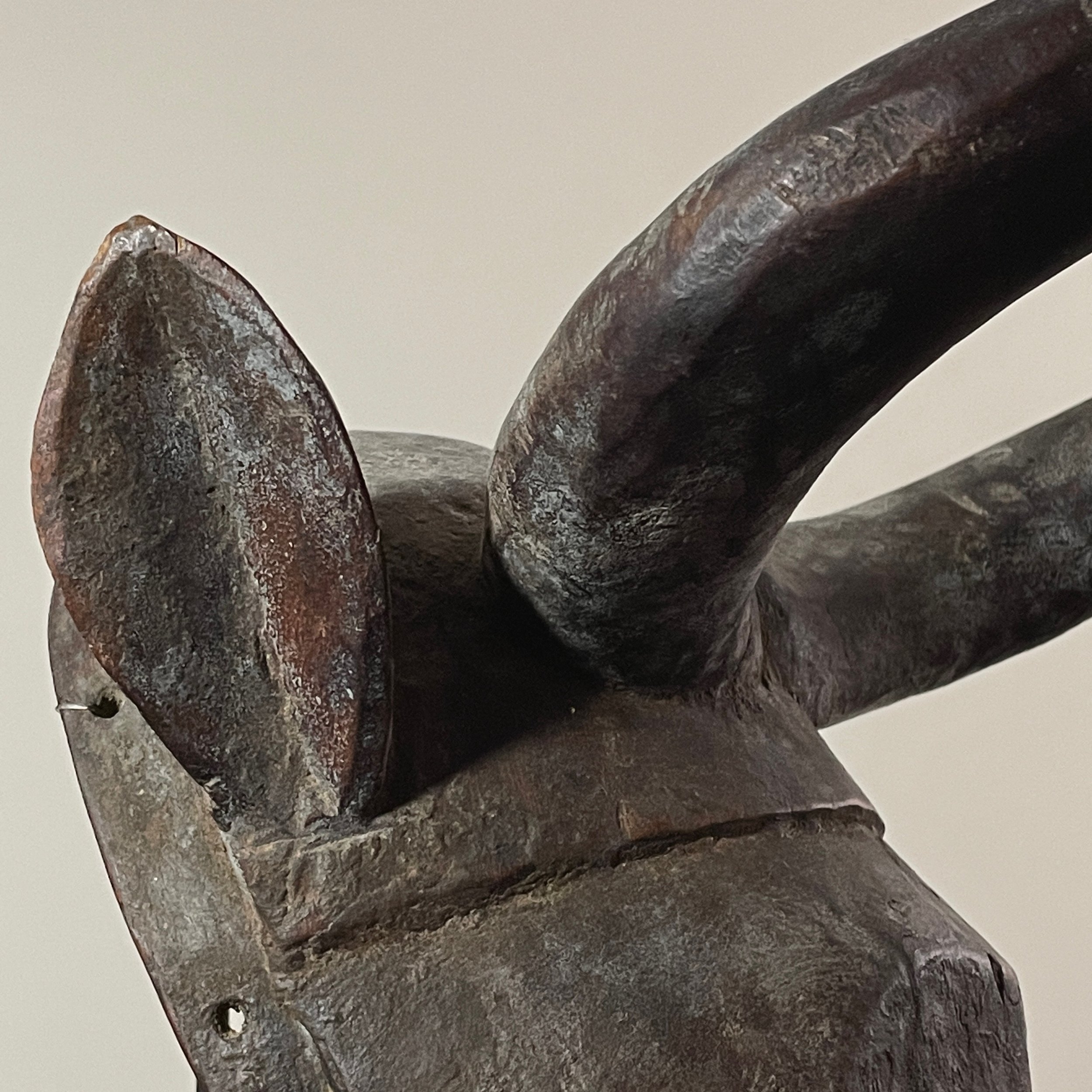 Image 8 of 11
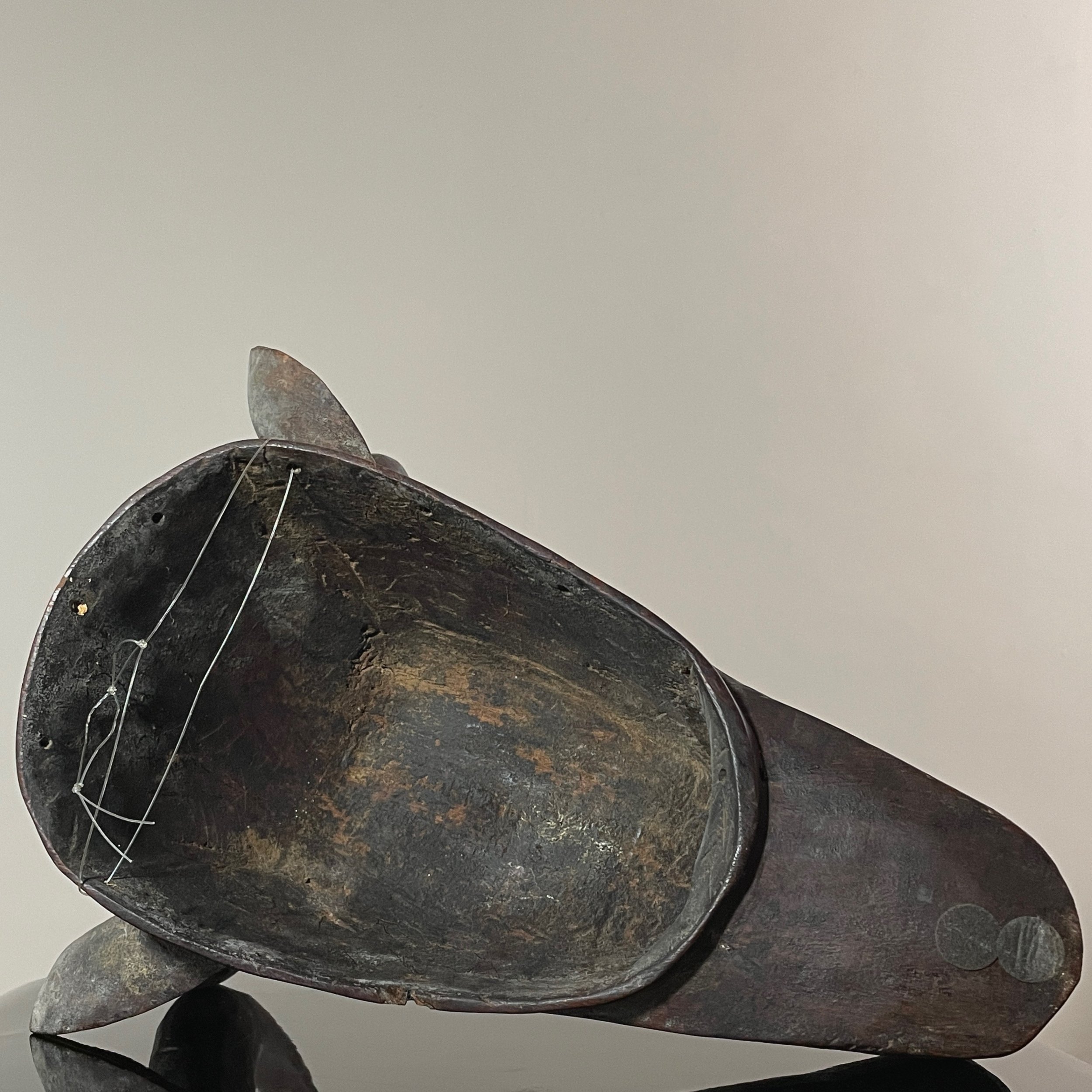 Image 9 of 11
 Image 10 of 11
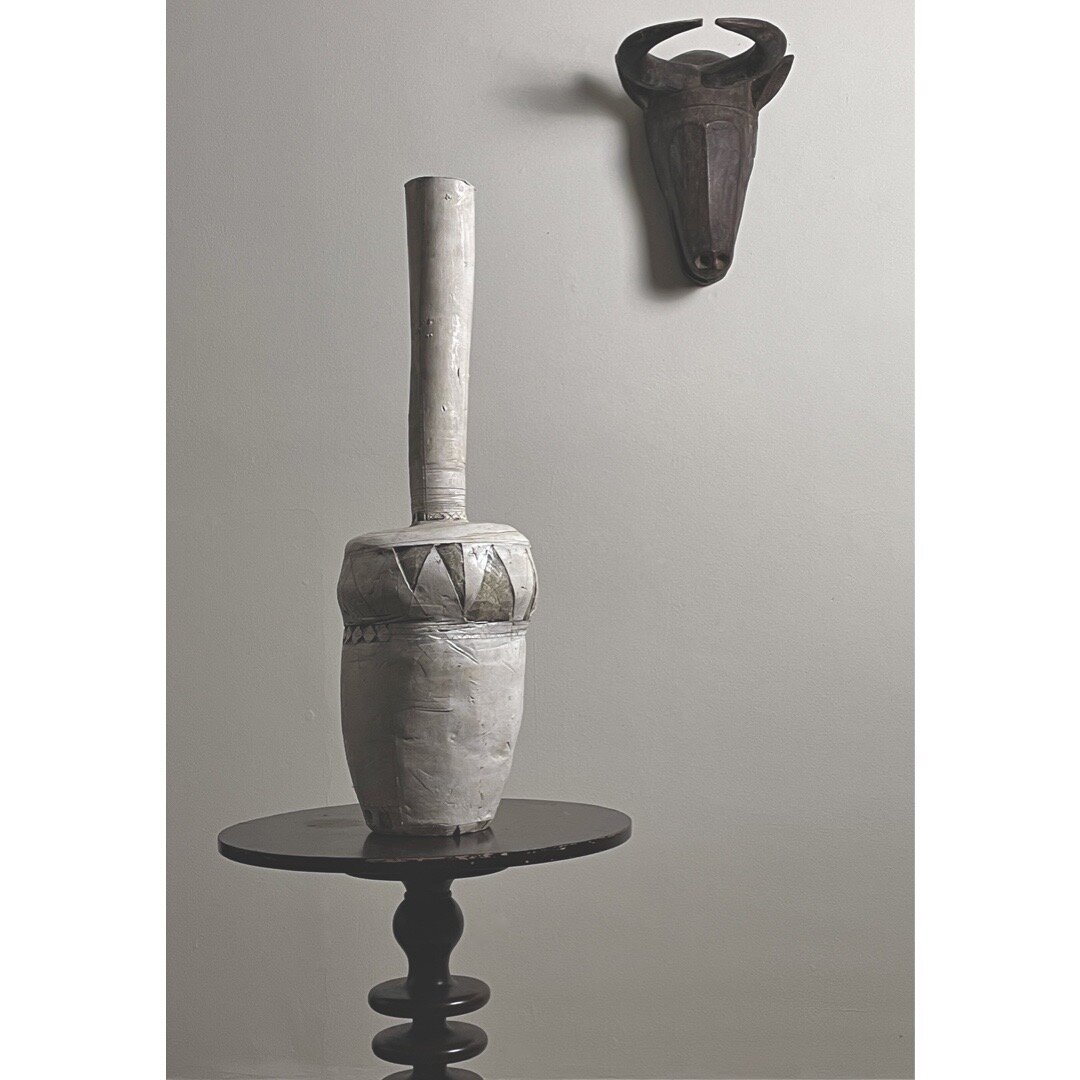 Image 11 of 11