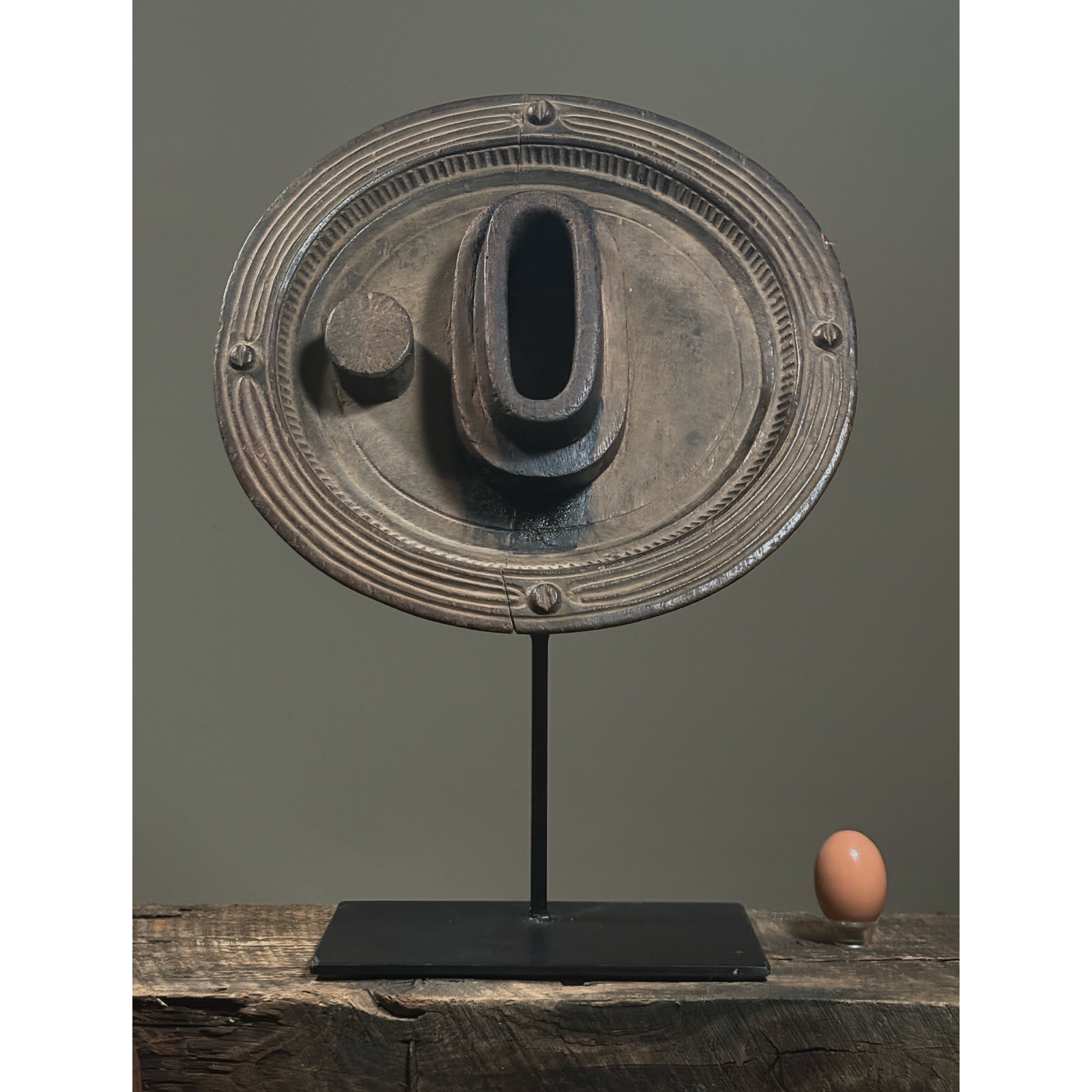
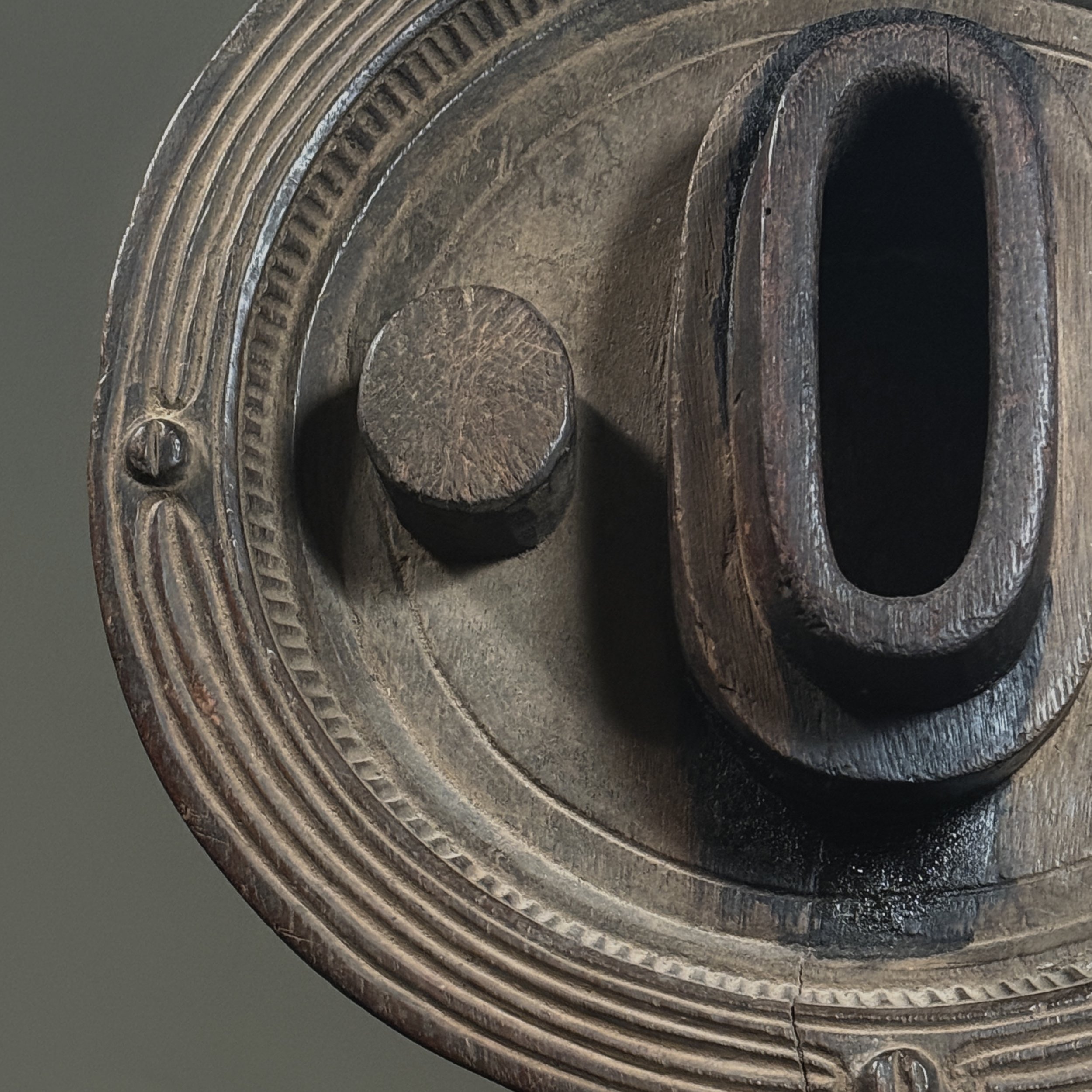
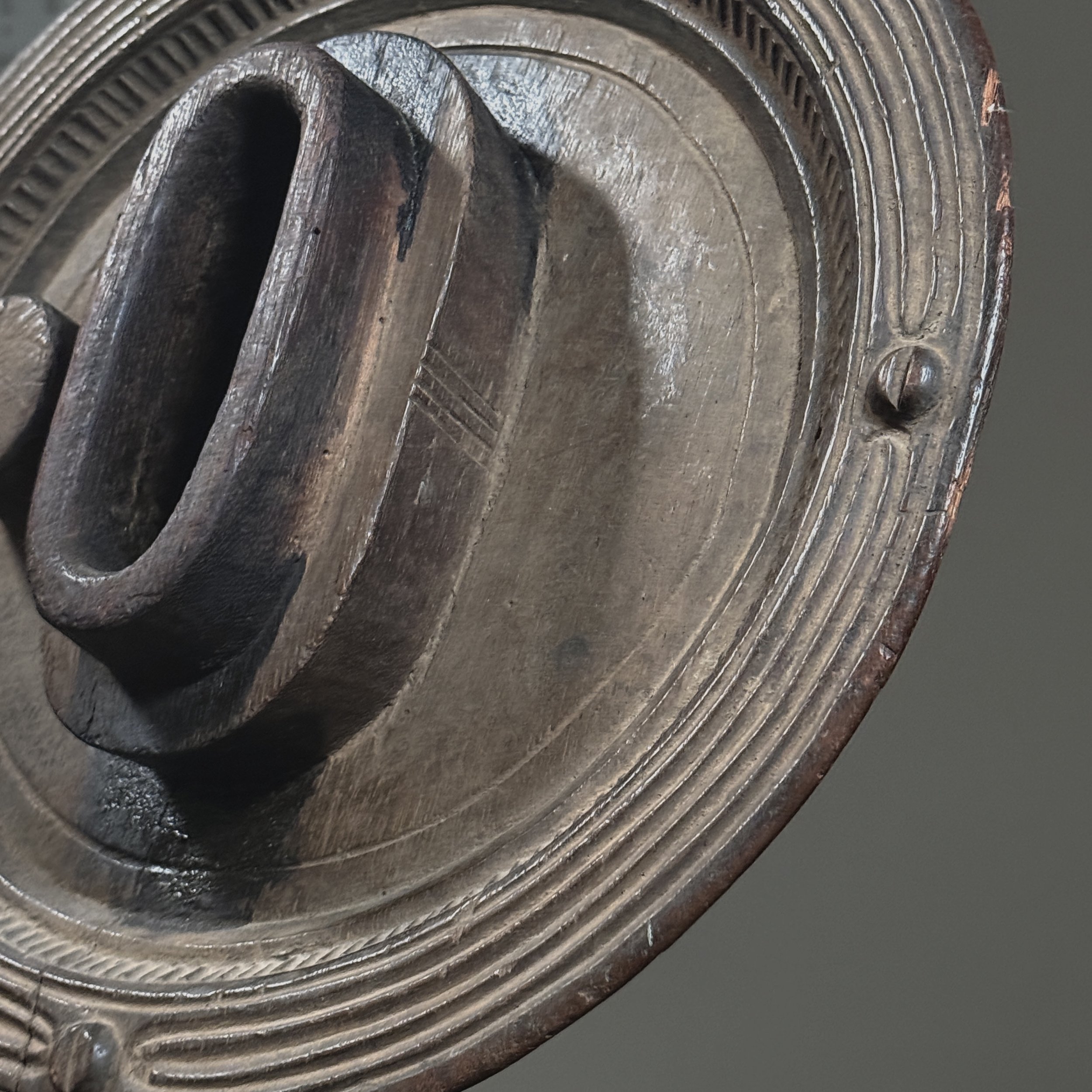
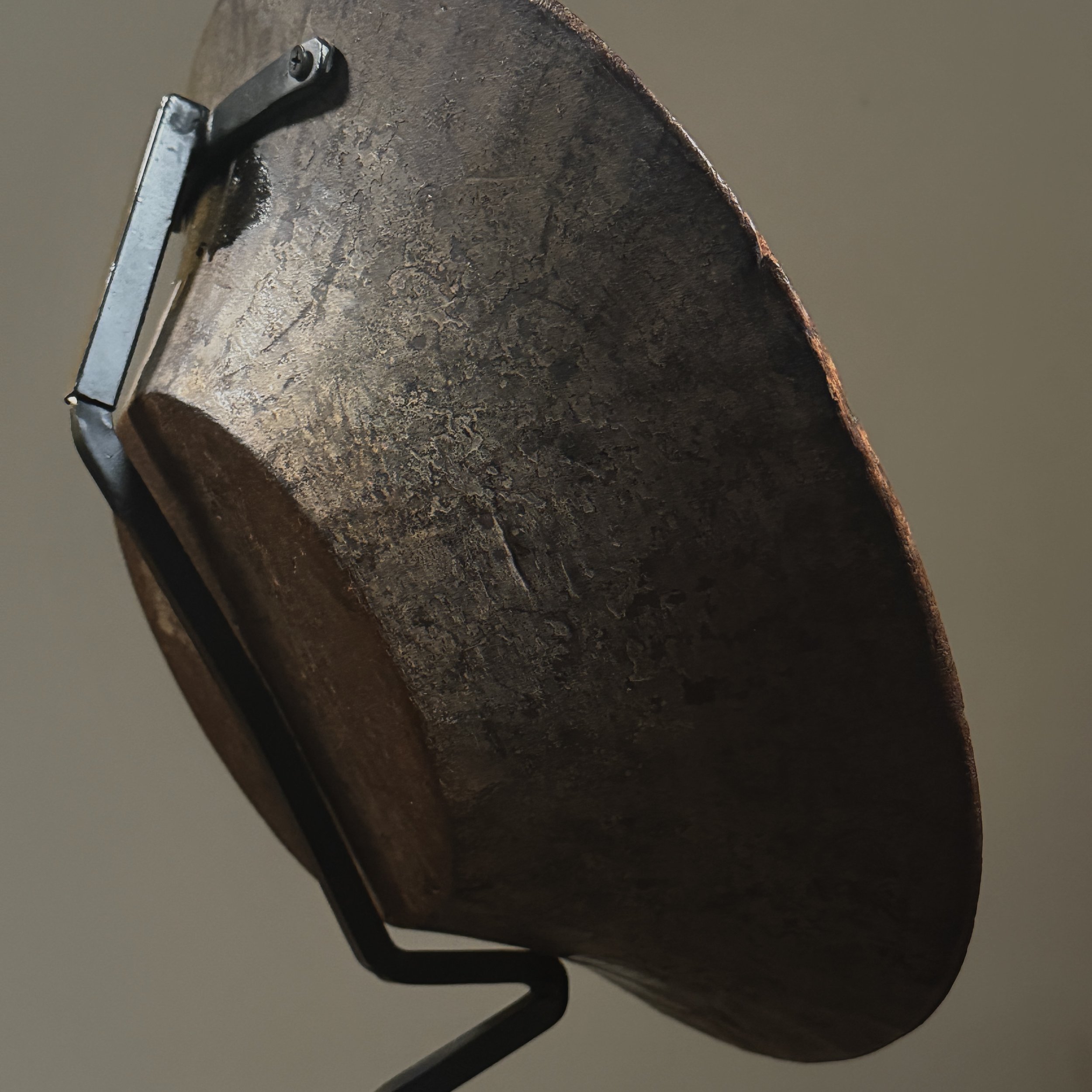
Title: Folk Art Devil Mace (Ceremonial or Apotropaic Object)
Culture/Region: Indo-Persian (likely Indian subcontinent or greater Persia)
Date: circa 19th century (antique)
Medium: Hand forged metal (iron or mild steel) with etched and engraved decoration
Dimensions: Height 27.5 in. (69.9 cm) x Diameter 2.75 in. (7 cm)
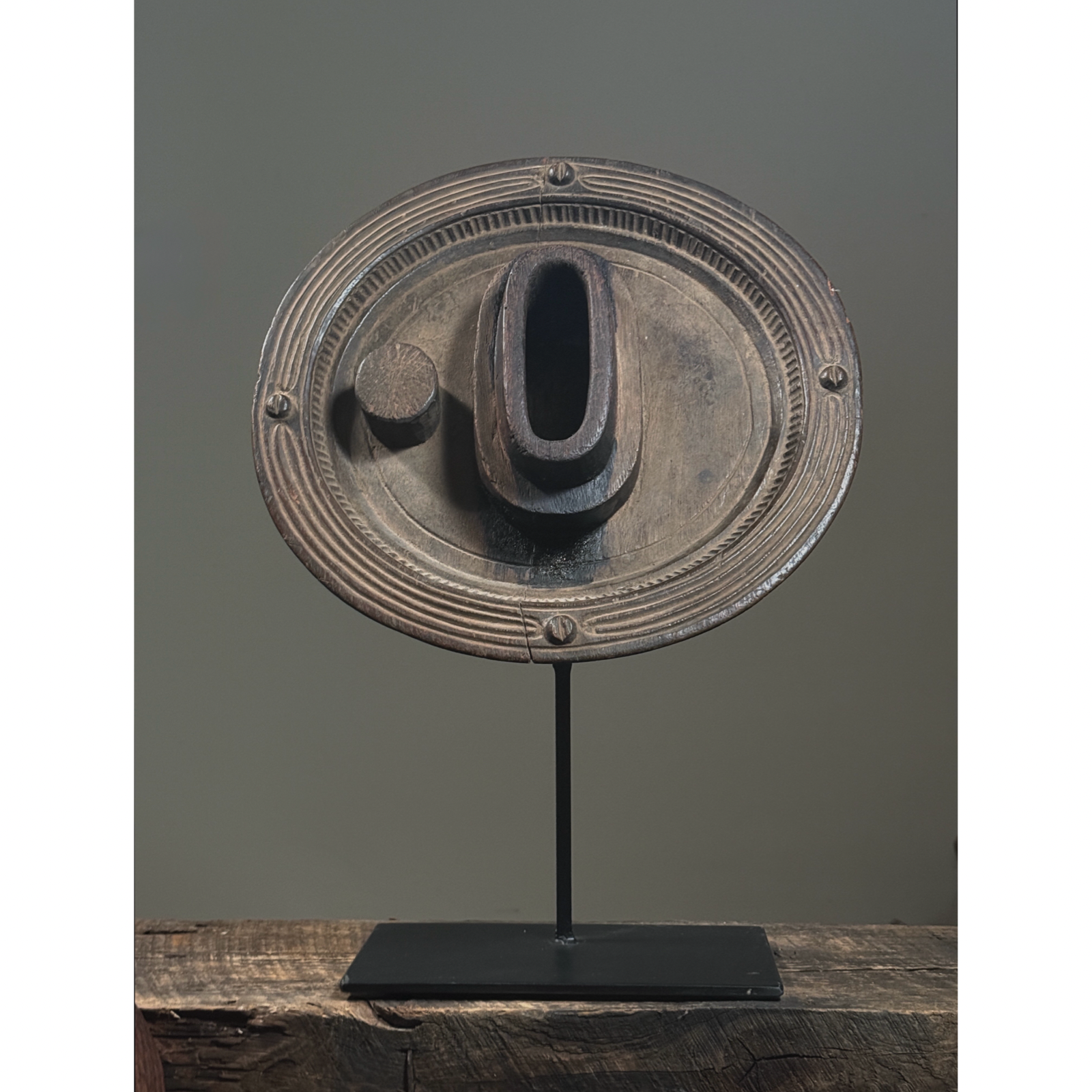
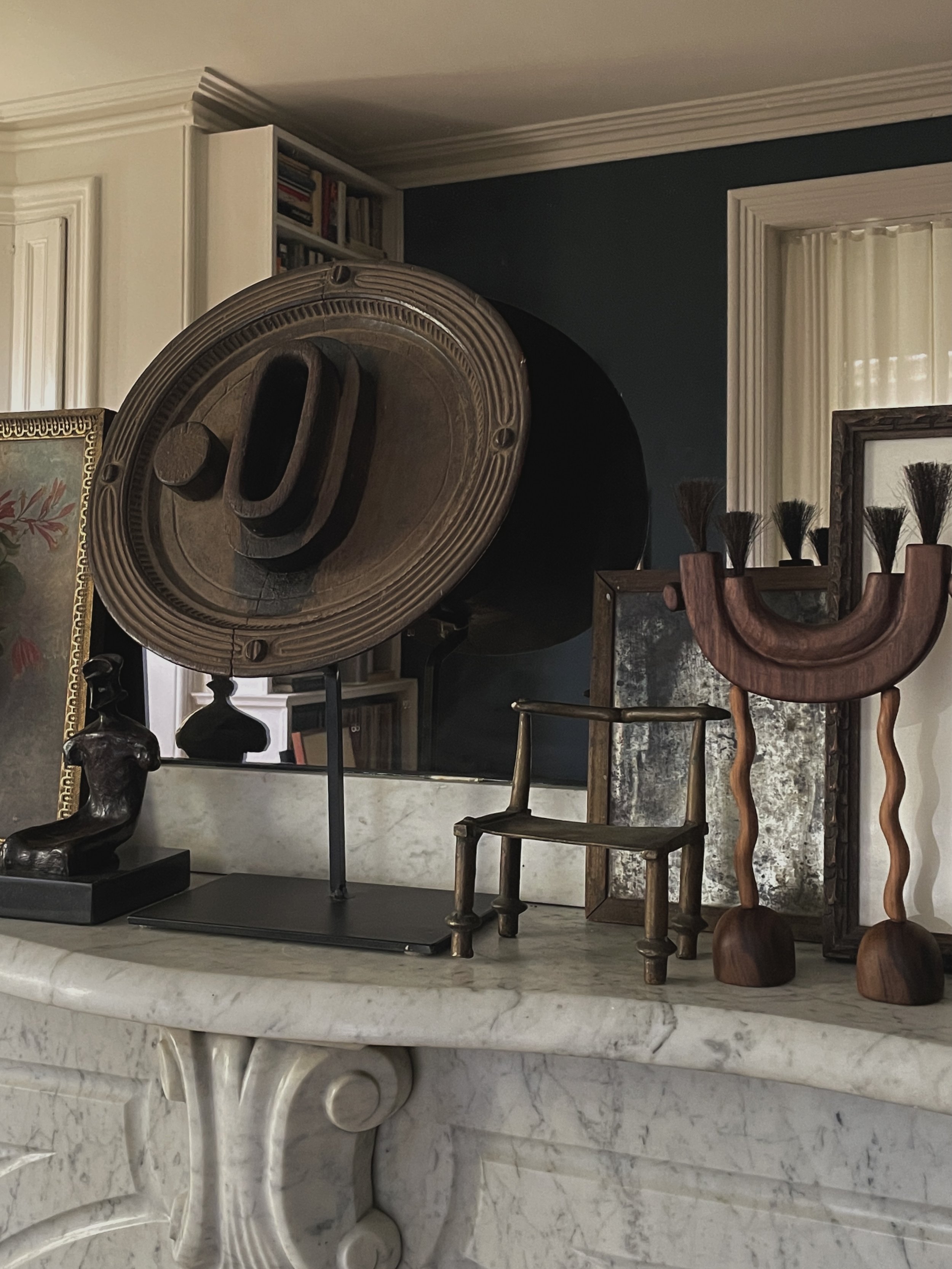
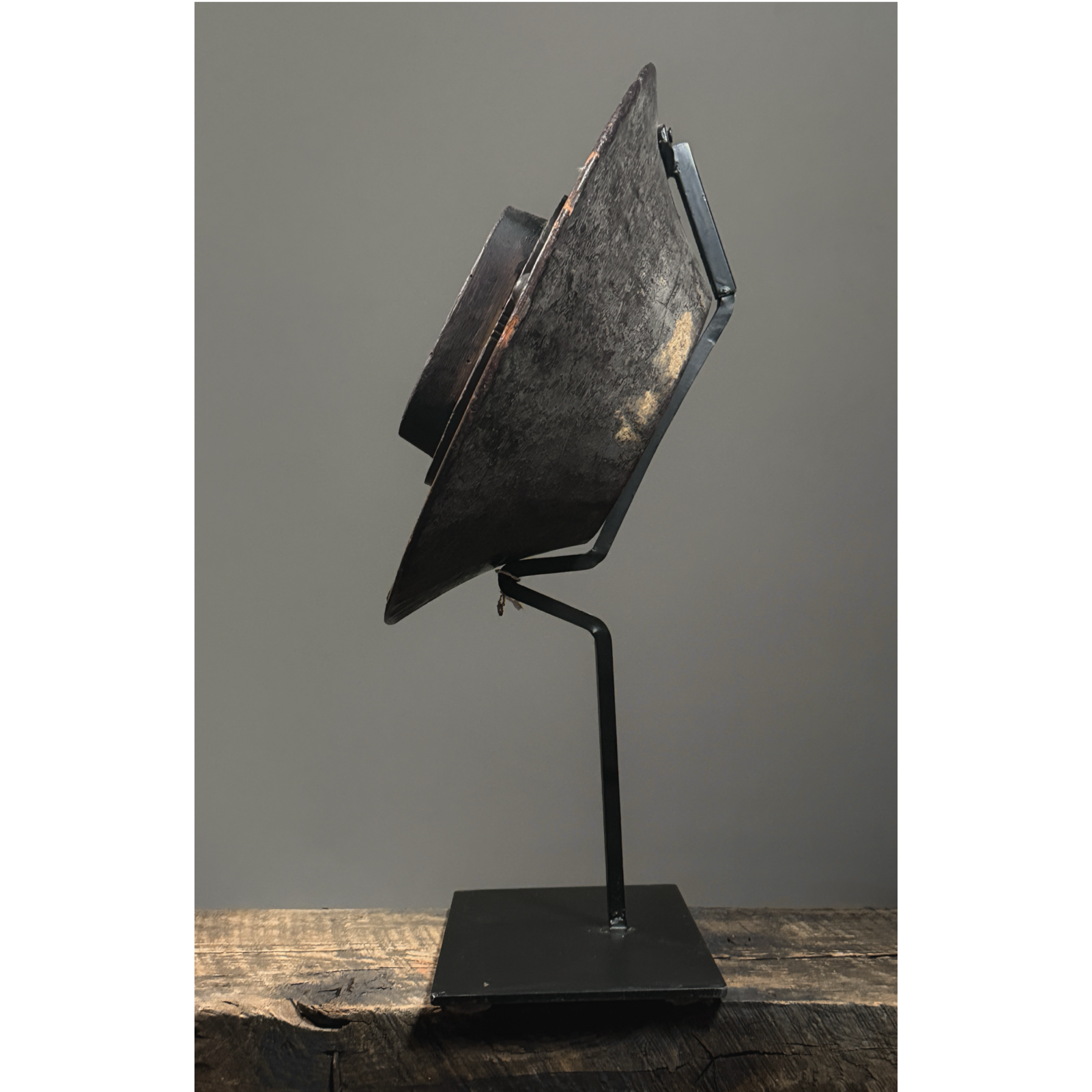
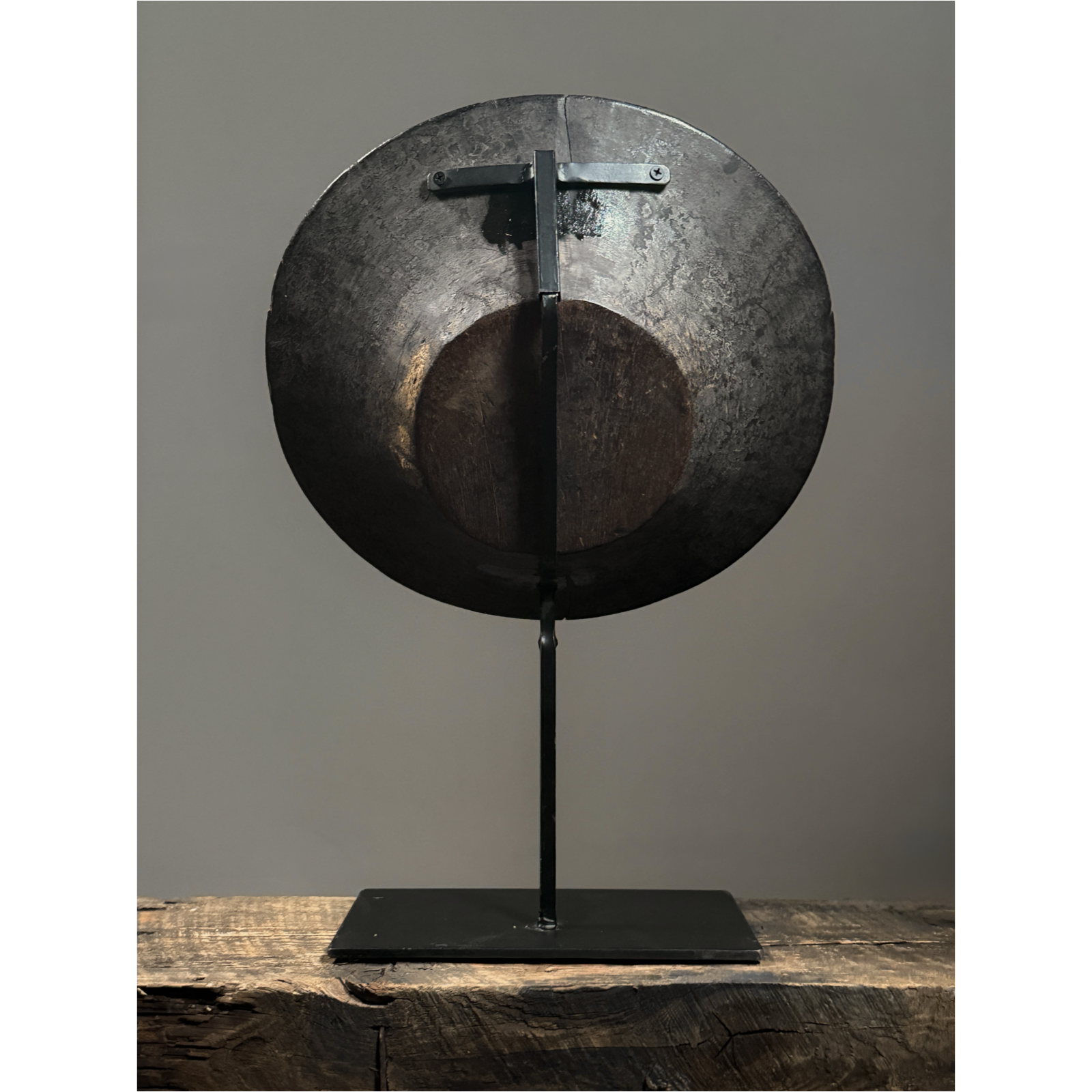
Condition: Good overall, with wear consistent with age and use. A dent is present on the back of the mace head (visible in accompanying detail photography). Surface oxidation and abrasions to etched areas. The display stand featured in primary photographs is not included with the object.
Description:
This hand forged metal mace represents a folk interpretation of the ceremonial or symbolic "devil mace", an object likely used for ritual, protective (apotropaic), or theatrical purposes rather than as a functional weapon. The mace head is sculpturally rendered as a demonic face, a recurring motif in Indo-Persian folk traditions intended to ward off evil spirit.
The staff is embellished with etched flourishes, stylized floral and geometric scrollwork, executed through hand chasing and/or acid etching techniques. Disc form collar. More significantly, the reverse of the mace head features engraved figural representations of two human figures. The clothing, posture, and facial styling of these figures are consistent with 19th-century regional idioms from either Rajasthan, Gujarat, or Qajar-era Persia.
The object's folk character is evident in the slightly irregular forging, asymmetries in the devil's facial features and horns.
Function:
While visually resembling a weapon, the mace's weight, balance, and decorative treatment suggest a non-combat role. Possible functions include:
Apotropaic charm hung at thresholds to repel evil
Ceremonial processional object for folk festivals or religious rituals
Theatrical prop for folk theater traditions such as Yakshagana (India) or Ta'ziyeh(Persia)
Museum Holdings & Comparable Objects:
Comparable Indo-Persian folk art maces and ceremonial staffs are held in the collections of the Victoria and Albert Museum (London) , the Metropolitan Museum of Art (New York) , the Musée du Quai Branly - Jacques Chirac (Paris), and the Chhatrapati Shivaji Maharaj Vastu Sangrahalaya (Mumbai) . Specific devil or demonbmaces (bhairava gada or shaitan gurz) can be found in the British Museum and the National Museum of New Delhi.
Title: Folk Art Devil Mace (Ceremonial or Apotropaic Object)
Culture/Region: Indo-Persian (likely Indian subcontinent or greater Persia)
Date: circa 19th century (antique)
Medium: Hand forged metal (iron or mild steel) with etched and engraved decoration
Dimensions: Height 27.5 in. (69.9 cm) x Diameter 2.75 in. (7 cm)
Condition: Good overall, with wear consistent with age and use. A dent is present on the back of the mace head (visible in accompanying detail photography). Surface oxidation and abrasions to etched areas. The display stand featured in primary photographs is not included with the object.
Description:
This hand forged metal mace represents a folk interpretation of the ceremonial or symbolic "devil mace", an object likely used for ritual, protective (apotropaic), or theatrical purposes rather than as a functional weapon. The mace head is sculpturally rendered as a demonic face, a recurring motif in Indo-Persian folk traditions intended to ward off evil spirit.
The staff is embellished with etched flourishes, stylized floral and geometric scrollwork, executed through hand chasing and/or acid etching techniques. Disc form collar. More significantly, the reverse of the mace head features engraved figural representations of two human figures. The clothing, posture, and facial styling of these figures are consistent with 19th-century regional idioms from either Rajasthan, Gujarat, or Qajar-era Persia.
The object's folk character is evident in the slightly irregular forging, asymmetries in the devil's facial features and horns.
Function:
While visually resembling a weapon, the mace's weight, balance, and decorative treatment suggest a non-combat role. Possible functions include:
Apotropaic charm hung at thresholds to repel evil
Ceremonial processional object for folk festivals or religious rituals
Theatrical prop for folk theater traditions such as Yakshagana (India) or Ta'ziyeh(Persia)
Museum Holdings & Comparable Objects:
Comparable Indo-Persian folk art maces and ceremonial staffs are held in the collections of the Victoria and Albert Museum (London) , the Metropolitan Museum of Art (New York) , the Musée du Quai Branly - Jacques Chirac (Paris), and the Chhatrapati Shivaji Maharaj Vastu Sangrahalaya (Mumbai) . Specific devil or demonbmaces (bhairava gada or shaitan gurz) can be found in the British Museum and the National Museum of New Delhi.

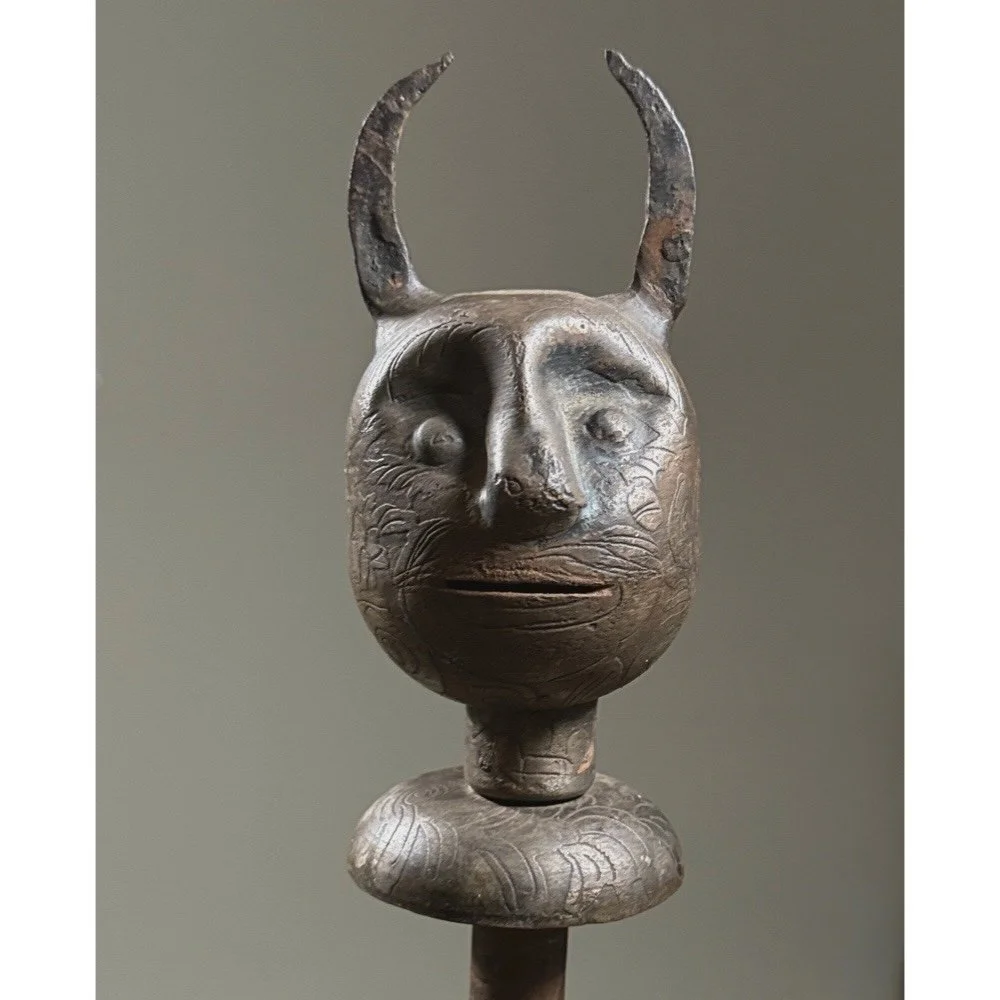 Image 1 of 9
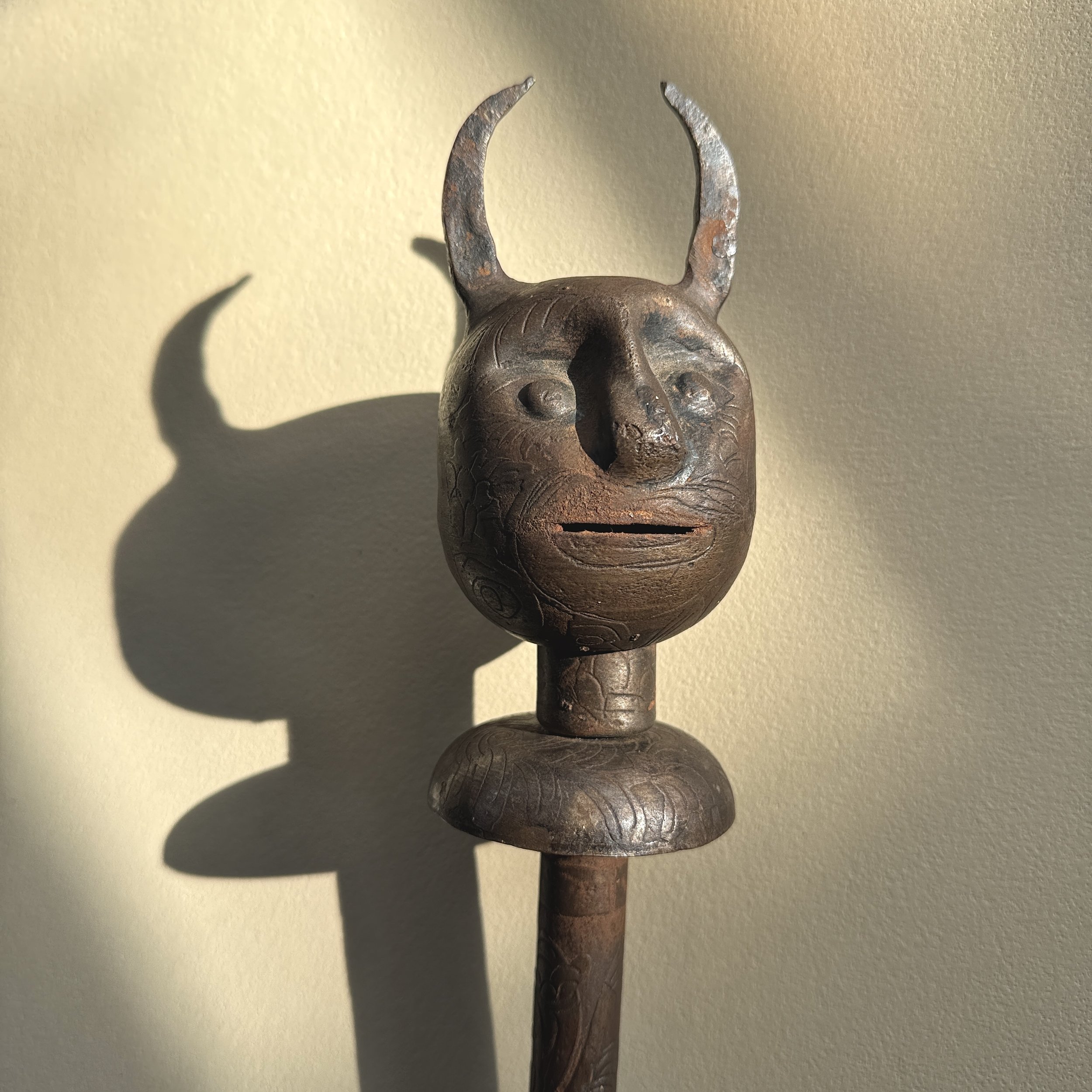 Image 2 of 9
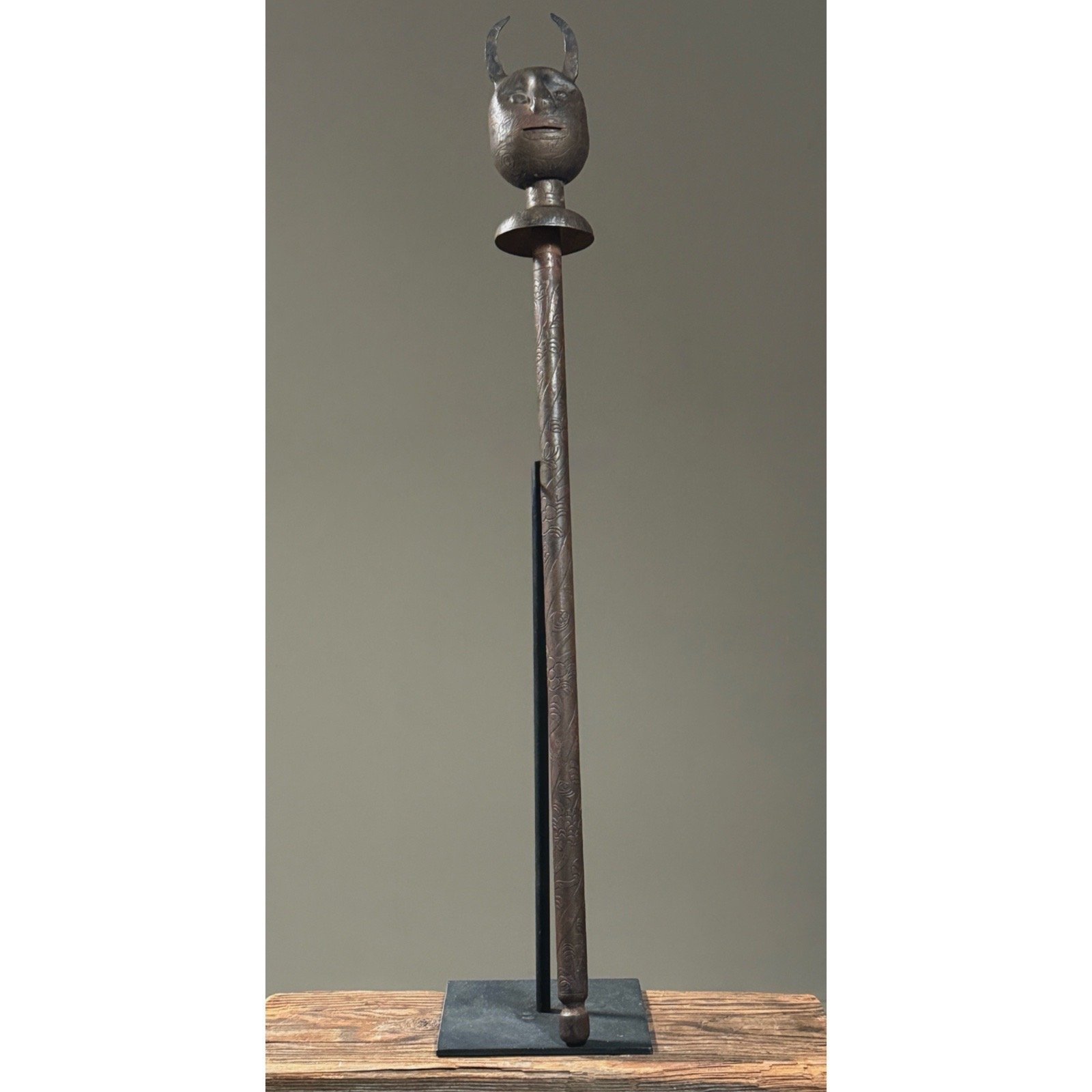 Image 3 of 9
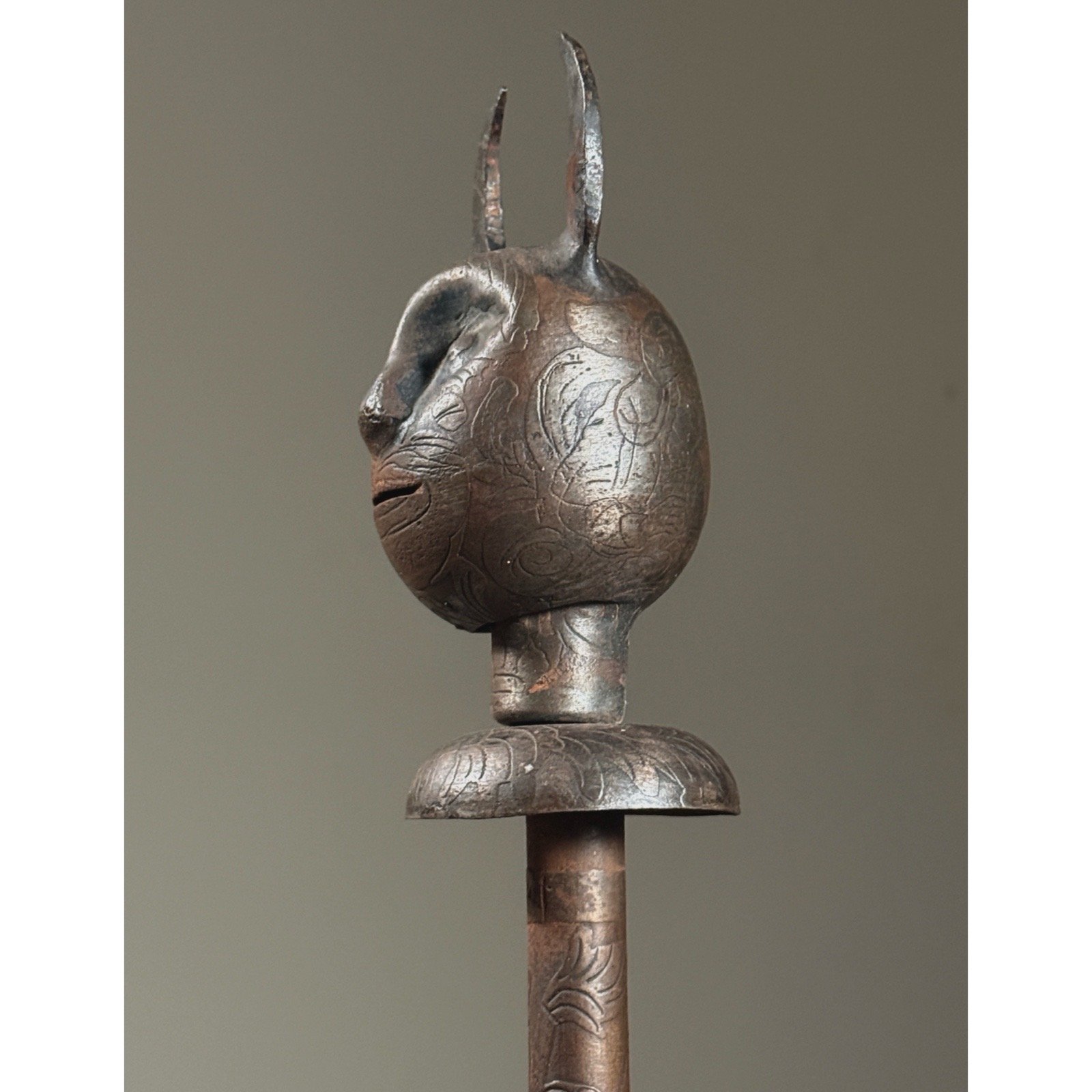 Image 4 of 9
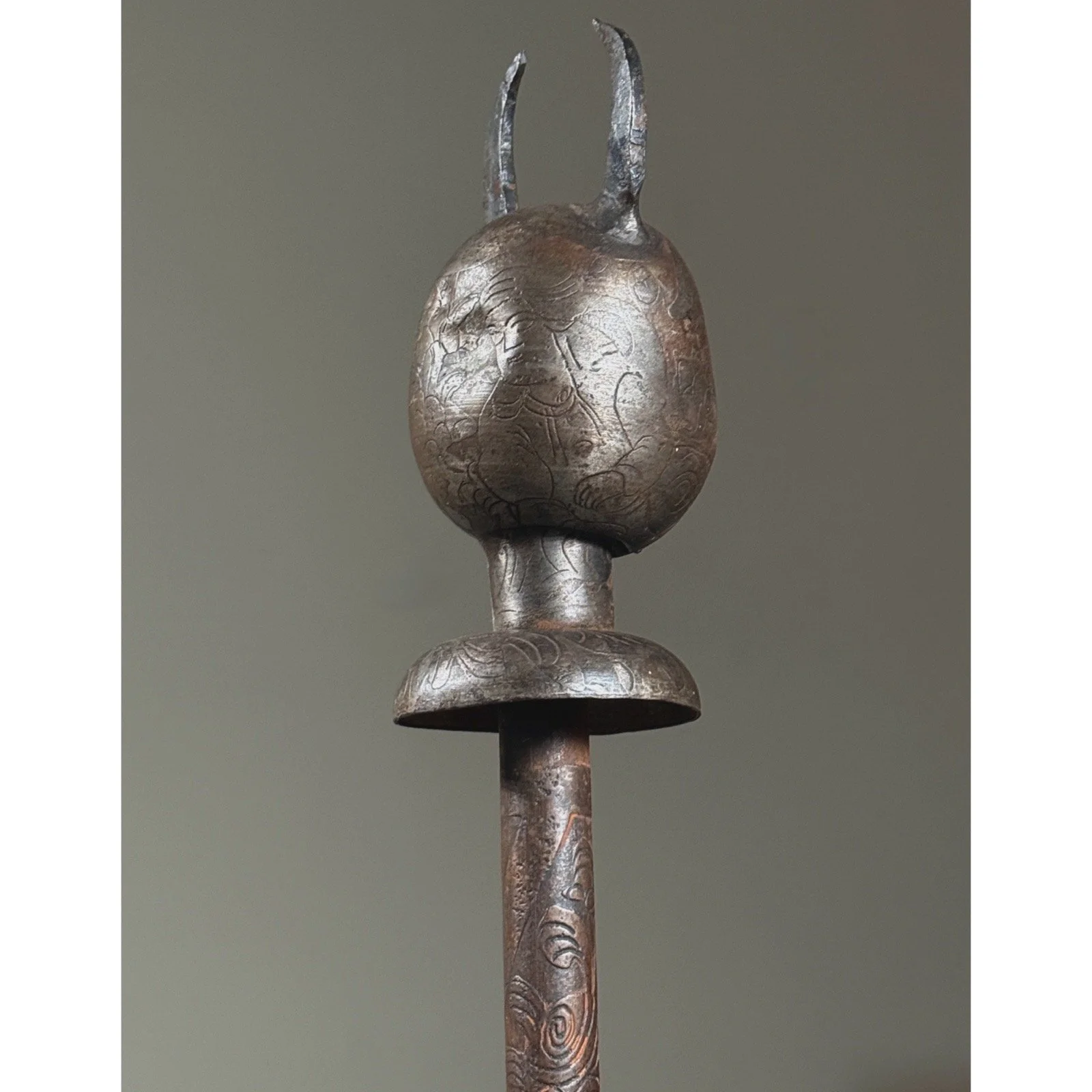 Image 5 of 9
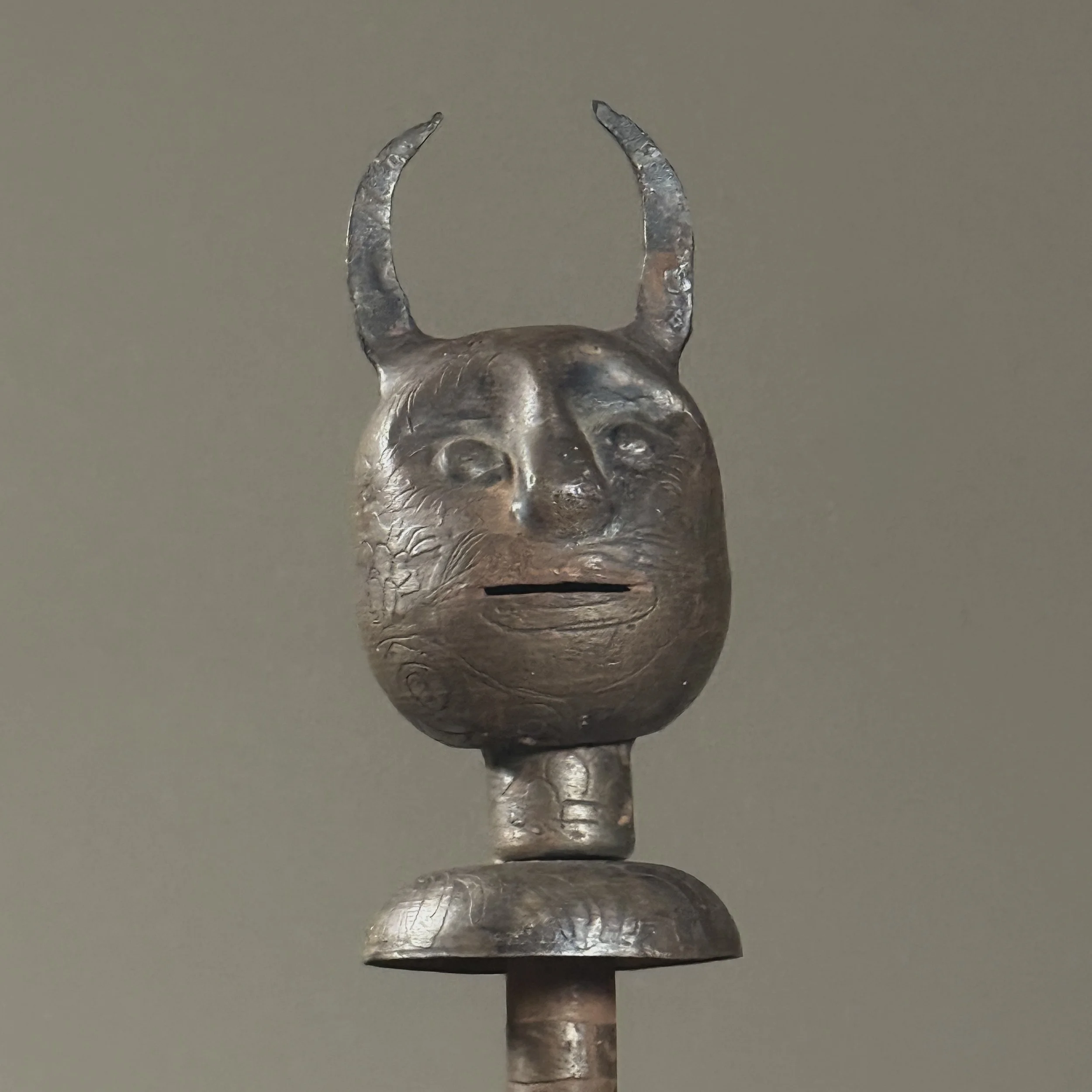 Image 6 of 9
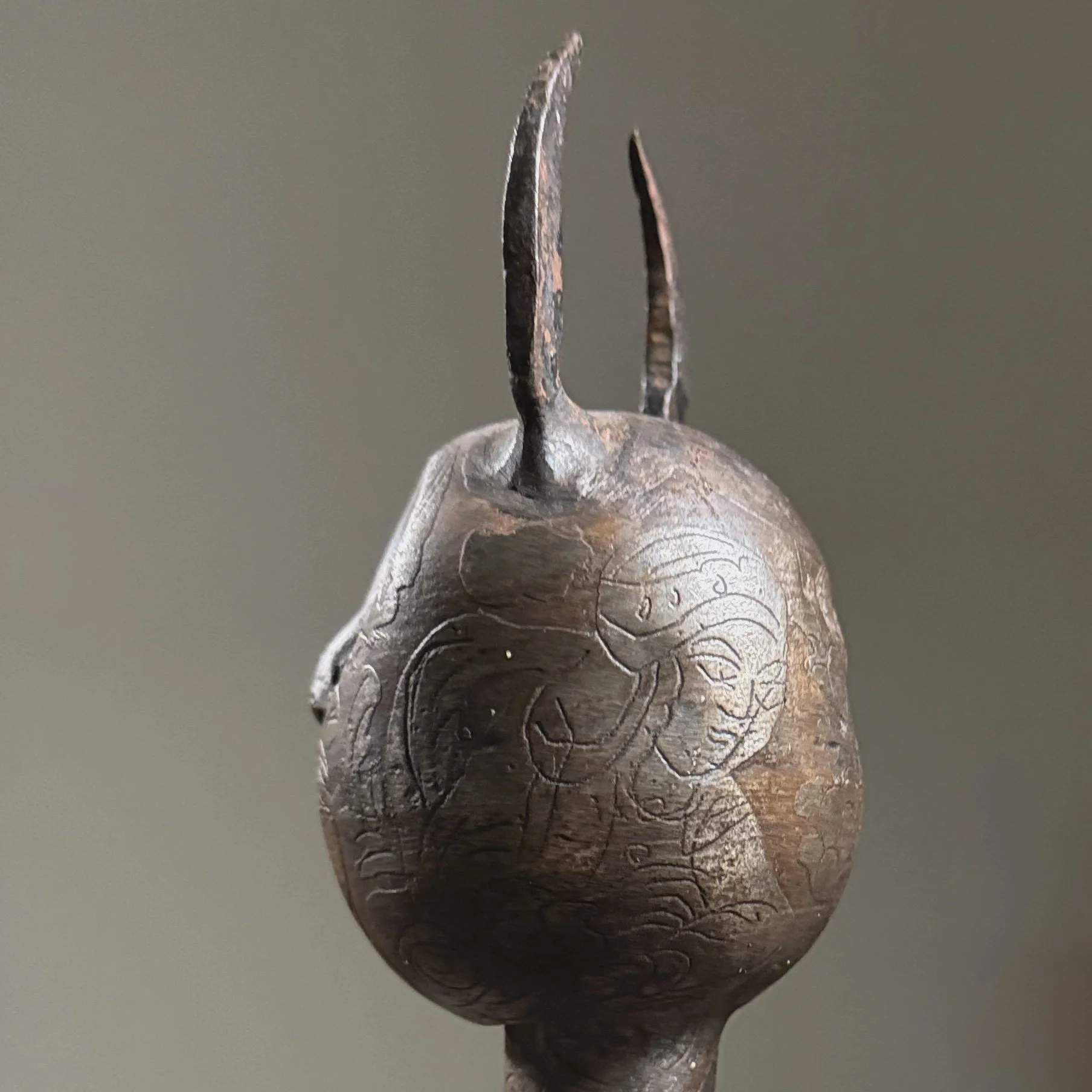 Image 7 of 9
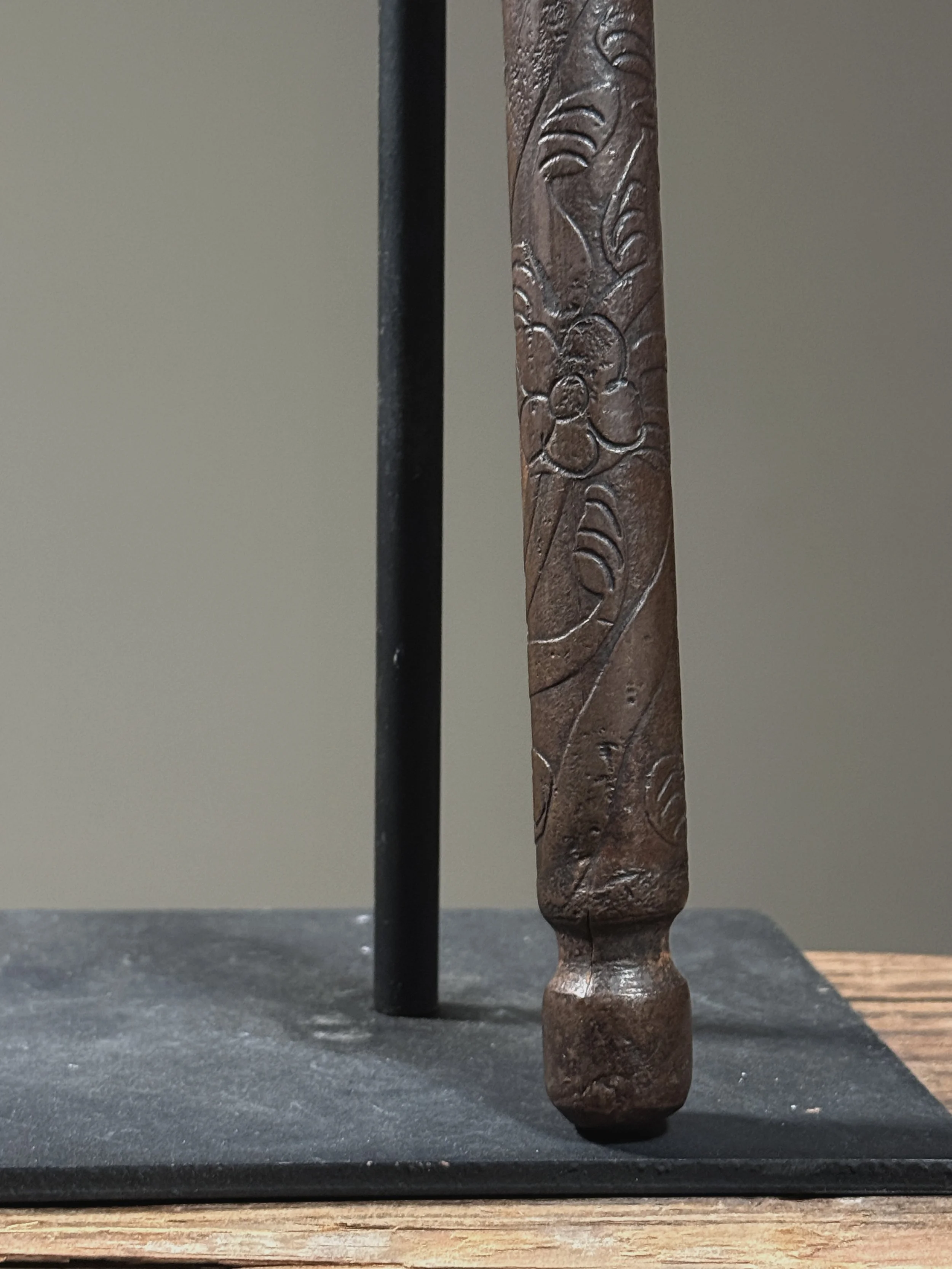 Image 8 of 9
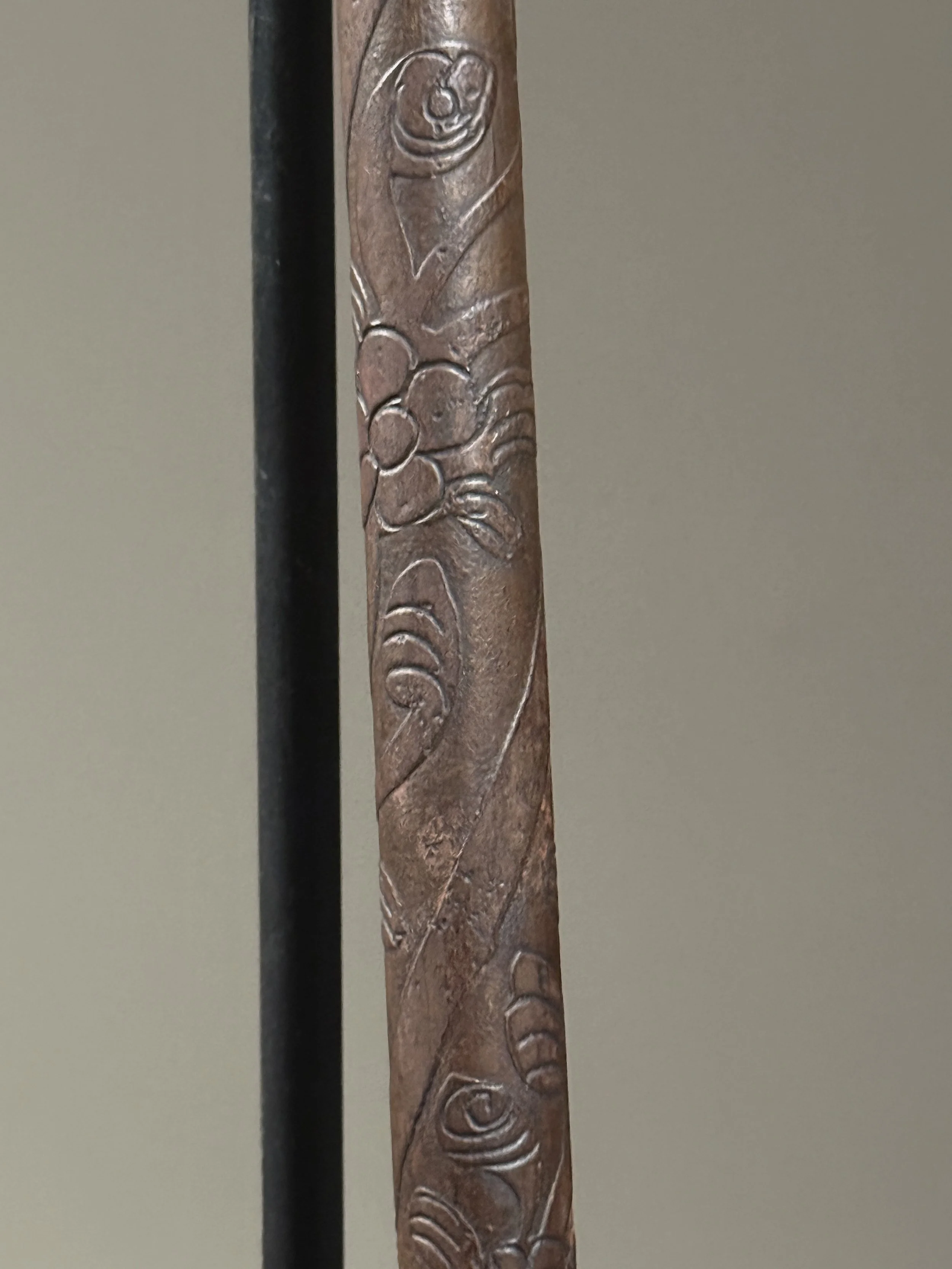 Image 9 of 9