Object: Deity Figure
Origin: China
Period: Qing Dynasty (1644–1912), 18th–19th century
Medium: Carved wood with polychrome pigments and gilt
Dimensions: Height 6.8 in. (17.3 cm); Width 3.2 in. (8.1 cm)
Condition: Surface wear, stable cracking, and losses to pigment consistent with age and ritual use. Retains traces of original polychrome and gilding.
Description:
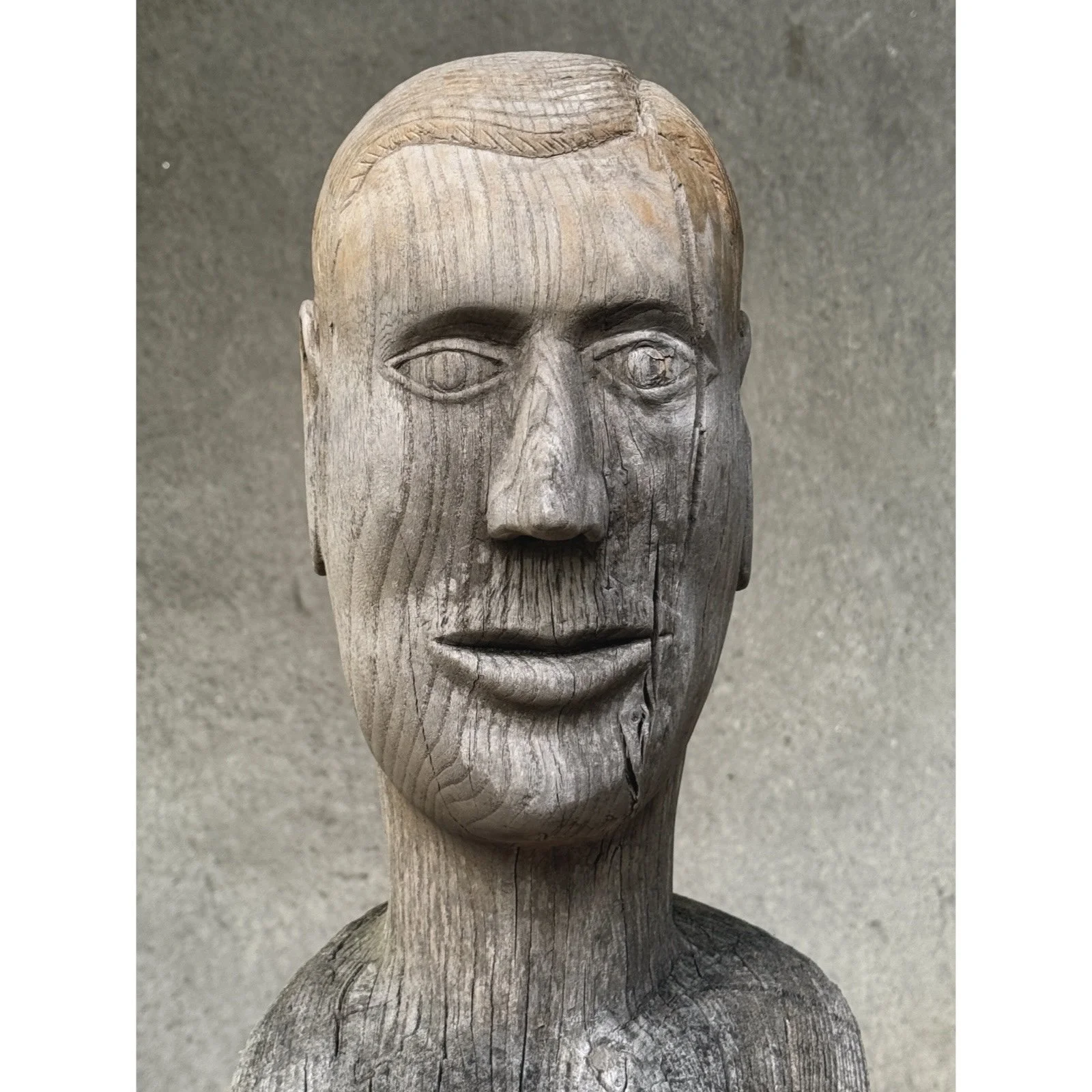
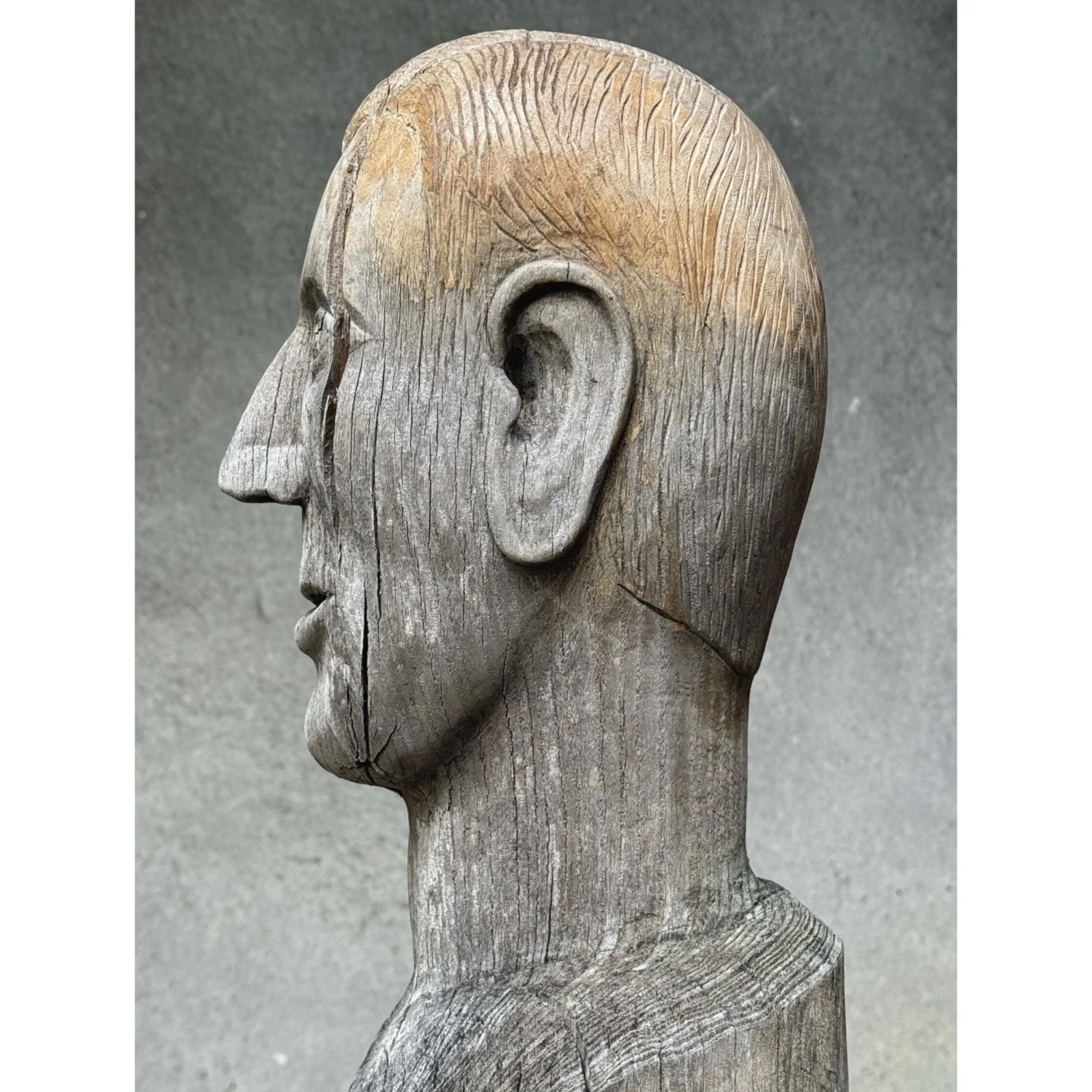
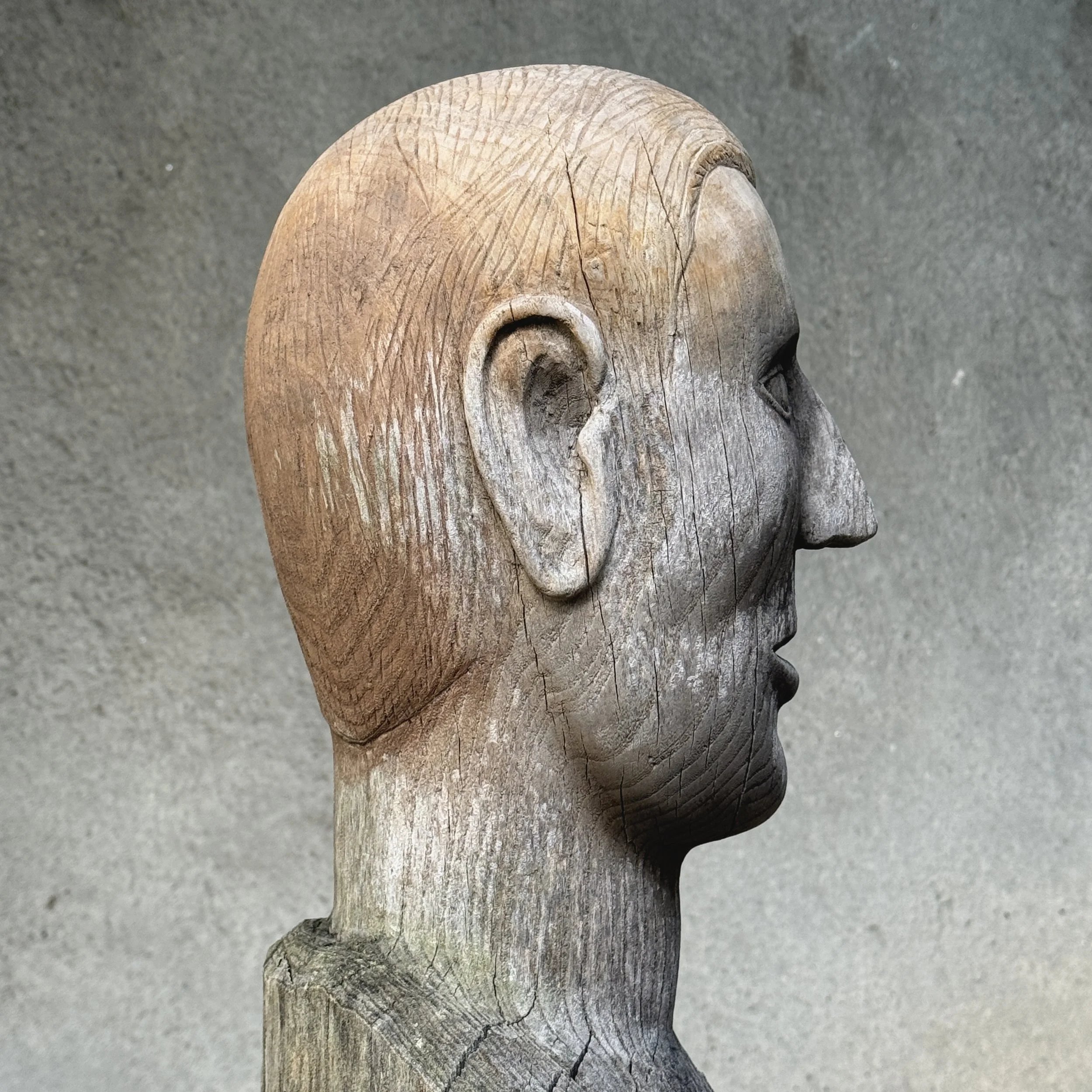
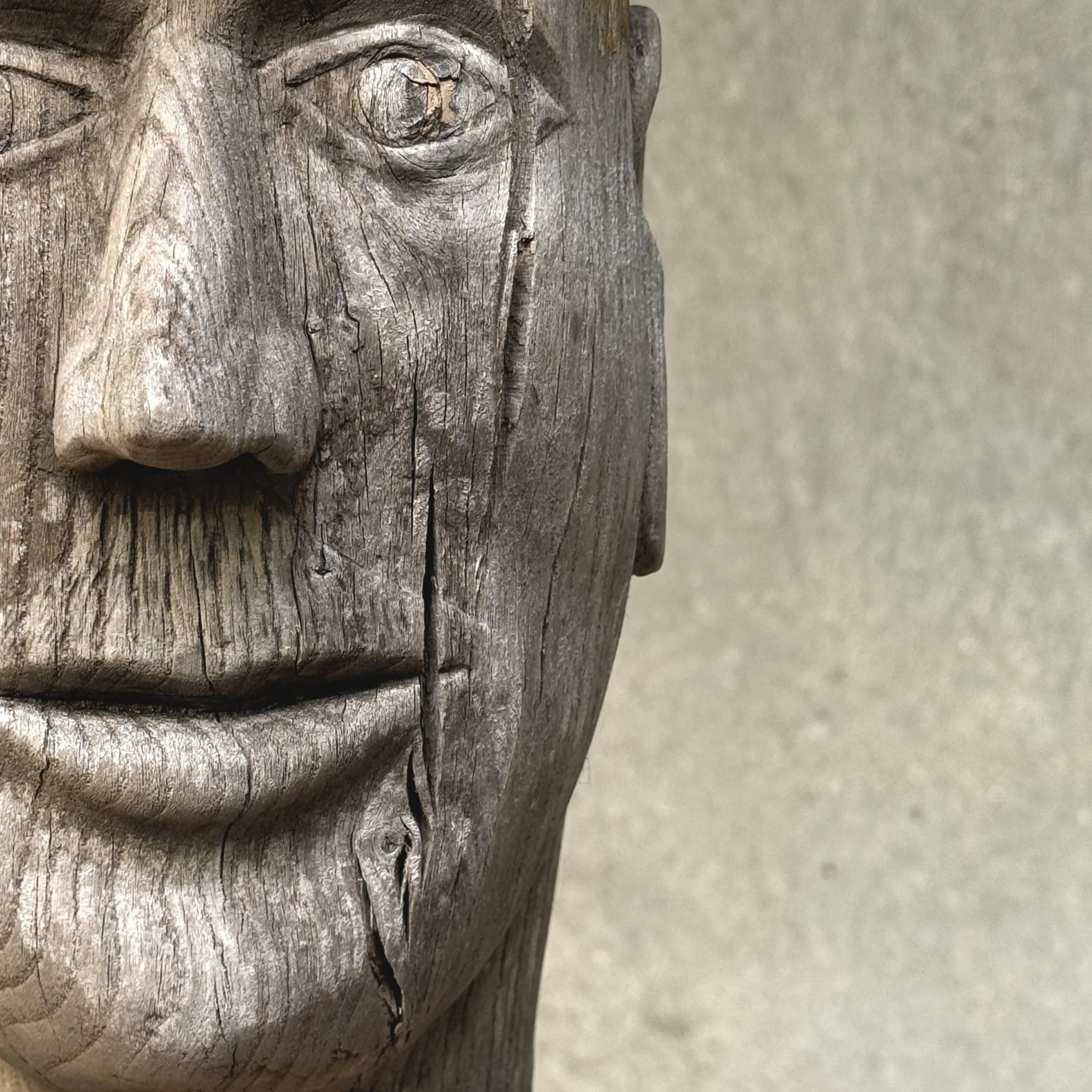
A small scale carved wooden figure of a robed deity. The sculpture retains remnants of original polychrome decoration, including a painted robe in blue, red, and white with foliate detailing on the blue field. Gilt accents are present on the surface. The facial features are carved with attention to expression, and traces of pigment remain. A rectangular cavity on the reverse, a "prayer slot”, indicates the figure was constructed to contain consecratory materials, confirming its intended use as a devotional object.
Context:
During the Qing Dynasty, temple sculpture served both Buddhist and Daoist ritual contexts. Small scale figures such as this were typically commissioned for household altars or small village shrines rather than major temples. The presence of a prayer slot for devotional inserts is standard for figures intended for consecration and active worship.
Condition Notes:
The figure exhibits expected surface wear, including pigment loss and fine age cracks. The structure remains stable. The heavy patina is consistent with prolonged handling or exposure in a ritual setting.
Object: Deity Figure
Origin: China
Period: Qing Dynasty (1644–1912), 18th–19th century
Medium: Carved wood with polychrome pigments and gilt
Dimensions: Height 6.8 in. (17.3 cm); Width 3.2 in. (8.1 cm)
Condition: Surface wear, stable cracking, and losses to pigment consistent with age and ritual use. Retains traces of original polychrome and gilding.
Description:
A small scale carved wooden figure of a robed deity. The sculpture retains remnants of original polychrome decoration, including a painted robe in blue, red, and white with foliate detailing on the blue field. Gilt accents are present on the surface. The facial features are carved with attention to expression, and traces of pigment remain. A rectangular cavity on the reverse, a "prayer slot”, indicates the figure was constructed to contain consecratory materials, confirming its intended use as a devotional object.
Context:
During the Qing Dynasty, temple sculpture served both Buddhist and Daoist ritual contexts. Small scale figures such as this were typically commissioned for household altars or small village shrines rather than major temples. The presence of a prayer slot for devotional inserts is standard for figures intended for consecration and active worship.
Condition Notes:
The figure exhibits expected surface wear, including pigment loss and fine age cracks. The structure remains stable. The heavy patina is consistent with prolonged handling or exposure in a ritual setting.

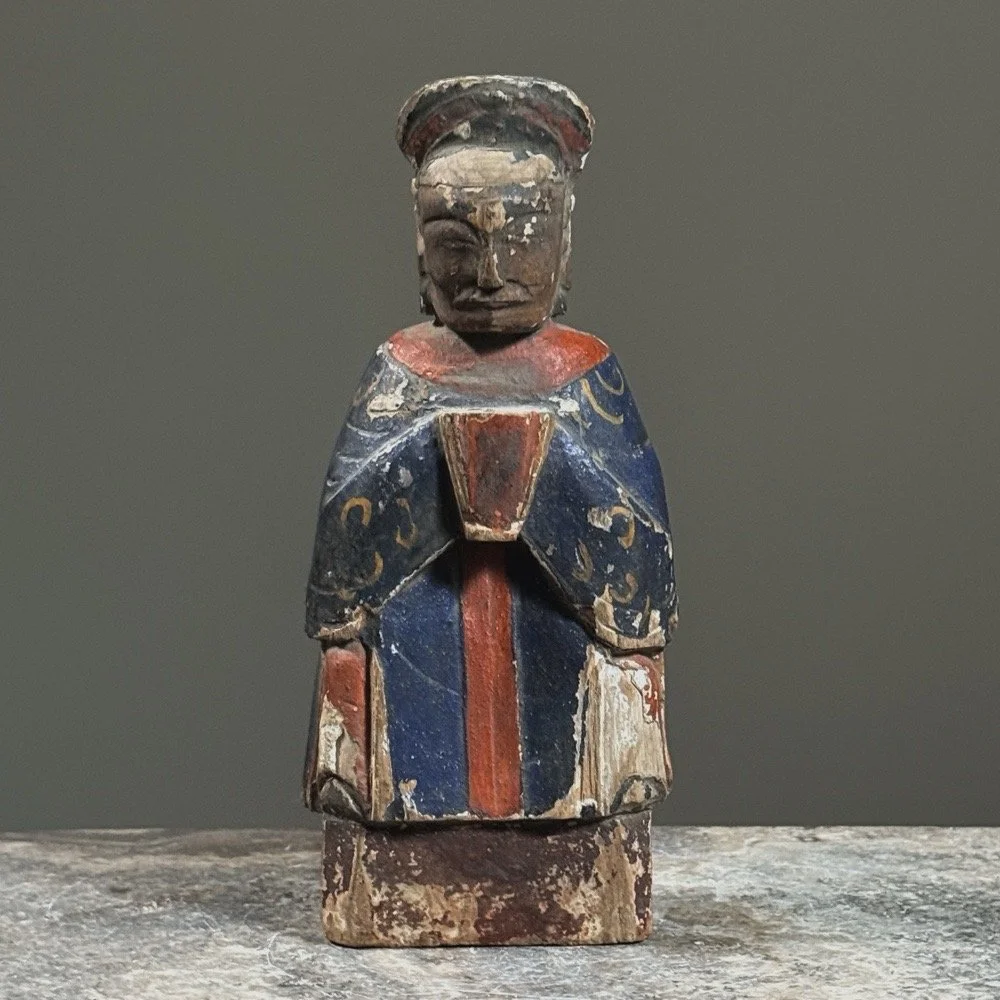 Image 1 of 7
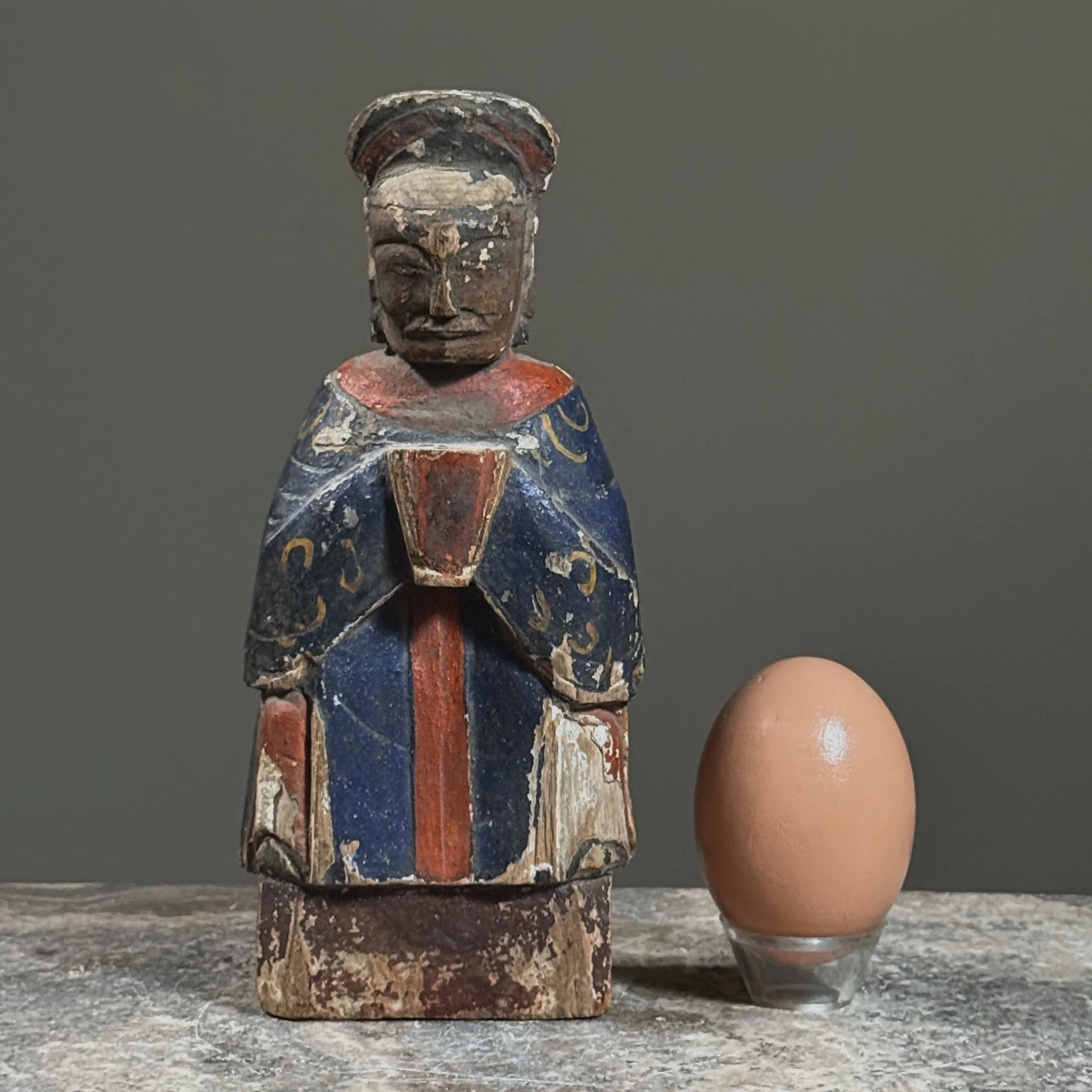 Image 2 of 7
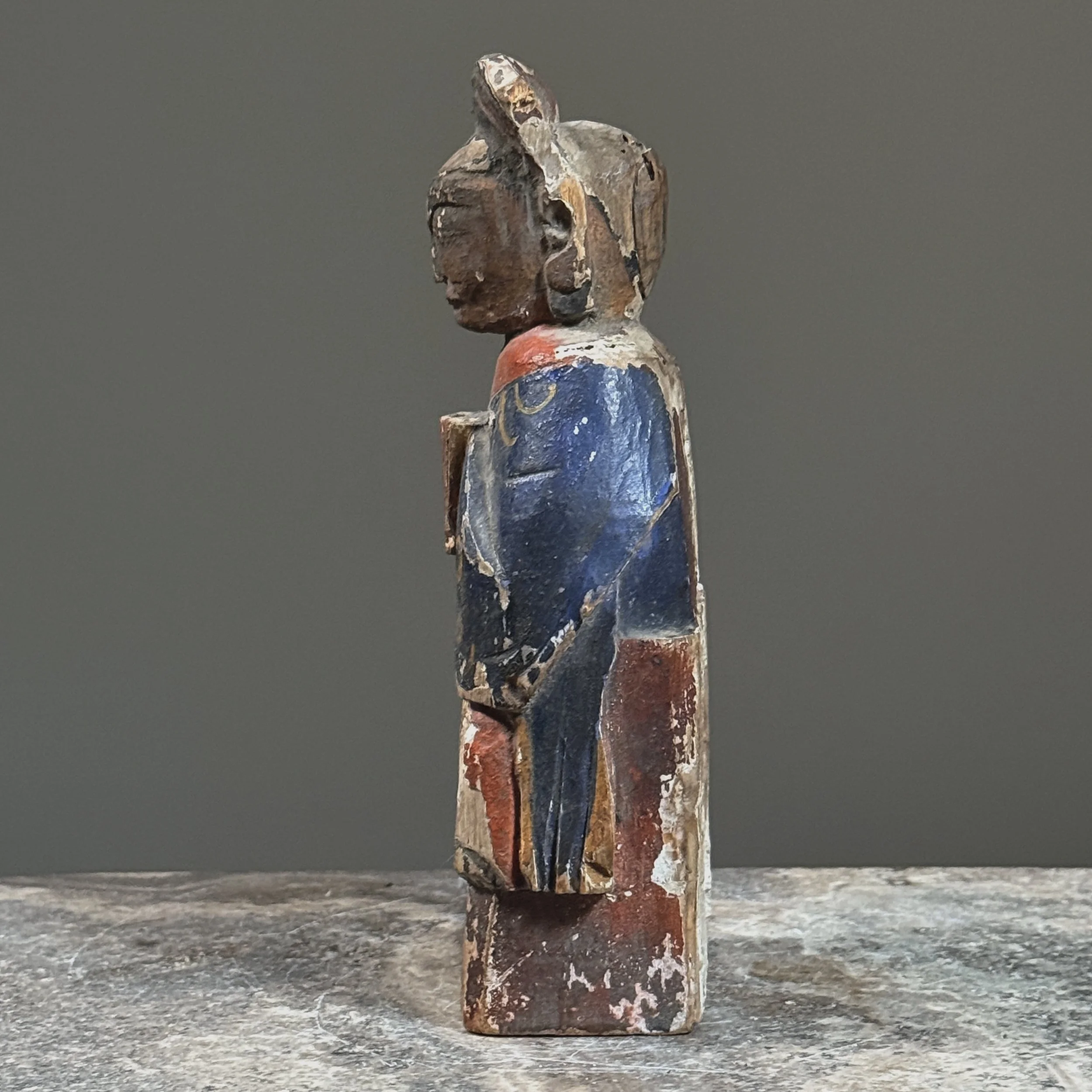 Image 3 of 7
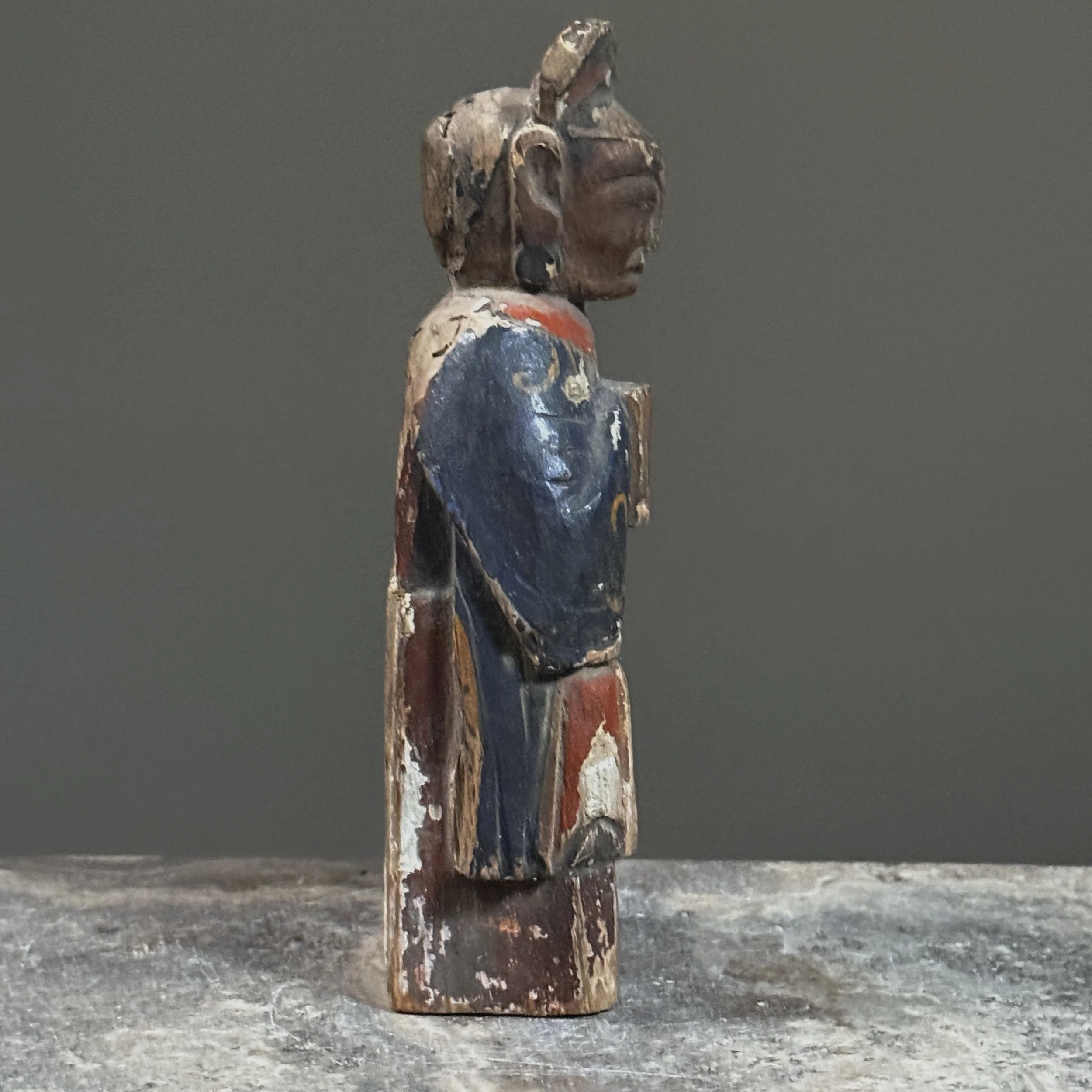 Image 4 of 7
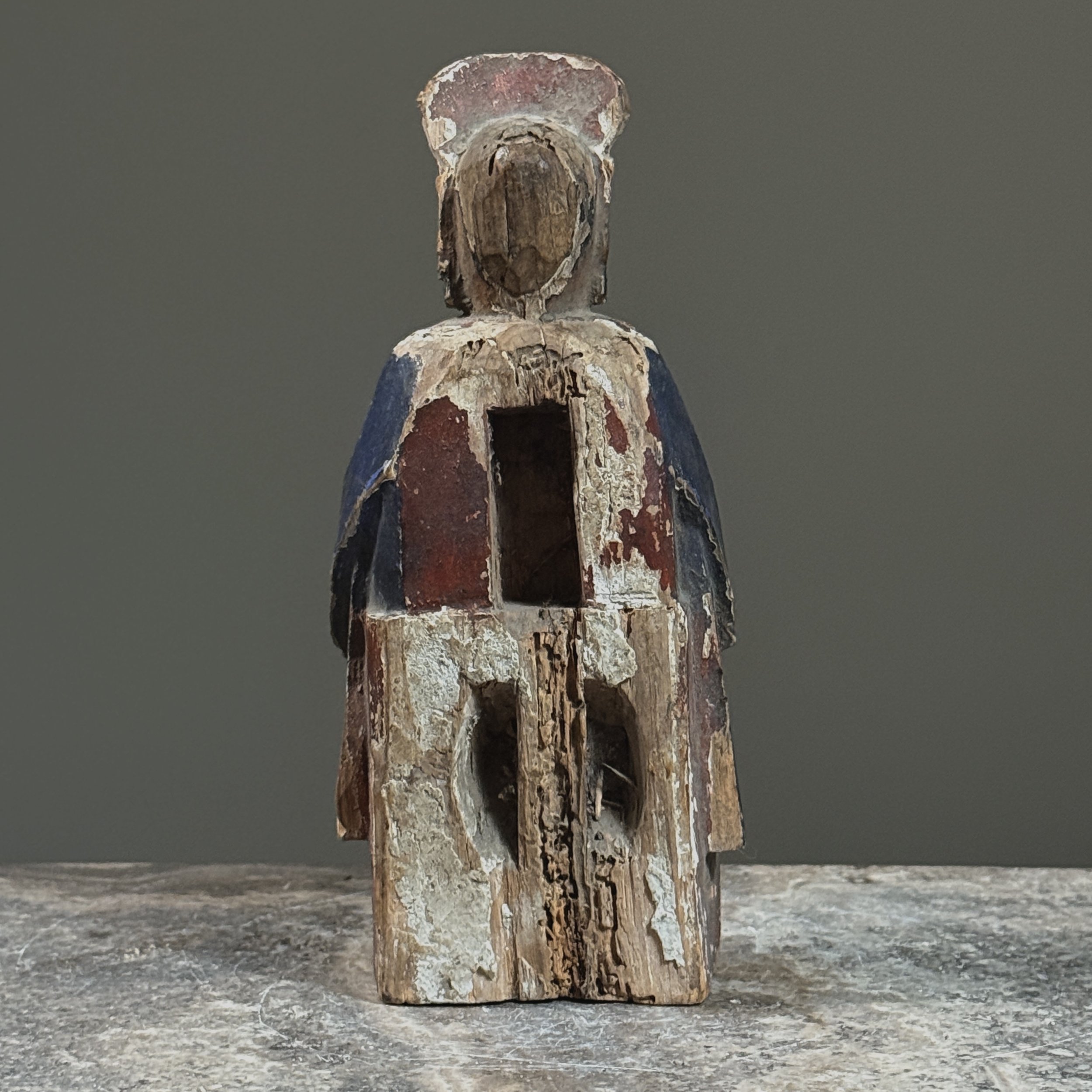 Image 5 of 7
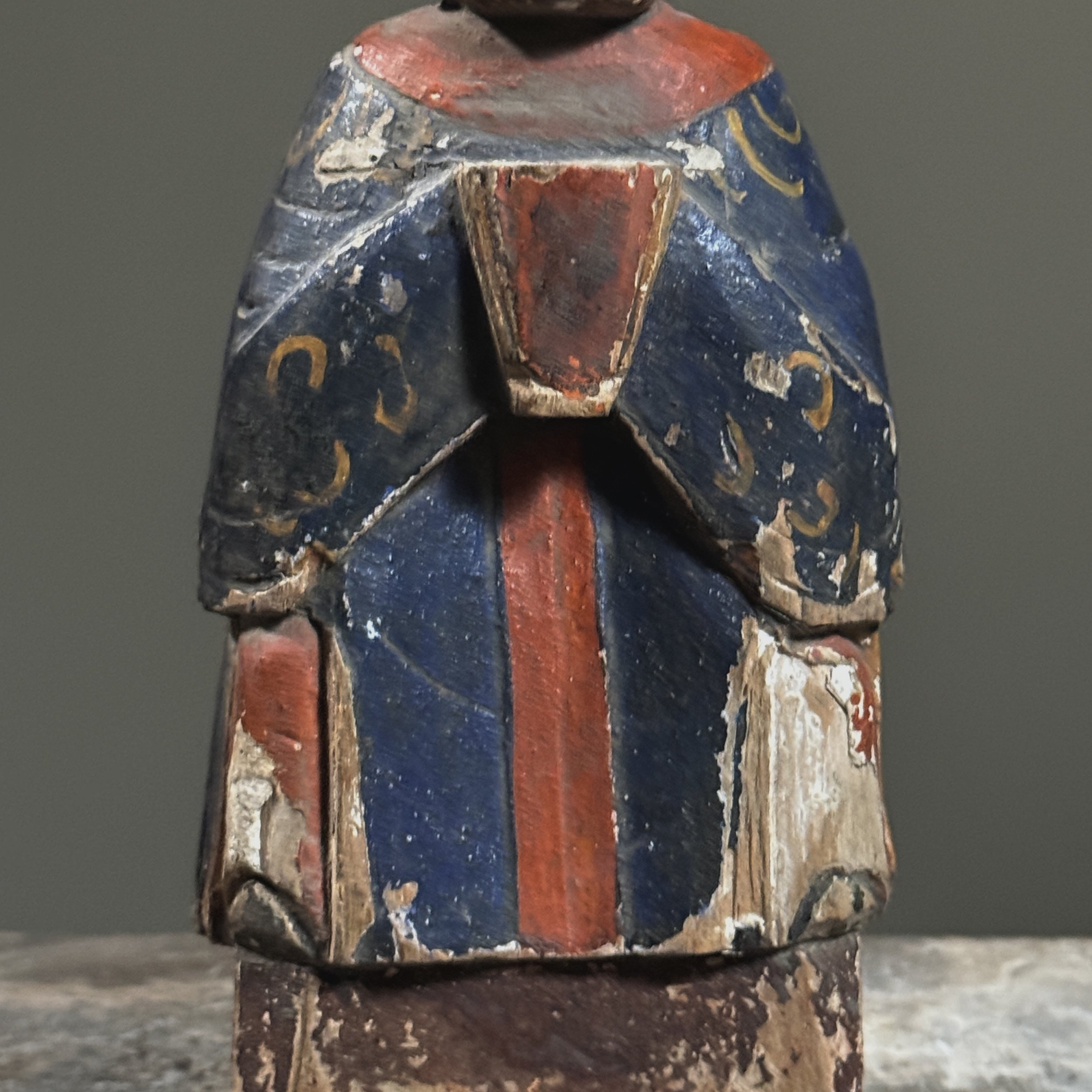 Image 6 of 7
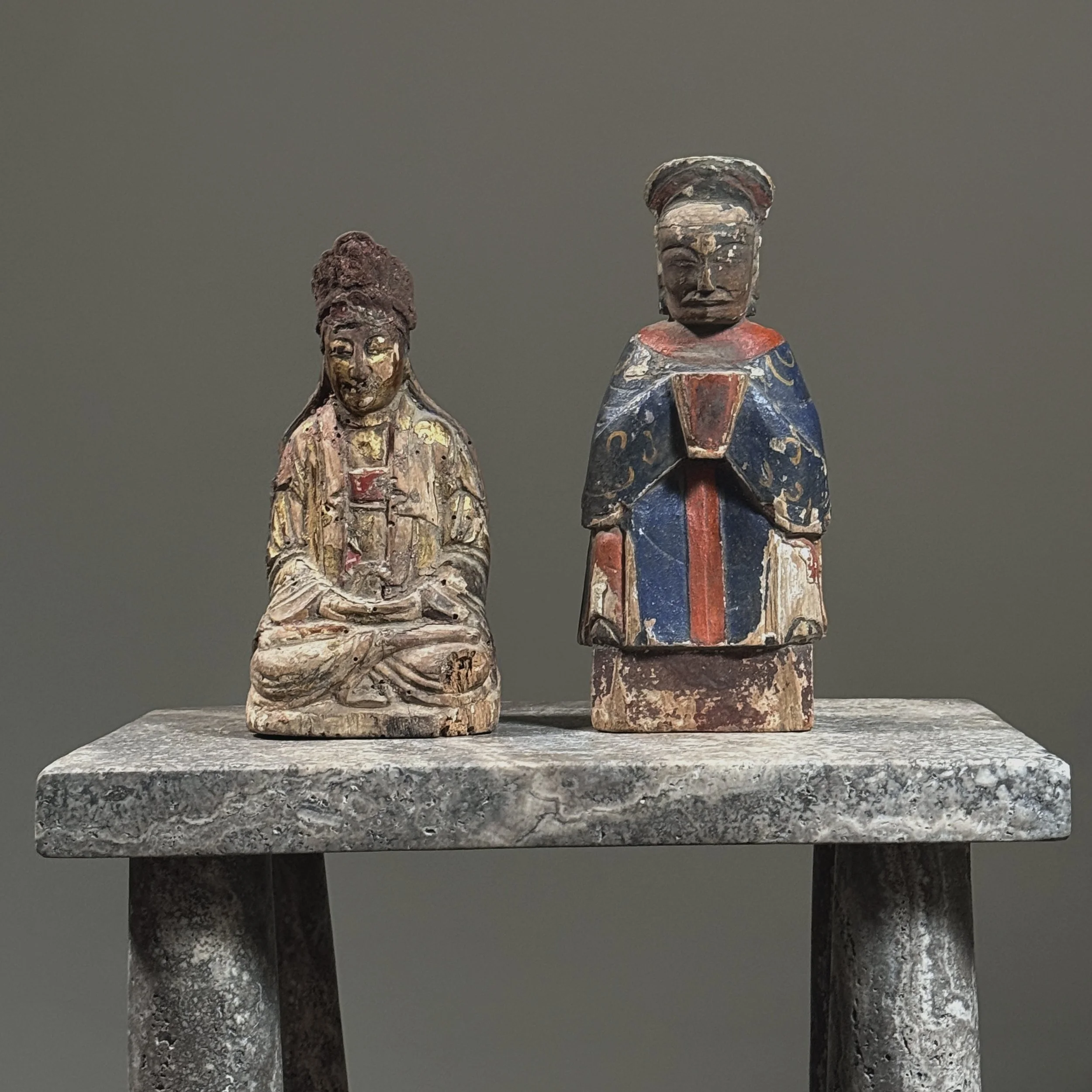 Image 7 of 7