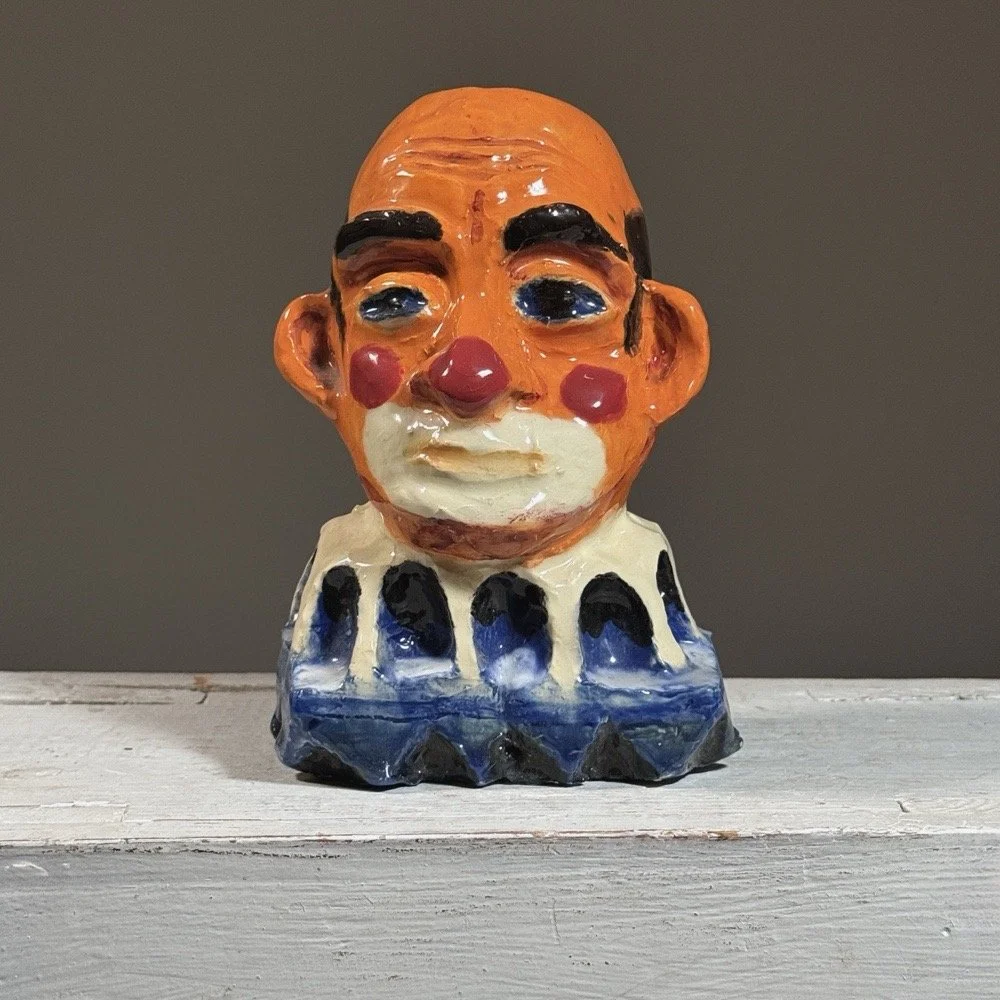
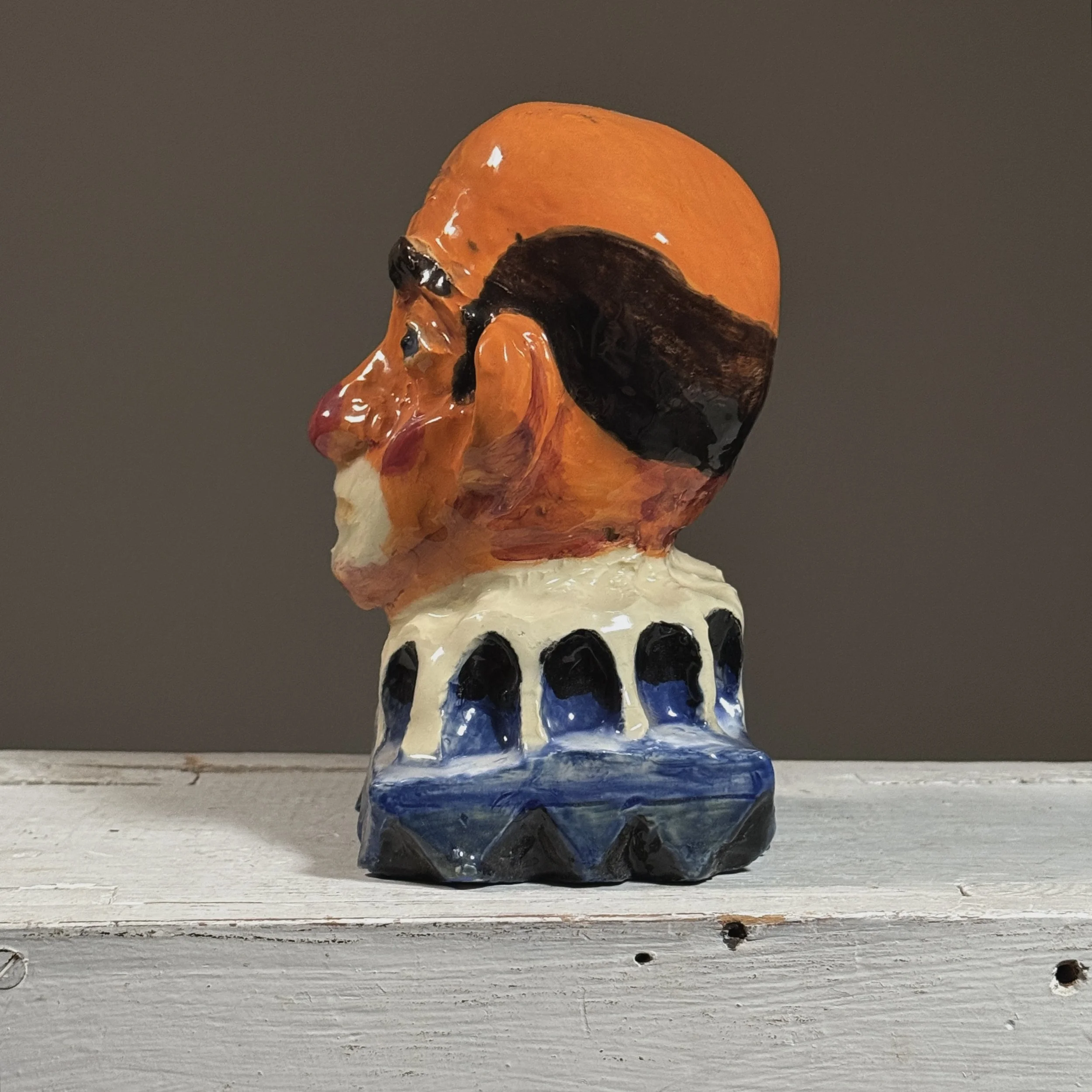
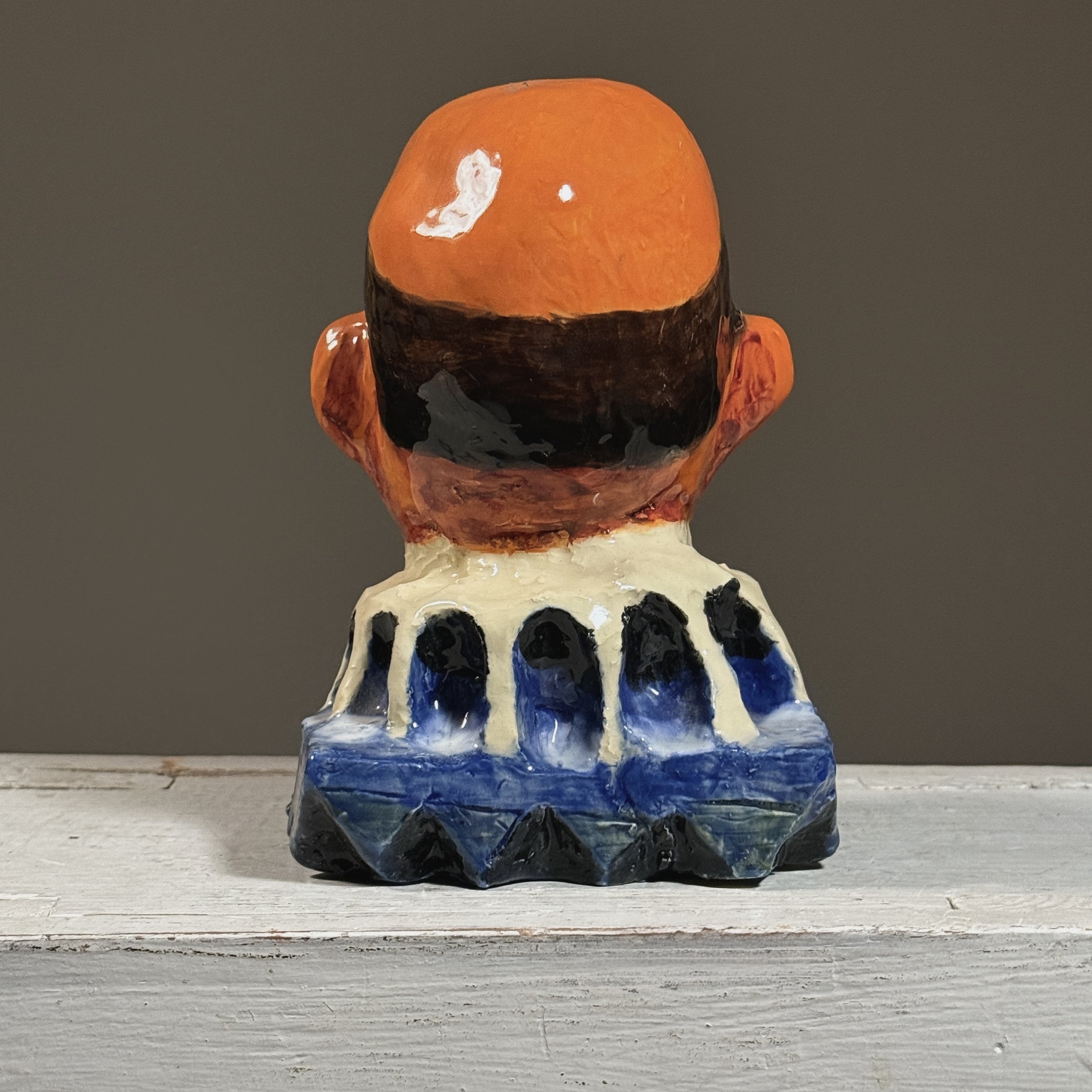
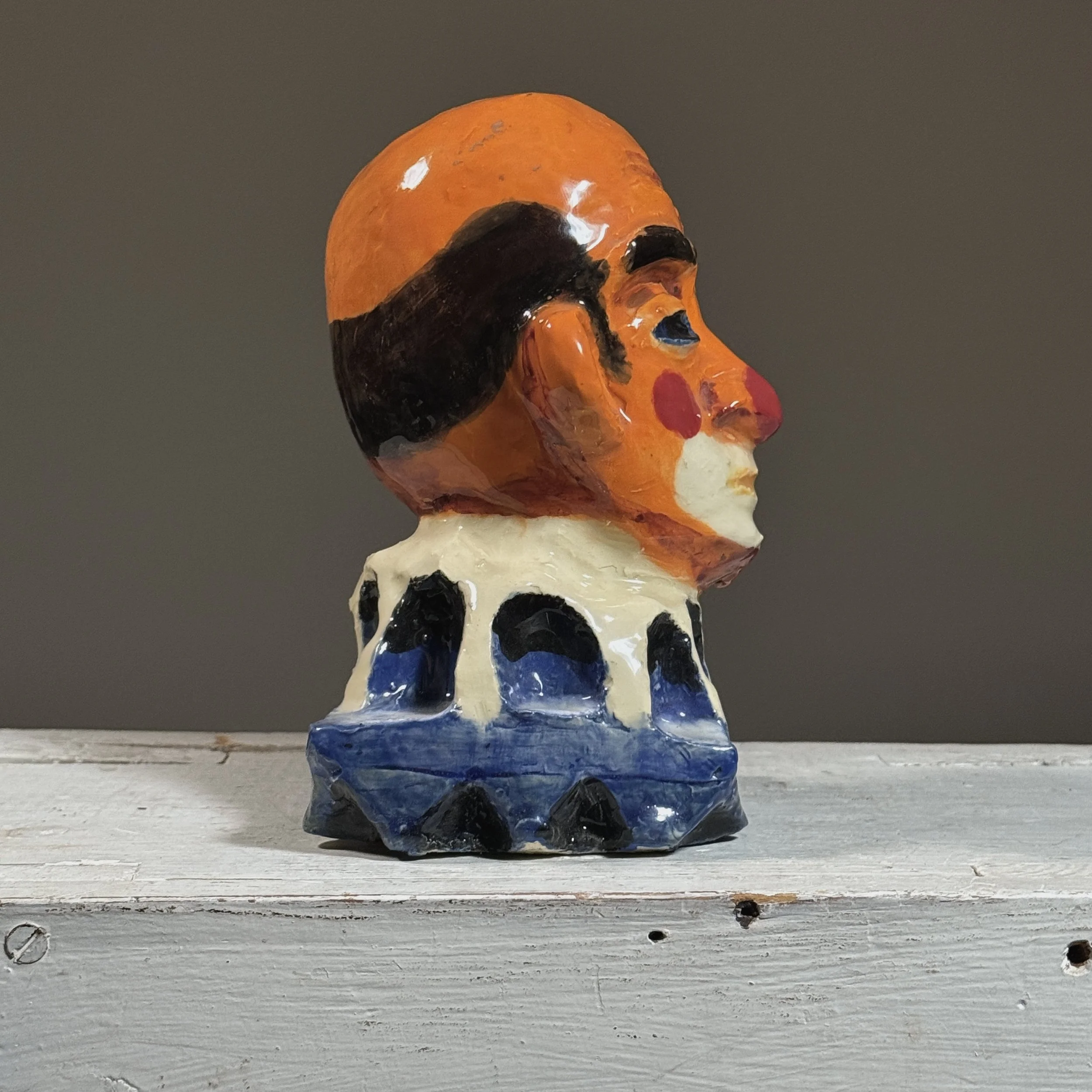
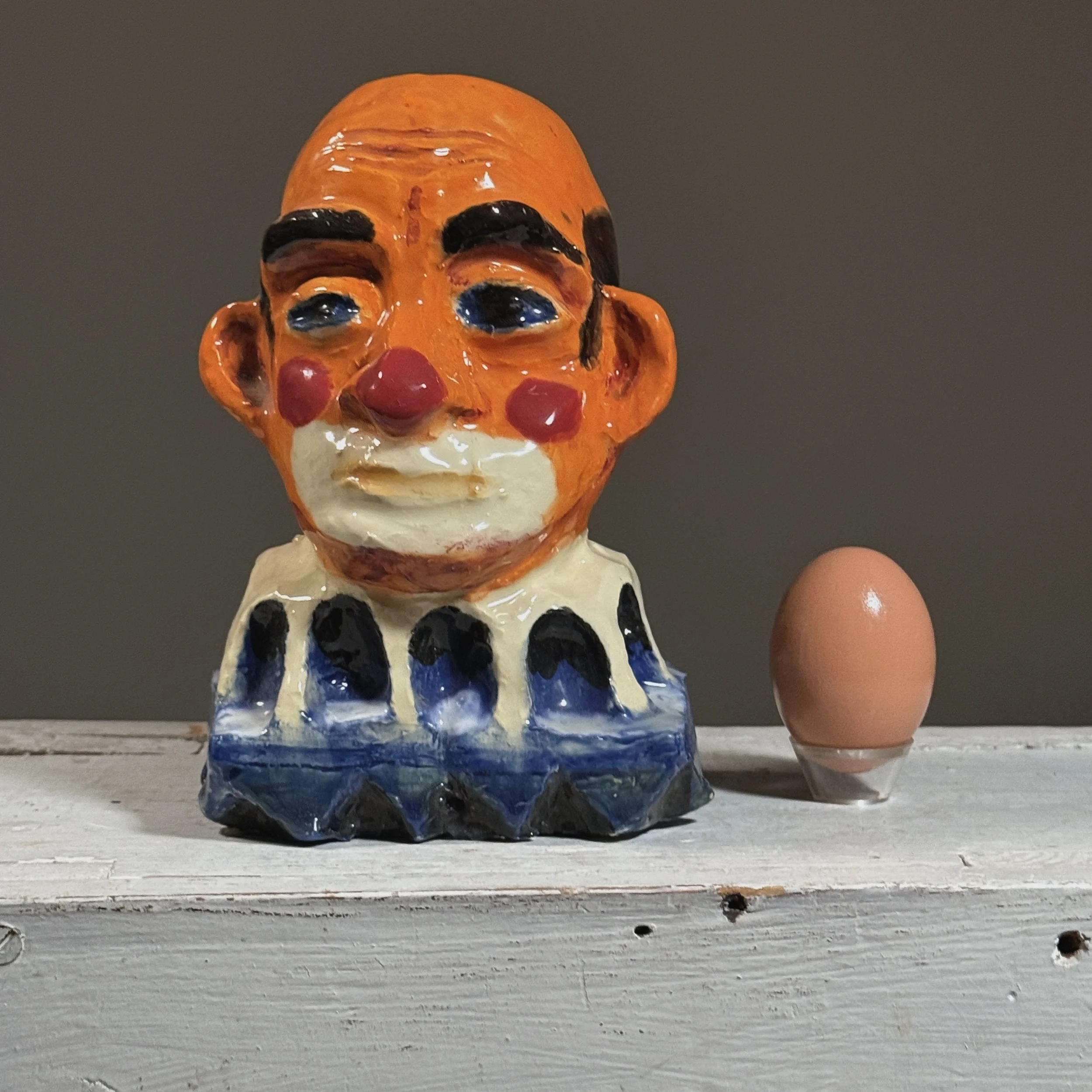
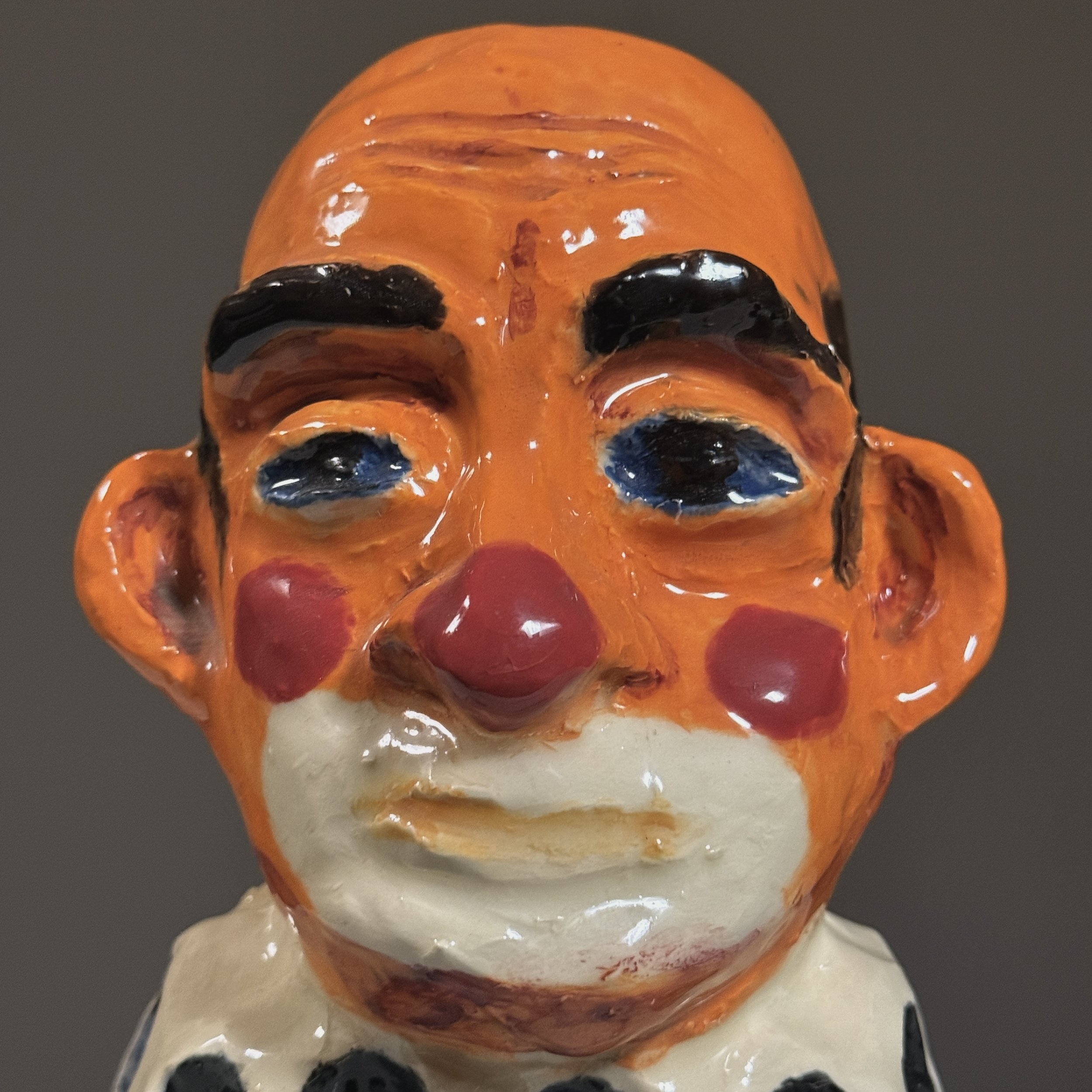
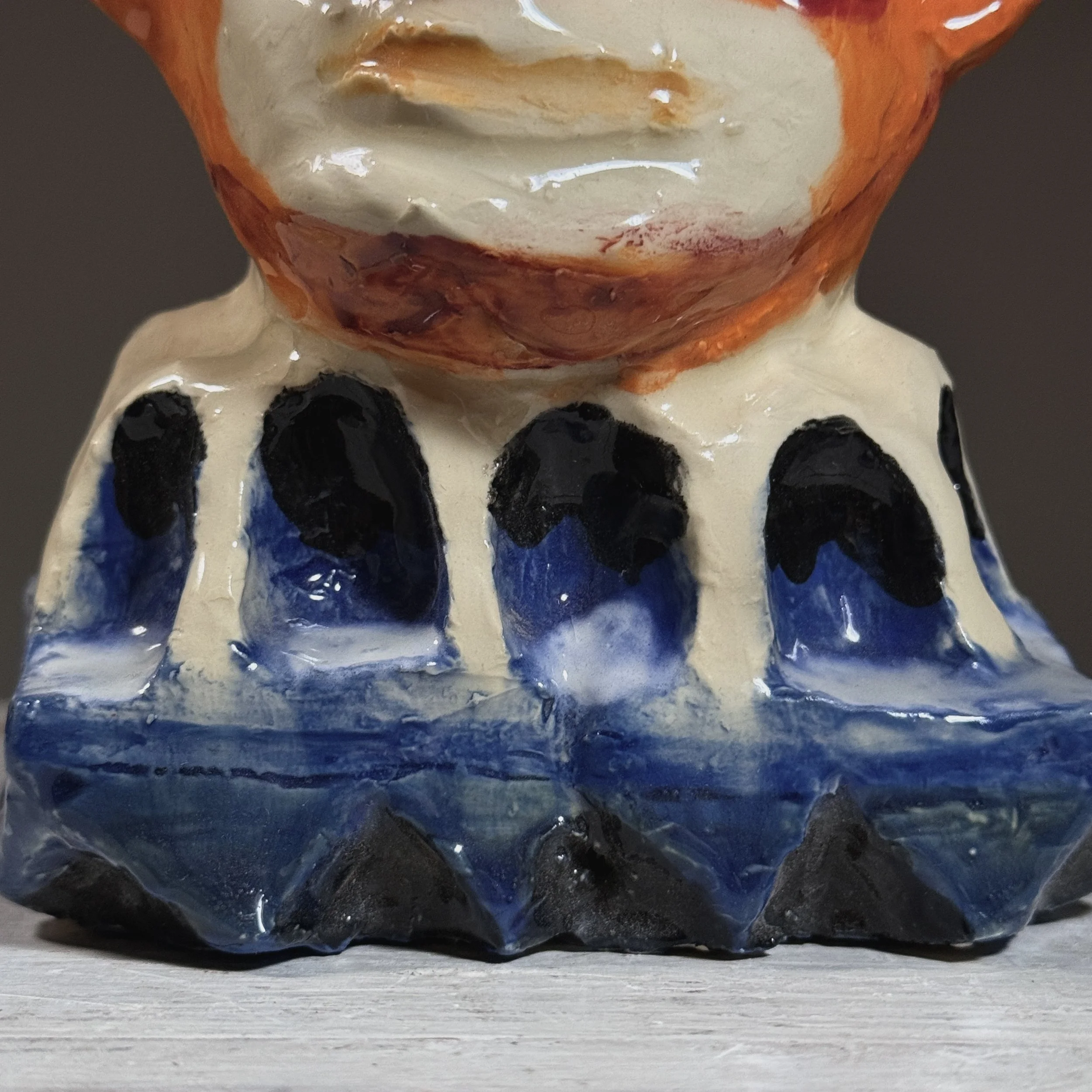
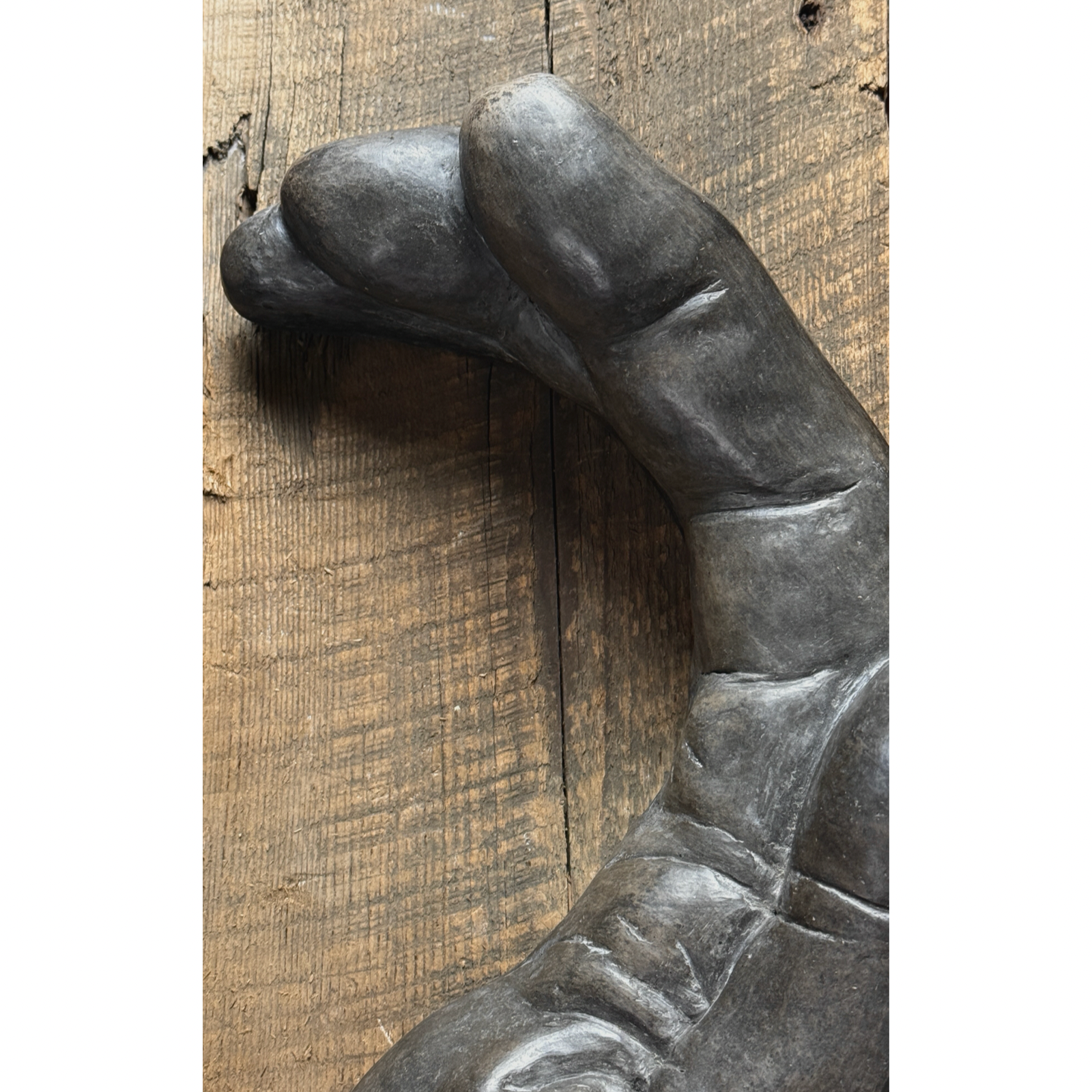
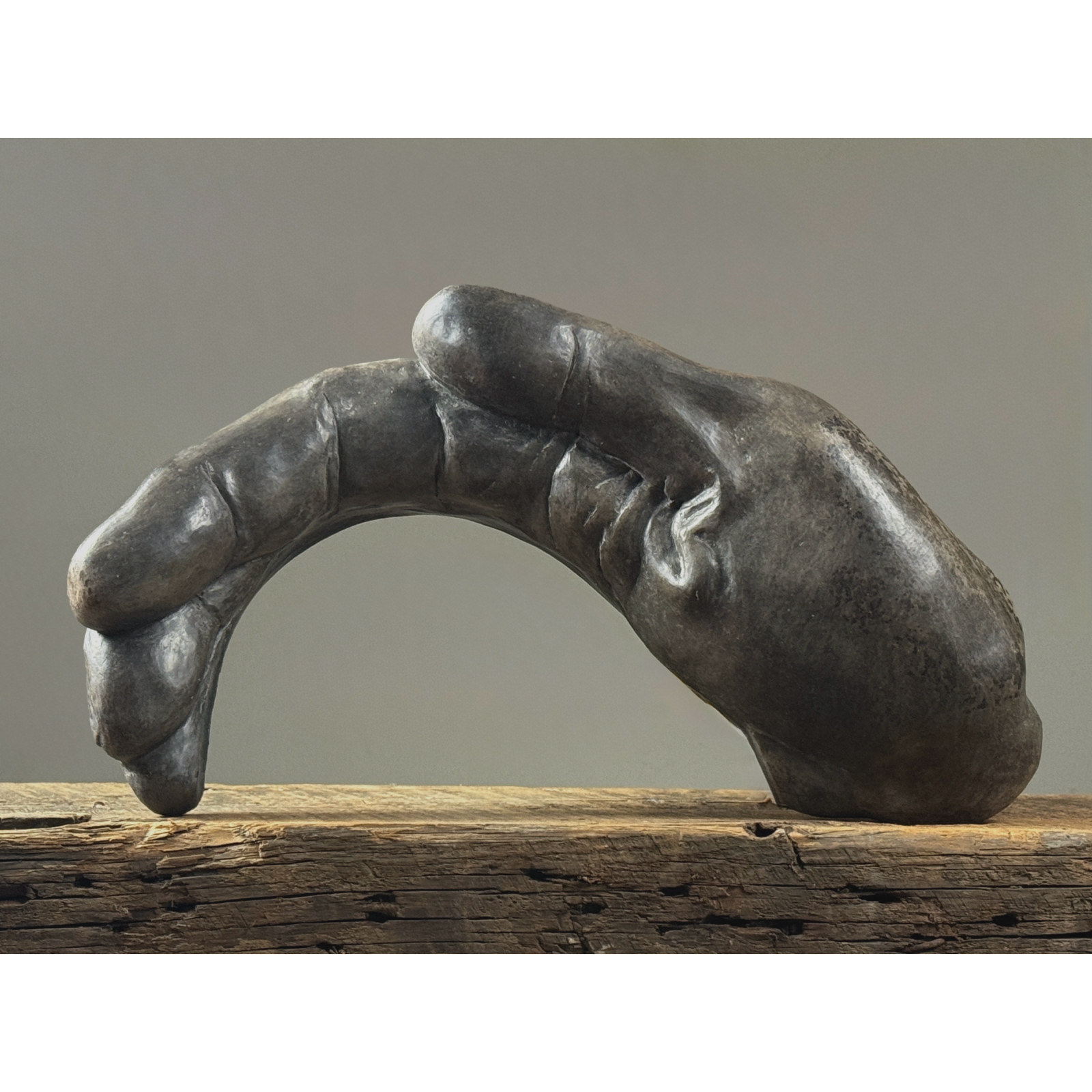
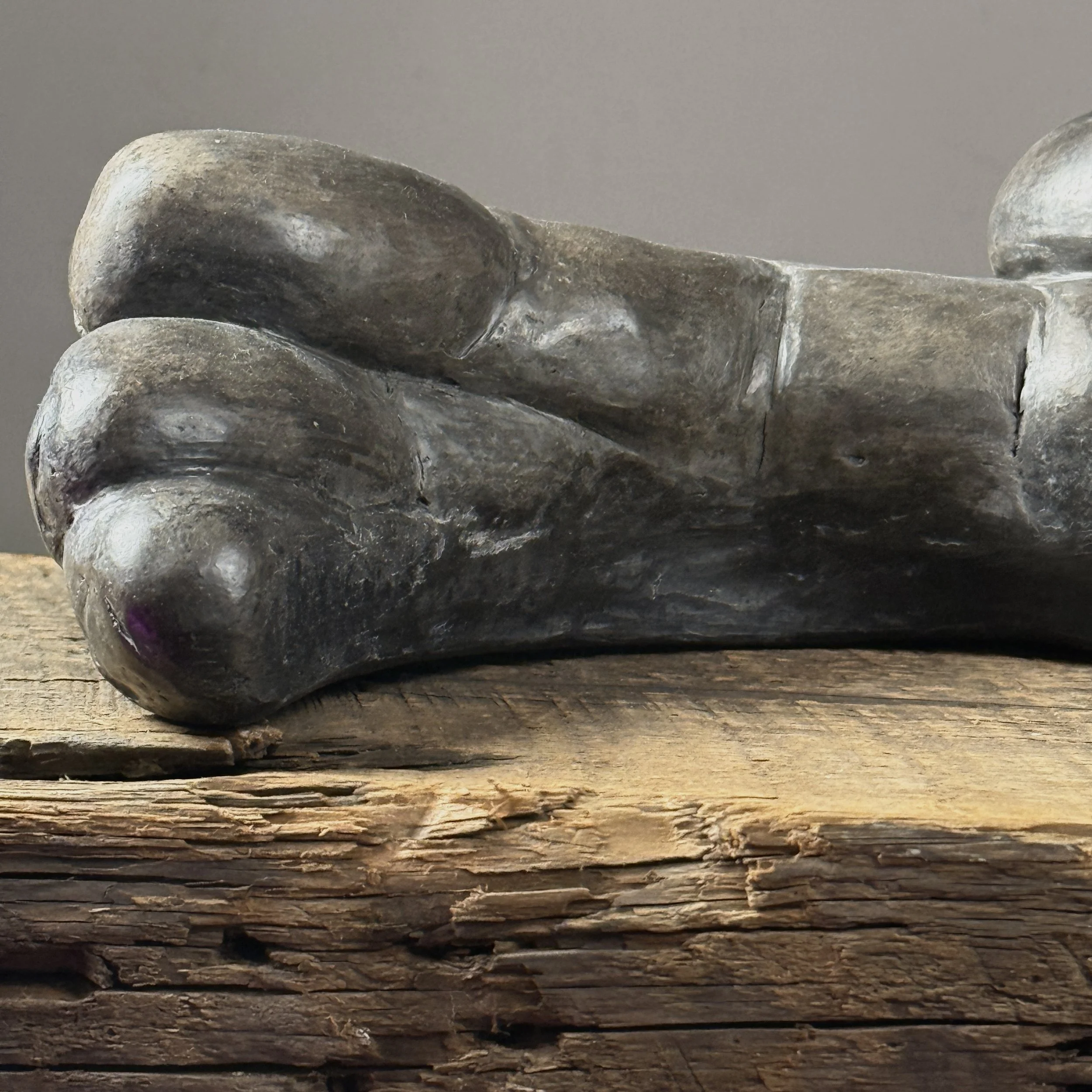
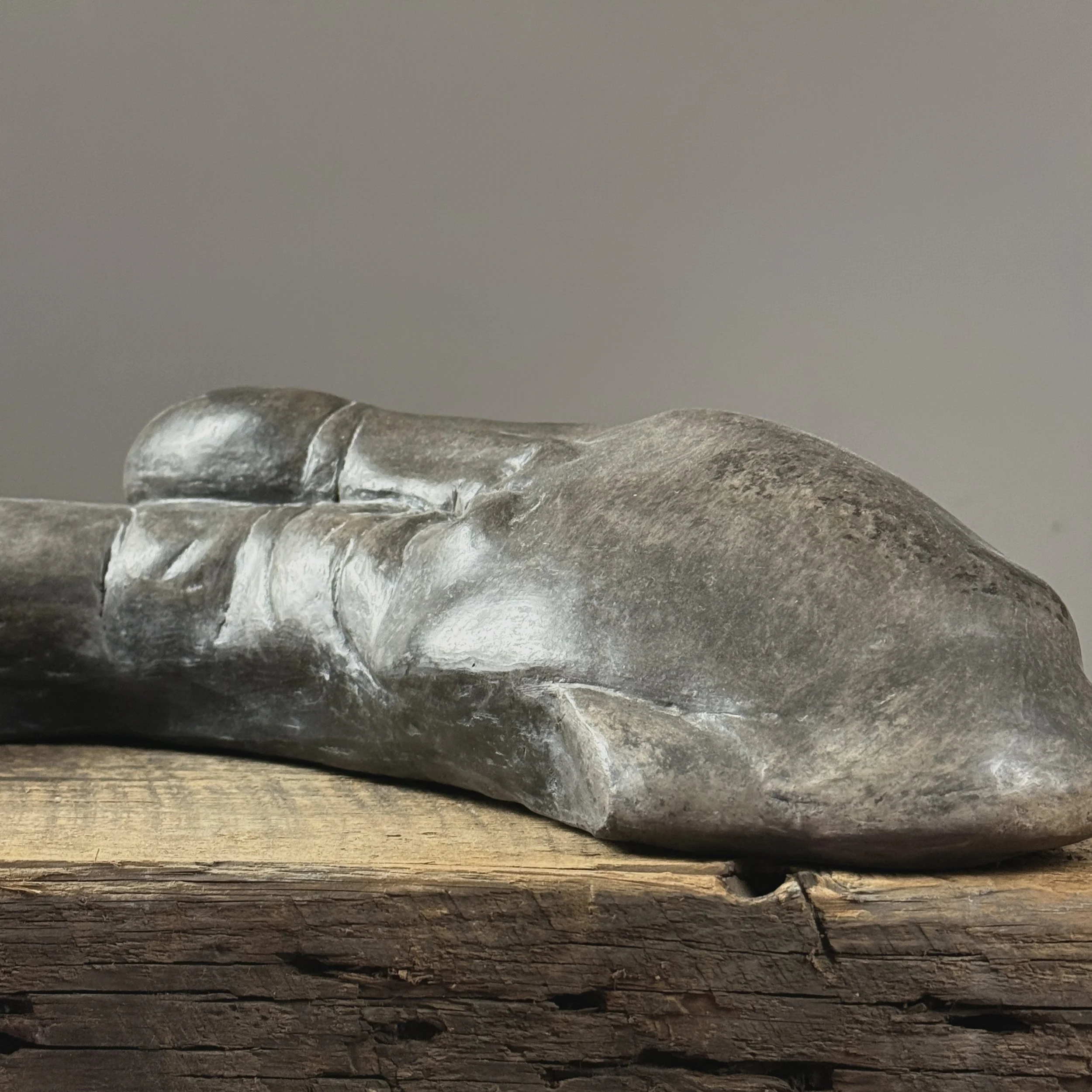
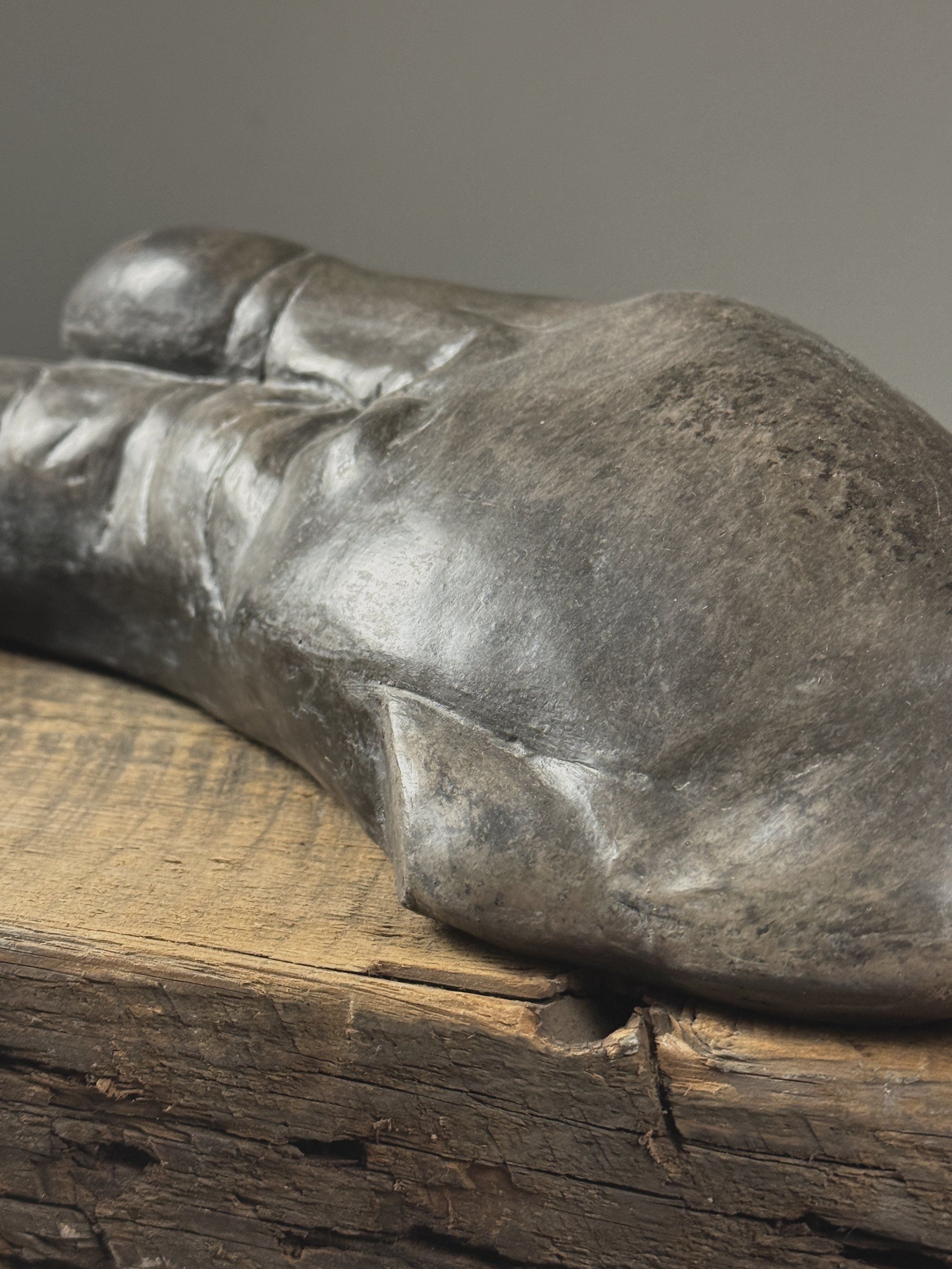
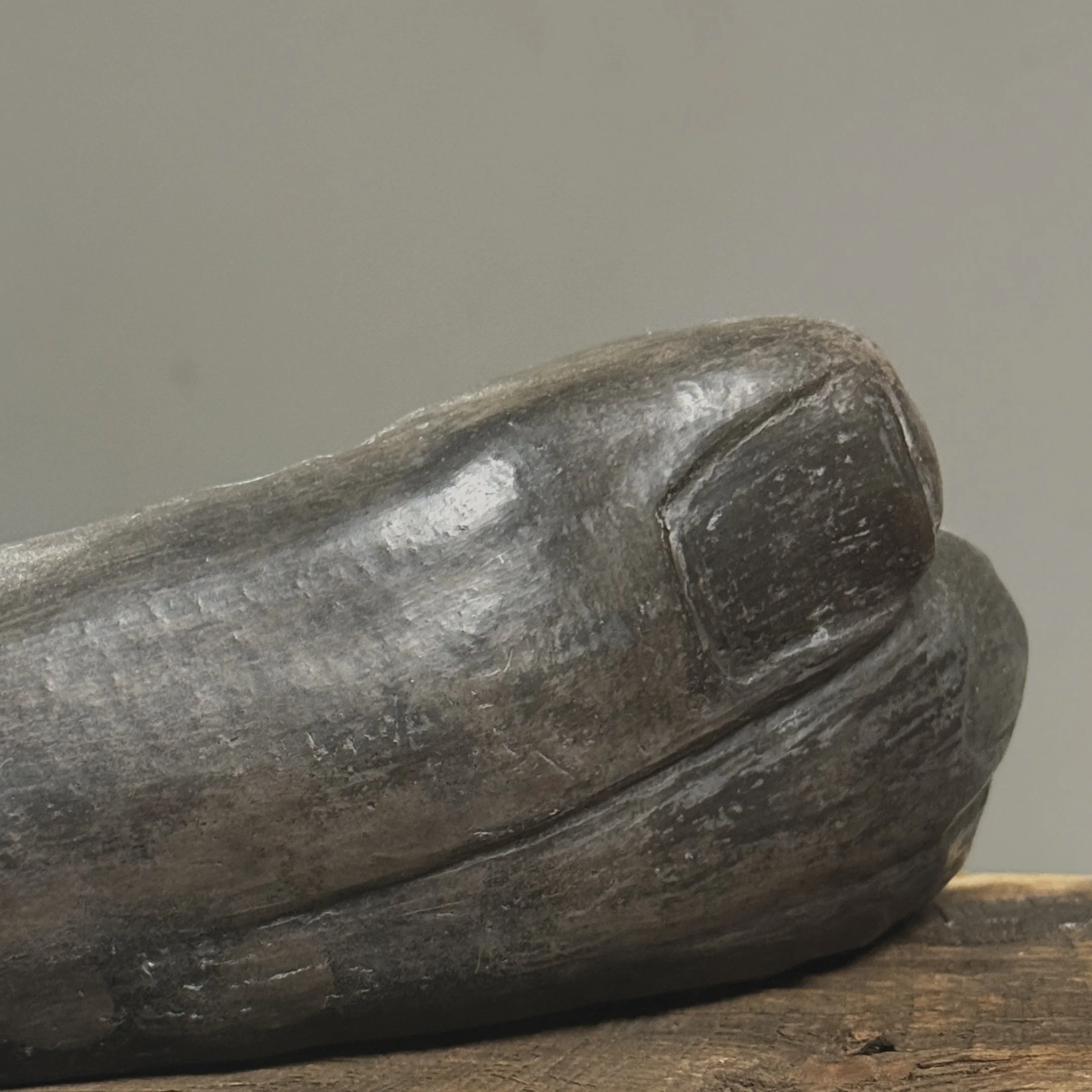
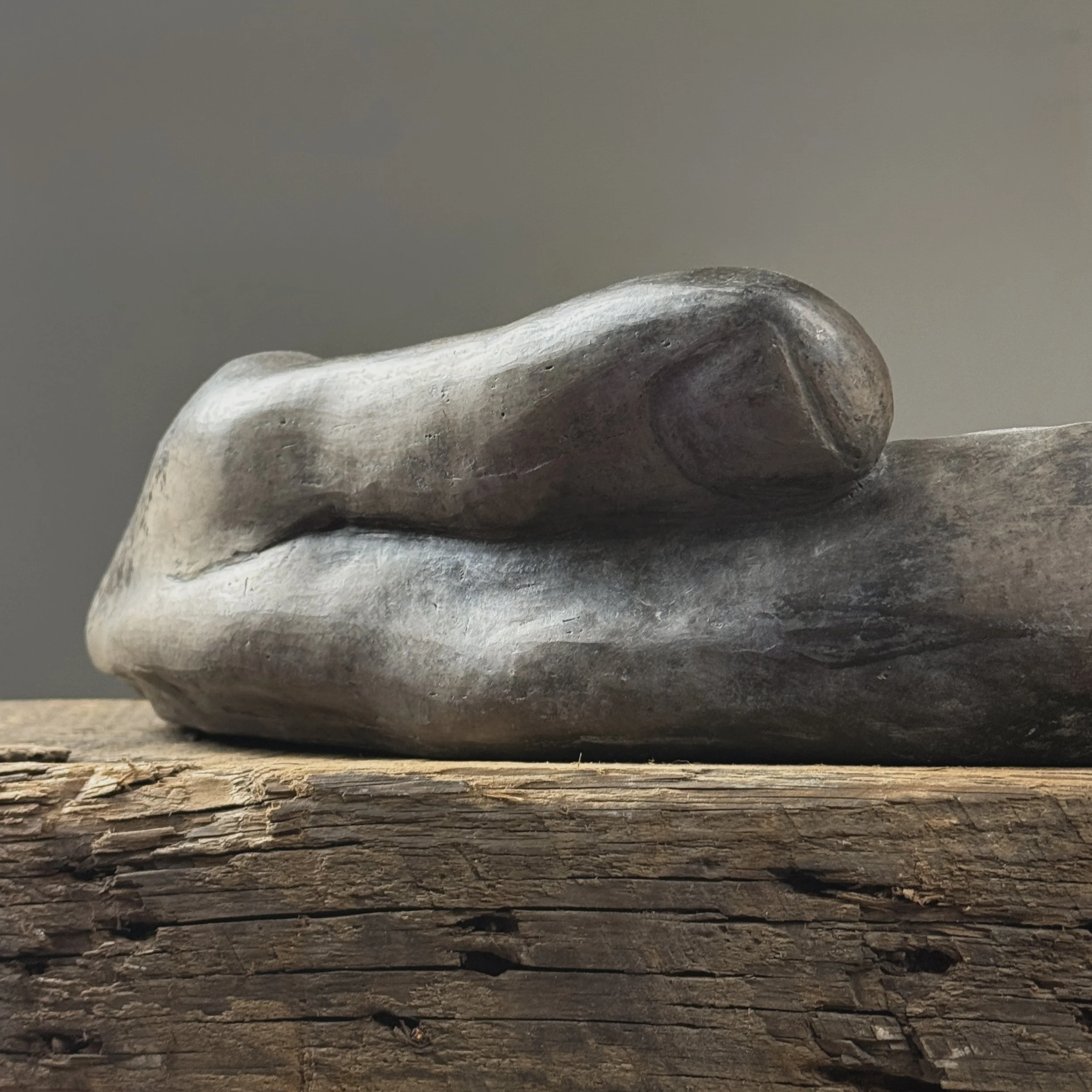
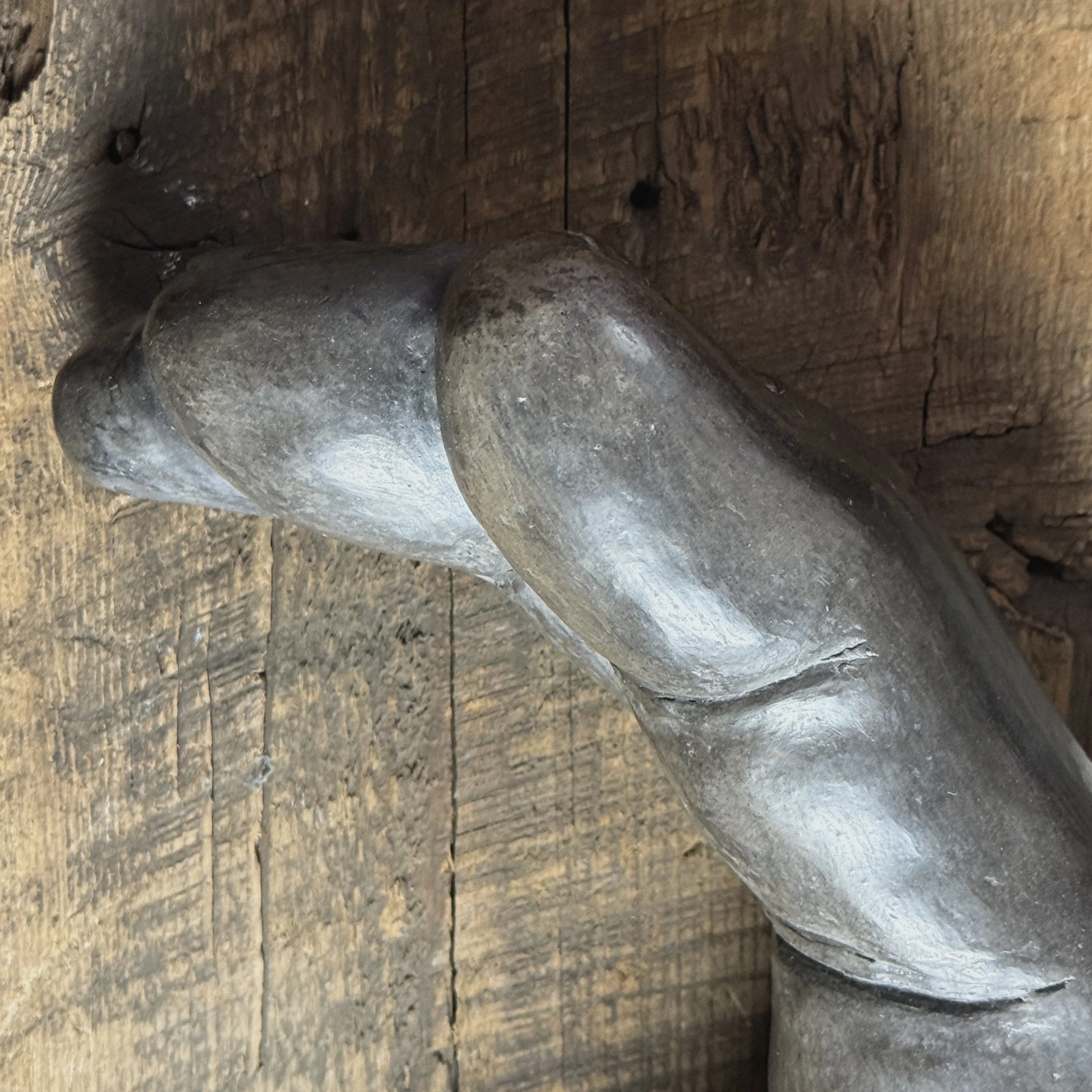
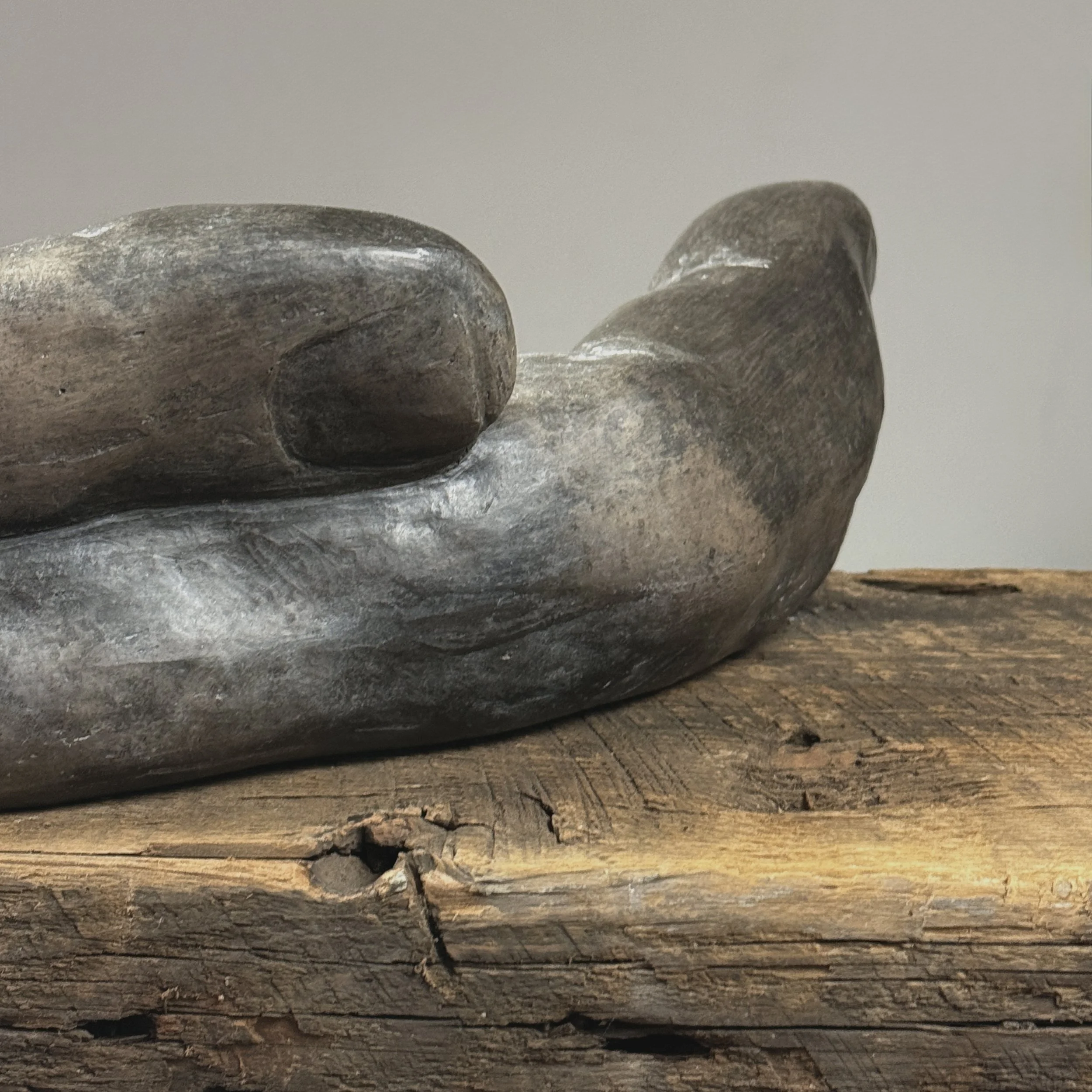
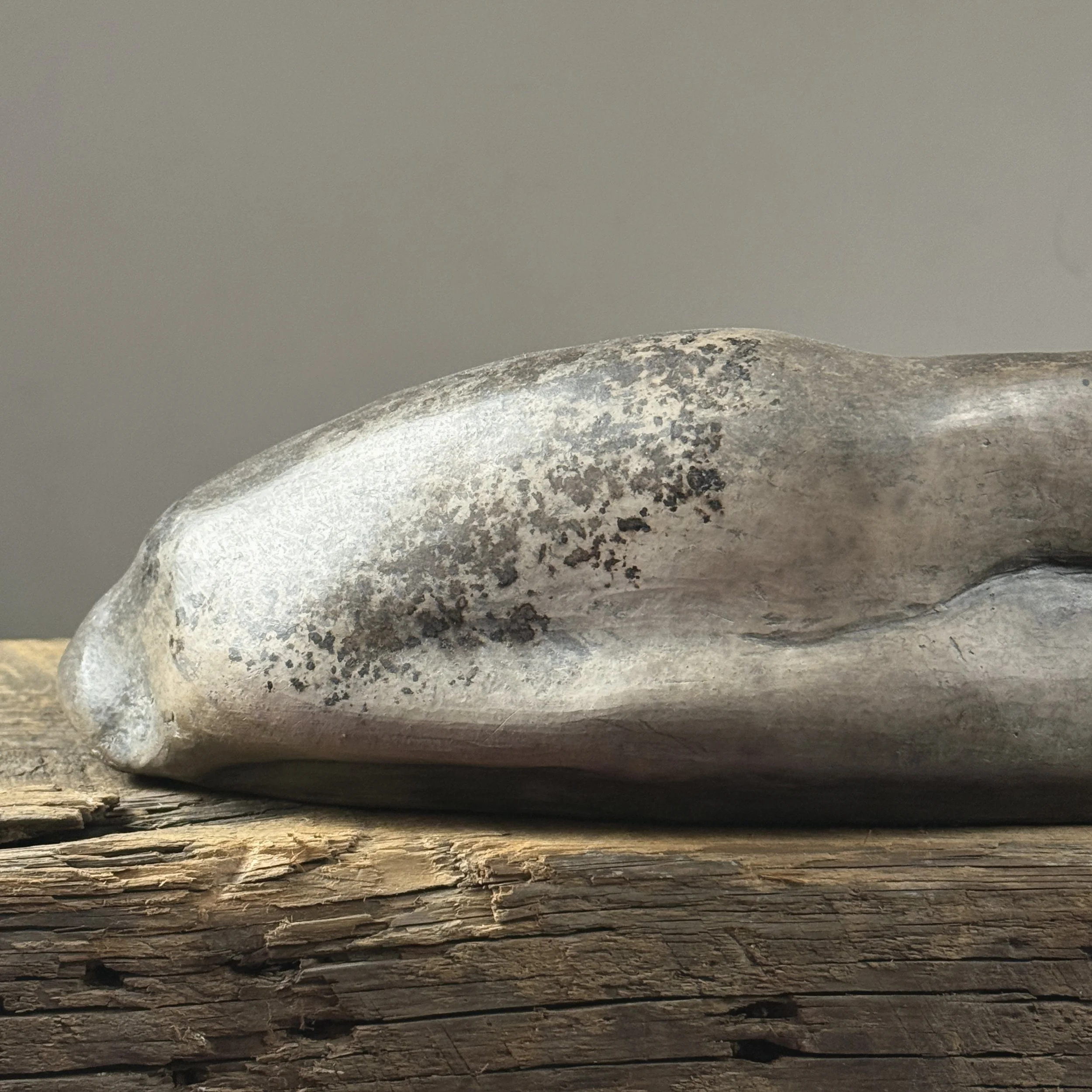
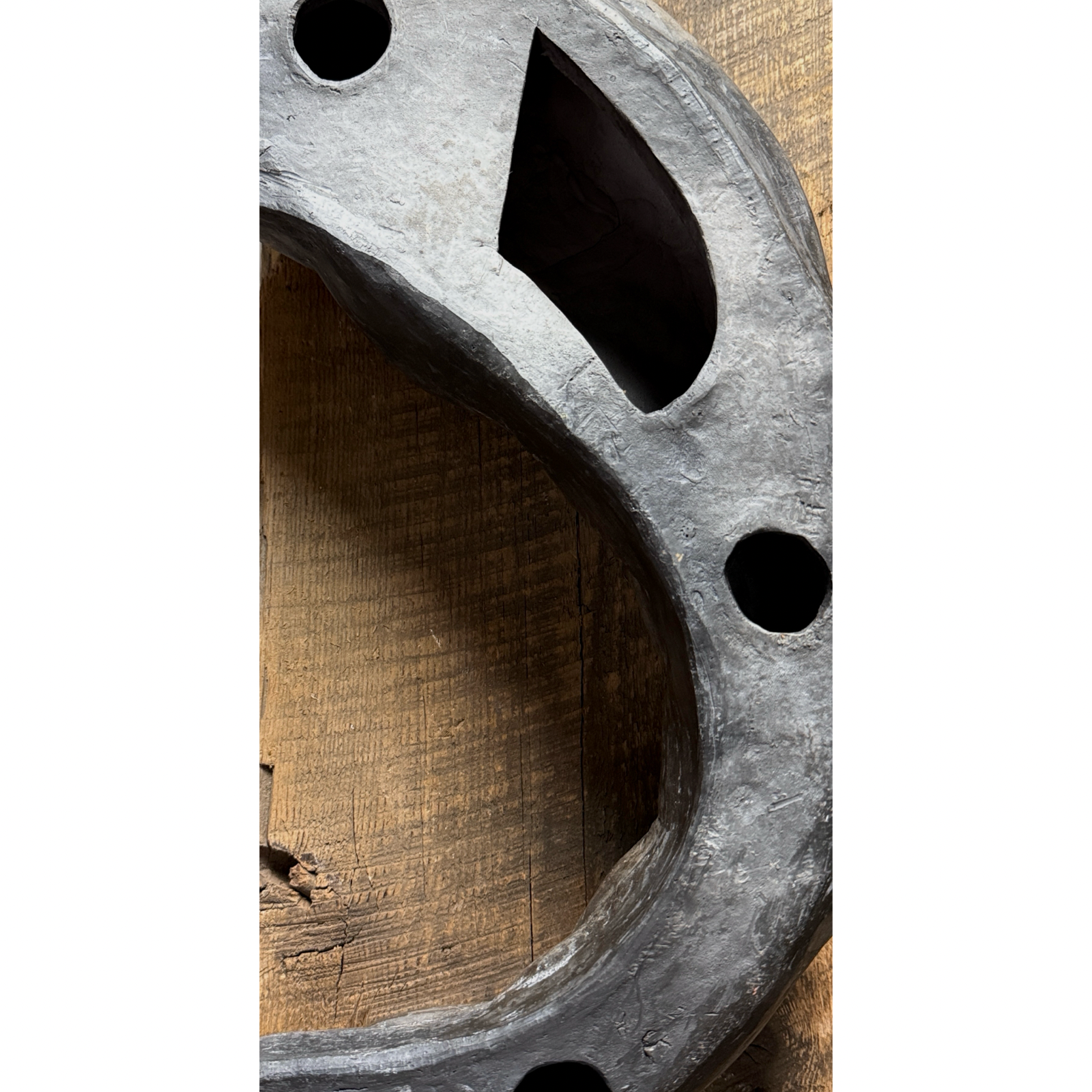
Medium: Hand-sculpted and fired terracotta (barro cozido)
Artist: João Vitalino (Brazilian, 20th century)
Origin: Caruaru, Pernambuco, Brazil
Date: 1961
Subject: Ceramic artist at work
Dimensions: 5.25" H x 3.5" W x 3" D
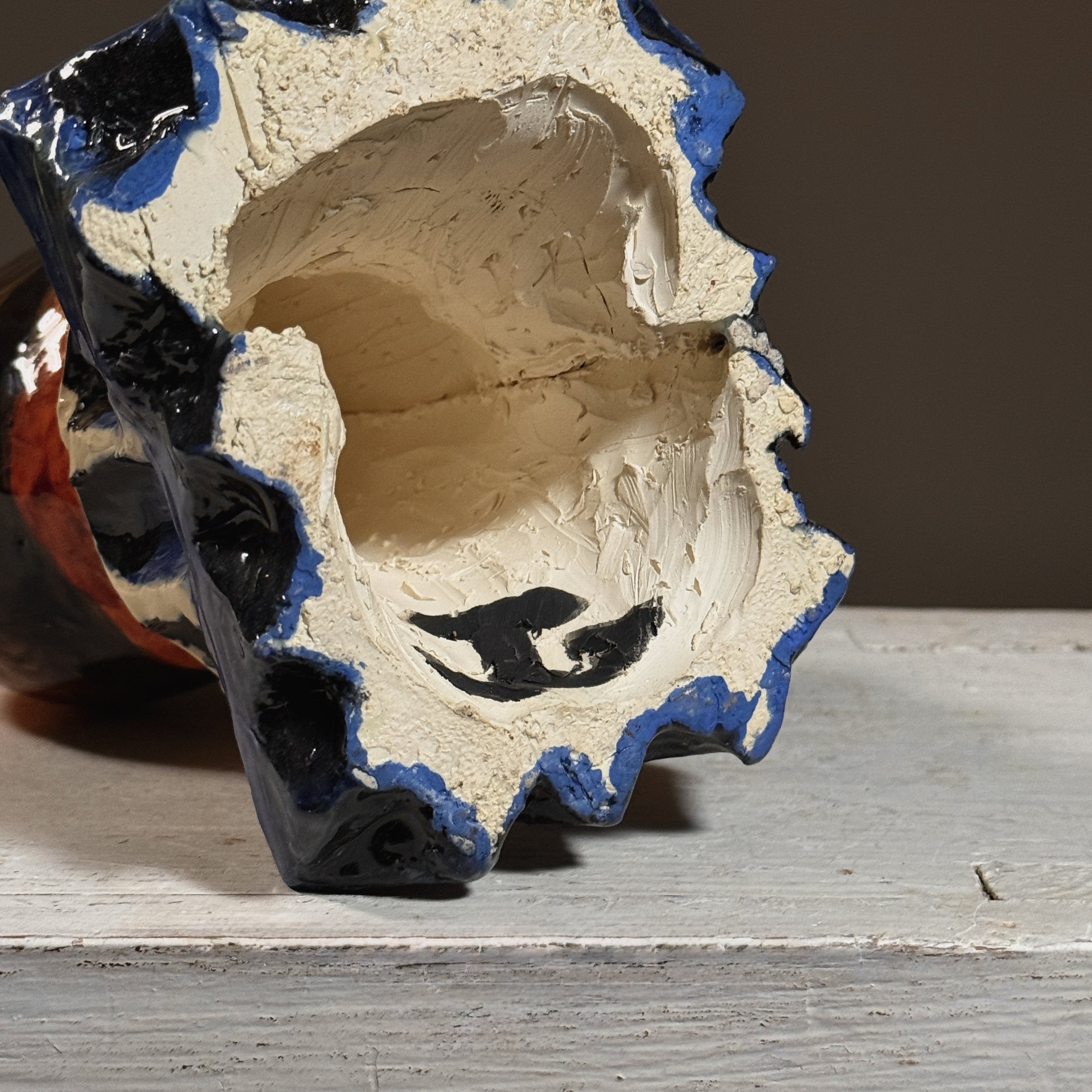
Signature: Impressed artist stamp on the octagonal base
Condition: Good; wear consistent with age
Vintage folk art sculpture of a ceramic artist, hand-sculpted in terracotta and marked with an impressed artist stamp on the octagonal base. The work belongs to the figurative clay tradition of Caruaru, Pernambuco, and depicts a potter engaged in the act of making. Original tape with date and origin still attached on the bottom.
Artist Biography
João Vitalino is a Brazilian folk artist and a son of Mestre Vitalino (1909–1963), the ceramist whose workshop in Alto do Moura, Caruaru, established the figurative clay tradition that became central to modern Brazilian folk art.
Mestre Vitalino himself began modeling small animals from his mother's leftover clay as a child, later moving to narrative groups depicting rural scenes, festivals, and occupations. He settled in Alto do Moura around 1947, where his workshop attracted other makers and gave rise to what became known as the Caruaru school. His work was exhibited in Rio de Janeiro in 1947 and in Neuchâtel, Switzerland, in 1955, and is now held in collections including the Louvre and the Museu de Arte Popular in Vienna. João Vitalino's sculpture continued on the legacy of his father.
Museum Holdings:
Mestre Vitalino's work is represented in the Louvre (Paris), the Museu de Arte Popular (Vienna), the Casa do Pontal (Rio de Janeiro), the Chácara do Céu (Rio de Janeiro), and the Museu do Barro (Caruaru), among others. I
A Note on the Caruaru Figurative Tradition
The clay figures of Caruaru came from the world of utilitarian pottery and narrative sculpture in Brazil. Mestre Vitalino's innovation came from shifting the ceramist's attention from domestic vessels to scenes of human activity: vaqueiros, musicians, weddings, funerals, and the occupations of the sertão. These groups were built by hand, fired in simple kilns, and sold at the Feira de Caruaru, where they attracted the attention of artists and collectors in the 1940s.

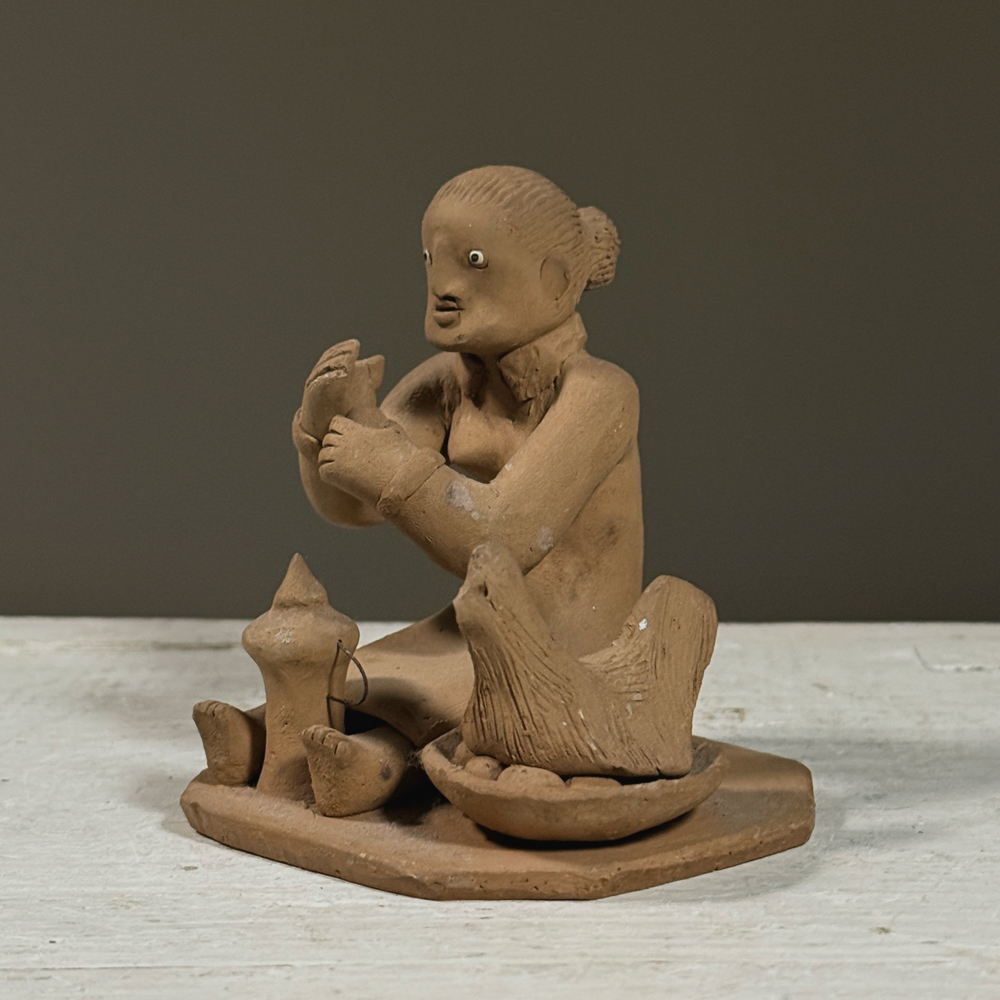 Image 1 of 6
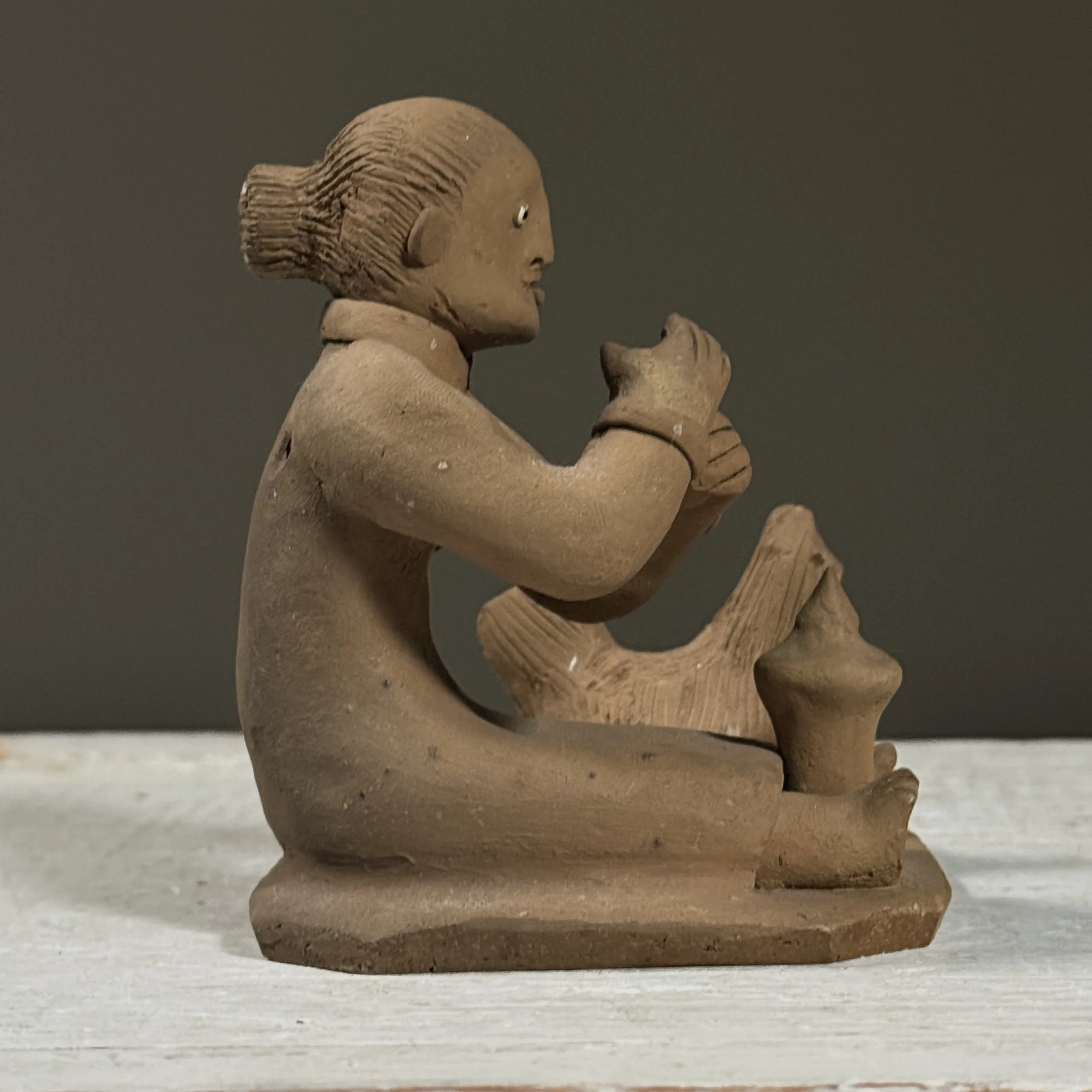 Image 2 of 6
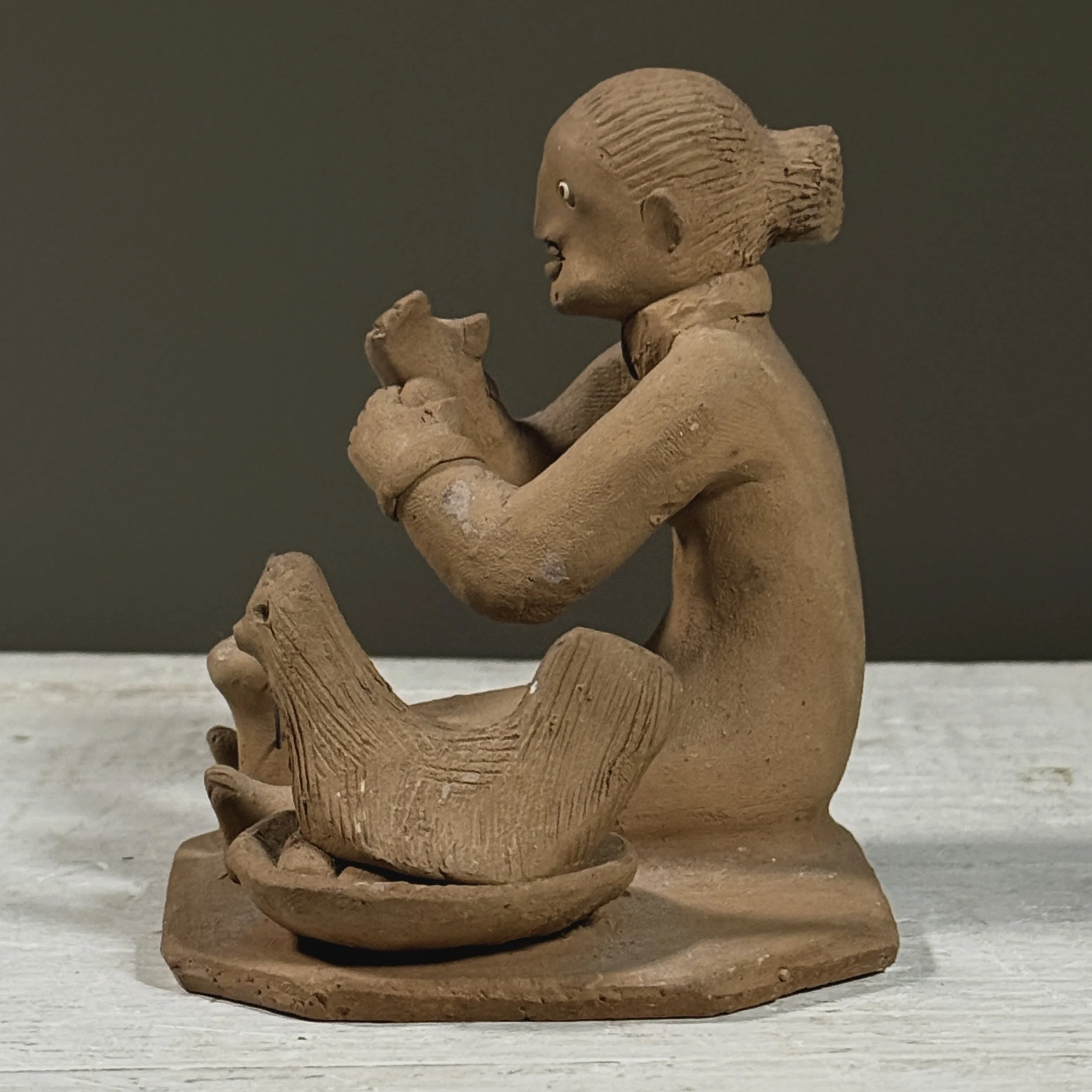 Image 3 of 6
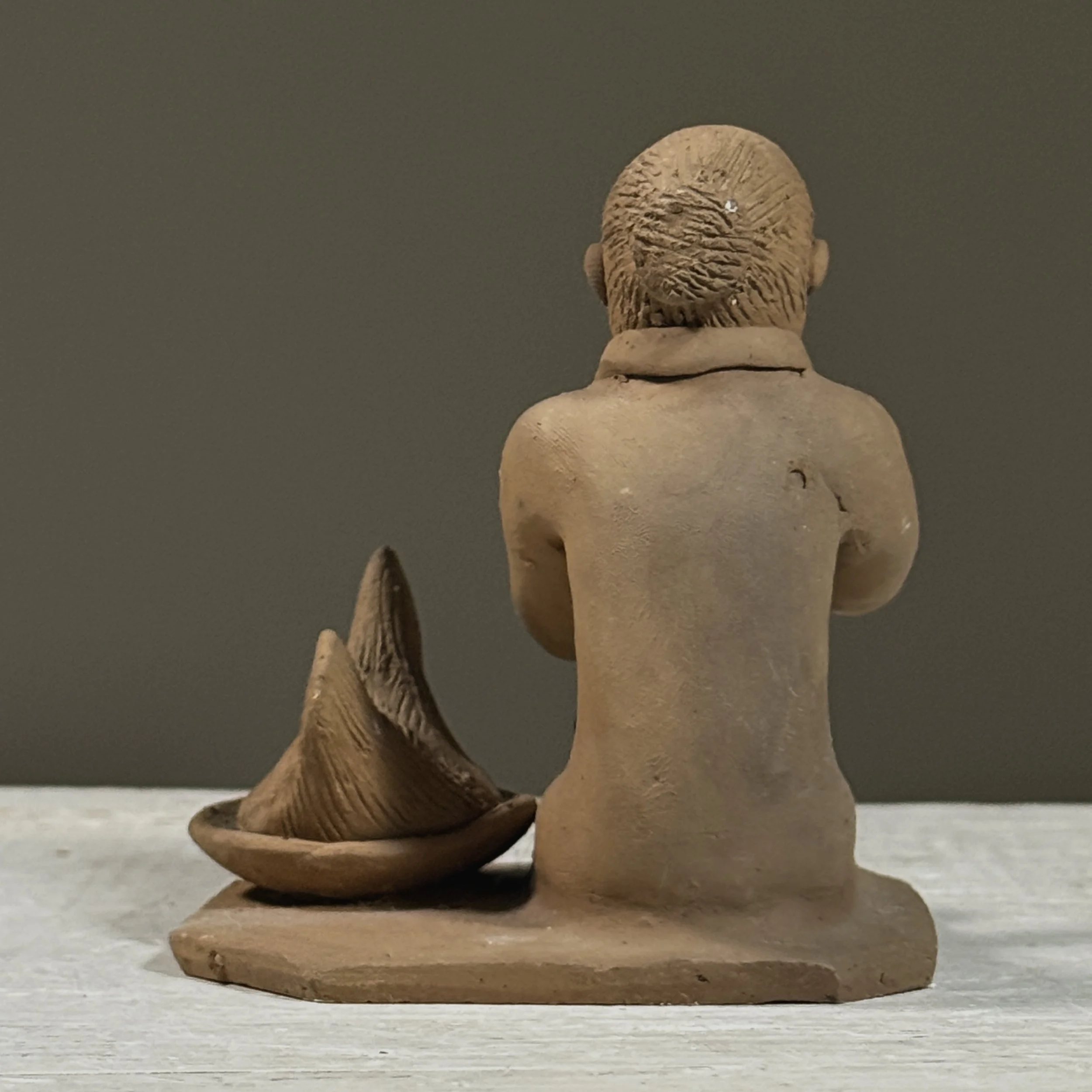 Image 4 of 6
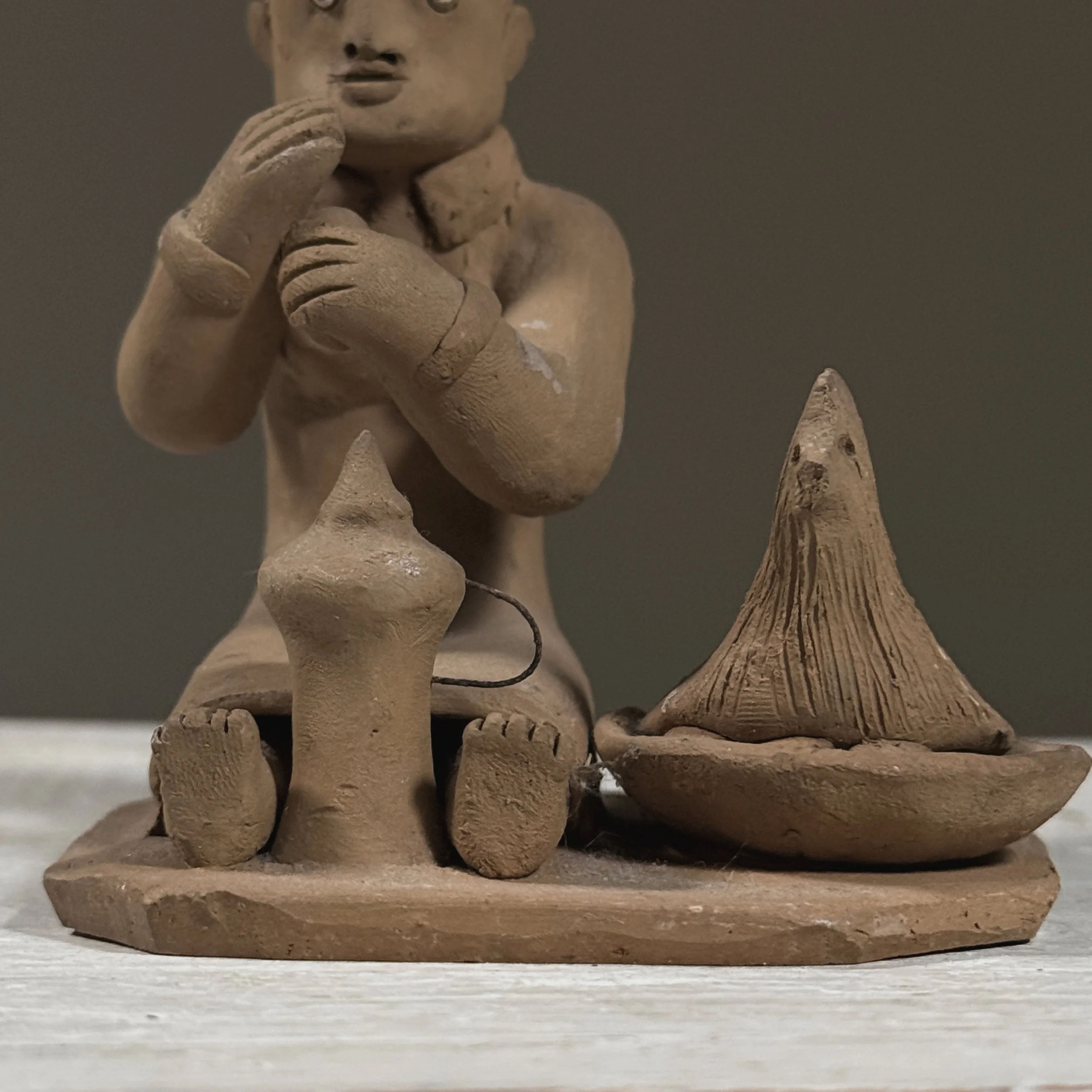 Image 5 of 6
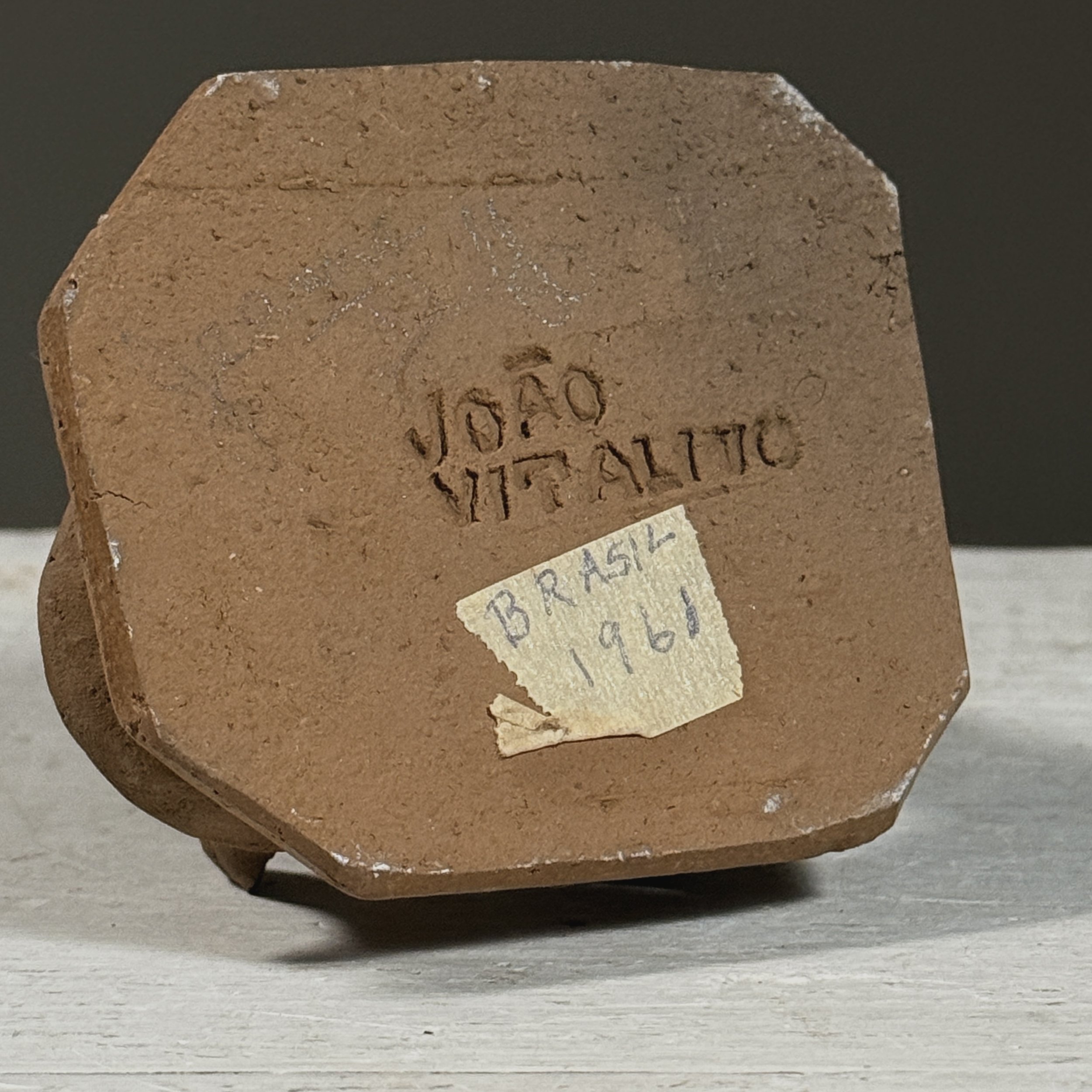 Image 6 of 6