The Kalkmaleriers of Elmelunde Master
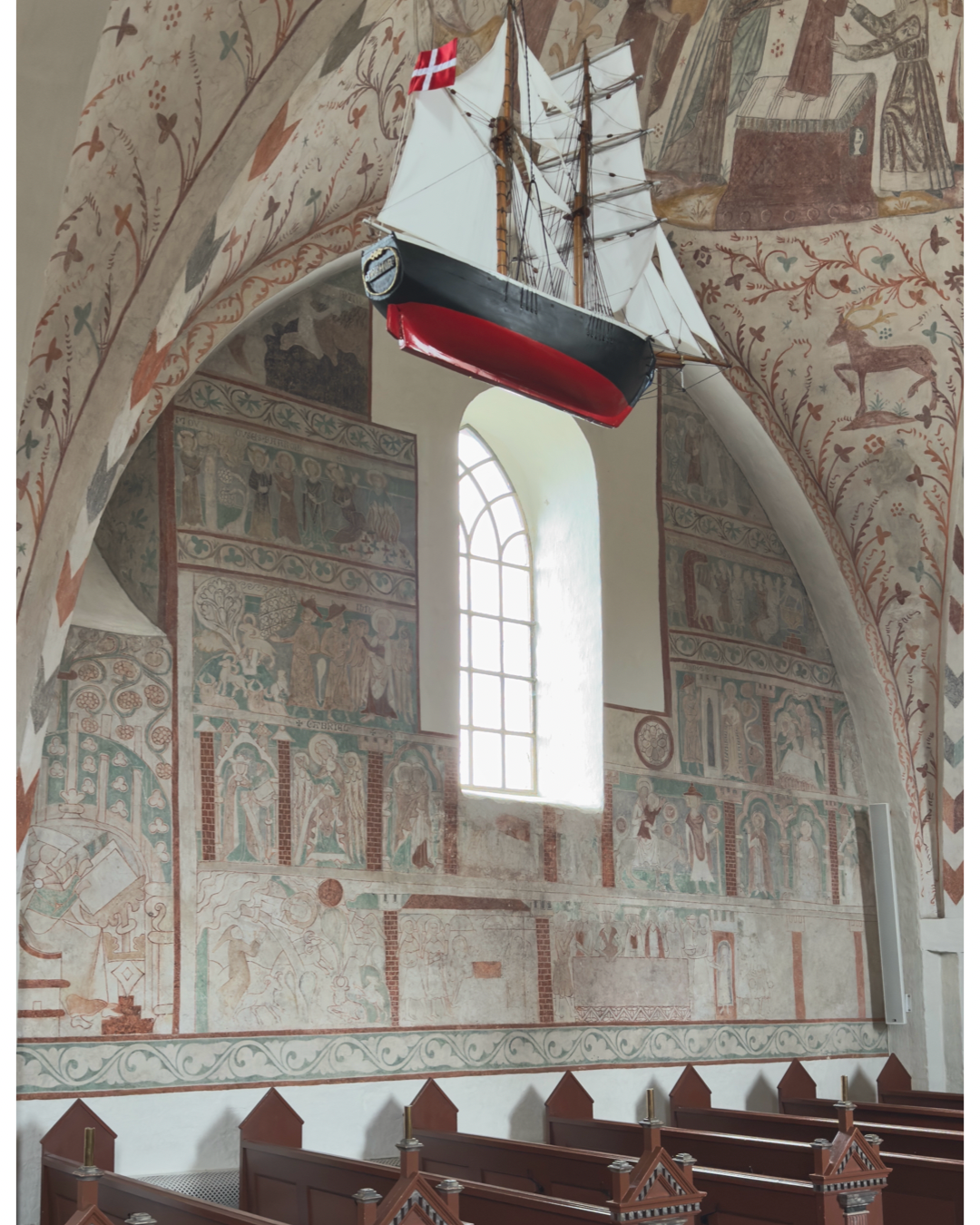
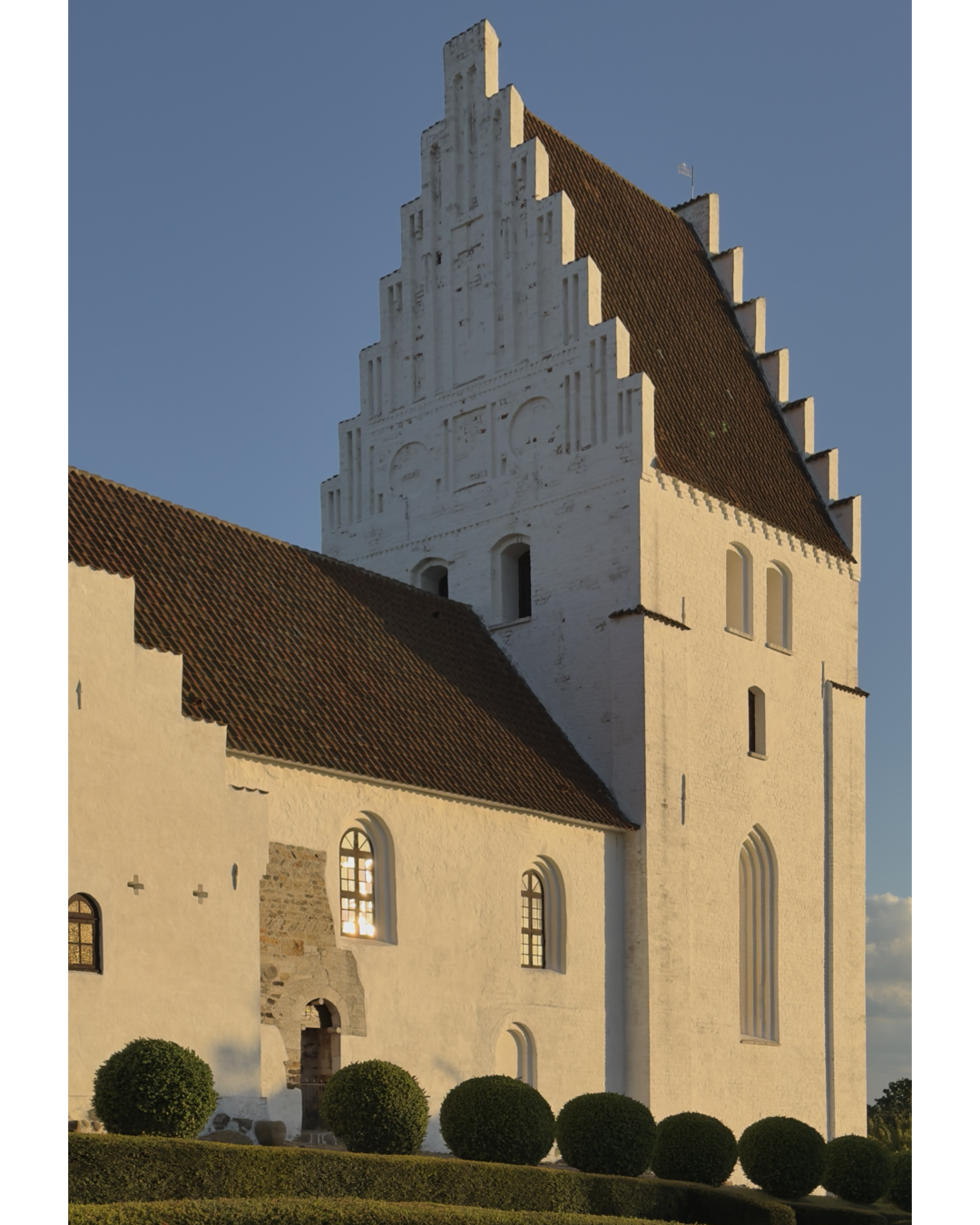
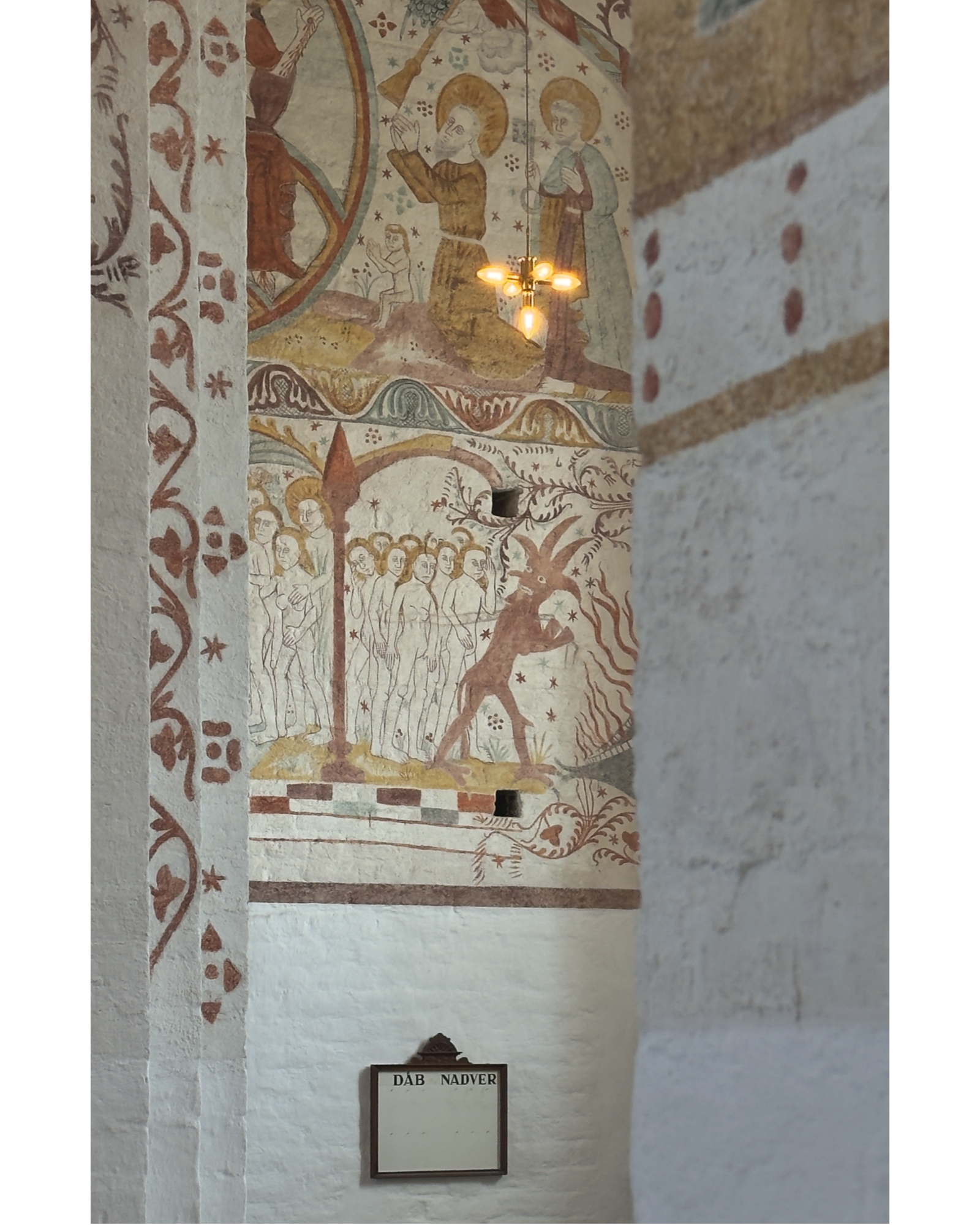
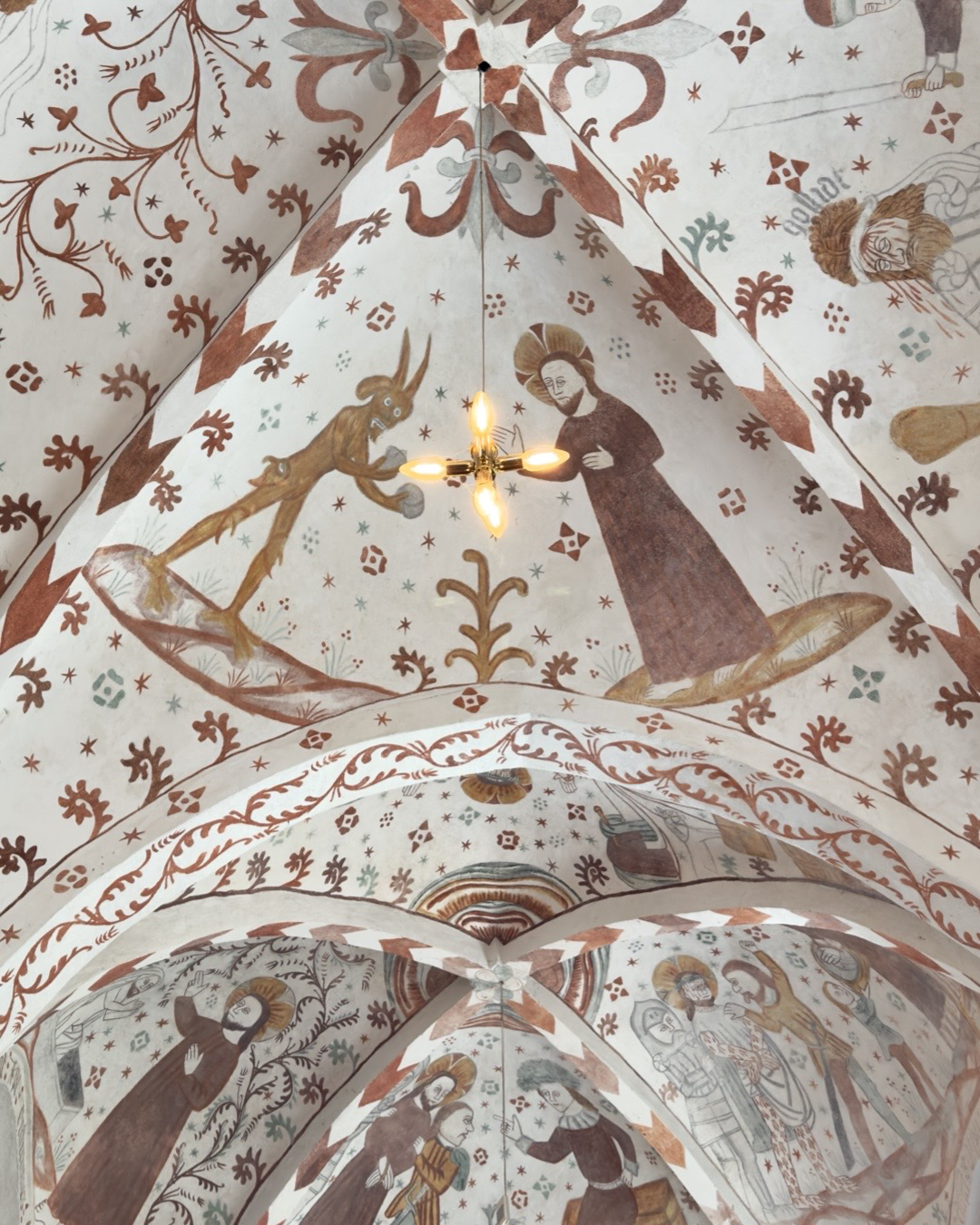
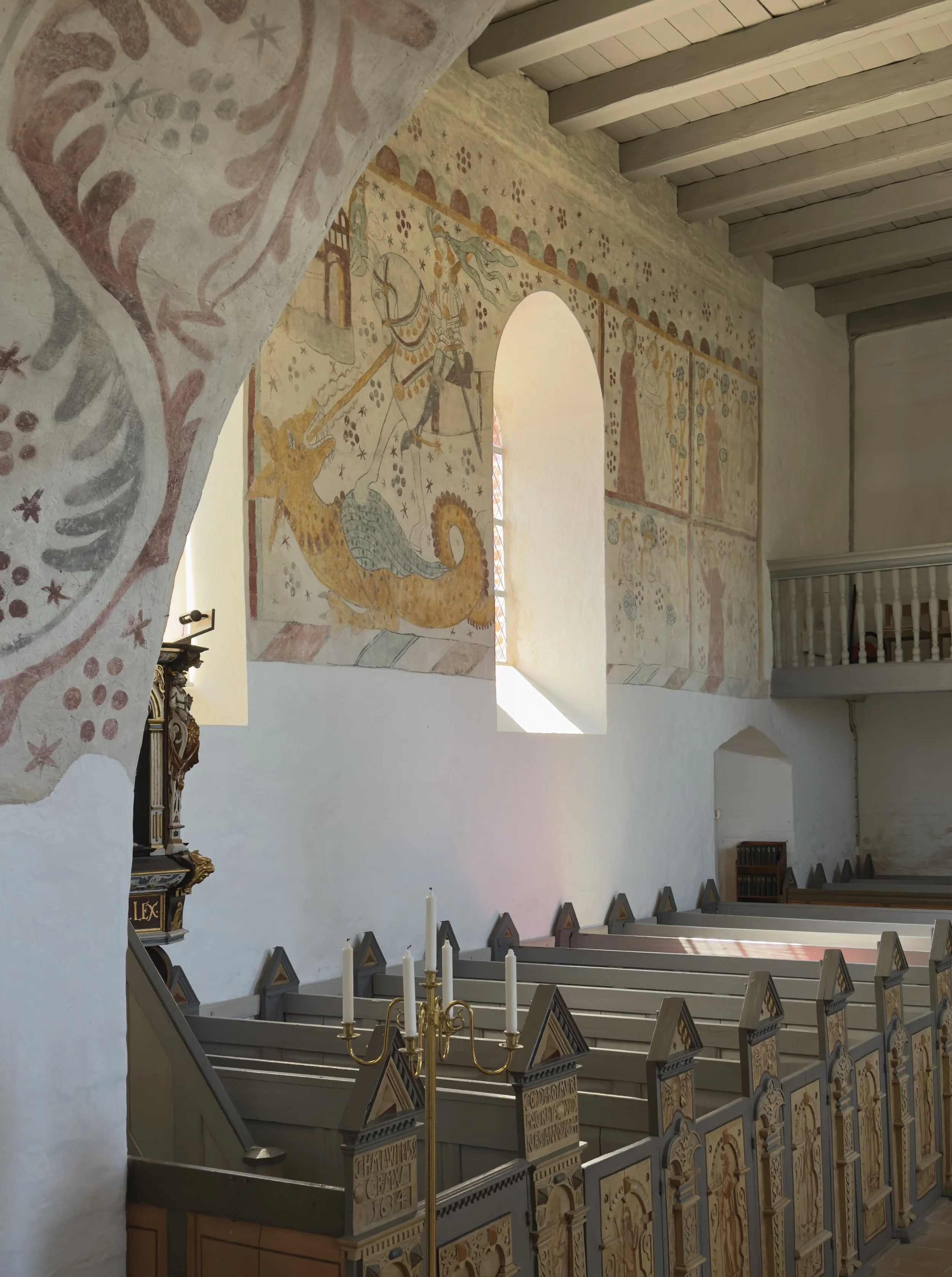
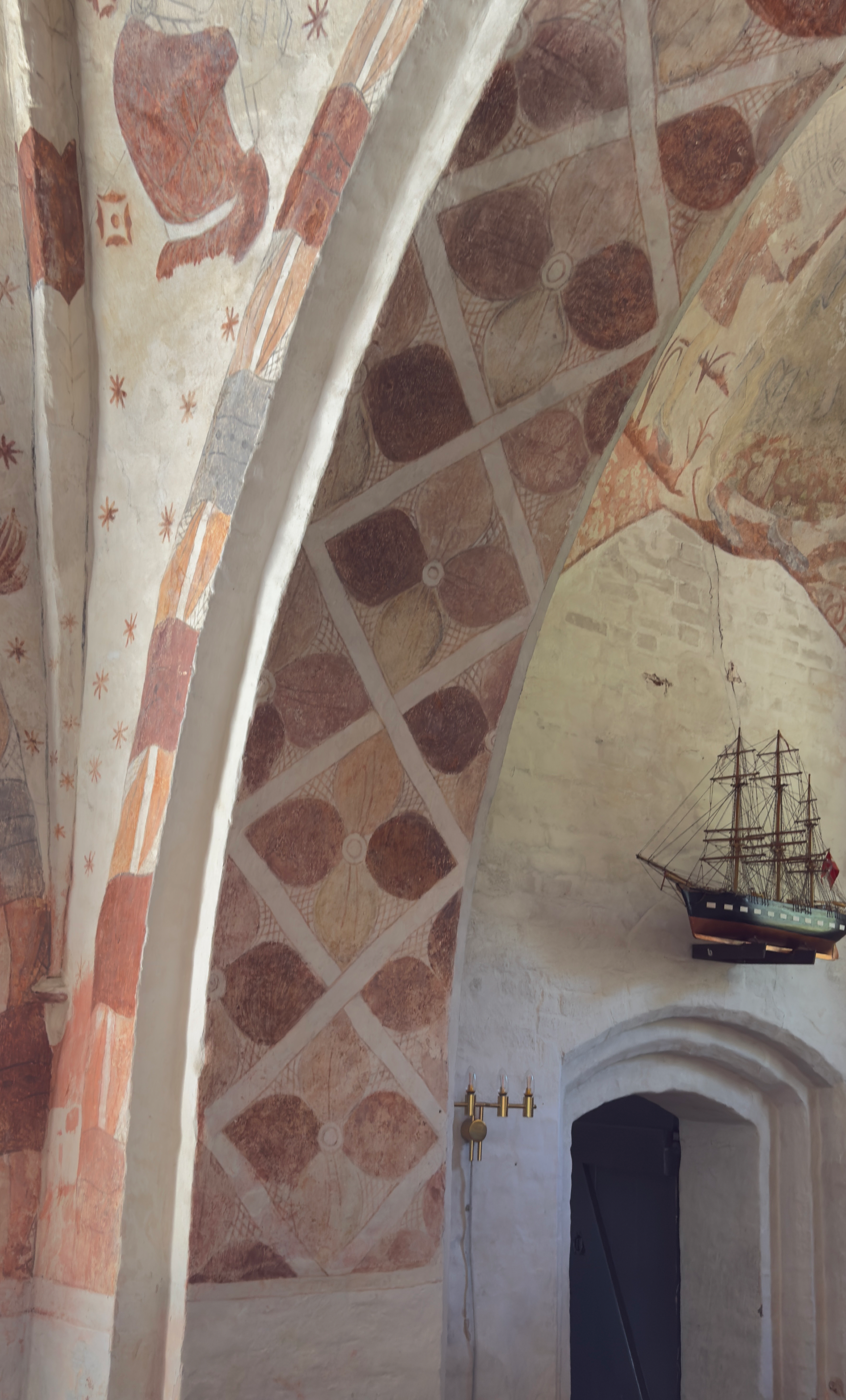
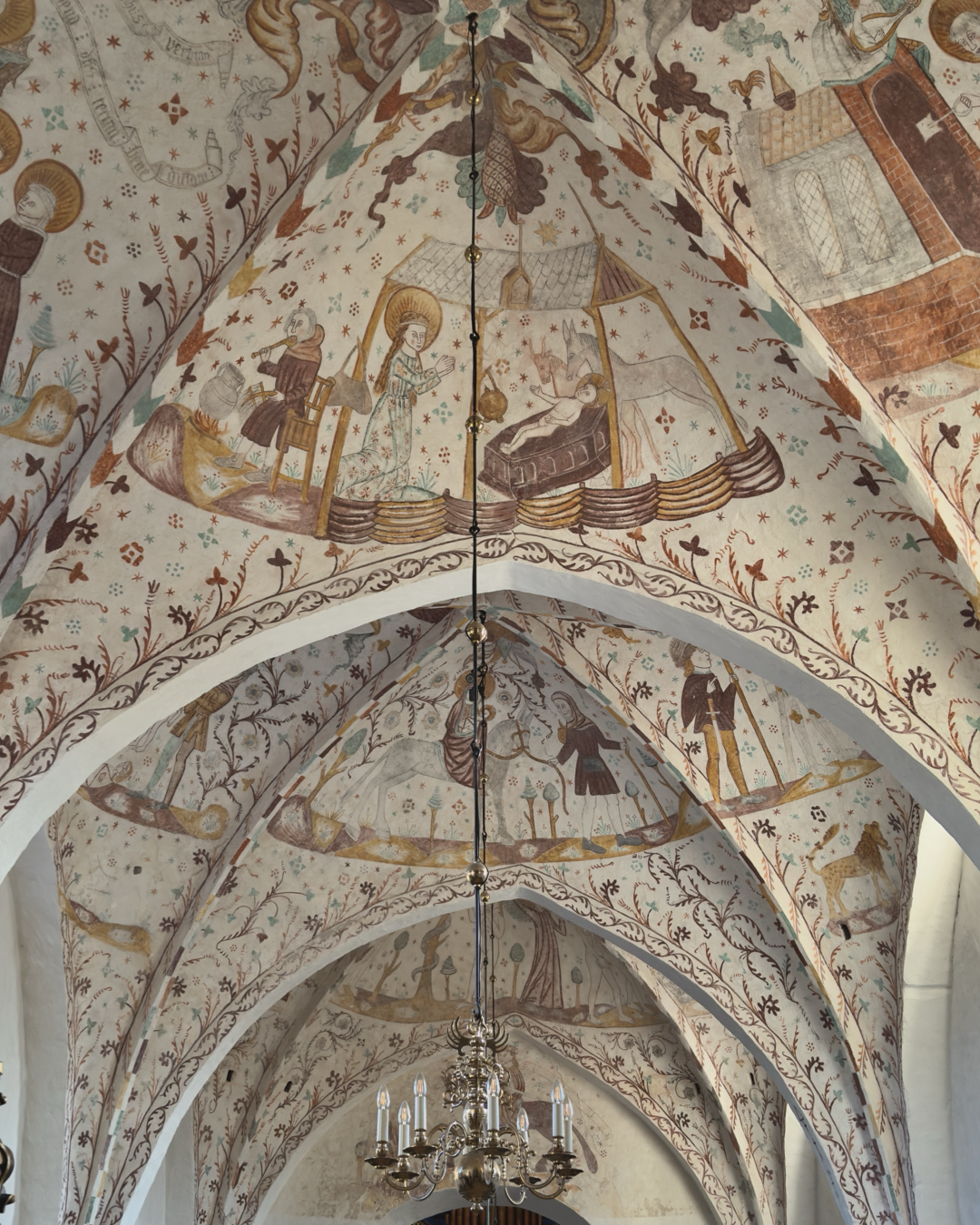
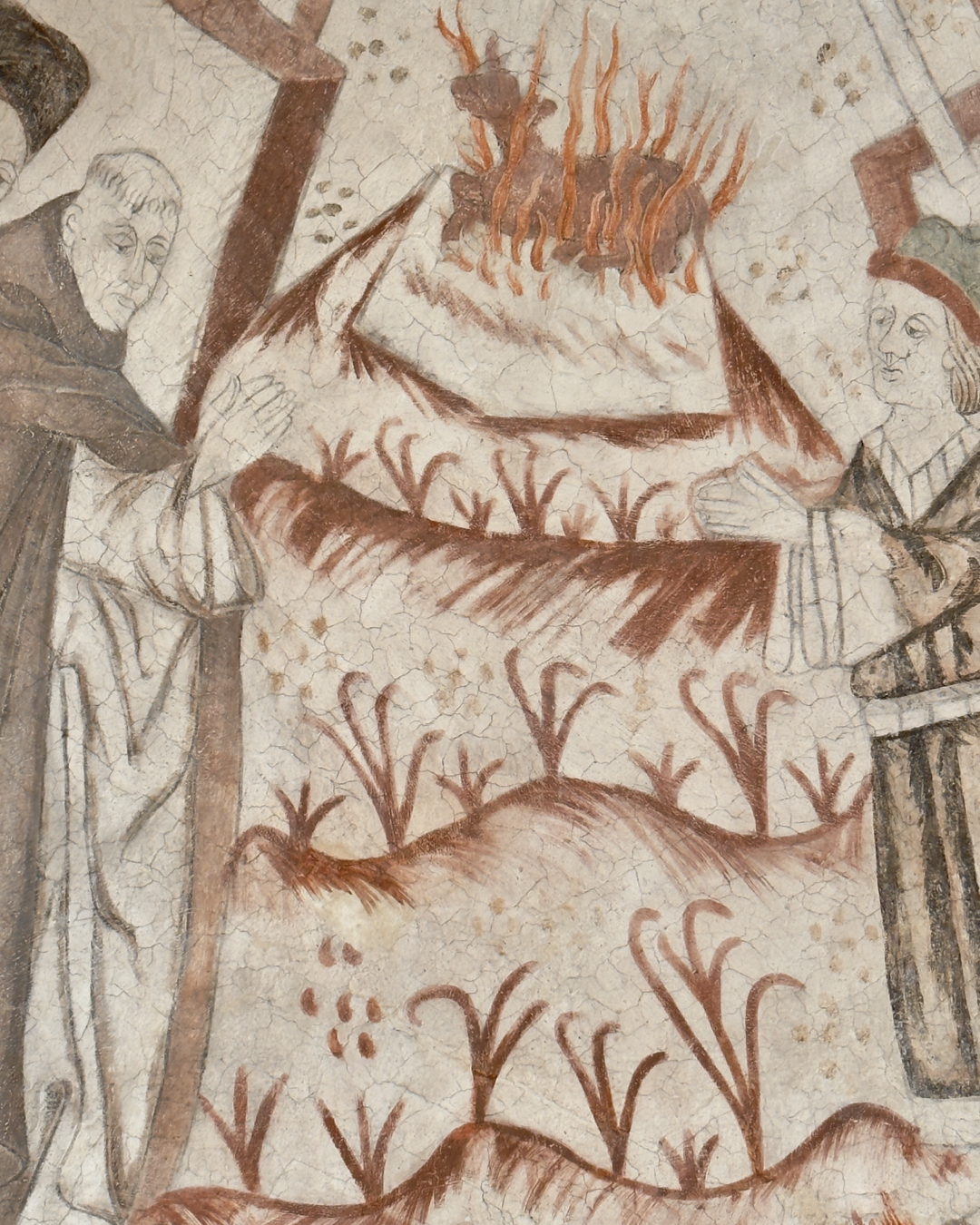
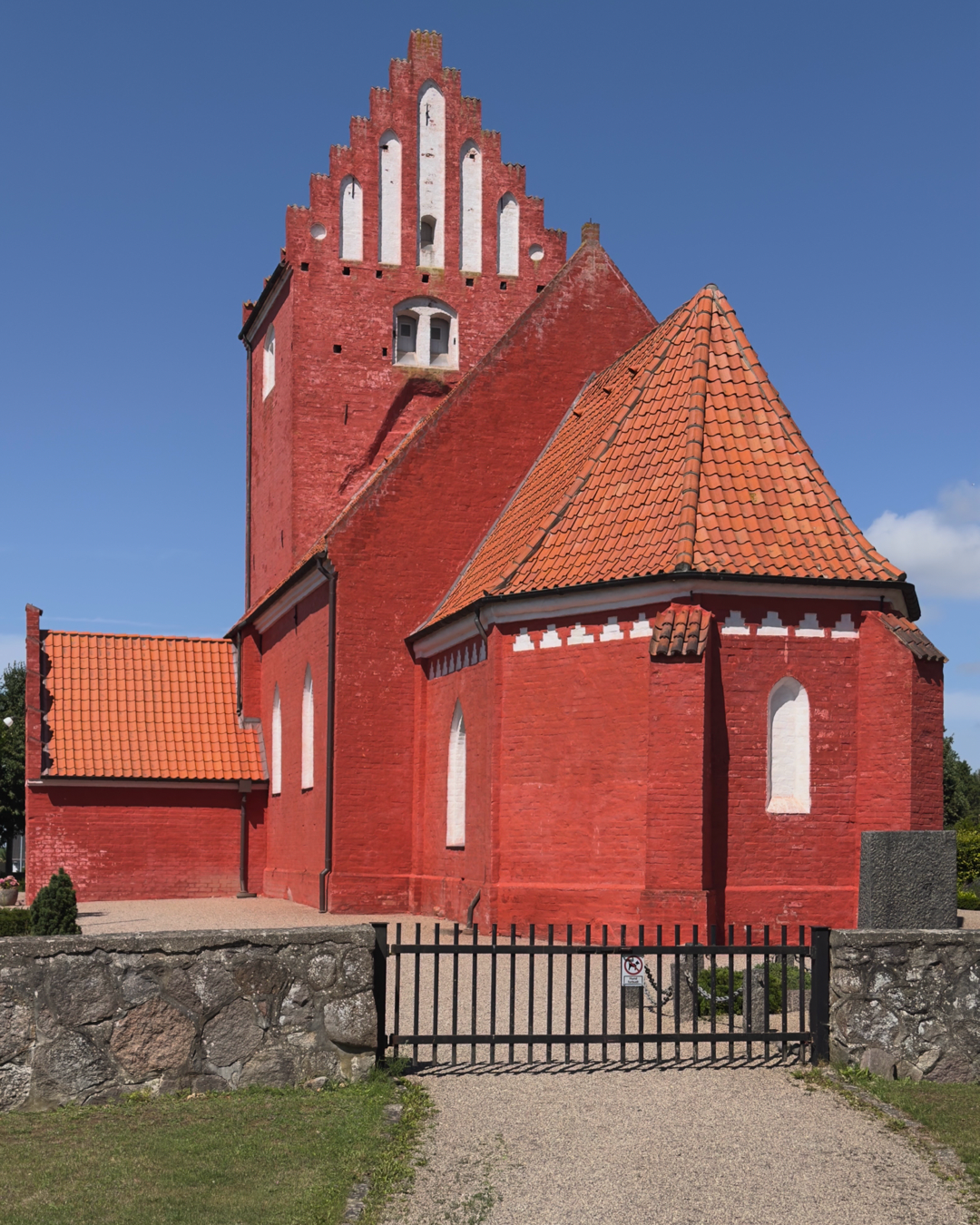
Part of the reason for my trip to Denmark was a long-awaited pilgrimage to see the frescoes attributed to the Elmelunde Master. Dating to the early sixteenth century, the identity of the artist remains unknown. The name “Elmelunde Master” comes from Elmelunde Church, the first site where these frescoes were discovered beneath layers of whitewash in the nineteenth century.
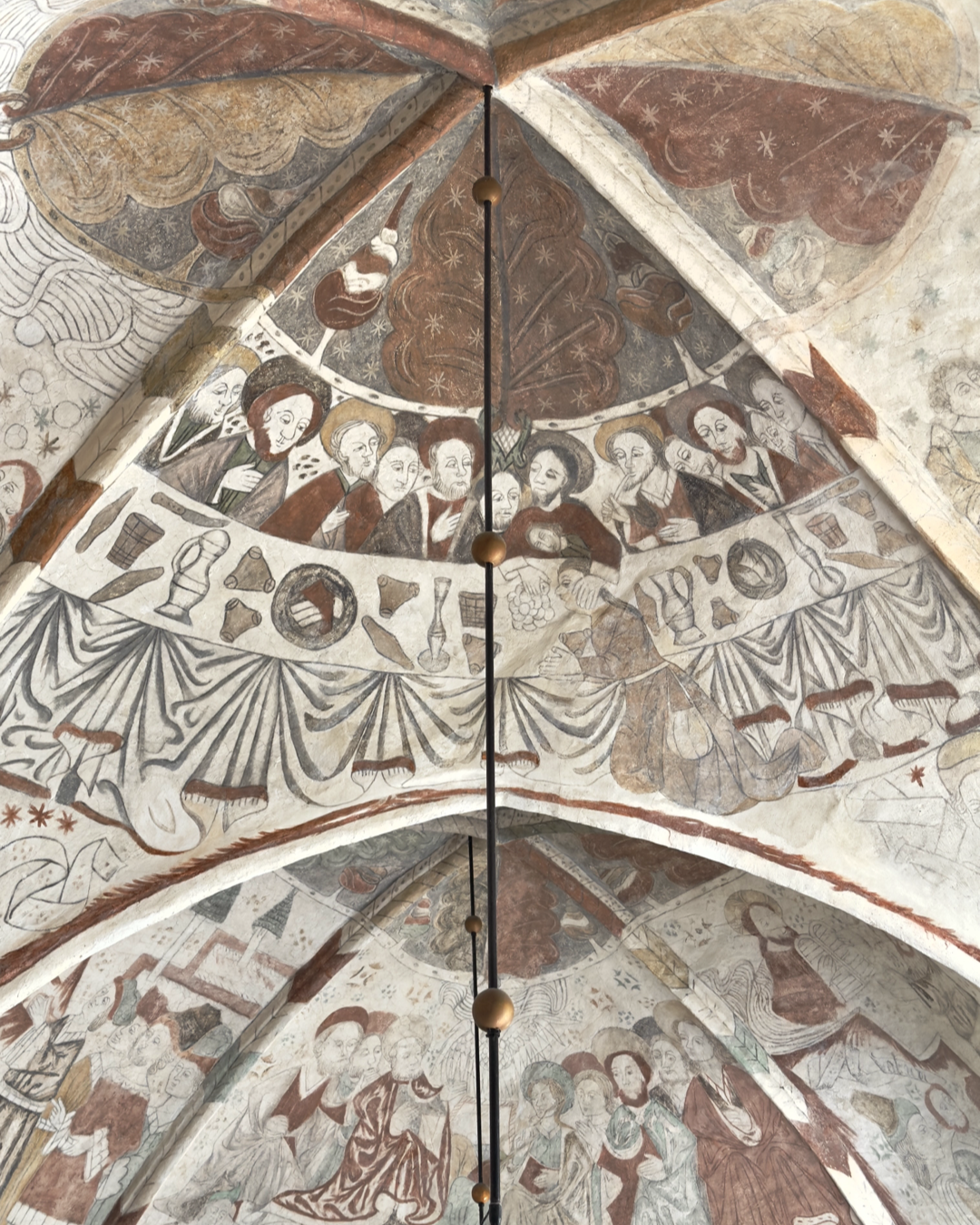
The kalkmalerier (lime frescoes) survived because they were covered over during the Protestant Reformation. Traveling to the churches associated with the Elmelunde Master, I found that each shared the same basic visual framework, with subtle variations unique to each church.
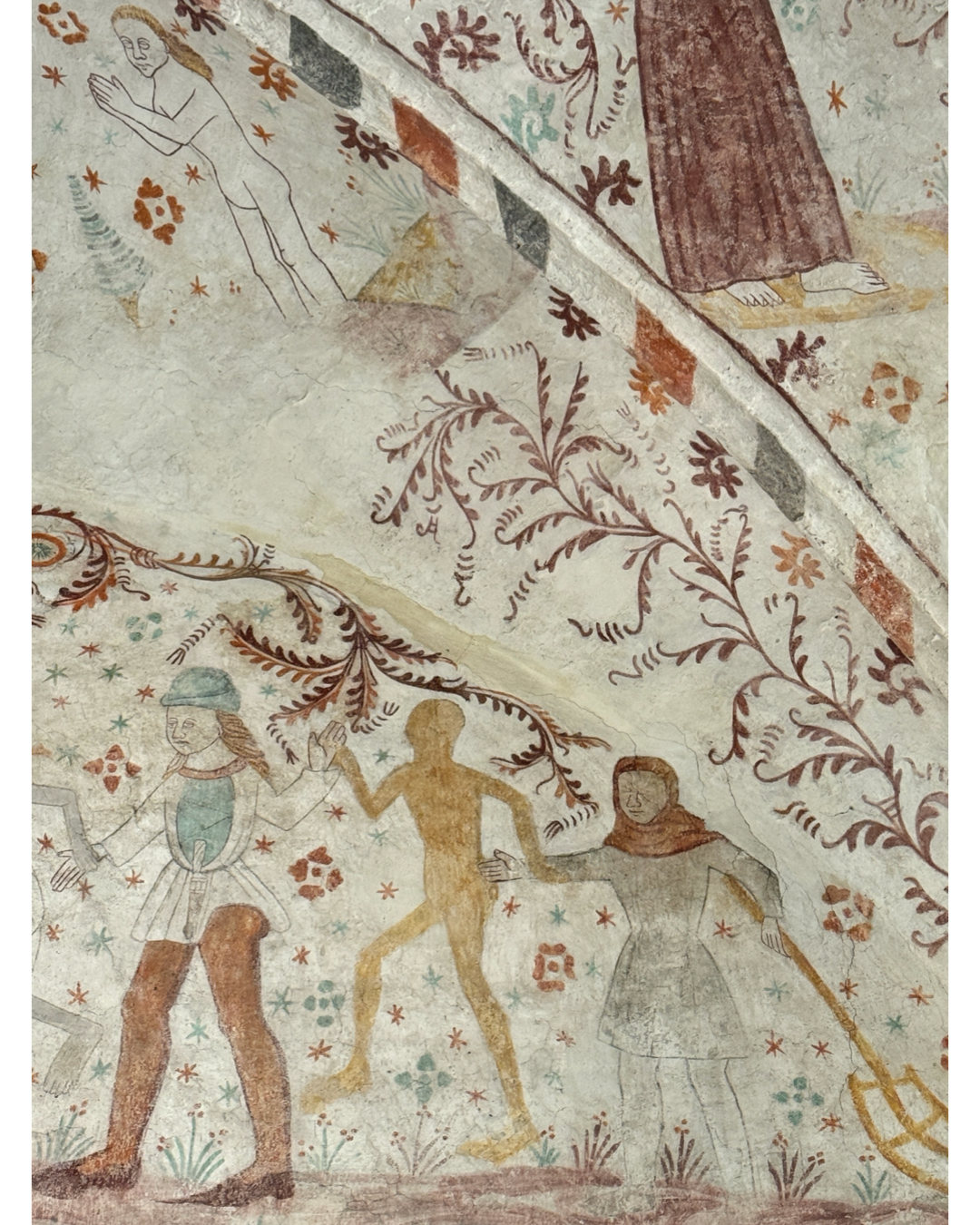
At Nørre Alslev Church, the Danse Macabre depicts Death not as a skeleton, but as a human figure clothed entirely in yellow. No one knows why. One theory suggests it was connected to a medieval play or ritual in which Death appeared painted from head to toe in yellow, but the true meaning remains unknown.
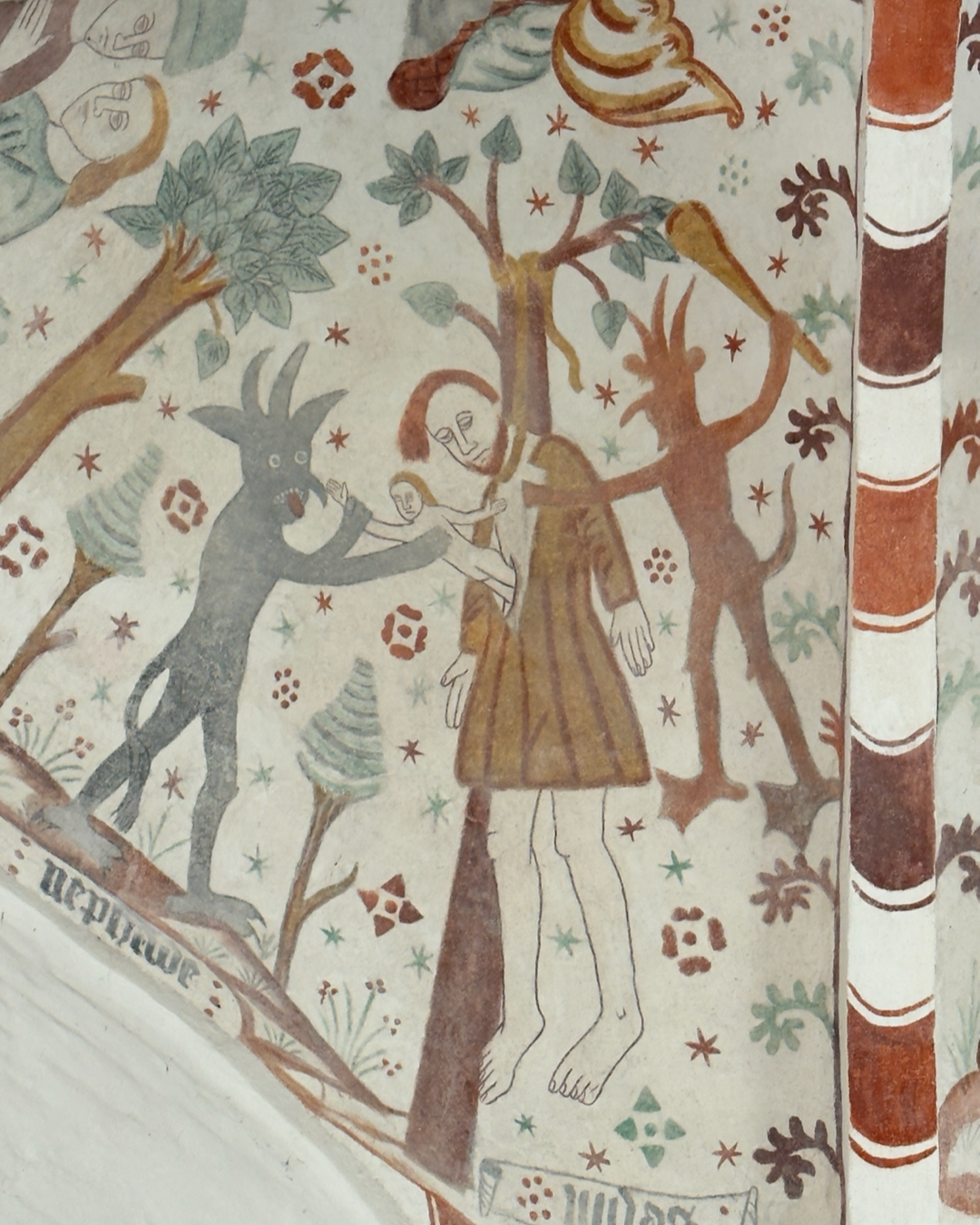
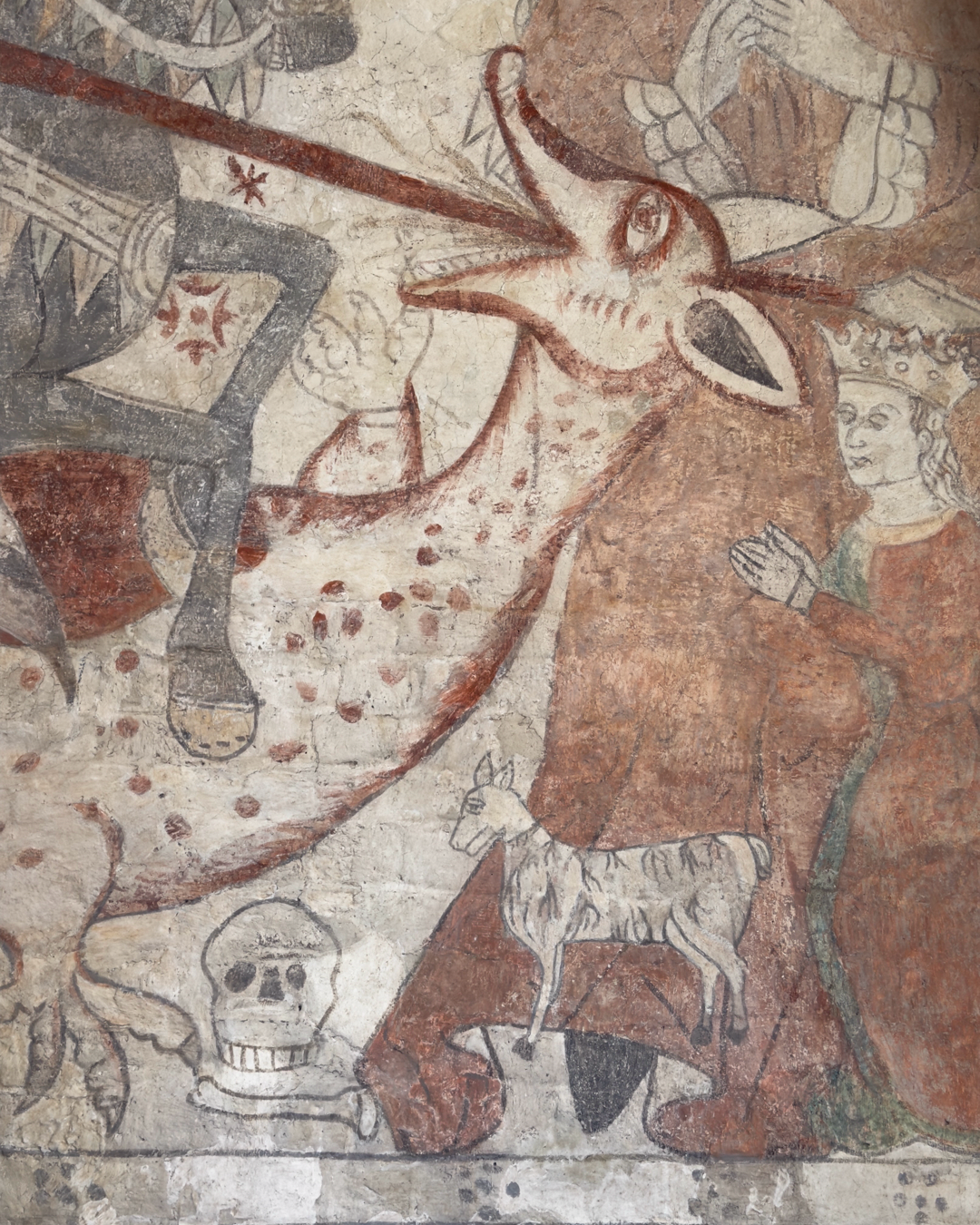
In Elmelunde Church, a scene depicts a demon pulling a small child-like figure from the corpse of Judas. In medieval art, the soul was often represented as a small human figure emerging from the body at the moment of death, symbolizing its departure from the physical world.
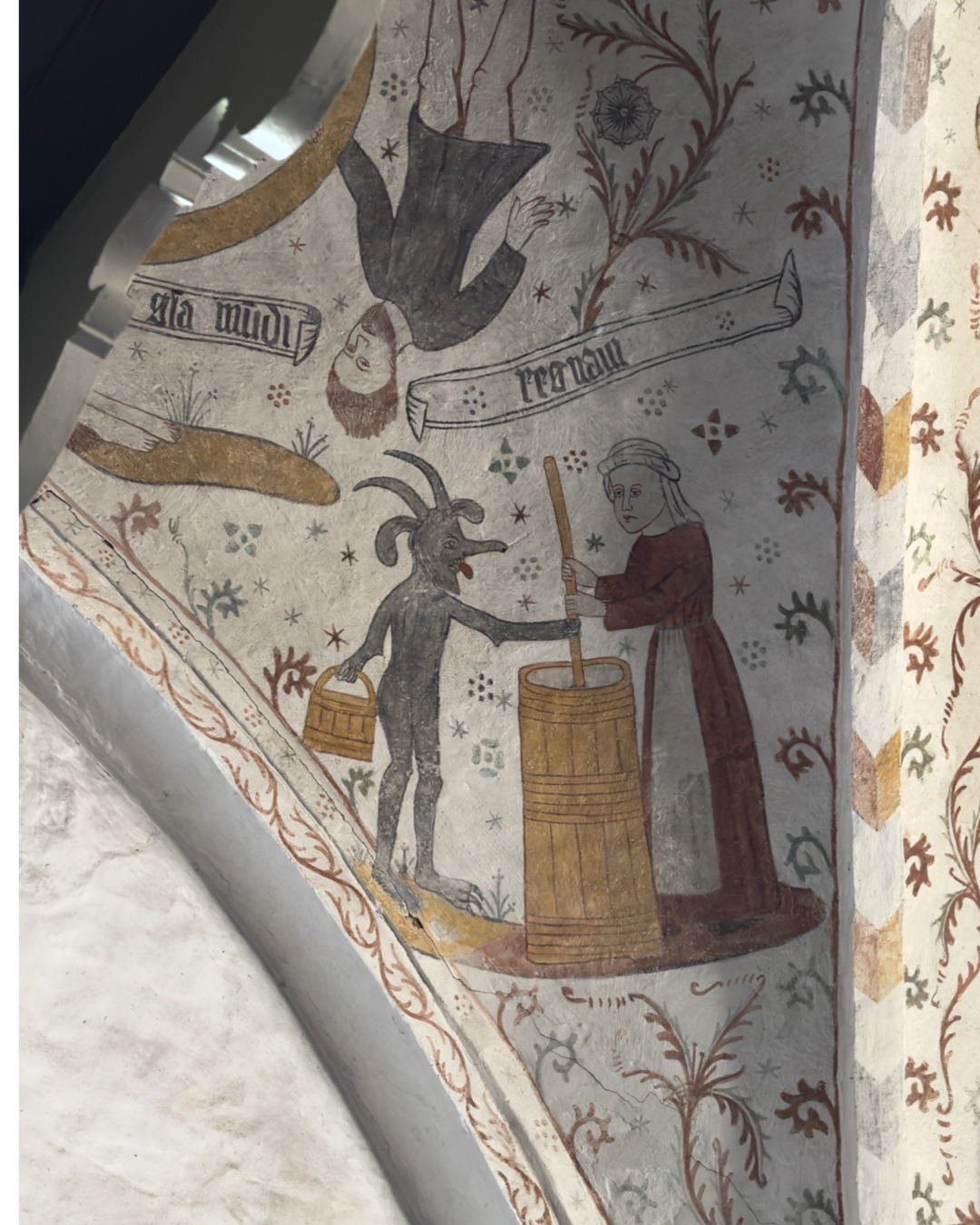
At Fanefjord Church, the demon Titivillus appears beside two women. In medieval folklore, Titivillus wandered churches recording the names of those who slept through sermons, gossiped, or neglected their prayers. Whether intended as a warning, satire, or something more is impossible to know.
That uncertainty is what drew me here.
Stepping back from the individual scenes, I realized the Elmelunde Master was not simply creating a visual Biblia Pauperum (“Bible of the Poor”). Hidden behind saints, devils, and visions of the apocalypse is humanity at its most vulnerable: death, love, vanity, greed, hope, desire, power, superstition, and guilt. Their greatest mystery is not who painted them, but how a world that vanished centuries ago can still feel so familiar.